

The DOI matches its Crossref record; 255 of the 257 references it cites were found in a registry or an index.
Lipotoxicity and Diabetic Nephropathy: Novel Mechanistic Insights and Therapeutic Opportunities
Open accessAbstract
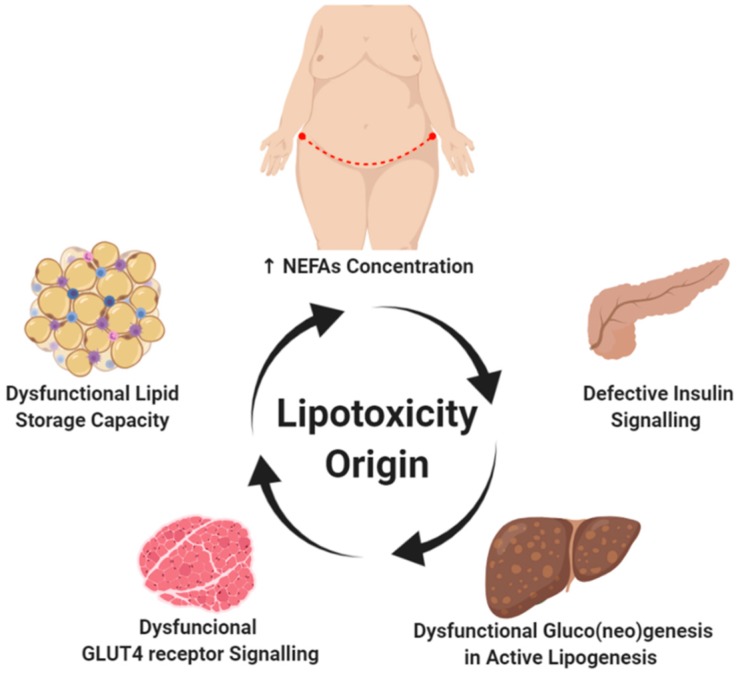
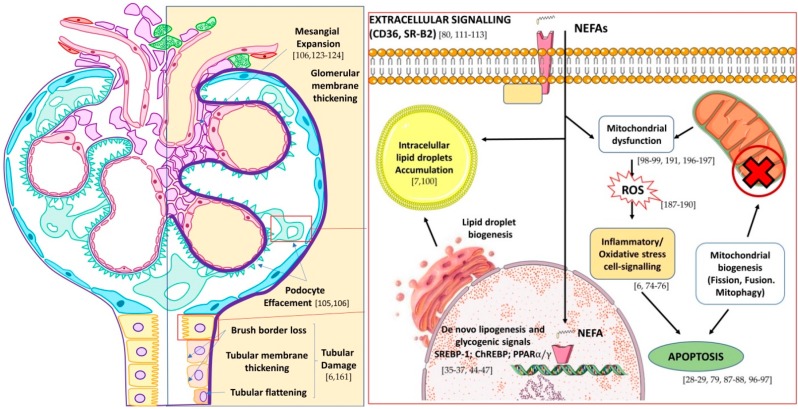
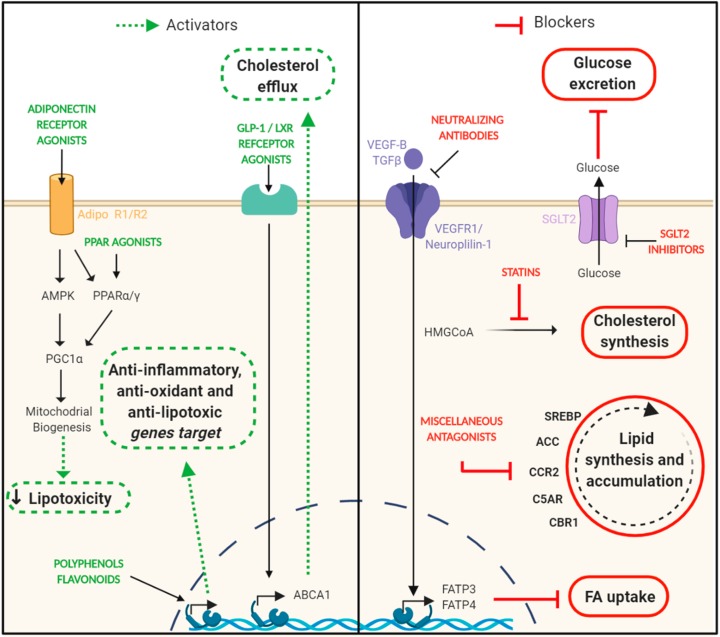
Lipotoxicity is characterized by the ectopic accumulation of lipids in organs different from adipose tissue. Lipotoxicity is mainly associated with dysfunctional signaling and insulin resistance response in non-adipose tissue such as myocardium, pancreas, skeletal muscle, liver, and kidney. Serum lipid abnormalities and renal ectopic lipid accumulation have been associated with the development of kidney diseases, in particular diabetic nephropathy. Chronic hyperinsulinemia, often seen in type 2 diabetes, plays a crucial role in blood and liver lipid metabolism abnormalities, thus resulting in increased non-esterified fatty acids (NEFA). Excessive lipid accumulation alters cellular homeostasis and activates lipogenic and glycogenic cell-signaling pathways. Recent evidences indicate that both quantity and quality of lipids are involved in renal damage associated to lipotoxicity by activating inflammation, oxidative stress, mitochondrial dysfunction, and cell-death. The pathological effects of lipotoxicity have been observed in renal cells, thus promoting podocyte injury, tubular damage, mesangial proliferation, endothelial activation, and formation of macrophage-derived foam cells. Therefore, this review examines the recent preclinical and clinical research about the potentially harmful effects of lipids in the kidney, metabolic markers associated with these mechanisms, major signaling pathways affected, the causes of excessive lipid accumulation, and the types of lipids involved, as well as offers a comprehensive update of therapeutic strategies targeting lipotoxicity.
Overview
The claims and statistics of this paper haven’t been checked yet.
Run the check — free, no account needed. It reads the open-access text and checks the sources it cites.
Integrity signals
Registry
Cites
Statistics
Figures
Verification
Claims the paper makes
The claims and statistics of this paper haven’t been checked yet.
Run the check — free, no account needed. It reads the open-access text and checks the sources it cites.
Claims other papers make about this one
Each is checked against this paper’s own text: does it say what the citing paper says it does?
The cited source says what the claim attributes to it.
In the citing paper
“In addition, parenchymal lipid deposition may induce lipotoxicity (50) through the formation of toxic metabolites including ceramides and diacylglyceride that hamper the function of multiple kidney cell types, including podocytes (51).”
From GLP-1 agonists in the treatment of chronic kidney disease in type 2 diabetes and obesity (2025) · cites this paper as [50]
Self-check
Percentages, sums and reported differences re-computed from the paper’s own numbers.
The self-check needs the paper’s full text.
Citations
Cites
Canagliflozin and Renal Outcomes in Type 2 Diabetes and Nephropathy
Perkovic, V., Jardine, M. J., Neal, B., Bompoint, S., Heerspink, H. J. L., Charytan, D. M., Edwards, R., Agarwal, R., Bakris, G., Bull, S., et al. (2019) · New England Journal of Medicine · doi:10.1056/nejmoa1811744 · Cited by 6,189
Oxyl radicals, redox-sensitive signalling cascades and antioxidants
Genestra, M. (2007) · Cellular Signalling · doi:10.1016/j.cellsig.2007.04.009 · Cited by 4,930
Diabetic Kidney Disease: Challenges, Progress, and Possibilities
Alicic, R. Z., Rooney, M. T., & Tuttle, K. R. (2017) · Clinical Journal of the American Society of Nephrology · doi:10.2215/cjn.11491116 · Cited by 2,898
Dynamics and functions of lipid droplets
Olzmann, J. A., & Carvalho, P. (2019) · Nature Reviews Molecular Cell Biology · doi:10.1038/s41580-018-0085-z · Cited by 2,740
Gleeson, M., Bishop, N. C., Stensel, D. J., Lindley, M. R., Mastana, S. S., & Nimmo, M. A. (2011) · Nature Reviews Immunology · doi:10.1038/nri3041 · Cited by 2,470
Lean, M. E., Leslie, W. S., Barnes, A. C., Brosnahan, N., Thom, G., McCombie, L., Peters, C., Zhyzhneuskaya, S., Al-Mrabeh, A., Hollingsworth, K. G., et al. (2018) · The Lancet · doi:10.1016/s0140-6736(17)33102-1 · Cited by 2,095
Kang, H. M., Ahn, S. H., Choi, P., Ko, Y.-A., Han, S. H., Chinga, F., Park, A. S. D., Tao, J., Sharma, K., Pullman, J., et al. (2015) · Nature Medicine · doi:10.1038/nm.3762 · Cited by 1,555
Mechanisms of Pancreatic β-Cell Death in Type 1 and Type 2 Diabetes
Cnop, M., Welsh, N., Jonas, J.-C., Jörns, A., Lenzen, S., & Eizirik, D. L. (2005) · Diabetes · doi:10.2337/diabetes.54.suppl_2.s97 · Cited by 1,491
Mitochondrial energetics in the kidney
Bhargava, P., & Schnellmann, R. G. (2017) · Nature Reviews Nephrology · doi:10.1038/nrneph.2017.107 · Cited by 1,382
Dresner, A., Laurent, D., Marcucci, M., Griffin, M. E., Dufour, S., Cline, G. W., Slezak, L. A., Andersen, D. K., Hundal, R. S., Rothman, D. L., et al. (1999) · Journal of Clinical Investigation · doi:10.1172/jci5001 · Cited by 1,311
Krssak, M., Falk Petersen, K., Dresner, A., DiPietro, L., Vogel, S. M., Rothman, D. L., Shulman, G. I., & Roden, M. (1999) · Diabetologia · doi:10.1007/s001250051123 · Cited by 1,264
Lean, M. E. J., Leslie, W. S., Barnes, A. C., Brosnahan, N., Thom, G., McCombie, L., Peters, C., Zhyzhneuskaya, S., Al-Mrabeh, A., Hollingsworth, K. G., et al. (2019) · The Lancet Diabetes & Endocrinology · doi:10.1016/s2213-8587(19)30068-3 · Cited by 1,017
Inflammation and Lipid Signaling in the Etiology of Insulin Resistance
Glass, C. K., & Olefsky, J. M. (2012) · Cell Metabolism · doi:10.1016/j.cmet.2012.04.001 · Cited by 956
Fatty acids, obesity, and insulin resistance: Time for a reevaluation
Karpe, F., Dickmann, J. R., & Frayn, K. N. (2011) · Diabetes · doi:10.2337/db11-0425 · Cited by 896
Perseghin, G., Scifo, P., De Cobelli, F., Pagliato, E., Battezzati, A., Arcelloni, C., Vanzulli, A., Testolin, G., Pozza, G., Del Maschio, A., et al. (1999) · Diabetes · doi:10.2337/diabetes.48.8.1600 · Cited by 877
The Role of Insulin Resistance in Nonalcoholic Fatty Liver Disease
Utzschneider, K. M., & Kahn, S. E. (2006) · The Journal of Clinical Endocrinology & Metabolism · doi:10.1210/jc.2006-0587 · Cited by 874
Adiels, M., Olofsson, S.-O., Taskinen, M.-R., & Borén, J. (2008) · Arteriosclerosis, Thrombosis, and Vascular Biology · doi:10.1161/atvbaha.107.160192 · Cited by 820
Walther, T. C., Chung, J., & Farese, R. V. (2017) · Annual Review of Cell and Developmental Biology · doi:10.1146/annurev-cellbio-100616-060608 · Cited by 789
Yu, X.-H., Fu, Y., Zhang, D., Yin, K., & Tang, C. (2013) · Clinica Chimica Acta · doi:10.1016/j.cca.2013.06.006 · Cited by 772
A small-molecule AdipoR agonist for type 2 diabetes and short life in obesity
Okada-Iwabu, M., Yamauchi, T., Iwabu, M., Honma, T., Hamagami, K.-I., Matsuda, K., Yamaguchi, M., Tanabe, H., Kimura-Someya, T., Shirouzu, M., et al. (2013) · Nature · doi:10.1038/nature12656 · Cited by 757
Nonalcoholic Fatty Liver Disease, Hepatic Insulin Resistance, and Type 2 Diabetes
Birkenfeld, A. L., & Shulman, G. I. (2013) · Hepatology · doi:10.1002/hep.26672 · Cited by 752
Obesity-related glomerulopathy: clinical and pathologic characteristics and pathogenesis
D’Agati, V. D., Chagnac, A., de Vries, A. P. J., Levi, M., Porrini, E., Herman‐Edelstein, M., & Praga, M. (2016) · Nature Reviews Nephrology · doi:10.1038/nrneph.2016.75 · Cited by 735
Primary Membranous Nephropathy
Couser, W. G. (2017) · Clinical Journal of the American Society of Nephrology · doi:10.2215/cjn.11761116 · Cited by 692
Altered renal lipid metabolism and renal lipid accumulation in human diabetic nephropathy
Herman‐Edelstein, M., Scherzer, P., Tobar, A., Levi, M., & Gafter, U. (2013) · Journal of Lipid Research · doi:10.1194/jlr.p040501 · Cited by 657
Guo, S. (2013) · Journal of Endocrinology · doi:10.1530/joe-13-0327 · Cited by 648
Mitochondrial dysfunction in diabetic kidney disease
Forbes, J. M., & Thorburn, D. R. (2018) · Nature Reviews Nephrology · doi:10.1038/nrneph.2018.9 · Cited by 645
Benador, I. Y., Veliova, M., Mahdaviani, K., Petcherski, A., Wikström, J. D., Assali, E. A., Acín‐Pérez, R., Shum, M., de Oliveira, M. F., Cinti, S., et al. (2018) · Cell Metabolism · doi:10.1016/j.cmet.2018.03.003 · Cited by 640
Non-alcoholic fatty liver disease and obesity: Biochemical, metabolic and clinical presentations
Milić, S. (2014) · World Journal of Gastroenterology · doi:10.3748/wjg.v20.i28.9330 · Cited by 619
Macrophage ABCA1 and ABCG1, but not SR-BI, promote macrophage reverse cholesterol transport in vivo
Wang, X., Collins, H. L., Ranalletta, M., Fuki, I. V., Billheimer, J. T., Rothblat, G. H., Tall, A. R., & Rader, D. J. (2007) · Journal of Clinical Investigation · doi:10.1172/jci32057 · Cited by 593
Molecular mechanisms of lipotoxicity and glucotoxicity in nonalcoholic fatty liver disease
Mota, M., Banini, B. A., Cazanave, S. C., & Sanyal, A. J. (2016) · Metabolism · doi:10.1016/j.metabol.2016.02.014 · Cited by 570
Multifaceted Physiological Roles of Adiponectin in Inflammation and Diseases
Choi, H. M., Doss, H. M., & Kim, K. S. (2020) · International Journal of Molecular Sciences · doi:10.3390/ijms21041219 · Cited by 536
Fatty kidney: emerging role of ectopic lipid in obesity-related renal disease
de Vries, A. P. J., Ruggenenti, P. L., Ruan, X. Z., Praga, M., Cruzado, J. M., Bajema, I. M., D’Agati, V. D., Lamb, H. J., Barlovič, D. P., Hojs, R., et al. (2014) · The Lancet Diabetes & Endocrinology · doi:10.1016/s2213-8587(14)70065-8 · Cited by 511
Vascular endothelial growth factor B controls endothelial fatty acid uptake
Hagberg, C. E., Falkevall, A., Wang, X., Larsson, E., Huusko, J., Nilsson, I., van Meeteren, L. A., Samén, E., Lu, L., Vanwildemeersch, M., et al. (2010) · Nature · doi:10.1038/nature08945 · Cited by 508
Ertunc, M. E., & Hotamışlıgil, G. S. (2016) · Journal of Lipid Research · doi:10.1194/jlr.r066514 · Cited by 497
Chevalier, R. L. (2016) · American Journal of Physiology-Renal Physiology · doi:10.1152/ajprenal.00164.2016 · Cited by 495
Balancing the fat: lipid droplets and human disease
Krahmer, N., Farese, R. V., & Walther, T. C. (2013) · EMBO Molecular Medicine · doi:10.1002/emmm.201100671 · Cited by 481
The impact of insulin resistance on the kidney and vasculature
Artunç, F., Schleicher, E. D., Weigert, C., Fritsche, A., Stefan, N., & Häring, H. (2016) · Nature Reviews Nephrology · doi:10.1038/nrneph.2016.145 · Cited by 480
Lipid Accumulation and Chronic Kidney Disease
Gai, Z., Wang, T., Visentin, M., Kullak-Ublick, G. A., Fu, X., & Wang, Z. (2019) · Nutrients · doi:10.3390/nu11040722 · Cited by 444
Role of diacylglycerol activation of PKCθ in lipid-induced muscle insulin resistance in humans
Szendroedi, J., Yoshimura, T., Phielix, E., Koliaki, C., Marcucci, M., Zhang, D., Jelenik, T., Müller, J., Herder, C., Nowotny, P., et al. (2014) · Proceedings of the National Academy of Sciences · doi:10.1073/pnas.1409229111 · Cited by 415
Cherney, D. Z. I., Zinman, B., Inzucchi, S. E., Koitka-Weber, A., Mattheus, M., von Eynatten, M., & Wanner, C. (2017) · The Lancet Diabetes & Endocrinology · doi:10.1016/s2213-8587(17)30182-1 · Cited by 383
NF-κB in inflammation and renal diseases
Zhang, H., & Sun, S.-C. (2015) · Cell & Bioscience · doi:10.1186/s13578-015-0056-4 · Cited by 383
Weinberg, J. M. (2006) · Kidney International · doi:10.1038/sj.ki.5001834 · Cited by 378
Renal lipid metabolism and lipotoxicity
Bobulescu, I. A. (2010) · Current Opinion in Nephrology & Hypertension · doi:10.1097/mnh.0b013e32833aa4ac · Cited by 377
Glucose handling by the kidney
Mather, A., & Pollock, C. A. (2011) · Kidney International · doi:10.1038/ki.2010.509 · Cited by 376
Decoding insulin resistance and metabolic syndrome for promising therapeutic intervention
Guo, S. (2014) · Journal of Endocrinology · doi:10.1530/joe-13-0584 · Cited by 375
Roles of diacylglycerols and ceramides in hepatic insulin resistance
Petersen, M. C., & Shulman, G. I. (2017) · Trends in Pharmacological Sciences · doi:10.1016/j.tips.2017.04.004 · Cited by 373
Kahl, S., Gancheva, S., Straßburger, K., Herder, C., Machann, J., Katsuyama, H., Kabisch, S., Henkel, E., Kopf, S., Lagerpusch, M., et al. (2020) · Diabetes Care · doi:10.2337/dc19-0641 · Cited by 360
Fatty Kidney, Hypertension, and Chronic Kidney Disease: The Framingham Heart Study
Foster, M. C., Hwang, S.-J., Porter, S. A., Massaro, J. M., Hoffmann, U., & Fox, C. S. (2011) · Hypertension · doi:10.1161/hypertensionaha.111.175315 · Cited by 356
SGLT2 Inhibitors and the Diabetic Kidney
Fioretto, P., Zambon, A., Rossato, M., Busetto, L., & Vettor, R. (2016) · Diabetes Care · doi:10.2337/dcs15-3006 · Cited by 353
Increasing Body Mass Index and Obesity in the Incident ESRD Population
Kramer, H., Saranathan, A., Luke, A., Durazo-Arvizú, R., Cao, G., Hou, S., & Cooper, R. (2006) · Journal of the American Society of Nephrology · doi:10.1681/asn.2005111241 · Cited by 345
Diabetic Nephropathy: Perspective on Novel Molecular Mechanisms
Gnudi, L., Coward, R. J., & Long, D. A. (2016) · Trends in Endocrinology and Metabolism · doi:10.1016/j.tem.2016.07.002 · Cited by 333
AMPK-Mediated Regulation of Lipid Metabolism by Phosphorylation
Wang, Q., Liu, S., Zhai, A., Zhang, B., & Tian, G. (2018) · Biological and Pharmaceutical Bulletin · doi:10.1248/bpb.b17-00724 · Cited by 324
Fatty Acid-Induced Lipotoxicity in Pancreatic Beta-Cells During Development of Type 2 Diabetes
Oh, Y. S., Bae, G. D., Baek, D. J., Park, E., & Jun, H. (2018) · Frontiers in Endocrinology · doi:10.3389/fendo.2018.00384 · Cited by 323
Sberna, A.-L., Bouillet, B., Rouland, A., Brindisi, M., Nguyen, A., Mouillot, T., Duvillard, L., Denimal, D., Loffroy, R., Vergès, B. L., et al. (2017) · Diabetic Medicine · doi:10.1111/dme.13565 · Cited by 322
Kim, M. Y., Lim, J. H., Youn, H. H., Hong, Y. A., Yang, K. S., Park, H., Chung, S., Koh, S. H., Shin, S. J., Choi, B. S., et al. (2012) · Diabetologia · doi:10.1007/s00125-012-2747-2 · Cited by 315
Podocyte Number in Normotensive Type 1 Diabetic Patients With Albuminuria
White, K., Bilous, R. W., Marshall, S. M., Nahas, M. E., Remuzzi, G., Piras, G., Cosmo, S. D., Viberti, G. C., & (ESPRIT), O. B. O. T. E. S. F. T. P. O. R. D. I. T. 1. D. (2002) · Diabetes · doi:10.2337/diabetes.51.10.3083 · Cited by 313
SGLT2 Protein Expression Is Increased in Human Diabetic Nephropathy
Wang, X. X., Levi, J., Luo, Y., Myakala, K., Herman‐Edelstein, M., Qiu, L., Wang, D., Peng, Y., Grenz, A., Lucia, S. M., et al. (2017) · Journal of Biological Chemistry · doi:10.1074/jbc.m117.779520 · Cited by 307
Protection of mitochondria prevents high-fat diet–induced glomerulopathy and proximal tubular injury
Szeto, H. H., Liu, S., Soong, Y., Alam, N., Prusky, G. T., & Seshan, S. V. (2016) · Kidney International · doi:10.1016/j.kint.2016.06.013 · Cited by 303
Proctor, G., Jiang, T., Iwahashi, M., Wang, Z., Li, J., & Levi, M. (2006) · Diabetes · doi:10.2337/db05-0603 · Cited by 303
Glatz, J. F. C., & Luiken, J. J. F. P. (2018) · Journal of Lipid Research · doi:10.1194/jlr.r082933 · Cited by 301
Understanding the mechanisms of reversal of type 2 diabetes
Taylor, R., Al-Mrabeh, A., & Sattar, N. (2019) · The Lancet Diabetes & Endocrinology · doi:10.1016/s2213-8587(19)30076-2 · Cited by 299
Diabetic nephropathy: diagnosis and treatment
Fineberg, D., Jandeleit-Dahm, K. A. M., & Cooper, M. E. (2013) · Nature Reviews Endocrinology · doi:10.1038/nrendo.2013.184 · Cited by 298
A concise review of non-alcoholic fatty liver disease
Than, N. N., & Newsome, P. N. (2015) · Atherosclerosis · doi:10.1016/j.atherosclerosis.2015.01.001 · Cited by 296
Targeting VEGF-B as a novel treatment for insulin resistance and type 2 diabetes
Hagberg, C. E., Mehlem, A., Falkevall, A., Muhl, L., Fam, B. C., Ortsäter, H., Scotney, P. D., Nyqvist, D., Samén, E., Li, L., et al. (2012) · Nature · doi:10.1038/nature11464 · Cited by 290
CD36 in chronic kidney disease: novel insights and therapeutic opportunities
Yang, X., Okamura, D. M., Lu, X., Chen, Y., Moorhead, J. F., Varghese, Z., & Ruan, X. Z. (2017) · Nature Reviews Nephrology · doi:10.1038/nrneph.2017.126 · Cited by 269
Disorders of lipid metabolism in nephrotic syndrome: mechanisms and consequences
Vaziri, N. D. (2016) · Kidney International · doi:10.1016/j.kint.2016.02.026 · Cited by 263
Mitochondrial dysfunction and mitophagy: the beginning and end to diabetic nephropathy?
Higgins, G. C., & Coughlan, M. T. (2013) · British Journal of Pharmacology · doi:10.1111/bph.12503 · Cited by 256
Role of sphingolipids in the biogenesis and biological activity of extracellular vesicles
Verderio, C., Gabrielli, M., & Giussani, P. (2018) · Journal of Lipid Research · doi:10.1194/jlr.r083915 · Cited by 242
Lipids, lysosomes, and autophagy
Jaishy, B. P., & Abel, E. D. (2016) · Journal of Lipid Research · doi:10.1194/jlr.r067520 · Cited by 236
Wang, C., Pan, Y., Zhang, Q.-Y., Wang, F., & Kong, L. (2012) · PLoS ONE · doi:10.1371/journal.pone.0038285 · Cited by 234
Charles, M.-A. A., Eschwège, É., Thibult, N., Claude, J., Warnet, J., Rosselin, G., Girard, J. R., & Balkau, B. (1997) · Diabetologia · doi:10.1007/s001250050793 · Cited by 234
Kim, Y., Lim, J. H., Kim, M. Y., Kim, E. N., Yoon, H. E., Shin, S. J., Choi, B. S., Kim, Y.-S., Chang, Y. S., & Park, C. W. (2018) · Journal of the American Society of Nephrology · doi:10.1681/asn.2017060627 · Cited by 229
Meex, R. C. R., Blaak, E. E., & van Loon, L. J. C. (2019) · Obesity Reviews · doi:10.1111/obr.12862 · Cited by 224
Minokoshi, Y., Kahn, C. R., & Kahn, B. B. (2003) · Journal of Biological Chemistry · doi:10.1074/jbc.r300019200 · Cited by 224
Qin, X., Zhao, Y. S., Gong, J., Huang, W., Su, H., Yuan, F., Fang, K., Wang, D., Li, J., Zou, X., et al. (2019) · Theranostics · doi:10.7150/thno.30640 · Cited by 215
Mitochondrial dysfunction in diabetic kidney disease
Wei, P. Z., & Szeto, C. (2019) · Clinica Chimica Acta · doi:10.1016/j.cca.2019.07.005 · Cited by 210
Exercise Induced Adipokine Changes and the Metabolic Syndrome
Golbidi, S., & Laher, I. (2014) · Journal of Diabetes Research · doi:10.1155/2014/726861 · Cited by 202
Molecular mechanism of cyclodextrin mediated cholesterol extraction
López, C. A., de Vries, A. H., & Marrink, S. J. (2011) · PLoS Computational Biology · doi:10.1371/journal.pcbi.1002020 · Cited by 198
Impact of different ectopic fat depots on cardiovascular and metabolic diseases
Ferrara, D., Montecucco, F., Dallegri, F., & Carbone, F. (2019) · Journal of Cellular Physiology · doi:10.1002/jcp.28821 · Cited by 195 · cited 2×
“These lipid mediators have been associated with the activation of the inflammatory response, ROS production, mitochondrial dysfunction, autophagy deregulation, endoplasmic reticulum stress (ER stress) and apoptosis [69,80,81].”
BackgroundDyslipidemia in patients with chronic kidney disease
Hager, M., Narla, A. D., & Tannock, L. R. (2016) · Reviews in Endocrine and Metabolic Disorders · doi:10.1007/s11154-016-9402-z · Cited by 195
Local TNF causes NFATc1-dependent cholesterol-mediated podocyte injury
Pedigo, C. E., Ducasa, G. M., Leclercq, F., Sloan, A. J., Mitrofanova, A. V., Hashmi, T., Molina, J., Ge, M., Lassenius, M. I., Forsblom, C. M., et al. (2016) · Journal of Clinical Investigation · doi:10.1172/jci85939 · Cited by 194
Lipid droplet proteins and metabolic diseases
Xu, S., Zhang, X., & Liu, P. (2017) · Biochimica et Biophysica Acta (BBA) - Molecular Basis of Disease · doi:10.1016/j.bbadis.2017.07.019 · Cited by 192
Metabolic profiling reveals new serum biomarkers for differentiating diabetic nephropathy
Hirayama, A., Nakashima, E., Sugimoto, M., Akiyama, S.-I., Sato, W., Maruyama, S., Matsuo, S., Tomita, M., Yuzawa, Y., & Soga, T. (2012) · Analytical and Bioanalytical Chemistry · doi:10.1007/s00216-012-6412-x · Cited by 191
Fenofibrate, a PPARα agonist, has renoprotective effects in mice by enhancing renal lipolysis
Tanaka, Y., Kume, S., Araki, S., Isshiki, K., Chin‒Kanasaki, M., Sakaguchi, M., Sugimoto, T., Koya, D., Haneda, M., Kashiwagi, A., et al. (2011) · Kidney International · doi:10.1038/ki.2010.530 · Cited by 190
Impaired β-Oxidation and Altered Complex Lipid Fatty Acid Partitioning with Advancing CKD
Afshinnia, F., Rajendiran, T. M., Soni, T., Byun, J., Wernisch, S., Sas, K. M., Hawkins, J. J., Bellovich, K. A., Gipson, D., Michailidis, G. C., et al. (2017) · Journal of the American Society of Nephrology · doi:10.1681/asn.2017030350 · Cited by 190
Therapeutic Landscape for NAFLD in 2020
Neuschwander‐Tetri, B. A. (2020) · Gastroenterology · doi:10.1053/j.gastro.2020.01.051 · Cited by 184
(2009) · PubMed · Cited by 183
SGLT2 inhibition and kidney protection
Nespoux, J., & Vallon, V. (2018) · Clinical Science · doi:10.1042/cs20171298 · Cited by 182
Interactions between kidney disease and diabetes: dangerous liaisons
Pecoits‐Filho, R., Abensur, H., Betônico, C. D. C. R., Machado, A. D., Parente, E. B., Queiroz, M. S., Salles, J. E. N., Titan, S., & Vencio, S. A. C. (2016) · Diabetology & Metabolic Syndrome · doi:10.1186/s13098-016-0159-z · Cited by 180
ATP-binding cassette A1 deficiency causes cardiolipin-driven mitochondrial dysfunction in podocytes
Ducasa, G. M., Mitrofanova, A. V., Mallela, S. K., Liu, X., Molina, J., Sloan, A. J., Pedigo, C. E., Ge, M., Santos, J. V., Hernandez, Y., et al. (2019) · Journal of Clinical Investigation · doi:10.1172/jci125316 · Cited by 180
Falkevall, A., Mehlem, A., Palombo, I., Sahlgren, B. H., Ebarasi, L., He, L., Ytterberg, A. J., Olauson, H., Axelsson, J., Sundelin, B., et al. (2017) · Cell Metabolism · doi:10.1016/j.cmet.2017.01.004 · Cited by 179
Lipotoxicity in Kidney, Heart, and Skeletal Muscle Dysfunction
Nishi, H., Higashihara, T., & Inagi, R. (2019) · Nutrients · doi:10.3390/nu11071664 · Cited by 179
Defective Mitochondrial Fatty Acid Oxidation and Lipotoxicity in Kidney Diseases
Jang, H., Noh, M. R., Kim, J., & Padanilam, B. J. (2020) · Frontiers in Medicine · doi:10.3389/fmed.2020.00065 · Cited by 170
Tanaka, S., Sugiura, Y., Saito, H., Sugahara, M., Higashijima, Y., Yamaguchi, J., Inagi, R., Suematsu, M., Nangaku, M., & Tanaka, T. (2018) · Kidney International · doi:10.1016/j.kint.2018.04.025 · Cited by 166
Fatty Liver and Chronic Kidney Disease: Novel Mechanistic Insights and Therapeutic Opportunities
Musso, G., Cassader, M., Cohney, S. J., Michieli, F. D., Pinach, S., Saba, F., & Gambino, R. (2016) · Diabetes Care · doi:10.2337/dc15-1182 · Cited by 165
APOL1-Associated Nephropathy: A Key Contributor to Racial Disparities in CKD
Freedman, B. I., Limou, S., Ma, L., & Kopp, J. B. (2018) · American Journal of Kidney Diseases · doi:10.1053/j.ajkd.2018.06.020 · Cited by 163
Celastrol, an NF-κB Inhibitor, Improves Insulin Resistance and Attenuates Renal Injury in db/db Mice
Kim, J. E., Lee, M., Nam, D. H., Song, H. K., Kang, Y. S., Lee, J. E., Kim, H. W., Joo, J., Hyun, Y. Y., Han, S. Y., et al. (2013) · PLoS ONE · doi:10.1371/journal.pone.0062068 · Cited by 160
Leehey, D. J., Moinuddin, I., Bast, J. P., Qureshi, S., Jelinek, C. S., Cooper, C., Edwards, L. C., Smith, B. M., & Collins, E. G. (2009) · Cardiovascular Diabetology · doi:10.1186/1475-2840-8-62 · Cited by 156
Scheen, A. J. (2019) · Diabetes & Metabolism · doi:10.1016/j.diabet.2019.01.008 · Cited by 154
Cyclodextrin Protects Podocytes in Diabetic Kidney Disease
Merscher, S., Guzman, J., Pedigo, C. E., Lehto, M. J., Aguillon, R. A., Mendez, A. J., Lassenius, M. I., Forsblom, C. M., Yoo, T., Villarreal, R., et al. (2013) · Diabetes · doi:10.2337/db13-0399 · Cited by 152
Pena, M. J., Heerspink, H. J. L., Hellemons, M. E., Friedrich, T., Dallmann, G., Lajer, M., Bakker, S. J. L., Gansevoort, R. T., Rossing, P. R., de Zeeuw, D., et al. (2014) · Diabetic Medicine · doi:10.1111/dme.12447 · Cited by 151
Han, L., Xia, J., Liang, Q., Wang, Y., Wang, Y., Hu, P., Li, P., & Luo, G. (2011) · Analytica Chimica Acta · doi:10.1016/j.aca.2011.01.034 · Cited by 150
Choi, S. R., Lim, J. H., Kim, M. Y., Kim, E. N., Kim, Y., Choi, B. S., Kim, Y.-S., Kim, H. W., Lim, K., Kim, M.-J., et al. (2018) · Metabolism · doi:10.1016/j.metabol.2018.02.004 · Cited by 149
Bussolati, B., Deregibus, M. C., Fonsato, V., Doublier, S., Spatola, T., Procida, S., Carlo, F. D., & Camussi, G. (2005) · Journal of the American Society of Nephrology · doi:10.1681/asn.2004080629 · Cited by 149
Oxidant stress in hyperlipidemia-induced renal damage
Scheuer, H., Gwinner, W., Hohbach, J., Gröne, E. F., Brandes, R. P., Malle, E., Olbricht, C. J., Walli, A. K., & Gröne, H. (2000) · American Journal of Physiology-Renal Physiology · doi:10.1152/ajprenal.2000.278.1.f63 · Cited by 148
ATF6α downregulation of PPARα promotes lipotoxicity-induced tubulointerstitial fibrosis
Jao, T., Nangaku, M., Wu, C.-H., Sugahara, M., Saito, H., Maekawa, H., Ishimoto, Y., Aoe, M., Inoue, T., Tanaka, T., et al. (2019) · Kidney International · doi:10.1016/j.kint.2018.09.023 · Cited by 148
Systemic and renal lipids in kidney disease development and progression
WAHL, P. W., Ducasa, G. M., & Fornoni, A. (2015) · American Journal of Physiology-Renal Physiology · doi:10.1152/ajprenal.00375.2015 · Cited by 145
Adipocytokines and hepatic fibrosis
Saxena, N. K., & Anania, F. A. (2015) · Trends in Endocrinology and Metabolism · doi:10.1016/j.tem.2015.01.002 · Cited by 140
Lipotoxicity in the Pancreatic Beta Cell: Not Just Survival and Function, but Proliferation as Well?
Sharma, R. B., & Alonso, L. C. (2014) · Current Diabetes Reports · doi:10.1007/s11892-014-0492-2 · Cited by 139
Tonolo, G., Melis, M. G., Formato, M., Angius, M. F., Carboni, A., Brizzi, P., Ciccarese, M., Cherchi, G. M., & Maioli, M. (2000) · European Journal of Clinical Investigation · doi:10.1046/j.1365-2362.2000.00735.x · Cited by 135
Renal Lipid Metabolism and Lipotoxicity in Diabetes
Thongnak, L., Pongchaidecha, A., & Lungkaphin, A. (2019) · The American Journal of the Medical Sciences · doi:10.1016/j.amjms.2019.11.004 · Cited by 133
Mori, J., Patel, V. B., Ramprasath, T., Alrob, O. A., DesAulniers, J., Scholey, J. W., Lopaschuk, G. D., & Oudit, G. Y. (2014) · American Journal of Physiology-Renal Physiology · doi:10.1152/ajprenal.00655.2013 · Cited by 133
Edgerton, D. S., Kraft, G., Smith, M. S., Farmer, B., Williams, P. E., Coate, K. C., Printz, R. L., O’Brien, R. M., & Cherrington, A. D. (2017) · JCI Insight · doi:10.1172/jci.insight.91863 · Cited by 131
Serum Adiponectin Is Increased in Type 1 Diabetic Patients With Nephropathy
Saraheimo, M., Forsblom, C. M., Fagerudd, J. A., Teppo, A., Pettersson-Fernholm, K., Frystyk, J., Flyvbjerg, A., Groop, P., & on behalf of the FinnDiane Study Group (2005) · Diabetes Care · doi:10.2337/diacare.28.6.1410 · Cited by 131
Kim, B. H., Lee, E. Y., Choi, R., Nawaboot, J., Lee, E. Y., Lee, E. Y., Kim, H. S., & Chung, C. H. (2016) · Yonsei Medical Journal · doi:10.3349/ymj.2016.57.3.664 · Cited by 129
Sphingolipid Metabolism: New Insight into Ceramide-Induced Lipotoxicity in Muscle Cells
Bandet, C. L., Tan, S., Bourron, O., Stunff, H. L., & Hajduch, É. (2019) · International Journal of Molecular Sciences · doi:10.3390/ijms20030479 · Cited by 127
Immunological evidence for hypochlorite-modified proteins in human kidney.
Malle, E., Woenckhaus, C., Waeg, G., Esterbauer, H., Gröne, E. F., & Gröne, H. (1997) · Europe PMC (PubMed Central) · Cited by 127
Afshinnia, F., Nair, V., Lin, J., Rajendiran, T. M., Soni, T., Byun, J., Sharma, K., Fort, P. E., Gardner, T. W., Looker, H. C., et al. (2019) · JCI Insight · doi:10.1172/jci.insight.130317 · Cited by 125
Jiang, T., Liebman, S. E., Lucia, M. S., Li, J., & Levi, M. (2005) · Kidney International · doi:10.1111/j.1523-1755.2005.00733.x · Cited by 124
Soetikno, V., Sari, F. R., Sukumaran, V., Lakshmanan, A. P., Harima, M., Suzuki, K., Kawachi, H., & Watanabe, K. (2012) · The Journal of Nutritional Biochemistry · doi:10.1016/j.jnutbio.2012.04.013 · Cited by 124
Fenofibrate Improves Renal Lipotoxicity through Activation of AMPK-PGC-1α in db/db Mice
Hong, Y. A., Lim, J. H., Kim, M. Y., Kim, T. W., Kim, Y., Yang, K. S., Park, H. S., Choi, S. R., Chung, S., Kim, H. W., et al. (2014) · PLoS ONE · doi:10.1371/journal.pone.0096147 · Cited by 121
Lipotoxicity in macrophages: evidence from diseases associated with the metabolic syndrome
Prieur, X., Rőszer, T., & Ricote, M. (2009) · Biochimica et Biophysica Acta (BBA) - Molecular and Cell Biology of Lipids · doi:10.1016/j.bbalip.2009.09.017 · Cited by 121
Ruan, X. Z., Varghese, Z., Powis, S. H., & Moorhead, J. F. (2001) · Kidney International · doi:10.1046/j.1523-1755.2001.00025.x · Cited by 115
Van Craenenbroeck, A. H., Van Craenenbroeck, E. M., Van Ackeren, K., Vrints, C. J., Conraads, V. M., Verpooten, G. A., Kouidi, E., & Couttenye, M. M. (2015) · American Journal of Kidney Diseases · doi:10.1053/j.ajkd.2015.03.015 · Cited by 115
Nam, D. H., Lee, M. H., Kim, J. E., Song, H. K., Kang, Y. S., Lee, J. E., Kim, H. W., Cha, J. J., Hyun, Y. Y., Kim, S. H., et al. (2012) · Endocrinology · doi:10.1210/en.2011-1423 · Cited by 114
Kim, Y., & Park, C. W. (2019) · International Journal of Molecular Sciences · doi:10.3390/ijms20071782 · Cited by 113
The Coming Age of Flavonoids in the Treatment of Diabetic Complications
Caro-Ordieres, T., Marín‐Royo, G., Opazo-Ríos, L., Jiménez-Castilla, L., Moreno, J. A., Gómez‐Guerrero, C., & Egido, J. (2020) · Journal of Clinical Medicine · doi:10.3390/jcm9020346 · Cited by 113
Self-citationKang, Y. S., Lee, M., Song, H. K., Ko, G. J., Kwon, O. S., Lim, T. K., Kim, S. H., Han, S. Y., Han, K. H., Lee, J. E., et al. (2010) · Kidney International · doi:10.1038/ki.2010.263 · Cited by 112
Kidney Proximal Tubule Lipoapoptosis Is Regulated by Fatty Acid Transporter-2 (FATP2)
Khan, S., Cabral, P., Schilling, W. P., Schmidt, Z. W., Uddin, A. N., Gingras, A., Madhavan, S. M., Garvin, J. L., & Schelling, J. R. (2017) · Journal of the American Society of Nephrology · doi:10.1681/asn.2017030314 · Cited by 112
Wang, C., Li, L., Liu, S., Liao, G., Li, L., Chen, Y., Cheng, J., Lu, Y., & Liu, J. (2018) · PLOS ONE · doi:10.1371/journal.pone.0193473 · Cited by 110
Liu, S., Soong, Y., Seshan, S. V., & Szeto, H. H. (2014) · American Journal of Physiology-Renal Physiology · doi:10.1152/ajprenal.00697.2013 · Cited by 110
Nosadini, R., & Tonolo, G. (2010) · Nutrition Metabolism and Cardiovascular Diseases · doi:10.1016/j.numecd.2010.10.002 · Cited by 109
Coughlan, M. T., & Sharma, K. (2016) · Kidney International · doi:10.1016/j.kint.2016.02.043 · Cited by 109
The Warburg Effect in Diabetic Kidney Disease
Zhang, G., Darshi, M., & Sharma, K. (2018) · Seminars in Nephrology · doi:10.1016/j.semnephrol.2018.01.002 · Cited by 107
SMPDL3b modulates insulin receptor signaling in diabetic kidney disease
Mitrofanova, A. V., Mallela, S. K., Ducasa, G. M., Yoo, T., Rosenfeld-Gur, E., Zelnik, I. D., Molina, J., Santos, J. V., Ge, M., Sloan, A. J., et al. (2019) · Nature Communications · doi:10.1038/s41467-019-10584-4 · Cited by 107
Podocytopathy in Diabetes: A Metabolic and Endocrine Disorder
Dı́ez-Sampedro, A., Lenz, O., & Fornoni, A. (2011) · American Journal of Kidney Diseases · doi:10.1053/j.ajkd.2011.03.035 · Cited by 104
Zha, D., Wu, X., & Gao, P. H. (2017) · Endocrinology · doi:10.1210/en.2016-1765 · Cited by 102
Martínez-García, C., Izquierdo‐Lahuerta, A., Vivas, Y., Velasco, I., Yeo, T.-K., Chen, S., & Medina‐Gómez, G. (2015) · PLoS ONE · doi:10.1371/journal.pone.0142291 · Cited by 101
Muñoz‐García, B., Moreno, J. A., López‐Franco, Ó., Sanz, A. B., Martı́n-Ventura, J. L., Blanco, J., Jakubowski, A., Burkly, L. C., Ortíz, A., Egido, J., et al. (2009) · Arteriosclerosis Thrombosis and Vascular Biology · doi:10.1161/atvbaha.109.194852 · Cited by 101
Self-citationYiu, W. H., Li, R. X., Wong, D. W. L., Wu, H., Chan, K. W., Chan, L. Y. Y., Leung, J. C. K., Lai, K. N., Sacks, S. H., Zhou, W., et al. (2017) · Nephrology Dialysis Transplantation · doi:10.1093/ndt/gfx336 · Cited by 101
Zhang, C., Shao, M., Yang, H., Chen, L., Yu, L., Cong, W., Tian, H., Zhang, F., Cheng, P., Jin, L., et al. (2013) · PLoS ONE · doi:10.1371/journal.pone.0082275 · Cited by 100
Dyslipidemia in diabetic nephropathy
Kawanami, D., Matoba, K., & Utsunomiya, K. (2016) · Renal Replacement Therapy · doi:10.1186/s41100-016-0028-0 · Cited by 99
Targeting Mitochondria and Reactive Oxygen Species-Driven Pathogenesis in Diabetic Nephropathy
Lindblom, R. S. J., Higgins, G. C., Coughlan, M. T., & de Haan, J. B. (2015) · The Review of Diabetic Studies · doi:10.1900/rds.2015.12.134 · Cited by 99
Guo, K., Lu, J., Huang, Y., Wu, M., Zhang, L., Yu, H., Zhang, M., Bao, Y., He, C., Chen, H., et al. (2015) · PLoS ONE · doi:10.1371/journal.pone.0125176 · Cited by 98
DeZwaan-McCabe, D., Sheldon, R. D., Gorecki, M. C., Guo, D., Gansemer, E. R., Kaufman, R. J., Rahmouni, K., Gillum, M. P., Taylor, E. B., Teesch, L. M., et al. (2017) · Cell Reports · doi:10.1016/j.celrep.2017.05.020 · Cited by 97
Jayachandran, M., Wu, Z., Ganesan, K., Khalid, S., Chung, S. M., & Xu, B. (2019) · Chemico-Biological Interactions · doi:10.1016/j.cbi.2019.02.017 · Cited by 94
Farnesoid X Receptor Protects against Kidney Injury in Uninephrectomized Obese Mice
Gai, Z., Gui, T., Hiller, C., & Kullak-Ublick, G. A. (2015) · Journal of Biological Chemistry · doi:10.1074/jbc.m115.694323 · Cited by 92
Combating oxidative stress in diabetic complications with Nrf2 activators: How much is too much?
Tan, S. M., & de Haan, J. B. (2014) · Redox Report · doi:10.1179/1351000214y.0000000087 · Cited by 92
Usui, H. K., Shikata, K., Sasaki, M., Okada, S., Matsuda, M., Shikata, Y., Ogawa, D., Kido, Y., Nagase, R., Yozai, K., et al. (2007) · Diabetes · doi:10.2337/db06-0359 · Cited by 91
Free Fatty Acids and Their Metabolism Affect Function and Survival of Podocytes
Sieber, J., & Jehle, A. W. (2014) · Frontiers in Endocrinology · doi:10.3389/fendo.2014.00186 · Cited by 90
Tofte, N., Suvitaival, T., Ahonen, L. L., Winther, S. A., Theilade, S., Frimodt‐Møller, M., Ahluwalia, T. S., & Rossing, P. R. (2019) · Scientific Reports · doi:10.1038/s41598-019-52916-w · Cited by 88
Lynch, M. R., Tran, M. T., & Parikh, S. M. (2017) · American Journal of Physiology-Renal Physiology · doi:10.1152/ajprenal.00263.2017 · Cited by 86
Diabetes reduces the cholesterol exporter ABCA1 in mouse macrophages and kidneys
Tang, C., Kanter, J. E., Bornfeldt, K., LeBoeuf, R. C., & Oram, J. F. (2009) · Journal of Lipid Research · doi:10.1194/jlr.m003525 · Cited by 85
Inflammatory Factors and Exercise in Chronic Kidney Disease
Dungey, M. R., Hull, K. L., Smith, A. C., Burton, J. O., & BISHOP, N. C. (2013) · International Journal of Endocrinology · doi:10.1155/2013/569831 · Cited by 85
Protective effect of thymol on high fat diet induced diabetic nephropathy in C57BL/6J mice
Saravanan, S., & Pari, L. (2015) · Chemico-Biological Interactions · doi:10.1016/j.cbi.2015.11.033 · Cited by 85
Is Type 2 Diabetes a Glycogen Storage Disease of Pancreatic β Cells?
Ashcroft, F. M., Rohm, M., Clark, A., & Brereton, M. F. (2017) · Cell Metabolism · doi:10.1016/j.cmet.2017.05.014 · Cited by 84
Glucose and glycogen in the diabetic kidney: Heroes or villains?
Sullivan, M. A., & Forbes, J. M. (2019) · EBioMedicine · doi:10.1016/j.ebiom.2019.07.067 · Cited by 84
Smooth muscle cell phenotypic switch
Chaâbane, C., Coen, M., & Bochaton‐Piallat, M. (2014) · Current Opinion in Lipidology · doi:10.1097/mol.0000000000000113 · Cited by 82
Foam cell formation containing lipid droplets enriched with free cholesterol by hyperlipidemic serum
Mori, M., Itabe, H., Higashi, Y., Fujimoto, Y., Shiomi, M., Yoshizumi, M., Ouchi, Y., & Takano, T. (2001) · Journal of Lipid Research · doi:10.1016/s0022-2275(20)31503-0 · Cited by 82
Gastaldelli, A., Repetto, E., Guja, C., Hardy, E., Han, J., Jabbour, S. A., & Ferrannini, E. (2019) · Diabetes Obesity and Metabolism · doi:10.1111/dom.13907 · Cited by 81
Katsoulieris, E. N., Mabley, J. G., Samai, M. H., Sharpe, M. A., Green, I. C., & Chatterjee, P. K. (2010) · Free Radical Biology and Medicine · doi:10.1016/j.freeradbiomed.2010.03.021 · Cited by 81
Endothelial Fatty Acid Transport: Role of Vascular Endothelial Growth Factor B
Hagberg, C. E., Mehlem, A., Falkevall, A., Muhl, L., & Eriksson, U. (2013) · Physiology · doi:10.1152/physiol.00042.2012 · Cited by 80
Subcutaneous Adipocyte Lipolysis Contributes to Circulating Lipid Levels
Rydén, M., & Arner, P. (2017) · Arteriosclerosis Thrombosis and Vascular Biology · doi:10.1161/atvbaha.117.309759 · Cited by 79
Cao, W., Xu, J., Zhou, Z. M., Wang, G. B., Hou, F. F., & Nie, J. (2012) · Antioxidants and Redox Signaling · doi:10.1089/ars.2012.4603 · Cited by 77
Monocytes and macrophages as protagonists in vascular complications of diabetes
Kanter, J. E., Hsu, C.-C., & Bornfeldt, K. E. (2020) · Frontiers in Cardiovascular Medicine · doi:10.3389/fcvm.2020.00010 · Cited by 76
Mishra, R., & Simonson, M. S. (2005) · Cardiovascular Diabetology · doi:10.1186/1475-2840-4-2 · Cited by 73
Ruggiero, C., Elks, C. M., Kruger, C., Cleland, E., Addison, K., Noland, R. C., & Stadler, K. (2014) · American Journal of Physiology-Renal Physiology · doi:10.1152/ajprenal.00484.2013 · Cited by 73
Lipid metabolism and its implications for type 1 diabetes-associated cardiomyopathy
Ritchie, R. H., Zerenturk, E. J., Prakoso, D., & Calkin, A. C. (2017) · Journal of Molecular Endocrinology · doi:10.1530/jme-16-0249 · Cited by 73
Underlying Mechanisms of Renal Lipotoxicity in Obesity
Escasany, E., Izquierdo‐Lahuerta, A., & Medina‐Gómez, G. (2019) · The Nephron journals/Nephron journals · doi:10.1159/000494694 · Cited by 73
Iwai, T., Kume, S., Chin‒Kanasaki, M., Kuwagata, S., Araki, H., Takeda, N., Sugaya, T., Uzu, T., Maegawa, H., & Araki, S. (2016) · International Journal of Molecular Sciences · doi:10.3390/ijms17111868 · Cited by 72
Jiang, X., Yu, J., Wang, X., Ge, J., & Li, N. (2019) · Diabetes Metabolic Syndrome and Obesity · doi:10.2147/dmso.s195456 · Cited by 69
Koh, E. S., Lim, J. H., Kim, M. Y., Chung, S., Shin, S. J., Choi, B. S., Kim, H. W., Hwang, S. Y., Kim, S. W., Park, C. W., et al. (2015) · Journal of Translational Medicine · doi:10.1186/s12967-015-0563-4 · Cited by 69
Lipid Droplet Accumulation Is Associated with an Increase in Hyperglycemia-Induced Renal Damage
Kiss, É., Kränzlin, B., Wagenblaβ, K., Bonrouhi, M., Thiery, J., Gröne, E. F., Nordström, V., Teupser, D., Gretz, N., Malle, E., et al. (2013) · American Journal Of Pathology · doi:10.1016/j.ajpath.2012.11.033 · Cited by 68
The Fatty Kidney: Obesity and Renal Disease
Praga, M., & Morales, E. (2016) · The Nephron journals/Nephron journals · doi:10.1159/000447674 · Cited by 67
Yin, Q., Zhang, R., Li, L., Wang, Y.-T., Liu, J., Zhang, J., Bai, L., Cheng, J., Fu, P., & Liu, F. (2016) · Journal of Biological Chemistry · doi:10.1074/jbc.m116.730564 · Cited by 66
Hellmuth, C., Demmelmair, H., Schmitt, I., Peißner, W., Blüher, M., & Koletzko, B. V. (2013) · PLoS ONE · doi:10.1371/journal.pone.0074927 · Cited by 66
Pereira, M. J., Skrtic, S., Katsogiannos, P., Abrahamsson, N., Sidibeh, C. O., Dahgam, S., Månsson, M., Risérus, U., Kullberg, J., & Eriksson, J. W. (2016) · Metabolism · doi:10.1016/j.metabol.2016.09.008 · Cited by 65
Zhang, Z., Wu, P., Zhang, J., Wang, S., & Zhang, G. (2016) · Pharmacological Research · doi:10.1016/j.phrs.2016.01.005 · Cited by 65
Oxidative modification of low-density lipoproteins and the outcome of renal allografts at 11/2 years
Bosmans, J., Holvoet, P., Dauwe, S. E. H., Ysebaert, D., Chapelle, T., Jürgens, A., Kovacic, V., Marck, E. A. V., Broe, M. E. D., & Verpooten, G. A. (2001) · Kidney International · doi:10.1046/j.1523-1755.2001.00752.x · Cited by 65
Exercise counteracts lipotoxicity by improving lipid turnover and lipid droplet quality
Zacharewicz, E., Hesselink, M. K. C., & Schrauwen, P. (2018) · Journal of Internal Medicine · doi:10.1111/joim.12729 · Cited by 63
Cellular Cholesterol Transport Proteins in Diabetic Nephropathy
Tsun, J. G., Yung, S., Chau, M. K. M., Shiu, S. W. M., Chan, T. M., & Tan, K. C. B. (2014) · PLoS ONE · doi:10.1371/journal.pone.0105787 · Cited by 62
Role of PPARγ in renoprotection in Type 2 diabetes: molecular mechanisms and therapeutic potential
Yang, J., Zhang, D., Li, J., Zhang, X., Fan, F., & Guan, Y. (2008) · Clinical Science · doi:10.1042/cs20070462 · Cited by 61
Mehlem, A., Palombo, I., Wang, X., Hagberg, C. E., Eriksson, U., & Falkevall, A. (2016) · Diabetes · doi:10.2337/db15-1231 · Cited by 60
Xiao, L., Zhang, T., Geng, J., Wu, Z., Xu, L., Liu, J., Tian, J., Zhou, Z., Nie, J., & Bai, X. (2019) · Antioxidants and Redox Signaling · doi:10.1089/ars.2018.7634 · Cited by 60
Sastre, C., Rubio‐Navarro, A., Buendía, I., Gómez‐Guerrero, C., Blanco, J., Mas, S., Egido, J., Blanco‐Colio, L. M., Ortíz, A., & Moreno, J. A. (2013) · PLoS ONE · doi:10.1371/journal.pone.0083713 · Cited by 60
Self-citationNew Era of Lipid-Lowering Drugs
Barter, P. J., & Rye, K. (2016) · Pharmacological Reviews · doi:10.1124/pr.115.012203 · Cited by 59
Susceptibility of Podocytes to Palmitic Acid Is Regulated by Stearoyl-CoA Desaturases 1 and 2
Sieber, J., Weins, A., Kampe, K., Gruber, S., Lindenmeyer, M. T., Cohen, C. D., Orellana, J. M., Mundel, P. H., & Jehle, A. W. (2013) · American Journal Of Pathology · doi:10.1016/j.ajpath.2013.05.023 · Cited by 59
Rajas, F., Labrune, P., & Mithieux, G. (2013) · Diabetes & Metabolism · doi:10.1016/j.diabet.2013.03.002 · Cited by 58
Hafiane, A., Bielicki, J. K., Johansson, J. O., & Genest, J. (2015) · PLOS ONE · doi:10.1371/journal.pone.0131997 · Cited by 57
Macrophage Functions in Atherosclerosis
Zeller, I., & Srivastava, S. (2014) · Circulation Research · doi:10.1161/circresaha.114.305641 · Cited by 57
Abnormal HDL Apolipoprotein A-I and A-II Kinetics in Hemodialysis Patients
Okubo, K., Ikewaki, K., Sakai, S., Tada, N., Kawaguchi, Y., & Mochizuki, S. (2004) · Journal of the American Society of Nephrology · doi:10.1097/01.asn.0000117286.85443.7d · Cited by 56
Taylor, R., Leslie, W. S., Barnes, A. C., Brosnahan, N., Thom, G., McCombie, L., Sattar, N., Welsh, P., Peters, C., Zhyzhneuskaya, S., et al. (2018) · Diabetologia · doi:10.1007/s00125-017-4503-0 · Cited by 55
Role of oxidized low-density lipoprotein in the atherosclerosis of uremia
Drüeke, T. B., Nguyen‐Khoa, T., Massy, Z. A., Witko‐Sarsat, V., Lacour, B., & Descamps‐Latscha, B. (2001) · Kidney International · doi:10.1046/j.1523-1755.2001.59780114.x · Cited by 55
Merscher, S., Pedigo, C. E., & Mendez, A. J. (2014) · Frontiers in Endocrinology · doi:10.3389/fendo.2014.00169 · Cited by 55
Hosokawa, K., Takata, T., Sugihara, T., Matono, T., Koda, M., Kanda, T., Taniguchi, S., Ida, A., Mae, Y., Yamamoto, M., et al. (2019) · International Journal of Molecular Sciences · doi:10.3390/ijms21010190 · Cited by 54
Kolleritsch, S., Kien, B., Schoiswohl, G., Diwoky, C., Schreiber, R., Heier, C., Maresch, L. K., Schweiger, M., Eichmann, T. O., Stryeck, S., et al. (2019) · Cardiovascular Research · doi:10.1093/cvr/cvz119 · Cited by 54
Albumin contributes to kidney disease progression in Alport syndrome
Jarad, G., Knutsen, R. H., Mecham, R. P., & Miner, J. H. (2016) · American Journal of Physiology-Renal Physiology · doi:10.1152/ajprenal.00456.2015 · Cited by 54
Gheith, O. A. A., Sobh, M. A. K., Mohamed, K. E.-S., El-Baz, M. A., El-Husseini, F., Gazarin, S. S., Ahmed, H. A.-E.-H., Rasem, M. W., & Amer, G. M. (2002) · The Nephron journals/Nephron journals · doi:10.1159/000065021 · Cited by 53
SREBP-1 Mediates Angiotensin II-Induced TGF-β1 Upregulation and Glomerular Fibrosis
Wang, T. N., Chen, X., Li, R., Gao, B., Mohammed‐Ali, Z., Lü, C., Yum, V., Dickhout, J. G., & Krepinsky, J. C. (2014) · Journal of the American Society of Nephrology · doi:10.1681/asn.2013121332 · Cited by 53
Serum Adiponectin and Renal Dysfunction in Men With Type 2 Diabetes
Lin, J., Hu, F. B., & Curhan, G. C. (2007) · Diabetes Care · doi:10.2337/dc06-1296 · Cited by 51
Cited by
Sorted by citations
The crucial role and mechanism of insulin resistance in metabolic disease
Zhao, X., An, X., Yang, C., Sun, W., Ji, H., & Lian, F. (2023) · Frontiers in Endocrinology · doi:10.3389/fendo.2023.1149239 · Cited by 668
Signaling pathways of chronic kidney diseases, implications for therapeutics
Yuan, Q., Tang, B., & Zhang, C. (2022) · Signal Transduction and Targeted Therapy · doi:10.1038/s41392-022-01036-5 · Cited by 492
Targeting inflammation to treat diabetic kidney disease: the road to 2030
Rayego‐Mateos, S., Rodrigues-Díez, R. R., Fernández‐Fernández, B., Fernández, C. M., Marchant, V. A., Donate‐Correa, J., Navarro‐González, J. F., Ortíz, A., & Ruiz‐Ortega, M. (2022) · Kidney International · doi:10.1016/j.kint.2022.10.030 · Cited by 382
Jiang, W., Xu, C., Du, C., Dong, J., Xu, S., Hu, B.-F., Feng, R., Zang, D., Meng, X., Huang, C., et al. (2021) · Theranostics · doi:10.7150/thno.63735 · Cited by 188
Mitochondrial metabolic reprogramming in diabetic kidney disease
Fan, X., Yang, M., Lang, Y., Lu, S., Kong, Z., Gao, Y., Shen, N., Zhang, D., & Lv, Z. (2024) · Cell Death and Disease · doi:10.1038/s41419-024-06833-0 · Cited by 164
Metadata
- Authors
- Opazo-Ríos, L., Mas, S., Marín-Royo, G., Mezzano, S., Gómez-Guerrero, C., Moreno, J. A., & Egido, J.
- Affiliations
- Centro de Investigación Biomédica en Red Diabetes y Enfermedades Metabólicas Asociadas (ES)
- Renal, Vascular and Diabetes Research Laboratory, IIS-Fundación Jiménez Díaz, Universidad Autónoma de Madrid, Spanish Biomedical Research Centre in Diabetes and Associated Metabolic Disorders (CIBERDEM), 28040 Madrid, Spain
- Austral University of Chile (CL)
- Instituto Maimónides de Investigación Biomédica de Córdoba (ES)
- Corresponding author
- Mas, Sebastián
- Moreno, Juan Antonio
- Venue
- International Journal of Molecular Sciences
- Publisher
- MDPI AG
- Published
- 2020-04-10
- Volume
- 21
- Issue
- 7
- Pages
- 2632
- ISSN
- 1422-0067 (ISSN-L)
- PMC
- PMC7177360
- OpenAlex
- W3015924535
- Cited by
- 363
- References
- 257
- Citations by year
- 2026: 61 · 2025: 68 · 2024: 72 · 2023: 66 · 2022: 61 · 2021: 27 · 2020: 6
- FWCI
- 6.47
- Type
- journal article
- Language
- en
- Open access
- gold
- dx.doi.org
- Licence
- Locations
- International Journal of Molecular Sciences (publishedVersion, cc-by)
- PubMed Central (publishedVersion, cc-by)
- PubMed (publishedVersion)
- LA Referencia (Red Federada de Repositorios Institucionales de Publicaciones Científicas) (publishedVersion)
- Biblos-e Archivo (Universidad Autónoma de Madrid) (submittedVersion, public-domain)
- RISalud Institutional Health Repository of Andalucía (submittedVersion, cc-by-sa)
- LA Referencia (Red Federada de Repositorios Institucionales de Publicaciones Científicas) (submittedVersion, cc-by)
- DOAJ (DOAJ: Directory of Open Access Journals) (submittedVersion, cc-by-sa)
- Universidad de Córdoba Insitutional Repository (Universidad de Córdoba) (submittedVersion, cc-by)
- Hispana (submittedVersion)
- RISalud Institutional Health Repository of Andalucía (submittedVersion, cc-by)
- Funders
- Instituto de Salud Carlos III (PI17/01495, PI17/00130, SAF2015-63696-R)
- Ministerio de Ciencia e Innovación (DTS17/00203, RTI2018-098788-B-100, DTS19/00093, RYC-2017-22369)
- Fondo Nacional de Desarrollo Científico y Tecnológico (1160465)
- Topics
- Health Sciences › Medicine › Nephrology › Chronic Kidney Disease and Diabetes
- Health Sciences › Medicine › Nephrology › Renal Diseases and Glomerulopathies
- Health Sciences › Medicine › Nephrology › Acute Kidney Injury Research
- Keywords
- lipotoxicity, diabetic nephropathy, ectopic fat deposition, type 2 diabetes, insulin resistance, hyperinsulinemia, free fatty acids, lipid metabolism, podocyte injury, tubular damage, mesangial cell proliferation, endothelial activation, foam cells, inflammation, oxidative stress, mitochondrial dysfunction, cell death, treatment options
- MeSH terms
- Clinical Decision-Making, Adipose Tissue, Animals, Diabetic Nephropathies, Disease Susceptibility, Fatty Acids, Nonesterified, Glycogen, Humans, Kidney, Mitochondria, Obesity, Prognosis, Signal Transduction, Biomarkers, Disease Management, Dyslipidemias, Lipid Metabolism
About these checks
Registry, retraction, Cites and statistics results are computed, not judged, with one exception: a printed reference that no index lists is read once by a model before it counts as a citation error. Claims are extracted by a model and kept only when their quote appears verbatim in the text; each cited source is then checked, with a model’s help, for whether it says what the claim relies on. Those verdicts can be wrong — read the claim’s quote and the cited source before relying on one.
Statistics and arithmetic are recomputed, not judged.
Confidence bands are shown only for fields calibrated on our annotated test set. None is calibrated yet, so no band is shown.
What counts as a claim ›How we measure confidence ›How we check this ›
Are you an author, or do you see a problem with this page? Request a review
