

The DOI matches its Crossref record; 134 of the 134 references it cites were found in a registry or an index.
d-glutamate and Gut Microbiota in Alzheimer’s Disease
Open accessAbstract
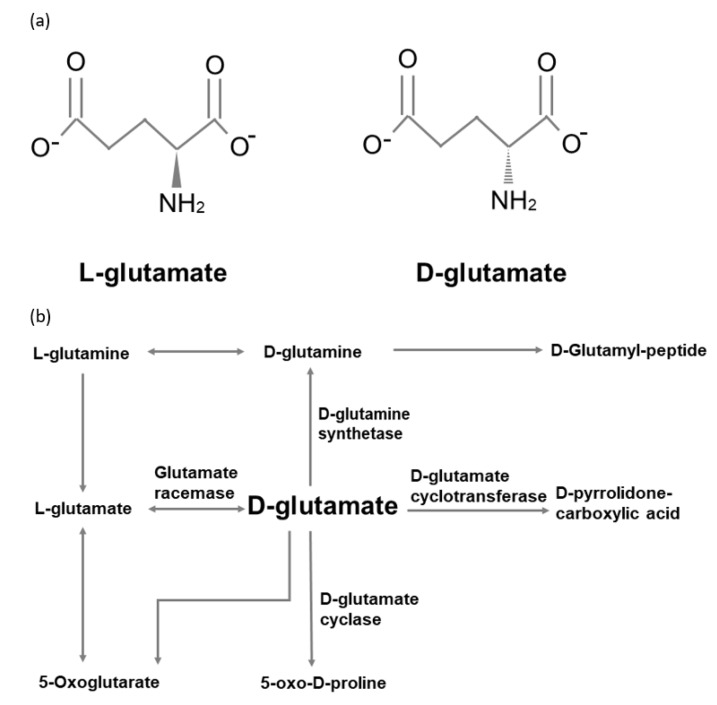
Background: An increasing number of studies have shown that the brain–gut–microbiota axis may significantly contribute to Alzheimer’s disease (AD) pathogenesis. Moreover, impaired memory and learning involve the dysfunction neurotransmission of glutamate, the agonist of the N-methyl-d-aspartate receptor and a major excitatory neurotransmitter in the brain. This systematic review aimed to summarize the current cutting-edge research on the gut microbiota and glutamate alterations associated with dementia. Methods: PubMed, the Cochrane Collaboration Central Register of Controlled Clinical Trials, and Cochrane Systematic Reviews were reviewed for all studies on glutamate and gut microbiota in dementia published up until Feb 2020. Results: Several pilot studies have reported alterations of gut microbiota and metabolites in AD patients and other forms of dementia. Gut microbiota including Bacteroides vulgatus and Campylobacter jejuni affect glutamate metabolism and decrease the glutamate metabolite 2-keto-glutaramic acid. Meanwhile, gut bacteria with glutamate racemase including Corynebacterium glutamicum, Brevibacterium lactofermentum, and Brevibacterium avium can convert l-glutamate to d-glutamate. N-methyl-d-aspartate glutamate receptor (NMDAR)-enhancing agents have been found to potentially improve cognition in AD or Parkinson’s disease patients. These findings suggest that d-glutamate (d-form glutamate) metabolized by the gut bacteria may influence the glutamate NMDAR and cognitive function in dementia patients. Conclusions: Gut microbiota and glutamate are potential novel interventions to be developed for dementia. Exploring comprehensive cognitive functions in animal and human trials with glutamate-related NMDAR enhancers are warranted to examine d-glutamate signaling efficacy in gut microbiota in patients with AD and other neurodegenerative dementias.
Overview
The claims and statistics of this paper haven’t been checked yet.
Run the check — free, no account needed. It reads the open-access text and checks the sources it cites.
Integrity signals
Registry
Cites
Statistics
Figures
Verification
Claims the paper makes
The claims and statistics of this paper haven’t been checked yet.
Run the check — free, no account needed. It reads the open-access text and checks the sources it cites.
Claims other papers make about this one
Each is checked against this paper’s own text: does it say what the citing paper says it does?
In the citing paper
“glutamate does not readily cross the BBB, which may limit its direct influence on brain glutamate levels.”
From Microbiota–gut–brain axis and its therapeutic applications in neurodegenerative diseases (2024) · cites this paper as [541]
Self-check
Percentages, sums and reported differences re-computed from the paper’s own numbers.
The self-check needs the paper’s full text.
Citations
Cites
A human gut microbial gene catalogue established by metagenomic sequencing
MetaHIT Consortium, Qin, J., Li, R., Raes, J., Arumugam, M., Burgdorf, K. S., Manichanh, C., Nielsen, T., Pons, N., Levenez, F., et al. (2010) · Nature · doi:10.1038/nature08821 · Cited by 11,624
Glutamate neurotoxicity and diseases of the nervous system
Choi, D. W. (1988) · Neuron · doi:10.1016/0896-6273(88)90162-6 · Cited by 8,188
Host-Bacterial Mutualism in the Human Intestine
Bäckhed, F., Ley, R. E., Sonnenburg, J. L., Peterson, D. A., & Gordon, J. I. (2005) · Science · doi:10.1126/science.1104816 · Cited by 5,277
Danbolt, N. C. (2001) · Progress in Neurobiology · doi:10.1016/s0301-0082(00)00067-8 · Cited by 4,227
Scheltens, P., Blennow, K., Breteler, M. M. B., de Strooper, B., Frisoni, G. B., Salloway, S., & Van der Flier, W. M. (2016) · The Lancet · doi:10.1016/s0140-6736(15)01124-1 · Cited by 3,125
The gut flora as a forgotten organ
O'Hara, A. M., & Shanahan, F. (2006) · The EMBO Reports · doi:10.1038/sj.embor.7400731 · Cited by 2,791
Excitatory Amino Acids as a Final Common Pathway for Neurologic Disorders
Epstein, F. H., Lipton, S. A., & Rosenberg, P. A. (1994) · New England Journal of Medicine · doi:10.1056/nejm199403033300907 · Cited by 2,676
Glutamate and the pathophysiology of hypoxic–ischemic brain damage
Rothman, S. M., & Olney, J. W. (1986) · Annals of Neurology · doi:10.1002/ana.410190202 · Cited by 2,428
Choi, D. W. (1992) · Journal of Neurobiology · doi:10.1002/neu.480230915 · Cited by 2,329
Blockade of NMDA Receptors and Apoptotic Neurodegeneration in the Developing Brain
Ikonomidou, C., Bosch, F., Miksa, M., Bittigau, P., Vöckler, J., Dikranian, K., Tenkova, T. I., Stefovska, V., Turski, L., & Olney, J. W. (1999) · Science · doi:10.1126/science.283.5398.70 · Cited by 2,055
Memantine in Moderate-to-Severe Alzheimer's Disease
Reisberg, B., Doody, R., Stöffler, A., Schmitt, F., Ferris, S., & Möbius, H. J. (2003) · New England Journal of Medicine · doi:10.1056/nejmoa013128 · Cited by 2,043
Glutamate: A Neurotransmitter in Mammalian Brain
Fonnum, F. (1984) · Journal of Neurochemistry · doi:10.1111/j.1471-4159.1984.tb09689.x · Cited by 2,008
Ionic dependence of glutamate neurotoxicity
Choi, D. W. (1987) · Journal of Neuroscience · doi:10.1523/jneurosci.07-02-00369.1987 · Cited by 1,854
APP Processing and Synaptic Function
Kamenetz, F., Tomita, T., Hsieh, H., Seabrook, G., Borchelt, D., Iwatsubo, T., Sisodia, S., & Malinow, R. (2003) · Neuron · doi:10.1016/s0896-6273(03)00124-7 · Cited by 1,644
Synaptic versus extrasynaptic NMDA receptor signalling: implications for neurodegenerative disorders
Hardingham, G. E., & Bading, H. (2010) · Nature Reviews Neuroscience · doi:10.1038/nrn2911 · Cited by 1,644 · cited 2×
“Finally, these effects may contribute to the inhibition of apoptosis and promotion of cell survival [72,73].”
BackgroundShankar, G. M., Bloodgood, B. L., Townsend, M., Walsh, D. M., Selkoe, D. J., & Sabatini, B. L. (2007) · The Journal of Neuroscience · doi:10.1523/jneurosci.4970-06.2007 · Cited by 1,592
Gut microbiome and serum metabolome alterations in obesity and after weight-loss intervention
Liu, R., Hong, J., Xu, X., Feng, Q., Zhang, D., Gu, Y., Shi, J., Zhao, S., Liu, W., Wang, X., et al. (2017) · Nature Medicine · doi:10.1038/nm.4358 · Cited by 1,501
Lacor, P. N., Buniel, M. C., Furlow, P. W., Sanz Clemente, A., Velasco, P. T., Wood, M., Viola, K. L., & Klein, W. L. (2007) · The Journal of Neuroscience · doi:10.1523/jneurosci.3501-06.2007 · Cited by 1,188
NMDA receptor-dependent long-term potentiation and long-term depression (LTP/LTD).
Luscher, C., & Malenka, R. C. (2012) · Cold Spring Harbor Perspectives in Biology · doi:10.1101/cshperspect.a005710 · Cited by 1,110 · cited 1×
“In contrast, adequate NMDAR activation induces adequate increase in postsynaptic Ca2+ and leads to phosphatase-mediated, long-term depression (LTD) [67].”
BackgroundThe Time Course of Glutamate in the Synaptic Cleft
Clements, J. D., Lester, R. A. J., Tong, G., Jahr, C. E., & Westbrook, G. L. (1992) · Science · doi:10.1126/science.1359647 · Cited by 1,089
The Gut Microbiota Mediates the Anti-Seizure Effects of the Ketogenic Diet
Olson, C. A., Vuong, H. E., Yano, J. M., Liang, Q. Y., Nusbaum, D. J., & Hsiao, E. Y. (2018) · Cell · doi:10.1016/j.cell.2018.04.027 · Cited by 1,057
AMPAR Removal Underlies Aβ-Induced Synaptic Depression and Dendritic Spine Loss
Hsieh, H., Boehm, J., Sato, C., Iwatsubo, T., Tomita, T., Sisodia, S., & Malinow, R. (2006) · Neuron · doi:10.1016/j.neuron.2006.10.035 · Cited by 1,042
Role of Glutamate and NMDA Receptors in Alzheimer’s Disease
Wang, R., & Reddy, P. H. (2017) · Journal of Alzheimer’s Disease · doi:10.3233/jad-160763 · Cited by 1,009
Glutamate receptor function in learning and memory
Riedel, G. (2003) · Behavioural Brain Research · doi:10.1016/s0166-4328(02)00272-3 · Cited by 993
Pharmacology of glutamate neurotoxicity in cortical cell culture: attenuation by NMDA antagonists
Choi, D. W., Koh, J., & Peters, S. (1988) · Journal of Neuroscience · doi:10.1523/jneurosci.08-01-00185.1988 · Cited by 983
De Felice, F. G., Velasco, P. T., Lambert, M. P., Viola, K., Fernandez, S. J., Ferreira, S. T., & Klein, W. L. (2007) · Journal of Biological Chemistry · doi:10.1074/jbc.m607483200 · Cited by 882
Excitatory amino acid receptors and synaptic plasticity
Collingridge, G. L., & Singer, W. (1990) · Trends in Pharmacological Sciences · doi:10.1016/0165-6147(90)90011-v · Cited by 867
The Gut Microbiota and Alzheimer’s Disease
Jiang, C., Li, G., Huang, P., Liu, Z., & Zhao, B. (2017) · Journal of Alzheimer's Disease · doi:10.3233/jad-161141 · Cited by 852
The SLC3 and SLC7 families of amino acid transporters
Fotiadis, D., Kanai, Y., & Palacı́n, M. (2013) · Molecular Aspects of Medicine · doi:10.1016/j.mam.2012.10.007 · Cited by 697
Metabolism and role of glutamate in mammalian brain
Erecińska, M., & Silver, I. A. (1990) · Progress in Neurobiology · doi:10.1016/0301-0082(90)90013-7 · Cited by 682
A nomenclature for ligand-gated ion channels
Collingridge, G. L., Olsen, R. W., Peters, J. A., & Spedding, M. (2008) · Neuropharmacology · doi:10.1016/j.neuropharm.2008.06.063 · Cited by 633
Lactic acid bacteria contribution to gut microbiota complexity: lights and shadows.
Pessione, E. (2012) · Frontiers in Cellular and Infection Microbiology · doi:10.3389/fcimb.2012.00086 · Cited by 592
Source specificity of early calcium neurotoxicity in cultured embryonic spinal neurons
Tymianski, M., Charlton, M. P., Carlen, P. L., & Tator, C. (1993) · Journal of Neuroscience · doi:10.1523/jneurosci.13-05-02085.1993 · Cited by 567
Extrasynaptic NMDA Receptor Involvement in Central Nervous System Disorders
Parsons, M. P., & Raymond, L. A. (2014) · Neuron · doi:10.1016/j.neuron.2014.03.030 · Cited by 567
Neuropathologic changes in Alzheimer's disease.
Wenk, G. L. (2003) · PubMed · Cited by 554
Amyloid-β as a positive endogenous regulator of release probability at hippocampal synapses
Abramov, E., Dolev, I., Fogel, H., Ciccotosto, G. D., Ruff, E., & Slutsky, I. (2009) · Nature Neuroscience · doi:10.1038/nn.2433 · Cited by 499
Excitatory Amino Acid Neurotransmission: NMDA Receptors and Hebb-Type Synaptic Plasticity
Cotman, C. W., & Monaghan, D. T. (1988) · Annual Review of Neuroscience · doi:10.1146/annurev.ne.11.030188.000425 · Cited by 484
Deficient glutamate tranport is associated with neurodegeneration in Alzheimer's disease
Masliah, E., Hansen, L., Alford, M., Deteresa, R., & Mallory, M. (1996) · Annals of Neurology · doi:10.1002/ana.410400512 · Cited by 476
Danysz, W., & Parsons, C. G. (2003) · International Journal of Geriatric Psychiatry · doi:10.1002/gps.938 · Cited by 404
Alberdi, E. M., Sánchez‐Gómez, M. V., Cavaliere, F., Pérez‐Samartín, A., Zugaza, J. L., Trullás, R., Domercq, M., & Matute, C. (2010) · Cell Calcium · doi:10.1016/j.ceca.2009.12.010 · Cited by 382
The glial cell glutamate uptake carrier countertransports pH-changing anions
Bouvier, M., Szatkowski, M. S., Amato, A., & Attwell, D. (1992) · Nature · doi:10.1038/360471a0 · Cited by 374
Overview of glutamatergic neurotransmission in the nervous system
Niciu, M. J., Kelmendi, B., & Sanacora, G. (2011) · Pharmacology Biochemistry and Behavior · doi:10.1016/j.pbb.2011.08.008 · Cited by 363
GABA and Glutamate Transporters in Brain
Zhou, Y., & Danbolt, N. C. (2013) · Frontiers in Endocrinology · doi:10.3389/fendo.2013.00165 · Cited by 361
Intestinal Glutamate Metabolism
Reeds, P. J., Burrin, D. G., Stoll, B., & Jahoor, F. (2000) · Journal of Nutrition · doi:10.1093/jn/130.4.978s · Cited by 350
LI, S., MALLORY, M., ALFORD, M., TANAKA, S., & MASLIAH, E. (1997) · Journal of Neuropathology and Experimental Neurology · doi:10.1097/00005072-199708000-00008 · Cited by 343
Glutamatergic Signaling Along The Microbiota-Gut-Brain Axis
Baj, A., Moro, E., Bistoletti, M., Orlandi, V. T., Crema, F., & Giaroni, C. (2019) · International Journal of Molecular Sciences · doi:10.3390/ijms20061482 · Cited by 339
Functional characterization of a potassium-selective prokaryotic glutamate receptor
Chen, G., Cui, C., Mayer, M. L., & Gouaux, E. (1999) · Nature · doi:10.1038/45568 · Cited by 333
The SLC1 high-affinity glutamate and neutral amino acid transporter family
Kanai, Y., Clémençon, B., Simonin, A., Leuenberger, M., Lochner, M., Weisstanner, M., & Hediger, M. A. (2013) · Molecular Aspects of Medicine · doi:10.1016/j.mam.2013.01.001 · Cited by 329
The blood-brain barrier and glutamate.
Hawkins, R. (2009) · American Journal of Clinical Nutrition · doi:10.3945/ajcn.2009.27462bb · Cited by 294
Human gut microbiota: the links with dementia development
Alkasir, R., Li, J., Li, X., Jin, M., & Zhu, B. (2016) · Protein & Cell · doi:10.1007/s13238-016-0338-6 · Cited by 289
Metabolic fate and function of dietary glutamate in the gut
Burrin, D. G., & Stoll, B. (2009) · American Journal of Clinical Nutrition · doi:10.3945/ajcn.2009.27462y · Cited by 288
Genchi, G. (2017) · Amino Acids · doi:10.1007/s00726-017-2459-5 · Cited by 288
Lack of Evidence for the Efficacy of Memantine in Mild Alzheimer Disease
Schneider, L. S. S. (2011) · Archives of Neurology · doi:10.1001/archneurol.2011.69 · Cited by 280
Pellegrini, C., Antonioli, L., Colucci, R., Blandizzi, C., & Fornai, M. (2018) · Acta Neuropathologica · doi:10.1007/s00401-018-1856-5 · Cited by 270
Danysz, W., Parsons, C. G., Möbius, H. J., Stöffler, A., & Quack, G. (2000) · Neurotoxicity Research · doi:10.1007/bf03033787 · Cited by 262
Amyloid β peptide oligomers directly activate NMDA receptors
Texidó, L., Martín-Satué, M., Alberdi, E. M., Solsona, C., & Matute, C. (2011) · Cell Calcium · doi:10.1016/j.ceca.2011.02.001 · Cited by 233
Add-on Treatment of Benzoate for Schizophrenia
Lane, H., Lin, C., Green, M. F., Hellemann, G., Huang, C., Chen, P., Tun, R., Chang, Y.-C., & Tsai, G. E. (2013) · JAMA Psychiatry · doi:10.1001/jamapsychiatry.2013.2159 · Cited by 233
Self-citationNeuronal vs glial glutamate uptake: Resolving the conundrum
Danbolt, N. C., Furness, D. N., & Zhou, Y. (2016) · Neurochemistry International · doi:10.1016/j.neuint.2016.05.009 · Cited by 224
The Gut Microbiota Mediates the Anti-Seizure Effects of the Ketogenic Diet
Olson, C. A., Vuong, H. E., Yano, J. M., Liang, Q. Y., Nusbaum, D. J., & Hsiao, E. Y. (2018) · Cell · doi:10.1016/j.cell.2018.06.051 · Cited by 224
Glutamate transporter variants reduce glutamate uptake in Alzheimer's disease
Scott, H. A., Gebhardt, F. M., Mitrovic, A. D., Vandenberg, R. J., & Dodd, P. R. (2011) · Neurobiology of Aging · doi:10.1016/j.neurobiolaging.2010.03.008 · Cited by 202
Kirvell, S. L., Esiri, M. M., & Francis, P. T. (2006) · Journal of Neurochemistry · doi:10.1111/j.1471-4159.2006.03935.x · Cited by 187
Wang, M., Wan, J., Rong, H., He, F., Wang, H., Zhou, J., Cai, C., Wang, Y., Xu, R., Yin, Z., et al. (2019) · mSystems · doi:10.1128/msystems.00321-18 · Cited by 181
Selective Cognitive Impairments Associated with NMDA Receptor Blockade in Humans
Rowland, L. M., Astur, R. S., Jung, R. E., Bustillo, J., Lauriello, J., & Yeo, R. A. (2005) · Neuropsychopharmacology · doi:10.1038/sj.npp.1300642 · Cited by 172
Pathogenic microbes, the microbiome, and Alzheimer’s disease (AD)
Hill, J. M., Clément, C., Pogue, A. I., Bhattacharjee, S., Zhao, Y., & Lukiw, W. J. (2014) · Frontiers in Aging Neuroscience · doi:10.3389/fnagi.2014.00127 · Cited by 170
Opstvedt, J., Miller, R., Hardy, R. W., & Spinelli, J. (1984) · Journal of Agricultural and Food Chemistry · doi:10.1021/jf00124a056 · Cited by 170
Pursuing Human-Relevant Gut Microbiota-Immune Interactions
Spencer, S. P., Fragiadakis, G. K., & Sonnenburg, J. L. (2019) · Immunity · doi:10.1016/j.immuni.2019.08.002 · Cited by 167
Gut Microbiota, Endocrine-Disrupting Chemicals, and the Diabetes Epidemic
Velmurugan, G., Ramprasath, T., Mithieux, G., Swaminathan, K., & Ramasamy, S. (2017) · Trends in Endocrinology and Metabolism · doi:10.1016/j.tem.2017.05.001 · Cited by 162
Glutamate signaling in the pathophysiology and therapy of schizophrenia
Lin, C., Lane, H., & Tsai, G. E. (2011) · Pharmacology Biochemistry and Behavior · doi:10.1016/j.pbb.2011.03.023 · Cited by 154
Self-citationUdaka, S. (1960) · Journal of Bacteriology · doi:10.1128/jb.79.5.754-755.1960 · Cited by 152
The effects of gut microbiota on CNS function in humans
Tillisch, K. (2014) · Gut Microbes · doi:10.4161/gmic.29232 · Cited by 144
Survival Signaling Pathways Activated by NMDA Receptors
Hetman, M., & Kharebava, G. (2006) · Current Topics in Medicinal Chemistry · doi:10.2174/156802606777057553 · Cited by 144
Pál, B. Z. (2018) · Cellular and Molecular Life Sciences · doi:10.1007/s00018-018-2837-5 · Cited by 140
Le, W., Colom, L. V., Xie, W., SMITH, R. G., Alexianu, M. E., & Appel, S. H. (1995) · Brain Research · doi:10.1016/0006-8993(95)00450-5 · Cited by 136
Lin, C., Chen, P.-K., Chang, Y., Chuo, L.-J., Chen, Y.-S., Tsai, G. E., & Lane, H. (2013) · Biological Psychiatry · doi:10.1016/j.biopsych.2013.08.010 · Cited by 133
Self-citationMarcone, G. L., Rosini, E., Crespi, E., & Pollegioni, L. (2019) · Applied Microbiology and Biotechnology · doi:10.1007/s00253-019-10264-9 · Cited by 132
McCoy, A. J., Adams, N. E., Hudson, A. O., Gilvarg, C., Leustek, T., & Maurelli, A. T. (2006) · Proceedings of the National Academy of Sciences · doi:10.1073/pnas.0608643103 · Cited by 129
Glutamate and the glutamate receptor system: a target for drug action
Bleich, S., R�mer, K., Wiltfang, J., & Kornhuber, J. (2003) · International Journal of Geriatric Psychiatry · doi:10.1002/gps.933 · Cited by 125
Perry, T. L., Yong, V. W., Bergeron, C., Hansen, S., & Jones, K. L. (1987) · Annals of Neurology · doi:10.1002/ana.410210403 · Cited by 121
Gut microbiota of mice putatively modifies amino acid metabolism in the host brain
Kawase, T., Nagasawa, M., Ikeda, H., Yasuo, S., Koga, Y., & Furuse, M. (2017) · British Journal of Nutrition · doi:10.1017/s0007114517000678 · Cited by 119
β-Amyloid Modulation of Synaptic Transmission and Plasticity
Venkitaramani, D. V., Chin, J., Netzer, W. J., Gouras, G. K., Lesné, S., Malinow, R., & Lombroso, P. J. (2007) · Journal of Neuroscience · doi:10.1523/jneurosci.3478-07.2007 · Cited by 118
The Roles of Dietary Glutamate in the Intestine
Tomé, D. (2018) · Annals of Nutrition and Metabolism · doi:10.1159/000494777 · Cited by 114
A Glutamic Acid-Producing Lactic Acid Bacteria Isolated from Malaysian Fermented Foods
Zareian, M., Ebrahimpour, A., Bakar, F. A., Mohamed, A. K. S., Forghani, B., Ab-Kadir, M. S. B., & Saari, N. (2012) · International Journal of Molecular Sciences · doi:10.3390/ijms13055482 · Cited by 110
The inhibitory effects of β-amyloid on glutamate and glucose uptakes by cultured astrocytes
Parpura‐Gill, A., Beitz, D. C., & Uemura, E. (1997) · Brain Research · doi:10.1016/s0006-8993(97)00043-7 · Cited by 105
Pro-survival signalling from the NMDA receptor
Hardingham, G. E. (2006) · Biochemical Society Transactions · doi:10.1042/bst0340936 · Cited by 100
Lin, C.-Y., Liang, S.-Y., Chang, Y., Ting, S.-Y., Kao, C.-L., Wu, Y., Tsai, G. E., & Lane, H. (2015) · The World Journal of Biological Psychiatry · doi:10.3109/15622975.2015.1117654 · Cited by 97
Self-citationOur microbes not only produce antibiotics, they also overproduce amino acids
Sánchez, S., Rodrı́guez-Sanoja, R., Ramos, A., & Demain, A. L. (2017) · The Journal of Antibiotics · doi:10.1038/ja.2017.142 · Cited by 96
Arias, C., Arrieta, I., & Tapia, R. (1995) · Journal of Neuroscience Research · doi:10.1002/jnr.490410416 · Cited by 96
Blood levels of D-amino acid oxidase vs. D-amino acids in reflecting cognitive aging
Lin, C., Yang, H.-T., Chiu, C.-C., & Lane, H. (2017) · Scientific Reports · doi:10.1038/s41598-017-13951-7 · Cited by 96
Self-citationKoh, J., & Choi, D. W. (1991) · Brain Research · doi:10.1016/0006-8993(91)91140-v · Cited by 93
Monti, B., & Contestabile, A. (2000) · European Journal of Neuroscience · doi:10.1046/j.1460-9568.2000.00189.x · Cited by 92
Metabolic functions of the human gut microbiota: the role of metalloenzymes
Rajakovich, L. J., & Balskus, E. P. (2018) · Natural Product Reports · doi:10.1039/c8np00074c · Cited by 91
Substrate selectivity in arginine-dependent acid resistance in enteric bacteria
Tsai, M.-F., & Miller, C. (2013) · Proceedings of the National Academy of Sciences · doi:10.1073/pnas.1301442110 · Cited by 91
Fernández-Tomé, P., Brera, B., Arévalo, M., & CEBALLOS, M. L. D. (2004) · Neurobiology of Disease · doi:10.1016/j.nbd.2003.12.006 · Cited by 85
Chromatographic determination of D-amino acids as native constituents of vegetables and fruits
Brückner, H. J., & Westhauser, T. (1994) · Chromatographia · doi:10.1007/bf02278756 · Cited by 83
How Glutamate Is Managed by the Blood–Brain Barrier
Hawkins, R. A., & Vinã, J. R. (2016) · Biology · doi:10.3390/biology5040037 · Cited by 82
Lin, C., Yang, H.-T., & Lane, H. (2019) · Pharmacology Biochemistry and Behavior · doi:10.1016/j.pbb.2019.172760 · Cited by 79
Self-citationd-Amino Acids and Lactic Acid Bacteria
Kobayashi, J. (2019) · Microorganisms · doi:10.3390/microorganisms7120690 · Cited by 77
Glutamate interactions with obesity, insulin resistance, cognition and gut microbiota composition
Palomo-Buitrago, M. E., Sabater, M., Moreno‐Navarrete, J. M., Caballano‐Infantes, E., Arnoriaga‐Rodríguez, M., Coll, C., Ramió, L., Palomino‐Schätzlein, M., Gutiérrez-Carcedo, P., Pérez‐Brocal, V., et al. (2019) · Acta Diabetologica · doi:10.1007/s00592-019-01313-w · Cited by 76
Ye, C., Walsh, D. M., Selkoe, D. J., & Hartley, D. M. (2004) · Neuroscience Letters · doi:10.1016/j.neulet.2004.05.060 · Cited by 75
Jin, D., Miyahara, T., Oe, T., & Toyo’oka, T. (1999) · Analytical Biochemistry · doi:10.1006/abio.1998.3090 · Cited by 75
Mutaguchi, Y., Ohmori, T., Akano, H., Doi, K., & Ohshima, T. (2013) · SpringerPlus · doi:10.1186/2193-1801-2-691 · Cited by 73
D-Glutamate is metabolized in the heart mitochondria
Ariyoshi, M., Katane, M., Hamase, K., Miyoshi, Y., Nakane, M., Hoshino, A., Okawa, Y., Mita, Y., Kaimoto, S., Uchihashi, M., et al. (2017) · Scientific Reports · doi:10.1038/srep43911 · Cited by 71
Occurrence of D-amino acids in food
Palla, G., Marchelli, R., Dossena, A., & Casnati, G. (1989) · Journal of Chromatography A · doi:10.1016/s0021-9673(00)91414-6 · Cited by 70
Janeczko, M., Stoll, B., Chang, X., Guan, X., & Burrin, D. G. (2007) · Journal of Nutrition · doi:10.1093/jn/137.11.2384 · Cited by 64
Bai, W., & Zhou, Y. (2017) · Frontiers in Molecular Neuroscience · doi:10.3389/fnmol.2017.00400 · Cited by 61
Domingues, A. M. D. J., Almeida, S., DACRUZESILVA, E., Oliveira, C. R., & Rego, A. C. (2007) · Neurochemistry International · doi:10.1016/j.neuint.2007.03.001 · Cited by 60
Wong, D. Y., Atiya, S., Fogarty, J., Montero‐Odasso, M., Pasternak, S., Brymer, C., BORRIE, M. J., & Bartha, R. (2020) · Journal of Alzheimer s Disease · doi:10.3233/jad-190773 · Cited by 56
Nakayama, Y., Hashimoto, K.-I., Sawada, Y., Sokabe, M., Kawasaki, H., & Martinac, B. (2018) · Biophysical Reviews · doi:10.1007/s12551-018-0452-1 · Cited by 49
Reaction Mechanism of Glutamate Racemase, a Pyridoxal Phosphate-Independent Amino Acid Racemase
Choi, S., Esaki, N., Yoshimura, T., & Soda, K. (1992) · The Journal of Biochemistry · doi:10.1093/oxfordjournals.jbchem.a123853 · Cited by 47
Bunjapamai, S., Mahoney, R. R., & Fagerson, I. S. (1982) · Journal of Food Science · doi:10.1111/j.1365-2621.1982.tb07654.x · Cited by 46
werf, P. V. D., & Meister, A. (1975) · Advances in enzymology and related areas of molecular biology/Advances in enzymology and related subjects · doi:10.1002/9780470122884.ch7 · Cited by 46
Kawamoto, E. M., Lepsch, L. B., Cury‐Boaventura, M. F., Munhoz, C. D., Lima, L. S., Yshii, L., Avellar, M. C. W., Curi, R., Mattson, M. P., & Scavone, C. (2007) · Journal of Neuroscience Research · doi:10.1002/jnr.21548 · Cited by 43
Haÿs, S., Ordonez, J. M., Burrin, D. G., & Sunehag, A. L. (2007) · Pediatric Research · doi:10.1203/pdr.0b013e318123f719 · Cited by 42
Detection of free D ‐amino acids in food by chiral phase capillary gas chromatography
Brückner, H. J., & Hausch, M. (1989) · Journal of High Resolution Chromatography · doi:10.1002/jhrc.1240121012 · Cited by 41
Immunocytochemical visualization of d-glutamate in the rat brain
Mangas, A., Coveñas, R., Bodet, D., Geffard, M., Aguilar, L. A., & Yajeya, J. (2006) · Neuroscience · doi:10.1016/j.neuroscience.2006.09.045 · Cited by 39
Brückner, H. J., & Hausch, M. (1990) · Milk science international/Milchwissenschaft · Cited by 31
Howley, E., Bestwick, M., Fradley, R. L., Harrison, H., Leveridge, M., Okada, K., Fieldhouse, C., Farnaby, W., Canning, H. E., Sykes, A. P., et al. (2017) · Neurochemical Research · doi:10.1007/s11064-017-2367-9 · Cited by 30
van der Stel, A., van Mourik, A., Łaniewski, P., van Putten, J. P. M., Jagusztyn-Krynicka, E. K., & Wösten, M. M. S. M. (2015) · Frontiers in Microbiology · doi:10.3389/fmicb.2015.00567 · Cited by 28
Dean, S. F., Whalen, K. L., & Spies, M. A. (2015) · ACS Central Science · doi:10.1021/acscentsci.5b00211 · Cited by 26
Jang, B.-G., In, S., Choi, B., & Kim, M.-J. (2014) · Neuroreport · doi:10.1097/wnr.0000000000000260 · Cited by 26
Ger, M.-F., Rendon, G., Tilson, J. L., & Jakobsson, E. (2010) · PLoS ONE · doi:10.1371/journal.pone.0012827 · Cited by 23
Glutamate Transporters in the Blood-Brain Barrier
Helms, H. C. C., Nielsen, C. U., Waagepetersen, H. S., & Brodin, B. (2017) · Advances in neurobiology · doi:10.1007/978-3-319-55769-4_15 · Cited by 21
Vijayakumari, A. A., Menon, R. N., Thomas, B., Arun, T. M., Mohanan, N., & Kesavadas, C. (2019) · Brain Imaging and Behavior · doi:10.1007/s11682-019-00122-7 · Cited by 20
How Glutamate Is Managed by the Blood-Brain BarrierPreprint
Hawkins, R. A., & Vinã, J. R. (2016) · Preprints.org · doi:10.20944/preprints201609.0077.v1 · Cited by 19
Bertoldi, M., Cellini, B., Paiardini, A., di Salvo, M. L., & BORRIVOLTATTORNI, C. (2003) · Biochemical Journal · doi:10.1042/bj20020875 · Cited by 19
Brain d-amino acids: a novel class of neuromodulators
Mothet, J., & Snyder, S. H. (2012) · Amino Acids · doi:10.1007/s00726-012-1403-y · Cited by 18
Investigation of the Essentiality of Glutamate Racemase in Mycobacterium smegmatis
Li, Y., Mortuza, R., Milligan, D. L., Tran, S. L., Strych, U., Cook, G. M., & Krause, K. L. (2014) · Journal of Bacteriology · doi:10.1128/jb.02090-14 · Cited by 18
Raj, D. S., Langford, M. P., Krueger, S., Shelton, M., & Welbourne, T. (2001) · American Journal of Physiology-Endocrinology and Metabolism · doi:10.1152/ajpendo.2001.280.2.e214 · Cited by 16
Dyakin, V. V., Lucas, J., Dyakina‐Fagnano, N. V., & Posner, E. V. (2017) · Neurology and Neuroscience Research · doi:10.24983/scitemed.nnr.2017.00028 · Cited by 15
Isolation of themurIgene fromBrevibacterium lactofermentumATCC 13869 encoding d-glutamate racemase
Malathi, K. C., Wachi, M., & Nagai, K. (1999) · FEMS Microbiology Letters · doi:10.1111/j.1574-6968.1999.tb13619.x · Cited by 13
Böhmer, N., Dautel, A., EISELE, T. A., & Fischer, L. (2012) · Protein Expression and Purification · doi:10.1016/j.pep.2012.11.012 · Cited by 12
Chirality and drugs used to treat psychiatric disorders
Baker, G. B., Prior, T. I., & Coutts, R. T. (2002) · Journal of Psychiatry and Neuroscience · doi:10.1139/jpn.0260 · Cited by 11
Coveñas, R., Mangas, A., Sánchez, M. L., Cadena, D., Husson, M., & Geffard, M. (2018) · Folia Histochemica et Cytobiologica · doi:10.5603/fhc.a2017.0023 · Cited by 8
Malathi, K. C. (1999) · FEMS Microbiology Letters · doi:10.1016/s0378-1097(99)00192-5 · Cited by 2
Cited by
Sorted by citations
Microbiota–gut–brain axis and its therapeutic applications in neurodegenerative diseases
Loh, J. S., Mak, W. Q., Tan, L. K. S., Ng, C. X., Chan, H. H., Yeow, S. H., Foo, J. B., Ong, Y. S., How, C. W., & Khaw, K. Y. (2024) · Signal Transduction and Targeted Therapy · doi:10.1038/s41392-024-01743-1 · Cited by 1,193
Chen, Y., Xu, J., & Chen, Y. (2021) · Nutrients · doi:10.3390/nu13062099 · Cited by 917
Gut Bacteria and Neurotransmitters
Dicks, L. M. T. (2022) · Microorganisms · doi:10.3390/microorganisms10091838 · Cited by 482
Brain–gut–microbiota axis in depression: A historical overview and future directions
Chang, L., Wei, Y., & Hashimoto, K. (2022) · Brain Research Bulletin · doi:10.1016/j.brainresbull.2022.02.004 · Cited by 407
The Microbiota–Gut–Brain Axis and Alzheimer’s Disease: Neuroinflammation Is to Blame?
Megur, A., Baltriukienė, D., Bukelskienė, V., & Burokas, A. (2020) · Nutrients · doi:10.3390/nu13010037 · Cited by 323
Metadata
- Authors
- Chang, C.-H., Lin, C.-H., & Lane, H.-Y.
- Affiliations
- China Medical University (TW)
- Chang Gung University (TW)
- Asia University (TW)
- Corresponding author
- Lin, Chieh-Hsin
- Lane, Hsien-Yuan
- Venue
- International Journal of Molecular Sciences
- Publisher
- MDPI AG
- Published
- 2020-04-11
- Volume
- 21
- Issue
- 8
- Pages
- 2676
- ISSN
- 1422-0067 (ISSN-L)
- PMC
- PMC7215955
- OpenAlex
- W3015756776
- Cited by
- 191
- References
- 132
- Citations by year
- 2026: 14 · 2025: 40 · 2024: 47 · 2023: 31 · 2022: 32 · 2021: 19 · 2020: 8
- FWCI
- 2.15
- Type
- journal article
- Language
- en
- Open access
- gold
- dx.doi.org
- Licence
- Locations
- International Journal of Molecular Sciences (publishedVersion, cc-by)
- PubMed Central (publishedVersion, cc-by)
- PubMed (publishedVersion)
- DOAJ (DOAJ: Directory of Open Access Journals) (submittedVersion, cc-by-sa)
- Funders
- China Medical University Hospital (DMR‐108‐BC2)
- Chang Gung Medical Foundation
- Ministry of Science and Technology, Taiwan (MOST108-2628-B182A-002, MOST108-2314-B039-002, MOST107-2628-B182A-002, MOST107-2632-B039-001)
- National Health Research Institutes (NHRI-EX108-10731NI)
- China Medical University
- Division of Materials Research
- Topics
- Life Sciences › Biochemistry, Genetics and Molecular Biology › Molecular Biology › Gut microbiota and health
- Life Sciences › Neuroscience › Cellular and Molecular Neuroscience › Alzheimer's disease research and treatments
- Health Sciences › Medicine › Psychiatry and Mental health › Dementia and Cognitive Impairment Research
- Keywords
- D-glutamic acid, gut microbiota, Alzheimer's disease, dementia, brain-gut-microbiota axis, glutamate metabolism, NMDA receptor, glutamate racemase, Bacteroides vulgatus, Campylobacter jejuni, Corynebacterium glutamicum, Brevibacterium lactofermentum, cognitive function, neurodegenerative diseases, Parkinson's disease
- MeSH terms
- Gastrointestinal Microbiome, Alzheimer Disease, Animals, Blood-Brain Barrier, Brain, Diet, Disease Susceptibility, Humans, Synaptic Transmission, Signal Transduction, Receptors, N-Methyl-D-Aspartate, Glutamic Acid, Metabolic Networks and Pathways
About these checks
Registry, retraction, Cites and statistics results are computed, not judged, with one exception: a printed reference that no index lists is read once by a model before it counts as a citation error. Claims are extracted by a model and kept only when their quote appears verbatim in the text; each cited source is then checked, with a model’s help, for whether it says what the claim relies on. Those verdicts can be wrong — read the claim’s quote and the cited source before relying on one.
Statistics and arithmetic are recomputed, not judged.
Confidence bands are shown only for fields calibrated on our annotated test set. None is calibrated yet, so no band is shown.
What counts as a claim ›How we measure confidence ›How we check this ›
Are you an author, or do you see a problem with this page? Request a review
