

Relationship between Dispositional Mindfulness, Psychological Health, and Diet Quality among Healthy Midlife Adults
Open accessThe DOI matches its Crossref record; 96 of the 96 references it cites were found in a registry or an index.
Abstract
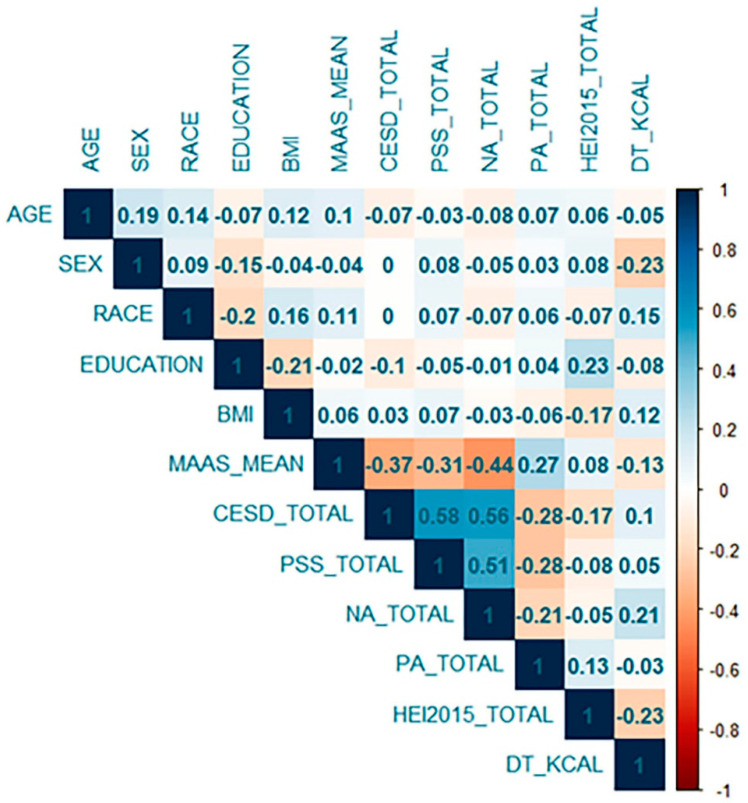
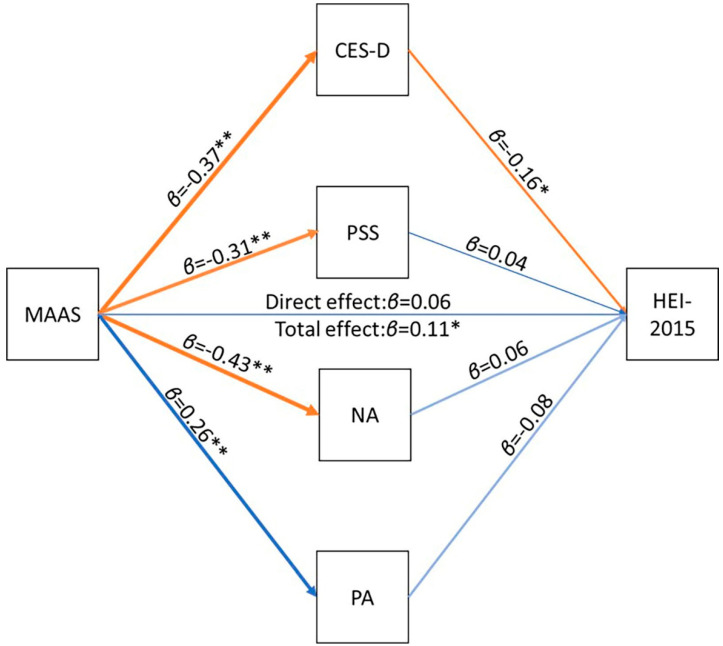
Mindfulness, a practice of non-judgmental awareness of present experience, has been associated with reduced eating psychopathology and emotion-driven eating. However, it remains unclear whether mindfulness relates to diet quality. Thus, the purpose of this study was to examine whether dispositional mindfulness is associated with diet quality and to explore psychological factors relating dispositional mindfulness to diet quality. Community-dwelling adults (N = 406; Mage = 43.19, SD = 7.26; Mbody mass index [BMI] = 27.08, SD = 5.28; 52% female) completed ratings of dispositional mindfulness, depressive symptoms, perceived stress, positive affect (PA), and negative affect (NA). Dietary intake was assessed using the Block Food Frequency Questionnaire, from which the 2015 Healthy Eating Index was derived. Analyses were conducted using the “lavaan” package in R with bias-corrected bootstrapped confidence intervals (BootCI). Age, sex, race, education, and BMI were entered as covariates in all models. Higher dispositional mindfulness was associated with higher diet quality (β = 0.11, p = 0.03), and this effect was mediated through lower depressive symptoms (indirect effect β = 0.06, p = 0.02, BootCI = 0.104–1.42, p = 0.03). Dispositional mindfulness was negatively correlated with perceived stress (β = −0.31, p < 0.01) and NA (β = −0.43, p < 0.01), as well as positively correlated with PA (β = −0.26, p < 0.01). However, these factors were unrelated to diet quality. These cross-sectional data provide initial evidence that dispositional mindfulness relates to diet quality among midlife adults, an effect that may be explained in part by less depressive symptomatology. Given that lifestyle behaviors in midlife are leading determinants of risk for cardiovascular disease and neurocognitive impairment in late life, interventions to enhance mindfulness in midlife may mitigate disease risk. Additional research assessing the impact of mindfulness interventions on diet quality are warranted.
Overview
The claims and statistics of this paper haven’t been checked yet.
Free: it reads the open-access text and checks the first 5 claims that cite a source we can check. Create a free account to check every claim.
Integrity signals
Registry
Cites
Statistics
Figures
Verification
Claims the paper makes
The claims and statistics of this paper haven’t been checked yet.
Free: it reads the open-access text and checks the first 5 claims that cite a source we can check. Create a free account to check every claim.
Self-check
Percentages, sums and reported differences re-computed from the paper’s own numbers.
The self-check needs the paper’s full text.
Citations
Cites
The CES-D Scale: A Self-Report Depression Scale for Research in the General Population
Radloff, L. S. (1977) · Applied Psychological Measurement · doi:10.1177/014662167700100306 · Cited by 53,267 · cited 1×
“Depressive symptoms were assessed using the Center for Epidemiologic Studies-Depression Scale (CES-D) [63], a self-report measure of the frequency of 20 common depressive symptoms rated along a 0 (“Rarely or none of the time”) to 3 (“Most or all of the time”) on the Likert scale.”
A Global Measure of Perceived Stress
Cohen, S., Kamarck, T., & Mermelstein, R. (1983) · Journal of Health and Social Behavior · doi:10.2307/2136404 · Cited by 32,807 · cited 1×
“The 10-item version of the Perceived Stress Scale (PSS) [65] was administered to assess experiences of daily life stress.”
lavaan : An R Package for Structural Equation Modeling
Rosseel, Y. (2012) · Journal of Statistical Software · doi:10.18637/jss.v048.i02 · Cited by 27,955
The benefits of being present: Mindfulness and its role in psychological well-being
Brown, K. W., & Ryan, R. M. (2003) · Journal of Personality and Social Psychology · doi:10.1037/0022-3514.84.4.822 · Cited by 13,448 · cited 3×
“74), comparable to scores obtained in prior investigations among healthy adults [54,55].”
The PANAS-X: Manual for the Positive and Negative Affect Schedule - Expanded Form
Watson, D., & Clark, L. A. (1994) · University of Iowa · doi:10.17077/48vt-m4t2 · Cited by 3,700 · cited 5×
“To evaluate individual differences in trait positive affect (PA) and negative affect (NA), participants were administered the Positive Affect Negative Affect Schedule-Expanded Form (PANAS-X; see Reference [67].”
InfluentialCrawford, J. R., & Henry, J. D. (2004) · British Journal of Clinical Psychology · doi:10.1348/0144665031752934 · Cited by 2,957
Diet, lifestyle, and the risk of type 2 diabetes mellitus in women.
Hu, F. B., Manson, J. E., Stampfer, M. J., Colditz, G., Liu, S., Solomon, C. G., & Willett, W. C. (2001) · New England Journal of Medicine · doi:10.1056/nejmoa010492 · Cited by 2,901
Effects of mindfulness on psychological health: A review of empirical studies
Keng, S.-L., Smoski, M. J., & Robins, C. J. (2011) · Clinical Psychology Review · doi:10.1016/j.cpr.2011.04.006 · Cited by 2,687
Mozaffarian, D. (2016) · Circulation · doi:10.1161/circulationaha.115.018585 · Cited by 2,216 · cited 1×
“Among the complex and interacting factors that have been shown to influence dietary intake patterns [14], the capacity to engage self-regulation skills in response to cognitive, social and emotional triggers for eating has been identified as one of the most important predictors of eating and weight…”
Update of the Healthy Eating Index: HEI‐2015
Krebs-Smith, S. M., Pannucci, T. E., Subar, A. F., Kirkpatrick, S. I., Lerman, J. L., Tooze, J. A., Wilson, M. M., & Reedy, J. (2018) · Journal of the Academy of Nutrition and Dietetics · doi:10.1016/j.jand.2018.05.021 · Cited by 2,198 · cited 1×
“…the FFQ were then used to calculate the 2015 version of the healthy eating index (HEI), a measure of dietary quality developed to quantify the degree to which an individual’s dietary intake patterns conform to the recommendations put forth in the 2015–2020 Dietary Guidelines for Americans [73].”
Long-term weight loss maintenance
Wing, R. R., & Phelan, S. (2005) · The American Journal of Clinical Nutrition · doi:10.1093/ajcn/82.1.222s · Cited by 1,941 · cited 1×
“For instance, depressive symptoms have been associated with reduced likelihood of maintaining weight loss [16], and eating as a means of regulating mood is predictive of weight regain following a weight loss attempt [17].”
Dietary assessment methods in epidemiologic studies
Shim, J.-S., Oh, K., & Kim, H. C. (2014) · Epidemiology and Health · doi:10.4178/epih/e2014009 · Cited by 1,545 · cited 1×
“Third, dietary intake is notoriously di ffi cult to assess, and food recall instruments, such as the FFQ, used in the present study are subject to a number of biases that negatively impact accuracy of recall [94].”
Subar, A. F., Thompson, F. E., Kipnis, V., Midthune, D., Hurwitz, P., McNutt, S., McIntosh, A., & Rosenfeld, S. (2001) · American Journal of Epidemiology · doi:10.1093/aje/154.12.1089 · Cited by 1,401
Gender differences in food choice: The contribution of health beliefs and dieting
Wardle, J., Haase, A. M., Steptoe, A., Nillapun, M., Jonwutiwes, K., & Bellisie, F. (2004) · Annals of Behavioral Medicine · doi:10.1207/s15324796abm2702_5 · Cited by 1,358 · cited 1×
“Further, our analyses accounted for several factors known to influence psychological health, dietary intake, and accuracy of dietary reporting (age, sex, education, and BMI; Reference [90–93]).”
Validation of a self-administered diet history questionnaire using multiple diet records
Block, G., Woods, M., Potosky, A., & Clifford, C. (1990) · Journal of Clinical Epidemiology · doi:10.1016/0895-4356(90)90099-b · Cited by 1,197 · cited 1×
“Dietary intake was evaluated using the 2005 version of the Block Food Frequency Questionnaire (FFQ), a 110-item inventory that estimates usual and customary intake of a number of nutrients and food items [70].”
Epel, E., Lapidus, R., McEwen, B., & Brownell, K. (2001) · Psychoneuroendocrinology · doi:10.1016/s0306-4530(00)00035-4 · Cited by 1,060
Schwingshackl, L., & Hoffmann, G. (2015) · Journal of the Academy of Nutrition and Dietetics · doi:10.1016/j.jand.2014.12.009 · Cited by 1,022 · cited 1×
“Higher HEI-2015 scores have been associated with lower all-cause mortality and reduced risk of mortality, specifically from cardiovascular disease, Type II Diabetes, and cancer [53,74,75].”
Spijkerman, M. P. J., Pots, W. T. M., & Bohlmeijer, E. T. (2016) · Clinical Psychology Review · doi:10.1016/j.cpr.2016.03.009 · Cited by 975 · cited 1×
“Finally, individuals reporting higher dispositional mindfulness also reported less perceived stress and negative affect, and higher positive affect, a finding that converges with prior research [36], as well as with evidence from clinical trials of mindfulness-based interventions [86,87].”
Ludwig, D. S. (2008) · JAMA · doi:10.1001/jama.300.11.1350 · Cited by 957 · cited 1×
“Mindfulness involves maintaining moment to moment awareness of and openness to current experiences, including cognitions, emotions, and physical sensations, and resistance of any immediate urges to react to those experiences [32].”
Critchley, H. D., & Garfinkel, S. N. (2017) · Current Opinion in Psychology · doi:10.1016/j.copsyc.2017.04.020 · Cited by 899 · cited 1×
“…in bodily sensations in response to external events are the peripheral component of emotional reactivity, and the degree to which an individual recognizes when these changes are occurring relates to the intensity of emotional experience, as well the ability to regulate emotional responses [79].”
Association of Lifestyle and Genetic Risk With Incidence of Dementia
Lourida, I., Hannon, E., Littlejohns, T. J., Langa, K. M., Hyppönen, E., Kuzma, E., & Llewellyn, D. J. (2019) · JAMA · doi:10.1001/jama.2019.9879 · Cited by 881 · cited 1×
“Poor diet quality is one of the leading modifiable risk factors for mortality worldwide, increasing susceptibility for numerous adverse physical and psychological health outcomes, including cardiovascular disease [1], diabetes [2], dementia [3,4], some forms of cancer [5,6], and major depression [7].”
Evaluation of the Healthy Eating Index-2015
Reedy, J., Lerman, J. L., Krebs-Smith, S. M., Kirkpatrick, S. I., Pannucci, T. E., Wilson, M. M., Subar, A. F., Kahle, L. L., & Tooze, J. A. (2018) · Journal of the Academy of Nutrition and Dietetics · doi:10.1016/j.jand.2018.05.019 · Cited by 822 · cited 4×
“Correlations between HEI scores and total caloric intake were observed to be low ( r 0.25), suggesting that these two aspects of dietary intake provide unique information about consumption patterns [53] and may independently relate to individual di ff erences in health outcomes linked with diet.”
InfluentialOrme, J. G., Reis, J., & Herz, E. J. (1986) · Journal of Clinical Psychology · doi:10.1002/1097-4679(198601)42:1<28::aid-jclp2270420104>3.0.co;2-t · Cited by 777 · cited 1×
“The CES-D has demonstrated adequate reliability and validity in a number of populations [64].”
Food selection changes under stress
Zellner, D. A., Loaiza, S., Gonzalez, Z., Pita, J., Morales, J., Pecora, D., & Wolf, A. (2006) · Physiology & Behavior · doi:10.1016/j.physbeh.2006.01.014 · Cited by 742 · cited 1×
“Experimental induction of negative a ff ect or stress has been associated with altered attentional processing of palatable food cues [18–22], and a ff ect-driven shifts in attention predict subsequent eating behavior [18,23–27] and weight gain [28].”
Kristeller, J. L., & Wolever, R. Q. (2010) · Eating Disorders · doi:10.1080/10640266.2011.533605 · Cited by 592
Validation of the Mindful Attention Awareness Scale in a cancer population
Carlson, L. E., & Brown, K. W. (2005) · Journal of Psychosomatic Research · doi:10.1016/j.jpsychores.2004.04.366 · Cited by 583 · cited 2×
“The MAAS has been validated in a number of populations, including university undergraduate students [55–57], healthy community adults [54], and in clinical populations [58,59].”
Dispositional Mindfulness and Psychological Health: a Systematic Review
Tomlinson, E. R., Yousaf, O., Vittersø, A. D., & Jones, L. (2018) · Mindfulness · doi:10.1007/s12671-017-0762-6 · Cited by 560 · cited 2×
“Finally, individuals reporting higher dispositional mindfulness also reported less perceived stress and negative a ff ect, and higher positive a ff ect, a finding that converges with prior research [36], as well as with evidence from clinical trials of mindfulness-based interventions [86,87].”
Minding one’s emotions: Mindfulness training alters the neural expression of sadness.
Farb, N. A. S., Anderson, A. K., Mayberg, H., Bean, J., McKeon, D., & Segal, Z. V. (2010) · Emotion · doi:10.1037/a0017151 · Cited by 521
Mediterranean Diet, Cognitive Function, and Dementia: A Systematic Review
Lourida, I., Soni, M., Thompson-Coon, J., Purandare, N., Lang, I. A., Ukoumunne, O. C., & Llewellyn, D. J. (2013) · Epidemiology · doi:10.1097/ede.0b013e3182944410 · Cited by 521 · cited 1×
“Poor diet quality is one of the leading modifiable risk factors for mortality worldwide, increasing susceptibility for numerous adverse physical and psychological health outcomes, including cardiovascular disease [1], diabetes [2], dementia [3,4], some forms of cancer [5,6], and major”
Johns, D. J., Hartmann-Boyce, J., Jebb, S. A., & Aveyard, P. (2014) · Journal of the Academy of Nutrition and Dietetics · doi:10.1016/j.jand.2014.07.005 · Cited by 519
The Assessment of Mindfulness with Self-Report Measures: Existing Scales and Open Issues
Bergomi, C., Tschacher, W., & Kupper, Z. (2013) · Mindfulness · doi:10.1007/s12671-012-0110-9 · Cited by 506 · cited 1×
“Finally, there is debate about the utility of self-report assessments of mindfulness and to what extent these measures capture the construct of mindfulness [97].”
Strauss, C., Cavanagh, K., Oliver, A., & Pettman, D. (2014) · PLoS ONE · doi:10.1371/journal.pone.0096110 · Cited by 495 · cited 1×
“Finally, individuals reporting higher dispositional mindfulness also reported less perceived stress and negative a ff ect, and higher positive a ff ect, a finding that converges with prior research [36], as well as with evidence from clinical trials of mindfulness-based interventions [86,87].”
Psychometric analysis of the Ten-Item Perceived Stress Scale.
Taylor, J. M. (2015) · Psychological Assessment · doi:10.1037/a0038100 · Cited by 492 · cited 1×
“This scale has been shown to exhibit satisfactory reliability (Cronbach’s α = 0.85) and validity [66].”
InfluentialMindfulness-Based Eating Awareness Training (MB-EAT) for Binge Eating: A Randomized Clinical Trial
Kristeller, J., Wolever, R. Q., & Sheets, V. (2014) · Mindfulness · doi:10.1007/s12671-012-0179-1 · Cited by 469
Beyond Established and Novel Risk Factors: Lifestyle Risk Factors for Cardiovascular Disease
Mozaffarian, D., Wilson, P. W. F., & Kannel, W. B. (2008) · Circulation · doi:10.1161/circulationaha.107.738732 · Cited by 456 · cited 1×
“Poor diet quality is one of the leading modifiable risk factors for mortality worldwide, increasing susceptibility for numerous adverse physical and psychological health outcomes, including cardiovascular disease [1], diabetes [2], dementia [3,4], some forms of cancer [5,6], and major depression [7].”
Further Psychometric Validation of the Mindful Attention Awareness Scale (MAAS)
MacKillop, J., & Anderson, E. J. (2007) · Journal of Psychopathology and Behavioral Assessment · doi:10.1007/s10862-007-9045-1 · Cited by 456 · cited 2×
“Mean MAAS scores were 4.28 ( SD = 0.74), comparable to scores obtained in prior investigations among healthy adults [54,55].”
InfluentialMikolajczyk, R. T., El Ansari, W., & Maxwell, A. E. (2009) · Nutrition Journal · doi:10.1186/1475-2891-8-31 · Cited by 418
The association between diet quality, dietary patterns and depression in adults: a systematic review
Quirk, S. E., Williams, L. J., O’Neil, A., Pasco, J. A., Jacka, F. N., Housden, S., Berk, M., & Brennan, S. L. (2013) · BMC Psychiatry · doi:10.1186/1471-244x-13-175 · Cited by 402
Yokum, S., Ng, J., & Stice, E. (2011) · Obesity · doi:10.1038/oby.2011.168 · Cited by 397
Impact of mindfulness-based stress reduction training on intrinsic brain connectivity
Kilpatrick, L. A., Suyenobu, B. Y., Smith, S. R., Bueller, J. A., Goodman, T., Creswell, J. D., Tillisch, K., Mayer, E. A., & Naliboff, B. D. (2011) · NeuroImage · doi:10.1016/j.neuroimage.2011.02.034 · Cited by 355 · cited 2×
“Mindfulness-based interventions have been shown to improve MAAS scores [60], suggesting that the scale possesses construct validity.”
Bornemann, B., Herbert, B. M., Mehling, W. E., & Singer, T. (2015) · Frontiers in Psychology · doi:10.3389/fpsyg.2014.01504 · Cited by 349
Cardi, V., Leppanen, J., & Treasure, J. (2015) · Neuroscience & Biobehavioral Reviews · doi:10.1016/j.neubiorev.2015.08.011 · Cited by 349 · cited 1×
“Experimental induction of negative a ff ect or stress has been associated with altered attentional processing of palatable food cues [18–22], and a ff ect-driven shifts in attention predict subsequent eating behavior [18,23–27] and weight gain [28].”
Measuring mindfulness? An item response theory analysis of the Mindful Attention Awareness Scale
Van Dam, N. T., Earleywine, M., & Borders, A. (2010) · Personality and Individual Differences · doi:10.1016/j.paid.2010.07.020 · Cited by 338
Validity and reliability of the Block98 food-frequency questionnaire in a sample of Canadian women
Boucher, B., Cotterchio, M., Kreiger, N., Nadalin, V., Block, T., & Block, G. (2006) · Public Health Nutrition · doi:10.1079/phn2005763 · Cited by 334 · cited 1×
“The Block FFQ has moderate reliability and validity [71,72].”
Executive functions and the self-regulation of eating behavior: A review
Dohle, S., Diel, K., & Hofmann, W. (2018) · Appetite · doi:10.1016/j.appet.2017.05.041 · Cited by 305 · cited 1×
“…factors that have been shown to influence dietary intake patterns [14], the capacity to engage self-regulation skills in response to cognitive, social and emotional triggers for eating has been identified as one of the most important predictors of eating and weight management outcomes [15].”
Acute Stress‐related Changes in Eating in the Absence of Hunger
Rutters, F., Nieuwenhuizen, A. G., Lemmens, S. G. T., Born, J. M., & Westerterp‐Plantenga, M. S. (2009) · Obesity · doi:10.1038/oby.2008.493 · Cited by 285
Mindfulness-based interventions for binge eating: A systematic review and meta-analysis
Godfrey, K. M., Gallo, L. C., & Afari, N. (2015) · Journal of Behavioral Medicine · doi:10.1007/s10865-014-9610-5 · Cited by 284 · cited 2×
“Two recent meta-analyses have documented a beneficial effect of mindfulness practices on problem eating behaviors, such as emotional eating, dietary restriction, and binge eating [35,41].”
Britton, W. B., Shahar, B., Szepsenwol, O., & Jacobs, W. J. (2012) · Behavior Therapy · doi:10.1016/j.beth.2011.08.006 · Cited by 268
Mindfulness meditation practice and executive functioning: Breaking down the benefit
Gallant, S. N. (2016) · Consciousness and Cognition · doi:10.1016/j.concog.2016.01.005 · Cited by 257 · cited 1×
“For instance, mindfulness has been related to performance on tests of higher-order executive functions relevant to self-regulation, eating behavior, and obesity, including attentional control [95] and response inhibition [96].”
Multiple socio-economic circumstances and healthy food habits
Lallukka, T., Laaksonen, M., Rahkonen, O., Roos, E., & Lahelma, E. (2007) · European Journal of Clinical Nutrition · doi:10.1038/sj.ejcn.1602583 · Cited by 241
Kohler, L. N., Garcia, D. O., Harris, R. B., Oren, E., Roe, D. J., & Jacobs, E. T. (2016) · Cancer Epidemiology, Biomarkers & Prevention · doi:10.1158/1055-9965.epi-16-0121 · Cited by 238 · cited 1×
“Poor diet quality is one of the leading modifiable risk factors for mortality worldwide, increasing susceptibility for numerous adverse physical and psychological health outcomes, including cardiovascular disease [1], diabetes [2], dementia [3,4], some forms of cancer [5,6], and major depression [7].”
Dunn, B. D., Stefanovitch, I., Evans, D., Oliver, C., Hawkins, A., & Dalgleish, T. (2010) · Behaviour Research and Therapy · doi:10.1016/j.brat.2010.07.006 · Cited by 235 · cited 1×
“Depression has also been associated with reduced interoceptive accuracy, or the ability to detect changes in internal bodily sensations [77,78].”
Gay, H. C., Rao, S. G., Vaccarino, V., & Ali, M. K. (2016) · Hypertension · doi:10.1161/hypertensionaha.115.06853 · Cited by 226
Klesges, R. C., Eck, L. H., & Ray, J. W. (1995) · Journal of Consulting and Clinical Psychology · doi:10.1037//0022-006x.63.3.438 · Cited by 225
Rogers, J. M., Ferrari, M., Mosely, K., Lang, C. P., & Brennan, L. (2017) · Obesity Reviews · doi:10.1111/obr.12461 · Cited by 214
Moynihan, J. A., Chapman, B. P., Klorman, R., Krasner, M. S., Duberstein, P. R., Brown, K. W., & Talbot, N. L. (2013) · Neuropsychobiology · doi:10.1159/000350949 · Cited by 210 · cited 1×
“For instance, mindfulness has been related to performance on tests of higher-order executive functions relevant to self-regulation, eating behavior, and obesity, including attentional control [95] and response inhibition [96].”
Forman, E. M., & Butryn, M. L. (2015) · Appetite · doi:10.1016/j.appet.2014.10.004 · Cited by 208 · cited 1×
“Indeed, there are now several mindfulness-based interventions for the treatment of disordered eating, including Acceptance and Commitment Therapy for Binge Eating Disorder and obesity [43–45], and Mindfulness-Based Eating Awareness Training (MB-EAT) [46–48].”
de Jong, M., Lazar, S. W., Hug, K., Mehling, W. E., Hölzel, B. K., Sack, A. T., Peeters, F., Ashih, H., Mischoulon, D., & Gard, T. (2016) · Frontiers in Psychology · doi:10.3389/fpsyg.2016.00967 · Cited by 201
Beshara, M., Hutchinson, A. D., & Wilson, C. J. (2013) · Appetite · doi:10.1016/j.appet.2013.03.012 · Cited by 188 · cited 1×
“Several prior cross-sectional studies observed a positive relationship between dispositional mindfulness and healthy dietary habits [49–51], and participation in an 8-week Mindfulness-Based Stress Reduction (MBSR) intervention was associated with reduced intake of fast food and desserts [52].”
Panizza, C., Shvetsov, Y., Harmon, B., Wilkens, L., Le Marchand, L., Haiman, C., Reedy, J., & Boushey, C. (2018) · Nutrients · doi:10.3390/nu10040452 · Cited by 182 · cited 1×
“Higher HEI-2015 scores have been associated with lower all-cause mortality and reduced risk of mortality, specifically from cardiovascular disease, Type II Diabetes, and cancer [53,74,75].”
Hanley, A. W., Mehling, W. E., & Garland, E. L. (2017) · Journal of Psychosomatic Research · doi:10.1016/j.jpsychores.2017.05.014 · Cited by 180
Merz, E. L., Malcarne, V. L., Roesch, S. C., Ko, C. M., Emerson, M., Roma, V. G., & Sadler, G. R. (2013) · Journal of Affective Disorders · doi:10.1016/j.jad.2013.08.011 · Cited by 177 · cited 1×
“The PANAS-X PA and NA scales have been shown to exhibit acceptable reliability (PA Cronbach’s α = 0.89; NA Cronbach’s α = 0.85 [68]; and validity [67–69].”
InfluentialPerceived stress, unhealthy eating behaviors, and severe obesity in low-income women
Richardson, A. S., Arsenault, J. E., Cates, S. C., & Muth, M. K. (2015) · Nutrition Journal · doi:10.1186/s12937-015-0110-4 · Cited by 173 · cited 1×
“This is in contrast to some prior research, which found evidence to suggest that dietary quality is inversely associated with factors, such as stress and negative a ff ect [88,89].”
Bonaccio, M., Bonanni, A. E., Di Castelnuovo, A., De Lucia, F., Donati, M. B., de Gaetano, G., Iacoviello, L., & on behalf of the Moli-sani Project Investigators (2012) · BMJ Open · doi:10.1136/bmjopen-2012-001685 · Cited by 170 · cited 1×
“Further, our analyses accounted for several factors known to influence psychological health, dietary intake, and accuracy of dietary reporting (age, sex, education, and BMI; Reference [90–93]).”
Mindfulness and Health Behaviors
Gilbert, D., & Waltz, J. (2010) · Mindfulness · doi:10.1007/s12671-010-0032-3 · Cited by 159 · cited 1×
“Several prior cross-sectional studies observed a positive relationship between dispositional mindfulness and healthy dietary habits [49–51], and participation in an 8-week Mindfulness-Based Stress Reduction (MBSR) intervention was associated with reduced intake of fast food and desserts [52].”
Osman, A., Lamis, D. A., Bagge, C. L., Freedenthal, S., & Barnes, S. M. (2016) · Journal of Personality Assessment · doi:10.1080/00223891.2015.1095761 · Cited by 159
Loucks, E. B., Schuman-Olivier, Z., Britton, W. B., Fresco, D. M., Desbordes, G., Brewer, J. A., & Fulwiler, C. (2015) · Current Cardiology Reports · doi:10.1007/s11886-015-0668-7 · Cited by 158 · cited 1×
“Mindfulness may also lead to reduced cardiovascular disease risk [34].”
Preventable Cancer Burden Associated With Poor Diet in the United States
Zhang, F. F., Cudhea, F., Shan, Z., Michaud, D. S., Imamura, F., Eom, H., Ruan, M., Rehm, C. D., Liu, J., Du, M., et al. (2019) · JNCI Cancer Spectrum · doi:10.1093/jncics/pkz034 · Cited by 158 · cited 1×
“Poor diet quality is one of the leading modifiable risk factors for mortality worldwide, increasing susceptibility for numerous adverse physical and psychological health outcomes, including cardiovascular disease [1], diabetes [2], dementia [3,4], some forms of cancer [5,6], and major depression [7].”
Executive function and self-regulation mediate dispositional mindfulness and well-being
Short, M. M., Mazmanian, D. S., Oinonen, K. A., & Mushquash, C. J. (2015) · Personality and Individual Differences · doi:10.1016/j.paid.2015.08.007 · Cited by 148 · cited 1×
“Mindfulness-based practices can enhance several aspects of self-regulation relevant to the control of eating behavior [31] and therefore hold promise as a strategy for improving eating patterns and dietary quality.”
Forman, E. M., Butryn, M. L., Manasse, S. M., Crosby, R. D., Goldstein, S. P., Wyckoff, E. P., & Thomas, J. G. (2016) · Obesity · doi:10.1002/oby.21601 · Cited by 145
Interoceptive awareness, positive affect, and decision making in Major Depressive Disorder
Furman, D. J., Waugh, C. E., Bhattacharjee, K., Thompson, R. J., & Gotlib, I. H. (2013) · Journal of Affective Disorders · doi:10.1016/j.jad.2013.06.044 · Cited by 142
Barrington, W. E., Beresford, S. A. A., McGregor, B. A., & White, E. (2014) · Journal of the Academy of Nutrition and Dietetics · doi:10.1016/j.jand.2014.03.015 · Cited by 136 · cited 1×
“Daily life stress is also related to higher calorie intake from foods high in sugar and fat [29,30].”
Jardim, T. V., Mozaffarian, D., Abrahams-Gessel, S., Sy, S., Lee, Y., Liu, J., Huang, Y., Rehm, C., Wilde, P., Micha, R., et al. (2019) · PLOS Medicine · doi:10.1371/journal.pmed.1002981 · Cited by 130 · cited 1×
“It is estimated that unhealthy dietary patterns contribute to 18.2% of all costs associated with treatment of cardiometabolic disease in the U.S., which translates to $50.4 billion annually [8].”
InfluentialNegative affect and cue-induced overeating in non-eating disordered obesity
Jansen, A. T. M., Vanreyten, A., van Balveren, T., Roefs, A., Nederkoorn, C., & Havermans, R. C. (2008) · Appetite · doi:10.1016/j.appet.2008.04.009 · Cited by 124
Trait Mindfulness in Relation to Emotional Self-Regulation and Executive Function
Lyvers, M., Makin, C., Toms, E., Thorberg, F. A., & Samios, C. (2014) · Mindfulness · doi:10.1007/s12671-013-0213-y · Cited by 118 · cited 1×
“Further, higher MAAS scores have been associated with higher self-regulation [61], as well as lower self-reported stress and depressive symptomatology [58,61] and impulsivity [62].”
Internal disinhibition predicts weight regain following weight loss and weight loss maintenance
Niemeier, H. M., Phelan, S., Fava, J. L., & Wing, R. R. (2007) · Obesity · doi:10.1038/oby.2007.295 · Cited by 114 · cited 1×
“For instance, depressive symptoms have been associated with reduced likelihood of maintaining weight loss [16], and eating as a means of regulating mood is predictive of weight regain following a weight loss attempt [17].”
InfluentialAttention bias for chocolate increases chocolate consumption – An attention bias modification study
Werthmann, J., Field, M., Roefs, A., Nederkoorn, C., & Jansen, A. T. M. (2013) · Journal of Behavior Therapy and Experimental Psychiatry · doi:10.1016/j.jbtep.2013.09.009 · Cited by 108
Meule, A., Vögele, C., & Kübler, A. (2011) · Appetite · doi:10.1016/j.appet.2011.11.023 · Cited by 96
Price, C. J., Thompson, E. A., Crowell, S. E., Pike, K., Cheng, S. C., Parent, S., & Hooven, C. (2019) · Substance Abuse · doi:10.1080/08897077.2018.1488335 · Cited by 94
Loucks, E. B., Britton, W. B., Howe, C. J., Eaton, C. B., & Buka, S. L. (2015) · International Journal of Behavioral Medicine · doi:10.1007/s12529-014-9448-9 · Cited by 91 · cited 1×
“…of mindfulness-based interventions documented a beneficial e ff ect of mindfulness practice on body mass index [35], and observational studies have shown that dispositional mindfulness is related to other indicators of cardiovascular health, such as glucose regulation [37] and blood pressure [38].”
Intake of Mediterranean foods associated with positive affect and low negative affect
Ford, P. A., Jaceldo‐Siegl, K., Lee, J. W., Youngberg, W. S., & Tonstad, S. (2012) · Journal of Psychosomatic Research · doi:10.1016/j.jpsychores.2012.11.002 · Cited by 67 · cited 1×
“This is in contrast to some prior research, which found evidence to suggest that dietary quality is inversely associated with factors, such as stress and negative a ff ect [88,89].”
Tomfohr, L. M., Pung, M. A., Mills, P. J., & Edwards, K. (2015) · Journal of Behavioral Medicine · doi:10.1007/s10865-014-9575-4 · Cited by 67 · cited 1×
“…of mindfulness-based interventions documented a beneficial e ff ect of mindfulness practice on body mass index [35], and observational studies have shown that dispositional mindfulness is related to other indicators of cardiovascular health, such as glucose regulation [37] and blood pressure [38].”
Fisher, N. R., Lattimore, P. J., & Malinowski, P. (2015) · Appetite · doi:10.1016/j.appet.2015.12.009 · Cited by 63 · cited 1×
“Moreover, mindfulness-based interventions have been shown to reduce weight-related eating psychopathology, such as binge eating [35,41], as well as to reduce high calorie food intake following exposure to appetitive cues [42].”
InfluentialAcute stress potentiates brain response to milkshake as a function of body weight and chronic stress
Rudenga, K. J., Sinha, R., & Small, D. M. (2013) · International Journal of Obesity · doi:10.1038/ijo.2012.39 · Cited by 56
Abbate, M., Gallardo-Alfaro, L., Bibiloni, M. D. M., & Tur, J. A. (2020) · Nutrition, Metabolism and Cardiovascular Diseases · doi:10.1016/j.numecd.2020.02.020 · Cited by 52 · cited 1×
“, individual, clinic-based intervention) and thus require significant individual commitment to change [13].”
Tak, S. R., Hendrieckx, C., Nefs, G., Nyklíček, I., Speight, J., & Pouwer, F. (2015) · Appetite · doi:10.1016/j.appet.2015.01.006 · Cited by 51 · cited 1×
“Individuals high in dispositional mindfulness also report engaging in less emotional and external eating behaviors [39,40], suggesting that mindfulness may reduce affect- and cue-driven eating.”
Cebolla, A., Luciano, J. V., DeMarzo, M. P., Navarro-Gil, M., & Campayo, J. G. (2013) · Health and Quality of Life Outcomes · doi:10.1186/1477-7525-11-6 · Cited by 47 · cited 1×
“The MAAS has been validated in a number of populations, including university undergraduate students [55–57], healthy community adults [54], and in clinical populations [58,59].”
Improving adherence to a cholesterol-lowering diet: a behavioral intervention study
Burke, L. E., Dunbar-Jacob, J., Orchard, T. J., & Sereika, S. M. (2005) · Patient Education and Counseling · doi:10.1016/j.pec.2004.05.007 · Cited by 46 · cited 1×
“Further, existing approaches to improving dietary adherence have primarily been developed for use in clinical or at-risk populations [10–12].”
Mindfulness-Based Stress Reduction and Change in Health-Related Behaviors
Salmoirago-Blotcher, E., Hunsinger, M., Morgan, L., Fischer, D., & Carmody, J. (2013) · Journal of Evidence-Based Complementary & Alternative Medicine · doi:10.1177/2156587213488600 · Cited by 43 · cited 1×
“Stress Reduction (MBSR) intervention was associated with reduced intake of fast food and desserts [52].”
Forman, E. M., Manasse, S. M., Butryn, M. L., Crosby, R. D., Dallal, D. H., & Crochiere, R. J. (2019) · Obesity · doi:10.1002/oby.22412 · Cited by 40 · cited 1×
“Indeed, there are now several mindfulness-based interventions for the treatment of disordered eating, including Acceptance and Commitment Therapy for Binge Eating Disorder and obesity [43–45], and Mindfulness-Based Eating Awareness Training (MB-EAT) [46–48].”
Fanning, J., Osborn, C. Y., Lagotte, A. E., & Mayberry, L. S. (2018) · Journal of Behavioral Medicine · doi:10.1007/s10865-018-9938-3 · Cited by 35
Fisher, N. R., Mead, B. R., Lattimore, P., & Malinowski, P. (2017) · Appetite · doi:10.1016/j.appet.2017.07.019 · Cited by 34 · cited 1×
“Individuals high in dispositional mindfulness also report engaging in less emotional and external eating behaviors [39,40], suggesting that mindfulness may reduce a ff ect-and cue-driven eating.”
Wnuk, S., Du, C., Exan, J. V., Wallwork, A., Warwick, K., Tremblay, L., Kowgier, M., & Sockalingam, S. (2017) · Mindfulness · doi:10.1007/s12671-017-0834-7 · Cited by 33
Lu, J., & Huffman, K. (2017) · International Journal for the Advancement of Counselling · doi:10.1007/s10447-017-9302-2 · Cited by 32
Effect of dietary restraint and mood state on attentional processing of food cues
Donofry, S. D., van Zoest, W., Moonen, A., Sacchetti, S., Nederkoorn, C., & Roefs, A. (2018) · Journal of Behavior Therapy and Experimental Psychiatry · doi:10.1016/j.jbtep.2018.10.002 · Cited by 27
Self-citationSchepers, R., & Markus, C. R. (2017) · Biological Psychology · doi:10.1016/j.biopsycho.2017.07.002 · Cited by 10
Cited by
Does mindful eating affect the diet quality of adults?
Dogan, B. G., & Tengilimoglu-Metin, M. M. (2023) · Nutrition · doi:10.1016/j.nut.2023.112010 · Cited by 32
Preissner, C. E., Vilier, L., de Vries, H., & Oenema, A. (2024) · Health Psychology Review · doi:10.1080/17437199.2024.2310115 · Cited by 12
“…et al., 2021; Stanszus et al., 2019; Strowger et al., 2018; van Berkel et al., 2014; Werner et al., 2020) 24 53.3 (Kang et al., 2017; Tsafou et al., 2016) 2 4.4 (Donofry et al., 2020; Gillman & Bryan, 2020; Huberty et al., 2019; Martin et al., 2013; Murphy et al., 2012; Shi et al., 2019; Slonim…”
InfluentialZhang, Z., He, Z., Qian, J., Qi, X., & Tong, J. S. (2023) · Perceptual and Motor Skills · doi:10.1177/00315125221149833 · Cited by 11
“For example, Murphy et al. (2012) and Donofry et al. (2020) showed that individuals reporting higher dispositional mindfulness were more likely to have better diet quality and healthier eating practices; and several studies suggested that greater dispositional mindfulness was associated with less…”
BackgroundAlYousef, N. H., Alhakeem, F. M., AlNasser, K. A., AlSinan, Z. H., Alessa, Z. K., AlDawood, F. M., Shafey, M. M., & Al-Johani, W. M. (2025) · Journal of Family and Community Medicine · doi:10.4103/jfcm.jfcm_223_25 · Cited by 4
American Heart Association EPI|Lifestyle Scientific Sessions: 2020 Meeting Highlights
Razavi, A. C., Gingras, V., Michos, E. D., Návar, A. M., Brown, S.-A. N., Delker, E., Foti, K. E., Harrison, S. L., Lü, Y., Nierenberg, J. L., et al. (2020) · Journal of the American Heart Association · doi:10.1161/jaha.120.017252 · Cited by 2
Metadata
- Authors
- Donofry, S. D., Erickson, K. I., Levine, M. D., Gianaros, P. J., Muldoon, M. F., & Manuck, S. B.
- Affiliations
- University of Pittsburgh (US)
- Corresponding author
- Donofry, Shannon D.
- ORCID
- Venue
- Nutrients
- Publisher
- MDPI AG
- Published
- 2020-11-06
- Volume
- 12
- Issue
- 11
- Pages
- 3414
- ISSN
- 2072-6643 (ISSN-L)
- PMC
- PMC7695007
- OpenAlex
- W3097769914
- Semantic Scholar
- f257aab77637b9406287dab09f0f80861a99bcc1
- Cited by
- 22
- References
- 96
- Citations by year
- 2026: 5 · 2025: 4 · 2024: 7 · 2023: 3 · 2021: 2 · 2020: 1
- FWCI
- 0.60
- Type
- journal article
- Language
- en
- Open access
- gold
- doi.org
- Licence
- Locations
- Nutrients (publishedVersion, cc-by)
- PubMed Central (publishedVersion, cc-by)
- PubMed (publishedVersion)
- DOAJ (DOAJ: Directory of Open Access Journals) (submittedVersion, cc-by-sa)
- Funders
- National Heart, Lung, and Blood Institute (P01 HL40962, T32 HL007560)
- National Institute on Aging (R01 AG56043)
- Topics
- Social Sciences › Psychology › Clinical Psychology › Mindfulness and Compassion Interventions
- Health Sciences › Medicine › Public Health, Environmental and Occupational Health › Nutritional Studies and Diet
- Health Sciences › Nursing › Nutrition and Dietetics › Nutrition, Health and Food Behavior
- Keywords
- trait mindfulness, diet quality, depressive symptoms, perceived stress, positive affect, negative affect, middle-aged adults, Healthy Eating Index, dietary habits, cardiovascular risk, neurocognitive impairment
- MeSH terms
- Adult, Diet, Female, Humans, Male, Mental Health, Middle Aged, Mindfulness
About these checks
Registry, retraction, Cites and statistics results are computed, not judged, with one exception: a printed reference that no index lists is read once by a model before it counts as a citation error. Claims are extracted by a model and kept only when their quote appears verbatim in the text; each cited source is then checked, with a model’s help, for whether it says what the claim relies on. Those verdicts can be wrong — read the claim’s quote and the cited source before relying on one.
Statistics and arithmetic are recomputed, not judged.
Confidence bands are shown only for fields calibrated on our annotated test set. None is calibrated yet, so no band is shown.
What counts as a claim ›How we measure confidence ›How we check this ›
Are you an author, or do you see a problem with this page? Request a review
Data sources
Bibliographic data: Semantic Scholar, OpenAlex, Crossref.
Contains information from the Semantic Scholar Academic Graph Datasets, made available under the ODC Attribution License (ODC-BY 1.0).
Semantic Scholar’s data is described in: Kinney, R., et al. (2023). The Semantic Scholar Open Data Platform. arXiv:2301.10140.
