

The JASP guidelines for conducting and reporting a Bayesian analysis
Open accessThe DOI matches its Crossref record; 60 of the 63 references it cites were found in a registry or an index; 3 of the 43 sources its claims cite were checked for support.
Abstract
Despite the increasing popularity of Bayesian inference in empirical research, few practical guidelines provide detailed recommendations for how to apply Bayesian procedures and interpret the results. Here we offer specific guidelines for four different stages of Bayesian statistical reasoning in a research setting: planning the analysis, executing the analysis, interpreting the results, and reporting the results. The guidelines for each stage are illustrated with a running example. Although the guidelines are geared towards analyses performed with the open-source statistical software JASP, most guidelines extend to Bayesian inference in general.
Overview
CoChat Summary
TL;DR
This paper provides practical guidelines for planning, executing, interpreting, and reporting Bayesian analyses, illustrated with a running stereogram example and focused on JASP. It emphasizes Bayes factors for testing, posterior distributions/credible intervals for estimation, and transparent reporting of priors, robustness, and analysis files.
Key findings
- The guidelines cover four stages: planning, executing, interpreting, and reporting, with recommendations such as preregistration, assumption checks, correct Bayes factor/credible interval interpretation, and sharing annotated `.jasp` files.
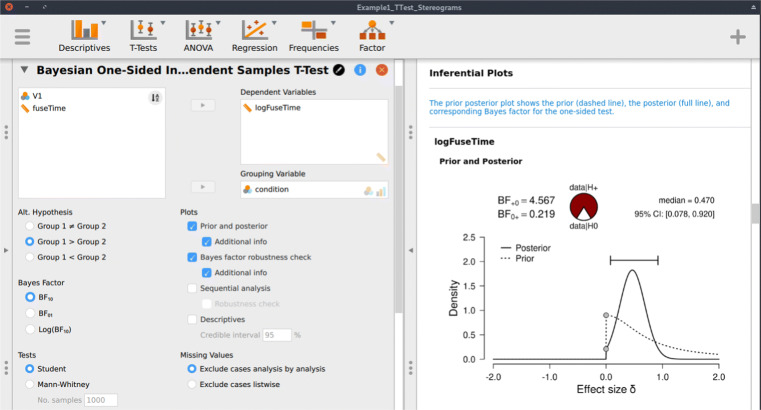
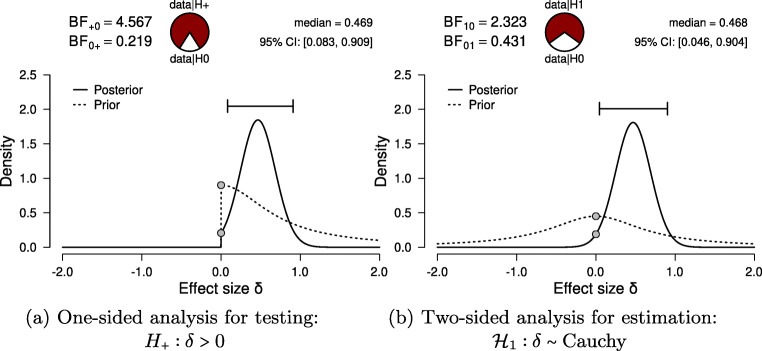
- In the stereogram example, the one-sided Bayesian two-sample t test yielded BF+0 = 4.567, described as moderate evidence; the Bayesian Mann–Whitney U test yielded BF+0 = 5.191.
- For parameter estimation, the two-sided analysis gave a posterior median for δ of 0.47 with a 95% central credible interval from 0.046 to 0.904.
- The paper lists five common pitfalls, including confusing Bayes factors with posterior odds, confusing prior model probabilities with parameter prior distributions, and using credible intervals as hypothesis tests.
Methods
- Design: methodological guidelines for Bayesian statistical reasoning in research, organized into four stages and summarized in Table 1.
- Data/sample: the running example uses Frisby and Clatworthy’s (1975) stereogram data; the original sample had 103 participants, 25 were eliminated for failing an initial stereo-acuity test, leaving 78 participants (43 NV, 35 VV).
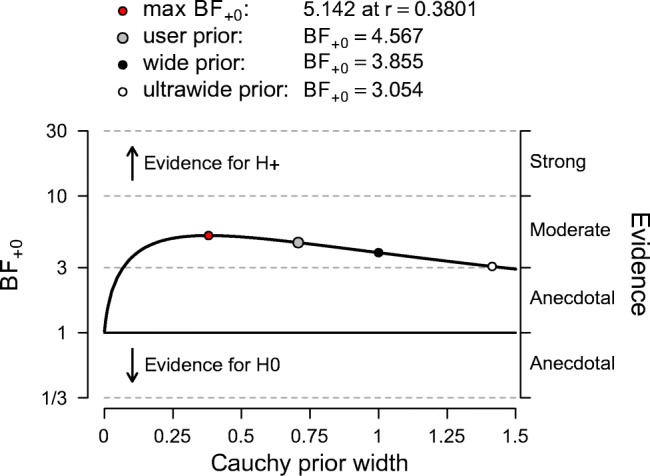
- Main analysis: the example applies a one-sided Bayesian two-sample t test for hypothesis testing, a two-sided Bayesian two-sample t test for parameter estimation, a Bayesian Mann–Whitney U test as a robustness check, and a Bayes factor robustness plot; the fuse times were log-transformed after assumption checks.
Limitations
- The paper states that for some frequentist analyses, the Bayesian counterpart has not yet been developed or implemented in JASP.
- It states that some JASP analyses currently provide only a Bayes factor and not visual posterior distributions, and that some analyses are available only with a relatively limited set of prior distributions.
- The text notes these are not principled limitations and that JASP is actively being developed; it also makes evident that the guidelines focus on standard JASP analyses, while more complex models may require custom coding in JAGS, Stan, R, or Python.
Model-written summary. Check it against the paper before relying on it.
Integrity signals
Registry
Cites
Statistics
Figures
Verification
Claims the paper makes
3 Valid · 1 Not valid · 25 Not checked · 53 Own results and interpretations
The cited sources support only part of this claim — read each source’s verdict below.
In the paper
“In Bayesian hypothesis testing, a one-sided hypothesis yields a more diagnostic test than a two-sided alternative (e.g., Jeffreys, 1961; Wetzels, Raaijmakers, Jakab, & Wagenmakers, 2009, p.283).”
§ The JASP guidelines for conducting and reporting a Bayesian analysis > Stage 1: Planning the analysis > Specifying the statistical model.
What the sources say
- Not checked yetcites Jeffreys, 1961
- Partly supportedcites Wetzels, Raaijmakers, Jakab, & Wagenmakers, 2009 matched to “How to quantify support for and against the null hypothesis: A flexible WinBUGS implementation of a default Bayesian t test” (2009) sourceExperimental — accuracy not yet measured
Our copy never states the general comparative principle that a one-sided hypothesis yields a more diagnostic test than a two-sided alternative; its motivation for the one-sided (order-restricted) SD test is applicability — the JZS two-sided test 'does not directly apply' when the alternative is directional (Introduction, p. 1; Bayesian Hypothesis Testing, p. 3). What it does supply is a worked illustration in Extension 1: Order Restrictions (p. 5), where the same data give BF01 = 6.08 under the unrestricted two-sided alternative but BF01 = 13.75 (posterior .93 vs .86) under the order-restricted one-sided alternative, i.e. a sharper quantification. So the example supports part of the claim while the general assertion attributed here is not made by this paper. (LLM, conf=0.65)
plainstates a cause- Asserted: passes — The authors put it forward as true.
- Checkable: passes — It can be checked against evidence.
- Load-bearing: passes — The paper’s conclusions depend on it.
- Based: passes — The paper gives a reason why it holds.
A result the paper reports from its own data — it cites no other source for it, so there is none to check. The quote shows it is in the paper.
In the paper
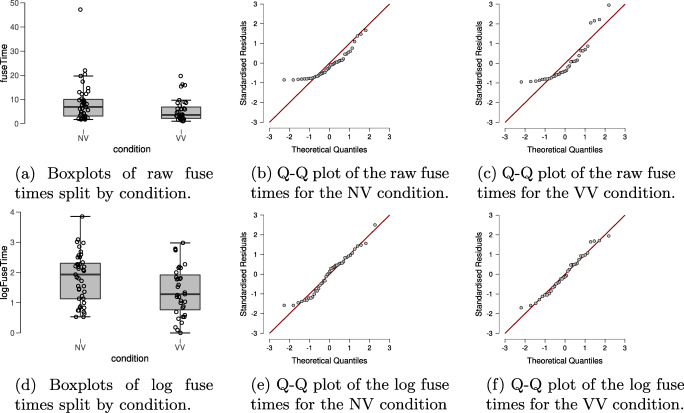
“Visual inspection of the boxplots suggests that the variances of the fuse times may not be equal”
§ The JASP guidelines for conducting and reporting a Bayesian analysis > Stage 2: Executing the analysis > Stereogram example
hedged- Asserted: passes — The authors put it forward as true.
- Checkable: passes — It can be checked against evidence.
- Load-bearing: passes — The paper’s conclusions depend on it.
- Based: passes — The paper gives a reason why it holds.
A result the paper reports from its own data — it cites no other source for it, so there is none to check. The quote shows it is in the paper.
In the paper
“There also appear to be a number of potential outliers in both groups.”
§ The JASP guidelines for conducting and reporting a Bayesian analysis > Stage 2: Executing the analysis > Stereogram example
hedged- Asserted: passes — The authors put it forward as true.
- Checkable: passes — It can be checked against evidence.
- Load-bearing: passes — The paper’s conclusions depend on it.
- Based: passes — The paper gives a reason why it holds.
A result the paper reports from its own data — it cites no other source for it, so there is none to check. The quote shows it is in the paper.
In the paper
“observed standard deviations of the NV and VV groups are 8.085 and 4.802, respectively”
§ The JASP guidelines for conducting and reporting a Bayesian analysis > Stage 2: Executing the analysis > Stereogram example
plain- Asserted: passes — The authors put it forward as true.
- Checkable: passes — It can be checked against evidence.
- Load-bearing: passes — The paper’s conclusions depend on it.
- Based: passes — The paper gives a reason why it holds.
A result the paper reports from its own data — it cites no other source for it, so there is none to check. The quote shows it is in the paper.
In the paper
“Moreover, the Q-Q plots show that the normality assumption of the t test is untenable here.”
§ The JASP guidelines for conducting and reporting a Bayesian analysis > Stage 2: Executing the analysis > Stereogram example
plain- Asserted: passes — The authors put it forward as true.
- Checkable: passes — It can be checked against evidence.
- Load-bearing: passes — The paper’s conclusions depend on it.
- Based: passes — The paper gives a reason why it holds.
25 more claims
Create a free account to see all 82 claims and to verify the 40 references still open.
- It may state two separate claims as one. 33
- Probably not a substantial claim. 29
Claims other papers make about this one
Each is checked against this paper’s own text: does it say what the citing paper says it does?
The cited source says what the claim attributes to it.
In the citing paper
“According to common interpretive guidelines (Van Doorn et al., 2021), a Bayes Factor between 0.33 and 0.10 can be considered moderate evidence for the null, and this result falls at the upper end of that range.”
From This is not the way: global directional cues do not improve spatial learning in an immersive virtual environment (2025) · cites this paper as Van Doorn et al., 2021
Self-check
Percentages, sums and reported differences re-computed from the paper’s own numbers.
Each contradiction between two passages listed here was confirmed by an independent check.
Rated minor: it would not touch a result — a value no result rests on, a p-value that stays on the same side of the significance level, or a conflict that is clerical, resolved elsewhere in the paper, or outside its own findings.
In the paper
§ The JASP guidelines for conducting and reporting a Bayesian analysis > Stage 3: Interpreting the results > Stereogram example
“For parameter estimation, the results of the two-sided t test are presented in Fig. 6a.”
§ The JASP guidelines for conducting and reporting a Bayesian analysis > Stage 3: Interpreting the results > Stereogram example
“The left panel shows the one-sided procedure for hypothesis testing and the right panel shows the two-sided procedure for parameter estimation.”
Citations
Cites
Kass, R. E., & Raftery, A. E. (1995) · Journal of the American Statistical Association · doi:10.1080/01621459.1995.10476572 · Cited by 12,558
Statistical Methods for Research Workers
(1945) · American Journal of Clinical Pathology · doi:10.1093/ajcp/15.11.552b · Cited by 10,880
brms : An R Package for Bayesian Multilevel Models Using Stan
Bürkner, P.-C. (2017) · Journal of Statistical Software · doi:10.18637/jss.v080.i01 · Cited by 9,476 · cited 1×
“Popular packages for conducting Bayesian analyses in R are the BayesFactor package (Morey & Rouder, 2015) and the brms package (B¨urkner, 2017), among others (see https://cran.r-project.org/web/views/Bayesian.html for a more exhaustive list).”
MethodStan : A Probabilistic Programming Language
Carpenter, B., Gelman, A., Hoffman, M. D., Lee, D., Goodrich, B., Betancourt, M., Brubaker, M., Guo, J., Li, P., & Riddell, A. (2017) · Journal of Statistical Software · doi:10.18637/jss.v076.i01 · Cited by 7,754
JAGS: A program for analysis of Bayesian graphical models using Gibbs sampling
Plummer, M. (2003) · Cited by 4,720
Hoeting, J. A., Madigan, D., Raftery, A. E., & Volinsky, C. T. (1999) · Statistical Science · doi:10.1214/ss/1009212519 · Cited by 4,118
Bayesian t tests for accepting and rejecting the null hypothesis
Rouder, J. N., Speckman, P. L., Sun, D., Morey, R. D., & Iverson, G. (2009) · Psychonomic Bulletin & Review · doi:10.3758/pbr.16.2.225 · Cited by 3,688
Probabilistic programming in Python using PyMC3
Salvatier, J., Wiecki, T. V., & Fonnesbeck, C. (2016) · PeerJ Computer Science · doi:10.7717/peerj-cs.55 · Cited by 2,544
Using Bayes to get the most out of non-significant results
Dienes, Z. (2014) · Frontiers in Psychology · doi:10.3389/fpsyg.2014.00781 · Cited by 1,998
Computing Bayes Factors by Combining Simulation and Asymptotic Approximations
Diciccio, T. J., Kass, R. E., Raftery, A., & Wasserman, L. (1997) · Journal of the American Statistical Association · doi:10.1080/01621459.1997.10474045 · Cited by 1,943
Research works printed but not linked: 3
- Jeffreys, H. (1939). Theory of probability, 1st. Oxford University Press.
- Jeffreys, H. (1961). Theory of probability. 3rd. Oxford University Press.
- Wrinch D Jeffreys H On certain fundamental principles of scientific inquiry Philosophical Magazine 1921 42 369 390
Cited by
Items 301–400 of 995
Lesur, M. R., Stussi, Y., Bertrand, P., Delplanque, S., & Lenggenhager, B. (2022) · Biological Psychology · doi:10.1016/j.biopsycho.2022.108477 · Cited by 12
Bayesian sample size planning for developmental studies
Visser, I., Kucharský, Š., Levelt, C. C., Stefan, A. M., Wagenmakers, E., & Oakes, L. M. (2023) · Infant and Child Development · doi:10.1002/icd.2412 · Cited by 13
Self-citationMorris, S., Farran, E. K., & Gilligan-Lee, K. A. (2023) · Cognitive Development · doi:10.1016/j.cogdev.2023.101325 · Cited by 13
Wenzel, M., Rowland, Z., Nielsen, K. S., & Lange, F. (2023) · Journal of Environmental Psychology · doi:10.1016/j.jenvp.2023.102038 · Cited by 13
Target–distractor correlation does not imply causation of the Stroop effect
Spinelli, G., & Lupker, S. J. (2023) · Quarterly Journal of Experimental Psychology · doi:10.1177/17470218231182854 · Cited by 10
“However, because an error percentage above 20% for a Bayes factor should not be deemed acceptable according to the JASP guidelines (van Doorn et al., 2021), we reran the analysis specifying the number of samples for the computation of the Bayes Factor as 100,000 in the “numerical accuracy” option…”
Cheng, Y., Peters, B. R., & MacNamara, A. (2023) · Psychophysiology · doi:10.1111/psyp.14385 · Cited by 17
Yamada, Y., Kataoka, R., Bell, Z. W., Wong, V. H. Y., Spitz, R. W., Song, J. S., Abe, T., & Loenneke, J. P. (2023) · Physiology & Behavior · doi:10.1016/j.physbeh.2023.114291 · Cited by 11
Catronas, D., Sousa, J., Batista, A. R., Torres, N. L., Mesquita, A., Folia, V., & Silva, S. (2023) · Scientific Reports · doi:10.1038/s41598-023-40081-0 · Cited by 10
Reyes, G., Andrade, B., Betancourt, I., Panchana, F., Solórzano, R., Preciado, C., Ochoa, L. S., Trujillo, L. E., & Bayot, B. (2023) · PeerJ · doi:10.7717/peerj.15795 · Cited by 9
Timofeeva, P., Finisguerra, A., D’Argenio, G., García, A. M., Carreiras, M., Quiñones, I., Urgesi, C., & Amoruso, L. (2024) · Cerebral Cortex · doi:10.1093/cercor/bhae188 · Cited by 12
Yang, L., Gallant, S. N., Wilkins, L. K., & Dyson, B. (2020) · Frontiers in Aging Neuroscience · doi:10.3389/fnagi.2020.576744 · Cited by 12
“The interaction Frontiers in Aging Neuroscience | www.frontiersin.org 6 November 2020 | Volume 12 | Article 576744 (i.e., transfer effect) for each variable was further tested for robustness with Bayesian hypothesis testing in Jeffreys’s Amazing Statistics Program (JASP) (Van Doorn et al., 2019).”
MethodProduction between and within: distinctiveness and the relative magnitude of the production effect
Zhou, Y., & MacLeod, C. M. (2021) · Memory · doi:10.1080/09658211.2020.1868526 · Cited by 11
“(Note that the error percentage from this analysis was 6.886%, indicating that the Bayes Factor will change slightly when the analysis is repeated; however, this is within the acceptable error percentage limit: See van Doorn et al., 2020.)”
InfluentialGillespie, S. M., Mitchell, I., Beech, A. R., & Rotshtein, P. (2021) · Biological Psychology · doi:10.1016/j.biopsycho.2021.108141 · Cited by 10
ERP signatures of auditory awareness in cross-modal distractor-induced deafness
Kern, L., & Niedeggen, M. (2021) · Consciousness and Cognition · doi:10.1016/j.concog.2021.103241 · Cited by 8
The deviation-from-familiarity effect: Expertise increases uncanniness of deviating exemplars
Diel, A., & Lewis, M. B. (2022) · PLoS ONE · doi:10.1371/journal.pone.0273861 · Cited by 12
“Evaluation of the results is based on the size of the BF as recommended [68, 69]: BF10 < 1 is interpreted as no evidence for the alternative hypothesis, 1< BF10 < 3 as weak evidence, 3< BF10 < 10 as moderate, and BF10 > 10 as strong evidence.”
MethodAverting Repulsion? Body-Directed Self-Disgust and Autobiographical Memory Retrieval
von Spreckelsen, P., Wessel, I., Glashouwer, K. A., & de Jong, P. J. (2021) · Journal of Experimental Psychopathology · doi:10.1080/09658211.2021.1993923 · Cited by 8
Zhou, X., Hao, Y., Xu, S., & Zhang, Q. (2022) · Attention Perception & Psychophysics · doi:10.3758/s13414-022-02626-9 · Cited by 7
Individual differences and personality traits across situations
Nasello, J., Triffaux, J., & Hansenne, M. (2023) · Current Issues in Personality Psychology · doi:10.5114/cipp/159942 · Cited by 21
“All statistical analyses were performed using JASP (version 0.16.3.0; JASP Team, 2022; van Doorn et al., 2021), which is software based on the network modules in the bootnet (Epskamp et al., 2017) and qgraph (Epskamp et al., 2012) packages of R (R Core Team, 2017).”
MethodInfluentialWhat is the Point of Change? Change Point Detection in Relational Event Models
Kamalabad, M. S., Leenders, R., & Mulder, J. (2023) · Social Networks · doi:10.1016/j.socnet.2023.03.004 · Cited by 11
Choo, Y., Mather, A., & Wessel, J. R. (2023) · Journal of Neuroscience · doi:10.1523/jneurosci.1334-23.2023 · Cited by 11
Brendler, A., Schneider, M., Elbau, I., Sun, R., Nantawisarakul, T., Pöhlchen, D., Brückl, T. M., BeCOME Working Group, Brem, A., Binder, E. B., et al. (2024) · Scientific Reports · doi:10.1038/s41598-023-48792-0 · Cited by 13
Ortega, R. S., & Peigneux, P. (2024) · SLEEP · doi:10.1093/sleep/zsae114 · Cited by 9
Greene, N. R., Guitard, D., Forsberg, A., Cowan, N., & Naveh‐Benjamin, M. (2024) · Memory & Cognition · doi:10.3758/s13421-024-01593-w · Cited by 12
“Following the nomenclature of Van Doorn et al. (2021), we deemed the evidence for (or against) a difference to be weak if BF 10 (BF 01 ) was between 1 and 3, moderate if BF 10 (BF 01 ) fell between 3 and 10, strong if BF 10 (BF 01 ) was between 10 and 100, and decisive if BF 10 (BF 01 ) exceeded…”
Schumacher, J., Ray, N. J., Teipel, S. J., & Storch, A. (2024) · npj Parkinson s Disease · doi:10.1038/s41531-024-00743-w · Cited by 10
Tyra, A. T., Garner, S.-B., & Ginty, A. T. (2024) · Biological Psychology · doi:10.1016/j.biopsycho.2024.108966 · Cited by 10
Doorudinia, A., Dadashpoor, H., & Meshkini, A. (2024) · Papers of the Regional Science Association · doi:10.1016/j.pirs.2024.100075 · Cited by 10
Kwon, M., Bo, K., Botvinik‐Nezer, R., Kragel, P. A., Oudenhove, L. V., Wager, T. D., Ashar, Y. K., Atlas, L. Y., Barrett, L. F., Becker, B., et al. (2026) · Nature Communications · doi:10.1038/s41467-026-71568-9 · Cited by 10
Investigating simulator validity by using physiological and cognitive stress indicators
Czaban, M., & Himmels, C. (2025) · Transportation Research Part F Traffic Psychology and Behaviour · doi:10.1016/j.trf.2025.07.006 · Cited by 9
A meta-analysis on mobile-assisted vocabulary learning: Do mobile applications help?
Zhou, Y., & Zhou, M. (2025) · ReCALL · doi:10.1017/s0958344025100335 · Cited by 35
Xiong, W., Cai, J., Li, R., Wen, C., Tan, H., & Database, O. B. O. T. A. D. N. I. (. (2022) · Genes · doi:10.3390/genes13050838 · Cited by 9
“…= 87.062, posterior FLG (BF = 4040.782, probability = 0.842 posterior probability = 0.996) and ZNF585B (BF = 87.062, ) are considered as the most likely candidate genes for posterior probability = 0.842) are considered as the most likely candidate genes for rare variants [49,50]. variants [49,50].”
InfluentialArslanova, I., Takamuku, S., Gomi, H., & Haggard, P. (2022) · Journal of Neurophysiology · doi:10.1152/jn.00022.2022 · Cited by 11
“We considered BF > 3 and BF 0.33 showing suf fi - cient evidence, while BF between 0.33 and 3 showing inconclusive evidence (44, 45).”
InfluentialCharacterizing the temporal discrimination threshold in musician’s dystonia
Borngräber, F., Hoffmann, M., Paulus, T., Junker, J., Bäumer, T., ALTENMÜLLER, E. O., Kühn, A. A., & Schmidt, A. (2022) · Scientific Reports · doi:10.1038/s41598-022-18739-y · Cited by 10
Alhamdan, A. A., Murphy, M., Pickering, H. E., & Crewther, S. G. (2023) · Brain Sciences · doi:10.3390/brainsci13020270 · Cited by 11
“…hypothesis against rival (prior) models meaning that there is value in reporting to the third decimal, which is in line with the Bayesian Analysis Reporting Guidelines and JASP Bayesian reporting guidelines [53,54] to ensure transparency and allow for the critical appraisal of our hypothesis.”
Zahedi, A., Akalin, R. Ö., Lawrence, J. E., Baumann, A., & Sommer, W. (2023) · Frontiers in Psychology · doi:10.3389/fpsyg.2023.1123907 · Cited by 8
Guilt-inducing interaction with others modulates subsequent attentional orienting via their gaze
Zhao, W., Yang, J., & Hu, Z. (2023) · Scientific Reports · doi:10.1038/s41598-023-32283-3 · Cited by 8
A systematic exploration of attentional load effects on the C1 ERP component
Qin, N., Crespi, F., Proverbio, A. M., & Pourtois, G. (2023) · Psychophysiology · doi:10.1111/psyp.14301 · Cited by 8
“For the interpretation of the BF incl , we used the standard classification table for BF 10 , as they are similar in the case of simple comparisons (Pertzov et al., 2020; van den Bergh et al., 2020; van Doorn et al., 2021).”
MethodEmotion‐focused skills training for parents with anxious children. A pilot study
Zahl‐Olsen, R., Severinsen, L., Shahar, B., Stiegler, J. R., & Bertelsen, T. B. (2023) · Journal of Marital and Family Therapy · doi:10.1111/jmft.12643 · Cited by 9
Čegar, B., Grujičić, S. Š., Bjekić, J., Vuksanović, A., Bojanić, N., Bartolović, D., Jovanović, D., & Zeković, M. (2023) · Life · doi:10.3390/life13091894 · Cited by 16
The Bayesian One-Sample t-Test Supersedes Correlation Analysis as a Test of Validity
Phylactou, P., Παπαδάτου-Παστού, Μ., & Konstantinou, N. (2024) · European Journal of Psychology Open · doi:10.1024/2673-8627/a000069 · Cited by 9
Choroid plexus morphology in schizophrenia and early-stage psychosis: A cross-sectional study
Brunner, G., Gajwani, R., Groß, J., Gumley, A. I., Timmerman, R. H., Taylor, R., Krishnadas, R., Lawrie, S. M., Schwannauer, M., Schultze‐Lutter, F., et al. (2024) · Schizophrenia Research · doi:10.1016/j.schres.2024.12.005 · Cited by 8
Rudaizky, D., Rinck, M., Becker, E. S., & MacLeod, C. (2020) · Behaviour Research and Therapy · doi:10.1016/j.brat.2020.103656 · Cited by 10
Puri, R., Hinder, M. R., Krüger, M., & Summers, J. J. (2021) · Neuroimage Reports · doi:10.1016/j.ynirp.2021.100009 · Cited by 12
Ahmad, M., Tyra, A. T., Ginty, A. T., & Brindle, R. C. (2021) · International Journal of Psychophysiology · doi:10.1016/j.ijpsycho.2021.04.007 · Cited by 10
Imagination Reduces False Memories for Everyday Action Sentences: Evidence From Pragmatic Inferences
Maraver, M. J., Lapa, A., Garcia‐Marques, L., Carneiro, P., & Raposo, A. (2021) · Frontiers in Psychology · doi:10.3389/fpsyg.2021.668899 · Cited by 12
“In short, according to the Lee and Wagenmakers’ classification (Ly et al., 2016), Bayes factors (BF10) above 3 provide evidence in favor of H1, below 0.3 support H0, while intermediate values are interpreted as inconclusive (van Doorn et al., 2019).”
BackgroundInfluentialKosak, F., & Kuhbandner, C. (2021) · Frontiers in Psychology · doi:10.3389/fpsyg.2021.713264 · Cited by 8
Kirkovski, M., Hill, A. T., Rogasch, N. C., Saeki, T., Fitzgibbon, B. M., Yang, J. S. C., Do, M., Donaldson, P. H., Albein‐Urios, N., Fitzgerald, P. B., et al. (2021) · Brain stimulation · doi:10.1016/j.brs.2021.12.010 · Cited by 11
Support for learning under naturalistic conditions
Cronin-Golomb, L. M., & Bauer, P. J. (2022) · Cognitive Research Principles and Implications · doi:10.1186/s41235-022-00435-0 · Cited by 15
“For all Bayes Factors interpretations, we adhere to the JASP guidelines (van Doorn et al., 2021).”
MethodMetacognitive Domains Are Not Aligned along a Dimension of Internal-External Information Source
Arbuzova, P., Maurer, L. K., & Filevich, E. (2022) · Psychonomic Bulletin & Review · doi:10.3758/s13423-022-02201-1 · Cited by 13
Rane, D., Sharma, P., Singh, M. S., & Lahiri, U. (2023) · IEEE Transactions on Neural Systems and Rehabilitation Engineering · doi:10.1109/tnsre.2023.3248126 · Cited by 8
“for within group analysis and using Jasp software [21] and have reported the Bayes Factor in favor of the alternate hypothesis (B10).”
MethodExploring the ‘mood congruency’ hypothesis of attention allocation – An eye-tracking study
Hertz‐Palmor, N., Yosef, Y., Hallel, H., Bernat, I., & Lazarov, A. (2023) · Journal of Affective Disorders · doi:10.1016/j.jad.2023.12.004 · Cited by 10
Turel, Z. B., Prados, J., & Urcelay, G. P. (2020) · Behavioural Processes · doi:10.1016/j.beproc.2020.104197 · Cited by 9
Broeker, L., Ewolds, H. E., de Oliveira, R. F., Künzell, S., & Raab, M. (2020) · Journal of Cognition · doi:10.5334/joc.130 · Cited by 9
Saraff, S., Singh, T., & Biswal, R. (2021) · Frontiers in Psychology · doi:10.3389/fpsyg.2021.626638 · Cited by 12
A conceptual introduction to Bayesian model averagingPreprint
Hinne, M., Gronau, Q. F., van den Bergh, D., & Wagenmakers, E. (2019) · PsyArXiv (OSF Preprints) · doi:10.31234/osf.io/pfynb · Cited by 18
Self-citationBlack, S. C., Bender, A. D., Whitney, S. J., Loft, S. D., & Visser, T. A. W. (2022) · Applied Cognitive Psychology · doi:10.1002/acp.3977 · Cited by 11
“” We used default Cauchy priors (Bayesian t -tests: r = 0.707; Gronau et al., 2020; Bayesian Repeated Measures ANOVA: r fixed effects = 0.5, r random effects = 1, r covariates = 0.354; Rouder et al., 2012; see also van Doorn et al., 2021).”
MethodInfluentialGonzález‐Burgos, G., Miyamae, T., Reddy, N., Dawkins, S., Chen, C., Hill, A., Enwright, J. F., Ermentrout, B., & Lewis, D. A. (2023) · Cerebral Cortex · doi:10.1093/cercor/bhad077 · Cited by 10
Emotion dysregulation modulates visual perspective taking and spontaneous facial mimicry.
Thompson, N. M., van Reekum, C. M., & Chakrabarti, B. (2024) · Emotion · doi:10.1037/emo0001254 · Cited by 8
“In line with standard criteria, we interpret BF10 of 1-3 as anecdotal support, 3-10 as moderate support, and 10-30 as strong support for the alternative hypothesis (Jeffreys, 1961; van Doorn et al., 2021).”
Gray matter matters: Cognitive stability and flexibility in schizophrenia spectrum disorder
Herkströter, F., Zahedi, A., Standke, I., Dannlowski, U., Lencer, R., Schubotz, R. I., & Trempler, I. (2024) · Psychophysiology · doi:10.1111/psyp.14596 · Cited by 8
“Based on the suggestion of van Doorn et al. (2021), Bayes factors ( BF ) > 3 and BF < 1 3 were considered as significant evidence for accepting and rejecting the tested hypothesis, respectively.”
BackgroundTracking the Misallocation and Reallocation of Spatial Attention toward Auditory Stimuli
Mandal, A., Liesefeld, A. M., & Liesefeld, H. R. (2024) · Journal of Neuroscience · doi:10.1523/jneurosci.2196-23.2024 · Cited by 8
Abadie, M., & Guette, C. (2024) · Memory & Cognition · doi:10.3758/s13421-024-01620-w · Cited by 8
“Based on the classification proposed by van Doorn et al. (2021), a BF 10 between 1 and 3 was considered as weak evidence for an effect, a BF 10 between 3 and 10 as moderate evidence for an effect, a BF 10 between 10 and 30 as strong evidence for an effect, and a BF 10 greater than 30 as decisive…”
Ionescu, C. G., Ciupercă, E. M., Cotel, A., & Licu, M. (2024) · BMC Psychology · doi:10.1186/s40359-024-02046-4 · Cited by 26
Tunes that move us: the impact of music-induced emotions on prosocial decision-making
Wu, H. D., Wang, D., & Zhou, L. (2025) · Frontiers in Psychology · doi:10.3389/fpsyg.2024.1453808 · Cited by 10
Fahey, J. T., Comfort, P., & Ripley, N. J. (2025) · Muscles · doi:10.3390/muscles4030023 · Cited by 12
A registered report megastudy on the persuasiveness of the most-cited climate messages
Voelkel, J. G., Ashokkumar, A., Abeles, A. T., Crawford, J. T., Fuller, K., Redekopp, C., Bongiorno, R., Campbell, T. H., Ecker, U. K. H., Feinberg, M., et al. (2026) · Nature Climate Change · doi:10.1038/s41558-025-02536-2 · Cited by 15
Self-citationViewing Cute Images Does Not Affect Performance of Computerized Reaction Time Tasks
Ziv, G., & Fox, O. (2022) · Frontiers in Psychology · doi:10.3389/fpsyg.2021.800543 · Cited by 8
Ward, R. T., Gilbert, F. E., Pouliot, J. J., Chiasson, P., McIlvanie, S., Traiser, C. M., Riels, K. M., Mears, R. P., & Keil, A. (2022) · Frontiers in Neuroscience · doi:10.3389/fnins.2022.899476 · Cited by 11
“We also conducted Bayes Factor analyses to assess the degree of evidence supporting the null versus alterative hypothesis (Dienes, 2014, 2016; Jarosz and Wiley, 2014; Lee and Wagenmakers (2014); Wagenmakers et al., 2016, 2018a,b; Keysers et al., 2020; Lakens et al., 2020; van Doorn et al., 2021).”
BackgroundMethodInfluentialReinhold, F. L., Gerlicher, A. M. V., Someren, E. J. W. V., & Kindt, M. (2022) · SLEEP · doi:10.1093/sleep/zsac220 · Cited by 10
“We considered Bayes Factors (BFs) between 0 and (1)3 as evidence for the null hypothesis, whereas BFs between 3 and 10 were considered as moderate evidence and BFs greater than 10 as strong evidence for the alternative hypotheses [53].”
MethodMetabolic effects of kidney donation: A Bayesian analysis of matched cohorts
Wuttiputhanun, T., Udomkarnjananun, S., Hanprathet, N., Jiamjarasrangsi, W., Townamchai, N., Avihingsanon, Y., & Katavetin, P. (2022) · Nephrology · doi:10.1111/nep.14136 · Cited by 7
“33 or less was considered evidence for the null hypothesis.(10) The BF10 from the nonparametric tests were based on 5 Markov chains with 10 000 iterations.”
MethodGorrino, I., Canessa, N., & Mattavelli, G. C. (2023) · Frontiers in Behavioral Neuroscience · doi:10.3389/fnbeh.2023.1234837 · Cited by 9
“In line with the classification scheme from the JASP guidelines (van Doorn et al., 2021), Bayes Factor (BF) between 1 and 3 is considered weak/ anecdotal evidence, BF between 3 and 10 is considered moderate evidence, and BF > 10 is considered strong evidence, in favor of the alternative hypothesis.”
MethodNumber Agreement Attraction in Czech Comprehension: Negligible Facilitation Effects
Chromý, J., Lacina, R., & Dotlačil, J. (2023) · Open Mind · doi:10.1162/opmi_a_00107 · Cited by 10
Halford, D., Karolytė, R., Dellenbach, J. T., Cathey, B., Cathey, M., Balentine, D., Andreason, M. W., & Rice, G. K. (2024) · Frontiers in Earth Science · doi:10.3389/feart.2024.1434785 · Cited by 7
Zebhauser, P. T., Bott, F. S., Ávila, C. G., Heitmann, H., May, E. S., Tiemann, L., Baki, E., Tölle, T. R., & Ploner, M. (2025) · Journal of Pain · doi:10.1016/j.jpain.2025.104788 · Cited by 7
Acute isolation is associated with increased reward seeking and reward learning in human adolescents
Tomova, L., Towner, E., Thomas, K., Zhang, L., Palminteri, S., & Blakemore, S. (2025) · Communications Psychology · doi:10.1038/s44271-025-00306-6 · Cited by 9
Multiple routes to word recognition: evidence from event-related potentials
Lien, M.-C., Allen, P. A., & Ruthruff, E. D. (2019) · Psychological Research · doi:10.1007/s00426-019-01256-5 · Cited by 7
Content expectations and dropout in Dutch vocational education
Eegdeman, I., van Klaveren, C., & Meeter, M. (2020) · Empirical research in vocational education and training · doi:10.1186/s40461-020-00096-7 · Cited by 10
Rindskopf, D. (2020) · Evaluation Review · doi:10.1177/0193841x20977619 · Cited by 7
“From this study, they recommended seven items to be reported in all such studies. van Doorn et al. (2020) wrote guidelines to accompany the JASP software package.”
MethodDifferences in dark triad personality: Evidence from China and the USA
Ren, F., Wang, M., Li, X., & Luo, J. (2021) · Current Psychology · doi:10.1007/s12144-021-01402-6 · Cited by 7
“Furthermore, model comparison did support the findings (van Doorn et al., 2020; Wagenmakers et al., 2018).”
ResultHadi, Z., Umbreen, A., Anwar, M. N., & Navid, M. S. (2021) · Brain Research · doi:10.1016/j.brainres.2021.147656 · Cited by 7
van der Meij, L., Pulopulos, M. M., Hidalgo, V., Almela, M., Lila, M., Roney, J. R., & Salvador, A. (2021) · Aggressive Behavior · doi:10.1002/ab.21995 · Cited by 6
“These analyses were performed using JASP version 0.14.1 with default prior scales, following van Doorn et al. (2020).”
MethodInfluentialClark, J. T., & Chrispeels, J. H. (2022) · Journal of Educational Administration · doi:10.1108/jea-03-2021-0054 · Cited by 17
Yildirim, B., Kurdoglu-Ersoy, P., Kapucu, A., & Teközel, M. (2022) · Journal of Cognitive Psychology · doi:10.1080/20445911.2022.2090948 · Cited by 7
Reaction time and working memory in middle-aged gamers and non-gamers
Ziv, G., Lidor, R., & Levin, O. (2022) · Acta Psychologica · doi:10.1016/j.actpsy.2022.103666 · Cited by 9
Burchell, D., Bédard, V. B., Boyce, K., McLaren, J., Brandeker, M., Squires, B., Bird, E. K., MacLeod, A. A. N., Rezzonico, S., Chen, X., et al. (2022) · Frontiers in Communication · doi:10.3389/fcomm.2022.798196 · Cited by 9
Umanath, S., Coane, J. H., Huff, M. J., Cimenian, T., & Chang, K. (2023) · Cognitive Research Principles and Implications · doi:10.1186/s41235-022-00458-7 · Cited by 8
Testing a relational account of search templates in visual foraging
Grössle, I., Schubö, A., & Tünnermann, J. (2023) · Scientific Reports · doi:10.1038/s41598-023-38362-9 · Cited by 7
Touloumakos, A. Κ., Vlachou, E., & Παπαδάτου-Παστού, Μ. (2023) · Mind Brain and Education · doi:10.1111/mbe.12380 · Cited by 10
Exploring the roles of distinctiveness and performance anticipation in the Attentional Boost Effect
Saraulli, D., Mulligan, N. W., Saraulli, S., & Spataro, P. (2023) · Memory · doi:10.1080/09658211.2023.2260147 · Cited by 7
“A Bayesian analysis resulted in a BF 10 = 0.115, which indicates moderate evidence in support of the null hypothesis (van Doorn et al., 2021).”
ResultInfluentialReliability of a TMS-derived threshold matrix of corticomotor function
Shanks, M. J., Cirillo, J., Stinear, C. M., & Byblow, W. D. (2023) · Experimental Brain Research · doi:10.1007/s00221-023-06725-3 · Cited by 11
Wakeful rest benefits before and after encoding in anterograde amnesia.
McGhee, J., Cowan, N., Beschin, N., Mosconi, C., & Sala, S. D. (2020) · Neuropsychology · doi:10.1037/neu0000631 · Cited by 7
To Google or Not: Differences on How Online Searches Predict Names and Faces
Moret‐Tatay, C., Wester, A. G., & Gamermann, D. (2020) · Mathematics · doi:10.3390/math8111964 · Cited by 7
“Furthermore, on a pragmatic level, several advantages over traditional approaches have been described, such as the ability to quantify uncertainty about effect sizes in an easier way [29].”
BackgroundConceptually plausible Bayesian inference in interval timing
Maaß, S. C., de Jong, J., van Maanen, L., & van Rijn, H. (2021) · Royal Society Open Science · doi:10.1098/rsos.201844 · Cited by 10
“2; [50]) using the default prior settings and are interpreted based on the guidelines provided by Jeffreys [51], see also [52]).”
MethodSanders, L., Budd, G., Carter, L., Dave, U., & Kemp, A. H. (2025) · BMC Medical Education · doi:10.1186/s12909-025-07768-6 · Cited by 6
Evaluating the effects of brief mindfulness practice on attentional control and episodic memory
Namias, J. M., & Huff, M. J. (2024) · Journal of Cognitive Psychology · doi:10.1080/20445911.2024.2381872 · Cited by 6
“Several interpretive criteria have been suggested, but here we follow the criteria reported by van Doorn et al. (2021).”
Exploring the potential of a game-based preschool assessment of mathematical competencies
Chatzaki, M.-A., Skillen, J., Ricken, G., & Seitz-Stein, K. (2024) · Frontiers in Education · doi:10.3389/feduc.2024.1337716 · Cited by 20
Goodhew, S. C., & Edwards, M. (2024) · Personality and Individual Differences · doi:10.1016/j.paid.2024.112706 · Cited by 8
Binding in visual working memory is task dependent
Cao, R., & Deouell, L. Y. (2025) · Journal of Vision · doi:10.1167/jov.25.4.4 · Cited by 11
“We hypothesized that the effect of task relevance would be observed mostly on mis-conjunct probes, which particularly require the maintenance of conjunctions.”
Out of the labs and into the streets: Effects of climate protests by environmental scientists
Dablander, F., Sachisthal, M. S. M., & Aron, A. R. (2025) · Royal Society Open Science · doi:10.1098/rsos.241001 · Cited by 6
Self-citationLesur, M. R., Longo, M. R., & Tajadura‐Jiménez, A. (2025) · Cortex · doi:10.1016/j.cortex.2025.06.014 · Cited by 7
Evidence on the Effects of an Audit Quality Bonus
van Brenk, H. M., & Majoor, B. (2022) · European Accounting Review · doi:10.1080/09638180.2022.2044364 · Cited by 8
The Orientation Selectivity of Dichoptic Masking Suppression is Contrast Dependent in Amblyopia
Gong, L., Wei, L., Yu, X., Reynaud, A., Hess, R. F., & Zhou, J. (2022) · Investigative Ophthalmology & Visual Science · doi:10.1167/iovs.63.6.9 · Cited by 6
Metadata
- Authors
- van Doorn, J., van den Bergh, D., Böhm, U., Dablander, F., Derks, K., Draws, T., Etz, A., Evans, N. J., Gronau, Q. F., Haaf, J. M., Hinne, M., Kucharský, Š., Ly, A., Marsman, M., Matzke, D., Gupta, A. R. K. N., Sarafoglou, A., Stefan, A., Voelkel, J. G., & Wagenmakers, E.-J.
- Affiliations
- University of Amsterdam (NL)
- Nyenrode Business University (NL)
- University of California, Irvine (US)
- Stanford University (US)
- ORCID
- Venue
- Psychonomic Bulletin & Review
- Published
- 2020-10-09
- Volume
- 28
- Issue
- 3
- Pages
- 813-826
- ISSN
- 1069-9384 (ISSN-L)
- 1531-5320
- PMC
- PMC8219590
- OpenAlex
- W3091779368
- Semantic Scholar
- c4bca921d78c0f4fb8569eb9d5c0cb42cbb3ec0b
- Cited by
- 1,114
- References
- 63
- Citations by year
- 2026: 111 · 2025: 169 · 2024: 216 · 2023: 202 · 2022: 177 · 2021: 139 · 2020: 71
- FWCI
- 103.84
- Type
- journal article
- Language
- en
- Open access
- hybrid
- doi.org
- Licence
- cc-by
- creativecommons.org/licenses/by/4.0 (tdm)
- creativecommons.org/licenses/by/4.0 (vor)
- Locations
- Psychonomic Bulletin & Review (publishedVersion, cc-by)
- PubMed Central (publishedVersion, cc-by)
- PubMed (publishedVersion)
- UvA-DARE (University of Amsterdam) (acceptedVersion, cc-by)
- Centrum Wiskunde & Informatica (CWI), the national research institute for mathematics and computer science in the Netherlands (submittedVersion)
- Data Archiving and Networked Services (DANS) (submittedVersion, other-oa)
- Radboud Repository (Radboud University) (submittedVersion)
- PsyArXiv (OSF Preprints) (submittedVersion, cc-by)
- PsyArXiv (OSF Preprints) (submittedVersion)
- Radboud Repository (Radboud University) (submittedVersion, other-oa)
- Funders
- National Science Foundation (1321846)
- Universiteit van Amsterdam
- Nederlandse Organisatie voor Wetenschappelijk Onderzoek (016.Vici.170.083, 406.18.559, 451-17-017)
- Topics
- Physical Sciences › Mathematics › Statistics and Probability › Statistical Methods and Bayesian Inference
- Social Sciences › Decision Sciences › Statistics, Probability and Uncertainty › Meta-analysis and systematic reviews
- Physical Sciences › Computer Science › Artificial Intelligence › Bayesian Modeling and Causal Inference
- Keywords
- Bayesian inference, JASP, reporting guidelines, statistical reporting, open-source statistical software
- MeSH terms
- Bayes Theorem, Data Interpretation, Statistical, Humans, Research Design, Models, Statistical, Guidelines as Topic
About these checks
Registry, retraction, Cites and statistics results are computed, not judged, with one exception: a printed reference that no index lists is read once by a model before it counts as a citation error. Claims are extracted by a model and kept only when their quote appears verbatim in the text; each cited source is then checked, with a model’s help, for whether it says what the claim relies on. Those verdicts can be wrong — read the claim’s quote and the cited source before relying on one.
The claim verdicts this report counts are experimental: their accuracy is not yet measured.
A language model drew the claims from the paper on 2026-10-04, under version 3 of the claim definition (model deepseek-v4.1-flash, prompt extract-v3).
A second model labelled each claim on 2026-10-04 (model jev-1.13-20260917, definition revision gold-guideline-v0.2).
Cited sources are checked with a language model’s help (qwen3.8-omni-flash).
Statistics and arithmetic are recomputed, not judged.
Confidence bands are shown only for fields calibrated on our annotated test set. None is calibrated yet, so no band is shown.
What counts as a claim ›How we measure confidence ›How we check this ›
Are you an author, or do you see a problem with this page? Request a review
Data sources
Bibliographic data: Semantic Scholar, OpenAlex, Crossref.
Contains information from the Semantic Scholar Academic Graph Datasets, made available under the ODC Attribution License (ODC-BY 1.0).
Semantic Scholar’s data is described in: Kinney, R., et al. (2023). The Semantic Scholar Open Data Platform. arXiv:2301.10140.
