

The JASP guidelines for conducting and reporting a Bayesian analysis
Open accessThe DOI matches its Crossref record; 60 of the 63 references it cites were found in a registry or an index; 3 of the 43 sources its claims cite were checked for support.
Abstract
Despite the increasing popularity of Bayesian inference in empirical research, few practical guidelines provide detailed recommendations for how to apply Bayesian procedures and interpret the results. Here we offer specific guidelines for four different stages of Bayesian statistical reasoning in a research setting: planning the analysis, executing the analysis, interpreting the results, and reporting the results. The guidelines for each stage are illustrated with a running example. Although the guidelines are geared towards analyses performed with the open-source statistical software JASP, most guidelines extend to Bayesian inference in general.
Overview
CoChat Summary
TL;DR
This paper provides practical guidelines for planning, executing, interpreting, and reporting Bayesian analyses, illustrated with a running stereogram example and focused on JASP. It emphasizes Bayes factors for testing, posterior distributions/credible intervals for estimation, and transparent reporting of priors, robustness, and analysis files.
Key findings
- The guidelines cover four stages: planning, executing, interpreting, and reporting, with recommendations such as preregistration, assumption checks, correct Bayes factor/credible interval interpretation, and sharing annotated `.jasp` files.
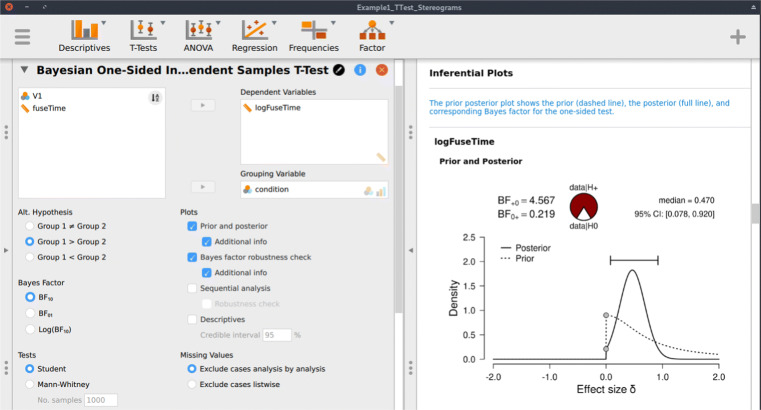
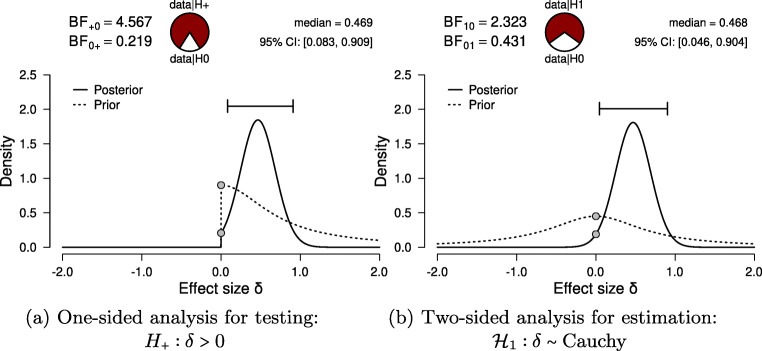
- In the stereogram example, the one-sided Bayesian two-sample t test yielded BF+0 = 4.567, described as moderate evidence; the Bayesian Mann–Whitney U test yielded BF+0 = 5.191.
- For parameter estimation, the two-sided analysis gave a posterior median for δ of 0.47 with a 95% central credible interval from 0.046 to 0.904.
- The paper lists five common pitfalls, including confusing Bayes factors with posterior odds, confusing prior model probabilities with parameter prior distributions, and using credible intervals as hypothesis tests.
Methods
- Design: methodological guidelines for Bayesian statistical reasoning in research, organized into four stages and summarized in Table 1.
- Data/sample: the running example uses Frisby and Clatworthy’s (1975) stereogram data; the original sample had 103 participants, 25 were eliminated for failing an initial stereo-acuity test, leaving 78 participants (43 NV, 35 VV).
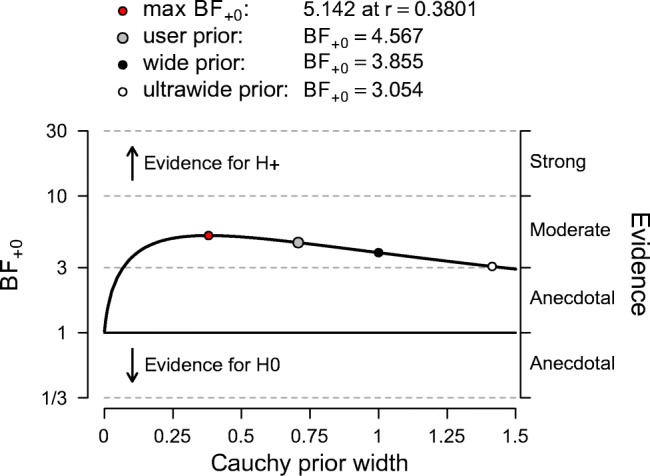
- Main analysis: the example applies a one-sided Bayesian two-sample t test for hypothesis testing, a two-sided Bayesian two-sample t test for parameter estimation, a Bayesian Mann–Whitney U test as a robustness check, and a Bayes factor robustness plot; the fuse times were log-transformed after assumption checks.
Limitations
- The paper states that for some frequentist analyses, the Bayesian counterpart has not yet been developed or implemented in JASP.
- It states that some JASP analyses currently provide only a Bayes factor and not visual posterior distributions, and that some analyses are available only with a relatively limited set of prior distributions.
- The text notes these are not principled limitations and that JASP is actively being developed; it also makes evident that the guidelines focus on standard JASP analyses, while more complex models may require custom coding in JAGS, Stan, R, or Python.
Model-written summary. Check it against the paper before relying on it.
Integrity signals
Registry
Cites
Statistics
Figures
Verification
Claims the paper makes
3 Valid · 1 Not valid · 25 Not checked · 53 Own results and interpretations
The cited sources support only part of this claim — read each source’s verdict below.
In the paper
“In Bayesian hypothesis testing, a one-sided hypothesis yields a more diagnostic test than a two-sided alternative (e.g., Jeffreys, 1961; Wetzels, Raaijmakers, Jakab, & Wagenmakers, 2009, p.283).”
§ The JASP guidelines for conducting and reporting a Bayesian analysis > Stage 1: Planning the analysis > Specifying the statistical model.
What the sources say
- Not checked yetcites Jeffreys, 1961
- Partly supportedcites Wetzels, Raaijmakers, Jakab, & Wagenmakers, 2009 matched to “How to quantify support for and against the null hypothesis: A flexible WinBUGS implementation of a default Bayesian t test” (2009) sourceExperimental — accuracy not yet measured
Our copy never states the general comparative principle that a one-sided hypothesis yields a more diagnostic test than a two-sided alternative; its motivation for the one-sided (order-restricted) SD test is applicability — the JZS two-sided test 'does not directly apply' when the alternative is directional (Introduction, p. 1; Bayesian Hypothesis Testing, p. 3). What it does supply is a worked illustration in Extension 1: Order Restrictions (p. 5), where the same data give BF01 = 6.08 under the unrestricted two-sided alternative but BF01 = 13.75 (posterior .93 vs .86) under the order-restricted one-sided alternative, i.e. a sharper quantification. So the example supports part of the claim while the general assertion attributed here is not made by this paper. (LLM, conf=0.65)
plainstates a cause- Asserted: passes — The authors put it forward as true.
- Checkable: passes — It can be checked against evidence.
- Load-bearing: passes — The paper’s conclusions depend on it.
- Based: passes — The paper gives a reason why it holds.
A result the paper reports from its own data — it cites no other source for it, so there is none to check. The quote shows it is in the paper.
In the paper
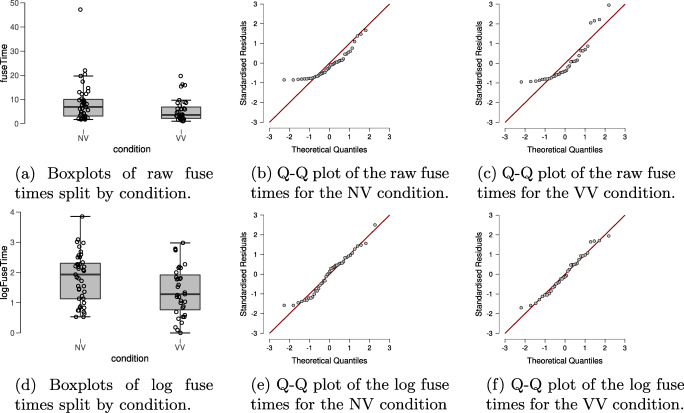
“Visual inspection of the boxplots suggests that the variances of the fuse times may not be equal”
§ The JASP guidelines for conducting and reporting a Bayesian analysis > Stage 2: Executing the analysis > Stereogram example
hedged- Asserted: passes — The authors put it forward as true.
- Checkable: passes — It can be checked against evidence.
- Load-bearing: passes — The paper’s conclusions depend on it.
- Based: passes — The paper gives a reason why it holds.
A result the paper reports from its own data — it cites no other source for it, so there is none to check. The quote shows it is in the paper.
In the paper
“There also appear to be a number of potential outliers in both groups.”
§ The JASP guidelines for conducting and reporting a Bayesian analysis > Stage 2: Executing the analysis > Stereogram example
hedged- Asserted: passes — The authors put it forward as true.
- Checkable: passes — It can be checked against evidence.
- Load-bearing: passes — The paper’s conclusions depend on it.
- Based: passes — The paper gives a reason why it holds.
A result the paper reports from its own data — it cites no other source for it, so there is none to check. The quote shows it is in the paper.
In the paper
“observed standard deviations of the NV and VV groups are 8.085 and 4.802, respectively”
§ The JASP guidelines for conducting and reporting a Bayesian analysis > Stage 2: Executing the analysis > Stereogram example
plain- Asserted: passes — The authors put it forward as true.
- Checkable: passes — It can be checked against evidence.
- Load-bearing: passes — The paper’s conclusions depend on it.
- Based: passes — The paper gives a reason why it holds.
A result the paper reports from its own data — it cites no other source for it, so there is none to check. The quote shows it is in the paper.
In the paper
“Moreover, the Q-Q plots show that the normality assumption of the t test is untenable here.”
§ The JASP guidelines for conducting and reporting a Bayesian analysis > Stage 2: Executing the analysis > Stereogram example
plain- Asserted: passes — The authors put it forward as true.
- Checkable: passes — It can be checked against evidence.
- Load-bearing: passes — The paper’s conclusions depend on it.
- Based: passes — The paper gives a reason why it holds.
25 more claims
Create a free account to see all 82 claims and to verify the 40 references still open.
- It may state two separate claims as one. 33
- Probably not a substantial claim. 29
Claims other papers make about this one
Each is checked against this paper’s own text: does it say what the citing paper says it does?
The cited source says what the claim attributes to it.
In the citing paper
“According to common interpretive guidelines (Van Doorn et al., 2021), a Bayes Factor between 0.33 and 0.10 can be considered moderate evidence for the null, and this result falls at the upper end of that range.”
From This is not the way: global directional cues do not improve spatial learning in an immersive virtual environment (2025) · cites this paper as Van Doorn et al., 2021
Self-check
Percentages, sums and reported differences re-computed from the paper’s own numbers.
Each contradiction between two passages listed here was confirmed by an independent check.
Rated minor: it would not touch a result — a value no result rests on, a p-value that stays on the same side of the significance level, or a conflict that is clerical, resolved elsewhere in the paper, or outside its own findings.
In the paper
§ The JASP guidelines for conducting and reporting a Bayesian analysis > Stage 3: Interpreting the results > Stereogram example
“For parameter estimation, the results of the two-sided t test are presented in Fig. 6a.”
§ The JASP guidelines for conducting and reporting a Bayesian analysis > Stage 3: Interpreting the results > Stereogram example
“The left panel shows the one-sided procedure for hypothesis testing and the right panel shows the two-sided procedure for parameter estimation.”
Citations
Cites
Kass, R. E., & Raftery, A. E. (1995) · Journal of the American Statistical Association · doi:10.1080/01621459.1995.10476572 · Cited by 12,558
Statistical Methods for Research Workers
(1945) · American Journal of Clinical Pathology · doi:10.1093/ajcp/15.11.552b · Cited by 10,880
brms : An R Package for Bayesian Multilevel Models Using Stan
Bürkner, P.-C. (2017) · Journal of Statistical Software · doi:10.18637/jss.v080.i01 · Cited by 9,476 · cited 1×
“Popular packages for conducting Bayesian analyses in R are the BayesFactor package (Morey & Rouder, 2015) and the brms package (B¨urkner, 2017), among others (see https://cran.r-project.org/web/views/Bayesian.html for a more exhaustive list).”
MethodStan : A Probabilistic Programming Language
Carpenter, B., Gelman, A., Hoffman, M. D., Lee, D., Goodrich, B., Betancourt, M., Brubaker, M., Guo, J., Li, P., & Riddell, A. (2017) · Journal of Statistical Software · doi:10.18637/jss.v076.i01 · Cited by 7,754
JAGS: A program for analysis of Bayesian graphical models using Gibbs sampling
Plummer, M. (2003) · Cited by 4,720
Hoeting, J. A., Madigan, D., Raftery, A. E., & Volinsky, C. T. (1999) · Statistical Science · doi:10.1214/ss/1009212519 · Cited by 4,118
Bayesian t tests for accepting and rejecting the null hypothesis
Rouder, J. N., Speckman, P. L., Sun, D., Morey, R. D., & Iverson, G. (2009) · Psychonomic Bulletin & Review · doi:10.3758/pbr.16.2.225 · Cited by 3,688
Probabilistic programming in Python using PyMC3
Salvatier, J., Wiecki, T. V., & Fonnesbeck, C. (2016) · PeerJ Computer Science · doi:10.7717/peerj-cs.55 · Cited by 2,544
Using Bayes to get the most out of non-significant results
Dienes, Z. (2014) · Frontiers in Psychology · doi:10.3389/fpsyg.2014.00781 · Cited by 1,998
Computing Bayes Factors by Combining Simulation and Asymptotic Approximations
Diciccio, T. J., Kass, R. E., Raftery, A., & Wasserman, L. (1997) · Journal of the American Statistical Association · doi:10.1080/01621459.1997.10474045 · Cited by 1,943
Research works printed but not linked: 3
- Jeffreys, H. (1939). Theory of probability, 1st. Oxford University Press.
- Jeffreys, H. (1961). Theory of probability. 3rd. Oxford University Press.
- Wrinch D Jeffreys H On certain fundamental principles of scientific inquiry Philosophical Magazine 1921 42 369 390
Cited by
Items 401–500 of 995
Bayesian Statistics in the Research Field of Professional Learning and Development
Nokelainen, P., Aldahdouh, T. Z., & AlDahdouh, A. (2022) · Professional and practice-based learning · doi:10.1007/978-3-031-08518-5_10 · Cited by 6
Attentional set and explicit expectations of perceptual load determine flanker interference.
Eayrs, J. O., Kukkonen, N., Prutean, N., Steendam, S. T., Boehler, C. N., Wiersema, J. R., Krebs, R. M., & Notebaert, W. (2024) · Journal of Experimental Psychology Human Perception & Performance · doi:10.1037/xhp0001217 · Cited by 7
Design and usability evaluation of a mobile app for elementary school inquiry‐based science learning
Yánez‐Pérez, I., Toma, R. B., & Villagrá, J. Á. M. (2024) · School Science and Mathematics · doi:10.1111/ssm.18303 · Cited by 14
Kang, D. W., Wang, S., Um, Y. H., Kim, S., Kim, T., Kim, D., Lee, C. U., & Lim, H. K. (2024) · Scientific Reports · doi:10.1038/s41598-024-67664-9 · Cited by 5
“…1 and 3 suggests anecdotal evidence, a BF 10 in the range of 3 to 10 indicates moderate evidence, a BF 10 between 10 and 30 is indicative of strong evidence, a BF 10 from 30 to 100 denotes very strong evidence, and a BF 10 greater than 100 is reflective of extreme evidence in favor of model’1 51 .’”
SINS/EM Log Integrated Navigation With Variable-Structure Multiple Model Adaptive Kalman Filter
Ben, Y., Wang, J., Zang, X., & Li, Q. (2024) · IEEE Sensors Journal · doi:10.1109/jsen.2024.3440829 · Cited by 6
“In recent years, VB inference [17] has gained significant attention [18].”
BackgroundThe influence of aerobic capacity on the loads and intensities of mixed martial arts sparring bouts
Kirk, C., Clark, D. R., & Langan‐Evans, C. (2024) · Journal of Sports Sciences · doi:10.1080/02640414.2024.2419239 · Cited by 10
“Inference in each of the following tests was based on the calculation of Bayes factors (BF) used to provide support for either the hypothesis (BF 10 ) or the null hypothesis (BF 01 ), respectively (Van Doorn et al., 2019).”
InfluentialRutkowska, J. M., Meyer, M., & Hunnius, S. (2021) · Brain Sciences · doi:10.3390/brainsci11060821 · Cited by 6
“A default prior of Cauchy distribution with spread r = 1/ √ 2 was used, truncated at zero [16].”
MethodNaturalistic Face Learning in Infants and Adults
Zhou, X., Vyas, S. S., Ning, J., & Moulson, M. C. (2021) · Psychological Science · doi:10.1177/09567976211030630 · Cited by 6
“In line with commonly used standards for evidence (van Doorn et al., 2021), our Bayesian results reveal strong evidence for a familiarity preference in adults, moderate evidence for no preference in infants, and strong evidence for a difference in familiarity preference between adults and infants.”
ResultInfluence of negative mood states on moral decision-making
Laing, P. A. F., Davey, C. G., & Harrison, B. J. (2022) · Psychiatry Research Communications · doi:10.1016/j.psycom.2022.100038 · Cited by 7
A comparative study of frequentist vs Bayesian A/B testing in the detection of E-commerce fraud
Westland, J. C. (2022) · Journal of Electronic Business & Digital Economics · doi:10.1108/jebde-07-2022-0020 · Cited by 10
Chowdhury, N. S., Chiang, A. K., Millard, S. K., Skippen, P., Chang, W., Seminowicz, D. A., & Schabrun, S. M. (2023) · eLife · doi:10.7554/elife.88567 · Cited by 34
Harris, D., Wilson, M., Chillingsworth, K., Mitchell, G. L., Smith, S., Arthur, T., Brock, K., & Vine, S. J. (2023) · PLoS ONE · doi:10.1371/journal.pone.0293657 · Cited by 9
Less Versus More: The Effect of Recast Length in Treatment of Grammatical Errors
Sweeney, L., Plante, E., Mettler, H. M., Hall, J., & Vance, R. (2023) · Language Speech and Hearing Services in Schools · doi:10.1044/2023_lshss-23-00049 · Cited by 8
The significance of structural rich club hubs for the processing of hierarchical stimuli
Mecklenbrauck, F., Gruber, M., Siestrup, S., Zahedi, A., Grotegerd, D., Mauritz, M., Trempler, I., Dannlowski, U., & Schubotz, R. I. (2023) · Human Brain Mapping · doi:10.1002/hbm.26543 · Cited by 5
“A Bayes factors (BF) > 3 indicates significant evidence in favor of the tested hypothesis (van Doorn et al., 2021).”
BackgroundLasnick, O. H. M., Hancock, R., & Hoeft, F. (2023) · PLoS ONE · doi:10.1371/journal.pone.0292330 · Cited by 10
Balta, N., Japashov, N., Bakytkazy, T., Abdikadyr, B., & Nurgaliyeva, K. (2024) · Heliyon · doi:10.1016/j.heliyon.2024.e24274 · Cited by 14
“BF01 indicates the Bayes factor in favor of H 0 over H 1 [37].”
BackgroundDenk, F., Himmels, C., Andreev, V., Lindner, J., Syed, A. A., Riener, A., Huber, W., & Kates, R. E. (2023) · IEEE International Conference on Intelligent Transportation Systems (ITSC) · doi:10.1109/itsc57777.2023.10421865 · Cited by 9
“The column error % indicates the numerical precision of the Bayes factor, i.e., with an error probability of 20 % and a BF 10 = 10, the true value may vary between 8 and 12 [33].”
BackgroundInhibiting orofacial mimicry affects authenticity perception in vocal emotions.
Vilaverde, R. F., Horchak, O. V., Pinheiro, A. P., Scott, S. K., Korb, S., & Lima, C. F. (2024) · Emotion · doi:10.1037/emo0001361 · Cited by 8
Resting-State Functional Connectivity of the Amygdala in Autism: A Preregistered Large-Scale Study
Kliemann, D., Galdi, P., Water, A. L. V. D., Egger, B., Jarecka, D., Adolphs, R., & Ghosh, S. (2024) · American Journal of Psychiatry · doi:10.1176/appi.ajp.20230249 · Cited by 9
Eymond, C., Malkinson, T. S., & Naccache, L. (2020) · Scientific Reports · doi:10.1038/s41598-020-69329-9 · Cited by 7
Desjardins, M., Drisdelle, B. L., Lefebvre, C., Gagnon, J., Beaumont, L. D., & Jolicœur, P. (2020) · Psychophysiology · doi:10.1111/psyp.13751 · Cited by 7
False recognitions in short-term memory – Age-differences in neural activity
Sikora-Wachowicz, B., Keresztes, A., Werkle‐Bergner, M., Lewandowska, K., Marek, T., & Fąfrowicz, M. (2021) · Brain and Cognition · doi:10.1016/j.bandc.2021.105728 · Cited by 8
“The analysis indicated that the observed data are 3.27 times more likely under H0 than under H1 (𝐵𝐹10 = 0.31 and 𝐵𝐹01 =3.27), providing moderate evidence for lack of age-related differences in susceptibility to perceptually- related false memories in STM (Doorn et al., 2019).”
MethodInfluentialMyTEMP: Statistical Analysis Plan of a Registry-Based, Cluster-Randomized Clinical Trial
Dixon, S. N., Sontrop, J. M., Al‐Jaishi, A. A., Killin, L., McIntyre, C. W., Anderson, S., Bagga, A., Benjamin, D., Blake, P. G., Devereaux, P. J., et al. (2021) · Canadian Journal of Kidney Health and Disease · doi:10.1177/20543581211041182 · Cited by 8
Positive emotion enhances conflict processing in preschoolers
Berger, P., & Wiesmann, C. G. (2021) · Developmental Science · doi:10.1111/desc.13199 · Cited by 9
Can third-party observers detect attraction in others based on subtle nonverbal cues?
Samara, I., Roth, T. S., Nikolić, M., Prochazkova, E., & Kret, M. E. (2022) · Current Psychology · doi:10.1007/s12144-022-02927-0 · Cited by 9
Molistic processing in facial image comparison
Fysh, M. C., & Bindemann, M. (2022) · Applied Cognitive Psychology · doi:10.1002/acp.3975 · Cited by 8
Ly, D. P., Newman, E. J., & Bernstein, D. M. (2023) · Memory · doi:10.1080/09658211.2022.2154805 · Cited by 8
“BF10 indicates the BF in favor of H1 over H0, whereas, BF01 indicates the BF in favor of H0 over H1 (Doorn et al., 2021).”
BackgroundGilligan-Lee, K. A., Bradbury, A., Bradley, C., Farran, E. K., Herwegen, J. V., Wyse, D., & Outhwaite, L. A. (2022) · doi:10.31234/osf.io/zqc2x · Cited by 6
The Bayesian Approach to Audit Evidence: Quantifying Statistical Evidence using the Bayes FactorPreprint
Derks, K., de swart, J., Wagenmakers, E., & Wetzels, R. (2021) · PsyArXiv (OSF Preprints) · doi:10.31234/osf.io/kzqp5 · Cited by 6
“A collection of labels has been proposed and reiterated in numerous academic articles (Jeffreys 1961; Wetzels et al. 2011; van Doorn et al. 2021).”
Self-citationSmart-Glass Guided Exposure for Anxiety Disorders: A Proof-of-Concept Study
Pittig, A., Hoyer, J., & Noack, R. (2021) · Cognitive and Behavioral Practice · doi:10.1016/j.cbpra.2020.12.003 · Cited by 4
Farmer, G., & Lloyd, J. (2024) · Healthcare · doi:10.3390/healthcare12070772 · Cited by 8
“…inferential analyses were conducted using JASP 0.18.1.0 [62], an open-source statistical software package with a graphical user interface that features the ability to run commonly used statistical analyses including t -tests, ANOVAs, and regressions using both classical and Bayesian methods [63].”
MethodInfluentialA Good check on the Bayes factor
Sekulovski, N., Marsman, M., & Wagenmakers, E. (2024) · Behavior Research Methods · doi:10.3758/s13428-024-02491-4 · Cited by 13
“…2021) and associated tutorial articleshaveplayedacrucialroleinmakingthebenefitsofthe Bayesian framework more accessible to applied researchers (e.g., van Doorn et al., 2021; Rouder et al., 2012; Hoijtink et al., 2019; Marsman and Wagenmakers, 2017; Wagenmak-ers et al., 2018b; Wagenmakers et al.,…”
MethodSelf-citationvan Boxtel, W. S., Linge, M., Manning, R., Haven, L. N., & Lee, J. (2024) · Brain and Behavior · doi:10.1002/brb3.70112 · Cited by 5
“A BF of > 3 favors the full model (suggesting the interaction of interest is a significant predictor of the observed variance), while BFs < 1/3 support the null model (with smaller values showing greater degrees of support; Van Doorn et al. 2021; Lee and Wagenmakers 2014).”
A new look at the potential links between music practice, empathy, and prosociality
Morand-Grondin, D., Oliveira, B., van Vugt, F. T., & Rigoulot, S. (2025) · Psychology of Music · doi:10.1177/03057356241312213 · Cited by 8
“Benchmark scores are: BF 10 between 1 and 1/3 are considered weak, between 1/3 and 1/10 are considered substantial, and less than 1/10 are considered strong evidence in favor of the null hypothesis (Jeffreys, 1961; van Doorn et al., 2021).”
AF-Mix: A gaze-aware learning system with attention feedback in mixed reality
Liu, S., Toreini, P., & Maedche, A. (2025) · International Journal of Human-Computer Studies · doi:10.1016/j.ijhcs.2025.103467 · Cited by 8
Jiao, L., Lin, Y., Schwieter, J. W., & Liu, C. (2025) · Language Learning · doi:10.1111/lang.12707 · Cited by 8
“Table 2 shows the classification scheme used in JASP (Wagenmak-ers et al., 2018).”
Himmels, C., Buchner, C., Schmitz, J., Parduzi, A., & Riener, A. (2025) · International Journal of Human-Computer Interaction · doi:10.1080/10447318.2025.2495120 · Cited by 10
“Questionnaire and driving data were merged and prepared using R (R Core Team, 2023) and subsequently analyzed in JASP (Morey & Rouder, 2015; van Doorn et al., 2021).”
Yuan, B., Gao, D., Yu, R., & Huang, Y. (2025) · Neuroscience & Biobehavioral Reviews · doi:10.1016/j.neubiorev.2025.106215 · Cited by 5
van Westering-Kroon, E., Hundscheid, T. M., Mechelen, K. V., Bartos̆, F., Abman, S. H., & Villamor, E. (2025) · Pediatric Research · doi:10.1038/s41390-025-04145-3 · Cited by 5
“13,14 BMA employs Bayes factors (BFs) and Bayesian model-averaging to evaluate the likelihood of the data under the combination of models assuming the presence vs. the absence of the meta-analytic effect and heterogeneity.”
Security and Privacy in Permissioned Blockchain Interoperability: A Systematic Review
Dua, A., Ang, T. F., Ku, C. S., Okmi, M., Luo, Y., Chen, J., Bhatti, U. A., & Por, L. Y. (2025) · Computers, materials & continua/Computers, materials & continua (Print) · doi:10.32604/cmc.2025.070413 · Cited by 12
“JASP is an open-source statistical software designed for both beginners and experts, featuring a user-friendly interface, automated statistical outputs, and advanced visualization capabilities, which made it particularly suitable for this systematic review [48,49].”
Clément, A., & Tallon‐Baudry, C. (2025) · Journal of Neuroscience · doi:10.1523/jneurosci.0691-25.2025 · Cited by 7
Practices and Perceptions in Manifestation Determination Reviews
Allen, J. P., & Roberts, M. (2021) · School Psychology Review · doi:10.1080/2372966x.2021.1916781 · Cited by 6
“Bayesian results are reported following recommendations established by van Doorn et al. (2020).”
ResultValidity and Reliability of the Dental Neglect Scale among Romanian Adults
Balgiu, B. A., Sfeatcu, R. I., Mihai, C., Ilici, R. R., Părlătescu, I., & Tribus, L. C. (2022) · Journal of Personalized Medicine · doi:10.3390/jpm12071035 · Cited by 5
Perceived self-efficacy by Under-10 tennis players when scaling the equipment and play area
Giménez‐Egido, J. M., Carvalho, J., Araújo, D., & Ortega, E. (2023) · Psychology of sport and exercise · doi:10.1016/j.psychsport.2023.102407 · Cited by 11
Tafro, A., Koletić, G., Milas, G., & Štulhofer, A. (2024) · International Journal of Sexual Health · doi:10.1080/19317611.2024.2308822 · Cited by 6
“Conversely, BF 0.1 indicates strong support for H 0 (van Doorn et al., 2021).”
BackgroundMethodInfluentialNo harmful effect of propranolol administered prior to fear memory extinction in rats and humans
Luyten, L., Chalkia, A., Schnell, A. E., Özcan, B., Leng, L., Schroyens, N., Oudenhove, L. V., Vanpaemel, W., & Beckers, T. (2024) · Journal of Anxiety Disorders · doi:10.1016/j.janxdis.2024.102870 · Cited by 4
Younas, A. (2024) · Journal of Evaluation in Clinical Practice · doi:10.1111/jep.14032 · Cited by 6
Lubiak, S. M., Lawson, J. E., Rojas, D. H. G., Proppe, C. E., Rivera, P. M., Hammer, S. M., Trevino, M. A., Dinyer, T. K., Montgomery, T. R., Olmos, A. A., et al. (2024) · The Journal of Strength and Conditioning Research · doi:10.1519/jsc.0000000000004907 · Cited by 5
Strategic and Non-Strategic Semantic Expectations Hierarchically Modulate Neural Processing
Vidal-Gran, C., Sokoliuk, R., Bowman, H., & Cruse, D. (2020) · eNeuro · doi:10.1523/eneuro.0229-20.2020 · Cited by 5
“488 Experiment 1 – Behavioural only 489 In a two-way repeated measures ANOVA, we found a significant interaction between prime 490 validity and relatedness of the target (F (1, 61) = 13.”
BackgroundMethodInfluentialTraining-dependent transfer within a set of nested tasks
Rennie, J. P., Jones, J. S., & Astle, D. E. (2021) · Quarterly Journal of Experimental Psychology · doi:10.1177/1747021821993772 · Cited by 7
“Inverse Bayes factors ( )BF10 expressing the odds of the alternative hypothesis relative to the null are used throughout (Jeffreys, 1961; van Doorn et al., 2020).”
MethodXu, J., Zhou, L., Liu, F., Xue, C., Jiang, J., & Jiang, C. (2021) · Autism Research · doi:10.1002/aur.2635 · Cited by 5
Ambrosi, P., Pomè, A., & Burr, D. C. (2021) · Journal of Vision · doi:10.1167/jov.21.13.8 · Cited by 7
“…base 10 units (log 10 BF) and their absolute values should be interpreted as providing anecdotal (0–0.5), substantial (0.5–1), strong (1–1.5), or very strong ( > 1.5) evidence, in favor of the alternative hypothesis if positive or the null hypothesis if negative (van Doorn et al., 2021).”
BackgroundInfluentialViana, R. B., Morais, N. S., Costa, T. G., do Amaral, L. C., da Silva, W. F., Santos, D. D. A. T., & de Lira, C. A. B. (2021) · Research Society and Development · doi:10.33448/rsd-v10i16.24153 · Cited by 5
Chen, S., Li, Y., & Pan, J. S. (2022) · Optometry and Vision Science · doi:10.1097/opx.0000000000001878 · Cited by 5
Negative body image and avoidant retrieval of body-related autobiographical memories
von Spreckelsen, P., Wessel, I., Glashouwer, K. A., & de Jong, P. J. (2022) · Memory · doi:10.1080/09658211.2022.2135734 · Cited by 5
“In addition to the null hypothesis significance tests, we used Bayesian analyses (with default priors), and evaluated Bayes Factors (BF) according to common guidelines (van Doorn et al., 2021)1.”
MethodFluctuations in the wind energy supply do not impair acceptance of wind farms
Katsarava, M., & Gaschler, R. (2023) · Sustainable Energy Research · doi:10.1186/s40807-022-00071-8 · Cited by 5
“According to the Bayesian independent samples t-test (van Doorn et al., 2020), the null hypothesis predicts the data almost four times better (BF01 = 3.98) than the alternative hypothesis (BF10 = 0.25).”
MethodInfluentialSchliephake, A., Bahnmueller, J., Willmes, K., Koch, I., & Moeller, K. (2023) · Quarterly Journal of Experimental Psychology · doi:10.1177/17470218231154155 · Cited by 6
Forgetting of specific and gist visual associative episodic memory representations across time
Greene, N. R., & Naveh‐Benjamin, M. (2023) · Psychonomic Bulletin & Review · doi:10.3758/s13423-023-02256-8 · Cited by 8
Modern Statistical Methods for the Surgeon Scientist
Lammers, D. T., & McClellan, J. M. (2023) · Surgical Clinics of North America · doi:10.1016/j.suc.2022.12.001 · Cited by 5
Bdair, F., Mangala, S., Kashir, I., Shing, D. Y., Price, J., Shoaib, M., Flood, B., Nademi, S., Thabane, L., & Madden, K. (2023) · Contemporary Clinical Trials Communications · doi:10.1016/j.conctc.2023.101132 · Cited by 5
Commonalities between mind wandering and task-set switching: An event-related potential study
Wong, Y.-S., Pat, N., & Machado, L. (2023) · Neuropsychologia · doi:10.1016/j.neuropsychologia.2023.108585 · Cited by 7
Human Exteroception during Object Handling with an Upper Limb Exoskeleton
Arcangeli, D., Dubois, O., Roby-Brami, A., Famié, S., de Marco, G., Arnold, G., Jarrassé, N., & Parry, R. (2023) · Sensors · doi:10.3390/s23115158 · Cited by 5
Lathan, A., & Dritschel, B. (2023) · PLoS ONE · doi:10.1371/journal.pone.0287007 · Cited by 6
“Importantly, however, as the Bayes factor deviates from 1, more support is collected for H0 or H1 [88], and our Bayes factors were closer to 0.”
BackgroundGijbels, L., Lee, A. K. C., & Yeatman, J. D. (2023) · Developmental Science · doi:10.1111/desc.13431 · Cited by 7
Brain network reconfiguration during reward prediction error processing
Bonna, K., Hulme, O. J., Steinkamp, S. R., Meder, D., van der Weij, M. E. C., Duch, W., & Finc, K. (2026) · Network Neuroscience · doi:10.1162/netn.a.544 · Cited by 4
The slow rate of working memory consolidation from vision is a structural limit
Carlos, B. J., Santacroce, L. A., & Tamber-Rosenau, B. J. (2023) · Attention Perception & Psychophysics · doi:10.3758/s13414-023-02757-7 · Cited by 6
“For example, a BF of 0.1 is interpreted as a ratio of 10:1 against the inclusion, whereas a BF of 10 is interpreted as a 10:1 ratio for the inclusion of the factor (see van Doorn et al., 2019).”
BackgroundInfluentialBüsch, D., & Loffing, F. (2023) · German Journal of Exercise and Sport Research · doi:10.1007/s12662-023-00915-5 · Cited by 5
Wang, J., Song, F., He, X., & Bao, M. (2024) · Frontiers in Psychology · doi:10.3389/fpsyg.2023.1282113 · Cited by 8
Nascimento, D. D. C., Rolnick, N. D., Almeida, I. D. S., Cipriano, G., & Durigan, J. L. Q. (2024) · Clinical Interventions in Aging · doi:10.2147/cia.s441799 · Cited by 6
“…statistical tools alongside the p -value (eg, effect size, confidence intervals, minimal clinically important difference, and magnitude-based inference) or the use of Bayesian analysis 4,10–15 to improve scientific data interpretation and provide a more efficient and comprehensive analysis.”
MethodRijmen, J., & Wiersema, J. R. (2024) · Neuropsychologia · doi:10.1016/j.neuropsychologia.2024.108961 · Cited by 6
Zhang, Y., Johannesen, P. T., Molaee-Ardekani, B., Wijetillake, A., Chiea, R. A., Hasan, P.-Y., Segovia-Martínez, M., & Lopez‐Poveda, E. A. (2024) · Ear and Hearing · doi:10.1097/aud.0000000000001565 · Cited by 6
The pleasure of effort: Cognitive challenges trigger hedonic physiological responses
Kraus, J., Mlynski, C., Hartmann, F., Clay, G., Goschke, T., Silani, G., & Job, V. (2025) · Annals of the New York Academy of Sciences · doi:10.1111/nyas.15323 · Cited by 9
Cardin, V., Rosen, S., Konieczny, L., Coulson-Thaker, K., Lametti, D. R., Edwards, M. J., & Woll, B. (2020) · International Journal of Audiology · doi:10.1080/14992027.2020.1734675 · Cited by 6
“To further characterise the effect of treatment, we also conducted a Bayesian mixed ANOVA using JASP statistics (https:// jasp-stats.org/JASP; van Doorn et al. 2019) with the same variables and factors as above.”
Intact Proactive Motor Inhibition after Unilateral Prefrontal Cortex or Basal Ganglia Lesions
Liebrand, M., Solbakk, A., Funderud, I., Buades‐Rotger, M., Knight, R. T., & Krämer, U. M. (2021) · Journal of Cognitive Neuroscience · doi:10.1162/jocn_a_01691 · Cited by 5
Exploring the Encoding Specificity Principle and Context-Dependent Recognition in Virtual Reality
Parker, J. A., Kaplan, A. D., Volante, W. G., Abich, J., & Sims, V. K. (2020) · Proceedings of the Human Factors and Ergonomics Society Annual Meeting · doi:10.1177/1071181320641353 · Cited by 8
Funicelli, M., White, L., Ungureanu, S., & Laurence, J.-R. (2021) · Applied Psychophysiology and Biofeedback · doi:10.1007/s10484-021-09506-2 · Cited by 5
Ward, R. T., Lotfi, S., Stout, D. M., Mattson, S., Lee, H., & Larson, C. L. (2021) · Biological Psychology · doi:10.1016/j.biopsycho.2021.108091 · Cited by 5
Pick the smaller number: No influence of linguistic markedness on three-digit number processing
Bahnmueller, J., Cipora, K., Göbel, S. M., Nuerk, H., & Soltanlou, M. (2021) · Journal of Numerical Cognition · doi:10.5964/jnc.6057 · Cited by 5
Tan, S. J., Filmer, H. L., & Dux, P. E. (2021) · Neuropsychologia · doi:10.1016/j.neuropsychologia.2021.107891 · Cited by 5
Kelter, R. (2021) · Journal of Statistical Computation and Simulation · doi:10.1080/00949655.2021.1925278 · Cited by 6
Royer, C., Gypens, N., Cardol, P., Borges, A. V., & Roberty, S. (2021) · Journal of Plankton Research · doi:10.1093/plankt/fbab052 · Cited by 9
Measuring Implicit Gender Stereotypes Using the Preschool Auditory Stroop
Gonzalez, A. M., Block, K., Oh, J. H. J., Bizzotto, R. N., & Baron, A. S. (2021) · Journal of Cognition and Development · doi:10.1080/15248372.2021.2013223 · Cited by 6
An impartial Bayesian hypothesis test for audit sampling
Derks, K., de swart, J., Wagenmakers, E., & Wetzels, R. (2026) · International Journal of Applied Decision Sciences · doi:10.1504/ijads.2027.10078699 · Cited by 8
Self-citationKelter, R. (2022) · The R Journal · doi:10.32614/rj-2022-009 · Cited by 8
Rosen, S., Grzegorzewski, J. L., Heath, S., Schocke, C., & Jeffery, N. D. (2022) · Journal of Veterinary Internal Medicine · doi:10.1111/jvim.16516 · Cited by 4
Does superior visual working memory capacity enable greater distractor suppression?
Hauck, C., Lien, M.-C., & Ruthruff, E. D. (2022) · Visual Cognition · doi:10.1080/13506285.2022.2145403 · Cited by 6
Cecchetto, C., Bò, E. D., Aiello, M., Fischmeister, F. P. S., Gentili, C., & Osimo, S. A. (2023) · PLoS ONE · doi:10.1371/journal.pone.0278496 · Cited by 5
“Bayesian statistics were implemented using JASP software [67,68] which calculates Bayes factors (BF).”
BackgroundMethodHypnotic suggestion versus sensory modulation of bodily awareness
Apelian, C., Terhune, D. B., & de Vignemont, F. (2023) · PLoS ONE · doi:10.1371/journal.pone.0291493 · Cited by 6
“0 were taken to provide moderate evidence for the alternative hypothesis and in-between values were interpreted as being ambiguous [72].”
BackgroundThe connection still matters: Therapeutic alliance with digital treatment for alcohol use disorder
Benitez, B., Frankforter, T. L., Nich, C., & Kiluk, B. D. (2023) · Alcoholism Clinical and Experimental Research · doi:10.1111/acer.15199 · Cited by 8
Dover, S., Ahmet, A. H., Bluth, K., Feldman, B. M., Goldbloom, E. B., Goldfield, G. S., Hamilton, S., Imran, O., Khalif, A., Khatchadourian, K., et al. (2023) · JMIR Research Protocols · doi:10.2196/53935 · Cited by 6
“Following existing Bayesian analysis reporting guidelines [58], we will conduct a prespecified Bayesian linear regression analysis to examine the probability that the MSC-T intervention reduces DD in a clinically meaningful way compared with the control group based on the trial results.”
Causal role of the frontal eye field in attention-induced ocular dominance plasticity
Song, F., Dong, X., Zhao, J., Wang, J., Sang, X., He, X., & Bao, M. (2024) · eLife · doi:10.7554/elife.93213 · Cited by 13
Inclusive Leadership: Exploration of Individual and Situational Antecedents
Mendelsohn, D. B. (2021) · doi:10.7916/d8-bt9v-c476 · Cited by 12
Weigold, A., Weigold, I. K., Dykema, S. A., Drakeford, N. M., & Martin‐Wagar, C. A. (2020) · International Journal of Human-Computer Interaction · doi:10.1080/10447318.2020.1848159 · Cited by 7
“The change from prior to posterior odds is represented by the Bayes factor, which indicates the relative probability of H 0 or H 1 being the better predictor (Van Doorn et al., 2019; Wagenmakers et al., 2018a).”
BackgroundMethodCan I confidently guess who you are? Personality and intelligence perception in online dating
von Andrian-Werburg, M. T. P., Adler, D. C., Schwab, F., Schwarz, S., & Lange, B. P. (2020) · Studies in Communication and Media · doi:10.5771/2192-4007-2020-4-573 · Cited by 5
“For the decision as to whether a hypothesis was meaningful, we used Bayes factors instead of posterior distributions, as Bayes factors are more appropriate to ascertain the presence or absence of a hypothesized effect compared to posterior distributions (Dienes, 2014; Doorn et al., 2019).”
MethodButtlar, B., Pauer, S., Ruby, M. B., Chambon, M., Jimenez-Klingberg, A.-K., Scherf, J., & Scherrer, V. (2022) · doi:10.31234/osf.io/pnd4y · Cited by 5
The cost of perspective switching: Constraints on simultaneous activation
Segal, D. (2025) · Psychonomic Bulletin & Review · doi:10.3758/s13423-024-02633-x · Cited by 4
“All statistical analyses used SPSS 27, except for Bayesian analyses that used JASP (Van Doorn et al., 2021).”
Penasso, H., Peternell, G., Schultheis, R., Pitschl, A., Leskovar, R., Gardetto, A., Ernst, J., Schmid‐Zalaudek, K., & Schaden, W. (2025) · Clinical Biomechanics · doi:10.1016/j.clinbiomech.2025.106443 · Cited by 5
Larionow, P. (2025) · European Journal of Investigation in Health Psychology and Education · doi:10.3390/ejihpe15030038 · Cited by 10
Maheux‐Caron, V., Hétu, S., Saleh, G., Rigoulot, S., & Gamache, D. (2025) · Cognitive Affective & Behavioral Neuroscience · doi:10.3758/s13415-025-01309-w · Cited by 6
Nielsen, K. S., Dablander, F., Debnath, R., Emogor, C. A., Ghai, S., Gwozdz, W., Hahnel, U. J. J., Hofmann, W., & Bauer, J. M. (2025) · Global Environmental Change · doi:10.1016/j.gloenvcha.2025.103107 · Cited by 9
Self-citation
Metadata
- Authors
- van Doorn, J., van den Bergh, D., Böhm, U., Dablander, F., Derks, K., Draws, T., Etz, A., Evans, N. J., Gronau, Q. F., Haaf, J. M., Hinne, M., Kucharský, Š., Ly, A., Marsman, M., Matzke, D., Gupta, A. R. K. N., Sarafoglou, A., Stefan, A., Voelkel, J. G., & Wagenmakers, E.-J.
- Affiliations
- University of Amsterdam (NL)
- Nyenrode Business University (NL)
- University of California, Irvine (US)
- Stanford University (US)
- ORCID
- Venue
- Psychonomic Bulletin & Review
- Published
- 2020-10-09
- Volume
- 28
- Issue
- 3
- Pages
- 813-826
- ISSN
- 1069-9384 (ISSN-L)
- 1531-5320
- PMC
- PMC8219590
- OpenAlex
- W3091779368
- Semantic Scholar
- c4bca921d78c0f4fb8569eb9d5c0cb42cbb3ec0b
- Cited by
- 1,114
- References
- 63
- Citations by year
- 2026: 111 · 2025: 169 · 2024: 216 · 2023: 202 · 2022: 177 · 2021: 139 · 2020: 71
- FWCI
- 103.84
- Type
- journal article
- Language
- en
- Open access
- hybrid
- doi.org
- Licence
- cc-by
- creativecommons.org/licenses/by/4.0 (tdm)
- creativecommons.org/licenses/by/4.0 (vor)
- Locations
- Psychonomic Bulletin & Review (publishedVersion, cc-by)
- PubMed Central (publishedVersion, cc-by)
- PubMed (publishedVersion)
- UvA-DARE (University of Amsterdam) (acceptedVersion, cc-by)
- Centrum Wiskunde & Informatica (CWI), the national research institute for mathematics and computer science in the Netherlands (submittedVersion)
- Data Archiving and Networked Services (DANS) (submittedVersion, other-oa)
- Radboud Repository (Radboud University) (submittedVersion)
- PsyArXiv (OSF Preprints) (submittedVersion, cc-by)
- PsyArXiv (OSF Preprints) (submittedVersion)
- Radboud Repository (Radboud University) (submittedVersion, other-oa)
- Funders
- National Science Foundation (1321846)
- Universiteit van Amsterdam
- Nederlandse Organisatie voor Wetenschappelijk Onderzoek (016.Vici.170.083, 406.18.559, 451-17-017)
- Topics
- Physical Sciences › Mathematics › Statistics and Probability › Statistical Methods and Bayesian Inference
- Social Sciences › Decision Sciences › Statistics, Probability and Uncertainty › Meta-analysis and systematic reviews
- Physical Sciences › Computer Science › Artificial Intelligence › Bayesian Modeling and Causal Inference
- Keywords
- Bayesian inference, JASP, reporting guidelines, statistical reporting, open-source statistical software
- MeSH terms
- Bayes Theorem, Data Interpretation, Statistical, Humans, Research Design, Models, Statistical, Guidelines as Topic
About these checks
Registry, retraction, Cites and statistics results are computed, not judged, with one exception: a printed reference that no index lists is read once by a model before it counts as a citation error. Claims are extracted by a model and kept only when their quote appears verbatim in the text; each cited source is then checked, with a model’s help, for whether it says what the claim relies on. Those verdicts can be wrong — read the claim’s quote and the cited source before relying on one.
The claim verdicts this report counts are experimental: their accuracy is not yet measured.
A language model drew the claims from the paper on 2026-10-04, under version 3 of the claim definition (model deepseek-v4.1-flash, prompt extract-v3).
A second model labelled each claim on 2026-10-04 (model jev-1.13-20260917, definition revision gold-guideline-v0.2).
Cited sources are checked with a language model’s help (qwen3.8-omni-flash).
Statistics and arithmetic are recomputed, not judged.
Confidence bands are shown only for fields calibrated on our annotated test set. None is calibrated yet, so no band is shown.
What counts as a claim ›How we measure confidence ›How we check this ›
Are you an author, or do you see a problem with this page? Request a review
Data sources
Bibliographic data: Semantic Scholar, OpenAlex, Crossref.
Contains information from the Semantic Scholar Academic Graph Datasets, made available under the ODC Attribution License (ODC-BY 1.0).
Semantic Scholar’s data is described in: Kinney, R., et al. (2023). The Semantic Scholar Open Data Platform. arXiv:2301.10140.
