

ABOUT EXOBIOLOGY: THE CASE FOR DWARF K STARS
Open accessThe DOI matches its Crossref record; 110 of the 126 references it cites were found in a registry or an index; 11 of the 71 sources its claims cite were checked for support.
Abstract
One of the most fundamental topics of exobiology concerns the identification of stars with environments consistent with life. Although it is believed that most types of main-sequence stars might be able to support life, particularly extremophiles, special requirements appear to be necessary for the development and sustainability of advanced life forms. From our study, orange main-sequence stars, ranging from spectral type late-G to mid-K (with a maximum at early K), are most promising. Our analysis considers a variety of aspects, including (1) the frequency of the various types of stars, (2) the speed of stellar evolution in their lifetimes, (3) the size of the stellar climatological habitable zones (CLI-HZs), (4) the strengths and persistence of their magnetic-dynamo-generated X-ray–UV emissions, and (5) the frequency and severity of flares, including superflares; both (4) and (5) greatly reduce the suitability of red dwarfs to host life-bearing planets. The various phenomena show pronounced dependencies on the stellar key parameters such as effective temperature and mass, permitting the assessment of the astrobiological significance of various types of stars. Thus, we developed a “Habitable-Planetary-Real-Estate Parameter” (HabPREP) that provides a measure for stars that are most suitable for planets with life. Early K stars are found to have the highest HabPREP values, indicating that they may be “Goldilocks” stars for life-hosting planets. Red dwarfs are numerous, with lo…
Overview
CoChat Summary
## TL;DR
The paper argues that orange dwarf stars, especially late-G to mid-K stars, are the most promising hosts for long-term exobiology because they combine favorable habitable-zone real estate with relatively manageable stellar activity. It introduces the Habitable-Planetary-Real-Estate Parameter (HabPREP) and finds a maximum around 4900–5300 K, while showing that red dwarfs, despite abundance, are penalized by narrow habitable zones and strong X-ray/FUV radiation, flares, and winds.
## Key findings
- HabPREP peaks for stars with effective temperatures of about 4900–5300 K (roughly K2 V–G8 V), with the paper stating that early K stars have the highest HabPREP values and may be “Goldilocks” stars for life-hosting planets.
- The paper reports that more than 75% of stars are M-type dwarfs, but argues that this abundance does not compensate for their narrower habitable zones and activity-related hazards.
- For continuous habitable-zone timescales, the paper gives K2 V stars as having t_ev ≈ 22 Gyr (CHZ) and ≈ 32 Gyr (GHZ), compared with G2 V stars like the Sun being shorter, and M-type stars (T_eff ≲ 3800 K) having t_ev > 100 Gyr.
- For stellar activity at habitable-zone distances, the paper reports that at 0.1 Gyr the X-ray HTD flux of an M4–5 V star is over 45× higher than for a young G2 V star, and for a solar-age M5–6 V star the HTD planet would receive over ~400× more X-ray and ~60× more FUV radiation than Earth receives from the Sun.
## Methods
- The study is a comparative, multi-criterion analysis of main-sequence stars, focusing on (1) stellar frequency from the initial mass function (IMF), (2) habitable-zone size and evolution, and (3) X-ray/FUV activity, flares, superflares, and winds.
- It uses published habitable-zone calculations from Kasting et al. (1993) and Kopparapu et al. (2013, 2014), and combines these with stellar frequency distributions from the IMF to build HabPREP.
- For activity, it compiles Lyα and X-ray fluxes for G, K, and M dwarfs from the literature, including Linsky et al. (2013) and Guinan et al. (2016), and evaluates fluxes at Earth-equivalent / homeothermic distances (HTDs) across ages from 0.1 to 10 Gyr.
## Limitations
- The paper states that the effects of flares on habitability are complex and beyond the scope of this paper, and says they will be considered in a subsequent paper.
- It explicitly says it is not currently able to include stellar mass-loss fluxes because wind properties versus spectral type and age remain uncertain.
- Evident from the text: the analysis is largely comparative and synthesis-based, relying on published relations and representative stellar samples/tables rather than a new uniform observational survey of all star types.
Model-written summary. Check it against the paper before relying on it.
Integrity signals
Registry
Cites
Statistics
Figures
Verification
Claims the paper makes
7 Valid · 3 Not valid · 42 Not checked · 50 Own results and interpretations
The cited sources support only part of this claim — read each source’s verdict below.
In the paper
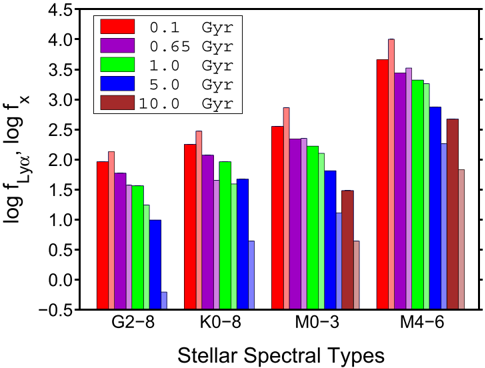
“As noted in this study, the FUV Ly-alpha flux dominates the FUV flux, comprising 80-90% of the total 900-1800 ˚ A FUV flux”
What the sources say
- Partly supportedcites Linsky et al. 2013 matched to “COMPUTING INTRINSIC LYα FLUXES OF F5 V TO M5 V STARS” (2013) sourceExperimental — accuracy not yet measured
The Abstract of Linsky, France & Ayres (2013) states only qualitatively that 'The Lyα emission line dominates the far-ultraviolet spectra of late-type stars', which supports the dominance part of the claim. However, no passage in our copy gives the 80-90% figure or uses a 900-1800 Å FUV band — the Introduction defines FUV as 1170-1700 Å, and the only quantitative fraction of total flux reported (for the Sun, Lyα ≈ 20% of the total flux between 1 and 1700 Å) is explicitly credited to Ribas et al. (2005), a different band and a different number. Searched: '80-90% of the total 900-1800 Å FUV flux', 'fraction of the total far-ultraviolet flux', '900-1800 Å integrated irradiance', 'Lyα line flux percentage of the total FUV'. Thus the numeric/band specification attributed to this source is not in it. (LLM, conf=0.70)
plain- Asserted: passes — The authors put it forward as true.
- Checkable: passes — It can be checked against evidence.
- Load-bearing: passes — The paper’s conclusions depend on it.
- Based: passes — The paper gives a reason why it holds.
- Partly supported
The sources with a verdict support this claim; the rest weren’t checked yet, have no full text we could read, or their verdicts aren’t rated yet.
In the paper
“Ultimately, high levels of energetic radiation lead to significant planetary atmospheric evaporation, as discussed by, e.g., Lammer et al. (2003), Vidal-Madjar et al. (2003), and Penz & Micela (2008).”
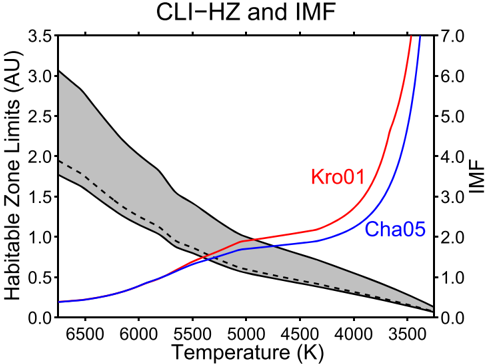
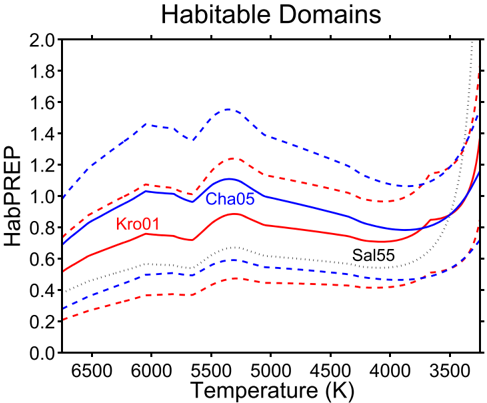
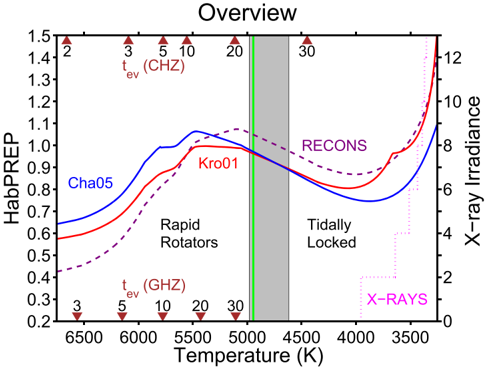
§ 4. The Big Picture The aim of this work is a multi-facet attempt to identify types of stars consistent with the durable existence of life, notwithstanding extremophiles, for which according to terrestrial analyses (e.g., Rothschild & Mancinelli 2001) large windows of opportunities might exist. General stellar aspects motivate us to focus on the main-sequence rather than pre- or postmain-sequence scenarios, which are typically of highly transitory nature. Aspects of primary importance include the frequency of the various types of stars, the size of the stellar CLI-HZs, and the rapidness of stellar evolution for various types of main-sequence stars. Following previous work by, e.g., Kopparapu et al. (2013, 2014) that indicates the decrease in the size of the CLI-HZs with decreasing stellar mass, luminosity and effective temperature irrespectively of the planetary climatological criteria for defining the CLI-HZ limits - tend to favor higher-mass stars. That is F-G-type stars have wide CLI-HZ limits whereas lower mass mid-K and M-type stars have narrow CLI-HZs located close to the star. Low-mass stars, however, are much more frequent than high-mass stars as given by the shape of the IMF (e.g., Kroupa 2001, 2002; Chabrier et al. 2005). The total number of stars greatly increases with decreasing stellar mass, although there is an onset of flattening or modest decrease for masses below ∼ 0.5 M ⊙ . Hence, more than 75% of stars are identified as M-type dwarfs. This result is also consistent with the number count of stars in the solar neighborhood, i.e., the RECONS project (Henry 2009; Henry & Jao 2015). Based on the combined behaviors of the CLI-HZs and the IMF, we are able to conclude that, from a statistical perspective, orange dwarf stars, ranging from spectral type late-G to mid-K are most promising regarding long-term exobiology. More massive stars ( M ∼ > 1 . 3 M ⊙ ), such as F-type stars, are known to rapidly evolve away from the mainsequence (e.g., Meynet et al. 1993; Mowlavi et al. 2012), a significant disadvantage for the evolution and sustainment of exolife, though limited opportunities for circumstellar habitability may still exist (e.g., Cockell 1999; Sato et al. 2014). Regarding M-type dwarfs, numerous studies have been pursued about the prospects of providing habitable environments (e.g., Segura et al. 2005; Lammer 2007; Tarter et al. 2007; Scalo et al. 2007; Lissauer 2007; Kasting et al. 2014). Generally, these studies convey multiple adverse aspects regarding supporting habitable environments, including (but not limited to) intense high-energy radiative emissions, strong stellar flares, the narrowness of the CLI-HZ, and possible geodynamic planetary insufficiencies (e.g., lack of volatiles). To date, there has been a large array of research targeting both flares and energetic radiation for stars of different ages and spectral types. Examples of flare studies include work by, e.g., Hawley et al. (2003), Robinson et al. (2005), and Davenport et al. (2012). Generally, it has been found that flares are most intense and frequent in young stars and stars of late spectral types, notably M-dwarfs (e.g., Feigelson et al. 2007). Aside from the flare properties (i.e., strength, spectral energy distribution, frequency, stochasticity) effects on Earth-type planets in CLI-HZs are heavily determined by the CLI-HZ's proximity, i.e., the small values ( < 0 . 2 au) for the HTDs of those stars. Thus, detailed studies about the impact of flares on possible exolife entail outcomes that are unfavorable or mixed at best (e.g., Segura et al. 2010; Kasting et al. 2014). Superflares revealed by Kepler data are found for stars of spectral types of G to M, but again are expected to have most adverse impacts for planets of M-dwarfs. A large number of superflares have also been detected for solar-type stars (e.g., Maehara et al. 2012, 2015; Shibayama et al. 2013; Katsova & Livshits 2015). Surprisingly, superflares may have favorable ramifications for possible exolife around G-type (and perhaps early K-type) stars (Airapetian et al. 2016), as they might trigger the production of hydrogen cyanide (HCN), an essential molecule of prebiotic chemistry. In the present work, we focus on the X-ray and FUV Lyα irradiances for planets in the CLI-HZ, notably located at the HTD for stars of different effective temperatures, luminosities, and ages. For most stars the X-ray fluxes dominate the EUV fluxes and the Lyα emission fluxes dominate in the FUV region and thus are both critical (see Table 3 and Figure 3). Ultimately, high levels of energetic radiation lead to significant planetary atmospheric evaporation, as discussed by, e.g., Lammer et al. (2003), Vidal-Madjar et al. (2003), and Penz & Micela (2008). This behavior entails adverse consequences for the habitable environments of late-K and M dwarfs (see Figure 4), which is in part also caused the very close proximity of the CLI-HZs. Additionally, as argued by Raymond et al. (2007), there is a decreased probability of habitable planet formation around those stars. It has also been pointed out that accreting planets, if formed, subsequently located in the CLI-HZ around stars cooler than K5 (including the full range of M-dwarfs) are most likely subjected to runaway greenhouse processes, and thus may lose substantial amounts of water initially delivered to them (Ramirez & Kaltenegger 2014; Luger & Barnes 2015; Tian & Ida 2015), thus emerging as (almost certainly) uninhabitable dry planets ('desert worlds'). Particularly, Tian & Ida (2015) argued that Earth-mass planets with Earth-like water contents orbiting M-dwarfs have a 10-100 times reduced likelihood than around G dwarfs. The results for red dwarfs, as discussed, add further exobiological relevance in support of late-G to mid-K orange dwarfs (i.e., T eff between approximately 4900 K and 5300 K) as more likely hosts for planets supporting complex life. Another intriguing aspect that also tends to support our main conclusion is the onset of tidal locking, which for planets located in the CLI-HZ (both CHZ and GHZ), pertaining to a timescale of ∼ 4.5 Gyr, occurs for stars with effective temperatures close to 4800 ( ± 200) K (i.e., for ∼ K3 V stars). This indicates that for planets hosted by stars hotter and more luminous, due to their more distant CLI-HZs, tidal locking is relatively unlikely (although it may still occur at a later evolutionary time), whereas for planets around cooler stars, tidal locking is expected to have happened - even though it should be pointed out that tidal locking by itself does not necessarily exclude habitability (e.g., Barnes et al. 2008), although its absence leads to more thermally balanced planetary climates. However, tidal-locking reduces the rotation period of the planet and thus possibly reduces the planet's protective geomagnetic field. Without a robust magnetic field, ion-pick up mechanisms, combined with strong X-ray-UV radiation, strong winds, and flares, could strip the planet of its atmosphere (e.g., Lammer et al. 2008). On the other hand, Driscoll & Barnes (2015) showed that tidally-locked terrestrial planets could have their geomagnetic fields sustained (or even enhanced) from the tidal heating of their iron-nickel cores. Another reason why K-dwarfs are expected to provide habitable environments stems from recent planetary geodynamic studies. Haqq-Misra et al. (2016) investigated the impact of limit cycles on the width of stellar habitable zones. Limit cycles mean that planets positioned in the CLI-HZs cannot maintain stable, warm climates, but rather should oscillate between long, globally glaciated states and shorter periods of climatic warmth. Haqq-Misra et al. (2016) argue that such conditions, similar to those experienced on Earth ('Snowball Earth') would be disadvantageous to the development of complex life, including intelligent life. Thus, limit cycles reduce the usable extent of CLI-HZs as they compromise habitability for planets near the CLI-HZs' outer rim. The authors point out that for planets around K and M dwarfs, limit cycles should not occur, thus allowing to foster habitable environments based on this criterion. However, Haqq-Misra et al. (2016) view M-dwarfs as less suitable for exolife in part based on the same reasoning as conveyed in this study. Clearly, the search for planets around different types of stars continues at an unprecedented pace. A fairly recent example includes the detection of a possible Earth-mass planet by Dumusque et al. (2012) orbiting α Cen B (K1 V), a member of the closest stellar system to the Sun, albeit this planet orbits very close to the star is not located within the CLIHZ. Furthermore, five possible super-Earth planets have been reported to orbit the nearby G8.5 V star τ Ceti (Tuomi et al. 2013). Two of these large Earth-size planet candidates (i.e., τ Ceti e and f) orbit near the inner and outer boundaries of this old star's continuously habitable zone (Pagano et al. 2015) and are thus potentially habitable. Terrestrial-size planets have also been reported for several other nearby orange dwarfs as well as from the Kepler Mission 5 . Finding habitable planets around low-mass K-M stars continues to be a challenging task due to the impacts of the stellar radiative environments, intense plasma fluxes, and the narrowness of the CLI-HZs. Additional planets are expected from the extended Kepler Mission (K2), continuing and new high precision spectroscopic radial velocity studies, as well as from the Transiting Exoplanet Survey Satellite (TESS) and Gaia. However, it is noteworthy that recent statistical analyses of Kepler Mission exoplanet data indicate that a significant fraction (i.e., 15% - 25%) of red dwarfs is expected to host terrestrial-size planets within their CLI-HZs (e.g., Bonfils et al. 2013; Dressing & Charbonneau 2013, 2015). This implies that tens of billions Earth-size planets in the Milky Way alone hosted by M-dwarfs could have a chance of being potentially habitable, even though potential life forms would most likely constitute extremophiles by terrestrial standards. Possible scenarios include that these potentially habitable planets could have escaped the strong Xray-UV radiation of their host stars by forming beyond the stellar CLI-HZs. Thereafter, they could have migrated into the CLI-HZs when their host stars had become older and less active. Another possibility is that the planets could have lost their original atmospheres and water inventories at a much later time (ages > 2 Gyr), outgassed and/or captured water and gases from collisions with icy bodies (i.e., exocomets) (e.g., Bosiek et al. 2016). It is also possible that some planets could have been protected by strong geomagnetic fields, shielding them from the expected strong X-ray-UV radiation and winds from their host stars when those were young and highly active (e.g., Khodachenko et al. 2007; Erkaev et al. 2013). In conclusion, our study indicates that the very high levels of X-ray and FUV radiation experienced by close-in CLI-HZ planets of cool stars, especially red dwarfs, is expected to have negative (detrimental) consequences on the development of life on such planets. All GHZ planets hosted by G-K-M stars experience high levels of X-ray-UV irradiances when the host stars are young ( < 0 . 5 Gyr), including early Earth. However, as discussed in this paper, the close-in GHZ planets hosted by late-K and M dwarfs experience at least an order of magnitude higher levels ionizing radiation and far more extended periods than the Earth. To make matters worse, there is a greater likelihood of large flares from young stars. The levels of the resulting ionizing X-ray-UV radiation and energetic plasmas from flares could erode or eliminate the planet's atmosphere and water inventories, thus greatly reducing the suitability of the planet for sustained life. These effects as well as other factors (including biological and chemical bottlenecks, asteroid bombardments, among others), as recently discussed by Chopra & Lineweaver (2016) and references therein, could greatly diminish the likelihood of development of multicellular complex life. The lack of evidence of technologically advanced civilizations such as radio signals and other modes of one-way communication are referred to as the Fermi's Paradox, which continues to remain unresolved (see Chopra & Lineweaver 2016). As discussed in this paper, decisive impediments (roadblocks) to life could be attributable to high energy radiation, strong stellar winds and flares experienced by planets during the first billion years after formation. 5 For further information, see Planetary Habitability Laboratory, http://phl.upr.edu.
What the sources say
- Supportedcites Lammer et al. (2003) matched to “Atmospheric Loss of Exoplanets Resulting from Stellar X-Ray and Extreme-Ultraviolet Heating” (2003) source
The Abstract reports that X-ray and extreme-ultraviolet irradiation drives atmospheric expansion and escape, with estimated loss rates around 10¹² g s⁻¹ for the hot Jupiters studied. It also states that stronger XUV flux from young solar-type stars produces significantly higher loss rates and may cause hydrogen-rich giant exoplanets to evaporate down to their cores. The claim is a broad paraphrase of those findings. (LLM, conf=0.92)
- Not checked — no full text of the sourcecites Vidal-Madjar et al. (2003) matched to “An extended upper atmosphere around the extrasolar planet HD209458b” (2003) source
- Supportedcites Penz & Micela (2008) matched to “X-ray induced mass loss effects on exoplanets orbiting dM stars” (2008) source
Section 3 states that intense incident X-ray radiation can heat and expand the atmospheres of close-in exoplanets, causing atmospheric loss. The Conclusions report that some close-in Neptune-mass planets may be evaporated or eroded to their cores, supporting the cited general statement while showing that the effect depends on planetary conditions. (LLM, conf=0.92)
plainstates a cause- Asserted: passes — The authors put it forward as true.
- Checkable: passes — It can be checked against evidence.
- Load-bearing: passes — The paper’s conclusions depend on it.
- Based: passes — The paper gives a reason why it holds.
- Supported
The cited sources support only part of this claim — read each source’s verdict below.
In the paper
“Lammer et al. (2003) showed that the combination of high X-ray-UV irradiance and strong (more dense) stellar winds expected from young G, K, and M dwarfs can, via ion-pickup mechanisms, act synergically to strip away atmospheres of close-in planets”
What the sources say
- Partly supportedcites Lammer et al. (2003) matched to “Atmospheric Loss of Exoplanets Resulting from Stellar X-Ray and Extreme-Ultraviolet Heating” (2003) sourceExperimental — accuracy not yet measured
Section 5 reports XUV-driven hydrodynamic escape from close-in giant planets, and the Results section reports higher XUV fluxes for young Sun-like stars. The paper does not support the attributed role of dense stellar winds or ion pickup acting synergistically with XUV, nor does it extend this finding to young K and M dwarfs. (LLM, conf=0.88)
plainstates a cause- Asserted: passes — The authors put it forward as true.
- Checkable: passes — It can be checked against evidence.
- Load-bearing: unclear — It is unclear whether the paper’s conclusions depend on it.
- Based: passes — The paper gives a reason why it holds.
- Partly supported
The cited sources support only part of this claim — read each source’s verdict below.
In the paper
“Since stellar winds scale to magnetic fields and activity (e.g., Schrijver et al. 2003; Preusse et al. 2005; Cranmer & Saar 2011)”
What the sources say
- Supportedcites Schrijver et al. 2003 matched to “Asterospheric Magnetic Fields and Winds of Cool Stars” (2003) source
The Discussion and Conclusions state that the total energy flux available to accelerate a wind scales with a star’s total magnetic flux. The mass-loss scaling in the section containing equations (10)–(13) also relates wind properties to magnetic activity. These findings support the citing sentence for the cool stars studied. (LLM, conf=0.90)
- Partly supportedcites Preusse et al. 2005 matched to “Stellar wind regimes of close-in extrasolar planets” (2005) sourceExperimental — accuracy not yet measured
Section 3.2 (page unavailable) varies magnetic-field strength to study its influence on stellar-wind velocities, supporting the magnetic-field part of the claim. The paper does not establish that stellar winds scale with stellar activity; its discussion of activity in the Introduction concerns possible effects of star–planet interaction. (LLM, conf=0.84)
- Supportedcites Cranmer & Saar 2011 matched to “TESTING A PREDICTIVE THEORETICAL MODEL FOR THE MASS LOSS RATES OF COOL STARS” (2011) source
Section 6 (page unavailable) says the paper’s cool-star wind models account for magnetic activity through the filling factor of strong photospheric magnetic fields. Section 4 (page unavailable) describes that filling factor as an ingredient in the wind models and a primary indicator of magnetic activity. This supports the broad claim that the modeled stellar winds depend on magnetic fields and activity. (LLM, conf=0.88)
plainstates an association- Asserted: passes — The authors put it forward as true.
- Checkable: passes — It can be checked against evidence.
- Load-bearing: passes — The paper’s conclusions depend on it.
- Based: passes — The paper gives a reason why it holds.
- Rests on an assumption not shown here.
- Supported
Every source the paper cites for this claim was checked and supports it.
In the paper
“As shown, the amount of habitable planetary real estate, HabPREP, with the IMF given by Kroupa (2001) and Chabrier et al. (2005) as well as based on the results from the RECONS project (see text), forms an aggregate maximum at the temperature range for orange dwarfs.”
What the sources say
- Supportedcites Kroupa (2001) matched to “On the variation of the initial mass function” (2001) source
The citation identifies Kroupa (2001) as a source for the IMF used in the citing authors’ calculation. Section 2.2 (p. 8) presents that IMF and its stellar-population breakdown. The orange-dwarf HabPREP maximum is the citing authors’ result, not a finding attributed to Kroupa. (LLM, conf=0.90)
- Supportedcites Chabrier et al. (2005) matched to “Review on low-mass stars and brown dwarfs” (2005) source
The citation here is an identification one: it stands for the initial mass function used in the citing authors' HabPREP calculation, not for the orange-dwarf maximum (which is the citing paper's own result and is not attributed to this source). Our copy does supply that IMF: §4.1 Galactic field (p. 11) presents the field star+BD IMF as an analytical parametrization, Eq. (1), with Figure 6, and the abstract (p. 1) states that a power law above the average thermal Jeans mass (~1 Msun) rolling over into a lognormal below reproduces the observed field and young-cluster distributions (§4.2, p. 14; §7, p. 19). No passage of our copy discusses habitable zones or an aggregate 'HabPREP' maximum, consistently with that point not being credited to this paper. (LLM, conf=0.85)
plainstates an association- Asserted: passes — The authors put it forward as true.
- Checkable: passes — It can be checked against evidence.
- Load-bearing: passes — The paper’s conclusions depend on it.
- Based: passes — The paper gives a reason why it holds.
- Supported
67 more claims
Create a free account to see all 102 claims and to verify the 35 references still open.
- Probably not a substantial claim. 16
- It may state two separate claims as one. 16
Claims other papers make about this one
Each is checked against this paper’s own text: does it say what the citing paper says it does?
In the citing paper
“Their relatively low luminosity, as low as one-tenth that of a Sun-like star, offers favorable observational conditions for direct imaging of their planets, if present (Cuntz and Guinan 2016).”
From Superhabitable Planets Around Mid‐Type K Dwarf Stars Enhance Simulated JWST Observability and Surface Habitability (2025) · cites this paper as Cuntz and Guinan 2016
Citations
Cites
Galactic Stellar and Substellar Initial Mass Function
Chabrier, G. (2003) · Publications of the Astronomical Society of the Pacific · doi:10.1086/376392 · Cited by 9,071 · cited 2×
“Second, the relative frequency of stars according to, e.g., Kroupa (2002) and Chabrier (2003), and first increases, but then near 0.5 M⊙ (with the exact value dependent on the set of observational data and the particulars of the statistical approach) levels off or starts to decrease (if displayed…”
BackgroundInfluentialThe Luminosity Function and Stellar Evolution.
Salpeter, E. E. (1955) · The Astrophysical Journal · doi:10.1086/145971 · Cited by 8,697
On the variation of the initial mass function
Kroupa, P. (2001) · Monthly Notices of the Royal Astronomical Society · doi:10.1046/j.1365-8711.2001.04022.x · Cited by 7,499 · cited 2×
“Low-mass stars, however, are much more frequent than high-mass stars as given by the shape of the IMF (e.g., Kroupa 2001, 2002; Chabrier et al. 2005).”
BackgroundGalactic Stellar and Substellar Initial Mass Function
Chabrier, G. (2003) · HAL · Cited by 4,930
A Jupiter-mass companion to a solar-type star
Mayor, M., & Queloz, D. (1995) · Nature · doi:10.1038/378355a0 · Cited by 4,111 · cited 1×
“Since the discovery of the first planet hosted by a Sun-like star was found more than 20 years ago orbiting 51 Pegasi (Mayor & Queloz 1995), the search for life in the Universe has received unprecedented attention.”
BackgroundReipurth, B., Jewitt, D. C., & Keil, K. (2007) · Cited by 2,831
Habitable Zones around Main Sequence Stars
Kasting, J. F., Whitmire, D. P., & Reynolds, R. T. (1993) · Icarus · doi:10.1006/icar.1993.1010 · Cited by 2,501 · cited 5×
“In contrast, Kasting et al. (1993) identified them as 0.84 and 1.67 au, respectively.”
BackgroundMethodResultInfluentialRothschild, L. J., & Mancinelli, R. L. (2001) · Nature · doi:10.1038/35059215 · Cited by 2,245 · cited 1×
“The aim of this work is a multi-facet attempt to identify types of stars consistent with the durable existence of life, notwithstanding extremophiles, for which according to terrestrial analyses (e.g., Rothschild & Mancinelli 2001) large windows of opportunities might exist.”
BackgroundA new extensive library of PHOENIX stellar atmospheres and synthetic spectra
Husser, T.-O., Wende-von Berg, S., Dreizler, S., Homeier, D., Reiners, A., Barman, T., & Hauschildt, P. H. (2013) · Astronomy & Astrophysics · doi:10.1051/0004-6361/201219058 · Cited by 1,943 · cited 1×
“…versions of that figure, updates have been made for stars of Teff ∼< 4500 due to improved spectro-thermometry in consideration of updated PHOENIX atmosphere models (Husser et al. 2013; Mann et al. 2013), resulting in revised values for effective temperature, radius, mass, and luminosity.”
BackgroundThe Chemical Evolution of the Atmosphere and Oceans
Holland, H. D. (1984) · doi:10.1515/9780691220239 · Cited by 1,836
Durisen, R. H., Boss, A. P., Mayer, L., Nelson, A., Quinn, T., & Rice, K. (2005) · Cited by 1,822
The Initial Mass Function of Stars: Evidence for Uniformity in Variable Systems
Kroupa, P. (2002) · Science · doi:10.1126/science.1067524 · Cited by 1,793 · cited 3×
“Low-mass stars, however, are much more frequent than high-mass stars as given by the shape of the IMF (e.g., Kroupa 2001, 2002; Chabrier et al. 2005).”
BackgroundInfluentialHABITABLE ZONES AROUND MAIN-SEQUENCE STARS: NEW ESTIMATES
Kopparapu, R. K., Ramirez, R., Kasting, J. F., Eymet, V., Robinson, T. D., Mahadevan, S., Terrien, R. C., Domagal-Goldman, S., Meadows, V., & Deshpande, R. (2013) · The Astrophysical Journal · doi:10.1088/0004-637x/765/2/131 · Cited by 1,615 · cited 8×
“This work was significantly improved through subsequent studies, including the recent work by Kopparapu et al. (2013, 2014).”
BackgroundMethodResultInfluentialLunar and Planetary Science Conference
Peplow, M. (2006) · Nature · doi:10.1038/news060313-5 · Cited by 1,555
The initial mass function and stellar birthrate in the solar neighborhood
Miller, G. E., & Scalo, J. M. (1979) · The Astrophysical Journal Supplement Series · doi:10.1086/190629 · Cited by 1,436 · cited 1×
“Several decades ago, Miller & Scalo (1979) pointed out that the flatting of the IMF in the regime of very low mass stars may be due to the mutual interactions between the fragments of interstellar clouds as well as their interactions with the ambient gas rather than cloud fragmentation itself.”
BackgroundImproved Age Estimation for Solar‐Type Dwarfs Using Activity‐Rotation Diagnostics
Mamajek, E. E., & Hillenbrand, L. A. (2008) · The Astrophysical Journal · doi:10.1086/591785 · Cited by 1,313 · cited 1×
“These were supplemented by relations given by Basri et al. (1996), Perryman et al. (1998), and Mamajek & Hillenbrand (2008).”
MethodAn extended upper atmosphere around the extrasolar planet HD209458b
Vidal-Madjar, A., des Etangs, A. L., Désert, J.-M., Ballester, G. E., Ferlet, R., Hébrard, G., & Mayor, M. (2003) · Nature · doi:10.1038/nature01448 · Cited by 1,208 · cited 2×
“Ultimately, high levels of energetic radiation lead to significant planetary atmospheric evaporation, as discussed by, e.g., Lammer et al. (2003), Vidal-Madjar et al. (2003), and Penz & Micela (2008).”
BackgroundDressing, C. D., & Charbonneau, D. (2015) · The Astrophysical Journal · doi:10.1088/0004-637x/807/1/45 · Cited by 1,012 · cited 1×
“%) of red dwarfs is expected to host terrestrial-size planets within their CLI-HZs (e.g., Bonfils et al. 2013; Dressing & Charbonneau 2013, 2015).”
BackgroundRibas, I., Guinan, E. F., Gudel, M., & Audard, M. (2005) · The Astrophysical Journal · doi:10.1086/427977 · Cited by 855
Self-citationTHE OCCURRENCE RATE OF SMALL PLANETS AROUND SMALL STARS
Dressing, C. D., & Charbonneau, D. (2013) · The Astrophysical Journal · doi:10.1088/0004-637x/767/1/95 · Cited by 749 · cited 1×
“%) of red dwarfs is expected to host terrestrial-size planets within their CLI-HZs (e.g., Bonfils et al. 2013; Dressing & Charbonneau 2013, 2015).”
BackgroundHABITABLE ZONES AROUND MAIN-SEQUENCE STARS: DEPENDENCE ON PLANETARY MASS
Kopparapu, R. K., Ramirez, R. M., SchottelKotte, J., Kasting, J. F., Domagal-Goldman, S., & Eymet, V. (2014) · The Astrophysical Journal · doi:10.1088/2041-8205/787/2/l29 · Cited by 660 · cited 8×
“This work was significantly improved through subsequent studies, including the recent work by Kopparapu et al. (2013, 2014).”
BackgroundMethodResultInfluentialThe HARPS search for southern extra-solar planets: XXXI. The M-dwarf sample
Bonfils, X., Delfosse, X., Udry, S., Forveille, T., Mayor, M., Perrier, C., Bouchy, F., Gillon, M., Lovis, C., Pepe, F., et al. (2013) · Astronomy & Astrophysics · doi:10.1051/0004-6361/201014704 · Cited by 653 · cited 1×
“%) of red dwarfs is expected to host terrestrial-size planets within their CLI-HZs (e.g., Bonfils et al. 2013; Dressing & Charbonneau 2013, 2015).”
BackgroundSuperflares on solar-type stars
Maehara, H., Shibayama, T., Notsu, S., Notsu, Y., Nagao, T., Kusaba, S., Honda, S., Nogami, D., & Shibata, K. (2012) · Nature · doi:10.1038/nature11063 · Cited by 642 · cited 3×
“…the magnitude and temporal evolution of stellar magnetic-dynamo driven activity, such as UV, EUV, and X-ray radiative emission (e.g., Güdel et al. 1997; Guinan & Ribas 2002; Ribas et al. 2005; Tu et al. 2015) and (super-)flares (e.g., Hawley et al. 2003; Maehara et al. 2012; Guinan et al. 2016).”
BackgroundAtmospheric Loss of Exoplanets Resulting from Stellar X-Ray and Extreme-Ultraviolet Heating
Lammer, H., Selsis, F., Ribas, I., Guinan, E. F., Bauer, S. J., & Weiss, W. W. (2003) · The Astrophysical Journal · doi:10.1086/380815 · Cited by 636 · cited 2×
“Ultimately, high levels of energetic radiation lead to significant planetary atmospheric evaporation, as discussed by, e.g., Lammer et al. (2003), Vidal-Madjar et al. (2003), and Penz & Micela (2008).”
BackgroundSelf-citationExtreme Water Loss and Abiotic O 2 Buildup on Planets Throughout the Habitable Zones of M Dwarfs
Luger, R., & Barnes, R. (2015) · Astrobiology · doi:10.1089/ast.2014.1231 · Cited by 585 · cited 1×
“…of M-dwarfs) are most likely subjected to runaway greenhouse processes, and thus may lose substantial amounts of water initially delivered to them (Ramirez & Kaltenegger 2014; Luger & Barnes 2015; Tian & Ida 2015), thus emerging as (almost certainly) uninhabitable dry planets (“desert worlds”).”
BackgroundHabitable planets around the star Gliese 581?
Selsis, F., Kasting, J. F., Levrard, B., Paillet, J., Ribas, I., & Delfosse, X. (2007) · Astronomy & Astrophysics · doi:10.1051/0004-6361:20078091 · Cited by 527 · cited 1×
“Previously, corrective formulae were given by Underwood et al. (2003) and Selsis et al. (2007) that are used by us, including recasting in response to the studies of Kopparapu et al. (2013, 2014). young (0.1 Gyr) G2 V star, the HTD X-ray flux for an M4–5 V star (Teff ∼ 3200 K) is over 45× higher.”
MethodInfluentialBiosignatures from Earth-Like Planets Around M Dwarfs
Segura, A., Kasting, J. F., Meadows, V., Cohen, M., Scalo, J., Crisp, D., Butler, R. A. H., & Tinetti, G. (2005) · Astrobiology · doi:10.1089/ast.2005.5.706 · Cited by 524 · cited 1×
“Regarding M-type dwarfs, numerous studies have been pursued about the prospects of providing habitable environments (e.g., Segura et al. 2005; Lammer 2007; Tarter et al. 2007; Scalo et al. 2007; Lissauer 2007; Kasting et al. 2014).”
BackgroundSUPERFLARES ON SOLAR-TYPE STARS OBSERVED WITH KEPLER . I. STATISTICAL PROPERTIES OF SUPERFLARES
Shibayama, T., Maehara, H., Notsu, S., Notsu, Y., Nagao, T., Honda, S., Ishii, T. T., Nogami, D., & Shibata, K. (2013) · The Astrophysical Journal Supplement Series · doi:10.1088/0067-0049/209/1/5 · Cited by 500 · cited 1×
“A large number of superflares have also been detected for solar-type stars (e.g., Maehara et al. 2012, 2015; Shibayama et al. 2013; Katsova & Livshits 2015).”
BackgroundSegura, A., Walkowicz, L. M., Meadows, V., Kasting, J., & Hawley, S. (2010) · Astrobiology · doi:10.1089/ast.2009.0376 · Cited by 446 · cited 1×
“Thus, detailed studies about the impact of flares on possible exolife entail outcomes that are unfavorable or mixed at best (e.g., Segura et al. 2010; Kasting et al. 2014).”
BackgroundAn Earth-mass planet orbiting α Centauri B
Dumusque, X., Pepe, F., Lovis, C., Ségransan, D., Sahlmann, J., Benz, W., Bouchy, F., Mayor, M., Queloz, D., Santos, N., et al. (2012) · Nature · doi:10.1038/nature11572 · Cited by 404 · cited 1×
“A fairly recent example includes the detection of a possible Earth-mass planet by Dumusque et al. (2012) orbiting α Cen B (K1 V), a member of the closest stellar system to the Sun, albeit this planet orbits very close to the star is not located within the CLIHZ.”
BackgroundM Stars as Targets for Terrestrial Exoplanet Searches And Biosignature Detection
Scalo, J., Kaltenegger, L., Segura, A., Fridlund, M. C., Ribas, I., Kulikov, Y. N., Grenfell, J. L., Rauer, H., Odert, P., Leitzinger, M., et al. (2007) · Astrobiology · doi:10.1089/ast.2006.0000 · Cited by 396 · cited 2×
“Regarding M-type dwarfs, numerous studies have been pursued about the prospects of providing habitable environments (e.g., Segura et al. 2005; Lammer 2007; Tarter et al. 2007; Scalo et al. 2007; Lissauer 2007; Kasting et al. 2014).”
BackgroundWhat makes a planet habitable?
Lammer, H., Bredehöft, J. H., Coustenis, A., Khodachenko, M. L., Kaltenegger, L., Grasset, O., Prieur, D., Raulin, F., Ehrenfreund, P., Yamauchi, M., et al. (2009) · The Astronomy and Astrophysics Review · doi:10.1007/s00159-009-0019-z · Cited by 378 · cited 1×
“Previously, significant progress has been made on both aspects, including work by Scalo et al. (2007), Lammer et al. (2009, 2013), Horner & Jones (2010), Rugheimer et al. (2013), Kasting et al. (2014), among others.”
BackgroundThe HARPS search for southern extra-solar planets XXXI. The M-dwarf sample
Bonfils, X., Delfosse, X., Udry, S., Forveille, T., Mayor, M., Perrier, C., Bouchy, F., Gillon, M., Lovis, C., Pepe, F. A., et al. (2011) · Archive ouverte UNIGE (University of Geneva) · doi:10.48550/arxiv.1111.5019 · Cited by 343 · cited 1×
“%) of red dwarfs is expected to host terrestrial-size planets within their CLI-HZs (e.g., Bonfils et al. 2013; Dressing & Charbonneau 2013, 2015).”
BackgroundCosmic Winds and the Heliosphere
(2018) · University of Arizona Press eBooks · doi:10.2307/j.ctt1zxsmpd · Cited by 341
TESTING A PREDICTIVE THEORETICAL MODEL FOR THE MASS LOSS RATES OF COOL STARS
Cranmer, S. R., & Saar, S. H. (2011) · The Astrophysical Journal · doi:10.1088/0004-637x/741/1/54 · Cited by 341 · cited 1×
“Since stellar winds scale to magnetic fields and activity (e.g., Schrijver et al. 2003; Preusse et al. 2005; Cranmer & Saar 2011), it can be assumed that winds are most dense in young, magnetically active stars and planets at close-in HTDs (as given for late-K and M dwarfs) are most affected.”
BackgroundA Reappraisal of The Habitability of Planets around M Dwarf Stars
Tarter, J. C., Backus, P. R., Mancinelli, R. L., Aurnou, J. M., Backman, D. E., Basri, G. S., Boss, A. P., Clarke, A., Deming, D., Doyle, L. R., et al. (2007) · Astrobiology · doi:10.1089/ast.2006.0124 · Cited by 340 · cited 1×
“Regarding M-type dwarfs, numerous studies have been pursued about the prospects of providing habitable environments (e.g., Segura et al. 2005; Lammer 2007; Tarter et al. 2007; Scalo et al. 2007; Lissauer 2007; Kasting et al. 2014).”
BackgroundThe X‐Ray Sun in Time: A Study of the Long‐Term Evolution of Coronae of Solar‐Type Stars
Gudel, M., Guinan, E. F., & Skinner, S. L. (1997) · The Astrophysical Journal · doi:10.1086/304264 · Cited by 323 · cited 2×
“…of solar-type stars on the influence of dynamo-generated energetic radiation encompassing various wavelength regimes, especially X-ray, extreme-UV (EUV) and far-UV (FUV) as well as stars of different ages (e.g., Güdel et al. 1997; Guinan & Ribas 2002; Guinan et al. 2003; Ribas et al. 2005).”
BackgroundSelf-citationPrebiotic chemistry and atmospheric warming of early Earth by an active young Sun
Airapetian, V. S., Glocer, A., Gronoff, G., Hébrard, E., & Danchi, W. (2016) · Nature Geoscience · doi:10.1038/ngeo2719 · Cited by 320 · cited 1×
“Surprisingly, superflares may have favorable ramifications for possible exolife around G-type (and perhaps early K-type) stars (Airapetian et al. 2016), as they might trigger the production of hydrogen cyanide (HCN), an essential molecule of prebiotic chemistry.”
BackgroundConstraints on the Stellar/Substellar Mass Function in the Inner Orion Nebula Cluster
Hillenbrand, L. A., & Carpenter, J. M. (2000) · The Astrophysical Journal · doi:10.1086/309309 · Cited by 320 · cited 1×
“Early work establishing the IMF has been given by, e.g., Muench et al. (2000), Lucas & Roche (2000), Hillenbrand & Carpenter (2000), and Luhman et al. (2000), which focused on distinct stellar clusters including clusters located in the Orion and Taurus constellation; some of this work also employed…”
The Initial Mass Function of Low‐Mass Stars and Brown Dwarfs in Young Clusters
Luhman, K. L., Rieke, G. H., Young, E. T., Cotera, A. S., Chen, H., Rieke, M. J., Schneider, G., & Thompson, R. I. (2000) · The Astrophysical Journal · doi:10.1086/309365 · Cited by 293 · cited 1×
“Early work establishing the IMF has been given by, e.g., Muench et al. (2000), Lucas & Roche (2000), Hillenbrand & Carpenter (2000), and Luhman et al. (2000), which focused on distinct stellar clusters including clusters located in the Orion and Taurus constellation; some of this work also employed…”
A population of very young brown dwarfs and free-floating planets in Orion
Lucas, P. W., & Roche, P. F. (2000) · Monthly Notices of the Royal Astronomical Society · doi:10.1046/j.1365-8711.2000.03515.x · Cited by 282 · cited 1×
“Early work establishing the IMF has been given by, e.g., Muench et al. (2000), Lucas & Roche (2000), Hillenbrand & Carpenter (2000), and Luhman et al. (2000), which focused on distinct stellar clusters including clusters located in the Orion and Taurus constellation; some of this work also employed…”
Atmospheric Escape and Evolution of Terrestrial Planets and Satellites
Lammer, H., Kasting, J. F., Chassefière, E., Johnson, R. E., Kulikov, Y. N., & Tian, F. (2008) · Space Science Reviews · doi:10.1007/s11214-008-9413-5 · Cited by 275 · cited 1×
“Without a robust magnetic field, ion-pick up mechanisms, combined with strong X-ray–UV radiation, strong winds, and flares, could strip the planet of its atmosphere (e.g., Lammer et al. 2008).”
BackgroundKhodachenko, M. L., Ribas, I., Lammer, H., Grießmeier, J.-M., Leitner, M., Selsis, F., Eiroa, C., Hanslmeier, A., Biernat, H. K., Farrugia, C. J., et al. (2007) · Astrobiology · doi:10.1089/ast.2006.0127 · Cited by 275 · cited 1×
“It is also possible that some planets could have been protected by strong geomagnetic fields, shielding them from the expected strong X-ray–UV radiation and winds from their host stars when those were young and highly active (e.g., Khodachenko et al. 2007; Erkaev et al. 2013).”
BackgroundTHE ULTRAVIOLET RADIATION ENVIRONMENT AROUND M DWARF EXOPLANET HOST STARS
France, K., Froning, C. S., Linsky, J. L., Roberge, A., Stocke, J. T., Tian, F., Bushinsky, R., Désert, J.-M., Mauas, P., Vieytes, M., et al. (2013) · The Astrophysical Journal · doi:10.1088/0004-637x/763/2/149 · Cited by 256
The extreme ultraviolet and X-ray Sun in Time: High-energy evolutionary tracks of a solar-like star
Tu, L., Johnstone, C. P., Güdel, M., & Lammer, H. (2015) · Astronomy & Astrophysics · doi:10.1051/0004-6361/201526146 · Cited by 252 · cited 1×
“…the magnitude and temporal evolution of stellar magnetic-dynamo driven activity, such as UV, EUV, and X-ray radiative emission (e.g., Güdel et al. 1997; Guinan & Ribas 2002; Ribas et al. 2005; Tu et al. 2015) and (super-)flares (e.g., Hawley et al. 2003; Maehara et al. 2012; Guinan et al. 2016).”
BackgroundDistant future of the Sun and Earth revisited
Schröder, K.-P., & Connon Smith, R. (2008) · Monthly Notices of the Royal Astronomical Society · doi:10.1111/j.1365-2966.2008.13022.x · Cited by 250 · cited 1×
“Ly-α serves as an excellent indicator for FUV emission because this emission line alone contributes 80–90% of the total stellar 3Based on studies by, e.g., Schröder & Smith (2008) and Mowlavi et al. (2012) it has been found that the effective temperature of the young Sun was ∼5600 K (G6–7 V).”
BackgroundLithium in Brown Dwarf Candidates: The Mass and Age of the Faintest Pleiades Stars
Basri, G., Marcy, G. W., & Graham, J. R. (1996) · The Astrophysical Journal · doi:10.1086/176842 · Cited by 248 · cited 1×
“These were supplemented by relations given by Basri et al. (1996), Perryman et al. (1998), and Mamajek & Hillenbrand (2008).”
MethodThe effect of tidal locking on the magnetospheric and atmospheric evolution of “Hot Jupiters”
Grießmeier, J.-M., Stadelmann, A., Penz, T., Lammer, H., Selsis, F., Ribas, I., Guinan, E. F., Motschmann, U., Biernat, H. K., & Weiss, W. W. (2004) · Astronomy & Astrophysics · doi:10.1051/0004-6361:20035684 · Cited by 237 · cited 2×
“Unless a hosted CLI-HZ planet has a strong and persistent magnetic field, amounting to a protective magnetosphere, there is a significant possibility that the planet will lose most, if not all, of its atmosphere including its water inventories (e.g., Grießmeier et al. 2004).”
BackgroundSelf-citationStatistical properties of superflares on solar-type stars based on 1-min cadence data
Maehara, H., Shibayama, T., Notsu, Y., Notsu, S., Honda, S., Nogami, D., & Shibata, K. (2015) · Earth, Planets and Space · doi:10.1186/s40623-015-0217-z · Cited by 222 · cited 1×
“A large number of superflares have also been detected for solar-type stars (e.g., Maehara et al. 2012, 2015; Shibayama et al. 2013; Katsova & Livshits 2015).”
BackgroundThe extreme ultraviolet and X-ray Sun in Time: High-energy evolutionary tracks of a solar-like star
Tu, L., Johnstone, C. P., Güdel, M., & Lammer, H. (2015) · Springer Link (Chiba Institute of Technology) · doi:10.1051/0004-6361/201526146/pdf · Cited by 217
SPECTRO-THERMOMETRY OF M DWARFS AND THEIR CANDIDATE PLANETS: TOO HOT, TOO COOL, OR JUST RIGHT?
Mann, A. W., Gaidos, E., & Ansdell, M. (2013) · The Astrophysical Journal · doi:10.1088/0004-637x/779/2/188 · Cited by 216 · cited 1×
“…versions of that figure, updates have been made for stars of Teff ∼< 4500 due to improved spectro-thermometry in consideration of updated PHOENIX atmosphere models (Husser et al. 2013; Mann et al. 2013), resulting in revised values for effective temperature, radius, mass, and luminosity.”
BackgroundMultiwavelength Observations of Flares on AD Leonis
Hawley, S. L., Allred, J. C., Johns‐Krull, C. M., Fisher, G. H., Abbett, W. P., Alekseev, I., Avgoloupis, S. I., Deustua, S. E., Gunn, A., Seiradakis, J. H., et al. (2003) · The Astrophysical Journal · doi:10.1086/378351 · Cited by 213 · cited 2×
“Examples of flare studies include work by, e.g., Hawley et al. (2003), Robinson et al. (2005), and Davenport et al. (2012).”
BackgroundA Decreased Probability of Habitable Planet Formation around Low‐Mass Stars
Raymond, S. N., Scalo, J., & Meadows, V. S. (2007) · The Astrophysical Journal · doi:10.1086/521587 · Cited by 210 · cited 1×
“Additionally, as argued by Raymond et al. (2007), there is a decreased probability of habitable planet formation around those stars.”
BackgroundThe Sun in Time: Activity and Environment
Güdel, M. (2007) · Living Reviews in Solar Physics · doi:10.12942/lrsp-2007-3 · Cited by 205 · cited 1×
“Our analysis also takes into account different LX – age relations, which for G and M dwarfs have been obtained by Güdel (2007) and Guinan et al. (2016), respectively.”
MethodA Population of very young Brown Dwarfs and free-floating Planets in Orion
Lucas, P. W., & Roche, P. F. (2000) · CERN Document Server (European Organization for Nuclear Research) · Cited by 186
Statistical properties of superflares on solar-type stars based on 1-min cadence data
Maehara, H., Shibayama, T., Notsu, Y., Notsu, S., Honda, S., Nogami, D., & Shibata, K. (2015) · Institutional Repositories DataBase (IRDB) · Cited by 178
Fairén, A. G., Davila, A. F., Lim, D., Bramall, N., Bonaccorsi, R., Zavaleta, J., Uceda, E. R., Stoker, C., Wierzchos, J., Dohm, J. M., et al. (2010) · Astrobiology · doi:10.1089/ast.2009.0440 · Cited by 177 · cited 2×
“Also, because of the Sun’s past high activity, coupled with the loss of its protective geomagnetic field some 3.5 Gyr ago, Mars today is too cold and dry for complex life at least on its surface (e.g., Fairén et al. 2010).”
BackgroundInfluentialGhost in the time series: no planet for Alpha Cen B
Rajpaul, V., Aigrain, S., & Roberts, S. (2015) · Monthly Notices of the Royal Astronomical Society: Letters · doi:10.1093/mnrasl/slv164 · Cited by 174
THE HABITABLE ZONES OF PRE-MAIN-SEQUENCE STARS
Ramirez, R. M., & Kaltenegger, L. (2014) · The Astrophysical Journal · doi:10.1088/2041-8205/797/2/l25 · Cited by 174 · cited 1×
“…of M-dwarfs) are most likely subjected to runaway greenhouse processes, and thus may lose substantial amounts of water initially delivered to them (Ramirez & Kaltenegger 2014; Luger & Barnes 2015; Tian & Ida 2015), thus emerging as (almost certainly) uninhabitable dry planets (“desert worlds”).”
BackgroundWater contents of Earth-mass planets around M dwarfs
Tian, F., & Ida, S. (2015) · Nature Geoscience · doi:10.1038/ngeo2372 · Cited by 162 · cited 2×
“…of M-dwarfs) are most likely subjected to runaway greenhouse processes, and thus may lose substantial amounts of water initially delivered to them (Ramirez & Kaltenegger 2014; Luger & Barnes 2015; Tian & Ida 2015), thus emerging as (almost certainly) uninhabitable dry planets (“desert worlds”).”
BackgroundDistant future of the Sun and Earth revisited
Schroder, K.-P., & Smith, R. C. (2008) · Sussex Research Online (University of Sussex) · doi:10.48550/arxiv.0801.4031 · Cited by 161 · cited 1×
“Ly-α serves as an excellent indicator for FUV emission because this emission line alone contributes 80–90% of the total stellar 3Based on studies by, e.g., Schröder & Smith (2008) and Mowlavi et al. (2012) it has been found that the effective temperature of the young Sun was ∼5600 K (G6–7 V).”
BackgroundKasting, J. F., Kopparapu, R., Ramirez, R. M., & Harman, C. E. (2014) · Proceedings of the National Academy of Sciences · doi:10.1073/pnas.1309107110 · Cited by 158 · cited 4×
“Thus, detailed studies about the impact of flares on possible exolife entail outcomes that are unfavorable or mixed at best (e.g., Segura et al. 2010; Kasting et al. 2014).”
BackgroundInfluentialTHE EVOLUTION OF STELLAR ROTATION AND THE HYDROGEN ATMOSPHERES OF HABITABLE-ZONE TERRESTRIAL PLANETS
Johnstone, C. P., Güdel, M., Stökl, A., Lammer, H., Tu, L., Kislyakova, K. G., Lüftinger, T., Odert, P., Erkaev, N. V., & Dorfi, E. A. (2015) · The Astrophysical Journal · doi:10.1088/2041-8205/815/1/l12 · Cited by 151 · cited 1×
“Dense stellar winds (as present in active young stars) are also expected of having an adverse impact on circumstellar habitability (Johnstone et al. 2015).”
BackgroundROSAT All-Sky Survey Observations of the Hyades Cluster
Stern, R. A., Schmitt, J. H. M. M., & Kahabka, P. T. (1995) · The Astrophysical Journal · doi:10.1086/175997 · Cited by 148 · cited 1×
“Mean milestone age baseline X-ray flux–age calibrations of G and K stars were obtained from ROSAT studies of Pleiades cluster (age ∼0.1 Gyr) and Hyades cluster (age ∼0.65 Gyr) carried out by Micela et al. (1990) and Stern et al. (1995), respectively.”
MethodInfluentialAtmospheric and water loss from early Venus
Kulikov, Y. N., Lammer, H., Lichtenegger, H. I. M., Terada, N., Ribas, I., Kolb, C., Langmayr, D., Lundin, R., Guinan, E. F., Barabash, S., et al. (2006) · Planetary and Space Science · doi:10.1016/j.pss.2006.04.021 · Cited by 146 · cited 3×
“Because of high levels of magnetic activity of the early Sun, Venus lost its original water inventory very early and now is a very hot, dry, inhospitable planet (e.g., Kulikov et al. 2006).”
BackgroundSelf-citationSpectral Fingerprints of Earth-like Planets Around FGK Stars
Rugheimer, S., Kaltenegger, L., Zsom, A., Segura, A., & Sasselov, D. (2013) · Astrobiology · doi:10.1089/ast.2012.0888 · Cited by 143 · cited 1×
“Previously, significant progress has been made on both aspects, including work by Scalo et al. (2007), Lammer et al. (2009, 2013), Horner & Jones (2010), Rugheimer et al. (2013), Kasting et al. (2014), among others.”
BackgroundHabitable Zone Lifetimes of Exoplanets around Main Sequence Stars
Rushby, A. J., Claire, M. W., Osborn, H., & Watson, A. J. (2013) · Astrobiology · doi:10.1089/ast.2012.0938 · Cited by 138 · cited 1×
“Furthermore, the impact of stellar evolution on the CLI-HZs has been explored as well (e.g., Underwood et al. 2003; Rushby et al. 2013).”
BackgroundMowlavi, N., Eggenberger, P., Meynet, G., Ekström, S., Georgy, C., Maeder, A., Charbonnel, C., & Eyer, L. (2012) · Astronomy & Astrophysics · doi:10.1051/0004-6361/201117749 · Cited by 135 · cited 2×
“Ly-α serves as an excellent indicator for FUV emission because this emission line alone contributes 80–90% of the total stellar 3Based on studies by, e.g., Schröder & Smith (2008) and Mowlavi et al. (2012) it has been found that the effective temperature of the young Sun was ∼5600 K (G6–7 V).”
BackgroundInfluentialTidal Heating of Earth-like Exoplanets around M Stars: Thermal, Magnetic, and Orbital Evolutions
Driscoll, P. E., & Barnes, R. (2015) · Astrobiology · doi:10.1089/ast.2015.1325 · Cited by 125 · cited 1×
“On the other hand, Driscoll & Barnes (2015) showed that tidally-locked terrestrial planets could have their geomagnetic fields sustained (or even enhanced) from the tidal heating of their iron-nickel cores.”
BackgroundHeller, R., & Armstrong, J. (2014) · Astrobiology · doi:10.1089/ast.2013.1088 · Cited by 123
Tides and the Evolution of Planetary Habitability
Barnes, R., Raymond, S. N., Jackson, B., & Greenberg, R. (2008) · Astrobiology · doi:10.1089/ast.2007.0204 · Cited by 122 · cited 1×
“…whereas for planets around cooler stars, tidal locking is expected to have happened – even though it should be pointed out that tidal locking by itself does not necessarily exclude habitability (e.g., Barnes et al. 2008), although its absence leads to more thermally balanced planetary climates.”
BackgroundHabitable-zone super-Earth candidate in a six-planet system around the K2.5V star HD 40307
Tuomi, M., Anglada-Escudé, G., Gerlach, E., Jones, H. R. A., Reiners, A., Rivera, E. J., Vogt, S. S., & Butler, R. P. (2013) · Astronomy & Astrophysics · doi:10.1051/0004-6361/201220268 · Cited by 120
COMPUTING INTRINSIC LYα FLUXES OF F5 V TO M5 V STARS
Linsky, J. L., France, K., & Ayres, T. (2013) · The Astrophysical Journal · doi:10.1088/0004-637x/766/2/69 · Cited by 120
SUPERFLARE OCCURRENCE AND ENERGIES ON G-, K-, AND M-TYPE DWARFS
Candelaresi, S., Hillier, A., Maehara, H., Brandenburg, A., & Shibata, K. (2014) · The Astrophysical Journal · doi:10.1088/0004-637x/792/1/67 · Cited by 119 · cited 1×
“For example, Candelaresi et al. (2014) reported that from the more than 100,000 stars included the study, 380 show superflares with a total of 1690 such events.”
BackgroundThe Case for a Gaian Bottleneck: The Biology of Habitability
Chopra, A., & Lineweaver, C. H. (2016) · Astrobiology · doi:10.1089/ast.2015.1387 · Cited by 115 · cited 3×
“The lack of evidence of technologically advanced civilizations such as radio signals and other modes of one-way communication are referred to as the Fermi’s Paradox, which continues to remain unresolved (see Chopra & Lineweaver 2016).”
BackgroundInfluentialPlanets Formed in Habitable Zones of M Dwarf Stars Probably Are Deficient in Volatiles
Lissauer, J. J. (2007) · The Astrophysical Journal · doi:10.1086/518121 · Cited by 112 · cited 1×
“Regarding M-type dwarfs, numerous studies have been pursued about the prospects of providing habitable environments (e.g., Segura et al. 2005; Lammer 2007; Tarter et al. 2007; Scalo et al. 2007; Lissauer 2007; Kasting et al. 2014).”
BackgroundErkaev, N. V., Lammer, H., Odert, P., Kulikov, Y. N., Kislyakova, K. G., Khodachenko, M. L., Güdel, M., Hanslmeier, A., & Biernat, H. (2013) · Astrobiology · doi:10.1089/ast.2012.0957 · Cited by 107 · cited 1×
“It is also possible that some planets could have been protected by strong geomagnetic fields, shielding them from the expected strong X-ray–UV radiation and winds from their host stars when those were young and highly active (e.g., Khodachenko et al. 2007; Erkaev et al. 2013).”
BackgroundLIMIT CYCLES CAN REDUCE THE WIDTH OF THE HABITABLE ZONE
Haqq-Misra, J., Kopparapu, R. K., Batalha, N. E., Harman, C. E., & Kasting, J. F. (2016) · The Astrophysical Journal · doi:10.3847/0004-637x/827/2/120 · Cited by 105
Davenport, J. R. A., Becker, A. C., Kowalski, A. F., Hawley, S. L., Schmidt, S. J., Hilton, E. J., Sesar, B., & Cutri, R. M. (2012) · The Astrophysical Journal · doi:10.1088/0004-637x/748/1/58 · Cited by 101 · cited 1×
“Examples of flare studies include work by, e.g., Hawley et al. (2003), Robinson et al. (2005), and Davenport et al. (2012).”
BackgroundUnderwood, D. R., Jones, B. W., & Sleep, P. N. (2003) · International Journal of Astrobiology · doi:10.1017/s1473550404001715 · Cited by 94 · cited 2×
“Furthermore, the impact of stellar evolution on the CLI-HZs has been explored as well (e.g., Underwood et al. 2003; Rushby et al. 2013).”
BackgroundMethodInfluentialROSAT Observations of the Pleiades. I. X-Ray Characteristics of a Coeval Stellar Population
Micela, G., Sciortino, S., Kashyap, V., Harnden, F. R., Jr., & Rosner, R. (1996) · The Astrophysical Journal Supplement Series · doi:10.1086/192252 · Cited by 90
do Nascimento, Jr., Vidotto, A. A., Petit, P., Folsom, C., Castro, M., Marsden, S. C., Morin, J., Mello, G. F. P. D., Meibom, S., Jeffers, S. V., et al. (2016) · The Astrophysical Journal Letters · doi:10.3847/2041-8205/820/1/l15 · Cited by 89 · cited 1×
“For example, the most recent wind measurement for κ Ceti (G5 V), a young (∼0.7 Gyr) solar-type star, by do Nascimento et al. (2016) indicates a mass loss rate of ∼50 times the present Sun.”
BackgroundSelf-citationDetermining habitability: which exoEarths should we search for life?
Horner, J., & Jones, B. W. (2010) · International Journal of Astrobiology · doi:10.1017/s1473550410000261 · Cited by 83 · cited 1×
“Previously, significant progress has been made on both aspects, including work by Scalo et al. (2007), Lammer et al. (2009, 2013), Horner & Jones (2010), Rugheimer et al. (2013), Kasting et al. (2014), among others.”
BackgroundThe effect of Lyman α radiation on mini-Neptune atmospheres around M stars: application to GJ 436b
Miguel, Y., Kaltenegger, L., Linsky, J. L., & Rugheimer, S. (2014) · Monthly Notices of the Royal Astronomical Society · doi:10.1093/mnras/stu2107 · Cited by 82 · cited 1×
“Also, Ly-α emission is the main contributor to the heating, ionization and photochemistry of the upper atmosphere of the Earth as well as of many solar-system planets and moons (Holland 1984); recent results have also been obtained for planets in exosolar systems (e.g., Miguel et al. 2015).”
BackgroundCarbon Biochemistry and the Ultraviolet Radiation Environments of F, G, and K Main Sequence Stars
Cockell, C. (1999) · Icarus · doi:10.1006/icar.1999.6167 · Cited by 78 · cited 1×
“…stars, are known to rapidly evolve away from the mainsequence (e.g., Meynet et al. 1993; Mowlavi et al. 2012), a significant disadvantage for the evolution and sustainment of exolife, though limited opportunities for circumstellar habitability may still exist (e.g., Cockell 1999; Sato et al. 2014).”
BackgroundGuinan, E. F., Engle, S. G., & Durbin, A. (2016) · The Astrophysical Journal · doi:10.3847/0004-637x/821/2/81 · Cited by 77 · cited 5×
“Our analysis also takes into account different LX – age relations, which for G and M dwarfs have been obtained by Güdel (2007) and Guinan et al. (2016), respectively.”
BackgroundMethodInfluentialSelf-citationStellar wind regimes of close-in extrasolar planets
Preusse, S., Kopp, A., Büchner, J., & Motschmann, U. (2005) · Astronomy & Astrophysics · doi:10.1051/0004-6361:20041680 · Cited by 76 · cited 1×
“Since stellar winds scale to magnetic fields and activity (e.g., Schrijver et al. 2003; Preusse et al. 2005; Cranmer & Saar 2011), it can be assumed that winds are most dense in young, magnetically active stars and planets at close-in HTDs (as given for late-K and M dwarfs) are most affected.”
BackgroundModeling the Near‐Infrared Luminosity Functions of Young Stellar Clusters
Muench, A. A., Lada, E. A., & Lada, C. J. (2000) · The Astrophysical Journal · doi:10.1086/308638 · Cited by 76 · cited 1×
“Early work establishing the IMF has been given by, e.g., Muench et al. (2000), Lucas & Roche (2000), Hillenbrand & Carpenter (2000), and Luhman et al. (2000), which focused on distinct stellar clusters including clusters located in the Orion and Taurus constellation; some of this work also employed…”
The star formation efficiency and its relation to variations in the initial mass function
Clark, P. C., Bonnell, I. A., & Klessen, R. S. (2008) · Monthly Notices of the Royal Astronomical Society · doi:10.1111/j.1365-2966.2008.13005.x · Cited by 76 · cited 1×
“Later on, this interpretation has been backed up by detailed numerical simulations given by, e.g., Clark et al. (2008), which also allowed to link the variations of the initial IMF to the rate of star formation.”
BackgroundMowlavï, N., Eggenberger, P., Meynet, G., et al. (2012) · arXiv (Cornell University) · doi:10.48550/arxiv.1201.3628 · Cited by 72 · cited 2×
“Ly-α serves as an excellent indicator for FUV emission because this emission line alone contributes 80–90% of the total stellar 3Based on studies by, e.g., Schröder & Smith (2008) and Mowlavi et al. (2012) it has been found that the effective temperature of the young Sun was ∼5600 K (G6–7 V).”
BackgroundInfluentialPlanets Formed in Habitable Zones of M Dwarf Stars Probably are Deficient in Volatiles
Lissauer, J. J. (2007) · CERN Document Server (European Organization for Nuclear Research) · Cited by 70
Guinan, E. F., Ribas, I., & Harper, G. M. (2003) · The Astrophysical Journal · doi:10.1086/376859 · Cited by 69 · cited 2×
“…of solar-type stars on the influence of dynamo-generated energetic radiation encompassing various wavelength regimes, especially X-ray, extreme-UV (EUV) and far-UV (FUV) as well as stars of different ages (e.g., Güdel et al. 1997; Guinan & Ribas 2002; Guinan et al. 2003; Ribas et al. 2005).”
BackgroundSelf-citationCuntz, M. (2013) · The Astrophysical Journal · doi:10.1088/0004-637x/780/1/14 · Cited by 66
Self-citationRECONSTRUCTING THE SOLAR WIND FROM ITS EARLY HISTORY TO CURRENT EPOCH
Airapetian, V. S., & Usmanov, A. V. (2016) · The Astrophysical Journal Letters · doi:10.3847/2041-8205/817/2/l24 · Cited by 66 · cited 1×
“This result agrees very well with recent wind density estimates of solar-type stars with age by Airapetian & Usmanov (2016).”
ResultX-ray induced mass loss effects on exoplanets orbiting dM stars
Penz, T., & Micela, G. (2008) · Astronomy & Astrophysics · doi:10.1051/0004-6361:20078873 · Cited by 61 · cited 1×
“Ultimately, high levels of energetic radiation lead to significant planetary atmospheric evaporation, as discussed by, e.g., Lammer et al. (2003), Vidal-Madjar et al. (2003), and Penz & Micela (2008).”
BackgroundSpectral Fingerprints of Earth-like Planets Around FGK Stars
Rugheimer, S., Kaltenegger, L., Zsom, A., Segura, A., & Sasselov, D. D. (2012) · DSpace@MIT (Massachusetts Institute of Technology) · Cited by 61
The Evolving Sun and its Influence on Planetary Environments
Montesinos, B., Giménez, À., & Guinan, E. F. (2002) · Cited by 58
Self-citationGALEXObservations of an Energetic Ultraviolet Flare on the dM4e Star GJ 3685A
Robinson, R. D., Wheatley, J. M., Welsh, B. Y., Forster, K., Morrissey, P. F., Seibert, M., Rich, R. M., Salim, S., Barlow, T. A., Bianchi, L., et al. (2005) · The Astrophysical Journal · doi:10.1086/444608 · Cited by 56 · cited 1×
“Examples of flare studies include work by, e.g., Hawley et al. (2003), Robinson et al. (2005), and Davenport et al. (2012).”
BackgroundCuntz, M. (2015) · The Astrophysical Journal · doi:10.1088/0004-637x/798/2/101 · Cited by 54 · cited 1×
“Previous results pertaining to single stars have been obtained by, e.g., Kasting et al. (1993), Kopparapu et al. (2013, 2014) and for higher-order (binary and multiple) systems by, e.g., Cuntz (2014, 2015).”
ResultSelf-citationTHE CHEMICAL COMPOSITION OFτCETI AND POSSIBLE EFFECTS ON TERRESTRIAL PLANETS
Pagano, M., Truitt, A., Young, P. A., & Shim, S.-H. D. (2015) · The Astrophysical Journal · doi:10.1088/0004-637x/803/2/90 · Cited by 46 · cited 1×
“Two of these large Earth-size planet candidates (i.e., τ Ceti e and f) orbit near the inner and outer boundaries of this old star’s continuously habitable zone (Pagano et al. 2015) and are thus potentially habitable.”
BackgroundAsterospheric Magnetic Fields and Winds of Cool Stars
Schrijver, C. J., DeRosa, M. L., & Title, A. M. (2003) · The Astrophysical Journal · doi:10.1086/374982 · Cited by 44 · cited 1×
“Since stellar winds scale to magnetic fields and activity (e.g., Schrijver et al. 2003; Preusse et al. 2005; Cranmer & Saar 2011), it can be assumed that winds are most dense in young, magnetically active stars and planets at close-in HTDs (as given for late-K and M dwarfs) are most affected.”
BackgroundThe Chemical Evolution of the Atmosphere and Oceans
Holland, H. D. (2020) · Princeton University Press eBooks · doi:10.2307/j.ctv15r58kg · Cited by 42 · cited 1×
“Also, Ly-α emission is the main contributor to the heating, ionization and photochemistry of the upper atmosphere of the Earth as well as of many solar-system planets and moons (Holland 1984); recent results have also been obtained for planets in exosolar systems (e.g., Miguel et al. 2015).”
BackgroundHabitability around F-type stars
Sato, S., Cuntz, M., Guerra Olvera, C. M., Jack, D., & Schröder, K.-P. (2014) · International Journal of Astrobiology · doi:10.1017/s1473550414000020 · Cited by 36
Self-citationThe Origin of Superflares on G-Type Dwarf Stars of Various Ages
Katsova, M. M., & Livshits, M. A. (2015) · Solar Physics · doi:10.1007/s11207-015-0752-6 · Cited by 21 · cited 1×
“A large number of superflares have also been detected for solar-type stars (e.g., Maehara et al. 2012, 2015; Shibayama et al. 2013; Katsova & Livshits 2015).”
BackgroundLammer, H. (2007) · Astrobiology · doi:10.1089/ast.2006.0123 · Cited by 21 · cited 1×
“Regarding M-type dwarfs, numerous studies have been pursued about the prospects of providing habitable environments (e.g., Segura et al. 2005; Lammer 2007; Tarter et al. 2007; Scalo et al. 2007; Lissauer 2007; Kasting et al. 2014).”
BackgroundThe Science of Exoplanets and Their Systems
Lammer, H., Blanc, M., Benz, W., Fridlund, M. C., du Foresto, V. C., Güdel, M., Rauer, H., Udry, S., Bonnet, R. M., Falanga, M., et al. (2013) · Astrobiology · doi:10.1089/ast.2013.0997 · Cited by 15 · cited 1×
“Previously, significant progress has been made on both aspects, including work by Scalo et al. (2007), Lammer et al. (2009, 2013), Horner & Jones (2010), Rugheimer et al. (2013), Kasting et al. (2014), among others.”
BackgroundHabitability around F-type StarsPreprint
Sato, S., Cuntz, M., Olvera, C. M. G., Jack, D., & Schröder, K. P. (2016) · Cited by 14
Self-citationRocky exoplanet characterization and atmospheres
Kaltenegger, L., Miguel, Y., & Rugheimer, S. (2012) · International Journal of Astrobiology · doi:10.1017/s1473550412000134 · Cited by 13 · cited 1×
“Regarding the stellar aspect, a central theme is the identification of the existence and stability of climatological habitable zones (CLI-HZs) aimed at rocky planets of different sizes; see, e.g., Kaltenegger et al. (2012) for a updated classification scheme.”
BackgroundReview on low-mass stars and brown dwarfs
Chabrier, G., Baraffe, I., Allard, F., & Hauschildt, P. H. (2005) · arXiv · doi:10.48550/arxiv.astro-ph/0509798 · Cited by 12 · cited 3×
“Low-mass stars, however, are much more frequent than high-mass stars as given by the shape of the IMF (e.g., Kroupa 2001, 2002; Chabrier et al. 2005).”
BackgroundMethodBosiek, K., Hausmann, M., & Hildenbrand, G. L. (2016) · Astrobiology · doi:10.1089/ast.2015.1354 · Cited by 2 · cited 1×
“Another possibility is that the planets could have lost their original atmospheres and water inventories at a much later time (ages > 2 Gyr), outgassed and/or captured water and gases from collisions with icy bodies (i.e., exocomets) (e.g., Bosiek et al. 2016).”
Background
Research works printed but not linked: 4
- Haqq-Misra, 2016, 827, 120, 10.3847/0004-637X/827/2/120/ · doi:10.3847/0004-637x/827/2/120/
- Keppens, 1995, A&A, 294, 469
- Meynet, 1993, ApJS, 98, 477
- Perryman, 1998, A&A, 331, 81
Cited by
Impact of space weather on climate and habitability of terrestrial-type exoplanets
Airapetian, V. S., Barnes, R., Cohen, O., Collinson, G. A., Danchi, W. C., Dong, C. F., Del Genio, A. D., France, K., Garcia-Sage, K., Glocer, A., et al. (2020) · International Journal of Astrobiology · doi:10.1017/s1473550419000132 · Cited by 245
“Empirical reconstructions have already provided valuable insights on the level of ionizing radiation from F, K, G and M dwarfs (Cuntz and Guinan, 2016; France et al., 2016, 2018; Loyd et al., 2016; Youngblood et al., 2016, 2017).”
BackgroundHow to Characterize Habitable Worlds and Signs of Life
Kaltenegger, L. (2017) · Annual Review of Astronomy and Astrophysics · doi:10.1146/annurev-astro-082214-122238 · Cited by 242
“X-ray and EUV flare activity can occur up to 10–15 times per day, and typically 2–10 times, for young M dwarfs (France et al. 2013, Cuntz & Guinan 2016), which increases atmospheric erosion on close-in planets.”
BackgroundThe First Naked-eye Superflare Detected from Proxima Centauri
Howard, W. S., Tilley, M. A., Corbett, H., Youngblood, A., Loyd, R. O. P., Ratzloff, J. K., Law, N. M., Fors, O., del Ser, D., Shkolnik, E. L., et al. (2018) · The Astrophysical Journal Letters · doi:10.3847/2041-8213/aacaf3 · Cited by 147
“The cumulative effect of Xray and UV flux from both stellar flares and quiescent emission can even strip planetary atmospheres over the course of several Gyr (Cuntz & Guinan 2016; Owen & Mohanty 2016).”
BackgroundMOST OBSERVATIONS OF OUR NEAREST NEIGHBOR: FLARES ON PROXIMA CENTAURI
Davenport, J. R. A., Kipping, D., Sasselov, D., Matthews, J. M., & Cameron, C. (2016) · The Astrophysical Journal Letters · doi:10.3847/2041-8205/829/2/l31 · Cited by 130
“M dwarf activity can strongly affect planetary atmospheres through photoevaporation on Gyr timescales (Owen & Mohanty 2016; Cuntz & Guinan 2016).”
BackgroundThe First Naked-eye Superflare Detected from Proxima Centauri
Howard, W. S., Howard, W. S., Tilley, M., Corbett, H., Youngblood, A. A., Loyd, R. O. P., Ratzloff, J. K., Law, N. M., Fors Aldrich, O., Ser Badia, D. D., et al. (2018) · Dipòsit Digital de la Universitat de Barcelona (Universitat de Barcelona) · Cited by 92
Metadata
- Authors
- Cuntz, M., & Guinan, E. F.
- Affiliations
- The University of Texas at Arlington (US)
- Villanova University (US)
- Corresponding author
- Cuntz, M.
- Guinan, E. F.
- Venue
- The Astrophysical Journal
- Publisher
- American Astronomical Society
- Published
- 2016-08-10
- Volume
- 827
- Issue
- 1
- Pages
- 79
- ISSN
- 0004-637X (ISSN-L)
- 1538-4357
- OpenAlex
- W2466310878
- Cited by
- 77
- References
- 126
- Citations by year
- 2026: 7 · 2025: 9 · 2024: 3 · 2023: 6 · 2022: 7 · 2021: 9 · 2020: 7 · 2019: 12 · 2018: 8 · 2017: 8 · 2016: 1
- FWCI
- 4.62
- Type
- journal article
- Language
- en
- Open access
- bronze
- doi.org
- Licence
- iopscience.iop.org/page/copyright (vor)
- iopscience.iop.org/info/page/text-and-data-mining (tdm)
- Locations
- The Astrophysical Journal (publishedVersion)
- arXiv (Cornell University) (submittedVersion)
- arXiv (Cornell University)
- Topics
- Physical Sciences › Physics and Astronomy › Astronomy and Astrophysics › Stellar, planetary, and galactic studies
- Physical Sciences › Physics and Astronomy › Astronomy and Astrophysics › Space Science and Extraterrestrial Life
- Physical Sciences › Earth and Planetary Sciences › Space and Planetary Science › Planetary Science and Exploration
- Keywords
- astrobiology, K dwarfs, M dwarfs, habitable planets, habitable zone, stellar magnetic activity, stellar flares, superflares, extremophiles
About these checks
Registry, retraction, Cites and statistics results are computed, not judged, with one exception: a printed reference that no index lists is read once by a model before it counts as a citation error. Claims are extracted by a model and kept only when their quote appears verbatim in the text; each cited source is then checked, with a model’s help, for whether it says what the claim relies on. Those verdicts can be wrong — read the claim’s quote and the cited source before relying on one.
The claim verdicts this report counts are experimental: their accuracy is not yet measured.
A language model drew the claims from the paper on 2026-10-10, under version 3 of the claim definition (model deepseek-v4.1-flash, prompt extract-v3).
A second model labelled each claim on 2026-10-10 (model jev-1.13-20260917, definition revision gold-guideline-v0.2).
Cited sources are checked with a language model’s help (qwen3.8-omni-flash and gpt-6-sol).
Statistics and arithmetic are recomputed, not judged.
Confidence bands are shown only for fields calibrated on our annotated test set. None is calibrated yet, so no band is shown.
What counts as a claim ›How we measure confidence ›How we check this ›
Are you an author, or do you see a problem with this page? Request a review
Data sources
Bibliographic data: Semantic Scholar, OpenAlex, Crossref.
Contains information from the Semantic Scholar Academic Graph Datasets, made available under the ODC Attribution License (ODC-BY 1.0).
Semantic Scholar’s data is described in: Kinney, R., et al. (2023). The Semantic Scholar Open Data Platform. arXiv:2301.10140.
