

The DOI matches its Crossref record; 91 of the 91 references it cites were found in a registry or an index.
The Immune System in Irritable Bowel Syndrome
Open accessAbstract
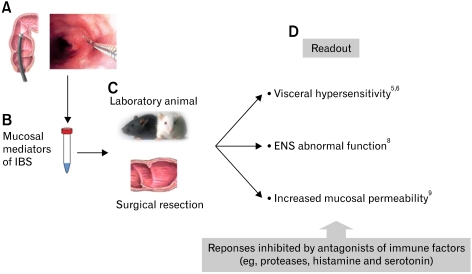
The potential relevance of systemic and gastrointestinal immune activation in the pathophysiology and symptom generation in the irritable bowel syndrome (IBS) is supported by a number of observations. Infectious gastroenteritis is the strongest risk factor for the development of IBS and increased rates of IBS-like symptoms have been detected in patients with inflammatory bowel disease in remission or in celiac disease patients on a gluten free diet. The number of T cells and mast cells in the small and large intestine of patients with IBS is increased in a large proportion of patients with IBS over healthy controls. Mediators released by immune cells and likely from other non-immune competent cells impact on the function of enteric and sensory afferent nerves as well as on epithelial tight junctions controlling mucosal barrier of recipient animals, isolated human gut tissues or cell culture systems. Antibodies against microbiota antigens (bacterial flagellin), and increased levels of cytokines have been detected systemically in the peripheral blood advocating the existence of abnormal host-microbial interactions and systemic immune responses. Nonetheless, there is wide overlap of data obtained in healthy controls; in addition, the subsets of patients showing immune activation have yet to be clearly identified. Gender, age, geographic differences, genetic predisposition, diet and differences in the intestinal microbiota likely play a role and further research has to be done to clarify their relevance as potential mechanisms in the described immune system dysregulation. Immune activation has stimulated interest for the potential identification of biomarkers useful for clinical and research purposes and the development of novel therapeutic approaches.
Overview
The claims and statistics of this paper haven’t been checked yet.
Run the check — free, no account needed. It reads the open-access text and checks the sources it cites.
Integrity signals
Registry
Cites
Statistics
Figures
Verification
Claims the paper makes
The claims and statistics of this paper haven’t been checked yet.
Run the check — free, no account needed. It reads the open-access text and checks the sources it cites.
Claims other papers make about this one
Each is checked against this paper’s own text: does it say what the citing paper says it does?
In the citing paper
“These mediators may alter nociceptive pathways in IBS115 or increase intestinal permeability116.”
From The gut Microbiome in adult and pediatric functional gastrointestinal disorders (2019) · cites this paper as [116]
Self-check
Percentages, sums and reported differences re-computed from the paper’s own numbers.
The self-check needs the paper’s full text.
Citations
Cites
The gut microbiota shapes intestinal immune responses during health and disease
Round, J. L., & Mazmanian, S. K. (2009) · Nature Reviews Immunology · doi:10.1038/nri2515 · Cited by 5,029
Longstreth, G. F., Thompson, W. G., Chey, W. D., Houghton, L. A., Mearin, F., & Spiller, R. C. (2006) · Gastroenterology · doi:10.1053/j.gastro.2005.11.061 · Cited by 4,856
Associations of depression with C-reactive protein, IL-1, and IL-6: a meta-analysis.
Howren, M. B., Lamkin, D. M., & Suls, J. (2009) · Psychosomatic Medicine · doi:10.1097/psy.0b013e3181907c1b · Cited by 2,766
Barbara, G., Stanghellini, V., De Giorgio, R., Cremon, C., Cottrell, G. S., Santini, D., Pasquinelli, G., Morselli-Labate, A. M., Grady, E. F., Bunnett, N. W., et al. (2004) · Gastroenterology · doi:10.1053/j.gastro.2003.11.055 · Cited by 1,475 · cited 8×
“mast cells including higher proportion of cells with of clearing of single granules and labyrintic arrays.(47) This well correlates with higher release of the mast cell mediators histamine and proteases.”
InfluentialSelf-citationO’Mahony, L., McCarthy, J., Kelly, P., Hurley, G., Luo, F., Chen, K., O’Sullivan, G. C., Kiely, B., Collins, J. K., Shanahan, F., et al. (2005) · Gastroenterology · doi:10.1053/j.gastro.2004.11.050 · Cited by 1,448
Spiller, R. C., Jenkins, D., Thornley, J. P., Hebden, J. M., Wright, T., Skinner, M., & Neal, K. R. (2000) · Gut · doi:10.1136/gut.47.6.804 · Cited by 1,155 · cited 4×
“postulated that these patients are unable to efficiently suppress the initial immune response with persistence of mildly increased mucosal infiltration of T cells.(15,17,18)”
InfluentialProtease-Activated Receptors: Contribution to Physiology and Disease
Ossovskaya, V., & Bunnett, N. W. (2004) · Physiological Reviews · doi:10.1152/physrev.00028.2003 · Cited by 1,079 · cited 1×
“Proteases are markedly increased in the mucosa of patients with IBS(5,47,58) and may act as signaling pain molecules via the activation of protease activated receptors (PAR) located on intestinal nerves conveying pain stimuli to the brain.(5,47,59) Trypsin and tryptase nociceptive effects evoked in mice were reduced b…”
Rifaximin Therapy for Patients with Irritable Bowel Syndrome without Constipation
Pimentel, M., Lembo, A., Chey, W. D., Zakko, S., Ringel, Y., Yu, J., Mareya, S. M., Shaw, A. L., Bortey, E., & Forbes, W. P. (2011) · New England Journal of Medicine · doi:10.1056/nejmoa1004409 · Cited by 1,036
Postinfectious Irritable Bowel Syndrome
Spiller, R., & Garsed, K. (2009) · Gastroenterology · doi:10.1053/j.gastro.2009.02.074 · Cited by 1,024
Kassinen, A., Krogius-Kurikka, L., Mäkivuokko, H., Rinttilä, T., Paulin, L., Corander, J., Malinen, E., Apajalahti, J., & Palva, A. (2007) · Gastroenterology · doi:10.1053/j.gastro.2007.04.005 · Cited by 1,002
Research works printed but not linked: 8
- Celsus, De Medicina, praef. iii. 4
- Rather, 1971, Bull N Y Acad Med, 47, 303
- Simrén, 2002, Am J Gastroenterol, 97, 389, 10.1111/j.1572-0241.2002.05475.x · DOI · Paper page
- Wang, 2004, Gut, 53, 1096, 10.1136/gut.2003.021154 · DOI · Paper page
- Camilleri, 2009, Neurogastroenterol Motil, 21, 734-e43
- Bafutto, 2008, Gastroenterology, 134, A527
- Bafutto, 2008, Gastroenterology, 134, A672
- Andrews, 2008, Gastroenterology, 134, A548
Cited by
Sorted by citations
Intestinal permeability – a new target for disease prevention and therapy
Bischoff, S. C., Barbara, G., Buurman, W., Ockhuizen, T., Schulzke, J.-D., Serino, M., Tilg, H., Watson, A., & Wells, J. M. (2014) · BMC Gastroenterology · doi:10.1186/s12876-014-0189-7 · Cited by 1,755
“Interestingly, several studies have provided evidence of low-grade immune activation and release of inflammatory molecules in IBS which in turn maintain the increase in intestinal permeability [195].”
BackgroundSelf-citationEnck, P., Aziz, Q., Barbara, G., Farmer, A. D., Fukudo, S., Mayer, E. A., Niesler, B., Quigley, E. M. M., Rajilić-Stojanović, M. D., Schemann, M., et al. (2016) · Nature Reviews Disease Primers · doi:10.1038/nrdp.2016.14 · Cited by 1,082
Self-citationIntestinal microbiota in functional bowel disorders: a Rome foundation report
Simrén, M., Barbara, G., Flint, H. J., Spiegel, B. M. R., Spiller, R. C., Vanner, S., Verdu, E. F., Whorwell, P. J., & Zoetendal, E. G. (2013) · Gut · doi:10.1136/gutjnl-2012-302167 · Cited by 939
Self-citationFODMAPs alter symptoms and the metabolome of patients with IBS: a randomised controlled trial
McIntosh, K., Reed, D. E., Schneider, T., Dang, F., Keshteli, A. H., Palma, G. D., Madsen, K. L., Berčík, P., & Vanner, S. J. (2016) · Gut · doi:10.1136/gutjnl-2015-311339 · Cited by 495
Techniques used to characterize the gut microbiota: a guide for the clinician
Fraher, M. H., O'Toole, P. W., & Quigley, E. M. M. (2012) · Nature Reviews Gastroenterology & Hepatology · doi:10.1038/nrgastro.2012.44 · Cited by 385
Fundamentals of Neurogastroenterology: Basic Science
Vanner, S. J., Meerveld, B. G., Mawe, G. M., Shea‐Donohue, T., Verdu, E. F., Wood, J. D., & Grundy, D. (2016) · Gastroenterology · doi:10.1053/j.gastro.2016.02.018 · Cited by 364
The Intestinal Microenvironment and Functional Gastrointestinal Disorders
Barbara, G., Feinle-Bisset, C., Ghoshal, U. C., Santos, J., Vanner, S. J., Vergnolle, N., Zoetendal, E. G., & Quigley, E. M. (2016) · Gastroenterology · doi:10.1053/j.gastro.2016.02.028 · Cited by 335
“The nature of the inflammatory process is also different from that seen in acute GI inflammation in inflammatory bowel disease, with no involvement of neutrophils or frank tissue distortion.(30,81) Eosinophils, usually linked to allergic reactions, have been associated with postprandial distress syndrome and early sat…”
BackgroundSelf-citationSimon, E., Călinoiu, L. F., Mitrea, L., & Vodnar, D. C. (2021) · Nutrients · doi:10.3390/nu13062112 · Cited by 235
Fadgyas-Stanculete, M., Buga, A.-M., Popa-Wagner, A., & Dumitrascu, D. L. (2014) · Journal of Molecular Psychiatry · doi:10.1186/2049-9256-2-4 · Cited by 197
“The symptoms may be caused by dysfunctions either primarily in the central nervous system, or in the gut, or by a combination of both [8-11].”
BackgroundSensitivity to wheat, gluten and FODMAPs in IBS: facts or fiction?
GIORGIO, R. D., Volta, U., & Gibson, P. R. (2015) · Gut · doi:10.1136/gutjnl-2015-309757 · Cited by 190
Self-citationItalian consensus conference for colonic diverticulosis and diverticular disease
Cuomo, R., Barbara, G., Pace, F., Annese, V., Bassotti, G., Binda, G. A., Casetti, T., Colecchia, A., Festi, D., Fiocca, R., et al. (2014) · United European Gastroenterology Journal · doi:10.1177/2050640614547068 · Cited by 183
Self-citationPriya, S., Burns, M. B., Ward, T., Mars, R. A. T., Adamowicz, E. M., Lock, E. F., Kashyap, P., Knights, D., & Blekhman, R. (2022) · Nature Microbiology · doi:10.1038/s41564-022-01121-z · Cited by 172
The gut Microbiome in adult and pediatric functional gastrointestinal disorders
Shin, A., Preidis, G. A., Shulman, R., & Kashyap, P. C. (2019) · Clinical Gastroenterology and Hepatology · doi:10.1016/j.cgh.2018.08.054 · Cited by 163
“These mediators may alter nociceptive pathways in IBS(115) or increase intestinal permeability.(116) Macrophages and monocytes are important in modulating the adaptive immune responses and producing proinflammatory cytokines such as interleukin (IL)6 and IL8, which in some studies are increased in IBS patients.”
BackgroundDothel, G., Barbaro, M. R., Boudin, H., Vasina, V. I., Cremon, C., Gargano, L., Bellacosa, L., GIORGIO, R. D., Berre‐Scoul, C. L., Aubert, P., et al. (2015) · Gastroenterology · doi:10.1053/j.gastro.2015.01.042 · Cited by 167
“Several lines of evidence suggest that neuro-immune interactions play a key role in the pathophysiology and symptom generation in IBS.(27) Increased mucosal infiltration of mast cells has been previously demonstrated by us and others.”
InfluentialSelf-citationSavarino, E. V., Zingone, F., Barberio, B., Marasco, G., Akyüz, F., Akpınar, H., Bărboi, O., Bodini, G., Bor, S., Chiarioni, G., et al. (2022) · United European Gastroenterology Journal · doi:10.1002/ueg2.12259 · Cited by 161
“different factors, such as genetic predisposition, impaired mucosal permeability, dysbiosis, stress, and atopy.(156) There are several small”
BackgroundSelf-citationShukla, R., Ghoshal, U., Dhole, T. N., & Ghoshal, U. C. (2015) · Digestive Diseases and Sciences · doi:10.1007/s10620-015-3607-y · Cited by 147
“Low-grade inflammation has been reported in a subgroup of patients with IBS, particularly those with IBS-D [13, 14].”
Organic Solvents as Risk Factor for Autoimmune Diseases: A Systematic Review and Meta-Analysis
Barragán-Martínez, C., Speck‐Hernandez, C. A., Montoya-Ortiz, G., Mantilla, R. D., Anaya, J., & Rojas‐Villarraga, A. (2012) · PLoS ONE · doi:10.1371/journal.pone.0051506 · Cited by 145
“adjuvants, and hormones [4–15].”
Ringel‐Kulka, T., Choi, C. H., Temas, D., Kim, A., Maier, D. M., Scott, K. P., Galanko, J. A., & Ringel, Y. (2015) · The American Journal of Gastroenterology · doi:10.1038/ajg.2015.220 · Cited by 142
Gut Microbiota as Potential Orchestrators of Irritable Bowel Syndrome
Bennet, S., Öhman, L., & Simrén, M. (2015) · Gut and Liver · doi:10.5009/gnl14344 · Cited by 144
Mast Cells and Irritable Bowel Syndrome: From the Bench to the Bedside
Zhang, L., Song, J., & Hou, X. (2016) · Journal of Neurogastroenterology and Motility · doi:10.5056/jnm15137 · Cited by 138
“pin releasing factor (CRF) induced by psychological stress, which are important in the regulation of gut functions.(9,11,12) Other biological factors such as bacteria components (via Toll-like receptors or”
BackgroundLee, J., Chu, S. H., Jeon, J. Y., Lee, M. K., Park, J., Lee, D., Lee, J., & Kim, N. K. (2014) · Digestive and Liver Disease · doi:10.1016/j.dld.2014.09.004 · Cited by 136
Irritable bowel syndrome: a disease still searching for pathogenesis, diagnosis and therapy.
(2014) · PubMed Central · doi:10.3748/wjg.v20.i27.8807 · Cited by 132
Fukui, H., Xu, X., & Miwa, H. (2018) · Journal of Neurogastroenterology and Motility · doi:10.5056/jnm18071 · Cited by 128
“Among the various immune cells, mast cells have been highlighted in the pathophysiology of IBS as their numbers are increased in colonic tissues of affected patients, and this increase is correlated with the severity of the clinical symptoms.(155,156) Mast cells are able to release histamine, serotonin, tryptase, and…”
BackgroundKim, S. E., & Chang, L. (2012) · Neurogastroenterology & Motility · doi:10.1111/j.1365-2982.2012.01993.x · Cited by 119
Psychological Stress, Intestinal Barrier Dysfunctions, and Autoimmune Disorders: An Overview
Ilchmann-Diounou, H., & Ménard, S. (2020) · Frontiers in Immunology · doi:10.3389/fimmu.2020.01823 · Cited by 125
“In IBS, an increased state of activation of immune cells has been described even though this observation is under debate (81).”
BackgroundMechanisms of Stress-induced Visceral Pain
Meerveld, B. G., & Johnson, A. C. (2018) · Journal of Neurogastroenterology and Motility · doi:10.5056/jnm17137 · Cited by 109
Diverse effects of gut-derived serotonin in intestinal inflammation
Shajib, M. S., Baranov, A., & Khan, W. I. (2017) · ACS Chemical Neuroscience · doi:10.1021/acschemneuro.6b00414 · Cited by 109
Intestinal microbiota in pathophysiology and management of irritable bowel syndrome.
(2014) · PubMed Central · doi:10.3748/wjg.v20.i27.8886 · Cited by 106
Randomised controlled trial of mesalazine in IBS
Barbara, G., Cremon, C., Annese, V., Basilisco, G., Bazzoli, F., Bellini, M., Benedetti, A., Benini, L., Bossa, F., Buldrini, P., et al. (2014) · Gut · doi:10.1136/gutjnl-2014-308188 · Cited by 107
Self-citationSingh, R., Zogg, H., Ghoshal, U. C., & Ro, S. (2022) · Frontiers in Pharmacology · doi:10.3389/fphar.2022.808195 · Cited by 112
Inflammation in irritable bowel syndrome: Myth or new treatment target?
Sinagra, E., Pompei, G., Tomasello, G., Cappello, F., Morreale, G. C., Amvrosiadis, G., Rossi, F., Monte, A. I. L., Rizzo, A. G., & Raimondo, D. (2016) · World Journal of Gastroenterology · doi:10.3748/wjg.v22.i7.2242 · Cited by 104
“Several studies demonstrated microscopic and molecular abnormalities in IBS patients [202,203] .”
van Wanrooij, S., Wouters, M. M., Oudenhove, L. V., Vanbrabant, W., Mondelaers, S., Kollmann, P., Kreutz, F., Schemann, M., & Boeckxstaens, G. E. (2013) · The American Journal of Gastroenterology · doi:10.1038/ajg.2013.371 · Cited by 101
Gargari, G., Taverniti, V., Gardana, C., Cremon, C., Canducci, F., Pagano, I., Barbaro, M. R., Bellacosa, L., Castellazzi, A. M., Valsecchi, C., et al. (2018) · Environmental Microbiology · doi:10.1111/1462-2920.14271 · Cited by 102
Self-citationCarco, C., Young, W., Gearry, R. B., Talley, N. J., McNabb, W. C., & Roy, N. C. (2020) · Frontiers in Cellular and Infection Microbiology · doi:10.3389/fcimb.2020.00468 · Cited by 102
“, 2018), but less is known about IBS (Barbara et al., 2011).”
BackgroundEffect of resolvins on sensitisation of TRPV1 and visceral hypersensitivity in IBS
Perna, E., Aguilera‐Lizarraga, J., Florens, M. V., Jain, P., Theofanous, S., Hanning, N., Man, J. G. D., Berg, M., Winter, B. Y. D., Alpizar, Y. A., et al. (2020) · Gut · doi:10.1136/gutjnl-2020-321530 · Cited by 88
Efficacy ofBifidobacterium infantis 35624in patients with irritable bowel syndrome: a meta-analysis
Yuan, F., Ni, H., Asche, C. V., Kim, M., Walayat, S., & Ren, J. (2017) · Current Medical Research and Opinion · doi:10.1080/03007995.2017.1292230 · Cited by 93
Quigley, E. M. M. (2015) · Therapeutic Advances in Gastroenterology · doi:10.1177/1756283x15621230 · Cited by 89
The Role of Mast Cells in Irritable Bowel Syndrome
Lee, K. N., & Lee, O. Y. (2016) · Gastroenterology Research and Practice · doi:10.1155/2016/2031480 · Cited by 90
“Immune cells such as lymphocytes and mast cells interact with food antigens, intestinal microbiota, and other cells in the intestine [7].”
BackgroundBarbara, G., Zecchi, L., Barbaro, M. R., Cremon, C., Bellacosa, L., Marcellini, M. M., GIORGIO, R. D., Corinaldesi, R., & Stanghellini, V. (2012) · Journal of Clinical Gastroenterology · doi:10.1097/mcg.0b013e318264e918 · Cited by 82
Self-citationThe use of psychotropic drugs in irritable bowel syndrome
Dekel, R., Drossman, D. A., & Sperber, A. D. (2013) · Expert Opinion on Investigational Drugs · doi:10.1517/13543784.2013.761205 · Cited by 80
“Psychological stress has been shown to induce visceral hypersensitivity in animal models by promoting an immune-mediated inflammatory response predominantly through mast cells [23,24].”
BackgroundCharacterization of IBS ‐like symptoms in patients with ulcerative colitis in clinical remission
Jonefjäll, B., Strid, H., Öhman, L., Svedlund, J., Bergstedt, A., & Simrén, M. (2013) · Neurogastroenterology & Motility · doi:10.1111/nmo.12163 · Cited by 75
Wilson, D., Evans, M., Weaver, E. M., Shaw, A. L., & Klein, G. L. (2013) · Clinical Medicine Insights Gastroenterology · doi:10.4137/cgast.s13200 · Cited by 70
Inflammatory bowel disease and irritable bowel syndrome
Barbara, G., Cremon, C., & Stanghellini, V. (2014) · Current Opinion in Gastroenterology · doi:10.1097/mog.0000000000000070 · Cited by 72
Self-citationDietary Triggers in Irritable Bowel Syndrome: Is There a Role for Gluten?
Volta, U., Pinto-Sánchez, M. I., Boschetti, E., Caio, G., GIORGIO, R. D., & Verdu, E. F. (2016) · Journal of Neurogastroenterology and Motility · doi:10.5056/jnm16069 · Cited by 73
Self-citationAbbasnezhad, A., Amani, R., Hajiani, E., Alavinejad, P., Cheraghian, B., & Ghadiri, A. (2016) · Neurogastroenterology & Motility · doi:10.1111/nmo.12851 · Cited by 69
Traina, G. (2019) · Frontiers in Cellular Neuroscience · doi:10.3389/fncel.2019.00345 · Cited by 69
Nardo, G. D., Barbara, G., Cucchiara, S., Cremon, C., Shulman, R. J., Isoldi, S., Zecchi, L., Drago, L., Oliva, S., Saulle, R., et al. (2013) · Neurogastroenterology & Motility · doi:10.1111/nmo.12250 · Cited by 65
Self-citationSöderquist, F., Syk, M., Just, D., Novičić, Z. K., Rasmusson, A. J., Hellström, P. M., Ramklint, M., & Cunningham, J. L. (2020) · BMC Psychiatry · doi:10.1186/s12888-020-02940-2 · Cited by 66
“Altered brain-gut interactions, increased gut permeability and immune activation may all be involved in the pathophysiology of IBS, at least in sub-populations of IBS patients [22, 23].”
BackgroundWei, L., Singh, R., & Ghoshal, U. C. (2022) · Journal of Neurogastroenterology and Motility · doi:10.5056/jnm22008 · Cited by 69
“Gut immune dysregulation drives a breach in the intestinal barrier and functional deficits in GI pacemaker cells, leading to alerted visceral sensation, secretion, and gut motility.(38) As a result, the activated mast cells and eosinophils induce tissue damage and interferes with enteric nerve function.”
BackgroundWu, Y., Li, Y., Zheng, Q., & Li, L. (2024) · Nutrients · doi:10.3390/nu16132114 · Cited by 75
Role of negative affects in pathophysiology and clinical expression of irritable bowel syndrome
Muscatello, M. R. A. (2014) · World Journal of Gastroenterology · doi:10.3748/wjg.v20.i24.7570 · Cited by 61
Sinagra, E., Morreale, G. C., Mohammadian, G., Fusco, G., Guarnotta, V., Tomasello, G., Cappello, F., Rossi, F., Amvrosiadis, G., & Raimondo, D. (2017) · World Journal of Gastroenterology · doi:10.3748/wjg.v23.i36.6593 · Cited by 62
Impact of intestinal disorders on central and peripheral nervous system diseases
El-Hakim, Y., Bake, S., Mani, K. K., & Sohrabji, F. (2022) · Neurobiology of Disease · doi:10.1016/j.nbd.2022.105627 · Cited by 54
Engineering and characterisation of BCG-loaded polymeric microneedles
Arshad, M. S., Fatima, S., Nazari, K., Ali, R., Farhan, M., Muhammad, S. A., Abbas, N. A., Hussain, A., Küçük, İ., Chang, M., et al. (2019) · Journal of drug targeting · doi:10.1080/1061186x.2019.1693577 · Cited by 53
“Inflammation: an immune response to injury or injection often characterised by redness, heat, swelling and pain [21].”
BackgroundKamphuis, J. B. J., Guiard, B. P., Leveque, M., Olier, M., Jouanin, I., Yvon, S., Tondereau, V., Rivière, P., Guéraud, F., Chevolleau, S., et al. (2019) · Gastroenterology · doi:10.1053/j.gastro.2019.10.037 · Cited by 53
Meade, E., & Garvey, M. (2022) · International Journal of Molecular Sciences · doi:10.3390/ijms23158574 · Cited by 56
“Immune cells are known to interact with nerve tissue of the GIT in patients diagnosed with IBS, FM, IC, and vulvar vestibulitis [19].”
BackgroundInfluentialWhat does irritable bowel syndrome share with non-alcoholic fatty liver disease?
Scalera, A. (2013) · World Journal of Gastroenterology · doi:10.3748/wjg.v19.i33.5402 · Cited by 48
Choi, C. H., Kwon, J. G., Kim, S. K., Myung, S. ‐., Park, K. S., Sohn, C. ‐., Rhee, P. ‐., Lee, K. J., Lee, O. Y., Jung, H. ‐., et al. (2015) · Neurogastroenterology & Motility · doi:10.1111/nmo.12544 · Cited by 46
Mahurkar‐Joshi, S., Polytarchou, C., Iliopoulos, D., Pothoulakis, C., Mayer, E. A., & Chang, L. (2015) · Neurogastroenterology & Motility · doi:10.1111/nmo.12741 · Cited by 45
Foxx–Orenstein, A. E. (2016) · Therapeutic Advances in Gastroenterology · doi:10.1177/1756283x16633050 · Cited by 45
Mullin, G. E., Shepherd, S. J., Roland, B. C., Ireton-Jones, C. S., & Matarese, L. E. (2014) · Journal of Parenteral and Enteral Nutrition · doi:10.1177/0148607114545329 · Cited by 47
Lee, J. Y., Kim, N., Nam, R. H., Sohn, S. H., Lee, S. M., Choi, D., Yoon, H., Kim, Y. S., Lee, H. S., & Lee, D. H. (2017) · PLoS ONE · doi:10.1371/journal.pone.0188992 · Cited by 44
Riba, A., Olier, M., Lacroix‐Lamandé, S., Lencina, C., Bacquie, V., Harkat, C., van Langendonck, N., Gillet, M., Cartier, C., Baron, M., et al. (2018) · Brain Behavior and Immunity · doi:10.1016/j.bbi.2018.05.024 · Cited by 45
“, 2014), microbiota dysbiosis (for review (Collins, 2014)) and increased state of activation of immune cells (Barbara et al., 2011) even though this last observation is still under debate.”
The Role of Diet in the Treatment of Irritable Bowel Syndrome
Singh, R., Salem, A., Nanavati, J., & Mullin, G. E. (2018) · Gastroenterology Clinics of North America · doi:10.1016/j.gtc.2017.10.003 · Cited by 42
“toward visceral hypersensitivity, and is noticeable in a number of IBS subtypes (ie, postinfectious IBS, IBS-D).(31,32) Studies have suggested an association of between mast cell mediators with worsened symptoms severity and psychosocial comorbidity.”
BackgroundKönig, J., & Brummer, R. J. (2014) · Beneficial Microbes · doi:10.3920/bm2013.0033 · Cited by 43
“Mild immune activation has been found both locally in the gut and systemically (Barbara et al. , 2011), and mucosal biopsies from IBS patients are characterised by an increased quantity of various immune cells, such as mast cells (Bischoff, 2009; Chadwick et al. , 2002; Cremon et al. , 2009).”
Liu, D.-R., Xu, X., & Yao, S. (2018) · World Journal of Gastroenterology · doi:10.3748/wjg.v24.i1.46 · Cited by 42
Qin, Q., Li, P., Wang, T., Zhang, J., Yu, S., Chen, T., Yan, L., Song, Y., Liu, X., Gu, Y., et al. (2013) · Occupational and Environmental Medicine · doi:10.1136/oemed-2013-101421 · Cited by 40
Leccioli, V., Oliveri, M., Romeo, M., Berretta, M., & Rossi, P. (2017) · Nutrients · doi:10.3390/nu9111203 · Cited by 39
“[119] suggested that in sensitive patients the immunological response could be greater in the colon rather than in the duodenal mucosa, because NCG/WS is generally characterized by GI symptoms also present in IBS, which is very often characterized by colonic mucosal inflammation [40,120,121].”
BackgroundInterleukin-10: A Compelling Therapeutic Target in Patients With Irritable Bowel Syndrome
Kumar, S., Shukla, R., Ranjan, P., & Kumar, A. (2017) · Clinical Therapeutics · doi:10.1016/j.clinthera.2017.01.030 · Cited by 38
“] 2017 of recurrent abdominal pain or discomfort, abdominal bloating, and altered bowel habits in the absence of an organic cause.(1) The prevalence of IBS varies from 4% to 20% worldwide, and IBS can have a significant negative impact on lifestyle and social well-being.”
BackgroundCaviglia, G. P., Tucci, A., Pellicano, R., Fagoonee, S., Rosso, C., Abate, M. L., Olivero, A., Armandi, A., Vanni, E., Saracco, G. M., et al. (2020) · Journal of Clinical Medicine · doi:10.3390/jcm9082353 · Cited by 40
“Accordingly, patients with IBS showed increased levels of pro-inflammatory cytokines including interleukin (IL)-1b, tumour necrosis factor-alpha (TNFα), IL-6 and IL-8, and reduced levels of anti-inflammatory cytokines such as IL-10 [11], IL-5 and IL-13 [10].”
BackgroundGiancola, F., Volta, U., Repossi, R., Latorre, R., Beeckmans, D., Carbone, F., den Houte, K. V., Bianco, F., Bonora, E., Gori, A., et al. (2020) · Neurogastroenterology & Motility · doi:10.1111/nmo.13814 · Cited by 41
Self-citationBoyer, J., Saint‐Paul, M., Dadone‐Montaudié, B., Patouraux, S., Vivinus, M., Ouvrier, D., Michiels, J., Piche, T., & Tulić, M. K. (2017) · Neurogastroenterology & Motility · doi:10.1111/nmo.13223 · Cited by 35
Bacillus spp. Spores—A Promising Treatment Option for Patients with Irritable Bowel Syndrome
Cătinean, A., Neag, A. M., Nita, A., Buzea, M., & Buzoianu, A. D. (2019) · Nutrients · doi:10.3390/nu11091968 · Cited by 35
Zhang, S., Tian, D., Xia, Z., Yang, F., Chen, Y., Yao, Z., He, Y., Miao, X., Zhou, G., Yao, X., et al. (2024) · Journal of Ethnopharmacology · doi:10.1016/j.jep.2024.118236 · Cited by 33
Gut–Brain Axis: Focus on Neurodegeneration and Mast Cells
Conte, C., Sichetti, M., & Traina, G. (2020) · Applied Sciences · doi:10.3390/app10051828 · Cited by 33
“IBD represents a group of inflammatory conditions of the colon and small intestine, generally assumed as a result of an uncontrolled immune response in genetically predisposed subjects following a change in microbiota (dysbiosis) [110].”
BackgroundPsychological stress‐induced colonic barrier dysfunction: Role of immune‐mediated mechanisms
Hattay, P., Prusator, D. K., Tran, L., & Meerveld, B. G. (2017) · Neurogastroenterology & Motility · doi:10.1111/nmo.13043 · Cited by 30
Lee, J. Y., Kim, N., Park, J. H., Nam, R. H., Lee, S. M., Song, C., Kim, G., Na, H. Y., Choi, Y. J., Kim, J. J., et al. (2019) · Journal of Neurogastroenterology and Motility · doi:10.5056/jnm19099 · Cited by 31
“The possible pathophysiology of IBS is multifactorial.(6,11) Among them, emerging data highlight that neurotrophic factors and altered intestinal permeability might contribute to IBS and related symptoms.”
BackgroundAssociation between Irritable Bowel Syndrome and Allergic Diseases: To Make a Case for Aeroallergen
Loo, E. X. L., Wang, D. Y., & Siah, K. T. H. (2019) · International Archives of Allergy and Immunology · doi:10.1159/000503629 · Cited by 31
Postinfectious Functional Gastrointestinal Disorders
Mearin, F. (2011) · Journal of Clinical Gastroenterology · doi:10.1097/mcg.0b013e31821fbf58 · Cited by 30
The role of diet in the management of irritable bowel syndrome: a focus on FODMAPs
Dolan, R. D., Chey, W. D., & Eswaran, S. L. (2018) · Expert Review of Gastroenterology & Hepatology · doi:10.1080/17474124.2018.1476138 · Cited by 30
“levels [15] are now thought to contribute to the complex pathogenesis of IBS.”
BackgroundIBS clinical management in Italy: The AIGO survey
Soncini, M., Stasi, C., Usai–Satta, P., Milazzo, G., Bianco, M., Leandro, G., Montalbano, L. M., Muscatiello, N., Monica, F., Galeazzi, F., et al. (2018) · Digestive and Liver Disease · doi:10.1016/j.dld.2018.10.006 · Cited by 30
Gastrointestinal neuromuscular apparatus: An underestimated target of gut microbiota
Guarino, M. P. L., Cicala, M., Putignani, L., & Severi, C. (2016) · World Journal of Gastroenterology · doi:10.3748/wjg.v22.i45.9871 · Cited by 29
Ayadilord, M., Mahmoudzadeh, S., Hoseini, Z. S., Askari, M., Rezapour, H., Saharkhiz, M., Abbaszadeh, A., Karbasi, S., Dasht-e-Bayaz, N. Z., Ferns, G. A., et al. (2020) · Archives of Gynecology and Obstetrics · doi:10.1007/s00404-020-05659-3 · Cited by 26
Kamphuis, J. B. J., Reber, L. L., Eutamène, H., & Théodorou, V. (2022) · The FASEB Journal · doi:10.1096/fj.202100494rrr · Cited by 27
Lee, J. Y., Kim, N., Kim, Y. S., Nam, R. H., Ham, M. H., Lee, H. S., Jo, W., Shim, Y. K., Choi, Y. J., Yoon, H., et al. (2016) · Journal of Neurogastroenterology and Motility · doi:10.5056/jnm16007 · Cited by 27
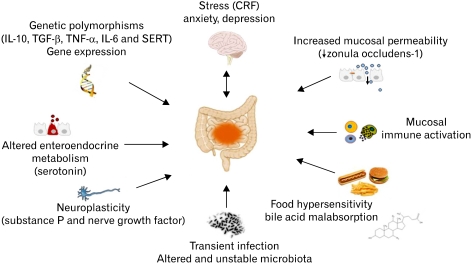
“The possible pathogeneses of IBS includes stress, increased mucosal permeability, mucosal immune activation, food hypersensitivity, transient infection altering intestinal microbiota, neuroplasticity, altered enteroendocrine metabolism, and genetic polymorphisms.(2,3) Among these, stress is a key factor in the onset,…”
BackgroundLee, S.-H., Cho, D., Lee, S., Han, K.-S., Yang, S.-W., Kim, J.-H., Lee, S.-H., Kim, S.-M., & Kim, K.-N. (2018) · Korean Journal of Family Medicine · doi:10.4082/kjfm.17.0064 · Cited by 29
Relationship Between Systemic Immune-Inflammation Index and Irritable Bowel Syndrome
Güven, İ. E., Başpınar, B., & Atalay, R. (2022) · The Turkish Journal of Gastroenterology · doi:10.5152/tjg.2021.21321 · Cited by 26
Abuelazm, M. T., Shoaib, M., Gamal, M., Labieb, F., Amin, M. A., Abdelazeem, B., & Brašić, J. R. (2022) · Nutrients · doi:10.3390/nu14132618 · Cited by 26
“In the pathogenesis of IBS, immunological and inflammatory roles are of particular importance as literature has emphasized the activation of the inflammatory mediator to have a crucial part in the IBS development [46].”
BackgroundThe role of intestinal mast cell infiltration in irritable bowel syndrome
Cheng, L., Luo, Q., & Chen, S. (2021) · Journal of Digestive Diseases · doi:10.1111/1751-2980.12971 · Cited by 25
Singh, R., Zogg, H., & Ro, S. (2021) · Journal of Personalized Medicine · doi:10.3390/jpm11101021 · Cited by 25
Carroccio, A., Mansueto, P., Morfino, G., D’Alcamo, A., Paola, V. D., Iacono, G., Soresi, M., Scerrino, G., Maresi, E., Gulotta, G., et al. (2013) · The American Journal of Gastroenterology · doi:10.1038/ajg.2013.58 · Cited by 25
Kodani, M., Fukui, H., Tomita, T., Oshima, T., Watari, J., & Miwa, H. (2018) · Molecular Medicine Reports · doi:10.3892/mmr.2018.8926 · Cited by 23
“Among immune cells, mast cell is highlighted in the pathophysiology of IBS since the number of mast cells is increased in the colonic tissues in patients with IBS and moreover correlated with the severity of their clinical symptoms (8,9).”
Aberrant Gut-To-Brain Signaling in Irritable Bowel Syndrome - The Role of Bile Acids
Dhonnabháín, R. N., Xiao, Q., & O’Malley, D. (2021) · Frontiers in Endocrinology · doi:10.3389/fendo.2021.745190 · Cited by 25
“In addition to genetic, epigenetic (47), immunological (48), gender differences (49) and food hypersensitivity (50, 51) being reported in individuals with IBS, an increased prevalence of adverse life events and comorbid mood disorders such as anxiety, depression and somatoform disorders (52, 53) are also common.”
BackgroundRole of inflammation in pediatric irritable bowel syndrome
Nardo, G. D., Cremon, C., Staiano, A., Stanghellini, V., Borrelli, O., Strisciuglio, C., Romano, C., Mallardo, S., Scarpato, E., Marasco, G., et al. (2022) · Neurogastroenterology & Motility · doi:10.1111/nmo.14365 · Cited by 21
Self-citationFactor V Leiden and Inflammation
Pérez‐Pujol, S., Aras, Ö., & Escolar, G. (2012) · Thrombosis · doi:10.1155/2012/594986 · Cited by 21
“The inflammatory process in IBD is probably associated to an immune reaction of the body against its own vascular tissue [91].”
BackgroundChoi, S. I., Kim, N., Nam, R. H., Jang, J. Y., Kim, E. H., Ha, S., Kang, K. S., Lee, W., Choi, H., Kim, Y.-R., et al. (2023) · Journal of Cancer Prevention · doi:10.15430/jcp.2023.28.3.93 · Cited by 24
“The etiology of IBS is multifaceted, encompassing stress, increased mucosal permeability, mucosal immune activation, food hypersensitivity, transient infection-altering intestinal microbiota, neuroplasticity, altered enteroendocrine metabolism, and genetic polymorphisms [2].”
BackgroundMulti-target Treatment for Irritable Bowel Syndrome with STW 5: Pharmacological Modes of Action
Allescher, H., Burgell, R., Malfertheiner, P., & Mearin, F. (2020) · Journal of Gastrointestinal and Liver Diseases · doi:10.15403/jgld-814 · Cited by 19
“This micro-inflammation may affect changes in motility and visceral sensitivity, and evoke symptoms of IBS [40].”
BackgroundStem Cells in the Intestine: Possible Roles in Pathogenesis of Irritable Bowel Syndrome
Ratanasirintrawoot, S., & Israsena, N. (2016) · Journal of Neurogastroenterology and Motility · doi:10.5056/jnm16023 · Cited by 19
Functional Gastrointestinal Disorders.
Duffy, M., Boggiano, V. L., Ganesh, R., & Mueller, M. (2023) · Primary Care · doi:10.1016/j.pop.2023.03.006 · Cited by 13
Hilmi, I. N., Hartono, J. L., Pailoor, J., Mahadeva, S., & Goh, K. (2013) · BMC Gastroenterology · doi:10.1186/1471-230x-13-80 · Cited by 18
“; licensee BioMed Central L Commons Attribution License (http://creativec reproduction in any medium, provided the or psychological association [5-7].”
Background
Metadata
- Authors
- Barbara, G., Cremon, C., Carini, G., Bellacosa, L., Zecchi, L., Giorgio, R. D., Corinaldesi, R., & Stanghellini, V.
- Affiliations
- University of Bologna (IT)
- Corresponding author
- Barbara, Giovanni
- Venue
- Journal of Neurogastroenterology and Motility
- Published
- 2011-10-31
- Volume
- 17
- Issue
- 4
- Pages
- 349-359
- ISSN
- 2093-0879 (ISSN-L)
- 2093-0887
- PMC
- PMC3228974
- OpenAlex
- W2154410960
- Cited by
- 211
- References
- 91
- Citations by year
- 2026: 8 · 2025: 10 · 2024: 9 · 2023: 10 · 2022: 15 · 2021: 10 · 2020: 21 · 2019: 13 · 2018: 20 · 2017: 15 · 2016: 20 · 2015: 12 · 2014: 18 · 2013: 17 · 2012: 12
- FWCI
- 15.76
- Type
- journal article
- Language
- en
- Open access
- hybrid
- doi.org
- Licence
- cc-by-nc
- Locations
- Journal of Neurogastroenterology and Motility (publishedVersion, cc-by-nc)
- Europe PMC (PubMed Central) (publishedVersion, cc-by-nc)
- PubMed Central (publishedVersion, cc-by-nc)
- PubMed (publishedVersion)
- Archivio istituzionale della ricerca (Alma Mater Studiorum Università di Bologna) (submittedVersion)
- Institutional Research Information System University of Ferrara (University of Ferrara) (submittedVersion)
- Topics
- Health Sciences › Medicine › Gastroenterology › Gastrointestinal motility and disorders
- Life Sciences › Biochemistry, Genetics and Molecular Biology › Molecular Biology › Gut microbiota and health
- Health Sciences › Medicine › Gastroenterology › Inflammatory Bowel Disease
- Keywords
- irritable bowel syndrome, immune activation, gut microbiota, T cells, mast cells, enteric nerves, tight junctions, mucosal barrier, host-microbe interactions, inflammatory bowel disease, celiac disease, gluten-free diet, infectious gastroenteritis, cytokines, biomarkers, immune dysregulation
About these checks
Registry, retraction, Cites and statistics results are computed, not judged, with one exception: a printed reference that no index lists is read once by a model before it counts as a citation error. Claims are extracted by a model and kept only when their quote appears verbatim in the text; each cited source is then checked, with a model’s help, for whether it says what the claim relies on. Those verdicts can be wrong — read the claim’s quote and the cited source before relying on one.
Statistics and arithmetic are recomputed, not judged.
Confidence bands are shown only for fields calibrated on our annotated test set. None is calibrated yet, so no band is shown.
What counts as a claim ›How we measure confidence ›How we check this ›
Are you an author, or do you see a problem with this page? Request a review
