

The CARE Principles for Indigenous Data Governance
Open accessThe DOI matches its Crossref record; 26 of the 27 references it cites were found in a registry or an index; none of the 1 sources its claims cite is checked for support yet.
Abstract
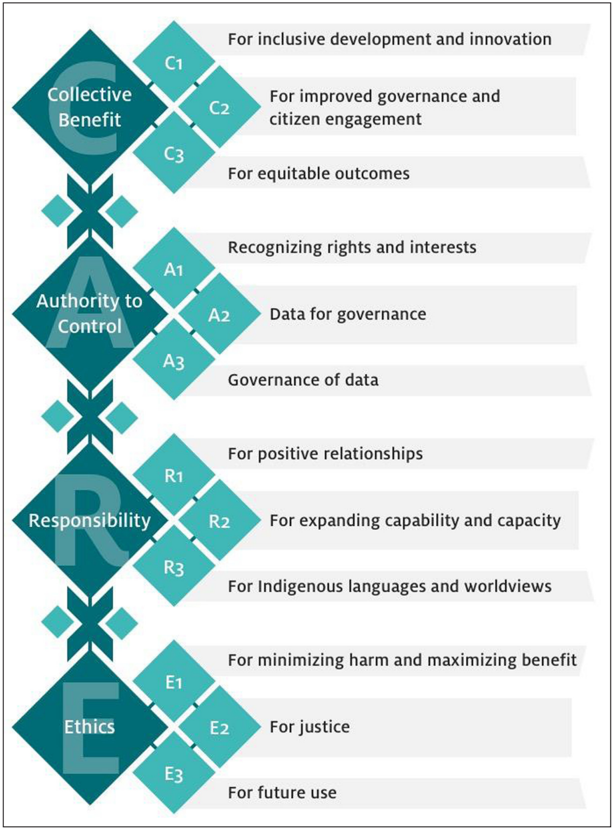
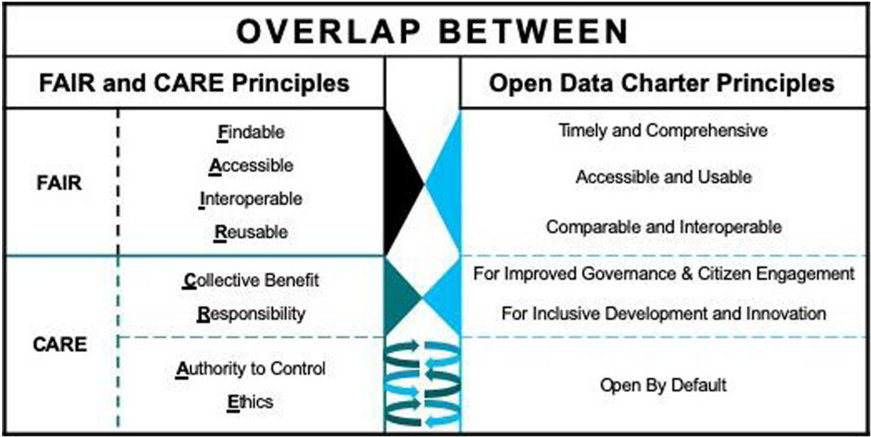
Concerns about secondary use of data and limited opportunities for benefit-sharing have focused attention on the tension that Indigenous communities feel between (1) protecting Indigenous rights and interests in Indigenous data (including traditional knowledges) and (2) supporting open data, machine learning, broad data sharing, and big data initiatives. The International Indigenous Data Sovereignty Interest Group (within the Research Data Alliance) is a network of nation-state based Indigenous data sovereignty networks and individuals that developed the ‘CARE Principles for Indigenous Data Governance’ (Collective Benefit, Authority to Control, Responsibility, and Ethics) in consultation with Indigenous Peoples, scholars, non-profit organizations, and governments. The CARE Principles are people– and purpose-oriented, reflecting the crucial role of data in advancing innovation, governance, and self-determination among Indigenous Peoples. The Principles complement the existing data-centric approach represented in the ‘FAIR Guiding Principles for scientific data management and stewardship’ (Findable, Accessible, Interoperable, Reusable). The CARE Principles build upon earlier work by the Te Mana Raraunga Maori Data Sovereignty Network, US Indigenous Data Sovereignty Network, Maiam nayri Wingara Aboriginal and Torres Strait Islander Data Sovereignty Collective, and numerous Indigenous Peoples, nations, and communities. The goal is that stewards and other users of Indigenous data will ‘Be FAIR and CARE.’ In this first formal publication of the CARE Principles, we articulate their rationale, describe their relation to the FAIR Principles, and present examples of their application.
Overview
CoChat Summary
TL;DR
The CARE Principles for Indigenous Data Governance (Collective Benefit, Authority to Control, Responsibility, and Ethics) are people- and purpose-oriented principles developed by the International Indigenous Data Sovereignty Interest Group to complement the data-centric FAIR Principles. They aim to support Indigenous rights, self-determination, and control over Indigenous data while enabling equitable data reuse.
Key findings
- CARE comprises four principles—Collective Benefit, Authority to Control, Responsibility, and Ethics—designed to complement FAIR (Findable, Accessible, Interoperable, Reusable) and guide data stewards and users to “Be FAIR and CARE.”
- The paper reports global context from UN 2009: Indigenous presence spans over 90 countries, includes over 370 million Indigenous persons, and involves more than 5,000 distinct cultures.
- CARE emerged from an Indigenous-led workshop held in Gaborone, Botswana, on 8 November 2018, as part of International Data Week, with later input from Indigenous leaders, scholars, network members, and allies.
- Early adopters/implementation examples include the Research Data Alliance, the Smithsonian Institution (e.g., Smithsonian Directive 609 and planned Collection CARE Notices), and the Open Data Charter.
Methods
- This is a conceptual/principles development paper, not an empirical study; it describes the rationale, development, and illustrative application of the CARE Principles.
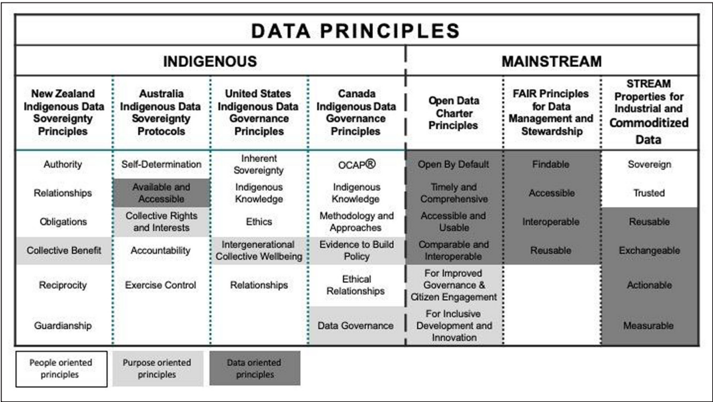
- Workshop organizers prepared an analysis of principles from Indigenous data sovereignty/governance frameworks and mainstream sources (Table 1) to inform dialogue; participants identified the four primary principles and drafted primary and sub-principles, then circulated the draft for input.
- The paper presents the principles’ relation to FAIR and examples of adoption; no formal sample, dataset, or statistical analysis is reported.
Limitations
- Stated: further research is needed to identify mechanisms that support implementation; create tools, policies, and practices that enact the Principles; explore application in different contexts (e.g., research repositories, knowledge co-production, institutional policies, existing databases/systems); and operationalize the Principles in tandem with FAIR.
- Evident: the paper is a principles publication and does not report empirical evaluation of implementation outcomes; the adoption examples are illustrative rather than systematically assessed.
Model-written summary. Check it against the paper before relying on it.
Integrity signals
Registry
Cites
Statistics
Figures
Verification
Claims the paper makes
0 Valid · 0 Not valid · 1 Not checked · 9 Own results and interpretations
- Probably not a substantial claim. 9
- It may state two separate claims as one. 5
Claims other papers make about this one
Each is checked against this paper’s own text: does it say what the citing paper says it does?
The source backs part of the claim, not all of it — or backs it for a different population, condition or comparison.
In the citing paper
“This can be in conflict with cultural values, e.g., in the case of indigenous communities that are generally underrepresented on Wikipedia but have concerns about how their knowledge might be exploited if shared [28, 29].”
From Data Governance in the Age of Large-Scale Data-Driven Language Technology (2022) · cites this paper as [28]
Experimental — accuracy not yet measuredThe source backs part of the claim, not all of it — or backs it for a different population, condition or comparison.
In the citing paper
“The key distinction is that while FAIR principles focus on making data maximally open and shareable-goals that align with scientific efficiency, CARE principles focus on people and purpose, emphasizing that data use should align with the rights and needs of Indigenous Peoples.”
From Data colonialism and indigenous languages in AI: a critical review of existing initiatives and their struggles with data sovereignty (2026) · cites this paper as Carroll et al. 2020
Experimental — accuracy not yet measuredThe source backs part of the claim, not all of it — or backs it for a different population, condition or comparison.
In the citing paper
“A concrete expression of Indigenous Data Sovereignty is found in the CARE Principles for Indigenous Data Governance, formulated in 2019 by the Global Indigenous Data Alliance and related networks (Carroll et al. 2020).”
From Data colonialism and indigenous languages in AI: a critical review of existing initiatives and their struggles with data sovereignty (2026) · cites this paper as Carroll et al. 2020
Experimental — accuracy not yet measuredThe source backs part of the claim, not all of it — or backs it for a different population, condition or comparison.
In the citing paper
“Indigenous data, whether born digital or not, include information, knowledge, specimens, and belongings about Indigenous Peoples to which they relate at both the individual and collective levels (Carroll et al., 2020; Rainie et al., 2019; Lovett et al., 2019).”
From Using Indigenous Standards to Implement the CARE Principles: Setting Expectations through Tribal Research Codes (2022) · cites this paper as Carroll et al., 2020
Experimental — accuracy not yet measuredThe source backs part of the claim, not all of it — or backs it for a different population, condition or comparison.
In the citing paper
“The FAIR Principles are aligned to the global shift towards open science and open data, promoting data centric criteria that facilitate increased data sharing among entities while ignoring relationships, power differentials, and the historical conditions associated with the collection of data10,11.”
From Operationalizing the CARE and FAIR Principles for Indigenous data futures (2021) · cites this paper as [11]
Experimental — accuracy not yet measured
6 more claims about this paper
Create a free account to see every claim other papers make about this one.
Self-check
Percentages, sums and reported differences re-computed from the paper’s own numbers.
Each contradiction between two passages listed here was confirmed by an independent check.
Rated minor: it would not touch a result — a value no result rests on, a p-value that stays on the same side of the significance level, or a conflict that is clerical, resolved elsewhere in the paper, or outside its own findings.
In the paper
§ The CARE Principles for Indigenous Data Governance > Research Data Alliance (www.rd-alliance.org), in research environments
“In 2012, the American Museum of Natural History at the Smithsonian Institution in Washington, DC released an Access and Benefit Sharing Policy on Genetic Resources”
§ The CARE Principles for Indigenous Data Governance > References
“42. Smithsonian Institution. 2012. Access and Benefit Sharing Policy on Genetics Resources. Washington, DC: National Museum of American History.”
Citations
Cites
The FAIR Guiding Principles for scientific data management and stewardship
Wilkinson, M. D., Dumontier, M., Aalbersberg, I. J., Appleton, G., Axton, M., Baak, A., Blomberg, N., Boiten, J.-W., da Silva Santos, L. B., Bourne, P. E., et al. (2016) · Scientific Data · doi:10.1038/sdata.2016.18 · Cited by 18,423
Indigenous Peoples In International Law: Second Edition
Anaya, S. J. (2004) · doi:10.1093/oso/9780195173499.001.0001 · Cited by 1,011
(2016) · doi:10.22459/caepr38.11.2016 · Cited by 696 · cited 6×
“…has become an increasingly relevant topic as big data, open data, open science, and data reuse become an integral part of research and institutional practices (Carroll, Rodriguez-Lonebear & Martinez 2019; Lovett et al. 2019; Rainie et al. 2019; Kukutai & Taylor 2016a; Taylor & Kukutai 2015).”
BackgroundInfluentialBuck, M., & Hamilton, C. (2011) · Review of European Community & International Environmental Law · doi:10.1111/j.1467-9388.2011.00703.x · Cited by 627
Indigenous Data Governance: Strategies from United States Native Nations
Carroll, S. R., Rodriguez-Lonebear, D., & Martinez, A. (2019) · Data Science Journal · doi:10.5334/dsj-2019-031 · Cited by 264
Self-citationGenomic Research Through an Indigenous Lens: Understanding the Expectations
Garrison, N. A., Hudson, M., Ballantyne, L. L., Garba, I., Martinez, A., Taualii, M., Arbour, L., Caron, N. R., & Rainie, S. C. (2019) · Annual Review of Genomics and Human Genetics · doi:10.1146/annurev-genom-083118-015434 · Cited by 220
Self-citationData sovereignty for indigenous peoples: current practice and future needs
Kukutai, T., & Taylor, J. (2016) · Indigenous Data Sovereignty · doi:10.22459/caepr38.11.2016.01 · Cited by 116
Rainie, S. C., Schultz, J. L., Briggs, E., Riggs, P., & Palmanteer-Holder, N. L. (2017) · International Indigenous Policy Journal · doi:10.18584/iipj.2017.8.2.1 · Cited by 114
Law, Knowledge, Culture: The Production of Indigenous Knowledge in Intellectual Property Law
Anderson, J. E. (2009) · Edward Elgar Publishing eBooks · doi:10.4337/9781848447196 · Cited by 95
Self-citationNational Inuit Strategy on Research.
Kanatami, I. T. (2018) · IOC of UNESCO (Intergovernmental Oceanographic Commission) · doi:10.25607/obp-1673 · Cited by 93
Research works printed but not linked: 18
- Cajete, G. 2000. Native science: Native laws of interdependence. Santa Fe: Clear Light.
- Castellano, MB. 2004. Ethics of Aboriginal research. Journal of Aboriginal Health, January, 98-114.
- Hudson, M, Milne, M, Russell, K, Smith, B, Reynolds, P and Atatoa-Carr, P. 2016. The Development of Guidelines for Indigenous Research Ethics in Aotearoa/New Zealand. In A.-L. Drugge (ed.), Ethics in Indigenous Research, Past Experiences -Future Challenges, 157-174. Umea, Sweden: Vaartoe Centre for Sami Research, Umea University.
- Drugge, A-L. 2016. Ethics in Indigenous Research: Past Experiences -Future Challenges. Umea, Sweden: Vaartoe Centre for Sami Research, Umea University.
- Julayinbul Statement in Indigenous Intellectual Property Rights. 1993. The Julayinbul Conference on Intellectual and Cultural Property. Australia: Jingarrba.
- Kovach, M. 2009. Indigenous methodologies: Characteristics, conversations, and contexts. Toronto: University of Toronto Press.
- Kukutai, T and Taylor, J. 2016a. Indigenous data sovereignty: Toward an agenda. Canberra, Australia: Aus- tralian National University Press. DOI: https://doi.org/10.22459/CAEPR38.11.2016 · DOI · Paper page
- Lovett, R, Lee, V, Kukutai, T, Cormack, D, Rainie, SC and Walker, J. 2019. Good data practices for Indigenous Data Sovereignty and Governance. In: Daly, A, Devitt, K and Monique, M (eds.), Good Data. Amsterdam: Institute of Network Cultures Inc. ISBN 978-94-92302-27-4.
- Mātaatua Declaration on Cultural and Intellectual Property Rights of Indigenous Peoples. 1993. First International Conference on the Cultural and Intellectual Property Rights of Indigenous Peoples. 12-18 June 1993. Aotearoa, New Zealand. Available at https://www.wipo.int/export/sites/www/tk/en/ databases/creative_heritage/docs/mataatua.pdf.
- McGregor, D, Restoule, JP and Johnston, R. (eds.) 2018. Indigenous research: Theories, practices, and rela- tionships. Canadian Scholars' Press.
- 2017, First Nations’ data governance: Measuring the nation-to-nation relationship discussion paper, British Columbia First Nations’ Data Governance Initiative
- Rainie, SC, Kukutai, T, Walter, M, Figueroa-Rodriguez, OL, Walker, J and Axelsson, P. 2019. Issues in Open Data: Indigenous Data Sovereignty. In: Davies, T, Walker, S, Rubinstein, M and Perini, F (eds.), The State of Open Data: Histories and Horizons. Cape Town and Ottawa: African Minds and International Development Research Centre. pp. 300-319.
- Ratima, M. 2001. Kia uruuru mai a hauora being healthy, being Maori: Conceptualising Maori health promotion. Published thesis (PhD) Department of Public Health. Dunedin, University of Otago.
- Ratima, M. 2001. Kia uruuru mai a hauora being healthy, being Maori: Conceptualising Maori health promotion. Published thesis (PhD) Department of Public Health. Dunedin, University of Otago. Research Data Alliance. 2017. International Indigenous Data Sovereignty Intertest Group. Available at https://www.rd-alliance.org/groups/international-indigenous-data-sovereignty-ig [Last accessed 17 January 2020].
- Snipp, CM. 2016. What does data sovereignty imply: what does it look like? In: Kukutai and Taylor, J (eds.), Indigenous data sovereignty: Toward an agenda. Canberra, Australia: Australian National University Press. pp. 39-55. DOI: https://doi.org/10.22459/CAEPR38.11.2016. · DOI · Paper page
- Smith, LT. 2012. Decolonizing Methodologies: Research and Indigenous Peoples. Zed Books. London: Univer- sity of Otago Press.
- Rodriguez-Lonebear, D. 2016. Building a data revolution in Indian country. In: Kukutai, T and Taylor, J (eds.), Indigenous data sovereignty: Toward an agenda. Canberra, Australia: Australian National University Press. pp. 253-272. DOI: https://doi.org/10.22459/CAEPR38.11.2016. · DOI · Paper page
- 2008, Research is ceremony: Indigenous research methods
Cited by
Items 1,001–1,100 of 1,410
Native Land Trusts: Centering Relationality, Justice, and Healing
Johnson, K. M., Milanovich, S., & Middleton, B. R. (2025) · Environmental History · doi:10.1086/734561
Citizen Science in Social-Ecological Systems
Kobori, H., Miller‐Rushing, A. J., Ellwood, E. R., & Kishimoto, K. (2025) · Elsevier eBooks · doi:10.1016/b978-0-443-21964-1.00040-9
Contributions of Human Genetics to Island and Coastal Archaeology
Stone, J. H., & Weyrich, L. S. (2025) · Oxford University Press eBooks · doi:10.1093/oxfordhb/9780197607770.013.18
Carlson, T., Ibarra, S., Carrasquillo, M. E., & Variano, E. A. (2025) · Energy Research & Social Science · doi:10.1016/j.erss.2025.104081
Andrae, S. (2025) · IGI Global eBooks · doi:10.4018/979-8-3693-7964-6.ch021 · Cited by 1
Broesch, T. (2025) · Open Book Publishers · doi:10.11647/obp.0440.07
Melo, N. (2025) · Preprints.org · doi:10.20944/preprints202505.1403.v1
A Capability Maturity Model for Research Data Storage Systems
Abramson, D., & Carroll, J. (2025) · Computer · doi:10.1109/mc.2025.3540093
Desigualdades genómicas y medicina de precisión
Herrera-Sánchez, P. J., -Cudco, L. L. L., & Mina-Villalta, G. Y. (2025) · Space Scientific Journal of Multidisciplinary · doi:10.63618/omd/ssjm/v3/n2/46
Putting collections back on the ground: mana taonga, mātauranga Māori and NATHIST museum collections
Mahlfeld, K. (2025) · Open Access Victoria University of Wellington | Te Herenga Waka (Figshare) · doi:10.26686/wgtn.29191922
Christian, S. A. (2025) · Natural Language Processing Journal · doi:10.1016/j.nlp.2025.100164
Müller, R. (2025) · Wiley eBooks · doi:10.1002/9781394238651.ch14 · Cited by 1
Bishop, B. W., Fox, J., Gavel, S. W. T., Chapin, E. G., & Kansa, S. W. (2025) · PLoS ONE · doi:10.1371/journal.pone.0317070
Three Ideas for Data Law from Environmental Law: Harm, Responsibility, and Rights
de Souza, S. P., & Sharma, G. (2025) · MPI studies on intellectual property and competition law · doi:10.1007/978-3-031-91401-0_4
Visionieren, beschreiben, verpacken – ein Praxisbericht zum Forschungsdatenmanagement in den Künsten
Lurk, T., & Enge, J. (2025) · BIBLIOTHEK Forschung und Praxis · doi:10.1515/bfp-2025-0017
Kidd, J., Bergbusch, N. T., Epstein, G., Gunn, G., Swanson, H. K., & Courtenay, S. C. (2025) · Water · doi:10.3390/w17142153 · Cited by 1
Coding the future: digital technologists and the constitution of the next system
Deepak, D., & Manski, B. (2025) · Frontiers in Sociology · doi:10.3389/fsoc.2025.1362848
The Effects of the Red River Jig on the Wholistic Health of Adults in Saskatchewan
Mainra, N. K., Moore, S. J., LaFleur, J., Oates, A., Selinger, G., Rolfes, T. T., Sullivan, H., Fatima, M. A., & Foulds, H. J. A. (2025) · International Journal of Environmental Research and Public Health · doi:10.3390/ijerph22081225
“Consistent with TCPS 2 Chapter 9, Métis data governance principles, and CARE (Collective benefit, Authority to control, Responsibility, and Ethics) principles, this study was conducted under the direction of Li Toneur Niimiyitoohk Métis dance group [21–23].”
DFAS-EEP: Editorial Ethics Protocol for Governance Integrity in Scientific PublishingPreprint
Alaali, H. M. H. (2025) · SSRN Electronic Journal · doi:10.2139/ssrn.5375339 · Cited by 2
Explaining risk in chronic conditions: the Yolŋu science of signs
Haynes, E., Mitchell, A., Marawili, M., & Bessarab, D. C. (2025) · The Medical Journal of Australia · doi:10.5694/mja2.70031
“21,22 Colliding worlds: the risk of “risk” in the Yolŋu world Yolŋu report that hearing the term “risk” in medical consultations “hurts” as it is “always a negative story”.”
Why the world has a lot to learn about conservation – and trust – from Indigenous societies
Ziker, J. P. (2022) · The Conversation · doi:10.64628/aai.t9ernr35t · Cited by 2
SOOSmap: Your gateway to Antarctic data discovery
ten Hoopen, P., Novellino, A., Hancock, A. M., Bricher, P., Pooter, D. D., Felden, J., Henley, S. F., Kool, J., Kozyr, A., Miller, M. E., et al. (2025) · Elementa Science of the Anthropocene · doi:10.1525/elementa.2024.00099
Building a European Data Space
Ferreira, G. E. (2025) · Springer eBooks · doi:10.1007/978-3-031-95717-8_11
Infrastructuring Care: Co-Designing Computational Notebooks for Environmental Data Justice
Rojas, A. A., Vera, L. A., Hansen, S., Nost, E., Wylie, S., Alder, C., & Initiative, E. D. A. G. (2025) · Science Technology & Human Values · doi:10.1177/01622439251356930 · Cited by 3
Sukumar, S. B., Leder, K. S., McGuinness, S. L., Barker, F., & Henry, R. (2025) · Journal of Water and Health · doi:10.2166/wh.2025.037 · Cited by 1
Mabry, M. E., Krosnick, S. E., Flemming, A., Phillips, M. A., & Leachman, S. (2025) · Natural sciences education · doi:10.1002/nse2.70025
“Frameworks such as Indigenous data sovereignty and CARE principles emphasize the importance of building trust, obtaining informed consent, and ensuring mutual benefits in research collaborations (Carroll et al., 2020; Smith, 2012).”
AI-Driven Indigenous Knowledge Management Ensuring Ethical Accessibility
Bhimavarapu, U. (2025) · IGI Global eBooks · doi:10.4018/979-8-3373-0204-1.ch002 · Cited by 1
Pasipamire, N., & Moyo, A. (2025) · IGI Global eBooks · doi:10.4018/979-8-3373-0204-1.ch011
Ethical readiness and awareness of data reuse among LIS professionals
Kalbande, D., Subaveerapandiyan, A., Ahmad, N., & Shimray, S. R. (2025) · The Electronic Library · doi:10.1108/el-04-2025-0142 · Cited by 1
Culturally Appropriate Uses of CALL: The Unique Case of Endangered and Indigenous Languages
Elliott, R., & Minthorn, L. (2025) · Springer eBooks · doi:10.1007/978-3-031-51447-0_29-1
Yazzie, J. O., Evans, M. E. K., Riordan, E. C., Guiterman, C. H., DeRose, R. J., Becenti, A., & Thompson, F. (2025) · Trees Forests and People · doi:10.1016/j.tfp.2025.101021
The TUB Sign Language Corpus Collection
Avramidis, E., Czehmann, V., Deckert, F., Hufe, L., Lipski, A., Villalobos, Y. A. Q., Rhee, T., Shi, M., Stölting, L., Nunnari, F., et al. (2025) · ACM International Conference on Intelligent Virtual Agents (IVA) · doi:10.1145/3742886.3756709 · Cited by 5
“This may entail issues for the identification of the sign languages, the quality of the closed captions, but also requires future circumspection about the compliance with FAIR and CARE principles [5, 26] with regard to the local signing communities.”
Critical Data Discourses: A Lecture Series on the Ethics of Research Data
Rothfritz, L., & Frisch, K. (2025) · doi:10.59350/v45ad-6bz91
The Digital Archive of Huhugam Archaeology and the Reuse of Archaeological Information
Nicholson, C., Fernandez, R., Collazzi, C., Kintigh, K., & Masinton, A. (2025) · Advances in Archaeological Practice · doi:10.1017/aap.2025.10
“It is also important to note that the DAHA project and archive, as originally conceived, predates the publication of the CARE Principles (Carroll et al. 2020).”
InfluentialFAIRJupyter4AI: A Corpus of Computational Notebooks for AI
Mietchen, D., & Samuel, S. (2025) · Research Ideas and Outcomes · doi:10.3897/rio.11.e171656
Lockwood, K. (2025) · Journal of Criminology · doi:10.1177/26338076251383921 · Cited by 3
“This includes governance of the data itself, with structures guided by Indigenous Data Governance (IDG) frameworks (Carroll et al., 2020).”
Indigenous Systems of Evaluation
Bowman, N. R., & Bjork, C. (2025) · Oxford University Press eBooks · doi:10.1093/obo/9780199756810-0329
Banerjee, S. (2025) · Springer eBooks · doi:10.1007/978-3-031-99770-9_2
Refrigerator Wisdom: Social Rules and Rights as a Conceptual Framework for Digital Ethics
Hill, K. C. (2025) · Digital Studies / Le champ numérique · doi:10.16995/dscn.18606
Comfort, R. N., & Hickman, C. R. (2025) · Society & Natural Resources · doi:10.1080/08941920.2025.2562400
Framework for Disambiguating Indigenous Place Names and SDIs for Tribal Communities
Sen, S., & Chauhan, L. P. S. (2025) · doi:10.1145/3764924.3770900
Workforce Truth and ReconciliACTIONs for non-Indigenous Settings in Canada
Williams, K. (2025) · Healthcare Management Forum · doi:10.1177/08404704251365816 · Cited by 1
Building Capacity through Technology: CanWIN’s Role in Supporting Indigenous Science
Herbert, C., Chan, W. S., Campbell, Y., Plessis, L. D., Dearborn, V., & Isleifson, D. (2025) · IEEE Canada International Humanitarian Technology Conference · doi:10.1109/ihtc65087.2025.11216324
“Can-WIN is also aligned with the CARE (Collective Benefit, Authority to Control, Responsibility and Ethics) [8] and OCAP (Ownership, Control, Access, and Possession) [9] principles of Indigenous Data Sovereignty, in addition to the FAIR principles.”
Lockwood, B., Williamson, H. J., Lee, M. S., Carroll, S. R., Rodriguez, N., & Armin, J. S. (2025) · Critical Public Health · doi:10.1080/09581596.2025.2573208
“…with i/DD and indigenous Peoples using mainstream statistical models, including inadequate sampling methods (Krahn, 2019; lopez, 2020); individual and collective privacy concerns (Rainie et al., 2019); and tensions between open data initiatives and tribal data governance (carroll et al., 2020).”
Self-citationBecker, K., Vögele, N., Surmann, H., Lubos, D., Rogowski, T., Yildiz, M. U., Abdelazim, A., Koruhama, A. K., & Winschiers‐Theophilus, H. (2025) · African Human Computer Interaction Conference (AfriCHI) · doi:10.1145/3757232.3757266 · Cited by 1
“…technology such as mobile phones and drones etc. Central to this discourse are the CARE Principles for Indigenous Data Gov-ernance, which advocate for collective benefit, Indigenous authority to control data, ethical responsibility, and adherence to culturally grounded ethical standards [9].”
Lessons learned: Recommendations for reproducible paleogenomic data analyses
Souilmi, Y., Oliva, A., Davidson, R., Williams, M. P., Ravishankar, S., Roca‐Rada, X., Pérez, V., Tobler, R., & Llamas, B. (2025) · The American Journal of Human Genetics · doi:10.1016/j.ajhg.2025.10.011
Beck, J., Duckert, D. R., & Galway, L. P. (2025) · FACETS · doi:10.1139/facets-2025-0092 · Cited by 2
Kozhimannil, K. B., Baker, H. A., Interrante, J. D., Hill, K. X., & Walls, M. L. (2025) · Journal of Community Health · doi:10.1007/s10900-025-01538-7
Bias and Justice in Neurological AI
Rudroff, T. (2025) · Neurocultural health and wellbeing · doi:10.1007/978-3-032-11596-6_7
Farrell, Ú. C., Olson, H. C., Thompson, M. O., Abshire, M. L., Adeboye, O. O., Ahm, A. C., Alcott, L., Algeo, T. J., Anderson, R. P., Ansari, A. H., et al. (2025) · Chemical Geology · doi:10.1016/j.chemgeo.2025.123148 · Cited by 2
Pelletier, B. R. (2025) · Journal of the Japanese Association for Digital Humanities · doi:10.17928/jjadh.8.1_27
Wilson, K. L., Frid, A., & Anderson, S. C. (2026) · Ecology Letters · doi:10.1101/2025.11.28.691246 · Cited by 1
Nguyen, L., Ricatti, F., Davis, S. E., Hunt, J. W., Walker, J. A., Hajek, J., & Travis, C. E. (2025) · Journal of Intercultural Studies · doi:10.1080/07256868.2025.2592305
“Before the 1788 British invasion and subsequent displacement of Indigenous peoples, the continent was home to hundreds of Aboriginal languages spoken by tens of thousands of people, many speaking multiple languages, but today as few as between 12 and 15 Australian Indigenous languages are still being learned by childr…”
InfluentialSelf-citationSuggestions for extending, expanding, and integrating passive acoustic monitoring programs
Wood, C. M. (2025) · Ecological Indicators · doi:10.1016/j.ecolind.2025.114549 · Cited by 1
Nyachowe, D. T., Bronstein, V., Robertson, H., Hazelhurst, S., Gardner, J., Ramsay, M., Owili, P. O., Klipin, M., Glover, K., Asiki, G., et al. (2025) · Global Health Action · doi:10.1080/16549716.2025.2590307 · Cited by 1
“It is particularly important that participants, families, and communities that contribute data share in the rewards that come from scientific development [4,5].”
FAIRsharing record for: The CARE Principles for Indigenous Data Governance
FAIRsharing Team, & Lister, A. (2024) · FAIRsharing.org · doi:10.25504/fairsharing.1faf1c
Funnell, S., Jull, J., Mbuagbaw, L., Welch, V., Dewidar, O., Wang, X., Lesperance, M., Ghogomu, E., Rizvi, A., Akl, E. A., et al. (2024) · Figshare · doi:10.6084/m9.figshare.26579069
Funnell, S., Jull, J., Mbuagbaw, L., Welch, V., Dewidar, O., Wang, X., Lesperance, M., Ghogomu, E., Rizvi, A., Akl, E. A., et al. (2024) · Figshare · doi:10.6084/m9.figshare.26579072
Additional file 4 of Standardised data on initiatives—STARDIT: Beta version
Nunn, J., Shafee, T., Chang, S., Stephens, R., Elliott, J., Oliver, S. R., John, D., Smith, M., Orr, N., Preston, J., et al. (2022) · Figshare · doi:10.6084/m9.figshare.20342238
Additional file 1 of Standardised data on initiatives—STARDIT: Beta version
Nunn, J. S., Shafee, T., Chang, S., Stephens, R., Elliott, J., Oliver, S. R., John, D., Smith, M., Orr, N., Preston, J., et al. (2022) · Figshare · doi:10.6084/m9.figshare.20342226
Additional file 3 of Standardised data on initiatives—STARDIT: Beta version
Nunn, J. S., Shafee, T., Chang, S., Stephens, R., Elliott, J., Oliver, S. R., John, D., Smith, M., Orr, N., Preston, J., et al. (2022) · Figshare · doi:10.6084/m9.figshare.20342235
Collaborative Guidance for Implementing the CARE Principles
Downs, R., O'Brien, M. C., Duerr, R. E., Taitingfong, R. I., Martinez, A., Vera, L. A., Jennings, L., Antognoli, E., ten Brink, T., Halmai, N. B., et al. (2024) · Figshare · doi:10.6084/m9.figshare.26418073
Self-citationAdditional file 2 of Standardised data on initiatives—STARDIT: Beta version
Nunn, J. S., Shafee, T., Chang, S., Stephens, R., Elliott, J., Oliver, S. R., John, D., Smith, M., Orr, N., Preston, J., et al. (2022) · Figshare · doi:10.6084/m9.figshare.20342232
Osakwe, J., Mutelo, S., & Osakwe, N. C. (2025) · Lecture notes in networks and systems · doi:10.1007/978-981-96-6429-0_40
Artificial Intelligence and Diversity, Equity, and Inclusion
Garard, J., Ezirigwe, J., & Ayoub, M. (2025) · Springer eBooks · doi:10.1007/978-3-031-32257-0_72-1
Relational Accountability in Indigenous Data Stewardship and Archival Practices
Littletree, S., O’Neal, J., Begay, V., Soto, A., Marsh, D. E., Thorpe, K., & Palmer, C. L. (2025) · Proceedings of the Association for Information Science and Technology · doi:10.1002/pra2.1378
“…recognized the serious risk of exclusion of Indigenous peoples and harmful bias in a world increasingly driven by data and AI (Carroll et al., 2019; Carroll et al., 2020; Carroll et al., 2022; Leonard et al., 2023), as well as the essential role of provenance, identifiers, and attribution metadata…”
The Role of AI in Language Preservation: Revitalizing Endangered Languages Through Technology
Uliniansyah, M. T., Yoganingrum, A., Santosa, A., Latief, A. D., Afra, D. I. N., Komariah, K. S., Untariyati, N. A., Pebiana, S., & Wabula, Y. (2025) · Advances in computational intelligence and robotics book series · doi:10.4018/979-8-3373-0275-1.ch011 · Cited by 1
Planning the Development of Malaysia’s National Knowledge Infrastructure: A Practical Case Study
Hisham, R., Udin, Z. S., Abdullah, N., Fauzi, A., & Saleh, S. H. (2025) · Lecture notes in computer science · doi:10.1007/978-981-95-4861-3_24
Balaji, K., & Cook-Deegan, R. (2025) · Journal of Science Policy & Governance · doi:10.38126/jspg270101
“…and Ethics (CARE) Principles]; proportionate, interoperable consent and data-sharing policies (e.g., GA4GH Framework and Consent Policy); and scalable consent mechanisms that maintain participant control without bespoke redesign for every project (e.g., the GA4GH Toolkit) (Carroll et al. 2020).”
McBeath, B., Wright, A. R., Lévesque, L., Dehaan, G., Périllat-Amédée, S., & Jock, B. W. (2025) · Research Ethics · doi:10.1177/17470161251406930 · Cited by 2
“While this has opened new avenues for research, it has also intensified ethical tensions around the secondary use of publicly available data, particularly when such data pertain to Indigenous peoples and communities (Carroll et al., 2020).”
InfluentialIbrahim, K. A. A.-A. (2024) · Research Journal in Advanced Humanities · doi:10.58256/gm9n3d83
“…gap between environmental and health datasets, digital literacy limitations, the global digital divide, and unresolved ethical questions regarding data sovereignty—particularly concerning Indigenous knowledge and community-generated data (Carroll et al., 2020; Gabrys, 2020; Kukutai & Taylor, 2016).”
Labrecque-Denis, M., Ratt, G., Wylde, R., & Vesac, J.-A. (2025) · Nouvelles pratiques sociales · doi:10.7202/1121083ar
Duque, S. R., Tal, E., Beggs, T., Gore, G., Hanna, M., Beedle, N., Dimitropoulos, G., Felsky, D., Iyer, S. G., Kozloff, N., et al. (2025) · Digital Health · doi:10.1177/20552076251404219 · Cited by 1
“17,18 Speci fi c initiatives, such as the First Nations Regional Health Survey, 19 also demonstrate participatory governance in practice and include youth-speci fi c data and involvement.”
Cook, B., Corporal, S., & Mengersen, K. L. (2025) · AlterNative An International Journal of Indigenous Peoples · doi:10.1177/11771801251398574 · Cited by 2
“Carroll et al. (2020) describe Indigenous Peoples’ data in the global context as: (1) information and knowledge about the environment, lands, skies, resources, and non-humans with which they have relations; (2) information about Indigenous persons such as administrative, census, health, social,…”
Conrad, Z., Leu, M., Wu, S., Fulcher, E., Keam, B., Kim, M., Kinsel, D., Lozina, S., DiStaso, C., Kun, J. F., et al. (2025) · American Journal of Clinical Nutrition · doi:10.1016/j.ajcnut.2025.101174 · Cited by 1
Sucha-xaya, N. (2025) · Journal of Documentation · doi:10.1108/jd-05-2025-0125
Solidarity and care: How to build a society
Prainsack, B. (2026) · Oxford University Press eBooks · doi:10.1093/9780198965336.003.0002 · Cited by 2
Prainsack, B. (2026) · Oxford University Press eBooks · doi:10.1093/9780198965336.002.0005
Prainsack, B. (2026) · Oxford University Press eBooks · doi:10.1093/9780198965336.003.0001
‘Unmaking Goliath’: Work and economic democracy
Prainsack, B. (2026) · Oxford University Press eBooks · doi:10.1093/9780198965336.003.0004
Prainsack, B. (2026) · Oxford University Press eBooks · doi:10.1093/9780198965336.002.0004
Solidarity in the climate governance: Representing future generations and non-human entities
Prainsack, B. (2026) · Oxford University Press eBooks · doi:10.1093/9780198965336.003.0003
States of solidarity: Democratic statehood in times of crisis
Prainsack, B. (2026) · Oxford University Press eBooks · doi:10.1093/9780198965336.003.0006
Data solidarity in the age of artificial intelligence (AI)
Prainsack, B. (2026) · Oxford University Press eBooks · doi:10.1093/9780198965336.003.0005
Hariyani, D., Hariyani, P., & Mishra, S. (2026) · Sustainable Futures · doi:10.1016/j.sftr.2025.101618 · Cited by 5
Transforming Digital Access for Indigenous Communities
Bowen, K. L., & Swinton, A. C. (2026) · IGI Global eBooks · doi:10.4018/979-8-3373-8795-6.ch008
Darnett, E., Peters, A., & Thielking, M. (2026) · AlterNative An International Journal of Indigenous Peoples · doi:10.1177/11771801251398575 · Cited by 1
“In addition, Indigenous data sovereignty principles (Kukutai, 2023) and the CARE principles (Carroll et al., 2020) recognise the Indigenous participant as the owner of the knowledge and perspectives derived from the stories shared by Aboriginal participants.”
InfluentialClark, J. R., Elston, J., Trudgen, K., Coulter, L., Vartanian, C. D., Sharman, A. R., Howlett, C., Milch, V., Keefe, D. M. K., & Brown, A. D. H. (2026) · Australian and New Zealand Journal of Public Health · doi:10.1016/j.anzjph.2025.100310
The common good approach in Copanatoyac and Cuauhtamazaco: a methodological reflection
Gabiño, M. D. R. A., & Kramm, M. (2025) · Journal of Global Ethics · doi:10.1080/17449626.2025.2596603
“A very helpful reflection and guide provide the CARE Principles for Indigenous Data Governance (Carroll et al. 2020).”
Fiegenbaum, H., Azegele, B., & Seider, S. (2026) · Frontiers in Blockchain · doi:10.3389/fbloc.2025.1626695 · Cited by 1
Microbiomes for a stable planet: Embedding microbial processes in global climate action
Rocke, E., Knight, R. D., Ghisleni, G., McAllister, T., Ortmann, A. C., Bruno, A., Jiménez, D. J., & Xu, J. (2026) · Green Carbon · doi:10.1016/j.greenca.2026.01.001
Feminism, silence and digital mediation in Ireland’s abortion archive
Delaney, O. (2026) · Cambridge Forum on AI Culture and Society · doi:10.1017/cfc.2025.10011
“…data and other digital materials has been critiqued by groups such as the Global Indigenous Data Alliance, whose CARE principles extend the FAIR principles by offering a counterpart that is oriented towards maintaining the sovereignty of Indigenous groups over their own data (Carroll et al. 2020).”
Collaborating with Native Nations to conduct research
Perry, R., Timeche, J., Fortuin, K. M., & Tom, N. M. (2026) · doi:10.3768/rtipress.2026.op.0099.2601
“In 2018, the CARE Principles were drafted by “Indigenous and allied academics and practitioners” (Carroll et al., 2020, p. 4).”
Computational Methods for Language Documentation and Description
Moeller, S., Agyapong, G., Cruz, J., Palmer, A., & Hulden, M. (2026) · Annual Review of Linguistics · doi:10.1146/annurev-linguistics-031522-101514 · Cited by 4
(2026) · Elsevier eBooks · doi:10.1016/b978-0-44-327452-7.00009-9
Kolloju, N. (2026) · Ecology Economy and Society–the INSEE Journal · doi:10.37773/ees.v9i1.1714
“Although frameworks such as CARE and OCAP are commonly cited normatively, their success relies on tangible processes, for example, community-owned data repositories, veto powers over data sharing, and legally recognized custodianship of TEK (Carroll et al. 2020; Kukutai and Taylor 2016).”
Genomic surveillance and indigenous sovereignty: a bioethical critique from the Global South
Parmar, P. B., & Rathod, G. (2026) · SN Social Sciences · doi:10.1007/s43545-026-01343-6
“In the genomic context, this framework challenges assumptions that anony-mization or institutional oversight alone can mitigate ethical risk (Carroll et al. 2020).”
Finn, R. J. R., Adams, M. S., Tulloch, V., Service, C. N., Moody, J., Slade, J., Avery‐Gomm, S., Bourbonnais, M., Penn, B., & Martin, T. G. (2026) · FACETS · doi:10.1139/facets-2025-0082
FAIR principles for good modeling practice and standardsPreprint
Rosello, C., Hamilton, S. H., Grimm, V., Barton, M., Edmonds, B., Elsawah, S., Grant, W. E., Hengeveld, G., Jakeman, A. J., Koralewski, T. E., et al. (2026) · SSRN Electronic Journal · doi:10.2139/ssrn.6213393 · Cited by 1
Metadata
- Authors
- Carroll, S. R., Garba, I., Figueroa-Rodríguez, O. L., Holbrook, J., Lovett, R., Materechera, S., Parsons, M., Raseroka, K., Rodriguez-Lonebear, D., Rowe, R., Sara, R., Walker, J. D., Anderson, J., & Hudson, M.
- Affiliations
- University of Arizona (US)
- University of the Western Cape (ZA)
- Australian National University (AU)
- North-West University (ZA)
- Rensselaer Polytechnic Institute (US)
- University of California, Los Angeles (US)
- Laurentian University (CA)
- New York University (US)
- University of Waikato (NZ)
- Corresponding author
- Carroll, Stephanie Russo
- ORCID
- Venue
- Data Science Journal
- Publisher
- Ubiquity Press, Ltd.
- Published
- 2020
- Volume
- 19
- ISSN
- 1683-1470 (ISSN-L)
- OpenAlex
- W3048186973
- Semantic Scholar
- 2b01e7dbaded2f74e39fe492ffda38d91c88d0e4
- Cited by
- 1,408
- References
- 19
- Citations by year
- 2026: 417 · 2025: 310 · 2024: 227 · 2023: 208 · 2022: 133 · 2021: 101 · 2020: 12
- FWCI
- 62.98
- Type
- journal article
- Language
- en
- Open access
- gold
- doi.org
- Licence
- Locations
- Data Science Journal (publishedVersion, cc-by)
- ANU Open Research (Australian National University) (submittedVersion, cc-by)
- Lincoln (University of Nebraska) (submittedVersion)
- DOAJ (DOAJ: Directory of Open Access Journals) (submittedVersion, cc-by-sa)
- Data Science Journal (submittedVersion, cc-by)
- Edinburgh Research Explorer (University of Edinburgh) (submittedVersion, cc-by)
- Funders
- European Commission (HORIZON2020, 777388)
- Rural Development Administration
- Topics
- Social Sciences › Health › Indigenous Health, Education, and Rights
- Physical Sciences › Computer Science › Information Systems › Research Data Management Practices
- Physical Sciences › Computer Science › Artificial Intelligence › Ethics and Social Impacts of AI
- Keywords
- Indigenous data sovereignty, CARE principles, Indigenous data governance, traditional knowledge, data reuse, benefit sharing, FAIR principles, data ethics, Indigenous self-determination, Research Data Alliance, data stewardship
About these checks
Registry, retraction, Cites and statistics results are computed, not judged, with one exception: a printed reference that no index lists is read once by a model before it counts as a citation error. Claims are extracted by a model and kept only when their quote appears verbatim in the text; each cited source is then checked, with a model’s help, for whether it says what the claim relies on. Those verdicts can be wrong — read the claim’s quote and the cited source before relying on one.
A language model drew the claims from the paper on 2026-10-30, under version 3 of the claim definition (model deepseek-v4.1-flash, prompt extract-v3).
A second model labelled each claim on 2026-10-30 (model jev-1.13-20260917, definition revision gold-guideline-v0.2).
Statistics and arithmetic are recomputed, not judged.
Confidence bands are shown only for fields calibrated on our annotated test set. None is calibrated yet, so no band is shown.
What counts as a claim ›How we measure confidence ›How we check this ›
Are you an author, or do you see a problem with this page? Request a review
Data sources
Bibliographic data: Semantic Scholar, OpenAlex, Crossref.
Contains information from the Semantic Scholar Academic Graph Datasets, made available under the ODC Attribution License (ODC-BY 1.0).
Semantic Scholar’s data is described in: Kinney, R., et al. (2023). The Semantic Scholar Open Data Platform. arXiv:2301.10140.
