

The CARE Principles for Indigenous Data Governance
Open accessThe DOI matches its Crossref record; 26 of the 27 references it cites were found in a registry or an index; none of the 1 sources its claims cite is checked for support yet.
Abstract
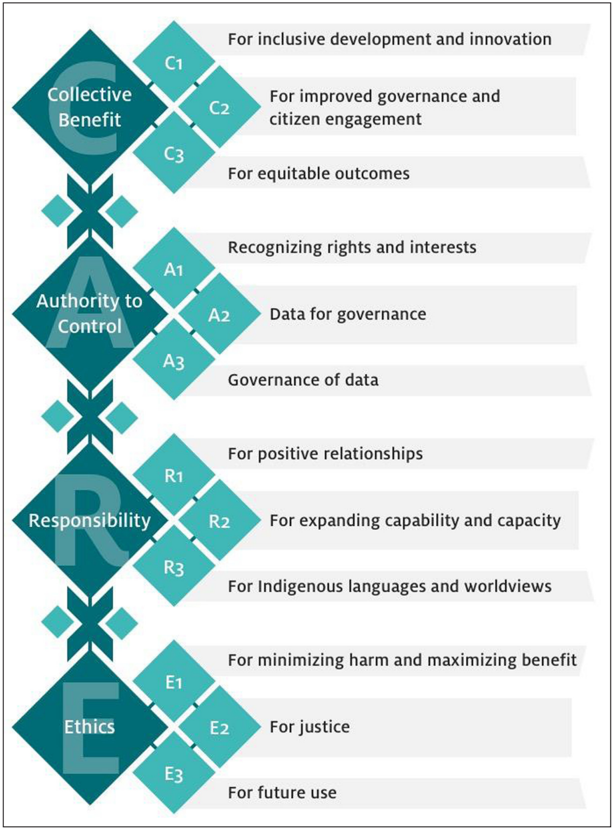
Concerns about secondary use of data and limited opportunities for benefit-sharing have focused attention on the tension that Indigenous communities feel between (1) protecting Indigenous rights and interests in Indigenous data (including traditional knowledges) and (2) supporting open data, machine learning, broad data sharing, and big data initiatives. The International Indigenous Data Sovereignty Interest Group (within the Research Data Alliance) is a network of nation-state based Indigenous data sovereignty networks and individuals that developed the ‘CARE Principles for Indigenous Data Governance’ (Collective Benefit, Authority to Control, Responsibility, and Ethics) in consultation with Indigenous Peoples, scholars, non-profit organizations, and governments. The CARE Principles are people– and purpose-oriented, reflecting the crucial role of data in advancing innovation, governance, and self-determination among Indigenous Peoples. The Principles complement the existing data-centric approach represented in the ‘FAIR Guiding Principles for scientific data management and stewardship’ (Findable, Accessible, Interoperable, Reusable). The CARE Principles build upon earlier work by the Te Mana Raraunga Maori Data Sovereignty Network, US Indigenous Data Sovereignty Network, Maiam nayri Wingara Aboriginal and Torres Strait Islander Data Sovereignty Collective, and numerous Indigenous Peoples, nations, and communities. The goal is that stewards and other users of Indigenous data will ‘Be FAIR and CARE.’ In this first formal publication of the CARE Principles, we articulate their rationale, describe their relation to the FAIR Principles, and present examples of their application.
Overview
CoChat Summary
TL;DR
The CARE Principles for Indigenous Data Governance (Collective Benefit, Authority to Control, Responsibility, and Ethics) are people- and purpose-oriented principles developed by the International Indigenous Data Sovereignty Interest Group to complement the data-centric FAIR Principles. They aim to support Indigenous rights, self-determination, and control over Indigenous data while enabling equitable data reuse.
Key findings
- CARE comprises four principles—Collective Benefit, Authority to Control, Responsibility, and Ethics—designed to complement FAIR (Findable, Accessible, Interoperable, Reusable) and guide data stewards and users to “Be FAIR and CARE.”
- The paper reports global context from UN 2009: Indigenous presence spans over 90 countries, includes over 370 million Indigenous persons, and involves more than 5,000 distinct cultures.
- CARE emerged from an Indigenous-led workshop held in Gaborone, Botswana, on 8 November 2018, as part of International Data Week, with later input from Indigenous leaders, scholars, network members, and allies.
- Early adopters/implementation examples include the Research Data Alliance, the Smithsonian Institution (e.g., Smithsonian Directive 609 and planned Collection CARE Notices), and the Open Data Charter.
Methods
- This is a conceptual/principles development paper, not an empirical study; it describes the rationale, development, and illustrative application of the CARE Principles.
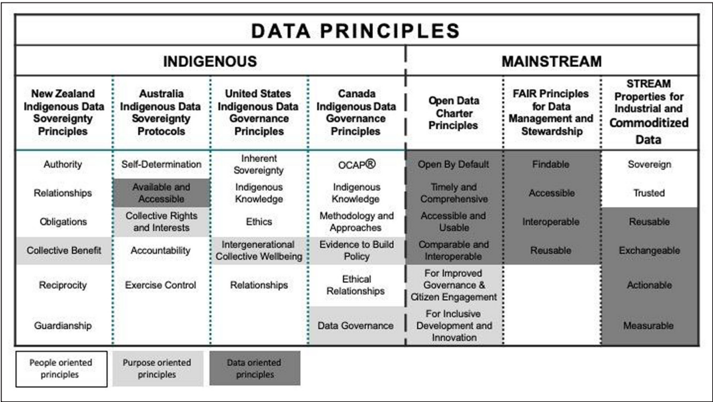
- Workshop organizers prepared an analysis of principles from Indigenous data sovereignty/governance frameworks and mainstream sources (Table 1) to inform dialogue; participants identified the four primary principles and drafted primary and sub-principles, then circulated the draft for input.
- The paper presents the principles’ relation to FAIR and examples of adoption; no formal sample, dataset, or statistical analysis is reported.
Limitations
- Stated: further research is needed to identify mechanisms that support implementation; create tools, policies, and practices that enact the Principles; explore application in different contexts (e.g., research repositories, knowledge co-production, institutional policies, existing databases/systems); and operationalize the Principles in tandem with FAIR.
- Evident: the paper is a principles publication and does not report empirical evaluation of implementation outcomes; the adoption examples are illustrative rather than systematically assessed.
Model-written summary. Check it against the paper before relying on it.
Integrity signals
Registry
Cites
Statistics
Figures
Verification
Claims the paper makes
0 Valid · 0 Not valid · 1 Not checked · 9 Own results and interpretations
- Probably not a substantial claim. 9
- It may state two separate claims as one. 5
Claims other papers make about this one
Each is checked against this paper’s own text: does it say what the citing paper says it does?
The source backs part of the claim, not all of it — or backs it for a different population, condition or comparison.
In the citing paper
“This can be in conflict with cultural values, e.g., in the case of indigenous communities that are generally underrepresented on Wikipedia but have concerns about how their knowledge might be exploited if shared [28, 29].”
From Data Governance in the Age of Large-Scale Data-Driven Language Technology (2022) · cites this paper as [28]
Experimental — accuracy not yet measuredThe source backs part of the claim, not all of it — or backs it for a different population, condition or comparison.
In the citing paper
“The key distinction is that while FAIR principles focus on making data maximally open and shareable-goals that align with scientific efficiency, CARE principles focus on people and purpose, emphasizing that data use should align with the rights and needs of Indigenous Peoples.”
From Data colonialism and indigenous languages in AI: a critical review of existing initiatives and their struggles with data sovereignty (2026) · cites this paper as Carroll et al. 2020
Experimental — accuracy not yet measuredThe source backs part of the claim, not all of it — or backs it for a different population, condition or comparison.
In the citing paper
“A concrete expression of Indigenous Data Sovereignty is found in the CARE Principles for Indigenous Data Governance, formulated in 2019 by the Global Indigenous Data Alliance and related networks (Carroll et al. 2020).”
From Data colonialism and indigenous languages in AI: a critical review of existing initiatives and their struggles with data sovereignty (2026) · cites this paper as Carroll et al. 2020
Experimental — accuracy not yet measuredThe source backs part of the claim, not all of it — or backs it for a different population, condition or comparison.
In the citing paper
“Indigenous data, whether born digital or not, include information, knowledge, specimens, and belongings about Indigenous Peoples to which they relate at both the individual and collective levels (Carroll et al., 2020; Rainie et al., 2019; Lovett et al., 2019).”
From Using Indigenous Standards to Implement the CARE Principles: Setting Expectations through Tribal Research Codes (2022) · cites this paper as Carroll et al., 2020
Experimental — accuracy not yet measuredThe source backs part of the claim, not all of it — or backs it for a different population, condition or comparison.
In the citing paper
“The FAIR Principles are aligned to the global shift towards open science and open data, promoting data centric criteria that facilitate increased data sharing among entities while ignoring relationships, power differentials, and the historical conditions associated with the collection of data10,11.”
From Operationalizing the CARE and FAIR Principles for Indigenous data futures (2021) · cites this paper as [11]
Experimental — accuracy not yet measured
6 more claims about this paper
Create a free account to see every claim other papers make about this one.
Self-check
Percentages, sums and reported differences re-computed from the paper’s own numbers.
Each contradiction between two passages listed here was confirmed by an independent check.
Rated minor: it would not touch a result — a value no result rests on, a p-value that stays on the same side of the significance level, or a conflict that is clerical, resolved elsewhere in the paper, or outside its own findings.
In the paper
§ The CARE Principles for Indigenous Data Governance > Research Data Alliance (www.rd-alliance.org), in research environments
“In 2012, the American Museum of Natural History at the Smithsonian Institution in Washington, DC released an Access and Benefit Sharing Policy on Genetic Resources”
§ The CARE Principles for Indigenous Data Governance > References
“42. Smithsonian Institution. 2012. Access and Benefit Sharing Policy on Genetics Resources. Washington, DC: National Museum of American History.”
Citations
Cites
The FAIR Guiding Principles for scientific data management and stewardship
Wilkinson, M. D., Dumontier, M., Aalbersberg, I. J., Appleton, G., Axton, M., Baak, A., Blomberg, N., Boiten, J.-W., da Silva Santos, L. B., Bourne, P. E., et al. (2016) · Scientific Data · doi:10.1038/sdata.2016.18 · Cited by 18,423
Indigenous Peoples In International Law: Second Edition
Anaya, S. J. (2004) · doi:10.1093/oso/9780195173499.001.0001 · Cited by 1,011
(2016) · doi:10.22459/caepr38.11.2016 · Cited by 696 · cited 6×
“…has become an increasingly relevant topic as big data, open data, open science, and data reuse become an integral part of research and institutional practices (Carroll, Rodriguez-Lonebear & Martinez 2019; Lovett et al. 2019; Rainie et al. 2019; Kukutai & Taylor 2016a; Taylor & Kukutai 2015).”
BackgroundInfluentialBuck, M., & Hamilton, C. (2011) · Review of European Community & International Environmental Law · doi:10.1111/j.1467-9388.2011.00703.x · Cited by 627
Indigenous Data Governance: Strategies from United States Native Nations
Carroll, S. R., Rodriguez-Lonebear, D., & Martinez, A. (2019) · Data Science Journal · doi:10.5334/dsj-2019-031 · Cited by 264
Self-citationGenomic Research Through an Indigenous Lens: Understanding the Expectations
Garrison, N. A., Hudson, M., Ballantyne, L. L., Garba, I., Martinez, A., Taualii, M., Arbour, L., Caron, N. R., & Rainie, S. C. (2019) · Annual Review of Genomics and Human Genetics · doi:10.1146/annurev-genom-083118-015434 · Cited by 220
Self-citationData sovereignty for indigenous peoples: current practice and future needs
Kukutai, T., & Taylor, J. (2016) · Indigenous Data Sovereignty · doi:10.22459/caepr38.11.2016.01 · Cited by 116
Rainie, S. C., Schultz, J. L., Briggs, E., Riggs, P., & Palmanteer-Holder, N. L. (2017) · International Indigenous Policy Journal · doi:10.18584/iipj.2017.8.2.1 · Cited by 114
Law, Knowledge, Culture: The Production of Indigenous Knowledge in Intellectual Property Law
Anderson, J. E. (2009) · Edward Elgar Publishing eBooks · doi:10.4337/9781848447196 · Cited by 95
Self-citationNational Inuit Strategy on Research.
Kanatami, I. T. (2018) · IOC of UNESCO (Intergovernmental Oceanographic Commission) · doi:10.25607/obp-1673 · Cited by 93
Research works printed but not linked: 18
- Cajete, G. 2000. Native science: Native laws of interdependence. Santa Fe: Clear Light.
- Castellano, MB. 2004. Ethics of Aboriginal research. Journal of Aboriginal Health, January, 98-114.
- Hudson, M, Milne, M, Russell, K, Smith, B, Reynolds, P and Atatoa-Carr, P. 2016. The Development of Guidelines for Indigenous Research Ethics in Aotearoa/New Zealand. In A.-L. Drugge (ed.), Ethics in Indigenous Research, Past Experiences -Future Challenges, 157-174. Umea, Sweden: Vaartoe Centre for Sami Research, Umea University.
- Drugge, A-L. 2016. Ethics in Indigenous Research: Past Experiences -Future Challenges. Umea, Sweden: Vaartoe Centre for Sami Research, Umea University.
- Julayinbul Statement in Indigenous Intellectual Property Rights. 1993. The Julayinbul Conference on Intellectual and Cultural Property. Australia: Jingarrba.
- Kovach, M. 2009. Indigenous methodologies: Characteristics, conversations, and contexts. Toronto: University of Toronto Press.
- Kukutai, T and Taylor, J. 2016a. Indigenous data sovereignty: Toward an agenda. Canberra, Australia: Aus- tralian National University Press. DOI: https://doi.org/10.22459/CAEPR38.11.2016 · DOI · Paper page
- Lovett, R, Lee, V, Kukutai, T, Cormack, D, Rainie, SC and Walker, J. 2019. Good data practices for Indigenous Data Sovereignty and Governance. In: Daly, A, Devitt, K and Monique, M (eds.), Good Data. Amsterdam: Institute of Network Cultures Inc. ISBN 978-94-92302-27-4.
- Mātaatua Declaration on Cultural and Intellectual Property Rights of Indigenous Peoples. 1993. First International Conference on the Cultural and Intellectual Property Rights of Indigenous Peoples. 12-18 June 1993. Aotearoa, New Zealand. Available at https://www.wipo.int/export/sites/www/tk/en/ databases/creative_heritage/docs/mataatua.pdf.
- McGregor, D, Restoule, JP and Johnston, R. (eds.) 2018. Indigenous research: Theories, practices, and rela- tionships. Canadian Scholars' Press.
- 2017, First Nations’ data governance: Measuring the nation-to-nation relationship discussion paper, British Columbia First Nations’ Data Governance Initiative
- Rainie, SC, Kukutai, T, Walter, M, Figueroa-Rodriguez, OL, Walker, J and Axelsson, P. 2019. Issues in Open Data: Indigenous Data Sovereignty. In: Davies, T, Walker, S, Rubinstein, M and Perini, F (eds.), The State of Open Data: Histories and Horizons. Cape Town and Ottawa: African Minds and International Development Research Centre. pp. 300-319.
- Ratima, M. 2001. Kia uruuru mai a hauora being healthy, being Maori: Conceptualising Maori health promotion. Published thesis (PhD) Department of Public Health. Dunedin, University of Otago.
- Ratima, M. 2001. Kia uruuru mai a hauora being healthy, being Maori: Conceptualising Maori health promotion. Published thesis (PhD) Department of Public Health. Dunedin, University of Otago. Research Data Alliance. 2017. International Indigenous Data Sovereignty Intertest Group. Available at https://www.rd-alliance.org/groups/international-indigenous-data-sovereignty-ig [Last accessed 17 January 2020].
- Snipp, CM. 2016. What does data sovereignty imply: what does it look like? In: Kukutai and Taylor, J (eds.), Indigenous data sovereignty: Toward an agenda. Canberra, Australia: Australian National University Press. pp. 39-55. DOI: https://doi.org/10.22459/CAEPR38.11.2016. · DOI · Paper page
- Smith, LT. 2012. Decolonizing Methodologies: Research and Indigenous Peoples. Zed Books. London: Univer- sity of Otago Press.
- Rodriguez-Lonebear, D. 2016. Building a data revolution in Indian country. In: Kukutai, T and Taylor, J (eds.), Indigenous data sovereignty: Toward an agenda. Canberra, Australia: Australian National University Press. pp. 253-272. DOI: https://doi.org/10.22459/CAEPR38.11.2016. · DOI · Paper page
- 2008, Research is ceremony: Indigenous research methods
Cited by
Items 1,201–1,300 of 1,410
Thandrayen, J., Maestrini, L., Riley, T., Lovett, R., Draper, G., Dillon, Y., & Freebairn, L. (2026) · Population Research and Policy Review · doi:10.1007/s11113-026-10011-9
Self-citationSelyshcheva, I. A. (2026) · CTE Workshop Proceedings · doi:10.55056/cte.1438
“Third, cultural-heritage organisations should re-examine open-access and ingestion policies in light of decolonial data-governance frameworks such as the CARE Principles, so that digitisation does not become a further mechanism of dispossession [ 11, 44 ] .”
Traylor, D., Anderson, E. E., McKinney, C., Trahan-Johnson, A. T., & Swington, C. (2026) · IGI Global eBooks · doi:10.4018/979-8-3373-8470-2.ch005
Policy Frameworks and Governance for Data-Driven Agriculture
Nhachi, M. N. D., Sutawi, M. P., Ibrahim, J. T., Relawati, R., & Priya, N. (2026) · Advances in geospatial technologies book series · doi:10.4018/979-8-3373-8037-7.ch008
Kansa, E. C. (2026) · Internet Archaeology · doi:10.11141/ia.71.15 · Cited by 1
Adaptive Modeling to Inform Environmental Management
Irving, K., Mathwin, R., Kotalik, C. J., Webb, J. A., Walters, D., Lovett, S., McKay, S. K., Torrens, C. L., Olson, J. R., & Jack, Z. E. (2026) · Environmental Management · doi:10.1007/s00267-026-02550-w
How FAIR data are helping to build trust in science
Heidt, A. (2026) · Nature · doi:10.1038/d41586-026-01982-y
Enhancing Community Resilience and Disaster Preparedness Through AI-Assisted Open Mapping
Victor, N. O. C. (2026) · Advances in computational intelligence and robotics book series · doi:10.4018/979-8-2600-2701-1.ch011
Saikia, D., Basumatary, P., & Saikia, A. (2026) · AI & Society · doi:10.1007/s00146-026-03181-9
“…of AI deployment rather than merely participating in it, exemplifies the governing logic of the eco-cultural intelligence framework proposed in this review: that community sovereignty, not computational efficiency, must be the primary design criterion (Tuhiwai Smith 1999; Carroll et al. 2020).”
Baresi, U., & Russo, A. (2026) · Urban Science · doi:10.3390/urbansci10070377 · Cited by 2
“The CARE framework (Collective Benefit, Authority to Control, Responsibility, Ethics), for example, centres efforts to embed Indigenous perspectives and values by focusing on collective benefits, community authority, responsibility, and ethics [104].”
Resilience and Adaptability Under Climate Change in Northern Canada
Vaz, E. (2026) · Advances in geographic information science · doi:10.1007/978-3-032-19211-0_9
Recommendations for conducting ethical network research
Ruiz, F. O., Tubaro, P., Molina, J. L., Neal, J. W., Vacca, R., Diesner, J., adams, J., Birkett, M. A., Godley, J., Lovato, J., et al. (2026) · Network Science · doi:10.1017/nws.2026.10034 · Cited by 2
“Such involvement may take modest forms, such as acknowledgment or data access, or more substantial ones, such as collaboration or co-authorship (Carroll et al., 2020; Tubaro, 2021).”
Sanders, K., & Washington, J. (2026) · Advances in computational intelligence and robotics book series · doi:10.4018/979-8-2600-2691-5.ch003
Indigenising Computing Education: A Co-Designed Scoping Review of Australian University Curricula
Li, J., Fricker, A., Paradies, Y., Herbert, N., & Myers, T. (2026) · ACM Transactions on Computing Education · doi:10.1145/3828719
“…exercises [129] Outcomes & Impact Culturalpreservation,communitysovereignty,ethical innovation,increasedFirstNationsparticipationand retention[130,132] Technical proficiency, individual career readiness, economic productivity (often without explicit cultural or sovereignty focus) [129] ethical…”
Data management plans as anticipatory discursive infrastructure
Finn, M., Struett, T., Tian, Y., & Acker, A. (2026) · Journal of the Association for Information Science and Technology · doi:10.1002/asi.70086
“…requirements (Reichmann, 2023; Reichmann et al., 2021; Smale et al., 2020) that are not, for example, the same as scientist-and data librarian-authored FAIR principles or CARE principles or other guidelines that shape science data practices (Carroll et al., 2020; Wilkinson et al., 2016).”
Fang, S., & Chen, S. (2026) · AI and Ethics · doi:10.1007/s43681-026-01244-7
“The CARE principles—Collective Benefit, Authority to Control, Responsibility, and Ethics—were developed by Carroll and colleagues [ 20 ] as an explicit counterpoint to the FAIR principles (Findable, Accessible, Interoperable, Reus - able) that govern open science data sharing.”
Ahmed, U., & Mamun, Q. (2026) · Lecture notes in computer science · doi:10.1007/978-3-032-29723-5_1
Wiberg, M., Qureshi, A., & Häkkilä, J. (2026) · Lecture notes in computer science · doi:10.1007/978-3-032-29900-0_24 · Cited by 1
The ethics of being left out of health research
Anand, S., Watts, V., & Ogilvie, G. S. (2026) · The Conversation · doi:10.64628/aam.m9hhenqqm
Wallmon, M. (2026) · Oxford University Press eBooks · doi:10.1093/9780198945253.003.0111
Navajo Parents’ Beliefs About Cradling and Early Mobility for Infants: A Qualitative Study
Donaldson, C., Russell, M., Calamity, A., Clancey, S., Rambeau, N. A., & Granger, L. A. (2026) · Journal of Early Intervention · doi:10.1177/10538151261460964
Revising research practices for singing data collection
Cotton, K., Holzapfel, A., de Vries, K., Berglund, K., & Tatar, K. (2026) · AI & Society · doi:10.1007/s00146-026-03205-4
“Notable papers are concerned with equitable access to data (Carroll et al. 2020); the visibility or invisibility (Hampton 2021; Newlands 2021) of stakeholders compromised by treatment of their own data (Cotton et al. 2024) and proposals concerning transparency measures for datasets (Gebru et al.…”
InfluentialDeveloping Culturally Responsive AI for Indigenous Knowledge Preservation and Revitalization
Kuranga, C., Khumalo, A., & Masenya, T. M. (2026) · Mousaion South African Journal of Information Studies · doi:10.25159/2663-659x/20992 · Cited by 1
Bridging Worlds: The Vital Role of Indigenous Knowledge in Education and Research
Rantz, R. (2026) · IGI Global eBooks · doi:10.4018/979-8-3373-7976-0.ch002
Population Genetic Data for 23 STR Loci of the Maya Chortí Ethnic Group in Honduras
Zuniga, A., Molina, Y., Amaya, K., Moya, Z., Soriano, P., Pineda, D., Pinto, Y., Romero, S. J., García, O., & Zablah, I. (2026) · Genes · doi:10.3390/genes17070809
“In addition to formal individual consent, the study followed a community-level governance framework explicitly aligned with the CARE Principles for Indigenous Data Governance—Collective benefit, Authority to control, Responsibility and Ethics [28].”
Sharma, J., & Tarmali, D. (2026) · IGI Global eBooks · doi:10.4018/979-8-3373-7976-0.ch006
Lahtinen, M., Salo, E., & Virtanen, J. (2025) · International Journal of Pharmaceutical and Phytopharmacological Research · doi:10.51847/ipzwvzpuu5
Integrating Indigenous Knowledge Systems With Digital Health Technologies in Epilepsy Care
Machingambi, M., & Ncube, M. (2026) · IGI Global eBooks · doi:10.4018/979-8-2600-2885-8.ch010
Ushanandhini, M. (2026) · IGI Global eBooks · doi:10.4018/979-8-3373-7976-0.ch007
Archaeological Data and Digital Archives
Richards, J. D. (2026) · Oxford University Press eBooks · doi:10.1093/9780197835210.003.0035
Advancing FAIR data towards comparable, organized, predictive AI-ready data for community validation
Wood‐Charlson, E. M., Åkerström, W. N., Anderson, L., Borton, M. A., Burley, S. K., Byers, N., Chandramouliswaran, I., Costes, S. V., Dehal, P., Doktycz, M. J., et al. (2026) · Communications Biology · doi:10.1038/s42003-026-10694-y · Cited by 1
“…FAIR data records contain details about its origin and links to sample(s) 34 (important for the Nagoya Protocol and CARE principles 35 ), sampling and laboratory protocols, related data products, the analysis software used for quality control or processing, and, fi nally, resulting…”
Razak, A., Mohamad, N., & Ismail, F. (2025) · International Journal of Pharmaceutical and Phytopharmacological Research · doi:10.51847/z3oth4ranw
Gonzales, M., Santos, J., & Cruz, A. (2025) · International Journal of Pharmaceutical and Phytopharmacological Research · doi:10.51847/js7gms2xec
Kovács, Z., Szabo, K., & Nagy, G. (2026) · International Journal of Pharmaceutical and Phytopharmacological Research · doi:10.51847/y0yunxq0gg
Ukaegbu, C. V., Rundle-Thiele, S. R., & Harris, J. (2026) · Journal of Social Marketing · doi:10.1108/jsocm-09-2025-0284
Wells, J. J., Gupta, N., & Myers, K. N. (2026) · Advances in Archaeological Practice · doi:10.1017/aap.2026.10164 · Cited by 1
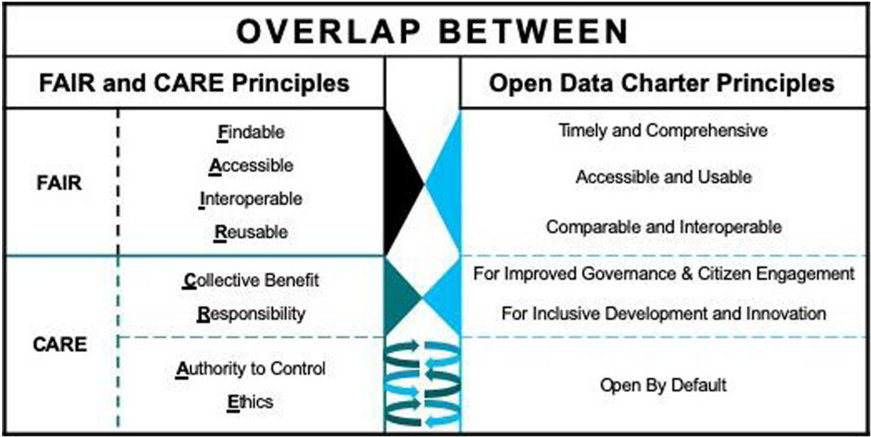
“We illustrate how the intersections of FAIR, CARE, and open government practices can be conceptualized in Figure 2 and explain this in detail next.”
InfluentialEntangled Visions: Cocreativity and Biomimicry in Contemporary AI Art
Wright, R., & Sade, G. (2026) · Leonardo · doi:10.1162/leon.a.2734
Arner, A. M., McCabe, T. C., Seyler, A., Zamri, S. N., Huat, T. B. T. A. P. T. B., Tam, K. L., Kinyua, P., John, E., Njeru, S. N., Lim, Y. A., et al. (2026) · American Journal of Biological Anthropology · doi:10.1002/ajpa.70314
Architectures: Colonial Bias in AI’s Global Architectural Knowledge
Patil, M. P., & Salama, A. M. (2026) · Springer eBooks · doi:10.1007/978-3-031-51703-7_446-1 · Cited by 1
Ethics in archaeobotany: identifying current issues and initiating a declaration of principles
Arranz‐Otaegui, A., Vaz, F. C., Berihuete‐Azorín, M., Out, W. A., Bodin, S. C., Miller, N. F., Speciale, C., Tereso, J. P., Bianco, S., Rousou, M., et al. (2026) · Vegetation History and Archaeobotany · doi:10.1007/s00334-026-01139-x
Cohort profile: Walking for harm reduction through street engagement (WHiSE 2.0)
Verma, G., Aden, M., Hartman, M., Walker, J. D., Pelland, K., Mushquash, C., Persaud, S., Young, M., Gauvin, H., Benoit, A. C., et al. (2026) · PLoS ONE · doi:10.1371/journal.pone.0354477
Self-citationA research agenda for mountain futures
Zimmer, A., Grêt‐Regamey, A., Palomo, I., Adler, C. E., Aakairi, M., Anière, M., Anthelme, F., Baruffa, C., Bele, B., Clark, V. R., et al. (2026) · Cell Reports Sustainability · doi:10.1016/j.crsus.2026.100775 · Cited by 1
Strohm, S., Straten, M. T., Göhring, A., Bünning, H., Kröger, P., Nakoinz, O., Renz, M., & Rinne, C. (2026) · Peer Community Journal · doi:10.24072/pcjournal.755
การพฒนาเคารางเมทาดาทา (Metadata schema) สำหรบการจดการสารสนเทศวด: กรณศกษาวดในจงหวดกาฬสนธ
สุรางค์กุล, ส., ลางคุลานนท์, ป., สุวรรณพฤกษ์, ม., สีดาแก้ว, ณ., & มุลวิไล, ศ. (2026) · วารสารห้องสมุด สมาคมห้องสมุดแห่งประเทศไทยฯ · doi:10.64798/tlabulletin.v70i1.295212
Taye, Z. M. (2026) · Frontiers in Environmental Science · doi:10.3389/fenvs.2026.1910506
Mutasa, K. (2026) · Natural History Collections and Museomics · doi:10.3897/nhcm.3.196914
Martins, A. L., Girotto, E., Benedito, J. C. D. S., Caldarelli, P. G., Ribeiro, K. B., Jacintho, E. R., Souza, S. C. S., Martínez‐Vizcaíno, V., Peres, M. A., & Mesas, A. E. (2026) · Clinical Oral Investigations · doi:10.1007/s00784-026-07047-8
“It should also incorporate the CARE Principles [9].”
Eades, A., Chinen, T. G., Blane, A., Razak, E., Buckley, A., Attwell, K., Bradfield, Z., Coffin, J., Eades, S., Symons, M., et al. (2026) · Frontiers in Global Women s Health · doi:10.3389/fgwh.2026.1781179
Experiences of Managing Indigenous Australian Music Metadata in Large Institutional Collections
Triscari, C. (2026) · Journal of the Australian Library and Information Association · doi:10.1080/24750158.2026.2706986
Juanals, B. (2026) · Approches Théoriques en Information-Communication (ATIC) · doi:10.3917/atic.012.0173
An interactive data tool for ecosystem service value assessment in the Great Barrier Reef
PERT, P. L., Stevens, L., Coggan, A., Valck, J. D., Jarvis, D., Graham, V., Huchery, C., Dyer, M., Sehgal, A., & Klein, E. (2026) · Ecological Indicators · doi:10.1016/j.ecolind.2026.115294
Badal, S. (2026) · Springer eBooks · doi:10.1007/978-3-032-28873-8_10
Queniahan, M., Taiuru, K., Mehdipour, F., Mahanti, A., Ebrahimi, N., & Aharari, A. (2026) · Advances in sustainability science and technology · doi:10.1007/978-3-032-25267-8_1
Aponza, M. C. (2026) · Revista Iberoamericana de Innovación Científica JA TUAIDA · doi:10.59722/riic.v3i2.1241
Lengua, A. J. M., de Córdoba, P. F., Peset, F., Taborda, J. A., Martínez, M. I., Ferrer-Sapena, A., & Díaz, J. L. L. (2026) · doi:10.59410/preprint-uea-v2026ep08-1208
Artificial Intelligence, Human Security, and International Law
Chedid, D. S. A. (2026) · Springer eBooks · doi:10.1007/978-3-031-51703-7_605-1
Shapiro, J., Carlisle, J. D., Albeke, S. E., Barrile, G. M., Robb, B. S., & Merkle, J. A. (2026) · Wildlife Society Bulletin · doi:10.1002/wsb.70046
Trustworthy artificial intelligence for rural health care
Kirkpatrick, E. R., Johnson, S. L., & Nevin, M. (2026) · Internal Medicine Journal · doi:10.1111/imj.70585
Ethical and inclusive challenges of integrating AI and indigenous knowledge systems
Tampubolon, M. (2026) · AI & Society · doi:10.1007/s00146-026-03185-5 · Cited by 1
“Moreover, guidelines like the CARE Principles for Indigenous Data Governance focusing on Collective Benefit, Authority to Control, Responsibility, and Ethics offer a solid path for engaging ethically with Indigenous data in AI development (Carroll et al. 2020).”
Genomic and Metagenomic Approaches to Biosurveillance
Ojo, A. O. (2026) · Advances in computational intelligence and robotics book series · doi:10.4018/979-8-3373-9033-8.ch003
Boivin, M. (2026) · The International Journal of Human Rights · doi:10.1080/13642987.2026.2711668
Carroll, A. J., Borycz, J., Stephens, N. K., Merritt, N., & Lowery, A. R. (2026) · The Journal of Academic Librarianship · doi:10.1016/j.acalib.2026.103322
Plotting on possible Earths: a palaeontologist's guide to plate reconstructions and palaeogeography
Dowding, E. M., & Kocsis, Á. T. (2026) · Geological Society London Special Publications · doi:10.1144/gslspecpub2026-18
Two-Spirit is bugs: classification, archival translation, and the limits of description
Wiebe, A. (2026) · Archival Science · doi:10.1007/s10502-026-09558-5
“…principles at the level of policy and infrastructure that put Indigenous community priorities at the forefront of how we enact data governance (Carroll et al. 2020 , 2021 ), the Digital Bundle—named by the Elders who co-created FourDirectionsTeachings.com —demonstrates how these principles…”
Musialik, W., & Malik, K. (2026) · Sustainability · doi:10.3390/su18168082
Arctic governance in the AI era: opportunities, challenges, and risk mitigation
Chen, C. (2026) · Polar Record · doi:10.1017/s0032247426100473
“…in some of these processes – although Indigenous organisations such as the Inuit Circumpolar Council, the Sámi Parliaments, and the Global Indigenous Data Alliance are increasingly active in data governance and related decision-making (Carroll et al., 2020; Inuit Circumpolar Council, 2022).”
From equity to solidarity: how care and relationality transform the debate on justice in genomics
Prainsack, B. (2026) · Journal of Community Genetics · doi:10.1007/s12687-026-00932-5
“In genomics, participation and benefit are shaped not only by access to resources but also by relationships of trust, shared responsibility, institutional stewardship, and histories of exclusion (e.g. TallBear 2013; Tsosie et al. 2021a, b; see also Carroll et al. 2020).”
Lei, Z., Zakharov, W., & Wei, S. (2026) · Digital Library Perspectives · doi:10.1108/dlp-11-2025-0239 · Cited by 1
Indigenous epidemiology in Canada: Epistemic struggle towards evidence, authority, and governance
Leason, J. (2026) · Canadian Journal of Public Health · doi:10.17269/s41997-026-01239-1
Loy, W. W., & O’Rourke, T. (2026) · Digital Applications in Archaeology and Cultural Heritage · doi:10.1016/j.daach.2026.e00584
The case for decolonizing data sources in indigenous evaluation and research
Kelley, A. (2026) · Frontiers in Public Health · doi:10.3389/fpubh.2026.1875297 · Cited by 1
“Some IRBs do not consider the CARE Principles (Collective Benefit, Authority to control, Responsibility, and Ethics) and the importance of self-determination and innovation in data collection and research (18).”
Colonialism in code: linguistic hegemony and epistemic exclusion in large language models
Gao, L. (2026) · AI & Society · doi:10.1007/s00146-026-03184-6 · Cited by 4
“To counter this, co-ownership and co-governance should be written into agreements from the outset: MOUs, licenses that operationalize CARE (Carroll et al. 2020), and audit trails that record provenance and permitted uses.”
InfluentialNiebuhr, B. B., Skarin, A., Saijets, J., Lipsanen, A., Pekkarinen, A., Sandström, P., Simmonds, M., Horstkotte, T., Tveraa, T., Kumpula, J., et al. (2026) · Rangifer · doi:10.7557/2.46.2.8865
Participatory Mapping of Karajarri Sea Country Knowledge to Guide IPA Zoning and Ranger Management
Murley, M., Hovey, R. K., Prince, J., & Rangers, T. K. (2026) · Ecological Management & Restoration · doi:10.1111/emr.70064
AI Through Critical Lenses: Decolonizing Technology and Advancing Feminist Futures
Morr, C. E. (2026) · Springer eBooks · doi:10.1007/978-3-032-22368-5_21
Xu, J., & Grumbine, R. E. (2026) · Frontiers in Environmental Science · doi:10.3389/fenvs.2026.1856130
Horn, S., Hafstad, G. S., Molyneaux, R., Anzil, V., Bartels, L., Bui, É., Carmichael, V., Creupelandt, C., Devaney, J., Fernandez, A., et al. (2026) · European Journal of Psychotraumatology · doi:10.1080/20008066.2026.2692769
“We also align ourselves with the CARE principles ( C ollective Benefit, A uthority to Control, R esponsibility, and E thics), which were initially developed to protect the rights and interests of Indigenous Peoples in the context of data sharing (Carroll et al., 2020).”
Teaching Back to the Machine: Decolonial Case Studies in AI-Enabled Learning
Dhar, S. (2026) · Advances in computational intelligence and robotics book series · doi:10.4018/979-8-3373-7837-4.ch014
Dataset Creation and Indigenous Communities
García, J. E., Chávez, N. E., & Savage, S. (2026) · Springer eBooks · doi:10.1007/978-3-032-12201-8_50
Indigenous Knowledge Systems and AI
Gupta, D., Gayratovich, E. N., Akishova, S., Rasulova, I., Sottarov, A., & Nazirjon, R. (2026) · Advances in computational intelligence and robotics book series · doi:10.4018/979-8-3373-7837-4.ch008
When the advisor is an algorithm: governing agri-food knowledge in the age of AI and misinformation
Kabir, K. H. (2026) · Agricultural Systems · doi:10.1016/j.agsy.2026.104933
Reid, G., Corbett, J., & Hudson, M. (2026) · Annals of the American Association of Geographers · doi:10.1080/24694452.2026.2708905 · Cited by 1
Self-citationTen simple rules for effective use of generative AI for code development in environmental science
King, R. A., Abowd, L., Broderick, C. W., Bradley, L., Czapanskiy, M. F., Farnisa, M. M., Ferrer, E. M., García, C. G., Gill, D., Greco, N. M., et al. (2026) · PLoS Computational Biology · doi:10.1371/journal.pcbi.1014627
“Users of GenAI should pay particular attention to these measures when working with sensitive or private data, such as those from Indigenous communities [49].”
Sherman, C. A., Maldonado, B. L., Rozell, L., Slack, S. D., Eaton, I. E., Martinez, D. E., Johnson, R. K., & Claw, K. G. (2026) · Human Genetics and Genomics Advances · doi:10.1016/j.xhgg.2026.100660
Saim, M. S., Al-Kazzaz, H., Boparai, I., Diarrassouba, M., Kazi, A., Ahmad, H., & Martin, B. D. (2026) · BMC Palliative Care · doi:10.1186/s12904-026-02265-z
“Indigenous data-governance frameworks reinforce that Indigenous Peoples should have authority over the collection, interpretation, use, and ownership of information concerning their communities [93].”
Data Colonialism and Data Sovereignty in Latin America
Lombana-Bermúdez, A., & Martín, J. R. (2026) · Springer eBooks · doi:10.1007/978-3-031-77500-0_99-1
Walker, G. D., Keshen, R., de la Sierra, V. Q., Coser, A. D., Bearpaw, A., Hansen, W., HorseChief, M., Jones, T., Oosahwee, H., Oosahwee, S., et al. (2026) · SSM - Mental Health · doi:10.1016/j.ssmmh.2026.100693
Sedran-Price, C., Taitingfong, R. I., Barrowcliffe, R., Prehn, J., Walter, M., Bodkin‐Andrews, G., & Lovett, R. W. (2026) · Data Science Journal · doi:10.5334/dsj-2026-032 · Cited by 1
Self-citationExploring Traditional Breast Cancer Risk Genes Among Aboriginal and Torres Strait Islander Women
Meehan, K. L., Pilkington, L., Khan, A., Pachter, N., Spalding, L. J., Armstrong, A. M., Redfern, C., & Redfern, A. D. (2026) · Life · doi:10.3390/life16081375
“…and controlled by Aboriginal team members as per the Maiam nayri Wingara Indigenous Data Sovereignty Principles and observing the CARE Principles (Collective benefit, Authority to control, Responsibility, Ethics) [42] and FAIR (Findable, Accessible, Interoperable, Reusable) data standards [43].”
McBratney, A., & Park, M. (2026) · Soil Security · doi:10.1016/j.soisec.2026.100247 · Cited by 2
Viviana, R., Frommen, T., Healy, A., Huggins, X., & Hynds, P. D. (2026) · Hydrogeology Journal · doi:10.1007/s10040-026-03147-7
Muduva, M., Kiwa, F. J., Masengu, R., Mangwiro, P. E., Magaya, T. K., & Garwi, J. (2026) · Emerald Group Publishing Limited eBooks · doi:10.1108/978-1-83742-268-520260015
Benites, W. A., & Gisloti, L. J. (2026) · Journal of Insect Conservation · doi:10.1007/s10841-026-00813-9
“Formal free, prior, and informed consent was therefore unnecessary, but all recommendations respect Indigenous data sovereignty and the CARE Principles for Indigenous Data Governance (Carroll et al. 2020) and will guide future participatory research requiring FPIC.”
Anderson, M. (2026) · Digital Commons - DU (University of Denver) · doi:10.56902/etdcrp.2026.67
Raman, R., & Nedungadi, P. (2026) · AI · doi:10.3390/ai7090327 · Cited by 2
Kamińska, A. M. (2026) · Future Collections Libraries Archives and Museums · doi:10.3390/fclam1010003
“…the museum’s historical property—which is where the governance principles named in Section 5.4 cease to be a matter of data handling and become the substance of the question, whether the community whose practice is being modeled has any say in what a model may make of it (Carroll et al., 2020).”
Influential
Metadata
- Authors
- Carroll, S. R., Garba, I., Figueroa-Rodríguez, O. L., Holbrook, J., Lovett, R., Materechera, S., Parsons, M., Raseroka, K., Rodriguez-Lonebear, D., Rowe, R., Sara, R., Walker, J. D., Anderson, J., & Hudson, M.
- Affiliations
- University of Arizona (US)
- University of the Western Cape (ZA)
- Australian National University (AU)
- North-West University (ZA)
- Rensselaer Polytechnic Institute (US)
- University of California, Los Angeles (US)
- Laurentian University (CA)
- New York University (US)
- University of Waikato (NZ)
- Corresponding author
- Carroll, Stephanie Russo
- ORCID
- Venue
- Data Science Journal
- Publisher
- Ubiquity Press, Ltd.
- Published
- 2020
- Volume
- 19
- ISSN
- 1683-1470 (ISSN-L)
- OpenAlex
- W3048186973
- Semantic Scholar
- 2b01e7dbaded2f74e39fe492ffda38d91c88d0e4
- Cited by
- 1,408
- References
- 19
- Citations by year
- 2026: 417 · 2025: 310 · 2024: 227 · 2023: 208 · 2022: 133 · 2021: 101 · 2020: 12
- FWCI
- 62.98
- Type
- journal article
- Language
- en
- Open access
- gold
- doi.org
- Licence
- Locations
- Data Science Journal (publishedVersion, cc-by)
- ANU Open Research (Australian National University) (submittedVersion, cc-by)
- Lincoln (University of Nebraska) (submittedVersion)
- DOAJ (DOAJ: Directory of Open Access Journals) (submittedVersion, cc-by-sa)
- Data Science Journal (submittedVersion, cc-by)
- Edinburgh Research Explorer (University of Edinburgh) (submittedVersion, cc-by)
- Funders
- European Commission (HORIZON2020, 777388)
- Rural Development Administration
- Topics
- Social Sciences › Health › Indigenous Health, Education, and Rights
- Physical Sciences › Computer Science › Information Systems › Research Data Management Practices
- Physical Sciences › Computer Science › Artificial Intelligence › Ethics and Social Impacts of AI
- Keywords
- Indigenous data sovereignty, CARE principles, Indigenous data governance, traditional knowledge, data reuse, benefit sharing, FAIR principles, data ethics, Indigenous self-determination, Research Data Alliance, data stewardship
About these checks
Registry, retraction, Cites and statistics results are computed, not judged, with one exception: a printed reference that no index lists is read once by a model before it counts as a citation error. Claims are extracted by a model and kept only when their quote appears verbatim in the text; each cited source is then checked, with a model’s help, for whether it says what the claim relies on. Those verdicts can be wrong — read the claim’s quote and the cited source before relying on one.
A language model drew the claims from the paper on 2026-10-30, under version 3 of the claim definition (model deepseek-v4.1-flash, prompt extract-v3).
A second model labelled each claim on 2026-10-30 (model jev-1.13-20260917, definition revision gold-guideline-v0.2).
Statistics and arithmetic are recomputed, not judged.
Confidence bands are shown only for fields calibrated on our annotated test set. None is calibrated yet, so no band is shown.
What counts as a claim ›How we measure confidence ›How we check this ›
Are you an author, or do you see a problem with this page? Request a review
Data sources
Bibliographic data: Semantic Scholar, OpenAlex, Crossref.
Contains information from the Semantic Scholar Academic Graph Datasets, made available under the ODC Attribution License (ODC-BY 1.0).
Semantic Scholar’s data is described in: Kinney, R., et al. (2023). The Semantic Scholar Open Data Platform. arXiv:2301.10140.
