

The CARE Principles for Indigenous Data Governance
Open accessThe DOI matches its Crossref record; 26 of the 27 references it cites were found in a registry or an index; none of the 1 sources its claims cite is checked for support yet.
Abstract
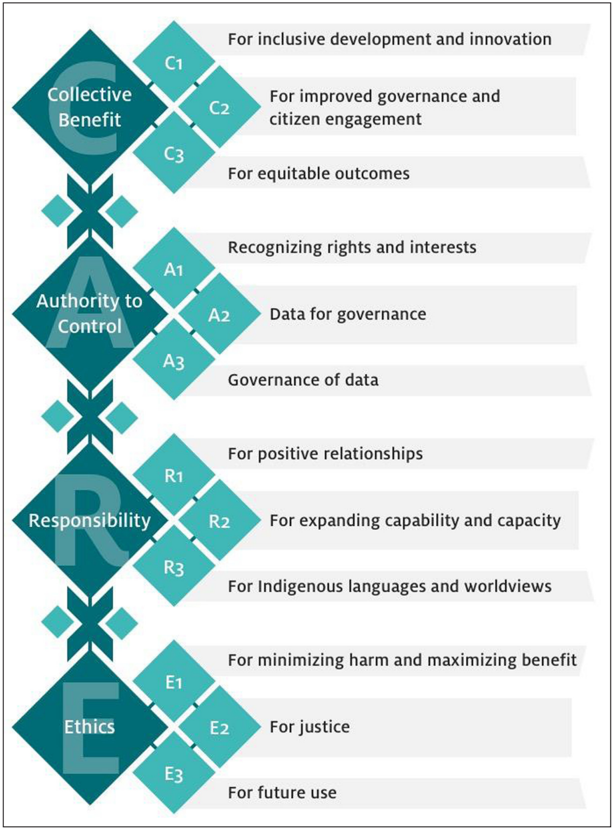
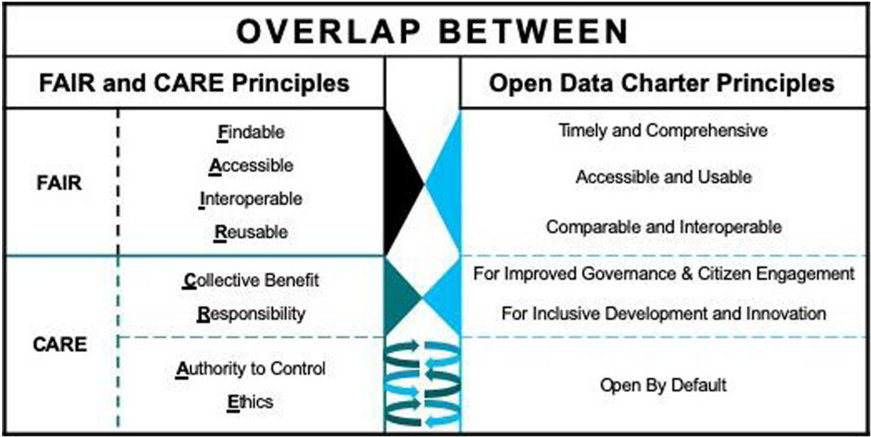
Concerns about secondary use of data and limited opportunities for benefit-sharing have focused attention on the tension that Indigenous communities feel between (1) protecting Indigenous rights and interests in Indigenous data (including traditional knowledges) and (2) supporting open data, machine learning, broad data sharing, and big data initiatives. The International Indigenous Data Sovereignty Interest Group (within the Research Data Alliance) is a network of nation-state based Indigenous data sovereignty networks and individuals that developed the ‘CARE Principles for Indigenous Data Governance’ (Collective Benefit, Authority to Control, Responsibility, and Ethics) in consultation with Indigenous Peoples, scholars, non-profit organizations, and governments. The CARE Principles are people– and purpose-oriented, reflecting the crucial role of data in advancing innovation, governance, and self-determination among Indigenous Peoples. The Principles complement the existing data-centric approach represented in the ‘FAIR Guiding Principles for scientific data management and stewardship’ (Findable, Accessible, Interoperable, Reusable). The CARE Principles build upon earlier work by the Te Mana Raraunga Maori Data Sovereignty Network, US Indigenous Data Sovereignty Network, Maiam nayri Wingara Aboriginal and Torres Strait Islander Data Sovereignty Collective, and numerous Indigenous Peoples, nations, and communities. The goal is that stewards and other users of Indigenous data will ‘Be FAIR and CARE.’ In this first formal publication of the CARE Principles, we articulate their rationale, describe their relation to the FAIR Principles, and present examples of their application.
Overview
CoChat Summary
TL;DR
The CARE Principles for Indigenous Data Governance (Collective Benefit, Authority to Control, Responsibility, and Ethics) are people- and purpose-oriented principles developed by the International Indigenous Data Sovereignty Interest Group to complement the data-centric FAIR Principles. They aim to support Indigenous rights, self-determination, and control over Indigenous data while enabling equitable data reuse.
Key findings
- CARE comprises four principles—Collective Benefit, Authority to Control, Responsibility, and Ethics—designed to complement FAIR (Findable, Accessible, Interoperable, Reusable) and guide data stewards and users to “Be FAIR and CARE.”
- The paper reports global context from UN 2009: Indigenous presence spans over 90 countries, includes over 370 million Indigenous persons, and involves more than 5,000 distinct cultures.
- CARE emerged from an Indigenous-led workshop held in Gaborone, Botswana, on 8 November 2018, as part of International Data Week, with later input from Indigenous leaders, scholars, network members, and allies.
- Early adopters/implementation examples include the Research Data Alliance, the Smithsonian Institution (e.g., Smithsonian Directive 609 and planned Collection CARE Notices), and the Open Data Charter.
Methods
- This is a conceptual/principles development paper, not an empirical study; it describes the rationale, development, and illustrative application of the CARE Principles.
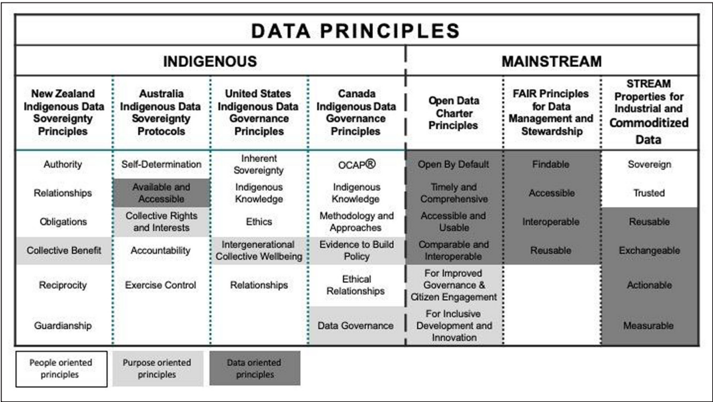
- Workshop organizers prepared an analysis of principles from Indigenous data sovereignty/governance frameworks and mainstream sources (Table 1) to inform dialogue; participants identified the four primary principles and drafted primary and sub-principles, then circulated the draft for input.
- The paper presents the principles’ relation to FAIR and examples of adoption; no formal sample, dataset, or statistical analysis is reported.
Limitations
- Stated: further research is needed to identify mechanisms that support implementation; create tools, policies, and practices that enact the Principles; explore application in different contexts (e.g., research repositories, knowledge co-production, institutional policies, existing databases/systems); and operationalize the Principles in tandem with FAIR.
- Evident: the paper is a principles publication and does not report empirical evaluation of implementation outcomes; the adoption examples are illustrative rather than systematically assessed.
Model-written summary. Check it against the paper before relying on it.
Integrity signals
Registry
Cites
Statistics
Figures
Verification
Claims the paper makes
0 Valid · 0 Not valid · 1 Not checked · 9 Own results and interpretations
- Probably not a substantial claim. 9
- It may state two separate claims as one. 5
Claims other papers make about this one
Each is checked against this paper’s own text: does it say what the citing paper says it does?
The source backs part of the claim, not all of it — or backs it for a different population, condition or comparison.
In the citing paper
“This can be in conflict with cultural values, e.g., in the case of indigenous communities that are generally underrepresented on Wikipedia but have concerns about how their knowledge might be exploited if shared [28, 29].”
From Data Governance in the Age of Large-Scale Data-Driven Language Technology (2022) · cites this paper as [28]
Experimental — accuracy not yet measuredThe source backs part of the claim, not all of it — or backs it for a different population, condition or comparison.
In the citing paper
“The key distinction is that while FAIR principles focus on making data maximally open and shareable-goals that align with scientific efficiency, CARE principles focus on people and purpose, emphasizing that data use should align with the rights and needs of Indigenous Peoples.”
From Data colonialism and indigenous languages in AI: a critical review of existing initiatives and their struggles with data sovereignty (2026) · cites this paper as Carroll et al. 2020
Experimental — accuracy not yet measuredThe source backs part of the claim, not all of it — or backs it for a different population, condition or comparison.
In the citing paper
“A concrete expression of Indigenous Data Sovereignty is found in the CARE Principles for Indigenous Data Governance, formulated in 2019 by the Global Indigenous Data Alliance and related networks (Carroll et al. 2020).”
From Data colonialism and indigenous languages in AI: a critical review of existing initiatives and their struggles with data sovereignty (2026) · cites this paper as Carroll et al. 2020
Experimental — accuracy not yet measuredThe source backs part of the claim, not all of it — or backs it for a different population, condition or comparison.
In the citing paper
“Indigenous data, whether born digital or not, include information, knowledge, specimens, and belongings about Indigenous Peoples to which they relate at both the individual and collective levels (Carroll et al., 2020; Rainie et al., 2019; Lovett et al., 2019).”
From Using Indigenous Standards to Implement the CARE Principles: Setting Expectations through Tribal Research Codes (2022) · cites this paper as Carroll et al., 2020
Experimental — accuracy not yet measuredThe source backs part of the claim, not all of it — or backs it for a different population, condition or comparison.
In the citing paper
“The FAIR Principles are aligned to the global shift towards open science and open data, promoting data centric criteria that facilitate increased data sharing among entities while ignoring relationships, power differentials, and the historical conditions associated with the collection of data10,11.”
From Operationalizing the CARE and FAIR Principles for Indigenous data futures (2021) · cites this paper as [11]
Experimental — accuracy not yet measured
6 more claims about this paper
Create a free account to see every claim other papers make about this one.
Self-check
Percentages, sums and reported differences re-computed from the paper’s own numbers.
Each contradiction between two passages listed here was confirmed by an independent check.
Rated minor: it would not touch a result — a value no result rests on, a p-value that stays on the same side of the significance level, or a conflict that is clerical, resolved elsewhere in the paper, or outside its own findings.
In the paper
§ The CARE Principles for Indigenous Data Governance > Research Data Alliance (www.rd-alliance.org), in research environments
“In 2012, the American Museum of Natural History at the Smithsonian Institution in Washington, DC released an Access and Benefit Sharing Policy on Genetic Resources”
§ The CARE Principles for Indigenous Data Governance > References
“42. Smithsonian Institution. 2012. Access and Benefit Sharing Policy on Genetics Resources. Washington, DC: National Museum of American History.”
Citations
Cites
The FAIR Guiding Principles for scientific data management and stewardship
Wilkinson, M. D., Dumontier, M., Aalbersberg, I. J., Appleton, G., Axton, M., Baak, A., Blomberg, N., Boiten, J.-W., da Silva Santos, L. B., Bourne, P. E., et al. (2016) · Scientific Data · doi:10.1038/sdata.2016.18 · Cited by 18,423
Indigenous Peoples In International Law: Second Edition
Anaya, S. J. (2004) · doi:10.1093/oso/9780195173499.001.0001 · Cited by 1,011
(2016) · doi:10.22459/caepr38.11.2016 · Cited by 696 · cited 6×
“…has become an increasingly relevant topic as big data, open data, open science, and data reuse become an integral part of research and institutional practices (Carroll, Rodriguez-Lonebear & Martinez 2019; Lovett et al. 2019; Rainie et al. 2019; Kukutai & Taylor 2016a; Taylor & Kukutai 2015).”
BackgroundInfluentialBuck, M., & Hamilton, C. (2011) · Review of European Community & International Environmental Law · doi:10.1111/j.1467-9388.2011.00703.x · Cited by 627
Indigenous Data Governance: Strategies from United States Native Nations
Carroll, S. R., Rodriguez-Lonebear, D., & Martinez, A. (2019) · Data Science Journal · doi:10.5334/dsj-2019-031 · Cited by 264
Self-citationGenomic Research Through an Indigenous Lens: Understanding the Expectations
Garrison, N. A., Hudson, M., Ballantyne, L. L., Garba, I., Martinez, A., Taualii, M., Arbour, L., Caron, N. R., & Rainie, S. C. (2019) · Annual Review of Genomics and Human Genetics · doi:10.1146/annurev-genom-083118-015434 · Cited by 220
Self-citationData sovereignty for indigenous peoples: current practice and future needs
Kukutai, T., & Taylor, J. (2016) · Indigenous Data Sovereignty · doi:10.22459/caepr38.11.2016.01 · Cited by 116
Rainie, S. C., Schultz, J. L., Briggs, E., Riggs, P., & Palmanteer-Holder, N. L. (2017) · International Indigenous Policy Journal · doi:10.18584/iipj.2017.8.2.1 · Cited by 114
Law, Knowledge, Culture: The Production of Indigenous Knowledge in Intellectual Property Law
Anderson, J. E. (2009) · Edward Elgar Publishing eBooks · doi:10.4337/9781848447196 · Cited by 95
Self-citationNational Inuit Strategy on Research.
Kanatami, I. T. (2018) · IOC of UNESCO (Intergovernmental Oceanographic Commission) · doi:10.25607/obp-1673 · Cited by 93
Research works printed but not linked: 18
- Cajete, G. 2000. Native science: Native laws of interdependence. Santa Fe: Clear Light.
- Castellano, MB. 2004. Ethics of Aboriginal research. Journal of Aboriginal Health, January, 98-114.
- Hudson, M, Milne, M, Russell, K, Smith, B, Reynolds, P and Atatoa-Carr, P. 2016. The Development of Guidelines for Indigenous Research Ethics in Aotearoa/New Zealand. In A.-L. Drugge (ed.), Ethics in Indigenous Research, Past Experiences -Future Challenges, 157-174. Umea, Sweden: Vaartoe Centre for Sami Research, Umea University.
- Drugge, A-L. 2016. Ethics in Indigenous Research: Past Experiences -Future Challenges. Umea, Sweden: Vaartoe Centre for Sami Research, Umea University.
- Julayinbul Statement in Indigenous Intellectual Property Rights. 1993. The Julayinbul Conference on Intellectual and Cultural Property. Australia: Jingarrba.
- Kovach, M. 2009. Indigenous methodologies: Characteristics, conversations, and contexts. Toronto: University of Toronto Press.
- Kukutai, T and Taylor, J. 2016a. Indigenous data sovereignty: Toward an agenda. Canberra, Australia: Aus- tralian National University Press. DOI: https://doi.org/10.22459/CAEPR38.11.2016 · DOI · Paper page
- Lovett, R, Lee, V, Kukutai, T, Cormack, D, Rainie, SC and Walker, J. 2019. Good data practices for Indigenous Data Sovereignty and Governance. In: Daly, A, Devitt, K and Monique, M (eds.), Good Data. Amsterdam: Institute of Network Cultures Inc. ISBN 978-94-92302-27-4.
- Mātaatua Declaration on Cultural and Intellectual Property Rights of Indigenous Peoples. 1993. First International Conference on the Cultural and Intellectual Property Rights of Indigenous Peoples. 12-18 June 1993. Aotearoa, New Zealand. Available at https://www.wipo.int/export/sites/www/tk/en/ databases/creative_heritage/docs/mataatua.pdf.
- McGregor, D, Restoule, JP and Johnston, R. (eds.) 2018. Indigenous research: Theories, practices, and rela- tionships. Canadian Scholars' Press.
- 2017, First Nations’ data governance: Measuring the nation-to-nation relationship discussion paper, British Columbia First Nations’ Data Governance Initiative
- Rainie, SC, Kukutai, T, Walter, M, Figueroa-Rodriguez, OL, Walker, J and Axelsson, P. 2019. Issues in Open Data: Indigenous Data Sovereignty. In: Davies, T, Walker, S, Rubinstein, M and Perini, F (eds.), The State of Open Data: Histories and Horizons. Cape Town and Ottawa: African Minds and International Development Research Centre. pp. 300-319.
- Ratima, M. 2001. Kia uruuru mai a hauora being healthy, being Maori: Conceptualising Maori health promotion. Published thesis (PhD) Department of Public Health. Dunedin, University of Otago.
- Ratima, M. 2001. Kia uruuru mai a hauora being healthy, being Maori: Conceptualising Maori health promotion. Published thesis (PhD) Department of Public Health. Dunedin, University of Otago. Research Data Alliance. 2017. International Indigenous Data Sovereignty Intertest Group. Available at https://www.rd-alliance.org/groups/international-indigenous-data-sovereignty-ig [Last accessed 17 January 2020].
- Snipp, CM. 2016. What does data sovereignty imply: what does it look like? In: Kukutai and Taylor, J (eds.), Indigenous data sovereignty: Toward an agenda. Canberra, Australia: Australian National University Press. pp. 39-55. DOI: https://doi.org/10.22459/CAEPR38.11.2016. · DOI · Paper page
- Smith, LT. 2012. Decolonizing Methodologies: Research and Indigenous Peoples. Zed Books. London: Univer- sity of Otago Press.
- Rodriguez-Lonebear, D. 2016. Building a data revolution in Indian country. In: Kukutai, T and Taylor, J (eds.), Indigenous data sovereignty: Toward an agenda. Canberra, Australia: Australian National University Press. pp. 253-272. DOI: https://doi.org/10.22459/CAEPR38.11.2016. · DOI · Paper page
- 2008, Research is ceremony: Indigenous research methods
Cited by
Operationalizing the CARE and FAIR Principles for Indigenous data futures
Carroll, S. R., Herczog, E., Hudson, M., Russell, K., & Stall, S. (2021) · Scientific Data · doi:10.1038/s41597-021-00892-0 · Cited by 483
“…FAIR Principles are aligned to the global shift towards open science and open data, promoting data centric criteria that facilitate increased data sharing among entities while ignoring relationships, power differentials, and the historical conditions associated with the collection of data 10,11 .”
BackgroundSelf-citationHoban, S., Archer, F. I., Bertola, L. D., Bragg, J. G., Breed, M. F., Bruford, M. W., Coleman, M. A., Ekblom, R., Funk, W. C., Grueber, C. E., et al. (2022) · Biological Reviews · doi:10.1111/brv.12852 · Cited by 282
Indigenous Data Sovereignty and Policy
Walter, M., Kukutai, T., Carroll, S. R., & Rodriguez-Lonebear, D. (2020) · doi:10.4324/9780429273957 · Cited by 273
Self-citationCurbing the major and growing threats from invasive alien species is urgent and achievable
Roy, H. E., Pauchard, A., Stoett, P. J., Renard Truong, T., Meyerson, L. A., Bacher, S., Galil, B. S., Hulme, P. E., Ikeda, T., Kavileveettil, S., et al. (2024) · Nature Ecology & Evolution · doi:10.1038/s41559-024-02412-w · Cited by 216
“…communities as well and differing biocultural views on the value of invasive alien species should be considered according to collective benefit, authority to control, responsibility, ethics (CARE) principles 18 and free prior and informed consent, as leading to improved outcomes for management.”
Indigenous Data Sovereignty in the Era of Big Data and Open Data
Walter, M., Lovett, R., Maher, B., Williamson, B., Prehn, J., Bodkin‐Andrews, G., & Lee, V. (2021) · Australian Journal of Social Issues · doi:10.1002/ajs4.141 · Cited by 203
Self-citationAlderman, J. E., Palmer, J., Laws, E., McCradden, M. D., Ordish, J., Ghassemi, M., Pfohl, S. R., Rostamzadeh, N., Cole-Lewis, H., Glocker, B., et al. (2025) · The Lancet Digital Health · doi:10.1016/s2589-7500(24)00224-3 · Cited by 170
A global approach for natural history museum collections
Johnson, K. R., Owens, I. F. P., & the Global Collection Group (2023) · Science · doi:10.1126/science.adf6434 · Cited by 167
Systemic racial disparities in funding rates at the National Science Foundation
Chen, C. Y., Kahanamoku, S. S., Tripati, A., Alegado, R. A., Morris, V. R., Andrade, K., & Hosbey, J. (2022) · eLife · doi:10.7554/elife.83071 · Cited by 127
Ethics of DNA research on human remains: five globally applicable guidelines
Alpaslan-Roodenberg, S., Anthony, D. W., Babiker, H. M. A., Bánffy, E., Booth, T., Capone, P., Deshpande-Mukherjee, A., Eisenmann, S., Fehren‐Schmitz, L., Frachetti, M. D., et al. (2021) · Nature · doi:10.1038/s41586-021-04008-x · Cited by 195
Applying the ‘CARE Principles for Indigenous Data Governance’ to ecology and biodiversity research
Jennings, L. L., Anderson, T. G., Martinez, A. O., Sterling, R., David-Chavez, D., Garba, I., Hudson, M. L., Garrison, N. A., & Carroll, S. R. (2023) · Nature Ecology & Evolution · doi:10.1038/s41559-023-02161-2 · Cited by 197
Self-citationOpportunities and challenges of macrogenetic studies
Leigh, D. M., van Rees, C. B., Millette, K. L., Breed, M. F., Schmidt, C., Bertola, L. D., Hand, B. K., Hunter, M. E., Jensen, E. L., Kershaw, F., et al. (2021) · Nature Reviews Genetics · doi:10.1038/s41576-021-00394-0 · Cited by 138
Widder, D. G., & Nafus, D. (2023) · Big Data & Society · doi:10.1177/20539517231177620 · Cited by 119
“Indigenous data sovereignty principles speci fi cally call for exactly this kind of approach (Carroll et al., 2020).”
BackgroundResultInfluentialReimagining the language of engagement in a post-stakeholder world
Reed, M. S., Merkle, B. G., Cook, E. J., Hafferty, C., Hejnowicz, A. P., Holliman, R. E., Marder, I. D., Pool, U., Raymond, C. M., Wallen, K., et al. (2024) · Sustainability Science · doi:10.1007/s11625-024-01496-4 · Cited by 167
“…engage, co-produce, and work collaboratively with those who could be affected by resulting decisions and other actions (Baum et al. 2006; Reed 2008; Reed et al. 2009; Kindon et al. 2010; McGrath and Whitty 2017; Carroll et al. 2020; Dwivedi et al. 2022; Koren et al. 2022; Merkle et al. 2022).”
Bühler, M. M., Calzada, I., Cane, I., Jelinek, T., Kapoor, A., Mannan, M., Mehta, S., Micheli, M., Mookerjee, V. S., Nübel, K., et al. (2023) · Digital · doi:10.3390/digital3030011 · Cited by 200
Indigenous Peoples' Rights in Data: a contribution toward Indigenous Research Sovereignty
Hudson, M., Carroll, S. R., Anderson, J., Blackwater, D., Cordova-Marks, F. M., Cummins, J., David-Chavez, D., Fernandez, A., Garba, I., Hiraldo, D., et al. (2023) · Frontiers in Research Metrics and Analytics · doi:10.3389/frma.2023.1173805 · Cited by 107
Self-citationReid, R. J., Wodchis, W. P., Kuluski, K., Lee-Foon, N. K., Lavis, J. N., Rosella, L. C., & Desveaux, L. (2024) · SSM - Health Systems · doi:10.1016/j.ssmhs.2024.100010 · Cited by 144
Andrasik, M. P., Broder, G. B., Wallace, S. E., Chaturvedi, R., Michael, N. L., Bock, S., Beyrer, C., Oseso, L. N., Aina, J., Lucas, J. P., et al. (2021) · PLoS ONE · doi:10.1371/journal.pone.0258858 · Cited by 117
Interactive Model Cards: A Human-Centered Approach to Model Documentation
Crisan, A., Drouhard, M., Vig, J., & Rajani, N. (2022) · 2022 ACM Conference on Fairness Accountability and Transparency · doi:10.1145/3531146.3533108 · Cited by 101
“We built this idea out through an initial conceptual study with experts in ML, Ethics, and NLP to co-create a set of design guidelines for a functional IMC prototype.”
MethodHardisty, A., Ellwood, E. R., Nelson, G., Zimkus, B. M., Buschbom, J., Addink, W., Rabeler, R. K., Bates, J. M., Bentley, A. C., Fortes, J. A. B., et al. (2022) · BioScience · doi:10.1093/biosci/biac060 · Cited by 128
Reimagine fire science for the anthropocene
Shuman, J. K., Balch, J. K., Barnes, R. T., Higuera, P. E., Roos, C. I., Schwilk, D. W., Stavros, E. N., Banerjee, T., Bela, M. M., Bendix, J., et al. (2022) · PNAS Nexus · doi:10.1093/pnasnexus/pgac115 · Cited by 113
“Implementation of FAIR principles are complemented by the CARE (Collective benefit, Authority to control, Responsibility, and Ethics) principles that protect Indigenous sovereignty and intellectual property (75).”
Community Monitoring of Natural Resource Systems and the Environment
Danielsen, F., Eicken, H. S., Funder, M., Johnson, N., Lee, O. A., Theilade, I., Argyriou, D., & Burgess, N. D. (2022) · Annual Review of Environment and Resources · doi:10.1146/annurev-environ-012220-022325 · Cited by 152
Placing diverse knowledge systems at the core of transformative climate research
Orlove, B., Sherpa, P. Y., Dawson, N. M., Adelekan, I., Alangui, W. V., Carmona, R., Coen, D. R., Nelson, M. K., Reyes‐García, V., Rubis, J. T., et al. (2023) · AMBIO · doi:10.1007/s13280-023-01857-w · Cited by 142
“It is supported by the proposed CARE and Fair Principles for Indigenous Data Futures (Carroll et al. 2020).”
Will It Ever Be FAIR?: Making Archaeological Data Findable, Accessible, Interoperable, and Reusable
Nicholson, C., Kansa, S., Gupta, N., & Fernandez, R. (2023) · Advances in Archaeological Practice · doi:10.1017/aap.2022.40 · Cited by 77
“We contend that the FAIR principles, when implemented with the CARE principles (Carroll et al. 2020, 2021; Gupta et al. 2023) provide a framework for ensuring that archaeologists in academia and industry consider their data creation, data curation, and dissemination practices more intentionally.”
MethodCarroll, S. R., Garba, I., Plevel, R., Small-Rodriguez, D., Hiratsuka, V. Y., Hudson, M., & Garrison, N. A. (2022) · Frontiers in Genetics · doi:10.3389/fgene.2022.823309 · Cited by 95
“Indigenous data, whether born digital or not, include information, knowledge, specimens, and belongings about Indigenous Peoples to which they relate at both the individual and collective levels (Carroll et al., 2020; Rainie et al., 2019; Lovett et al., 2019).”
Self-citationCartney, A. M. M., Anderson, J., Liggins, L., Hudson, M. L., Anderson, M. Z., TeAika, B., Geary, J., Cook-Deegan, R. M., Patel, H. R., & Phillippy, A. M. (2021) · Proceedings of the National Academy of Sciences · doi:10.1073/pnas.2115860119 · Cited by 109
Self-citationSchaefer, J. M., Codilean, A. T., Willenbring, J. K., Lu, Z., Keisling, B. A., Fülöp, .-H., & Val, P. (2022) · Nature Reviews Methods Primers · doi:10.1038/s43586-022-00096-9 · Cited by 106
The Use of Digital Platforms for Community-Based Monitoring
Johnson, N., Druckenmiller, M. L., Danielsen, F., & Pulsifer, P. (2021) · BioScience · doi:10.1093/biosci/biaa162 · Cited by 115
Utilizing aquatic environmental DNA to address global biodiversity targets
Altermatt, F., Couton, M., Carraro, L., Keck, F., Handley, L. L., Leese, F., Zhang, X., Zhang, Y., & Blackman, R. C. (2025) · Nature Reviews Biodiversity · doi:10.1038/s44358-025-00044-x · Cited by 117
“Addressing the sociocultural dimensions of eDNA, particularly when data originate from territories of Indigenous communities, necessitates the adoption of the CARE principles 195 .”
A hydrologist's guide to open science
Hall, C., Saia, S. M., Popp, A., Doğulu, N., Schymanski, S. J., Drost, N., van Emmerik, T. H. M., & Hut, R. (2022) · Hydrology and earth system sciences · doi:10.5194/hess-26-647-2022 · Cited by 101
Jenkins, T., Persaud, B., Cowger, W., Szigeti, K., Roche, D. G., Clary, E., Slowinski, S., Lei, B., Abeynayaka, A., Nyadjro, E. S., et al. (2022) · Frontiers in Environmental Science · doi:10.3389/fenvs.2022.912107 · Cited by 86
“As the data collection efforts expand to include indigenous lands in North America, data management should additionally adhere to guiding principles for data collected on indigenous lands such as the Collective Benefit, Authority to Control, and Ethics (CARE; Carroll et al., 2020; Carroll et al., 2021) and the Ownersh…”
BackgroundGarbage in, garbage out: mitigating risks and maximizing benefits of AI in research
Hanson, B., Stall, S., Cutcher-Gershenfeld, J., Vrouwenvelder, K., Wirz, C., Rao, Y., & Peng, G. (2023) · Nature · doi:10.1038/d41586-023-03316-8 · Cited by 73
Liggins, L., Hudson, M. L., & Anderson, J. (2021) · Molecular Ecology · doi:10.1111/mec.15918 · Cited by 86
“In response to the Nagoya Protocol and concerns over Indigenous (genomic) Data Sovereignty (Carroll et al., 2020; Hudson et al., 2020), the BC Labels/Notices extend the inclusion of Indigenous interests to biological research (Anderson & Hudson, 2020).”
BackgroundSelf-citationBridging genomics’ greatest challenge: The diversity gap
Corpas, M., Pius, M., Vincent, C. M., Guio, H., Dwek, M. V., Nagaraj, S. H., López-Correa, C., Popejoy, A. B., & Fatumo, S. (2024) · Cell Genomics · doi:10.1016/j.xgen.2024.100724 · Cited by 110
A synergistic future for AI and ecology
Han, B. A., Varshney, K. R., LaDeau, S. L., Subramaniam, A., Weathers, K. C., & Zwart, J. A. (2023) · Proceedings of the National Academy of Sciences · doi:10.1073/pnas.2220283120 · Cited by 99
“Additionally, following the CARE principles [Collective Benefit, Authority to Control, Responsibility, and Ethics, (84)] for indigenous data can help ensure that these data are useful for indigenous peoples and remain under their control, while also advancing knowledge within AI and ecology.”
MethodDeaths of despair and Indigenous data genocide
Friedman, J. R., Hansen, H., & Gone, J. P. (2023) · The Lancet · doi:10.1016/s0140-6736(22)02404-7 · Cited by 82
Challenges and opportunities in sharing microbiome data and analyses
Huttenhower, C., Finn, R. D., & McHardy, A. C. (2023) · Nature Microbiology · doi:10.1038/s41564-023-01484-x · Cited by 80
“…novel bioactives from microbial communities continues to grow 73 , industry has a vested interest in ensuring that research publications are accurate and reproducible, while also maintaining the additional CARE principles of Collective Benefit, Authority to Control, Responsibility, and Ethics 74 .”
BackgroundBernardo, T. M., Bruce, M., Rushton, J., Shaw, A., Grace, D., Wieland, B., Herrero, M., STONE, M., GILBERT, W., Marsh, T. L., et al. (2021) · Scientific and Technical Review (World Organisation for Animal Health) · doi:10.20506/rst.40.2.3246 · Cited by 84
Indigenous Peoples' Data During COVID-19: From External to Internal
Carroll, S. R., Akee, R., Chung, P., Cormack, D. M., Kukutai, T., Lovett, R. W., Suina, M., & Rowe, R. (2021) · Frontiers in Sociology · doi:10.3389/fsoc.2021.617895 · Cited by 82
Self-citationTrust, but Verify: Informed Consent, AI Technologies, and Public Health Emergencies
Pickering, B. (2021) · Future Internet · doi:10.3390/fi13050132 · Cited by 64
“The CARE Principles [36], originally conceived in regard to indigenous populations, stress the importance of ensuring that all stakeholders within research at least are treated equitably.”
BackgroundGenomic Tools in Biological Invasions: Current State and Future Frontiers
McGaughran, A., Dhami, M. K., Parvizi, E., Vaughan, A. L., Gleeson, D. M., Hodgins, K. A., Rollins, L. A., Tepolt, C. K., Turner, K. G., Atsawawaranunt, K., et al. (2023) · Genome Biology and Evolution · doi:10.1093/gbe/evad230 · Cited by 77
“However, public accessibility of data is at times at odds with data sovereignty, which provides a way for Indigenous communities to take control of their data and share equitably in the benefits derived from it (Carroll et al. 2020; Friso et al. 2020).”
BackgroundMethodThe CARE Principles and the Reuse, Sharing, and Curation of Indigenous Data in Canadian Archaeology
Gupta, N., Martindale, A., Supernant, K., & Elvidge, M. (2023) · Advances in Archaeological Practice · doi:10.1017/aap.2022.33 · Cited by 61
“The CARE framework recognizes power differentials in data sharing and data reuse in the “ data ecosystem, ” which includes digital infrastructures, analytics, and applications (Carroll et al. 2020:2).”
BackgroundInfluentialIndigenous Traditional Ecological Knowledge and Ocean Observing: A Review of Successful Partnerships
Proulx, M., Ross, L., Macdonald, C., Fitzsimmons, S., & Smit, M. (2021) · Frontiers in Marine Science · doi:10.3389/fmars.2021.703938 · Cited by 72
Archaeology and Social Justice in Native America
Laluk, N. C., Montgomery, L. M., Tsosie, R., McCleave, C., Miron, R., Carroll, S. R., Aguilar, J., Thompson, A. B. W., Nelson, P., Sunseri, J., et al. (2022) · American Antiquity · doi:10.1017/aaq.2022.59 · Cited by 59
“To do so, we assert that the CARE Principles for Indigenous Data Governance (Collective benefit, Authority to control, Responsibility, and Ethics) should serve as guiding principles for any research involving Indigenous Peoples (Carroll et al. 2020).”
BackgroundSelf-citationGupta, N., Blair, S., & Nicholas, R. (2020) · Journal of Field Archaeology · doi:10.1080/00934690.2020.1713969 · Cited by 58
“” While control of information is central in CARE principles, they do not explicitly call for ownership of Indigenous data.”
BackgroundInfluentialIndigenous Peoples and research: self-determination in research governance
Garba, I., Sterling, R., Plevel, R., Carson, W., Cordova-Marks, F. M., Cummins, J., Curley, C., David-Chavez, D., Fernandez, A., Hiraldo, D., et al. (2023) · Frontiers in Research Metrics and Analytics · doi:10.3389/frma.2023.1272318 · Cited by 56
Self-citationHoban, S., da Silva, J. M., Hughes, A. C., Hunter, M. E., Stroil, B. K., Laikre, L., Mastretta‐Yanes, A., Millette, K. L., Paz‐Vinas, I., Bustos, L. R., et al. (2024) · BioScience · doi:10.1093/biosci/biae006 · Cited by 71
Reyes‐García, V., Tofighi-Niaki, A., Austin, B. J., Benyei, P., Danielsen, F., Fernández‐Llamazares, Á., Sharma, A., Soleymani-Fard, R., & Tengö, M. (2022) · BioScience · doi:10.1093/biosci/biac048 · Cited by 77
Community partnerships are fundamental to ethical ancient DNA research
Kowal, E., Weyrich, L. S., Argüelles, J. M., Bader, A. C., Colwell, C., Cortez, A. D., Davis, J. L., Figueiro, G., Fox, K., Malhi, R. S., et al. (2023) · Human Genetics and Genomics Advances · doi:10.1016/j.xhgg.2022.100161 · Cited by 86
Ethical Guidance in Human Paleogenomics: New and Ongoing Perspectives
Fleskes, R. E., Bader, A. C., Tsosie, K. S., Wagner, J. K., Claw, K. G., & Garrison, N. A. (2022) · Annual Review of Genomics and Human Genetics · doi:10.1146/annurev-genom-120621-090239 · Cited by 49
Cartney, A. M. M., Formenti, G., Mouton, A., Panis, D. N. D., Marins, L. S., Leitão, H. G., Diedericks, G., Kirangwa, J., Morselli, M., Salces-Ortiz, J., et al. (2024) · npj Biodiversity · doi:10.1038/s44185-024-00054-6 · Cited by 94
Takahashi, M., Frøslev, T. G., Paupério, J., Thalinger, B., Klymus, K. E., Helbing, C. C., Villacorta‐Rath, C., Silliman, K., Thompson, L., Jungbluth, S. P., et al. (2025) · Environmental DNA · doi:10.1002/edn3.70100 · Cited by 65
Decolonizing Open Science: Southern Interventions
Dutta, M. J., Ramasubramanian, S., Barrett, M., Elers, C. N. H., Sarwatay, D., Raghunath, P., Kaur‐Gill, S., Dutta, D., Jayan, P., Rahman, M. M., et al. (2021) · Journal of Communication · doi:10.1093/joc/jqab027 · Cited by 96
“Ethics refer to minimizing harm and maximizing benefit.”
BackgroundInfluentialCartney, A. M. M., Head, M. A., Tsosie, K. S., Sterner, B., Glass, J. R., Paez, S., Geary, J., & Hudson, M. L. (2023) · npj Biodiversity · doi:10.1038/s44185-023-00013-7 · Cited by 56
“A proactive review of the literature can establish whether the IPLC has existing guidance for research engagement (See Supplementary Table 2), but lessons can also be taken from guidance issued by other IPLCs or, indeed, the myriad of general guidelines and principles available e.g., Code of Ethics of the Internationa…”
Self-citationGuiding principles for transdisciplinary sustainability research and practice
Reed, M. G., Robson, J. P., Rivera, M. C., Chapela, F., Davidson‐Hunt, I. J., Friedrichsen, P., Haine, E. R., Johnston, A. B. D., Lichtenstein, G., Lynes, L. S., et al. (2023) · People and Nature · doi:10.1002/pan3.10496 · Cited by 70
Wilmer, H., Meadow, A. M., Brymer, A. L. B., Carroll, S. R., Ferguson, D. B., Garba, I., Greene, C., Owen, G., & Peck, D. E. (2021) · Environmental Management · doi:10.1007/s00267-021-01508-4 · Cited by 70
Self-citationExtending the CARE Principles from tribal research policies to benefit sharing in genomic research
Carroll, S. R., Plevel, R., Jennings, L. L., Garba, I., Sterling, R., Cordova-Marks, F. M., Hiratsuka, V. Y., Hudson, M. L., & Garrison, N. A. (2022) · Frontiers in Genetics · doi:10.3389/fgene.2022.1052620 · Cited by 61
“The CARE Principles were developed to complement the FAIR principles for scientific data management (Findable, Accessible, Interoperable, Reusable) (Wilkinson et al., 2016; Carroll et al., 2019; Carroll et al., 2020).”
MethodSelf-citationReyes‐García, V., García‐del‐Amo, D., Porcuna-Ferrer, A., Schlingmann, A., Abazeri, M., Attoh, E. M. N. A. N., Ávila, J. V. D. C., Ayanlade, A., Babai, D., Benyei, P., et al. (2024) · Sustainable Earth Reviews · doi:10.1186/s42055-023-00063-6 · Cited by 85
“We therefore pursued additional funding to better align LICCI research with Indigenous data sovereignty and governance principles [72, 73].”
MethodMaking forest data fair and open
de Lima, R. A. F., Phillips, O. L., Duque, Á., Tello, J. S., Davies, S. J., de Oliveira, A. A., Müller, S. C., Coronado, E. N. H., Vilanova, E., Cuní‐Sanchez, A., et al. (2022) · Nature Ecology & Evolution · doi:10.1038/s41559-022-01738-7 · Cited by 47
Data Governance in the Age of Large-Scale Data-Driven Language Technology
Jernite, Y., Nguyen, H., Biderman, S., Rogers, A., Masoud, M., Danchev, V., Tan, S., Luccioni, A. S., Subramani, N., Johnson, I., et al. (2022) · 2022 ACM Conference on Fairness Accountability and Transparency · doi:10.1145/3531146.3534637 · Cited by 75
“, in the case of indigenous communities that are generally underrepresented on Wikipedia but have concerns about how their knowledge might be exploited if shared [28, 29].”
BackgroundMapping the uneven geographies of digital phenomena: The case of blockchain
Zook, M., & McCanless, M. J. (2021) · Canadian Geographies / Géographies canadiennes · doi:10.1111/cag.12738 · Cited by 48
“In short, discourse is fundamental in promoting new digital ideas, be it blockchain or indigenous data governance (see Kukutai and Taylor 2016; McLean 2019; Carroll et al. 2020), and therefore understanding its spatiality is important.”
BackgroundIndigenous peoples and artificial intelligence: A systematic review and future directions
Perera, M., Vidanaarachchi, R., Chandrashekeran, S., Kennedy, M., Kennedy, B., & Halgamuge, S. K. (2025) · Big Data & Society · doi:10.1177/20539517251349170 · Cited by 85
“Additionally, fi ve notable works, including Indigenous in AI workshops and key position papers – (Neurips Workshop: Indigenous in AI, 2020, 2021, 2022), The collective bene fi t, authority to control, responsibility, ethics (CARE) Principles for Indigenous Data Governance (Carroll et al., 2020) and Indigenous Protocol…”
InfluentialPerspective: The Power (Dynamics) of Open Data in Citizen Science
Cooper, C. B., Rasmussen, L. M., & Jones, E. D. (2021) · Frontiers in Climate · doi:10.3389/fclim.2021.637037 · Cited by 55
Goldman, A., Emani, S. R., Pérez-Ángel, L. C., Rodríguez-Ramos, J. A., & Stegen, J. (2022) · Earth and Space Science · doi:10.1029/2021ea002099 · Cited by 45
Macdonald, J. M., Robinson, C., Perry, J., Lee, M., Barrowei, R., Coleman, B., Markham, J., Barrowei, A., Markham, B., Ford, H., et al. (2021) · Journal of Responsible Innovation · doi:10.1080/23299460.2021.1964321 · Cited by 53
CyVerse: Cyberinfrastructure for open science
Swetnam, T. L., Antin, P. B., Bartelme, R. P., Bucksch, A., Camhy, D., Chism, G., Choi, I., Cooksey, A. M., Cosi, M., Cowen, C., et al. (2024) · PLoS Computational Biology · doi:10.1371/journal.pcbi.1011270 · Cited by 46
Perspectives on Citizen Science Data Quality
Downs, R. R., Ramapriyan, H. K., Peng, G., & Wei, Y. (2021) · Frontiers in Climate · doi:10.3389/fclim.2021.615032 · Cited by 43
Todd-Brown, K. E., Abramoff, R., Beem-Miller, J. P., Blair, H. K., Earl, S. R., Frederick, K. J., Fuka, D. R., Guevara, M., Harden, J. W., Heckman, K., et al. (2022) · Biogeosciences · doi:10.5194/bg-19-3505-2022 · Cited by 51
“…could provide reusable resources that are currently missing and underutilized in the soil community The soil research community as a whole needs to engage with these broader resources to ensure the informatics reflects new developments in the understanding of soil science and measurements being made”
Funnell, S., Jull, J., Mbuagbaw, L. C. E., Welch, V. A., Dewidar, O., Wang, X., Lesperance, M., Ghogomu, E. T., Rizvi, A., Akl, E. A., et al. (2023) · International Journal for Equity in Health · doi:10.1186/s12939-023-01854-1 · Cited by 45
“The approach will be based on community-based participatory research and Ownership, Control, Access and Possession (OCAP®) [83] and Collective Benefit, Authority to Control, Responsibility, Ethics (CARE) [84] principles.”
MethodLibrarians’ role in the preservation and dissemination of indigenous knowledge
Chigwada, J. P., & Ngulube, P. (2023) · IFLA Journal · doi:10.1177/03400352231217270 · Cited by 62
“…and adhering to the cultural protocols set by indigenous communities regarding the dissemination of sacred or sensitive knowledge while taking into consideration the FAIR and CARE principles of indigenous data governance (Carroll et al., 2020, 2022; Hayward et al., 2021; Mdhluli et al., 2021).”
InfluentialRubas, N. C., Torres, A., & Maunakea, A. K. (2025) · International Journal of Molecular Sciences · doi:10.3390/ijms26178658 · Cited by 49
“The CARE principles—Collective Benefit, Authority to Control, Responsibility, and Ethics—developed by the Global Indigenous Data Alliance (GIDA), emphasize that open science must also serve the interests of historically marginalized and sovereign indigenous communities [152].”
Open Science at the generative AI turn: An exploratory analysis of challenges and opportunities
Hosseini, M., Horbach, S. P. J. M., Holmes, K., & Ross-Hellauer, T. (2025) · Quantitative Science Studies · doi:10.1162/qss_a_00337 · Cited by 40
“On the one hand, the opacity of data used to train many GenAI models poses a risk that available knowledge is used in ways at odds with the FAIR (Wilkinson et al., 2016) and CARE principles (Carroll, Garba et al., 2020).”
Complicated legacies: The human genome at 20
Jones, K. M., Cook-Deegan, R. M., Rotimi, C. N., Callier, S., Bentley, A. R., Stevens, H., Phillips, K. A., Jansen, J. P., Weyant, C., Roberts, D. E., et al. (2021) · Science · doi:10.1126/science.abg5266 · Cited by 46
Self-citationIndigenous Peoples, Data, and the Coloniality of Surveillance
Cormack, D. M., & Kukutai, T. (2022) · Transforming communications · doi:10.1007/978-3-030-96180-0_6 · Cited by 57
Spatial standardization of taxon occurrence data—a call to action
Antell, G. T., Benson, R., & Saupe, E. E. (2024) · Paleobiology · doi:10.1017/pab.2023.36 · Cited by 45
Affinito, F., Williams, J. M., Campbell, J. E., Londoño, M. C., & Gonzalez, A. (2024) · Nature Ecology & Evolution · doi:10.1038/s41559-024-02566-7 · Cited by 79
“…findabil-ity, accessibility, interoperability and reusability) 34 and CARE (collective benefit, authority to control, responsibility and ethics) 35 principles and the rights of Indigenous peoples and local communities, as well as recognizing the principles of data justice 36 and…”
Trudgett, S., Griffiths, K. E., Farnbach, S., & Shakeshaft, A. P. (2022) · EClinicalMedicine · doi:10.1016/j.eclinm.2022.101302 · Cited by 47
de Sousa, A. A., Beaudet, A., Calvey, T., Bardo, A., Benoît, J., Charvet, C. J., Dehay, C., Gómez‐Robles, A., Gunz, P., Heuer, K., et al. (2023) · Communications Biology · doi:10.1038/s42003-023-04803-4 · Cited by 45
Chukwurah, N., Ige, A. B., Adebayo, V. I., & Eyieyien, O. G. (2024) · Computer Science & IT Research Journal · doi:10.51594/csitrj.v5i7.1351 · Cited by 114
Dudgeon, P., Alexi, J., Derry, K., Brideson, T., Calma, T., Darwin, L., Gray, P., Hirvonen, T., McPhee, R., Milroy, H., et al. (2021) · Australian Journal of Social Issues · doi:10.1002/ajs4.185 · Cited by 43
Understanding Urban Growth Modeling in Africa: Dynamics, Drivers, and Challenges
Korah, A., Koch, J. A. M., & Wimberly, M. C. (2022) · Cities · doi:10.1016/j.cities.2023.104734 · Cited by 43
Fisher, M., Fradley, M., Flohr, P., Rouhani, B., & Simi, F. (2021) · Archaeological Prospection · doi:10.1002/arp.1816 · Cited by 37
Plomp, E., Stantis, C., James, H. F., Cheung, C., Snoeck, C., Kootker, L. M., Kharobi, A., Borges, C., Reynaga, D. K. M., Pospieszny, Ł., et al. (2022) · Data in Brief · doi:10.1016/j.dib.2022.108595 · Cited by 45
“CARE The CARE (Collective benefit, Authority to control, Responsibility, and Ethics) principles are designed to centre data governance for Indigenous communities, and address issues that are r m w s f c C t p i c t s p b h W d t t m i c c 3 r p m d o i a s d t b o r p T D k a t s a n elevant to many communities and po…”
BackgroundInfluentialTen simple rules for improving research data discovery
Contaxis, N., Clark, J. A., Dellureficio, A. J., Gonzales, S., Mannheimer, S., Oxley, P. R., Ratajeski, M. A., Surkis, A., Yarnell, A., Yee, M., et al. (2022) · PLoS Computational Biology · doi:10.1371/journal.pcbi.1009768 · Cited by 40
Decolonizing ecosystem valuation to sustain Indigenous worldviews
Urzedo, D., & Robinson, C. (2023) · Environmental Science & Policy · doi:10.1016/j.envsci.2023.103580 · Cited by 55
David-Chavez, D., Gavin, M. C., Ortiz, N., Valdez, S., & Carroll, S. R. (2024) · Ecology and Society · doi:10.5751/es-14768-290211 · Cited by 78
Self-citationWhat is data stewardship? Towards a comprehensive understanding
Wendelborn, C., Anger, M., & Schickhardt, C. (2023) · Journal of Biomedical Informatics · doi:10.1016/j.jbi.2023.104337 · Cited by 52
AI chatbots contribute to global conservation injustices
Urzedo, D., Sworna, Z. T., Hoskins, A. J., & Robinson, C. (2024) · Humanities and Social Sciences Communications · doi:10.1057/s41599-024-02720-3 · Cited by 48
The Earth BioGenome Project Phase II: illuminating the eukaryotic tree of life
Blaxter, M., Lewin, H. A., Palma, F. D., CHALLIS, R. J., da Silva, M., Durbin, R. M., Formenti, G., Franz, N. M., Guigó, R., Harrison, P. W., et al. (2025) · Frontiers in Science · doi:10.3389/fsci.2025.1514835 · Cited by 51
“…genomic data, and analyses compatible with the (sometimes con fl icting) demands of the FAIR [Findable, Accessible, Interoperable, and Reusable (41)] and CARE (Collective bene fi t, Authority to control, Responsible, Ethical) (https://www.gida-global.org/care) ( 42) principles of data governance.”
Lee, V. R., Pimentel, D. R., Bhargava, R., & D’Ignazio, C. (2022) · British Journal of Educational Technology · doi:10.1111/bjet.13251 · Cited by 45
Global research priorities for historical ecology to inform conservation
McClenachan, L., Rick, T. C., Thurstan, R. H., Trant, A. J., Alagona, P., Alleway, H., Armstrong, C., Bird, R. B., Rubio‐Cisneros, N. T., Clavero, M., et al. (2024) · Endangered Species Research · doi:10.3354/esr01338 · Cited by 36
“Strategies within this realm include community-controlled information databases such as Mukurtu (https://mukurtu.org), protocols for Indigenous intellectual property use, and memoranda of agreements (Buck & Hamilton 2011, Malsale et al. 2018, Carroll et al. 2020).”
MethodUnveiling environmental justice through open government data: Work in progress for most US states
Fusi, F., Zhang, F., & Liang, J. (2022) · Public Administration · doi:10.1111/padm.12847 · Cited by 45
Data sharing in biological anthropology
Mulligan, C. J., Boyer, D., Turner, T. R., Delson, E., & Leonard, W. R. (2022) · American Journal of Biological Anthropology · doi:10.1002/ajpa.24499 · Cited by 35
AI-readiness Criteria for Biomedical Data
Clark, T., Caufield, H., Parker, J. A., Al Manir, S., Amorim, E., Eddy, J., Gim, N., Gow, B., Goar, W., Hansen, J. N., et al. (2024) · doi:10.1101/2024.10.23.619844 · Cited by 32
“If there is a desire to include Indigenous Peoples’ data, the CARE principles 67 should be used to guide ethical practices.”
Patterson, R. G., Cronin, M. F., Swart, S., Beja, J., Edholm, J. M., McKenna, J. R., Palter, J. B., Parker, A., Addey, C. I., Boone, W., et al. (2025) · Frontiers in Marine Science · doi:10.3389/fmars.2025.1523585 · Cited by 44
Caring for Indigenous Data to Evaluate the Benefits of Indigenous Environmental Programs
Robinson, C., Kong, T., Coates, R. L., Watson, I. W., Stokes, C. J., PERT, P. L., McConnell, A., & Chen, C. (2021) · Environmental Management · doi:10.1007/s00267-021-01485-8 · Cited by 41
Towards Responsible Plant Data Linkage: Data Challenges for Agricultural Research and Development
Williamson, H. F., & Leonelli, S. (2022) · Springer eBooks · doi:10.1007/978-3-031-13276-6 · Cited by 45
Maxwell, L., Shreedhar, P., Dauga, D., McQuilton, P., Terry, R. F., Denisiuk, A., Molnár‐Gábor, F., Saxena, A., & Sansone, S. (2023) · The Lancet Digital Health · doi:10.1016/s2589-7500(23)00129-2 · Cited by 42
Ng, J. Y., Wieland, L. S., Lee, M. S., Liu, J., Witt, C. M., Moher, D., & Cramer, H. (2024) · Integrative Medicine Research · doi:10.1016/j.imr.2024.101047 · Cited by 45
“61 , 62 This example illustrates the challenge of aligning open science principles with the entrenched research paradigms in certain TCIM traditions, where protecting cultural heritage and indigenous intellectual property are paramount.”
BackgroundBrinkley, S., Gallo‐Franco, J. J., Vázquez-Manjarrez, N., Chaura, J., Quartey, N. K.-A., Toulabi, S. B., Odenkirk, M. T., Jermendi, É., Laporte, M., Lutterodt, H. E., et al. (2025) · Frontiers in Nutrition · doi:10.3389/fnut.2025.1552367 · Cited by 31
Affinito, F., Butchart, S. H. M., Nicholson, E., Hirsch, T., Williams, J. M., Campbell, J. E., Ferrari, M., Gabay, M., Gorini, L., Stroil, B. K., et al. (2025) · Nature Ecology & Evolution · doi:10.1038/s41559-025-02718-3 · Cited by 62
“Data collection, archiving and reporting efforts should follow the FAIR (Findable, Accessible, Interoperable and Reusable) 30 and CARE (Collective Benefit, Authority to Control, Responsibility, Ethics) 31 principles and take advantage of new technology on designing effective biodiversity monitoring systems to strategi…”
Metadata
- Authors
- Carroll, S. R., Garba, I., Figueroa-Rodríguez, O. L., Holbrook, J., Lovett, R., Materechera, S., Parsons, M., Raseroka, K., Rodriguez-Lonebear, D., Rowe, R., Sara, R., Walker, J. D., Anderson, J., & Hudson, M.
- Affiliations
- University of Arizona (US)
- University of the Western Cape (ZA)
- Australian National University (AU)
- North-West University (ZA)
- Rensselaer Polytechnic Institute (US)
- University of California, Los Angeles (US)
- Laurentian University (CA)
- New York University (US)
- University of Waikato (NZ)
- Corresponding author
- Carroll, Stephanie Russo
- ORCID
- Venue
- Data Science Journal
- Publisher
- Ubiquity Press, Ltd.
- Published
- 2020
- Volume
- 19
- ISSN
- 1683-1470 (ISSN-L)
- OpenAlex
- W3048186973
- Semantic Scholar
- 2b01e7dbaded2f74e39fe492ffda38d91c88d0e4
- Cited by
- 1,408
- References
- 19
- Citations by year
- 2026: 417 · 2025: 310 · 2024: 227 · 2023: 208 · 2022: 133 · 2021: 101 · 2020: 12
- FWCI
- 62.98
- Type
- journal article
- Language
- en
- Open access
- gold
- doi.org
- Licence
- Locations
- Data Science Journal (publishedVersion, cc-by)
- ANU Open Research (Australian National University) (submittedVersion, cc-by)
- Lincoln (University of Nebraska) (submittedVersion)
- DOAJ (DOAJ: Directory of Open Access Journals) (submittedVersion, cc-by-sa)
- Data Science Journal (submittedVersion, cc-by)
- Edinburgh Research Explorer (University of Edinburgh) (submittedVersion, cc-by)
- Funders
- European Commission (HORIZON2020, 777388)
- Rural Development Administration
- Topics
- Social Sciences › Health › Indigenous Health, Education, and Rights
- Physical Sciences › Computer Science › Information Systems › Research Data Management Practices
- Physical Sciences › Computer Science › Artificial Intelligence › Ethics and Social Impacts of AI
- Keywords
- Indigenous data sovereignty, CARE principles, Indigenous data governance, traditional knowledge, data reuse, benefit sharing, FAIR principles, data ethics, Indigenous self-determination, Research Data Alliance, data stewardship
About these checks
Registry, retraction, Cites and statistics results are computed, not judged, with one exception: a printed reference that no index lists is read once by a model before it counts as a citation error. Claims are extracted by a model and kept only when their quote appears verbatim in the text; each cited source is then checked, with a model’s help, for whether it says what the claim relies on. Those verdicts can be wrong — read the claim’s quote and the cited source before relying on one.
A language model drew the claims from the paper on 2026-10-30, under version 3 of the claim definition (model deepseek-v4.1-flash, prompt extract-v3).
A second model labelled each claim on 2026-10-30 (model jev-1.13-20260917, definition revision gold-guideline-v0.2).
Statistics and arithmetic are recomputed, not judged.
Confidence bands are shown only for fields calibrated on our annotated test set. None is calibrated yet, so no band is shown.
What counts as a claim ›How we measure confidence ›How we check this ›
Are you an author, or do you see a problem with this page? Request a review
Data sources
Bibliographic data: Semantic Scholar, OpenAlex, Crossref.
Contains information from the Semantic Scholar Academic Graph Datasets, made available under the ODC Attribution License (ODC-BY 1.0).
Semantic Scholar’s data is described in: Kinney, R., et al. (2023). The Semantic Scholar Open Data Platform. arXiv:2301.10140.
