

The CARE Principles for Indigenous Data Governance
Open accessThe DOI matches its Crossref record; 26 of the 27 references it cites were found in a registry or an index; none of the 1 sources its claims cite is checked for support yet.
Abstract
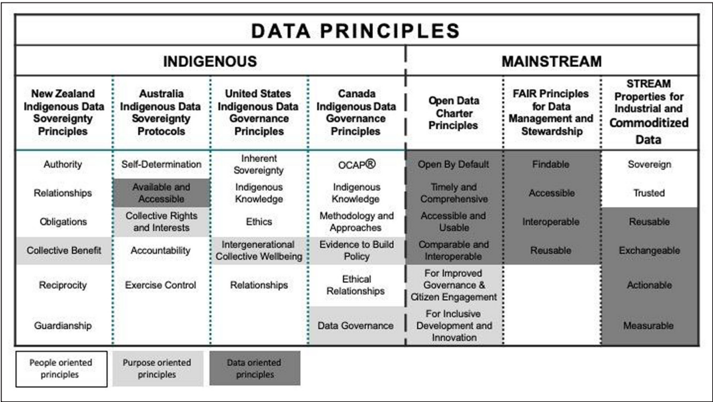
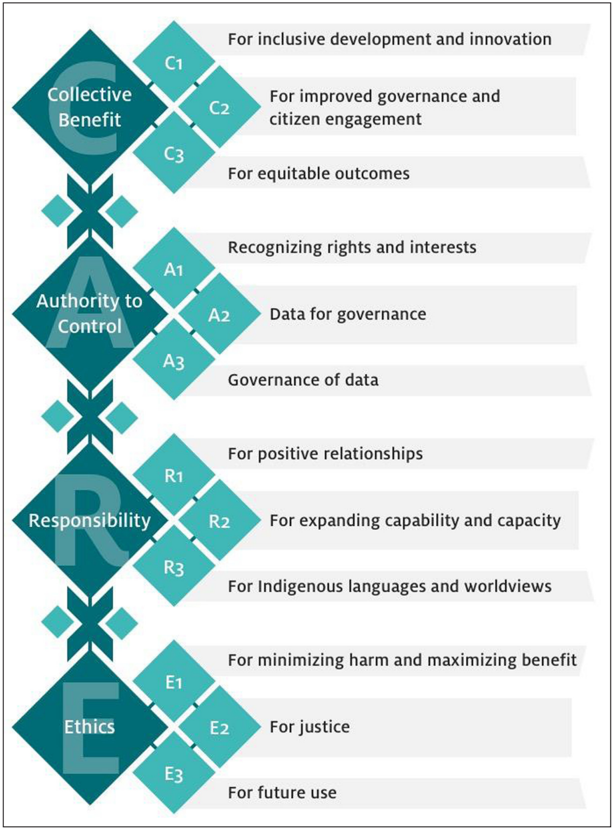
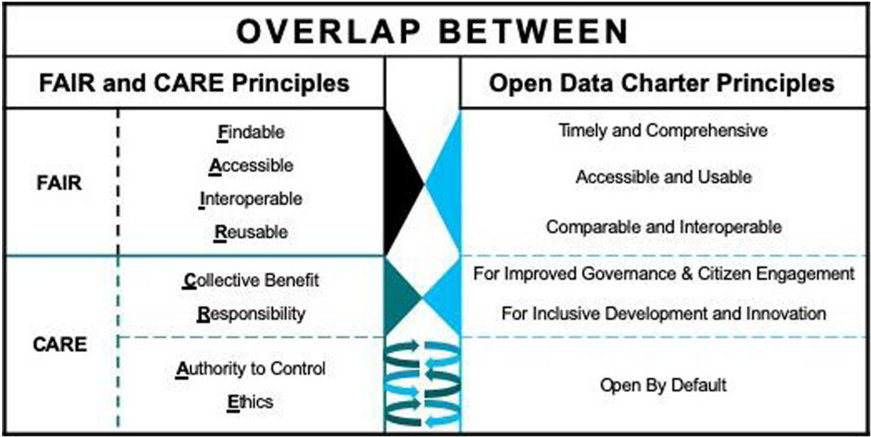
Concerns about secondary use of data and limited opportunities for benefit-sharing have focused attention on the tension that Indigenous communities feel between (1) protecting Indigenous rights and interests in Indigenous data (including traditional knowledges) and (2) supporting open data, machine learning, broad data sharing, and big data initiatives. The International Indigenous Data Sovereignty Interest Group (within the Research Data Alliance) is a network of nation-state based Indigenous data sovereignty networks and individuals that developed the ‘CARE Principles for Indigenous Data Governance’ (Collective Benefit, Authority to Control, Responsibility, and Ethics) in consultation with Indigenous Peoples, scholars, non-profit organizations, and governments. The CARE Principles are people– and purpose-oriented, reflecting the crucial role of data in advancing innovation, governance, and self-determination among Indigenous Peoples. The Principles complement the existing data-centric approach represented in the ‘FAIR Guiding Principles for scientific data management and stewardship’ (Findable, Accessible, Interoperable, Reusable). The CARE Principles build upon earlier work by the Te Mana Raraunga Maori Data Sovereignty Network, US Indigenous Data Sovereignty Network, Maiam nayri Wingara Aboriginal and Torres Strait Islander Data Sovereignty Collective, and numerous Indigenous Peoples, nations, and communities. The goal is that stewards and other users of Indigenous data will ‘Be FAIR and CARE.’ In this first formal publication of the CARE Principles, we articulate their rationale, describe their relation to the FAIR Principles, and present examples of their application.
Overview
CoChat Summary
TL;DR
The CARE Principles for Indigenous Data Governance (Collective Benefit, Authority to Control, Responsibility, and Ethics) are people- and purpose-oriented principles developed by the International Indigenous Data Sovereignty Interest Group to complement the data-centric FAIR Principles. They aim to support Indigenous rights, self-determination, and control over Indigenous data while enabling equitable data reuse.
Key findings
- CARE comprises four principles—Collective Benefit, Authority to Control, Responsibility, and Ethics—designed to complement FAIR (Findable, Accessible, Interoperable, Reusable) and guide data stewards and users to “Be FAIR and CARE.”
- The paper reports global context from UN 2009: Indigenous presence spans over 90 countries, includes over 370 million Indigenous persons, and involves more than 5,000 distinct cultures.
- CARE emerged from an Indigenous-led workshop held in Gaborone, Botswana, on 8 November 2018, as part of International Data Week, with later input from Indigenous leaders, scholars, network members, and allies.
- Early adopters/implementation examples include the Research Data Alliance, the Smithsonian Institution (e.g., Smithsonian Directive 609 and planned Collection CARE Notices), and the Open Data Charter.
Methods
- This is a conceptual/principles development paper, not an empirical study; it describes the rationale, development, and illustrative application of the CARE Principles.
- Workshop organizers prepared an analysis of principles from Indigenous data sovereignty/governance frameworks and mainstream sources (Table 1) to inform dialogue; participants identified the four primary principles and drafted primary and sub-principles, then circulated the draft for input.
- The paper presents the principles’ relation to FAIR and examples of adoption; no formal sample, dataset, or statistical analysis is reported.
Limitations
- Stated: further research is needed to identify mechanisms that support implementation; create tools, policies, and practices that enact the Principles; explore application in different contexts (e.g., research repositories, knowledge co-production, institutional policies, existing databases/systems); and operationalize the Principles in tandem with FAIR.
- Evident: the paper is a principles publication and does not report empirical evaluation of implementation outcomes; the adoption examples are illustrative rather than systematically assessed.
Model-written summary. Check it against the paper before relying on it.
Integrity signals
Registry
Cites
Statistics
Figures
Verification
Claims the paper makes
0 Valid · 0 Not valid · 1 Not checked · 9 Own results and interpretations
- Probably not a substantial claim. 9
- It may state two separate claims as one. 5
Claims other papers make about this one
Each is checked against this paper’s own text: does it say what the citing paper says it does?
The source backs part of the claim, not all of it — or backs it for a different population, condition or comparison.
In the citing paper
“This can be in conflict with cultural values, e.g., in the case of indigenous communities that are generally underrepresented on Wikipedia but have concerns about how their knowledge might be exploited if shared [28, 29].”
From Data Governance in the Age of Large-Scale Data-Driven Language Technology (2022) · cites this paper as [28]
Experimental — accuracy not yet measuredThe source backs part of the claim, not all of it — or backs it for a different population, condition or comparison.
In the citing paper
“The key distinction is that while FAIR principles focus on making data maximally open and shareable-goals that align with scientific efficiency, CARE principles focus on people and purpose, emphasizing that data use should align with the rights and needs of Indigenous Peoples.”
From Data colonialism and indigenous languages in AI: a critical review of existing initiatives and their struggles with data sovereignty (2026) · cites this paper as Carroll et al. 2020
Experimental — accuracy not yet measuredThe source backs part of the claim, not all of it — or backs it for a different population, condition or comparison.
In the citing paper
“A concrete expression of Indigenous Data Sovereignty is found in the CARE Principles for Indigenous Data Governance, formulated in 2019 by the Global Indigenous Data Alliance and related networks (Carroll et al. 2020).”
From Data colonialism and indigenous languages in AI: a critical review of existing initiatives and their struggles with data sovereignty (2026) · cites this paper as Carroll et al. 2020
Experimental — accuracy not yet measuredThe source backs part of the claim, not all of it — or backs it for a different population, condition or comparison.
In the citing paper
“Indigenous data, whether born digital or not, include information, knowledge, specimens, and belongings about Indigenous Peoples to which they relate at both the individual and collective levels (Carroll et al., 2020; Rainie et al., 2019; Lovett et al., 2019).”
From Using Indigenous Standards to Implement the CARE Principles: Setting Expectations through Tribal Research Codes (2022) · cites this paper as Carroll et al., 2020
Experimental — accuracy not yet measuredThe source backs part of the claim, not all of it — or backs it for a different population, condition or comparison.
In the citing paper
“The FAIR Principles are aligned to the global shift towards open science and open data, promoting data centric criteria that facilitate increased data sharing among entities while ignoring relationships, power differentials, and the historical conditions associated with the collection of data10,11.”
From Operationalizing the CARE and FAIR Principles for Indigenous data futures (2021) · cites this paper as [11]
Experimental — accuracy not yet measured
6 more claims about this paper
Create a free account to see every claim other papers make about this one.
Self-check
Percentages, sums and reported differences re-computed from the paper’s own numbers.
Each contradiction between two passages listed here was confirmed by an independent check.
Rated minor: it would not touch a result — a value no result rests on, a p-value that stays on the same side of the significance level, or a conflict that is clerical, resolved elsewhere in the paper, or outside its own findings.
In the paper
§ The CARE Principles for Indigenous Data Governance > Research Data Alliance (www.rd-alliance.org), in research environments
“In 2012, the American Museum of Natural History at the Smithsonian Institution in Washington, DC released an Access and Benefit Sharing Policy on Genetic Resources”
§ The CARE Principles for Indigenous Data Governance > References
“42. Smithsonian Institution. 2012. Access and Benefit Sharing Policy on Genetics Resources. Washington, DC: National Museum of American History.”
Citations
Cites
The FAIR Guiding Principles for scientific data management and stewardship
Wilkinson, M. D., Dumontier, M., Aalbersberg, I. J., Appleton, G., Axton, M., Baak, A., Blomberg, N., Boiten, J.-W., da Silva Santos, L. B., Bourne, P. E., et al. (2016) · Scientific Data · doi:10.1038/sdata.2016.18 · Cited by 18,423
Indigenous Peoples In International Law: Second Edition
Anaya, S. J. (2004) · doi:10.1093/oso/9780195173499.001.0001 · Cited by 1,011
(2016) · doi:10.22459/caepr38.11.2016 · Cited by 696 · cited 6×
“…has become an increasingly relevant topic as big data, open data, open science, and data reuse become an integral part of research and institutional practices (Carroll, Rodriguez-Lonebear & Martinez 2019; Lovett et al. 2019; Rainie et al. 2019; Kukutai & Taylor 2016a; Taylor & Kukutai 2015).”
BackgroundInfluentialBuck, M., & Hamilton, C. (2011) · Review of European Community & International Environmental Law · doi:10.1111/j.1467-9388.2011.00703.x · Cited by 627
Indigenous Data Governance: Strategies from United States Native Nations
Carroll, S. R., Rodriguez-Lonebear, D., & Martinez, A. (2019) · Data Science Journal · doi:10.5334/dsj-2019-031 · Cited by 264
Self-citationGenomic Research Through an Indigenous Lens: Understanding the Expectations
Garrison, N. A., Hudson, M., Ballantyne, L. L., Garba, I., Martinez, A., Taualii, M., Arbour, L., Caron, N. R., & Rainie, S. C. (2019) · Annual Review of Genomics and Human Genetics · doi:10.1146/annurev-genom-083118-015434 · Cited by 220
Self-citationData sovereignty for indigenous peoples: current practice and future needs
Kukutai, T., & Taylor, J. (2016) · Indigenous Data Sovereignty · doi:10.22459/caepr38.11.2016.01 · Cited by 116
Rainie, S. C., Schultz, J. L., Briggs, E., Riggs, P., & Palmanteer-Holder, N. L. (2017) · International Indigenous Policy Journal · doi:10.18584/iipj.2017.8.2.1 · Cited by 114
Law, Knowledge, Culture: The Production of Indigenous Knowledge in Intellectual Property Law
Anderson, J. E. (2009) · Edward Elgar Publishing eBooks · doi:10.4337/9781848447196 · Cited by 95
Self-citationNational Inuit Strategy on Research.
Kanatami, I. T. (2018) · IOC of UNESCO (Intergovernmental Oceanographic Commission) · doi:10.25607/obp-1673 · Cited by 93
Research works printed but not linked: 18
- Cajete, G. 2000. Native science: Native laws of interdependence. Santa Fe: Clear Light.
- Castellano, MB. 2004. Ethics of Aboriginal research. Journal of Aboriginal Health, January, 98-114.
- Hudson, M, Milne, M, Russell, K, Smith, B, Reynolds, P and Atatoa-Carr, P. 2016. The Development of Guidelines for Indigenous Research Ethics in Aotearoa/New Zealand. In A.-L. Drugge (ed.), Ethics in Indigenous Research, Past Experiences -Future Challenges, 157-174. Umea, Sweden: Vaartoe Centre for Sami Research, Umea University.
- Drugge, A-L. 2016. Ethics in Indigenous Research: Past Experiences -Future Challenges. Umea, Sweden: Vaartoe Centre for Sami Research, Umea University.
- Julayinbul Statement in Indigenous Intellectual Property Rights. 1993. The Julayinbul Conference on Intellectual and Cultural Property. Australia: Jingarrba.
- Kovach, M. 2009. Indigenous methodologies: Characteristics, conversations, and contexts. Toronto: University of Toronto Press.
- Kukutai, T and Taylor, J. 2016a. Indigenous data sovereignty: Toward an agenda. Canberra, Australia: Aus- tralian National University Press. DOI: https://doi.org/10.22459/CAEPR38.11.2016 · DOI · Paper page
- Lovett, R, Lee, V, Kukutai, T, Cormack, D, Rainie, SC and Walker, J. 2019. Good data practices for Indigenous Data Sovereignty and Governance. In: Daly, A, Devitt, K and Monique, M (eds.), Good Data. Amsterdam: Institute of Network Cultures Inc. ISBN 978-94-92302-27-4.
- Mātaatua Declaration on Cultural and Intellectual Property Rights of Indigenous Peoples. 1993. First International Conference on the Cultural and Intellectual Property Rights of Indigenous Peoples. 12-18 June 1993. Aotearoa, New Zealand. Available at https://www.wipo.int/export/sites/www/tk/en/ databases/creative_heritage/docs/mataatua.pdf.
- McGregor, D, Restoule, JP and Johnston, R. (eds.) 2018. Indigenous research: Theories, practices, and rela- tionships. Canadian Scholars' Press.
- 2017, First Nations’ data governance: Measuring the nation-to-nation relationship discussion paper, British Columbia First Nations’ Data Governance Initiative
- Rainie, SC, Kukutai, T, Walter, M, Figueroa-Rodriguez, OL, Walker, J and Axelsson, P. 2019. Issues in Open Data: Indigenous Data Sovereignty. In: Davies, T, Walker, S, Rubinstein, M and Perini, F (eds.), The State of Open Data: Histories and Horizons. Cape Town and Ottawa: African Minds and International Development Research Centre. pp. 300-319.
- Ratima, M. 2001. Kia uruuru mai a hauora being healthy, being Maori: Conceptualising Maori health promotion. Published thesis (PhD) Department of Public Health. Dunedin, University of Otago.
- Ratima, M. 2001. Kia uruuru mai a hauora being healthy, being Maori: Conceptualising Maori health promotion. Published thesis (PhD) Department of Public Health. Dunedin, University of Otago. Research Data Alliance. 2017. International Indigenous Data Sovereignty Intertest Group. Available at https://www.rd-alliance.org/groups/international-indigenous-data-sovereignty-ig [Last accessed 17 January 2020].
- Snipp, CM. 2016. What does data sovereignty imply: what does it look like? In: Kukutai and Taylor, J (eds.), Indigenous data sovereignty: Toward an agenda. Canberra, Australia: Australian National University Press. pp. 39-55. DOI: https://doi.org/10.22459/CAEPR38.11.2016. · DOI · Paper page
- Smith, LT. 2012. Decolonizing Methodologies: Research and Indigenous Peoples. Zed Books. London: Univer- sity of Otago Press.
- Rodriguez-Lonebear, D. 2016. Building a data revolution in Indian country. In: Kukutai, T and Taylor, J (eds.), Indigenous data sovereignty: Toward an agenda. Canberra, Australia: Australian National University Press. pp. 253-272. DOI: https://doi.org/10.22459/CAEPR38.11.2016. · DOI · Paper page
- 2008, Research is ceremony: Indigenous research methods
Cited by
Items 101–200 of 1,410
Internet of Samples (iSamples): Toward an interdisciplinary cyberinfrastructure for material samples
Davies, N., Deck, J., Kansa, E. C., Kansa, S. W., Kunze, J., Meyer, C., Orrell, T. M., Ramdeen, S., Snyder, R., Vieglais, D., et al. (2021) · GigaScience · doi:10.1093/gigascience/giab028 · Cited by 31
“…that iSamples will pursue include the integration of Collective Benefit, Authority to Control, Responsibility, and Ethics—the “CARE principles” [10] and the adoption of Traditional Knowledge and Biocultural Labels and Notices, an initiative of “Local Contexts” that provides a mechanism for…”
Data rescue: saving environmental data from extinction
Bledsoe, E. K., Burant, J. B., Higino, G., Roche, D. G., Binning, S. A., Finlay, K. P., Pither, J., Pollock, L. J., Sunday, J. M., & Srivastava, D. S. (2022) · Proceedings of the Royal Society B Biological Sciences · doi:10.1098/rspb.2022.0938 · Cited by 33
“The CARE principles focus on datasets that used traditional knowledge or benefited somehow from Indigenous lands, promoting transparency and participation of open data ([49]; see also, the OCAP principles: https://fnigc.”
BackgroundOpen Data Lake to Support Machine Learning on Arctic Big Data
Olawoyin, A. M., Leung, C. K.-S., & Cuzzocrea, A. (2021) · IEEE International Conference on Big Data (BigData) · doi:10.1109/bigdata52589.2021.9671453 · Cited by 30
“…four additional The data object is associated with detail provenance R4 Data object meets the domain relevant standard principles—i.e., Collective benefits, Authority to control, Re-sponsibility, and Ethics (CARE) 3 [66]—have been proposed by the Global Indigenous Data Alliance (GIDA).”
BackgroundPearlman, J. S., Buttigieg, P. L., Bushnell, M. H., Delgado, C., Hermes, J. C., Heslop, E., Hörstmann, C., Isensee, K., Karstensen, J., Lambert, A., et al. (2021) · Frontiers in Marine Science · doi:10.3389/fmars.2021.619685 · Cited by 30
White, E. J., Demuth, M. J., Wiglesworth, A., Coser, A. D., Garrett, B. A., Kominsky, T. K., Jernigan, V. B. B., Thompson, W. K., Paulus, M. P., & Aupperle, R. L. (2022) · Neuropsychopharmacology · doi:10.1038/s41386-022-01498-9 · Cited by 31
Community knowledge as a cornerstone for fisheries management
Hamelin, K. M., Charles, A. T., & Bailey, M. (2024) · Ecology and Society · doi:10.5751/es-14552-290126 · Cited by 47
Governance of Indigenous data in open earth systems science
Jennings, L. L., Jones, K. D., Taitingfong, R. I., Martinez, A. O., David-Chavez, D., Alegado, R. ʻ., Tofighi-Niaki, A., Maldonado, J., Thomas, B., Dye, D. G., et al. (2025) · Nature Communications · doi:10.1038/s41467-024-53480-2 · Cited by 31
“The NEON project provides a unique opportunity among the nationalscale research networks and data repositories to develop policies and practices within a large-scale settler-colonial science facility that acknowledges the erasure and exclusion of Indigenous relations in data infrastructures and seeks to operationalize…”
Self-citation15. Indigenous leadership is essential to conservation: Examples from coastal British Columbia
Reid, A. J., & Ban, N. C. (2025) · Open Book Publishers · doi:10.11647/obp.0395.15 · Cited by 31
Johnson, A. C., Clavijo, A. E., Hamar, G., Head, D.-A., Thoms, A., Price, W., Lapke, A., Crotteau, J. S., Cerveny, L. K., Wilmer, H., et al. (2021) · Forests · doi:10.3390/f12010090 · Cited by 36
Samuel, R. M., Meyer, R. M., Buttigieg, P. L., Davies, N., Jeffery, N. W., Meyer, C., Pavloudi, C., Pitz, K. J., Sweetlove, M., Theroux, S. M., et al. (2021) · Frontiers in Marine Science · doi:10.3389/fmars.2021.758694 · Cited by 32
“For example, sample collection protocols may be most relevant to scientists/technicians in the field, whereas local stakeholders and indigenous communities may primarily engage with aspects of how the project and resulting data address and impact important ethical, legal, and societal issues (Nagoya Protocol, 2010; Ca…”
BackgroundStrengthening global-change science by integrating aeDNA with paleoecoinformatics
Williams, J. W., Spanbauer, T., Heintzman, P. D., Blois, J. L., Capo, É., Goring, S. J., Monchamp, M., Parducci, L., Eggers, J. M. V., Alsos, I. G., et al. (2023) · Trends in Ecology & Evolution · doi:10.1016/j.tree.2023.04.016 · Cited by 31
Review of participation of Indigenous peoples in plastics pollution governance
Liboiron, M., & Cotter, R. (2023) · Cambridge Prisms Plastics · doi:10.1017/plc.2023.16 · Cited by 33
Ouhmouk, M., Baichoo, S., & Abık, M. (2025) · Informatics in Medicine Unlocked · doi:10.1016/j.imu.2025.101679 · Cited by 35
Yazdinejad, A., & Kong, J. D. (2026) · Royal Society Open Science · doi:10.1098/rsos.250959 · Cited by 39
Benefit sharing: Why inclusive provenance metadata matter
Golan, J. J., Riddle, K., Hudson, M. L., Anderson, J., Kusabs, N., & Coltman, T. R. (2022) · Frontiers in Genetics · doi:10.3389/fgene.2022.1014044 · Cited by 43
“Today, however, DSI is essential to innovation and discovery in the life sciences, and it follows that the key principles of ABS, as enshrined by the NP, and consistent with the CARE Principles for Indigenous Data Governance, must be extended to DSI of biological samples if the NP is to continue to carry any weight (C…”
BackgroundSelf-citationFederated learning and Indigenous genomic data sovereignty
Boscarino, N., Cartwright, R. A., Fox, K., & Tsosie, K. S. (2022) · Nature Machine Intelligence · doi:10.1038/s42256-022-00551-y · Cited by 28
Priorities for synthesis research in ecology and environmental science
Halpern, B. S., Boettiger, C., Dietze, M. C., Gephart, J. A., González, P., Grimm, N. B., Groffman, P. M., Gurevitch, J., Hobbie, S. E., Komatsu, K. J., et al. (2023) · Ecosphere · doi:10.1002/ecs2.4342 · Cited by 35
“…scientific discovery (Hampton et al., 2017), obstacles remain, such as inadequate rewards for collecting and sharing data, integrating Indigenous knowledge and approaches into data practices, and equitable access to and control of these data (Carroll et al., 2020; Reichman et al., 2011).”
BackgroundComparing genome‐based estimates of relatedness for use in pedigree‐based conservation management
Hauser, S. S., Galla, S. J., Putnam, A. S., Steeves, T. E., & Latch, E. K. (2022) · Molecular Ecology Resources · doi:10.1111/1755-0998.13630 · Cited by 28
Marine Genetic Resources Beyond National Jurisdiction: The Expansive Scope of the BBNJ Agreement
Humphries, F. (2025) · Sustainable development goals series · doi:10.1007/978-3-031-72100-7_3 · Cited by 26
Jaillant, L., Mitchell, O. S., Opu, E. E., & Urbaneja, M. H. (2025) · AI & Society · doi:10.1007/s00146-025-02222-z · Cited by 38
“Diversity is thus a key priority for the collec-tion-as-data initiative, which draws on the Global Indigenous Data Alliance’s CARE Principles (Carroll et al 2020) and work on Maori Data Sovereignty.”
Trust in Scholarly Communications and Infrastructure: Indigenous Data Sovereignty
Ruckstuhl, K. (2022) · Frontiers in Research Metrics and Analytics · doi:10.3389/frma.2021.752336 · Cited by 42
“The principles describe high-level actions applicable within various data settings with a goal to implement CARE and FAIR across the data lifecycle in tandem (Rainie et al., 2020); • Indigenous data provenance and the rules by which Indigenous peoples’ data should be described and recorded.”
BackgroundChallenges and directions in analytical paleobiology
Dillon, E., Dunne, E. M., Womack, T. M., Kouvari, M., Larina, E., Claytor, J. R., Ivkić, A., Juhn, M., Carmona, P. S. M., Robson, S. V., et al. (2023) · Paleobiology · doi:10.1017/pab.2023.3 · Cited by 29
“In response, the CARE Principles of Indigenous Data Governance (Collective Benefit, Authority to Control, Responsibility, and Ethics) were created to complement the FAIR Guiding Principles and promote the ethical use and reuse of Indigenous data (Carroll et al. 2020, 2021).”
MethodPollock, N. J., Ouédraogo, A. M., Trocmé, N., Hovdestad, W., Miskie, A., Crompton, L., Campeau, A., Tanaka, M., Zhang, C., Laprise, C., et al. (2024) · Health Promotion and Chronic Disease Prevention in Canada · doi:10.24095/hpcdp.44.4.02 · Cited by 37
Best practices for genetic and genomic data archiving
Leigh, D. M., Vandergast, A. G., Hunter, M. E., Crandall, E. D., Funk, W. C., Garroway, C. J., Hoban, S., Oyler‐McCance, S. J., Rellstab, C., Segelbacher, G., et al. (2024) · Nature Ecology & Evolution · doi:10.1038/s41559-024-02423-7 · Cited by 36
“For work involving Indigenous communities, the CARE principles (collective benefits, authority to control, responsibility, and ethics 55,56 ) could be considered in archiving and reuse of genetic data (Fig.”
Opening science to society: how to progress societal engagement into (open) science policies
Wehn, U., Ajates, R., Mandeville, C. P., Somerwill, L., Kragh, G., & Haklay, M. (2024) · Royal Society Open Science · doi:10.1098/rsos.231309 · Cited by 40
“Traditional Ecological Knowledge (TEK) systems should be valued in their own right [52,54,55] and Indigenous guidance should be followed regarding scientific knowledge exchange and data sovereignty [56].”
BackgroundCompeting interests: digital health and indigenous data sovereignty
Cordes, A., Bak, M., Lyndon, M., Hudson, M. L., Fiske, A., Celi, L. A., & McLennan, S. (2024) · npj Digital Medicine · doi:10.1038/s41746-024-01171-z · Cited by 35
“Acknowledging the tension between protecting Indigenous rights and supporting open data, the International Indigenous Data Sovereignty Interest Group published the ‘ CARE Principles for Indigenous Data Gov-ernance ’ (Collective Bene fi t, Authority to Control, Responsibility, and Ethics) 17 .”
BackgroundInfluentialSelf-citationEstablishing bio-logging data collections as dynamic archives of animal life on Earth
Davidson, S. C., Cagnacci, F., Newman, P., Dettki, H., Urbano, F., Desmet, P., Bajona, L., Bryant, E., Carneiro, A. P. B., Dias, M. P., et al. (2025) · Nature Ecology & Evolution · doi:10.1038/s41559-024-02585-4 · Cited by 29
“Even with increased public archiving, alternatives will continue to be needed for datasets that are exempt from public archiving requirements, such as those revealing the locations of endangered species or owned by Indigenous communities 67 .”
Responsible digital agri‐food innovation in Australian and New Zealand public research organisations
Espig, M., Fielke, S., Finlay‐Smits, S. C., Jakku, E., Turner, J. A., Robinson, C., Hunter, C., & Lacey, J. (2022) · Sociologia Ruralis · doi:10.1111/soru.12370 · Cited by 34
The Oceans 2.0/3.0 Data Management and Archival System
Owens, D., Abeysirigunawardena, D. S., Biffard, B. R., Chen, Y., Conley, P., Jenkyns, R., Kerschtien, S., Lavallee, T., MacArthur, M., Mousseau, J., et al. (2022) · Frontiers in Marine Science · doi:10.3389/fmars.2022.806452 · Cited by 25
“published the CARE Principles for Indigenous Data Governance, in recognition that “ongoing processes of colonization of Indigenous Peoples and globalization of Western ideas, values, and lifestyles have resulted in epistemicide, the suppression and co-optation of Indigenous knowledges and data systems” (Carroll et al.…”
Reyes‐García, V., Benyei, P., Aceituno-Mata, L., Gras, A., Molina, M., Tardío, J., & Pardo‐de‐Santayana, M. (2021) · Journal of Ethnopharmacology · doi:10.1016/j.jep.2021.114295 · Cited by 27
“…to secure data sovereignty by guaranteeing the protection of knowledge holder rights to data, tool ownership, and determining usage protocols around sensitive data, as proposed in the CARE (Collective benefit, Authority to control, Responsibility, and Ethics) principles (Carroll et al., 2020).”
BackgroundMethodUse and misuse of research: Canada’s response to covid-19 and its health inequalities
Mishra, S., Walker, J. D., Wilhelm, L., Larivière, V., Bubela, T. M., & Straus, S. E. (2023) · BMJ · doi:10.1136/bmj-2023-075666 · Cited by 28
Self-citationTran, T. M. A., Gagnon, V. S., & Schelly, C. (2024) · Forests Trees and Livelihoods · doi:10.1080/14728028.2024.2408725 · Cited by 35
“…research practices when working with Indigenous communities, including informed consent, data ownership and protection, and knowledge-sharing agreements that prioritize Indigenous data sovereignty principles (Carroll et al. 2019; Lovett et al. 2019; Carroll et al. 2021; Robinson et al. 2021).”
Social barriers to open (water) data
Sugg, Z. (2021) · Wiley Interdisciplinary Reviews Water · doi:10.1002/wat2.1564 · Cited by 31
Wang, Y., Tang, P., Liu, K., Cai, J., Ren, R., Lin, J. J., Cai, H., Zhang, J., El-Gohary, N., Berges, M. E., et al. (2023) · Journal of Computing in Civil Engineering · doi:10.1061/jccee5.cpeng-5077 · Cited by 23
Carmenta, R., Zaehringer, J. G., Balvanera, P., Betley, E. C., Dawson, N. M., Estrada-Carmona, N., Forster, J., Hoelle, J., Lliso, B., Llopis, J. C., et al. (2023) · People and Nature · doi:10.1002/pan3.10562 · Cited by 34
“…questions around consent and ownership, whether Indigenous Peoples and local communities are treated merely as research subjects or participants, as partners or collaborators, or recognized as knowledge holders with rights of data sovereignty (Carroll et al., 2020 ; Cormack & Kukutai, 2022).”
BackgroundUncovering the Holocene roots of contemporary disease-scapes: bringing archaeology into One Health
Rayfield, K. M., Mychajliw, A. M., Singleton, R. R., Sholts, S. B., & Hofman, C. A. (2023) · Proceedings of the Royal Society B Biological Sciences · doi:10.1098/rspb.2023.0525 · Cited by 29
“In addition, the researcher and community should discuss if future research can be pursued from the generated data as the misuse of data outside the scope of the project can have long-lasting and negative effects [119].”
Background#SejaJUSTOeCUIDADOSO: princípios FAIR e CARE na gestão de dados de pesquisa
Vidotti, S. A. B. G., Torino, E., & Coneglian, C. S. (2021) · doi:10.22477/9786589167242.cap15 · Cited by 33
Governable Stacks against Digital Colonialism
Schneider, N. (2022) · tripleC Communication Capitalism & Critique Open Access Journal for a Global Sustainable Information Society · doi:10.31269/triplec.v20i1.1281 · Cited by 31
“…whose members are used to seeing their pre-digital sovereignty effaced; they have developed governable stack-layers such as tribal broadband lines (Blackwater 2020), cryptocur-rencies (Tekobbe and McKnight 2016), data governance (Carroll et al. 2020), and linguistic autonomy (Pinto 2018).”
BackgroundSpatial data trusts: an emerging governance framework for sharing spatial data
Radosevic, N., Duckham, M., Rahaman, M. S., Ho, S., Williams, K., Hashem, T., & Tao, Y. (2023) · International Journal of Digital Earth · doi:10.1080/17538947.2023.2200042 · Cited by 29
“Research by Global Partnership on Arti fi cial Intelligence (2022) showed that the requirement to engage domain experts in data stewardship as data trustees may be di ffi cult to put into practice.”
MethodInfluentialEntanglements for Visualization: Changing Research Outcomes through Feminist Theory
Akbaba, D., Klein, L. F., & Meyer, M. (2024) · IEEE Transactions on Visualization and Computer Graphics · doi:10.1109/tvcg.2024.3456171 · Cited by 41
“Indigenous theories, with their focus on relationality and place, expand how researchers can build and relate to artifcial intelligence technologies [68] and data practices [22].”
Anderson, L. N., Hoyt, C. T., Zucker, J., McNaughton, A. D., Teuton, J., Karis, K., Arokium-Christian, N. N., Warley, J. T., Stromberg, Z. R., Gyori, B. M., et al. (2025) · Frontiers in Immunology · doi:10.3389/fimmu.2025.1502484 · Cited by 31
Palawat, K., Root, R. A., Cortez, L. I., Foley, T., Carella, V., Beck, C., & Ramírez‐Andreotta, M. D. (2023) · Journal of Environmental Management · doi:10.1016/j.jenvman.2023.117747 · Cited by 25
McCord, S. E., Webb, N. P., Bestelmeyer, B. T., Bonefont, K., Brehm, J. R., Brown, J. R., Courtright, E. M., Dietrich, C., Duniway, M. C., Edwards, B. L., et al. (2023) · Agricultural & Environmental Letters · doi:10.1002/ael2.20120 · Cited by 21
“Data with open use policies are freely available for all visualization and analysis purposes, while a range of data access permissions and embargo periods support data sovereignty, active research, and other legal data protections (Carroll et al., 2020).”
BackgroundExpanding the Spatial Reach and Human Impacts of Critical Zone Science
Singha, K., Sullivan, P., Billings, S., Walls, L., Li, L., Jarecke, K. M., Barnard, H., Gasparini, N. M., Madoff, R. D., Dhital, S., et al. (2024) · Earth s Future · doi:10.1029/2023ef003971 · Cited by 28
“Further still, although less discussed, are CARE (Collective Benefit, Authority to Control, Responsibility, and Ethics) principles, which address data sharing from Indigenous contributors to the knowledge base and their data sovereignty (e.g., Carroll et al., 2020; Garba et al., 2023).”
BackgroundTulloch, V., Adams, M. S., Finn, R. J. R., Bourbonnais, M., Avery‐Gomm, S., Penn, B., & Martin, T. G. (2024) · Journal of Applied Ecology · doi:10.1111/1365-2664.14659 · Cited by 27
Tracking hidden dimensions of plant biogeography from herbaria
Daru, B. H. (2025) · New Phytologist · doi:10.1111/nph.70002 · Cited by 29
Automated near real-time monitoring in ecology: Status quo and ways forward
Davison, A. M., de Koning, K., Taubert, F., & Schakel, J.-K. (2025) · Ecological Informatics · doi:10.1016/j.ecoinf.2025.103157 · Cited by 30
Three decades of genetic privacy: a metaphoric journey
Knoppers, B. M., & Beauvais, M. J. S. (2021) · Human Molecular Genetics · doi:10.1093/hmg/ddab164 · Cited by 24
“More recently, articulating a conception of privacy from indigenous perspectives has also been the subject of increased interest (3,4).”
BackgroundThe future of ecosystem assessments is automation, collaboration, and artificial intelligence
García, C. G., Bagstad, K. J., Brun, J., Chaplin‐Kramer, R., Dhu, T., Murray, N., Nolan, C. J., Ricketts, T. H., Sosik, H. M., Sousa, D. J., et al. (2022) · Environmental Research Letters · doi:10.1088/1748-9326/acab19 · Cited by 27
“Following the Collective Benefit, Authority to Control, Responsibility, Ethics Principles for Indigenous Data Governance [14], to avoid data inequities and exploitation, upcoming ecosystem assessments must be conducted with collaboration and deep consideration of the people who are part of those…”
BackgroundMaking marine biotechnology work for people and nature
Blasiak, R., Jouffray, J., Amon, D. J., Claudet, J., Dunshirn, P., Jørgensen, P. S., Pranindita, A., Wabnitz, C. C. C., Zhivkoplias, E. K., & Österblom, H. (2023) · Nature Ecology & Evolution · doi:10.1038/s41559-022-01976-9 · Cited by 21
Exchanging words: Engaging the challenges of sharing qualitative research data
DuBois, J. M., Mozersky, J. T., Parsons, M. V., Walsh, H. A., Friedrich, A. B., & Pienta, A. (2023) · Proceedings of the National Academy of Sciences · doi:10.1073/pnas.2206981120 · Cited by 33
Self-citationEthics and applications of isotope analysis in archaeology
Stantis, C., Schaefer, B. J., Correia, M. A., Alaica, A. K., Huffer, D., Plomp, E., Giusto, M. D., Chidimuro, B., Rose, A. K., Nayak, A., et al. (2024) · American Journal of Biological Anthropology · doi:10.1002/ajpa.24992 · Cited by 23
“Here, the CARE (Collective Benefit, Authority to Control, Responsibility, and Ethics) principles provide a framework to manage the data appropriately (Carroll et al., 2020).”
Analyzing human gut microbiome data from global populations: challenges and resources
Arif, S. J., Graham, S. P., Abdill, R. J., & Blekhman, R. (2025) · Trends in Microbiology · doi:10.1016/j.tim.2025.05.008 · Cited by 27
Kelliher, J. M., Mirzayi, C. A., Bordenstein, S. R., Oliver, A., Kellogg, C. A., Hatcher, E., Berg, M., Baldrián, P., Aljumaah, M. R., Miller, C. A., et al. (2025) · Nature Microbiology · doi:10.1038/s41564-025-02186-2 · Cited by 43
“The CARE principles for Indigenous data governance (Collective benefit, Authority to control, Responsibility and Ethics) are referenced here, and researchers are expected to adhere to these guidelines and ensure Indigenous data sovereignty whenever applicable 25 .”
Greaves, L. M., Latimer, C. L., Muriwai, E., Moore, C., Li, E., Sporle, A. A., Clark, T. C., & Milne, B. J. (2023) · Journal of the Royal Society of New Zealand · doi:10.1080/03036758.2022.2154368 · Cited by 25
Complementing model species with model clades
Mabry, M. E., Abrahams, R. S., Al-Shehbaz, I. A., Baker, W. J., Barak, S., Barker, M. S., Barrett, R. L., Beric, A., Bhattacharya, S., Carey, S. B., et al. (2023) · The Plant Cell · doi:10.1093/plcell/koad260 · Cited by 22
Data Management and the ‘BBNJ Standardized Batch Identifier’ Under the BBNJ Agreement
Lawson, C. G. R., Humphries, F., Jaspars, M., & Rabone, M. (2025) · Sustainable development goals series · doi:10.1007/978-3-031-72100-7_12 · Cited by 20
The promise of digital herbarium specimens in large‐scale phenology research
Ahlstrand, N. I., Primack, R. B., Austin, M. W., Panchen, Z. A., Römermann, C., & Miller‐Rushing, A. J. (2025) · New Phytologist · doi:10.1111/nph.70178 · Cited by 20
“TheResearchDataAlliance also developeda setof CARE principles to guide the management and use of Indigenous data, regardless of where they are held, because mainstream values related to research and data are often inconsistent with Indigenous cultures and collective rights (Carroll et al ., 2020).”
Nee, J., Smith, G. M., Sheares, A. M., & Rustagi, I. (2021) · ACM Conference on Equity and Access in Algorithms, Mechanisms, and Optimization (EAAMO) · doi:10.1145/3465416.3483301 · Cited by 24
Ten simple rules for getting and giving credit for data
Wood‐Charlson, E. M., Crockett, Z., Erdmann, C. C., Arkin, A. P., & Robinson, C. (2022) · PLoS Computational Biology · doi:10.1371/journal.pcbi.1010476 · Cited by 24
“Be sure to adopt privacy protocols that are appropriate for your research (see Rule 8 in [19]), and acknowledge that data should respect the CARE (Collective benefit, Authority to control, Responsibility, and Ethics) Principles, especially with respect to indigenous data governance [53].”
BackgroundReúso de dados: princípios FAIR e o ecossistema de pesquisa
Caregnato, S. E., da Rocha, R. P., Junior, R. F. G., & Junior, G. (2021) · doi:10.22477/9786589167242.cap14 · Cited by 23
Indigenous Fire Data Sovereignty: Applying Indigenous Data Sovereignty Principles to Fire Research
Adams, M. M. (2024) · Fire · doi:10.3390/fire7070222 · Cited by 22
“Further, in a discussion on the challenges of data, Carroll et al., 2020 [35], articulate the rise of government interest in Aboriginal cool burns, as a result of the recent catastrophic bushfires in Australia.”
InfluentialResisting and Claiming Digital Sovereignty: The Cases of Civil Society and Indigenous Groups
Couture, S., Toupin, S., & Mayoral-Baños, A. (2024) · Policy & Internet · doi:10.1002/poi3.434 · Cited by 34
Klöcking, M., Wyborn, L., Lehnert, K. A., Ware, B., Prent, A., Profeta, L. R., Kohlmann, F., Noble, W. P., Bruno, I. J., Lambart, S., et al. (2022) · Geochimica et Cosmochimica Acta · doi:10.1016/j.gca.2023.04.024 · Cited by 24
Vranken, C. V., Jakoboski, J., Carroll, J. W., Cusack, C., Gorringe, P., Hirose, N., Manning, J. P., Martinelli, M., Penna, P., Pickering, M., et al. (2023) · Frontiers in Marine Science · doi:10.3389/fmars.2023.1176814 · Cited by 27
Engstrom, T., Lobo, E. H., Watego, K., Nelson, C., Wang, J., Wong, H., Kim, S. L., Oh, S. I., Lawley, M., Gorse, A., et al. (2024) · npj Digital Medicine · doi:10.1038/s41746-024-01070-3 · Cited by 28
Hirsch, S. L., Acharya‐Patel, N., Amamoo, P. A., Borrero‐Pérez, G. H., Cahyani, N. K. D., Ginigini, J. G. M., Hurley, K. K. C., Lopes‐Lima, M., Lopez, M. L. D., Mapholi, N. O., et al. (2024) · Metabarcoding and Metagenomics · doi:10.3897/mbmg.8.126058 · Cited by 20
“Attention should be given to existing frameworks, such as “The CARE Principles for Indigenous Data Governance,” which address the tensions between the desire for open data and protecting indigenous and traditional knowledge (Carroll et al. 2020).”
BackgroundEthical and Responsible Use of AI/ML in the Earth, Space, and Environmental SciencesPreprint
Stall, S., Cervone, G., Coward, C., Cutcher‐Gershenfeld, J., Donaldson, T. J., Erdmann, C. C., Hanson, B., Holm, J., King, J. L., Lyon, L., et al. (2023) · doi:10.22541/essoar.168132856.66485758/v1 · Cited by 28
da Silva, F. C. C., & Rodrigues, M. M. (2021) · doi:10.22477/9786589167242.cap9 · Cited by 19
Princípios FAIR e Linked Data: publicação de cadernos abertos de pesquisa
da Silva, L. C., & Segundo, J. E. S. (2021) · doi:10.22477/9786589167242.cap8 · Cited by 18
Panta Rhei: a decade of progress in research on change in hydrology and society
Kreibich, H., Sivapalan, M., AghaKouchak, A., Addor, N., Aksoy, H., Arheimer, B., Arnbjerg‐Nielsen, K., Castro, C. V., Cudennec, C., de Brito, M. M., et al. (2025) · Hydrological Sciences Journal · doi:10.1080/02626667.2025.2469762 · Cited by 23
“2016), the CARE Principles for Indigenous Data Governance which are Collective benefit, Authority to control, Responsibility, and Ethics (CARE) (Carroll et al .”
Gidgup, M. J. R., Kickett, M., Hill, K., Francis‐Coad, J., Weselman, T., Coombes, J., Ivers, R., Bowser, N., Palacios, V., & Hill, A. (2022) · Health Promotion Journal of Australia · doi:10.1002/hpja.582 · Cited by 21
Standardised data on initiatives—STARDIT: Beta version
Nunn, J., Shafee, T. M. A., Chang, S., Stephens, R., Elliott, J., Oliver, S. R., John, D., Smith, M., Orr, N., Preston, J., et al. (2022) · Research Involvement and Engagement · doi:10.1186/s40900-022-00363-9 · Cited by 18
‘The tears don’t give you funding’: data neocolonialism in development in the Global South
Lynch, R., Young, J. C., Jowaisas, C., Sam, J., Boakye-Achampong, S., Garrido, M., & Rothschild, C. (2023) · Third World Quarterly · doi:10.1080/01436597.2023.2166482 · Cited by 30
“The term data sovereignty has since been adopted by other marginalised groups, including many Indigenous Peoples (eg Carroll et al. 2020; Kukutai and Taylor 2016; Te Mana Raraunga n.d.), pursuing similar levels of control over their data.”
BackgroundIndigenous Peoples and the Justice40 Screening Tool: Lessons from EJSCREEN
Mullen, H., Whyte, K. P., & Holifield, R. (2023) · Environmental Justice · doi:10.1089/env.2022.0045 · Cited by 23
Pinto, A. D., Eissa, A., Kiran, T., Mashford‐Pringle, A., Needham, A. C., & Dhalla, I. A. (2023) · Canadian Medical Association Journal · doi:10.1503/cmaj.221587 · Cited by 18
Building meaningful collaboration in conservation genetics and genomics
Shaw, R. E., Brockett, B. M., Pierson, J. C., Sarre, S. D., Doyle, P., Cliff, H. B., Eldridge, M. D. B., Miller, K. A., Ottewell, K. M., Parrott, M. L., et al. (2024) · Conservation Genetics · doi:10.1007/s10592-024-01636-4 · Cited by 22
“…resources and Digital Sequence Information (DSI) in line with the FAIR (Find-ability, Accessibility, Interoperability and Reusability) and CARE (Collective Benefit, Authority to Control, Respon-sibility, and Ethics) principles (Buck and Hamilton 2011; Jacobsen et al. 2020; Carroll et al. 2020).”
Keywords of the Datafied StatePreprint
Burrell, J., Singh, R., & Davison, P. (2024) · SSRN Electronic Journal · doi:10.2139/ssrn.4734250 · Cited by 25
Biomedical Data Repository Concepts and Management Principles
Lin, D., McAuliffe, M., Pruitt, K. D., Gururaj, A. E., Melchior, C., Schmitt, C., & Wright, S. N. (2024) · Scientific Data · doi:10.1038/s41597-024-03449-z · Cited by 26
“…OSTP Desirable Characteristics of Data Repositories 19 and should align with community standards such as the TRUST (Transparency, Responsibility, User focus, Sustainability, and Technology) Principles 20 and CARE (Collective Benefit, Authority to Control, Responsibility, and Ethics) Principles 21 .”
BackgroundMethodInfluentialUsing the DATAVERSE project to move towards fair principles
Rezende, L. V. R., & Barbosa, S. (2021) · doi:10.22477/9786589167242.cap3 · Cited by 20
Interoperabilidade de dados e a transdução informacional encapsulada no acesso a dados
Sant’Ana, R. C. G. (2021) · doi:10.22477/9786589167242.cap11 · Cited by 16
Data sharing in the context of community-engaged research partnerships
Emmons, K. M., Mendez, S. R., Lee, R. M., Erani, D., Mascioli, L., Abreu, M., Adams, S., Daly, J. J., & Bierer, B. E. (2023) · Social Science & Medicine · doi:10.1016/j.socscimed.2023.115895 · Cited by 19
Lewis, M., Lainé, K., Dawnay, L., Lamont, D., Scott, K. R., Mariani, S., Hänfling, B., & Dawnay, N. (2024) · Science & Justice · doi:10.1016/j.scijus.2024.06.003 · Cited by 19
What is research data “misuse”? And how can it be prevented or mitigated?
Pasquetto, I. V., Cullen, Z., Thomer, A. K., & Wofford, M. F. (2024) · Journal of the Association for Information Science and Technology · doi:10.1002/asi.24944 · Cited by 24
“Researchers who collect and share Indigenous data are regarded as data misusers when they fail to document and share indigenous knowledge that is central to the correct interpretation of Indigenous data (Carroll et al., 2020, 2021; Carter et al., 2021).”
Bor, J. H., Bird, M. E., Hakes, J. K., Himmelstein, D. U., Himmelstein, G., & Woolhandler, S. J. (2025) · JAMA · doi:10.1001/jama.2025.8126 · Cited by 20
A responsible artificial intelligence framework for forensic science
Stacey, J., Fleming, R. I., Sheppard, D., Sheppard, J., Dobbie, G., & Karunakaran, D. (2025) · Forensic Science International · doi:10.1016/j.forsciint.2025.112548 · Cited by 28
Co-creating water knowledge: a community perspective
Castelli, G., Howard, B. C., Adyel, T. M., AghaKouchak, A., Agramont, A., Aksoy, H., Alba, R., Alencar, P. H. L., Amanambu, A. C., Aslam, H., et al. (2025) · Hydrological Sciences Journal · doi:10.1080/02626667.2025.2571065 · Cited by 25
“(3) Legitimacy : This principle stresses the importance of ensuring local communities’, marginalized groups’, or other nonacademic actors’ representation and involvement as equal participants throughout the co-creation process (Wilk and Johnston 2013, Carroll et al .”
InfluentialGlobal ocean indicators: Marking pathways at the science-policy nexus
von Schuckmann, K., Godoy-Faundez, A., Garcon, V. C., Muller-Karger, F. E., Evans, K., Appeltans, W., Bax, N., Cecchi, L. B., Bernard, A., Bernard, K., et al. (2025) · Marine Policy · doi:10.1016/j.marpol.2025.106922 · Cited by 20
Foxworth, R., & Ellenwood, C. (2023) · VOLUNTAS International Journal of Voluntary and Nonprofit Organizations · doi:10.1007/s11266-022-00458-7 · Cited by 21
“Finally, ethics is the principle that Indigenous values and ethics be reflected in research so they can benefit from research (Carroll et al., 2020; Kukutai and Taylor 2016).”
BackgroundMagid, M., Wold, J., Moraga, R., Cubrinovska, I., Houston, D., Gartrell, B. D., & Steeves, T. E. (2022) · Molecular Ecology Resources · doi:10.1111/1755-0998.13656 · Cited by 18
“To ensure that the accessibility of these data are consistent with the CARE data principles (Carroll et al., 2020, 2021), the short- read reference genome, unfiltered population vcf file, and associated metadata used in this study will be made available from a local genome browser (http://www.…”
MethodPoger, D., Yen, L., & Braet, F. (2023) · Histochemistry and Cell Biology · doi:10.1007/s00418-023-02191-8 · Cited by 28
Meyer, R., Appeltans, W., Duncan, W. D., Dimitrova, M., Gan, Y.-M., Jeppesen, T. S., Mungall, C., Paul, D. L., Provoost, P., Robertson, T., et al. (2023) · Biodiversity Data Journal · doi:10.3897/bdj.11.e112420 · Cited by 17
In Consideration of Indigenous Data Sovereignty: Data Mining as a Colonial Practice
Roberts, J. S., & Montoya, L. N. (2023) · Lecture notes in networks and systems · doi:10.1007/978-3-031-47451-4_13 · Cited by 39
Bonaparte, E. B., Lima, C. C., Xavier, H. D. F., da Hora, J. S., Sallo, F. G. D., López, F. G., Cockle, K. L., & Montellano, M. G. N. (2024) · Ornithological Applications · doi:10.1093/ornithapp/duae042 · Cited by 22
“…real change will require scientists and scientific institutions to reframe how we relate to local communities and Indigenous Peoples, from project conception through execution, publication, data ownership, and sharing of benefits (Tuhiwai Smith 1999, Carroll et al. 2020, Yanchapaxi et al. 2022).”
Machine Learning Applications in Archaeological Practices: A Review
Bellat, M., Figueroa, J. D. O., Reeves, J. S., Taghizadeh-Mehrjardi, R., Tennie, C., & Scholten, T. (2025) · Journal of Computer Applications in Archaeology · doi:10.5334/jcaa.201 · Cited by 17
Indigenous knowledge in climate adaptation planning: reflections from initial efforts
Ciocco, T. W., Miller, B. W., Tangen, S., Crausbay, S. D., Oldfather, M. F., & Bamzai‐Dodson, A. (2024) · Frontiers in Climate · doi:10.3389/fclim.2024.1393354 · Cited by 26
“…this initial set is motivated by the growing number of calls to incorporate IK and WS (Gadgil et al., 1993; Hoagland, 2017; Jessen et al., 2022; Nyong et al., 2007; Sidik, 2022; Williams et al., 2020) and the attendant risks to tribal communities (Carroll et al., 2020; Keane et al., 2017).”
Aguilar, L. N., Smith, L. H., & Goforth, A. N. (2025) · Journal of School Psychology · doi:10.1016/j.jsp.2025.101430 · Cited by 23
Halmai, N. B., Taitingfong, R. I., Jennings, L. L., Yracheta, J., Garba, I., Lund, J. R., Curley, C. A., Claw, K. G., Taualii, M. M., Garrison, N. A., et al. (2025) · Annual Review of Genomics and Human Genetics · doi:10.1146/annurev-genom-022024-125543 · Cited by 25
Self-citationGovernance of cross-border genomic data sharing through a human rights approach
Yu, L., Feng, R., Sun, Y., & Peng, Y. (2025) · Nature Genetics · doi:10.1038/s41588-025-02252-9 · Cited by 16
“This Perspective emphasizes collective benefit, authority to control and ethical responsibility, as reflected in frameworks such as the CARE Principles (collective benefit, authority to control, responsibility and ethics) 33 and OCAP (ownership, control, access and possession) 34 .”
Metadata
- Authors
- Carroll, S. R., Garba, I., Figueroa-Rodríguez, O. L., Holbrook, J., Lovett, R., Materechera, S., Parsons, M., Raseroka, K., Rodriguez-Lonebear, D., Rowe, R., Sara, R., Walker, J. D., Anderson, J., & Hudson, M.
- Affiliations
- University of Arizona (US)
- University of the Western Cape (ZA)
- Australian National University (AU)
- North-West University (ZA)
- Rensselaer Polytechnic Institute (US)
- University of California, Los Angeles (US)
- Laurentian University (CA)
- New York University (US)
- University of Waikato (NZ)
- Corresponding author
- Carroll, Stephanie Russo
- ORCID
- Venue
- Data Science Journal
- Publisher
- Ubiquity Press, Ltd.
- Published
- 2020
- Volume
- 19
- ISSN
- 1683-1470 (ISSN-L)
- OpenAlex
- W3048186973
- Semantic Scholar
- 2b01e7dbaded2f74e39fe492ffda38d91c88d0e4
- Cited by
- 1,408
- References
- 19
- Citations by year
- 2026: 417 · 2025: 310 · 2024: 227 · 2023: 208 · 2022: 133 · 2021: 101 · 2020: 12
- FWCI
- 62.98
- Type
- journal article
- Language
- en
- Open access
- gold
- doi.org
- Licence
- Locations
- Data Science Journal (publishedVersion, cc-by)
- ANU Open Research (Australian National University) (submittedVersion, cc-by)
- Lincoln (University of Nebraska) (submittedVersion)
- DOAJ (DOAJ: Directory of Open Access Journals) (submittedVersion, cc-by-sa)
- Data Science Journal (submittedVersion, cc-by)
- Edinburgh Research Explorer (University of Edinburgh) (submittedVersion, cc-by)
- Funders
- European Commission (HORIZON2020, 777388)
- Rural Development Administration
- Topics
- Social Sciences › Health › Indigenous Health, Education, and Rights
- Physical Sciences › Computer Science › Information Systems › Research Data Management Practices
- Physical Sciences › Computer Science › Artificial Intelligence › Ethics and Social Impacts of AI
- Keywords
- Indigenous data sovereignty, CARE principles, Indigenous data governance, traditional knowledge, data reuse, benefit sharing, FAIR principles, data ethics, Indigenous self-determination, Research Data Alliance, data stewardship
About these checks
Registry, retraction, Cites and statistics results are computed, not judged, with one exception: a printed reference that no index lists is read once by a model before it counts as a citation error. Claims are extracted by a model and kept only when their quote appears verbatim in the text; each cited source is then checked, with a model’s help, for whether it says what the claim relies on. Those verdicts can be wrong — read the claim’s quote and the cited source before relying on one.
A language model drew the claims from the paper on 2026-10-30, under version 3 of the claim definition (model deepseek-v4.1-flash, prompt extract-v3).
A second model labelled each claim on 2026-10-30 (model jev-1.13-20260917, definition revision gold-guideline-v0.2).
Statistics and arithmetic are recomputed, not judged.
Confidence bands are shown only for fields calibrated on our annotated test set. None is calibrated yet, so no band is shown.
What counts as a claim ›How we measure confidence ›How we check this ›
Are you an author, or do you see a problem with this page? Request a review
Data sources
Bibliographic data: Semantic Scholar, OpenAlex, Crossref.
Contains information from the Semantic Scholar Academic Graph Datasets, made available under the ODC Attribution License (ODC-BY 1.0).
Semantic Scholar’s data is described in: Kinney, R., et al. (2023). The Semantic Scholar Open Data Platform. arXiv:2301.10140.
