

The CARE Principles for Indigenous Data Governance
Open accessThe DOI matches its Crossref record; 26 of the 27 references it cites were found in a registry or an index; none of the 1 sources its claims cite is checked for support yet.
Abstract
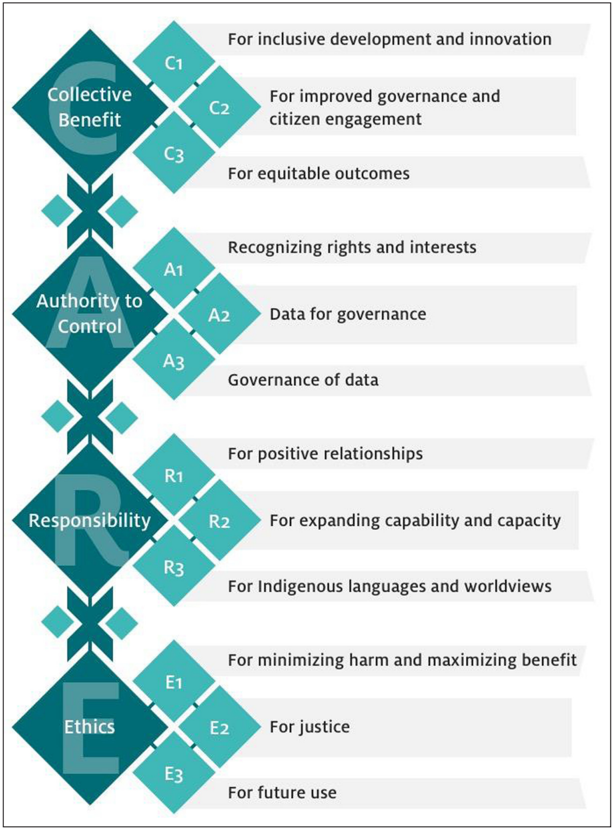
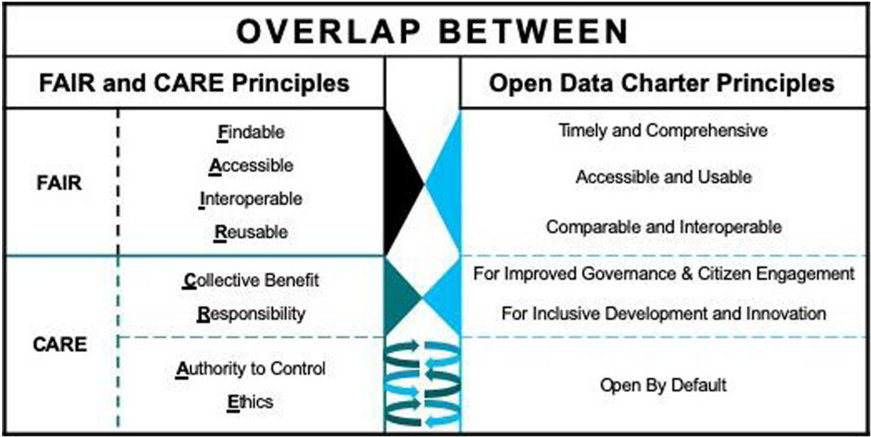
Concerns about secondary use of data and limited opportunities for benefit-sharing have focused attention on the tension that Indigenous communities feel between (1) protecting Indigenous rights and interests in Indigenous data (including traditional knowledges) and (2) supporting open data, machine learning, broad data sharing, and big data initiatives. The International Indigenous Data Sovereignty Interest Group (within the Research Data Alliance) is a network of nation-state based Indigenous data sovereignty networks and individuals that developed the ‘CARE Principles for Indigenous Data Governance’ (Collective Benefit, Authority to Control, Responsibility, and Ethics) in consultation with Indigenous Peoples, scholars, non-profit organizations, and governments. The CARE Principles are people– and purpose-oriented, reflecting the crucial role of data in advancing innovation, governance, and self-determination among Indigenous Peoples. The Principles complement the existing data-centric approach represented in the ‘FAIR Guiding Principles for scientific data management and stewardship’ (Findable, Accessible, Interoperable, Reusable). The CARE Principles build upon earlier work by the Te Mana Raraunga Maori Data Sovereignty Network, US Indigenous Data Sovereignty Network, Maiam nayri Wingara Aboriginal and Torres Strait Islander Data Sovereignty Collective, and numerous Indigenous Peoples, nations, and communities. The goal is that stewards and other users of Indigenous data will ‘Be FAIR and CARE.’ In this first formal publication of the CARE Principles, we articulate their rationale, describe their relation to the FAIR Principles, and present examples of their application.
Overview
CoChat Summary
TL;DR
The CARE Principles for Indigenous Data Governance (Collective Benefit, Authority to Control, Responsibility, and Ethics) are people- and purpose-oriented principles developed by the International Indigenous Data Sovereignty Interest Group to complement the data-centric FAIR Principles. They aim to support Indigenous rights, self-determination, and control over Indigenous data while enabling equitable data reuse.
Key findings
- CARE comprises four principles—Collective Benefit, Authority to Control, Responsibility, and Ethics—designed to complement FAIR (Findable, Accessible, Interoperable, Reusable) and guide data stewards and users to “Be FAIR and CARE.”
- The paper reports global context from UN 2009: Indigenous presence spans over 90 countries, includes over 370 million Indigenous persons, and involves more than 5,000 distinct cultures.
- CARE emerged from an Indigenous-led workshop held in Gaborone, Botswana, on 8 November 2018, as part of International Data Week, with later input from Indigenous leaders, scholars, network members, and allies.
- Early adopters/implementation examples include the Research Data Alliance, the Smithsonian Institution (e.g., Smithsonian Directive 609 and planned Collection CARE Notices), and the Open Data Charter.
Methods
- This is a conceptual/principles development paper, not an empirical study; it describes the rationale, development, and illustrative application of the CARE Principles.
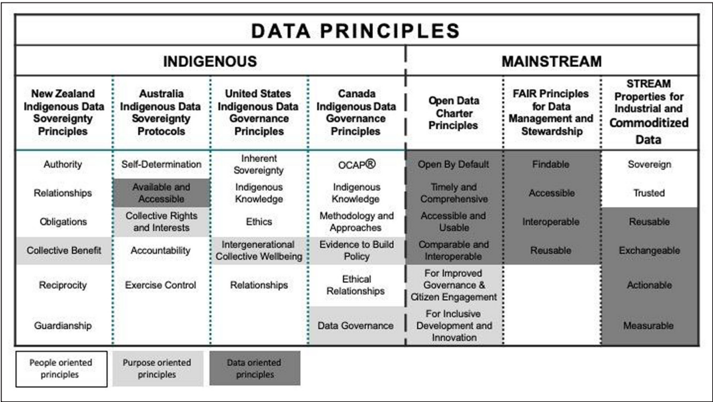
- Workshop organizers prepared an analysis of principles from Indigenous data sovereignty/governance frameworks and mainstream sources (Table 1) to inform dialogue; participants identified the four primary principles and drafted primary and sub-principles, then circulated the draft for input.
- The paper presents the principles’ relation to FAIR and examples of adoption; no formal sample, dataset, or statistical analysis is reported.
Limitations
- Stated: further research is needed to identify mechanisms that support implementation; create tools, policies, and practices that enact the Principles; explore application in different contexts (e.g., research repositories, knowledge co-production, institutional policies, existing databases/systems); and operationalize the Principles in tandem with FAIR.
- Evident: the paper is a principles publication and does not report empirical evaluation of implementation outcomes; the adoption examples are illustrative rather than systematically assessed.
Model-written summary. Check it against the paper before relying on it.
Integrity signals
Registry
Cites
Statistics
Figures
Verification
Claims the paper makes
0 Valid · 0 Not valid · 1 Not checked · 9 Own results and interpretations
- Probably not a substantial claim. 9
- It may state two separate claims as one. 5
Claims other papers make about this one
Each is checked against this paper’s own text: does it say what the citing paper says it does?
The source backs part of the claim, not all of it — or backs it for a different population, condition or comparison.
In the citing paper
“This can be in conflict with cultural values, e.g., in the case of indigenous communities that are generally underrepresented on Wikipedia but have concerns about how their knowledge might be exploited if shared [28, 29].”
From Data Governance in the Age of Large-Scale Data-Driven Language Technology (2022) · cites this paper as [28]
Experimental — accuracy not yet measuredThe source backs part of the claim, not all of it — or backs it for a different population, condition or comparison.
In the citing paper
“The key distinction is that while FAIR principles focus on making data maximally open and shareable-goals that align with scientific efficiency, CARE principles focus on people and purpose, emphasizing that data use should align with the rights and needs of Indigenous Peoples.”
From Data colonialism and indigenous languages in AI: a critical review of existing initiatives and their struggles with data sovereignty (2026) · cites this paper as Carroll et al. 2020
Experimental — accuracy not yet measuredThe source backs part of the claim, not all of it — or backs it for a different population, condition or comparison.
In the citing paper
“A concrete expression of Indigenous Data Sovereignty is found in the CARE Principles for Indigenous Data Governance, formulated in 2019 by the Global Indigenous Data Alliance and related networks (Carroll et al. 2020).”
From Data colonialism and indigenous languages in AI: a critical review of existing initiatives and their struggles with data sovereignty (2026) · cites this paper as Carroll et al. 2020
Experimental — accuracy not yet measuredThe source backs part of the claim, not all of it — or backs it for a different population, condition or comparison.
In the citing paper
“Indigenous data, whether born digital or not, include information, knowledge, specimens, and belongings about Indigenous Peoples to which they relate at both the individual and collective levels (Carroll et al., 2020; Rainie et al., 2019; Lovett et al., 2019).”
From Using Indigenous Standards to Implement the CARE Principles: Setting Expectations through Tribal Research Codes (2022) · cites this paper as Carroll et al., 2020
Experimental — accuracy not yet measuredThe source backs part of the claim, not all of it — or backs it for a different population, condition or comparison.
In the citing paper
“The FAIR Principles are aligned to the global shift towards open science and open data, promoting data centric criteria that facilitate increased data sharing among entities while ignoring relationships, power differentials, and the historical conditions associated with the collection of data10,11.”
From Operationalizing the CARE and FAIR Principles for Indigenous data futures (2021) · cites this paper as [11]
Experimental — accuracy not yet measured
6 more claims about this paper
Create a free account to see every claim other papers make about this one.
Self-check
Percentages, sums and reported differences re-computed from the paper’s own numbers.
Each contradiction between two passages listed here was confirmed by an independent check.
Rated minor: it would not touch a result — a value no result rests on, a p-value that stays on the same side of the significance level, or a conflict that is clerical, resolved elsewhere in the paper, or outside its own findings.
In the paper
§ The CARE Principles for Indigenous Data Governance > Research Data Alliance (www.rd-alliance.org), in research environments
“In 2012, the American Museum of Natural History at the Smithsonian Institution in Washington, DC released an Access and Benefit Sharing Policy on Genetic Resources”
§ The CARE Principles for Indigenous Data Governance > References
“42. Smithsonian Institution. 2012. Access and Benefit Sharing Policy on Genetics Resources. Washington, DC: National Museum of American History.”
Citations
Cites
The FAIR Guiding Principles for scientific data management and stewardship
Wilkinson, M. D., Dumontier, M., Aalbersberg, I. J., Appleton, G., Axton, M., Baak, A., Blomberg, N., Boiten, J.-W., da Silva Santos, L. B., Bourne, P. E., et al. (2016) · Scientific Data · doi:10.1038/sdata.2016.18 · Cited by 18,423
Indigenous Peoples In International Law: Second Edition
Anaya, S. J. (2004) · doi:10.1093/oso/9780195173499.001.0001 · Cited by 1,011
(2016) · doi:10.22459/caepr38.11.2016 · Cited by 696 · cited 6×
“…has become an increasingly relevant topic as big data, open data, open science, and data reuse become an integral part of research and institutional practices (Carroll, Rodriguez-Lonebear & Martinez 2019; Lovett et al. 2019; Rainie et al. 2019; Kukutai & Taylor 2016a; Taylor & Kukutai 2015).”
BackgroundInfluentialBuck, M., & Hamilton, C. (2011) · Review of European Community & International Environmental Law · doi:10.1111/j.1467-9388.2011.00703.x · Cited by 627
Indigenous Data Governance: Strategies from United States Native Nations
Carroll, S. R., Rodriguez-Lonebear, D., & Martinez, A. (2019) · Data Science Journal · doi:10.5334/dsj-2019-031 · Cited by 264
Self-citationGenomic Research Through an Indigenous Lens: Understanding the Expectations
Garrison, N. A., Hudson, M., Ballantyne, L. L., Garba, I., Martinez, A., Taualii, M., Arbour, L., Caron, N. R., & Rainie, S. C. (2019) · Annual Review of Genomics and Human Genetics · doi:10.1146/annurev-genom-083118-015434 · Cited by 220
Self-citationData sovereignty for indigenous peoples: current practice and future needs
Kukutai, T., & Taylor, J. (2016) · Indigenous Data Sovereignty · doi:10.22459/caepr38.11.2016.01 · Cited by 116
Rainie, S. C., Schultz, J. L., Briggs, E., Riggs, P., & Palmanteer-Holder, N. L. (2017) · International Indigenous Policy Journal · doi:10.18584/iipj.2017.8.2.1 · Cited by 114
Law, Knowledge, Culture: The Production of Indigenous Knowledge in Intellectual Property Law
Anderson, J. E. (2009) · Edward Elgar Publishing eBooks · doi:10.4337/9781848447196 · Cited by 95
Self-citationNational Inuit Strategy on Research.
Kanatami, I. T. (2018) · IOC of UNESCO (Intergovernmental Oceanographic Commission) · doi:10.25607/obp-1673 · Cited by 93
Research works printed but not linked: 18
- Cajete, G. 2000. Native science: Native laws of interdependence. Santa Fe: Clear Light.
- Castellano, MB. 2004. Ethics of Aboriginal research. Journal of Aboriginal Health, January, 98-114.
- Hudson, M, Milne, M, Russell, K, Smith, B, Reynolds, P and Atatoa-Carr, P. 2016. The Development of Guidelines for Indigenous Research Ethics in Aotearoa/New Zealand. In A.-L. Drugge (ed.), Ethics in Indigenous Research, Past Experiences -Future Challenges, 157-174. Umea, Sweden: Vaartoe Centre for Sami Research, Umea University.
- Drugge, A-L. 2016. Ethics in Indigenous Research: Past Experiences -Future Challenges. Umea, Sweden: Vaartoe Centre for Sami Research, Umea University.
- Julayinbul Statement in Indigenous Intellectual Property Rights. 1993. The Julayinbul Conference on Intellectual and Cultural Property. Australia: Jingarrba.
- Kovach, M. 2009. Indigenous methodologies: Characteristics, conversations, and contexts. Toronto: University of Toronto Press.
- Kukutai, T and Taylor, J. 2016a. Indigenous data sovereignty: Toward an agenda. Canberra, Australia: Aus- tralian National University Press. DOI: https://doi.org/10.22459/CAEPR38.11.2016 · DOI · Paper page
- Lovett, R, Lee, V, Kukutai, T, Cormack, D, Rainie, SC and Walker, J. 2019. Good data practices for Indigenous Data Sovereignty and Governance. In: Daly, A, Devitt, K and Monique, M (eds.), Good Data. Amsterdam: Institute of Network Cultures Inc. ISBN 978-94-92302-27-4.
- Mātaatua Declaration on Cultural and Intellectual Property Rights of Indigenous Peoples. 1993. First International Conference on the Cultural and Intellectual Property Rights of Indigenous Peoples. 12-18 June 1993. Aotearoa, New Zealand. Available at https://www.wipo.int/export/sites/www/tk/en/ databases/creative_heritage/docs/mataatua.pdf.
- McGregor, D, Restoule, JP and Johnston, R. (eds.) 2018. Indigenous research: Theories, practices, and rela- tionships. Canadian Scholars' Press.
- 2017, First Nations’ data governance: Measuring the nation-to-nation relationship discussion paper, British Columbia First Nations’ Data Governance Initiative
- Rainie, SC, Kukutai, T, Walter, M, Figueroa-Rodriguez, OL, Walker, J and Axelsson, P. 2019. Issues in Open Data: Indigenous Data Sovereignty. In: Davies, T, Walker, S, Rubinstein, M and Perini, F (eds.), The State of Open Data: Histories and Horizons. Cape Town and Ottawa: African Minds and International Development Research Centre. pp. 300-319.
- Ratima, M. 2001. Kia uruuru mai a hauora being healthy, being Maori: Conceptualising Maori health promotion. Published thesis (PhD) Department of Public Health. Dunedin, University of Otago.
- Ratima, M. 2001. Kia uruuru mai a hauora being healthy, being Maori: Conceptualising Maori health promotion. Published thesis (PhD) Department of Public Health. Dunedin, University of Otago. Research Data Alliance. 2017. International Indigenous Data Sovereignty Intertest Group. Available at https://www.rd-alliance.org/groups/international-indigenous-data-sovereignty-ig [Last accessed 17 January 2020].
- Snipp, CM. 2016. What does data sovereignty imply: what does it look like? In: Kukutai and Taylor, J (eds.), Indigenous data sovereignty: Toward an agenda. Canberra, Australia: Australian National University Press. pp. 39-55. DOI: https://doi.org/10.22459/CAEPR38.11.2016. · DOI · Paper page
- Smith, LT. 2012. Decolonizing Methodologies: Research and Indigenous Peoples. Zed Books. London: Univer- sity of Otago Press.
- Rodriguez-Lonebear, D. 2016. Building a data revolution in Indian country. In: Kukutai, T and Taylor, J (eds.), Indigenous data sovereignty: Toward an agenda. Canberra, Australia: Australian National University Press. pp. 253-272. DOI: https://doi.org/10.22459/CAEPR38.11.2016. · DOI · Paper page
- 2008, Research is ceremony: Indigenous research methods
Cited by
Items 401–500 of 1,410
Henry, R., Gabel, C., Tait, C. L., Kowalski, K., & Nychuk, A. (2025) · Health Promotion International · doi:10.1093/heapro/daaf229 · Cited by 7
“…data are defined as “data generated by Indigenous Peoples, as well as by governments and other institutions, on and about Indigenous Peoples and territories, as well as information about Indigenous communities and the individuals, Indigenous and non-Indigenous, that live within” ( Carroll et al .”
Khassawneh, O., Mohammad, T., & Tabche, I. (2026) · Leadership & Organization Development Journal · doi:10.1108/lodj-06-2025-0406 · Cited by 8
Kakraba, S., Agyemang, E. F., & Srivastav, S. K. (2026) · Frontiers in Public Health · doi:10.3389/fpubh.2026.1785170 · Cited by 12
Iman Peoples Water Sovereignty: Extractive Industries in Central Queensland
Hansen, C. J., Currell, M., & Flynn, E. (2024) · The Extractive Industries and Society · doi:10.1016/j.exis.2024.101560 · Cited by 8
Krause, S., Lynch, I., Agarwal, A., Akinsemolu, A. A., Arheimer, B., Buytaert, W., Floyd, R., Houdret, A., Saccoccia, E., Schneidewind, U., et al. (2024) · Nature Water · doi:10.1038/s44221-024-00353-z · Cited by 6
TAPS Responsibility matrix: a tool for responsible data science by design
Urovi, V., Çelebi, R., Sun, C., Kumar, P., Rieswijk, L., Erard, M., Yılmaz, A., Moodley, K., & Dumontier, M. (2024) · Journal of Responsible Innovation · doi:10.1080/23299460.2024.2414530 · Cited by 8
Thyden, N. H. (2025) · American Journal of Epidemiology · doi:10.1093/aje/kwae483 · Cited by 7
de Souza, S. P., & Taylor, L. (2025) · Big Data & Society · doi:10.1177/20539517251330191 · Cited by 11
“Also in line with this view is the claim that Indigenous data should be governed according to the norms of sovereignty, independence and integrity (Carroll et al., 2020), but also potentially exclusively so that only those with a right to data can access and use it (Kukutai and Taylor, 2016)…”
Boyd, C. (2022) · Journal of Documentation · doi:10.1108/jd-08-2021-0159 · Cited by 7
Thiery, F., Veller, J., Raddatz, L., Rokohl, L., Boochs, F., & Mees, A. (2023) · ISPRS International Journal of Geo-Information · doi:10.3390/ijgi12040167 · Cited by 7
“Abbreviations The following abbreviations are used in this manuscript: AI Artificial Intelligence AMT Academic Meta-Tool ARS African Red Slipware ARS3D African Red Slip Ware Digital ARSW African Red Slip Ware BMBF German Federal Ministry of Education and Research CAA Computer Applications and Quantitative Methods in A…”
BackgroundHealth Synthetic Data to Enable Health Learning System and Innovation: A Scoping Review
Tsao, S., Sharma, K., Noor, H., Forster, A. J., & Chen, H. (2023) · Studies in health technology and informatics · doi:10.3233/shti230063 · Cited by 12
“Nonetheless, the CARE principles can address historical inequities and provide indigenous peoples a platform wherein they have data sovereignty [7, 22].”
BackgroundHow can we support the UN Sustainable Development Goals when open data is stagnant?
Li, J., Wu, C., Piao, Y., Qin, Y., Du, X., Zhang, L., & Guo, H. (2023) · 中国科学通报:英文版 · doi:10.1016/j.scib.2023.05.021 · Cited by 7
Towards good governance of data: A case study in geoscience data governance
Li, X., & Su, J. (2023) · Chinese Science Bulletin (Chinese Version) · doi:10.1360/tb-2023-0590 · Cited by 8
Vision for the 12 LABOURS Digital Twin Platform*
Gamage, T. P. B., Elsayed, A., Lin, C., Wu, A., Feng, Y., Jian-wei, Y., Gao, L., Wijenayaka, S., Nash, M. P., Doyle, A., et al. (2023) · Annual International Conference of the IEEE Engineering in Medicine and Biology Society (EMBC) · doi:10.1109/embc40787.2023.10341138 · Cited by 6
“Data practices for accessing and sharing data must also be managed with CARE (collective benefit, authority to control, responsibility, ethics) [12], together with considerations for data sovereignty [13].”
MethodLefthand-Begay, C., Agajanian, T., Carbajal, I. A., Torre, J. C. L., Littlesun, C. P., McCarty, M., Rose, J. M., Ruhm, R., Sheban, C., Yamane, C. Y. E. W., et al. (2024) · AlterNative An International Journal of Indigenous Peoples · doi:10.1177/11771801241235279 · Cited by 9
“In addition, data is a powerful tool that has implications for research, policy, and decision-making that address health disparities and equity needs of many communities (S. R. Carroll et al., 2020).”
BackgroundMethodSmylie, J. K., Bourgeois, C., Snyder, M., Maddox, R., McConkey, S., Rotondi, M. A., Prince, C., Dokis, B., Hardy, M., Joseph, S., et al. (2024) · Canadian Journal of Public Health · doi:10.17269/s41997-024-00867-9 · Cited by 10
Reproducibility and transparency in interpretive corpus pragmatics
Schweinberger, M., & Haugh, M. (2025) · International Journal of Corpus Linguistics · doi:10.1075/ijcl.23033.sch · Cited by 9
Introduction: Indigenous Perspectives on Genealogical Research
Mahuika, N., & Kukutai, T. (2021) · Genealogy · doi:10.3390/genealogy5030063 · Cited by 10
Hall, R. (2023) · Communications in Information Literacy · doi:10.15760/comminfolit.2023.17.2.1 · Cited by 8
Ganshorn, H., & Abel, J. (2024) · Elsevier eBooks · doi:10.1016/b978-0-323-95689-5.00005-5 · Cited by 6
Fong, A., McPherson, A., Rossi, M. S., & Rajan, K. (2024) · MRS Energy & Sustainability · doi:10.1557/s43581-024-00122-1 · Cited by 7
“Any 42–44 By embedding the principles of “FAIR and just” at the outset, we would be able to achieve this goal of accelerated discovery and design of new materials that meet targeted functionalities and minimize or eliminate hazard impacts, for the betterment of all communities.”
A novel tobacco forecasting model by multiple sociodemographic strata in Australia
Howe, S., Wilson, T. E., GARTNER, C. E., Blakely, T. A., & Ouakrim, D. A. (2025) · International Journal of Epidemiology · doi:10.1093/ije/dyaf038 · Cited by 7
“This decision respects principals of data sovereignty and governance [36, 37] as none of the authors are Indigenous Australians.”
Khan, A. S., McKinney, V., & Mendez, I. M. (2025) · Canadian Journal of Public Health · doi:10.17269/s41997-025-01037-1 · Cited by 9
“Implementing frameworks such as the CARE Principles (collective benefit, authority to control, responsibility, and ethics) ensures that AI systems operate under guidelines that prioritize community interests and governance (Carroll et al., 2020).”
Palawat, K., & Ramírez‐Andreotta, M. D. (2025) · Ecotoxicology and Environmental Safety · doi:10.1016/j.ecoenv.2025.118314 · Cited by 7
“Anti-colonial theory advocates not only for more community input into risk assessment, but to maintain the local context of the people, exposure, and data throughout the risk and health justice process (Carroll et al., 2020; Hill et al., 2024; Montenegro, 2019).”
Reproducibility, replicability, and robustness in corpus linguistics
Schweinberger, M., & Haugh, M. (2025) · International Journal of Corpus Linguistics · doi:10.1075/ijcl.25081.sch · Cited by 5
Lulamba, T. E., Mutemaringa, T., & Tiffin, N. (2025) · PLoS Computational Biology · doi:10.1371/journal.pcbi.1013507 · Cited by 5
“Existing international data stewardship guidelines, such as FAIR [44], CARE [45] and GA4GH [46] frameworks also provide a toolkit to inform and facilitate best practices in data sharing.”
Chaulk, K. G., Ballard, M., Hill, S., Wolfrey, D., Campbell, M., Sutherland, M., Wawatie, S., & Auger, L. (2025) · Ecology and Evolution · doi:10.1002/ece3.72085 · Cited by 9
The Structural Contradictions of Capitalist AI
Yang, Y. (2025) · Capitalism Nature Socialism · doi:10.1080/10455752.2025.2568983 · Cited by 11
“This gap is underscored by GIDA ’ s CARE Principles for Indigenous Data Governance (2018), which emphasize that Indigenous data ecosystems must prioritize collective bene fi t, authority to control, responsibility, and ethics in AI applications (Global Indigenous Data Alliance 2018).”
A Tribal data repository to advance Indigenous health and sovereignty
Anderson, M. Z., Tsosie, K. S., Peters, C. L., Trinidad, S. B., Cartney, A. M. M., Fernández, S., Dale, K. J., Rivera, S. P., Banta, C., Bhattacharyya, O., et al. (2025) · Nature Genetics · doi:10.1038/s41588-025-02382-0 · Cited by 6
Towards a Global Ground-Based Earth Observatory (GGBEO): Leveraging existing systems and networks
Lappalainen, H. K., Baklanov, A. A., Bäck, J. K., Arvanitidis, C., Basart, S., Bernier, N. B., Bérod, D. D., Bornman, T. G., Buttigieg, P. L., Carmichael, G. R., et al. (2025) · Big Earth Data · doi:10.1080/20964471.2025.2574174 · Cited by 6
“This creates significant challenges to ensuring that relevant data products are available and usable at the all scales including local and by the people and communities (CARE Principles for Indigenous Data Governance; Carroll et al., 2020, 2022; Creutzig et al., 2019).”
Sovereignty in the digital age Indigenous perspectives on health data and emerging technologies
Hurst, S., Dhein, K., Yracheta, J., & Mackey, T. K. (2026) · SSM - Qualitative Research in Health · doi:10.1016/j.ssmqr.2025.100698 · Cited by 7
Brockington, S. F., Malcolm, P., Aiello, A. S., de Almeida, T. M. H., Apple, M., Aragón-Rodríguez, S. M., Arbour, T. P., Barreiro, G. D. C., Phillips-Bernal, J. F., Borsch, T., et al. (2026) · Nature Plants · doi:10.1038/s41477-025-02192-6 · Cited by 5
“2), aligned to the FAIR and CARE principles 46,47 .”
Sorensen, A. H., Lee, S., Marsh, D. E., Fenlon, K., & Punzalan, R. L. (2023) · Anthropology Today · doi:10.1111/1467-8322.12847 · Cited by 5
Rosa, S., Hollis, S., Francia, R. M., Renner, A. G., Johnson, N., Barak, R. S., Jones, H. P., Williams, E. W., & Foxx, A. J. (2024) · Ecological Solutions and Evidence · doi:10.1002/2688-8319.12345 · Cited by 7
Indigenous research data governance in Sápmi
Siri, S. R. A., & Axelsson, P. (2024) · Acta Borealia · doi:10.1080/08003831.2024.2410110 · Cited by 7
“Third, the CARE principles were designed to complement the FAIR principles (Carroll et al. 2020), which the research communities already endorse.”
Dive into Heritage: Paradata and Metadata in an Immersive Digital Heritage Experience
Ammirati, L., Watrous, B., Ftaita, A., Rigauts, T., & de Gruchy, M. (2024) · Lecture notes in computer science · doi:10.1007/978-3-031-78590-0_4 · Cited by 8
Bowman, N. R., & Bremner, L. (2024) · Canadian Journal of Program Evaluation · doi:10.3138/cjpe-2024-0039 · Cited by 9
Chigwada, J. P., & Ngulube, P. (2025) · Advances in religious and cultural studies (ARCS) book series · doi:10.4018/979-8-3693-8447-3.ch010 · Cited by 7
“Rigorous and Systematic Qualitative Data Analysis in Biological Anthropology”
Wutich, A., Nelson, R., DuBois, L. Z., Astorino, C. M., Knudson, K. J., Reynolds, A. W., Riley, E. P., Smith, R. W. A., VanSickle, C., Carroll, S. R., et al. (2024) · American Journal of Biological Anthropology · doi:10.1002/ajpa.70008 · Cited by 6
Self-citationVariation Matters: Expanding the Scope of Experimental Archaeology
Liu, C. (2024) · Advances in Archaeological Practice · doi:10.1017/aap.2024.30 · Cited by 5
“Consequently, following data-sharing principles of FAIR (Nicholson et al. 2023; Wilkinson et al. 2016) and CARE (Carroll et al. 2020; Gupta et al. 2023), the Triple P framework recommends Databrary (Gilmore et al. 2015; Simon et al. 2015) — a web-based library originally designed for developmental scientists — as the…”
Capacity building needed to reap the benefits of access to biodiversity collections
Groom, Q., Meeus, S., Bárrios, S., Childs, C., Clubbe, C. P., Corbett, E., Francis, S., Gray, A. J., Harding, L., Jackman, A., et al. (2025) · Plants People Planet · doi:10.1002/ppp3.70029 · Cited by 5
Pillai, P. (2021) · Patterns · doi:10.1016/j.patter.2020.100190 · Cited by 5
Belem, A. L., Bell, T., Burdett, H. L., Ibarra, D. E., Kaushal, N., Keenan, B., Klimaszewski‐Patterson, A., Mette, M. J., Naeher, S., Onafeso, O. D., et al. (2022) · Earth and Space Science · doi:10.1029/2021ea002115 · Cited by 5
Hydrological Perspectives on Integrated, Coordinated, Open, Networked (ICON) Science
Acharya, B. S., Ahmmed, B., Chen, Y., Davison, J. H., Haygood, L. A., Hensley, R. T., Kumar, R., Lerback, J. C., Liu, H., Mehan, S., et al. (2022) · Earth and Space Science · doi:10.1029/2022ea002320 · Cited by 5
“…to Control, Responsibility, and Ethics and Findability, Accessibility, Interoperability, and Reuse principles can help hydrologists ethically develop protocols relating to the collection, use, and sharing of community data (Wilkinson et al., 2016; Mecredy et al., 2018; Carroll et al., 2020).”
BackgroundHow Can Earth Scientists Contribute to Community Resilience? Challenges and Recommendations
Virapongse, A., Gupta, R., Robbins, Z. J., Blythe, J. N., Duerr, R. E., & Gregg, C. (2022) · Frontiers in Climate · doi:10.3389/fclim.2022.761499 · Cited by 7
Beks, H., Versace, V. L., Mitchell, F., Charles, J., Chatfield, T., & Zwolak, R. (2023) · Public Health Research & Practice · doi:10.17061/phrp33012301 · Cited by 5
Stavros, E. N., Gezon, C., Denis, L. S., Iglesias, V., Zapata, C. B., Byrne, M., Cooper, L., Cook, M., Doyle, E., Stephens, J., et al. (2023) · Applied Sciences · doi:10.3390/app131911034 · Cited by 5
Bratt, S. (2023) · Proceedings of the Association for Information Science and Technology · doi:10.1002/pra2.769 · Cited by 5
“CARE requires data to have Collective benefit, to give individuals the Authority to Control, to invoke Responsibility, and to be sensitive to Ethics (Carroll et al., 2020).”
MethodIndia’s Conception of Community Data and Addressing Concerns for Access to Justice
de Souza, S. P., & Bhardwaj, K. (2024) · Digital Society · doi:10.1007/s44206-024-00102-5 · Cited by 7
“In doing so, as the CARE principles of data governance articulate, there is an emphasis on developing ways to strengthen collective benefit-through improved governance and participatory engagement of people (Carroll et al., 2020).”
BackgroundMortensen, H. M., Amos, J. D., Exner, T. E., Flores, K., Harper, S. L., Jarabek, A. M., Klaessig, F., Lobaskin, V., Lynch, I., Marcum, C. S., et al. (2024) · Computational Toxicology · doi:10.1016/j.comtox.2024.100316 · Cited by 5
Hedden‐Nicely, D. R., & Kaiser, K. E. (2024) · Water · doi:10.3390/w16141963 · Cited by 6
Socio-cultural challenges in collections digital infrastructures
Humbel, M., Nyhan, J., Pearlman, N., Vlachidis, A., Hill, J. B., & Flinn, A. (2024) · Journal of Documentation · doi:10.1108/jd-12-2023-0263 · Cited by 12
“…to Control, Responsibility, and Ethics) principles, which seek to “[…] reposition[s] Indigenous Peoples, nations, and communities from being subjects of data that perpetuate unequal power distributions to self-determining users of data for development and wellbeing” (Carroll et al., 2020: 2).”
The NASA FireSense Project: Responding to Stakeholder Needs Across the Fire Life Cycle
Falkowski, M. J., Shuman, J. K., Boland, J., Kauffman, T., Lefer, B. L., Martin, M. M., & Riris, H. (2024) · IEEE International Geoscience and Remote Sensing Symposium (IGARSS) · doi:10.1109/igarss53475.2024.10642820 · Cited by 7
Open access journals lack image accessibility guidelines
Whitney, K. S., Perrone, J. D., & Bahlai, C. A. (2024) · Quantitative Science Studies · doi:10.1162/qss_a_00338 · Cited by 8
Stockhause, M., Huard, D., Khourdajie, A. A., Gutiérrez, J. M., Kawamiya, M., Klutse, N. A. B., Krey, V., Milward, D., Okem, A. E., Pirani, A., et al. (2024) · PLOS Climate · doi:10.1371/journal.pclm.0000533 · Cited by 7
Genomics and Biodiversity: Applications and Ethical Considerations for Climate‐Just Conservation
Miner, S. A., & Thurman, T. J. (2024) · The Hastings Center Report · doi:10.1002/hast.4936 · Cited by 6
Invisible lives: Occupied cities as a blind spot in geopolitical research
Suchikova, Y. (2025) · Geopolitics under Globalization · doi:10.21511/gg.05(1).2024.03 · Cited by 5
Open science, communication, and collaboration for the future of palaeoproteomics
Dekker, J. A. A., Peters, C., Winter, R. M., Collins, M. J., Dickinson, M. R., Harvey, V. L., Hill, E., Nair, B., Tsutaya, T., Viñas-Caron, L. C., et al. (2025) · Peer Community Journal · doi:10.24072/pcjournal.576 · Cited by 9
“We do, however, acknowledge that there might be factors that complicate open data sharing, for example, the importance of indigenous communities holding stewardship over their own data (Carroll et al., 2020).”
The Miiyupimatisiiun Research Data Archives Project: putting OCAP® principles into practice
Adelson, N., & Mickelson, S. (2022) · Digital Library Perspectives · doi:10.1108/dlp-11-2021-0099 · Cited by 9
Amalina, A. A., Othman, N., & Halim, A. A. (2022) · International Journal of Academic Research in Business and Social Sciences · doi:10.6007/ijarbss/v12-i10/15205 · Cited by 5
“Hence, this situation imposes a major concern as it does not conform to the principle of open science (Carroll et al., 2020).”
BackgroundInterrogating Datafication: Towards a Praxeology of Data
Burkhardt, M., van Geenen, D., Gerlitz, C., Hind, S., Kaerlein, T. 1., Lämmerhirt, D., & Volmar, A. (2022) · Media in action · doi:10.1515/9783839455616 · Cited by 22
Kenton Award Lecture—Stroke Disparities Research: Learning From the Past, Planning for the Future
Kapral, M. K. (2023) · Stroke · doi:10.1161/strokeaha.122.039562 · Cited by 8
Zhang, S., & da Silva, L. R. (2023) · Annals of Anthropological Practice · doi:10.1111/napa.12201 · Cited by 6
Dobson, D., & Fernandez, A. (2023) · Frontiers in Research Metrics and Analytics · doi:10.3389/frma.2023.1160566 · Cited by 7
“Connected to, but distinct from, the concept of IDSov, is Indigenous Data Governance (IDGov) (Tsosie, 2019; Carroll et al., 2020).”
BackgroundGreen Ribbon and Blue Ribbon Stories: Applying a Bidjara Way of Knowing to Understanding Records
Wilson, L., & Barrowcliffe, R. (2023) · Archives and Manuscripts · doi:10.37683/asa.v50.10921 · Cited by 6
Conniff, K. R., Grill, J. D., & Gillen, D. L. (2023) · Alzheimer s & Dementia · doi:10.1002/alz.13573 · Cited by 5
Laurel, H., Greene, S., & Ratan, K. (2020) · Research Ideas and Outcomes · doi:10.3897/rio.6.e60477 · Cited by 7
NIST Research Data Framework (RDaF): Version 2.0
Hanisch, R. J., Kaiser, D. L., Yuan, A., Medina-Smith, A., Carroll, B. C., & Campo, E. M. (2023) · doi:10.6028/nist.sp.1500-18r2 · Cited by 11
Kosch, T. A., Torres‐Sánchez, M., Liedtke, H. C., Summers, K., Yun, M. H., Crawford, A. J., Maddock, S. T., Ahammed, M. S., Araújo, V., Bertola, L. V., et al. (2024) · bioRxiv (Cold Spring Harbor Laboratory) · doi:10.1101/2024.06.27.601086 · Cited by 5
Understanding Positionality and Reflexivity in Scholarly Writing
Canty, L., & Kantrowitz‐Gordon, I. (2024) · Journal of Midwifery & Women s Health · doi:10.1111/jmwh.13675 · Cited by 6
Opening doors to physical sample tracking and attribution in Earth and environmental sciences
Damerow, J., Raia, N. H., Stanley, V., Choe, S., Borton, M., Byers, N., Cassidy, E. R., Cholia, S., Edmunds, R., Forbes, B., et al. (2025) · Scientific Data · doi:10.1038/s41597-025-05295-z · Cited by 6
“While beyond the scope of the current work, researchers should be aware of and uphold the CARE (Collective Benefit, Authority to Control, Responsibility, and Ethics) Principles for Indigenous Data Governance 21 for both the collection and long-term management of samples and any derivative data on those samples.”
InfluentialKwok, J. C. Y. (2026) · AI & SOCIETY · doi:10.1007/s00146-026-03091-w · Cited by 4
“A concrete expression of Indigenous Data Sovereignty is found in the CARE Principles for Indigenous Data Govern-ance, formulated in 2019 by the Global Indigenous Data Alliance and related networks (Carroll et al. 2020).”
InfluentialSpithoff, S. M., McPhail, B. M., Vesely, L., Rowe, R., Mogic, L., & Grundy, Q. (2024) · BMJ Open · doi:10.1136/bmjopen-2023-074019 · Cited by 9
“Participants were given pseudonyms and are described by these pseud-onyms in this manuscript.”
BackgroundMethodSelf-citationChigwada, J. P., Mapara, J. C., Ngulube, P., & Chabvutagondo, T. (2025) · IFLA Journal · doi:10.1177/03400352251331471 · Cited by 10
“…to control, responsibility, ethics) principles (Figure 2) for Indigenous data governance were developed to complement the FAIR principles due to the challenges that are experienced when implementing the FAIR principles in IK management (Carroll et al., 2020, 2021; Chigwada and Ngulube, 2024).”
Hutchinson, B., Louro, C. R., Collard, G. D., & Cooper, N. (2025) · ACM Conference on Fairness, Accountability, and Transparency (FAccT) · doi:10.1145/3715275.3732010 · Cited by 13
“(2) variety-specific utterance tags should be included, e.g. , ‘unna’”
Trebilco, R., Hunter, C., Fischer, M., Evans, K., Hobday, A. J., & Thomas, L. (2025) · Marine Policy · doi:10.1016/j.marpol.2025.106853 · Cited by 6
Ortiz, A. M. D., Blanco, P. H., Arnillas, C. A., Arponen, A., Cadotte, M. W., Chinga, J., Chiuffo, M. C., Collinge, S. K., Devarajan, K., Ehrlich, K., et al. (2025) · Ecology and Evolution · doi:10.1002/ece3.71914 · Cited by 6
“Learning from others' experiences and following key protocols for working with Indigenous data, such as the CARE principles for Indigenous Data Governance (Carroll et al. 2020) and other good practice frameworks (Hill et al. 2020; Whyte et al. 2016) will be helpful to find the balance between communities' needs and re…”
InfluentialWeaving care praxis to mediate glitches in Indigenous digital land management in northern Australia
Macdonald, J. M., Robinson, C., Urzedo, D., Penton, C. E., Nabarlambarl, R., Maralngurra, L., Nabulwad, S., Lilleyman, A., Maroney, S., Roberts, G., et al. (2025) · Digital Geography and Society · doi:10.1016/j.diggeo.2025.100143 · Cited by 5
Velotto, G. (2025) · AI and Ethics · doi:10.1007/s43681-025-00880-9 · Cited by 4
“Indigenous data governance offers a different starting point: OCAP® (FNIGC) and CARE (GIDA) centre community authority and benefit, reframing purpose and locus—who decides access and linkage, where data reside, what venues exist beyond individual appeals [19 , 74 , 128].”
A review on speech emotion recognition for low-resource and Indigenous languages
Rathnayake, H., James, J., Leoni, G., Nicholas, A., Watson, C. I., & Keegan, P. (2025) · Speech Communication · doi:10.1016/j.specom.2025.103342 · Cited by 11
AI and Indigenous Data Sovereignty: Knowing, Engaging, and Learning in New Data Contexts
Russ-Smith, J., & Randell‐Moon, H. (2025) · Somatechnics · doi:10.3366/soma.2025.0467 · Cited by 4
Küçükuncular, A. (2026) · Digital Society · doi:10.1007/s44206-025-00241-3 · Cited by 6
“Carroll et al. ( 2020), who first articulated the CARE framework, emphasise that data initiatives must produce collective benefits, respect community authority, ensure responsible use, and embed ethics grounded in Indigenous worldviews (see also Riedel et al., 2020).”
Fernandes, J. A., Borja, Á., Anabitarte, A., Granado, I., Lekunberri, X., Sagarmínaga, Y., Canals, O., Lanzén, A., Azhar, M., Kotta, J., et al. (2026) · Fish and Fisheries · doi:10.1111/faf.70052 · Cited by 6
Humphries, F. (2026) · Frontiers in Marine Science · doi:10.3389/fmars.2025.1727000 · Cited by 9
Haubrock, P. J., Everts, T., Kouba, A., Soto, I., Mammola, S., Sousa, R., & Britton, J. R. (2026) · Conservation Biology · doi:10.1111/cobi.70228 · Cited by 8
“Simple measures, such as engaging local scientists and communities, ensuring equitable data sharing (e.g. CARE Principles for Indigenous Data Governance; Carroll et al., 2020), fostering sustainable collaborations, and promoting long-term engagement and ethical research practices (i.e. the Nagoya Protocol; https://www…”
Towards FAIR and federated data ecosystems for interdisciplinary research
Beyvers, S., Hochmuth, J., Brehm, L., Hansen, M., Goesmann, A., & Förster, F. (2026) · PLoS Computational Biology · doi:10.1371/journal.pcbi.1013806 · Cited by 10
Malik, I. H. (2026) · Humanities and Social Sciences Communications · doi:10.1057/s41599-026-06826-8 · Cited by 8
“This framework draws upon i) decolonial theory and community collaboration (Mignolo 2007; Quijano 2000; Pearce et al. 2009) that calls for epistemic disobedience and delinking from Eurocentric knowledge hierarchies and active involvement and collaboration with community members and local, regional and national organis…”
Unleashing potential: assessing Africa’s readiness for the data science revolution to impact health
Panji, S., Ras, V., Gichoya, J. W., Julius, R., Maslamoney, S., Motshegwa, T., Sharaf, A., Skelton, M., Tunga, M., & Mulder, N. (2026) · Nature Communications · doi:10.1038/s41467-026-71454-4 · Cited by 5
Ecosystem technology (ecotech): Harnessing natural processes to address global challenges
Silliman, B. R., Hensel, M. J. S., Temmink, R. J. M., Paxton, A. B., Wieczynski, D. J., Gibert, J. P., Johnston, D. W., Noonan, D., Ferris, W. N., Hay, M. E., et al. (2026) · Science Advances · doi:10.1126/sciadv.aec5411 · Cited by 5
“For example, Indigenous data sovereignty can be upheld through CARE Principles (Collective Benefit, Authority to Control, Responsibility, and Ethics) that require formal agreements for Indigenous community control over environmental data and for coauthorship on resulting research ( 110 ).”
Parkinson, T., Bhangar, S., Chan, W. R., Chen, W., Gilligan, B., Kramer, T., Li, J., Miller, C., Oaks, L., Thind, M. P. S., et al. (2026) · Building and Environment · doi:10.1016/j.buildenv.2026.114737 · Cited by 5
Green, B., Kamenarac, O. D., & Jandrić, P. (2026) · Postdigital Science and Education · doi:10.1007/s42438-026-00648-2 · Cited by 4
Hollingsworth, P. M., Fantoni, K., Koureas, D., Arakelyan, M., Aravanopoulos, F. A., Bącela‐Spychalska, K., Ballesteros‐Mejia, L., Beja, P. R., Bonchev, G., Kharrat, M. B. D., et al. (2026) · BioScience · doi:10.1093/biosci/biag052 · Cited by 6
Can’t Touch This: Digital Approaches to Materiality in Cultural Heritage
Palladino, C., & Bodard, G. (2023) · Ubiquity Press eBooks · doi:10.5334/bcv · Cited by 7
Addressing equity gaps in fall-related injuries
Ivers, R., Ryder, C., & Shannon, B. (2024) · The Lancet Public Health · doi:10.1016/s2468-2667(24)00155-5 · Cited by 4
Recommendations for sharing network data and materials
Neal, Z. P., Almquist, Z. W., Bagrow, J. P., Clauset, A. J., Diesner, J., Lazega, E., Lovato, J. L., Moody, J. W., Peixoto, T. P., STEINERT-THRELKELD, Z., et al. (2024) · Network Science · doi:10.1017/nws.2024.16 · Cited by 6
“…2015), the FAIR data principles (findability, accessibility, interoperability, and reuse; Wilkinson et al., 2016), the CARE principles for Indigenous Data Governance (collective benefit, authority to control, responsibility, and ethics; Carroll et al., 2020), and the expectations of network journals.”
InfluentialFishing vessels as met-ocean data collection platforms: data lifecycle from acquisition to sharing
Manso-Narvarte, I., Solabarrieta, L., Caballero, A., Anabitarte, A., Knockaert, C., Dhondt, C., & Fernandes, J. A. (2024) · Frontiers in Marine Science · doi:10.3389/fmars.2024.1467439 · Cited by 4
Rana, V., & Azeez, G. K. (2025) · Journal of Higher Education Policy and Management · doi:10.1080/1360080x.2025.2469920 · Cited by 4
“In the words of Carroll et al. (2020), data sovereignty is the idea that ‘First Nations peoples have to manage the collection, ownership and use of data about them, their country, knowledge and resources’ (p. 2).”
“The Land on Which We Meet” – Modes of Indigenous Self-Determination in the Metaverse
Pierucci, F. (2025) · Digital Society · doi:10.1007/s44206-025-00182-x · Cited by 5
“23 The CARE Principles for Indigenous Data Governance (Carroll et al., 2020 ) emphasize Collective Benefit, Authority to Control, Responsibility, and Eth - 20 https://http://www.temanararaunga.maori.nz/, accessed on the 9/02/2024 21 https://usIndigenousdatanetwork.org/, accessed on the 09/02/2024 22 https://http://www…”
InfluentialIntegrating biological and environmental data to solve key scientific and societal challenges
Kunkel, D. M., Long-Fox, B. L., Pittman, C., Portmann, J. M., Sheik, M., Bates, J. M., Bentley, A. C., Contreras, D. L., Ellwood, E. R., Lomas, M. W., et al. (2025) · BioScience · doi:10.1093/biosci/biaf150 · Cited by 4
“The discussions also underscored the importance of incorporating CARE (for collective benefit, authority to control, responsibility, ethics ) data principles (Carroll et al. 2020 ) and developing flexible data-sharing frameworks that support data sovereignty and local context labeling.”
Karageorgoudis, E., Papakostas, C., Liantis, E. L., & Miotto, M. (2025) · Heritage · doi:10.3390/heritage8080330 · Cited by 5
Metadata
- Authors
- Carroll, S. R., Garba, I., Figueroa-Rodríguez, O. L., Holbrook, J., Lovett, R., Materechera, S., Parsons, M., Raseroka, K., Rodriguez-Lonebear, D., Rowe, R., Sara, R., Walker, J. D., Anderson, J., & Hudson, M.
- Affiliations
- University of Arizona (US)
- University of the Western Cape (ZA)
- Australian National University (AU)
- North-West University (ZA)
- Rensselaer Polytechnic Institute (US)
- University of California, Los Angeles (US)
- Laurentian University (CA)
- New York University (US)
- University of Waikato (NZ)
- Corresponding author
- Carroll, Stephanie Russo
- ORCID
- Venue
- Data Science Journal
- Publisher
- Ubiquity Press, Ltd.
- Published
- 2020
- Volume
- 19
- ISSN
- 1683-1470 (ISSN-L)
- OpenAlex
- W3048186973
- Semantic Scholar
- 2b01e7dbaded2f74e39fe492ffda38d91c88d0e4
- Cited by
- 1,408
- References
- 19
- Citations by year
- 2026: 417 · 2025: 310 · 2024: 227 · 2023: 208 · 2022: 133 · 2021: 101 · 2020: 12
- FWCI
- 62.98
- Type
- journal article
- Language
- en
- Open access
- gold
- doi.org
- Licence
- Locations
- Data Science Journal (publishedVersion, cc-by)
- ANU Open Research (Australian National University) (submittedVersion, cc-by)
- Lincoln (University of Nebraska) (submittedVersion)
- DOAJ (DOAJ: Directory of Open Access Journals) (submittedVersion, cc-by-sa)
- Data Science Journal (submittedVersion, cc-by)
- Edinburgh Research Explorer (University of Edinburgh) (submittedVersion, cc-by)
- Funders
- European Commission (HORIZON2020, 777388)
- Rural Development Administration
- Topics
- Social Sciences › Health › Indigenous Health, Education, and Rights
- Physical Sciences › Computer Science › Information Systems › Research Data Management Practices
- Physical Sciences › Computer Science › Artificial Intelligence › Ethics and Social Impacts of AI
- Keywords
- Indigenous data sovereignty, CARE principles, Indigenous data governance, traditional knowledge, data reuse, benefit sharing, FAIR principles, data ethics, Indigenous self-determination, Research Data Alliance, data stewardship
About these checks
Registry, retraction, Cites and statistics results are computed, not judged, with one exception: a printed reference that no index lists is read once by a model before it counts as a citation error. Claims are extracted by a model and kept only when their quote appears verbatim in the text; each cited source is then checked, with a model’s help, for whether it says what the claim relies on. Those verdicts can be wrong — read the claim’s quote and the cited source before relying on one.
A language model drew the claims from the paper on 2026-10-30, under version 3 of the claim definition (model deepseek-v4.1-flash, prompt extract-v3).
A second model labelled each claim on 2026-10-30 (model jev-1.13-20260917, definition revision gold-guideline-v0.2).
Statistics and arithmetic are recomputed, not judged.
Confidence bands are shown only for fields calibrated on our annotated test set. None is calibrated yet, so no band is shown.
What counts as a claim ›How we measure confidence ›How we check this ›
Are you an author, or do you see a problem with this page? Request a review
Data sources
Bibliographic data: Semantic Scholar, OpenAlex, Crossref.
Contains information from the Semantic Scholar Academic Graph Datasets, made available under the ODC Attribution License (ODC-BY 1.0).
Semantic Scholar’s data is described in: Kinney, R., et al. (2023). The Semantic Scholar Open Data Platform. arXiv:2301.10140.
