

The CARE Principles for Indigenous Data Governance
Open accessThe DOI matches its Crossref record; 26 of the 27 references it cites were found in a registry or an index; none of the 1 sources its claims cite is checked for support yet.
Abstract
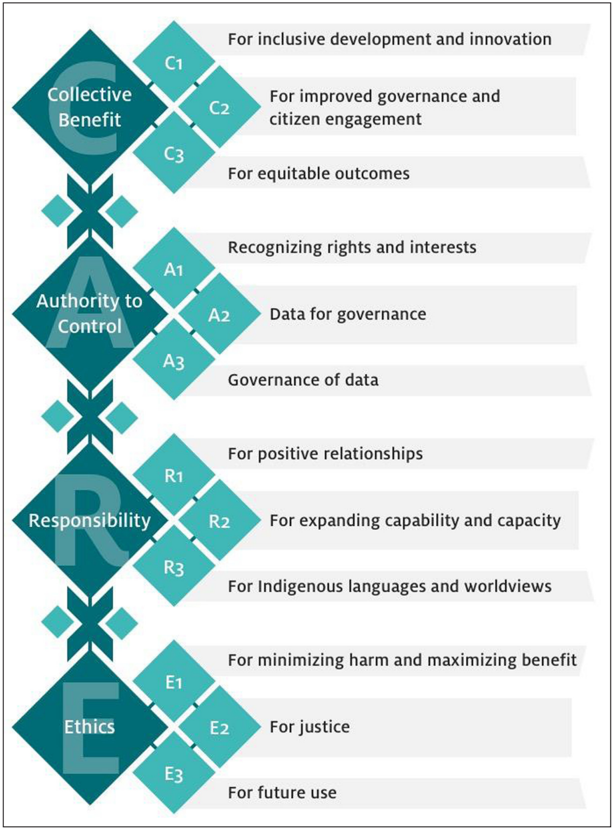
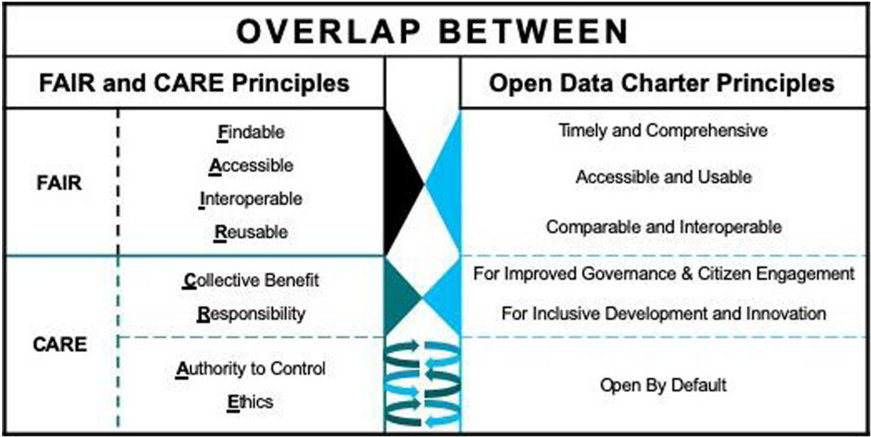
Concerns about secondary use of data and limited opportunities for benefit-sharing have focused attention on the tension that Indigenous communities feel between (1) protecting Indigenous rights and interests in Indigenous data (including traditional knowledges) and (2) supporting open data, machine learning, broad data sharing, and big data initiatives. The International Indigenous Data Sovereignty Interest Group (within the Research Data Alliance) is a network of nation-state based Indigenous data sovereignty networks and individuals that developed the ‘CARE Principles for Indigenous Data Governance’ (Collective Benefit, Authority to Control, Responsibility, and Ethics) in consultation with Indigenous Peoples, scholars, non-profit organizations, and governments. The CARE Principles are people– and purpose-oriented, reflecting the crucial role of data in advancing innovation, governance, and self-determination among Indigenous Peoples. The Principles complement the existing data-centric approach represented in the ‘FAIR Guiding Principles for scientific data management and stewardship’ (Findable, Accessible, Interoperable, Reusable). The CARE Principles build upon earlier work by the Te Mana Raraunga Maori Data Sovereignty Network, US Indigenous Data Sovereignty Network, Maiam nayri Wingara Aboriginal and Torres Strait Islander Data Sovereignty Collective, and numerous Indigenous Peoples, nations, and communities. The goal is that stewards and other users of Indigenous data will ‘Be FAIR and CARE.’ In this first formal publication of the CARE Principles, we articulate their rationale, describe their relation to the FAIR Principles, and present examples of their application.
Overview
CoChat Summary
TL;DR
The CARE Principles for Indigenous Data Governance (Collective Benefit, Authority to Control, Responsibility, and Ethics) are people- and purpose-oriented principles developed by the International Indigenous Data Sovereignty Interest Group to complement the data-centric FAIR Principles. They aim to support Indigenous rights, self-determination, and control over Indigenous data while enabling equitable data reuse.
Key findings
- CARE comprises four principles—Collective Benefit, Authority to Control, Responsibility, and Ethics—designed to complement FAIR (Findable, Accessible, Interoperable, Reusable) and guide data stewards and users to “Be FAIR and CARE.”
- The paper reports global context from UN 2009: Indigenous presence spans over 90 countries, includes over 370 million Indigenous persons, and involves more than 5,000 distinct cultures.
- CARE emerged from an Indigenous-led workshop held in Gaborone, Botswana, on 8 November 2018, as part of International Data Week, with later input from Indigenous leaders, scholars, network members, and allies.
- Early adopters/implementation examples include the Research Data Alliance, the Smithsonian Institution (e.g., Smithsonian Directive 609 and planned Collection CARE Notices), and the Open Data Charter.
Methods
- This is a conceptual/principles development paper, not an empirical study; it describes the rationale, development, and illustrative application of the CARE Principles.
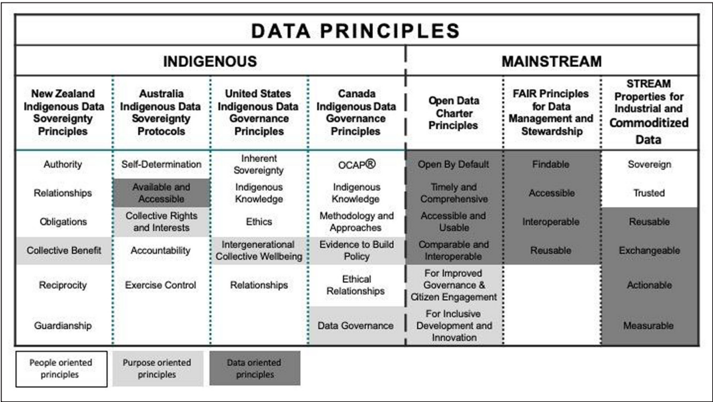
- Workshop organizers prepared an analysis of principles from Indigenous data sovereignty/governance frameworks and mainstream sources (Table 1) to inform dialogue; participants identified the four primary principles and drafted primary and sub-principles, then circulated the draft for input.
- The paper presents the principles’ relation to FAIR and examples of adoption; no formal sample, dataset, or statistical analysis is reported.
Limitations
- Stated: further research is needed to identify mechanisms that support implementation; create tools, policies, and practices that enact the Principles; explore application in different contexts (e.g., research repositories, knowledge co-production, institutional policies, existing databases/systems); and operationalize the Principles in tandem with FAIR.
- Evident: the paper is a principles publication and does not report empirical evaluation of implementation outcomes; the adoption examples are illustrative rather than systematically assessed.
Model-written summary. Check it against the paper before relying on it.
Integrity signals
Registry
Cites
Statistics
Figures
Verification
Claims the paper makes
0 Valid · 0 Not valid · 1 Not checked · 9 Own results and interpretations
- Probably not a substantial claim. 9
- It may state two separate claims as one. 5
Claims other papers make about this one
Each is checked against this paper’s own text: does it say what the citing paper says it does?
The source backs part of the claim, not all of it — or backs it for a different population, condition or comparison.
In the citing paper
“This can be in conflict with cultural values, e.g., in the case of indigenous communities that are generally underrepresented on Wikipedia but have concerns about how their knowledge might be exploited if shared [28, 29].”
From Data Governance in the Age of Large-Scale Data-Driven Language Technology (2022) · cites this paper as [28]
Experimental — accuracy not yet measuredThe source backs part of the claim, not all of it — or backs it for a different population, condition or comparison.
In the citing paper
“The key distinction is that while FAIR principles focus on making data maximally open and shareable-goals that align with scientific efficiency, CARE principles focus on people and purpose, emphasizing that data use should align with the rights and needs of Indigenous Peoples.”
From Data colonialism and indigenous languages in AI: a critical review of existing initiatives and their struggles with data sovereignty (2026) · cites this paper as Carroll et al. 2020
Experimental — accuracy not yet measuredThe source backs part of the claim, not all of it — or backs it for a different population, condition or comparison.
In the citing paper
“A concrete expression of Indigenous Data Sovereignty is found in the CARE Principles for Indigenous Data Governance, formulated in 2019 by the Global Indigenous Data Alliance and related networks (Carroll et al. 2020).”
From Data colonialism and indigenous languages in AI: a critical review of existing initiatives and their struggles with data sovereignty (2026) · cites this paper as Carroll et al. 2020
Experimental — accuracy not yet measuredThe source backs part of the claim, not all of it — or backs it for a different population, condition or comparison.
In the citing paper
“Indigenous data, whether born digital or not, include information, knowledge, specimens, and belongings about Indigenous Peoples to which they relate at both the individual and collective levels (Carroll et al., 2020; Rainie et al., 2019; Lovett et al., 2019).”
From Using Indigenous Standards to Implement the CARE Principles: Setting Expectations through Tribal Research Codes (2022) · cites this paper as Carroll et al., 2020
Experimental — accuracy not yet measuredThe source backs part of the claim, not all of it — or backs it for a different population, condition or comparison.
In the citing paper
“The FAIR Principles are aligned to the global shift towards open science and open data, promoting data centric criteria that facilitate increased data sharing among entities while ignoring relationships, power differentials, and the historical conditions associated with the collection of data10,11.”
From Operationalizing the CARE and FAIR Principles for Indigenous data futures (2021) · cites this paper as [11]
Experimental — accuracy not yet measured
6 more claims about this paper
Create a free account to see every claim other papers make about this one.
Self-check
Percentages, sums and reported differences re-computed from the paper’s own numbers.
Each contradiction between two passages listed here was confirmed by an independent check.
Rated minor: it would not touch a result — a value no result rests on, a p-value that stays on the same side of the significance level, or a conflict that is clerical, resolved elsewhere in the paper, or outside its own findings.
In the paper
§ The CARE Principles for Indigenous Data Governance > Research Data Alliance (www.rd-alliance.org), in research environments
“In 2012, the American Museum of Natural History at the Smithsonian Institution in Washington, DC released an Access and Benefit Sharing Policy on Genetic Resources”
§ The CARE Principles for Indigenous Data Governance > References
“42. Smithsonian Institution. 2012. Access and Benefit Sharing Policy on Genetics Resources. Washington, DC: National Museum of American History.”
Citations
Cites
The FAIR Guiding Principles for scientific data management and stewardship
Wilkinson, M. D., Dumontier, M., Aalbersberg, I. J., Appleton, G., Axton, M., Baak, A., Blomberg, N., Boiten, J.-W., da Silva Santos, L. B., Bourne, P. E., et al. (2016) · Scientific Data · doi:10.1038/sdata.2016.18 · Cited by 18,423
Indigenous Peoples In International Law: Second Edition
Anaya, S. J. (2004) · doi:10.1093/oso/9780195173499.001.0001 · Cited by 1,011
(2016) · doi:10.22459/caepr38.11.2016 · Cited by 696 · cited 6×
“…has become an increasingly relevant topic as big data, open data, open science, and data reuse become an integral part of research and institutional practices (Carroll, Rodriguez-Lonebear & Martinez 2019; Lovett et al. 2019; Rainie et al. 2019; Kukutai & Taylor 2016a; Taylor & Kukutai 2015).”
BackgroundInfluentialBuck, M., & Hamilton, C. (2011) · Review of European Community & International Environmental Law · doi:10.1111/j.1467-9388.2011.00703.x · Cited by 627
Indigenous Data Governance: Strategies from United States Native Nations
Carroll, S. R., Rodriguez-Lonebear, D., & Martinez, A. (2019) · Data Science Journal · doi:10.5334/dsj-2019-031 · Cited by 264
Self-citationGenomic Research Through an Indigenous Lens: Understanding the Expectations
Garrison, N. A., Hudson, M., Ballantyne, L. L., Garba, I., Martinez, A., Taualii, M., Arbour, L., Caron, N. R., & Rainie, S. C. (2019) · Annual Review of Genomics and Human Genetics · doi:10.1146/annurev-genom-083118-015434 · Cited by 220
Self-citationData sovereignty for indigenous peoples: current practice and future needs
Kukutai, T., & Taylor, J. (2016) · Indigenous Data Sovereignty · doi:10.22459/caepr38.11.2016.01 · Cited by 116
Rainie, S. C., Schultz, J. L., Briggs, E., Riggs, P., & Palmanteer-Holder, N. L. (2017) · International Indigenous Policy Journal · doi:10.18584/iipj.2017.8.2.1 · Cited by 114
Law, Knowledge, Culture: The Production of Indigenous Knowledge in Intellectual Property Law
Anderson, J. E. (2009) · Edward Elgar Publishing eBooks · doi:10.4337/9781848447196 · Cited by 95
Self-citationNational Inuit Strategy on Research.
Kanatami, I. T. (2018) · IOC of UNESCO (Intergovernmental Oceanographic Commission) · doi:10.25607/obp-1673 · Cited by 93
Research works printed but not linked: 18
- Cajete, G. 2000. Native science: Native laws of interdependence. Santa Fe: Clear Light.
- Castellano, MB. 2004. Ethics of Aboriginal research. Journal of Aboriginal Health, January, 98-114.
- Hudson, M, Milne, M, Russell, K, Smith, B, Reynolds, P and Atatoa-Carr, P. 2016. The Development of Guidelines for Indigenous Research Ethics in Aotearoa/New Zealand. In A.-L. Drugge (ed.), Ethics in Indigenous Research, Past Experiences -Future Challenges, 157-174. Umea, Sweden: Vaartoe Centre for Sami Research, Umea University.
- Drugge, A-L. 2016. Ethics in Indigenous Research: Past Experiences -Future Challenges. Umea, Sweden: Vaartoe Centre for Sami Research, Umea University.
- Julayinbul Statement in Indigenous Intellectual Property Rights. 1993. The Julayinbul Conference on Intellectual and Cultural Property. Australia: Jingarrba.
- Kovach, M. 2009. Indigenous methodologies: Characteristics, conversations, and contexts. Toronto: University of Toronto Press.
- Kukutai, T and Taylor, J. 2016a. Indigenous data sovereignty: Toward an agenda. Canberra, Australia: Aus- tralian National University Press. DOI: https://doi.org/10.22459/CAEPR38.11.2016 · DOI · Paper page
- Lovett, R, Lee, V, Kukutai, T, Cormack, D, Rainie, SC and Walker, J. 2019. Good data practices for Indigenous Data Sovereignty and Governance. In: Daly, A, Devitt, K and Monique, M (eds.), Good Data. Amsterdam: Institute of Network Cultures Inc. ISBN 978-94-92302-27-4.
- Mātaatua Declaration on Cultural and Intellectual Property Rights of Indigenous Peoples. 1993. First International Conference on the Cultural and Intellectual Property Rights of Indigenous Peoples. 12-18 June 1993. Aotearoa, New Zealand. Available at https://www.wipo.int/export/sites/www/tk/en/ databases/creative_heritage/docs/mataatua.pdf.
- McGregor, D, Restoule, JP and Johnston, R. (eds.) 2018. Indigenous research: Theories, practices, and rela- tionships. Canadian Scholars' Press.
- 2017, First Nations’ data governance: Measuring the nation-to-nation relationship discussion paper, British Columbia First Nations’ Data Governance Initiative
- Rainie, SC, Kukutai, T, Walter, M, Figueroa-Rodriguez, OL, Walker, J and Axelsson, P. 2019. Issues in Open Data: Indigenous Data Sovereignty. In: Davies, T, Walker, S, Rubinstein, M and Perini, F (eds.), The State of Open Data: Histories and Horizons. Cape Town and Ottawa: African Minds and International Development Research Centre. pp. 300-319.
- Ratima, M. 2001. Kia uruuru mai a hauora being healthy, being Maori: Conceptualising Maori health promotion. Published thesis (PhD) Department of Public Health. Dunedin, University of Otago.
- Ratima, M. 2001. Kia uruuru mai a hauora being healthy, being Maori: Conceptualising Maori health promotion. Published thesis (PhD) Department of Public Health. Dunedin, University of Otago. Research Data Alliance. 2017. International Indigenous Data Sovereignty Intertest Group. Available at https://www.rd-alliance.org/groups/international-indigenous-data-sovereignty-ig [Last accessed 17 January 2020].
- Snipp, CM. 2016. What does data sovereignty imply: what does it look like? In: Kukutai and Taylor, J (eds.), Indigenous data sovereignty: Toward an agenda. Canberra, Australia: Australian National University Press. pp. 39-55. DOI: https://doi.org/10.22459/CAEPR38.11.2016. · DOI · Paper page
- Smith, LT. 2012. Decolonizing Methodologies: Research and Indigenous Peoples. Zed Books. London: Univer- sity of Otago Press.
- Rodriguez-Lonebear, D. 2016. Building a data revolution in Indian country. In: Kukutai, T and Taylor, J (eds.), Indigenous data sovereignty: Toward an agenda. Canberra, Australia: Australian National University Press. pp. 253-272. DOI: https://doi.org/10.22459/CAEPR38.11.2016. · DOI · Paper page
- 2008, Research is ceremony: Indigenous research methods
Cited by
Items 301–400 of 1,410
SanClements, M. D., Record, S., Rose, K. C., Donnelly, A., Chong, S. S., Duffy, K. A., Hallmark, A. J., Heffernan, J. B., Liu, J., Mitchell, J. J., et al. (2022) · Ecosphere · doi:10.1002/ecs2.4262 · Cited by 9
Murray, D. S., Cole, I., Nunez, N., Parker, E. M., Mikulis, A., Herreid, A. M., Donovan, M., Fazekas, H. M., & Wymore, A. S. (2023) · Earth s Future · doi:10.1029/2022ef002964 · Cited by 10
Data Science as an Interdiscipline: Historical Parallels from Information Science
Mayernik, M. S. (2023) · Data Science Journal · doi:10.5334/dsj-2023-016 · Cited by 16
Ground Truths: Community-Engaged Research for Environmental Justice
Raphael, C., & Matsuoka, M. (2024) · University of California Press eBooks · doi:10.1525/9780520384347 · Cited by 14
Improving a framework for evaluating participatory science
Calyx, C., & Finlay, S. M. (2022) · Evaluation · doi:10.1177/13563890221085996 · Cited by 12
Ten simple rules for organizations to support research data sharing
Champieux, R., Solomonides, A. E., Conte, M. L., Rojevsky, S., Phuong, J., Dorr, D. A., Zampino, E., Wilcox, A. B., Carson, M. B., & Holmes, K. (2023) · PLoS Computational Biology · doi:10.1371/journal.pcbi.1011136 · Cited by 12
“The Federal Data Strategy’s Data Ethics Framework defines data ethics as “the norms of behavior that promote appropriate judgments and accountability when acquiring, managing, or using data, with the goals of protecting civil liberties, minimizing risks to individuals and society, and maximizing the public good” [36].”
BackgroundInfluentialJourneying towards best practice data management in biodiversity genomics
Forsdick, N. J., Wold, J., Angelo, A., Bissey, F., Hart, J., Head, M. A., Liggins, L., Senanayake, D., & Steeves, T. E. (2023) · Molecular Ecology Resources · doi:10.1111/1755-0998.13880 · Cited by 12
Walls, M. L. (2023) · International Migration Review · doi:10.1177/01979183231218973 · Cited by 15
“More recently, Indigenous Nations and Peoples assemble to, for example, assert rights to data access and sov-ereignty (Carroll et al. 2020), promote equitable funding for healthcare ( NCAI , n.d.), and af fi rm the United Nations Declaration on the Rights of Indigenous People(United Nations, 2007).”
Jakoboski, J., Roughan, M., Radford, J., de Souza, J. M. A. C., Felsing, M., Smith, R. O., Puketapu-Waite, N., Orozco, M. M., Maxwell, K. H., & Vranken, C. V. (2024) · Progress In Oceanography · doi:10.1016/j.pocean.2024.103278 · Cited by 12
Challenges of open data in aquatic sciences: issues faced by data users and data providers
Mesman, J. P., Barbosa, C. C., Lewis, A. S. L., Olsson, F., Calhoun-Grosch, S., Grossart, H., Ladwig, R., Fuente, S. L., Münzner, K., Nkwalale, L. G. T., et al. (2024) · Frontiers in Environmental Science · doi:10.3389/fenvs.2024.1497105 · Cited by 13
Polejack, A., Coelho, L. F., Harden‐Davies, H., Elsler, L. G., Amon, D. J., & de Vos, A. (2025) · Marine Policy · doi:10.1016/j.marpol.2025.106639 · Cited by 11
Khurana, S. (2025) · Journal of Computer Allied Intelligence (JCAI). · doi:10.69996/jcai.2025013 · Cited by 18
Ali, F. (2025) · Annals of Tourism Research · doi:10.1016/j.annals.2025.104009 · Cited by 11
Lopez, M. L. D., Acharya‐Patel, N., Allison, M. J., Migneault, A., Trilesky, S. L., & Helbing, C. C. (2025) · Journal of Heredity · doi:10.1093/jhered/esaf068 · Cited by 10
“Furthermore, eDNA technologies should align with FAIR principles ( Wilkinson et al. 2016; Takahashi et al. 2025), which must be complemented by the CARE principles ( Carroll et al. 2020), which emphasize Indigenous data sovereignty.”
Affirming Indigenous data sovereignty in collaborative wildlife conservation in the era of open data
Tattersall, E. R., Cardinal‐McTeague, W. M., Myers‐Smith, I. H., Jenkins, D. A., & Burton, A. C. (2025) · People and Nature · doi:10.1002/pan3.70161 · Cited by 13
“Given that Indigenous worldviews are diverse and based in their own local context, IDS perspectives vary widely across Indigenous Peoples (Carroll et al., 2020 S1).”
InfluentialTen best practices to strengthen stewardship and sharing of water science data in Canada
Persaud, B., Dukacz, K. A., Saha, G. C., Peterson, A. M., Moradi, L., O'Hearn, S., Clary, E., Mai, J., Steeleworthy, M., Venkiteswaran, J. J., et al. (2021) · Hydrological Processes · doi:10.1002/hyp.14385 · Cited by 9
Gupta, N., Bonneau, N. M. A., & Elvidge, M. (2022) · Archaeologies · doi:10.1007/s11759-022-09466-x · Cited by 12
“This situation, in turn, precipitates the erasure of any role for Indigenous peoples in data governance processes (Rainie et al. 2019; Carroll et al. 2020) and the silencing of knowledge production in the Global South (Dutta et al. 2021).”
BackgroundAchieving societal collaboration and impact in Aotearoa-New Zealand through transdisciplinarity
Robson-Williams, M., Harcourt, N., & Mercier, O. (2023) · GAIA - Ecological Perspectives for Science and Society · doi:10.14512/gaia.32.1.9 · Cited by 11
Welcoming More Participation in Open Data Science for the Oceans
Fredston, A., & Lowndes, J. S. (2023) · Annual Review of Marine Science · doi:10.1146/annurev-marine-041723-094741 · Cited by 16
Wagner, T. L., Fenlon, K., & Sorensen, A. H. (2023) · Proceedings of the Association for Information Science and Technology · doi:10.1002/pra2.798 · Cited by 9
“…access mandates to data repositories, from credentialing programs on best practices guidelines, such as the FAIR and CARE principles (Wilkinson et al. 2016; Carroll et al. 2020) (cid:178) has largely focused on making interventions in the sharing and reuse of current and future scientific data.”
BackgroundTraditional and Indigenous Perspectives on Healing Trauma With Psychedelic Plant Medicines
McCleave, C. D., Beaulieu, S., Lopez, R., & Tafur, J. (2024) · International Journal of Mental Health and Addiction · doi:10.1007/s11469-024-01252-w · Cited by 10
“To do so, we assert that the CARE Principles for Indigenous Data Governance (Collective benefit, Authority to control, Responsibility, and Ethics) should serve as guiding principles for any research involving Indigenous Peoples (Carroll et al., 2020).”
Silk, E. T., Bayer, S. B., Foster, M., Roy, N. C., Taylor, M. W., Vatanen, T., & Gearry, R. B. (2024) · mSystems · doi:10.1128/msystems.00909-24 · Cited by 11
“The CARE (Collective benefit, Authority to control, Responsibility, Ethics) principles for Indigenous data governance provide current standards for ensuring that data are handled appropriately in research related to Indigenous populations (68, 69).”
InfluentialCoordinating Migration: Caring for Communities & Their Data
Shankar, S. (2021) · ACM Conference on Computer Supported Cooperative Work (CSCW) · doi:10.1145/3462204.3481798 · Cited by 10
The Ira Moana Project: A Genetic Observatory for Aotearoa’s Marine Biodiversity
Liggins, L., Noble, C., & The Ira Moana Network (2021) · Frontiers in Marine Science · doi:10.3389/fmars.2021.740953 · Cited by 10
“Accordingly, the Ira Moana Project has sought to accommodate the CARE Principles for Indigenous Data Governance (Collective benefit, Authority to control, Responsibility, Ethics; Carroll et al., 2020) alongside the principles of FAIR to enable Māori in a governance and stewardship role.”
MethodInfluentialIndigenous health equity in health register ascertainment and data quality: a narrative review
Wright, K., Tapera, R. M., Stott, N. S., Sorhage, A., Mackey, A. H., & Williams, S. A. (2022) · International Journal for Equity in Health · doi:10.1186/s12939-022-01635-2 · Cited by 20
“This finding is consistent with Indigenous data sovereignty scholarship articulating both the right and need for Indigenous knowledges and approaches to be integrated into policy and practice [44].”
BackgroundResultCudennec, C., Lins, H. F., Uhlenbrook, S., Amani, A., & Arheimer, B. (2022) · Hydrological Sciences Journal · doi:10.1080/02626667.2022.2150380 · Cited by 12
Szponar, N., Su, Y., Stupple, G. W., McLagan, D. S., Pilote, M., Munoz, A., Mitchell, C. P. J., Steffen, A., Wania, F., & Bergquist, B. A. (2023) · Journal of Geophysical Research Atmospheres · doi:10.1029/2022jd037361 · Cited by 10
4. Imagining higher education as infrastructures of care
Chan, L. K. W., Ghali, M., & Prinsloo, P. (2023) · Open Book Publishers · doi:10.11647/obp.0363.04 · Cited by 10
Paleoclimate Proxies and the Benefits of Disunity
Watkins, A. (2024) · Philosophy of Science · doi:10.1017/psa.2024.12 · Cited by 8
Abdu, A. A., Chambers, L. M., Mulligan, D. K., & Jacobs, A. Z. (2024) · ACM Conference on Fairness, Accountability, and Transparency (FAccT) · doi:10.1145/3630106.3658962 · Cited by 17
“We suggest the handoff model as a tool that can help researchers and technologists to systematically move lessons from critical algorithm studies into practice.”
Towards precision cancer medicine for Aboriginal and Torres Strait Islander cancer health equity
Clark, J. R., Buck, J. M., Richards‐Satour, A., Lyons, L., & Brown, A. D. H. (2024) · The Medical Journal of Australia · doi:10.5694/mja2.52346 · Cited by 9
“48 The CARE principles should be enacted in the context of precision cancer medicine through purposeful design of data ecosystems to incorporate Aboriginal and Torres Strait Islander data governance structures and to enable Aboriginal and Torres Strait Islander peoples to derive collective benefit…”
BackgroundIncreasing Diversity, Equity, Inclusion, and Accessibility in Rare Disease Clinical Trials
Baynam, G. S., Baker, S., Steward, C. A., Summar, M. L., Halley, M. C., & Pariser, A. (2024) · Pharmaceutical Medicine · doi:10.1007/s40290-024-00529-8 · Cited by 10
“The Indigenous Data Governance CARE (Collective Benefit, Authority to Control, Responsibility, Ethics) principles complement FAIR [105].”
Indigenous language technology in the age of machine learning
Moshagen, S. N., Antonsen, L., Wiechetek, L., & Trosterud, T. (2024) · Acta Borealia · doi:10.1080/08003831.2024.2410124 · Cited by 8
“Although positively received, the FAIR principles have not been deemed enough for work with Indigenous languages and communities, and thus Carroll et al .”
Ten simple rules for good model-sharing practices
Garcia, I. K., Erdmann, C. C., Gesing, S., Barton, C. M., Cadwallader, L., Hengeveld, G., Kirkpatrick, C. R., Knight, K., Lemmen, C., Ringuette, R., et al. (2025) · PLoS Computational Biology · doi:10.1371/journal.pcbi.1012702 · Cited by 12
“Regarding guidelines, consider the CARE Principles for Indigenous Data Governance [19].”
Carrasco, L. B. (2025) · Journal of Library Metadata · doi:10.1080/19386389.2025.2515766 · Cited by 12
“Governance frameworks like the CARE (Collective Benefit, Authority to Control, Responsibility, and Ethics) principles for Indigenous data governance can be embedded in metadata to reinforce ethical data stewardship and sovereignty (Carroll et al., 2020; Rolan et al., 2020).”
Hart, R. E., da Fonseca-Kruel, V. S., Dalcin, E., da Silva, L. A. E., Pace, M. C., Schmull, M., Beltrán-Rodríguez, L. A., Murguía‐Romero, M., Camargo, D. F., Mapes, C., et al. (2025) · Plants People Planet · doi:10.1002/ppp3.70052 · Cited by 8
“Thirdly, ethical use and sharing of ethnobotanical data from her-barium specimen labels — particularly traditional knowledge from IPLCs — requires careful attention (Levis et al., 2024 (Carroll et al., 2020; Davis et al., 2025; Wilkinson et al., 2016).”
Klinges, D. H., Lembrechts, J. J., de Vondel, S. V., Greenlee, E., Hayles-Cotton, K., & Senior, R. A. (2025) · Ecological Informatics · doi:10.1016/j.ecoinf.2025.103376 · Cited by 8
A review of open data for studying global groundwater in social–ecological systems
Huggins, X., Gleeson, T., Famiglietti, J. S., Reinecke, R., Zamrsky, D., Wagener, T., Taylor, R. G., Konar, M., Vargas, C. R., Porkka, M., et al. (2025) · Environmental Research Letters · doi:10.1088/1748-9326/adf127 · Cited by 16
“It therefore is critical to clarify how the FAIR and CARE (collective benefit, ability to control, responsibility, and Indigenous ethics) data principles (Wilkinson et al 2016, Carroll et al 2020) interrelate and relate to global groundwater research.”
Echoes of eugenics: confronting its effects in indigenous genomics
Sherman, C. A., Nataneli, S., Claw, K. G., & Mooney, J. A. (2025) · Genetics · doi:10.1093/genetics/iyaf127 · Cited by 11
“Advocacy will require the scientific community to educate themselves and follow frameworks specifically developed for conducting genomics research with Indigenous peoples or ethical guidelines developed by communities themselves (Carroll et al. 2020; Claw et al. 2018; Hudson et al. 2016, 2020).”
Towards a decolonising implementation science: principles from Indigenous leadership
Kemp, C. G., White, L. A., Haroz, E. E., & Warne, D. K. (2026) · The Lancet Global Health · doi:10.1016/s2214-109x(25)00469-3 · Cited by 14
“The agreement operationalised CARE Principles for Indigenous Data Governance, 25 required tribal institutional review board approval for all activities, and specified memorandums of understanding that strictly limited external data access to the specific study timeframe and analytic goals.”
Sethy, M. (2026) · AI & Society · doi:10.1007/s00146-026-02936-8 · Cited by 21
“In response, initiatives, such as the Indigenous Protocol and Artificial Intelligence Position Paper (Lewis et al. 2020) and the CARE Principles for Indigenous Data Governance (Carroll et al. 2020) (Carroll et al. 2020).”
Ahmed, B. (2022) · Critical Policy Studies · doi:10.1080/19460171.2022.2158481 · Cited by 13
“The collective benefit principle emphasizes supporting ‘(1) Indigenous nation and community use and reuse of data; (2) use of data for policy decisions and evaluation of services; and (3) creation and use of data that reflect community values’ (Carroll et al. 2020, 6).”
BackgroundInfluentialUnified and pluralistic ideals for data sharing and reuse in biodiversity
Sterner, B., Elliott, S., Gilbert, E., & Franz, N. M. (2023) · Database · doi:10.1093/database/baad048 · Cited by 9
“Recognizing that not all research problems are treated equally in practice raises questions about who decides which ones are important, raising concerns about equity, justice and sovereignty given that the currently prioritized problems, aims and researchers pursuing them are not representative of society at large (56…”
BackgroundCommunity Health Impacts From Natural Gas Pipeline Compressor Stations
Davis, C. D., Frazier, C. L., Guennouni, N., King, R., Mast, H., Plunkett, E. M., & Quirk, Z. J. (2023) · GeoHealth · doi:10.1029/2023gh000874 · Cited by 9
“…this area has focused on developing user friendly data visualization (Valencia et al., 2020) and setting guidelines for Indigenous data sovereignty (Carroll et al., 2020), the reality of data governance in the United States reveals underlying challenges that may hinder efforts to expand EJ…”
BackgroundMethodMaking the most of existing data in conservation research
Binley, A. D., Vincent, J. G., Rytwinski, T., Soroye, P., & Bennett, J. (2023) · Perspectives in Ecology and Conservation · doi:10.1016/j.pecon.2023.11.004 · Cited by 18
Perspectives and Future Developments Within Sedimentary DNA Research
Holman, L. E., Wang, Y., Sawafuji, R., Epp, L. S., Bohmann, K., & Pedersen, M. W. (2023) · Developments in paleoenvironmental research · doi:10.1007/978-3-031-43799-1_13 · Cited by 9
How CRISPR could yield the next blockbuster crop
Marshall, M. (2024) · Nature · doi:10.1038/d41586-024-00015-w · Cited by 8
Islam, M., Valiani, A. A., Datta, R. K., Chowdhury, M., & Turin, T. C. (2024) · Cambridge Quarterly of Healthcare Ethics · doi:10.1017/s096318012400015x · Cited by 15
de Lima, A. D. S., Julião, C. G., da Silva, E. M., Dias, A. F., de Jesus, J. M., da Silva, M. T., Almada, E. D., de Andrade, J. P., Bensusan, N., Zank, S., et al. (2024) · Nature Communications · doi:10.1038/s41467-024-53421-z · Cited by 9
Santos, A. D., Balabanski, A. H., Katzenellenbogen, J. M., Thrift, A. G., Burchill, L. J., & Parsons, M. W. (2021) · Vessel Plus · doi:10.20517/2574-1209.2020.69 · Cited by 12
Self-citationData Curation Implications of Qualitative Data Reuse and Big Social Research
Mannheimer, S. (2021) · Journal of eScience Librarianship · doi:10.7191/jeslib.2021.1218 · Cited by 10
Beyond Ethics: Considerations for Centering Equity-Minded Data Science
Alexander, N., Eaton, C. D., Shrout, A. H., Tsinnajinnie, B., & Tsosie, K. S. (2022) · Journal of Humanistic Mathematics · doi:10.5642/jhummath.ocys6929 · Cited by 11
“As data science has become a more popular term in academia, I began to think about how my background and 270 Beyond Ethics interests in these real-world applications might contribute to a more critical analysis of quantification in the contexts of African American life.”
InfluentialMendenhall, A. N., Hicks, C., Holder, M., Holmes, C. L., Jung, E., Ramirez, L., Fairman, M., Bulls, S. T., & Levy, M. M. (2023) · Child Abuse & Neglect · doi:10.1016/j.chiabu.2023.106344 · Cited by 8
Barry, C. M., Livingston, M. D., Livingston, B. J., Kominsky, T. K., & Komro, K. A. (2023) · Journal of Adolescent Health · doi:10.1016/j.jadohealth.2023.07.014 · Cited by 9
“The Transparent Reporting of Evaluations with Nonrandomized Designs statement for observational research and CARE principles for Indigenous Data Governance guide the reporting of methods and findings for this study [36,37].”
MethodData for Social Good: Non-Profit Sector Data Projects
Farmer, J., McCosker, A., Albury, K., & Aryani, A. (2022) · Springer eBooks · doi:10.1007/978-981-19-5554-9 · Cited by 15
Partnering in research about land management with tribal nations— insights from the Pacific West
Steen‐Adams, M. M., Lake, F. K., Jones, C. E., & Kruger, L. E. (2023) · doi:10.2737/psw-gtr-275 · Cited by 9
Pinhanez, C., Cavalin, P., Storto, L., Finbow, T., Cobbinah, A., Nogima, J., Vasconcelos, M., Domingues, P., Mizukami, P. D. S., Grell, N., et al. (2024) · arXiv · doi:10.48550/arxiv.2407.12620 · Cited by 8
“Moreover, history is adamant that languages are vitalized by their own communities, under their own practices and motives, in complex socio-political processes undertaken by their native speakers (Thomason, 2015; Carroll et al., 2020).”
Background“Gotta Love Some Human Connection”: Humanizing Data Expression in an Age of AI
McBride, C., Lee, C. H., & Soep, E. (2024) · Reading Research Quarterly · doi:10.1002/rrq.550 · Cited by 9
Good data relations key to Indigenous research sovereignty: A case study from Nunatsiavut
Ortenzi, K. M., Flowers, V., Pamak, C., Saunders, M., Schmidt, J. O., & Bailey, M. (2024) · AMBIO · doi:10.1007/s13280-024-02077-6 · Cited by 13
Cowan, T. L., & Rault, J. (2024) · Punctum Books · doi:10.53288/0364.1.00 · Cited by 12
Zuniga-Teran, A., Brown, A. R., & Gerlak, A. (2025) · Society & Natural Resources · doi:10.1080/08941920.2025.2463064 · Cited by 7
“To help reconcile this tension, the CARE principles (collective benefit, authority to control, responsibility, and ethics) were developed to guide the appropriate use of Indigenous data (Carroll et al. 2020).”
Chang, C. H., Cook‐Patton, S. C., Erbaugh, J. T., Lu, L., Masuda, Y. J., Molnár, I. D., Papp, D., & Robinson, B. E. (2025) · Conservation Biology · doi:10.1111/cobi.14464 · Cited by 13
“New guidance that builds on existing frameworks, such as the CARE principles for Indigenous data governance (Carroll et al., 2020; Jennings et al., 2023) and FAIR data management principles (Wilkinson et al., 2016), for LLM-driven analyses is critically needed.”
Genetic databases in the era of ‘DSI’ benefit-sharing
Rouard, M., Scholz, A. H., & Halewood, M. (2025) · Trends in Genetics · doi:10.1016/j.tig.2025.03.004 · Cited by 9
Carroll, D., Houndolo, M. M., George, A. B., & Redvers, N. (2025) · International Journal of Environmental Research and Public Health · doi:10.3390/ijerph22060886 · Cited by 9
“OCAP ® has served as an exemplary model that has informed similar data frameworks and trainings in other countries such as the CARE (Collective Benefit, Authority to Control, Responsibility, and Ethics) Principles [59].”
InfluentialBužan, E., de Guttry, C., Bortoluzzi, C., Street, N. R., Lucek, K., Rosling, A., Ometto, L., Mouton, A., Marins, L. S., Ruiz‐López, M. J., et al. (2025) · Molecular Ecology · doi:10.1111/mec.70001 · Cited by 14
Future of coral bleaching research
Grottoli, A. G., Hulver, A. M., Thurber, R. L. V., Toonen, R. J., Schmeltzer, E. R., Kuffner, I. B., Barott, K. L., Baums, I. B., Castillo, K. D., Chapron, L., et al. (2025) · BioScience · doi:10.1093/biosci/biaf066 · Cited by 8
Dei, D.-G. J., Ocloo, P. E. D., Anane-Donkor, L., Aidoo, T. A. P., & Asamoah, C. (2025) · Information Development · doi:10.1177/02666669251370351 · Cited by 9
Palmer, D. A. (2025) · Research Ethics · doi:10.1177/17470161251388131 · Cited by 11
“These developments converge with the influential CARE Principles for Indigenous Data Governance (Carroll et al., 2020), which emphasise Collective benefit, Authority to control, Responsibility, and Ethics.”
Ethical crossroads in agricultural data: Perspectives on trust, equity and sustainability
Garwe, E. C., Arpaci, S., Moss, A. J., Bailey, K., Suchith, A., Oyewole, O. B., & Thondhlana, J. (2025) · Outlook on Agriculture · doi:10.1177/00307270251391436 · Cited by 9
“However, trust in an institution is not enough because of the legacy of colonial forces (Carroll et al., 2020).”
States of Solidarity: How to Build a Society
Prainsack, B. (2026) · doi:10.1093/9780198965336.001.0001 · Cited by 11
The billion-dollar case for sustaining palaeontology’s digital databases
Dowding, E. M., Dunne, E. M., Collins, K. S., Cryer, K., Baets, K. D., Dimitrijević, D., Edie, S. M., Finnegan, S., Kiessling, W., Lintulaakso, K., et al. (2026) · Nature Ecology & Evolution · doi:10.1038/s41559-026-02985-8 · Cited by 12
“We propose a phased, community-guided transition towards a sustainable, interconnected, and explicitly modular data infrastruc-ture—one that is grounded in equitable practice and ensures proper attribution 40,64,91,101–103 .”
Connecting marine data to society
Larkin, K. E., Marsan, A.-A., Tonné, N., van Isacker, N., Collart, T., Delaney, C. P., Vasquez, M., Manca, E., Lillis, H., & Calewaert, J.-B. (2021) · Elsevier eBooks · doi:10.1016/b978-0-12-823427-3.00003-7 · Cited by 7
Indigenous Data Governance in Australia: Towards a National Framework
Rose, J. W. W., Langton, M., Smith, K., & Clinch, D. (2023) · International Indigenous Policy Journal · doi:10.18584/iipj.2023.14.1.10987 · Cited by 15
Citizen Science in Australian Higher Education: Emerging Learning and Research Communities
Quinnell, R. G., Motion, A., Illingworth, S., Calyx, C., Bray, H. J., & Borda, A. (2023) · International Journal of Innovation in Science and Mathematics Education · doi:10.30722/ijisme.31.01.001 · Cited by 8
Sharing Qualitative Interview Data in Dialogue with Research Participants
Kvale, L., Pharo, N., & Darch, P. T. (2023) · Proceedings of the Association for Information Science and Technology · doi:10.1002/pra2.783 · Cited by 10
IsoMedIta: A Stable Isotope Database for Medieval Italy
Mantile, N., Fernandes, R. J., Lubritto, C., & Cocozza, C. (2023) · Research Data Journal for the Humanities and Social Sciences · doi:10.1163/24523666-bja10032 · Cited by 8
“The database is stored in the Pandora data platform that adheres to fair and care principles (Russo Carroll et al., 2020, 2021; Wilkinson et al., 2016).”
MethodGu, J., & Guo, F. (2023) · Journal of Construction Engineering and Management · doi:10.1061/jcemd4.coeng-13944 · Cited by 8
Wick, M. J., Erickson, D., Hoffman, J., Johnson, L. B., & Angradi, T. R. (2024) · Ethics & Human Research · doi:10.1002/eahr.500202 · Cited by 7
Toward Centering Indigenous Knowledge in Museum Collections Management Systems
Lewis, K. (2024) · Collections A Journal for Museum and Archives Professionals · doi:10.1177/15501906241234046 · Cited by 15
von Mering, S., Stolze, E., Kaiser, K., & Petersen, M. (2024) · Research Ideas and Outcomes · doi:10.3897/rio.10.e118851 · Cited by 7
Batzdorfer, V., Zenk-Möltgen, W., Young, L. A., Κατσανίδου, Α., Breuer, J., & Bishop, L. (2024) · Research Ethics · doi:10.1177/17470161241257575 · Cited by 7
“…Indigenous Data Alliance developed the CARE principles that comprises Collective benefit from research, Authority to control their data, Responsibility to ensure that communities get enhanced data capabilities, and to promote Ethics , with special regard for the future (Carroll et al., 2020).”
An empirical examination of data reuser trust in a digital repository
Yakel, E., Faniel, I. M., & Robert, L. (2024) · Journal of the Association for Information Science and Technology · doi:10.1002/asi.24933 · Cited by 16
“…CARE (collective benefit, authority to control, responsibility, ethics) principles as well as operationalize and assess their implementation (e.g., Carroll et al., 2020, 2021, 2022; L'Hours et al., 2022; Research Data Alliance FAIR Data Maturity Model Working Group, 2020; Wilkinson et al., 2016).”
BackgroundKnöpfle, P., Haim, M., & Breuer, J. (2024) · Publizistik · doi:10.1007/s11616-024-00846-7 · Cited by 9
5. Expanding research ethics for inclusive and transdisciplinary research
Meadow, A. M., Wilmer, H., & Ferguson, D. B. (2025) · Open Book Publishers · doi:10.11647/obp.0418.05 · Cited by 8
Data services in ocean science with a focus on the biology
Beja, J., Vandepitte, L., Benson, A. L., de Putte, A. V., Lear, D., Pooter, D. D., Moncoiffé, G., Nicholls, J., Wambiji, N., Miloslavich, P., et al. (2021) · Elsevier eBooks · doi:10.1016/b978-0-12-823427-3.00006-2 · Cited by 7
Guidelines for genetic ancestry inference created through roundtable discussions
Wagner, J. K., Yu, J., Fullwiley, D., Moore, C., Wilson, J. F., Bamshad, M. J., & Royal, C. D. M. (2023) · Human Genetics and Genomics Advances · doi:10.1016/j.xhgg.2023.100178 · Cited by 8
Open science in Sámi research: Researchers' dilemmas
Cocq, C. (2023) · Frontiers in Research Metrics and Analytics · doi:10.3389/frma.2023.1095169 · Cited by 12
David, R., Richard, A. S., Connellan, C., Lauer, K. B., Chiusano, M. L., Goble, C., Houde, M., Kemmer, I., Keppler, A., Lieutaud, P., et al. (2023) · Data Science Journal · doi:10.5334/dsj-2023-035 · Cited by 10
Balabanski, A. H., Santos, A. D., Woods, J. A., Thrift, A. G., Kleinig, T. J., Suchy‐Dicey, A. M., Siri, S. R. A., Boden-Albala, B. M., Krishnamurthi, R., Feigin, V. L., et al. (2021) · Frontiers in Neurology · doi:10.3389/fneur.2021.661570 · Cited by 8
Self-citationA Decade of GigaScience: Milestones in Open Science
Edmunds, S., Zauner, H., Nogoy, N., Zhou, H., Zhang, H., & Goodman, L. (2022) · GigaScience · doi:10.1093/gigascience/giac067 · Cited by 7
“And moving from our heavy focus on the FAIR principles, to better consider the CARE (collective benefit, authority to control, responsibility and ethics) principles [10].”
MethodGlobal compilation of bioavailable strontium isotope data
Stantis, C., Willmes, M., Corre, M. L., James, H. F., Kafino, C. V., Verostick, K. A., Paris, E. H., Bank, J., Bowen, G. J., Salesse, K., et al. (2026) · Scientific Data · doi:10.1038/s41597-026-06643-3 · Cited by 9
“those researchers that are able to afford data collection/storage and those who are not 17–19 .”
The Natural World in Western Thought
Jarwar, M. A., Dumontet, S., & Pasquale, V. (2024) · Challenges · doi:10.3390/challe15010017 · Cited by 6
The ‘PROTECT’ Essential Elements in Managing Crisis Data Policies
Zhang, L., Ekmekçi, P. E., Murray, V. S. G., Erkan, B. B., Crawley, F. P., Li, X., & Li, Y. (2024) · Data Science Journal · doi:10.5334/dsj-2024-012 · Cited by 9
Primary Sources as Linked Data: Exploring Motives Across the Sciences and Social Sciences
Marsh, D. E., Fenlon, K., Sorensen, A. H., & Wise, N. M. (2024) · Proceedings of the Association for Information Science and Technology · doi:10.1002/pra2.1023 · Cited by 8
“…policies (Nelson, 2022); high-impact guidance for the production and use of data, such as the FAIR (Wilkinson et al., 2016) and CARE principles (Carroll et al., 2020); a growing population of credentialed professionals in a wide range of institutions with expertise in domain-specific…”
Who governs our stories? The collected material of the Norwegian truth and reconciliation commission
Broderstad, E. G., & Josefsen, E. (2024) · Acta Borealia · doi:10.1080/08003831.2024.2410118 · Cited by 6
“Right holders and the principles complement the FAIR Principles (Findable, Accessible, Interoperable, Reusable) 7 (Carroll et al. 2020, 5; Kukutai, Carroll, and Walter 2020, 656).”
InfluentialFactors in and Perspectives of Achieving Co‐Production of Knowledge With Arctic Indigenous Peoples
Rudolf, M. H. C., Trainor, S. F., O'Connor, J., Figus, E., & Hum, R. (2025) · Community Science · doi:10.1029/2023csj000074 · Cited by 8
Ethical Considerations in the Use of 3D Technologies to Preserve and Perpetuate Indigenous Heritage
DeHass, M. C., Collins, L., Taitt, A., Raymond-Yakoubian, J., Doering, T. F., Ellanna, L. N., Hollinger, E., Gonzalez, J., John, E., Martinez, D., et al. (2025) · American Antiquity · doi:10.1017/aaq.2024.82 · Cited by 13
“The digitization of Indigenous ancestral heritage generates data imbued with Indigenous knowledge, which falls under the Indigenous Data Governance (IDG) principles (Carroll et al. 2020; Hudson et al. 2023; Kukutai and Taylor 2016; Rainie et al. 2019; Walter and Suina 2018).”
Harmful Algae Forecasting through an Ocean Data Justice Lens
Record, N. R., Tupper, B., Douyon, K., Drakopulos, L., Vera, L. A., & Evanilla, J. (2025) · Environmental Science & Technology · doi:10.1021/acs.est.4c10838 · Cited by 7
Marriott, R., Farrell, R., Coffin, J., Reibel, T., & Walker, R. (2025) · First Nations Health and Wellbeing - The Lowitja Journal · doi:10.1016/j.fnhli.2025.100072 · Cited by 11
Chuan-Peng, H., Xu, Z., Lazić, A., Bhattacharya, P., Seda, L., Hossain, S., Jeftić, A., Özdoğru, A. A., Amaral, O. B., Miljković, N., et al. (2025) · Advances in Methods and Practices in Psychological Science · doi:10.1177/25152459251357565 · Cited by 15
“The CARE Principles (collective benefit, authority to control, responsibility, and ethics; Carroll et al., 2020; see Table 1), which emphasize ethical and equitable data use, is underused in psychology.”
Metadata
- Authors
- Carroll, S. R., Garba, I., Figueroa-Rodríguez, O. L., Holbrook, J., Lovett, R., Materechera, S., Parsons, M., Raseroka, K., Rodriguez-Lonebear, D., Rowe, R., Sara, R., Walker, J. D., Anderson, J., & Hudson, M.
- Affiliations
- University of Arizona (US)
- University of the Western Cape (ZA)
- Australian National University (AU)
- North-West University (ZA)
- Rensselaer Polytechnic Institute (US)
- University of California, Los Angeles (US)
- Laurentian University (CA)
- New York University (US)
- University of Waikato (NZ)
- Corresponding author
- Carroll, Stephanie Russo
- ORCID
- Venue
- Data Science Journal
- Publisher
- Ubiquity Press, Ltd.
- Published
- 2020
- Volume
- 19
- ISSN
- 1683-1470 (ISSN-L)
- OpenAlex
- W3048186973
- Semantic Scholar
- 2b01e7dbaded2f74e39fe492ffda38d91c88d0e4
- Cited by
- 1,408
- References
- 19
- Citations by year
- 2026: 417 · 2025: 310 · 2024: 227 · 2023: 208 · 2022: 133 · 2021: 101 · 2020: 12
- FWCI
- 62.98
- Type
- journal article
- Language
- en
- Open access
- gold
- doi.org
- Licence
- Locations
- Data Science Journal (publishedVersion, cc-by)
- ANU Open Research (Australian National University) (submittedVersion, cc-by)
- Lincoln (University of Nebraska) (submittedVersion)
- DOAJ (DOAJ: Directory of Open Access Journals) (submittedVersion, cc-by-sa)
- Data Science Journal (submittedVersion, cc-by)
- Edinburgh Research Explorer (University of Edinburgh) (submittedVersion, cc-by)
- Funders
- European Commission (HORIZON2020, 777388)
- Rural Development Administration
- Topics
- Social Sciences › Health › Indigenous Health, Education, and Rights
- Physical Sciences › Computer Science › Information Systems › Research Data Management Practices
- Physical Sciences › Computer Science › Artificial Intelligence › Ethics and Social Impacts of AI
- Keywords
- Indigenous data sovereignty, CARE principles, Indigenous data governance, traditional knowledge, data reuse, benefit sharing, FAIR principles, data ethics, Indigenous self-determination, Research Data Alliance, data stewardship
About these checks
Registry, retraction, Cites and statistics results are computed, not judged, with one exception: a printed reference that no index lists is read once by a model before it counts as a citation error. Claims are extracted by a model and kept only when their quote appears verbatim in the text; each cited source is then checked, with a model’s help, for whether it says what the claim relies on. Those verdicts can be wrong — read the claim’s quote and the cited source before relying on one.
A language model drew the claims from the paper on 2026-10-30, under version 3 of the claim definition (model deepseek-v4.1-flash, prompt extract-v3).
A second model labelled each claim on 2026-10-30 (model jev-1.13-20260917, definition revision gold-guideline-v0.2).
Statistics and arithmetic are recomputed, not judged.
Confidence bands are shown only for fields calibrated on our annotated test set. None is calibrated yet, so no band is shown.
What counts as a claim ›How we measure confidence ›How we check this ›
Are you an author, or do you see a problem with this page? Request a review
Data sources
Bibliographic data: Semantic Scholar, OpenAlex, Crossref.
Contains information from the Semantic Scholar Academic Graph Datasets, made available under the ODC Attribution License (ODC-BY 1.0).
Semantic Scholar’s data is described in: Kinney, R., et al. (2023). The Semantic Scholar Open Data Platform. arXiv:2301.10140.
