

The DOI matches its Crossref record; 70 of the 71 references it cites were found in a registry or an index.
Modeling Sporadic Alzheimer's Disease in Human Brain Organoids under Serum Exposure
Open accessAbstract
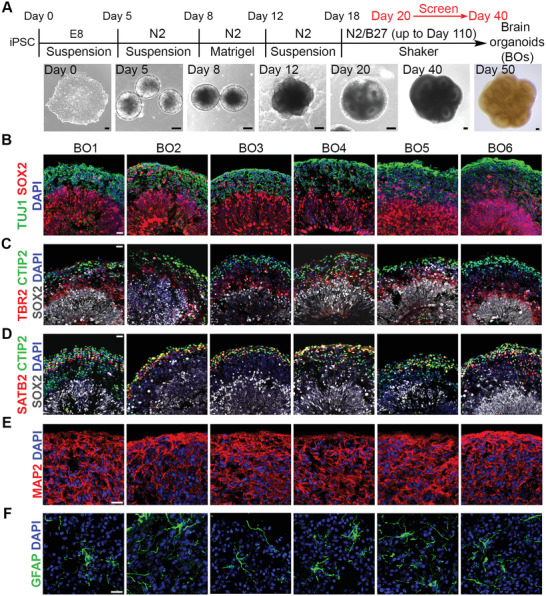
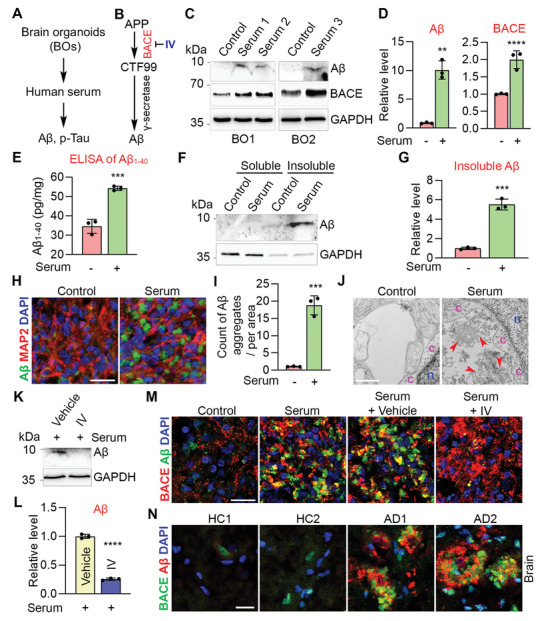
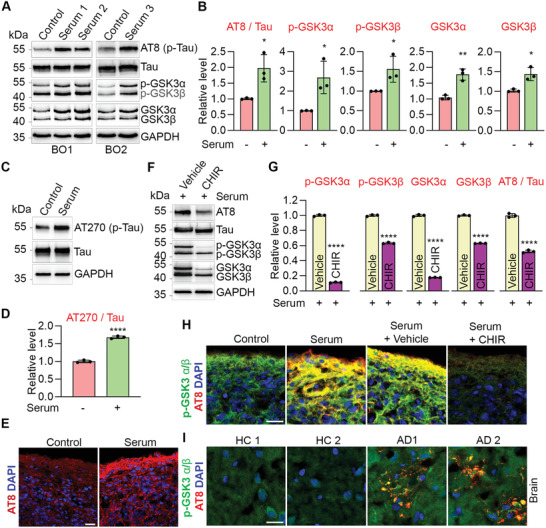
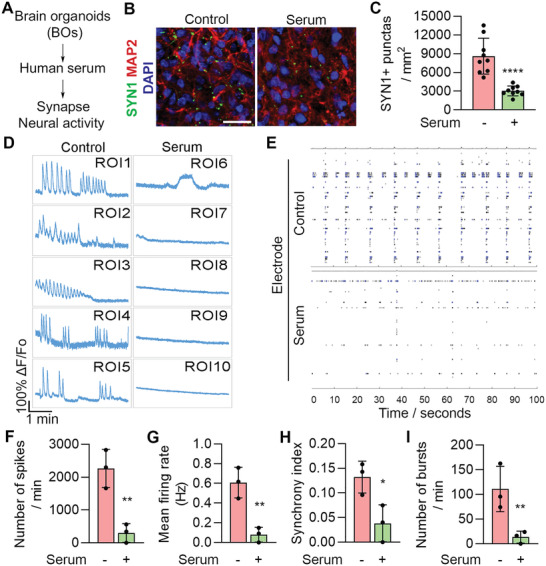
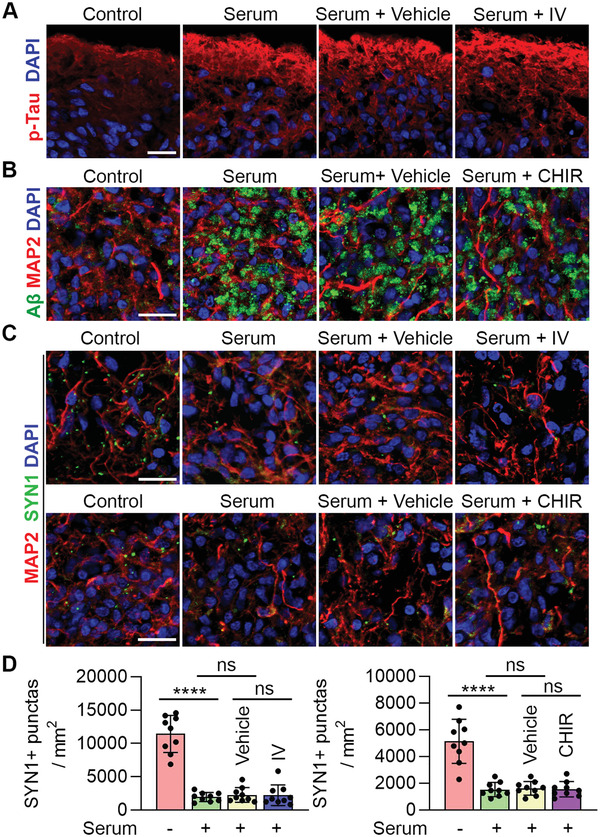
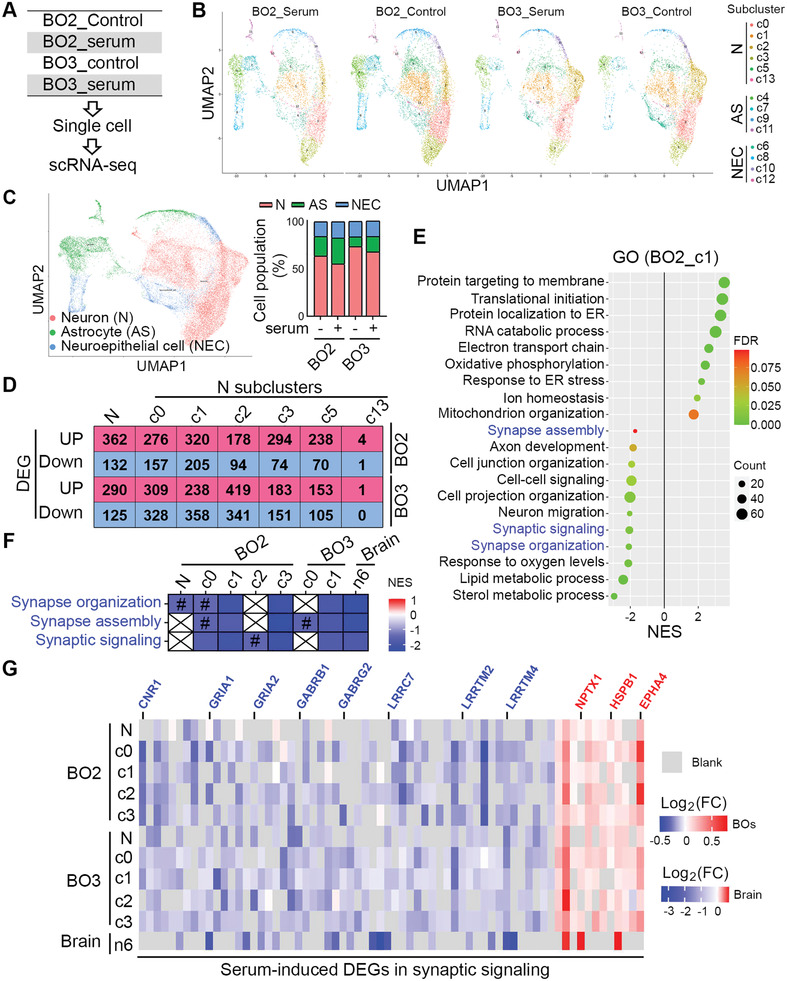
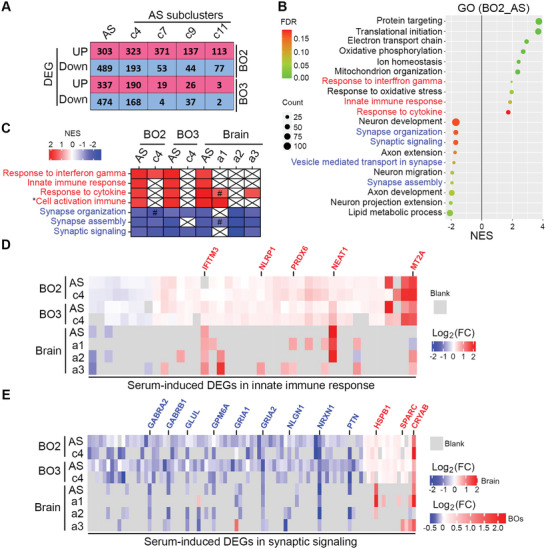
Alzheimer's disease (AD) is a progressive neurodegenerative disease with no cure. Huge efforts have been made to develop anti‐AD drugs in the past decades. However, all drug development programs for disease‐modifying therapies have failed. Possible reasons for the high failure rate include incomplete understanding of complex pathophysiology of AD, especially sporadic AD (sAD), and species difference between humans and animal models used in preclinical studies. In this study, sAD is modeled using human induced pluripotent stem cell (hiPSC)‐derived 3D brain organoids. Because the blood–brain barrier (BBB) leakage is a well‐known risk factor for AD, brain organoids are exposed to human serum to mimic the serum exposure consequence of BBB breakdown in AD patient brains. The serum‐exposed brain organoids are able to recapitulate AD‐like pathologies, including increased amyloid beta (A β ) aggregates and phosphorylated microtubule‐associated tau protein (p‐Tau) level, synaptic loss, and impaired neural network. Serum exposure increases A β and p‐Tau levels through inducing beta‐secretase 1 (BACE) and glycogen synthase kinase‐3 alpha / beta (GSK3 α / β ) levels, respectively. In addition, single‐cell transcriptomic analysis of brain organoids reveals that serum exposure reduced synaptic function in both neurons and astrocytes and induced immune response in astrocytes. The human brain organoid‐based sAD model established in this study can provide a powerful platform for both mechanistic study and therapeutic development in the future.
Overview
The claims and statistics of this paper haven’t been checked yet.
Run the check — free, no account needed. It reads the open-access text and checks the sources it cites.
Integrity signals
Registry
Cites
Statistics
Figures
Verification
Claims the paper makes
The claims and statistics of this paper haven’t been checked yet.
Run the check — free, no account needed. It reads the open-access text and checks the sources it cites.
Claims other papers make about this one
Each is checked against this paper’s own text: does it say what the citing paper says it does?
The cited source says what the claim attributes to it.
In the citing paper
“To mimic BBB leakage-induced sporadic AD, human induced pluripotent stem cell (hiPSC)-derived brain organoids (BOs, composed of neurons and astrocytes) were exposed to serum to recapitulate AD-like pathologies (Figure 3I).31”
From Reverse the progression of Alzheimer’s disease through Nano-ERASER-based adult neuroregeneration (2026) · cites this paper as [31]
Self-check
Percentages, sums and reported differences re-computed from the paper’s own numbers.
The self-check needs the paper’s full text.
Citations
Cites
Subramanian, A., Tamayo, P., Mootha, V. K., Mukherjee, S., Ebert, B. L., Gillette, M. A., Paulovich, A., Pomeroy, S. L., Golub, T. R., Lander, E. S., et al. (2005) · Proceedings of the National Academy of Sciences · doi:10.1073/pnas.0506580102 · Cited by 53,625
Induction of Pluripotent Stem Cells from Adult Human Fibroblasts by Defined Factors
Takahashi, K., Tanabe, K., Ohnuki, M., Narita, M., Ichisaka, T., Tomoda, K., & Yamanaka, S. (2007) · Cell · doi:10.1016/j.cell.2007.11.019 · Cited by 20,221
Neuropathological stageing of Alzheimer-related changes.
Braak, H., & Braak, E. (1991) · Acta Neuropathologica · doi:10.1007/bf00308809 · Cited by 16,123
Comprehensive Integration of Single-Cell Data
Stuart, T., Butler, A., Hoffman, P., Hafemeister, C., Papalexi, E., Mauck, W. M., Hao, Y., Stoeckius, M., Smibert, P., & Satija, R. (2019) · Cell · doi:10.1016/j.cell.2019.05.031 · Cited by 15,453
Amyloid oligomers exacerbate tau pathology in a mouse model of tauopathy
Selenica, M.-L. B., Brownlow, M., Jimenez, J. P., Lee, D. C., Pena, G., Dickey, C. A., Gordon, M. N., & Morgan, D. (2013) · Neurodegenerative Diseases · doi:10.1159/000337230 · Cited by 10,359
Induced Pluripotent Stem Cell Lines Derived from Human Somatic Cells
Yu, J., Vodyanik, M. A., Smuga-Otto, K., Antosiewicz-Bourget, J., Frane, J. L., Tian, S., Nie, J., Jonsdottir, G. A., Ruotti, V., Stewart, R., et al. (2007) · Science · doi:10.1126/science.1151526 · Cited by 10,310
Molecular signatures database (MSigDB) 3.0
Liberzon, A., Subramanian, A., Pinchback, R., Thorvaldsdóttir, H., Tamayo, P., & Mesirov, J. P. (2011) · Bioinformatics · doi:10.1093/bioinformatics/btr260 · Cited by 7,111
Cerebral organoids model human brain development and microcephaly
Lancaster, M. A., Renner, M., Martin, C.-A., Wenzel, D., Bicknell, L. S., Hurles, M. E., Homfray, T., Penninger, J. M., Jackson, A. P., & Knoblich, J. A. (2013) · Nature · doi:10.1038/nature12517 · Cited by 5,372
Aran, D., Looney, A. P., Liu, L., Wu, E., Fong, V., Hsu, A., Chak, S., Naikawadi, R. P., Wolters, P. J., Abate, A. R., et al. (2019) · Nature Immunology · doi:10.1038/s41590-018-0276-y · Cited by 4,984
Meta-Analysis of 74,046 Individuals Identifies 11 New Susceptibility Loci for Alzheimer’s Disease
(EADI), E. A. D. I., Lambert, J.-C., (GERAD), G. A. E. R. I. A. D., Alzheimer's Disease Genetic Consortium (ADGC), (CHARGE), C. F. H. A. A. R. I. G. E., Ibrahim-Verbaas, C. A., Harold, D., Naj, A. C., Sims, R., Bellenguez, C., et al. (2013) · Nature Genetics · doi:10.1038/ng.2802 · Cited by 4,336
Vassar, R., Bennett, B. D., Babu-Khan, S., Kahn, S., Mendiaz, E. A., Denis, P., Teplow, D. B., Ross, S., Amarante, P., Loeloff, R., et al. (1999) · Science · doi:10.1126/science.286.5440.735 · Cited by 3,876
Apolipoprotein E and Alzheimer disease: risk, mechanisms and therapy
Liu, C.-C., Kanekiyo, T., Xu, H., & Bu, G. (2013) · Nature Reviews Neurology · doi:10.1038/nrneurol.2012.263 · Cited by 3,459
Alzheimer Disease: An Update on Pathobiology and Treatment Strategies
Long, J. M., & Holtzman, D. M. (2019) · Cell · doi:10.1016/j.cell.2019.09.001 · Cited by 3,204
Self-citationBlood–brain barrier breakdown in Alzheimer disease and other neurodegenerative disorders
Sweeney, M. D., Sagare, A. P., & Zlokovic, B. V. (2018) · Nature Reviews Neurology · doi:10.1038/nrneurol.2017.188 · Cited by 3,076
2019 Alzheimer’s disease facts and figures.
Alzheimer's Association (2019) · Alzheimer's & Dementia · doi:10.1016/j.jalz.2019.01.010 · Cited by 2,461
Brain-Region-Specific Organoids Using Mini-bioreactors for Modeling ZIKV Exposure
Qian, X., Nguyen, H. N., Song, M. M., Hadiono, C., Ogden, S. C., Hammack, C., Yao, B., Hamersky, G. R., Jacob, F., Zhong, C., et al. (2016) · Cell · doi:10.1016/j.cell.2016.04.032 · Cited by 2,127
Blood-brain barrier breakdown in the aging human hippocampus
Montagne, A., Barnes, S. R., Sweeney, M. D., Halliday, M. R., Sagare, A. P., Zhao, Z., Toga, A. W., Jacobs, R. E., Liu, C. Y., Amezcua, L., et al. (2015) · Neuron · doi:10.1016/j.neuron.2014.12.032 · Cited by 2,102
Generation of cerebral organoids from human pluripotent stem cells
Lancaster, M. A., & Knoblich, J. A. (2014) · Nature Protocols · doi:10.1038/nprot.2014.158 · Cited by 1,823
Blood–brain barrier breakdown is an early biomarker of human cognitive dysfunction
Nation, D. A., Sweeney, M. D., Montagne, A., Sagare, A. P., D’Orazio, L. M., Pachicano, M., Sepehrband, F., Nelson, A. R., Buennagel, D. P., Harrington, M. G., et al. (2019) · Nature Medicine · doi:10.1038/s41591-018-0297-y · Cited by 1,728
Functional cortical neurons and astrocytes from human pluripotent stem cells in 3D culture
Paşca, A. M., Sloan, S. A., Clarke, L. E., Tian, Y., Makinson, C. D., Huber, N., Kim, C. H., Park, J.-Y., O'Rourke, N. A., Nguyen, K. D., et al. (2015) · Nature Methods · doi:10.1038/nmeth.3415 · Cited by 1,609
Induced pluripotent stem cell technology: a decade of progress.
Shi, Y., Inoue, H., Wu, J. C., & Yamanaka, S. (2017) · Nature Reviews Drug Discovery · doi:10.1038/nrd.2016.245 · Cited by 1,525
Self-citationInduced pluripotent stem cells from a spinal muscular atrophy patient
Ebert, A. D., Yu, J., Rose, F. F., Mattis, V. B., Lorson, C. L., Thomson, J. A., & Svendsen, C. N. (2009) · Nature · doi:10.1038/nature07677 · Cited by 1,441
Apolipoprotein E controls cerebrovascular integrity via cyclophilin A
Bell, R. D., Winkler, E. A., Singh, I., Sagare, A. P., Deane, R., Wu, Z., Holtzman, D. M., Betsholtz, C., Armulik, A., Sallstrom, J., et al. (2012) · Nature · doi:10.1038/nature11087 · Cited by 1,293
Self-citationAPOE4 leads to blood–brain barrier dysfunction predicting cognitive decline
Montagne, A., Nation, D. A., Sagare, A. P., Barisano, G., Sweeney, M. D., Chakhoyan, A., Pachicano, M., Joe, E., Nelson, A. R., D’Orazio, L. M., et al. (2020) · Nature · doi:10.1038/s41586-020-2247-3 · Cited by 1,281
Self-citationThe GSK3 hypothesis of Alzheimer’s disease
Hooper, C., Killick, R., & Lovestone, S. (2008) · Journal of Neurochemistry · doi:10.1111/j.1471-4159.2007.05194.x · Cited by 1,191
Lin, Y.-T., Seo, J., Gao, F., Feldman, H. M., Wen, H.-L., Penney, J., Cam, H. P., Gjoneska, E., Raja, W. K., Cheng, J., et al. (2018) · Neuron · doi:10.1016/j.neuron.2018.05.008 · Cited by 1,125
Hippocampal synaptic loss in early Alzheimer's disease and mild cognitive impairment
Scheff, S. W., Price, D. A., Schmitt, F. A., & Mufson, E. J. (2006) · Neurobiology of Aging · doi:10.1016/j.neurobiolaging.2005.09.012 · Cited by 1,017
APP processing in Alzheimer’s disease.
Zhang, Y.-W., Thompson, R., Zhang, H., & Xu, H. (2011) · Molecular Brain · doi:10.1186/1756-6606-4-3 · Cited by 983
Grubman, A., Chew, G., Ouyang, J. F., Sun, G., Choo, X. Y., McLean, C., Simmons, R. K., Buckberry, S., Vargas-Landin, D. B., Poppe, D., et al. (2019) · Nature Neuroscience · doi:10.1038/s41593-019-0539-4 · Cited by 956
Self-citationModelling pathogenesis and treatment of familial dysautonomia using patient-specific iPSCs
Lee, G., Papapetrou, E. P., Kim, H., Chambers, S. M., Tomishima, M. J., Fasano, C. A., Ganat, Y. M., Menon, J., Shimizu, F., Viale, A. J., et al. (2009) · Nature · doi:10.1038/nature08320 · Cited by 893
Alzheimer's disease: experimental models and reality
Drummond, E., & Wisniewski, T. (2017) · Acta Neuropathologica · doi:10.1007/s00401-016-1662-x · Cited by 810
APP mouse models for Alzheimer’s disease preclinical studies.
Sasaguri, H., Nilsson, P., Hashimoto, S., Nagata, K., Saito, T., De Strooper, B., Hardy, J., Vassar, R., Winblad, B., & Saido, T. C. (2017) · The EMBO Journal · doi:10.15252/embj.201797397 · Cited by 793
Campion, D., Dumanchin, C., Hannequin, D., Dubois, B., Belliard, S., Puel, M., Thomas-Anterion, C., Michon, A., Martin, C., Charbonnier, F., et al. (1999) · The American Journal of Human Genetics · doi:10.1086/302553 · Cited by 785
Human iPSC-based modeling of late-onset disease via progerin-induced aging
Miller, J. D., Ganat, Y. M., Kishinevsky, S., Bowman, R. L., Liu, B., Tu, E. Y., Mandal, P. K., Vera, E., Shim, J.-W., Kriks, S., et al. (2013) · Cell stem cell · doi:10.1016/j.stem.2013.11.006 · Cited by 777
LRRK2 Mutant iPSC-Derived DA Neurons Demonstrate Increased Susceptibility to Oxidative Stress
Nguyen, H. N., Byers, B., Cord, B. J., Shcheglovitov, A., Byrne, J., Gujar, P., Kee, K., Schüle, B., Dolmetsch, R. E., Langston, J. W., et al. (2011) · Cell stem cell · doi:10.1016/j.stem.2011.01.013 · Cited by 768
Alzheimer's disease drug development pipeline: 2019
Cummings, J., Lee, G., Ritter, A., Sabbagh, M., & Zhong, K. (2019) · Alzheimer's & Dementia: Translational Research & Clinical Interventions · doi:10.1016/j.trci.2019.05.008 · Cited by 762
Induced pluripotent stem cells in disease modelling and drug discovery
Rowe, R. G., & Daley, G. Q. (2019) · Nature Reviews Genetics · doi:10.1038/s41576-019-0100-z · Cited by 704
Alzheimer's disease drug development pipeline: 2018
Cummings, J., Lee, G., Ritter, A., & Zhong, K. (2018) · Alzheimer's & Dementia: Translational Research & Clinical Interventions · doi:10.1016/j.trci.2018.03.009 · Cited by 697
The β-Secretase BACE1 in Alzheimer’s Disease
Hampel, H., Vassar, R., De Strooper, B., Hardy, J., Willem, M., Singh, N., Zhou, J., Yan, R., Vanmechelen, E., De Vos, A., et al. (2021) · Biological Psychiatry · doi:10.1016/j.biopsych.2020.02.001 · Cited by 694
Tau protein kinases: Involvement in Alzheimer's disease
Martin, L., Latypova, X., Wilson, C. M., Magnaudeix, A., Perrin, M.-L., Yardin, C., & Terro, F. (2013) · Ageing Research Reviews · doi:10.1016/j.arr.2012.06.003 · Cited by 631
Cell stress in cortical organoids impairs molecular subtype specification
Bhaduri, A., Andrews, M. G., Mancia Leon, W., Jung, D., Shin, D., Allen, D., Jung, D., Schmunk, G., Haeussler, M., Salma, J., et al. (2020) · Nature · doi:10.1038/s41586-020-1962-0 · Cited by 624
Blood-Brain Barrier Leakage in Patients with Early Alzheimer Disease
van de Haar, H. J., Burgmans, S., Jansen, J. F. A., van Osch, M. J. P., van Buchem, M. A., Muller, M., Hofman, P. A. M., Verhey, F. R. J., & Backes, W. H. (2016) · Radiology · doi:10.1148/radiol.2016152244 · Cited by 601
Raja, W. K., Mungenast, A. E., Lin, Y.-T., Ko, T., Abdurrob, F., Seo, J., & Tsai, L.-H. (2016) · PLOS ONE · doi:10.1371/journal.pone.0161969 · Cited by 569
Cooper, O., Seo, H., Andrabi, S., Guardia-Laguarta, C., Graziotto, J., Sundberg, M., McLean, J. R., Carrillo-Reid, L., Xie, Z., Osborn, T., et al. (2012) · Science Translational Medicine · doi:10.1126/scitranslmed.3003985 · Cited by 508
Reliability of human cortical organoid generation
Yoon, S.-J., Elahi, L. S., Pașca, A. M., Marton, R. M., Gordon, A., Revah, O., Miura, Y., Walczak, E. M., Holdgate, G. M., Fan, H. C., et al. (2019) · Nature Methods · doi:10.1038/s41592-018-0255-0 · Cited by 507
An expression atlas of human primary cells: inference of gene function from coexpression networks
Mabbott, N. A., Baillie, J. K., Brown, H. K., Freeman, T. C., & Hume, D. A. (2013) · BMC Genomics · doi:10.1186/1471-2164-14-632 · Cited by 494
Modeling Alzheimer’s disease with iPSC-derived brain cells
Penney, J., Ralvenius, W. T., & Tsai, L.-H. (2020) · Molecular Psychiatry · doi:10.1038/s41380-019-0468-3 · Cited by 471
Modeling amyloid beta and tau pathology in human cerebral organoids
Gonzalez, C., Armijo, E., Bravo-Alegria, J., Becerra-Calixto, A., Mays, C. E., & Soto, C. (2018) · Molecular Psychiatry · doi:10.1038/s41380-018-0229-8 · Cited by 430
Wang, C., Najm, R., Xu, Q., Jeong, D.-E., Walker, D., Balestra, M. E., Yoon, S. Y., Yuan, H., Li, G., Miller, Z. A., et al. (2018) · Nature Medicine · doi:10.1038/s41591-018-0004-z · Cited by 428
Zhao, J., Fu, Y., Yamazaki, Y., Ren, Y., Davis, M. D., Liu, C.-C., Lu, W., Wang, X., Chen, K., Cherukuri, Y., et al. (2020) · Nature Communications · doi:10.1038/s41467-020-19264-0 · Cited by 374
Progressive degeneration of human neural stem cells caused by pathogenic LRRK2
Liu, G.-H., Qu, J., Suzuki, K., Nivet, E., Li, M., Montserrat, N., Yi, F., Xu, X., Ruiz, S., Zhang, W., et al. (2012) · Nature · doi:10.1038/nature11557 · Cited by 339
Yiannopoulou, K. G., Anastasiou, A. I., Zachariou, V., & Pelidou, S.-H. (2019) · Biomedicines · doi:10.3390/biomedicines7040097 · Cited by 330
Blanchard, J. W., Bula, M., Davila-Velderrain, J., Akay, L. A., Zhu, L., Frank, A., Victor, M. B., Bonner, J. M., Mathys, H., Lin, Y.-T., et al. (2020) · Nature Medicine · doi:10.1038/s41591-020-0886-4 · Cited by 283
Blood–Brain Barrier Dysfunction in a 3D In Vitro Model of Alzheimer's Disease
Shin, Y., Choi, S. H., Kim, E., Bylykbashi, E., Kim, J. A., Chung, S. H., Kim, D. Y., Kamm, R. D., & Tanzi, R. E. (2019) · Advanced Science · doi:10.1002/advs.201900962 · Cited by 275
Glycogen Synthase Kinase 3β Phosphorylates Tau at Both Primed and Unprimed Sites
Cho, J.-H., & Johnson, G. V. W. (2003) · Journal of Biological Chemistry · doi:10.1074/jbc.m206236200 · Cited by 266
Senatorov, V. V., Friedman, A. R., Milikovsky, D. Z., Ofer, J., Saar-Ashkenazy, R., Charbash, A., Jahan, N., Chin, G., Mihaly, E., Lin, J. M., et al. (2019) · Science Translational Medicine · doi:10.1126/scitranslmed.aaw8283 · Cited by 257
Ghatak, S., Dolatabadi, N., Trudler, D., Zhang, X., Wu, Y., Mohata, M., Ambasudhan, R., Talantova, M., & Lipton, S. A. (2019) · eLife · doi:10.7554/elife.50333 · Cited by 227
Targeting the Synapse in Alzheimer’s Disease
Jackson, J., Jambrina, E., Li, J., Marston, H., Menzies, F., Phillips, K., & Gilmour, G. (2019) · Frontiers in Neuroscience · doi:10.3389/fnins.2019.00735 · Cited by 215
Lin, Y.-T., Seo, J., Gao, F., Feldman, H. M., Wen, H.-L., Penney, J., Cam, H. P., Gjoneska, E., Raja, W. K., Cheng, J., et al. (2018) · Neuron · doi:10.1016/j.neuron.2018.06.011 · Cited by 210
Programming and Reprogramming Cellular Age in the Era of Induced Pluripotency
Studer, L., Vera, E., & Cornacchia, D. (2015) · Cell stem cell · doi:10.1016/j.stem.2015.05.004 · Cited by 192
Kramer, T., Schmidt, B., & Monte, F. L. (2012) · International Journal of Alzheimer s Disease · doi:10.1155/2012/381029 · Cited by 146
Sun, A.-Y., Nguyen, X. V., & Bing, G. (2002) · Journal of Histochemistry and Cytochemistry · doi:10.1177/002215540205000403 · Cited by 146
Li, L., Tian, E., Chen, X., Chao, J., Klein, J. A., Qu, Q., Sun, G., Sun, G., Huang, Y., Warden, C., et al. (2018) · Cell stem cell · doi:10.1016/j.stem.2018.07.009 · Cited by 139
Self-citationBlood-brain barrier integrity in the pathogenesis of Alzheimer’s disease
Huang, Z., Wong, L., Su, Y., Huang, X., Wang, N., Chen, H., & Yi, C. (2020) · Frontiers in Neuroendocrinology · doi:10.1016/j.yfrne.2020.100857 · Cited by 135
Advance of sporadic Alzheimer's disease animal models
Zhang, L., Chen, C., Mak, M. S., Lu, J., Wu, Z., Chen, Q., Han, Y., Li, Y., & Pi, R. (2020) · Medicinal Research Reviews · doi:10.1002/med.21624 · Cited by 116
Modeling Human Cytomegalovirus-Induced Microcephaly in Human iPSC-Derived Brain Organoids
Sun, G., Chiuppesi, F., Chen, X., Wang, C., Tian, E., Nguyen, J., Kha, M., Trinh, D. V., Zhang, H., Marchetto, M. C., et al. (2020) · Cell Reports Medicine · doi:10.1016/j.xcrm.2020.100002 · Cited by 113
Self-citationBrain organoids: a next step for humanized Alzheimer’s disease models?
Gerakis, Y., & Hetz, C. (2019) · Molecular Psychiatry · doi:10.1038/s41380-018-0343-7 · Cited by 64
GSK3α exhibits β‐catenin and tau directed kinase activities that are modulated by Wnt
Asuni, A. A., Hooper, C., Reynolds, C. H., Lovestone, S., Anderton, B. H., & Killick, R. (2006) · European Journal of Neuroscience · doi:10.1111/j.1460-9568.2006.05243.x · Cited by 64
Processing Biological Tissues for Ultrastructural Study
Mascorro, J. A., & Bozzola, J. J. (2007) · Methods in molecular biology · doi:10.1007/978-1-59745-294-6_2 · Cited by 49
Practical Integration‐Free Episomal Methods for Generating Human Induced Pluripotent Stem Cells
Kime, C., Rand, T., Ivey, K. N., Srivastava, D., Yamanaka, S., & Tomoda, K. (2015) · Current Protocols in Human Genetics · doi:10.1002/0471142905.hg2102s87 · Cited by 20
Research works printed but not linked: 1
- Yoon S. J., 2019, Nat. Methods, 75, 1675
Cited by
Sorted by citations
Induced pluripotent stem cells (iPSCs): molecular mechanisms of induction and applications
Cerneckis, J., Cai, H., & Shi, Y. (2024) · Signal Transduction and Targeted Therapy · doi:10.1038/s41392-024-01809-0 · Cited by 452
Self-citationOrganoids: The current status and biomedical applications
Yang, S., Hu, H., Kung, H., Zou, R.-Q., Dai, Y.-S., Hu, Y.-F., Wang, T., Lv, T., Yu, J., & Li, F. (2023) · MedComm · doi:10.1002/mco2.274 · Cited by 300
Three-Dimensional Cell Cultures: The Bridge between In Vitro and In Vivo Models
Urzì, O., Gasparro, R., Costanzo, E., Luca, A. D., Giavaresi, G., Fontana, S., & Alessandro, R. (2023) · International Journal of Molecular Sciences · doi:10.3390/ijms241512046 · Cited by 258
Neuropathogenesis-on-chips for neurodegenerative diseases
Amartumur, S., Nguyen, H. M., Huynh, T., Kim, T. S., Woo, R., Oh, E., Kim, K. K., Lee, L. P., & Heo, C. (2024) · Nature Communications · doi:10.1038/s41467-024-46554-8 · Cited by 131
Zhou, L., Huang, J., Li, C., Gu, Q., Li, G., Li, Z. A., Xu, J., Zhou, J., & Tuan, R. S. (2025) · Med · doi:10.1016/j.medj.2025.100667 · Cited by 126
Metadata
- Authors
- Chen, X., Sun, G., Tian, E., Zhang, M., Davtyan, H., Beach, T. G., Reiman, E. M., Blurton‐Jones, M., Holtzman, D. M., & Shi, Y.
- Affiliations
- City Of Hope National Medical Center (US)
- University of California, Irvine (US)
- Banner Sun Health Research Institute (US)
- Banner Alzheimer’s Institute (US)
- Department of Neurobiology & Behavior Institute for Memory Impairments & Neurological Disorders and Sue & Bill Gross Stem Cell Research Center University of California Irvine Irvine CA 92697 USA
- Washington University in St. Louis (US)
- Corresponding author
- Shi, Yanhong
- ORCID
- Venue
- Advanced Science
- Publisher
- Wiley
- Published
- 2021-08-02
- Volume
- 8
- Issue
- 18
- Pages
- e2101462-e2101462
- ISSN
- 2198-3844 (ISSN-L)
- PMC
- PMC8456220
- OpenAlex
- W3190034604
- Cited by
- 200
- References
- 71
- Citations by year
- 2026: 32 · 2025: 49 · 2024: 48 · 2023: 44 · 2022: 24 · 2021: 3
- FWCI
- 18.85
- Type
- journal article
- Language
- en
- Open access
- gold
- doi.org
- Licence
- Locations
- Advanced Science (publishedVersion, cc-by)
- Europe PMC (PubMed Central) (publishedVersion, other-oa)
- PubMed Central (publishedVersion, cc-by)
- PubMed (publishedVersion)
- DOAJ (DOAJ: Directory of Open Access Journals) (submittedVersion, cc-by-sa)
- eScholarship (California Digital Library) (submittedVersion, cc-by)
- Funders
- National Institute on Aging (R01AG056305, P30AG019610, RF1AG061794, R56AG061171, P30AG066519, R01AG056303)
- National Institute on Drug Abuse (RF1DA048813)
- National Cancer Institute (P30CA033572)
- National Institute of Neurological Disorders and Stroke (U24NS072026)
- Louise and Herb Horvitz Charitable Foundation
- Topics
- Life Sciences › Neuroscience › Cellular and Molecular Neuroscience › Alzheimer's disease research and treatments
- Life Sciences › Biochemistry, Genetics and Molecular Biology › Molecular Biology › Pluripotent Stem Cells Research
- Life Sciences › Neuroscience › Neurology › Neuroinflammation and Neurodegeneration Mechanisms
- Keywords
- sporadic Alzheimer's disease, brain organoids, human induced pluripotent stem cells, serum exposure, blood-brain barrier disruption, amyloid-beta, tau phosphorylation, beta-secretase 1, glycogen synthase kinase-3, synaptic loss, disease modeling, single-cell transcriptomics
- MeSH terms
- Alzheimer Disease, Brain, Humans, Organoids, Induced Pluripotent Stem Cells
About these checks
Registry, retraction, Cites and statistics results are computed, not judged, with one exception: a printed reference that no index lists is read once by a model before it counts as a citation error. Claims are extracted by a model and kept only when their quote appears verbatim in the text; each cited source is then checked, with a model’s help, for whether it says what the claim relies on. Those verdicts can be wrong — read the claim’s quote and the cited source before relying on one.
Statistics and arithmetic are recomputed, not judged.
Confidence bands are shown only for fields calibrated on our annotated test set. None is calibrated yet, so no band is shown.
What counts as a claim ›How we measure confidence ›How we check this ›
Are you an author, or do you see a problem with this page? Request a review
