

Sex differences in metabolic regulation and diabetes susceptibility
Open accessThe DOI matches its Crossref record; 65 of the 65 references it cites were found in a registry or an index.
Abstract
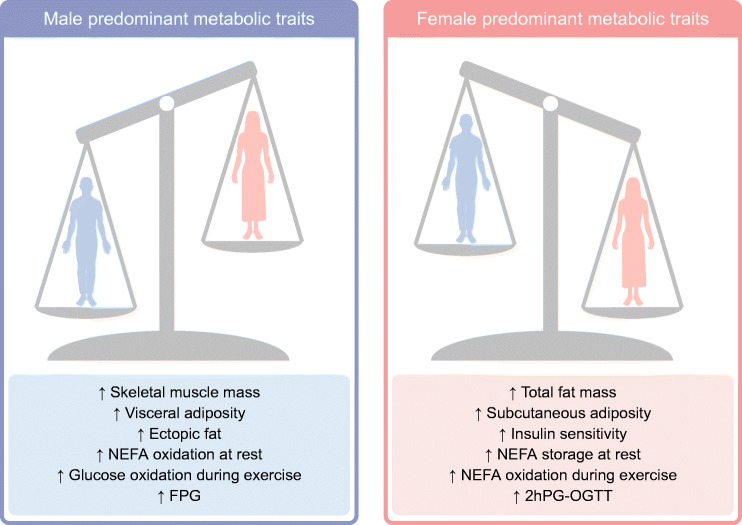
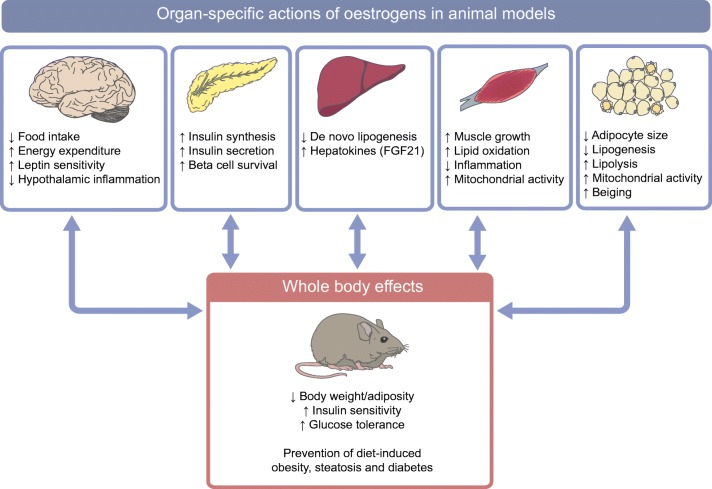
Gender and biological sex impact the pathogenesis of numerous diseases, including metabolic disorders such as diabetes. In most parts of the world, diabetes is more prevalent in men than in women, especially in middle-aged populations. In line with this, considering almost all animal models, males are more likely to develop obesity, insulin resistance and hyperglycaemia than females in response to nutritional challenges. As summarised in this review, it is now obvious that many aspects of energy balance and glucose metabolism are regulated differently in males and females and influence their predisposition to type 2 diabetes. During their reproductive life, women exhibit specificities in energy partitioning as compared with men, with carbohydrate and lipid utilisation as fuel sources that favour energy storage in subcutaneous adipose tissues and preserve them from visceral and ectopic fat accumulation. Insulin sensitivity is higher in women, who are also characterised by higher capacities for insulin secretion and incretin responses than men; although, these sex advantages all disappear when glucose tolerance deteriorates towards diabetes. Clinical and experimental observations evidence the protective actions of endogenous oestrogens, mainly through oestrogen receptor α activation in various tissues, including the brain, the liver, skeletal muscle, adipose tissue and pancreatic beta cells. However, beside sex steroids, underlying mechanisms need to be further investigated, especially the role of sex chromosomes, fetal/neonatal programming and epigenetic modifications. On the path to precision medicine, further deciphering sex-specific traits in energy balance and glucose homeostasis is indeed a priority topic to optimise individual approaches in type 2 diabetes prevention and treatment.
Overview
The claims and statistics of this paper haven’t been checked yet.
Free: it reads the open-access text and checks the first 5 claims that cite a source we can check. Create a free account to check every claim.
Integrity signals
Registry
Cites
Statistics
Figures
Verification
Claims the paper makes
The claims and statistics of this paper haven’t been checked yet.
Free: it reads the open-access text and checks the first 5 claims that cite a source we can check. Create a free account to check every claim.
Claims other papers make about this one
Each is checked against this paper’s own text: does it say what the citing paper says it does?
The source backs part of the claim, not all of it — or backs it for a different population, condition or comparison.
In the citing paper
“Moreover, T2D is more prevalent in men than women, with an estimated 13% of men and 11% of women between the ages of 20–79 classified as diabetic in 2016 (67, 73).”
From Metabolic impact of endogenously produced estrogens by adipose tissue in females and males across the lifespan (2025) · cites this paper as [73]
Experimental — accuracy not yet measured
Self-check
Percentages, sums and reported differences re-computed from the paper’s own numbers.
The self-check needs the paper’s full text.
Citations
Cites
IDF Diabetes Atlas: Global estimates of diabetes prevalence for 2017 and projections for 2045
Cho, N. H., Shaw, J. E., Karuranga, S., Huang, Y., da Rocha Fernandes, J. D., Ohlrogge, A. W., & Malanda, B. (2018) · Diabetes Research and Clinical Practice · doi:10.1016/j.diabres.2018.02.023 · Cited by 7,283
Identification and Importance of Brown Adipose Tissue in Adult Humans
Cypess, A. M., Lehman, S., Williams, G., Tal, I., Rodman, D., Goldfine, A. B., Kuo, F. C., Palmer, E. L., Tseng, Y.-H., Doria, A., et al. (2009) · New England Journal of Medicine · doi:10.1056/nejmoa0810780 · Cited by 4,399
Zhou, B., Lu, Y., Hajifathalian, K., Bentham, J., Di Cesare, M., Danaei, G., Bixby, H., Cowan, M., Ali, M., Taddei, C., et al. (2016) · The Lancet · doi:10.1016/s0140-6736(16)00618-8 · Cited by 4,311
Functional Brown Adipose Tissue in Healthy Adults
Virtanen, K. A., Lidell, M. E., Orava, J., Heglind, M., Westergren, R., Niemi, T., Taittonen, M., Laine, J., Savisto, N.-J., Enerbäck, S., et al. (2009) · New England Journal of Medicine · doi:10.1056/nejmoa0808949 · Cited by 3,058
Sex and Gender Differences in Risk, Pathophysiology and Complications of Type 2 Diabetes Mellitus
Kautzky-Willer, A., Harreiter, J., & Pacini, G. (2016) · Endocrine Reviews · doi:10.1210/er.2015-1137 · Cited by 2,043
The role of estrogens in control of energy balance and glucose homeostasis
Mauvais-Jarvis, F., Clegg, D. J., & Hevener, A. L. (2013) · Endocrine Reviews · doi:10.1210/er.2012-1055 · Cited by 1,329
Sex differences in human adipose tissues – the biology of pear shape
Karastergiou, K., Smith, S. R., Greenberg, A. S., & Fried, S. K. (2012) · Biology of Sex Differences · doi:10.1186/2042-6410-3-13 · Cited by 1,109
Lonardo, A., Nascimbeni, F., Ballestri, S., Fairweather, D., Win, S., Than, T. A., Abdelmalek, M. F., & Suzuki, A. (2019) · Hepatology · doi:10.1002/hep.30626 · Cited by 1,050
Aromatase-deficient (ArKO) mice have a phenotype of increased adiposity
Jones, M. E. E., Thorburn, A. W., Britt, K. L., Hewitt, K. N., Wreford, N. G., Proietto, J., Oz, O. K., Leury, B. J., Robertson, K. M., Yao, S., et al. (2000) · Proceedings of the National Academy of Sciences · doi:10.1073/pnas.97.23.12735 · Cited by 729
Kanaya, A. M., Herrington, D., Vittinghoff, E., Lin, F., Grady, D., Bittner, V., Cauley, J. A., & Barrett-Connor, E. (2003) · Annals of Internal Medicine · doi:10.7326/0003-4819-138-1-200301070-00005 · Cited by 633
Cited by
Items 901–1,000 of 1,000
Meal Timing, Type 2 Diabetes, and Cardiovascular Biomarkers and Mortality
Dai, J. M. (2024) · eScholarship (California Digital Library)
Elgellaie, A. (2023) · Research Online (University of Wollongong)
Burelle, C. (2022) · Papyrus : Institutional Repository (Université de Montréal) · doi:10.71781/27730
Sex and regional differences in adipose tissue characteristics in type 2 diabetes
Delaney, K. Z. (2023) · Spectrum Research Repository (Concordia University)
Szalanczy, A. (2023) · WakeSpace Scholarship (Wake Forest University)
Rocha, M. S. (2022) · Portuguese National Funding Agency for Science, Research and Technology (RCAAP Project by FCT)
Gender differences in lipid metabolism
Giang, J., Aldaher, L. S., & Ferreira, H. C. (2025) · Elsevier eBooks · doi:10.1016/b978-0-443-19116-9.00004-x
Type-2 Diabetes in Women/Metabolic Syndrome/ Insulin Resistance
Cigrovski Berković, M. (2024) · University of Zagreb University Computing Centre (SRCE)
Chronotypes, Body Composition and Metabolic Health among Portuguese and Italian Obese Individuals
Alexandre, A. M. R. (2025) · Portuguese National Funding Agency for Science, Research and Technology (RCAAP Project by FCT)
Eating Behaviors in Adolescence and Young Adulthood and Adult Cardiometabolic Disease Risk
Salvia, M. G. (2024) · Digital Access to Scholarship at Harvard (DASH) (Harvard University)
Verheggen, R. (2025) · Radboud University Press eBooks · doi:10.54195/9789465152011
Shawkat, Z. A., Mohammed, B. K., & Raffik, D. E. (2025) · Open Access Research Journal of Chemistry and Pharmacy · doi:10.53022/oarjcp.2025.7.2.0021
El-Aghbary, D. A., Thabet, R. A., Almorish, M., Al‐Sayaghi, K. M., & Elkhalifa, A. M. E. (2025) · Diabetes Metabolic Syndrome and Obesity · doi:10.2147/dmso.s580986
Ceretti, A., Garzillo, K., Madden, N., Babcock, D. T., & Schneider, J. E. (2025) · American Journal of Physiology-Regulatory, Integrative and Comparative Physiology · doi:10.1152/ajpregu.00151.2024
Relationship of thyroid hormones and metabolic parameters in euthyroid women
Sıcakyüz, F. N. Y., Eren, F. A., Güngör, K., & Mutlu, H. H. (2025) · Turkish Journal of Family Practice · doi:10.54308/turkjfampract.2025.859
“[7,8] Therefore, limiting the sample to euthyroid women allowed for a more homogeneous population and improved the internal validity of our findings.”
Lacín, C. F. R., Enguita, J. M., Diaz, I., García, D., Fernández-Suárez, E., Chiara, M., & Valdés, N. (2026) · Research Square · doi:10.21203/rs.3.rs-8462163/v1
Khammarnia, M., Ansari-Moghaddam, A., Poshtehee, Z. T., Shahraki‐Sanavi, F., & Mohammadi, M. (2025) · Galen Medical Journal · doi:10.31661/gmj.v14i.3853
“Steroid hormones play a protective role in premenopausal women and reduce the risk of diabetes [29].”
Yu, C., Zeeshan, M., Zhang, H., Wang, D.-S., Zhang, Y.-T., Dong, G., Kwan, M., & Lin, L.-Z. (2026) · Hygiene and Environmental Health Advances · doi:10.1016/j.heha.2026.100170
Hernández, L. F. G. (2025) · LA Referencia (Red Federada de Repositorios Institucionales de Publicaciones Científicas)
NCOA1 is a gatekeeper of the sexually dimorphic thermogenic activity of white adipose tissue
Tannour‐Louet, M., Pisani, D. F., Bouguerra, H., Zedda, A., Bourcier, M., Lamghari, N., Gautier, N., Chaput, B., Riant, É., Bouloumié, A., et al. (2026) · Nature Communications · doi:10.1038/s41467-025-65229-6
“This was demonstrated in adipocytes isolated from the subcutaneous adipose tissue (SAT) of female Ncoa1 KO mice, where Ncoa1 was found to regulate the transcriptional activity of key thermogenic and metabolic genes, including Ucp1 , Cidea and Cpt1b .”
Self-citationMasood, K. I., Yameen, M., Ashraf, J., Ram, N., Saifullah, N., Jamil, B., Irfan, M., Masood, Q., Fatima, F., Ajmal, A., et al. (2026) · Scientific Reports · doi:10.1038/s41598-025-34370-z
Shah, Z., Ahmad, F., Fayyaz, F., & Zoofeen, U. (2025) · Khyber Journal Of Medical Sciences · doi:10.70520/kjms.v18i3.682
Nissen, L., Holm, J. B., & Borgquist, S. (2026) · JMIR Research Protocols · doi:10.2196/78589
“Estrogen plays an important role in metabolic homeostasis by promoting insulin sensitivity, regulating lipid metabolism, and supporting vascular function [8,9].”
Metabolic associated fatty liver disease in patients with type 2 diabetes mellitus
Shtygasheva, O. V., Ageeva, E. S., & Дмитриевна, К. С. (2026) · Meditsinskiy sovet = Medical Council · doi:10.21518/ms2025-553
Luo, Y., Chen, T., Li, M., Kubera, M., Zhang, Y., Huang, Y., & Maes, M. H. J. (2026) · bioRxiv (Cold Spring Harbor Laboratory) · doi:10.64898/2026.02.05.703942
Ventresca, C., Varshney, A., Orchard, P., Vu, H. T. H., Tsan, Y.-C., da Rocha, A. M., Mr, E., Lentz, S. I., Kinnunen, L., Lakka, T. A., et al. (2026) · bioRxiv (Cold Spring Harbor Laboratory) · doi:10.64898/2026.02.04.702388
Hindarta, N. A., Fitranti, D. Y., Syauqy, A., Sobirin, M. A., Seno, H. N. H., & Pramono, A. (2026) · Research Square · doi:10.21203/rs.3.rs-8674977/v1
Wang, Y., He, X., Xu, G., Zhang, J., Li, N., Ning, X., Ma, J., Li, H., Yang, J., Liu, H., et al. (2026) · Health Data Science · doi:10.34133/hds.0441
“…interaction in association between vFMI with T2DM risk was observed in this study, prior research highlights a stronger effect of visceral fat mass (VFM) on T2DM risk in women than in male, potentially due to higher insulin sensitivity, secretion capacity, and incretin response in female [ 42 ].”
Kovalenko, V. A., & Лашкул, Д. А. (2026) · Zaporozhye Medical Journal · doi:10.14739/2310-1210.2026.1.339357
Yoon, Y. S., & Baek, W. (2026) · Journal of Korean Biological Nursing Science · doi:10.7586/jkbns.25.080
“However, most meta-analyses have focused on diabetes incidence rather than insulin resistance [13,21,22], and the progression from insulin resistance to overt diabetes may be influenced by sex-specific factors including beta cell function, hormonal fluctuations, and compensatory mechanisms [33,34].”
Besas, F. P., & Pasawa, M. (2026) · Philippine Journal of Internal Medicine · doi:10.65564/pjim.1598823160
Prevalence of diabetic retinopathy in patients attending eye camps in Punjab
Pannu, G. K., Batra, N., & Kaur, G. (2026) · International Journal of Ophthalmology Research · doi:10.33545/26181495.2026.v8.i2a.44
NAKATA, A., HIDAKA, M., Sato, Y., & Hattori, H. (2026) · In Vivo · doi:10.21873/invivo.14244
The Maintenance of Palmitic Acid in the Developing Mouse Brain
Smith, M. E. (2024) · TSpace (University of Toronto)
Saha, B. U. F., Navti, L. K., Ngnie‐Teta, I., Bey, F. Y., Nantia, E. A., Bonglavnyuy, T. C., & Sobngwi, E. (2026) · Journal of Obesity · doi:10.1155/jobe/7216950
Park, J., Huang, X., & Kim, M. (2026) · Current Issues in Molecular Biology · doi:10.3390/cimb48030271
“Estrogen has been shown to enhance insulin synthesis and secretion, augment incretin activity, suppress hepatic gluconeogenesis, and reduce systemic inflammation [19].”
Comparative assessment of aging and diabetes in women and men
-, R. K., Jerang, M., Riba, P., Dutta, A., Roy, V. K., & Pankaj, P. P. (2026) · Elsevier eBooks · doi:10.1016/b978-0-443-44665-8.00021-3
Prevalence and factors associated with impaired fasting glucose among urban women in Burkina Faso
Paré, B. C., Dahourou, D. L., Traoré, S., Ouattara, A. B. I., Dah, T. T. E., & Guira, O. (2026) · Journal of Interventional Epidemiology and Public Health · doi:10.37432/jieph-d-25-00130
Bentele, U. U. (2023) · KOPS (University of Konstanz)
Li, Y., Wang, Y., Wang, B., Ouyang, Q., Liu, W., Xu, X. M., Zhang, X., Liu, M., & Xiu, R. (2026) · Comprehensive physiology · doi:10.1002/cph4.70130
Bozkurt, D., Duaso, M. J., Nadal, I. P., Walker, R., & Sturt, J. A. (2026) · PLoS ONE · doi:10.1371/journal.pone.0345517
“Throughout their lives, women experience more hormonal and bodily changes due to reproductive factors, which increase their risk of developing diabetes compared to men [4].”
Circulating amino acids and Type 2 diabetes in a Latin American population-based cohort
Huidobro, A., Cofré, S., Santos, J. L., Godoy, F., Paredes, F., Claudia Bambs, S., Cortés, S., Connolly, J. J., Qu, H., Hakonarson, H. H., et al. (2026) · Cardiovascular Diabetology · doi:10.1186/s12933-026-03146-8
“The low Mediterranean Diet Score observed in this cohort, combined with the high prevalence of abdominal obesity and steatotic liver disease, may create a metabolic environment that amplifies disturbances in amino-acid metabolism [31].”
Sosa-Larios, T. C., Morales-Miranda, A., Rodríguez-González, G. L., Bautista, C. J., Ramírez, V., Díaz‐Díaz, E., Canto, P., Vargas, L., Sierra-Ramírez, J. A., Morimoto, S., et al. (2026) · British Journal Of Nutrition · doi:10.1017/s0007114526106904
“Previous studies have demonstrated the harmful effects of an obesogenic diet on males (77,78) .”
Sex dimorphism in serum lipid dynamics after acute exhaustive exercise
Ren, Z., Wu, B., Tang, C., Qian, J., Fan, Z., Zhang, Y., & Shi, L. (2026) · Biology of Sport · doi:10.5114/biolsport.2026.158677
“Alterations in PC 32:1 are of particular interest as this lipid serves as a carrier for pal - mitoleic acid (16:1), a lipokine known to modulate insulin signal - ing [32–34].”
日本人2型糖尿病患者における糖尿病性網膜症の発症あるいは増悪に関連する因子の性差に関する後方視的探索研究
Nakayama, Y., & 中山, 良. (2021) · Institutional Repositories DataBase (IRDB)
Zhao, Q., Wang, J., Xier, Z., Yang, N., Liu, J., Tuersunjiang, A., Peng, H., & Yang, Y. (2026) · Public Health Nutrition · doi:10.1017/s1368980026102316
“This observed sex-related disparity is likely attributable to postmenopausal hormonal shifts, leading to central adiposity due to declining ovarian function (30) .”
Influence du sexe dans la susceptibilité aux hépatopathies métaboliques
Smati, S. (2019) · theses.fr (ABES) · doi:10.70675/01997f55za990z41e6z96baz8221de2a6281
Self-citationPredicting the risk of cardiovascular disease using non-clinical data through latent class analysis
Lan, Y. (2026) · e-space (Manchester Metropolitan University) · doi:10.83056/mmu.32557437
Recazens, E. (2021) · theses.fr (ABES) · doi:10.70675/5b66fe82zcbbbz4251z98c0z2bb967f598c2
Li, C., & Xiong, X. (2026) · European journal of medical research · doi:10.1186/s40001-026-04259-2
“Women may also mount stronger inflammatory responses to adipose dysfunction and experience more pronounced cardiometabolic consequences of visceral fat than men [49, 50].”
Acosta-Montalvo, A. (2022) · theses.fr (ABES) · doi:10.70675/3712a689zf56fz4ce7z814bz28dc25f0cc70
Différences de soins liées au sexe chez les personnes diabétiques de type 2 de la cohorte Constances
Paquet, S. (2023) · theses.fr (ABES) · doi:10.70675/ac7c0a65zf6d4z4138za1c8z2b3db605bfe1
Rôle dépendant du sexe du récepteur constitutif aux androstanes CAR dans le métabolisme hépatique
Huillet, M. (2024) · theses.fr (ABES) · doi:10.70675/540eb301z7e1az46b2z8bc9z8e0347fb266a
Le rôle physiopathologique de l'augurine, un nouveau modulateur négatif de la voie Wnt
Richter, M. (2025) · theses.fr (ABES) · doi:10.70675/ff4204b3z6e8ez4773zb1e4z04f7e0ea0d34
Xuan, Y., Yu, J., He, F., Cen, Y., Chen, H., & Yao, Q. Z. (2026) · Medicine · doi:10.1097/md.0000000000048360
“[54,55] Consequently, fluctuations in estrogen levels may be a primary sex hormone-related cause of HUA in postmenopausal women.”
Giraldi, F. P., & Leoni, O. (2026) · World Journal of Diabetes · doi:10.4239/wjd.v17.i4.115328
Shang, J., Yan, K., Liu, L., Jin, C., Ran, L., Zhang, J., Wu, P., Meng, F., Zeng, X., Cao, X., et al. (2026) · The Journal of Steroid Biochemistry and Molecular Biology · doi:10.1016/j.jsbmb.2026.107025
Masri, R., Koubaissi, M., Mawla, Z. E., AlSater, A. A., Yassin, M., Lakis, A. A. E., & Hanna, P. A. (2026) · BMC Infectious Diseases · doi:10.1186/s12879-026-13341-3
“This male predominance may be due to biological differences in metabolism, higher rates of smoking and alcohol use, and social determinants [24].”
Jeong, J., Kim, S., Park, H., Park, K. E., Lee, H. Y., Kim, Y. C., Kang, N., Lee, B., Lee, S.-E., Jo, E., et al. (2026) · ERJ Open Research · doi:10.1183/23120541.01779-2025
Selvaraj, H., Dawn, V. J., & Dhanasekaran, M. (2026) · SN Comprehensive Clinical Medicine · doi:10.1007/s42399-026-02359-y
Kim, D. K., Rajan, P., Cuong, D. M., Yoon, T. H., Yang, S. H., Oyinloye, K. R., Go, G. M., & Cho, S. K. (2026) · Journal of Functional Foods · doi:10.1016/j.jff.2026.107311
Klemen, M. S., Polšak, N., Jakopiček, J., Kovačič, P., Kopecký, J., Leitgeb, E. P., Kerčmar, J., Bombek, L. K., Dolenšek, J., & Stožer, A. (2026) · Frontiers in Endocrinology · doi:10.3389/fendo.2026.1802808
Sex- and Age-Related Differences Among Liver Transplant Patients: A Narrative Review
Wang, X., Pont, T., & Rello, J. (2026) · Journal of Intensive Care Medicine · doi:10.1177/08850666261447863
Type 2 diabetes, sex and metabolic dysfunction-associated steatotic liver disease
Lonardo, A., Jamalinia, M., & Weiskirchen, R. (2026) · World Journal of Diabetes · doi:10.4239/wjd.v17.i5.119756
Khan, R., Rashid, S., Khan, S., & PARI, B. (2026) · Scientific Reports · doi:10.1038/s41598-026-52654-w
“As outlined, several interconnected factors may contribute: Biological factors Estrogen influences hepatic glucose production and insulin sensitivity, potentially creating a U-shaped glucose distribution in women 6,7 .”
Xu, Q.-Y., Zhang, J., Wan, X., Ling, W., Yang, J.-C., & Yan, L. (2026) · Military Medical Research · doi:10.1016/j.mmr.2026.100037
Melgar‐Locatelli, S., Palma‐Morales, M., Castilla‐Ortega, E., Rangel-Huerta, Ó. D., & Rodríguez‐Pérez, C. (2026) · Food Bioscience · doi:10.1016/j.fbio.2026.109084
Wilson, M. (2026) · Liverpool John Moores University · doi:10.24377/ljmu.t.00028450
Dai, J., Qi, Q., Nianogo, R. A., Wong, N. D., Moin, T., McClain, A. C., Alver, S., Cordero, C., Mossavar‐Rahmani, Y., Daviglus, M. L., et al. (2026) · Clinical Nutrition ESPEN · doi:10.1016/j.clnesp.2026.103345
Tang, M., Deng, X., Liu, S., Wang, H., Yang, Y., Xing, L., & Zhu, Y. (2026) · Reproductive BioMedicine Online · doi:10.1016/j.rbmo.2026.105795
Gu, P., Zhao, X., Mao, L., Song, P., Guo, Q., Wang, W., Li, L., Xue, M., Kong, A. P.-S., Sun, W., et al. (2026) · Phytomedicine · doi:10.1016/j.phymed.2026.158345
Rojo-López, M. I., López-Cortés, A., Antentas, M., Pujolar-Díaz, G., Bellon, F., Granado-Casas, M., & Mauricio, D. (2026) · JMIR Research Protocols · doi:10.2196/98958
“It is known that sexual dimorphism exerts a substantial influence on the requirements for nutrients, metabolic pathways, and susceptibility to diseases, being mediated by variables such as sex hormones, adipose tissue distribution, and several additional factors [26,27].”
Wortmann, L., & Oertelt‐Prigione, S. (2026) · Sex- and Gender-Specific Biomedicine · doi:10.65400/sgbm.2026.1.2.115
Paradis, S., Blachot‐Minassian, B., Bouyon, S., Boutin, A., Mohamadi, A., Vial, G., Arnaud, C., & Belaïdi, E. (2026) · Comprehensive physiology · doi:10.1002/cph4.70152
“Metabolic processes and responses to IH are known to be sex-specific, as previously demonstrated (Tramunt et al. 2020).”
Inflammatory Cytokines Impair Glucagon Expression and Secretion in Pancreatic α‐Cells
Bickelmann, C., Wilden, C., Roma, L. P., Laschke, M. W., Ampofo, E., & Wrublewsky, S. (2026) · Diabetes Obesity and Metabolism · doi:10.1111/dom.70921
“Because inflammatory cytokines diminish the expression and secretion of pancreatic hormones, it is not surprising that women exhibit higher insulin secretion than men [37].”
Huang, D., Wei, J., Zhou, C., Huang, H., Zhang, G., Tao, P., Gan, Z., Li, C., Pan, X., & Huang, Y. (2026) · BMC Geriatrics · doi:10.1186/s12877-026-07765-4
“…differences may be related to the endocrine transition associated with menopause, during which declining estrogen levels are potentially linked to adverse metabolic changes, including increased insulin resistance, dyslipidemia, central fat redistribution, and elevated blood pressure [31, 32].”
Composición corporal en los octogenarios con enfermedad renal crónica. Papel del género
Guldris, S. C., Amado, A. S., Ríos, J., Parra, E. G., & Cuadrado, G. B. (2026) · Nefrología · doi:10.1016/j.nefro.2026.501595
Vázquez-Vázquez, L. C., Nava-Cabrera, A., Soto‐Sánchez, J., Ramírez-Cruz, A., Cruz, M., Cossío-Torres, P. E., Layseca‐Espinosa, E., Vázquez‐Moreno, M. A., Hernández‐Mendoza, H., & Ríos-Lugo, M. J. (2026) · BioMetals · doi:10.1007/s10534-026-00839-1
“Additionally, obesity in younger women tends to be linked with a more favorable cardiometabolic profile and fewer metabolic disturbances than in post-menopausal women (Tramunt et al. 2020), which may partly explain the lack of significant associations observed.”
Yu, D., Yu, Y., Zhang, T., Huang, W., Liang, X., & Ruan, Z. (2026) · International Journal of Clinical Practice · doi:10.1155/ijcp/6665417
Associations between Meal Timing and Frequency and Obesity among Adults in Jeju, Republic of Korea
Jang, Y., Ham, H., Kim, S., Ko, H., Chai, I., & Ha, K. (2026) · Preventive Nutrition and Food Science · doi:10.3746/pnf.2025.320
“Women generally exhibit higher insulin sensitivity and more efficient glucose homeostasis, which may enhance their metabolic responsiveness to early-day energy intake (Mauvais-Jarvis, 2015; Tramunt et al., 2020).”
Meléndez‐Fernández, O. H., Walton, J. C., Walker, W. H., Liu, J. A., Chantler, P. D., DeVries, A. C., & Nelson, R. J. (2026) · Physiology & Behavior · doi:10.1016/j.physbeh.2026.115425
Hetland, R. A., Wilsgaard, T., Hopstock, L. A., Ariansen, I., Johansson, J., Jacobsen, B. K., Thimm, J. C., Wang, C. E. A., & Grimsgaard, S. (2026) · Scandinavian Journal of Public Health · doi:10.1177/14034948261453066
Röblitz, S. (2026) · Journal of Molecular Endocrinology · doi:10.1530/jme-25-0211
Lee, Y.-S., Park, A. S. I., & Youn, B.-Y. (2026) · Preventive Medicine Reports · doi:10.1016/j.pmedr.2026.103550
“Differences in fat distribution, hormonal regulation, and skeletal muscle mass contribute to distinct metabolic profiles between men and women (Kautzky-Willer et al., 2016; Tramunt et al., 2020).”
Lin, Y., Fang, M., Gao, H., Liu, K., Huang, W., Hu, W., Zhang, Y., & Wang, H. (2026) · Food and Chemical Toxicology · doi:10.1016/j.fct.2026.116235
Chang, Y., Zhang, L., Shinge, S. A. U., Gu, R., Zhou, X., Zhang, Q. X., Zhang, X., Zhang, B., Liu, J., & Yang, Y. (2026) · Frontiers in Endocrinology · doi:10.3389/fendo.2026.1872088
Zhou, M., Ding, M., Wu, L., Yang, K., He, H., & Li, C. (2026) · Food & Function · doi:10.1039/d6fo01317a
The role of a nurse in the prevention of cardiovascular diseases in patients with type 2 diabetes
Булик, О.-А. Р. (2026) · DSpace BSMU
Levine, C. M., Caggiano, C., Anderson, T., Kelberman, M. A., Weinshenker, D., Lail, H. L., Wanders, D., Bangasser, D. A., Kanoski, S. E., & Parent, M. B. (2026) · Molecular Neurobiology · doi:10.1007/s12035-026-06014-4
Light-activated insulin receptor modulates neuronal plasticity and cerebellar-driven behavior
Preissing, B., Sackel, F., Trajkovic-Arsic, M., Rohr, L., Linke, A.-L., Bewerunge‐Hudler, M., Liffers, S., Siveke, J. T., Herlitze, S., & Siveke, I. (2026) · iScience · doi:10.1016/j.isci.2026.116615
“46 Larger, sex-stratified cohorts would strengthen the generalizability of these findings.”
Li, H., Luo, J., Li, G., Yang, F., & Wei, Y. (2026) · Frontiers in Endocrinology · doi:10.3389/fendo.2026.1876399
Liu, W. W., Wu, C.-Y., & Chen, Y.-J. (2026) · Scientific Reports · doi:10.1038/s41598-026-60817-y
“Males with psoriasis tend to have a higher prevalence of central obesity, insulin resistance, and MetS 30,31 , and adiponectin levels are higher in females 32 .”
Lule, N. O., Özsoy, Ö., & Savcılıoğlu, M. D. (2026) · European Journal of Therapeutics · doi:10.58600/eurjther3150
“Men accumulate disproportionately greater intra-abdominal adipose tissue than premenopausal women at any given BMI, and this depot is the principal driver of fasting hypertriglyceridemia and of exaggerated postprandial triglyceride excursions [18,20].”
Sonographic assessment of portal vein haemodynamics in patients with Type 2 Diabetes
Echegi, U. G., Ugwu, A. C., Nwodo, V. K., Ezugwu, E. E., Emedike, E. I., & Nwadike, S. O. (2026) · International Journal of Science and Research Archive · doi:10.30574/ijsra.2026.20.1.1449
Purc-Bandurko, K., Trojnar, K., Masiarz, A., Bandurko, A., Kimber-Trojnar, Ż., & Leszczyńska‐Gorzelak, B. (2026) · Biomolecules · doi:10.3390/biom16070998
“Sex steroid hormones, including androgens and estrogens, play important roles not only in reproductive function but also in energy metabolism [62].”
Effects of early life adversity on acute metabolic outcomes during neonatal development
Lapp, H. E., Salazar, M. G., Deveraux, E., Misztal, P. K., & Champagne, F. A. (2026) · Neurobiology of Stress · doi:10.1016/j.ynstr.2026.100835
“There are prevalent sex differences in energy balance, energy intake, and metabolic disease susceptibility, so it is not surprising that we observed sex differences in several of our outcomes (Tramunt et al., 2020).”
Fabisiak, J. (2025) · Gutenberg Open Science · doi:10.25358/openscience-15616
Metadata
- Authors
- Tramunt, B., Smati, S., Grandgeorge, N., Lenfant, F., Arnal, J.-F., Montagner, A., & Gourdy, P.
- Affiliations
- Université Toulouse III - Paul Sabatier (FR)
- Centre Hospitalier Universitaire de Toulouse (FR)
- Corresponding author
- Gourdy, Pierre
- ORCID
- Venue
- Diabetologia
- Published
- 2019-11-21
- Volume
- 63
- Issue
- 3
- Pages
- 453-461
- ISSN
- 0012-186X (ISSN-L)
- 1432-0428
- PMC
- PMC6997275
- OpenAlex
- W2991033511
- Cited by
- 923
- References
- 65
- Citations by year
- 2026: 138 · 2025: 174 · 2024: 181 · 2023: 162 · 2022: 129 · 2021: 98 · 2020: 38 · 2019: 1
- FWCI
- 11.15
- Type
- journal article
- Language
- en
- Open access
- hybrid
- doi.org
- Licence
- cc-by
- creativecommons.org/licenses/by/4.0 (tdm)
- creativecommons.org/licenses/by/4.0 (vor)
- Locations
- Diabetologia (publishedVersion, cc-by)
- Europe PMC (PubMed Central) (publishedVersion, cc-by)
- PubMed Central (publishedVersion, cc-by)
- PubMed (publishedVersion)
- HAL (submittedVersion)
- Funders
- Agence Nationale de la Recherche (ANR-18-CE14-0002)
- Topics
- Health Sciences › Medicine › Public Health, Environmental and Occupational Health › Sex and Gender in Healthcare
- Life Sciences › Biochemistry, Genetics and Molecular Biology › Endocrinology › Estrogen and related hormone effects
- Health Sciences › Medicine › Endocrinology, Diabetes and Metabolism › Diabetes, Cardiovascular Risks, and Lipoproteins
- Keywords
- sex differences, type 2 diabetes, insulin resistance, glucose metabolism, energy balance, estrogen, estrogen receptor alpha, insulin secretion, incretin response, sex chromosomes, fetal programming, epigenetic modifications, adipose tissue, visceral fat, glucose tolerance
- MeSH terms
- Animals, Diabetes Mellitus, Type 2, Disease Susceptibility, Energy Metabolism, Female, Humans, Infant, Newborn, Male, Middle Aged, Pregnancy, Risk Factors, Sex Characteristics, Embryonic Development
About these checks
Registry, retraction, Cites and statistics results are computed, not judged, with one exception: a printed reference that no index lists is read once by a model before it counts as a citation error. Claims are extracted by a model and kept only when their quote appears verbatim in the text; each cited source is then checked, with a model’s help, for whether it says what the claim relies on. Those verdicts can be wrong — read the claim’s quote and the cited source before relying on one.
Statistics and arithmetic are recomputed, not judged.
Confidence bands are shown only for fields calibrated on our annotated test set. None is calibrated yet, so no band is shown.
What counts as a claim ›How we measure confidence ›How we check this ›
Are you an author, or do you see a problem with this page? Request a review
Data sources
Bibliographic data: Semantic Scholar, OpenAlex, Crossref.
Contains information from the Semantic Scholar Academic Graph Datasets, made available under the ODC Attribution License (ODC-BY 1.0).
Semantic Scholar’s data is described in: Kinney, R., et al. (2023). The Semantic Scholar Open Data Platform. arXiv:2301.10140.
