

The DOI matches its Crossref record; 157 of the 157 references it cites were found in a registry or an index.
Advances in understanding and treating persecutory delusions: a review
Open accessAbstract
PURPOSE: Persecutory delusions are a central psychotic experience, at the severe end of a paranoia spectrum in the general population. The aim of the review is to provide an introduction to the understanding of persecutory delusions, highlight key putative causal factors that have the potential to be translated into efficacious treatment, and indicate future research directions. METHODS: A narrative literature review was undertaken to highlight the main recent areas of empirical study concerning non-clinical and clinical paranoia. RESULTS: Six main proximal causal factors are identified: a worry thinking style, negative beliefs about the self, interpersonal sensitivity, sleep disturbance, anomalous internal experience, and reasoning biases. Each has plausible mechanistic links to the occurrence of paranoia. These causal factors may be influenced by a number of social circumstances, including adverse events, illicit drug use, and urban environments. CONCLUSIONS: There have been numerous replicated empirical findings leading to a significant advance in the understanding of persecutory delusions, now beginning to be translated into cognitive treatments. The first trials specifically focussed on patients who have persecutory delusions in the context of psychotic diagnoses are occurring. Initial evidence of efficacy is very promising.
Overview
The claims and statistics of this paper haven’t been checked yet.
Run the check — free, no account needed. It reads the open-access text and checks the sources it cites.
Integrity signals
Registry
Cites
Statistics
Figures
Verification
Claims the paper makes
The claims and statistics of this paper haven’t been checked yet.
Run the check — free, no account needed. It reads the open-access text and checks the sources it cites.
Claims other papers make about this one
Each is checked against this paper’s own text: does it say what the citing paper says it does?
The source backs part of the claim, not all of it — or backs it for a different population, condition or comparison.
In the citing paper
“Likewise, cognitive models of psychosis [23] emphasise the role of emotional processes, particularly anxiety, in the onset and maintenance cycle of psychotic symptoms [5, 24].”
From A brief CBT intervention for depersonalisation/derealisation in psychosis: Study protocol for a feasibility randomised controlled trial (2016) · cites this paper as [5]
Experimental — accuracy not yet measured
Self-check
Percentages, sums and reported differences re-computed from the paper’s own numbers.
The self-check needs the paper’s full text.
Citations
Cites
Confirmation Bias: A Ubiquitous Phenomenon in Many Guises
Nickerson, R. S. (1998) · Review of General Psychology · doi:10.1037/1089-2680.2.2.175 · Cited by 7,267
Frith, C., & Frith, U. (2005) · Current Biology · doi:10.1016/j.cub.2005.08.041 · Cited by 3,561
The Dopamine Hypothesis of Schizophrenia: Version III--The Final Common Pathway
Howes, O. D., & Kapur, S. (2009) · Schizophrenia Bulletin · doi:10.1093/schbul/sbp006 · Cited by 2,693
The cognitive neuropsychology of schizophrenia
(1993) · Choice Reviews Online · doi:10.5860/choice.31-0601 · Cited by 1,901
"Theory of Mind" in Schizophrenia: A Review of the Literature
Brune, M. (2005) · Schizophrenia Bulletin · doi:10.1093/schbul/sbi002 · Cited by 1,044
Comparative Meta-Analysis of Pharmacotherapy and Behavior Therapy for Persistent Insomnia
Smith, M. T., Perlis, M. L., Park, A., Smith, M. S., Pennington, J., Giles, D. E., & Buysse, D. J. (2002) · American Journal of Psychiatry · doi:10.1176/appi.ajp.159.1.5 · Cited by 863
Theory of mind in schizophrenia: Meta-analysis
Sprong, M., Schothorst, P., Vos, E., Hox, J., & Van Engeland, H. (2007) · British Journal of Psychiatry · doi:10.1192/bjp.bp.107.035899 · Cited by 832
Suspicious minds: The psychology of persecutory delusions
Freeman, D. (2007) · Clinical Psychology Review · doi:10.1016/j.cpr.2006.10.004 · Cited by 814
Self-citationCognitive approaches to delusions: a critical review of theories and evidence.
Garety, P. A., & Freeman, D. (1999) · British Journal of Clinical Psychology · doi:10.1348/014466599162700 · Cited by 794 · cited 1×
“ised from an updated search continuing on from our three earlier systematic literature reviews of delusions [24–26].”
BackgroundSelf-citationPsychological investigation of the structure of paranoia in a non-clinical population
Freeman, D., Garety, P. A., Bebbington, P. E., Smith, B., Rollinson, R., Fowler, D., Kuipers, E., Ray, K., & Dunn, G. (2005) · British Journal of Psychiatry · doi:10.1192/bjp.186.5.427 · Cited by 786
Self-citationMorin, C., Vallières, A., Guay, B., Ivers, H., Savard, J., Mérette, C., Bastien, C., & Baillargeon, L. (2009) · Journal of the American Medical Association (JAMA) · doi:10.1001/jama.2009.682 · Cited by 766
Stress-reactivity in psychosis: Evidence for an affective pathway to psychosis
Myin-Germeys, I., & van Os, J. (2007) · Clinical Psychology Review · doi:10.1016/j.cpr.2006.09.005 · Cited by 719
The cement of the universe, a study of causation
Rota, G. (1978) · Advances in Mathematics · doi:10.1016/0001-8708(78)90103-2 · Cited by 698
Common disorders are quantitative traits
Plomin, R., Haworth, C. M. A., & Davis, O. S. P. (2009) · Nature Reviews Genetics · doi:10.1038/nrg2670 · Cited by 670
The Cement of the Universe: A Study of Causation.
Berofsky, B., & Mackie, J. L. (1977) · The Journal of Philosophy · doi:10.2307/2025574 · Cited by 637
Sleep disturbance as transdiagnostic: Consideration of neurobiological mechanisms
Harvey, A. G., Murray, G., Chandler, R. A., & Soehner, A. (2011) · Clinical Psychology Review · doi:10.1016/j.cpr.2010.04.003 · Cited by 609
Reasoning in Deluded Schizophrenic and Paranoid Patients
Garety, P. A., HEMSLEY, D. R., & Wessely, S. C. (1991) · The Journal of Nervous and Mental Disease · doi:10.1097/00005053-199104000-00003 · Cited by 602
Self-citationVentura, J., Hellemann, G., Thames, A. D., Koellner, V., & Nuechterlein, K. H. (2009) · Schizophrenia Research · doi:10.1016/j.schres.2009.03.035 · Cited by 598
Meta-Analysis of the Association of Urbanicity With Schizophrenia
Vassos, E., Pedersen, C. B., Murray, R. M., Collier, D. A., & Lewis, C. M. (2012) · Schizophrenia Bulletin · doi:10.1093/schbul/sbs096 · Cited by 550
The social defeat hypothesis of schizophrenia: An update
Selten, J.-P., van der Ven, E., Rutten, B. P. F., & Cantor-Graae, E. (2013) · Schizophrenia Bulletin · doi:10.1093/schbul/sbt134 · Cited by 498
Feasibility, Acceptability, and Preliminary Efficacy of a Smartphone Intervention for Schizophrenia
Ben-Zeev, D., Brenner, C. J., Begale, M., Duffecy, J., Mohr, D. C., & Mueser, K. T. (2014) · Schizophrenia Bulletin · doi:10.1093/schbul/sbu033 · Cited by 493
Reasoning, Emotions, and Delusional Conviction in Psychosis.
Garety, P. A., Freeman, D. H., Jolley, S., Dunn, G., Bebbington, P., Fowler, D. G., Kuipers, E., & Dudley, R. E. J. (2005) · Journal of Abnormal Psychology · doi:10.1037/0021-843x.114.3.373 · Cited by 438
Self-citationBentall, R. P., Wickham, S., Shevlin, M., & Varese, F. (2012) · Schizophrenia Bulletin · doi:10.1093/schbul/sbs049 · Cited by 401
The cement of the universe : a study of causation
Mackie, J. L. (1980) · doi:10.1093/0198246420.001.0001 · Cited by 391
Bora, E., & Pantelis, C. (2013) · Schizophrenia Research · doi:10.1016/j.schres.2012.12.013 · Cited by 351
The past and future of delusions research: from the inexplicable to the treatable
Garety, P. A., & Freeman, D. H. (2013) · The British Journal of Psychiatry · doi:10.1192/bjp.bp.113.126953 · Cited by 345
Self-citationComments on the content of persecutory delusions: Does the definition need clarification?
Freeman, D. H., & Garety, P. A. (2000) · British Journal of Clinical Psychology · doi:10.1348/014466500163400 · Cited by 334
Self-citationPersecutory delusions: developing the understanding of belief maintenance and emotional distress
Freeman, D. H., Garety, P. A., & Kuipers, E. (2001) · Psychological Medicine · doi:10.1017/s003329170100455x · Cited by 330
Self-citationDominguez, M. D. G., Viechtbauer, W., Simons, C. J. P., van Os, J., & Krabbendam, L. (2009) · Psychological Bulletin · doi:10.1037/a0014415 · Cited by 325
Virtual reality study of paranoid thinking in the general population
Freeman, D. H., Pugh, K., Antley, A., Slater, M., Bebbington, P., Gittins, M., Dunn, G., Kuipers, E., Fowler, D. G., & Garety, P. A. (2008) · The British Journal of Psychiatry · doi:10.1192/bjp.bp.107.044677 · Cited by 315
Self-citationKramer, I., Simons, C. J. P., Hartmann, J. A., Menne-Lothmann, C., Viechtbauer, W., Peeters, F., Schruers, K., van Bemmel, A. L., Myin-Germeys, I., Delespaul, P., et al. (2014) · World Psychiatry · doi:10.1002/wps.20090 · Cited by 306
The structure of paranoia in the general population
Bebbington, P. E., McBride, O., Steel, C., Kuipers, E., Radovanoviĉ, M., Brugha, T., Jenkins, R., Meltzer, H. I., & Freeman, D. (2013) · British Journal of Psychiatry · doi:10.1192/bjp.bp.112.119032 · Cited by 302
Self-citationBentall, R. P., Rowse, G., Shryane, N., Kinderman, P., Howard, R., Blackwood, N., Moore, R., & Corcoran, R. (2009) · Archives of General Psychiatry · doi:10.1001/archgenpsychiatry.2009.1 · Cited by 295
Freeman, D., Dunn, G., Startup, H., Pugh, K., Cordwell, J., Mander, H., Černis, E., Wingham, G., Shirvell, K., & Kingdon, D. (2015) · The Lancet Psychiatry · doi:10.1016/s2215-0366(15)00039-5 · Cited by 295
Self-citationConcomitants of paranoia in the general population
Freeman, D., McManus, S., Brugha, T., Meltzer, H., Jenkins, R., & Bebbington, P. (2011) · Psychological Medicine · doi:10.1017/s0033291710001546 · Cited by 294 · cited 3×
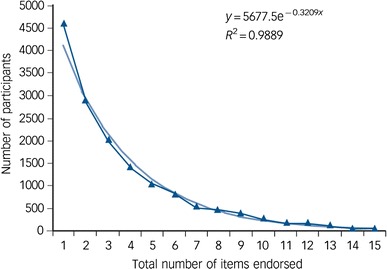
“Paranoia in adulthood generally decreases slightly with age, and though there may be content differences the rates appear similar in men and women [17].”
BackgroundSelf-citationBell, V., Halligan, P. W., & Ellis, H. D. (2006) · Schizophrenia Bulletin · doi:10.1093/schbul/sbj014 · Cited by 288
A new paradigm: Data-aware scheduling in grid computing
Kosar, T., & Balman, M. (2008) · Future Generation Computer Systems · doi:10.1016/j.future.2008.09.006 · Cited by 268
The Relationship Between Delusions and Violence
Coid, J. W., Ullrich, S., Kallis, C., Keers, R., Barker, D., Cowden, F., & Stamps, R. (2013) · JAMA Psychiatry · doi:10.1001/jamapsychiatry.2013.12 · Cited by 264
Freeman, D., Stahl, D., McManus, S., Meltzer, H., Brugha, T., Wiles, N., & Bebbington, P. (2012) · Social Psychiatry and Psychiatric Epidemiology · doi:10.1007/s00127-011-0433-1 · Cited by 246
Urbanicity, social adversity and psychosis
Heinz, A., Deserno, L., & Reininghaus, U. (2013) · World Psychiatry · doi:10.1002/wps.20056 · Cited by 245
Couture, S. M., Granholm, E. L., & Fish, S. C. (2010) · Schizophrenia Research · doi:10.1016/j.schres.2010.09.020 · Cited by 241
Acting on Delusions. I: Prevalence
Wessely, S. C., Buchanan, A. W., Reed, A., Cutting, J., Everitt, B. J., Garety, P. A., & Taylor, P. J. (1993) · The British Journal of Psychiatry · doi:10.1192/bjp.163.1.69 · Cited by 239
Self-citationHartley, S., Barrowclough, C., & Haddock, G. (2013) · Acta Psychiatrica Scandinavica · doi:10.1111/acps.12080 · Cited by 234
Freeman, D., Garety, P. A., Fowler, D., Kuipers, E., Bebbington, P. E., & Dunn, G. (2004) · Journal of Consulting and Clinical Psychology · doi:10.1037/0022-006x.72.4.671 · Cited by 229
Self-citationSocial Predictors of Psychotic Experiences: Specificity and Psychological Mechanisms
Bentall, R. P., & Fernyhough, C. (2008) · Schizophrenia Bulletin · doi:10.1093/schbul/sbn103 · Cited by 221
Freeman, D. H., & Garety, P. A. (1999) · Behavioural and Cognitive Psychotherapy · doi:10.1017/s135246589927107x · Cited by 218
Self-citationRonald, A., Sieradzka, D., Cardno, A. G., Haworth, C. M. A., McGuire, P., & Freeman, D. (2014) · Schizophrenia Bulletin · doi:10.1093/schbul/sbt106 · Cited by 211
Self-citationNormal and abnormal reasoning in people with delusions
Dudley, R. E. J., John, C. H., Young, A. W., & Over, D. E. (1997) · British Journal of Clinical Psychology · doi:10.1111/j.2044-8260.1997.tb01410.x · Cited by 207
The Structure of The Extended Psychosis Phenotype in Early Adolescence--A Cross-sample Replication
Wigman, J. T. W., Vollebergh, W., Raaijmakers, Q. A. W., Iedema, J., van Dorsselaer, S., Ormel, J., Verhulst, F. C., & van Os, J. (2009) · Schizophrenia Bulletin · doi:10.1093/schbul/sbp154 · Cited by 207
Pathways to defense of the self: A theory of two types of paranoia.
Trower, P., & Chadwick, P. (1995) · Clinical Psychology Science and Practice · doi:10.1111/j.1468-2850.1995.tb00044.x · Cited by 206
Startup, H. M., Freeman, D. H., & Garety, P. A. (2006) · Behaviour Research and Therapy · doi:10.1016/j.brat.2006.04.006 · Cited by 205
Self-citationSleep disturbance in mental health problems and neurodegenerative disease
Anderson, K. N., & Bradley (2013) · Nature and Science of Sleep · doi:10.2147/nss.s34842 · Cited by 198
Testing the continuum of delusional beliefs: An experimental study using virtual reality.
Freeman, D. H., Pugh, K., Vorontsova, N., Antley, A., & Slater, M. (2010) · Journal of Abnormal Psychology · doi:10.1037/a0017514 · Cited by 198
Self-citationAssociation of Violence With Emergence of Persecutory Delusions in Untreated Schizophrenia
Keers, R., Ullrich, S., Stavola, B. L. D., & Coid, J. W. (2013) · American Journal of Psychiatry · doi:10.1176/appi.ajp.2013.13010134 · Cited by 196
Peralta, V., & Cuesta, M. J. (1999) · Schizophrenia Research · doi:10.1016/s0920-9964(99)00003-1 · Cited by 195
The cognitive-behavioural treatment of low self-esteem in psychotic patients: A pilot study
Hall, P. L., & Tarrier, N. (2003) · Behaviour Research and Therapy · doi:10.1016/s0005-7967(02)00013-x · Cited by 194
A generalized bias against disconfirmatory evidence in schizophrenia
Moritz, S., & Woodward, T. S. (2006) · Psychiatry Research · doi:10.1016/j.psychres.2005.08.016 · Cited by 192
Fowler, D., Hodgekins, J., Garety, P., Freeman, D., Kuipers, E., Dunn, G., Smith, B., & Bebbington, P. E. (2012) · Schizophrenia Bulletin · doi:10.1093/schbul/sbr019 · Cited by 184
Studying and Treating Schizophrenia Using Virtual Reality: A New Paradigm
Freeman, D. H. (2007) · Schizophrenia Bulletin · doi:10.1093/schbul/sbn020 · Cited by 183
Self-citationThe relevance of self-esteem and self-schemas to persecutory delusions: A systematic review
Kesting, M.-L., & Lincoln, T. M. (2013) · Comprehensive Psychiatry · doi:10.1016/j.comppsych.2013.03.002 · Cited by 182
Self-disorders and the Schizophrenia Spectrum: A Study of 100 First Hospital Admissions
Nordgaard, J., & Parnas, J. (2014) · Schizophrenia Bulletin · doi:10.1093/schbul/sbt239 · Cited by 182
Sitko, K., Bentall, R., Shevlin, M., O'Sullivan, N., & Sellwood, W. (2014) · Psychiatry Research · doi:10.1016/j.psychres.2014.03.019 · Cited by 181
Myers, E., Startup, H., & Freeman, D. (2011) · Journal of Behavior Therapy and Experimental Psychiatry · doi:10.1016/j.jbtep.2011.02.004 · Cited by 170
Self-citationFreeman, D. H., Dunn, G., Murray, R. M., Evans, N., Lister, R., Antley, A., Slater, M., Godlewska, B. R., Cornish, R., Williams, J. H., et al. (2014) · Schizophrenia Bulletin · doi:10.1093/schbul/sbu098 · Cited by 170
Self-citationTreating trauma in psychosis with EMDR: A pilot study
van den Berg, D. P. G., & van der Gaag, M. (2011) · Journal of Behavior Therapy and Experimental Psychiatry · doi:10.1016/j.jbtep.2011.09.011 · Cited by 165
Freeman, D., Pugh, K., Vorontsova, N., & Southgate, L. (2009) · Schizophrenia Research · doi:10.1016/j.schres.2008.12.001 · Cited by 158
Self-citationThe relationship between bullying, psychotic-like experiences and appraisals in 14–16-year olds
Campbell, M. L. C., & Morrison, A. P. (2007) · Behaviour Research and Therapy · doi:10.1016/j.brat.2006.11.009 · Cited by 158
Freeman, D. H., Gittins, M., Pugh, K., Antley, A., Slater, M., & Dunn, G. (2008) · Psychological Medicine · doi:10.1017/s0033291708003589 · Cited by 157
Self-citationInduced Hearing Deficit Generates Experimental Paranoia
Zimbardo, P. G., Andersen, S. M., & Kabat, L. G. (1981) · Science · doi:10.1126/science.7233242 · Cited by 156
Impact of stress on paranoia: an experimental investigation of moderators and mediators
Lincoln, T. M., Peter, N., Schäfer, M., & Moritz, S. (2008) · Psychological Medicine · doi:10.1017/s0033291708004613 · Cited by 154
A Randomized Experimental Investigation of Reasoning Training for People With Delusions
Ross, K., Freeman, D. H., Dunn, G., & Garety, P. A. (2009) · Schizophrenia Bulletin · doi:10.1093/schbul/sbn165 · Cited by 150
Self-citationEfficacy of a Self-Esteem Module in the Empowerment of Individuals with Schizophrenia
Lecomte, T., Cyr, M., LESAGE, A. D., Wilde, J. B., LECLERC, C., & Ricard, N. (1999) · The Journal of Nervous and Mental Disease · doi:10.1097/00005053-199907000-00003 · Cited by 148
The Psychology of Persecutory Ideation II
Freeman, D. H., Garety, P. A., Bebbington, P., Slater, M., Kuipers, E., Fowler, D. G., Green, C., Jordan, J., Ray, K., & Dunn, G. (2005) · The Journal of Nervous and Mental Disease · doi:10.1097/01.nmd.0000161686.53245.70 · Cited by 147
Self-citationZavos, H. M. S., Freeman, D., Haworth, C. M. A., McGuire, P., Plomin, R., Cardno, A. G., & Ronald, A. (2014) · JAMA Psychiatry · doi:10.1001/jamapsychiatry.2014.994 · Cited by 147
Self-citationComplementary group Metacognitive Training (MCT) reduces delusional ideation in schizophrenia.
Moritz, S., Veckenstedt, R., Bohn, F., Hottenrott, B., Scheu, F., Randjbar, S., Aghotor, J., Köther, U., Woodward, T. S., Treszl, A., et al. (2013) · Schizophrenia Research · doi:10.1016/j.schres.2013.10.007 · Cited by 146
So, S. H., Freeman, D. H., Dunn, G., Kapur, S., Kuipers, E., Bebbington, P., Fowler, D. G., & Garety, P. A. (2011) · Journal of Abnormal Psychology · doi:10.1037/a0025297 · Cited by 143
Self-citationCan Virtual Reality be Used to Investigate Persecutory Ideation?
Freeman, D. H., Slater, M., Bebbington, P., Garety, P. A., Kuipers, E., Fowler, D. G., Met, A., Read, C. M., Jordan, J., & Vinayagamoorthy, V. (2003) · The Journal of Nervous and Mental Disease · doi:10.1097/01.nmd.0000082212.83842.fe · Cited by 141
Self-citationRoberts, D. L., Combs, D. R., Willoughby, M. T., Mintz, J., Gibson, C. M., Rupp, B., & Penn, D. L. (2014) · British Journal of Clinical Psychology · doi:10.1111/bjc.12044 · Cited by 140
Foster, C., Startup, H. M., Potts, L. C., & Freeman, D. H. (2009) · Journal of Behavior Therapy and Experimental Psychiatry · doi:10.1016/j.jbtep.2009.09.001 · Cited by 139
Self-citationAn experience sampling study of worry and rumination in psychosis
Hartley, S., Haddock, G., Vasconcelos e Sa, D., Emsley, R., & Barrowclough, C. (2014) · Psychological Medicine · doi:10.1017/s0033291713002080 · Cited by 138
Structured Interview for Assessing Perceptual Anomalies (SIAPA)
Bunney, W. E., Hetrick, W. P., Bunney, B. G., Patterson, J. V., Jin, Y., Potkin, S. G., & Sandman, C. A. (1999) · Schizophrenia Bulletin · doi:10.1093/oxfordjournals.schbul.a033402 · Cited by 133
Height, social comparison, and paranoia: An immersive virtual reality experimental study
Freeman, D. H., Evans, N., Lister, R., Antley, A., Dunn, G., & Slater, M. (2013) · Psychiatry Research · doi:10.1016/j.psychres.2013.12.014 · Cited by 131
Self-citationNeuropsychological functioning and jumping to conclusions in delusions
Garety, P., Joyce, E., Jolley, S., Emsley, R., Waller, H., Kuipers, E., Bebbington, P., Fowler, D., Dunn, G., & Freeman, D. (2013) · Schizophrenia Research · doi:10.1016/j.schres.2013.08.035 · Cited by 126
Self-citationMood Instability and Psychosis: Analyses of British National Survey Data
Marwaha, S., Broome, M. R., Bebbington, P., Kuipers, E., & Freeman, D. H. (2013) · Schizophrenia Bulletin · doi:10.1093/schbul/sbt149 · Cited by 123
Self-citationWaller, H., Freeman, D., Jolley, S., Dunn, G., & Garety, P. (2011) · Journal of Behavior Therapy and Experimental Psychiatry · doi:10.1016/j.jbtep.2011.03.001 · Cited by 120
Self-citationGarety, P. A., Waller, H., Emsley, R., Jolley, S., Kuipers, E., Bebbington, P., Dunn, G., Fowler, D. G., Hardy, A., & Freeman, D. H. (2014) · Schizophrenia Bulletin · doi:10.1093/schbul/sbu103 · Cited by 120
Self-citationDifferences in Cognitive and Emotional Processes Between Persecutory and Grandiose Delusions
Garety, P. A., Gittins, M., Jolley, S., Bebbington, P., Dunn, G., Kuipers, E., Fowler, D. G., & Freeman, D. H. (2012) · Schizophrenia Bulletin · doi:10.1093/schbul/sbs059 · Cited by 119
Self-citationBen‐Zeev, D., Ellington, K., Swendsen, J. D., & Granholm, E. L. (2010) · Schizophrenia Bulletin · doi:10.1093/schbul/sbq041 · Cited by 112
Lincoln, T. M., Hohenhaus, F., & Hartmann, M. M. (2012) · Cognitive Therapy and Research · doi:10.1007/s10608-012-9470-7 · Cited by 110
Cognitive factors maintaining persecutory delusions in psychosis: The contribution of depression.
Vorontsova, N., Garety, P., & Freeman, D. (2013) · Journal of Abnormal Psychology · doi:10.1037/a0034952 · Cited by 107
Self-citationDo people with schizophrenia display theory of mind deficits in clinical interactions?
McCabe, R., Leudar, I., & Antaki, C. (2004) · Psychological Medicine · doi:10.1017/s0033291703001338 · Cited by 104
Executive functions and development: emerging themes
Hughes, C. H. (2002) · Infant and Child Development · doi:10.1002/icd.297 · Cited by 103
Jumping to conclusions and the continuum of delusional beliefs
Warman, D. M., Lysaker, P. H., Martin, J. M., Davis, L. W., & Haudenschield, S. L. (2006) · Behaviour Research and Therapy · doi:10.1016/j.brat.2006.09.002 · Cited by 101
Freeman, D., Brugha, T., Meltzer, H., Jenkins, R., Stahl, D., & Bebbington, P. (2010) · Journal of Psychiatric Research · doi:10.1016/j.jpsychires.2010.03.018 · Cited by 99
Self-citationThe Psychology of Persecutory Ideation I
Freeman, D. H., Dunn, G., Garety, P. A., Bebbington, P., Slater, M., Kuipers, E., Fowler, D. G., Green, C., Jordan, J., & Ray, K. (2005) · The Journal of Nervous and Mental Disease · doi:10.1097/01.nmd.0000161687.12931.67 · Cited by 99
Self-citationBrett, C., Heriot‐Maitland, C., McGuire, P., & Peters, E. (2014) · British Journal of Clinical Psychology · doi:10.1111/bjc.12036 · Cited by 99
Delusions and decision-making style: Use of the Need for Closure Scale
Freeman, D., Garety, P., Kuipers, E., Colbert, S., Jolley, S., Fowler, D., Dunn, G., & Bebbington, P. (2006) · Behaviour Research and Therapy · doi:10.1016/j.brat.2005.09.002 · Cited by 98
Self-citationBrett, C. M. C., Peters, E. P., Johns, L. C., Tabraham, P., Valmaggia, L. R., & Mcguire, P. K. (2007) · British Journal of Psychiatry · doi:10.1192/bjp.191.51.s23 · Cited by 97
Hearing impairment and psychosis revisited
Thewissen, V., Myin‐Germeys, I., Bentall, R. P., de Graaf, R., Vollebergh, W., & van Os, J. (2004) · Schizophrenia Research · doi:10.1016/j.schres.2004.10.013 · Cited by 94
Morrison, A., & Wells, A. (2007) · Behaviour Research and Therapy · doi:10.1016/j.brat.2006.11.010 · Cited by 90
Freeman, D. H., Emsley, R., Dunn, G., Fowler, D. G., Bebbington, P., Kuipers, E., Jolley, S., Waller, H., Hardy, A., & Garety, P. A. (2014) · Schizophrenia Bulletin · doi:10.1093/schbul/sbu173 · Cited by 90
Self-citationTaylor, M. J., Gregory, A. M., Freeman, D., & Ronald, A. (2015) · Journal of Abnormal Psychology · doi:10.1037/abn0000057 · Cited by 85
Suspicious young minds: paranoia and mistrust in 8- to 14-year-olds in the UK and Hong Kong
Wong, K. K., Freeman, D. H., & Hughes, C. H. (2014) · The British Journal of Psychiatry · doi:10.1192/bjp.bp.113.135467 · Cited by 82
Self-citationImagery and psychotic symptoms: a preliminary investigation
Morrison, A. P., Beck, A. T., Glentworth, D., Dunn, H., Reid, G. S., Larkin, W., & Williams, S. (2002) · Behaviour Research and Therapy · doi:10.1016/s0005-7967(01)00128-0 · Cited by 81
Phenomenological Evidence for Two Types of Paranoia
Chadwick, P., Trower, P., Juusti-Butler, T.-M., & Maguire, N. (2005) · Psychopathology · doi:10.1159/000089453 · Cited by 81
Paranoia and self-concepts in psychosis: A systematic review of the literature
Tiernan, B., Tracey, R., & Shannon, C. (2014) · Psychiatry Research · doi:10.1016/j.psychres.2014.02.003 · Cited by 81
Improving cognitive treatments for delusions
Freeman, D. H. (2011) · Schizophrenia Research · doi:10.1016/j.schres.2011.08.012 · Cited by 80
Self-citationFreeman, D., Thompson, C., Vorontsova, N., Dunn, G., Carter, L.-A., Garety, P., Kuipers, E., Slater, M., Antley, A., Glucksman, E., et al. (2013) · Psychological Medicine · doi:10.1017/s003329171300038x · Cited by 79
Self-citationInterpersonal sensitivity in the at-risk mental state for psychosis
Masillo, A., Day, F., Laing, J., Howes, O. D., Fusar‐Poli, P., Byrne, M., Bhattacharyya, S., Nastro, P. F., Girardi, P., McGuire, P. K., et al. (2012) · Psychological Medicine · doi:10.1017/s0033291711002996 · Cited by 79
van Oosterhout, B., Krabbendam, L., de Boer, K., Ferwerda, J., van der Helm, M., Stant, A. D., & van der Gaag, M. (2014) · Psychological Medicine · doi:10.1017/s0033291714000555 · Cited by 75
Patterns of positive and negative symptoms in first episode schizophrenia
Vázquez-Barquero, J. L., Lastra, I., Nuñez, M. J. C., Castanedo, S. H., & Dunn, G. (1996) · British Journal of Psychiatry · doi:10.1192/bjp.168.6.693 · Cited by 73 · cited 1×
“The empirical research indicates that within these diagnoses are multiple independent experiences, such as paranoia, hallucinations, grandiosity, thought disorder, and anhedonia [13, 20–22].”
BackgroundSieradzka, D., Power, R. A., Freeman, D. H., Cardno, A. G., McGuire, P. K., Plomin, R. J., Meaburn, E. L., Dudbridge, F., & Ronald, A. (2014) · PLoS ONE · doi:10.1371/journal.pone.0094398 · Cited by 72
Self-citationFreeman, D., Startup, H., Dunn, G., Černis, E., Wingham, G., Pugh, K., Cordwell, J., & Kingdon, D. (2013) · Journal of Psychiatric Research · doi:10.1016/j.jpsychires.2013.06.016 · Cited by 71 · cited 2×
“In clinical groups the presence of the bias does not seem to be affected by anxiety manipulations [68, 98].”
BackgroundSelf-citationPoor me versus bad me paranoia and the instability of persecutory ideation
Melo, S. S., Taylor, J. L., & Bentall, R. P. (2006) · Psychology and Psychotherapy Theory Research and Practice · doi:10.1348/147608305x52856 · Cited by 71
The Near Babylonian Speech Confusion in Early Detection of Psychosis
Schultze‐Lutter, F., SCHIMMELMANN, B. G., & Ruhrmann, S. (2011) · Schizophrenia Bulletin · doi:10.1093/schbul/sbr039 · Cited by 69
Persecutory delusions and psychological well-being
Freeman, D. H., Startup, H. M., Dunn, G., Wingham, G., Černis, E., Evans, N., Lister, R., Pugh, K., Cordwell, J., & Kingdon, D. (2013) · Social Psychiatry and Psychiatric Epidemiology · doi:10.1007/s00127-013-0803-y · Cited by 68
Self-citationKorver‐Nieberg, N., Fett, A.-K. J., Meijer, C. J., Koeter, M. W. J., Shergill, S. S., de Haan, L., & Krabbendam, L. (2013) · Australian & New Zealand Journal of Psychiatry · doi:10.1177/0004867413484370 · Cited by 66
Elucidating the Black Box From Stress To Paranoia
Moritz, S., Burnette, P., Sperber, S. H., Köther, U., Hagemann-Goebel, M., Hartmann, M. M., & Lincoln, T. M. (2010) · Schizophrenia Bulletin · doi:10.1093/schbul/sbq055 · Cited by 62
Freeman, D. H., Startup, H. M., Dunn, G., Černis, E., Wingham, G., Pugh, K., Cordwell, J., Mander, H., & Kingdon, D. (2014) · Psychological Medicine · doi:10.1017/s0033291714000592 · Cited by 59
Self-citationEmotion regulation difficulties are relevant to persecutory ideation
Westermann, S., & Lincoln, T. M. (2010) · Psychology and Psychotherapy Theory Research and Practice · doi:10.1348/147608310x523019 · Cited by 58
Morrison, A. P., Gumley, A. I., Schwannauer, M., Campbell, M., Gleeson, A., Griffin, E., & Gillan, K. (2004) · Behavioural and Cognitive Psychotherapy · doi:10.1017/s1352465804001900 · Cited by 58
The Impact of Rumination on State Paranoid Ideation in a Nonclinical Sample
Martinelli, C., Cavanagh, K., & Dudley, R. E. J. (2013) · Behavior Therapy · doi:10.1016/j.beth.2013.02.002 · Cited by 54
Smith, N., Freeman, D. H., & Kuipers, E. (2005) · The Journal of Nervous and Mental Disease · doi:10.1097/01.nmd.0000168235.60469.cc · Cited by 54
Self-citationMehl, S., Landsberg, M. W., Schmidt, A.-C., Cabanis, M., Bechdolf, A., Herrlich, J., Loos-Jankowiak, S., Kircher, T. T. J., Kiszkenow-Bäker, S., Klingberg, S., et al. (2014) · Schizophrenia Bulletin · doi:10.1093/schbul/sbu040 · Cited by 53
Social cognition and social functioning in nonclinical paranoia
Combs, D. R., Finn, J. A., Wohlfahrt, W., Penn, D. L., & Basso, M. R. (2013) · Cognitive Neuropsychiatry · doi:10.1080/13546805.2013.766595 · Cited by 51
Intrusive mental imagery in patients with persecutory delusions
Schulze, K., Freeman, D. H., Green, C., & Kuipers, E. (2012) · Behaviour Research and Therapy · doi:10.1016/j.brat.2012.10.002 · Cited by 50
Self-citationFreeman, D. H., Evans, N., & Lister, R. (2012) · Psychiatry Research · doi:10.1016/j.psychres.2011.12.031 · Cited by 50
Self-citationJacobsen, P. C., Freeman, D. H., & Salkovskis, P. M. (2011) · British Journal of Clinical Psychology · doi:10.1111/j.2044-8260.2011.02014.x · Cited by 49
Self-citationHutton, P., KELLY, J. A., Lowens, I., Taylor, P. J., & Tai, S. (2012) · Psychiatry Research · doi:10.1016/j.psychres.2012.08.010 · Cited by 49
The use of intuitive and analytic reasoning styles by patients with persecutory delusions
Freeman, D., Lister, R., & Evans, N. (2014) · Journal of Behavior Therapy and Experimental Psychiatry · doi:10.1016/j.jbtep.2014.06.005 · Cited by 48
Self-citationFreeman, D. H., & Freeman, J. (2008) · Oxford University Press eBooks · doi:10.1093/oso/9780199237500.001.0001 · Cited by 48
Self-citationWhat Do People with Psychosis Think Caused their Psychosis? A Q Methodology Study
Dudley, R. E. J., Siitarinen, J., James, I. A., & Dodgson, G. (2008) · Behavioural and Cognitive Psychotherapy · doi:10.1017/s1352465808004955 · Cited by 47
Developing Treatments of Persistent Persecutory Delusions
Hepworth, C., Startup, H. M., & Freeman, D. H. (2011) · The Journal of Nervous and Mental Disease · doi:10.1097/nmd.0b013e318229cfa8 · Cited by 46
Self-citationDiez-Alegría, C., Vázquez, C., Nieto‐Moreno, M., Valiente, C., & Fuentenebro, F. (2006) · British Journal of Clinical Psychology · doi:10.1348/014466505x86681 · Cited by 44
Bell, V., & Freeman, D. H. (2014) · Journal of Behavior Therapy and Experimental Psychiatry · doi:10.1016/j.jbtep.2014.06.001 · Cited by 43
Self-citationParanoid thinking, suspicion, and risk for aggression: A neurodevelopmental perspective
Tone, E. B., & Davis, J. S. (2012) · Development and Psychopathology · doi:10.1017/s0954579412000521 · Cited by 43
An experiential perspective on persecutory paranoia: A grounded theory construction
Boyd, T., & Gumley, A. I. (2006) · Psychology and Psychotherapy Theory Research and Practice · doi:10.1348/147608306x100536 · Cited by 43
Overcoming Paranoid and Suspicious Thoughts
Freeman, D. H., Freeman, J., & Garety, P. A. (2006) · Cited by 43
Self-citationSoosay, I., Silove, D. M., Bateman-Steel, C. R., Steel, Z., Bebbington, P., Jones, P. B., Chey, T., Ivancic, L., & Marnane, C. L. (2012) · BMC Psychiatry · doi:10.1186/1471-244x-12-229 · Cited by 42
Paranoia the 21st Century Fear
(2009) · The Journal of Nervous and Mental Disease · doi:10.1097/01.nmd.0000356995.62898.86 · Cited by 40
Implicit and explicit self-schema in active deluded, remitted deluded, and depressed patients
Vázquez, C., Diez-Alegría, C., Hernández-Lloreda, M. J., & Nieto‐Moreno, M. (2008) · Journal of Behavior Therapy and Experimental Psychiatry · doi:10.1016/j.jbtep.2008.01.006 · Cited by 39
Impact of State Anxiety on the Jumping to Conclusions Delusion Bias
So, S. H., Freeman, D. H., & Garety, P. A. (2008) · Australian & New Zealand Journal of Psychiatry · doi:10.1080/00048670802345466 · Cited by 39
Self-citationWard, T. A., Gaynor, K. J., Hunter, M. D., Woodruff, P. W. R., Garety, P. A., & Peters, E. R. (2014) · Schizophrenia Bulletin · doi:10.1093/schbul/sbt094 · Cited by 38
Self-citationFear of madness and persecutory delusions: Preliminary investigation of a new scale
Bassett, M., Sperlinger, D., & Freeman, D. (2009) · Psychosis · doi:10.1080/17522430802535031 · Cited by 31
Self-citationThe Development and Validation of the Beliefs about Paranoia Scale (Short Form)
Gumley, A. I., Gillan, K., Morrison, A. P., & Schwannauer, M. (2010) · Behavioural and Cognitive Psychotherapy · doi:10.1017/s135246581000055x · Cited by 30
The emerging biology of delusions
Murray, G. (2010) · Psychological Medicine · doi:10.1017/s0033291710000413 · Cited by 29
First Person Account: Living With the Delusions and Effects of Schizophrenia
Weiner, S. K. (2003) · Schizophrenia Bulletin · doi:10.1093/oxfordjournals.schbul.a007054 · Cited by 25
Freeman, D. H., Startup, H. M., Myers, E., Harvey, A. G., Geddes, J. R., Yu, L., Zaiwalla, Z., Luengo-Fernández, R., Foster, F., & Lister, R. (2013) · Trials · doi:10.1186/1745-6215-14-214 · Cited by 25
Self-citationBad me paranoia in early psychosis: A relatively rare phenomenon
Fornells‐Ambrojo, M., & Garety, P. A. (2005) · British Journal of Clinical Psychology · doi:10.1348/014466505x35326 · Cited by 24
Self-citationFreeman, D. H., Waller, H., Harpur, R. A., Moore, R., Garety, P. A., Bebbington, P., Kuipers, E., Emsley, R., Dunn, G., Fowler, D. G., et al. (2013) · Behavioural and Cognitive Psychotherapy · doi:10.1017/s1352465813000660 · Cited by 17
Self-citationDepersonalization in Patients With Persecutory Delusions
Černis, E., Dunn, G., Startup, H., Kingdon, D., Wingham, G., Pugh, K., Cordwell, J., Mander, H., & Freeman, D. (2014) · Journal of Nervous & Mental Disease · doi:10.1097/nmd.0000000000000185 · Cited by 14
Self-citationStartup, H. M., Pugh, K., Cordwell, J., Kingdon, D., & Freeman, D. H. (2014) · Behavioural and Cognitive Psychotherapy · doi:10.1017/s1352465813001136 · Cited by 10
Self-citationInduced hearing deficit generates experimental paranoia
Zimbardo, P. G., Anderson, S., & Kabat, L. G. (1982) · The Journal of the Acoustical Society of America · doi:10.1121/1.388416 · Cited by 9
Experiencing Suspicious Thoughts and Paranoia: An Account
Adam (2010) · Schizophrenia Bulletin · doi:10.1093/schbul/sbq123 · Cited by 9
Clinical presentation and early care relationships in ‘poor‐me’ and ‘bad‐me’ paranoia
Morris, E., Milner, P., Trower, P., & PETERS, E. R. (2010) · British Journal of Clinical Psychology · doi:10.1348/014466510x525498 · Cited by 7
Freeman, D. H., Dunn, G., Startup, H. M., & Kingdon, D. (2015) · Efficacy and Mechanism Evaluation · doi:10.3310/eme02010 · Cited by 7
Self-citationFreeman, D. H., Dunn, G., Startup, H. M., Pugh, K., Cordwell, J., Mander, H., Černis, E., Wingham, G., Shirvell, K., & Kingdon, D. (2014) · ePrints Soton (University of Southampton) · Cited by 4
Self-citation
Research works printed but not linked: 2
- Tiernan B, Tracey R, Shannon C (2014) Paranoia and self-concepts in psychosis. Psychiatry Res 30:202–313
- Freeman D, Freeman J (2012) You can be happy: the scientifically proven way to change how you feel. Prentice Hall Life, Harlow
Cited by
Sorted by citations
Dudley, R., Taylor, P., Wickham, S., & Hutton, P. (2016) · Schizophrenia Bulletin · doi:10.1093/schbul/sbv150 · Cited by 353
Reininghaus, U., Kempton, M. J., Valmaggia, L., Craig, T. K. J., Garety, P., Onyejiaka, A., Gayer-Anderson, C., So, S. H., Hubbard, K., Beards, S., et al. (2016) · Schizophrenia Bulletin · doi:10.1093/schbul/sbv190 · Cited by 304
Self-citationFreeman, D., Dunn, G., Startup, H., Pugh, K., Cordwell, J., Mander, H., Černis, E., Wingham, G., Shirvell, K., & Kingdon, D. (2015) · The Lancet Psychiatry · doi:10.1016/s2215-0366(15)00039-5 · Cited by 295
Self-citationThe role of sleep dysfunction in the occurrence of delusions and hallucinations: A systematic review
Reeve, S., Sheaves, B., & Freeman, D. (2015) · Clinical Psychology Review · doi:10.1016/j.cpr.2015.09.001 · Cited by 273
“A focus on individual psychotic experiences has allowed development of detailed theoretical models, for example for paranoia (Freeman, Garety, Kuipers, Fowler, & Bebbington, 2002) accompanied by corresponding innovations in treatment (Freeman & Garety, 2014).”
BackgroundSelf-citationChildhood adversities and psychosis: evidence, challenges, implications
Morgan, C., & Gayer-Anderson, C. E. (2016) · World Psychiatry · doi:10.1002/wps.20330 · Cited by 278
Metadata
- Authors
- Freeman, D., & Garety, P.
- Affiliations
- Warneford Hospital (GB)
- King's College London (GB)
- Corresponding author
- Freeman, Daniel
- Venue
- Social Psychiatry and Psychiatric Epidemiology
- Published
- 2014-07-09
- Volume
- 49
- Issue
- 8
- Pages
- 1179-1189
- ISSN
- 0933-7954 (ISSN-L)
- 1433-9285
- PMC
- PMC4108844
- OpenAlex
- W2013939918
- Cited by
- 348
- References
- 157
- Citations by year
- 2026: 14 · 2025: 23 · 2024: 24 · 2023: 22 · 2022: 18 · 2021: 22 · 2020: 36 · 2019: 41 · 2018: 37 · 2017: 43 · 2016: 35 · 2015: 29 · 2014: 4
- FWCI
- 5.09
- Type
- journal article
- Language
- en
- Open access
- hybrid
- doi.org
- Locations
- Social Psychiatry and Psychiatric Epidemiology (publishedVersion, cc-by)
- Europe PMC (PubMed Central) (publishedVersion, cc-by)
- PubMed Central (publishedVersion, cc-by)
- PubMed (publishedVersion)
- Research Portal (King's College London) (submittedVersion, other-oa)
- Funders
- South London and Maudsley NHS Foundation Trust
- National Institute for Health and Care Research (NF-SI-0510-10121)
- King's College London
- Medical Research Council (G0902308)
- Topics
- Health Sciences › Medicine › Psychiatry and Mental health › Schizophrenia research and treatment
- Social Sciences › Arts and Humanities › Philosophy › Mental Health and Psychiatry
- Life Sciences › Neuroscience › Cognitive Neuroscience › Hallucinations in medical conditions
- Keywords
- persecutory delusions, paranoia, negative self-beliefs, interpersonal sensitivity, sleep disorders, reasoning biases, cognitive intervention, psychosis, illicit drug use, urban environment, life events
- MeSH terms
- Adult, Aged, Anxiety, Culture, Delusions, Female, Humans, Internal-External Control, Male, Middle Aged, Paranoid Disorders, Psychotic Disorders, Risk Factors, Schizophrenia, Paranoid, Severity of Illness Index, Thinking, Cognitive Behavioral Therapy
About these checks
Registry, retraction, Cites and statistics results are computed, not judged, with one exception: a printed reference that no index lists is read once by a model before it counts as a citation error. Claims are extracted by a model and kept only when their quote appears verbatim in the text; each cited source is then checked, with a model’s help, for whether it says what the claim relies on. Those verdicts can be wrong — read the claim’s quote and the cited source before relying on one.
Statistics and arithmetic are recomputed, not judged.
Confidence bands are shown only for fields calibrated on our annotated test set. None is calibrated yet, so no band is shown.
What counts as a claim ›How we measure confidence ›How we check this ›
Are you an author, or do you see a problem with this page? Request a review
