

Towards a unifying, systems biology understanding of large-scale cellular death and destruction caused by poorly liganded iron: Parkinson’s, Huntington’s, Alzheimer’s, prions, bactericides, chemical toxicology and others as examples
Open accessThe DOI matches its Crossref record; 1,761 of the 1,762 references it cites were found in a registry or an index; 25 of the 282 sources its claims cite were checked for support.
Abstract
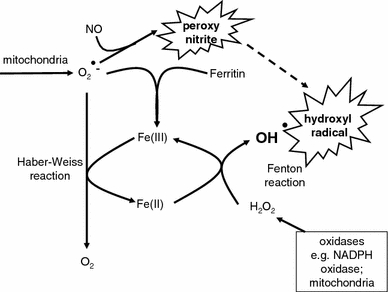
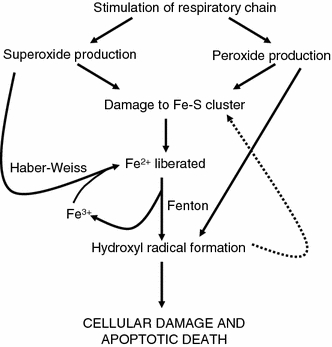
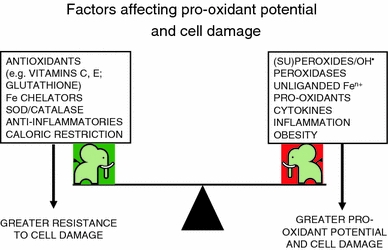
Exposure to a variety of toxins and/or infectious agents leads to disease, degeneration and death, often characterised by circumstances in which cells or tissues do not merely die and cease to function but may be more or less entirely obliterated. It is then legitimate to ask the question as to whether, despite the many kinds of agent involved, there may be at least some unifying mechanisms of such cell death and destruction. I summarise the evidence that in a great many cases, one underlying mechanism, providing major stresses of this type, entails continuing and autocatalytic production (based on positive feedback mechanisms) of hydroxyl radicals via Fenton chemistry involving poorly liganded iron, leading to cell death via apoptosis (probably including via pathways induced by changes in the NF-κB system). While every pathway is in some sense connected to every other one, I highlight the literature evidence suggesting that the degenerative effects of many diseases and toxicological insults converge on iron dysregulation. This highlights specifically the role of iron metabolism, and the detailed speciation of iron, in chemical and other toxicology, and has significant implications for the use of iron chelating substances (probably in partnership with appropriate anti-oxidants) as nutritional or therapeutic agents in inhibiting both the progression of these mainly degenerative diseases and the sequelae of both chronic and acute toxin exposure. The complexity of biochemical networks, especially those involving autocatalytic behaviour and positive feedbacks, means that multiple interventions (e.g. of iron chelators plus antioxidants) are likely to prove most effective. A variety of systems biology approaches, that I summarise, can predict both the mechanisms involved in these cell death pathways and the optimal sites of action for nutritional or pharmacological interventions.
Overview
CoChat Summary
TL;DR
This review argues that poorly liganded iron, via Fenton/Haber–Weiss chemistry and autocatalytic hydroxyl radical production, is a convergent mechanism in many diseases and toxicant exposures, from neurodegeneration and stroke to sepsis, bactericidal antibiotics, and chemical toxicology. It proposes that iron chelators, especially combined with antioxidants, are rational therapeutic/nutritional interventions and that systems biology can identify optimal multi-target interventions.
Key findings
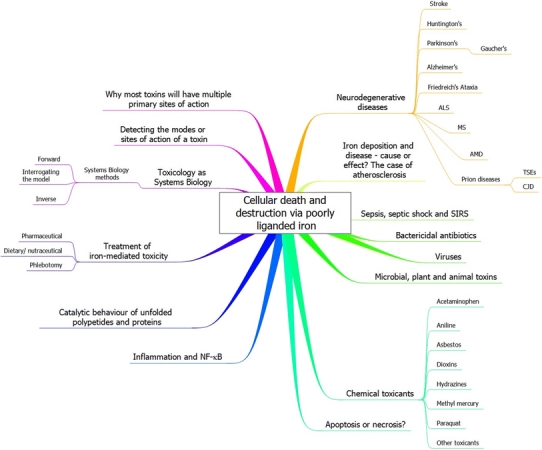
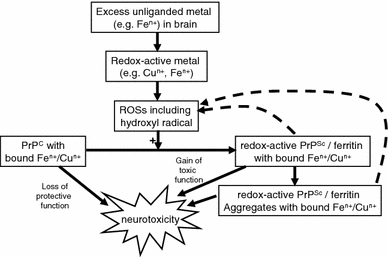
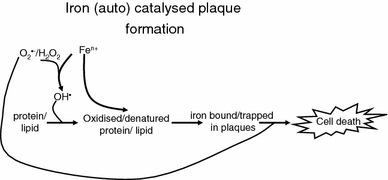
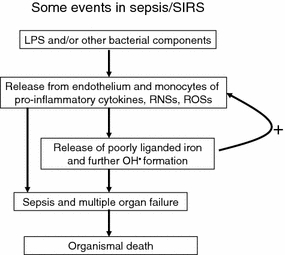
- Across reviewed conditions—stroke, Huntington’s, Parkinson’s, Alzheimer’s, ALS, Friedreich’s ataxia, multiple sclerosis, age-related macular degeneration, prion diseases, atherosclerosis, sepsis/SIRS, bactericidal antibiotics, viral infections, and chemical toxicants—evidence converges on iron dysregulation and Fenton chemistry; the hydroxyl radical is highlighted as the key damaging species rather than “ROS” generally.
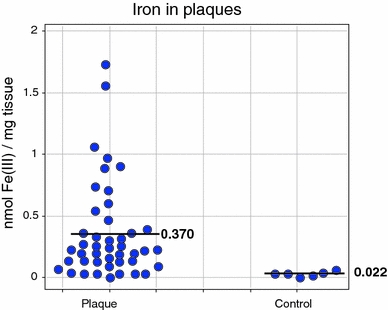
- In atherosclerosis, EPR-detectable iron in plaques was 17-fold greater than in healthy non-atherosclerotic intima controls, with P = 0.0001 (replotted from Stadler et al. 2004); iron levels in plaques also correlate with oxidized proteins.
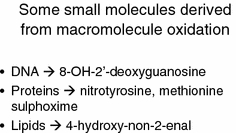
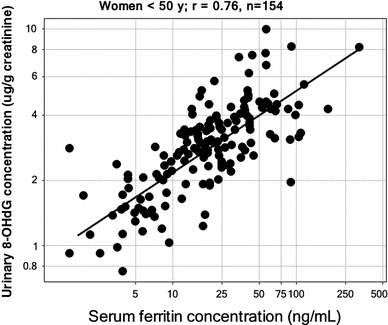
- Serum ferritin concentrations show a very strong relationship with urinary 8-hydroxy-2′-deoxyguanosine, a DNA damage/oxidative stress marker (replotted from Hori et al. 2010), and ferritin levels are widely associated with disease development, severity, or poor outcomes.
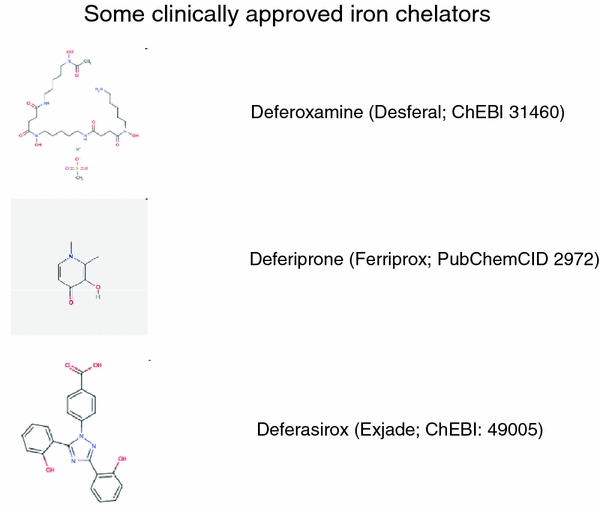
- Bactericidal antibiotics (norfloxacin, ampicillin, kanamycin) use internal iron liberated from iron–sulfur clusters to promote Fenton-mediated hydroxyl radical formation, whereas bacteriostatic antibiotics do not; iron chelators plus antioxidants are especially effective in sepsis models, and approved clinical chelators include deferoxamine, deferiprone, and deferasirox.
Methods
- Narrative literature review; the literature survey at initial submission extended to 14 June 2010, covering diseases, toxicants, and iron biology.
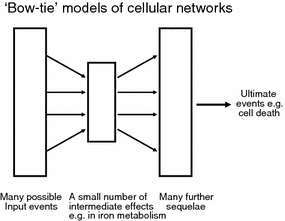
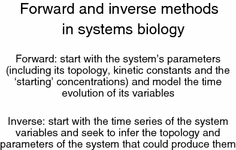
- Systems biology conceptual synthesis: forward and inverse modelling, sensitivity analysis, combinatorial parameter analysis, Bayesian/MCMC and evolutionary methods to infer sites of action, and “bow-tie” network models.
- Replots/digitizes published data (e.g., Hori et al. 2010; Stadler et al. 2004) to illustrate relationships; no new primary experimental data are reported.
Limitations
- The paper states that exact molecular mechanisms, cascades, and networks depend on many other factors; causality is often hard to infer from one-time snapshots; and some direct evidence is lacking—e.g., PrPSc–ferritin complexes have not yet been shown to catalyse OH• production directly, huntingtin inclusion bodies were not demonstrated to catalyse hydroxyl formation, and the extent of causality of iron dysregulation in multiple sclerosis is not yet established.
- Evident from the text: as a review, it synthesizes heterogeneous literature and relies heavily on cited associations, many of which are correlational; no new experimental validation is provided, and the literature coverage ends in mid-2010.
- The paper notes hormesis and dose-dependent interactions complicate simple models; chelator/antibiotic interactions can be dose-dependent and sometimes antagonistic (e.g., deferoxamine was antagonistic to azoles, while deferasirox promoted ciprofloxacin activity against *V. vulnificus*).
Model-written summary of a shortened version of the paper’s full text (it is longer than we read). Check it against the paper before relying on it.
Integrity signals
Registry
Cites
Statistics
Figures
Verification
Claims the paper makes
15 Valid · 1 Not valid · 117 Not checked · 25 Own results and interpretations
At least one cited source doesn’t support this claim or points to a different paper, and none confirmed it — see the verdicts below.
In the paper
“The defect thus leads to the liberation of mitochondrial iron”
§ Towards a unifying, systems biology understanding of large-scale cellular death and destruction caused by poorly liganded iron: Parkinson’s, Huntington’s, Alzheimer’s, prions, bactericides, chemical toxicology and others as examples > Friedreich’s ataxia
What the sources say
- Disputedcites Huang et al. 2009 matched to “Elucidation of the mechanism of mitochondrial iron loading in Friedreich's ataxia by analysis of a mouse mutant” (2009) sourceExperimental — accuracy not yet measured
The Abstract and Discussion describe frataxin deficiency as causing mitochondrial iron accumulation, with reduced release of heme and iron-sulfur clusters from mitochondria—not liberation of mitochondrial iron. The Discussion instead identifies increased liberation of cytoplasmic iron from heme as a contributor to mitochondrial iron uptake. No page numbers are available in our copy. (LLM, conf=0.88)
Checked by a reasoning model — may be wrong.
- Not checked yetcites Popescu et al. 2007 matched to “The chemical form of mitochondrial iron in Friedreich’s ataxia” (2007) source
- Not checked yetcites Richardson et al. 2009a
plainstates a cause- Asserted: passes — The authors put it forward as true.
- Checkable: passes — It can be checked against evidence.
- Load-bearing: passes — The paper’s conclusions depend on it.
- Based: passes — The paper gives a reason why it holds.
- Disputed
The cited sources support only part of this claim — read each source’s verdict below.
In the paper
“body-iron status correlates rather strongly with its production or urinary excretion (Agarwal et al. 2004; Broedbaek et al. 2009; Fujita et al. 2007a, 2009; Gackowski et al. 2002; Hori et al. 2010; Kang et al. 1998; Kuo et al. 2008; Maruyama et al. 2007; Nakano et al. 2003; Toyokuni and Sagripanti 1996; Tuomainen et al. 2007; Valavanidis et al. 2005).”
§ Towards a unifying, systems biology understanding of large-scale cellular death and destruction caused by poorly liganded iron: Parkinson’s, Huntington’s, Alzheimer’s, prions, bactericides, chemical toxicology and others as examples > Introduction
What the sources say
- Could not verifycites Agarwal et al. 2004 matched to “Oxidative stress and renal injury with intravenous iron in patients with chronic kidney disease” (2004) sourceExperimental — accuracy not yet measured
The Laboratory analysis section describes plasma and urinary malondialdehyde (MDA) assays, and the Discussion reports urinary MDA after intravenous iron in patients with chronic kidney disease. Searches for 8-OHdG and 8-hydroxy-2′-deoxyguanosine found no passage measuring that marker or relating its production or urinary excretion to body-iron status. (LLM, conf=0.76)
- Supportedcites Hori et al. 2010 matched to “Body iron store as a predictor of oxidative DNA damage in healthy men and women” (2010) source
The Discussion reports a strong positive association between serum ferritin, a marker of body iron stores, and urinary 8-OHdG in healthy Japanese men and women. The Results also show urinary 8-OHdG increasing across ferritin levels. This supports the claim about urinary excretion, though the cross-sectional study did not directly measure production. (LLM, conf=0.94)
boostedstates an association- Asserted: passes — The authors put it forward as true.
- Checkable: passes — It can be checked against evidence.
- Load-bearing: passes — The paper’s conclusions depend on it.
- Based: passes — The paper gives a reason why it holds.
- Could not verify
Every source the paper cites for this claim was checked and supports it.
In the paper
“Iron metabolism is deranged in gene knockdown models of Huntington’s (Henshall et al. 2009; Lumsden et al. 2007)”
§ Towards a unifying, systems biology understanding of large-scale cellular death and destruction caused by poorly liganded iron: Parkinson’s, Huntington’s, Alzheimer’s, prions, bactericides, chemical toxicology and others as examples > Huntington’s disease
What the sources say
- Supportedcites Henshall et al. 2009 matched to “Selective neuronal requirement for huntingtin in the developing zebrafish” (2009) source
The Introduction (page not supplied) says that an earlier analysis of the huntingtin-knockdown zebrafish model revealed a role for huntingtin in iron homeostasis and transport. The Abstract likewise reports effects of huntingtin reduction on iron transport and homeostasis. The claim does not attribute the original iron findings specifically to this 2009 study. (LLM, conf=0.89)
- Supportedcites Lumsden et al. 2007 matched to “Huntingtin-deficient zebrafish exhibit defects in iron utilization and development” (2007) source
The Abstract reports that huntingtin knockdown in zebrafish reduced hemoglobin production despite iron being present in blood cells, and that bioavailable iron restored production. The Conclusion identifies signs of cellular iron deficiency in the knockdown model despite iron being present. These passages support the claim about disrupted iron handling in a gene-knockdown model relevant to Huntington’s disease. (LLM, conf=0.93)
plainstates an association- Asserted: passes — The authors put it forward as true.
- Checkable: passes — It can be checked against evidence.
- Load-bearing: passes — The paper’s conclusions depend on it.
- Based: passes — The paper gives a reason why it holds.
- Supported
Every source the paper cites for this claim was checked and supports it.
In the paper
“experiments with the iron chelator deferroxamine revealed that the oxidation, localisation and structural organisation of the inclusion bodies formed by mutant htt were indeed irondependent.”
§ Towards a unifying, systems biology understanding of large-scale cellular death and destruction caused by poorly liganded iron: Parkinson’s, Huntington’s, Alzheimer’s, prions, bactericides, chemical toxicology and others as examples > Huntington’s disease
What the sources say
- Supportedcites Firdaus et al. 2006 matched to “Huntingtin inclusion bodies are iron‐dependent centers of oxidative events” (2006) source
The paper's own overview (p. 2) states verbatim that 'Analysis performed in the presence of the iron chelator deferroxamine revealed that the oxidation, localization and structural organization of the inclusion bodies formed by mutant htt were iron-dependent.' The supporting results confirm each element: deferroxamine (5 mM, 24 h) shrank httEx1-103Q inclusions and abolished HE oxidation in COS-7 cells (pp. 7-8, Fig. 6), and redistributed httEx1-43Q-EGFP nuclear inclusions out of the nucleus while reducing their oxidation in PC12 cells (p. 8, Fig. 7); the Discussion (p. 9) restates that chelatable iron was key to formation/structural integrity, localization and the oxidative events. (LLM, conf=0.95)
boostedstates a cause- Asserted: passes — The authors put it forward as true.
- Checkable: passes — It can be checked against evidence.
- Load-bearing: passes — The paper’s conclusions depend on it.
- Based: passes — The paper gives a reason why it holds.
- Supported
The cited sources support only part of this claim — read each source’s verdict below.
In the paper
“(HFE) mutations that cause haemochromatosis increase the susceptibility to AD (Bartzokis et al. 2010; Candore et al. 2003; Combarros et al. 2003; Connor and Lee 2006; Haacke et al. 2005; Kauwe et al. 2010; Lleó et al. 2002; Moalem et al. 2000; Pulliam et al. 2003; Robson et al. 2004; Sampietro et al. 2001), especially when in the presence of the APOE4 allele (Pulliam et al. 2003).”
§ Towards a unifying, systems biology understanding of large-scale cellular death and destruction caused by poorly liganded iron: Parkinson’s, Huntington’s, Alzheimer’s, prions, bactericides, chemical toxicology and others as examples > Alzheimer’s disease
What the sources say
- Not checked yetcites Pulliam et al. 2003 matched to “Association of HFE mutations with neurodegeneration and oxidative stress in Alzheimer's disease and correlation with APOE” (2003) source
- Partly supportedcites Robson et al. 2004 matched to “Synergy between the C2 allele of transferrin and the C282Y allele of the haemochromatosis gene (HFE) as risk factors for developing Alzheimer’s disease” (2004) sourceExperimental — accuracy not yet measured
Robson et al. (2004) do report increased AD risk associated with the haemochromatosis mutation C282Y, and that risk is highest in carriers who also have APOE4 (Abstract; Conclusions: 'tri-carriers of the two iron-related variants plus APOE4 may be at very high risk of AD'). However, the source does not support the unconditional attribution that HFE mutations that cause haemochromatosis increase AD susceptibility: the Abstract states 'each of the two variants was associated with an increased risk of AD only in the presence of the other. Neither allele alone had any effect' (i.e. only with transferrin C2), the Results (Tables 2-4) give C282Y-negative/C2-alone OR 1.3 (NS), and the Results explicitly report 'no association of the HFE H63D variant with AD, or with MCI, either overall or in two-way interaction with either TF C2 or APOE4'. So the second HFE mutation implicated in haemochromatosis is not associated in this paper, and the APOE4 effect is conditional on TF C2 co-carriage rather than on the HFE allele alone. (LLM, conf=0.78)
plainstates a cause- Asserted: passes — The authors put it forward as true.
- Checkable: passes — It can be checked against evidence.
- Load-bearing: unclear — It is unclear whether the paper’s conclusions depend on it.
- Based: passes — The paper gives a reason why it holds.
99 more claims · 11 with their cited sources checked
Create a free account to see all 158 claims and to verify the 250 references still open.
- It may state two separate claims as one. 42
- Probably not a substantial claim. 18
- The quote only partly states this claim. 1
Claims other papers make about this one
Each is checked against this paper’s own text: does it say what the citing paper says it does?
The source backs part of the claim, not all of it — or backs it for a different population, condition or comparison.
In the citing paper
“Chronic increase of such ‘free’ iron forms are associated with pathological conditions and possible complex homeostasis unbalance for this element in cells and tissues, relevant to asbestos toxicity and related diseases181920.”
From The interaction of asbestos and iron in lung tissue revealed by synchrotron-based scanning X-ray microscopy (2013) · cites this paper as [19]
Experimental — accuracy not yet measuredThe cited source says what the claim attributes to it.
In the citing paper
“Concerning this issue, the recent reviews by D. Kell1819 analyse the wide but dispersed literature via a systems biology approach, and indicate that iron that is weakly complexed boosts many biochemical processes leading to a large variety of apparently unrelated diseases.”
From The interaction of asbestos and iron in lung tissue revealed by synchrotron-based scanning X-ray microscopy (2013) · cites this paper as [19]
The cited source says what the claim attributes to it.
In the citing paper
“nominally antioxidant molecules such as ascorbate have complex, multi-electron redox chemistry, and can in fact act as pro-oxidants(502,503), especially in the presence of free Fe(208,213) or Cu(504).”
From The biology of ergothioneine, an antioxidant nutraceutical (2020) · cites this paper as [213]
The cited source says what the claim attributes to it.
In the citing paper
“Due to the presence of high-affinity iron binding and storage proteins, the actual toxicity of iron is restricted to the so called “labile iron pool”.”
From The interaction of asbestos and iron in lung tissue revealed by synchrotron-based scanning X-ray microscopy (2013) · cites this paper as [19]
Citations
Cites
2 retracted
Items 1,601–1,761 of 1,761
Toxicity associated with iron overload found in hemochromatosis: possible mechanism in a rat model.
Kang, J. O., Jones, C., & Brothwell, B. (1999) · PubMed · Cited by 21
Jolkkonen, J., Jokivarsi, K. T., Laitinen, T., & Gröhn, O. H. J. (2007) · Neuroscience Letters · doi:10.1016/j.neulet.2007.09.043 · Cited by 20
Inhibitory Effect of α-Tocopherol on Methylmercury-Induced Oxidative Steress
Yamashita, T., Ando, Y., 中村政明, Obayashi, K., Terazaki, H., Haraoka, K., Guo, S. X., Ueda, M., & Uchino, M. (2004) · Environmental Health and Preventive Medicine · doi:10.1007/bf02898069 · Cited by 20 · cited 1×
“…that anti-oxidants (Daré et al. 2000; Kaur et al. 2006; Sarafian and Verity 1991; Shanker and Aschner 2003; Usuki et al. 2001; Watanabe et al. 2009; Yamashita et al. 2004; Zurich and Monnet-Tschudi 2009), metallothioneins (West et al. 2008) and/or iron chelators (Castoldi et al. 2001; LeBel et…”
BackgroundComplex Gene−Chemical Interactions: Hepatic Uroporphyria As a Paradigm
Smith, A. G., & Elder, G. H. (2010) · Chemical Research in Toxicology · doi:10.1021/tx900298k · Cited by 20 · cited 1×
“While the exact details have still not been worked out, there is little doubt that iron is important in the toxicity of a wide variety of polyhalo- genated aromatics (Smith and Chernova 2009; Smith and Elder 2010), including hexachlorobenzene (ChEBI 5692) (Franklin et al. 2005).”
BackgroundPrion channel proteins and their role in vacuolation and neurodegenerative diseases
Kourie, J. I. (2002) · European Biophysics Journal · doi:10.1007/s00249-002-0242-2 · Cited by 20
Bareggi, S. R., Braida, D., Pollera, C., Bondiolotti, G., Formentin, E. A. M., Puricelli, M., Poli, G., Ponti, W., & Sala, M. (2009) · Brain Research · doi:10.1016/j.brainres.2009.05.031 · Cited by 20
Kaito, M., Iwasa, M., Kobayashi, Y., Fujita, N., Tanaka, H., Gabazza, E. C., Adachi, Y., Kojima, Y., Nakagawa, N., & Watanabe, S. (2006) · Journal of Gastroenterology · doi:10.1007/s00535-006-1871-5 · Cited by 20 · cited 2×
“…2007a, b; Fujita and Takei 2007; Girelli et al. 2009; Gürkan et al. 2005; Guyader et al. 2007; Hayashi and Yano 2002; Heathcote 2004; Kaito 2007; Kaito et al. 2006; Kato et al. 2001, 2007; Ko et al. 2007; Mahmoud et al. 2008; Mueller et al. 2006; Nahon et al. 2008; Nishina et al. 2008; Otogawa…”
BackgroundTanaka, N., Horiuchi, A., Yamaura, T., Komatsu, M., Yokoyama, T., Okaniwa, S., Nagaya, T., Yoshizawa, K., Kiyosawa, K., Aoyama, T., et al. (2009) · Journal of Gastroenterology · doi:10.1007/s00535-009-0034-x · Cited by 20
Pavlović, R., & Santaniello, E. (2007) · Journal of Pharmacy and Pharmacology · doi:10.1211/jpp.59.12.0011 · Cited by 20 · cited 2×
“…2000; Beckman et al. 1990; Beckman and Koppenol 1996; Goldstein and Merényi 2008; Koppenol et al. 1992; Murphy et al. 1998; Pacher et al. 2007; Pavlovic and Santaniello 2007; Pryor and Squadrito 1995; Radi et al. 2001, 2002; Rubbo and O’Donnell 2005; Rubbo et al. 2009; Smith et al. 1997b;…”
BackgroundIron and iron/manganese ratio in forage from Icelandic sheep farms: relation to scrapie
Gudmundsdóttir, K., Sigurdarson, S., Kristinsson, J., Eiríksson, T., & Jóhannesson, T. (2006) · Acta veterinaria Scandinavica · doi:10.1186/1751-0147-48-16 · Cited by 19
Iron as a trigger of neurodegeneration in Parkinson's disease
Friedman, A., Gałązka-Friedman, J., & Bauminger, E. R. (2007) · Handbook of clinical neurology · doi:10.1016/s0072-9752(07)83023-5 · Cited by 19 · cited 2×
“…b; Berg 2006, 2007; Berg and Hochstrasser 2006; Berg et al. 2006, 2008; Brar et al. 2009; Brown 2009b; Crichton and Ward 2006; Fasano et al. 2006; Friedman et al. 2007, 2009; Ghosh et al. 2010; Hirsch 2009; Jellinger 2009; Jimenez- Del-Rio et al. 2010; Kaur and Andersen 2004; Lee…”
BackgroundNew clues to the molecular pathogenesis of myelodysplastic syndromes
Jädersten, M., & Hellström‐Lindberg, E. (2010) · Experimental Cell Research · doi:10.1016/j.yexcr.2010.02.043 · Cited by 19
Yadav, A. S., & Bhatnagar, D. (2009) · Plant Foods for Human Nutrition · doi:10.1007/s11130-009-0150-z · Cited by 19
Armstrong, R. A., Lantos, P., & Cairns, N. (2001) · Neuropathology (Kyoto. 1993) · doi:10.1046/j.1440-1789.2001.00406.x · Cited by 19
Molecular mechanism of iron metabolism and overload in chronic hepatitis C
Kaito, M. (2007) · Journal of Gastroenterology · doi:10.1007/s00535-006-1983-y · Cited by 19
Kwiatkowski, J. L. (2010) · Hematology/Oncology Clinics of North America · doi:10.1016/j.hoc.2009.11.001 · Cited by 19 · cited 1×
“As most recently reviewed (Agarwal 2010; Berdoukas et al. 2009; Bolognin et al. 2009a; Cappellini and Pattoneri 2009; Cappellini et al. 2010; Clifton et al. 2009; Hider et al. 2008; Kell 2009a; Kontoghiorghes et al. 2010; Kwiatkowski 2010; Mladĕnka et al. 2009; Pennell et al. 2010; Perez and Franz…”
BackgroundValenti, L. V. C., Valenti, G., Como, G., Burdick, L., Santorelli, G., Dongiovanni, P., Rametta, R., Bamonti, F., Novembrino, C., Fracanzani, A. L., et al. (2007) · American Journal of Nephrology · doi:10.1159/000099635 · Cited by 19 · cited 1×
“…al. 1997; Lee et al. 2006f; Lim et al. 2001; Rayman et al. 2002; Rouault 2006; Salonen et al. 1992; Sheth and Brittenham 2000; Tuomainen et al. 1998; Valenti et al. 2007; Wilson et al. 2003; You et al. 2003; You and Wang 2005) (Adam- kiewicz et al. 2009; Baune et al. 2010; Busca et al.…”
BackgroundGajda, M., Banaś, K., Banaś, A., Jawień, J., Mateuszuk, Ł., Chłopicki, S., Kwiatek, W. M., Cichocki, T., & Falkenberg, G. (2008) · X-Ray Spectrometry · doi:10.1002/xrs.1075 · Cited by 19 · cited 1×
“…1999; Smith et al. 1992) are found in atherosclerotic lesions (Altamura and Muckenthaler 2009; Brewer 2007; Chau 2000; Fernandes de Godoy et al. 2007; Gajda et al. 2008; Halliwell 2009; Horwitz et al. 1998; Kazi et al. 2008; Lee et al. 1998; McRae et al. 2009; Rajendran et al. 2007; Ramakrishna et…”
BackgroundMETAL ION CATALYZED AUTOXIDATION REACTIONS: KINETICS AND MECHANISMS
FÁBIÁN, I., & CSORDÁS, V. (2003) · Advances in Inorganic Chemistry · doi:10.1016/s0898-8838(03)54008-9 · Cited by 19 · cited 1×
“…actually promote the production of OH• radicals in the presence of inappropriately or inadequately liganded Fe(II) (Allen and Cornforth 2009; Fábián and Csordás 2003; Halliwell 2009; Hininger et al. 2005; Lachili et al. 2001; Long et al. 2000; Miller et al. 1990; Reif 1992; Sugihara et…”
BackgroundIron chelating-mediated antioxidant activity of Plectranthus barbatus extract on mitochondria
Maioli, M. A., Alves, L. C., Campanini, A. L., Lima, M. C., Dorta, D. J., Groppo, M., Cavalheiro, A. J., Curti, C., & Mingatto, F. E. (2010) · Food Chemistry · doi:10.1016/j.foodchem.2010.02.058 · Cited by 19
Iron, HCV, and Liver Cancer: Hard Metal Setting the Pace?
Mueller, S., Afdhal, N. H., & Schuppan, D. (2006) · Gastroenterology · doi:10.1053/j.gastro.2006.05.006 · Cited by 19 · cited 1×
“…et al. 2007; Hayashi and Yano 2002; Heathcote 2004; Kaito 2007; Kaito et al. 2006; Kato et al. 2001, 2007; Ko et al. 2007; Mahmoud et al. 2008; Mueller et al. 2006; Nahon et al. 2008; Nishina et al. 2008; Otogawa et al. 2008; Price and Kowdley 2009; Rigamonti et al. 2005; Sebastiani and…”
BackgroundErythropoietin Depletes Iron Stores: Antioxidant Neuroprotection for Ischemic Stroke?
Bailey, D. M., Robach, P., Thomsen, J. J., & Lundby, C. (2006) · Stroke · doi:10.1161/01.str.0000239787.92203.16 · Cited by 19 · cited 1×
“It is now clear that iron is intimately involved (Armengou and Davalos 2002; Bailey et al. 2006; Bishop and Robinson 2001; Chang et al. 2005; Dávalos, et al. 1994; Demougeot et al. 2004; Ferro and Dávalos 2006; Garoufi et al. 2006; Gillum et al. 1996; Lee et al. 2006e; Marniemi et al. 2005;…”
BackgroundGenes and oxidative stress in parkinsonism: cDNA microarray studies.
Mandel, S. A., Grünblatt, E., Riederer, P., & Youdim, M. B. H. (2003) · PubMed · Cited by 19
Enhanced skin delivery of quercetin by microemulsion
Kitagawa, S., Tanaka, Y., Tanaka, M., et al. (2009) · Journal of Pharmacy and Pharmacology · doi:10.1211/jpp/61.07.0003 · Cited by 19
Tanaka, N., Horiuchi, A., Yamaura, T., Komatsu, M., Tanaka, E. I., & Kiyosawa, K. (2007) · Journal of Gastroenterology · doi:10.1007/s00535-006-1967-y · Cited by 18
Occupational Asthma Caused by Metal Arc Welding of Iron
Muñoz, X., Cruz, M. J., Freixa, A., Guardino, X., & Morell, F. (2009) · Respiration · doi:10.1159/000235817 · Cited by 18 · cited 1×
“…et al. 2008; Comhair and Erzurum 2010; Galli et al. 2008; Greene 1995; Han et al. 2001; Horváth et al. 1998; Jarvis et al. 2005; Kocyigit et al. 2004; Muñoz et al. 2009; Narula et al. 2007; Nemery 1990; Pae et al. 2008; Riedl and Nel 2008; Shore 2008; Vlašić et al. 2009)—it is necessary to…”
BackgroundFujita, N., & Takei, Y. (2007) · Journal of Gastroenterology · doi:10.1007/s00535-007-2110-4 · Cited by 18 · cited 2×
“…Desai et al. 2008; Dwyer et al. 2009; Equitani et al. 2008; Facchini et al. 2002; Fargion et al. 2002; Fernández-Real et al. 2002; Fujita et al. 2009; Fujita and Takei 2007; Hayashi et al. 2006; Hayashi and Yano 2002; Heathcote 2004; Horwitz and Rosenthal 1999; Hua et al. 2001; Kaito 2007;…”
BackgroundCytochemical diagnosis of Gaucher's disease by iron stain
Weisberger, J., Emmons, F. N., & Gorczyca, W. A. (2004) · British Journal of Haematology · doi:10.1046/j.1365-2141.2003.04695.x · Cited by 18 · cited 1×
“Iron dysregulation is also well established in Gaucher’s disease (Finch et al. 1986; Lee et al. 1967, 1977; Lorber 1960, 1970; Morgan et al. 1983; Schiano et al. 1993; Weisberger et al. 2004).”
BackgroundIron Accumulation and Expression of Iron-Related Proteins Following Murine Exposure to Crocidolite
Ghio, A., Tan, R. J., Ghio, K., Fattman, C. L., & Oury, T. D. (2009) · Journal of Environmental Pathology, Toxicology and Oncology · doi:10.1615/jenvironpatholtoxicoloncol.v28.i2.70 · Cited by 18
Protective effect of melatonin against oxidative hepatic injury after experimental thermal trauma
Bekyarova, G. Y., Tancheva, S., & Hristova, M. (2009) · Methods and Findings in Experimental and Clinical Pharmacology · doi:10.1358/mf.2009.31.1.1338411 · Cited by 18
The case for iron chelation and/or antioxidant therapy in Alzheimer's disease
Malecki, E. A., & Connor, J. R. (2002) · Drug Development Research · doi:10.1002/ddr.10105 · Cited by 18
Other Neuroprotective Therapies on Trial in Acute Stroke
Ferro, J. M., & Dávalos, A. (2006) · Cerebrovascular Diseases · doi:10.1159/000091712 · Cited by 18
Can Iron Chelators Influence the Progression of Atherosclerosis?
Marx, J. J. M., Kartikasari, A. E. R., & Georgiou, N. A. (2008) · Hemoglobin · doi:10.1080/03630260701726871 · Cited by 18 · cited 1×
“…DePalma et al. 2010; Gozzelino et al. 2010; Howes et al. 2000; Kallianpur 2005; Kartikasari et al. 2009; Kiechl et al. 1997; Lapenna et al. 2007; Marx et al. 2008; McRae et al. 2009; Minqin et al. 2003; Ramakrishna et al. 2003; Ren et al. 2003; Salonen et al. 1992; Shah and Alam 2003; Sullivan…”
BackgroundIron and age-related macular degeneration.
Błasiak, J., Skłodowska, A., Ulińska, M., & Szaflik, J. P. (2009) · PubMed · Cited by 18
Dereure, O., Jumez, N., Bessis, D., Gallix, B., & Guillot, B. (2008) · Acta Dermato Venereologica · doi:10.2340/00015555-0472 · Cited by 17 · cited 1×
“…of conditions (e.g. Aigner et al. 2008; Beutler 2007; Broedbaek et al. 2009; Brudevold et al. 2008; Busca et al. 2010; DePalma et al. 2007, 2010; Dereure et al. 2008; Desai et al. 2008; Dwyer et al. 2009; Equitani et al. 2008; Facchini et al. 2002; Fargion et al. 2002; Fernández-Real et…”
BackgroundTHE OCCURRENCE OF INTRACELLULAR IRON IN GAUCHER'S DISEASE
LORBER, M. (1960) · Annals of Internal Medicine · doi:10.7326/0003-4819-53-2-293 · Cited by 17
Phenotypic Characteristics and Diagnoses of Patients Referred to an Iron Overload Clinic
Dever, J. B., Mallory, M. A., Mallory, J. E., Wallace, D., & Kowdley, K. V. (2009) · Digestive Diseases and Sciences · doi:10.1007/s10620-009-1080-1 · Cited by 17 · cited 2×
“any specific effect with those of known iron overload (Dever et al. 2010) might give strong hints for the”
BackgroundALTERED IRON METABOLISM IN CHILDREN WITH HUMAN IMMUNODEFICIENCY VIRUS DISEASE
James, E. B., Harmatz, P., Lee, M., Kennedy, C., Petru, A., Wara, D., & Miaskowski, C. (2009) · Pediatric Hematology and Oncology · doi:10.1080/08880010902754826 · Cited by 17 · cited 2×
“…2004; Trinder et al. 2008; Tung et al. 2003; Valenti et al. 2008; Venturini et al. 2010; Won et al. 2009) and HIV (Boelaert et al. 1996; Butensky James et al. 2009; de Monyé et al. 1999; Debebe et al. 2007; Drakesmith and Prentice 2008; Georgiou et al. 2000; Gordeuk et al. 2001, 2006; Kagu et…”
BackgroundStørmer, F. C., & Høiby, E. A. (1996) · Mycopathologia · doi:10.1007/bf00436872 · Cited by 17 · cited 1×
“…of iron in the sequelae of exposure to toxic doses of gentamicin (Petronilho et al. 2009), ochratoxin (Hasinoff et al. 1990; Omar et al. 1990; Størmer and Hoiby 1996) and ricin (Hassoun and Wang 1999; Kumar et al. 2003; Muldoon et al. 1996), as well as to certain snake venoms (Gutierrez et…”
BackgroundIncreased GADD153 gene expression during iron chelation-induced apoptosis in Jurkat T-lymphocytes
Pan, Y.-J., Hopkins, R. G., & Loo, G. T. (2003) · Biochimica et Biophysica Acta (BBA) - Molecular Cell Research · doi:10.1016/j.bbamcr.2003.12.003 · Cited by 17
Serum Iron, Transferrin Saturation, Ferritin, and Dietary Data in Age-Related Macular Degeneration
Richer, S., Rudy, D., Statkute, L., Karofty, K., & Frankowski, J. (2002) · American Journal of Therapeutics · doi:10.1097/00045391-200201000-00006 · Cited by 17 · cited 3×
“Indeed, as previously discussed, iron is significantly implicated in AMD (and other related dis- eases such as glaucoma) (Blasiak et al. 2009; Cai et al. 2000; Charkoudian et al. 2008; Chen et al. 2009; Chowers et al. 2006; Dentchev et al. 2005; Dunaief 2006; Garcı́a- Castiñeiras 2010; Goralska et al. 2009a, b, c; Ha…”
BackgroundSakudo, A., & Ikuta, K. (2009) · Protein and Peptide Letters · doi:10.2174/092986609787601732 · Cited by 17
The neuropathology of kuru and variant Creutzfeldt–Jakob disease
McLean, C. A. (2008) · Philosophical Transactions of the Royal Society B: Biological Sciences · doi:10.1098/rstb.2008.0086 · Cited by 17 · cited 5×
“…scrapie (e.g. Bulgin and Melson 2007; Hur et al. 2002; Roostaee et al. 2010; Wisniewski and Sigurdsson 2007), kuru (Gajdusek 2008; McLean 2008) and CJD (e.g. McLean 2008; Peden and Ironside 2004) (note too the co-location of amyloid plaques and spongiform degeneration in CJD, Ghoshal et al. 2009).”
BackgroundInfluentialHelal, G. K. (2008) · Clinical and Experimental Pharmacology and Physiology · doi:10.1111/j.1440-1681.2007.04858.x · Cited by 17 · cited 1×
“…et al. 2009; Basak et al. 2008; Bosomtwi et al. 2008; Carbonell and Rama 2007; Cho et al. 2007; Ekblom et al. 2007; Hanson et al. 2009; Heckl 2007; Helal 2008; Jolkkonen et al. 2007; Justicia et al. 2008; Kaushal and Schlichter 2008; Kim et al. 2008a; Kobayashi et al. 2008; Lou et al. 2009;…”
BackgroundSharma, S., & Haldar, C. (2008) · Environmental Toxicology · doi:10.1002/tox.20383 · Cited by 16
Bronchial necrosis induced by inhalation of an iron tablet
Babatasi, G., Massetti, M., Galateau, F., Mosquet, B., Khayat, A., & Evrard, C. (1996) · The Journal of Thoracic and Cardiovascular Surgery · doi:10.1016/s0022-5223(96)70162-9 · Cited by 16 · cited 1×
“As it turns out, while there is a little evidence that iron overload can cause necrosis (Babatasi et al. 1996; Traoré and Meyer 2007; Vanden Berghe et al. 2009; Vanlangenakker et al. 2008), there is abundant evidence for the ability of iron to cause apoptosis (Kotamraju et al. 2004a, b; Kurz et…”
BackgroundMutations in the hemochromatosis gene and the clinical outcome of multiple sclerosis
Ramagopalan, S. V., Cukjati, M., Černilec, M., DeLuca, G. C., Dyment, D. A., Degenhardt, A., Sadovnick, A. D., Šerbec, V. Č., Ebers, G. C., & Duquette, P. (2008) · Journal of Neuroimmunology · doi:10.1016/j.jneuroim.2008.06.036 · Cited by 16 · cited 1×
“While its underlying causes remain uncertain, and do not seem to have a significant genetic component (Baranzini et al. 2010; Oksenberg et al. 2008; Ramagopalan et al. 2008), ROS are certainly implicated (Adibhatla and Hatcher 2010), and antioxidant therapies may be useful (Mirshafiey and…”
BackgroundManaging Iron Overload in Patients with Myelodysplastic Syndromes with Oral Deferasirox Therapy
Jabbour, E. J., Garcia‐Manero, G., Taher, A. T., & Kantarjian, H. M. (2009) · The Oncologist · doi:10.1634/theoncologist.2008-0154 · Cited by 16 · cited 1×
“…myelodysplastic syndrome (e.g. Cazzola et al. 2008; Cuijpers et al. 2010; Dreyfus 2008; Gattermann 2008; Greenberg 2006; Greenberg et al. 2008; Jabbour et al. 2009; Jädersten and Hellström-Lindberg 2010; Leitch 2007; Mahesh et al. 2008; Malcovati 2009; Porter et al. 2008; Wimazal et al.…”
BackgroundStroke in the young: relationship with iron deficiency anemia and thrombocytosis.
Basak, R., Chowdhury, A. T. M. D., Fatmi, L., Saha, N., Mollah, A. H., & Yasmin, S. (2008) · PubMed · Cited by 15
Ferritina sérica e coronariopatia obstrutiva: correlação angiográfica
Godoy, M. F. D., Takakura, I. T., Machado, R. D., Grassi, L. V., & Nogueira, P. R. (2007) · Arquivos Brasileiros de Cardiologia · doi:10.1590/s0066-782x2007000400011 · Cited by 15 · cited 1×
“…(de Valk and Marx 1999; Smith et al. 1992) are found in atherosclerotic lesions (Altamura and Muckenthaler 2009; Brewer 2007; Chau 2000; Fernandes de Godoy et al. 2007; Gajda et al. 2008; Halliwell 2009; Horwitz et al. 1998; Kazi et al. 2008; Lee et al. 1998; McRae et al. 2009; Rajendran et al.…”
BackgroundThougaard, A., Langer, S. W., Hainau, B., Grauslund, M., Juhl, B. R., Jensen, P. B., & Sehested, M. (2010) · Toxicology · doi:10.1016/j.tox.2010.01.007 · Cited by 15 · cited 1×
“…28748) (Ceyssens et al. 2004; Kaiserová et al. 2007; Kotamraju et al. 2002, 2004; Luft 2006; Othman et al. 2008; Šimůnek et al. 2009; Thougaard et al. 2010; Xu et al. 2008), arsenic (De Vizcaya-Ruiz et al. 2009; Fujihara et al. 2009), beer brewed in cast iron pots (Kew and Asare…”
BackgroundImpaired regulation of serum hepcidin during phlebotomy in patients with chronic hepatitis C
Sugimoto, R., Fujita, N., Tomosugi, N., Hara, N., Miyachi, H., Tanaka, H., Takeo, M., Nakagawa, N., Iwasa, M., Kobayashi, Y., et al. (2009) · Hepatology Research · doi:10.1111/j.1872-034x.2009.00497.x · Cited by 15 · cited 1×
“…al. 2008; Nishina et al. 2008; Otogawa et al. 2008; Price and Kowdley 2009; Rigamonti et al. 2005; Sebastiani and Walker 2007; Sikorska et al. 2010; Sugimoto et al. 2009; Tanaka et al. 2007; Tanaka and Kiyosawa 2004; Trinder et al. 2008; Tung et al. 2003; Valenti et al. 2008; Venturini et al.…”
BackgroundSaxena, K., Ranalli, M. A., Khan, N. I., Blanchong, C. A., & Kahwash, S. B. (2005) · Clinical Pediatrics · doi:10.1177/000992280504400210 · Cited by 15 · cited 1×
“…Gillum et al. 1996; Lee et al. 2006e; Marniemi et al. 2005; Mascitelli and Pezzetta 2006; Mehta et al. 2004; Mu et al. 2005; Nakamura et al. 2006; Saxena et al. 2005; Selim and Ratan 2004; Switzer et al. 2006; Wagner et al. 2003; Wu et al. 2003; Zuliani et al. 2006; Adams 2007; Altamura et…”
BackgroundErythropoietin as a novel therapeutic agent for atrophic age-related macular degeneration
Wang, Z., Zhao, K., Song, Z., Shen, L.-J., & Qu, J. (2009) · Medical Hypotheses · doi:10.1016/j.mehy.2008.09.055 · Cited by 15
Status of lipid peroxidation and plasma iron level in bronchial asthmatic patients.
Narula, M., Ahuja, G. K., Whig, J., Narang, A. P. S., & Soni, R. K. (2007) · PubMed · Cited by 14
Shen, Z., Parker, V. D., & Aust, A. E. (1995) · Analytical Chemistry · doi:10.1021/ac00098a013 · Cited by 14 · cited 1×
“…et al. 2000; Lund and Aust 1991, 1992; Mossman and Churg 1998; Mossman et al. 1987; Park and Aust 1998; Quinlan et al. 1994; Shatos et al. 1987; Shen et al. 1995; Weinberg 1989; Weitzman and Graceffa 1984; Xu et al. 1999; Azad et al. 2008; Bhattacharya et al. 2005; Daghino et al. 2006;…”
BackgroundBergman, M., Salman, H., Pinchasi, R., Straussberg, R., Djaldetti, M., & Bessler, H. (2005) · Biomedicine & Pharmacotherapy · doi:10.1016/j.biopha.2004.11.009 · Cited by 14 · cited 1×
“…et al. 2009), and—depending presumably on the exact liganding of the iron (Kell 2009a)—this can be effected when iron is ostensibly depleted (e.g. Bergman et al. 2005; Bidle and Bender 2008; Brard et al. 2006; Buss et al. 2003; Fukuchi et al. 1994; Greene et al. 2002; Haq et al. 1995; Hileti…”
BackgroundKallianpur, A. R. (2005) · Free Radical Biology and Medicine · doi:10.1016/j.freeradbiomed.2005.07.014 · Cited by 14 · cited 1×
“…(Ahluwalia et al. 2010; Chau 2000; Day et al. 2003; de Valk and Marx 1999; DePalma et al. 2010; Gozzelino et al. 2010; Howes et al. 2000; Kallianpur 2005; Kartikasari et al. 2009; Kiechl et al. 1997; Lapenna et al. 2007; Marx et al. 2008; McRae et al. 2009; Minqin et al. 2003;…”
BackgroundContribution of in vitro neurotoxicology studies to the elucidation of neurodegenerative processes
Zurich, M., & Monnet‐Tschudi, F. (2009) · Brain Research Bulletin · doi:10.1016/j.brainresbull.2009.06.008 · Cited by 14 · cited 1×
“…et al. 2000; Kaur et al. 2006; Sarafian and Verity 1991; Shanker and Aschner 2003; Usuki et al. 2001; Watanabe et al. 2009; Yamashita et al. 2004; Zurich and Monnet-Tschudi 2009), metallothioneins (West et al. 2008) and/or iron chelators (Castoldi et al. 2001; LeBel et al. 1992; Sarafian and…”
BackgroundNew Pharmacological Concepts for the Treatment of Iron Overload Disorders
Mair, S., & Weiß, G. (2009) · Current Medicinal Chemistry · doi:10.2174/092986709787458434 · Cited by 14
Al-turk, W. A., Shara, M. A., Mohammadpour, H., & Stohs, S. J. (1988) · Drug and Chemical Toxicology · doi:10.3109/01480548809038656 · Cited by 14
Aniline: early indicators of toxicity in male rats and their relevance to spleen carcinogenicity
Mellert, W., Deckardt, K., Gembardt, C., Zwirner-Baier, I., Jäckh, R., & van Ravenzwaay, B. (2004) · Human & Experimental Toxicology · doi:10.1191/0960327104ht466oa · Cited by 14
Nutritional Hormesis and Aging
Hayes, D. P. (2009) · Dose-Response · doi:10.2203/dose-response.09-012.hayes · Cited by 14
Evaluation of Anti-Prionic Activity of Clioquinol in an in vivo Model (Mesocricetus auratus)
Pollera, C., Lucchini, B., Formentin, E. A. M., Bareggi, S. R., Poli, G., & Ponti, W. (2005) · Veterinary Research Communications · doi:10.1007/s11259-005-0055-8 · Cited by 14
Wahba, Z. Z., Murray, W. J., & Stohs, S. J. (1990) · Journal of Applied Toxicology · doi:10.1002/jat.2550100210 · Cited by 14 · cited 1×
“In addition, iron enhances the toxicity of dioxin (Al-Turk et al. 1988; Smith et al. 1998) while iron chelators reduce it (Al-Bayati and Stohs 1987; Wahba et al. 1990).”
BackgroundPerspective: Atherosclerosis: a manifestation of chronic iron toxicity?
Zacharski, L. R., & Gerhard, G. S. (2003) · Vascular Medicine · doi:10.1191/1358863x03vm492ed · Cited by 14
Hepatic Iron, Serum Ferritin, HFE Mutation, and Hepatic Fibrosis in Chronic Hepatitis C
Won, J.-E., Jeong, S., Chung, J. I., Lee, J. H., Hwang, S. H., Kim, J., Lee, S. H., Kim, N., Park, Y. S., Lee, D. H., et al. (2009) · Intervirology · doi:10.1159/000228547 · Cited by 13
Trace element mapping in Parkinsonian brain by quantitative ion beam microscopy
Barapatre, N., Morawski, M., Butz, T., & Reinert, T. (2010) · Nuclear Instruments and Methods in Physics Research Section B Beam Interactions with Materials and Atoms · doi:10.1016/j.nimb.2010.02.039 · Cited by 13 · cited 1×
“…Olanow and Arendash 1994; Ostrerova-Golts et al. 2000; Sofic et al. 1991; Wolozin and Golts 2002; Altamura and Muckent- haler 2009; Andersen 2004; Barapatre et al. 2010; Baudr- exel et al. 2010; Becker 2010; Becker et al. 2010a, b; Berg 2006, 2007; Berg and Hochstrasser 2006; Berg et al.…”
BackgroundReconstruction and Analysis of Human Liver-Specific Metabolic Network Based on CNHLPP Data
Zhao, J., Geng, C., Tao, L., Zhang, D., Jiang, Y., Tang, K., Zhu, R., Yu, H. J., Zhang, W., He, F., et al. (2010) · Journal of Proteome Research · doi:10.1021/pr9006188 · Cited by 13 · cited 1×
“…necrosis or apoptosis, Vanden Berghe et al. 2009), equivalent to the ‘bow-tie’ model of cellular networks (see e.g. Csete and Doyle 2004; Ma’ayan 2009; Ma et al. 2004, 2007; Ma and Zeng 2003; Oda and Kitano 2006; Rodrı́guez- Caso et al. 2009; Wang and Chen 2010; Zhao et al. 2006, 2010) and (Fig.”
BackgroundAyaki, H., Lee, M. J., Sumino, K., & Nishio, H. (2005) · Toxicology · doi:10.1016/j.tox.2004.11.008 · Cited by 13 · cited 1×
“As such, its toxicity may be expected to be exacerbated by iron, and this is the case (Andersen 2003; Ayaki et al. 2005; Fernandez et al. 2000; Peng et al. 2007, 2009).”
BackgroundRapidin vivoscreening system for anti-oxidant activity using bacterial redox sensor strains
Park, S. J., Chung, H. Y., & Lee, J. H. (2009) · Journal of Applied Microbiology · doi:10.1111/j.1365-2672.2009.04514.x · Cited by 13
S�rensen, J., Holmstrup, M., Sarup, P. M., & Loeschcke, V. (2009) · Dose-Response · doi:10.2203/dose-response.09-040.sorensen · Cited by 13
A review of the state of research into the role of iron in stroke.
Armengou, A., & Dávalos, A. (2002) · PubMed · Cited by 13
金, 海. (2008) · Medical Entomology and Zoology · Cited by 13
Chemokines and B cells in renal inflammation and allograft rejection
Oliver, M. S. (2009) · Frontiers in Bioscience-Elite · doi:10.2741/e2 · Cited by 13
Tian, H., Maddox, I. S., Ferguson, L. R., & Shu, Q. (2010) · BioMetals · doi:10.1007/s10534-010-9301-9 · Cited by 12
Fujihara, J., Agusa, T., Tanaka, J., Fujii, Y., Moritani, T., Hasegawa, M., Iwata, H., Tanabe, S., & Takeshita, H. (2009) · Forensic Toxicology · doi:10.1007/s11419-008-0062-x · Cited by 12 · cited 1×
“…et al. 2002, 2004; Luft 2006; Othman et al. 2008; Šimůnek et al. 2009; Thougaard et al. 2010; Xu et al. 2008), arsenic (De Vizcaya-Ruiz et al. 2009; Fujihara et al. 2009), beer brewed in cast iron pots (Kew and Asare 2007), bleomycin (ChEBI 3139) (Wu et al. 2004; Yang et al. 2010), C60…”
BackgroundKoc, M., Nad’ová, Z., & Kovář, J. (2006) · Cell Proliferation · doi:10.1111/j.1365-2184.2006.00411.x · Cited by 12
In silico evidence for glutathione- and iron-related pathogeneses in Parkinson's disease
Yeager, M. P., & Coleman, R. A. (2010) · Journal of Neuroscience Methods · doi:10.1016/j.jneumeth.2010.01.034 · Cited by 12
Iron Dysregulation Combined with Aging Prevents Sepsis-Induced Apoptosis1
Javadi, P., Buchman, T. G., Stromberg, P. E., Turnbull, I. R., Vyas, D., Hotchkiss, R. S., Karl, I. E., & Coopersmith, C. M. (2005) · Journal of Surgical Research · doi:10.1016/j.jss.2005.03.022 · Cited by 12
Hague, T., Andrews, P. L. R., Barker, J., & Naughton, D. P. (2006) · Behavioural Pharmacology · doi:10.1097/00008877-200609000-00008 · Cited by 12 · cited 1×
“…observed are likely due to the iron chelating, as well as directly antioxidative (redox) properties of these mole- cules (e.g. Ferrali et al. 1997a; Hague et al. 2006; Halliwell 2009; Halliwell et al. 2005; Hider et al. 2001; Končić et al. 2010; Lopes et al. 1999; Mandel et al. 2004; Mandel…”
BackgroundGerber, S., Assmus, H. E., Bakker, B. M., & Klipp, E. (2007) · Journal of Theoretical Biology · doi:10.1016/j.jtbi.2007.09.027 · Cited by 12 · cited 1×
“…et al. 2006; Sharom et al. 2004; Shiomi et al. 1999; Wermuth 2004) (Brötz-Oesterhelt and Brunner 2008; Chong and Sullivan 2007; Costanzo et al. 2010; Gerber et al. 2007; Goltsov et al. 2009; Hegreness et al. 2008; Huang et al. 2008b; Jia et al. 2009; Koufaki et al. 2009; Kuhn et al. 2010; Lee…”
BackgroundAdult-type Gaucher's disease: a secondary disorder of iron metabolism.
Lorber, M. (1970) · PubMed · Cited by 12
Design and Architecture of Web Services for Simulation of Biochemical Systems
Dada, J. O., & Mendes, P. (2009) · Lecture notes in computer science · doi:10.1007/978-3-642-02879-3_15 · Cited by 11
Common ancestors: Chronic progressive diseases have the same pathogenesis
Forrester, J. S. (2004) · Clinical Cardiology · doi:10.1002/clc.4960270403 · Cited by 11 · cited 1×
“…is a progressive (and inflammatory) dis- ease (Altman 2003; Binder et al. 2002; Blake and Ridker 2001; Duewell et al. 2010; Dwyer et al. 2004; Forrester 2002, 2004; Gieseg et al. 2009; Grainger 2007; Hansson 2001, 2005; Himmelfarb et al. 2002; Kibel et al. 2008; Kunsch and Medford 1999;…”
BackgroundImportance of Iron and Iron Metabolism in Nonalcoholic Fatty Liver Disease
Méndez‐Sánchez, N., González, H. A. B., Chávez-Tapia, N. C., Zamora‐Valdés, D., & Uribe, M. (2008) · Mini-Reviews in Medicinal Chemistry · doi:10.2174/138955708783498087 · Cited by 11 · cited 2×
“…have argued strongly here for the essentiality of iron dysregulation in a variety of syndromes (and have omitted many others, such as non-alcoholic (Baptista-Gonzalez et al. 2008; Kirsch et al. 2006; Kowdley 2010) or alcoholic liver disease (Breitkopf et al. 2009; Lecube et al. 2009)), and…”
BackgroundChandrasekaran, V., & Taylor, E. W. (2008) · Journal of Molecular Graphics and Modelling · doi:10.1016/j.jmgm.2007.05.007 · Cited by 11 · cited 1×
“Of particular relevance in ROS/iron metabolism are the facts that NF-jB is redox-sensitive (e.g. Aggarwal and Sung 2009; Baeuerle and Henkel 1994; Chandrasekaran and Taylor 2008; Cho et al. 1998; Dröge 2002; Fulda et al. 2010; Galaris et al. 2008; Gloire et al. 2006; Gloire and Piette 2009; Ha et…”
BackgroundIron, type 2 diabetes mellitus, and Alzheimer’s disease
Mascitelli, L., Pezzetta, F., & Goldstein, M. R. (2009) · Cellular and Molecular Life Sciences · doi:10.1007/s00018-009-0083-6 · Cited by 11
Rapid prediction of optimum population size in genetic programming using a novel genotype -
Wedge, D. C., & Kell, D. B. (2008) · Genetic and Evolutionary Computation Conference (GECCO) · doi:10.1145/1389095.1389346 · Cited by 11
Self-citationRole of iron in ricin-induced lipid peroxidation and superoxide production.
Muldoon, D. F., Hassoun, E. A., & STOHS, S. J. (1996) · PubMed · Cited by 11
Ageing and oxidants in the nematode Caenorhabditis elegans.
Gems, D. (2009) · PubMed · Cited by 11
A Yin-Yang role for metals in prion disease.
Wong, B., Brown, D. R., & Sy, M. S. (2001) · PubMed · Cited by 10
Databases and Visualization for Metabolomics
Li, X., Brazhnik, O., Kamal, A. H., Guo, D., Lee, C., Hoops, S., & Mendes, P. (2003) · Springer eBooks · doi:10.1007/978-1-4615-0333-0_16 · Cited by 10
What you see depends on how you look: Gray matter lesions in multiple sclerosis
Chard, D., & Miller, D. H. (2009) · Neurology · doi:10.1212/wnl.0b013e3181b99a1e · Cited by 10 · cited 1×
“…been implicated directly (Adams 1988; Bakshi et al. 2000, 2001, 2002, 2008; Bermel et al. 2005; Brass et al. 2006a, b; Ceccarelli et al. 2009, 2010; Chard and Miller 2009; Craelius et al. 1982; Drayer et al. 1987; Eissa et al. 2009; Exley et al. 2006; Filippi and Agosta 2009; Ge et al. 2007;…”
Homozygous MTHFR C677T Gene Mutation and Recurrent Stroke in an Infant
Garoufi, A., Prassouli, A., Attilakos, A., Voudris, K. A., & Katsarou, E. (2006) · Pediatric Neurology · doi:10.1016/j.pediatrneurol.2005.12.007 · Cited by 10 · cited 1×
“…Davalos 2002; Bailey et al. 2006; Bishop and Robinson 2001; Chang et al. 2005; Dávalos, et al. 1994; Demougeot et al. 2004; Ferro and Dávalos 2006; Garoufi et al. 2006; Gillum et al. 1996; Lee et al. 2006e; Marniemi et al. 2005; Mascitelli and Pezzetta 2006; Mehta et al. 2004; Mu et al.…”
BackgroundJacob, A. K., Hotchkiss, R. S., Swanson, P. E., Tinsley, K. W., Karl, I. E., & Buchman, T. G. (2000) · Shock · doi:10.1097/00024382-200014040-00007 · Cited by 10
Phlebotomy: a promising treatment for chronic hepatitis C
Tanaka, N., & Kiyosawa, K. (2004) · Journal of Gastroenterology · doi:10.1007/s00535-004-1372-3 · Cited by 10 · cited 1×
“…al. 2008; Price and Kowdley 2009; Rigamonti et al. 2005; Sebastiani and Walker 2007; Sikorska et al. 2010; Sugimoto et al. 2009; Tanaka et al. 2007; Tanaka and Kiyosawa 2004; Trinder et al. 2008; Tung et al. 2003; Valenti et al. 2008; Venturini et al. 2010; Won et al. 2009) and HIV (Boelaert et…”
BackgroundIron and hepatitis C: Beginning to make sense
Bassett, M. L. (2007) · Journal of Gastroenterology and Hepatology · doi:10.1111/j.1440-1746.2007.05106.x · Cited by 10 · cited 1×
“…et al. 2010; Lamey and Biagioni 1995; Romeo et al. 2001), hepatitis C (Alavian and Tabatabaei 2009; Alla and Bonkovsky 2005; Ameli et al. 2008; Bassett 2007; Batts 2007; Bonkovsky 2002; Bonkovsky et al. 2006; Desai et al. 2008; Di Marco et al. 2008; Drakesmith and Prentice 2008; Fargion et…”
BackgroundThe challenges of systems biology : community efforts to harness biological complexity
Stolovitzky, G. A., Kahlem, P., & Califano, A. (2009) · Cited by 9
Therapy of hepatitis C in thalassemia: the influence of iron on achieving sustained viral response
Alavian, S. M., & Tabatabaei, S. V. (2009) · Annals of Hematology · doi:10.1007/s00277-009-0785-8 · Cited by 9
Fujita, N., Sugimoto, R., Urawa, N., Tanaka, H., Konishi, M., Kobayashi, Y., Iwasa, M., Watanabe, S., & Kaito, M. (2007) · Journal of Gastroenterology · doi:10.1007/s00535-007-2004-5 · Cited by 9
Wu, X., Patel, D., & Hasinoff, B. B. (2004) · Journal of Inorganic Biochemistry · doi:10.1016/j.jinorgbio.2004.08.009 · Cited by 9 · cited 2×
“…et al. 2008), arsenic (De Vizcaya-Ruiz et al. 2009; Fujihara et al. 2009), beer brewed in cast iron pots (Kew and Asare 2007), bleomycin (ChEBI 3139) (Wu et al. 2004; Yang et al. 2010), C60 fullerenes (Usenko et al. 2008), carbon nanotubes (Murray et al. 2009) (and see Guo et al. 2007; Jurkschat…”
BackgroundMechanisms of and obstacles to iron cardiomyopathy in thalassemia
Peng, C., Chang, J.-S., Wu, K.-H., Tsai, C.-H., & Lin, H.-S. (2008) · Frontiers in bioscience · doi:10.2741/3130 · Cited by 9 · cited 1×
“…al. 2005; Camaschella and Merlini 2005; Cao and Galanello 2010; Cohen et al. 2004; Gattermann 2009; Lam et al. 2008; Li et al. 2010; Mohkam et al. 2008; Peng et al. 2008; Taher et al. 2010; Vichinsky et al. 2005) and myelodysplastic syndrome (e.g. Cazzola et al. 2008; Cuijpers et al. 2010; Dreyfus…”
BackgroundTrace elemental distributions in induced atherosclerotic lesions using nuclear microscopy
Minqin, R., Watt, F., Huat, B. T. K., & Halliwell, B. B. (2003) · Nuclear Instruments and Methods in Physics Research Section B Beam Interactions with Materials and Atoms · doi:10.1016/s0168-583x(03)01062-0 · Cited by 9 · cited 1×
“…al. 2010; Howes et al. 2000; Kallianpur 2005; Kartikasari et al. 2009; Kiechl et al. 1997; Lapenna et al. 2007; Marx et al. 2008; McRae et al. 2009; Minqin et al. 2003; Ramakrishna et al. 2003; Ren et al. 2003; Salonen et al. 1992; Shah and Alam 2003; Sullivan 2007, 2009; You et al. 2003; You and…”
Cox, L. A. (2009) · Risk Analysis · doi:10.1111/j.1539-6924.2008.01120.x · Cited by 9
Dellinger, R. P., Levy, M. M., Carlet, J. M., Bion, J., Parker, M. M., Jaeschke, R., Reinhart, K., Angus, D. C., Brun-Buisson, C., Beale, R., et al. (2008) · Critical Care Medicine · doi:10.1097/01.ccm.0000298158.12101.41 · Cited by 9
Impact of diseases on detoxication
Blouin, R. A., Farrell, G. C., Ioannides, C., Renton, K. W., & Watlington, C. O. (1999) · Journal of Biochemical and Molecular Toxicology · doi:10.1002/(sici)1099-0461(1999)13:3/4<179::aid-jbt8>3.0.co;2-4 · Cited by 8
Attenuation of polychlorinated biphenyl induced uroporphyria by iron deprivation
Franklin, M. R., Phillips, J. D., & Kushner, J. P. (2005) · Environmental Toxicology and Pharmacology · doi:10.1016/j.etap.2005.05.001 · Cited by 8 · cited 2×
“While the exact details have still not been worked out, there is little doubt that iron is important in the toxicity of a wide variety of polyhalo- genated aromatics (Smith and Chernova 2009; Smith and Elder 2010), including hexachlorobenzene (ChEBI 5692) (Franklin et al. 2005).”
BackgroundCombining iron chelators with the nucleoside analog didanosine in anti-HIV therapy
Georgiou, N., van der Bruggen, T., Oudshoorn, M., Nottet, H. S. L. M., Marx, J. J. M., & van Asbeck, B. S. (2000) · Transfusion Science · doi:10.1016/s0955-3886(00)00097-7 · Cited by 8
Changes in Ferritin H- and L-Chains in Canine Lenses with Age-Related Nuclear Cataract
Goralska, M., Nagar, S., Colitz, C. M. H., Fleisher, L. N., & McGahan, M. C. (2009) · Investigative Ophthalmology & Visual Science · doi:10.1167/iovs.08-2230 · Cited by 8 · cited 2×
“Indeed, as previously discussed, iron is significantly implicated in AMD (and other related dis- eases such as glaucoma) (Blasiak et al. 2009; Cai et al. 2000; Charkoudian et al. 2008; Chen et al. 2009; Chowers et al. 2006; Dentchev et al. 2005; Dunaief 2006; Garcı́a- Castiñeiras 2010; Goralska et al. 2009a, b, c; Ha…”
Amyotrophic lateral sclerosis, enteral nutrition and the risk of iron overload
Molfino, A., Kushta, I., Tommasi, V. D., Fanelli, F. R., & Muscaritoli, M. (2009) · Journal of Neurology · doi:10.1007/s00415-009-5036-3 · Cited by 8
Traoré, H. N., & Meyer, D. (2007) · International Journal of Antimicrobial Agents · doi:10.1016/j.ijantimicag.2006.11.009 · Cited by 8 · cited 2×
“As it turns out, while there is a little evidence that iron overload can cause necrosis (Babatasi et al. 1996; Traoré and Meyer 2007; Vanden Berghe et al. 2009; Vanlangenakker et al. 2008), there is abundant evidence for the ability of iron to cause apoptosis (Kotamraju et al. 2004a, b; Kurz et…”
BackgroundCeyssens, B., Pauwels, M., Meulemans, B., Verbeelen, D. L., & Branden, C. V. D. (2004) · Renal Failure · doi:10.1081/jdi-120028539 · Cited by 8 · cited 1×
“To this end, I note the role of iron-induced oxidative stress in the toxicity of anthracyclines (including adriamycin/doxorubicin ChEBI 28748) (Ceyssens et al. 2004; Kaiserová et al. 2007; Kotamraju et al. 2002, 2004; Luft 2006; Othman et al. 2008; Šimůnek et al. 2009; Thougaard et al. 2010; Xu…”
BackgroundPark, S.-J., Kim, N., Jeong, B., Jin, J., Choi, J.-K., Park, Y.-J., Kim, J., Carp, R. I., & Kim, Y. (2008) · Brain Research · doi:10.1016/j.brainres.2008.07.117 · Cited by 8
Doxorubicin toxicity in the Iron Age
Luft, F. C. (2006) · Journal of Molecular Medicine · doi:10.1007/s00109-006-0069-x · Cited by 8 · cited 1×
“…of anthracyclines (including adriamycin/doxorubicin ChEBI 28748) (Ceyssens et al. 2004; Kaiserová et al. 2007; Kotamraju et al. 2002, 2004; Luft 2006; Othman et al. 2008; Šimůnek et al. 2009; Thougaard et al. 2010; Xu et al. 2008), arsenic (De Vizcaya-Ruiz et al. 2009; Fujihara et al.…”
Kell, D. B. (2009) · Nature · doi:10.1038/460669e · Cited by 8
Self-citationKagu, M. B., Khalil, M., & Ahmed, S. (2007) · PubMed · Cited by 8
Zacharski, L. R., Chow, B. R., Lavori, P. W., Howes, P. S., Bell, M. R., DiTommaso, M. A., Carnegie, N. M., Bech, F. R., Amidi, M., & Muluk, S. C. (2000) · American Heart Journal · doi:10.1067/mhj.2000.102909 · Cited by 8
Greenberg, P. L., Attar, E. C., Battiwalla, M., Bennett, J. M., Bloomfield, C., DeCastro, C. M., Deeg, H. J., Erba, H. P., Foran, J. M., Garcia‐Manero, G., et al. (2008) · PubMed · Cited by 8
Deficiency in the divalent metal transporter 1 increases bleomycin-induced lung injury
Yang, F., Stonehuerner, J. G., Richards, J. H., Nguyen, N.-B., Callaghan, K. D., Haile, D. J., & Ghio, A. J. (2010) · BioMetals · doi:10.1007/s10534-010-9326-0 · Cited by 7
Gan, E. K., Ayonrinde, O. T., Trinder, D., & Olynyk, J. K. (2010) · Current Gastroenterology Reports · doi:10.1007/s11894-009-0078-3 · Cited by 7
Relationship between iron status and recrudescent herpes labialis
Lamey, P. J., & Biagioni, P. A. (1995) · European Journal of Clinical Microbiology & Infectious Diseases · doi:10.1007/bf01690734 · Cited by 7 · cited 2×
“2004), herpes simplex virus (Gennero et al. 2010; Lamey and Biagioni 1995; Romeo et al. 2001), hepatitis C (Alavian and Tabatabaei 2009; Alla and Bonkovsky 2005; Ameli et al.”
BackgroundThe Unknown Impacts of Combinations of Large Numbers of Drugs
Kostoff, R. N., & Delafuente, J. C. (2006) · Drug Safety · doi:10.2165/00002018-200629030-00001 · Cited by 7 · cited 1×
“…al. 2003; Csermely et al. 2005; Dancey and Chen 2006; Fan et al. 2003, 2006; Haggarty et al. 2003; Hopkins et al. 2006; Kaelin 2005; Keith et al. 2005; Kostoff and Delafuente 2006; Millan 2006; Perlstein et al. 2006; Sharom et al. 2004; Shiomi et al. 1999; Wermuth 2004) (Brötz-Oesterhelt and…”
BackgroundHill, R. H., Todd, G. D., Kilbourne, E. M., Cline, R. E., McCraw, J. M., Orti, D. L., Bailey, S. L., & Needham, L. L. (1987) · Bulletin of Environmental Contamination and Toxicology · doi:10.1007/bf01688318 · Cited by 7
Novel Applications of Magnetic Resonance Imaging to Image Tissue Inflammation after Stroke
Nighoghossian, N., Wiart, M., & Berthezène, Y. (2008) · Journal of Neuroimaging · doi:10.1111/j.1552-6569.2007.00219.x · Cited by 7 · cited 1×
“…al. 2008; Lou et al. 2009; Maguire et al. 2007; Mazumdar et al. 2007; Mehdiratta et al. 2008; Millan et al. 2007, 2008; Millerot-Serrurot et al. 2008; Nighoghossian et al. 2008; O’Rourke et al. 2008; Ratan et al. 2008; Ross and Meschia 2009; Saleh et al. 2007; Santhosh et al. 2009; Verduzco…”
BackgroundStolovitzky, G. A., Kahlem, P., & Califano, A. (2009) · Annals of the New York Academy of Sciences · doi:10.1111/j.1749-6632.2009.04470.x · Cited by 6
Friedreich's ataxia--yesterday, today and tomorrow.
Chakravarty, A. (2003) · PubMed · Cited by 6
Properties of the Proximate Parameter Tuning Regularization Algorithm
Brown, M., He, F., & Wilkinson, S. J. (2010) · Bulletin of Mathematical Biology · doi:10.1007/s11538-009-9466-y · Cited by 6 · cited 1×
“A related and novel approach that we have developed (Wilkinson et al. 2008) (and see Brown et al. 2010) also evolves estimates of parameters, but in a somewhat different way.”
BackgroundHayashi, H., Wakusawa, S., & Yano, M. (2006) · Hepatology Research · doi:10.1016/j.hepres.2006.04.008 · Cited by 6 · cited 1×
“…et al. 2009; Equitani et al. 2008; Facchini et al. 2002; Fargion et al. 2002; Fernández-Real et al. 2002; Fujita et al. 2009; Fujita and Takei 2007; Hayashi et al. 2006; Hayashi and Yano 2002; Heathcote 2004; Horwitz and Rosenthal 1999; Hua et al. 2001; Kaito 2007; Kaito et al. 2006; Kato et…”
BackgroundInherited hemochromatosis: from genetics to clinics.
Camaschella, C., & Merlini, R. (2005) · PubMed · Cited by 5
Closing the Clinical‐Imaging Gap in Multiple Sclerosis? Imaging Iron Deposition in Deep Gray Matter
Filippi, M., & Agosta, F. (2009) · Journal of Neuroimaging · doi:10.1111/j.1552-6569.2008.00349.x · Cited by 5
What veterinary practitioners should know about scrapie
Bulgin, M. S., & Melson, S. S. (2007) · Journal of the American Veterinary Medical Association · doi:10.2460/javma.230.8.1158 · Cited by 5 · cited 1×
“goats (Bulgin and Melson 2007; Hur et al. 2002) and of”
Genetics of ischemic stroke: Inheritance of a sporadic disorder
Ross, O. A., & Meschia, J. F. (2008) · Current Neurology and Neuroscience Reports · doi:10.1007/s11910-009-0004-y · Cited by 5 · cited 1×
“…Mehdiratta et al. 2008; Millan et al. 2007, 2008; Millerot-Serrurot et al. 2008; Nighoghossian et al. 2008; O’Rourke et al. 2008; Ratan et al. 2008; Ross and Meschia 2009; Saleh et al. 2007; Santhosh et al. 2009; Verduzco and Nathan 2009; Walters and Rye 2009; Weng et al. 2008), whether by…”
BackgroundGennero, L., Roos, M. A., D'Amelio, P., Denysenko, T., Morra, E., Sperber, K., Ceroni, V., Panzone, M., Lesca, F., De Vivo, E., et al. (2010) · Cell Biochemistry and Function · doi:10.1002/cbf.1633 · Cited by 5 · cited 2×
“2004), herpes simplex virus (Gennero et al. 2010; Lamey and Biagioni 1995; Romeo et al. 2001), hepatitis C (Alavian and Tabatabaei 2009; Alla and Bonkovsky 2005; Ameli et al.”
BackgroundPutaminal Iron Deposition in HIV Infection
Ketonen, L., Kieburtz, K. D., Kazee, A. M., & Tuite, M. J. (1996) · Journal of Neuro-AIDS · doi:10.1300/j128v01n02_03 · Cited by 5
Familial amyotrophic lateral sclerosis (FALS): Emerging hints from redox proteomics.
Dalle-Donne, I. (2007) · Free Radical Biology and Medicine · doi:10.1016/j.freeradbiomed.2007.03.029 · Cited by 5 · cited 1×
“Long-standing associations of some forms of ALS with mutations in genes coding for superoxide dismutase 1 (e.g. Dalle-Donne 2007; Pasinelli and Brown 2006; Rosen et al. 1993; Vucic and Kiernan 2009; Wijesekera and Leigh 2009) are consistent with this, and recent genetic associations (e.g.…”
ResultAn Update on Prion Biology and Proteomics
Roostaee, A., Roostaee, M. H., & Roucou, X. (2010) · Current Proteomics · doi:10.2174/157016410790979644 · Cited by 4
Spatial correlation of trace elements with morphological features of atherosclerotic plaques
Roijers, R. B., Dutta, R. K., Mutsaers, P. H. A., Gijbels, M. J. J., de Winther, M. P. J., de Goeij, J. J. M., & van der Vusse, G. J. (2005) · Nuclear Instruments and Methods in Physics Research Section B: Beam Interactions with Materials and Atoms · doi:10.1016/j.nimb.2005.01.064 · Cited by 4 · cited 1×
“…al. 2008; Halliwell 2009; Horwitz et al. 1998; Kazi et al. 2008; Lee et al. 1998; McRae et al. 2009; Rajendran et al. 2007; Ramakrishna et al. 2003; Roijers et al. 2005; Smith et al. 1992; Stadler et al. 2004; Stanley et al. 2006; Stocker and Keaney 2005; Sullivan 2009; Watt et al. 2006; Wolff…”
BackgroundContribution of Disturbed Iron Metabolism to the Pathogenesis of Parkinson‘s Disease
Berg, D., Riederer, P. F., & Gerlach, M. (2008) · Future Neurology · doi:10.2217/14796708.3.4.447 · Cited by 4
Prevention of organ failure in hereditary haemochromatosis.
Marx, J. J. M. (2002) · PubMed · Cited by 4
Sensitivity analysis of an oscillatory signal transduction pathway
Yue, H., Brown, M. A., Wang, Y., & Kell, D. B. (2007) · Cited by 3
Self-citationProgress being made on standards for use in data sharing
Kell, D. B. (2008) · Nature · doi:10.1038/456029c · Cited by 3 · cited 6×
“using community standards (Kell 2008) of which the most”
BackgroundMethodInfluentialSelf-citationIron genes, dysmetabolism and fibrosis in chronic hepatitis C
Valenti, L. V. C., Dongiovanni, P., Fargion, S. R., & Fracanzani, A. L. (2008) · Journal of Hepatology · doi:10.1016/j.jhep.2007.12.001 · Cited by 3 · cited 1×
“…and Walker 2007; Sikorska et al. 2010; Sugimoto et al. 2009; Tanaka et al. 2007; Tanaka and Kiyosawa 2004; Trinder et al. 2008; Tung et al. 2003; Valenti et al. 2008; Venturini et al. 2010; Won et al. 2009) and HIV (Boelaert et al. 1996; Butensky James et al. 2009; de Monyé et al. 1999;…”
BackgroundBlue nasal secretions: A presentation of Gaucher's disease and concurrent hemosiderosis
Schiano, T. D., Grinberg, M., Nawabi, I. U., & Grabowski, G. A. (1993) · American Journal of Hematology · doi:10.1002/ajh.2830440326 · Cited by 3 · cited 1×
“Iron dysregulation is also well established in Gaucher’s disease (Finch et al. 1986; Lee et al. 1967, 1977; Lorber 1960, 1970; Morgan et al. 1983; Schiano et al. 1993; Weisberger et al. 2004).”
BackgroundParaquat and Iron-Dependent Lipid Peroxidation : NADPH Versus NADPH-Generating Systems
Fernandez, Y., Anglade, F., & Mitjavila, S. (2000) · Biological Trace Element Research · doi:10.1385/bter:74:3:191 · Cited by 3 · cited 1×
“As such, its toxicity may be expected to be exacerbated by iron, and this is the case (Andersen 2003; Ayaki et al. 2005; Fernandez et al. 2000; Peng et al. 2007, 2009).”
BackgroundHaljan, G. J., Maitland, A., Buchan, A. M., King, M., Haigh, J. D., Culleton, B. F., Faris, P., & Zygun, D. A. (2006) · Critical Care · doi:10.1186/cc4574 · Cited by 3
Iron Cytotoxicity in Chronic Hepatitis C.
Hayashi, H., & Yano, M. (2002) · Eisei kagaku · doi:10.1248/jhs.48.227 · Cited by 3
Iron and hepatitis C: What can we learn from thalassemia major?
Mahmoud, A., Musallam, K. M., & Taher, A. T. (2008) · Liver International · doi:10.1111/j.1478-3231.2008.01769.x · Cited by 2 · cited 1×
“…et al. 2005; Guyader et al. 2007; Hayashi and Yano 2002; Heathcote 2004; Kaito 2007; Kaito et al. 2006; Kato et al. 2001, 2007; Ko et al. 2007; Mahmoud et al. 2008; Mueller et al. 2006; Nahon et al. 2008; Nishina et al. 2008; Otogawa et al. 2008; Price and Kowdley 2009; Rigamonti et al.…”
BackgroundIron deficiency anaemia and childhood stroke.
O’Rourke, D., McCarthy, R. A., & Lynch, B. (2008) · PubMed · Cited by 2
Leveugle, B., Spik, G., Perl, D. P., Bouras, C., Fillit, H. M., & Hof, P. R. (1997) · Lactoferrin · doi:10.1007/978-1-4612-3956-7_8 · Cited by 1 · cited 2×
“…2008; Connor et al. 1992; El Tannir El Tayara et al. 2006; Ghribi et al. 2006; Haacke et al. 2005; Lovell et al. 1998; Morgan et al. 2004; Quintana 2007; Quintana et al. 2006; Sayre et al. 2000b; Schrag et al. 2009), ALS (Leveugle et al. 1997), MS (Haacke et al. 2009) and Parkinson’s (see above).”
BackgroundThe Iron Factor of Aging: Why Do Americans Age Faster?
Facchini, F. (2002) · Medical Entomology and Zoology · Cited by 1
High Iron Stores and Risk of Ischemic Stroke in Persons with Metabolic Syndrome
Mascitelli, L., & Pezzetta, F. (2006) · Internal Medicine · doi:10.2169/internalmedicine.45.1647 · Cited by 1
Toxicants and Neurodegenerative Diseases Special Issue
Gupta, R. C., & Milatovicd, D. (2009) · Toxicology and Applied Pharmacology · doi:10.1016/j.taap.2009.08.029 · Cited by 1
Iron status and mortality in HIV infection.
Weinberg, G. A. (2006) · PubMed · Cited by 1
Distribution of ferritin chains in canine lenses with and without age-related nuclear cataracts.
利早, 倉., 誠, 田., Fleisher, L. N., et al. (2009) · PubMed · doi:10.20693/jspehss.61.111_2
Yamauchi (2000) · doi:10.1002/1097-4547(20001115)62:4
(2009) · doi:10.18999/nagjms.71.1-2.1
(2009) · PubMed
What do we mean by validating a prognostic model?
(2000) · doi:10.1002/(sici)1097-0258(20000229)19:4<453::aid-sim350>3.0.co;2-5 · cited 1×
“Note, however, that such methods need careful handling from a statistical point of view (e.g. Altman and Royston 2000; Broadhurst and Kell 2006; Hastie et al. 2001; Ioannidis 2005, 2008).”
Background(2001) · PubMed
Research works printed but not linked: 5
- Collins FS The langage of life 2010 London Profile Books
- Crichton RR Ward RJ Metal-based neurodegeneration 2006 Chichester Wiley/Blackwell
- Oldroyd D The arch of knowledge: an introduction to the history of the philosophy and methodology of science 1986 New York Methuen
- Smith AG Chernova T Disruption of heme synthesis by polyhalogenated aromatics Adv Mol Toxicaol 2009 3 169 218
- Zhang SB Wang Y Liu CL Metal-based therapeutic strategies of neurodegenerative diseases Progr Chem 2009 21 5 903 910
Cited by
Advances in metal-induced oxidative stress and human disease
Jomova, K., & Valko, M. (2011) · Toxicology · doi:10.1016/j.tox.2011.03.001 · Cited by 3,207
“Deferoxamine can bind iron both oxidation states (Kell, 2010).”
BackgroundGraves, D. B. (2012) · Journal of Physics D: Applied Physics · doi:10.1088/0022-3727/45/26/263001 · Cited by 1,518
Targeting Free Radicals in Oxidative Stress-Related Human Diseases
Poprac, P., Jomova, K., Simunkova, M., Kollar, V., Rhodes, C. J., & Valko, M. (2017) · Trends in Pharmacological Sciences · doi:10.1016/j.tips.2017.04.005 · Cited by 1,107
“Signs of increased oxidative stress are apparent in tissue samples taken from patients with AD or PD, with evidence in both diseases for protein modifications induced directly by ROS or indirectly by lipid peroxidation products [51,52].”
BackgroundRedox- and non-redox-metal-induced formation of free radicals and their role in human disease
Valko, M., Jomova, K., Rhodes, C. J., Kuča, K., & Musílek, K. (2016) · Archives of Toxicology · doi:10.1007/s00204-015-1579-5 · Cited by 1,022
“The alterations and damage that occurs at the cellular level, as a consequence of iron overload, seem to be principally related to free radical-mediated damage of cell components (Kell 2010; Fraga and Oteiza 2002).”
BackgroundBioinorganic Chemistry of Alzheimer’s Disease
Kepp, K. P. (2012) · Chemical Reviews · doi:10.1021/cr300009x · Cited by 672
Metadata
- Authors
- Kell, D. B.
- Affiliations
- University of Manchester (GB)
- Corresponding author
- Kell, Douglas B.
- ORCID
- Kell, Douglas B.
- Venue
- Archives of Toxicology
- Published
- 2010-08-17
- Volume
- 84
- Issue
- 11
- Pages
- 825-889
- ISSN
- 0340-5761 (ISSN-L)
- 1432-0738
- PMC
- PMC2988997
- OpenAlex
- W2170442582
- Semantic Scholar
- dfe8cbc5410791c0dc4121f6ce4d1f82e4bb2347
- Cited by
- 361
- References
- 1,762
- Citations by year
- 2026: 7 · 2025: 5 · 2024: 17 · 2023: 7 · 2022: 20 · 2021: 12 · 2020: 23 · 2019: 14 · 2018: 20 · 2017: 20 · 2016: 22 · 2015: 28 · 2014: 31 · 2013: 43 · 2012: 47
- FWCI
- 6.76
- Type
- journal article
- Language
- en
- Open access
- hybrid
- doi.org
- Licence
- other-oa
- Locations
- Archives of Toxicology (publishedVersion, other-oa)
- PubMed Central (publishedVersion, cc-by-nc)
- PubMed (publishedVersion)
- Research Explorer (The University of Manchester) (publishedVersion)
- Funders
- Medical Research Council
- Engineering and Physical Sciences Research Council
- Biotechnology and Biological Sciences Research Council (BB/F018398/1)
- Topics
- Health Sciences › Medicine › Hematology › Iron Metabolism and Disorders
- Life Sciences › Biochemistry, Genetics and Molecular Biology › Molecular Biology › Cell death mechanisms and regulation
- Physical Sciences › Environmental Science › Health, Toxicology and Mutagenesis › Heavy Metal Exposure and Toxicity
- Keywords
- hydroxyl radicals, Fenton reaction, iron dysregulation, iron speciation, iron metabolism, apoptosis, NF-κB, positive feedback, autocatalysis, neurodegenerative diseases, Parkinson's disease, Huntington's disease, Alzheimer's disease, prion disease, bacterial toxins, chemical toxicology, iron chelators, antioxidants, systems biology, degenerative diseases
- MeSH terms
- Alzheimer Disease, Anti-Bacterial Agents, Humans, Huntington Disease, Hydrogen Peroxide, Iron, Iron Chelating Agents, Ligands, Parkinson Disease, Prion Diseases, Apoptosis, Hydroxyl Radical, Oxidative Stress, Systems Biology
About these checks
Registry, retraction, Cites and statistics results are computed, not judged, with one exception: a printed reference that no index lists is read once by a model before it counts as a citation error. Claims are extracted by a model and kept only when their quote appears verbatim in the text; each cited source is then checked, with a model’s help, for whether it says what the claim relies on. Those verdicts can be wrong — read the claim’s quote and the cited source before relying on one.
The claim verdicts this report counts are experimental: their accuracy is not yet measured.
A language model drew the claims from the paper on 2026-10-07, under version 3 of the claim definition (model deepseek-v4.1-flash, prompt extract-v3).
A second model labelled each claim on 2026-10-07 (model jev-1.13-20260917, definition revision gold-guideline-v0.2).
Cited sources are checked with a language model’s help (gpt-6-sol and qwen3.8-omni-flash).
Statistics and arithmetic are recomputed, not judged.
Confidence bands are shown only for fields calibrated on our annotated test set. None is calibrated yet, so no band is shown.
What counts as a claim ›How we measure confidence ›How we check this ›
Are you an author, or do you see a problem with this page? Request a review
Data sources
Bibliographic data: Semantic Scholar, OpenAlex, Crossref.
Contains information from the Semantic Scholar Academic Graph Datasets, made available under the ODC Attribution License (ODC-BY 1.0).
Semantic Scholar’s data is described in: Kinney, R., et al. (2023). The Semantic Scholar Open Data Platform. arXiv:2301.10140.
