

Towards a unifying, systems biology understanding of large-scale cellular death and destruction caused by poorly liganded iron: Parkinson’s, Huntington’s, Alzheimer’s, prions, bactericides, chemical toxicology and others as examples
Open accessThe DOI matches its Crossref record; 1,761 of the 1,762 references it cites were found in a registry or an index; 25 of the 282 sources its claims cite were checked for support.
Abstract
Exposure to a variety of toxins and/or infectious agents leads to disease, degeneration and death, often characterised by circumstances in which cells or tissues do not merely die and cease to function but may be more or less entirely obliterated. It is then legitimate to ask the question as to whether, despite the many kinds of agent involved, there may be at least some unifying mechanisms of such cell death and destruction. I summarise the evidence that in a great many cases, one underlying mechanism, providing major stresses of this type, entails continuing and autocatalytic production (based on positive feedback mechanisms) of hydroxyl radicals via Fenton chemistry involving poorly liganded iron, leading to cell death via apoptosis (probably including via pathways induced by changes in the NF-κB system). While every pathway is in some sense connected to every other one, I highlight the literature evidence suggesting that the degenerative effects of many diseases and toxicological insults converge on iron dysregulation. This highlights specifically the role of iron metabolism, and the detailed speciation of iron, in chemical and other toxicology, and has significant implications for the use of iron chelating substances (probably in partnership with appropriate anti-oxidants) as nutritional or therapeutic agents in inhibiting both the progression of these mainly degenerative diseases and the sequelae of both chronic and acute toxin exposure. The complexity of biochemical networks, especially those involving autocatalytic behaviour and positive feedbacks, means that multiple interventions (e.g. of iron chelators plus antioxidants) are likely to prove most effective. A variety of systems biology approaches, that I summarise, can predict both the mechanisms involved in these cell death pathways and the optimal sites of action for nutritional or pharmacological interventions.
Overview
CoChat Summary
TL;DR
This review argues that poorly liganded iron, via Fenton/Haber–Weiss chemistry and autocatalytic hydroxyl radical production, is a convergent mechanism in many diseases and toxicant exposures, from neurodegeneration and stroke to sepsis, bactericidal antibiotics, and chemical toxicology. It proposes that iron chelators, especially combined with antioxidants, are rational therapeutic/nutritional interventions and that systems biology can identify optimal multi-target interventions.
Key findings
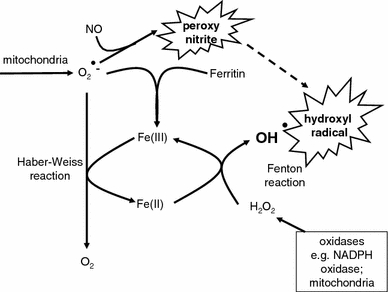
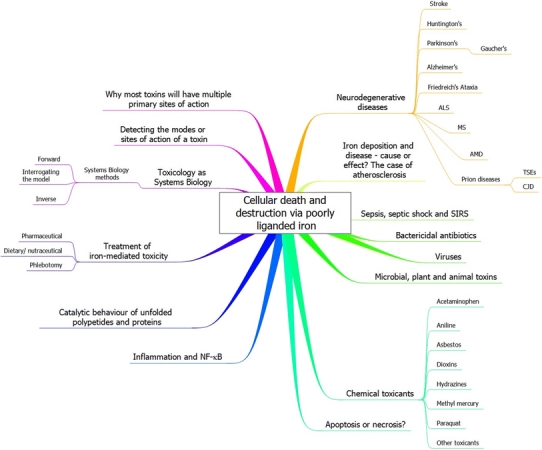
- Across reviewed conditions—stroke, Huntington’s, Parkinson’s, Alzheimer’s, ALS, Friedreich’s ataxia, multiple sclerosis, age-related macular degeneration, prion diseases, atherosclerosis, sepsis/SIRS, bactericidal antibiotics, viral infections, and chemical toxicants—evidence converges on iron dysregulation and Fenton chemistry; the hydroxyl radical is highlighted as the key damaging species rather than “ROS” generally.
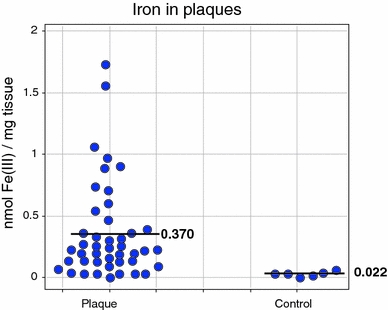
- In atherosclerosis, EPR-detectable iron in plaques was 17-fold greater than in healthy non-atherosclerotic intima controls, with P = 0.0001 (replotted from Stadler et al. 2004); iron levels in plaques also correlate with oxidized proteins.
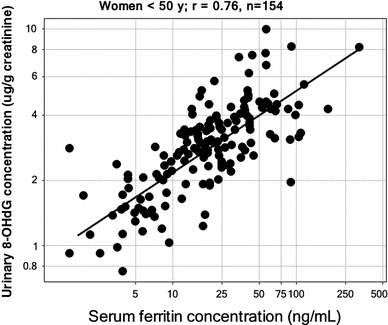
- Serum ferritin concentrations show a very strong relationship with urinary 8-hydroxy-2′-deoxyguanosine, a DNA damage/oxidative stress marker (replotted from Hori et al. 2010), and ferritin levels are widely associated with disease development, severity, or poor outcomes.
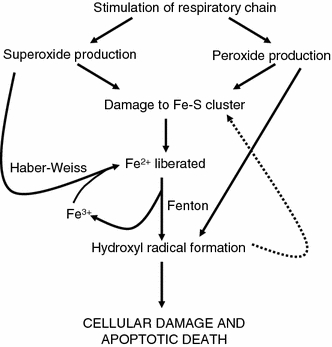
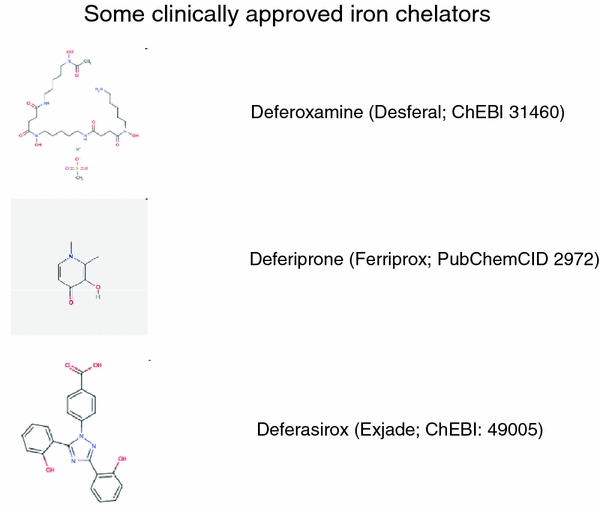
- Bactericidal antibiotics (norfloxacin, ampicillin, kanamycin) use internal iron liberated from iron–sulfur clusters to promote Fenton-mediated hydroxyl radical formation, whereas bacteriostatic antibiotics do not; iron chelators plus antioxidants are especially effective in sepsis models, and approved clinical chelators include deferoxamine, deferiprone, and deferasirox.
Methods
- Narrative literature review; the literature survey at initial submission extended to 14 June 2010, covering diseases, toxicants, and iron biology.
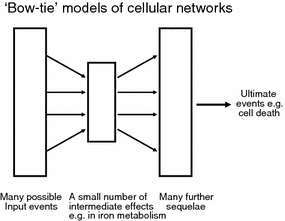
- Systems biology conceptual synthesis: forward and inverse modelling, sensitivity analysis, combinatorial parameter analysis, Bayesian/MCMC and evolutionary methods to infer sites of action, and “bow-tie” network models.
- Replots/digitizes published data (e.g., Hori et al. 2010; Stadler et al. 2004) to illustrate relationships; no new primary experimental data are reported.
Limitations
- The paper states that exact molecular mechanisms, cascades, and networks depend on many other factors; causality is often hard to infer from one-time snapshots; and some direct evidence is lacking—e.g., PrPSc–ferritin complexes have not yet been shown to catalyse OH• production directly, huntingtin inclusion bodies were not demonstrated to catalyse hydroxyl formation, and the extent of causality of iron dysregulation in multiple sclerosis is not yet established.
- Evident from the text: as a review, it synthesizes heterogeneous literature and relies heavily on cited associations, many of which are correlational; no new experimental validation is provided, and the literature coverage ends in mid-2010.
- The paper notes hormesis and dose-dependent interactions complicate simple models; chelator/antibiotic interactions can be dose-dependent and sometimes antagonistic (e.g., deferoxamine was antagonistic to azoles, while deferasirox promoted ciprofloxacin activity against *V. vulnificus*).
Model-written summary of a shortened version of the paper’s full text (it is longer than we read). Check it against the paper before relying on it.
Integrity signals
Registry
Cites
Statistics
Figures
Verification
Claims the paper makes
15 Valid · 1 Not valid · 117 Not checked · 25 Own results and interpretations
At least one cited source doesn’t support this claim or points to a different paper, and none confirmed it — see the verdicts below.
In the paper
“The defect thus leads to the liberation of mitochondrial iron”
§ Towards a unifying, systems biology understanding of large-scale cellular death and destruction caused by poorly liganded iron: Parkinson’s, Huntington’s, Alzheimer’s, prions, bactericides, chemical toxicology and others as examples > Friedreich’s ataxia
What the sources say
- Disputedcites Huang et al. 2009 matched to “Elucidation of the mechanism of mitochondrial iron loading in Friedreich's ataxia by analysis of a mouse mutant” (2009) sourceExperimental — accuracy not yet measured
The Abstract and Discussion describe frataxin deficiency as causing mitochondrial iron accumulation, with reduced release of heme and iron-sulfur clusters from mitochondria—not liberation of mitochondrial iron. The Discussion instead identifies increased liberation of cytoplasmic iron from heme as a contributor to mitochondrial iron uptake. No page numbers are available in our copy. (LLM, conf=0.88)
Checked by a reasoning model — may be wrong.
- Not checked yetcites Popescu et al. 2007 matched to “The chemical form of mitochondrial iron in Friedreich’s ataxia” (2007) source
- Not checked yetcites Richardson et al. 2009a
plainstates a cause- Asserted: passes — The authors put it forward as true.
- Checkable: passes — It can be checked against evidence.
- Load-bearing: passes — The paper’s conclusions depend on it.
- Based: passes — The paper gives a reason why it holds.
- Disputed
The cited sources support only part of this claim — read each source’s verdict below.
In the paper
“body-iron status correlates rather strongly with its production or urinary excretion (Agarwal et al. 2004; Broedbaek et al. 2009; Fujita et al. 2007a, 2009; Gackowski et al. 2002; Hori et al. 2010; Kang et al. 1998; Kuo et al. 2008; Maruyama et al. 2007; Nakano et al. 2003; Toyokuni and Sagripanti 1996; Tuomainen et al. 2007; Valavanidis et al. 2005).”
§ Towards a unifying, systems biology understanding of large-scale cellular death and destruction caused by poorly liganded iron: Parkinson’s, Huntington’s, Alzheimer’s, prions, bactericides, chemical toxicology and others as examples > Introduction
What the sources say
- Could not verifycites Agarwal et al. 2004 matched to “Oxidative stress and renal injury with intravenous iron in patients with chronic kidney disease” (2004) sourceExperimental — accuracy not yet measured
The Laboratory analysis section describes plasma and urinary malondialdehyde (MDA) assays, and the Discussion reports urinary MDA after intravenous iron in patients with chronic kidney disease. Searches for 8-OHdG and 8-hydroxy-2′-deoxyguanosine found no passage measuring that marker or relating its production or urinary excretion to body-iron status. (LLM, conf=0.76)
- Supportedcites Hori et al. 2010 matched to “Body iron store as a predictor of oxidative DNA damage in healthy men and women” (2010) source
The Discussion reports a strong positive association between serum ferritin, a marker of body iron stores, and urinary 8-OHdG in healthy Japanese men and women. The Results also show urinary 8-OHdG increasing across ferritin levels. This supports the claim about urinary excretion, though the cross-sectional study did not directly measure production. (LLM, conf=0.94)
boostedstates an association- Asserted: passes — The authors put it forward as true.
- Checkable: passes — It can be checked against evidence.
- Load-bearing: passes — The paper’s conclusions depend on it.
- Based: passes — The paper gives a reason why it holds.
- Could not verify
Every source the paper cites for this claim was checked and supports it.
In the paper
“Iron metabolism is deranged in gene knockdown models of Huntington’s (Henshall et al. 2009; Lumsden et al. 2007)”
§ Towards a unifying, systems biology understanding of large-scale cellular death and destruction caused by poorly liganded iron: Parkinson’s, Huntington’s, Alzheimer’s, prions, bactericides, chemical toxicology and others as examples > Huntington’s disease
What the sources say
- Supportedcites Henshall et al. 2009 matched to “Selective neuronal requirement for huntingtin in the developing zebrafish” (2009) source
The Introduction (page not supplied) says that an earlier analysis of the huntingtin-knockdown zebrafish model revealed a role for huntingtin in iron homeostasis and transport. The Abstract likewise reports effects of huntingtin reduction on iron transport and homeostasis. The claim does not attribute the original iron findings specifically to this 2009 study. (LLM, conf=0.89)
- Supportedcites Lumsden et al. 2007 matched to “Huntingtin-deficient zebrafish exhibit defects in iron utilization and development” (2007) source
The Abstract reports that huntingtin knockdown in zebrafish reduced hemoglobin production despite iron being present in blood cells, and that bioavailable iron restored production. The Conclusion identifies signs of cellular iron deficiency in the knockdown model despite iron being present. These passages support the claim about disrupted iron handling in a gene-knockdown model relevant to Huntington’s disease. (LLM, conf=0.93)
plainstates an association- Asserted: passes — The authors put it forward as true.
- Checkable: passes — It can be checked against evidence.
- Load-bearing: passes — The paper’s conclusions depend on it.
- Based: passes — The paper gives a reason why it holds.
- Supported
Every source the paper cites for this claim was checked and supports it.
In the paper
“experiments with the iron chelator deferroxamine revealed that the oxidation, localisation and structural organisation of the inclusion bodies formed by mutant htt were indeed irondependent.”
§ Towards a unifying, systems biology understanding of large-scale cellular death and destruction caused by poorly liganded iron: Parkinson’s, Huntington’s, Alzheimer’s, prions, bactericides, chemical toxicology and others as examples > Huntington’s disease
What the sources say
- Supportedcites Firdaus et al. 2006 matched to “Huntingtin inclusion bodies are iron‐dependent centers of oxidative events” (2006) source
The paper's own overview (p. 2) states verbatim that 'Analysis performed in the presence of the iron chelator deferroxamine revealed that the oxidation, localization and structural organization of the inclusion bodies formed by mutant htt were iron-dependent.' The supporting results confirm each element: deferroxamine (5 mM, 24 h) shrank httEx1-103Q inclusions and abolished HE oxidation in COS-7 cells (pp. 7-8, Fig. 6), and redistributed httEx1-43Q-EGFP nuclear inclusions out of the nucleus while reducing their oxidation in PC12 cells (p. 8, Fig. 7); the Discussion (p. 9) restates that chelatable iron was key to formation/structural integrity, localization and the oxidative events. (LLM, conf=0.95)
boostedstates a cause- Asserted: passes — The authors put it forward as true.
- Checkable: passes — It can be checked against evidence.
- Load-bearing: passes — The paper’s conclusions depend on it.
- Based: passes — The paper gives a reason why it holds.
- Supported
The cited sources support only part of this claim — read each source’s verdict below.
In the paper
“(HFE) mutations that cause haemochromatosis increase the susceptibility to AD (Bartzokis et al. 2010; Candore et al. 2003; Combarros et al. 2003; Connor and Lee 2006; Haacke et al. 2005; Kauwe et al. 2010; Lleó et al. 2002; Moalem et al. 2000; Pulliam et al. 2003; Robson et al. 2004; Sampietro et al. 2001), especially when in the presence of the APOE4 allele (Pulliam et al. 2003).”
§ Towards a unifying, systems biology understanding of large-scale cellular death and destruction caused by poorly liganded iron: Parkinson’s, Huntington’s, Alzheimer’s, prions, bactericides, chemical toxicology and others as examples > Alzheimer’s disease
What the sources say
- Not checked yetcites Pulliam et al. 2003 matched to “Association of HFE mutations with neurodegeneration and oxidative stress in Alzheimer's disease and correlation with APOE” (2003) source
- Partly supportedcites Robson et al. 2004 matched to “Synergy between the C2 allele of transferrin and the C282Y allele of the haemochromatosis gene (HFE) as risk factors for developing Alzheimer’s disease” (2004) sourceExperimental — accuracy not yet measured
Robson et al. (2004) do report increased AD risk associated with the haemochromatosis mutation C282Y, and that risk is highest in carriers who also have APOE4 (Abstract; Conclusions: 'tri-carriers of the two iron-related variants plus APOE4 may be at very high risk of AD'). However, the source does not support the unconditional attribution that HFE mutations that cause haemochromatosis increase AD susceptibility: the Abstract states 'each of the two variants was associated with an increased risk of AD only in the presence of the other. Neither allele alone had any effect' (i.e. only with transferrin C2), the Results (Tables 2-4) give C282Y-negative/C2-alone OR 1.3 (NS), and the Results explicitly report 'no association of the HFE H63D variant with AD, or with MCI, either overall or in two-way interaction with either TF C2 or APOE4'. So the second HFE mutation implicated in haemochromatosis is not associated in this paper, and the APOE4 effect is conditional on TF C2 co-carriage rather than on the HFE allele alone. (LLM, conf=0.78)
plainstates a cause- Asserted: passes — The authors put it forward as true.
- Checkable: passes — It can be checked against evidence.
- Load-bearing: unclear — It is unclear whether the paper’s conclusions depend on it.
- Based: passes — The paper gives a reason why it holds.
99 more claims · 11 with their cited sources checked
Create a free account to see all 158 claims and to verify the 250 references still open.
- It may state two separate claims as one. 42
- Probably not a substantial claim. 18
- The quote only partly states this claim. 1
Claims other papers make about this one
Each is checked against this paper’s own text: does it say what the citing paper says it does?
The source backs part of the claim, not all of it — or backs it for a different population, condition or comparison.
In the citing paper
“Chronic increase of such ‘free’ iron forms are associated with pathological conditions and possible complex homeostasis unbalance for this element in cells and tissues, relevant to asbestos toxicity and related diseases181920.”
From The interaction of asbestos and iron in lung tissue revealed by synchrotron-based scanning X-ray microscopy (2013) · cites this paper as [19]
Experimental — accuracy not yet measuredThe cited source says what the claim attributes to it.
In the citing paper
“Concerning this issue, the recent reviews by D. Kell1819 analyse the wide but dispersed literature via a systems biology approach, and indicate that iron that is weakly complexed boosts many biochemical processes leading to a large variety of apparently unrelated diseases.”
From The interaction of asbestos and iron in lung tissue revealed by synchrotron-based scanning X-ray microscopy (2013) · cites this paper as [19]
The cited source says what the claim attributes to it.
In the citing paper
“nominally antioxidant molecules such as ascorbate have complex, multi-electron redox chemistry, and can in fact act as pro-oxidants(502,503), especially in the presence of free Fe(208,213) or Cu(504).”
From The biology of ergothioneine, an antioxidant nutraceutical (2020) · cites this paper as [213]
The cited source says what the claim attributes to it.
In the citing paper
“Due to the presence of high-affinity iron binding and storage proteins, the actual toxicity of iron is restricted to the so called “labile iron pool”.”
From The interaction of asbestos and iron in lung tissue revealed by synchrotron-based scanning X-ray microscopy (2013) · cites this paper as [19]
Citations
Cites
2 retracted
Anand, P., Nair, H. B., Sung, B., Kunnumakkara, A. B., Yadav, V. R., Tekmal, R. R., & Aggarwal, B. B. (2010) · Biochemical Pharmacology · doi:10.1016/j.bcp.2009.09.003 · Cited by 574 · cited 1×
“…et al. 2009; Weinreb et al. 2009a), on curcumin (ChEBI 3962) (a constituent of turmeric) (Aggarwal and Harikumar 2009; Aggarwal and Sung 2009; Anand et al. 2010; Basile et al. 2009; Epstein et al. 2009; Hegde et al. 2009; Iqbal et al. 2009; Jiao et al. 2009; Jurenka 2009; Kalpravidh et al.…”
BackgroundRetractedGhribi, O., Golovko, M. Y., Larsen, B., Schrag, M., & Murphy, E. J. (2006) · Journal of Neurochemistry · doi:10.1111/j.1471-4159.2006.04079.x · Cited by 97 · cited 1×
“…in plaques has also been observed, for instance, for Alzheimer’s (e.g. Colling- wood et al. 2008; Connor et al. 1992; El Tannir El Tayara et al. 2006; Ghribi et al. 2006; Haacke et al. 2005; Lovell et al. 1998; Morgan et al. 2004; Quintana 2007; Quintana et al. 2006; Sayre et al. 2000b; Schrag et…”
BackgroundRetractedGenetic algorithms in search, optimization, and machine learning
(1989) · Choice Reviews Online · doi:10.5860/choice.27-0936 · Cited by 49,010 · cited 1×
“Evolutionary computing methods (e.g. Bäck et al. 1997; Goldberg 1989, 2002) use ideas from Darwinian evolution to select and modify parameters to achieve a desired objective (or objectives—this is known as multi-objective optimisation, Handl et al. 2007).”
Method(1979) · Cited by 43,841
The Elements of Statistical Learning
Hastie, T., Tibshirani, R., & Friedman, J. (2009) · Springer Series in Statistics · doi:10.1007/978-0-387-84858-7 · Cited by 25,970
The Elements of Statistical Learning
Hastie, T., Friedman, J., & Tibshirani, R. (2001) · Springer Series in Statistics · doi:10.1007/978-0-387-21606-5 · Cited by 24,162
Atherosclerosis--an inflammatory disease
Ross, R. (1999) · New England Journal of Medicine · doi:10.1056/nejm199901143400207 · Cited by 21,725
System Identification: Theory for the User
Lennart Ljung, A. (1987) · Cited by 17,690
Free radicals in biology and medicine
(1991) · General Pharmacology: The Vascular System · doi:10.1016/0306-3623(91)90478-o · Cited by 17,178
Free radicals and antioxidants in normal physiological functions and human disease
Valko, M., Leibfritz, D., Moncol, J., Cronin, M. T. D., Mazur, M., & Telser, J. (2007) · The International Journal of Biochemistry & Cell Biology · doi:10.1016/j.biocel.2006.07.001 · Cited by 14,269 · cited 1×
“…Baeuerle 1994; Sen and Packer 1996; She et al. 2002; Surh et al. 2005; Surh and Na 2008; Thannickal and Fanburg 2000; Trachootham et al. 2008, 2009; Valko et al. 2007; Weinberg and Chandel 2009; Wondrak 2009; Xiong et al. 2003) and that there are links between NF-jB and NGAL/lcn2 (Bu et al. 2006;…”
BackgroundChen, Y., Wang, L., Kang, Q., Zhang, X., Yu, G., Wan, X., Wang, J., & Zhu, K. (2017) · Cellular Physiology and Biochemistry · doi:10.1159/000477308 · Cited by 10,679
Why Most Published Research Findings Are False
Ioannidis, J. P. A. (2005) · PLoS Medicine · doi:10.1371/journal.pmed.0020124 · Cited by 10,505
Free Radicals in the Physiological Control of Cell Function
Dröge, W. (2002) · Physiological Reviews · doi:10.1152/physrev.00018.2001 · Cited by 9,855 · cited 1×
“…are the facts that NF-jB is redox-sensitive (e.g. Aggarwal and Sung 2009; Baeuerle and Henkel 1994; Chandrasekaran and Taylor 2008; Cho et al. 1998; Dröge 2002; Fulda et al. 2010; Galaris et al. 2008; Gloire et al. 2006; Gloire and Piette 2009; Ha et al. 2010; Haddad et al. 2000; Hayashi et al.…”
BackgroundFree Radicals in Biology and Medicine
Halliwell, B., & Gutteridge, J. M. C. (2015) · doi:10.1093/acprof:oso/9780198717478.001.0001 · Cited by 8,990 · cited 2×
“The above facts are well known (e.g. Halliwell and Gutteridge 2006; Weinberg 2004), and I discussed them at length in a recent and wide-ranging review (Kell 2009a).”
BackgroundInflammation, Atherosclerosis, and Coronary Artery Disease
Hansson, G. K. (2005) · New England Journal of Medicine · doi:10.1056/nejmra043430 · Cited by 8,773
Inflammation in atherosclerosis
Libby, P. (2002) · Nature · doi:10.1038/nature01323 · Cited by 8,315
Polyphenols: Food sources and bioavailability
Manach, C., Scalbert, A., Morand, C., Rémésy, C., & Jiménez, L. (2004) · The American Journal of Clinical Nutrition · doi:10.1093/ajcn/79.5.727 · Cited by 8,175 · cited 1×
“…and Simic 2000; Kandaswami and Middleton 1994; Kiokias et al. 2008; Korkina and Afanas’ev 1997; Linseisen and Rohrmann 2008; Loke et al. 2009; Manach et al. 2004, 2005a, b; Pérez-Jiménez et al. 2010; Perron and Brumaghim 2009; Perron et al. 2008; Petti and Scully 2009; Pietta 2000;…”
BackgroundInflammation and Atherosclerosis
Libby, P., Ridker, P. M., & Maseri, A. (2002) · Circulation · doi:10.1161/hc0902.104353 · Cited by 7,724
Weininger, D. (1988) · Journal of Chemical Information and Computer Sciences · doi:10.1021/ci00057a005 · Cited by 7,436 · cited 3×
“…(Herrgård et al. 2008; Pettifer et al. 2009) the use of semantic annotation of all the entities, whether by reference to per- sistent databases or via database-independent means (e.g. the use of SMILES (Weininger 1988) and InChI (Coles et al. 2005; Stein et al. 2003) strings for small molecules).”
MethodRosen, D. R., Siddique, T., Patterson, D., Figlewicz, D. A., Sapp, P., Hentati, A., Donaldson, D., Goto, J., O'Regan, J. P., Deng, H.-X., et al. (1993) · Nature · doi:10.1038/362059a0 · Cited by 7,062 · cited 1×
“…of some forms of ALS with mutations in genes coding for superoxide dismutase 1 (e.g. Dalle-Donne 2007; Pasinelli and Brown 2006; Rosen et al. 1993; Vucic and Kiernan 2009; Wijesekera and Leigh 2009) are consistent with this, and recent genetic associations (e.g. Kwiatkowski Jr.…”
BackgroundBeckman, J. S., Beckman, T. W., Chen, J., Marshall, P. A., & Freeman, B. A. (1990) · Proceedings of the National Academy of Sciences · doi:10.1073/pnas.87.4.1620 · Cited by 7,029 · cited 1×
“Related reactions include perox- ynitrite production (from the reaction of NO and superoxide) (Babior 2000; Beckman et al. 1990; Beckman and Koppenol 1996; Goldstein and Merényi 2008; Koppenol et al. 1992; Murphy et al. 1998; Pacher et al. 2007; Pavlovic and Santaniello 2007; Pryor and Squadrito…”
BackgroundThe NOX Family of ROS-Generating NADPH Oxidases: Physiology and Pathophysiology
Bedard, K., & Krause, K.-H. (2007) · Physiological Reviews · doi:10.1152/physrev.00044.2005 · Cited by 6,989 · cited 2×
“…react with hydrogen peroxide (produced by mito- chondria (e.g. Brennan and Kantorow 2009; Fato et al. 2008; Orrenius et al. 2007) or (per)oxidases (Bedard and Krause 2007; Cave et al. 2006) via the Fenton reaction (Goldstein et al. 1993; Kruszewski 2003; Toyokuni 2002; Wardman and Candeias…”
BackgroundMethodDellinger, R. P., Levy, M. M., Carlet, J. M., Bion, J., Parker, M. M., Jaeschke, R., Reinhart, K., Angus, D. C., Brun-Buisson, C., Beale, R., et al. (2008) · Intensive Care Medicine · doi:10.1007/s00134-007-0934-2 · Cited by 6,772 · cited 1×
“…make it very clear indeed that iron is inti- mately involved in the death following SIRS and sepsis, and—while not even mentioned in the guidelines (Dellinger et al. 2008)—that its effective chelation should be consi- dered for research leading towards its inclusion as an important part of any…”
BackgroundMitochondrial Dysfunction and Oxidative Stress in Neurodegenerative Diseases
Lin, M. T., & Beal, M. F. (2006) · Nature · doi:10.1038/nature05292 · Cited by 6,455 · cited 1×
“…of appropriate cellular structures and proteins liberates further ‘free’ iron and other reactive oxygen species, thereby effecting positive feedback (also known as ‘vicious cycles’, Lin and Beal 2006; Proctor and Gray 2010; Proctor et al. 2007) that leads to the production of yet further damage.”
BackgroundGlobal Sensitivity Analysis. The Primer
Saltelli, A., Ratto, M., Andres, T., Campolongo, F., Cariboni, J., Gatelli, D., Saisana, M., & Tarantola, S. (2007) · doi:10.1002/9780470725184 · Cited by 6,430
Nitric Oxide and Peroxynitrite in Health and Disease
Pacher, P., Beckman, J. S., & Liaudet, L. (2007) · Physiological Reviews · doi:10.1152/physrev.00029.2006 · Cited by 6,390 · cited 1×
“…NO and superoxide) (Babior 2000; Beckman et al. 1990; Beckman and Koppenol 1996; Goldstein and Merényi 2008; Koppenol et al. 1992; Murphy et al. 1998; Pacher et al. 2007; Pavlovic and Santaniello 2007; Pryor and Squadrito 1995; Radi et al. 2001, 2002; Rubbo and O’Donnell 2005; Rubbo et al. 2009;…”
BackgroundThe epidemiology of sepsis in the United States from 1979 through 2000
Martin, G. S., Mannino, D. M., Eaton, S., & Moss, M. (2003) · New England Journal of Medicine · doi:10.1056/nejmoa022139 · Cited by 5,841 · cited 1×
“…1996; Bone 1996; Davies and Hagen 1997; Gutteridge and Mitchell 1999; Hotchkiss and Karl 2003; Johnson and Mayers 2001; Keel and Trentz 2005; Leithead et al. 2009; Lolis and Bucala 2003; Martin et al. 2003; Nguyen et al. 2006; Protti and Singer 2006; Rittirsch et al. 2008; Ulloa et al. 2009).”
BackgroundTop 10 algorithms in data mining
Wu, X., Kumar, V., Ross Quinlan, J., Ghosh, J., Yang, Q., Motoda, H., McLachlan, G. J., Ng, A., Liu, B., Yu, P. S., et al. (2008) · Knowledge and Information Systems · doi:10.1007/s10115-007-0114-2 · Cited by 5,667 · cited 1×
“These are classic data mining methods (e.g. Breiman 2001; Kell and King 2000; Kell and Oliver 2004; Wu et al. 2008) that allow us to discover mechanisms of action that are unknown and/or have not previously been contemplated.”
MethodNitric oxide, superoxide, and peroxynitrite: the good, the bad, and ugly
Beckman, J. S., & Koppenol, W. H. (1996) · American Journal of Physiology-Cell Physiology · doi:10.1152/ajpcell.1996.271.5.c1424 · Cited by 5,513 · cited 1×
“Related reactions include perox- ynitrite production (from the reaction of NO and superoxide) (Babior 2000; Beckman et al. 1990; Beckman and Koppenol 1996; Goldstein and Merényi 2008; Koppenol et al. 1992; Murphy et al. 1998; Pacher et al. 2007; Pavlovic and Santaniello 2007; Pryor and Squadrito…”
BackgroundTargeting cancer cells by ROS-mediated mechanisms: a radical therapeutic approach?
Trachootham, D., Alexandre, J., & Huang, P. (2009) · Nature Reviews Drug Discovery · doi:10.1038/nrd2803 · Cited by 5,452 · cited 1×
“…al. 1991, 1992; Schreck and Baeuerle 1994; Sen and Packer 1996; She et al. 2002; Surh et al. 2005; Surh and Na 2008; Thannickal and Fanburg 2000; Trachootham et al. 2008, 2009; Valko et al. 2007; Weinberg and Chandel 2009; Wondrak 2009; Xiong et al. 2003) and that there are links between NF-jB…”
BackgroundPrusiner, S. B. (1998) · Proceedings of the National Academy of Sciences · doi:10.1073/pnas.95.23.13363 · Cited by 5,373 · cited 1×
“…by) the conversion of the prion protein PrP from its normal form PrPC to a conformationally distinct version PrPSc and that the latter can autocatalyse this conversion (Aguzzi and Heikenwälder 2006; Aguzzi et al. 2008b; Prusiner 1998, 2001; Tamgüney et al. 2008; Watts and Westaway 2007).”
BackgroundMetals, Toxicity and Oxidative Stress
Valko, M., Morris, H., & Cronin, M. (2005) · Current Medicinal Chemistry · doi:10.2174/0929867053764635 · Cited by 5,018 · cited 4×
“…al. 2003, 2008; Lloyd et al. 1998; Loft and Poulsen 1996; Orhan et al. 2004; Shi et al. 2003; Toyokuni and Sagripanti 1996; Valavanidis et al. 2009; Valko et al. 2005), and body-iron status correlates rather strongly with its production or urinary excretion (Agarwal et al. 2004; Broedbaek et al.…”
BackgroundInfluentialOxyl radicals, redox-sensitive signalling cascades and antioxidants
Genestra, M. (2007) · Cellular Signalling · doi:10.1016/j.cellsig.2007.04.009 · Cited by 4,930
Pietta, P.-G. (2000) · Journal of Natural Products · doi:10.1021/np9904509 · Cited by 4,876 · cited 1×
“…Loke et al. 2009; Manach et al. 2004, 2005a, b; Pérez-Jiménez et al. 2010; Perron and Brumaghim 2009; Perron et al. 2008; Petti and Scully 2009; Pietta 2000; Rice-Evans and Packer 2003; Scalbert et al. 2005; Scalbert and Williamson 2000; Seifried et al. 2007; Slemmer et al. 2008; Spencer et…”
BackgroundLusis, A. J. (2000) · Nature · doi:10.1038/35025203 · Cited by 4,839
Function and Activation of NF-kappaB in the Immune System
Baeuerle, P. A., & Henkel, T. (1994) · Annual Review of Immunology · doi:10.1146/annurev.iy.12.040194.001041 · Cited by 4,745 · cited 1×
“Of particular relevance in ROS/iron metabolism are the facts that NF-jB is redox-sensitive (e.g. Aggarwal and Sung 2009; Baeuerle and Henkel 1994; Chandrasekaran and Taylor 2008; Cho et al. 1998; Dröge 2002; Fulda et al. 2010; Galaris et al. 2008; Gloire et al. 2006; Gloire and Piette 2009; Ha et…”
BackgroundWhy Most Published Research Findings Are False
Ioannidis, J. P. A. (2005) · CHANCE · doi:10.1080/09332480.2005.10722754 · Cited by 4,702 · cited 1×
“Note, however, that such methods need careful handling from a statistical point of view (e.g. Altman and Royston 2000; Broadhurst and Kell 2006; Hastie et al. 2001; Ioannidis 2005, 2008).”
Antioxidant properties of phenolic compounds
Rice-Evans, C., Miller, N., & Paganga, G. (1997) · Trends in Plant Science · doi:10.1016/s1360-1385(97)01018-2 · Cited by 4,375 · cited 1×
“…2006; Halliwell 2009; Halliwell et al. 2005; Hider et al. 2001; Končić et al. 2010; Lopes et al. 1999; Mandel et al. 2004; Mandel and Youdim 2004; Morel et al. 1994; Nijveldt et al. 2001; Rice-Evans et al. 1997; Rice-Evans and Packer 2003; Weinreb et al. 2007, 2009a; Yoshino and Murakami 1998).”
BackgroundStatistical Modeling: The Two Cultures (with comments and a rejoinder by the author)
Breiman, L. (2001) · Statistical Science · doi:10.1214/ss/1009213726 · Cited by 4,340 · cited 1×
“These are classic data mining methods (e.g. Breiman 2001; Kell and King 2000; Kell and Oliver 2004; Wu et al. 2008) that allow us to discover mechanisms of action that are unknown and/or have not previously been contemplated.”
MethodOxidative mechanisms in the toxicity of metal ions
Stohs, S. J., & Bagchi, D. (1995) · Free Radical Biology and Medicine · doi:10.1016/0891-5849(94)00159-h · Cited by 4,219 · cited 1×
“…1991; Shanker and Aschner 2003; Usuki et al. 2001; Watanabe et al. 2009; Yamashita et al. 2004; Zurich and Monnet-Tschudi 2009), metallothioneins (West et al. 2008) and/or iron chelators (Castoldi et al. 2001; LeBel et al. 1992; Sarafian and Verity 1991; Stohs and Bagchi 1995) can be protective.”
BackgroundBioavailability and bioefficacy of polyphenols in humans. I. Review of 97 bioavailability studies
Manach, C., Williamson, G., Morand, C., Scalbert, A., & Rémésy, C. (2005) · The American Journal of Clinical Nutrition · doi:10.1093/ajcn/81.1.230s · Cited by 4,219 · cited 1×
“…and Simic 2000; Kandaswami and Middleton 1994; Kiokias et al. 2008; Korkina and Afanas’ev 1997; Linseisen and Rohrmann 2008; Loke et al. 2009; Manach et al. 2004, 2005a, b; Pérez-Jiménez et al. 2010; Perron and Brumaghim 2009; Perron et al. 2008; Petti and Scully 2009; Pietta 2000;…”
BackgroundCan the pharmaceutical industry reduce attrition rates?
Kola, I., & Landis, J. (2004) · Nature Reviews Drug Discovery · doi:10.1038/nrd1470 · Cited by 4,167 · cited 2×
“Developing novel pharmaceutical agents is a costly enter- prise, and many candidate drugs fall by the wayside during the development process (see e.g. Dobson et al. 2009b; Kola and Landis 2004; Leeson and Springthorpe 2007).”
BackgroundMethodThe Pathophysiology and Treatment of Sepsis
Hotchkiss, R. S., & Karl, I. E. (2003) · New England Journal of Medicine · doi:10.1056/nejmra021333 · Cited by 4,097 · cited 1×
“…response syndrome (SIRS) (e.g. Baue et al. 1998; Beal and Cerra 1994; Bolton 1996; Bone 1996; Davies and Hagen 1997; Gutteridge and Mitchell 1999; Hotchkiss and Karl 2003; Johnson and Mayers 2001; Keel and Trentz 2005; Leithead et al. 2009; Lolis and Bucala 2003; Martin et al. 2003; Nguyen et…”
BackgroundNLRP3 inflammasomes are required for atherogenesis and activated by cholesterol crystals
Duewell, P., Kono, H., Rayner, K. J., Sirois, C. M., Vladimer, G., Bauernfeind, F. G., Abela, G. S., Franchi, L., Nuñez, G., Schnurr, M., et al. (2010) · Nature · doi:10.1038/nature08938 · Cited by 4,026
Schreck, R., Rieber, P., & Baeuerle, P. A. (1991) · The EMBO Journal · doi:10.1002/j.1460-2075.1991.tb07761.x · Cited by 3,816 · cited 1×
“…et al. 2000; Hayashi et al. 1993; Janssen-Heininger et al. 2008; Lagan et al. 2008; Lukosz et al. 2010; Nishi et al. 2002; Phillips et al. 2010; Schreck et al. 1991, 1992; Schreck and Baeuerle 1994; Sen and Packer 1996; She et al. 2002; Surh et al. 2005; Surh and Na 2008; Thannickal and…”
BackgroundInflammation in Atherosclerosis
Libby, P. (2012) · Arteriosclerosis, Thrombosis, and Vascular Biology · doi:10.1161/atvbaha.108.179705 · Cited by 3,736 · cited 1×
“…2004; Forrester 2002, 2004; Gieseg et al. 2009; Grainger 2007; Hansson 2001, 2005; Himmelfarb et al. 2002; Kibel et al. 2008; Kunsch and Medford 1999; Libby 2002; Libby et al. 2002; Madamanchi et al. 2005a, b; Mullenix et al. 2005; Nigro et al. 2006; Packard and Libby 2008; Paoletti et al. 2004;…”
BackgroundNeurodegenerative diseases and oxidative stress
Barnham, K. J., Masters, C. L., & Bush, A. I. (2004) · Nature Reviews Drug Discovery · doi:10.1038/nrd1330 · Cited by 3,683 · cited 1×
“…the development of fibril formation/neurodegen- eration/dementia/AD (Amit et al. 2008; Avramovich- Tirosh et al. 2007a; Bandyopadhyay et al. 2006; Barnham et al. 2004; Biran et al. 2009; Bolognin et al. 2009a; Crapper McLachlan et al. 1991; Cuajungco et al. 2000; Faux et al. 2010; Finefrock…”
BackgroundDietary Intake and Bioavailability of Polyphenols
Scalbert, A., & Williamson, G. (2000) · The Journal of Nutrition · doi:10.1093/jn/130.8.2073s · Cited by 3,658 · cited 1×
“…et al. 2010; Perron and Brumaghim 2009; Perron et al. 2008; Petti and Scully 2009; Pietta 2000; Rice-Evans and Packer 2003; Scalbert et al. 2005; Scalbert and Williamson 2000; Seifried et al. 2007; Slemmer et al. 2008; Spencer et al. 2008; Yadav and Bhatnagar 2007a, b, 2010), including…”
BackgroundThe Neuroendocrinology of Stress: A Never Ending Story
Lightman, S. L. (2008) · Journal of Neuroendocrinology · doi:10.1111/j.1365-2826.2008.01711.x · Cited by 3,566
The ground state of embryonic stem cell self-renewal
Ying, Q.-L., Wray, J., Nichols, J., Batlle-Morera, L., Doble, B., Woodgett, J., Cohen, P., & Smith, A. (2008) · Nature · doi:10.1038/nature06968 · Cited by 3,442 · cited 1×
“…2007; Sporn et al. 2007; Stommel et al. 2007; Suchy et al. 2009; Ulrich-Merzenich et al. 2009; Watterson et al. 2008; Weinreb et al. 2009b; Whitehurst et al. 2007; Wong et al. 2008; Yeh et al. 2006, 2009; Ying et al. 2008; Zamin et al. 2009; Zhang 2006; Zhang et al. 2010; Zimmermann et al. 2007).”
Reactive oxygen species, cellular redox systems, and apoptosis
Circu, M. L., & Aw, T. Y. (2010) · Free Radical Biology and Medicine · doi:10.1016/j.freeradbiomed.2009.12.022 · Cited by 3,340 · cited 1×
“…the heart of many of these pro- cesses, and pathways involving NF-jB (see e.g. http://www.nf-kb.org/) are especially core here (e.g. Ali and Mann 2004; Circu and Aw 2010; Granic et al. 2009; Karin 2008; Karin and Greten 2005; Li et al. 2005; Maeda and Omata 2008; Simmonds and Foxwell 2008; Zhang…”
BackgroundOxidative DNA damage: mechanisms, mutation, and disease
Cooke, M. S., Evans, M. D., Dizdaroglu, M., & Lunec, J. (2003) · The FASEB Journal · doi:10.1096/fj.02-0752rev · Cited by 3,245 · cited 1×
“…(HMDB03333) is produced when the hydroxyl radical reacts with DNA and damages it (e.g. Bal and Kasprzak 2002; Burrows and Muller 1998; Cooke et al. 2003, 2008; Lloyd et al. 1998; Loft and Poulsen 1996; Orhan et al. 2004; Shi et al. 2003; Toyokuni and Sagripanti 1996; Valavanidis et…”
BackgroundNF-κB: linking inflammation and immunity to cancer development and progression
Karin, M., & Greten, F. R. (2005) · Nature Reviews Immunology · doi:10.1038/nri1703 · Cited by 3,085
Flavonoids: a review of probable mechanisms of action and potential applications
Nijveldt, R. J., van Nood, E., van Hoorn, D. E., Boelens, P. G., van Norren, K., & van Leeuwen, P. A. (2001) · The American Journal of Clinical Nutrition · doi:10.1093/ajcn/74.4.418 · Cited by 3,075 · cited 1×
“…2006; Halliwell 2009; Halliwell et al. 2005; Hider et al. 2001; Končić et al. 2010; Lopes et al. 1999; Mandel et al. 2004; Mandel and Youdim 2004; Morel et al. 1994; Nijveldt et al. 2001; Rice-Evans et al. 1997; Rice-Evans and Packer 2003; Weinreb et al. 2007, 2009a; Yoshino and Murakami 1998).”
BackgroundHucka, M., Finney, A., Sauro, H. M., Bolouri, H., Doyle, J. C., Kitano, H., Arkin, A. P., Bornstein, B. J., Bray, D., Cornish-Bowden, A., et al. (2003) · Bioinformatics · doi:10.1093/bioinformatics/btg015 · Cited by 3,060 · cited 2×
“The modelling community has access to many tools, which are interoperable because they can be exchanged using community standards (Kell 2008) of which the most popular (Klipp et al. 2007) is SBML, the Systems Biology Markup Language (Hucka et al. 2003) (http://www.sbml. org/).”
MethodMechanisms and Functional Implications of Adult Neurogenesis
Zhao, C., Deng, W., & Gage, F. H. (2008) · Cell · doi:10.1016/j.cell.2008.01.033 · Cited by 3,007 · cited 1×
“…Christie and Cameron 2006; Demir et al. 2009; Fuchs and Gould 2000; Götz and Huttner 2005; Gould 2007; Imayoshi et al. 2009; Leuner et al. 2007; Lledo et al. 2006; Ohnuma and Harris 2003; Taupin 2007; Zhao et al. 2008) for considerable turnover—neurogenesis—in at least some regions of the brain.”
BackgroundDietary polyphenols and the prevention of diseases
Scalbert, A., Manach, C., Morand, C., Rémésy, C., & Jiménez, L. (2005) · Critical Reviews in Food Science and Nutrition · doi:10.1080/1040869059096 · Cited by 2,999 · cited 1×
“…2005a, b; Pérez-Jiménez et al. 2010; Perron and Brumaghim 2009; Perron et al. 2008; Petti and Scully 2009; Pietta 2000; Rice-Evans and Packer 2003; Scalbert et al. 2005; Scalbert and Williamson 2000; Seifried et al. 2007; Slemmer et al. 2008; Spencer et al. 2008; Yadav and Bhatnagar 2007a, b,…”
BackgroundHandbook of Evolutionary Computation
(1997) · Institute of Physics eBooks · doi:10.1887/0750308958 · Cited by 2,990
A Common Mechanism of Cellular Death Induced by Bactericidal Antibiotics
Kohanski, M. A., Dwyer, D. J., Hayete, B., Lawrence, C. A., & Collins, J. J. (2007) · Cell · doi:10.1016/j.cell.2007.06.049 · Cited by 2,982 · cited 5×
“Based on a previous paper from the same group (Dwyer et al. 2007), Kohanski et al. (2007) (see also Davies et al. 2009; Dwyer et al. 2007, 2009; Imlay 2008; Kohanski et al. 2008; Liu et al.2009a; Wang and Zhao, 2009) reported that the three major classes of bactericidal antibiotics (exem- plified…”
BackgroundInfluentialReactive oxygen species in cell signaling
Thannickal, V. J., & Fanburg, B. L. (2000) · American Journal of Physiology-Lung Cellular and Molecular Physiology · doi:10.1152/ajplung.2000.279.6.l1005 · Cited by 2,927 · cited 1×
“…Phillips et al. 2010; Schreck et al. 1991, 1992; Schreck and Baeuerle 1994; Sen and Packer 1996; She et al. 2002; Surh et al. 2005; Surh and Na 2008; Thannickal and Fanburg 2000; Trachootham et al. 2008, 2009; Valko et al. 2007; Weinberg and Chandel 2009; Wondrak 2009; Xiong et al. 2003) and that…”
BackgroundAn Introduction to Systems Biology: Design Principles of Biological Circuits
Alon, U. (2006) · doi:10.1201/9781420011432 · Cited by 2,825
Kenyon, C. J. (2010) · Nature · doi:10.1038/nature08980 · Cited by 2,739 · cited 1×
“While this—nor ‘normal’ ageing (summarised e.g. by Bishop et al. 2010b; Finkel 2005; Franco et al. 2007; Gems 2009; Kenyon 2010; Kirkwood 2008; Muller et al. 2007; Vaupel 2010), in which various degradative processes including iron dysregulation can be implicated (e.g. Brewer 2010; Cass et al.…”
BackgroundAndrews, S. C., Robinson, A. K., & Rodríguez-Quiñones, F. (2003) · FEMS Microbiology Reviews · doi:10.1016/s0168-6445(03)00055-x · Cited by 2,702 · cited 1×
“…aerobic environments it is necessary to chelate the otherwise ‘free’ Fe(III) with appropriate chelators or sid- erophores (especially for microbes, e.g. Andrews et al. 2003; Barry and Challis 2009; Cornelis and Andrews 2010; de Carvalho and Fernandes 2010; Haas et al. 2008; Johnson 2008; Miethke…”
BackgroundRole of Oxidative Modifications in Atherosclerosis
Stocker, R., & Keaney, J. F. (2004) · Physiological Reviews · doi:10.1152/physrev.00047.2003 · Cited by 2,624 · cited 2×
“in arteries, often as plaques (Lusis 2000; Stocker and Keaney 2004).”
BackgroundCOPASI—a COmplex PAthway SImulator
Hoops, S., Sahle, S., Gauges, R., Lee, C., Pahle, J., Simus, N., Singhal, M., Xu, L., Mendes, P., & Kummer, U. (2006) · Bioinformatics · doi:10.1093/bioinformatics/btl485 · Cited by 2,618
Meta-Analysis: High-Dosage Vitamin E Supplementation May Increase All-Cause Mortality
Miller, E. R., Pastor-Barriuso, R., Dalal, D., Riemersma, R. A., Appel, L. J., & Guallar, E. (2005) · Annals of Internal Medicine · doi:10.7326/0003-4819-142-1-200501040-00110 · Cited by 2,577 · cited 1×
“This very likely explains the often and indeed surprisingly disappointing clinical results obtained when using antioxidants alone (Bjelakovic et al. 2008; Giustarini et al. 2009; Kell 2009a; Miller et al. 2005).”
ResultMutations in FUS, an RNA Processing Protein, Cause Familial Amyotrophic Lateral Sclerosis Type 6
Vance, C., Rogelj, B., Hortobágyi, T., De Vos, K. J., Nishimura, A. L., Sreedharan, J., Hu, X., Smith, B., Ruddy, D., Wright, P., et al. (2009) · Science · doi:10.1126/science.1165942 · Cited by 2,564 · cited 1×
“…2009; Wijesekera and Leigh 2009) are consistent with this, and recent genetic associations (e.g. Kwiatkowski Jr. et al. 2009; Valdmanis et al. 2009; Vance et al. 2009) include one with optineurin (Maruyama et al. 2010) that together with other evidence implies an interaction with NF-jB (see later)…”
BackgroundMutations in the FUS/TLS Gene on Chromosome 16 Cause Familial Amyotrophic Lateral Sclerosis
Kwiatkowski, T. J., Bosco, D. A., LeClerc, A. L., Tamrazian, E., Vanderburg, C. R., Russ, C., Davis, A., Gilchrist, J., Kasarskis, E. J., Munsat, T., et al. (2009) · Science · doi:10.1126/science.1166066 · Cited by 2,553
Poland, A., & Knutson, J. C. (1982) · Annual Review of Pharmacology and Toxicology · doi:10.1146/annurev.pa.22.040182.002505 · Cited by 2,515 · cited 1×
“It was found that mice low in iron are resistant to this hep- atotoxicity however (Poland and Knutson 1982; Sweeny et al. 1979), strongly implicating iron.”
BackgroundThe influence of drug-like concepts on decision-making in medicinal chemistry
Leeson, P. D., & Springthorpe, B. (2007) · Nature Reviews Drug Discovery · doi:10.1038/nrd2445 · Cited by 2,403 · cited 2×
“Developing novel pharmaceutical agents is a costly enter- prise, and many candidate drugs fall by the wayside during the development process (see e.g. Dobson et al. 2009b; Kola and Landis 2004; Leeson and Springthorpe 2007).”
BackgroundMethodOxidative stress hypothesis in Alzheimer’s disease
Markesbery, W. R. (1997) · Free Radical Biology and Medicine · doi:10.1016/s0891-5849(96)00629-6 · Cited by 2,383
Mitochondrial DNA mutations, oxidative stress, and apoptosis in mammalian aging
Kujoth, G. C., Hiona, A., Pugh, T. D., Someya, S., Panzer, K., Wohlgemuth, S. E., Hofer, T., Seo, A. Y., Sullivan, R., Jobling, W. A., et al. (2005) · Science · doi:10.1126/science.1112125 · Cited by 2,165 · cited 1×
“…including iron dysregulation can be implicated (e.g. Brewer 2010; Cass et al. 2007; Cook and Yu 1998; Facchini 2002; Galaris et al. 2008; Kell 2009a; Kujoth et al. 2005; Kurz et al. 2008b; Massie et al. 1983; Napoli et al. 2006; Pfefferbaum et al. 2009; Terman et al. 2010; Xu et al. 2010)—is not…”
BackgroundCytokine Storm in a Phase 1 Trial of the Anti-CD28 Monoclonal Antibody TGN1412
Suntharalingam, G., Perry, M. R., Ward, S., Brett, S. J., Castello-Cortes, A., Brunner, M. D., & Panoskaltsis, N. (2006) · New England Journal of Medicine · doi:10.1056/nejmoa063842 · Cited by 2,164 · cited 3×
“absence of infection (Goris 1990; Suntharalingam et al. 2006).”
BackgroundThe Genetic Landscape of a Cell
Costanzo, M., Baryshnikova, A., Bellay, J., Kim, Y., Spear, E. D., Sevier, C. S., Ding, H., Koh, J. L. Y., Toufighi, K., Mostafavi, S., et al. (2010) · Science · doi:10.1126/science.1180823 · Cited by 2,162 · cited 1×
“…Millan 2006; Perlstein et al. 2006; Sharom et al. 2004; Shiomi et al. 1999; Wermuth 2004) (Brötz-Oesterhelt and Brunner 2008; Chong and Sullivan 2007; Costanzo et al. 2010; Gerber et al. 2007; Goltsov et al. 2009; Hegreness et al. 2008; Huang et al. 2008b; Jia et al. 2009; Koufaki et al. 2009;…”
BackgroundMulticenter Analysis of Glucocerebrosidase Mutations in Parkinson's Disease
Sidransky, E., Nalls, M. A., Aasly, J. O., Aharon-Peretz, J., Annesi, G., Barbosa, E. R., Bar-Shira, A., Berg, D., Bras, J., Brice, A., et al. (2009) · New England Journal of Medicine · doi:10.1056/nejmoa0901281 · Cited by 2,135
Peroxynitrite: biochemistry, pathophysiology and development of therapeutics
Szabó, C., Ischiropoulos, H., & Radi, R. (2007) · Nature Reviews Drug Discovery · doi:10.1038/nrd2222 · Cited by 2,134 · cited 1×
“…al. 1998; Pacher et al. 2007; Pavlovic and Santaniello 2007; Pryor and Squadrito 1995; Radi et al. 2001, 2002; Rubbo and O’Donnell 2005; Rubbo et al. 2009; Smith et al. 1997b; Squadrito and Pryor 1998; Szabo 1996; Szabó et al. 2007; Torreilles et al. 1999; White et al. 1994; Zimmet and Hare 2006).”
BackgroundThe cell biology of neurogenesis
Götz, M., & Huttner, W. B. (2005) · Nature Reviews Molecular Cell Biology · doi:10.1038/nrm1739 · Cited by 2,130 · cited 1×
“…though note the important and increasing evidence (e.g. Abrous et al. 2005; Christie and Cameron 2006; Demir et al. 2009; Fuchs and Gould 2000; Götz and Huttner 2005; Gould 2007; Imayoshi et al. 2009; Leuner et al. 2007; Lledo et al. 2006; Ohnuma and Harris 2003; Taupin 2007; Zhao et al.…”
BackgroundCopper, iron and zinc in Alzheimer's disease senile plaques
Lovell, M. A., Robertson, J. D., Teesdale, W. J., Campbell, J. L., & Markesbery, W. R. (1998) · Journal of the Neurological Sciences · doi:10.1016/s0022-510x(98)00092-6 · Cited by 2,120 · cited 5×
“While the extent of causality of the iron dysregulation in MS is not yet established, it is highly pertinent that iron chelators have been shown to suppress disease progression in experimental autoimmune encephalomyelitis (EAE), an animal model of multiple sclerosis (Bowern et al. 1984; Mitchell et al. 2007; Pedchenko…”
BackgroundInfluentialNational Health and Nutrition Examination Survey
(2010) · Handbook of Disease Burdens and Quality of Life Measures · doi:10.1007/978-0-387-78665-0_6177 · Cited by 2,087
Oxidative stress in Parkinson's disease
Jenner, P. (2003) · Annals of Neurology · doi:10.1002/ana.10483 · Cited by 2,053
Antioxidant and redox regulation of gene transcription
Sen, C. K., & Packer, L. (1996) · The FASEB Journal · doi:10.1096/fasebj.10.7.8635688 · Cited by 1,981 · cited 1×
“…et al. 2008; Lagan et al. 2008; Lukosz et al. 2010; Nishi et al. 2002; Phillips et al. 2010; Schreck et al. 1991, 1992; Schreck and Baeuerle 1994; Sen and Packer 1996; She et al. 2002; Surh et al. 2005; Surh and Na 2008; Thannickal and Fanburg 2000; Trachootham et al. 2008, 2009; Valko et al.…”
Background8-hydroxy-2′ -deoxyguanosine (8-OHdG): A Critical Biomarker of Oxidative Stress and Carcinogenesis
VALAVANIDIS, A., VLACHOGIANNI, T., & FIOTAKIS, C. (2009) · Journal of Environmental Science and Health, Part C · doi:10.1080/10590500902885684 · Cited by 1,978 · cited 2×
“…al. 2004, 2009; Heintz et al. 2010; Kamp 2009; Knaapen et al. 2004; Liu et al. 2010; Nymark et al. 2008; Panduri et al. 2006; Poser et al. 2004; Quinlan et al. 2002; Shannahan et al.; Shukla et al. 2003a, b; Sørensen et al. 2007; Toyokuni 2009a, b; Upadhyay and Kamp 2003; Valavanidis et al. 2009).”
BackgroundPolyphenols and disease risk in epidemiologic studies
Arts, I. C., & Hollman, P. C. (2005) · The American Journal of Clinical Nutrition · doi:10.1093/ajcn/81.1.317s · Cited by 1,916 · cited 1×
“Many are polyphenols (ChEBI 26195) (Amic et al. 2007; Arts and Hollman 2005; Auclair et al. 2009; Cemeli et al. 2009; Cheynier 2005; Geronikaki and Gavalas 2006; Halliwell 2007; Jovanovic and Simic 2000; Kandaswami and Middleton 1994; Kiokias et al. 2008; Korkina and Afanas’ev 1997; Linseisen and…”
BackgroundOxidative Damage Is the Earliest Event in Alzheimer Disease
Nunomura, A., Perry, G., Aliev, G., Hirai, K., Takeda, A., Balraj, E. K., Jones, P. K., Ghanbari, H., Wataya, T., Shimohama, S., et al. (2001) · Journal of Neuropathology & Experimental Neurology · doi:10.1093/jnen/60.8.759 · Cited by 1,885 · cited 1×
“…stress (e.g. Butterfield et al. 2007; Christen 2000; DiMauro and Schon 2008; Good et al. 1996; Milton 2004; Miranda et al. 2000; Moreira et al. 2009; Nunomura et al. 2001, 2006; Reddy and Beal 2008; Reddy et al. 2009; Rottkamp et al. 2000; Smith et al. 1996, 2000; Zhu et al. 2007) and of iron…”
BackgroundSensitivity Analysis in Practice: A Guide to Assessing Scientific Models
McCulloch, A. (2005) · Journal of the Royal Statistical Society Series A: Statistics in Society · doi:10.1111/j.1467-985x.2005.358_16.x · Cited by 1,842 · cited 1×
“This is the domain of local and global sensitivity analysis (Saltelli et al. 2004, 2008), to which we have made significant contributions (e.g. Lüdtke et al. 2008; Sahle et al. 2008; Yue et al. 2006, 2007, 2008).”
The development of allergic inflammation
Galli, S. J., Tsai, M., & Piliponsky, A. M. (2008) · Nature · doi:10.1038/nature07204 · Cited by 1,839 · cited 1×
“…and Rahman 2009; Bowler 2004; Bowler and Crapo 2002; Boyer and Liu 2004; Chodaczek et al. 2007; Ciencewicki et al. 2008; Comhair and Erzurum 2010; Galli et al. 2008; Greene 1995; Han et al. 2001; Horváth et al. 1998; Jarvis et al. 2005; Kocyigit et al. 2004; Muñoz et al. 2009; Narula et al.…”
BackgroundObesity, Inflammation, and Insulin Resistance
Shoelson, S. E., Herrero, L., & Naaz, A. (2007) · Gastroenterology · doi:10.1053/j.gastro.2007.03.059 · Cited by 1,806 · cited 1×
“Inflammation and NF-jB As reviewed in the previous survey (Kell 2009a) and else- where (e.g. Shoelson and Goldfine 2009; Shoelson et al. 2007), inflammation lies at the heart of many of these pro- cesses, and pathways involving NF-jB (see e.g. http://www.nf-kb.org/) are especially core here (e.g.…”
BackgroundIron, brain ageing and neurodegenerative disorders
Zecca, L., Youdim, M. B. H., Riederer, P., Connor, J. R., & Crichton, R. R. (2004) · Nature Reviews Neuroscience · doi:10.1038/nrn1537 · Cited by 1,801 · cited 5×
“…et al. 2007; Jellinger 1999; Ke and Qian 2003; Kell 2009a; Lee et al. 2006a; Perez and Franz 2010; Thompson et al. 2001; Youdim et al. 2004b; Zecca et al. 2004), and the question arises as to whether huntingtin (or, more likely, its degradation frag- ments), containing these polyQ tracts,…”
BackgroundInfluentialSensitivity Analysis in Practice: A Guide to Assessing Scientific Models
Saltelli, A., Tarantola, S., Campolongo, F., & Ratto, M. (2004) · Cited by 1,797
A protocol for generating a high-quality genome-scale metabolic reconstruction
Thiele, I., & Palsson, B. Ø. (2010) · Nature Protocols · doi:10.1038/nprot.2009.203 · Cited by 1,789 · cited 2×
“In for- ward systems biology, we thus seek to create a model of the network based on its parameters, and this is done in four phases, the first two of which are qualitative and the second quantitative (Herrgård et al. 2008; Kell and Knowles 2006; Thiele and Palsson 2010).”
BackgroundMethodRedox regulation of cell survival
Trachootham, D., Lu, W., Ogasawara, M. A., Valle, N. R.-D., & Huang, P. (2008) · Antioxidants & Redox Signaling · doi:10.1089/ars.2007.1957 · Cited by 1,781 · cited 1×
“…al. 1991, 1992; Schreck and Baeuerle 1994; Sen and Packer 1996; She et al. 2002; Surh et al. 2005; Surh and Na 2008; Thannickal and Fanburg 2000; Trachootham et al. 2008, 2009; Valko et al. 2007; Weinberg and Chandel 2009; Wondrak 2009; Xiong et al. 2003) and that there are links between NF-jB…”
BackgroundSiderophore-Based Iron Acquisition and Pathogen Control
Miethke, M., & Marahiel, M. A. (2007) · Microbiology and Molecular Biology Reviews · doi:10.1128/mmbr.00012-07 · Cited by 1,774 · cited 1×
“…(especially for microbes, e.g. Andrews et al. 2003; Barry and Challis 2009; Cornelis and Andrews 2010; de Carvalho and Fernandes 2010; Haas et al. 2008; Johnson 2008; Miethke and Marahiel 2007; Raymond et al. 2003; Sandy and Butler 2009; Wandersman and Delepelaire 2004; Winkelmann 2002).”
BackgroundThe toxicology of mercury—current exposures and clinical manifestations
Clarkson, T. W., Magos, L., & Myers, G. J. (2003) · New England Journal of Medicine · doi:10.1056/nejmra022471 · Cited by 1,766 · cited 2×
“well-known neurotoxicant (Clarkson et al. 2003).”
BackgroundPersonal genomes: The case of the missing heritability
Maher, B. (2008) · Nature · doi:10.1038/456018a · Cited by 1,737 · cited 1×
“Interestingly, despite the rela- tively modest impact of genome-wide association studies to date (Maher 2008; Moore et al. 2010), and notwith- standing their promise as their statistical power improves, 80% of the variation in susceptibility to AMD is said to be explainable (Collins 2010) (and see…”
BackgroundOxidative Nucleobase Modifications Leading to Strand Scission
Burrows, C. J., & Muller, J. G. (1998) · Chemical Reviews · doi:10.1021/cr960421s · Cited by 1,736 · cited 2×
“…(HMDB03333) is produced when the hydroxyl radical reacts with DNA and damages it (e.g. Bal and Kasprzak 2002; Burrows and Muller 1998; Cooke et al. 2003, 2008; Lloyd et al. 1998; Loft and Poulsen 1996; Orhan et al. 2004; Shi et al. 2003; Toyokuni and…”
BackgroundAggarwal, B. B., & Harikumar, K. B. (2009) · The International Journal of Biochemistry & Cell Biology · doi:10.1016/j.biocel.2008.06.010 · Cited by 1,716 · cited 1×
“…al. 2009; Ramesh et al. 2009; Reznichenko et al. 2010; Suh et al. 2009; Weinreb et al. 2009a), on curcumin (ChEBI 3962) (a constituent of turmeric) (Aggarwal and Harikumar 2009; Aggarwal and Sung 2009; Anand et al. 2010; Basile et al. 2009; Epstein et al. 2009; Hegde et al. 2009; Iqbal et al.…”
BackgroundCytokines in Atherosclerosis: Pathogenic and Regulatory Pathways
Tedgui, A., & Mallat, Z. (2006) · Physiological Reviews · doi:10.1152/physrev.00024.2005 · Cited by 1,701 · cited 1×
“…2004; Ross 1999; Schleicher and Friess 2007; Subramanian and Ferrante 2009; Sullivan 2009; Tan and Lip 2008; Tang et al. 2009; Taqueti et al. 2006; Tedgui and Mallat 2006; van Leuven et al. 2008; van Oostrom et al. 2004; Willerson and Ridker 2004; Young et al. 2002) characterized by the…”
BackgroundCaughey, B., & Lansbury, P. T. (2003) · Annual Review of Neuroscience · doi:10.1146/annurev.neuro.26.010302.081142 · Cited by 1,650 · cited 3×
“Prion diseases: including transmissible spongiform encephalopathies and Creutzfeldt–Jakob disease A particularly striking set of diseases, where the down- stream events manifest as extreme cellular destruction leading to large areas of (brain) tissue disappearing com- pletely, are represented by the prion diseases, in…”
BackgroundGreenberg, P. L., Attar, E. C., Bennett, J. M., Bloomfield, C. D., Borate, U., Castro, C. M. D., Deeg, H. J., Frankfurt, O., Gaensler, K. M. L., Garcia-Manero, G., et al. (2013) · Journal of the National Comprehensive Cancer Network · doi:10.6004/jnccn.2013.0104 · Cited by 1,639
Oxidative Stress and Vascular Disease
Madamanchi, N. R., Vendrov, A., & Runge, M. S. (2005) · Arteriosclerosis, Thrombosis, and Vascular Biology · doi:10.1161/01.atv.0000150649.39934.13 · Cited by 1,618 · cited 1×
“…et al. 2009; Grainger 2007; Hansson 2001, 2005; Himmelfarb et al. 2002; Kibel et al. 2008; Kunsch and Medford 1999; Libby 2002; Libby et al. 2002; Madamanchi et al. 2005a, b; Mullenix et al. 2005; Nigro et al. 2006; Packard and Libby 2008; Paoletti et al. 2004; Popa et al. 2007; Rader and…”
BackgroundApple phytochemicals and their health benefits
Boyer, J., & Liu, R. H. (2004) · Nutrition Journal · doi:10.1186/1475-2891-3-5 · Cited by 1,583
Cellular Defenses against Superoxide and Hydrogen Peroxide
Imlay, J. A. (2008) · Annual Review of Biochemistry · doi:10.1146/annurev.biochem.77.061606.161055 · Cited by 1,563 · cited 1×
“Based on a previous paper from the same group (Dwyer et al. 2007), Kohanski et al. (2007) (see also Davies et al. 2009; Dwyer et al. 2007, 2009; Imlay 2008; Kohanski et al. 2008; Liu et al.2009a; Wang and Zhao, 2009) reported that the three major classes of bactericidal antibiotics (exem- plified…”
BackgroundNF-κB activation by reactive oxygen species: Fifteen years later
Gloire, G., Legrand-Poels, S., & Piette, J. (2006) · Biochemical Pharmacology · doi:10.1016/j.bcp.2006.04.011 · Cited by 1,537 · cited 1×
“…and Sung 2009; Baeuerle and Henkel 1994; Chandrasekaran and Taylor 2008; Cho et al. 1998; Dröge 2002; Fulda et al. 2010; Galaris et al. 2008; Gloire et al. 2006; Gloire and Piette 2009; Ha et al. 2010; Haddad et al. 2000; Hayashi et al. 1993; Janssen-Heininger et al. 2008; Lagan et al.…”
BackgroundQureshi, A. I., Mendelow, A. D., & Hanley, D. F. (2009) · The Lancet · doi:10.1016/s0140-6736(09)60371-8 · Cited by 1,526
Cellular Stress Responses: Cell Survival and Cell Death
Fulda, S., Gorman, A. M., Hori, O., & Samali, A. (2010) · International Journal of Cell Biology · doi:10.1155/2010/214074 · Cited by 1,519 · cited 1×
“…that NF-jB is redox-sensitive (e.g. Aggarwal and Sung 2009; Baeuerle and Henkel 1994; Chandrasekaran and Taylor 2008; Cho et al. 1998; Dröge 2002; Fulda et al. 2010; Galaris et al. 2008; Gloire et al. 2006; Gloire and Piette 2009; Ha et al. 2010; Haddad et al. 2000; Hayashi et al.…”
BackgroundThe chemistry of peroxynitrite: A product from the reaction of nitric oxide with superoxide
Pryor, W. A., & Squadrito, G. L. (1995) · American Journal of Physiology-Lung Cellular and Molecular Physiology · doi:10.1152/ajplung.1995.268.5.l699 · Cited by 1,511 · cited 1×
“…Beckman and Koppenol 1996; Goldstein and Merényi 2008; Koppenol et al. 1992; Murphy et al. 1998; Pacher et al. 2007; Pavlovic and Santaniello 2007; Pryor and Squadrito 1995; Radi et al. 2001, 2002; Rubbo and O’Donnell 2005; Rubbo et al. 2009; Smith et al. 1997b; Squadrito and Pryor 1998; Szabo…”
BackgroundDithiocarbamates as potent inhibitors of nuclear factor kappa B activation in intact cells.
Schreck, R., Meier, B., Männel, D. N., Dröge, W., & Baeuerle, P. A. (1992) · The Journal of experimental medicine · doi:10.1084/jem.175.5.1181 · Cited by 1,508 · cited 2×
“…et al. 2000; Hayashi et al. 1993; Janssen-Heininger et al. 2008; Lagan et al. 2008; Lukosz et al. 2010; Nishi et al. 2002; Phillips et al. 2010; Schreck et al. 1991, 1992; Schreck and Baeuerle 1994; Sen and Packer 1996; She et al. 2002; Surh et al. 2005; Surh and Na 2008; Thannickal and…”
BackgroundWhy Most Discovered True Associations Are Inflated
Ioannidis, J. P. A. (2008) · Epidemiology · doi:10.1097/ede.0b013e31818131e7 · Cited by 1,495 · cited 1×
“Note, however, that such methods need careful handling from a statistical point of view (e.g. Altman and Royston 2000; Broadhurst and Kell 2006; Hastie et al. 2001; Ioannidis 2005, 2008).”
BackgroundGalanello, R., & Origa, R. (2010) · Orphanet Journal of Rare Diseases · doi:10.1186/1750-1172-5-11 · Cited by 1,466
Biologically inspired oxidation catalysis
Que, L., & Tolman, W. B. (2008) · Nature · doi:10.1038/nature07371 · Cited by 1,419 · cited 1×
“…al. 2009), and iron is also of considerable importance in biology as a component of all kinds of metalloproteins (Andreini et al. 2008, 2009) from haemoglobin to cyto- chromes, as well as in the directed evolution of novel enzyme activities (Pordea and Ward 2008; Que and Tolman 2008; Turner 2009).”
BackgroundThe Haber–Weiss reaction and mechanisms of toxicity
Kehrer, J. P. (2000) · Toxicology · doi:10.1016/s0300-483x(00)00231-6 · Cited by 1,418 · cited 2×
“FeðIIIÞ þ OH þ OH ð1Þ Superoxide (also produced by mitochondria) can react with ferric iron in the Haber-Weiss reaction (Kehrer 2000) to produce Fe(II) again, thereby effecting redox cycling of the iron (Fig.”
BackgroundMethodToxicity of iron and hydrogen peroxide: the Fenton reaction
Winterbourn, C. C. (1995) · Toxicology Letters · doi:10.1016/0378-4274(95)03532-x · Cited by 1,415
Schreck, R., Albermann, K., & Baeuerle, P. A. (1992) · Free Radical Research Communications · doi:10.3109/10715769209079515 · Cited by 1,401 · cited 2×
“…et al. 2000; Hayashi et al. 1993; Janssen-Heininger et al. 2008; Lagan et al. 2008; Lukosz et al. 2010; Nishi et al. 2002; Phillips et al. 2010; Schreck et al. 1991, 1992; Schreck and Baeuerle 1994; Sen and Packer 1996; She et al. 2002; Surh et al. 2005; Surh and Na 2008; Thannickal and…”
BackgroundThe oxidative environment and protein damage
Davies, M. J. (2005) · Biochimica et Biophysica Acta (BBA) - Proteins and Proteomics · doi:10.1016/j.bbapap.2004.08.007 · Cited by 1,392 · cited 1×
“However, one effect of the reaction of hydroxyl radicals (their formation cata- lysed by unliganded iron) with proteins (or lipids) is to tend to make those proteins (or lipids) insoluble or fibrotic (Davies 2005; Fig.”
BackgroundThe Concept of Synthetic Lethality in the Context of Anticancer Therapy
Kaelin, W. G. (2005) · Nature Reviews Cancer · doi:10.1038/nrc1691 · Cited by 1,379 · cited 1×
“…Bender et al. 2006; Borisy et al. 2003; Csermely et al. 2005; Dancey and Chen 2006; Fan et al. 2003, 2006; Haggarty et al. 2003; Hopkins et al. 2006; Kaelin 2005; Keith et al. 2005; Kostoff and Delafuente 2006; Millan 2006; Perlstein et al. 2006; Sharom et al. 2004; Shiomi et al. 1999; Wermuth…”
BackgroundGlobal reconstruction of the human metabolic network based on genomic and bibliomic data
Duarte, N. C., Becker, S. A., Jamshidi, N., Thiele, I., Mo, M. L., Vo, T. D., Srivas, R., & Palsson, B. Ø. (2007) · Proceedings of the National Academy of Sciences · doi:10.1073/pnas.0610772104 · Cited by 1,374 · cited 2×
“…system or organism of interest; in the modern era, and especially for metabolic networks, these reaction lists are often derived in part from genomic annotations (Arakawa et al. 2006; Palsson 2006) with curation based on literature (‘bibliomic’) data (Duarte et al. 2007; Thiele and Palsson 2010).”
BackgroundA Review of the Antioxidant Mechanisms of Polyphenol Compounds Related to Iron Binding
Perron, N. R., & Brumaghim, J. L. (2009) · Cell Biochemistry and Biophysics · doi:10.1007/s12013-009-9043-x · Cited by 1,370 · cited 3×
“comprehensive overview of the subject (Perron and Brumaghim 2009), as well as new reviews and papers on the chief polyphenol in green tea, (-)epigallocatechin-3gallate (ChEBI 4806) (Adhami et al.”
BackgroundAdult neurogenesis and functional plasticity in neuronal circuits
Lledo, P.-M., Alonso, M., & Grubb, M. S. (2006) · Nature Reviews Neuroscience · doi:10.1038/nrn1867 · Cited by 1,366 · cited 1×
“…that determine the system behaviour, it is then necessary to try and estimate or infer the parameters of the systems from measurements of the variables, the domain of inverse modelling (Liu and Wang 2008; Mendes and Kell 1996) or system identification (Bongard and Lipson 2005; Ljung 1987).”
BackgroundIron accumulation in Alzheimer disease is a source of redox-generated free radicals
Smith, M. A., Harris, P. L. R., Sayre, L. M., & Perry, G. (1997) · Proceedings of the National Academy of Sciences · doi:10.1073/pnas.94.18.9866 · Cited by 1,355 · cited 4×
“…al. 1998; Pacher et al. 2007; Pavlovic and Santaniello 2007; Pryor and Squadrito 1995; Radi et al. 2001, 2002; Rubbo and O’Donnell 2005; Rubbo et al. 2009; Smith et al. 1997b; Squadrito and Pryor 1998; Szabo 1996; Szabó et al. 2007; Torreilles et al. 1999; White et al. 1994; Zimmet and Hare 2006).”
BackgroundInfluentialPeroxynitrite, a cloaked oxidant formed by nitric oxide and superoxide
Koppenol, W. H., Moreno, J. J., Pryor, W. A., Ischiropoulos, H., & Beckman, J. S. (1992) · Chemical Research in Toxicology · doi:10.1021/tx00030a017 · Cited by 1,338 · cited 1×
“…production (from the reaction of NO and superoxide) (Babior 2000; Beckman et al. 1990; Beckman and Koppenol 1996; Goldstein and Merényi 2008; Koppenol et al. 1992; Murphy et al. 1998; Pacher et al. 2007; Pavlovic and Santaniello 2007; Pryor and Squadrito 1995; Radi et al. 2001, 2002;…”
BackgroundNonalcoholic Fatty Liver Disease and Hepatocellular Carcinoma: A Weighty Connection
Starley, B. Q., Calcagno, C. J., & Harrison, S. A. (2010) · Hepatology · doi:10.1002/hep.23594 · Cited by 1,336 · cited 1×
“…Kell 2009a; Li and Hölscher 2007; Mascitelli et al. 2009; Neumann et al. 2008; Pandolfo 2009; Roriz-Filho et al. 2009; Schnaider Beeri et al. 2004; Starley et al. 2010; Utzschneider and Kowdley 2010; Verduzco and Nathan 2009; Xu et al. 2009), with the exact outcomes being determined by different…”
BackgroundNeural mechanisms of ageing and cognitive decline
Bishop, N. A., Lu, T., & Yankner, B. A. (2010) · Nature · doi:10.1038/nature08983 · Cited by 1,323 · cited 2×
“Now the evidence for the involvement of poorly liganded iron in a wide variety of neurodegenerative diseases is overwhelming (e.g. Benarroch 2009; Bishop et al. 2010a; Brown 2009a; Friedman et al. 2007; Jellinger 1999; Ke and Qian 2003; Kell 2009a; Lee et al. 2006a; Perez and Franz 2010; Thompson…”
BackgroundThe metallobiology of Alzheimer's disease
Bush, A. I. (2003) · Trends in Neurosciences · doi:10.1016/s0166-2236(03)00067-5 · Cited by 1,315 · cited 3×
“Again (e.g. Berg et al. 2001; Bharath et al. 2002; Buchanan et al. 2002; Bush 2000; Castellani et al. 2002; Double et al. 2000; Good et al. 1998; Gotz et al. 2004; Hirsch and Faucheux 1998; Jellinger 1999; Johnson 2000; Olanow and Arendash 1994; Ostrerova-Golts et al. 2000; Sofic et al. 1991; Wolozin and Golts 2002; A…”
BackgroundStatistical modeling: The two cultures
Breiman, L. (2001) · Cited by 1,314
Inflammation as a Cardiovascular Risk Factor
Willerson, J. T., & Ridker, P. M. (2004) · Circulation · doi:10.1161/01.cir.0000129535.04194.38 · Cited by 1,304 · cited 1×
“…2009; Sullivan 2009; Tan and Lip 2008; Tang et al. 2009; Taqueti et al. 2006; Tedgui and Mallat 2006; van Leuven et al. 2008; van Oostrom et al. 2004; Willerson and Ridker 2004; Young et al. 2002) characterized by the accu- mulation of both oxidised lipids and various fibrous elements in arteries,…”
BackgroundGeneral anaesthesia: from molecular targets to neuronal pathways of sleep and arousal
Franks, N. P. (2008) · Nature Reviews Neuroscience · doi:10.1038/nrn2372 · Cited by 1,295 · cited 1×
“(This said, the same was thought to be true for the mode of action of general anaesthetics or nar- cotics, and they turn out to have a comparatively small number of rather specific protein targets (Dobson et al. 2009; Dobson and Kell 2008; Franks 2006, 2008; Grasshoff et al. 2006)).”
BackgroundSalonen, J. T., Nyyssönen, K., Korpela, H., Tuomilehto, J., Seppänen, R., & Salonen, R. (1992) · Circulation · doi:10.1161/01.cir.86.3.803 · Cited by 1,284 · cited 2×
“…et al. 2005; Jehn et al. 2004, 2007; Kaur et al. 2007; Kiechl et al. 1997; Lee et al. 2006f; Lim et al. 2001; Rayman et al. 2002; Rouault 2006; Salonen et al. 1992; Sheth and Brittenham 2000; Tuomainen et al. 1998; Valenti et al. 2007; Wilson et al. 2003; You et al. 2003; You and Wang 2005)…”
BackgroundThe cellular prion protein binds copper in vivo
Brown, D. R., Qin, K., Herms, J. W., Madlung, A., Manson, J., Strome, R., Fraser, P. E., Kruck, T., von Bohlen, A., Schulz-Schaeffer, W., et al. (1997) · Nature · doi:10.1038/37783 · Cited by 1,273 · cited 1×
“There is little doubt that all these new findings about the role of iron (and other metals, e.g. Brown et al. 1997) open up many new inroads into understanding the important role of iron in prion diseases, and thereby novel therapeutic options involving both anti-oxidants and cell-permeable iron…”
BackgroundMitochondrial Oxidative Stress: Implications for Cell Death
Orrenius, S., Gogvadze, V., & Zhivotovsky, B. (2007) · Annual Review of Pharmacology and Toxicology · doi:10.1146/annurev.pharmtox.47.120505.105122 · Cited by 1,272 · cited 2×
“…al. 1984), and in the ferrous form, it can react with hydrogen peroxide (produced by mito- chondria (e.g. Brennan and Kantorow 2009; Fato et al. 2008; Orrenius et al. 2007) or (per)oxidases (Bedard and Krause 2007; Cave et al. 2006) via the Fenton reaction (Goldstein et al. 1993; Kruszewski 2003;…”
BackgroundMetalloproteins and metal sensing
Waldron, K. J., Rutherford, J. C., Ford, D., & Robinson, N. J. (2009) · Nature · doi:10.1038/nature08300 · Cited by 1,269 · cited 3×
“…Carlo MIRIAM Minimum information requested in the annotation of biochemical models MPTP 1-methyl-4-phenyl-1,2,3,6-tetrahydro- pyridine MS Multiple sclerosis PD Parkinson’s disease RNS(s) Reactive nitrogen species ROS(s) Reactive oxygen species SBML Systems biology markup language D. B. Kell (&)…”
BackgroundMutations of optineurin in amyotrophic lateral sclerosis
Maruyama, H., Morino, H., Ito, H., Izumi, Y., Kato, H., Watanabe, Y., Kinoshita, Y., Kamada, M., Nodera, H., Suzuki, H., et al. (2010) · Nature · doi:10.1038/nature08971 · Cited by 1,265 · cited 2×
“…this, and recent genetic associations (e.g. Kwiatkowski Jr. et al. 2009; Valdmanis et al. 2009; Vance et al. 2009) include one with optineurin (Maruyama et al. 2010) that together with other evidence implies an interaction with NF-jB (see later) leading to the downstream effects of apoptotic…”
BackgroundMattson, M. P. (2008) · Ageing Research Reviews · doi:10.1016/j.arr.2007.08.007 · Cited by 1,253 · cited 1×
“…and Blain 2005, 2009; Cook and Calabrese 2006; Cox 2009; Gems and Partridge 2008; Gómez-Pinilla 2008; Hadacek et al. 2010; Hayes 2009; Hoffmann 2009; Mattson 2008a, b; Radak et al. 2008; Rattan 2004, 2008; Rattan and Demirovic 2009; Ristow and Zarse 2010; Sørensen et al. 2009), so any analysis…”
BackgroundBlum, D., Torch, S., Lambeng, N., Nissou, M.-F., Benabid, A.-L., Sadoul, R., & Verna, J.-M. (2001) · Progress in Neurobiology · doi:10.1016/s0301-0082(01)00003-x · Cited by 1,246 · cited 2×
“case of a Parkinson-like disease induced (Blum et al. 2001; Choi et al. 2009; Gal et al. 2009; Yokoyama et al. 2008) by”
BackgroundMechanisms of Cell Protection by Heme Oxygenase-1
Gozzelino, R., Jeney, V., & Soares, M. P. (2010) · Annual Review of Pharmacology and Toxicology · doi:10.1146/annurev.pharmtox.010909.105600 · Cited by 1,241 · cited 1×
“…a correlation between iron status and atherosclerosis (Ahluwalia et al. 2010; Chau 2000; Day et al. 2003; de Valk and Marx 1999; DePalma et al. 2010; Gozzelino et al. 2010; Howes et al. 2000; Kallianpur 2005; Kartikasari et al. 2009; Kiechl et al. 1997; Lapenna et al. 2007; Marx et al. 2008; McRae…”
BackgroundWidespread Peroxynitrite-Mediated Damage in Alzheimer’s Disease
Smith, M. A., Richey Harris, P. L., Sayre, L. M., Beckman, J. S., & Perry, G. (1997) · The Journal of Neuroscience · doi:10.1523/jneurosci.17-08-02653.1997 · Cited by 1,239 · cited 4×
“…al. 1998; Pacher et al. 2007; Pavlovic and Santaniello 2007; Pryor and Squadrito 1995; Radi et al. 2001, 2002; Rubbo and O’Donnell 2005; Rubbo et al. 2009; Smith et al. 1997b; Squadrito and Pryor 1998; Szabo 1996; Szabó et al. 2007; Torreilles et al. 1999; White et al. 1994; Zimmet and Hare 2006).”
BackgroundInfluentialButelli, E., Titta, L., Giorgio, M., Mock, H.-P., Matros, A., Peterek, S., Schijlen, E. G. W. M., Hall, R. D., Bovy, A. G., Luo, J., et al. (2008) · Nature Biotechnology · doi:10.1038/nbt.1506 · Cited by 1,238 · cited 2×
“…Pietta 2000; Rice-Evans and Packer 2003; Scalbert et al. 2005; Scalbert and Williamson 2000; Seifried et al. 2007; Slemmer et al. 2008; Spencer et al. 2008; Yadav and Bhatnagar 2007a, b, 2010), including the anthocyanins that proved chemoprotective (Butelli et al. 2008) in a mouse p53 cancer model.”
BackgroundUnderstanding the control of metabolism
(1997) · Choice Reviews Online · doi:10.5860/choice.34-6252 · Cited by 1,231
Harmful molecular mechanisms in sepsis
Rittirsch, D., Flierl, M. A., & Ward, P. A. (2008) · Nature Reviews Immunology · doi:10.1038/nri2402 · Cited by 1,202 · cited 1×
“…1996; Bone 1996; Davies and Hagen 1997; Gutteridge and Mitchell 1999; Hotchkiss and Karl 2003; Johnson and Mayers 2001; Keel and Trentz 2005; Leithead et al. 2009; Lolis and Bucala 2003; Martin et al. 2003; Nguyen et al. 2006; Protti and Singer 2006; Rittirsch et al. 2008; Ulloa et al. 2009).”
BackgroundThe Regulation of Cellular Systems
Heinrich, R., & Schuster, S. (1996) · Springer eBooks · doi:10.1007/978-1-4613-1161-4 · Cited by 1,193 · cited 2×
“The ‘local’ version has been popularised in biochemistry as ‘metabolic control analysis’ (e.g. Fell 1996; Heinrich and Schuster 1996; Kell and Westerhoff 1986a), and, for instance COPASI (Hoops et al. 2006) calculates the control or sensitivity coefficients directly from a model.”
BackgroundOscillations in NF-κB Signaling Control the Dynamics of Gene Expression
Nelson, D. E., Ihekwaba, A. E. C., Elliott, M., Johnson, J. R., Gibney, C. A., Foreman, B. E., Nelson, G., See, V., Horton, C. A., Spiller, D. G., et al. (2004) · Science · doi:10.1126/science.1099962 · Cited by 1,186 · cited 1×
“Specificity is likely to come, in part, via the frequency encoding of NF-jB activity (Ashall et al. 2009; Nelson et al. 2004).”
BackgroundSelf-citationThe elephant in uremia: Oxidant stress as a unifying concept of cardiovascular disease in uremia
Himmelfarb, J., Stenvinkel, P., Ikizler, T. A., & Hakim, R. M. (2002) · Kidney International · doi:10.1046/j.1523-1755.2002.00600.x · Cited by 1,179
Function and biogenesis of iron-sulphur proteins
Lill, R. (2009) · Nature · doi:10.1038/nature08301 · Cited by 1,167 · cited 1×
“…2002; Correia et al. 2008; Gakh et al. 2006; Haugen et al. 2010; Huang et al. 2008a; Huang et al. 2009; Karlberg et al. 2006; Kondapalli et al. 2008; Lill 2009; Lill and Muhlenhoff 2008; Lu and Cortopassi 2007; MacKenzie et al. 2008; Mandemakers et al. 2007; Marmolino and Acquaviva 2009; Napier…”
BackgroundOxidative stress and Alzheimer disease
Christen, Y. (2000) · The American Journal of Clinical Nutrition · doi:10.1093/ajcn/71.2.621s · Cited by 1,158 · cited 1×
“…similarities with Huntington’s and Parkinson’s diseases, not least the extensive evidence for the role of oxidative stress (e.g. Butterfield et al. 2007; Christen 2000; DiMauro and Schon 2008; Good et al. 1996; Milton 2004; Miranda et al. 2000; Moreira et al. 2009; Nunomura et al. 2001, 2006;…”
BackgroundMetal ions in biological catalysis: from enzyme databases to general principles
Andreini, C., Bertini, I., Cavallaro, G., Holliday, G. L., & Thornton, J. M. (2008) · JBIC Journal of Biological Inorganic Chemistry · doi:10.1007/s00775-008-0404-5 · Cited by 1,150 · cited 1×
“…are metalloproteins (Waldron et al. 2009), and iron is also of considerable importance in biology as a component of all kinds of metalloproteins (Andreini et al. 2008, 2009) from haemoglobin to cyto- chromes, as well as in the directed evolution of novel enzyme activities (Pordea and Ward 2008;…”
BackgroundAggarwal, B. B., & Sung, B. (2009) · Trends in Pharmacological Sciences · doi:10.1016/j.tips.2008.11.002 · Cited by 1,140 · cited 2×
“…Reznichenko et al. 2010; Suh et al. 2009; Weinreb et al. 2009a), on curcumin (ChEBI 3962) (a constituent of turmeric) (Aggarwal and Harikumar 2009; Aggarwal and Sung 2009; Anand et al. 2010; Basile et al. 2009; Epstein et al. 2009; Hegde et al. 2009; Iqbal et al. 2009; Jiao et al. 2009; Jurenka…”
BackgroundMolecular biology of amyotrophic lateral sclerosis: insights from genetics
Pasinelli, P., & Brown, R. H. (2006) · Nature Reviews Neuroscience · doi:10.1038/nrn1971 · Cited by 1,107 · cited 1×
“Long-standing associations of some forms of ALS with mutations in genes coding for superoxide dismutase 1 (e.g. Dalle-Donne 2007; Pasinelli and Brown 2006; Rosen et al. 1993; Vucic and Kiernan 2009; Wijesekera and Leigh 2009) are consistent with this, and recent genetic associations (e.g.…”
ResultMulti-target therapeutics: when the whole is greater than the sum of the parts
Zimmermann, G. R., Lehár, J., & Keith, C. T. (2007) · Drug Discovery Today · doi:10.1016/j.drudis.2006.11.008 · Cited by 1,105 · cited 1×
“…2007; Sporn et al. 2007; Stommel et al. 2007; Suchy et al. 2009; Ulrich-Merzenich et al. 2009; Watterson et al. 2008; Weinreb et al. 2009b; Whitehurst et al. 2007; Wong et al. 2008; Yeh et al. 2006, 2009; Ying et al. 2008; Zamin et al. 2009; Zhang 2006; Zhang et al. 2010; Zimmermann et al. 2007).”
Ferritin: a cytoprotective antioxidant strategem of endothelium.
Balla, G., Jacob, H. S., Balla, J., Rosenberg, M., Nath, K., Apple, F., Eaton, J. W., & Vercellotti, G. M. (1992) · Journal of Biological Chemistry · doi:10.1016/s0021-9258(19)37165-0 · Cited by 1,097 · cited 1×
“…et al. 2010; Wang et al. 2010b; Yoneda et al. 2010; Zandman-Goddard and Shoenfeld 2008), though note that most assays are for the protein itself, and not for the full molecule including any iron that it may sequester effectively (Balla et al. 1992; Hintze and Theil 2006; Theil 2007) or otherwise.”
BackgroundCuzzocrea, S., Riley, D. P., Caputi, A. P., & Salvemini, D. (2001) · Pharmacological Reviews · doi:10.1016/s0031-6997(24)01484-4 · Cited by 1,087 · cited 1×
“…et al. 2005; Escames et al. 2006; Reynolds et al. 2003), and a variety of suitable antioxidants have shown promise (Bekyarova et al. 2009; Cuzzocrea et al. 2001, 2004; Di Paola et al. 2006; Galley et al. 1997; Mishra 2007; Nathens et al. 2002; Sebai et al. 2009; Streck et al. 2008;…”
BackgroundPapanikolaou, G., & Pantopoulos, K. (2005) · Toxicology and Applied Pharmacology · doi:10.1016/j.taap.2004.06.021 · Cited by 1,070 · cited 1×
“…2005; Ellervik et al. 2007; Gan et al. 2010; Limdi and Crampton 2004; Mair and Weiss 2009; Marx 2002; McLaren and Gordeuk 2009; Pantopoulos 2008; Papanikolaou and Pantopoulos 2005; Pietrangelo 2006; Weiss 2010), thalassaemias (e.g. Borgna- Pignatti et al. 2005; Camaschella and Merlini…”
BackgroundPhagocytes and oxidative stress
Babior, B. M. (2000) · The American Journal of Medicine · doi:10.1016/s0002-9343(00)00481-2 · Cited by 1,061 · cited 1×
“Related reactions include perox- ynitrite production (from the reaction of NO and superoxide) (Babior 2000; Beckman et al. 1990; Beckman and Koppenol 1996; Goldstein and Merényi 2008; Koppenol et al. 1992; Murphy et al. 1998; Pacher et al. 2007; Pavlovic and Santaniello 2007; Pryor and Squadrito…”
BackgroundThe role of iron regulatory proteins in mammalian iron homeostasis and disease
Rouault, T. A. (2006) · Nature Chemical Biology · doi:10.1038/nchembio807 · Cited by 1,055 · cited 1×
“…al. 2004; Ishizaka et al. 2005; Jehn et al. 2004, 2007; Kaur et al. 2007; Kiechl et al. 1997; Lee et al. 2006f; Lim et al. 2001; Rayman et al. 2002; Rouault 2006; Salonen et al. 1992; Sheth and Brittenham 2000; Tuomainen et al. 1998; Valenti et al. 2007; Wilson et al. 2003; You et al. 2003; You…”
BioNumbers—the database of key numbers in molecular and cell biology
Milo, R., Jorgensen, P., Moran, U., Weber, G., & Springer, M. (2010) · Nucleic Acids Research · doi:10.1093/nar/gkp889 · Cited by 1,055
Trends in oxidative aging theories
Muller, F. L., Lustgarten, M. S., Jang, Y., Richardson, A., & Van Remmen, H. (2007) · Free Radical Biology and Medicine · doi:10.1016/j.freeradbiomed.2007.03.034 · Cited by 1,053 · cited 1×
“While this—nor ‘normal’ ageing (summarised e.g. by Bishop et al. 2010b; Finkel 2005; Franco et al. 2007; Gems 2009; Kenyon 2010; Kirkwood 2008; Muller et al. 2007; Vaupel 2010), in which various degradative processes including iron dysregulation can be implicated (e.g. Brewer 2010; Cass et al.…”
BackgroundRobustness of cellular functions
Stelling, J., Sauer, U., Szallasi, Z., Doyle, F. J., & Doyle, J. (2004) · Cell · doi:10.1016/j.cell.2004.09.008 · Cited by 1,049 · cited 1×
“…bio- chemical pathways—indeed evolution is thought to have selected for robustness to individual parameter changes (Bornholdt and Sneppen 2000; Kitano 2007; Lehár et al. 2008; Morohashi et al. 2002; Stelling et al. 2004; Wagner 2005)—combinations of parameter changes can and do have major effects.”
ACETAMINOPHEN-INDUCED HEPATOTOXICITY
James, L. P., Mayeux, P. R., & Hinson, J. A. (2003) · Drug Metabolism and Disposition · doi:10.1124/dmd.31.12.1499 · Cited by 1,033 · cited 1×
“…(Hinson et al. 2004; Jaeschke and Bajt 2006; Kon et al. 2004; Masubuchi et al. 2005; Reid et al. 2005), resulting in apoptotic cell death and organismal death via liver damage (e.g. Barker et al. 1977; Beckett et al. 1989; James et al. 2003; Martin- Murphy et al. 2010; Olaleye and Rocha 2008).”
BackgroundImaging iron stores in the brain using magnetic resonance imaging
Haacke, E. M., Cheng, N. Y. C., House, M. J., Liu, Q., Neelavalli, J., Ogg, R. J., Khan, A., Ayaz, M., Kirsch, W., & Obenaus, A. (2005) · Magnetic Resonance Imaging · doi:10.1016/j.mri.2004.10.001 · Cited by 995 · cited 3×
“…cause haemochromatosis increase the susceptibility to AD (Bartzokis et al. 2010; Candore et al. 2003; Combarros et al. 2003; Connor and Lee 2006; Haacke et al. 2005; Kauwe et al. 2010; Lleó et al. 2002; Moalem et al. 2000; Pulliam et al. 2003; Robson et al. 2004; Sampietro et al. 2001),…”
BackgroundOxidative Damage and Tyrosine Nitration from Peroxynitrite
Beckman, J. S. (1996) · Chemical Research in Toxicology · doi:10.1021/tx9501445 · Cited by 992 · cited 1×
“These can lead to nitrotyrosine (Beckman 1996; Goldstein and Merényi 2008; Herce-Pagliai et al. 1998) (a reaction catalysed by poorly liganded iron, Beckman et al. 1992), or nitro-fatty acid (Aslan et al. 2001; O’Donnell and Freeman 2001) production or protein cys- teine nitrosylation (Lancaster…”
BackgroundSublethal Antibiotic Treatment Leads to Multidrug Resistance via Radical-Induced Mutagenesis
Kohanski, M. A., DePristo, M. A., & Collins, J. J. (2010) · Molecular Cell · doi:10.1016/j.molcel.2010.01.003 · Cited by 985 · cited 2×
“As with any complex system, the interactions can be highly dosedependent (Hegreness et al. 2008; Kohanski et al. 2010; Yeh et al. 2009).”
BackgroundChong, C. R., & Sullivan, D. J. (2007) · Nature · doi:10.1038/448645a · Cited by 983
Reddy, P. H., & Beal, M. F. (2008) · Trends in Molecular Medicine · doi:10.1016/j.molmed.2007.12.002 · Cited by 975 · cited 1×
“…et al. 2007; Christen 2000; DiMauro and Schon 2008; Good et al. 1996; Milton 2004; Miranda et al. 2000; Moreira et al. 2009; Nunomura et al. 2001, 2006; Reddy and Beal 2008; Reddy et al. 2009; Rottkamp et al. 2000; Smith et al. 1996, 2000; Zhu et al. 2007) and of iron (e.g. Adlard and Bush 2006;…”
Oxidative stress and the pathogenesis of Parkinson's disease
Jenner, P., & Olanow, C. W. (1996) · Neurology · doi:10.1212/wnl.47.6_suppl_3.161s · Cited by 971 · cited 2×
“…death and destruction, in this case mainly, it would seem (Chen et al. 2007; Chiueh et al. 2000; Ekshyyan and Aw 2004; Jellinger 2002; Jenner 2003; Jenner and Olanow 1996; Kermer et al. 2004; Levenson 2005; Loh et al. 2006; Mandel et al. 2005; Mattson 2006; Okouchi et al. 2007; Xu et al.…”
BackgroundMechanisms in the Pathogenesis of Asbestosis and Silicosis
MOSSMAN, B. T., & CHURG, A. (1998) · American Journal of Respiratory and Critical Care Medicine · doi:10.1164/ajrccm.157.5.9707141 · Cited by 971 · cited 1×
“…Elstner 1999; Jaurand 1997; Kamp et al. 1992; Kamp and Weitzman 1997, 1999; Kelleher et al. 2000; Levresse et al. 2000; Lund and Aust 1991, 1992; Mossman and Churg 1998; Mossman et al. 1987; Park and Aust 1998; Quinlan et al. 1994; Shatos et al. 1987; Shen et al. 1995; Weinberg 1989;…”
BackgroundAdult neurogenesis: from precursors to network and physiology
Abrous, D. N., Koehl, M., & Le Moal, M. (2005) · Physiological Reviews · doi:10.1152/physrev.00055.2003 · Cited by 971 · cited 1×
“…why non- or rarely- dividing tissues such as brain tissues are particularly sus- ceptible, though note the important and increasing evidence (e.g. Abrous et al. 2005; Christie and Cameron 2006; Demir et al. 2009; Fuchs and Gould 2000; Götz and Huttner 2005; Gould 2007; Imayoshi et al. 2009;…”
BackgroundIRON AND THE SEX DIFFERENCE IN HEART DISEASE RISK
Sullivan, J. (1981) · The Lancet · doi:10.1016/s0140-6736(81)92463-6 · Cited by 969 · cited 1×
“In addition, as follows implicitly from Sullivan’s ‘iron hypothesis’ (Sullivan 1981, 2001, 2003, 2004) (and see Kell 2009a), one way to decrease the amount of iron in the body is to remove it by blood-letting or phlebotomy.”
BackgroundMechanisms of drug combinations: interaction and network perspectives
Jia, J., Zhu, F., Ma, X., Cao, Z. W., Li, Y. X., & Chen, Y. Z. (2009) · Nature Reviews Drug Discovery · doi:10.1038/nrd2683 · Cited by 969
Increased Risk of Type 2 Diabetes in Alzheimer Disease
Janson, J., Laedtke, T., Parisi, J. E., O’Brien, P., Petersen, R. C., & Butler, P. C. (2004) · Diabetes · doi:10.2337/diabetes.53.2.474 · Cited by 950 · cited 1×
“…increasing evidence for that (see e.g. Adibhatla and Hatcher 2010; Baker et al. 2009; Beeri et al. 2008; Cole et al. 2007; Franco et al. 2009; Janson et al. 2004; Kell 2009a; Li and Hölscher 2007; Mascitelli et al. 2009; Neumann et al. 2008; Pandolfo 2009; Roriz-Filho et al. 2009; Schnaider…”
BackgroundCancer risk and oxidative DNA damage in man
Loft, S., & Poulsen, H. E. (1996) · Journal of Molecular Medicine · doi:10.1007/bf00207507 · Cited by 945
Coactivation of receptor tyrosine kinases affects the response of tumor cells to targeted therapies
Stommel, J. M., Kimmelman, A. C., Ying, H., Nabioullin, R., Ponugoti, A. H., Wiedemeyer, R., Stegh, A. H., Bradner, J. E., Ligon, K. L., Brennan, C., et al. (2007) · Science · doi:10.1126/science.1142946 · Cited by 938 · cited 1×
“…et al. 2010; Sarkar and Li 2009; Sarkar et al. 2009; Sawyers 2007; Schrattenholz and Šoškić 2008; Silver et al. 2009; Silver 2007; Sporn et al. 2007; Stommel et al. 2007; Suchy et al. 2009; Ulrich-Merzenich et al. 2009; Watterson et al. 2008; Weinreb et al. 2009b; Whitehurst et al. 2007;…”
BackgroundEnterobactin: an archetype for microbial iron transport.
Raymond, K. N., Dertz, E. A., & Kim, S. S. (2003) · Proceedings of the National Academy of Sciences · doi:10.1073/pnas.0630018100 · Cited by 933 · cited 1×
“…(especially for microbes, e.g. Andrews et al. 2003; Barry and Challis 2009; Cornelis and Andrews 2010; de Carvalho and Fernandes 2010; Haas et al. 2008; Johnson 2008; Miethke and Marahiel 2007; Raymond et al. 2003; Sandy and Butler 2009; Wandersman and Delepelaire 2004; Winkelmann 2002).”
BackgroundBacterial Iron Sources: From Siderophores to Hemophores
Wandersman, C., & Delepelaire, P. (2004) · Annual Review of Microbiology · doi:10.1146/annurev.micro.58.030603.123811 · Cited by 930 · cited 1×
“…(especially for microbes, e.g. Andrews et al. 2003; Barry and Challis 2009; Cornelis and Andrews 2010; de Carvalho and Fernandes 2010; Haas et al. 2008; Johnson 2008; Miethke and Marahiel 2007; Raymond et al. 2003; Sandy and Butler 2009; Wandersman and Delepelaire 2004; Winkelmann 2002).”
BackgroundDietary roles of phytate and phytase in human nutrition: A review
Kumar, V., Sinha, A. K., Makkar, H. P. S., & Becker, K. (2010) · Food Chemistry · doi:10.1016/j.foodchem.2009.11.052 · Cited by 929 · cited 1×
“…et al. 2001; Hallberg et al. 1989; Han et al. 1994; Hanson et al. 2006; Hawkins et al. 1993; Kamp et al. 1995a, b, 2002; Kim et al. 2008; Kumar et al. 2010; Minihane and Rimbach 2002; Miyamoto et al. 2000; Panduri et al. 2006; Poser et al. 2004; Rao et al. 1991; Rimbach et al. 2008;…”
Inflammation in Atherosclerosis: From Vascular Biology to Biomarker Discovery and Risk Prediction
Packard, R. R. S., & Libby, P. (2008) · Clinical Chemistry · doi:10.1373/clinchem.2007.097360 · Cited by 925
Bjelakovic, G., Nikolova, D., Gluud, L. L., Simonetti, R. G., & Gluud, C. (2012) · Cochrane Database of Systematic Reviews · doi:10.1002/14651858.cd007176.pub2 · Cited by 924
Schlemmer, U., Frølich, W., Prieto, R. M., & Grases, F. (2009) · Molecular Nutrition & Food Research · doi:10.1002/mnfr.200900099 · Cited by 903 · cited 1×
“…Kamp et al. 1995a, b, 2002; Kim et al. 2008; Kumar et al. 2010; Minihane and Rimbach 2002; Miyamoto et al. 2000; Panduri et al. 2006; Poser et al. 2004; Rao et al. 1991; Rimbach et al. 2008; Sandberg et al. 1999; Schlemmer et al. 2009; Shamsuddin 1995; Vucenik and Shamsuddin 2006; Xu et al. 2008).”
BackgroundThe systems biology graphical notation.
Novère, N. L., Hucka, M., Mi, H., Moodie, S., Schreiber, F., Sorokin, A., Demir, E., Wegner, K., Aladjem, M. I., Wimalaratne, S. M., et al. (2009) · Nature Biotechnology · doi:10.1038/nbt.1558 · Cited by 903 · cited 1×
“…and SBMLMerge (Schulz et al. 2006) for merging submodels, including visualising them (via the Systems Biology Graphical Notation (Le Novère et al. 2009) (http://www.sbgn.org/) e.g. via Arcadia (Villéger et al. 2010) (http://www.sourceforge.net/projects/arcadiapath- ways/).”
MethodSelf-citationThe Design of Innovation: Lessons from and for Competent Genetic Algorithms
Goldberg, D. E. (2002) · Cited by 901
A side effect resource to capture phenotypic effects of drugs
Kuhn, M., Campillos, M., Letunic, I., Jensen, L. J., & Bork, P. (2010) · Molecular Systems Biology · doi:10.1038/msb.2009.98 · Cited by 899 · cited 1×
“…Costanzo et al. 2010; Gerber et al. 2007; Goltsov et al. 2009; Hegreness et al. 2008; Huang et al. 2008b; Jia et al. 2009; Koufaki et al. 2009; Kuhn et al. 2010; Lee et al. 2007; Lehár et al. 2007, 2008a, b; Li et al. 2007; Liby et al. 2007; Morphy and Rankovic 2007; Pachauri et al.…”
BackgroundOxidative stress in Alzheimer’s disease
Smith, M. A., Rottkamp, C. A., Nunomura, A., Raina, A. K., & Perry, G. (2000) · Biochimica et Biophysica Acta (BBA) - Molecular Basis of Disease · doi:10.1016/s0925-4439(00)00040-5 · Cited by 895
A review of the interaction among dietary antioxidants and reactive oxygen species
Seifried, H. E., Anderson, D. E., Fisher, E. I., & Milner, J. A. (2007) · The Journal of Nutritional Biochemistry · doi:10.1016/j.jnutbio.2006.10.007 · Cited by 894 · cited 2×
“O2 þ FeðIIÞ ð2Þ Ascorbate (vitamin C) can also replace O 2 for reducing the Fe(III) to Fe(II) (Hershko and Weatherall 1988), as can other reducing agents, and indeed too low a redox poise leads to DNA damage (e.g. Li and Marbán 2010; Seifried et al. 2007).”
BackgroundOxidative damage in Alzheimer's
Smith, M. A., Perry, G., Richey, P. L., Sayrec, L. M., Anderson, V. E., Beal, M. F., & Kowall, N. (1996) · Nature · doi:10.1038/382120b0 · Cited by 894 · cited 1×
“…1996; Milton 2004; Miranda et al. 2000; Moreira et al. 2009; Nunomura et al. 2001, 2006; Reddy and Beal 2008; Reddy et al. 2009; Rottkamp et al. 2000; Smith et al. 1996, 2000; Zhu et al. 2007) and of iron (e.g. Adlard and Bush 2006; Avramovich-Tirosh et al. 2007a; Becker et al. 2010b; Bishop et…”
BackgroundFerritins: A family of molecules for iron storage, antioxidation and more
Arosio, P., Ingrassia, R., & Cavadini, P. (2009) · Biochimica et Biophysica Acta (BBA) - General Subjects · doi:10.1016/j.bbagen.2008.09.004 · Cited by 886 · cited 2×
“…radical is exceptionally reactive and dam- aging to cellular components, and, for instance, can liberate further Fe(II) from iron-sulphur centres and other iron-con- taining compounds such as ferritin (Arosio et al. 2009), thereby driving reaction (1) in an autocatalytic, runaway kind of reaction.”
BackgroundKeel, M., & Trentz, O. (2005) · Injury · doi:10.1016/j.injury.2004.12.037 · Cited by 885 · cited 1×
“…Beal and Cerra 1994; Bolton 1996; Bone 1996; Davies and Hagen 1997; Gutteridge and Mitchell 1999; Hotchkiss and Karl 2003; Johnson and Mayers 2001; Keel and Trentz 2005; Leithead et al. 2009; Lolis and Bucala 2003; Martin et al. 2003; Nguyen et al. 2006; Protti and Singer 2006; Rittirsch et al.…”
BackgroundSerum ferritin: Past, present and future
Wang, W., Knovich, M. A., Coffman, L. G., Torti, F. M., & Torti, S. V. (2010) · Biochimica et Biophysica Acta (BBA) - General Subjects · doi:10.1016/j.bbagen.2010.03.011 · Cited by 879 · cited 3×
“Ferric iron may itself catalyse the formation of a-synuclein oligomers (Brown 2009a; Hillmer et al. 2009; Peng et al. 2010), and copper may also be involved (Wang et al. 2010c).”
BackgroundImmune Mechanisms in Atherosclerosis
Hansson, G. K. (2001) · Arteriosclerosis, Thrombosis, and Vascular Biology · doi:10.1161/hq1201.100220 · Cited by 876 · cited 1×
“…2003; Binder et al. 2002; Blake and Ridker 2001; Duewell et al. 2010; Dwyer et al. 2004; Forrester 2002, 2004; Gieseg et al. 2009; Grainger 2007; Hansson 2001, 2005; Himmelfarb et al. 2002; Kibel et al. 2008; Kunsch and Medford 1999; Libby 2002; Libby et al. 2002; Madamanchi et al. 2005a, b;…”
Vaupel, J. W. (2010) · Nature · doi:10.1038/nature08984 · Cited by 863 · cited 1×
“…‘normal’ ageing (summarised e.g. by Bishop et al. 2010b; Finkel 2005; Franco et al. 2007; Gems 2009; Kenyon 2010; Kirkwood 2008; Muller et al. 2007; Vaupel 2010), in which various degradative processes including iron dysregulation can be implicated (e.g. Brewer 2010; Cass et al. 2007; Cook and…”
BackgroundParameter estimation in biochemical pathways: a comparison of global optimization methods
Moles, C. G., Mendes, P., & Banga, J. R. (2003) · Genome Research · doi:10.1101/gr.1262503 · Cited by 858 · cited 2×
“both modelling (Dada and Mendes 2009; Mendes and Kell 1998; Moles et al. 2003; Rodriguez-Fernandez et al. 2006)”
BackgroundIron-catalyzed hydroxyl radical formation. Stringent requirement for free iron coordination site.
Graf, E., Mahoney, J. R., Bryant, R. G., & Eaton, J. W. (1984) · Journal of Biological Chemistry · doi:10.1016/s0021-9258(17)43139-5 · Cited by 855 · cited 2×
“However, as is widely recognised, iron can also have a dark side (Kell 2009a), in that when it is not properly liganded (Graf et al. 1984), and in the ferrous form, it can react with hydrogen peroxide (produced by mito- chondria (e.g. Brennan and Kantorow 2009; Fato et al. 2008; Orrenius et al.…”
BackgroundAlam, Z. I., Jenner, A., Daniel, S. E., Lees, A. J., Cairns, N., Marsden, C. D., Jenner, P., & Halliwell, B. (1997) · Journal of Neurochemistry · doi:10.1046/j.1471-4159.1997.69031196.x · Cited by 845 · cited 1×
“It is strongly linked with oxidative stress (e.g. Alam et al. 1997; Büeler 2009; Jenner 2003; Jenner and Olanow 1996; Kidd 2000; Mandel et al. 2003; Olivares et al. 2009; Seet et al. 2010; Van Laar and Berman 2009; Zhang et al. 1999).”
BackgroundStatistical strategies for avoiding false discoveries in metabolomics and related experiments
Broadhurst, D. I., & Kell, D. B. (2007) · Metabolomics · doi:10.1007/s11306-006-0037-z · Cited by 817
Self-citationThe efficiency of multi-target drugs: the network approach might help drug design
CSERMELY, P., AGOSTON, V, & PONGOR, S. (2005) · Trends in Pharmacological Sciences · doi:10.1016/j.tips.2005.02.007 · Cited by 803 · cited 1×
“…to exhibit substantial effects (see e.g. Ágoston et al. 2005; Ambesi- Impiombato and di Bernardo 2006; Bender et al. 2006; Borisy et al. 2003; Csermely et al. 2005; Dancey and Chen 2006; Fan et al. 2003, 2006; Haggarty et al. 2003; Hopkins et al. 2006; Kaelin 2005; Keith et al. 2005;…”
BackgroundOxidative Stress as a Regulator of Gene Expression in the Vasculature
Kunsch, C., & Medford, R. M. (1999) · Circulation Research · doi:10.1161/01.res.85.8.753 · Cited by 799 · cited 1×
“…al. 2010; Dwyer et al. 2004; Forrester 2002, 2004; Gieseg et al. 2009; Grainger 2007; Hansson 2001, 2005; Himmelfarb et al. 2002; Kibel et al. 2008; Kunsch and Medford 1999; Libby 2002; Libby et al. 2002; Madamanchi et al. 2005a, b; Mullenix et al. 2005; Nigro et al. 2006; Packard and Libby…”
BackgroundOxidative chemistry of nitric oxide: the roles of superoxide, peroxynitrite, and carbon dioxide
Squadrito, G. L., & Pryor, W. A. (1998) · Free Radical Biology and Medicine · doi:10.1016/s0891-5849(98)00095-1 · Cited by 795 · cited 1×
“…al. 1998; Pacher et al. 2007; Pavlovic and Santaniello 2007; Pryor and Squadrito 1995; Radi et al. 2001, 2002; Rubbo and O’Donnell 2005; Rubbo et al. 2009; Smith et al. 1997b; Squadrito and Pryor 1998; Szabo 1996; Szabó et al. 2007; Torreilles et al. 1999; White et al. 1994; Zimmet and Hare 2006).”
BackgroundHormesis: The Dose-Response Revolution
Calabrese, E. J., & Baldwin, L. A. (2003) · Annual Review of Pharmacology and Toxicology · doi:10.1146/annurev.pharmtox.43.100901.140223 · Cited by 795 · cited 1×
“13), and individual effects of particular substances can vary qualitatively depending on concentra- tions, as in hormesis (e.g. Calabrese 2008a, b, c; Calabrese and Baldwin 1997, 2001, 2003; Calabrese and Blain 2005, 2009; Cook and Calabrese 2006; Cox 2009; Gems and Partridge 2008; Gómez-Pinilla…”
BackgroundRistow, M., & Zarse, K. (2010) · Experimental Gerontology · doi:10.1016/j.exger.2010.03.014 · Cited by 789 · cited 1×
“…and Calabrese 2006; Cox 2009; Gems and Partridge 2008; Gómez-Pinilla 2008; Hadacek et al. 2010; Hayes 2009; Hoffmann 2009; Mattson 2008a, b; Radak et al. 2008; Rattan 2004, 2008; Rattan and Demirovic 2009; Ristow and Zarse 2010; Sørensen et al. 2009), so any analysis should be a systems analysis.”
BackgroundDirected evolution drives the next generation of biocatalysts
Turner, N. J. (2009) · Nature Chemical Biology · doi:10.1038/nchembio.203 · Cited by 785 · cited 2×
“…al. 2009), and iron is also of considerable importance in biology as a component of all kinds of metalloproteins (Andreini et al. 2008, 2009) from haemoglobin to cyto- chromes, as well as in the directed evolution of novel enzyme activities (Pordea and Ward 2008; Que and Tolman 2008; Turner 2009).”
BackgroundRedox-based regulation of signal transduction: principles, pitfalls, and promises
Janssen-Heininger, Y. M. W., Mossman, B. T., Heintz, N. H., Forman, H. J., Kalyanaraman, B., Finkel, T., Stamler, J. S., Rhee, S. G., & van der Vliet, A. (2008) · Free Radical Biology and Medicine · doi:10.1016/j.freeradbiomed.2008.03.011 · Cited by 784 · cited 1×
“…2002; Fulda et al. 2010; Galaris et al. 2008; Gloire et al. 2006; Gloire and Piette 2009; Ha et al. 2010; Haddad et al. 2000; Hayashi et al. 1993; Janssen-Heininger et al. 2008; Lagan et al. 2008; Lukosz et al. 2010; Nishi et al. 2002; Phillips et al. 2010; Schreck et al. 1991, 1992; Schreck…”
BackgroundNeurodegenerative Diseases and Prions
Prusiner, S. B. (2001) · New England Journal of Medicine · doi:10.1056/nejm200105173442006 · Cited by 772 · cited 1×
“…by) the conversion of the prion protein PrP from its normal form PrPC to a conformationally distinct version PrPSc and that the latter can autocatalyse this conversion (Aguzzi and Heikenwälder 2006; Aguzzi et al. 2008b; Prusiner 1998, 2001; Tamgüney et al. 2008; Watts and Westaway 2007).”
BackgroundDepleting Neuronal PrP in Prion Infection Prevents Disease and Reverses Spongiosis
Mallucci, G., Dickinson, A., Linehan, J., Klöhn, P.-C., Brandner, S., & Collinge, J. (2003) · Science · doi:10.1126/science.1090187 · Cited by 770 · cited 1×
“…et al. 2007; Arm- strong et al. 2001; Chung et al. 1999; Crozet et al. 2008; Diedrich et al. 1991; Foster et al. 2001; Julius et al. 2008; Kourie 2002; Mallucci et al. 2003; Mallucci et al. 2007; Miele et al. 2001; Sakudo and Ikuta 2009a, b; Westaway et al. 1994; Williams et al. 1997) (formation…”
Multicomponent therapeutics for networked systems
Keith, C. T., Borisy, A. A., & Stockwell, B. R. (2005) · Nature Reviews Drug Discovery · doi:10.1038/nrd1609 · Cited by 769 · cited 1×
“…2006; Borisy et al. 2003; Csermely et al. 2005; Dancey and Chen 2006; Fan et al. 2003, 2006; Haggarty et al. 2003; Hopkins et al. 2006; Kaelin 2005; Keith et al. 2005; Kostoff and Delafuente 2006; Millan 2006; Perlstein et al. 2006; Sharom et al. 2004; Shiomi et al. 1999; Wermuth…”
Background
Research works printed but not linked: 5
- Collins FS The langage of life 2010 London Profile Books
- Crichton RR Ward RJ Metal-based neurodegeneration 2006 Chichester Wiley/Blackwell
- Oldroyd D The arch of knowledge: an introduction to the history of the philosophy and methodology of science 1986 New York Methuen
- Smith AG Chernova T Disruption of heme synthesis by polyhalogenated aromatics Adv Mol Toxicaol 2009 3 169 218
- Zhang SB Wang Y Liu CL Metal-based therapeutic strategies of neurodegenerative diseases Progr Chem 2009 21 5 903 910
Cited by
Advances in metal-induced oxidative stress and human disease
Jomova, K., & Valko, M. (2011) · Toxicology · doi:10.1016/j.tox.2011.03.001 · Cited by 3,207
“Deferoxamine can bind iron both oxidation states (Kell, 2010).”
BackgroundGraves, D. B. (2012) · Journal of Physics D: Applied Physics · doi:10.1088/0022-3727/45/26/263001 · Cited by 1,518
Targeting Free Radicals in Oxidative Stress-Related Human Diseases
Poprac, P., Jomova, K., Simunkova, M., Kollar, V., Rhodes, C. J., & Valko, M. (2017) · Trends in Pharmacological Sciences · doi:10.1016/j.tips.2017.04.005 · Cited by 1,107
“Signs of increased oxidative stress are apparent in tissue samples taken from patients with AD or PD, with evidence in both diseases for protein modifications induced directly by ROS or indirectly by lipid peroxidation products [51,52].”
BackgroundRedox- and non-redox-metal-induced formation of free radicals and their role in human disease
Valko, M., Jomova, K., Rhodes, C. J., Kuča, K., & Musílek, K. (2016) · Archives of Toxicology · doi:10.1007/s00204-015-1579-5 · Cited by 1,022
“The alterations and damage that occurs at the cellular level, as a consequence of iron overload, seem to be principally related to free radical-mediated damage of cell components (Kell 2010; Fraga and Oteiza 2002).”
BackgroundBioinorganic Chemistry of Alzheimer’s Disease
Kepp, K. P. (2012) · Chemical Reviews · doi:10.1021/cr300009x · Cited by 672
Metadata
- Authors
- Kell, D. B.
- Affiliations
- University of Manchester (GB)
- Corresponding author
- Kell, Douglas B.
- ORCID
- Kell, Douglas B.
- Venue
- Archives of Toxicology
- Published
- 2010-08-17
- Volume
- 84
- Issue
- 11
- Pages
- 825-889
- ISSN
- 0340-5761 (ISSN-L)
- 1432-0738
- PMC
- PMC2988997
- OpenAlex
- W2170442582
- Semantic Scholar
- dfe8cbc5410791c0dc4121f6ce4d1f82e4bb2347
- Cited by
- 361
- References
- 1,762
- Citations by year
- 2026: 7 · 2025: 5 · 2024: 17 · 2023: 7 · 2022: 20 · 2021: 12 · 2020: 23 · 2019: 14 · 2018: 20 · 2017: 20 · 2016: 22 · 2015: 28 · 2014: 31 · 2013: 43 · 2012: 47
- FWCI
- 6.76
- Type
- journal article
- Language
- en
- Open access
- hybrid
- doi.org
- Licence
- other-oa
- Locations
- Archives of Toxicology (publishedVersion, other-oa)
- PubMed Central (publishedVersion, cc-by-nc)
- PubMed (publishedVersion)
- Research Explorer (The University of Manchester) (publishedVersion)
- Funders
- Medical Research Council
- Engineering and Physical Sciences Research Council
- Biotechnology and Biological Sciences Research Council (BB/F018398/1)
- Topics
- Health Sciences › Medicine › Hematology › Iron Metabolism and Disorders
- Life Sciences › Biochemistry, Genetics and Molecular Biology › Molecular Biology › Cell death mechanisms and regulation
- Physical Sciences › Environmental Science › Health, Toxicology and Mutagenesis › Heavy Metal Exposure and Toxicity
- Keywords
- hydroxyl radicals, Fenton reaction, iron dysregulation, iron speciation, iron metabolism, apoptosis, NF-κB, positive feedback, autocatalysis, neurodegenerative diseases, Parkinson's disease, Huntington's disease, Alzheimer's disease, prion disease, bacterial toxins, chemical toxicology, iron chelators, antioxidants, systems biology, degenerative diseases
- MeSH terms
- Alzheimer Disease, Anti-Bacterial Agents, Humans, Huntington Disease, Hydrogen Peroxide, Iron, Iron Chelating Agents, Ligands, Parkinson Disease, Prion Diseases, Apoptosis, Hydroxyl Radical, Oxidative Stress, Systems Biology
About these checks
Registry, retraction, Cites and statistics results are computed, not judged, with one exception: a printed reference that no index lists is read once by a model before it counts as a citation error. Claims are extracted by a model and kept only when their quote appears verbatim in the text; each cited source is then checked, with a model’s help, for whether it says what the claim relies on. Those verdicts can be wrong — read the claim’s quote and the cited source before relying on one.
The claim verdicts this report counts are experimental: their accuracy is not yet measured.
A language model drew the claims from the paper on 2026-10-07, under version 3 of the claim definition (model deepseek-v4.1-flash, prompt extract-v3).
A second model labelled each claim on 2026-10-07 (model jev-1.13-20260917, definition revision gold-guideline-v0.2).
Cited sources are checked with a language model’s help (gpt-6-sol and qwen3.8-omni-flash).
Statistics and arithmetic are recomputed, not judged.
Confidence bands are shown only for fields calibrated on our annotated test set. None is calibrated yet, so no band is shown.
What counts as a claim ›How we measure confidence ›How we check this ›
Are you an author, or do you see a problem with this page? Request a review
Data sources
Bibliographic data: Semantic Scholar, OpenAlex, Crossref.
Contains information from the Semantic Scholar Academic Graph Datasets, made available under the ODC Attribution License (ODC-BY 1.0).
Semantic Scholar’s data is described in: Kinney, R., et al. (2023). The Semantic Scholar Open Data Platform. arXiv:2301.10140.
