

Towards a unifying, systems biology understanding of large-scale cellular death and destruction caused by poorly liganded iron: Parkinson’s, Huntington’s, Alzheimer’s, prions, bactericides, chemical toxicology and others as examples
Open accessThe DOI matches its Crossref record; 1,761 of the 1,762 references it cites were found in a registry or an index; 25 of the 282 sources its claims cite were checked for support.
Abstract
Exposure to a variety of toxins and/or infectious agents leads to disease, degeneration and death, often characterised by circumstances in which cells or tissues do not merely die and cease to function but may be more or less entirely obliterated. It is then legitimate to ask the question as to whether, despite the many kinds of agent involved, there may be at least some unifying mechanisms of such cell death and destruction. I summarise the evidence that in a great many cases, one underlying mechanism, providing major stresses of this type, entails continuing and autocatalytic production (based on positive feedback mechanisms) of hydroxyl radicals via Fenton chemistry involving poorly liganded iron, leading to cell death via apoptosis (probably including via pathways induced by changes in the NF-κB system). While every pathway is in some sense connected to every other one, I highlight the literature evidence suggesting that the degenerative effects of many diseases and toxicological insults converge on iron dysregulation. This highlights specifically the role of iron metabolism, and the detailed speciation of iron, in chemical and other toxicology, and has significant implications for the use of iron chelating substances (probably in partnership with appropriate anti-oxidants) as nutritional or therapeutic agents in inhibiting both the progression of these mainly degenerative diseases and the sequelae of both chronic and acute toxin exposure. The complexity of biochemical networks, especially those involving autocatalytic behaviour and positive feedbacks, means that multiple interventions (e.g. of iron chelators plus antioxidants) are likely to prove most effective. A variety of systems biology approaches, that I summarise, can predict both the mechanisms involved in these cell death pathways and the optimal sites of action for nutritional or pharmacological interventions.
Overview
CoChat Summary
TL;DR
This review argues that poorly liganded iron, via Fenton/Haber–Weiss chemistry and autocatalytic hydroxyl radical production, is a convergent mechanism in many diseases and toxicant exposures, from neurodegeneration and stroke to sepsis, bactericidal antibiotics, and chemical toxicology. It proposes that iron chelators, especially combined with antioxidants, are rational therapeutic/nutritional interventions and that systems biology can identify optimal multi-target interventions.
Key findings
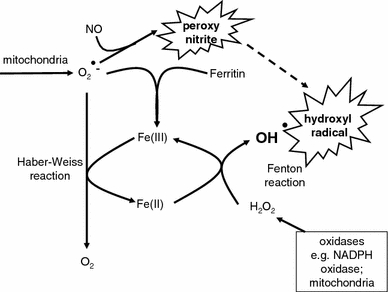
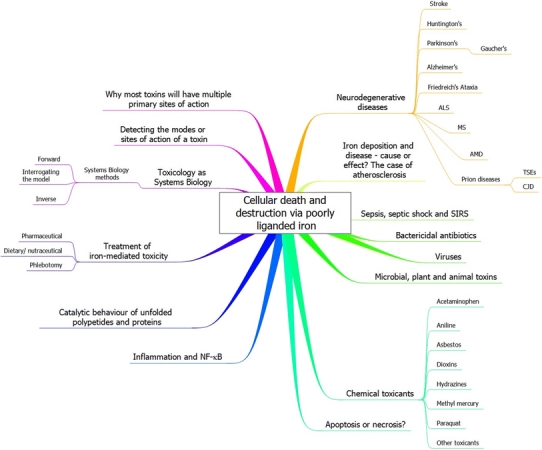
- Across reviewed conditions—stroke, Huntington’s, Parkinson’s, Alzheimer’s, ALS, Friedreich’s ataxia, multiple sclerosis, age-related macular degeneration, prion diseases, atherosclerosis, sepsis/SIRS, bactericidal antibiotics, viral infections, and chemical toxicants—evidence converges on iron dysregulation and Fenton chemistry; the hydroxyl radical is highlighted as the key damaging species rather than “ROS” generally.
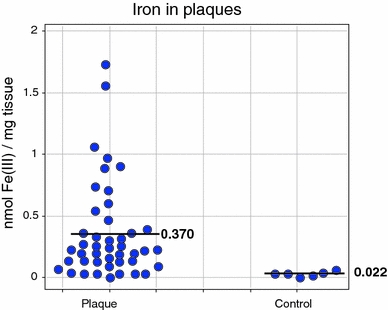
- In atherosclerosis, EPR-detectable iron in plaques was 17-fold greater than in healthy non-atherosclerotic intima controls, with P = 0.0001 (replotted from Stadler et al. 2004); iron levels in plaques also correlate with oxidized proteins.
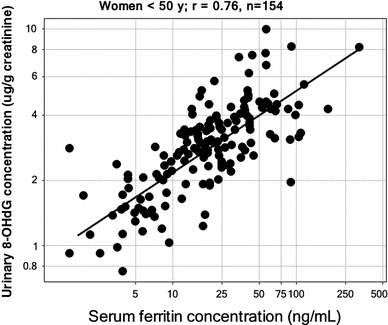
- Serum ferritin concentrations show a very strong relationship with urinary 8-hydroxy-2′-deoxyguanosine, a DNA damage/oxidative stress marker (replotted from Hori et al. 2010), and ferritin levels are widely associated with disease development, severity, or poor outcomes.
- Bactericidal antibiotics (norfloxacin, ampicillin, kanamycin) use internal iron liberated from iron–sulfur clusters to promote Fenton-mediated hydroxyl radical formation, whereas bacteriostatic antibiotics do not; iron chelators plus antioxidants are especially effective in sepsis models, and approved clinical chelators include deferoxamine, deferiprone, and deferasirox.
Methods
- Narrative literature review; the literature survey at initial submission extended to 14 June 2010, covering diseases, toxicants, and iron biology.
- Systems biology conceptual synthesis: forward and inverse modelling, sensitivity analysis, combinatorial parameter analysis, Bayesian/MCMC and evolutionary methods to infer sites of action, and “bow-tie” network models.
- Replots/digitizes published data (e.g., Hori et al. 2010; Stadler et al. 2004) to illustrate relationships; no new primary experimental data are reported.
Limitations
- The paper states that exact molecular mechanisms, cascades, and networks depend on many other factors; causality is often hard to infer from one-time snapshots; and some direct evidence is lacking—e.g., PrPSc–ferritin complexes have not yet been shown to catalyse OH• production directly, huntingtin inclusion bodies were not demonstrated to catalyse hydroxyl formation, and the extent of causality of iron dysregulation in multiple sclerosis is not yet established.
- Evident from the text: as a review, it synthesizes heterogeneous literature and relies heavily on cited associations, many of which are correlational; no new experimental validation is provided, and the literature coverage ends in mid-2010.
- The paper notes hormesis and dose-dependent interactions complicate simple models; chelator/antibiotic interactions can be dose-dependent and sometimes antagonistic (e.g., deferoxamine was antagonistic to azoles, while deferasirox promoted ciprofloxacin activity against *V. vulnificus*).
Model-written summary of a shortened version of the paper’s full text (it is longer than we read). Check it against the paper before relying on it.
Integrity signals
Registry
Cites
Statistics
Figures
Verification
Claims the paper makes
15 Valid · 1 Not valid · 117 Not checked · 25 Own results and interpretations
At least one cited source doesn’t support this claim or points to a different paper, and none confirmed it — see the verdicts below.
In the paper
“The defect thus leads to the liberation of mitochondrial iron”
§ Towards a unifying, systems biology understanding of large-scale cellular death and destruction caused by poorly liganded iron: Parkinson’s, Huntington’s, Alzheimer’s, prions, bactericides, chemical toxicology and others as examples > Friedreich’s ataxia
What the sources say
- Disputedcites Huang et al. 2009 matched to “Elucidation of the mechanism of mitochondrial iron loading in Friedreich's ataxia by analysis of a mouse mutant” (2009) sourceExperimental — accuracy not yet measured
The Abstract and Discussion describe frataxin deficiency as causing mitochondrial iron accumulation, with reduced release of heme and iron-sulfur clusters from mitochondria—not liberation of mitochondrial iron. The Discussion instead identifies increased liberation of cytoplasmic iron from heme as a contributor to mitochondrial iron uptake. No page numbers are available in our copy. (LLM, conf=0.88)
Checked by a reasoning model — may be wrong.
- Not checked yetcites Popescu et al. 2007 matched to “The chemical form of mitochondrial iron in Friedreich’s ataxia” (2007) source
- Not checked yetcites Richardson et al. 2009a
plainstates a cause- Asserted: passes — The authors put it forward as true.
- Checkable: passes — It can be checked against evidence.
- Load-bearing: passes — The paper’s conclusions depend on it.
- Based: passes — The paper gives a reason why it holds.
- Disputed
The cited sources support only part of this claim — read each source’s verdict below.
In the paper
“body-iron status correlates rather strongly with its production or urinary excretion (Agarwal et al. 2004; Broedbaek et al. 2009; Fujita et al. 2007a, 2009; Gackowski et al. 2002; Hori et al. 2010; Kang et al. 1998; Kuo et al. 2008; Maruyama et al. 2007; Nakano et al. 2003; Toyokuni and Sagripanti 1996; Tuomainen et al. 2007; Valavanidis et al. 2005).”
§ Towards a unifying, systems biology understanding of large-scale cellular death and destruction caused by poorly liganded iron: Parkinson’s, Huntington’s, Alzheimer’s, prions, bactericides, chemical toxicology and others as examples > Introduction
What the sources say
- Could not verifycites Agarwal et al. 2004 matched to “Oxidative stress and renal injury with intravenous iron in patients with chronic kidney disease” (2004) sourceExperimental — accuracy not yet measured
The Laboratory analysis section describes plasma and urinary malondialdehyde (MDA) assays, and the Discussion reports urinary MDA after intravenous iron in patients with chronic kidney disease. Searches for 8-OHdG and 8-hydroxy-2′-deoxyguanosine found no passage measuring that marker or relating its production or urinary excretion to body-iron status. (LLM, conf=0.76)
- Supportedcites Hori et al. 2010 matched to “Body iron store as a predictor of oxidative DNA damage in healthy men and women” (2010) source
The Discussion reports a strong positive association between serum ferritin, a marker of body iron stores, and urinary 8-OHdG in healthy Japanese men and women. The Results also show urinary 8-OHdG increasing across ferritin levels. This supports the claim about urinary excretion, though the cross-sectional study did not directly measure production. (LLM, conf=0.94)
boostedstates an association- Asserted: passes — The authors put it forward as true.
- Checkable: passes — It can be checked against evidence.
- Load-bearing: passes — The paper’s conclusions depend on it.
- Based: passes — The paper gives a reason why it holds.
- Could not verify
Every source the paper cites for this claim was checked and supports it.
In the paper
“Iron metabolism is deranged in gene knockdown models of Huntington’s (Henshall et al. 2009; Lumsden et al. 2007)”
§ Towards a unifying, systems biology understanding of large-scale cellular death and destruction caused by poorly liganded iron: Parkinson’s, Huntington’s, Alzheimer’s, prions, bactericides, chemical toxicology and others as examples > Huntington’s disease
What the sources say
- Supportedcites Henshall et al. 2009 matched to “Selective neuronal requirement for huntingtin in the developing zebrafish” (2009) source
The Introduction (page not supplied) says that an earlier analysis of the huntingtin-knockdown zebrafish model revealed a role for huntingtin in iron homeostasis and transport. The Abstract likewise reports effects of huntingtin reduction on iron transport and homeostasis. The claim does not attribute the original iron findings specifically to this 2009 study. (LLM, conf=0.89)
- Supportedcites Lumsden et al. 2007 matched to “Huntingtin-deficient zebrafish exhibit defects in iron utilization and development” (2007) source
The Abstract reports that huntingtin knockdown in zebrafish reduced hemoglobin production despite iron being present in blood cells, and that bioavailable iron restored production. The Conclusion identifies signs of cellular iron deficiency in the knockdown model despite iron being present. These passages support the claim about disrupted iron handling in a gene-knockdown model relevant to Huntington’s disease. (LLM, conf=0.93)
plainstates an association- Asserted: passes — The authors put it forward as true.
- Checkable: passes — It can be checked against evidence.
- Load-bearing: passes — The paper’s conclusions depend on it.
- Based: passes — The paper gives a reason why it holds.
- Supported
Every source the paper cites for this claim was checked and supports it.
In the paper
“experiments with the iron chelator deferroxamine revealed that the oxidation, localisation and structural organisation of the inclusion bodies formed by mutant htt were indeed irondependent.”
§ Towards a unifying, systems biology understanding of large-scale cellular death and destruction caused by poorly liganded iron: Parkinson’s, Huntington’s, Alzheimer’s, prions, bactericides, chemical toxicology and others as examples > Huntington’s disease
What the sources say
- Supportedcites Firdaus et al. 2006 matched to “Huntingtin inclusion bodies are iron‐dependent centers of oxidative events” (2006) source
The paper's own overview (p. 2) states verbatim that 'Analysis performed in the presence of the iron chelator deferroxamine revealed that the oxidation, localization and structural organization of the inclusion bodies formed by mutant htt were iron-dependent.' The supporting results confirm each element: deferroxamine (5 mM, 24 h) shrank httEx1-103Q inclusions and abolished HE oxidation in COS-7 cells (pp. 7-8, Fig. 6), and redistributed httEx1-43Q-EGFP nuclear inclusions out of the nucleus while reducing their oxidation in PC12 cells (p. 8, Fig. 7); the Discussion (p. 9) restates that chelatable iron was key to formation/structural integrity, localization and the oxidative events. (LLM, conf=0.95)
boostedstates a cause- Asserted: passes — The authors put it forward as true.
- Checkable: passes — It can be checked against evidence.
- Load-bearing: passes — The paper’s conclusions depend on it.
- Based: passes — The paper gives a reason why it holds.
- Supported
The cited sources support only part of this claim — read each source’s verdict below.
In the paper
“(HFE) mutations that cause haemochromatosis increase the susceptibility to AD (Bartzokis et al. 2010; Candore et al. 2003; Combarros et al. 2003; Connor and Lee 2006; Haacke et al. 2005; Kauwe et al. 2010; Lleó et al. 2002; Moalem et al. 2000; Pulliam et al. 2003; Robson et al. 2004; Sampietro et al. 2001), especially when in the presence of the APOE4 allele (Pulliam et al. 2003).”
§ Towards a unifying, systems biology understanding of large-scale cellular death and destruction caused by poorly liganded iron: Parkinson’s, Huntington’s, Alzheimer’s, prions, bactericides, chemical toxicology and others as examples > Alzheimer’s disease
What the sources say
- Not checked yetcites Pulliam et al. 2003 matched to “Association of HFE mutations with neurodegeneration and oxidative stress in Alzheimer's disease and correlation with APOE” (2003) source
- Partly supportedcites Robson et al. 2004 matched to “Synergy between the C2 allele of transferrin and the C282Y allele of the haemochromatosis gene (HFE) as risk factors for developing Alzheimer’s disease” (2004) sourceExperimental — accuracy not yet measured
Robson et al. (2004) do report increased AD risk associated with the haemochromatosis mutation C282Y, and that risk is highest in carriers who also have APOE4 (Abstract; Conclusions: 'tri-carriers of the two iron-related variants plus APOE4 may be at very high risk of AD'). However, the source does not support the unconditional attribution that HFE mutations that cause haemochromatosis increase AD susceptibility: the Abstract states 'each of the two variants was associated with an increased risk of AD only in the presence of the other. Neither allele alone had any effect' (i.e. only with transferrin C2), the Results (Tables 2-4) give C282Y-negative/C2-alone OR 1.3 (NS), and the Results explicitly report 'no association of the HFE H63D variant with AD, or with MCI, either overall or in two-way interaction with either TF C2 or APOE4'. So the second HFE mutation implicated in haemochromatosis is not associated in this paper, and the APOE4 effect is conditional on TF C2 co-carriage rather than on the HFE allele alone. (LLM, conf=0.78)
plainstates a cause- Asserted: passes — The authors put it forward as true.
- Checkable: passes — It can be checked against evidence.
- Load-bearing: unclear — It is unclear whether the paper’s conclusions depend on it.
- Based: passes — The paper gives a reason why it holds.
99 more claims · 11 with their cited sources checked
Create a free account to see all 158 claims and to verify the 250 references still open.
- It may state two separate claims as one. 42
- Probably not a substantial claim. 18
- The quote only partly states this claim. 1
Claims other papers make about this one
Each is checked against this paper’s own text: does it say what the citing paper says it does?
The source backs part of the claim, not all of it — or backs it for a different population, condition or comparison.
In the citing paper
“Chronic increase of such ‘free’ iron forms are associated with pathological conditions and possible complex homeostasis unbalance for this element in cells and tissues, relevant to asbestos toxicity and related diseases181920.”
From The interaction of asbestos and iron in lung tissue revealed by synchrotron-based scanning X-ray microscopy (2013) · cites this paper as [19]
Experimental — accuracy not yet measuredThe cited source says what the claim attributes to it.
In the citing paper
“Concerning this issue, the recent reviews by D. Kell1819 analyse the wide but dispersed literature via a systems biology approach, and indicate that iron that is weakly complexed boosts many biochemical processes leading to a large variety of apparently unrelated diseases.”
From The interaction of asbestos and iron in lung tissue revealed by synchrotron-based scanning X-ray microscopy (2013) · cites this paper as [19]
The cited source says what the claim attributes to it.
In the citing paper
“nominally antioxidant molecules such as ascorbate have complex, multi-electron redox chemistry, and can in fact act as pro-oxidants(502,503), especially in the presence of free Fe(208,213) or Cu(504).”
From The biology of ergothioneine, an antioxidant nutraceutical (2020) · cites this paper as [213]
The cited source says what the claim attributes to it.
In the citing paper
“Due to the presence of high-affinity iron binding and storage proteins, the actual toxicity of iron is restricted to the so called “labile iron pool”.”
From The interaction of asbestos and iron in lung tissue revealed by synchrotron-based scanning X-ray microscopy (2013) · cites this paper as [19]
Citations
Cites
2 retracted
Items 201–400 of 1,761
Šimůnek, T., Štěrba, M., Popelová, O., Adamcová, M., Hrdina, R., & Geršl, V. (2009) · Pharmacological Reports · doi:10.1016/s1734-1140(09)70018-0 · Cited by 769
Curcumin and Cancer Cells: How Many Ways Can Curry Kill Tumor Cells Selectively?
Ravindran, J., Prasad, S., & Aggarwal, B. B. (2009) · The AAPS Journal · doi:10.1208/s12248-009-9128-x · Cited by 768 · cited 1×
“…et al. 2009; Iqbal et al. 2009; Jiao et al. 2009; Jurenka 2009; Kalpravidh et al. 2010; Majumdar et al. 2009; Messner et al. 2009; Patil et al. 2009; Ravindran et al. 2009; Rivera- Espinoza and Muriel 2009; Thephinlap et al. 2009; Thomas et al. 2009; Tuntipopipat et al. 2009; Wang et al.…”
BackgroundKinetics of superoxide dismutase- and iron-catalyzed nitration of phenolics by peroxynitrite
Beckman, J. S., Ischiropoulos, H., Zhu, L., van der Woerd, M., Smith, C., Chen, J., Harrison, J., Martin, J. C., & Tsai, M. (1992) · Archives of Biochemistry and Biophysics · doi:10.1016/0003-9861(92)90432-v · Cited by 764 · cited 1×
“These can lead to nitrotyrosine (Beckman 1996; Goldstein and Merényi 2008; Herce-Pagliai et al. 1998) (a reaction catalysed by poorly liganded iron, Beckman et al. 1992), or nitro-fatty acid (Aslan et al. 2001; O’Donnell and Freeman 2001) production or protein cys- teine nitrosylation (Lancaster…”
BackgroundIntramuscular desferrioxamine in patients with Alzheimer's disease
MCLACHLAN, D. (1991) · The Lancet · doi:10.1016/0140-6736(91)92978-b · Cited by 764
Popa, C., Netea, M. G., van Riel, P. L. C. M., van der Meer, J. W. M., & Stalenhoef, A. F. H. (2007) · Journal of Lipid Research · doi:10.1194/jlr.r600021-jlr200 · Cited by 763 · cited 1×
“…Libby 2002; Libby et al. 2002; Madamanchi et al. 2005a, b; Mullenix et al. 2005; Nigro et al. 2006; Packard and Libby 2008; Paoletti et al. 2004; Popa et al. 2007; Rader and Daugherty 2008; Ridker et al.et al. 2004; Ross 1999; Schleicher and Friess 2007; Subramanian and Ferrante 2009;…”
BackgroundBayesian analysis of computer code outputs: A tutorial
O’Hagan, A. (2006) · Reliability Engineering & System Safety · doi:10.1016/j.ress.2005.11.025 · Cited by 755 · cited 1×
“Taking the Bayesian approach (see also e.g. Nidhi et al. 2006; O’Hagan 2006; Vyshemirsky and Girolami 2008; Wilkinson 2007), in the work described above (Jayawardhana et al. 2008) we ‘calibrated’ our approach using purely simulated data in which we knew exactly which parameters had been changed…”
MethodNovel Clinical Markers of Vascular Wall Inflammation
Blake, G. J., & Ridker, P. M. (2001) · Circulation Research · doi:10.1161/hh2101.099270 · Cited by 754
Stacey, A. R., Norris, P. J., Qin, L., Haygreen, E. A., Taylor, E., Heitman, J., Lebedeva, M., DeCamp, A., Li, D., Grove, D., et al. (2009) · Journal of Virology · doi:10.1128/jvi.01844-08 · Cited by 747
Polyphenols in foods are more complex than often thought
Cheynier, V. (2005) · The American Journal of Clinical Nutrition · doi:10.1093/ajcn/81.1.223s · Cited by 745 · cited 1×
“Many are polyphenols (ChEBI 26195) (Amic et al. 2007; Arts and Hollman 2005; Auclair et al. 2009; Cemeli et al. 2009; Cheynier 2005; Geronikaki and Gavalas 2006; Halliwell 2007; Jovanovic and Simic 2000; Kandaswami and Middleton 1994; Kiokias et al. 2008; Korkina and Afanas’ev 1997; Linseisen and…”
BackgroundTransition metals as catalysts of “autoxidation” reactions
Miller, D. (1990) · Free Radical Biology and Medicine · doi:10.1016/0891-5849(90)90148-c · Cited by 739 · cited 1×
“…promote the production of OH• radicals in the presence of inappropriately or inadequately liganded Fe(II) (Allen and Cornforth 2009; Fábián and Csordás 2003; Halliwell 2009; Hininger et al. 2005; Lachili et al. 2001; Long et al. 2000; Miller et al. 1990; Reif 1992; Sugihara et al. 1999).”
BackgroundUnraveling peroxynitrite formation in biological systems
Radi, R., Peluffo, G., Alvarez, M. N., Naviliat, M., & Cayota, A. (2001) · Free Radical Biology and Medicine · doi:10.1016/s0891-5849(00)00373-7 · Cited by 735 · cited 1×
“…Goldstein and Merényi 2008; Koppenol et al. 1992; Murphy et al. 1998; Pacher et al. 2007; Pavlovic and Santaniello 2007; Pryor and Squadrito 1995; Radi et al. 2001, 2002; Rubbo and O’Donnell 2005; Rubbo et al. 2009; Smith et al. 1997b; Squadrito and Pryor 1998; Szabo 1996; Szabó et al. 2007;…”
BackgroundBush, A. (2000) · Current Opinion in Chemical Biology · doi:10.1016/s1367-5931(99)00073-3 · Cited by 731 · cited 5×
“…is another neurodegenerative disease in which iron has been strongly implicated (and thus the same kinds of mechanism as described previously) (Bush 2000; Carri et al. 2003; Cozzolino et al. 2008; Goodall et al. 2008; Jeong et al. 2009; Kasarskis et al. 1995; Mattson 2004; Migliore et al.…”
BackgroundInfluentialEvidence that 4-Hydroxynonenal Mediates Oxidative Stress-Induced Neuronal Apoptosis
Kruman, I., Bruce-Keller, A. J., Bredesen, D., Waeg, G., & Mattson, M. P. (1997) · The Journal of Neuroscience · doi:10.1523/jneurosci.17-13-05089.1997 · Cited by 723
Cao, A., & Galanello, R. (2010) · Genetics in Medicine · doi:10.1097/gim.0b013e3181cd68ed · Cited by 722
Halliwell, B., Rafter, J., & Jenner, A. (2005) · The American Journal of Clinical Nutrition · doi:10.1093/ajcn/81.1.268s · Cited by 711 · cited 1×
“…chelating, as well as directly antioxidative (redox) properties of these mole- cules (e.g. Ferrali et al. 1997a; Hague et al. 2006; Halliwell 2009; Halliwell et al. 2005; Hider et al. 2001; Končić et al. 2010; Lopes et al. 1999; Mandel et al. 2004; Mandel and Youdim 2004; Morel et al. 1994;…”
BackgroundAltered Brain Metabolism of Iron as a Cause of Neurodegenerative Diseases?
Gerlach, M., Ben‐Shachar, D., Riederer, P., & Youdim, M. B. H. (1994) · Journal of Neurochemistry · doi:10.1046/j.1471-4159.1994.63030793.x · Cited by 703
Systems biology properties of reconstructed networks
Palsson, B. Ø. (2006) · Cited by 701
Flavonoids in Health and Disease
Rice-Evans, C., & Packer, L. (2003) · CRC Press eBooks · doi:10.1201/9780367803681 · Cited by 690 · cited 2×
“…2006; Halliwell 2009; Halliwell et al. 2005; Hider et al. 2001; Končić et al. 2010; Lopes et al. 1999; Mandel et al. 2004; Mandel and Youdim 2004; Morel et al. 1994; Nijveldt et al. 2001; Rice-Evans et al. 1997; Rice-Evans and Packer 2003; Weinreb et al. 2007, 2009a; Yoshino and Murakami 1998).”
BackgroundSuperoxide and peroxynitrite inatherosclerosis.
White, C. R., Brock, T. A., Chang, L. Y., Crapo, J., Briscoe, P., Ku, D., Bradley, W. A., Gianturco, S. H., Gore, J., & Freeman, B. A. (1994) · Proceedings of the National Academy of Sciences · doi:10.1073/pnas.91.3.1044 · Cited by 686
Markesbery, W. R., & Lovell, M. A. (1998) · Neurobiology of Aging · doi:10.1016/s0197-4580(98)00009-8 · Cited by 680 · cited 2×
“…2009; Kala et al. 1996; Lehmann et al. 2006; LeVine 1997; Lovell et al. 1998; Malecki and Connor 2002; Mandel et al. 2007; Markesbery 1997; Markesbery and Lovell 1998; Mascitelli et al. 2009; Olanow and Arendash 1994; Ong and Farooqui 2005; Quintana et al. 2006; Rival et al. 2009;…”
BackgroundPolyphenols and prevention of cardiovascular diseases
Manach, C., Mazur, A., & Scalbert, A. (2005) · Current Opinion in Lipidology · doi:10.1097/00041433-200502000-00013 · Cited by 680 · cited 1×
“…and Simic 2000; Kandaswami and Middleton 1994; Kiokias et al. 2008; Korkina and Afanas’ev 1997; Linseisen and Rohrmann 2008; Loke et al. 2009; Manach et al. 2004, 2005a, b; Pérez-Jiménez et al. 2010; Perron and Brumaghim 2009; Perron et al. 2008; Petti and Scully 2009; Pietta 2000;…”
BackgroundAn interferon‐γ‐related cytokine storm in SARS patients
Huang, K., Su, I., Theron, M., Wu, Y., Lai, S., Liu, C., & Lei, H. (2005) · Journal of Medical Virology · doi:10.1002/jmv.20255 · Cited by 679
King, R. D., Rowland, J., Oliver, S. G., Young, M., Aubrey, W., Byrne, E., Liakata, M., Markham, M., Pir, P., Soldatova, L. N., et al. (2009) · Science · doi:10.1126/science.1165620 · Cited by 679 · cited 4×
“These are classic data mining methods (e.g. Breiman 2001; Kell and King 2000; Kell and Oliver 2004; Wu et al. 2008) that allow us to discover mechanisms of action that are unknown and/or have not previously been contemplated.”
MethodInfluentialMendes, P., & Kell, D. (1998) · Bioinformatics · doi:10.1093/bioinformatics/14.10.869 · Cited by 676 · cited 2×
“both modelling (Dada and Mendes 2009; Mendes and Kell 1998; Moles et al. 2003; Rodriguez-Fernandez et al. 2006)”
BackgroundSelf-citationGoldstein, S., Meyerstein, D., & Czapski, G. (1993) · Free Radical Biology and Medicine · doi:10.1016/0891-5849(93)90043-t · Cited by 674
A Cell-Surface Receptor for Lipocalin 24p3 Selectively Mediates Apoptosis and Iron Uptake
Devireddy, L. R., Gazin, C., Zhu, X., & Green, M. R. (2005) · Cell · doi:10.1016/j.cell.2005.10.027 · Cited by 672 · cited 1×
“…et al. 2000; Sun et al. 2009; Truksa et al. 2003; Zhang et al. 2003; Zhao et al. 2004) or in excess (e.g. Aljandali et al. 2001; Cozzi et al. 2003, 2010; Devireddy et al. 2005; Franke et al. 2010; Jacob et al. 1997, 2000; Javadi et al. 2004; Jı́menez Del Rı́o and Vélez-Pardo 2004; Kamp et al.…”
Evidence of neuronal oxidative damage in Alzheimer's disease.
Good, P. F., Werner, P., Hsu, A., Olanow, C. W., & Perl, D. P. (1996) · Europe PMC (PubMed Central) · Cited by 665
Functional genomic hypothesis generation and experimentation by a robot scientist
King, R. D., Whelan, K. E., Jones, F. M., Reiser, P. G. K., Bryant, C. H., Muggleton, S. H., Kell, D. B., & Oliver, S. G. (2004) · Nature · doi:10.1038/nature02236 · Cited by 662 · cited 4×
“These are classic data mining methods (e.g. Breiman 2001; Kell and King 2000; Kell and Oliver 2004; Wu et al. 2008) that allow us to discover mechanisms of action that are unknown and/or have not previously been contemplated.”
MethodInfluentialSelf-citationB lymphocytes and neuroinvasion
Brown, P. (1997) · Nature · doi:10.1038/37733 · Cited by 658
How widespread is adult neurogenesis in mammals?
Gould, E. (2007) · Nature Reviews Neuroscience · doi:10.1038/nrn2147 · Cited by 656
Innate and acquired immunity in atherogenesis
Binder, C. J., Chang, M.-K., Shaw, P. X., Miller, Y. I., Hartvigsen, K., Dewan, A., & Witztum, J. L. (2002) · Nature Medicine · doi:10.1038/nm1102-1218 · Cited by 642 · cited 1×
“Atherosclerosis is a progressive (and inflammatory) dis- ease (Altman 2003; Binder et al. 2002; Blake and Ridker 2001; Duewell et al. 2010; Dwyer et al. 2004; Forrester 2002, 2004; Gieseg et al. 2009; Grainger 2007; Hansson 2001, 2005; Himmelfarb et al. 2002; Kibel et al. 2008; Kunsch and Medford…”
BackgroundNecroptosis, necrosis and secondary necrosis converge on similar cellular disintegration features
Berghe, T. V., Vanlangenakker, N., Parthoens, E., Deckers, W., Devos, M., Festjens, N., Guerin, C. J., Brunk, U. T., Declercq, W., & Vandenabeele, P. (2010) · Cell Death & Differentiation · doi:10.1038/cdd.2009.184 · Cited by 639
Exercise, oxidative stress and hormesis
Radak, Z., Chung, H. Y., Koltai, E., Taylor, A. W., & Goto, S. (2008) · Ageing Research Reviews · doi:10.1016/j.arr.2007.04.004 · Cited by 638 · cited 1×
“…Cook and Calabrese 2006; Cox 2009; Gems and Partridge 2008; Gómez-Pinilla 2008; Hadacek et al. 2010; Hayes 2009; Hoffmann 2009; Mattson 2008a, b; Radak et al. 2008; Rattan 2004, 2008; Rattan and Demirovic 2009; Ristow and Zarse 2010; Sørensen et al. 2009), so any analysis should be a systems…”
BackgroundTriterpenoids and rexinoids as multifunctional agents for the prevention and treatment of cancer
Liby, K. T., Yore, M. M., & Sporn, M. B. (2007) · Nature Reviews Cancer · doi:10.1038/nrc2129 · Cited by 637 · cited 1×
“…et al. 2008; Huang et al. 2008b; Jia et al. 2009; Koufaki et al. 2009; Kuhn et al. 2010; Lee et al. 2007; Lehár et al. 2007, 2008a, b; Li et al. 2007; Liby et al. 2007; Morphy and Rankovic 2007; Pachauri et al. 2009; Reznichenko et al. 2010; Sarkar and Li 2009; Sarkar et al. 2009; Sawyers 2007;…”
Zhang, J., Perry, G., Smith, M. A., Robertson, D., Olson, S. J., Graham, D. G., & Montine, T. J. (1999) · The American Journal of Pathology · doi:10.1016/s0002-9440(10)65396-5 · Cited by 636
Peroxynitrite reactions and formation in mitochondria
Radi, R., Cassina, A., Hodara, R., Quijano, C., & Castro, L. (2002) · Free Radical Biology and Medicine · doi:10.1016/s0891-5849(02)01111-5 · Cited by 635 · cited 2×
“…Goldstein and Merényi 2008; Koppenol et al. 1992; Murphy et al. 1998; Pacher et al. 2007; Pavlovic and Santaniello 2007; Pryor and Squadrito 1995; Radi et al. 2001, 2002; Rubbo and O’Donnell 2005; Rubbo et al. 2009; Smith et al. 1997b; Squadrito and Pryor 1998; Szabo 1996; Szabó et al. 2007;…”
BackgroundMethodNADPH Oxidases in Cardiovascular Health and Disease
Cave, A. C., Brewer, A. C., Narayanapanicker, A., Ray, R., Grieve, D. J., Walker, S., & Shah, A. M. (2006) · Antioxidants & Redox Signaling · doi:10.1089/ars.2006.8.691 · Cited by 630 · cited 2×
“2007) or (per)oxidases (Bedard and Krause 2007; Cave et al. 2006) via the Fenton reaction (Goldstein”
MethodOxidative damage and protection of the RPE
Cai, J., Nelson, K. C., Wu, M., Sternberg, P., & Jones, D. P. (2000) · Progress in Retinal and Eye Research · doi:10.1016/s1350-9462(99)00009-9 · Cited by 628 · cited 1×
“Indeed, as previously discussed, iron is significantly implicated in AMD (and other related dis- eases such as glaucoma) (Blasiak et al. 2009; Cai et al. 2000; Charkoudian et al. 2008; Chen et al. 2009; Chowers et al. 2006; Dentchev et al. 2005; Dunaief 2006; Garcı́a- Castiñeiras 2010; Goralska et…”
BackgroundKnovich, M. A., Storey, J. A., Coffman, L. G., Torti, S. V., & Torti, F. M. (2009) · Blood Reviews · doi:10.1016/j.blre.2008.08.001 · Cited by 627 · cited 1×
“…al. 2010; DePalma et al. 2010; Ferrara et al. 2009; Ferrucci et al. 2010; Gamberini et al. 2008; Goodall et al. 2008; Inati et al. 2010; Kaysen 2009; Knovich et al. 2009; Kolberg et al. 2009; Lecube et al. 2008; Lim et al. 2010; Mateo- Gallego et al. 2010; McNeill et al. 2008; Menke et al.…”
BackgroundAntioxidant functions of phytic acid
Graf, E. (1990) · Free Radical Biology and Medicine · doi:10.1016/0891-5849(90)90146-a · Cited by 623 · cited 1×
“…CHEBI 17401 ) (Aljandali et al. 2001; Allen and Cornforth 2009; Brune et al. 1989; Davidsson et al. 1994; Doria et al. 2009; Glahn et al. 2002; Graf and Eaton 1990, 1993; Graf et al. 1987; Grases et al. 2001; Hallberg et al. 1989; Han et al. 1994; Hanson et al. 2006; Hawkins et al. 1993; Kamp…”
BackgroundIron absorption in man: ascorbic acid and dose-dependent inhibition by phytate
Hallberg, L., Brune, M., & Rossander, L. (1989) · The American Journal of Clinical Nutrition · doi:10.1093/ajcn/49.1.140 · Cited by 623
Encoding multiple unnatural amino acids via evolution of a quadruplet-decoding ribosome
Neumann, H., Wang, K., Davis, L., Garcia-Alai, M., & Chin, J. W. (2010) · Nature · doi:10.1038/nature08817 · Cited by 622 · cited 2×
“polypeptides (Neumann et al. 2010) opens up considerable”
BackgroundMinimum information requested in the annotation of biochemical models (MIRIAM)
Novère, N. L., Finney, A., Hucka, M., Bhalla, U. S., Campagne, F., Collado-Vides, J., Crampin, E. J., Halstead, M., Klipp, E., Mendes, P., et al. (2005) · Nature Biotechnology · doi:10.1038/nbt1156 · Cited by 622
Genetic or Pharmacological Iron Chelation Prevents MPTP-Induced Neurotoxicity In Vivo
Kaur, D., Yantiri, F., Rajagopalan, S., Kumar, J., Mo, J. Q., Boonplueang, R., Viswanath, V., Jacobs, R., Yang, L., Beal, M. F., et al. (2003) · Neuron · doi:10.1016/s0896-6273(03)00126-0 · Cited by 620 · cited 1×
“…inhibit these inimical processes (Gal et al. 2006; Perez et al. 2008; Xu et al. 2008; Youdim et al. 2004a, b; Zheng et al. 2005), including (Kaur et al. 2003; Reznichenko et al. 2010; Youdim 2003) in the case of a Parkinson-like disease induced (Blum et al. 2001; Choi et al. 2009; Gal et…”
BackgroundSystematic discovery of multicomponent therapeutics
Borisy, A. A., Elliott, P. J., Hurst, N. W., Lee, M. S., Lehár, J., Price, E. R., Serbedzija, G., Zimmermann, G. R., Foley, M. A., Stockwell, B. R., et al. (2003) · Proceedings of the National Academy of Sciences · doi:10.1073/pnas.1337088100 · Cited by 620 · cited 1×
“…be modulated simultaneously to exhibit substantial effects (see e.g. Ágoston et al. 2005; Ambesi- Impiombato and di Bernardo 2006; Bender et al. 2006; Borisy et al. 2003; Csermely et al. 2005; Dancey and Chen 2006; Fan et al. 2003, 2006; Haggarty et al. 2003; Hopkins et al. 2006; Kaelin 2005;…”
BackgroundArachidonate 5-Lipoxygenase Promoter Genotype, Dietary Arachidonic Acid, and Atherosclerosis
Dwyer, J. H., Allayee, H., Dwyer, K. M., Fan, J., Wu, H., Mar, R., Lusis, A. J., & Mehrabian, M. (2004) · New England Journal of Medicine · doi:10.1056/nejmoa025079 · Cited by 619
Physiology of the prion protein
Linden, R., Martins, V. R., Prado, M. A. M., Cammarota, M., Izquierdo, I., & Brentani, R. R. (2008) · Physiological Reviews · doi:10.1152/physrev.00007.2007 · Cited by 617 · cited 2×
“Prion diseases: including transmissible spongiform encephalopathies and Creutzfeldt–Jakob disease A particularly striking set of diseases, where the down- stream events manifest as extreme cellular destruction leading to large areas of (brain) tissue disappearing com- pletely, are represented by the prion diseases, in…”
BackgroundSystems Biology: Properties of Reconstructed Networks
Palsson, B. Ø. (2006) · doi:10.1017/cbo9780511790515 · Cited by 617
Involvement of oxidative stress in Alzheimer disease
Nunomura, A., Castellani, R. J., Zhu, X., Moreira, P. I., Perry, G., & Smith, M. A. (2006) · Journal of Neuropathology and Experimental Neurology · doi:10.1097/01.jnen.0000228136.58062.bf · Cited by 611
The redox chemistry of the Alzheimer's disease amyloid β peptide
Smith, D. G., Cappai, R., & Barnham, K. J. (2007) · Biochimica et Biophysica Acta (BBA) - Biomembranes · doi:10.1016/j.bbamem.2007.02.002 · Cited by 608 · cited 1×
“…can bind iron (Castellani et al. 2007; Dickens and Franz 2010; Exley 2006; Good et al. 1992; Jiang et al. 2009; Mancino et al. 2009; Rival et al. 2009; Sayre et al. 2000b; Smith et al. 2007) and thereby act in an autocatalytic manner to promote further radical production and oxidative stress.”
BackgroundInhaled particles and lung cancer. Part A: Mechanisms
Knaapen, A. M., Borm, P. J. A., Albrecht, C., & Schins, R. P. F. (2004) · International Journal of Cancer · doi:10.1002/ijc.11708 · Cited by 606 · cited 1×
“…2005; Daghino et al. 2006; Fantauzzi et al. 2010; Fattman et al. 2006; Gazzano et al. 2007; Ghio et al. 2004, 2009; Heintz et al. 2010; Kamp 2009; Knaapen et al. 2004; Liu et al. 2010; Nymark et al. 2008; Panduri et al. 2006; Poser et al. 2004; Quinlan et al. 2002; Shannahan et al.; Shukla et…”
BackgroundIs the oxidative stress theory of aging dead?
Pérez, V. I., Bokov, A., Remmen, H. V., Mele, J., Ran, Q., Ikeno, Y., & Richardson, A. (2009) · Biochimica et Biophysica Acta (BBA) - General Subjects · doi:10.1016/j.bbagen.2009.06.003 · Cited by 604 · cited 1×
“Formalisms such as Metabolic Control Analysis also explain why the modula- tion of individual steps singly rarely has much of an effect on an overall pathway (see e.g. Pérez et al. 2009a, b), reviewed by Gems (Gems and Doonan 2009), for a typical example.”
MethodBone, R. C. (1996) · Critical Care Medicine · doi:10.1097/00003246-199601000-00026 · Cited by 603 · cited 1×
“The sequelae are typically referred to as a systemic inflammatory response syndrome (SIRS) (e.g. Baue et al. 1998; Beal and Cerra 1994; Bolton 1996; Bone 1996; Davies and Hagen 1997; Gutteridge and Mitchell 1999; Hotchkiss and Karl 2003; Johnson and Mayers 2001; Keel and Trentz 2005; Leithead et…”
BackgroundMutations in the Glucocerebrosidase Gene and Parkinson's Disease in Ashkenazi Jews
Aharon-Peretz, J., Rosenbaum, H., & Gershoni-Baruch, R. (2004) · New England Journal of Medicine · doi:10.1056/nejmoa033277 · Cited by 597 · cited 1×
“…et al. 2006b; Yu et al. 2003), it is also of interest that there is an increased frequency of mutations in the gene encoding GBA among patients with Parkinson’s disease (e.g. Aharon-Peretz et al. 2004; Clark et al. 2007; Gan-Or et al. 2008; Lwin et al. 2004), and vice versa (Sidransky et al. 2009).”
BackgroundTargeting Bcr–Abl by combining allosteric with ATP-binding-site inhibitors
Zhang, J., Adrián, F. J., Jahnke, W., Cowan-Jacob, S. W., Li, A. G., Iacob, R. E., Sim, T., Powers, J., Dierks, C., Sun, F., et al. (2010) · Nature · doi:10.1038/nature08675 · Cited by 597 · cited 11×
“It is strongly linked with oxidative stress (e.g. Alam et al. 1997; Büeler 2009; Jenner 2003; Jenner and Olanow 1996; Kidd 2000; Mandel et al. 2003; Olivares et al. 2009; Seet et al. 2010; Van Laar and Berman 2009; Zhang et al. 1999).”
BackgroundInfluentialMaturation of Iron-Sulfur Proteins in Eukaryotes: Mechanisms, Connected Processes, and Diseases
Lill, R., & Mühlenhoff, U. (2008) · Annual Review of Biochemistry · doi:10.1146/annurev.biochem.76.052705.162653 · Cited by 596 · cited 1×
“…et al. 2008; Gakh et al. 2006; Haugen et al. 2010; Huang et al. 2008a; Huang et al. 2009; Karlberg et al. 2006; Kondapalli et al. 2008; Lill 2009; Lill and Muhlenhoff 2008; Lu and Cortopassi 2007; MacKenzie et al. 2008; Mandemakers et al. 2007; Marmolino and Acquaviva 2009; Napier et al. 2005;…”
BackgroundPark, J. H., Lee, K. H., Kim, T. Y., & Lee, S. Y. (2007) · Proceedings of the National Academy of Sciences · doi:10.1073/pnas.0702609104 · Cited by 592 · cited 2×
“See (Park et al. 2007, 2008) for a nice example of the approach.”
BackgroundHerrgård, M. J., Swainston, N., Dobson, P., Dunn, W. B., Arga, K. Y., Arvas, M., Blüthgen, N., Borger, S., Costenoble, R., Heinemann, M., et al. (2008) · Nature Biotechnology · doi:10.1038/nbt1492 · Cited by 588 · cited 4×
“In for- ward systems biology, we thus seek to create a model of the network based on its parameters, and this is done in four phases, the first two of which are qualitative and the second quantitative (Herrgård et al. 2008; Kell and Knowles 2006; Thiele and Palsson 2010).”
BackgroundMethodInfluentialSelf-citationFenton Chemistry: An Introduction
Wardman, P., & Candeias, L. P. (1996) · Radiation Research · doi:10.2307/3579270 · Cited by 587 · cited 2×
“T 2,4,5-trichlorophenoxyacetic acid”
MethodA dual PI3 kinase/mTOR inhibitor reveals emergent efficacy in glioma
Fan, Q.-W., Knight, Z. A., Goldenberg, D. D., Yu, W., Mostov, K. E., Stokoe, D., Shokat, K. M., & Weiss, W. A. (2006) · Cancer Cell · doi:10.1016/j.ccr.2006.03.029 · Cited by 585
Kell, D. B., Kaprelyants, A. S., Weichart, D. H., Harwood, C. R., & Barer, M. R. (1998) · Antonie van Leeuwenhoek · doi:10.1023/a:1000664013047 · Cited by 581
Self-citationKohanski, M. A., Dwyer, D. J., Wierzbowski, J., Cottarel, G., & Collins, J. J. (2008) · Cell · doi:10.1016/j.cell.2008.09.038 · Cited by 574 · cited 1×
“…a previous paper from the same group (Dwyer et al. 2007), Kohanski et al. (2007) (see also Davies et al. 2009; Dwyer et al. 2007, 2009; Imlay 2008; Kohanski et al. 2008; Liu et al.2009a; Wang and Zhao, 2009) reported that the three major classes of bactericidal antibiotics (exem- plified by…”
BackgroundReactive oxygen species formation as a biomarker of methylmercury and trimethyltin neurotoxicity.
Ali, S. F., Lebel, C., & Bondy, S. C. (1992) · PubMed · Cited by 574
In Situ Imaging of Metals in Cells and Tissues
McRae, R., Bagchi, P., Sumalekshmy, S., & Fahrni, C. J. (2009) · Chemical Reviews · doi:10.1021/cr900223a · Cited by 570
Butterfield, D. A., Reed, T., Newman, S. F., & Sultana, R. (2007) · Free Radical Biology and Medicine · doi:10.1016/j.freeradbiomed.2007.05.037 · Cited by 564 · cited 1×
“…of ageing, shares many similarities with Huntington’s and Parkinson’s diseases, not least the extensive evidence for the role of oxidative stress (e.g. Butterfield et al. 2007; Christen 2000; DiMauro and Schon 2008; Good et al. 1996; Milton 2004; Miranda et al. 2000; Moreira et al. 2009;…”
BackgroundDong, J., Atwood, C. S., Anderson, V. E., Siedlak, S. L., Smith, M. A., Perry, G., & Carey, P. R. (2003) · Biochemistry · doi:10.1021/bi0272151 · Cited by 562 · cited 1×
“AD is characterized by the loss of neurons in the cognitive centres of the brain and by the presence of two separate pathological lesions, extracellular b-amyloid (Ab) plaques (e.g. Dong et al. 2003; Scott and Orvig 2009) and neurofibrillary tangles within neurons (Shcherbatykh and Carpenter 2007).”
BackgroundDietary polyphenols: Good, bad, or indifferent for your health?
HALLIWELL, B. (2007) · Cardiovascular Research · doi:10.1016/j.cardiores.2006.10.004 · Cited by 559
CALABRESE, E., & BLAIN, R. (2005) · Toxicology and Applied Pharmacology · doi:10.1016/j.taap.2004.06.023 · Cited by 557
Kell, D. B. (2009) · BMC Medical Genomics · doi:10.1186/1755-8794-2-2 · Cited by 554 · cited 22×
“As I also reviewed (Kell 2009a), many iron-chelating natural products exist in (or may be added to, Pócsi et al. 2008) foodstuffs for which no full pharmaceutical regulatory controls are required and which are classed as nutritional substances.”
BackgroundMethodResultInfluentialSelf-citationRole of iron in carcinogenesis: cancer as a ferrotoxic disease
Toyokuni, S. (2009) · Cancer Science · doi:10.1111/j.1349-7006.2008.01001.x · Cited by 552 · cited 2×
“…al. 2004, 2009; Heintz et al. 2010; Kamp 2009; Knaapen et al. 2004; Liu et al. 2010; Nymark et al. 2008; Panduri et al. 2006; Poser et al. 2004; Quinlan et al. 2002; Shannahan et al.; Shukla et al. 2003a, b; Sørensen et al. 2007; Toyokuni 2009a, b; Upadhyay and Kamp 2003; Valavanidis et al. 2009).”
BackgroundMillan, M. J. (2006) · Pharmacology & Therapeutics · doi:10.1016/j.pharmthera.2005.11.006 · Cited by 551
Pulsatile Stimulation Determines Timing and Specificity of NF-κB-Dependent Transcription
Ashall, L., Horton, C. A., Nelson, D. E., Paszek, P., Harper, C. V., Sillitoe, K., Ryan, S., Spiller, D. G., Unitt, J. F., Broomhead, D. S., et al. (2009) · Science · doi:10.1126/science.1164860 · Cited by 543 · cited 1×
“Specificity is likely to come, in part, via the frequency encoding of NF-jB activity (Ashall et al. 2009; Nelson et al. 2004).”
BackgroundSelf-citationEnvironmental toxicity, oxidative stress and apoptosis: Ménage à Trois
Franco, R., Sánchez-Olea, R., Reyes-Reyes, E. M., & Panayiotidis, M. I. (2009) · Mutation Research/Genetic Toxicology and Environmental Mutagenesis · doi:10.1016/j.mrgentox.2008.11.012 · Cited by 541 · cited 2×
“There is considerable and increasing evidence for that (see e.g. Adibhatla and Hatcher 2010; Baker et al. 2009; Beeri et al. 2008; Cole et al. 2007; Franco et al. 2009; Janson et al. 2004; Kell 2009a; Li and Hölscher 2007; Mascitelli et al. 2009; Neumann et al. 2008; Pandolfo 2009; Roriz-Filho et…”
BackgroundSayre, L. M., Perry, G., Harris, P. L. R., Liu, Y., Schubert, K. A., & Smith, M. A. (2000) · Journal of Neurochemistry · doi:10.1046/j.1471-4159.2000.0740270.x · Cited by 540 · cited 3×
“…2008; Connor et al. 1992; El Tannir El Tayara et al. 2006; Ghribi et al. 2006; Haacke et al. 2005; Lovell et al. 1998; Morgan et al. 2004; Quintana 2007; Quintana et al. 2006; Sayre et al. 2000b; Schrag et al. 2009), ALS (Leveugle et al. 1997), MS (Haacke et al. 2009) and Parkinson’s (see above).”
BackgroundProtein Nitration in Parkinsonʼs Disease
Good, P. F., Hsu, A., Werner, P., Perl, D. P., & Olanow, C. W. (1998) · Journal of Neuropathology and Experimental Neurology · doi:10.1097/00005072-199804000-00006 · Cited by 540 · cited 1×
“Again (e.g. Berg et al. 2001; Bharath et al. 2002; Buchanan et al. 2002; Bush 2000; Castellani et al. 2002; Double et al. 2000; Good et al. 1998; Gotz et al. 2004; Hirsch and Faucheux 1998; Jellinger 1999; Johnson 2000; Olanow and Arendash 1994; Ostrerova-Golts et al. 2000; Sofic et al. 1991;…”
BackgroundHormesis: Why it is Important to Toxicology and Toxicologists
Calabrese, E. (2007) · Environmental Toxicology and Chemistry · doi:10.1897/07-541 · Cited by 540
Mitochondrial Disorders in the Nervous System
DiMauro, S., & Schon, E. A. (2008) · Annual Review of Neuroscience · doi:10.1146/annurev.neuro.30.051606.094302 · Cited by 536 · cited 1×
“…Huntington’s and Parkinson’s diseases, not least the extensive evidence for the role of oxidative stress (e.g. Butterfield et al. 2007; Christen 2000; DiMauro and Schon 2008; Good et al. 1996; Milton 2004; Miranda et al. 2000; Moreira et al. 2009; Nunomura et al. 2001, 2006; Reddy and Beal…”
BackgroundRandomized, Prospective Trial of Antioxidant Supplementation in Critically Ill Surgical Patients
Nathens, A. B., Neff, M. J., Jurkovich, G. J., Klotz, P., Farver, K., Ruzinski, J. T., Radella, F., Garcia, I., & Maier, R. V. (2002) · Annals of Surgery · doi:10.1097/00000658-200212000-00014 · Cited by 536
Kell, D. B., & Oliver, S. G. (2004) · BioEssays · doi:10.1002/bies.10385 · Cited by 535 · cited 3×
“…analysis and synthesis, and thus a substantial amount of Science involves finding regularities (‘Laws’) that can be extracted from observables, even when some of those observables or their presumed causes seem to have little in common (Kell and Oliver 2004; Oldroyd 1986; Westerhoff and Kell 2007).”
BackgroundMethodSelf-citationBioinformatics challenges for genome-wide association studies
Moore, J. H., Asselbergs, F. W., & Williams, S. M. (2010) · Bioinformatics · doi:10.1093/bioinformatics/btp713 · Cited by 534
Labile iron pool: the main determinant of cellular response to oxidative stress
Kruszewski, M. (2003) · Mutation Research - Fundamental and Molecular Mechanisms of Mutagenesis · doi:10.1016/j.mrfmmm.2003.08.004 · Cited by 533 · cited 1×
“…Fato et al. 2008; Orrenius et al. 2007) or (per)oxidases (Bedard and Krause 2007; Cave et al. 2006) via the Fenton reaction (Goldstein et al. 1993; Kruszewski 2003; Toyokuni 2002; Wardman and Candeias 1996; Winterbourn 1995), leading to the very reactive and damaging hydroxyl radical…”
MethodMultiple Organ Failure Syndrome in the 1990s: Systemic Inflammatory Response and Organ Dysfunction
Beal, A. L. (1994) · JAMA · doi:10.1001/jama.1994.03510270072043 · Cited by 530 · cited 1×
“The sequelae are typically referred to as a systemic inflammatory response syndrome (SIRS) (e.g. Baue et al. 1998; Beal and Cerra 1994; Bolton 1996; Bone 1996; Davies and Hagen 1997; Gutteridge and Mitchell 1999; Hotchkiss and Karl 2003; Johnson and Mayers 2001; Keel and Trentz 2005; Leithead et…”
BackgroundIntracellular Signaling Mechanisms of Acetaminophen-Induced Liver Cell Death
Jaeschke, H., & Bajt, M. L. (2006) · Toxicological Sciences · doi:10.1093/toxsci/kfi336 · Cited by 529 · cited 1×
“…cannot be conjugated harmlessly by glutathione and so it reacts covalently with proteins, especially mitochondrial proteins (Hinson et al. 2004; Jaeschke and Bajt 2006; Kon et al. 2004; Masubuchi et al. 2005; Reid et al. 2005), resulting in apoptotic cell death and organismal death via liver…”
Metabolomics and systems biology: making sense of the soup
KELL, D. (2004) · Current Opinion in Microbiology · doi:10.1016/j.mib.2004.04.012 · Cited by 529 · cited 3×
“For the purposes of this discussion, I shall concentrate on metabolic networks (in contrast to signalling networks they transfer both matter and information, Kell 2004).”
BackgroundMethodSelf-citationIntracellular iron transport and storage: from molecular mechanisms to health implications
Mackenzie, E. L., Iwasaki, K., & Tsuji, Y. (2008) · Antioxidants & Redox Signaling · doi:10.1089/ars.2007.1893 · Cited by 526 · cited 1×
“…Huang et al. 2008a; Huang et al. 2009; Karlberg et al. 2006; Kondapalli et al. 2008; Lill 2009; Lill and Muhlenhoff 2008; Lu and Cortopassi 2007; MacKenzie et al. 2008; Mandemakers et al. 2007; Marmolino and Acquaviva 2009; Napier et al. 2005; Napoli et al. 2006; O’Neill et al. 2005;…”
BackgroundSelective Increase of Iron in Substantia Nigra Zona Compacta of Parkinsonian Brains
Sofic, E., Paulus, W., Jellinger, K., Riederer, P., & Youdim, M. B. H. (1991) · Journal of Neurochemistry · doi:10.1111/j.1471-4159.1991.tb02017.x · Cited by 524
Translating molecular discoveries into new therapies for atherosclerosis
Rader, D. J., & Daugherty, A. (2008) · Nature · doi:10.1038/nature06796 · Cited by 515
Immune mechanisms in atherosclerosis.
Hansson, G. K., Jonasson, L., Seifert, P. S., & Stemme, S. (1989) · Arteriosclerosis: An Official Journal of the American Heart Association, Inc. · doi:10.1161/01.atv.9.5.567 · Cited by 515
Chen, W., Stambolian, D., Edwards, A. O., Branham, K. E., Othman, M., Jakobsdottir, J., Tosakulwong, N., Pericak-Vance, M. A., Campochiaro, P. A., Klein, M. L., et al. (2010) · Proceedings of the National Academy of Sciences · doi:10.1073/pnas.0912702107 · Cited by 506 · cited 1×
“…power improves, 80% of the variation in susceptibility to AMD is said to be explainable (Collins 2010) (and see e.g. Chu et al. 2008) though cf. e.g. (Chen et al. 2010; Hadley et al. 2010; Katta et al. 2009; Neale et al. 2010; Patel et al. 2008; Sobrin et al. 2010) by just two genes concerned…”
BackgroundStress-Response Hormesis and Aging: “That which Does Not Kill Us Makes Us Stronger”
Gems, D., & Partridge, L. (2008) · Cell Metabolism · doi:10.1016/j.cmet.2008.01.001 · Cited by 498
Rattan, S. I. S. (2008) · Ageing Research Reviews · doi:10.1016/j.arr.2007.03.002 · Cited by 498 · cited 1×
“…and Calabrese 2006; Cox 2009; Gems and Partridge 2008; Gómez-Pinilla 2008; Hadacek et al. 2010; Hayes 2009; Hoffmann 2009; Mattson 2008a, b; Radak et al. 2008; Rattan 2004, 2008; Rattan and Demirovic 2009; Ristow and Zarse 2010; Sørensen et al. 2009), so any analysis should be a systems analysis.”
BackgroundAkaike, T., Noguchi, Y., Ijiri, S., Setoguchi, K., Suga, M., Zheng, Y. M., Dietzschold, B., & Maeda, H. (1996) · Proceedings of the National Academy of Sciences · doi:10.1073/pnas.93.6.2448 · Cited by 496 · cited 1×
“The above suggestions are certainly true of infections caused by influenza A (Visseren et al. 2002) (see also Akaike et al. 1996; Beck et al. 2004), herpes simplex virus (Gennero et al. 2010; Lamey and Biagioni 1995; Romeo et al. 2001), hepatitis C (Alavian and Tabatabaei 2009; Alla and Bonkovsky…”
BackgroundKon, K., Kim, J.-S., Jaeschke, H., & Lemasters, J. J. (2004) · Hepatology · doi:10.1002/hep.20437 · Cited by 494
Microbial Iron Acquisition: Marine and Terrestrial Siderophores
Sandy, M., & Butler, A. (2009) · Chemical Reviews · doi:10.1021/cr9002787 · Cited by 491
Terman, A., Kurz, T., Navratil, M., Arriaga, E. A., & Brunk, U. T. (2010) · Antioxidants & Redox Signaling · doi:10.1089/ars.2009.2598 · Cited by 490 · cited 1×
“…Facchini 2002; Galaris et al. 2008; Kell 2009a; Kujoth et al. 2005; Kurz et al. 2008b; Massie et al. 1983; Napoli et al. 2006; Pfefferbaum et al. 2009; Terman et al. 2010; Xu et al. 2010)—is not the focus of this review, it is reasonable to enquire as to what kind of evidence exists for the…”
BackgroundSpencer, J. P. E., Abd El Mohsen, M. M., Minihane, A.-M., & Mathers, J. C. (2008) · British Journal of Nutrition · doi:10.1017/s0007114507798938 · Cited by 489 · cited 1×
“…Scully 2009; Pietta 2000; Rice-Evans and Packer 2003; Scalbert et al. 2005; Scalbert and Williamson 2000; Seifried et al. 2007; Slemmer et al. 2008; Spencer et al. 2008; Yadav and Bhatnagar 2007a, b, 2010), including the anthocyanins that proved chemoprotective (Butelli et al. 2008) in a mouse…”
BackgroundA robustness-based approach to systems-oriented drug design
Kitano, H. (2007) · Nature Reviews Drug Discovery · doi:10.1038/nrd2195 · Cited by 488 · cited 1×
“…of bio- chemical pathways—indeed evolution is thought to have selected for robustness to individual parameter changes (Bornholdt and Sneppen 2000; Kitano 2007; Lehár et al. 2008; Morohashi et al. 2002; Stelling et al. 2004; Wagner 2005)—combinations of parameter changes can and do have major…”
BackgroundHayashi, T., Ueno, Y., & Okamoto, T. (1993) · Journal of Biological Chemistry · doi:10.1016/s0021-9258(18)82135-4 · Cited by 487
Role of reactive oxygen species in antibiotic action and resistance
Dwyer, D. J., Kohanski, M. A., & Collins, J. J. (2009) · Current Opinion in Microbiology · doi:10.1016/j.mib.2009.06.018 · Cited by 484
THE PATHOPHYSIOLOGICAL ROLE OF PEROXYNITRITE IN SHOCK, INFLAMMATION, AND ISCHEMIA-REPERFUSION INJURY
Szabó, C. (1996) · Shock · doi:10.1097/00024382-199608000-00001 · Cited by 481 · cited 1×
“…al. 1998; Pacher et al. 2007; Pavlovic and Santaniello 2007; Pryor and Squadrito 1995; Radi et al. 2001, 2002; Rubbo and O’Donnell 2005; Rubbo et al. 2009; Smith et al. 1997b; Squadrito and Pryor 1998; Szabo 1996; Szabó et al. 2007; Torreilles et al. 1999; White et al. 1994; Zimmet and Hare 2006).”
BackgroundAdibhatla, R. M., & Hatcher, J. F. (2010) · Antioxidants & Redox Signaling · doi:10.1089/ars.2009.2668 · Cited by 480 · cited 4×
“…disease caused by the insertion of a trinucleotide repeat (or occa- sionally a missense mutation) in the gene encoding a pro- tein called frataxin (Adibhatla and Hatcher 2010; Babady et al. 2007; Becker and Richardson 2001; Bencze et al. 2006; Chakravarty 2003; González-Cabo et al. 2009;…”
BackgroundInfluentialReducing oxidative/nitrosative stress: a newly-discovered genre for melatonin
Reiter, R. J., Paredes, S. D., Manchester, L. C., & Tan, D.-X. (2009) · Critical Reviews in Biochemistry and Molecular Biology · doi:10.1080/10409230903044914 · Cited by 478 · cited 1×
“…al. 2010; Park et al. 2010; Pavlica and Gebhardt 2010; Smirnova et al. 2009; Terao 2009; Vlachodimitro- poulou et al. 2010) and on melatonin (CHEBI 16796) (Borah and Mohanakumar 2009; Korkmaz et al. 2008, 2009; Reiter et al. 2009; Sener et al. 2009; Sharma and Haldar 2009; Signorini et al. 2009).”
BackgroundGood, P. F., Perl, D. P., Bierer, L. M., & Schmeidler, J. (1992) · Annals of Neurology · doi:10.1002/ana.410310310 · Cited by 476 · cited 1×
“…insoluble polymers (fibrillary tangles) of proteins such as the b-amyloid can bind iron (Castellani et al. 2007; Dickens and Franz 2010; Exley 2006; Good et al. 1992; Jiang et al. 2009; Mancino et al. 2009; Rival et al. 2009; Sayre et al. 2000b; Smith et al. 2007) and thereby act in an…”
BackgroundGenome, epigenome and RNA sequences of monozygotic twins discordant for multiple sclerosis
Baranzini, S. E., Mudge, J., van Velkinburgh, J. C., Khankhanian, P., Khrebtukova, I., Miller, N. A., Zhang, L., Farmer, A. D., Bell, C. J., Kim, R. W., et al. (2010) · Nature · doi:10.1038/nature08990 · Cited by 476 · cited 1×
“While its underlying causes remain uncertain, and do not seem to have a significant genetic component (Baranzini et al. 2010; Oksenberg et al. 2008; Ramagopalan et al. 2008), ROS are certainly implicated (Adibhatla and Hatcher 2010), and antioxidant therapies may be useful (Mirshafiey and…”
BackgroundLopes, G. K. B., Schulman, H. M., & Hermes-Lima, M. (1999) · Biochimica et Biophysica Acta (BBA) - General Subjects · doi:10.1016/s0304-4165(99)00117-8 · Cited by 476
Carrier-mediated cellular uptake of pharmaceutical drugs: an exception or the rule?
Dobson, P. D., & Kell, D. B. (2008) · Nature Reviews Drug Discovery · doi:10.1038/nrd2438 · Cited by 475 · cited 4×
“such disparate parts of the literature so as to draw out general truths (Dobson and Kell 2008; Kell 2009a), via the”
BackgroundMethodInfluentialSelf-citationSynthetic lethal screen identification of chemosensitizer loci in cancer cells
Whitehurst, A. W., Bodemann, B. O., Cardenas, J., Ferguson, D., Girard, L., Peyton, M., Minna, J. D., Michnoff, C., Hao, W., Roth, M. G., et al. (2007) · Nature · doi:10.1038/nature05697 · Cited by 474
Goldberg, D. E. (2002) · Genetic Algorithms and Evolutionary Computation · doi:10.1007/978-1-4757-3643-4 · Cited by 470
Can we rationally design promiscuous drugs?
HOPKINS, A., MASON, J., & OVERINGTON, J. (2006) · Current Opinion in Structural Biology · doi:10.1016/j.sbi.2006.01.013 · Cited by 469 · cited 1×
“…and di Bernardo 2006; Bender et al. 2006; Borisy et al. 2003; Csermely et al. 2005; Dancey and Chen 2006; Fan et al. 2003, 2006; Haggarty et al. 2003; Hopkins et al. 2006; Kaelin 2005; Keith et al. 2005; Kostoff and Delafuente 2006; Millan 2006; Perlstein et al. 2006; Sharom et al. 2004; Shiomi…”
BackgroundViral infection and iron metabolism
Drakesmith, H., & Prentice, A. (2008) · Nature Reviews Microbiology · doi:10.1038/nrmicro1930 · Cited by 469
Gyrase inhibitors induce an oxidative damage cellular death pathway in Escherichia coli
Dwyer, D. J., Kohanski, M. A., Hayete, B., & Collins, J. J. (2007) · Molecular Systems Biology · doi:10.1038/msb4100135 · Cited by 469 · cited 1×
“Based on a previous paper from the same group (Dwyer et al. 2007), Kohanski et al. (2007) (see also Davies et al. 2009; Dwyer et al. 2007, 2009; Imlay 2008; Kohanski et al. 2008; Liu et al.2009a; Wang and Zhao, 2009) reported that the three major classes of bactericidal antibiotics (exem- plified…”
BackgroundBow ties, metabolism and disease
Csete, M., & Doyle, J. (2004) · Trends in biotechnology · doi:10.1016/j.tibtech.2004.07.007 · Cited by 468
The wanderings of a free radical
Halliwell, B. (2009) · Free Radical Biology and Medicine · doi:10.1016/j.freeradbiomed.2008.11.008 · Cited by 467 · cited 5×
“…2006; Stocker and Keaney 2005; Sullivan 2009; Watt et al. 2006; Wolff et al. 2004; Yuan and Li 2008) • Iron depletion by dietary or other means delays the formation of such lesions (Ferrara and Taylor 2005; Halliwell 2009; Lee et al. 1999; Matthews et al. 1997; Ponraj et al. 1999; Ren et al. 2005).”
BackgroundInfluentialA histochemical study of iron, transferrin, and ferritin in Alzheimer's diseased brains
Connor, J. R., Menzies, S. L., St. Martin, S. M., & Mufson, E. J. (1992) · Journal of Neuroscience Research · doi:10.1002/jnr.490310111 · Cited by 467 · cited 1×
“Indeed, the location of iron in plaques has also been observed, for instance, for Alzheimer’s (e.g. Colling- wood et al. 2008; Connor et al. 1992; El Tannir El Tayara et al. 2006; Ghribi et al. 2006; Haacke et al. 2005; Lovell et al. 1998; Morgan et al. 2004; Quintana 2007; Quintana et al. 2006;…”
BackgroundThe A53T α-Synuclein Mutation Increases Iron-Dependent Aggregation and Toxicity
Ostrerova-Golts, N., Petrucelli, L., Hardy, J., Lee, J. M., Farer, M., & Wolozin, B. (2000) · The Journal of Neuroscience · doi:10.1523/jneurosci.20-16-06048.2000 · Cited by 466 · cited 1×
“…al. 2002; Double et al. 2000; Good et al. 1998; Gotz et al. 2004; Hirsch and Faucheux 1998; Jellinger 1999; Johnson 2000; Olanow and Arendash 1994; Ostrerova-Golts et al. 2000; Sofic et al. 1991; Wolozin and Golts 2002; Altamura and Muckent- haler 2009; Andersen 2004; Barapatre et al. 2010;…”
BackgroundCurcumin as a therapeutic agent: the evidence from in vitro, animal and human studies
Epstein, J., Sanderson, I. R., & MacDonald, T. T. (2010) · British Journal of Nutrition · doi:10.1017/s0007114509993667 · Cited by 464 · cited 1×
“…on curcumin (ChEBI 3962) (a constituent of turmeric) (Aggarwal and Harikumar 2009; Aggarwal and Sung 2009; Anand et al. 2010; Basile et al. 2009; Epstein et al. 2009; Hegde et al. 2009; Iqbal et al. 2009; Jiao et al. 2009; Jurenka 2009; Kalpravidh et al. 2010; Majumdar et al. 2009; Messner et…”
BackgroundRedox-Directed Cancer Therapeutics: Molecular Mechanisms and Opportunities
Wondrak, G. T. (2009) · Antioxidants & Redox Signaling · doi:10.1089/ars.2009.2541 · Cited by 462 · cited 1×
“…2002; Surh et al. 2005; Surh and Na 2008; Thannickal and Fanburg 2000; Trachootham et al. 2008, 2009; Valko et al. 2007; Weinberg and Chandel 2009; Wondrak 2009; Xiong et al. 2003) and that there are links between NF-jB and NGAL/lcn2 (Bu et al. 2006; Cowland et al. 2003, 2006, 2008; Karlsen et…”
BackgroundHormesis: U-shaped dose responses and their centrality in toxicology
Calabrese, E. J., & Baldwin, L. A. (2001) · Trends in Pharmacological Sciences · doi:10.1016/s0165-6147(00)01719-3 · Cited by 458 · cited 1×
“13), and individual effects of particular substances can vary qualitatively depending on concentra- tions, as in hormesis (e.g. Calabrese 2008a, b, c; Calabrese and Baldwin 1997, 2001, 2003; Calabrese and Blain 2005, 2009; Cook and Calabrese 2006; Cox 2009; Gems and Partridge 2008; Gómez-Pinilla…”
BackgroundPhytic acid. A natural antioxidant.
Graf, E., Empson, K. L., & Eaton, J. W. (1987) · Journal of Biological Chemistry · doi:10.1016/s0021-9258(18)60858-0 · Cited by 456
Heme and Iron Metabolism: Role in Cerebral Hemorrhage
Wagner, K. R., Sharp, F. R., Ardizzone, T. D., Lu, A., & Clark, J. F. (2003) · Journal of Cerebral Blood Flow & Metabolism · doi:10.1097/01.wcb.0000073905.87928.6d · Cited by 456 · cited 1×
“…Mascitelli and Pezzetta 2006; Mehta et al. 2004; Mu et al. 2005; Nakamura et al. 2006; Saxena et al. 2005; Selim and Ratan 2004; Switzer et al. 2006; Wagner et al. 2003; Wu et al. 2003; Zuliani et al. 2006; Adams 2007; Altamura et al. 2009; Assenza et al. 2009; Basak et al. 2008; Bosomtwi et al.…”
BackgroundSystemic inflammatory response syndrome
Davies, M. G., & Hagen, P.-O. (1997) · Journal of British Surgery · doi:10.1002/bjs.1800840707 · Cited by 456
Smith, C., Mitchinson, M. J., Aruoma, O. I., & Halliwell, B. (1992) · Biochemical Journal · doi:10.1042/bj2860901 · Cited by 455 · cited 2×
“…2009; Horwitz et al. 1998; Kazi et al. 2008; Lee et al. 1998; McRae et al. 2009; Rajendran et al. 2007; Ramakrishna et al. 2003; Roijers et al. 2005; Smith et al. 1992; Stadler et al. 2004; Stanley et al. 2006; Stocker and Keaney 2005; Sullivan 2009; Watt et al. 2006; Wolff et al. 2004; Yuan and…”
BackgroundObesity and asthma: Possible mechanisms
Shore, S. A. (2008) · Journal of Allergy and Clinical Immunology · doi:10.1016/j.jaci.2008.03.004 · Cited by 453
Terman, A., & Brunk, U. T. (2004) · The International Journal of Biochemistry & Cell Biology · doi:10.1016/j.biocel.2003.08.009 · Cited by 451
Industrial Catalysis: A Practical Approach
(2015) · Focus on Catalysts · doi:10.1016/j.focat.2015.07.041 · Cited by 450
Siderophores in Fungal Physiology and Virulence
Haas, H., Eisendle, M., & Turgeon, B. G. (2008) · Annual Review of Phytopathology · doi:10.1146/annurev.phyto.45.062806.094338 · Cited by 449 · cited 1×
“…or sid- erophores (especially for microbes, e.g. Andrews et al. 2003; Barry and Challis 2009; Cornelis and Andrews 2010; de Carvalho and Fernandes 2010; Haas et al. 2008; Johnson 2008; Miethke and Marahiel 2007; Raymond et al. 2003; Sandy and Butler 2009; Wandersman and Delepelaire 2004;…”
BackgroundBrain iron and ferritin in Parkinson’s and Alzheimer’s diseases
Jellinger, K., Paulus, W., Grundke-Iqbal, I., Riederer, P., & Youdim, M. B. H. (1990) · Journal of Neural Transmission - Parkinson's Disease and Dementia Section · doi:10.1007/bf02252926 · Cited by 445 · cited 2×
“…2008; Connor and Lee 2006; Ding et al. 2009; Doraiswamy and Finefrock 2004; Gerlach et al. 1994; Good et al. 1996; Hegde et al. 2009; Honda et al. 2004; Jellinger et al. 1990; Jellinger 2009; Kala et al. 1996; Lehmann et al. 2006; LeVine 1997; Lovell et al. 1998; Malecki and Connor 2002; Mandel…”
BackgroundBaue, A. E., Durham, R., & Faist, E. (1998) · shock · doi:10.1097/00024382-199808000-00001 · Cited by 445 · cited 1×
“The sequelae are typically referred to as a systemic inflammatory response syndrome (SIRS) (e.g. Baue et al. 1998; Beal and Cerra 1994; Bolton 1996; Bone 1996; Davies and Hagen 1997; Gutteridge and Mitchell 1999; Hotchkiss and Karl 2003; Johnson and Mayers 2001; Keel and Trentz 2005; Leithead et…”
BackgroundCatechin polyphenols: neurodegeneration and neuroprotection in neurodegenerative diseases
Mandel, S., & Youdim, M. B. H. (2004) · Free Radical Biology and Medicine · doi:10.1016/j.freeradbiomed.2004.04.012 · Cited by 445
Serum Ferritin and Risk of the Metabolic Syndrome in U.S. Adults
Jehn, M., Clark, J. M., & Guallar, E. (2004) · Diabetes Care · doi:10.2337/diacare.27.10.2422 · Cited by 443 · cited 1×
“…et al. 2001; Fernández-Real et al. 2002; Ford and Cogswell 1999; Forouhi et al. 2007; He et al. 2007; Hubel et al. 2004; Ishizaka et al. 2005; Jehn et al. 2004, 2007; Kaur et al. 2007; Kiechl et al. 1997; Lee et al. 2006f; Lim et al. 2001; Rayman et al. 2002; Rouault 2006; Salonen et al.…”
Neale, B. M., Fagerness, J., Reynolds, R., Sobrin, L., Parker, M., Raychaudhuri, S., Tan, P. L., Oh, E. C., Merriam, J. E., Souied, E., et al. (2010) · Proceedings of the National Academy of Sciences · doi:10.1073/pnas.0912019107 · Cited by 442 · cited 1×
“…to AMD is said to be explainable (Collins 2010) (and see e.g. Chu et al. 2008) though cf. e.g. (Chen et al. 2010; Hadley et al. 2010; Katta et al. 2009; Neale et al. 2010; Patel et al. 2008; Sobrin et al. 2010) by just two genes concerned with inflammation combined with two environmental factors…”
BackgroundWijesekera, L. C., & Nigel Leigh, P. (2009) · Orphanet Journal of Rare Diseases · doi:10.1186/1750-1172-4-3 · Cited by 442
Bugianesi, E., Manzini, P., D'Antico, S., Vanni, E., Longo, F., Leone, N., Massarenti, P., Piga, A., Marchesini, G., & Rizzetto, M. (2004) · Hepatology · doi:10.1002/hep.20023 · Cited by 440
Oxidative stress and human diseases: Origin, link, measurement, mechanisms, and biomarkers
Giustarini, D., Dalle-Donne, I., Tsikas, D., & Rossi, R. (2009) · Critical Reviews in Clinical Laboratory Sciences · doi:10.3109/10408360903142326 · Cited by 440 · cited 2×
“using antioxidants alone (Bjelakovic et al. 2008; Giustarini et al. 2009; Kell 2009a; Miller et al. 2005).”
MethodResultThe Edinburgh human metabolic network reconstruction and its functional analysis
Ma, H., Sorokin, A., Mazein, A., Selkov, A., Selkov, E., Demin, O., & Goryanin, I. (2007) · Molecular Systems Biology · doi:10.1038/msb4100177 · Cited by 435 · cited 1×
“…necrosis or apoptosis, Vanden Berghe et al. 2009), equivalent to the ‘bow-tie’ model of cellular networks (see e.g. Csete and Doyle 2004; Ma’ayan 2009; Ma et al. 2004, 2007; Ma and Zeng 2003; Oda and Kitano 2006; Rodrı́guez- Caso et al. 2009; Wang and Chen 2010; Zhao et al. 2006, 2010) and (Fig.”
BackgroundThe cellular prion protein (PrPC): Its physiological function and role in disease
Westergard, L., Christensen, H. M., & Harris, D. A. (2007) · Biochimica et Biophysica Acta (BBA) - Molecular Basis of Disease · doi:10.1016/j.bbadis.2007.02.011 · Cited by 433 · cited 1×
“…and Lehmann 2002; Pamplona et al. 2008; Park et al. 2008; Petersen et al. 2005; Pollera et al. 2005; Rana et al. 2009; Stegmann and Grohmann 2003; Westergard et al. 2007; Wong et al. 2001), this is exactly what Singh and colleagues (Singh et al. 2009a, b, c, 2010a, b) have now demonstrated,…”
BackgroundOxidative Stress and the Pathogenesis of Neurodegenerative Disorders
Reynolds, A., Laurie, C., Lee Mosley, R., & Gendelman, H. E. (2007) · International Review of Neurobiology · doi:10.1016/s0074-7742(07)82016-2 · Cited by 432 · cited 1×
“…2008; Goodall et al. 2008; Jeong et al. 2009; Kasarskis et al. 1995; Mattson 2004; Migliore et al. 2005; Molfino et al. 2009; Qureshi et al. 2008; Reynolds et al. 2007; Sadrzadeh and Saffari 2004; Sayre et al. 2000a; Scott and Orvig 2009; Spasojević et al. 2010; Sutedja et al. 2007; Wang et…”
BackgroundNeurodegenerative disorders: the role of peroxynitrite
Torreilles, F., Salman-Tabcheh, S., Guérin, M.-C., & Torreilles, J. (1999) · Brain Research Reviews · doi:10.1016/s0165-0173(99)00014-4 · Cited by 430 · cited 2×
“…al. 1998; Pacher et al. 2007; Pavlovic and Santaniello 2007; Pryor and Squadrito 1995; Radi et al. 2001, 2002; Rubbo and O’Donnell 2005; Rubbo et al. 2009; Smith et al. 1997b; Squadrito and Pryor 1998; Szabo 1996; Szabó et al. 2007; Torreilles et al. 1999; White et al. 1994; Zimmet and Hare 2006).”
BackgroundMethodCalabrese, E. J., & Blain, R. B. (2009) · Environmental Pollution · doi:10.1016/j.envpol.2008.07.028 · Cited by 429
The role of free radicals in asbestos-induced diseases
Kamp, D. W., Graceffa, P., Pryor, W. A., & Weitzman, S. A. (1992) · Free Radical Biology and Medicine · doi:10.1016/0891-5849(92)90117-y · Cited by 428 · cited 1×
“…Arean 1999; Gilmour et al. 1997; Governa et al. 1999; Gulumian and van Wyk 1987; Hardy and Aust 1995a, b; Hippeli and Elstner 1999; Jaurand 1997; Kamp et al. 1992; Kamp and Weitzman 1997, 1999; Kelleher et al. 2000; Levresse et al. 2000; Lund and Aust 1991, 1992; Mossman and Churg 1998; Mossman…”
BackgroundArmand, P., Kim, H. T., Cutler, C. S., Ho, V. T., Koreth, J., Alyea, E. P., Soiffer, R. J., & Antin, J. H. (2007) · Blood · doi:10.1182/blood-2006-10-054924 · Cited by 426 · cited 1×
“…levels (a common measure of body iron stores) are also widely associated with disease development/ severity/ poor outcomes (e.g. Alissa et al. 2007; Armand et al. 2007; Bartzokis et al. 2007; Braun et al. 2004; Bugianesi et al. 2004; Chen et al. 2006; Choi et al. 2005; Double et al. 2000; Fargion…”
BackgroundSurvival and Complications in Thalassemia
BORGNA‐PIGNATTI, C., CAPPELLINI, M. D., DE STEFANO, P., DEL VECCHIO, G. C., FORNI, G. L., GAMBERINI, M. R., GHILARDI, R., ORIGA, R., PIGA, A., ROMEO, M. A., et al. (2005) · Annals of the New York Academy of Sciences · doi:10.1196/annals.1345.006 · Cited by 426
Walters, A. S., & Rye, D. B. (2009) · Sleep · doi:10.1093/sleep/32.5.589 · Cited by 425 · cited 1×
“…et al. 2008; Nighoghossian et al. 2008; O’Rourke et al. 2008; Ratan et al. 2008; Ross and Meschia 2009; Saleh et al. 2007; Santhosh et al. 2009; Verduzco and Nathan 2009; Walters and Rye 2009; Weng et al. 2008), whether by release from (ferritin in) cells or from the haem of haemoglobin.”
BackgroundThe systemic inflammatory response syndrome
Meeran, H., & Messent, M. (2001) · Trauma · doi:10.1177/146040860100300203 · Cited by 425
Oxidative stress in allergic respiratory diseases
Bowler, R. P., & Crapo, J. D. (2002) · Journal of Allergy and Clinical Immunology · doi:10.1067/mai.2002.126780 · Cited by 423
Established and Emerging Plasma Biomarkers in the Prediction of First Atherothrombotic Events
Ridker, P. M., Brown, N. J., Vaughan, D. E., Harrison, D. G., & Mehta, J. L. (2004) · Circulation · doi:10.1161/01.cir.0000133444.17867.56 · Cited by 422
(1989) · PubMed · Cited by 421
Diabetes and serum ferritin concentration among U.S. adults.
Ford, E. S., & Cogswell, M. E. (1999) · Diabetes Care · doi:10.2337/diacare.22.12.1978 · Cited by 419 · cited 1×
“…Braun et al. 2004; Bugianesi et al. 2004; Chen et al. 2006; Choi et al. 2005; Double et al. 2000; Fargion et al. 2001; Fernández-Real et al. 2002; Ford and Cogswell 1999; Forouhi et al. 2007; He et al. 2007; Hubel et al. 2004; Ishizaka et al. 2005; Jehn et al. 2004, 2007; Kaur et al. 2007;…”
The Prion's Elusive Reason for Being
Aguzzi, A., Baumann, F., & Bremer, J. (2008) · Annual Review of Neuroscience · doi:10.1146/annurev.neuro.31.060407.125620 · Cited by 418 · cited 4×
“Prion diseases: including transmissible spongiform encephalopathies and Creutzfeldt–Jakob disease A particularly striking set of diseases, where the down- stream events manifest as extreme cellular destruction leading to large areas of (brain) tissue disappearing com- pletely, are represented by the prion diseases, in…”
BackgroundInfluentialMetal toxicity and the respiratory tract
Nemery, B. (1990) · European Respiratory Journal · doi:10.1183/09031936.93.03020202 · Cited by 417
Endogenous Nitric Oxide Protects Bacteria Against a Wide Spectrum of Antibiotics
Gusarov, I., Shatalin, K., Starodubtseva, M., & Nudler, E. (2009) · Science · doi:10.1126/science.1175439 · Cited by 417 · cited 2×
“Nitric oxide is correspondingly protective (Gusarov et al. 2009).”
Lipofuscin: Formation, Distribution, and Metabolic Consequences
JUNG, T., BADER, N., & GRUNE, T. (2007) · Annals of the New York Academy of Sciences · doi:10.1196/annals.1404.008 · Cited by 415 · cited 3×
“(Jung et al. 2007).”
BackgroundSAR and QSAR of the Antioxidant Activity of Flavonoids
Amic, D., Davidovic-Amic, D., Beslo, D., Rastija, V., Lucic, B., & Trinajstic, N. (2007) · Current Medicinal Chemistry · doi:10.2174/092986707780090954 · Cited by 412
Polyphenols, oral health and disease: A review
Petti, S., & Scully, C. (2009) · Journal of Dentistry · doi:10.1016/j.jdent.2009.02.003 · Cited by 411 · cited 1×
“…and Rohrmann 2008; Loke et al. 2009; Manach et al. 2004, 2005a, b; Pérez-Jiménez et al. 2010; Perron and Brumaghim 2009; Perron et al. 2008; Petti and Scully 2009; Pietta 2000; Rice-Evans and Packer 2003; Scalbert et al. 2005; Scalbert and Williamson 2000; Seifried et al. 2007; Slemmer…”
BackgroundInflammation and Lung Cancer: Roles of Reactive Oxygen/Nitrogen Species
Azad, N., Rojanasakul, Y., & Vallyathan, V. (2008) · Journal of Toxicology and Environmental Health, Part B · doi:10.1080/10937400701436460 · Cited by 409 · cited 1×
“…al. 1987; Park and Aust 1998; Quinlan et al. 1994; Shatos et al. 1987; Shen et al. 1995; Weinberg 1989; Weitzman and Graceffa 1984; Xu et al. 1999; Azad et al. 2008; Bhattacharya et al. 2005; Daghino et al. 2006; Fantauzzi et al. 2010; Fattman et al. 2006; Gazzano et al. 2007; Ghio et al. 2004,…”
BackgroundSelective iron chelation in Friedreich ataxia: biologic and clinical implications
Boddaert, N., Le Quan Sang, K. H., Rötig, A., Leroy-Willig, A., Gallet, S., Brunelle, F., Sidi, D., Thalabard, J.-C., Munnich, A., & Cabantchik, Z. I. (2007) · Blood · doi:10.1182/blood-2006-12-065433 · Cited by 409 · cited 1×
“As would be expected, appropriate iron chelation may have therapeutic benefits (Boddaert et al. 2007; Campanella et al. 2009; Goncalves et al. 2008; Kakhlon et al. 2010; Lim et al. 2008; Marmolino and Acquaviva 2009; Santos et al. 2010; Schulz et al. 2009; Sohn et al. 2008).”
BackgroundHuntington's disease: from pathology and genetics to potential therapies
Imarisio, S., Carmichael, J., Korolchuk, V., Chen, C.-W., Saiki, S., Rose, C., Krishna, G., Davies, J. E., Ttofi, E., Underwood, B. R., et al. (2008) · Biochemical Journal · doi:10.1042/bj20071619 · Cited by 409 · cited 3×
“…onset of observable disease (more repeats meaning earlier onset) (Perutz and Windle 2001; Ross 1995; Walters and Murphy 2009), accounting for 70% of the variance (Imarisio et al. 2008), and the disease severity, implying that it is indeed the polyglutamines themselves that are the chief culprits.”
BackgroundWang, H., & Ma, S. (2008) · The American Journal of Emergency Medicine · doi:10.1016/j.ajem.2007.10.031 · Cited by 408
PBT2 Rapidly Improves Cognition in Alzheimer's Disease: Additional Phase II Analyses
Faux, N. G., Ritchie, C. W., Gunn, A., Rembach, A., Tsatsanis, A., Bedo, J., Harrison, J., Lannfelt, L., Blennow, K., Zetterberg, H., et al. (2010) · Journal of Alzheimer's Disease · doi:10.3233/jad-2010-1390 · Cited by 405 · cited 1×
“…2007a; Bandyopadhyay et al. 2006; Barnham et al. 2004; Biran et al. 2009; Bolognin et al. 2009a; Crapper McLachlan et al. 1991; Cuajungco et al. 2000; Faux et al. 2010; Finefrock et al. 2003; Liu et al. 2009b, c, 2010; Mancino et al. 2009; Mandel 2007, 2008; Reznichenko et al. 2006; Scott and…”
BackgroundMetal chelation of polyphenols
Hider, R. C., Liu, Z. D., & Khodr, H. H. (2001) · Methods in Enzymology · doi:10.1016/s0076-6879(01)35243-6 · Cited by 404
Molecular genetics: Unmasking polyglutamine triggers in neurodegenerative disease
Gusella, J. F., & MacDonald, M. E. (2000) · Nature Reviews Neuroscience · doi:10.1038/35039051 · Cited by 404
Oxidants and the pathogenesis of lung diseases
Ciencewicki, J., Trivedi, S., & Kleeberger, S. R. (2008) · Journal of Allergy and Clinical Immunology · doi:10.1016/j.jaci.2008.08.004 · Cited by 402
Smith, M. A., Zhu, X., Tabaton, M., Liu, G., McKeel, D. W., Cohen, M. L., Wang, X., Siedlak, S. L., Dwyer, B. E., Hayashi, T., et al. (2010) · Journal of Alzheimer's Disease · doi:10.3233/jad-2010-1239 · Cited by 401 · cited 5×
“Since the role of iron is obvious in cases of primary diseases of iron overload, such as hereditary haemochro- matosis (e.g. Camaschella and Merlini 2005; Ellervik et al. 2007; Gan et al. 2010; Limdi and Crampton 2004; Mair and Weiss 2009; Marx 2002; McLaren and Gordeuk 2009; Pantopoulos 2008; Papanikolaou and Pantopo…”
BackgroundInfluentialGlutathione, iron and Parkinson’s disease
Bharath, S., Hsu, M., Kaur, D., Rajagopalan, S., & Andersen, J. K. (2002) · Biochemical Pharmacology · doi:10.1016/s0006-2952(02)01174-7 · Cited by 396 · cited 1×
“Again (e.g. Berg et al. 2001; Bharath et al. 2002; Buchanan et al. 2002; Bush 2000; Castellani et al. 2002; Double et al. 2000; Good et al. 1998; Gotz et al. 2004; Hirsch and Faucheux 1998; Jellinger 1999; Johnson 2000; Olanow and Arendash 1994; Ostrerova-Golts et al. 2000; Sofic et al. 1991;…”
BackgroundFriedreich ataxia: The clinical picture
Pandolfo, M. (2009) · Journal of Neurology · doi:10.1007/s00415-009-1002-3 · Cited by 396
Risks of Copper and Iron Toxicity during Aging in Humans
Brewer, G. J. (2010) · Chemical Research in Toxicology · doi:10.1021/tx900338d · Cited by 395 · cited 1×
“…2010; Kirkwood 2008; Muller et al. 2007; Vaupel 2010), in which various degradative processes including iron dysregulation can be implicated (e.g. Brewer 2010; Cass et al. 2007; Cook and Yu 1998; Facchini 2002; Galaris et al. 2008; Kell 2009a; Kujoth et al. 2005; Kurz et al. 2008b; Massie et…”
BackgroundAdvances in the treatment of Parkinson's disease
Singh, N., Pillay, V., & Choonara, Y. E. (2007) · Progress in Neurobiology · doi:10.1016/j.pneurobio.2006.11.009 · Cited by 394 · cited 3×
“PrP binds iron tightly, and this helps effect its conversion to PrP (Singh et al. 2010a, b). Singh et al. (2009a) showed that PrP can sequester cellular iron in insoluble PrP–ferritin complexes, making it bio-unavailable, and”
BackgroundInfluentialIron and Iron-Handling Proteins in the Brain After Intracerebral Hemorrhage
Wu, J., Hua, Y., Keep, R. F., Nakamura, T., Hoff, J. T., & Xi, G. (2003) · Stroke · doi:10.1161/01.str.0000103140.52838.45 · Cited by 393 · cited 1×
“…2006; Mehta et al. 2004; Mu et al. 2005; Nakamura et al. 2006; Saxena et al. 2005; Selim and Ratan 2004; Switzer et al. 2006; Wagner et al. 2003; Wu et al. 2003; Zuliani et al. 2006; Adams 2007; Altamura et al. 2009; Assenza et al. 2009; Basak et al. 2008; Bosomtwi et al. 2008; Carbonell and…”
BackgroundTaher, A. T., Musallam, K. M., Karimi, M., El-Beshlawy, A., Belhoul, K., Daar, S., Saned, M.-S., El-Chafic, A.-H., Fasulo, M. R., & Cappellini, M. D. (2010) · Blood · doi:10.1182/blood-2009-09-243154 · Cited by 392 · cited 1×
“…and Merlini 2005; Cao and Galanello 2010; Cohen et al. 2004; Gattermann 2009; Lam et al. 2008; Li et al. 2010; Mohkam et al. 2008; Peng et al. 2008; Taher et al. 2010; Vichinsky et al. 2005) and myelodysplastic syndrome (e.g. Cazzola et al. 2008; Cuijpers et al. 2010; Dreyfus 2008; Gattermann…”
BackgroundOxygen radical inhibition of nitric oxide-dependent vascular function in sickle cell disease
Aslan, M., Ryan, T. M., Adler, B., Townes, T. M., Parks, D. A., Thompson, J. A., Tousson, A., Gladwin, M. T., Patel, R. P., Tarpey, M. M., et al. (2001) · Proceedings of the National Academy of Sciences · doi:10.1073/pnas.221292098 · Cited by 391 · cited 1×
“…Goldstein and Merényi 2008; Herce-Pagliai et al. 1998) (a reaction catalysed by poorly liganded iron, Beckman et al. 1992), or nitro-fatty acid (Aslan et al. 2001; O’Donnell and Freeman 2001) production or protein cys- teine nitrosylation (Lancaster 2008; Landino 2008; Vaz and Augusto 2008)…”
BackgroundFree Radical Scavenging and Antioxidant Activity of Plant Flavonoids
Kandaswami, C., & Middleton, E. (1994) · Advances in Experimental Medicine and Biology · doi:10.1007/978-1-4615-1833-4_25 · Cited by 390
Metabolic Profiling: Its Role in Biomarker Discovery and Gene Function Analysis
(2003) · Springer eBooks · doi:10.1007/978-1-4615-0333-0 · Cited by 390
Long, L. H., Clement, M. V., & Halliwell, B. (2000) · Biochemical and Biophysical Research Communications · doi:10.1006/bbrc.2000.2895 · Cited by 390 · cited 1×
“…promote the production of OH• radicals in the presence of inappropriately or inadequately liganded Fe(II) (Allen and Cornforth 2009; Fábián and Csordás 2003; Halliwell 2009; Hininger et al. 2005; Lachili et al. 2001; Long et al. 2000; Miller et al. 1990; Reif 1992; Sugihara et al. 1999).”
BackgroundBody Iron Stores and the Risk of Carotid Atherosclerosis: Prospective Results From the Bruneck Study
Kiechl, S., Willeit, J., Egger, G., Poewe, W., & Oberhollenzer, F. (1997) · Circulation · doi:10.1161/01.cir.96.10.3300 · Cited by 390 · cited 2×
“…2002; Ford and Cogswell 1999; Forouhi et al. 2007; He et al. 2007; Hubel et al. 2004; Ishizaka et al. 2005; Jehn et al. 2004, 2007; Kaur et al. 2007; Kiechl et al. 1997; Lee et al. 2006f; Lim et al. 2001; Rayman et al. 2002; Rouault 2006; Salonen et al. 1992; Sheth and Brittenham 2000; Tuomainen…”
BackgroundThe connectivity structure, giant strong component and centrality of metabolic networks
Ma, H.-W., & Zeng, A.-P. (2003) · Bioinformatics · doi:10.1093/bioinformatics/btg177 · Cited by 389
Weber, J., Slemmer, J., Shacka, J., & Sweeney, M. (2008) · Current Medicinal Chemistry · doi:10.2174/092986708783497337 · Cited by 386 · cited 1×
“…et al. 2008; Petti and Scully 2009; Pietta 2000; Rice-Evans and Packer 2003; Scalbert et al. 2005; Scalbert and Williamson 2000; Seifried et al. 2007; Slemmer et al. 2008; Spencer et al. 2008; Yadav and Bhatnagar 2007a, b, 2010), including the anthocyanins that proved chemoprotective (Butelli et…”
Background(Pre)diabetes, brain aging, and cognition
S. Roriz-Filho, J., Sá-Roriz, T. M., Rosset, I., Camozzato, A. L., Santos, A. C., Chaves, M. L. F., Moriguti, J. C., & Roriz-Cruz, M. (2009) · Biochimica et Biophysica Acta (BBA) - Molecular Basis of Disease · doi:10.1016/j.bbadis.2008.12.003 · Cited by 386 · cited 1×
“…al. 2007; Franco et al. 2009; Janson et al. 2004; Kell 2009a; Li and Hölscher 2007; Mascitelli et al. 2009; Neumann et al. 2008; Pandolfo 2009; Roriz-Filho et al. 2009; Schnaider Beeri et al. 2004; Starley et al. 2010; Utzschneider and Kowdley 2010; Verduzco and Nathan 2009; Xu et al. 2009),…”
BackgroundSystems Biology in Practice: Concepts, Implementation and Application
Klipp, E., Herwig, R., Kowald, A., Wierling, C., & Lehrach, H. (2005) · Wiley eBooks · doi:10.1002/3527603603 · Cited by 385
Dietary Antioxidants and the Long-term Incidence of Age-Related Macular Degeneration
Tan, J. S. L., Wang, J. J., Flood, V., Rochtchina, E., Smith, W., & Mitchell, P. (2008) · Ophthalmology · doi:10.1016/j.ophtha.2007.03.083 · Cited by 381 · cited 1×
“…2010; Goralska et al. 2009a, b, c; Hahn et al. 2003, 2004; He et al. 2007; Loh et al. 2009; Richer et al. 2002; Wong et al. 2007), iron chelation may help to reverse the process (Voloboueva et al. 2007), and dietary and other antioxidants are also protective (see Tan et al. 2008; Wang et al. 2009).”
BackgroundSignalling, inflammation and arthritis: NF- B and its relevance to arthritis and inflammation
Simmonds, R. E., & Foxwell, B. M. (2008) · Rheumatology · doi:10.1093/rheumatology/kem298 · Cited by 381 · cited 1×
“…of these pro- cesses, and pathways involving NF-jB (see e.g. http://www.nf-kb.org/) are especially core here (e.g. Ali and Mann 2004; Circu and Aw 2010; Granic et al. 2009; Karin 2008; Karin and Greten 2005; Li et al. 2005; Maeda and Omata 2008; Simmonds and Foxwell 2008; Zhang and Rigas 2006).”
BackgroundMolecular targets underlying general anaesthesia
Franks, N. P. (2006) · British Journal of Pharmacology · doi:10.1038/sj.bjp.0706441 · Cited by 380
Foury, F., & Cazzalini, O. (1997) · FEBS Letters · doi:10.1016/s0014-5793(97)00734-5 · Cited by 378 · cited 1×
“…et al. 2008; Becker and Richardson 2001; Bulteau et al. 2007; Cavadini et al. 2000; Cook et al. 2006; De Freitas et al. 2003; Foury 1997; Foury and Cazzalini 1997; Foury and Talibi 2001; González-Cabo et al. 2005; Irazusta et al. 2006, 2008; Knight et al. 1999; Pastore et al. 2007;…”
BackgroundMandel, S., Weinreb, O., Amit, T., & Youdim, M. B. H. (2004) · Journal of Neurochemistry · doi:10.1046/j.1471-4159.2003.02291.x · Cited by 377
Antioxidant and Chelating Properties of Flavonoids
Korkina, L. G., & Afanas'Ev, I. B. (1996) · Advances in Pharmacology · doi:10.1016/s1054-3589(08)60983-7 · Cited by 375 · cited 1×
“…al. 2009; Cheynier 2005; Geronikaki and Gavalas 2006; Halliwell 2007; Jovanovic and Simic 2000; Kandaswami and Middleton 1994; Kiokias et al. 2008; Korkina and Afanas’ev 1997; Linseisen and Rohrmann 2008; Loke et al. 2009; Manach et al. 2004, 2005a, b; Pérez-Jiménez et al. 2010; Perron and…”
BackgroundGrootveld, M., & Halliwell, B. (1986) · Biochemical Journal · doi:10.1042/bj2370499 · Cited by 373
Glucocerebrosidase mutations in subjects with parkinsonism
Lwin, A. (2004) · Molecular Genetics and Metabolism · doi:10.1016/j.ymgme.2003.11.004 · Cited by 371 · cited 2×
“…et al. 2006b; Yu et al. 2003), it is also of interest that there is an increased frequency of mutations in the gene encoding GBA among patients with Parkinson’s disease (e.g. Aharon-Peretz et al. 2004; Clark et al. 2007; Gan-Or et al. 2008; Lwin et al. 2004), and vice versa (Sidransky et al. 2009).”
BackgroundIron Toxicity in Diseases of Aging: Alzheimer's Disease, Parkinson's Disease and Atherosclerosis
Altamura, S., & Muckenthaler, M. U. (2009) · Journal of Alzheimer's Disease · doi:10.3233/jad-2009-1010 · Cited by 369 · cited 4×
“…of iron in these processes: • Both iron and oxidised lipids (de Valk and Marx 1999; Smith et al. 1992) are found in atherosclerotic lesions (Altamura and Muckenthaler 2009; Brewer 2007; Chau 2000; Fernandes de Godoy et al. 2007; Gajda et al. 2008; Halliwell 2009; Horwitz et al. 1998;…”
BackgroundInfluentialThe role of oxidative stress in the toxicity induced by amyloid β-peptide in Alzheimer’s disease
Miranda, S., Opazo, C., Larrondo, L. F., Muñoz, F. J., Ruiz, F., Leighton, F., & Inestrosa, N. C. (2000) · Progress in Neurobiology · doi:10.1016/s0301-0082(00)00015-0 · Cited by 369 · cited 1×
“…evidence for the role of oxidative stress (e.g. Butterfield et al. 2007; Christen 2000; DiMauro and Schon 2008; Good et al. 1996; Milton 2004; Miranda et al. 2000; Moreira et al. 2009; Nunomura et al. 2001, 2006; Reddy and Beal 2008; Reddy et al. 2009; Rottkamp et al. 2000; Smith et al.…”
BackgroundAlzheimer's disease, metal ions and metal homeostatic therapy
Zatta, P., Drago, D., Bolognin, S., & Sensi, S. L. (2009) · Trends in Pharmacological Sciences · doi:10.1016/j.tips.2009.05.002 · Cited by 369 · cited 4×
“Of particular relevance in ROS/iron metabolism are the facts that NF-jB is redox-sensitive (e.g. Aggarwal and Sung 2009; Baeuerle and Henkel 1994; Chandrasekaran and Taylor 2008; Cho et al. 1998; Dröge 2002; Fulda et al. 2010; Galaris et al. 2008; Gloire et al. 2006; Gloire and Piette 2009; Ha et al. 2010; Haddad et…”
BackgroundInfluentialCommon pathological processes in Alzheimer disease and type 2 diabetes: A review
Li, L., & Hölscher, C. (2007) · Brain Research Reviews · doi:10.1016/j.brainresrev.2007.09.001 · Cited by 367 · cited 1×
“…(see e.g. Adibhatla and Hatcher 2010; Baker et al. 2009; Beeri et al. 2008; Cole et al. 2007; Franco et al. 2009; Janson et al. 2004; Kell 2009a; Li and Hölscher 2007; Mascitelli et al. 2009; Neumann et al. 2008; Pandolfo 2009; Roriz-Filho et al. 2009; Schnaider Beeri et al. 2004; Starley et…”
BackgroundFerrali, M., Signorini, C., Caciotti, B., Sugherini, L., Ciccoli, L., Giachetti, D., & Comporti, M. (1997) · FEBS Letters · doi:10.1016/s0014-5793(97)01182-4 · Cited by 367 · cited 2×
“…the protective effects observed are likely due to the iron chelating, as well as directly antioxidative (redox) properties of these mole- cules (e.g. Ferrali et al. 1997a; Hague et al. 2006; Halliwell 2009; Halliwell et al. 2005; Hider et al. 2001; Končić et al. 2010; Lopes et al. 1999; Mandel…”
BackgroundStrategies for optimizing combinations of molecularly targeted anticancer agents
Dancey, J. E., & Chen, H. X. (2006) · Nature Reviews Drug Discovery · doi:10.1038/nrd2089 · Cited by 365 · cited 1×
“…effects (see e.g. Ágoston et al. 2005; Ambesi- Impiombato and di Bernardo 2006; Bender et al. 2006; Borisy et al. 2003; Csermely et al. 2005; Dancey and Chen 2006; Fan et al. 2003, 2006; Haggarty et al. 2003; Hopkins et al. 2006; Kaelin 2005; Keith et al. 2005; Kostoff and Delafuente…”
BackgroundElectronic Publication and the Narrowing of Science and Scholarship
Evans, J. A. (2008) · Science · doi:10.1126/science.1150473 · Cited by 364
A systematic look at an old problem
Kirkwood, T. B. L. (2008) · Nature · doi:10.1038/451644a · Cited by 363
Oxidative Stress, Accumulation of Biological 'Garbage', and Aging
Terman, A., & Brunk, U. T. (2006) · Antioxidants & Redox Signaling · doi:10.1089/ars.2006.8.197 · Cited by 363 · cited 1×
“It is typically formed in lysosomes from degrading mitochondria (Terman et al. 2006a), themselves rich in metalloproteins, and the inability of cells to degrade it means that (purportedly) non-dividing cells (such as brain tissue) simply accumulate it as cells age (Terman and Brunk 2004, 2006).”
BackgroundThe role of iron in type 2 diabetes in humans
Rajpathak, S. N., Crandall, J. P., Wylie-Rosett, J., Kabat, G. C., Rohan, T. E., & Hu, F. B. (2009) · Biochimica et Biophysica Acta (BBA) - General Subjects · doi:10.1016/j.bbagen.2008.04.005 · Cited by 363 · cited 2×
“…2009; Kolberg et al. 2009; Lecube et al. 2008; Lim et al. 2010; Mateo- Gallego et al. 2010; McNeill et al. 2008; Menke et al. 2009; Qureshi et al. 2008; Rajpathak et al. 2009; Sharifi et al. 2008; Skinner et al. 2010; Song et al. 2009; Storey et al. 2009; Sun et al. 2008; Tsimikas et al.…”
BackgroundSurh, Y.-J., Kundu, J. K., Na, H.-K., & Lee, J.-S. (2005) · The Journal of Nutrition · doi:10.1093/jn/135.12.2993s · Cited by 363 · cited 1×
“…al. 2010; Nishi et al. 2002; Phillips et al. 2010; Schreck et al. 1991, 1992; Schreck and Baeuerle 1994; Sen and Packer 1996; She et al. 2002; Surh et al. 2005; Surh and Na 2008; Thannickal and Fanburg 2000; Trachootham et al. 2008, 2009; Valko et al. 2007; Weinberg and Chandel…”
BackgroundBrain iron pathways and their relevance to Parkinson's disease
Berg, D., Gerlach, M., Youdim, M. B. H., Double, K. L., Zecca, L., Riederer, P., & Becker, G. (2001) · Journal of Neurochemistry · doi:10.1046/j.1471-4159.2001.00608.x · Cited by 362
Genotype-phenotype correlations between GBA mutations and Parkinson disease risk and onset
Gan-Or, Z., Giladi, N., Rozovski, U., Shifrin, C., Rosner, S., Gurevich, T., Bar-Shira, A., & Orr-Urtreger, A. (2008) · Neurology · doi:10.1212/01.wnl.0000304039.11891.29 · Cited by 360
Systems biology in practice: concepts, implementation and application
(2005) · Choice Reviews Online · doi:10.5860/choice.43-2192 · Cited by 357
Research works printed but not linked: 5
- Collins FS The langage of life 2010 London Profile Books
- Crichton RR Ward RJ Metal-based neurodegeneration 2006 Chichester Wiley/Blackwell
- Oldroyd D The arch of knowledge: an introduction to the history of the philosophy and methodology of science 1986 New York Methuen
- Smith AG Chernova T Disruption of heme synthesis by polyhalogenated aromatics Adv Mol Toxicaol 2009 3 169 218
- Zhang SB Wang Y Liu CL Metal-based therapeutic strategies of neurodegenerative diseases Progr Chem 2009 21 5 903 910
Cited by
Advances in metal-induced oxidative stress and human disease
Jomova, K., & Valko, M. (2011) · Toxicology · doi:10.1016/j.tox.2011.03.001 · Cited by 3,207
“Deferoxamine can bind iron both oxidation states (Kell, 2010).”
BackgroundGraves, D. B. (2012) · Journal of Physics D: Applied Physics · doi:10.1088/0022-3727/45/26/263001 · Cited by 1,518
Targeting Free Radicals in Oxidative Stress-Related Human Diseases
Poprac, P., Jomova, K., Simunkova, M., Kollar, V., Rhodes, C. J., & Valko, M. (2017) · Trends in Pharmacological Sciences · doi:10.1016/j.tips.2017.04.005 · Cited by 1,107
“Signs of increased oxidative stress are apparent in tissue samples taken from patients with AD or PD, with evidence in both diseases for protein modifications induced directly by ROS or indirectly by lipid peroxidation products [51,52].”
BackgroundRedox- and non-redox-metal-induced formation of free radicals and their role in human disease
Valko, M., Jomova, K., Rhodes, C. J., Kuča, K., & Musílek, K. (2016) · Archives of Toxicology · doi:10.1007/s00204-015-1579-5 · Cited by 1,022
“The alterations and damage that occurs at the cellular level, as a consequence of iron overload, seem to be principally related to free radical-mediated damage of cell components (Kell 2010; Fraga and Oteiza 2002).”
BackgroundBioinorganic Chemistry of Alzheimer’s Disease
Kepp, K. P. (2012) · Chemical Reviews · doi:10.1021/cr300009x · Cited by 672
Metadata
- Authors
- Kell, D. B.
- Affiliations
- University of Manchester (GB)
- Corresponding author
- Kell, Douglas B.
- ORCID
- Kell, Douglas B.
- Venue
- Archives of Toxicology
- Published
- 2010-08-17
- Volume
- 84
- Issue
- 11
- Pages
- 825-889
- ISSN
- 0340-5761 (ISSN-L)
- 1432-0738
- PMC
- PMC2988997
- OpenAlex
- W2170442582
- Semantic Scholar
- dfe8cbc5410791c0dc4121f6ce4d1f82e4bb2347
- Cited by
- 361
- References
- 1,762
- Citations by year
- 2026: 7 · 2025: 5 · 2024: 17 · 2023: 7 · 2022: 20 · 2021: 12 · 2020: 23 · 2019: 14 · 2018: 20 · 2017: 20 · 2016: 22 · 2015: 28 · 2014: 31 · 2013: 43 · 2012: 47
- FWCI
- 6.76
- Type
- journal article
- Language
- en
- Open access
- hybrid
- doi.org
- Licence
- other-oa
- Locations
- Archives of Toxicology (publishedVersion, other-oa)
- PubMed Central (publishedVersion, cc-by-nc)
- PubMed (publishedVersion)
- Research Explorer (The University of Manchester) (publishedVersion)
- Funders
- Medical Research Council
- Engineering and Physical Sciences Research Council
- Biotechnology and Biological Sciences Research Council (BB/F018398/1)
- Topics
- Health Sciences › Medicine › Hematology › Iron Metabolism and Disorders
- Life Sciences › Biochemistry, Genetics and Molecular Biology › Molecular Biology › Cell death mechanisms and regulation
- Physical Sciences › Environmental Science › Health, Toxicology and Mutagenesis › Heavy Metal Exposure and Toxicity
- Keywords
- hydroxyl radicals, Fenton reaction, iron dysregulation, iron speciation, iron metabolism, apoptosis, NF-κB, positive feedback, autocatalysis, neurodegenerative diseases, Parkinson's disease, Huntington's disease, Alzheimer's disease, prion disease, bacterial toxins, chemical toxicology, iron chelators, antioxidants, systems biology, degenerative diseases
- MeSH terms
- Alzheimer Disease, Anti-Bacterial Agents, Humans, Huntington Disease, Hydrogen Peroxide, Iron, Iron Chelating Agents, Ligands, Parkinson Disease, Prion Diseases, Apoptosis, Hydroxyl Radical, Oxidative Stress, Systems Biology
About these checks
Registry, retraction, Cites and statistics results are computed, not judged, with one exception: a printed reference that no index lists is read once by a model before it counts as a citation error. Claims are extracted by a model and kept only when their quote appears verbatim in the text; each cited source is then checked, with a model’s help, for whether it says what the claim relies on. Those verdicts can be wrong — read the claim’s quote and the cited source before relying on one.
The claim verdicts this report counts are experimental: their accuracy is not yet measured.
A language model drew the claims from the paper on 2026-10-07, under version 3 of the claim definition (model deepseek-v4.1-flash, prompt extract-v3).
A second model labelled each claim on 2026-10-07 (model jev-1.13-20260917, definition revision gold-guideline-v0.2).
Cited sources are checked with a language model’s help (gpt-6-sol and qwen3.8-omni-flash).
Statistics and arithmetic are recomputed, not judged.
Confidence bands are shown only for fields calibrated on our annotated test set. None is calibrated yet, so no band is shown.
What counts as a claim ›How we measure confidence ›How we check this ›
Are you an author, or do you see a problem with this page? Request a review
Data sources
Bibliographic data: Semantic Scholar, OpenAlex, Crossref.
Contains information from the Semantic Scholar Academic Graph Datasets, made available under the ODC Attribution License (ODC-BY 1.0).
Semantic Scholar’s data is described in: Kinney, R., et al. (2023). The Semantic Scholar Open Data Platform. arXiv:2301.10140.
