

Towards a unifying, systems biology understanding of large-scale cellular death and destruction caused by poorly liganded iron: Parkinson’s, Huntington’s, Alzheimer’s, prions, bactericides, chemical toxicology and others as examples
Open accessThe DOI matches its Crossref record; 1,761 of the 1,762 references it cites were found in a registry or an index; 25 of the 282 sources its claims cite were checked for support.
Abstract
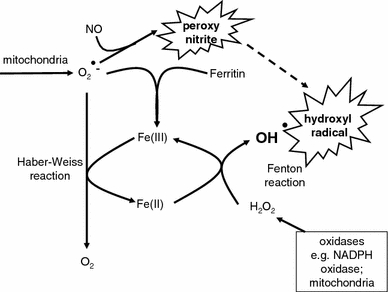
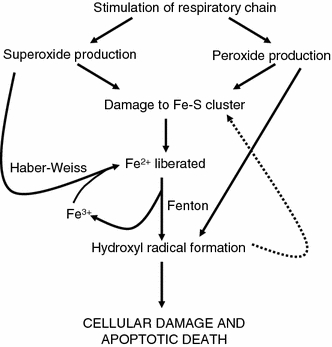
Exposure to a variety of toxins and/or infectious agents leads to disease, degeneration and death, often characterised by circumstances in which cells or tissues do not merely die and cease to function but may be more or less entirely obliterated. It is then legitimate to ask the question as to whether, despite the many kinds of agent involved, there may be at least some unifying mechanisms of such cell death and destruction. I summarise the evidence that in a great many cases, one underlying mechanism, providing major stresses of this type, entails continuing and autocatalytic production (based on positive feedback mechanisms) of hydroxyl radicals via Fenton chemistry involving poorly liganded iron, leading to cell death via apoptosis (probably including via pathways induced by changes in the NF-κB system). While every pathway is in some sense connected to every other one, I highlight the literature evidence suggesting that the degenerative effects of many diseases and toxicological insults converge on iron dysregulation. This highlights specifically the role of iron metabolism, and the detailed speciation of iron, in chemical and other toxicology, and has significant implications for the use of iron chelating substances (probably in partnership with appropriate anti-oxidants) as nutritional or therapeutic agents in inhibiting both the progression of these mainly degenerative diseases and the sequelae of both chronic and acute toxin exposure. The complexity of biochemical networks, especially those involving autocatalytic behaviour and positive feedbacks, means that multiple interventions (e.g. of iron chelators plus antioxidants) are likely to prove most effective. A variety of systems biology approaches, that I summarise, can predict both the mechanisms involved in these cell death pathways and the optimal sites of action for nutritional or pharmacological interventions.
Overview
CoChat Summary
TL;DR
This review argues that poorly liganded iron, via Fenton/Haber–Weiss chemistry and autocatalytic hydroxyl radical production, is a convergent mechanism in many diseases and toxicant exposures, from neurodegeneration and stroke to sepsis, bactericidal antibiotics, and chemical toxicology. It proposes that iron chelators, especially combined with antioxidants, are rational therapeutic/nutritional interventions and that systems biology can identify optimal multi-target interventions.
Key findings
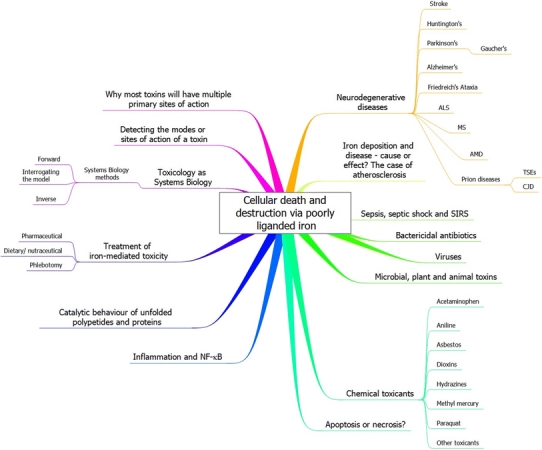
- Across reviewed conditions—stroke, Huntington’s, Parkinson’s, Alzheimer’s, ALS, Friedreich’s ataxia, multiple sclerosis, age-related macular degeneration, prion diseases, atherosclerosis, sepsis/SIRS, bactericidal antibiotics, viral infections, and chemical toxicants—evidence converges on iron dysregulation and Fenton chemistry; the hydroxyl radical is highlighted as the key damaging species rather than “ROS” generally.
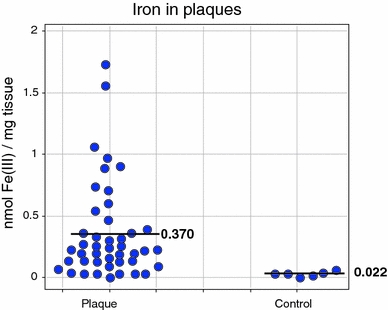
- In atherosclerosis, EPR-detectable iron in plaques was 17-fold greater than in healthy non-atherosclerotic intima controls, with P = 0.0001 (replotted from Stadler et al. 2004); iron levels in plaques also correlate with oxidized proteins.
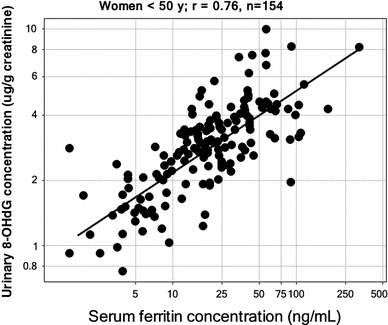
- Serum ferritin concentrations show a very strong relationship with urinary 8-hydroxy-2′-deoxyguanosine, a DNA damage/oxidative stress marker (replotted from Hori et al. 2010), and ferritin levels are widely associated with disease development, severity, or poor outcomes.
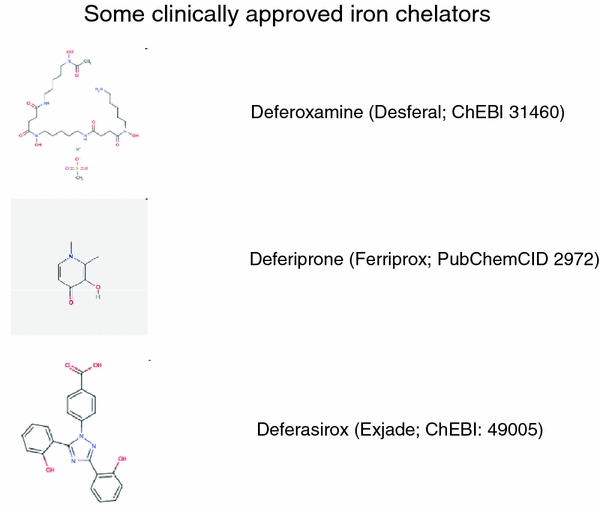
- Bactericidal antibiotics (norfloxacin, ampicillin, kanamycin) use internal iron liberated from iron–sulfur clusters to promote Fenton-mediated hydroxyl radical formation, whereas bacteriostatic antibiotics do not; iron chelators plus antioxidants are especially effective in sepsis models, and approved clinical chelators include deferoxamine, deferiprone, and deferasirox.
Methods
- Narrative literature review; the literature survey at initial submission extended to 14 June 2010, covering diseases, toxicants, and iron biology.
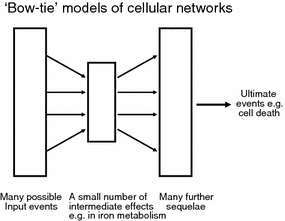
- Systems biology conceptual synthesis: forward and inverse modelling, sensitivity analysis, combinatorial parameter analysis, Bayesian/MCMC and evolutionary methods to infer sites of action, and “bow-tie” network models.
- Replots/digitizes published data (e.g., Hori et al. 2010; Stadler et al. 2004) to illustrate relationships; no new primary experimental data are reported.
Limitations
- The paper states that exact molecular mechanisms, cascades, and networks depend on many other factors; causality is often hard to infer from one-time snapshots; and some direct evidence is lacking—e.g., PrPSc–ferritin complexes have not yet been shown to catalyse OH• production directly, huntingtin inclusion bodies were not demonstrated to catalyse hydroxyl formation, and the extent of causality of iron dysregulation in multiple sclerosis is not yet established.
- Evident from the text: as a review, it synthesizes heterogeneous literature and relies heavily on cited associations, many of which are correlational; no new experimental validation is provided, and the literature coverage ends in mid-2010.
- The paper notes hormesis and dose-dependent interactions complicate simple models; chelator/antibiotic interactions can be dose-dependent and sometimes antagonistic (e.g., deferoxamine was antagonistic to azoles, while deferasirox promoted ciprofloxacin activity against *V. vulnificus*).
Model-written summary of a shortened version of the paper’s full text (it is longer than we read). Check it against the paper before relying on it.
Integrity signals
Registry
Cites
Statistics
Figures
Verification
Claims the paper makes
15 Valid · 1 Not valid · 117 Not checked · 25 Own results and interpretations
At least one cited source doesn’t support this claim or points to a different paper, and none confirmed it — see the verdicts below.
In the paper
“The defect thus leads to the liberation of mitochondrial iron”
§ Towards a unifying, systems biology understanding of large-scale cellular death and destruction caused by poorly liganded iron: Parkinson’s, Huntington’s, Alzheimer’s, prions, bactericides, chemical toxicology and others as examples > Friedreich’s ataxia
What the sources say
- Disputedcites Huang et al. 2009 matched to “Elucidation of the mechanism of mitochondrial iron loading in Friedreich's ataxia by analysis of a mouse mutant” (2009) sourceExperimental — accuracy not yet measured
The Abstract and Discussion describe frataxin deficiency as causing mitochondrial iron accumulation, with reduced release of heme and iron-sulfur clusters from mitochondria—not liberation of mitochondrial iron. The Discussion instead identifies increased liberation of cytoplasmic iron from heme as a contributor to mitochondrial iron uptake. No page numbers are available in our copy. (LLM, conf=0.88)
Checked by a reasoning model — may be wrong.
- Not checked yetcites Popescu et al. 2007 matched to “The chemical form of mitochondrial iron in Friedreich’s ataxia” (2007) source
- Not checked yetcites Richardson et al. 2009a
plainstates a cause- Asserted: passes — The authors put it forward as true.
- Checkable: passes — It can be checked against evidence.
- Load-bearing: passes — The paper’s conclusions depend on it.
- Based: passes — The paper gives a reason why it holds.
- Disputed
The cited sources support only part of this claim — read each source’s verdict below.
In the paper
“body-iron status correlates rather strongly with its production or urinary excretion (Agarwal et al. 2004; Broedbaek et al. 2009; Fujita et al. 2007a, 2009; Gackowski et al. 2002; Hori et al. 2010; Kang et al. 1998; Kuo et al. 2008; Maruyama et al. 2007; Nakano et al. 2003; Toyokuni and Sagripanti 1996; Tuomainen et al. 2007; Valavanidis et al. 2005).”
§ Towards a unifying, systems biology understanding of large-scale cellular death and destruction caused by poorly liganded iron: Parkinson’s, Huntington’s, Alzheimer’s, prions, bactericides, chemical toxicology and others as examples > Introduction
What the sources say
- Could not verifycites Agarwal et al. 2004 matched to “Oxidative stress and renal injury with intravenous iron in patients with chronic kidney disease” (2004) sourceExperimental — accuracy not yet measured
The Laboratory analysis section describes plasma and urinary malondialdehyde (MDA) assays, and the Discussion reports urinary MDA after intravenous iron in patients with chronic kidney disease. Searches for 8-OHdG and 8-hydroxy-2′-deoxyguanosine found no passage measuring that marker or relating its production or urinary excretion to body-iron status. (LLM, conf=0.76)
- Supportedcites Hori et al. 2010 matched to “Body iron store as a predictor of oxidative DNA damage in healthy men and women” (2010) source
The Discussion reports a strong positive association between serum ferritin, a marker of body iron stores, and urinary 8-OHdG in healthy Japanese men and women. The Results also show urinary 8-OHdG increasing across ferritin levels. This supports the claim about urinary excretion, though the cross-sectional study did not directly measure production. (LLM, conf=0.94)
boostedstates an association- Asserted: passes — The authors put it forward as true.
- Checkable: passes — It can be checked against evidence.
- Load-bearing: passes — The paper’s conclusions depend on it.
- Based: passes — The paper gives a reason why it holds.
- Could not verify
Every source the paper cites for this claim was checked and supports it.
In the paper
“Iron metabolism is deranged in gene knockdown models of Huntington’s (Henshall et al. 2009; Lumsden et al. 2007)”
§ Towards a unifying, systems biology understanding of large-scale cellular death and destruction caused by poorly liganded iron: Parkinson’s, Huntington’s, Alzheimer’s, prions, bactericides, chemical toxicology and others as examples > Huntington’s disease
What the sources say
- Supportedcites Henshall et al. 2009 matched to “Selective neuronal requirement for huntingtin in the developing zebrafish” (2009) source
The Introduction (page not supplied) says that an earlier analysis of the huntingtin-knockdown zebrafish model revealed a role for huntingtin in iron homeostasis and transport. The Abstract likewise reports effects of huntingtin reduction on iron transport and homeostasis. The claim does not attribute the original iron findings specifically to this 2009 study. (LLM, conf=0.89)
- Supportedcites Lumsden et al. 2007 matched to “Huntingtin-deficient zebrafish exhibit defects in iron utilization and development” (2007) source
The Abstract reports that huntingtin knockdown in zebrafish reduced hemoglobin production despite iron being present in blood cells, and that bioavailable iron restored production. The Conclusion identifies signs of cellular iron deficiency in the knockdown model despite iron being present. These passages support the claim about disrupted iron handling in a gene-knockdown model relevant to Huntington’s disease. (LLM, conf=0.93)
plainstates an association- Asserted: passes — The authors put it forward as true.
- Checkable: passes — It can be checked against evidence.
- Load-bearing: passes — The paper’s conclusions depend on it.
- Based: passes — The paper gives a reason why it holds.
- Supported
Every source the paper cites for this claim was checked and supports it.
In the paper
“experiments with the iron chelator deferroxamine revealed that the oxidation, localisation and structural organisation of the inclusion bodies formed by mutant htt were indeed irondependent.”
§ Towards a unifying, systems biology understanding of large-scale cellular death and destruction caused by poorly liganded iron: Parkinson’s, Huntington’s, Alzheimer’s, prions, bactericides, chemical toxicology and others as examples > Huntington’s disease
What the sources say
- Supportedcites Firdaus et al. 2006 matched to “Huntingtin inclusion bodies are iron‐dependent centers of oxidative events” (2006) source
The paper's own overview (p. 2) states verbatim that 'Analysis performed in the presence of the iron chelator deferroxamine revealed that the oxidation, localization and structural organization of the inclusion bodies formed by mutant htt were iron-dependent.' The supporting results confirm each element: deferroxamine (5 mM, 24 h) shrank httEx1-103Q inclusions and abolished HE oxidation in COS-7 cells (pp. 7-8, Fig. 6), and redistributed httEx1-43Q-EGFP nuclear inclusions out of the nucleus while reducing their oxidation in PC12 cells (p. 8, Fig. 7); the Discussion (p. 9) restates that chelatable iron was key to formation/structural integrity, localization and the oxidative events. (LLM, conf=0.95)
boostedstates a cause- Asserted: passes — The authors put it forward as true.
- Checkable: passes — It can be checked against evidence.
- Load-bearing: passes — The paper’s conclusions depend on it.
- Based: passes — The paper gives a reason why it holds.
- Supported
The cited sources support only part of this claim — read each source’s verdict below.
In the paper
“(HFE) mutations that cause haemochromatosis increase the susceptibility to AD (Bartzokis et al. 2010; Candore et al. 2003; Combarros et al. 2003; Connor and Lee 2006; Haacke et al. 2005; Kauwe et al. 2010; Lleó et al. 2002; Moalem et al. 2000; Pulliam et al. 2003; Robson et al. 2004; Sampietro et al. 2001), especially when in the presence of the APOE4 allele (Pulliam et al. 2003).”
§ Towards a unifying, systems biology understanding of large-scale cellular death and destruction caused by poorly liganded iron: Parkinson’s, Huntington’s, Alzheimer’s, prions, bactericides, chemical toxicology and others as examples > Alzheimer’s disease
What the sources say
- Not checked yetcites Pulliam et al. 2003 matched to “Association of HFE mutations with neurodegeneration and oxidative stress in Alzheimer's disease and correlation with APOE” (2003) source
- Partly supportedcites Robson et al. 2004 matched to “Synergy between the C2 allele of transferrin and the C282Y allele of the haemochromatosis gene (HFE) as risk factors for developing Alzheimer’s disease” (2004) sourceExperimental — accuracy not yet measured
Robson et al. (2004) do report increased AD risk associated with the haemochromatosis mutation C282Y, and that risk is highest in carriers who also have APOE4 (Abstract; Conclusions: 'tri-carriers of the two iron-related variants plus APOE4 may be at very high risk of AD'). However, the source does not support the unconditional attribution that HFE mutations that cause haemochromatosis increase AD susceptibility: the Abstract states 'each of the two variants was associated with an increased risk of AD only in the presence of the other. Neither allele alone had any effect' (i.e. only with transferrin C2), the Results (Tables 2-4) give C282Y-negative/C2-alone OR 1.3 (NS), and the Results explicitly report 'no association of the HFE H63D variant with AD, or with MCI, either overall or in two-way interaction with either TF C2 or APOE4'. So the second HFE mutation implicated in haemochromatosis is not associated in this paper, and the APOE4 effect is conditional on TF C2 co-carriage rather than on the HFE allele alone. (LLM, conf=0.78)
plainstates a cause- Asserted: passes — The authors put it forward as true.
- Checkable: passes — It can be checked against evidence.
- Load-bearing: unclear — It is unclear whether the paper’s conclusions depend on it.
- Based: passes — The paper gives a reason why it holds.
99 more claims · 11 with their cited sources checked
Create a free account to see all 158 claims and to verify the 250 references still open.
- It may state two separate claims as one. 42
- Probably not a substantial claim. 18
- The quote only partly states this claim. 1
Claims other papers make about this one
Each is checked against this paper’s own text: does it say what the citing paper says it does?
The source backs part of the claim, not all of it — or backs it for a different population, condition or comparison.
In the citing paper
“Chronic increase of such ‘free’ iron forms are associated with pathological conditions and possible complex homeostasis unbalance for this element in cells and tissues, relevant to asbestos toxicity and related diseases181920.”
From The interaction of asbestos and iron in lung tissue revealed by synchrotron-based scanning X-ray microscopy (2013) · cites this paper as [19]
Experimental — accuracy not yet measuredThe cited source says what the claim attributes to it.
In the citing paper
“Concerning this issue, the recent reviews by D. Kell1819 analyse the wide but dispersed literature via a systems biology approach, and indicate that iron that is weakly complexed boosts many biochemical processes leading to a large variety of apparently unrelated diseases.”
From The interaction of asbestos and iron in lung tissue revealed by synchrotron-based scanning X-ray microscopy (2013) · cites this paper as [19]
The cited source says what the claim attributes to it.
In the citing paper
“nominally antioxidant molecules such as ascorbate have complex, multi-electron redox chemistry, and can in fact act as pro-oxidants(502,503), especially in the presence of free Fe(208,213) or Cu(504).”
From The biology of ergothioneine, an antioxidant nutraceutical (2020) · cites this paper as [213]
The cited source says what the claim attributes to it.
In the citing paper
“Due to the presence of high-affinity iron binding and storage proteins, the actual toxicity of iron is restricted to the so called “labile iron pool”.”
From The interaction of asbestos and iron in lung tissue revealed by synchrotron-based scanning X-ray microscopy (2013) · cites this paper as [19]
Citations
Cites
2 retracted
Items 1,401–1,600 of 1,761
Kaposi's sarcoma, oncogenic viruses, and iron
Ziegler, J. L., Simonart, T., & Snoeck, R. (2001) · Journal of Clinical Virology · doi:10.1016/s1386-6532(00)00137-2 · Cited by 45
Greenberg, P. L., Cosler, L. E., Ferro, S. A., & Lyman, G. H. (2008) · Journal of the National Comprehensive Cancer Network · doi:10.6004/jnccn.2008.0072 · Cited by 44
Chandrasekaran, V. R. M., Hsu, D.-Z., & Liu, M.-Y. (2009) · Shock · doi:10.1097/shk.0b013e31818ede6f · Cited by 44 · cited 2×
“Appropriate hydroxyl radical scavengers are also partly protective (Chandrasekaran et al. 2009), while lactoferrin is also protective, although not apparently only via its iron- binding capacity (Yin et al. 2010).”
BackgroundAkhtar, M. J., Kumar, S., Murthy, R. C., Ashquin, M., Khan, M. I., Patil, G., & Ahmad, I. (2010) · Toxicology in Vitro · doi:10.1016/j.tiv.2010.03.002 · Cited by 44 · cited 1×
“…nanotubes (Murray et al. 2009) (and see Guo et al. 2007; Jurkschat et al. 2007), carbon tetrachloride (Mansour 2000; Ogeturk et al. 2004), organophosphates (Goel et al. 2006), sulphur mustard agents (Korkmaz et al. 2008; Korkmaz et al. 2006; Naghii 2002) and talc nanoparticles (Akhtar et al. 2010).”
BackgroundA new strategy for assessing sensitivities in biochemical models
Sahle, S., Mendes, P., Hoops, S., & Kummer, U. (2008) · Philosophical Transactions of the Royal Society A: Mathematical, Physical and Engineering Sciences · doi:10.1098/rsta.2008.0108 · Cited by 44 · cited 1×
“This is the domain of local and global sensitivity analysis (Saltelli et al. 2004, 2008), to which we have made significant contributions (e.g. Lüdtke et al. 2008; Sahle et al. 2008; Yue et al. 2006, 2007, 2008).”
BackgroundArcadia: a visualization tool for metabolic pathways
Villéger, A. C., Pettifer, S. R., & Kell, D. B. (2010) · Bioinformatics · doi:10.1093/bioinformatics/btq154 · Cited by 44
Self-citationStadler, N., Stanley, N., Heeneman, S., Vacata, V., Daemen, M. J. A. P., Bannon, P. G., Waltenberger, J. L., & Davies, M. J. (2008) · Arteriosclerosis Thrombosis and Vascular Biology · doi:10.1161/atvbaha.108.162735 · Cited by 44
Gackowski, D., Kruszewski, M. K., Bartłomiejczyk, T., Jawień, A., Ciecierski, M., & Oliński, R. (2002) · JBIC Journal of Biological Inorganic Chemistry · doi:10.1007/s00775-001-0335-x · Cited by 44 · cited 1×
“…status correlates rather strongly with its production or urinary excretion (Agarwal et al. 2004; Broedbaek et al. 2009; Fujita et al. 2007a, 2009; Gac- kowski et al. 2002; Hori et al. 2010; Kang et al. 1998; Kuo et al. 2008; Maruyama et al. 2007; Nakano et al. 2003; Toyokuni and Sagripanti…”
BackgroundProtocols for Studying Adult Neurogenesis: Insights and Recent Developments
Taupin, P. (2007) · Regenerative Medicine · doi:10.2217/17460751.2.1.51 · Cited by 43 · cited 1×
“…Christie and Cameron 2006; Demir et al. 2009; Fuchs and Gould 2000; Götz and Huttner 2005; Gould 2007; Imayoshi et al. 2009; Leuner et al. 2007; Lledo et al. 2006; Ohnuma and Harris 2003; Taupin 2007; Zhao et al. 2008) for considerable turnover—neurogenesis—in at least some regions of the brain.”
BackgroundMcDermid, J. M., van der Loeff, M. F. S., Jaye, A., Hennig, B. J., Bates, C., Todd, J., Sirugo, G., Hill, A. V., Whittle, H. C., & Prentice, A. M. (2009) · The American Journal of Clinical Nutrition · doi:10.3945/ajcn.2009.27709 · Cited by 43
HFEgene in primary and secondary hepatic iron overload
Sebastiani, G., & Walker, A.-P. (2007) · World Journal of Gastroenterology · doi:10.3748/wjg.v13.i35.4673 · Cited by 43 · cited 1×
“…Mahmoud et al. 2008; Mueller et al. 2006; Nahon et al. 2008; Nishina et al. 2008; Otogawa et al. 2008; Price and Kowdley 2009; Rigamonti et al. 2005; Sebastiani and Walker 2007; Sikorska et al. 2010; Sugimoto et al. 2009; Tanaka et al. 2007; Tanaka and Kiyosawa 2004; Trinder et al. 2008; Tung et…”
BackgroundJiang, X. P., Wang, F., Yang, D. C., Elliott, R. L., & Head, J. F. (2002) · PubMed · Cited by 42
Macrophage antioxidant protection within atherosclerotic plaques
Gieseg, S. (2009) · Frontiers in Bioscience · doi:10.2741/3305 · Cited by 42 · cited 1×
“…(and inflammatory) dis- ease (Altman 2003; Binder et al. 2002; Blake and Ridker 2001; Duewell et al. 2010; Dwyer et al. 2004; Forrester 2002, 2004; Gieseg et al. 2009; Grainger 2007; Hansson 2001, 2005; Himmelfarb et al. 2002; Kibel et al. 2008; Kunsch and Medford 1999; Libby 2002; Libby et al.…”
BackgroundThe Yeast Connection to Friedreich Ataxia
Knight, S. A. B., Kim, R., Pain, D., & Dancis, A. (1999) · The American Journal of Human Genetics · doi:10.1086/302270 · Cited by 42 · cited 1×
“…2006; De Freitas et al. 2003; Foury 1997; Foury and Cazzalini 1997; Foury and Talibi 2001; González-Cabo et al. 2005; Irazusta et al. 2006, 2008; Knight et al. 1999; Pastore et al. 2007; Vázquez-Manrique et al. 2006; Wang and Craig 2008; cf. Seguin, et al. 2010), it is now understood…”
BackgroundBuss, J. L., Neuzil, J., Gellert, N., Weber, C., & Ponka, P. (2003) · Biochemical Pharmacology · doi:10.1016/s0006-2952(02)01512-5 · Cited by 42 · cited 1×
“…the iron (Kell 2009a)—this can be effected when iron is ostensibly depleted (e.g. Bergman et al. 2005; Bidle and Bender 2008; Brard et al. 2006; Buss et al. 2003; Fukuchi et al. 1994; Greene et al. 2002; Haq et al. 1995; Hileti et al. 1995; Jiang et al. 2002; Jin et al. 2007; Koc et al.…”
BackgroundMetal Chelators Coupled with Nanoparticles as Potential Therapeutic Agents for Alzheimer's Disease
Liu, G., Men, P., Perry, G., & Smith, M. A. (2009) · Journal of Nanoneuroscience · doi:10.1166/jns.2009.005 · Cited by 42 · cited 3×
“…the same group (Dwyer et al. 2007), Kohanski et al. (2007) (see also Davies et al. 2009; Dwyer et al. 2007, 2009; Imlay 2008; Kohanski et al. 2008; Liu et al.2009a; Wang and Zhao, 2009) reported that the three major classes of bactericidal antibiotics (exem- plified by norfloxacin, ampicillin and…”
BackgroundIncreased iron-induced oxidative stress and toxicity in scrapie-infected neuroblastoma cells
Fernaeus, S. Z., & Land, T. (2005) · Neuroscience Letters · doi:10.1016/j.neulet.2005.03.069 · Cited by 42 · cited 2×
“…for the role of iron and its metabolic dysregulation in the oxidative stress-mediated aetiology of scrapie (Choi et al. 2006; Fernaeus et al. 2005a; Fernaeus and Land 2005; Gudmundsdóttir et al. 2006; Kim et al. 2000, 2007; Pamplona et al. 2008; Singh et al. 2009a, 2010a, b; Wong et al. 2001a, b;…”
BackgroundIron Leads to Memory Impairment that is Associated with a Decrease in Acetylcholinesterase Pathways
Perez, V., Martins de Lima, M., da Silva, R., Dornelles, A., Vedana, G., Bogo, M., Bonan, C., & Schroder, N. (2010) · Current Neurovascular Research · doi:10.2174/156720210790820172 · Cited by 42 · cited 1×
“It is especially noteworthy that iron correlates with disease severity as measured by cognitive ability (Ding et al. 2009; Gómez Ravetti et al. 2010; Grossi et al. 2009; Lavados et al. 2008; Perez et al. 2010; Smith et al. 2010).”
BackgroundMillerot-Serrurot, E., Bertrand, N., Mossiat, C., Faure, P., Prigent-Tessier, A., Garnier, P., Béjot, Y., Giroud, M., Beley, A., & Marie, C. (2008) · Neurochemistry International · doi:10.1016/j.neuint.2008.04.002 · Cited by 42 · cited 2×
“…Kim et al. 2008a; Kobayashi et al. 2008; Lou et al. 2009; Maguire et al. 2007; Mazumdar et al. 2007; Mehdiratta et al. 2008; Millan et al. 2007, 2008; Millerot-Serrurot et al. 2008; Nighoghossian et al. 2008; O’Rourke et al. 2008; Ratan et al. 2008; Ross and Meschia 2009; Saleh et al. 2007;…”
BackgroundLee, J., Son, Y., Choi, K., & Jang, Y. (2006) · Molecules and Cells · doi:10.1016/s1016-8478(23)17386-9 · Cited by 42
Lee, S., Jang, H.-J., Lee, H., Lee, J., Jeon, B. H., Jun, C., Lee, S., & Kim, E.-C. (2006) · Life Sciences · doi:10.1016/j.lfs.2006.04.011 · Cited by 41 · cited 6×
“…and Robinson 2001; Chang et al. 2005; Dávalos, et al. 1994; Demougeot et al. 2004; Ferro and Dávalos 2006; Garoufi et al. 2006; Gillum et al. 1996; Lee et al. 2006e; Marniemi et al. 2005; Mascitelli and Pezzetta 2006; Mehta et al. 2004; Mu et al. 2005; Nakamura et al. 2006; Saxena et al. 2005;…”
BackgroundInfluentialMarmolino, D., & Acquaviva, F. (2009) · The Cerebellum · doi:10.1007/s12311-008-0084-2 · Cited by 41
Lim, C. K., Kalinowski, D. S., & Richardson, D. R. (2008) · Molecular Pharmacology · doi:10.1124/mol.108.046847 · Cited by 41 · cited 1×
“As would be expected, appropriate iron chelation may have therapeutic benefits (Boddaert et al. 2007; Campanella et al. 2009; Goncalves et al. 2008; Kakhlon et al. 2010; Lim et al. 2008; Marmolino and Acquaviva 2009; Santos et al. 2010; Schulz et al. 2009; Sohn et al. 2008).”
BackgroundErythropoietin reduces the development of nonseptic shock induced by zymosan in mice*
Cuzzocrea, S., Paola, R. D., Mazzon, E., Patel, N. S. A., Genovese, T., Muià, C., Crisafulli, C., Caputi, A. P., & Thiemermann, C. (2006) · Critical Care Medicine · doi:10.1097/01.ccm.0000207346.56477.e8 · Cited by 41
Conflicting MRI signals from gliosis and neuronal vacuolation in prion diseases
Chung, Y.-L., Williams, A., Ritchie, D., R. Williams, S. C., Changani, K. K., Hope, J., & Bell, J. D. (1999) · NeuroReport · doi:10.1097/00001756-199911260-00002 · Cited by 41 · cited 1×
“…how a simple confor- mational change of a protein leads to the vacuolation or spongiosis (e.g. Aguzzi 2006; Aguzzi et al. 2007; Arm- strong et al. 2001; Chung et al. 1999; Crozet et al. 2008; Diedrich et al. 1991; Foster et al. 2001; Julius et al. 2008; Kourie 2002; Mallucci et al. 2003; Mallucci…”
BackgroundLam, W. W. M., Au, W. Y., Chu, C. W., Tam, S., Ha, S., & Pennell, D. J. (2008) · Journal of Magnetic Resonance Imaging · doi:10.1002/jmri.21433 · Cited by 41 · cited 1×
“…Weiss 2010), thalassaemias (e.g. Borgna- Pignatti et al. 2005; Camaschella and Merlini 2005; Cao and Galanello 2010; Cohen et al. 2004; Gattermann 2009; Lam et al. 2008; Li et al. 2010; Mohkam et al. 2008; Peng et al. 2008; Taher et al. 2010; Vichinsky et al. 2005) and myelodysplastic syndrome…”
BackgroundIron overload in myelodysplastic syndromes
Mahesh, S., Ginzburg, Y., & Verma, A. (2008) · Leukemia & Lymphoma · doi:10.1080/10428190701843221 · Cited by 41
The transplant iron score as a predictor of stem cell transplant survival
Storey, J. A., Connor, R., Lewis, Z. T., Hurd, D. D., Pomper, G. J., Keung, Y. K., Grover, M., Lovato, J. F., Torti, S. V., Torti, F. M., et al. (2009) · Journal of Hematology & Oncology · doi:10.1186/1756-8722-2-44 · Cited by 41
Prevalence of haemochromatosis gene mutations in Parkinson's disease
Aamodt, A. H., Stovner, L. J., Thorstensen, K., Lydersen, S., White, L. R., & Aasly, J. O. (2006) · Journal of Neurology, Neurosurgery & Psychiatry · doi:10.1136/jnnp.2006.101352 · Cited by 41
On the basic computational structure of gene regulatory networks
Rodríguez-Caso, C., Corominas-Murtra, B., & Solé, R. V. (2009) · Molecular BioSystems · doi:10.1039/b904960f · Cited by 41
Candore, G., Licastro, F., Chiappelli, M., Franceschi, C., Lio, D., Balistreri, C. R., Piazza, G., Colonna‐Romano, G., Grimaldi, L. M., & Caruso, C. (2003) · Mechanisms of Ageing and Development · doi:10.1016/s0047-6374(03)00031-9 · Cited by 40
Paraquat and iron exposure as possible synergistic environmental risk factors in Parkinson’s disease
Andersen, J. K. (2003) · Neurotoxicity Research · doi:10.1007/bf03033150 · Cited by 40 · cited 1×
“As such, its toxicity may be expected to be exacerbated by iron, and this is the case (Andersen 2003; Ayaki et al. 2005; Fernandez et al. 2000; Peng et al. 2007, 2009).”
BackgroundSerum Ferritin as a Predictor of Treatment Outcome in Patients With Chronic Hepatitis C
Ferrara, F., Ventura, P., Vegetti, A., Guido, M., Abbati, G., Corradini, E., Fattovich, G., Ferrari, C. I., Tagliazucchi, M., Carbonieri, A., et al. (2009) · The American Journal of Gastroenterology · doi:10.1038/ajg.2008.126 · Cited by 40 · cited 2×
“…2007; Wilson et al. 2003; You et al. 2003; You and Wang 2005) (Adam- kiewicz et al. 2009; Baune et al. 2010; Busca et al. 2010; DePalma et al. 2010; Ferrara et al. 2009; Ferrucci et al. 2010; Gamberini et al. 2008; Goodall et al. 2008; Inati et al. 2010; Kaysen 2009; Knovich et al. 2009;…”
BackgroundRisk Factors for Short-Term Mortality in Older Subjects with Acute Ischemic Stroke
Zuliani, G., Cherubini, A., Ranzini, M., Ruggiero, C., Atti, A. R., & Fellin, R. (2006) · Gerontology · doi:10.1159/000093655 · Cited by 40 · cited 1×
“…et al. 2004; Mu et al. 2005; Nakamura et al. 2006; Saxena et al. 2005; Selim and Ratan 2004; Switzer et al. 2006; Wagner et al. 2003; Wu et al. 2003; Zuliani et al. 2006; Adams 2007; Altamura et al. 2009; Assenza et al. 2009; Basak et al. 2008; Bosomtwi et al. 2008; Carbonell and Rama 2007; Cho…”
BackgroundMirre, E., Brousse, V. A. M., Berteloot, L., Lambot, K., Verlhac, S., Boulat, C., Dumont, M., Lenoir, G., & de Montalembert, M. (2009) · European Journal Of Haematology · doi:10.1111/j.1600-0609.2009.01379.x · Cited by 40
Prion metal interaction: Is prion pathogenesis a cause or a consequence of metal imbalance?
Rana, A., Gnaneswari, M. D., Bansal, S., & Kundu, B. (2009) · Chemico-Biological Interactions · doi:10.1016/j.cbi.2009.07.021 · Cited by 40
Youdim, M. B. H. (2003) · Journal of neural transmission. Supplementum · doi:10.1007/978-3-7091-0643-3_5 · Cited by 39 · cited 1×
“…et al. 2006; Perez et al. 2008; Xu et al. 2008; Youdim et al. 2004a, b; Zheng et al. 2005), including (Kaur et al. 2003; Reznichenko et al. 2010; Youdim 2003) in the case of a Parkinson-like disease induced (Blum et al. 2001; Choi et al. 2009; Gal et al. 2009; Yokoyama et al. 2008)…”
BackgroundFoster, J. D., Goldmann, W., Parnham, D., Chong, A., & Hunter, N. (2001) · Journal of General Virology · doi:10.1099/0022-1317-82-1-267 · Cited by 39 · cited 1×
“…vacuolation or spongiosis (e.g. Aguzzi 2006; Aguzzi et al. 2007; Arm- strong et al. 2001; Chung et al. 1999; Crozet et al. 2008; Diedrich et al. 1991; Foster et al. 2001; Julius et al. 2008; Kourie 2002; Mallucci et al. 2003; Mallucci et al. 2007; Miele et al. 2001; Sakudo and Ikuta 2009a, b;…”
BackgroundPlatforms and networks in triterpenoid pharmacology
Sporn, M. B., Liby, K., Yore, M. M., Suh, N., Albini, A., Honda, T., Sundararajan, C., & Gribble, G. W. (2007) · Drug Development Research · doi:10.1002/ddr.20179 · Cited by 39 · cited 3×
“…al. 2009; Reznichenko et al. 2010; Sarkar and Li 2009; Sarkar et al. 2009; Sawyers 2007; Schrattenholz and Šoškić 2008; Silver et al. 2009; Silver 2007; Sporn et al. 2007; Stommel et al. 2007; Suchy et al. 2009; Ulrich-Merzenich et al. 2009; Watterson et al. 2008; Weinreb et al.…”
BackgroundBaune, B., Neuhauser, H. K., Ellert, U., & Berger, K. (2010) · Acta Psychiatrica Scandinavica · doi:10.1111/j.1600-0447.2009.01435.x · Cited by 39
Paterniti, I., Genovese, T., Crisafulli, C., Mazzon, E., Di Paola, R., Galuppo, M., Bramanti, P., & Cuzzocrea, S. (2009) · Naunyn-Schmiedeberg's Archives of Pharmacology · doi:10.1007/s00210-009-0414-z · Cited by 39 · cited 1×
“…(ChEBI 4806) (Adhami et al. 2009; Butt and Sultan 2009; Hsieh et al. 2009; Jimenez-Del-Rio et al. 2010; Johnson et al. 2010; Pandey and Gupta 2009; Paterniti et al. 2009; Ramesh et al. 2009; Reznichenko et al. 2010; Suh et al. 2009; Weinreb et al. 2009a), on curcumin (ChEBI 3962) (a constituent…”
Hadley, D., Orlin, A., Brown, G., Brucker, A. J., Ho, A. C., Regillo, C. D., Donoso, L. A., Tian, L., Kaderli, B., & Stambolian, D. (2010) · Investigative Opthalmology & Visual Science · doi:10.1167/iovs.09-3798 · Cited by 39
Iron and Ferritin Concentrations in Exhaled Breath Condensate of Children with Asthma
Vlašić, Ž., Dodig, S., Čepelak, I., Topić, R. Z., Živčić, J., Nogalo, B., & Turkalj, M. (2009) · Journal of Asthma · doi:10.1080/02770900802513007 · Cited by 39
Mazumdar, M., Heeney, M. M., Sox, C. M., & Lieu, T. A. (2007) · PEDIATRICS · doi:10.1542/peds.2006-2002 · Cited by 39
Changed iron regulation in scrapie-infected neuroblastoma cells
Fernaeus, S. Z., Hälldin, J., Bedecs, K., & Land, T. (2004) · Molecular Brain Research · doi:10.1016/j.molbrainres.2004.10.018 · Cited by 39 · cited 2×
“…prion biology with (especially) iron-induced oxidative stress (e.g. Bareggi et al. 2009; Barnham et al. 2006; Basu et al. 2007; Choi et al. 2006; Fernaeus et al. 2005a, b; Fernaeus and Land 2005; Iwamaru et al. 2008; Kim et al. 2000, 2001, 2007; Lee et al. 2007; Lehmann 2002; Milhavet and…”
BackgroundDNA breakage in asbestos-treated normal and transformed (TSV40) rat pleural mesothelial cells
Levresse, V. (2000) · Mutagenesis · doi:10.1093/mutage/15.3.239 · Cited by 39 · cited 1×
“…van Wyk 1987; Hardy and Aust 1995a, b; Hippeli and Elstner 1999; Jaurand 1997; Kamp et al. 1992; Kamp and Weitzman 1997, 1999; Kelleher et al. 2000; Levresse et al. 2000; Lund and Aust 1991, 1992; Mossman and Churg 1998; Mossman et al. 1987; Park and Aust 1998; Quinlan et al. 1994; Shatos et al.…”
BackgroundHCV, Iron, and Oxidative Stress: The New Choreography of Hepcidin
Trinder, D., Ayonrinde, O. T., & Olynyk, J. K. (2008) · Gastroenterology · doi:10.1053/j.gastro.2007.11.048 · Cited by 39 · cited 1×
“…2009; Rigamonti et al. 2005; Sebastiani and Walker 2007; Sikorska et al. 2010; Sugimoto et al. 2009; Tanaka et al. 2007; Tanaka and Kiyosawa 2004; Trinder et al. 2008; Tung et al. 2003; Valenti et al. 2008; Venturini et al. 2010; Won et al. 2009) and HIV (Boelaert et al. 1996; Butensky James et…”
BackgroundRole of iron in asbestos-body-induced oxidant Radical generation
Mario Governa, M. A. (1999) · Journal of Toxicology and Environmental Health, Part A · doi:10.1080/009841099157241 · Cited by 39 · cited 1×
“…(Aljandali et al. 2001; Burrows and Muller 1998; Chao et al. 1996; Chen et al. 1996; Dai and Churg 2001; Fubini and Arean 1999; Gilmour et al. 1997; Governa et al. 1999; Gulumian and van Wyk 1987; Hardy and Aust 1995a, b; Hippeli and Elstner 1999; Jaurand 1997; Kamp et al. 1992; Kamp and Weitzman…”
BackgroundRamesh, E., Jayakumar, T., Rajan, E., Muniyan, S., Geraldine, P., & Thomas, P. A. (2009) · Chemico-Biological Interactions · doi:10.1016/j.cbi.2009.02.013 · Cited by 39
Gorria, M., Tekpli, X., Rissel, M., Sergent, O., Laurence Therese, H. U. C., Landvik, N. E., Fardel, O., Dimanche‐Boitrel, M., Holme, J. A., & Lagadic‐Gossmann, D. (2008) · Toxicology and Applied Pharmacology · doi:10.1016/j.taap.2007.12.021 · Cited by 39 · cited 1×
“Given that the lysosome is the site of most labile iron in the cell (Fakih et al. 2008; Gorria et al. 2008; Kurz et al. 2004, 2008a, b; Persson 2005; Tenopoulou et al. 2007; Terman et al. 2006b; Yu et al. 2003), it is also of interest that there is an increased frequency of mutations in the gene…”
BackgroundKOSTOFF, R. N. (2002) · BioScience · doi:10.1641/0006-3568(2002)052[0937:os]2.0.co;2 · Cited by 39 · cited 1×
“In a similar vein, it is not news (Attwood et al. 2009; Evans 2008; Hull et al. 2008; Kostoff 2002) that the large floods of literature have led to something of a ‘balkanisa- tion’ of the literature into increasingly specialised seg- ments, and that this makes it hard to seek to bring together such…”
BackgroundWedge, D. C., Rowe, W., Kell, D. B., & Knowles, J. D. (2008) · Journal of Theoretical Biology · doi:10.1016/j.jtbi.2008.11.005 · Cited by 38 · cited 2×
“Evolutionary computing methods are amenable to (‘coarse- grained’) parallelisation that allows them to run on many (hundreds or even thousands of) processors simultaneously, and we have used this approach with great effectiveness (Wedge and Kell 2008; Wedge et al. 2009).”
MethodSelf-citationMillán, M., Sobrino, T., Arenillas, J. F., Rodríguez‐Yáñez, M., García-Gil, M., Nombela, F., Castellanos, M., de la Ossa, N. P., Cuadras, P., Serena, J. L., et al. (2008) · Disease Markers · doi:10.1155/2008/380356 · Cited by 38
Quantitative Evaluation of Microvascular Density after Stroke in Rats using MRI
Bosomtwi, A., Jiang, Q., Ding, G., Zhang, L., Zhang, Z. G., Lü, M., Ewing, J. R., & Chopp, M. (2008) · Journal of Cerebral Blood Flow & Metabolism · doi:10.1038/jcbfm.2008.85 · Cited by 37 · cited 1×
“…et al. 2006; Wagner et al. 2003; Wu et al. 2003; Zuliani et al. 2006; Adams 2007; Altamura et al. 2009; Assenza et al. 2009; Basak et al. 2008; Bosomtwi et al. 2008; Carbonell and Rama 2007; Cho et al. 2007; Ekblom et al. 2007; Hanson et al. 2009; Heckl 2007; Helal 2008; Jolkkonen et al.…”
BackgroundGrant, L. (2004) · QJM · doi:10.1093/oxfordjournals.qjmed.a005114 · Cited by 37
Mechanisms of defence from Fe(II) toxicity in human intestinal Caco-2 cells
Natoli, M., Felsani, A., Ferruzza, S., Sambuy, Y., Canali, R., & Scarino, M. L. (2009) · Toxicology in Vitro · doi:10.1016/j.tiv.2009.06.016 · Cited by 37
Jin, H., Terai, S., & Sakaida, I. (2007) · Journal of Gastroenterology · doi:10.1007/s00535-007-2020-5 · Cited by 37
Biomarkers in risk assessment of asbestos exposure
Bhattacharya, K., Dopp, E., Kakkar, P., Jaffery, F. N., Schiffmann, D., Jaurand, M., Rahman, I., & Rahman, Q. (2005) · Mutation research. Fundamental and molecular mechanisms of mutagenesis · doi:10.1016/j.mrfmmm.2005.02.022 · Cited by 37 · cited 1×
“…Aust 1998; Quinlan et al. 1994; Shatos et al. 1987; Shen et al. 1995; Weinberg 1989; Weitzman and Graceffa 1984; Xu et al. 1999; Azad et al. 2008; Bhattacharya et al. 2005; Daghino et al. 2006; Fantauzzi et al. 2010; Fattman et al. 2006; Gazzano et al. 2007; Ghio et al. 2004, 2009; Heintz et al.…”
Thomas, S. R., Schulz, E., & Keaney, J. F. (2006) · Free Radical Biology and Medicine · doi:10.1016/j.freeradbiomed.2006.05.012 · Cited by 37 · cited 1×
“…Stadler et al. 2008) • Exogenous ferric iron is deleterious to endothelial function (Rooyakkers et al. 2002) • Iron chelation improves endothelial function (Altamura and Muckenthaler 2009; Duffy et al. 2001; Halliwell 2009; Ishizaka et al. 2005; Saito et al. 2005; Thomas et al. 2006).”
BackgroundIron and Parkinson's Disease: Chelators to the Rescue?
Levenson, C. W. (2003) · Nutrition Reviews · doi:10.1301/nr.2003.sept.311-313 · Cited by 37
Age-related macular degeneration 1969–2004: A 35-year personal perspective
Fine, S. L. (2005) · American Journal of Ophthalmology · doi:10.1016/j.ajo.2004.11.050 · Cited by 37 · cited 1×
“Age-related macular degeneration (AMD) (Rattner and Nathans 2006) is recognised as the leading cause of blindness and visual disability in the elderly in developed countries (Fine 2005; Harvey 2003; Lotery and Trump 2007; Tielsch et al. 1995).”
BackgroundProximate parameter tuning for biochemical networks with uncertain kinetic parameters
Wilkinson, S. J., Benson, N., & Kell, D. B. (2007) · Molecular BioSystems · doi:10.1039/b707506e · Cited by 37
Self-citationQUINLAN, G. J., CHEN, Y., EVANS, T. W., & GUTTERIDGE, J. M. C. (2001) · Clinical Science · doi:10.1042/cs1000169 · Cited by 37 · cited 3×
“The sequelae are typically referred to as a systemic inflammatory response syndrome (SIRS) (e.g. Baue et al. 1998; Beal and Cerra 1994; Bolton 1996; Bone 1996; Davies and Hagen 1997; Gutteridge and Mitchell 1999; Hotchkiss and Karl 2003; Johnson and Mayers 2001; Keel and Trentz 2005; Leithead et al. 2009; Lolis and Bu…”
BackgroundGhoshal, N., Cali, I., Perrin, R., Josephson, S., Sun, N. A., Gambetti, P., & Morris, J. (2009) · Archives of Neurology · doi:10.1001/archneurol.2009.224 · Cited by 37 · cited 1×
“…scrapie (e.g. Bulgin and Melson 2007; Hur et al. 2002; Roostaee et al. 2010; Wisniewski and Sigurdsson 2007), kuru (Gajdusek 2008; McLean 2008) and CJD (e.g. McLean 2008; Peden and Ironside 2004) (note too the co-location of amyloid plaques and spongiform degeneration in CJD, Ghoshal et al. 2009).”
BackgroundChau, L. (2000) · PubMed · Cited by 36
Rimbach, G. H., Pallauf, J., Möhring, J., Kraemer, K., & Minihane, A. M. (2008) · UEA Digital Repository (University of East Anglia) · Cited by 36
Shannahan, J. H., Schladweiler, M. C. J., Richards, J. H., Ledbetter, A. D., Ghio, A. J., & Kodavanti, U. P. (2010) · Journal of Toxicology and Environmental Health · doi:10.1080/15287390903578208 · Cited by 36
Lecube, A., Hernández, C., & Simó, R. (2009) · Diabetes/Metabolism Research and Reviews · doi:10.1002/dmrr.972 · Cited by 36
The chemical form of mitochondrial iron in Friedreich’s ataxia
Popescu, B. F. G., Pickering, I. J., George, G. N., & Nichol, H. (2007) · Journal of Inorganic Biochemistry · doi:10.1016/j.jinorgbio.2007.03.004 · Cited by 36 · cited 1×
“The defect thus leads to the liberation of mitochondrial iron (Huang et al. 2009; Popescu et al. 2007; Richardson et al. 2009a).”
BackgroundThe dopamine receptor agonist lisuride attenuates iron-mediated dopaminergic neurodegeneration
Double, K. L., Halliday, G. M., Henderson, J. M., Griffiths, F. M., Heinemann, T., Riederer, P. F., & Gerlach, M. (2003) · Experimental Neurology · doi:10.1016/j.expneurol.2003.08.006 · Cited by 36
Kaur, D., Rajagopalan, S., Chinta, S., Kumar, J., Di Monte, D., Cherny, R. A., & Andersen, J. K. (2007) · Brain Research · doi:10.1016/j.brainres.2006.03.006 · Cited by 36 · cited 1×
“…al. 2002; Ford and Cogswell 1999; Forouhi et al. 2007; He et al. 2007; Hubel et al. 2004; Ishizaka et al. 2005; Jehn et al. 2004, 2007; Kaur et al. 2007; Kiechl et al. 1997; Lee et al. 2006f; Lim et al. 2001; Rayman et al. 2002; Rouault 2006; Salonen et al. 1992; Sheth and Brittenham…”
Prion Protein Functions and Dysfunction in Prion Diseases
Sakudo, A., & Ikuta, K. (2009) · Current Medicinal Chemistry · doi:10.2174/092986709787002673 · Cited by 36 · cited 2×
“…2002; Mallucci et al. 2003; Mallucci et al. 2007; Miele et al. 2001; Sakudo and Ikuta 2009a, b; Westaway et al. 1994; Williams et al. 1997) (formation of holes) in brain tissue characteristic of late-stage prion disease (and indeed of Alzheimer’s (Erkinjuntti et al. 1996; Sakudo and Ikuta 2009a).”
BackgroundMiyamoto, S., KUWATA, G., Imai, M., Nagao, A., & Terao, J. (2000) · Lipids · doi:10.1007/s11745-000-0659-y · Cited by 36 · cited 1×
“…Han et al. 1994; Hanson et al. 2006; Hawkins et al. 1993; Kamp et al. 1995a, b, 2002; Kim et al. 2008; Kumar et al. 2010; Minihane and Rimbach 2002; Miyamoto et al. 2000; Panduri et al. 2006; Poser et al. 2004; Rao et al. 1991; Rimbach et al. 2008; Sandberg et al. 1999; Schlemmer et al. 2009;…”
Effects of melatonin on carbon tetrachloride-induced changes in rat serum
Ögetürk, M., Kuş, I., Kavaklı, A., Zararsız, İ., İlhan, N., & Sarsılmaz, M. (2004) · Journal of Physiology and Biochemistry · doi:10.1007/bf03167030 · Cited by 35 · cited 1×
“…(Usenko et al. 2008), carbon nanotubes (Murray et al. 2009) (and see Guo et al. 2007; Jurkschat et al. 2007), carbon tetrachloride (Mansour 2000; Ogeturk et al. 2004), organophosphates (Goel et al. 2006), sulphur mustard agents (Korkmaz et al. 2008; Korkmaz et al. 2006; Naghii 2002) and talc…”
BackgroundAmeli, M., Besharati, S., Nemati, K., & Zamani, F. (2008) · Saudi Medical Journal · doi:10.15537/1658-3175.4537 · Cited by 35 · cited 1×
“…simplex virus (Gennero et al. 2010; Lamey and Biagioni 1995; Romeo et al. 2001), hepatitis C (Alavian and Tabatabaei 2009; Alla and Bonkovsky 2005; Ameli et al. 2008; Bassett 2007; Batts 2007; Bonkovsky 2002; Bonkovsky et al. 2006; Desai et al. 2008; Di Marco et al. 2008; Drakesmith and Prentice…”
BackgroundQuantitative estimation of regional brain iron with magnetic resonance imaging
Martin, W. R. W. (2009) · Parkinsonism & Related Disorders · doi:10.1016/s1353-8020(09)70818-1 · Cited by 35
Lee, D., Zacharski, L. R., & Jacobs, D. R. (2006) · American Heart Journal · doi:10.1016/j.ahj.2006.03.009 · Cited by 35 · cited 6×
“…and Robinson 2001; Chang et al. 2005; Dávalos, et al. 1994; Demougeot et al. 2004; Ferro and Dávalos 2006; Garoufi et al. 2006; Gillum et al. 1996; Lee et al. 2006e; Marniemi et al. 2005; Mascitelli and Pezzetta 2006; Mehta et al. 2004; Mu et al. 2005; Nakamura et al. 2006; Saxena et al. 2005;…”
BackgroundInfluentialDeep gray matter T2 hypointensity correlates with disability in a murine model of MS
Pirko, I., Johnson, A. J., Lohrey, A. K., Chen, Y., & Ying, J. (2009) · Journal of the Neurological Sciences · doi:10.1016/j.jns.2008.12.013 · Cited by 35
Getting the iron out: Phlebotomy for Alzheimer’s disease?
Dwyer, B. E., Zacharski, L. R., Balestra, D. J., Lerner, A. J., Perry, G., Zhu, X., & Smith, M. A. (2009) · Medical Hypotheses · doi:10.1016/j.mehy.2008.12.029 · Cited by 35
Inhibitory effects of spices and herbs on iron availability
Tuntipopipat, S., Zeder, C., Siriprapa, P., & Charoenkiatkul, S. (2009) · International Journal of Food Sciences and Nutrition · doi:10.1080/09637480802084844 · Cited by 35 · cited 1×
“…al. 2009; Messner et al. 2009; Patil et al. 2009; Ravindran et al. 2009; Rivera- Espinoza and Muriel 2009; Thephinlap et al. 2009; Thomas et al. 2009; Tuntipopipat et al. 2009; Wang et al. 2009a), on eugenol (ChEBI 4917) (Nagababu et al. 2010) (and cf. Allen and Cornforth 2009), on nepetoidin…”
Iron Release and Oxidative DNA Damage in Splenic Toxicity of Aniline
Wu, X., Kannan, S., Ramanujam, V. M. S., & Khan, M. F. (2005) · Journal of Toxicology and Environmental Health · doi:10.1080/15287390590921757 · Cited by 35
Ilbäck, N.-G., Lindh, U., Wesslén, L., Fohlman, J., & Friman, G. (2000) · Biological Trace Element Research · doi:10.1385/bter:78:1-3:131 · Cited by 35
Use of allopurinol and deferoxamine in cellular protection during ischemia
Soloniuk, D. S., Perkins, E., & Wilson, J. R. (1992) · Surgical Neurology · doi:10.1016/0090-3019(92)90087-4 · Cited by 35 · cited 1×
“…al. 2004; Ferro and Dávalos 2006; Hurn et al. 1995; Kompala et al. 1986; Mu et al. 2005; Patt et al. 1990; Prass et al. 2002; Selim and Ratan 2004; Soloniuk et al. 1992; White et al. 1988; Chen-Roetling et al. 2009; Gu et al. 2009; Hanson et al. 2009; Hua et al. 2008; Mazumdar et al. 2007;…”
Choi, Y., Park, J.-H., & Lim, S. (2008) · Neuroscience Letters · doi:10.1016/j.neulet.2008.11.049 · Cited by 35
Hasinoff, B. B., Rahimtula, A. D., & Omar, R. F. (1990) · Biochimica et Biophysica Acta (BBA) - General Subjects · doi:10.1016/0304-4165(90)90216-j · Cited by 35 · cited 1×
“…there is evidence for the involvement of iron in the sequelae of exposure to toxic doses of gentamicin (Petronilho et al. 2009), ochratoxin (Hasinoff et al. 1990; Omar et al. 1990; Størmer and Hoiby 1996) and ricin (Hassoun and Wang 1999; Kumar et al. 2003; Muldoon et al. 1996), as well…”
BackgroundLactoferrin induces cell surface retention of prion protein and inhibits prion accumulation
Iwamaru, Y., Shimizu, Y., Imamura, M., Murayama, Y., Endo, R., Tagawa, Y., Ushiki‐Kaku, Y., Takenouchi, T., Kitani, H., Mohri, S., et al. (2008) · Journal of Neurochemistry · doi:10.1111/j.1471-4159.2008.05628.x · Cited by 34 · cited 1×
“…stress (e.g. Bareggi et al. 2009; Barnham et al. 2006; Basu et al. 2007; Choi et al. 2006; Fernaeus et al. 2005a, b; Fernaeus and Land 2005; Iwamaru et al. 2008; Kim et al. 2000, 2001, 2007; Lee et al. 2007; Lehmann 2002; Milhavet and Lehmann 2002; Pamplona et al. 2008; Park et al. 2008;…”
BackgroundQuercetin is a substrate for the transmembrane oxidoreductase Dcytb
Vlachodimitropoulou, E., Naftalin, R. J., & Sharp, P. (2010) · Free Radical Biology and Medicine · doi:10.1016/j.freeradbiomed.2010.02.021 · Cited by 34 · cited 1×
“…2010; Kitagawa et al. 2009; Krukoski et al. 2009; Lorrain et al. 2010; Park et al. 2010; Pavlica and Gebhardt 2010; Smirnova et al. 2009; Terao 2009; Vlachodimitro- poulou et al. 2010) and on melatonin (CHEBI 16796) (Borah and Mohanakumar 2009; Korkmaz et al. 2008, 2009; Reiter et al. 2009;…”
BackgroundMeyer, D. (2006) · Current Pharmaceutical Design · doi:10.2174/138161206777442164 · Cited by 34 · cited 1×
“…of superoxide, peroxide and the hydroxyl radical involving poorly liganded iron can exert a positive feedback leading to the death of cells 2009; Meyer 2006; Northrop-Clewes 2008; Rawat et al. 2008; Savarino et al. 1999; Schreck et al. 1992; Szajerka and Jablecki 2007; Traoré and Meyer 2004,…”
BackgroundGender and liver fibrosis in chronic hepatitis: the role of iron status
Rigamonti, C., Andorno, S., Maduli, E., Capelli, F., Boldorini, R., & Sartori, M. (2005) · Alimentary Pharmacology & Therapeutics · doi:10.1111/j.1365-2036.2005.02517.x · Cited by 34 · cited 1×
“…2007; Ko et al. 2007; Mahmoud et al. 2008; Mueller et al. 2006; Nahon et al. 2008; Nishina et al. 2008; Otogawa et al. 2008; Price and Kowdley 2009; Rigamonti et al. 2005; Sebastiani and Walker 2007; Sikorska et al. 2010; Sugimoto et al. 2009; Tanaka et al. 2007; Tanaka and Kiyosawa 2004; Trinder…”
BackgroundThe markup is the model: Reasoning about systems biology models in the Semantic Web era
Kell, D. B., & Mendes, P. (2007) · Journal of Theoretical Biology · doi:10.1016/j.jtbi.2007.10.023 · Cited by 34
Self-citationProctor, C. J., Tsirigotis, M., & Gray, D. A. (2007) · BMC Systems Biology · doi:10.1186/1752-0509-1-17 · Cited by 34
Inverse problems of biological systems using multi-objective optimization
Liu, P.-K., & Wang, F.-S. (2008) · Journal of the Chinese Institute of Chemical Engineers · doi:10.1016/j.jcice.2008.05.001 · Cited by 34 · cited 1×
“…that determine the system behaviour, it is then necessary to try and estimate or infer the parameters of the systems from measurements of the variables, the domain of inverse modelling (Liu and Wang 2008; Mendes and Kell 1996) or system identification (Bongard and Lipson 2005; Ljung 1987).”
BackgroundSong, M.-K., Chung, J. S., Seol, Y., Shin, H., Choi, Y.-J., & Cho, G.-J. (2009) · The Korean Journal of Internal Medicine · doi:10.3904/kjim.2009.24.4.368 · Cited by 34
Petronilho, F., Constantino, L., de Souza, B., Reinke, A., Martins, M. R., Fraga, C. M., Ritter, C., & Dal-Pizzol, F. (2009) · Nephrology Dialysis Transplantation · doi:10.1093/ndt/gfn774 · Cited by 34 · cited 2×
“Most importantly, anti- oxidants are especially effective when given in combina- tion with iron chelators (Barichello et al. 2007; Ritter et al. 2004, 2006) (see also Bulucu et al. 2009; Cassol et al. 2009; Petronilho et al. 2009; Pinho et al. 2005; Teixeira et al. 2008; Valvassori et al. 2008).”
BackgroundAtamna, H. (2009) · Journal of Bioenergetics and Biomembranes · doi:10.1007/s10863-009-9246-2 · Cited by 33 · cited 2×
“There is a also relationship between the ability to bind haem and neurotoxicity (Atamna 2009; Atamna et al. 2009), and (HFE) mutations that cause haemochromatosis increase the susceptibility to AD (Bartzokis et al. 2010; Candore et al. 2003; Combarros et al. 2003; Connor and Lee 2006; Haacke et al.…”
BackgroundChen, Q., Marsh, J., Ames, B., & Mossman, B. (1996) · Carcinogenesis · doi:10.1093/carcin/17.11.2525 · Cited by 33 · cited 1×
“…radical formation and that it is this that provides the toxic mechanism (Aljandali et al. 2001; Burrows and Muller 1998; Chao et al. 1996; Chen et al. 1996; Dai and Churg 2001; Fubini and Arean 1999; Gilmour et al. 1997; Governa et al. 1999; Gulumian and van Wyk 1987; Hardy and Aust…”
BackgroundGerlach, M., Riederer, P., & Double, K. L. (2008) · Parkinsonism & Related Disorders · doi:10.1016/j.parkreldis.2008.04.028 · Cited by 33 · cited 2×
“…and this has been shown directly to bind (and release) iron in high amounts (Double et al. 2003a, b; Fasano et al. 2006; Faucheux et al. 2003; Gerlach et al. 2003, 2008; Shamoto-Nagai et al. 2006), and thereby to produce an iron-loaded form that seems to serve as a reservoir catalysing…”
BackgroundYamamoto, K., & Kawanishi, S. (1992) · Chemical Research in Toxicology · doi:10.1021/tx00027a019 · Cited by 33
SUPPRESSION OF ANTIGEN-SPECIFIC LYMPHOCYTE ACTIVATION IN MODELED MICROGRAVITY
COOPER, D., Pride, M. W., Brown, E. L., Risin, D., & Pellis, N. R. (2001) · In Vitro Cellular & Developmental Biology - Animal · doi:10.1290/1071-2690(2001)037<0063:soasla>2.0.co;2 · Cited by 33
Rawat, R., HUMPHREY, J. H., Ntozini, R., Mutasa, K., Iliff, P., & Stoltzfus, R. (2009) · Public Health Nutrition · doi:10.1017/s136898000800390x · Cited by 33
Saito, K., Ishizaka, N., Aizawa, T., Sata, M., Iso-o, N., Noiri, E., Mori, I., Ohno, M., & Nagai, R. (2005) · American Journal of Physiology-Heart and Circulatory Physiology · doi:10.1152/ajpheart.00679.2004 · Cited by 33 · cited 1×
“…Stadler et al. 2008) • Exogenous ferric iron is deleterious to endothelial function (Rooyakkers et al. 2002) • Iron chelation improves endothelial function (Altamura and Muckenthaler 2009; Duffy et al. 2001; Halliwell 2009; Ishizaka et al. 2005; Saito et al. 2005; Thomas et al. 2006).”
BackgroundVoloboueva, L. A., Killilea, D. W., Atamna, H., & Ames, B. N. (2007) · The FASEB Journal · doi:10.1096/fj.07-8396com · Cited by 33 · cited 1×
“…2010; Goralska et al. 2009a, b, c; Hahn et al. 2003, 2004; He et al. 2007; Loh et al. 2009; Richer et al. 2002; Wong et al. 2007), iron chelation may help to reverse the process (Voloboueva et al. 2007), and dietary and other antioxidants are also protective (see Tan et al. 2008; Wang et al. 2009).”
BackgroundKell, D. B., & Dobson, P. D. (2009) · Research Explorer (The University of Manchester) · Cited by 32
Self-citationKom, G. D., Schwedhelm, E., Nielsen, P., & Böger, R. H. (2005) · Free Radical Biology and Medicine · doi:10.1016/j.freeradbiomed.2005.11.004 · Cited by 32
Fernaeus, S. Z., Reis, K., Bedecs, K., & Land, T. (2005) · Neuroscience Letters · doi:10.1016/j.neulet.2005.07.032 · Cited by 32
Genes related to iron metabolism and susceptibility to Alzheimer's disease in Basque population
Blázquez, L., Juan, D. D., Ruiz‐Martínez, J., Emparanza, J. I., Sáenz, A., Otaegui, D., Sistiaga, A., Martínez‐Lage, P., Lamet, I., Samaranch, L., et al. (2006) · Neurobiology of Aging · doi:10.1016/j.neurobiolaging.2006.08.009 · Cited by 32 · cited 1×
“…et al. 1996, 2000; Zhu et al. 2007) and of iron (e.g. Adlard and Bush 2006; Avramovich-Tirosh et al. 2007a; Becker et al. 2010b; Bishop et al. 2002; Blázquez et al. 2007; Bolognin et al. 2009b; Brar et al. 2009; Bush 2000, 2003, 2008; Casadesus et al. 2004; Castellani et al.…”
BackgroundMateo‐Gállego, R., Calmarza, P., Jarauta, E., Burillo, E., Cenarro, A., & Civeira, F. (2009) · Metabolism · doi:10.1016/j.metabol.2009.06.021 · Cited by 32
Recent advances in the understanding of iron overload in sideroblastic myelodysplastic syndrome
Cuijpers, M. L. H., Raymakers, R. A. P., MacKenzie, M. A., De Witte, T. J. M., & Swinkels, D. W. (2010) · British Journal of Haematology · doi:10.1111/j.1365-2141.2009.08051.x · Cited by 32 · cited 1×
“…Li et al. 2010; Mohkam et al. 2008; Peng et al. 2008; Taher et al. 2010; Vichinsky et al. 2005) and myelodysplastic syndrome (e.g. Cazzola et al. 2008; Cuijpers et al. 2010; Dreyfus 2008; Gattermann 2008; Greenberg 2006; Greenberg et al. 2008; Jabbour et al. 2009; Jädersten and…”
BackgroundEfficacy of Curcuminoids in Alleviation of Iron Overload and Lipid Peroxidation in Thalassemic Mice
Thephinlap, C., Phisalaphong, C., Fucharoen, S., Porter, J., & Srichairatanakool, S. (2009) · Medicinal Chemistry · doi:10.2174/157340609789117912 · Cited by 32 · cited 1×
“…2009; Kalpravidh et al. 2010; Majumdar et al. 2009; Messner et al. 2009; Patil et al. 2009; Ravindran et al. 2009; Rivera- Espinoza and Muriel 2009; Thephinlap et al. 2009; Thomas et al. 2009; Tuntipopipat et al. 2009; Wang et al. 2009a), on eugenol (ChEBI 4917) (Nagababu et al. 2010) (and cf.…”
Gordeuk, V. R., Onojobi, G. O., Schneider, M. F., Dawkins, F. W., Delapenha, R., Voloshin, Y., von Wyl, V., Bacon, M. C., MINKOFF, H. L., Levine, A. M., et al. (2006) · PubMed · Cited by 32
Sobrin, L., Maller, J. B., Neale, B. M., Reynolds, R. C., Fagerness, J. A., Daly, M. J., & Seddon, J. M. (2010) · European Journal of Human Genetics · doi:10.1038/ejhg.2009.185 · Cited by 31 · cited 1×
“…(Collins 2010) (and see e.g. Chu et al. 2008) though cf. e.g. (Chen et al. 2010; Hadley et al. 2010; Katta et al. 2009; Neale et al. 2010; Patel et al. 2008; Sobrin et al. 2010) by just two genes concerned with inflammation combined with two environmental factors (smoking and obesity).”
BackgroundElevated serum bleomycin-detectable iron concentrations in patients with sepsis syndrome
Galley, H. F., & Webster, N. R. (1996) · Intensive Care Medicine · doi:10.1007/bf01712241 · Cited by 31 · cited 1×
“…2005; Vlessis et al. 1995), and (local and circulating) free iron is raised in sepsis and related conditions (Duvigneau et al. 2008; Galley et al. 1996, 1997; Galley and Webster 1996; Ghio et al. 2003; Lagan et al. 2008), as is the iron siderophore-binding protein lipocalin-2 (Hattori et al. 2009).”
BackgroundKim, B.-H., Jun, Y.-C., Jin, J.-K., Kim, J.-I., Kim, N.-H., Leibold, E. A., Connor, J. R., Choi, E., Carp, R. I., & Kim, Y. (2007) · Neuroscience Letters · doi:10.1016/j.neulet.2007.05.061 · Cited by 31 · cited 2×
“…in the oxidative stress-mediated aetiology of scrapie (Choi et al. 2006; Fernaeus et al. 2005a; Fernaeus and Land 2005; Gudmundsdóttir et al. 2006; Kim et al. 2000, 2007; Pamplona et al. 2008; Singh et al. 2009a, 2010a, b; Wong et al. 2001a, b; Yun et al. 2006), a prion disease of sheep…”
BackgroundAl-Bayati, Z. A. F., & Stohs, S. J. (1987) · Toxicology Letters · doi:10.1016/0378-4274(87)90119-6 · Cited by 31 · cited 1×
“In addition, iron enhances the toxicity of dioxin (Al-Turk et al. 1988; Smith et al. 1998) while iron chelators reduce it (Al-Bayati and Stohs 1987; Wahba et al. 1990).”
BackgroundJavadi, P., Buchman, T. G., Stromberg, P. E., Husain, K. D., Dunne, W. M., Woolsey, C. A., Turnbull, I. R., Hotchkiss, R. S., Karl, I. E., & Coopersmith, C. M. (2004) · Critical Care Medicine · doi:10.1097/01.ccm.0000124878.02614.4c · Cited by 31
NEW ANILINE DERIVATIVES IN COOKING OILS ASSOCIATED WITH THE TOXIC OIL SYNDROME
Roncero, A. V., del Valle, C. J., Durán, R. M., & Constante, E. G. (1983) · The Lancet · doi:10.1016/s0140-6736(83)91005-x · Cited by 31
Multifunctional Lipoic Acid Conjugates
Koufaki, M., Detsi, A., & Kiziridi, C. (2009) · Current Medicinal Chemistry · doi:10.2174/092986709789878274 · Cited by 31
Attenuation of acute and chronic liver injury in rats by iron-deficient diet
Otogawa, K., Ogawa, T., Shiga, R., Nakatani, K., Ikeda, K., Nakajima, Y., & Kawada, N. (2008) · American Journal of Physiology-Regulatory, Integrative and Comparative Physiology · doi:10.1152/ajpregu.00735.2007 · Cited by 31 · cited 1×
“…2007; Kaito et al. 2006; Kato et al. 2001, 2007; Ko et al. 2007; Mahmoud et al. 2008; Mueller et al. 2006; Nahon et al. 2008; Nishina et al. 2008; Otogawa et al. 2008; Price and Kowdley 2009; Rigamonti et al. 2005; Sebastiani and Walker 2007; Sikorska et al. 2010; Sugimoto et al. 2009; Tanaka…”
BackgroundIRON EXACERBATES ANILINE-ASSOCIATED SPLENIC TOXICITY
M. Firoze Khan, X. W. (1999) · Journal of Toxicology and Environmental Health, Part A · doi:10.1080/009841099157746 · Cited by 30 · cited 1×
“It is now clear (Bomhard and Herbold 2005; Khan et al. 1995, 1999; Ma et al. 2008; Mellert et al. 2004; Wang et al. 2005, 2008, 2010) that iron is heavily involved in this via Fenton chemistry.”
BackgroundIron overload indices rise linearly with transfusion rate in patients with sickle cell disease
Inati, A. C., Musallam, K. M., Wood, J. C., & Taher, A. T. (2010) · Blood · doi:10.1182/blood-2009-09-243568 · Cited by 30
Future Contrast Agents for Molecular Imaging in Stroke
Heckl, S. (2007) · Current Medicinal Chemistry · doi:10.2174/092986707781058896 · Cited by 30
Watanabe, J., Nakamachi, T., Ogawa, T., Naganuma, A., Nakamura, M., Shioda, S., & Nakajo, S. (2009) · The Journal of Toxicological Sciences · doi:10.2131/jts.34.315 · Cited by 29
Cassol-Jr, O. J., Rezin, G. T., Petronilho, F. C., Scaini, G., Gonçalves, C. L., Ferreira, G. K., Roesler, R., Schwartsmann, G., Dal‐Pizzol, F., & STRECK, E. L. (2009) · Neurochemical Research · doi:10.1007/s11064-009-0089-3 · Cited by 29
Maltol/iron-mediated apoptosis in HL60 cells: Participation of reactive oxygen species
Murakami, K., Ishida, K., Watakabe, K., Tsubouchi, R., Naruse, M., & Yoshino, M. (2006) · Toxicology Letters · doi:10.1016/j.toxlet.2005.08.002 · Cited by 29 · cited 1×
“…et al. 2008; Kurz et al. 2007, 2008b; Lakshmi Devi and Anuradha 2009; Lee et al. 2006d; Levenson 2005; Lu et al. 2008; Ma et al. 2009; Messer et al. 2009; Murakami et al. 2006; Natoli et al. 2009; Persson 2005; Polla et al. 2003; Schlawe et al. 2004; Shin and Kim 2009; Shukla et al. 2003;…”
Neupane, G. P., & Kim, D.-M. (2010) · European Journal of Clinical Microbiology & Infectious Diseases · doi:10.1007/s10096-010-0875-5 · Cited by 29 · cited 2×
“…of the liganded iron; surprisingly, the iron chelator deferasirox promoted the antibacterial activity of ciprofloxacin against V. vulnificus (Neupane and Kim 2010), as did deferiprone with various azoles against Aspergillus fumigatus, while deferoxamine was antagonistic to azoles (Zarember…”
BackgroundReynolds, F. D., Dauchy, R., Blask, D., Dietz, P. A., Lynch, D., & Zuckerman, R. (2003) · Surgery · doi:10.1067/s0039-6060(03)00253-8 · Cited by 29 · cited 1×
“…antioxidant melatonin has been found to be particularly effective in preventing septic shock (Carrillo-Vico et al. 2005; Escames et al. 2006; Reynolds et al. 2003), and a variety of suitable antioxidants have shown promise (Bekyarova et al. 2009; Cuzzocrea et al. 2001, 2004; Di Paola et al.…”
BackgroundFrom Birth Till Death: Neurogenesis, Cell Cycle, and Neurodegeneration
Demir, O., Singh, S. K., Klimaschewski, L. P., & Kurnaz, I. A. (2009) · The Anatomical Record · doi:10.1002/ar.20980 · Cited by 29 · cited 1×
“…as brain tissues are particularly sus- ceptible, though note the important and increasing evidence (e.g. Abrous et al. 2005; Christie and Cameron 2006; Demir et al. 2009; Fuchs and Gould 2000; Götz and Huttner 2005; Gould 2007; Imayoshi et al. 2009; Leuner et al. 2007; Lledo et al. 2006; Ohnuma…”
BackgroundMladěnka, P., Kalinowski, D. S., Hašková, P., Bobrovová, Z., Hrdina, R., Šimůnek, T., Nachtigal, P., Semecký, V., Vávrová, J., Holečková, M., et al. (2008) · Chemical Research in Toxicology · doi:10.1021/tx800331j · Cited by 29
HFE gene mutations in a population of Italian Parkinson's disease patients
Biasiotto, G., Goldwurm, S., Finazzi, D., Tùnesi, S., Zecchinelli, A., Sironi, F. M., Pezzoli, G., & Arosio, P. (2008) · Parkinsonism & Related Disorders · doi:10.1016/j.parkreldis.2007.10.011 · Cited by 29
Cellular pathogenesis in prion diseases
Crozet, C., Béranger, F., & Lehmann, S. (2008) · Veterinary Research · doi:10.1051/vetres:2008021 · Cited by 29 · cited 1×
“…change of a protein leads to the vacuolation or spongiosis (e.g. Aguzzi 2006; Aguzzi et al. 2007; Arm- strong et al. 2001; Chung et al. 1999; Crozet et al. 2008; Diedrich et al. 1991; Foster et al. 2001; Julius et al. 2008; Kourie 2002; Mallucci et al. 2003; Mallucci et al. 2007; Miele…”
BackgroundHepatocyte apoptosis in hepatic iron overload diseases.
Zhao, M., Laissue, J. A., & Zimmermann, A. (1997) · PubMed · Cited by 29
The Role of Modeling in Systems Biology
Kell, D. B., & Knowles, J. D. (2006) · The MIT Press eBooks · doi:10.7551/mitpress/9780262195485.003.0001 · Cited by 29
Self-citationStolovitzky, G. A., & Califano, A. (2007) · Cited by 28
Transcriptional Stability of Cultured Cells upon Prion Infection
Julius, C., Hütter, G., Wagner, U., Seeger, H., Kana, V., Kranich, J., Klöhn, P., Weissmann, C., Miele, G., & Aguzzi, A. (2007) · Journal of Molecular Biology · doi:10.1016/j.jmb.2007.11.003 · Cited by 28
Brain Samples from Alzheimer's Patients Have Elevated Levels of Loosely Bound Iron
Kala, S. V., Hasinoff, B. B., & Richardson, J. S. (1996) · International Journal of Neuroscience · doi:10.3109/00207459608986717 · Cited by 28
Erythrocyte‐aniune interaction leads to their accumulation and iron deposition in rat spleen
Khan, M. F., Kaphalia, B. S., & Ansari, G. A. S. (1995) · Journal of Toxicology and Environmental Health · doi:10.1080/15287399509531970 · Cited by 28 · cited 1×
“It is now clear (Bomhard and Herbold 2005; Khan et al. 1995, 1999; Ma et al. 2008; Mellert et al. 2004; Wang et al. 2005, 2008, 2010) that iron is heavily involved in this via Fenton chemistry.”
BackgroundŞener, A., Özsavcı, D., Özakpınar, Ö. B., Çevik, Ö. D., Yanikkaya‐Demirel, G., & Yardımcı, T. (2009) · Folia Biologica · doi:10.14712/fb2009055020045 · Cited by 28
Hydroxyl Radicals Are Involved in Cell Killing by the Bacterial Topoisomerase I Cleavage Complex
Liu, I., Annamalai, T., Sutherland, J., & Tse‐Dinh, Y. (2009) · Journal of Bacteriology · doi:10.1128/jb.00559-09 · Cited by 28
Sikorska, K., Stalke, P., Iżycka‐Świeszewska, E., Romanowski, T., & Bielawski, K. P. (2010) · PubMed · Cited by 28
Silver, H., Chertkow, Y., Weinreb, O., Danovich, L., & Youdim, M. B. H. (2008) · Neurotherapeutics · doi:10.1016/j.nurt.2008.10.034 · Cited by 27 · cited 2×
“The combinatorial aspect is important, since there are theoretical grounds, as well as abundant evidence, to the effect that several steps in a network must be modulated simultaneously to exhibit substantial effects (see e.g. Ágoston et al. 2005; Ambesi- Impiombato and di Bernardo 2006; Bender et al. 2006; Borisy et…”
BackgroundDeferasirox induces regression of iron overload in patients with myelodysplastic syndromes
Wimazal, F., Nösslinger, T., Baumgärtner, C., Sperr, W. R., Pfeilstöcker, M., & Valent, P. (2009) · European Journal of Clinical Investigation · doi:10.1111/j.1365-2362.2009.02108.x · Cited by 27
IRON, ASBESTOS, AND CARCINOGENICITY
Weinberg, E. D. (1989) · The Lancet · doi:10.1016/s0140-6736(89)92857-2 · Cited by 27 · cited 1×
“…and Aust 1991, 1992; Mossman and Churg 1998; Mossman et al. 1987; Park and Aust 1998; Quinlan et al. 1994; Shatos et al. 1987; Shen et al. 1995; Weinberg 1989; Weitzman and Graceffa 1984; Xu et al. 1999; Azad et al. 2008; Bhattacharya et al. 2005; Daghino et al. 2006; Fantauzzi et al. 2010;…”
BackgroundMisconceptions in the debate on the iron hypothesis
Sullivan, J. L. (2001) · The Journal of Nutritional Biochemistry · doi:10.1016/s0955-2863(00)00142-x · Cited by 27 · cited 1×
“In addition, as follows implicitly from Sullivan’s ‘iron hypothesis’ (Sullivan 1981, 2001, 2003, 2004) (and see Kell 2009a), one way to decrease the amount of iron in the body is to remove it by blood-letting or phlebotomy.”
BackgroundTen commandments for the future of ageing research in the UK: a vision for action
Franco, O. H., Kirkwood, T. B. L., Powell, J. R., Catt, M., Goodwin, J., Ordovás, J. M., & OUDERAA, F. V. D. (2007) · BMC Geriatrics · doi:10.1186/1471-2318-7-10 · Cited by 27 · cited 1×
“While this—nor ‘normal’ ageing (summarised e.g. by Bishop et al. 2010b; Finkel 2005; Franco et al. 2007; Gems 2009; Kenyon 2010; Kirkwood 2008; Muller et al. 2007; Vaupel 2010), in which various degradative processes including iron dysregulation can be implicated (e.g. Brewer 2010; Cass et al.…”
BackgroundImplication of Active Oxygen Species as Second Messengers of Asbestos Toxicity
Mossman, B. T., Marsh, J. P., Shatos, M. A., Doherty, J., Gilbert, R., & Hill, S. (1987) · Drug and Chemical Toxicology · doi:10.3109/01480548709042587 · Cited by 27 · cited 1×
“…Kamp et al. 1992; Kamp and Weitzman 1997, 1999; Kelleher et al. 2000; Levresse et al. 2000; Lund and Aust 1991, 1992; Mossman and Churg 1998; Mossman et al. 1987; Park and Aust 1998; Quinlan et al. 1994; Shatos et al. 1987; Shen et al. 1995; Weinberg 1989; Weitzman and Graceffa 1984; Xu et…”
BackgroundStevens, K., Vilas, V. D. R., & Guitián, J. (2009) · BMC Veterinary Research · doi:10.1186/1746-6148-5-33 · Cited by 27
Systems genetic analysis of peripheral iron parameters in the mouse
Jones, B. C., Beard, J. L., Gibson, J. N., Unger, E. L., Allen, R. P., McCarthy, K. A., & Earley, C. J. (2007) · American Journal of Physiology-Regulatory, Integrative and Comparative Physiology · doi:10.1152/ajpregu.00608.2006 · Cited by 27
Chodaczek, G., Saavedra‐Molina, A., Bácsi, A., Kruzel, M. L., Sur, S. A., & Boldogh, I. R. (2007) · PubMed · Cited by 27
USPIO-Enhanced MRI of Neuroinflammation at the Sub-Acute Stage of Ischemic Stroke: Preliminary Data
Cho, T., Nighoghossian, N., Wiart, M., Desestret, V., Cakmak, S., Berthezène, Y., Derex, L., Louis-Tisserand, G., Honnorat, J., Froment, J. C., et al. (2007) · Cerebrovascular Diseases · doi:10.1159/000111222 · Cited by 26
Zhang, H. (2006) · Biochemical and Biophysical Research Communications · doi:10.1016/j.bbrc.2006.10.086 · Cited by 26
Methy‐Gonnot, D., Bertrand, N., Prigent‐Tessier, A., Mossiat, C. M., Stanimirovic, D. B., Beley, A., & Marie, C. (2008) · Brain Research · doi:10.1016/j.brainres.2007.11.063 · Cited by 26
Iron Stores and HFE Genotypes Are Not Related to Increased Risk of Ischemic Stroke
Ekblom, K., Hultdin, J., Stegmayr, B., Johansson, I., Guelpen, B. R. V., Hallmans, G., Weinehall, L., Johansson, L., Wiklund, P.-G., & Marklund, S. L. (2007) · Cerebrovascular Diseases · doi:10.1159/000108429 · Cited by 26
Bayesian inference of the sites of perturbations in metabolic pathways via Markov chain Monte Carlo
Jayawardhana, B., Kell, D. B., & Rattray, M. (2008) · Bioinformatics · doi:10.1093/bioinformatics/btn103 · Cited by 26
Self-citation이정재, 선영옥, 최기종, & 장영석 (2006) · Molecules and Cells · Cited by 26
Pócsi, I., Jeney, V., Kertai, P., Pócsi, I., Emri, T., Gyémánt, G., Fésüs, L., Balla, J., & Balla, G. (2008) · Molecular Nutrition & Food Research · doi:10.1002/mnfr.200700467 · Cited by 25
Braun, S., Ndrepepa, G., von Beckerath, N., Vogt, W., Schömig, A., & Kastrati, A. (2004) · Atherosclerosis · doi:10.1016/j.atherosclerosis.2004.01.011 · Cited by 25 · cited 1×
“…also widely associated with disease development/ severity/ poor outcomes (e.g. Alissa et al. 2007; Armand et al. 2007; Bartzokis et al. 2007; Braun et al. 2004; Bugianesi et al. 2004; Chen et al. 2006; Choi et al. 2005; Double et al. 2000; Fargion et al. 2001; Fernández-Real et al. 2002;…”
BackgroundUp-regulation of heme oxygenase-1 in rat spleen after aniline exposure
Wang, J., Ma, H., Boor, P. J., Ramanujam, V. M. S., Ansari, G. A. S., & Khan, M. F. (2009) · Free Radical Biology and Medicine · doi:10.1016/j.freeradbiomed.2009.11.027 · Cited by 25
Iron deprivation induces apoptosis independently of p53 in human and murine tumour cells
Truksa, J., Kovár̆, J., Valenta, T., Ehrlichová, M., Polak, J., & Naumann, P. W. (2003) · Cell Proliferation · doi:10.1046/j.1365-2184.2003.00280.x · Cited by 25
Nowicki, M., Kosacka, J., Spanel‐Borowski, K., & Borlak, J. T. (2009) · European Journal of Cell Biology · doi:10.1016/j.ejcb.2009.05.003 · Cited by 25 · cited 2×
“rogenesis (Nowicki et al. 2009).”
Imaging of the unstable plaque
Tan, K. T., & Lip, G. Y. H. (2008) · International Journal of Cardiology · doi:10.1016/j.ijcard.2007.11.054 · Cited by 25
Overexpression of F0F1-ATP synthase α suppresses mutant huntingtin aggregation and toxicity in vitro
Wang, H., Xu, Y.-X., Zhao, X.-Y., Zhao, H., Yan, J., Sun, X.-B., Guo, J.-C., & Zhu, C.-Q. (2009) · Biochemical and Biophysical Research Communications · doi:10.1016/j.bbrc.2009.10.139 · Cited by 25
Hsieh, S., Tsai, D.-C., Chen, J., Tsai, S., & Liou, Y. (2009) · Pflügers Archiv - European Journal of Physiology · doi:10.1007/s00424-009-0655-1 · Cited by 25
Krukoski, D. W., Comar, S. R., Claro, L. M., Leonart, M. S. S., & do Nascimento, A. J. (2009) · Hematology · doi:10.1179/102453309x402296 · Cited by 25
Red Bood Cell Transfusion Therapy and Iron Chelation in Patients With Myelodysplastic Syndromes
Malcovati, L. (2009) · Clinical Lymphoma & Myeloma · doi:10.3816/clm.2009.s.029 · Cited by 25
Review: pathology of variant Creutzfeldt-Jakob disease.
Peden, A., & Ironside, J. W. (2004) · PubMed · Cited by 25
Gaucher's disease: clinical, morphologic, and pathogenetic considerations.
Lee, R. E., Peters, S. P., & Glew, R. H. (1977) · PubMed · Cited by 25
The use of melatonin to combat mustard toxicity. REVIEW.
Korkmaz, A., Kunak, Z. I., Paredes, S. D., Yaren, H., Tan, D.-X., & Reiter, R. J. (2008) · PubMed · Cited by 24
Evidence for gray matter pathology in multiple sclerosis: A neuroimaging approach
Zivadinov, R., & Minagar, A. (2009) · Journal of the Neurological Sciences · doi:10.1016/j.jns.2009.03.014 · Cited by 24 · cited 1×
“…and Chakrabarty 2004; Neema et al. 2007a, b, 2009a, b; Pirko et al. 2009; Sayre et al. 2005; Schenck and Zimmerman 2004; Simka and Rybak 2008; Singh and Zamboni 2009; Stankiewicz et al. 2007; Tjoa et al. 2005; Walter et al. 2009; Zamboni 2006; Zivadinov and Bakshi 2004; Zivadinov and Minagar 2009).”
BackgroundLee, S., Lee, J., Lee, H., Lee, J., Jeon, B. H., Jun, C., Lee, S., & Kim, E. (2006) · Journal of Oral Pathology and Medicine · doi:10.1111/j.1600-0714.2006.00415.x · Cited by 24 · cited 6×
“…and Robinson 2001; Chang et al. 2005; Dávalos, et al. 1994; Demougeot et al. 2004; Ferro and Dávalos 2006; Garoufi et al. 2006; Gillum et al. 1996; Lee et al. 2006e; Marniemi et al. 2005; Mascitelli and Pezzetta 2006; Mehta et al. 2004; Mu et al. 2005; Nakamura et al. 2006; Saxena et al. 2005;…”
BackgroundInfluentialSun, X., Ge, R., Cai, Z., Sun, H., & He, Q. (2009) · Journal of Inorganic Biochemistry · doi:10.1016/j.jinorgbio.2009.05.004 · Cited by 24 · cited 1×
“…et al. 2002; Jin et al. 2007; Koc et al. 2006; Kovář et al. 1997, 2001; Leardi et al. 1998; Lee et al. 2006b, c; Pan et al. 2004; Simonart et al. 2000; Sun et al. 2009; Truksa et al. 2003; Zhang et al. 2003; Zhao et al. 2004) or in excess (e.g. Aljandali et al. 2001; Cozzi et al. 2003,…”
Simka, M., & Rybak, Z. (2008) · Medical Hypotheses · doi:10.1016/j.mehy.2008.02.009 · Cited by 24
Transferrin C2 allele, haemochromatosis gene mutations, and risk for Alzheimer's disease
Lleo, A. (2002) · Journal of Neurology, Neurosurgery & Psychiatry · doi:10.1136/jnnp.72.6.820-a · Cited by 24 · cited 1×
“…susceptibility to AD (Bartzokis et al. 2010; Candore et al. 2003; Combarros et al. 2003; Connor and Lee 2006; Haacke et al. 2005; Kauwe et al. 2010; Lleó et al. 2002; Moalem et al. 2000; Pulliam et al. 2003; Robson et al. 2004; Sampietro et al. 2001), especially when in the presence of the APOE4…”
Toxicogenomics of Drug-Induced Hemolytic Anemia by Analyzing Gene Expression Profiles in the Spleen
Rokushima, M., Omi, K., Imura, K., Araki, A., Furukawa, N., Itoh, F., Miyazaki, M., Yamamoto, J., Rokushima, M., Okada, M., et al. (2007) · Toxicological Sciences · doi:10.1093/toxsci/kfm216 · Cited by 24
On the analysis of the inverse problem of metabolic pathways using artificial neural networks
Mendes, P., & Kell, D. B. (1996) · Biosystems · doi:10.1016/0303-2647(95)01565-5 · Cited by 24 · cited 1×
“…that determine the system behaviour, it is then necessary to try and estimate or infer the parameters of the systems from measurements of the variables, the domain of inverse modelling (Liu and Wang 2008; Mendes and Kell 1996) or system identification (Bongard and Lipson 2005; Ljung 1987).”
BackgroundSelf-citationThe deleterious effects of iron overload in patients with myelodysplastic syndromes
Dreyfus, F. (2008) · Blood Reviews · doi:10.1016/s0268-960x(08)70006-7 · Cited by 24 · cited 1×
“…et al. 2008; Peng et al. 2008; Taher et al. 2010; Vichinsky et al. 2005) and myelodysplastic syndrome (e.g. Cazzola et al. 2008; Cuijpers et al. 2010; Dreyfus 2008; Gattermann 2008; Greenberg 2006; Greenberg et al. 2008; Jabbour et al. 2009; Jädersten and Hellström-Lindberg 2010; Leitch 2007;…”
BackgroundLiver involvement in sickle cell disease.
Gürkan, E., Ergün, Y., Zorludemir, S., Başlamıslı, F., & Koçak, R. (2005) · The Turkish Journal of Gastroenterology · Cited by 23
White, B. C., Nayini, N. R., Krause, G. S., Aust, S. D., March, G., Bicknell, J. S., & Goosmann, M. (1988) · The American Journal of Emergency Medicine · doi:10.1016/0735-6757(88)90093-9 · Cited by 23 · cited 1×
“…2006; Hurn et al. 1995; Kompala et al. 1986; Mu et al. 2005; Patt et al. 1990; Prass et al. 2002; Selim and Ratan 2004; Soloniuk et al. 1992; White et al. 1988; Chen-Roetling et al. 2009; Gu et al. 2009; Hanson et al. 2009; Hua et al. 2008; Mazumdar et al. 2007; Méthy et al. 2008;…”
Kartikasari, A. E. R., Visseren, F. L. J., Marx, J. J. M., van Mullekom, S., van Kats-Renaud, J. H., van Asbeck, B. S., Ulfman, L. H., & Georgiou, N. (2008) · Atherosclerosis · doi:10.1016/j.atherosclerosis.2008.12.031 · Cited by 23 · cited 1×
“…et al. 2010; Chau 2000; Day et al. 2003; de Valk and Marx 1999; DePalma et al. 2010; Gozzelino et al. 2010; Howes et al. 2000; Kallianpur 2005; Kartikasari et al. 2009; Kiechl et al. 1997; Lapenna et al. 2007; Marx et al. 2008; McRae et al. 2009; Minqin et al. 2003; Ramakrishna et al. 2003;…”
BackgroundImrie, C. E., Korre, A., & Meléndez, G. M. (2008) · Environmental Geochemistry and Health · doi:10.1007/s10653-008-9172-y · Cited by 23 · cited 1×
“As such, the use of geostatistics relating the variation of metals present in soils to prion disease prevalence is also a powerful tool here (e.g. Gudmundsdóttir et al. 2006; Imrie et al. 2009; Purdey 2000; Stevens et al. 2009).”
MethodMolecular activation of NF-κB, pro-inflammatory mediators, and signal pathways in γ-irradiated mice
Ha, Y. M., Chung, S. W., Kim, J. M., Kim, D. H., Kim, D. Y., Lee, E. K., Lee, J., Kim, Y. J., Yoo, M. A., Jeong, K. S., et al. (2009) · Biotechnology Letters · doi:10.1007/s10529-009-0165-4 · Cited by 23 · cited 1×
“…Chandrasekaran and Taylor 2008; Cho et al. 1998; Dröge 2002; Fulda et al. 2010; Galaris et al. 2008; Gloire et al. 2006; Gloire and Piette 2009; Ha et al. 2010; Haddad et al. 2000; Hayashi et al. 1993; Janssen-Heininger et al. 2008; Lagan et al. 2008; Lukosz et al. 2010; Nishi et al. 2002;…”
BackgroundDeferasirox: Oral, once daily iron chelator — an expert opinion
Agarwal, M. B. (2010) · The Indian Journal of Pediatrics · doi:10.1007/s12098-010-0030-4 · Cited by 23 · cited 1×
“As most recently reviewed (Agarwal 2010; Berdoukas et al. 2009; Bolognin et al. 2009a; Cappellini and Pattoneri 2009; Cappellini et al. 2010; Clifton et al. 2009; Hider et al. 2008; Kell 2009a; Kontoghiorghes et al. 2010; Kwiatkowski 2010; Mladĕnka et al. 2009; Pennell et al. 2010; Perez and Franz…”
BackgroundPromotion of atherogenesis by copper or iron—Which is more likely?
Rajendran, R., Minqin, R., Ning, P., Huat, B. T. K., Halliwell, B. B., & Watt, F. (2006) · Biochemical and Biophysical Research Communications · doi:10.1016/j.bbrc.2006.11.038 · Cited by 23 · cited 1×
“…Fernandes de Godoy et al. 2007; Gajda et al. 2008; Halliwell 2009; Horwitz et al. 1998; Kazi et al. 2008; Lee et al. 1998; McRae et al. 2009; Rajendran et al. 2007; Ramakrishna et al. 2003; Roijers et al. 2005; Smith et al. 1992; Stadler et al. 2004; Stanley et al. 2006; Stocker and…”
BackgroundHubel, C. A., Bodnar, L. M., Many, A., Harger, G. F., Ness, R. B., & Roberts, J. M. (2004) · Clinical Chemistry · doi:10.1373/clinchem.2003.030932 · Cited by 23
Kuru and its contribution to medicine
Gajdusek, D. C. (2008) · Philosophical Transactions of the Royal Society B Biological Sciences · doi:10.1098/rstb.2008.0070 · Cited by 23
Protective effect of melatonin against oxidative hepatic injury after experimental thermal trauma
Bekyarova, G., Tancheva, S., & Hristova, M. (2009) · Methods and Findings in Experimental and Clinical Pharmacology · doi:10.1358/mf.2009.31.1.1346609 · Cited by 23
Friedreich Ataxia: An Update on Animal Models, Frataxin Function and Therapies
González‐Cabo, P., Llorens, J. V., Palau, F., & Moltó, M. D. (2009) · Advances in experimental medicine and biology · doi:10.1007/978-90-481-2813-6_17 · Cited by 22 · cited 1×
“…encoding a pro- tein called frataxin (Adibhatla and Hatcher 2010; Babady et al. 2007; Becker and Richardson 2001; Bencze et al. 2006; Chakravarty 2003; González-Cabo et al. 2009; Palau 2001; Pandolfo 2009; Patel and Isaya 2001; Puccio 2009; Rötig et al. 2002; Santos et al. 2010; Sheftel et al.…”
BackgroundProtein Thiol Modification by Peroxynitrite Anion and Nitric Oxide Donors
Landino, L. M. (2008) · Methods in enzymology on CD-ROM/Methods in enzymology · doi:10.1016/s0076-6879(07)00805-1 · Cited by 22 · cited 2×
“teine nitrosylation (Lancaster 2008; Landino 2008; Vaz and Augusto 2008) that can provide a means of their detection”
BackgroundRole of stored iron in atherosclerosis
Howes, P. S., Zacharski, L. R., Sullivan, J. L., & Chow, B. K. (2000) · Journal of Vascular Nursing · doi:10.1067/mvn.2000.111614 · Cited by 22 · cited 1×
“…status and atherosclerosis (Ahluwalia et al. 2010; Chau 2000; Day et al. 2003; de Valk and Marx 1999; DePalma et al. 2010; Gozzelino et al. 2010; Howes et al. 2000; Kallianpur 2005; Kartikasari et al. 2009; Kiechl et al. 1997; Lapenna et al. 2007; Marx et al. 2008; McRae et al. 2009; Minqin et…”
BackgroundKotamraju, S., Tampo, Y., Kalivendi, S. V., Joseph, J., Chitambar, C. R., & Kalyanaraman, B. (2004) · Archives of Biochemistry and Biophysics · doi:10.1016/j.abb.2003.12.037 · Cited by 22 · cited 2×
“…and Meyer 2007; Vanden Berghe et al. 2009; Vanlangenakker et al. 2008), there is abundant evidence for the ability of iron to cause apoptosis (Kotamraju et al. 2004a, b; Kurz et al. 2007, 2008b; Vanden Berghe et al. 2009), and—depending presumably on the exact liganding of the iron (Kell…”
BackgroundAlissa, E. M., Ahmed, W. H., Al-ama, N., & Ferns, G. A. A. (2007) · Journal of Trace Elements in Medicine and Biology · doi:10.1016/j.jtemb.2007.05.002 · Cited by 22 · cited 1×
“Ferritin levels (a common measure of body iron stores) are also widely associated with disease development/ severity/ poor outcomes (e.g. Alissa et al. 2007; Armand et al. 2007; Bartzokis et al. 2007; Braun et al. 2004; Bugianesi et al. 2004; Chen et al. 2006; Choi et al. 2005; Double et al. 2000;…”
BackgroundContribution of Analytical Microscopies to Human Neurodegenerative Diseases Research (PSP and AD)
Quintana, C. (2007) · Mini-Reviews in Medicinal Chemistry · doi:10.2174/138955707781662654 · Cited by 22
The role of transferrin in atherosclerosis
Kibel, A., Belovari, T., & Drenjančević, I. (2007) · Medical Hypotheses · doi:10.1016/j.mehy.2007.07.039 · Cited by 22 · cited 1×
“…Duewell et al. 2010; Dwyer et al. 2004; Forrester 2002, 2004; Gieseg et al. 2009; Grainger 2007; Hansson 2001, 2005; Himmelfarb et al. 2002; Kibel et al. 2008; Kunsch and Medford 1999; Libby 2002; Libby et al. 2002; Madamanchi et al. 2005a, b; Mullenix et al. 2005; Nigro et al.…”
BackgroundAllen, K., & Cornforth, D. (2009) · Journal of Food Science · doi:10.1111/j.1750-3841.2009.01170.x · Cited by 22 · cited 7×
“O2 þ FeðIIÞ ð2Þ Ascorbate (vitamin C) can also replace O 2 for reducing the Fe(III) to Fe(II) (Hershko and Weatherall 1988), as can other reducing agents, and indeed too low a redox poise leads to DNA damage (e.g. Li and Marbán 2010; Seifried et al. 2007).”
BackgroundInfluentialDuodenal Ascorbate Levels Are Changed in Mice with Altered Iron Metabolism
Atanasova, B., Mudway, I. S., Laftah, A. H., Latunde-Dada, G. O., Mckie, A. T., Peters, T. J., Tzatchev, K. N., & Simpson, R. J. (2004) · The Journal of Nutrition · doi:10.1093/jn/134.3.501 · Cited by 21
Spasojević, I., Stević, Z., Nikolić‐Kokić, A., Jones, D. R., Blagojević, D. P., & Spasić, M. B. (2010) · Redox Report · doi:10.1179/174329210x12650506623320 · Cited by 21
Kinetic modelling of NSAID action on COX-1: Focus on in vitro/in vivo aspects and drug combinations
Goltsov, A., Maryashkin, A., Swat, M. J., Kosinsky, Y., Humphery-Smith, I., Demin, O. O., Goryanin, I., & Lebedeva, G. (2008) · European Journal of Pharmaceutical Sciences · doi:10.1016/j.ejps.2008.10.015 · Cited by 21
The Role of Iron in Nonalcoholic Fatty Liver Disease: The Story Continues
Kowdley, K. V. (2010) · Gastroenterology · doi:10.1053/j.gastro.2010.01.023 · Cited by 21
Rokushima, M., Omi, K., Araki, A., Kyokawa, Y., Furukawa, N., Itoh, F., Imura, K., Takeuchi, K., Okada, M., Kato, I., et al. (2006) · Toxicological Sciences · doi:10.1093/toxsci/kfl152 · Cited by 21
Iron Chelation and Vascular Function: In Search of the Mechanisms
Ferrara, D. E., & Taylor, W. R. (2005) · Arteriosclerosis, Thrombosis, and Vascular Biology · doi:10.1161/01.atv.0000189303.45609.1f · Cited by 21 · cited 1×
“…2006; Stocker and Keaney 2005; Sullivan 2009; Watt et al. 2006; Wolff et al. 2004; Yuan and Li 2008) • Iron depletion by dietary or other means delays the formation of such lesions (Ferrara and Taylor 2005; Halliwell 2009; Lee et al. 1999; Matthews et al. 1997; Ponraj et al. 1999; Ren et al. 2005).”
BackgroundToPNet—an application for interactive analysis of expression data and biological networks
Hanisch, D., Sohler, F., & Zimmer, R. (2004) · Bioinformatics · doi:10.1093/bioinformatics/bth096 · Cited by 21
Research works printed but not linked: 5
- Collins FS The langage of life 2010 London Profile Books
- Crichton RR Ward RJ Metal-based neurodegeneration 2006 Chichester Wiley/Blackwell
- Oldroyd D The arch of knowledge: an introduction to the history of the philosophy and methodology of science 1986 New York Methuen
- Smith AG Chernova T Disruption of heme synthesis by polyhalogenated aromatics Adv Mol Toxicaol 2009 3 169 218
- Zhang SB Wang Y Liu CL Metal-based therapeutic strategies of neurodegenerative diseases Progr Chem 2009 21 5 903 910
Cited by
Advances in metal-induced oxidative stress and human disease
Jomova, K., & Valko, M. (2011) · Toxicology · doi:10.1016/j.tox.2011.03.001 · Cited by 3,207
“Deferoxamine can bind iron both oxidation states (Kell, 2010).”
BackgroundGraves, D. B. (2012) · Journal of Physics D: Applied Physics · doi:10.1088/0022-3727/45/26/263001 · Cited by 1,518
Targeting Free Radicals in Oxidative Stress-Related Human Diseases
Poprac, P., Jomova, K., Simunkova, M., Kollar, V., Rhodes, C. J., & Valko, M. (2017) · Trends in Pharmacological Sciences · doi:10.1016/j.tips.2017.04.005 · Cited by 1,107
“Signs of increased oxidative stress are apparent in tissue samples taken from patients with AD or PD, with evidence in both diseases for protein modifications induced directly by ROS or indirectly by lipid peroxidation products [51,52].”
BackgroundRedox- and non-redox-metal-induced formation of free radicals and their role in human disease
Valko, M., Jomova, K., Rhodes, C. J., Kuča, K., & Musílek, K. (2016) · Archives of Toxicology · doi:10.1007/s00204-015-1579-5 · Cited by 1,022
“The alterations and damage that occurs at the cellular level, as a consequence of iron overload, seem to be principally related to free radical-mediated damage of cell components (Kell 2010; Fraga and Oteiza 2002).”
BackgroundBioinorganic Chemistry of Alzheimer’s Disease
Kepp, K. P. (2012) · Chemical Reviews · doi:10.1021/cr300009x · Cited by 672
Metadata
- Authors
- Kell, D. B.
- Affiliations
- University of Manchester (GB)
- Corresponding author
- Kell, Douglas B.
- ORCID
- Kell, Douglas B.
- Venue
- Archives of Toxicology
- Published
- 2010-08-17
- Volume
- 84
- Issue
- 11
- Pages
- 825-889
- ISSN
- 0340-5761 (ISSN-L)
- 1432-0738
- PMC
- PMC2988997
- OpenAlex
- W2170442582
- Semantic Scholar
- dfe8cbc5410791c0dc4121f6ce4d1f82e4bb2347
- Cited by
- 361
- References
- 1,762
- Citations by year
- 2026: 7 · 2025: 5 · 2024: 17 · 2023: 7 · 2022: 20 · 2021: 12 · 2020: 23 · 2019: 14 · 2018: 20 · 2017: 20 · 2016: 22 · 2015: 28 · 2014: 31 · 2013: 43 · 2012: 47
- FWCI
- 6.76
- Type
- journal article
- Language
- en
- Open access
- hybrid
- doi.org
- Licence
- other-oa
- Locations
- Archives of Toxicology (publishedVersion, other-oa)
- PubMed Central (publishedVersion, cc-by-nc)
- PubMed (publishedVersion)
- Research Explorer (The University of Manchester) (publishedVersion)
- Funders
- Medical Research Council
- Engineering and Physical Sciences Research Council
- Biotechnology and Biological Sciences Research Council (BB/F018398/1)
- Topics
- Health Sciences › Medicine › Hematology › Iron Metabolism and Disorders
- Life Sciences › Biochemistry, Genetics and Molecular Biology › Molecular Biology › Cell death mechanisms and regulation
- Physical Sciences › Environmental Science › Health, Toxicology and Mutagenesis › Heavy Metal Exposure and Toxicity
- Keywords
- hydroxyl radicals, Fenton reaction, iron dysregulation, iron speciation, iron metabolism, apoptosis, NF-κB, positive feedback, autocatalysis, neurodegenerative diseases, Parkinson's disease, Huntington's disease, Alzheimer's disease, prion disease, bacterial toxins, chemical toxicology, iron chelators, antioxidants, systems biology, degenerative diseases
- MeSH terms
- Alzheimer Disease, Anti-Bacterial Agents, Humans, Huntington Disease, Hydrogen Peroxide, Iron, Iron Chelating Agents, Ligands, Parkinson Disease, Prion Diseases, Apoptosis, Hydroxyl Radical, Oxidative Stress, Systems Biology
About these checks
Registry, retraction, Cites and statistics results are computed, not judged, with one exception: a printed reference that no index lists is read once by a model before it counts as a citation error. Claims are extracted by a model and kept only when their quote appears verbatim in the text; each cited source is then checked, with a model’s help, for whether it says what the claim relies on. Those verdicts can be wrong — read the claim’s quote and the cited source before relying on one.
The claim verdicts this report counts are experimental: their accuracy is not yet measured.
A language model drew the claims from the paper on 2026-10-07, under version 3 of the claim definition (model deepseek-v4.1-flash, prompt extract-v3).
A second model labelled each claim on 2026-10-07 (model jev-1.13-20260917, definition revision gold-guideline-v0.2).
Cited sources are checked with a language model’s help (gpt-6-sol and qwen3.8-omni-flash).
Statistics and arithmetic are recomputed, not judged.
Confidence bands are shown only for fields calibrated on our annotated test set. None is calibrated yet, so no band is shown.
What counts as a claim ›How we measure confidence ›How we check this ›
Are you an author, or do you see a problem with this page? Request a review
Data sources
Bibliographic data: Semantic Scholar, OpenAlex, Crossref.
Contains information from the Semantic Scholar Academic Graph Datasets, made available under the ODC Attribution License (ODC-BY 1.0).
Semantic Scholar’s data is described in: Kinney, R., et al. (2023). The Semantic Scholar Open Data Platform. arXiv:2301.10140.
