

Towards a unifying, systems biology understanding of large-scale cellular death and destruction caused by poorly liganded iron: Parkinson’s, Huntington’s, Alzheimer’s, prions, bactericides, chemical toxicology and others as examples
Open accessThe DOI matches its Crossref record; 1,761 of the 1,762 references it cites were found in a registry or an index; 25 of the 282 sources its claims cite were checked for support.
Abstract
Exposure to a variety of toxins and/or infectious agents leads to disease, degeneration and death, often characterised by circumstances in which cells or tissues do not merely die and cease to function but may be more or less entirely obliterated. It is then legitimate to ask the question as to whether, despite the many kinds of agent involved, there may be at least some unifying mechanisms of such cell death and destruction. I summarise the evidence that in a great many cases, one underlying mechanism, providing major stresses of this type, entails continuing and autocatalytic production (based on positive feedback mechanisms) of hydroxyl radicals via Fenton chemistry involving poorly liganded iron, leading to cell death via apoptosis (probably including via pathways induced by changes in the NF-κB system). While every pathway is in some sense connected to every other one, I highlight the literature evidence suggesting that the degenerative effects of many diseases and toxicological insults converge on iron dysregulation. This highlights specifically the role of iron metabolism, and the detailed speciation of iron, in chemical and other toxicology, and has significant implications for the use of iron chelating substances (probably in partnership with appropriate anti-oxidants) as nutritional or therapeutic agents in inhibiting both the progression of these mainly degenerative diseases and the sequelae of both chronic and acute toxin exposure. The complexity of biochemical networks, especially those involving autocatalytic behaviour and positive feedbacks, means that multiple interventions (e.g. of iron chelators plus antioxidants) are likely to prove most effective. A variety of systems biology approaches, that I summarise, can predict both the mechanisms involved in these cell death pathways and the optimal sites of action for nutritional or pharmacological interventions.
Overview
CoChat Summary
TL;DR
This review argues that poorly liganded iron, via Fenton/Haber–Weiss chemistry and autocatalytic hydroxyl radical production, is a convergent mechanism in many diseases and toxicant exposures, from neurodegeneration and stroke to sepsis, bactericidal antibiotics, and chemical toxicology. It proposes that iron chelators, especially combined with antioxidants, are rational therapeutic/nutritional interventions and that systems biology can identify optimal multi-target interventions.
Key findings
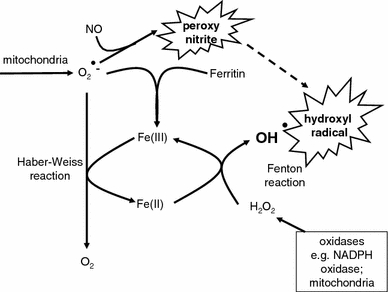
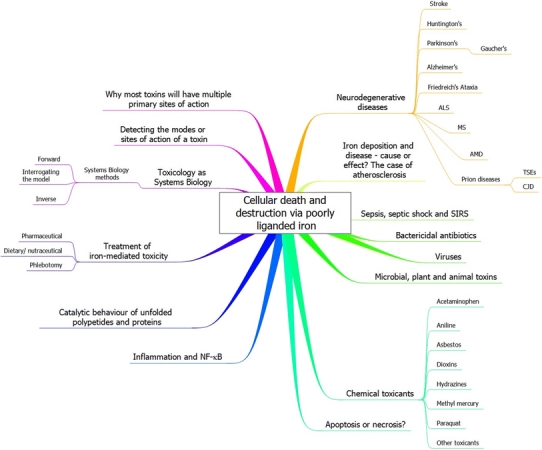
- Across reviewed conditions—stroke, Huntington’s, Parkinson’s, Alzheimer’s, ALS, Friedreich’s ataxia, multiple sclerosis, age-related macular degeneration, prion diseases, atherosclerosis, sepsis/SIRS, bactericidal antibiotics, viral infections, and chemical toxicants—evidence converges on iron dysregulation and Fenton chemistry; the hydroxyl radical is highlighted as the key damaging species rather than “ROS” generally.
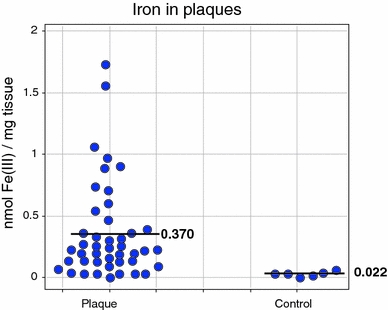
- In atherosclerosis, EPR-detectable iron in plaques was 17-fold greater than in healthy non-atherosclerotic intima controls, with P = 0.0001 (replotted from Stadler et al. 2004); iron levels in plaques also correlate with oxidized proteins.
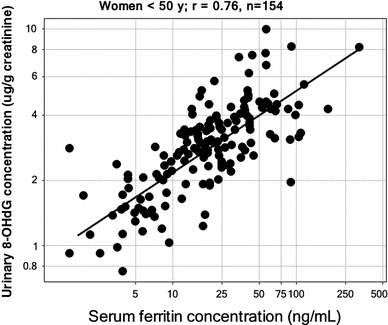
- Serum ferritin concentrations show a very strong relationship with urinary 8-hydroxy-2′-deoxyguanosine, a DNA damage/oxidative stress marker (replotted from Hori et al. 2010), and ferritin levels are widely associated with disease development, severity, or poor outcomes.
- Bactericidal antibiotics (norfloxacin, ampicillin, kanamycin) use internal iron liberated from iron–sulfur clusters to promote Fenton-mediated hydroxyl radical formation, whereas bacteriostatic antibiotics do not; iron chelators plus antioxidants are especially effective in sepsis models, and approved clinical chelators include deferoxamine, deferiprone, and deferasirox.
Methods
- Narrative literature review; the literature survey at initial submission extended to 14 June 2010, covering diseases, toxicants, and iron biology.
- Systems biology conceptual synthesis: forward and inverse modelling, sensitivity analysis, combinatorial parameter analysis, Bayesian/MCMC and evolutionary methods to infer sites of action, and “bow-tie” network models.
- Replots/digitizes published data (e.g., Hori et al. 2010; Stadler et al. 2004) to illustrate relationships; no new primary experimental data are reported.
Limitations
- The paper states that exact molecular mechanisms, cascades, and networks depend on many other factors; causality is often hard to infer from one-time snapshots; and some direct evidence is lacking—e.g., PrPSc–ferritin complexes have not yet been shown to catalyse OH• production directly, huntingtin inclusion bodies were not demonstrated to catalyse hydroxyl formation, and the extent of causality of iron dysregulation in multiple sclerosis is not yet established.
- Evident from the text: as a review, it synthesizes heterogeneous literature and relies heavily on cited associations, many of which are correlational; no new experimental validation is provided, and the literature coverage ends in mid-2010.
- The paper notes hormesis and dose-dependent interactions complicate simple models; chelator/antibiotic interactions can be dose-dependent and sometimes antagonistic (e.g., deferoxamine was antagonistic to azoles, while deferasirox promoted ciprofloxacin activity against *V. vulnificus*).
Model-written summary of a shortened version of the paper’s full text (it is longer than we read). Check it against the paper before relying on it.
Integrity signals
Registry
Cites
Statistics
Figures
Verification
Claims the paper makes
15 Valid · 1 Not valid · 117 Not checked · 25 Own results and interpretations
At least one cited source doesn’t support this claim or points to a different paper, and none confirmed it — see the verdicts below.
In the paper
“The defect thus leads to the liberation of mitochondrial iron”
§ Towards a unifying, systems biology understanding of large-scale cellular death and destruction caused by poorly liganded iron: Parkinson’s, Huntington’s, Alzheimer’s, prions, bactericides, chemical toxicology and others as examples > Friedreich’s ataxia
What the sources say
- Disputedcites Huang et al. 2009 matched to “Elucidation of the mechanism of mitochondrial iron loading in Friedreich's ataxia by analysis of a mouse mutant” (2009) sourceExperimental — accuracy not yet measured
The Abstract and Discussion describe frataxin deficiency as causing mitochondrial iron accumulation, with reduced release of heme and iron-sulfur clusters from mitochondria—not liberation of mitochondrial iron. The Discussion instead identifies increased liberation of cytoplasmic iron from heme as a contributor to mitochondrial iron uptake. No page numbers are available in our copy. (LLM, conf=0.88)
Checked by a reasoning model — may be wrong.
- Not checked yetcites Popescu et al. 2007 matched to “The chemical form of mitochondrial iron in Friedreich’s ataxia” (2007) source
- Not checked yetcites Richardson et al. 2009a
plainstates a cause- Asserted: passes — The authors put it forward as true.
- Checkable: passes — It can be checked against evidence.
- Load-bearing: passes — The paper’s conclusions depend on it.
- Based: passes — The paper gives a reason why it holds.
- Disputed
The cited sources support only part of this claim — read each source’s verdict below.
In the paper
“body-iron status correlates rather strongly with its production or urinary excretion (Agarwal et al. 2004; Broedbaek et al. 2009; Fujita et al. 2007a, 2009; Gackowski et al. 2002; Hori et al. 2010; Kang et al. 1998; Kuo et al. 2008; Maruyama et al. 2007; Nakano et al. 2003; Toyokuni and Sagripanti 1996; Tuomainen et al. 2007; Valavanidis et al. 2005).”
§ Towards a unifying, systems biology understanding of large-scale cellular death and destruction caused by poorly liganded iron: Parkinson’s, Huntington’s, Alzheimer’s, prions, bactericides, chemical toxicology and others as examples > Introduction
What the sources say
- Could not verifycites Agarwal et al. 2004 matched to “Oxidative stress and renal injury with intravenous iron in patients with chronic kidney disease” (2004) sourceExperimental — accuracy not yet measured
The Laboratory analysis section describes plasma and urinary malondialdehyde (MDA) assays, and the Discussion reports urinary MDA after intravenous iron in patients with chronic kidney disease. Searches for 8-OHdG and 8-hydroxy-2′-deoxyguanosine found no passage measuring that marker or relating its production or urinary excretion to body-iron status. (LLM, conf=0.76)
- Supportedcites Hori et al. 2010 matched to “Body iron store as a predictor of oxidative DNA damage in healthy men and women” (2010) source
The Discussion reports a strong positive association between serum ferritin, a marker of body iron stores, and urinary 8-OHdG in healthy Japanese men and women. The Results also show urinary 8-OHdG increasing across ferritin levels. This supports the claim about urinary excretion, though the cross-sectional study did not directly measure production. (LLM, conf=0.94)
boostedstates an association- Asserted: passes — The authors put it forward as true.
- Checkable: passes — It can be checked against evidence.
- Load-bearing: passes — The paper’s conclusions depend on it.
- Based: passes — The paper gives a reason why it holds.
- Could not verify
Every source the paper cites for this claim was checked and supports it.
In the paper
“Iron metabolism is deranged in gene knockdown models of Huntington’s (Henshall et al. 2009; Lumsden et al. 2007)”
§ Towards a unifying, systems biology understanding of large-scale cellular death and destruction caused by poorly liganded iron: Parkinson’s, Huntington’s, Alzheimer’s, prions, bactericides, chemical toxicology and others as examples > Huntington’s disease
What the sources say
- Supportedcites Henshall et al. 2009 matched to “Selective neuronal requirement for huntingtin in the developing zebrafish” (2009) source
The Introduction (page not supplied) says that an earlier analysis of the huntingtin-knockdown zebrafish model revealed a role for huntingtin in iron homeostasis and transport. The Abstract likewise reports effects of huntingtin reduction on iron transport and homeostasis. The claim does not attribute the original iron findings specifically to this 2009 study. (LLM, conf=0.89)
- Supportedcites Lumsden et al. 2007 matched to “Huntingtin-deficient zebrafish exhibit defects in iron utilization and development” (2007) source
The Abstract reports that huntingtin knockdown in zebrafish reduced hemoglobin production despite iron being present in blood cells, and that bioavailable iron restored production. The Conclusion identifies signs of cellular iron deficiency in the knockdown model despite iron being present. These passages support the claim about disrupted iron handling in a gene-knockdown model relevant to Huntington’s disease. (LLM, conf=0.93)
plainstates an association- Asserted: passes — The authors put it forward as true.
- Checkable: passes — It can be checked against evidence.
- Load-bearing: passes — The paper’s conclusions depend on it.
- Based: passes — The paper gives a reason why it holds.
- Supported
Every source the paper cites for this claim was checked and supports it.
In the paper
“experiments with the iron chelator deferroxamine revealed that the oxidation, localisation and structural organisation of the inclusion bodies formed by mutant htt were indeed irondependent.”
§ Towards a unifying, systems biology understanding of large-scale cellular death and destruction caused by poorly liganded iron: Parkinson’s, Huntington’s, Alzheimer’s, prions, bactericides, chemical toxicology and others as examples > Huntington’s disease
What the sources say
- Supportedcites Firdaus et al. 2006 matched to “Huntingtin inclusion bodies are iron‐dependent centers of oxidative events” (2006) source
The paper's own overview (p. 2) states verbatim that 'Analysis performed in the presence of the iron chelator deferroxamine revealed that the oxidation, localization and structural organization of the inclusion bodies formed by mutant htt were iron-dependent.' The supporting results confirm each element: deferroxamine (5 mM, 24 h) shrank httEx1-103Q inclusions and abolished HE oxidation in COS-7 cells (pp. 7-8, Fig. 6), and redistributed httEx1-43Q-EGFP nuclear inclusions out of the nucleus while reducing their oxidation in PC12 cells (p. 8, Fig. 7); the Discussion (p. 9) restates that chelatable iron was key to formation/structural integrity, localization and the oxidative events. (LLM, conf=0.95)
boostedstates a cause- Asserted: passes — The authors put it forward as true.
- Checkable: passes — It can be checked against evidence.
- Load-bearing: passes — The paper’s conclusions depend on it.
- Based: passes — The paper gives a reason why it holds.
- Supported
The cited sources support only part of this claim — read each source’s verdict below.
In the paper
“(HFE) mutations that cause haemochromatosis increase the susceptibility to AD (Bartzokis et al. 2010; Candore et al. 2003; Combarros et al. 2003; Connor and Lee 2006; Haacke et al. 2005; Kauwe et al. 2010; Lleó et al. 2002; Moalem et al. 2000; Pulliam et al. 2003; Robson et al. 2004; Sampietro et al. 2001), especially when in the presence of the APOE4 allele (Pulliam et al. 2003).”
§ Towards a unifying, systems biology understanding of large-scale cellular death and destruction caused by poorly liganded iron: Parkinson’s, Huntington’s, Alzheimer’s, prions, bactericides, chemical toxicology and others as examples > Alzheimer’s disease
What the sources say
- Not checked yetcites Pulliam et al. 2003 matched to “Association of HFE mutations with neurodegeneration and oxidative stress in Alzheimer's disease and correlation with APOE” (2003) source
- Partly supportedcites Robson et al. 2004 matched to “Synergy between the C2 allele of transferrin and the C282Y allele of the haemochromatosis gene (HFE) as risk factors for developing Alzheimer’s disease” (2004) sourceExperimental — accuracy not yet measured
Robson et al. (2004) do report increased AD risk associated with the haemochromatosis mutation C282Y, and that risk is highest in carriers who also have APOE4 (Abstract; Conclusions: 'tri-carriers of the two iron-related variants plus APOE4 may be at very high risk of AD'). However, the source does not support the unconditional attribution that HFE mutations that cause haemochromatosis increase AD susceptibility: the Abstract states 'each of the two variants was associated with an increased risk of AD only in the presence of the other. Neither allele alone had any effect' (i.e. only with transferrin C2), the Results (Tables 2-4) give C282Y-negative/C2-alone OR 1.3 (NS), and the Results explicitly report 'no association of the HFE H63D variant with AD, or with MCI, either overall or in two-way interaction with either TF C2 or APOE4'. So the second HFE mutation implicated in haemochromatosis is not associated in this paper, and the APOE4 effect is conditional on TF C2 co-carriage rather than on the HFE allele alone. (LLM, conf=0.78)
plainstates a cause- Asserted: passes — The authors put it forward as true.
- Checkable: passes — It can be checked against evidence.
- Load-bearing: unclear — It is unclear whether the paper’s conclusions depend on it.
- Based: passes — The paper gives a reason why it holds.
99 more claims · 11 with their cited sources checked
Create a free account to see all 158 claims and to verify the 250 references still open.
- It may state two separate claims as one. 42
- Probably not a substantial claim. 18
- The quote only partly states this claim. 1
Claims other papers make about this one
Each is checked against this paper’s own text: does it say what the citing paper says it does?
The source backs part of the claim, not all of it — or backs it for a different population, condition or comparison.
In the citing paper
“Chronic increase of such ‘free’ iron forms are associated with pathological conditions and possible complex homeostasis unbalance for this element in cells and tissues, relevant to asbestos toxicity and related diseases181920.”
From The interaction of asbestos and iron in lung tissue revealed by synchrotron-based scanning X-ray microscopy (2013) · cites this paper as [19]
Experimental — accuracy not yet measuredThe cited source says what the claim attributes to it.
In the citing paper
“Concerning this issue, the recent reviews by D. Kell1819 analyse the wide but dispersed literature via a systems biology approach, and indicate that iron that is weakly complexed boosts many biochemical processes leading to a large variety of apparently unrelated diseases.”
From The interaction of asbestos and iron in lung tissue revealed by synchrotron-based scanning X-ray microscopy (2013) · cites this paper as [19]
The cited source says what the claim attributes to it.
In the citing paper
“nominally antioxidant molecules such as ascorbate have complex, multi-electron redox chemistry, and can in fact act as pro-oxidants(502,503), especially in the presence of free Fe(208,213) or Cu(504).”
From The biology of ergothioneine, an antioxidant nutraceutical (2020) · cites this paper as [213]
The cited source says what the claim attributes to it.
In the citing paper
“Due to the presence of high-affinity iron binding and storage proteins, the actual toxicity of iron is restricted to the so called “labile iron pool”.”
From The interaction of asbestos and iron in lung tissue revealed by synchrotron-based scanning X-ray microscopy (2013) · cites this paper as [19]
Citations
Cites
2 retracted
Items 601–800 of 1,761
Sickle cell disease and stroke
Verduzco, L. A., & Nathan, D. G. (2009) · Blood · doi:10.1182/blood-2009-05-220921 · Cited by 207
Pathogenesis of prion diseases: current status and future outlook
Aguzzi, A., & Heikenwalder, M. (2006) · Nature Reviews Microbiology · doi:10.1038/nrmicro1492 · Cited by 207 · cited 3×
“…com- pletely, are represented by the prion diseases, in particular the TSEs including bovine spongiform encephalopathy (BSE) (e.g. Aguzzi et al. 2008a; Aguzzi and Heikenwälder 2006; Caughey and Baron 2006; Caughey and Lansbury 2003; Linden et al. 2008) and scrapie (e.g. Bulgin and Melson 2007;…”
BackgroundAssociation Between Iron-Deficiency Anemia and Stroke in Young Children
Maguire, J. L., deVeber, G., & Parkin, P. C. (2007) · Pediatrics · doi:10.1542/peds.2007-0502 · Cited by 206 · cited 1×
“…2007; Helal 2008; Jolkkonen et al. 2007; Justicia et al. 2008; Kaushal and Schlichter 2008; Kim et al. 2008a; Kobayashi et al. 2008; Lou et al. 2009; Maguire et al. 2007; Mazumdar et al. 2007; Mehdiratta et al. 2008; Millan et al. 2007, 2008; Millerot-Serrurot et al. 2008; Nighoghossian et al.…”
BackgroundOxygen Free Radicals and the Systemic Inflammatory Response
Closa, D., & Folch‐Puy, E. (2004) · IUBMB Life · doi:10.1080/15216540410001701642 · Cited by 205 · cited 2×
“…are associated with the hyperproduction of ROSs (Abdelrah- man et al. 2005; Andrades et al. 2005; Bulger and Maier 2001; Cadenas and Cadenas 2002; Closa and Folch-Puy 2004; Crimi et al. 2006a, b; Goode and Webster 1993; Gutteridge and Mitchell 1999; Horn 1998; Javadi et al. 2005; Lagan et…”
BackgroundCarrillo‐Vico, A., Lardone, P. J., Naji, L., Fernández‐Santos, J. M., Martín‐Lacave, I., Guerrero, J. M., & Calvo, J. R. (2005) · Journal of Pineal Research · doi:10.1111/j.1600-079x.2005.00265.x · Cited by 204 · cited 1×
“The natural iron-chelating antioxidant melatonin has been found to be particularly effective in preventing septic shock (Carrillo-Vico et al. 2005; Escames et al. 2006; Reynolds et al. 2003), and a variety of suitable antioxidants have shown promise (Bekyarova et al. 2009; Cuzzocrea et al. 2001,…”
BackgroundFragments, network biology and designing multiple ligands
Morphy, R., & Rankovic, Z. (2007) · Drug Discovery Today · doi:10.1016/j.drudis.2006.12.006 · Cited by 204 · cited 1×
“…et al. 2008b; Jia et al. 2009; Koufaki et al. 2009; Kuhn et al. 2010; Lee et al. 2007; Lehár et al. 2007, 2008a, b; Li et al. 2007; Liby et al. 2007; Morphy and Rankovic 2007; Pachauri et al. 2009; Reznichenko et al. 2010; Sarkar and Li 2009; Sarkar et al. 2009; Sawyers 2007; Schrattenholz and…”
BackgroundOxidative Stress and Redox‐Active Iron in Alzheimer's Disease
HONDA, K., CASADESUS, G., PETERSEN, R. B., PERRY, G., & SMITH, M. A. (2004) · Annals of the New York Academy of Sciences · doi:10.1196/annals.1306.015 · Cited by 204
PrP Deposition, Microglial Activation, and Neuronal Apoptosis in Murine Scrapie
Williams, A., Lucassen, P. J., Ritchie, D., & Bruce, M. (1997) · Experimental Neurology · doi:10.1006/exnr.1997.6424 · Cited by 204 · cited 1×
“…2001; Julius et al. 2008; Kourie 2002; Mallucci et al. 2003; Mallucci et al. 2007; Miele et al. 2001; Sakudo and Ikuta 2009a, b; Westaway et al. 1994; Williams et al. 1997) (formation of holes) in brain tissue characteristic of late-stage prion disease (and indeed of Alzheimer’s (Erkinjuntti et…”
BackgroundCurrent Status of Metals as Therapeutic Targets in Alzheimer's Disease
Finefrock, A. E., Bush, A. I., & Doraiswamy, P. M. (2003) · Journal of the American Geriatrics Society · doi:10.1046/j.1532-5415.2003.51368.x · Cited by 204
Ferritin Concentrations, Metabolic Syndrome, and Type 2 Diabetes in Middle-Aged and Elderly Chinese
Sun, L., Franco, O. H., Hu, F. B., Cai, L., Yu, Z., Li, H., Ye, X., Qi, Q., Wang, J., Pan, A., et al. (2008) · The Journal of Clinical Endocrinology & Metabolism · doi:10.1210/jc.2008-1159 · Cited by 204 · cited 1×
“…al. 2008; Menke et al. 2009; Qureshi et al. 2008; Rajpathak et al. 2009; Sharifi et al. 2008; Skinner et al. 2010; Song et al. 2009; Storey et al. 2009; Sun et al. 2008; Tsimikas et al. 2009; Valenti et al. 2010; Walker et al. 2010; Wang et al. 2010b; Yoneda et al. 2010; Zandman-Goddard and…”
The Effects of Intravenous Antioxidants in Patients With Septic Shock
Galley, H. F., Howdle, P. D., Walker, B. E., & Webster, N. R. (1997) · Free Radical Biology and Medicine · doi:10.1016/s0891-5849(97)00059-2 · Cited by 203 · cited 2×
“…Victor et al. 2004, 2005; Vlessis et al. 1995), and (local and circulating) free iron is raised in sepsis and related conditions (Duvigneau et al. 2008; Galley et al. 1996, 1997; Galley and Webster 1996; Ghio et al. 2003; Lagan et al. 2008), as is the iron siderophore-binding protein lipocalin-2…”
BackgroundHydroxyurea Induces Hydroxyl Radical-Mediated Cell Death in Escherichia coli
Davies, B. W., Kohanski, M. A., Simmons, L. A., Winkler, J. A., Collins, J. J., & Walker, G. C. (2009) · Molecular Cell · doi:10.1016/j.molcel.2009.11.024 · Cited by 203 · cited 1×
“Based on a previous paper from the same group (Dwyer et al. 2007), Kohanski et al. (2007) (see also Davies et al. 2009; Dwyer et al. 2007, 2009; Imlay 2008; Kohanski et al. 2008; Liu et al.2009a; Wang and Zhao, 2009) reported that the three major classes of bactericidal antibiotics (exem- plified…”
BackgroundBiology by numbers: mathematical modelling in developmental biology
Tomlin, C. J., & Axelrod, J. D. (2007) · Nature Reviews Genetics · doi:10.1038/nrg2098 · Cited by 202 · cited 1×
“…2006; Kell and Westerhoff 1986a, b; Milo et al. 2010; Mogilner et al. 2006; Noble 2002, 2006, 2010; Oates et al. 2009; Phillips and Milo 2009; Tomlin and Axelrod 2007), at the very minimum one should be looking quali- tatively at those factors that should be increased or decreased in order…”
BackgroundGreen tea polyphenols for prostate cancer chemoprevention: A translational perspective
Johnson, J. J., Bailey, H. H., & Mukhtar, H. (2010) · Phytomedicine · doi:10.1016/j.phymed.2009.09.011 · Cited by 202 · cited 1×
“…in green tea, (-)epigallocatechin-3- gallate (ChEBI 4806) (Adhami et al. 2009; Butt and Sultan 2009; Hsieh et al. 2009; Jimenez-Del-Rio et al. 2010; Johnson et al. 2010; Pandey and Gupta 2009; Paterniti et al. 2009; Ramesh et al. 2009; Reznichenko et al. 2010; Suh et al. 2009; Weinreb et al.…”
BackgroundAnomalous Venous Blood Flow and Iron Deposition in Multiple Sclerosis
Singh, A. V., & Zamboni, P. (2009) · Journal of Cerebral Blood Flow & Metabolism · doi:10.1038/jcbfm.2009.180 · Cited by 202 · cited 1×
“…and Chakrabarty 2004; Neema et al. 2007a, b, 2009a, b; Pirko et al. 2009; Sayre et al. 2005; Schenck and Zimmerman 2004; Simka and Rybak 2008; Singh and Zamboni 2009; Stankiewicz et al. 2007; Tjoa et al. 2005; Walter et al. 2009; Zamboni 2006; Zivadinov and Bakshi 2004; Zivadinov and Minagar…”
BackgroundKAUR, P., ASCHNER, M., & SYVERSEN, T. (2006) · NeuroToxicology · doi:10.1016/j.neuro.2006.01.010 · Cited by 201
Curcumin Synergizes With Resveratrol to Inhibit Colon Cancer
Majumdar, A. P. N., Banerjee, S., Nautiyal, J., Patel, B. B., Patel, V., Du, J., Yu, Y., Elliott, A. A., Levi, E., & Sarkar, F. H. (2009) · Nutrition and Cancer · doi:10.1080/01635580902752262 · Cited by 201 · cited 1×
“…et al. 2010; Basile et al. 2009; Epstein et al. 2009; Hegde et al. 2009; Iqbal et al. 2009; Jiao et al. 2009; Jurenka 2009; Kalpravidh et al. 2010; Majumdar et al. 2009; Messner et al. 2009; Patil et al. 2009; Ravindran et al. 2009; Rivera- Espinoza and Muriel 2009; Thephinlap et al. 2009;…”
BackgroundLi, H., Zhou, Q., Wu, Y., Fu, J., Wang, T., & Jiang, G. (2009) · Ecotoxicology and Environmental Safety · doi:10.1016/j.ecoenv.2008.09.027 · Cited by 201 · cited 2×
“Welding fumes are toxic and contain both iron and manganese (Flynn and Susi 2010; Sriram et al. 2010), and the toxicity of nano- iron itself has also been studied (Li et al. 2009).”
BackgroundSelective Optimization of Side Activities: Another Way for Drug Discovery
Wermuth, C. G. (2004) · Journal of Medicinal Chemistry · doi:10.1021/jm030480f · Cited by 201 · cited 1×
“…al. 2006; Kaelin 2005; Keith et al. 2005; Kostoff and Delafuente 2006; Millan 2006; Perlstein et al. 2006; Sharom et al. 2004; Shiomi et al. 1999; Wermuth 2004) (Brötz-Oesterhelt and Brunner 2008; Chong and Sullivan 2007; Costanzo et al. 2010; Gerber et al. 2007; Goltsov et al. 2009;…”
BackgroundIron–sulfur proteins in health and disease
Sheftel, A., Stehling, O., & Lill, R. (2010) · Trends in Endocrinology & Metabolism · doi:10.1016/j.tem.2009.12.006 · Cited by 200
Oxidative stress, AGE, and atherosclerosis
Schleicher, E., & Friess, U. (2007) · Kidney International · doi:10.1038/sj.ki.5002382 · Cited by 200 · cited 1×
“…Nigro et al. 2006; Packard and Libby 2008; Paoletti et al. 2004; Popa et al. 2007; Rader and Daugherty 2008; Ridker et al.et al. 2004; Ross 1999; Schleicher and Friess 2007; Subramanian and Ferrante 2009; Sullivan 2009; Tan and Lip 2008; Tang et al. 2009; Taqueti et al. 2006; Tedgui and…”
BackgroundThe Dose Determines the Stimulation (and Poison): Development of A Chemical Hormesis Database
Calabrese, E. J., & Baldwin, L. A. (1997) · International Journal of Toxicology · doi:10.1080/109158197226874 · Cited by 200
Metabolic control theory: its role in microbiology and biotechnology
Kell, D. (1986) · FEMS Microbiology Letters · doi:10.1016/0378-1097(86)90020-0 · Cited by 200 · cited 3×
“The ‘local’ version has been popularised in biochemistry as ‘metabolic control analysis’ (e.g. Fell 1996; Heinrich and Schuster 1996; Kell and Westerhoff 1986a), and, for instance COPASI (Hoops et al. 2006) calculates the control or sensitivity coefficients directly from a model.”
BackgroundSelf-citationCause of neural death in neurodegenerative diseases attributable to expansion of glutamine repeats
Perutz, M. F., & Windle, A. H. (2001) · Nature · doi:10.1038/35084141 · Cited by 199 · cited 1×
“The number of these repeats determines both the time of onset of observable disease (more repeats meaning earlier onset) (Perutz and Windle 2001; Ross 1995; Walters and Murphy 2009), accounting for 70% of the variance (Imarisio et al. 2008), and the disease severity, implying that it is indeed…”
BackgroundNeurotoxicity of organomercurial compounds
Sanfeliu, C., Sebastià, J., Cristòfol, R., & Rodríguez-Farré, E. (2003) · Neurotoxicity Research · doi:10.1007/bf03033386 · Cited by 199 · cited 1×
“…to this agent causes oxi- dative stress (Ali et al. 1992; Aschner et al. 2007; Atchison and Hare 1994; Franco et al. 2009; Johansson et al. 2007; Sanfeliu et al. 2003; Sarafian et al. 1994; Yee and Choi 1994, 1996; Yin et al. 2007) and raises cellular iron levels (Ilbäck et al. 2000) and…”
BackgroundAscorbyl radical formation in patients with sepsis: Effect of ascorbate loading
Galley, H. F., Davies, M. J., & Webster, N. R. (1996) · Free Radical Biology and Medicine · doi:10.1016/0891-5849(95)02022-5 · Cited by 199 · cited 1×
“…Victor et al. 2004, 2005; Vlessis et al. 1995), and (local and circulating) free iron is raised in sepsis and related conditions (Duvigneau et al. 2008; Galley et al. 1996, 1997; Galley and Webster 1996; Ghio et al. 2003; Lagan et al. 2008), as is the iron siderophore-binding protein lipocalin-2…”
BackgroundAutophagy, ageing and apoptosis: The role of oxidative stress and lysosomal iron
Kurz, T., Terman, A., & Brunk, U. T. (2007) · Archives of Biochemistry and Biophysics · doi:10.1016/j.abb.2007.01.013 · Cited by 199 · cited 2×
“…Del Rı́o and Vélez-Pardo 2004; Kamp et al. 2002; Kawabata et al. 1997; Kermer et al. 2004; Kooncumchoo et al. 2006; Kruman et al. 1997; Kummer et al. 2008; Kurz et al. 2007, 2008b; Lakshmi Devi and Anuradha 2009; Lee et al. 2006d; Levenson 2005; Lu et al. 2008; Ma et al. 2009; Messer et al.…”
BackgroundIron deposits surrounding multiple sclerosis plaques.
Craelius, W., Mw, M., Luessenhop, C. P., Sugar, A. W., & Mihalakis, I. (1982) · PubMed · Cited by 197
Matusch, A., Depboylu, C., Palm, C., Wu, B., Höglinger, G. U., Schäfer, M. K. H., & Becker, J. S. (2010) · Journal of the American Society for Mass Spectrometry · doi:10.1016/j.jasms.2009.09.022 · Cited by 197 · cited 3×
“…2010; Hirsch 2009; Jellinger 2009; Jimenez- Del-Rio et al. 2010; Kaur and Andersen 2004; Lee and Andersen 2010; Levenson 2003; Mandemakers et al. 2007; Matusch et al. 2010; Oakley et al. 2007; Salvador 2010; Shi et al. 2010; Wayne Martin 2009; Wypijewska et al. 2010; Yeager and Coleman 2010;…”
BackgroundAssembly and iron-binding properties of human frataxin, the protein deficient in Friedreich ataxia
Cavadini, P. (2002) · Human Molecular Genetics · doi:10.1093/hmg/11.3.217 · Cited by 197
Efficacy of deferasirox in reducing and preventing cardiac iron overload in β-thalassemia
Pennell, D. J., Porter, J. B., Cappellini, M. D., El-Beshlawy, A., Chan, L. L., Aydinok, Y., Elalfy, M. S., Sutcharitchan, P., Li, C.-K., Ibrahim, H., et al. (2010) · Blood · doi:10.1182/blood-2009-04-217455 · Cited by 195 · cited 1×
“…et al. 2010; Clifton et al. 2009; Hider et al. 2008; Kell 2009a; Kontoghiorghes et al. 2010; Kwiatkowski 2010; Mladĕnka et al. 2009; Pennell et al. 2010; Perez and Franz 2010; Richardson et al. 2009b and references therein), a number of (pharmacological drug) approved iron…”
BackgroundNguyen, T., Hamby, A., & Massa, S. M. (2005) · Proceedings of the National Academy of Sciences · doi:10.1073/pnas.0502177102 · Cited by 194 · cited 2×
“The iron chelator clioquinol is also protective (Nguyen et al. 2005).”
BackgroundScrapie-associated prion protein accumulates in astrocytes during scrapie infection.
Diedrich, J. F., Bendheim, P. E., Kim, Y. S., Carp, R. I., & Haase, A. T. (1991) · Proceedings of the National Academy of Sciences · doi:10.1073/pnas.88.2.375 · Cited by 194 · cited 1×
“…a protein leads to the vacuolation or spongiosis (e.g. Aguzzi 2006; Aguzzi et al. 2007; Arm- strong et al. 2001; Chung et al. 1999; Crozet et al. 2008; Diedrich et al. 1991; Foster et al. 2001; Julius et al. 2008; Kourie 2002; Mallucci et al. 2003; Mallucci et al. 2007; Miele et al. 2001; Sakudo…”
BackgroundCurcumin derivatives: Molecular basis of their anti-cancer activity
Basile, V., Ferrari, E., Lazzari, S., Belluti, S., Pignedoli, F., & Imbriano, C. (2009) · Biochemical Pharmacology · doi:10.1016/j.bcp.2009.06.105 · Cited by 193
Metals and free radicals in neurodegeneration
Olanow, C. W., & Arendash, G. W. (1994) · Current Opinion in Neurology · doi:10.1097/00019052-199412000-00013 · Cited by 193
Brennan, L. A., & Kantorow, M. (2009) · Experimental Eye Research · doi:10.1016/j.exer.2008.05.018 · Cited by 193 · cited 1×
“…when it is not properly liganded (Graf et al. 1984), and in the ferrous form, it can react with hydrogen peroxide (produced by mito- chondria (e.g. Brennan and Kantorow 2009; Fato et al. 2008; Orrenius et al. 2007) or (per)oxidases (Bedard and Krause 2007; Cave et al. 2006) via the Fenton…”
BackgroundThe rise of computational biology
Noble, D. (2002) · Nature Reviews Molecular Cell Biology · doi:10.1038/nrm810 · Cited by 192
Hemin toxicity: a preventable source of brain damage following hemorrhagic stroke
Robinson, S. R., Dang, T. N., Dringen, R., & Bishop, G. M. (2009) · Redox Report · doi:10.1179/135100009x12525712409931 · Cited by 192
Friedreich Ataxia: Molecular Mechanisms, Redox Considerations, and Therapeutic Opportunities
Santos, R., Lefevre, S., Sliwa, D., Seguin, A., Camadro, J.-M., & Lesuisse, E. (2010) · Antioxidants & Redox Signaling · doi:10.1089/ars.2009.3015 · Cited by 192
Transferrin therapy ameliorates disease in β-thalassemic mice
Li, H., Rybicki, A. C., Suzuka, S. M., von Bonsdorff, L., Breuer, W., Hall, C. B., Cabantchik, Z. I., Bouhassira, E. E., Fabry, M. E., & Ginzburg, Y. Z. (2010) · Nature Medicine · doi:10.1038/nm.2073 · Cited by 192 · cited 1×
“…(e.g. Borgna- Pignatti et al. 2005; Camaschella and Merlini 2005; Cao and Galanello 2010; Cohen et al. 2004; Gattermann 2009; Lam et al. 2008; Li et al. 2010; Mohkam et al. 2008; Peng et al. 2008; Taher et al. 2010; Vichinsky et al. 2005) and myelodysplastic syndrome (e.g. Cazzola et al.…”
BackgroundChronic Iron Administration Increases Vascular Oxidative Stress and Accelerates Arterial Thrombosis
Day, S. M., Duquaine, D., Mundada, L. V., Menon, R. G., Khan, B. V., Rajagopalan, S., & Fay, W. P. (2003) · Circulation · doi:10.1161/01.cir.0000066910.02844.d0 · Cited by 192 · cited 1×
“• There is a correlation between iron status and atherosclerosis (Ahluwalia et al. 2010; Chau 2000; Day et al. 2003; de Valk and Marx 1999; DePalma et al. 2010; Gozzelino et al. 2010; Howes et al. 2000; Kallianpur 2005; Kartikasari et al. 2009; Kiechl et al. 1997; Lapenna et al. 2007; Marx et al.…”
BackgroundPharmacological actions of curcumin in liver diseases or damage
Rivera‐Espinoza, Y., & Muriel, P. (2009) · Liver International · doi:10.1111/j.1478-3231.2009.02086.x · Cited by 191
An Integrative View of the Role of Oxidative Stress, Mitochondria and Insulin in Alzheimer's Disease
Moreira, P. I., Duarte, A. I., Santos, M. S., Rego, A. C., & Oliveira, C. R. (2009) · Journal of Alzheimer's Disease · doi:10.3233/jad-2009-0972 · Cited by 190 · cited 1×
“…the role of oxidative stress (e.g. Butterfield et al. 2007; Christen 2000; DiMauro and Schon 2008; Good et al. 1996; Milton 2004; Miranda et al. 2000; Moreira et al. 2009; Nunomura et al. 2001, 2006; Reddy and Beal 2008; Reddy et al. 2009; Rottkamp et al. 2000; Smith et al. 1996, 2000; Zhu et…”
BackgroundPathways underlying iron accumulation in human nonalcoholic fatty liver disease
Aigner, E., Theurl, I., Theurl, M., Lederer, D., Haufe, H., Dietze, O., Strasser, M., Datz, C., & Weiss, G. (2008) · The American Journal of Clinical Nutrition · doi:10.1093/ajcn/87.5.1374 · Cited by 190 · cited 1×
“…rather dubious or at best modest sci- entific support, there is in fact increasing literature imply- ing its benefits in a variety of conditions (e.g. Aigner et al. 2008; Beutler 2007; Broedbaek et al. 2009; Brudevold et al. 2008; Busca et al. 2010; DePalma et al. 2007, 2010; Dereure et al.…”
BackgroundMetallothionein in the central nervous system: Roles in protection, regeneration and cognition
West, A. K., Hidalgo, J., Eddins, D., Levin, E. D., & Aschner, M. (2008) · NeuroToxicology · doi:10.1016/j.neuro.2007.12.006 · Cited by 190 · cited 1×
“…1991; Shanker and Aschner 2003; Usuki et al. 2001; Watanabe et al. 2009; Yamashita et al. 2004; Zurich and Monnet-Tschudi 2009), metallothioneins (West et al. 2008) and/or iron chelators (Castoldi et al. 2001; LeBel et al. 1992; Sarafian and Verity 1991; Stohs and Bagchi 1995) can be…”
BackgroundTerman, A., Kurz, T., Gustafsson, B., & Brunk, U. (2006) · IUBMB Life (International Union of Biochemistry and Molecular Biology: Life) · doi:10.1080/15216540600904885 · Cited by 190
Reznichenko, L., Amit, T., Zheng, H., Avramovich‐Tirosh, Y., Youdim, M. B. H., Weinreb, O., & Mandel, S. (2006) · Journal of Neurochemistry · doi:10.1111/j.1471-4159.2006.03770.x · Cited by 189 · cited 1×
“…2004; Biran et al. 2009; Bolognin et al. 2009a; Crapper McLachlan et al. 1991; Cuajungco et al. 2000; Faux et al. 2010; Finefrock et al. 2003; Liu et al. 2009b, c, 2010; Mancino et al. 2009; Mandel 2007, 2008; Reznichenko et al. 2006; Scott and Orvig 2009; Weinreb et al. 2009a; Zheng et al. 2005).”
BackgroundMagnetic Resonance Imaging of Iron Deposition in Neurological Disorders
Brass, S. D., Chen, N.-K., Mulkern, R. V., & Bakshi, R. (2006) · Topics in Magnetic Resonance Imaging · doi:10.1097/01.rmr.0000245459.82782.e4 · Cited by 189 · cited 1×
“…iron dysregulation and/or deposition have indeed been implicated directly (Adams 1988; Bakshi et al. 2000, 2001, 2002, 2008; Bermel et al. 2005; Brass et al. 2006a, b; Ceccarelli et al. 2009, 2010; Chard and Miller 2009; Craelius et al. 1982; Drayer et al. 1987; Eissa et al. 2009; Exley et al.…”
New insights on oxidative stress in the artery wall
STOCKER, R., & KEANEY, J. F. (2005) · Journal of Thrombosis and Haemostasis · doi:10.1111/j.1538-7836.2005.01370.x · Cited by 188 · cited 1×
“…McRae et al. 2009; Rajendran et al. 2007; Ramakrishna et al. 2003; Roijers et al. 2005; Smith et al. 1992; Stadler et al. 2004; Stanley et al. 2006; Stocker and Keaney 2005; Sullivan 2009; Watt et al. 2006; Wolff et al. 2004; Yuan and Li 2008) • Iron depletion by dietary or other means delays…”
BackgroundCellular regulation and molecular interactions of the ferritins
Hintze, K. J., & Theil, E. C. (2006) · Cellular and Molecular Life Sciences · doi:10.1007/s00018-005-5285-y · Cited by 187
Induction of oxidative DNA damage by carcinogenic metals
Bal, W., & Kasprzak, K. S. (2002) · Toxicology Letters · doi:10.1016/s0378-4274(01)00483-0 · Cited by 187 · cited 1×
“…as its tautomer 8-oxo-7,8-dihydro-2’-deoxyguanosine (8-oxodG) (HMDB03333) is produced when the hydroxyl radical reacts with DNA and damages it (e.g. Bal and Kasprzak 2002; Burrows and Muller 1998; Cooke et al. 2003, 2008; Lloyd et al. 1998; Loft and Poulsen 1996; Orhan et al. 2004; Shi et al.…”
BackgroundOxidative stress and the prion protein in transmissible spongiform encephalopathies
Milhavet, O. (2002) · Brain Research Reviews · doi:10.1016/s0165-0173(01)00150-3 · Cited by 186 · cited 1×
“…Choi et al. 2006; Fernaeus et al. 2005a, b; Fernaeus and Land 2005; Iwamaru et al. 2008; Kim et al. 2000, 2001, 2007; Lee et al. 2007; Lehmann 2002; Milhavet and Lehmann 2002; Pamplona et al. 2008; Park et al. 2008; Petersen et al. 2005; Pollera et al. 2005; Rana et al. 2009; Stegmann and Grohmann…”
BackgroundIron metabolism in Parkinsonian syndromes
Berg, D., & Hochstrasser, H. (2006) · Movement Disorders · doi:10.1002/mds.21020 · Cited by 186 · cited 1×
“…Altamura and Muckent- haler 2009; Andersen 2004; Barapatre et al. 2010; Baudr- exel et al. 2010; Becker 2010; Becker et al. 2010a, b; Berg 2006, 2007; Berg and Hochstrasser 2006; Berg et al. 2006, 2008; Brar et al. 2009; Brown 2009b; Crichton and Ward 2006; Fasano et al. 2006; Friedman et al.…”
BackgroundDesferrioxamine Induces Delayed Tolerance against Cerebral Ischemia in Vivo and in Vitro
Prass, K., Ruscher, K., Karsch, M., Isaev, N., Megow, D., Priller, J., Scharff, A., Dirnagl, U., & Meisel, A. (2002) · Journal of Cerebral Blood Flow & Metabolism · doi:10.1097/00004647-200205000-00003 · Cited by 185 · cited 1×
“…stroke-inducing event (Demougeot et al. 2004; Ferro and Dávalos 2006; Hurn et al. 1995; Kompala et al. 1986; Mu et al. 2005; Patt et al. 1990; Prass et al. 2002; Selim and Ratan 2004; Soloniuk et al. 1992; White et al. 1988; Chen-Roetling et al. 2009; Gu et al. 2009; Hanson et al. 2009; Hua…”
BackgroundPrevention of oxidant-induced cell death by lysosomotropic iron chelators
Persson, H. L., Yu, Z., Tirosh, O., Eaton, J. W., & Brunk, U. T. (2003) · Free Radical Biology and Medicine · doi:10.1016/s0891-5849(03)00106-0 · Cited by 185 · cited 1×
“The autocatalytic nature of the process—lipofuscin loaded with iron catalyses more lipofuscin production—is especially dangerous and can (as one would predict) be inhibited using appropriate iron che- lators (Persson et al. 2003).”
Background[43] Role of flavonoids and iron chelation in antioxidant action
Morel, I., Lescoat, G., Cillard, P., & Cillard, J. (1994) · Methods in Enzymology · doi:10.1016/0076-6879(94)34114-1 · Cited by 185 · cited 1×
“…al. 2006; Halliwell 2009; Halliwell et al. 2005; Hider et al. 2001; Končić et al. 2010; Lopes et al. 1999; Mandel et al. 2004; Mandel and Youdim 2004; Morel et al. 1994; Nijveldt et al. 2001; Rice-Evans et al. 1997; Rice-Evans and Packer 2003; Weinreb et al. 2007, 2009a; Yoshino and Murakami…”
BackgroundGakh, O., Park, S., Liu, G., Macomber, L., Imlay, J. A., Ferreira, G. C., & Isaya, G. (2006) · Human Molecular Genetics · doi:10.1093/hmg/ddi461 · Cited by 184 · cited 1×
“…iron chaperone protein (Atkinson and Winge 2009; Ba et al. 2009; Babady et al. 2007; Bencze et al. 2007; Cavadini et al. 2002; Correia et al. 2008; Gakh et al. 2006; Haugen et al. 2010; Huang et al. 2008a; Huang et al. 2009; Karlberg et al. 2006; Kondapalli et al. 2008; Lill 2009; Lill and…”
BackgroundJarvis, J., Seed, M. J., Elton, R., Sawyer, L., & Agius, R. (2005) · Occupational and Environmental Medicine · doi:10.1136/oem.2004.016402 · Cited by 184 · cited 1×
“…2004; Chodaczek et al. 2007; Ciencewicki et al. 2008; Comhair and Erzurum 2010; Galli et al. 2008; Greene 1995; Han et al. 2001; Horváth et al. 1998; Jarvis et al. 2005; Kocyigit et al. 2004; Muñoz et al. 2009; Narula et al. 2007; Nemery 1990; Pae et al. 2008; Riedl and Nel 2008; Shore 2008;…”
BackgroundGlahn, R. P., Wortley, G. M., South, P. K., & Miller, D. D. (2002) · Journal of Agricultural and Food Chemistry · doi:10.1021/jf011046u · Cited by 183 · cited 1×
“…phosphate; CHEBI 17401 ) (Aljandali et al. 2001; Allen and Cornforth 2009; Brune et al. 1989; Davidsson et al. 1994; Doria et al. 2009; Glahn et al. 2002; Graf and Eaton 1990, 1993; Graf et al. 1987; Grases et al. 2001; Hallberg et al. 1989; Han et al. 1994; Hanson et al. 2006;…”
BackgroundHeintz, N. H., Janssen-Heininger, Y. M. W., & Mossman, B. T. (2010) · American Journal of Respiratory Cell and Molecular Biology · doi:10.1165/rcmb.2009-0206tr · Cited by 182
The influences of diet and exercise on mental health through hormesis
Gómez‐Pinilla, F. (2007) · Ageing Research Reviews · doi:10.1016/j.arr.2007.04.003 · Cited by 182
Iron-binding characteristics of neuromelanin of the human substantia nigra
Double, K. L., Gerlach, M., Schünemann, V., Trautwein, A. X., Zecca, L., Gallorini, M., Youdim, M. B. H., Riederer, P., & Ben-Shachar, D. (2003) · Biochemical Pharmacology · doi:10.1016/s0006-2952(03)00293-4 · Cited by 181
Yin, Z., Milatovic, D., Aschner, J. L., Syversen, T., Rocha, J. B. T., Souza, D. O., Sidoryk, M., Albrecht, J., & Aschner, M. (2007) · Brain Research · doi:10.1016/j.brainres.2006.10.070 · Cited by 181
Inorganic dust pneumonias: the metal-related parenchymal disorders.
Kelleher, P., Pacheco, K., & Newman, L. S. (2000) · Environmental Health Perspectives · doi:10.1289/ehp.00108s4685 · Cited by 181
Bayesian ranking of biochemical system models
Vyshemirsky, V., & Girolami, M. A. (2008) · Bioinformatics · doi:10.1093/bioinformatics/btm607 · Cited by 181
Murphy, M. P., Packer, M. A., Scarlett, J. L., & Martin, S. W. (1998) · General Pharmacology: The Vascular System · doi:10.1016/s0306-3623(97)00418-7 · Cited by 180
Application of systems biology for bioprocess development
Park, J. H., Lee, S. Y., Kim, T. Y., & Kim, H. U. (2008) · Trends in Biotechnology · doi:10.1016/j.tibtech.2008.05.001 · Cited by 180
Calabrese, E. J. (2008) · Ageing Research Reviews · doi:10.1016/j.arr.2007.07.001 · Cited by 180 · cited 1×
“13), and individual effects of particular substances can vary qualitatively depending on concentra- tions, as in hormesis (e.g. Calabrese 2008a, b, c; Calabrese and Baldwin 1997, 2001, 2003; Calabrese and Blain 2005, 2009; Cook and Calabrese 2006; Cox 2009; Gems and Partridge 2008; Gómez-Pinilla…”
BackgroundIron: The Redox-active Center of Oxidative Stress in Alzheimer Disease
Castellani, R. J., Moreira, P. I., Liu, G., Dobson, J., Perry, G., Smith, M. A., & Zhu, X. (2007) · Neurochemical Research · doi:10.1007/s11064-007-9360-7 · Cited by 180 · cited 3×
“…et al. 2010b; Bishop et al. 2002; Blázquez et al. 2007; Bolognin et al. 2009b; Brar et al. 2009; Bush 2000, 2003, 2008; Casadesus et al. 2004; Castellani et al. 2007; Collingwood and Dobson 2006; Collingwood et al. 2008; Connor and Lee 2006; Ding et al. 2009; Doraiswamy and Finefrock…”
BackgroundWong, P. K., Yu, F., Shahangian, A., Cheng, G., Sun, R., & Ho, C.-M. (2008) · Proceedings of the National Academy of Sciences · doi:10.1073/pnas.0800823105 · Cited by 180
Structure and function of amyloid in Alzheimer's disease
Morgan, C., Colombres, M., Núñez, M. T., & Inestrosa, N. C. (2004) · Progress in Neurobiology · doi:10.1016/j.pneurobio.2004.10.004 · Cited by 179 · cited 1×
“…(e.g. Colling- wood et al. 2008; Connor et al. 1992; El Tannir El Tayara et al. 2006; Ghribi et al. 2006; Haacke et al. 2005; Lovell et al. 1998; Morgan et al. 2004; Quintana 2007; Quintana et al. 2006; Sayre et al. 2000b; Schrag et al. 2009), ALS (Leveugle et al. 1997), MS (Haacke et…”
BackgroundThe comparative biology of neuromelanin and lipofuscin in the human brain
Double, K. L., Dedov, V. N., Fedorow, H., Kettle, E., Halliday, G. M., Garner, B., & Brunk, U. T. (2008) · Cellular and Molecular Life Sciences · doi:10.1007/s00018-008-7581-9 · Cited by 179 · cited 3×
“Another dark pigment commonly observed in PD patients (and other neurodegenerative diseases) is lipofuscin (Double et al. 2008; Jung et al. 2007; Terman and Brunk 2004).”
BackgroundIron-Deficient Diet Reduces Atherosclerotic Lesions in ApoE-Deficient Mice
Lee, T.-S., Shiao, M.-S., Pan, C.-C., & Chau, L.-Y. (1999) · Circulation · doi:10.1161/01.cir.99.9.1222 · Cited by 179 · cited 1×
“…2006; Stocker and Keaney 2005; Sullivan 2009; Watt et al. 2006; Wolff et al. 2004; Yuan and Li 2008) • Iron depletion by dietary or other means delays the formation of such lesions (Ferrara and Taylor 2005; Halliwell 2009; Lee et al. 1999; Matthews et al. 1997; Ponraj et al. 1999; Ren et al. 2005).”
BackgroundWrestling with pleiotropy: Genomic and topological analysis of the yeast gene expression network
Featherstone, D. E., & Broadie, K. (2002) · BioEssays · doi:10.1002/bies.10054 · Cited by 179
Oxidative mechanisms underlying methyl mercury neurotoxicity
Sarafian, T., & Verity, M. A. (1991) · International Journal of Developmental Neuroscience · doi:10.1016/0736-5748(91)90005-7 · Cited by 179 · cited 2×
“…and Choi 1994, 1996; Yin et al. 2007) and raises cellular iron levels (Ilbäck et al. 2000) and that anti-oxidants (Daré et al. 2000; Kaur et al. 2006; Sarafian and Verity 1991; Shanker and Aschner 2003; Usuki et al. 2001; Watanabe et al. 2009; Yamashita et al. 2004; Zurich and Monnet-Tschudi…”
BackgroundWang, J., Gines, S., MacDonald, M. E., & Gusella, J. F. (2005) · BMC Neuroscience · doi:10.1186/1471-2202-6-1 · Cited by 179 · cited 2×
“Some of the polyQ-containing huntingtin proteins can also aggregate to form inclusion bodies, and aggregation and neurodegeneration can in part be related (Chopra et al. 2007; Cowan et al. 2003; Michalik and Van Broeckhoven 2003; Nagai et al. 2003; Wang et al. 2005, 2009; Zhang et al. 2005a).”
BackgroundSystemic inflammation as a risk factor for atherothrombosis
van Leuven, S. I., Franssen, R., Kastelein, J. J., Levi, M., Stroes, E. S. G., & Tak, P. P. (2008) · Rheumatology · doi:10.1093/rheumatology/kem202 · Cited by 179
The pathogenic mechanisms of polyglutamine diseases and current therapeutic strategies
Bauer, P. O., & Nukina, N. (2009) · Journal of Neurochemistry · doi:10.1111/j.1471-4159.2009.06302.x · Cited by 178
Drayer, B., Burger, P., Hurwitz, B., Dawson, D., & Cain, J. (1987) · American Journal of Roentgenology · doi:10.2214/ajr.149.2.357 · Cited by 178 · cited 1×
“…al. 2000, 2001, 2002, 2008; Bermel et al. 2005; Brass et al. 2006a, b; Ceccarelli et al. 2009, 2010; Chard and Miller 2009; Craelius et al. 1982; Drayer et al. 1987; Eissa et al. 2009; Exley et al. 2006; Filippi and Agosta 2009; Ge et al. 2007; Grimaud et al. 1995; Haacke et al. 2005,…”
Perivascular iron deposition and other vascular damage in multiple sclerosis.
Adams, C. W. (1988) · Journal of Neurology, Neurosurgery & Psychiatry · doi:10.1136/jnnp.51.2.260 · Cited by 178 · cited 1×
“…and in particular hydroxyl radicals, and it is thus of much interest that iron dysregulation and/or deposition have indeed been implicated directly (Adams 1988; Bakshi et al. 2000, 2001, 2002, 2008; Bermel et al. 2005; Brass et al. 2006a, b; Ceccarelli et al. 2009, 2010; Chard and Miller 2009;…”
BackgroundDeferoxamine Reduces Intracerebral Hematoma-Induced Iron Accumulation and Neuronal Death in Piglets
Gu, Y., Hua, Y., Keep, R. F., Morgenstern, L. B., & Xi, G. (2009) · Stroke · doi:10.1161/strokeaha.108.539536 · Cited by 177 · cited 1×
“…1986; Mu et al. 2005; Patt et al. 1990; Prass et al. 2002; Selim and Ratan 2004; Soloniuk et al. 1992; White et al. 1988; Chen-Roetling et al. 2009; Gu et al. 2009; Hanson et al. 2009; Hua et al. 2008; Mazumdar et al. 2007; Méthy et al. 2008; Millerot-Serrurot et al. 2008; Mirre et al. 2010;…”
Suppression of colonic cancer by dietary phytic acid
Graf, E., & Eaton, J. W. (1993) · Nutrition and Cancer · doi:10.1080/01635589309514232 · Cited by 177 · cited 1×
“…CHEBI 17401 ) (Aljandali et al. 2001; Allen and Cornforth 2009; Brune et al. 1989; Davidsson et al. 1994; Doria et al. 2009; Glahn et al. 2002; Graf and Eaton 1990, 1993; Graf et al. 1987; Grases et al. 2001; Hallberg et al. 1989; Han et al. 1994; Hanson et al. 2006; Hawkins et al. 1993; Kamp…”
BackgroundHow many modes of action should an antibiotic have?
Brötz‐Oesterhelt, H., & Brunner, N. A. (2008) · Current Opinion in Pharmacology · doi:10.1016/j.coph.2008.06.008 · Cited by 177 · cited 1×
“…Kaelin 2005; Keith et al. 2005; Kostoff and Delafuente 2006; Millan 2006; Perlstein et al. 2006; Sharom et al. 2004; Shiomi et al. 1999; Wermuth 2004) (Brötz-Oesterhelt and Brunner 2008; Chong and Sullivan 2007; Costanzo et al. 2010; Gerber et al. 2007; Goltsov et al. 2009; Hegreness et al. 2008;…”
BackgroundMitochondrial Control of Iron Homeostasis
Foury, F., & Talibi, D. (2001) · Journal of Biological Chemistry · doi:10.1074/jbc.m005804200 · Cited by 176 · cited 1×
“…and Richardson 2001; Bulteau et al. 2007; Cavadini et al. 2000; Cook et al. 2006; De Freitas et al. 2003; Foury 1997; Foury and Cazzalini 1997; Foury and Talibi 2001; González-Cabo et al. 2005; Irazusta et al. 2006, 2008; Knight et al. 1999; Pastore et al. 2007; Vázquez-Manrique et al.…”
BackgroundIron and siderophores in fungal–host interactions
Johnson, L. (2008) · Mycological Research · doi:10.1016/j.mycres.2007.11.012 · Cited by 176
Potential Role of Increased Iron Stores in Diabetes
Wilson, J. G., Maher, J. F., Lindquist, J. H., Grambow, S. C., & Crook, E. D. (2003) · The American Journal of the Medical Sciences · doi:10.1097/00000441-200306000-00004 · Cited by 176 · cited 1×
“…2006f; Lim et al. 2001; Rayman et al. 2002; Rouault 2006; Salonen et al. 1992; Sheth and Brittenham 2000; Tuomainen et al. 1998; Valenti et al. 2007; Wilson et al. 2003; You et al. 2003; You and Wang 2005) (Adam- kiewicz et al. 2009; Baune et al. 2010; Busca et al. 2010; DePalma et al. 2010;…”
BackgroundIron in arterial plaque: A modifiable risk factor for atherosclerosis
Sullivan, J. L. (2009) · Biochimica et Biophysica Acta (BBA) - General Subjects · doi:10.1016/j.bbagen.2008.06.005 · Cited by 176 · cited 4×
“…al. 2007; Ramakrishna et al. 2003; Roijers et al. 2005; Smith et al. 1992; Stadler et al. 2004; Stanley et al. 2006; Stocker and Keaney 2005; Sullivan 2009; Watt et al. 2006; Wolff et al. 2004; Yuan and Li 2008) • Iron depletion by dietary or other means delays the formation of such…”
BackgroundInfluentialMandemakers, W., Morais, V. A., & De Strooper, B. (2007) · Journal of Cell Science · doi:10.1242/jcs.03443 · Cited by 176 · cited 5×
“…2007, 2009; Ghosh et al. 2010; Hirsch 2009; Jellinger 2009; Jimenez- Del-Rio et al. 2010; Kaur and Andersen 2004; Lee and Andersen 2010; Levenson 2003; Mandemakers et al. 2007; Matusch et al. 2010; Oakley et al. 2007; Salvador 2010; Shi et al. 2010; Wayne Martin 2009; Wypijewska et al.…”
BackgroundInfluentialCohen, A. R., Galanello, R., Pennell, D. J., Cunningham, M. J., & Vichinsky, E. (2004) · Hematology · doi:10.1182/asheducation-2004.1.14 · Cited by 176
Mansour, M. A. (2000) · Life Sciences · doi:10.1016/s0024-3205(00)00592-0 · Cited by 175 · cited 1×
“…fullerenes (Usenko et al. 2008), carbon nanotubes (Murray et al. 2009) (and see Guo et al. 2007; Jurkschat et al. 2007), carbon tetrachloride (Mansour 2000; Ogeturk et al. 2004), organophosphates (Goel et al. 2006), sulphur mustard agents (Korkmaz et al. 2008; Korkmaz et al. 2006;…”
BackgroundJOVANOVIC, S. V., & SIMIC, M. G. (2000) · Annals of the New York Academy of Sciences · doi:10.1111/j.1749-6632.2000.tb06197.x · Cited by 175
Recent advances in siderophore biosynthesis
Barry, S. M., & Challis, G. L. (2009) · Current Opinion in Chemical Biology · doi:10.1016/j.cbpa.2009.03.008 · Cited by 175 · cited 1×
“…it is necessary to chelate the otherwise ‘free’ Fe(III) with appropriate chelators or sid- erophores (especially for microbes, e.g. Andrews et al. 2003; Barry and Challis 2009; Cornelis and Andrews 2010; de Carvalho and Fernandes 2010; Haas et al. 2008; Johnson 2008; Miethke and Marahiel 2007;…”
BackgroundJeong, S. Y., Rathore, K. I., Schulz, K., Ponka, P., Arosio, P., & David, S. (2009) · The Journal of Neuroscience · doi:10.1523/jneurosci.5443-08.2009 · Cited by 174 · cited 3×
“Again, the clear benefits of iron chelators in mouse models (Jeong et al. 2009; Petri et al. 2007) and elsewhere (Avramovich- Tirosh et al. 2007b; Bolognin et al. 2009a) would seem to merit trials in humans known to be at risk.”
BackgroundInflammation and NF-κB in Alzheimer's Disease and Diabetes
Granic, I., Dolga, A. M., Nijholt, I. M., van Dijk, G., & Eisel, U. L. M. (2009) · Journal of Alzheimer's Disease · doi:10.3233/jad-2009-0976 · Cited by 173 · cited 2×
“…of these pro- cesses, and pathways involving NF-jB (see e.g. http://www.nf-kb.org/) are especially core here (e.g. Ali and Mann 2004; Circu and Aw 2010; Granic et al. 2009; Karin 2008; Karin and Greten 2005; Li et al. 2005; Maeda and Omata 2008; Simmonds and Foxwell 2008; Zhang and Rigas 2006).”
BackgroundRole of mitochondrial dysfunction in the pathogenesis of Huntington's disease
Quintanilla, R. A., & Johnson, G. V. W. (2009) · Brain Research Bulletin · doi:10.1016/j.brainresbull.2009.07.010 · Cited by 173 · cited 1×
“…the addition of trinucleotide CAG repeats within exon 1 of the relevant gene, encoding (poly)glutamine (polyQ) repeats in the huntingtin protein (htt) and leading to a gain of (toxic) function (Bauer and Nukina 2009; Gusella and MacDonald 2000; Imarisio et al. 2008; Quintanilla and Johnson 2009).”
BackgroundLehár, J., Stockwell, B. R., Giaever, G., & Nislow, C. (2008) · Nature Chemical Biology · doi:10.1038/nchembio.120 · Cited by 172
Kato, J., Miyanishi, K., Kobune, M., Nakamura, T., Takada, K., Takimoto, R., Kawano, Y., Takahashi, S., Takahashi, M., Sato, Y., et al. (2007) · Journal of Gastroenterology · doi:10.1007/s00535-007-2095-z · Cited by 172 · cited 2×
“…Takei 2007; Hayashi et al. 2006; Hayashi and Yano 2002; Heathcote 2004; Horwitz and Rosenthal 1999; Hua et al. 2001; Kaito 2007; Kaito et al. 2006; Kato et al. 2001, 2007; Kom et al. 2006; Rajpathak et al. 2009; Sullivan 2009; Sumida et al. 2009; Tanaka et al. 2007, 2009; Toyokuni 2009b;…”
Recent developments in the pathology of Parkinson’s disease
Jellinger, K. A. (2002) · Journal of neural transmission. Supplementum · doi:10.1007/978-3-7091-6139-5_33 · Cited by 172 · cited 1×
“…generation, leading to cell death and destruction, in this case mainly, it would seem (Chen et al. 2007; Chiueh et al. 2000; Ekshyyan and Aw 2004; Jellinger 2002; Jenner 2003; Jenner and Olanow 1996; Kermer et al. 2004; Levenson 2005; Loh et al. 2006; Mandel et al. 2005; Mattson 2006; Okouchi…”
BackgroundMetal Ion Physiopathology in Neurodegenerative Disorders
Bolognin, S., Messori, L., & Zatta, P. F. (2009) · NeuroMolecular Medicine · doi:10.1007/s12017-009-8102-1 · Cited by 171 · cited 6×
“…in Alzheimer’s, for instance, have been known for nearly 20 years (Crapper McLachlan et al. 1991), benefits since observed with other iron chelators (e.g. Amit et al. 2008; Bolognin et al. 2009a; Bush 2008; Liu et al. 2009b, 2010b; Perez and Franz 2010; Smith et al. 2010; Zhang et al. 2009).”
BackgroundInfluentialLi, T.-S., & Marbán, E. (2010) · Stem Cells · doi:10.1002/stem.438 · Cited by 171
Rival, T., Page, R. M., Chandraratna, D. S., Sendall, T. J., Ryder, E., Liu, B., Lewis, H., Rosahl, T., Hider, R., Camargo, L. M., et al. (2009) · European Journal of Neuroscience · doi:10.1111/j.1460-9568.2009.06701.x · Cited by 170 · cited 4×
“Indeed, the location of iron in plaques has also been observed, for instance, for Alzheimer’s (e.g. Colling- wood et al. 2008; Connor et al. 1992; El Tannir El Tayara et al. 2006; Ghribi et al. 2006; Haacke et al. 2005; Lovell et al. 1998; Morgan et al. 2004; Quintana 2007; Quintana et al. 2006; Sayre et al. 2000b; Sc…”
BackgroundInfluentialReduced serum hepcidin levels in patients with chronic hepatitis C
Girelli, D., Pasino, M., Goodnough, J. B., Nemeth, E., Guido, M., Castagna, A., Busti, F., Campostrini, N., Martinelli, N., Vantini, I., et al. (2009) · Journal of Hepatology · doi:10.1016/j.jhep.2009.06.027 · Cited by 169 · cited 1×
“…2008; Drakesmith and Prentice 2008; Fargion et al. 2002; Ferrara et al. 2009; Franchini et al. 2008; Fujita et al. 2007a, b; Fujita and Takei 2007; Girelli et al. 2009; Gürkan et al. 2005; Guyader et al. 2007; Hayashi and Yano 2002; Heathcote 2004; Kaito 2007; Kaito et al. 2006; Kato et al.…”
BackgroundCastellani, R. J., Perry, G., Siedlak, S. L., Nunomura, A., Shimohama, S., Zhang, J., Montine, T., Sayre, L. M., & Smith, M. A. (2002) · Neuroscience Letters · doi:10.1016/s0304-3940(01)02514-9 · Cited by 169 · cited 1×
“Again (e.g. Berg et al. 2001; Bharath et al. 2002; Buchanan et al. 2002; Bush 2000; Castellani et al. 2002; Double et al. 2000; Good et al. 1998; Gotz et al. 2004; Hirsch and Faucheux 1998; Jellinger 1999; Johnson 2000; Olanow and Arendash 1994; Ostrerova-Golts et al. 2000; Sofic et al. 1991;…”
BackgroundNitroso–Redox Interactions in the Cardiovascular System
Zimmet, J. M., & Hare, J. M. (2006) · Circulation · doi:10.1161/circulationaha.105.605519 · Cited by 169 · cited 2×
“…al. 1998; Pacher et al. 2007; Pavlovic and Santaniello 2007; Pryor and Squadrito 1995; Radi et al. 2001, 2002; Rubbo and O’Donnell 2005; Rubbo et al. 2009; Smith et al. 1997b; Squadrito and Pryor 1998; Szabo 1996; Szabó et al. 2007; Torreilles et al. 1999; White et al. 1994; Zimmet and Hare 2006).”
BackgroundMethodJiménez-Del-Río, M., Guzman‐Martínez, C., & Velez‐Pardo, C. (2009) · Neurochemical Research · doi:10.1007/s11064-009-0046-1 · Cited by 167
Redistribution of accumulated cell iron: a modality of chelation with therapeutic implications
Sohn, Y.-S., Breuer, W., Munnich, A., & Cabantchik, Z. I. (2008) · Blood · doi:10.1182/blood-2007-07-102335 · Cited by 167 · cited 1×
“As would be expected, appropriate iron chelation may have therapeutic benefits (Boddaert et al. 2007; Campanella et al. 2009; Goncalves et al. 2008; Kakhlon et al. 2010; Lim et al. 2008; Marmolino and Acquaviva 2009; Santos et al. 2010; Schulz et al. 2009; Sohn et al. 2008).”
BackgroundChallenges Associated with Metal Chelation Therapy in Alzheimer's Disease
Hegde, M. L., Bharathi, P., Suram, A., Venugopal, C., Jagannathan, R., Poddar, P., Srinivas, P., Sambamurti, K., Rao, K. J., Scancar, J., et al. (2009) · Journal of Alzheimer's Disease · doi:10.3233/jad-2009-1068 · Cited by 167 · cited 5×
“Again, there is evidence that insoluble polymers (fibrillary tangles) of proteins such as the b-amyloid can bind iron (Castellani et al. 2007; Dickens and Franz 2010; Exley 2006; Good et al. 1992; Jiang et al. 2009; Mancino et al. 2009; Rival et al. 2009; Sayre et al. 2000b; Smith et al. 2007) and thereby act in an au…”
BackgroundInfluentialIron and carcinogenesis: from Fenton reaction to target genes
Toyokuni, S. (2002) · Redox Report · doi:10.1179/135100002125000596 · Cited by 166
Yeast, a model organism for iron and copper metabolism studies
De Freitas, J., Wintz, H., Hyoun Kim, J., Poynton, H., Fox, T., & Vulpe, C. (2003) · Biometals · doi:10.1023/a:1020771000746 · Cited by 165 · cited 1×
“…bacteria and lower eukaryotes (Ayala-Castro et al. 2008; Becker and Richardson 2001; Bulteau et al. 2007; Cavadini et al. 2000; Cook et al. 2006; De Freitas et al. 2003; Foury 1997; Foury and Cazzalini 1997; Foury and Talibi 2001; González-Cabo et al. 2005; Irazusta et al. 2006, 2008; Knight et…”
BackgroundThe Chemistry of Peroxynitrite: Implications for Biological Activity
Goldstein, S., & Merényi, G. (2008) · Methods in enzymology on CD-ROM/Methods in enzymology · doi:10.1016/s0076-6879(08)36004-2 · Cited by 165
(1994) · Methods in Enzymology · doi:10.1016/0076-6879(94)34085-4 · Cited by 165 · cited 1×
“…al. 1993; Janssen-Heininger et al. 2008; Lagan et al. 2008; Lukosz et al. 2010; Nishi et al. 2002; Phillips et al. 2010; Schreck et al. 1991, 1992; Schreck and Baeuerle 1994; Sen and Packer 1996; She et al. 2002; Surh et al. 2005; Surh and Na 2008; Thannickal and Fanburg 2000; Trachootham et…”
BackgroundYin, Z., Jiang, H., Syversen, T., Rocha, J. B. T., Farina, M., & Aschner, M. (2008) · Journal of Neurochemistry · doi:10.1111/j.1471-4159.2008.05683.x · Cited by 165 · cited 1×
“…(Dobson et al. 2009a; Dobson and Kell 2008; Dobson et al. 2009b; Kell and Dobson 2009), it requires one or more carriers for cellular uptake—in this case, when complexed to L-cysteine, the ‘large amino acid’ transporter (Kanai and Endou 2003; Simmons-Willis et al. 2002; Yin et al. 2008).”
BackgroundPfefferbaum, A., Adalsteinsson, E., Rohlfing, T., & Sullivan, E. V. (2009) · NeuroImage · doi:10.1016/j.neuroimage.2009.05.006 · Cited by 165 · cited 2×
“…et al. 2009; Kell and Mendes 2008), since SBML puts no constraints on the names given to entities, and we have pioneered (Herrgård et al. 2008; Pettifer et al. 2009) the use of semantic annotation of all the entities, whether by reference to per- sistent databases or via database-independent…”
BackgroundThe Structure and Function of Frataxin
Bencze, K. Z., Kondapalli, K. C., Cook, J. D., McMahon, S., Millán-Pacheco, C., Pastor, N., & Stemmler, T. L. (2006) · Critical Reviews in Biochemistry and Molecular Biology · doi:10.1080/10409230600846058 · Cited by 165 · cited 1×
“…a missense mutation) in the gene encoding a pro- tein called frataxin (Adibhatla and Hatcher 2010; Babady et al. 2007; Becker and Richardson 2001; Bencze et al. 2006; Chakravarty 2003; González-Cabo et al. 2009; Palau 2001; Pandolfo 2009; Patel and Isaya 2001; Puccio 2009; Rötig et al.…”
BackgroundAntioxidants and the Comet assay
Cemeli, E., Baumgartner, A., & Anderson, D. C. (2008) · Mutation Research/Reviews in Mutation Research · doi:10.1016/j.mrrev.2008.05.002 · Cited by 165
Neurobehavioural and molecular changes induced by methylmercury exposure during development
Johansson, C., Castoldi, A. F., Onishchenko, N., Manzo, L., Vahter, M., & Ceccatelli, S. (2007) · Neurotoxicity Research · doi:10.1007/bf03033570 · Cited by 164 · cited 1×
“…evidence that exposure to this agent causes oxi- dative stress (Ali et al. 1992; Aschner et al. 2007; Atchison and Hare 1994; Franco et al. 2009; Johansson et al. 2007; Sanfeliu et al. 2003; Sarafian et al. 1994; Yee and Choi 1994, 1996; Yin et al. 2007) and raises cellular iron…”
BackgroundMATTSON, M. P. (2004) · Annals of the New York Academy of Sciences · doi:10.1196/annals.1306.004 · Cited by 164 · cited 1×
“…as described previously) (Bush 2000; Carri et al. 2003; Cozzolino et al. 2008; Goodall et al. 2008; Jeong et al. 2009; Kasarskis et al. 1995; Mattson 2004; Migliore et al. 2005; Molfino et al. 2009; Qureshi et al. 2008; Reynolds et al. 2007; Sadrzadeh and Saffari 2004; Sayre et al. 2000a;…”
BackgroundLloyd, D. R., Carmichael, P. L., & Phillips, D. H. (1998) · Chemical Research in Toxicology · doi:10.1021/tx970156l · Cited by 164 · cited 1×
“…is produced when the hydroxyl radical reacts with DNA and damages it (e.g. Bal and Kasprzak 2002; Burrows and Muller 1998; Cooke et al. 2003, 2008; Lloyd et al. 1998; Loft and Poulsen 1996; Orhan et al. 2004; Shi et al. 2003; Toyokuni and Sagripanti 1996; Valavanidis et al. 2009; Valko et al.…”
BackgroundBiomarkers of oxidative stress and damage in human populations exposed to arsenic
De Vizcaya-Ruiz, A., Barbier, O., Ruiz-Ramos, R., & Cebrian, M. E. (2009) · Mutation Research/Genetic Toxicology and Environmental Mutagenesis · doi:10.1016/j.mrgentox.2008.09.020 · Cited by 164 · cited 1×
“…et al. 2007; Kotamraju et al. 2002, 2004; Luft 2006; Othman et al. 2008; Šimůnek et al. 2009; Thougaard et al. 2010; Xu et al. 2008), arsenic (De Vizcaya-Ruiz et al. 2009; Fujihara et al. 2009), beer brewed in cast iron pots (Kew and Asare 2007), bleomycin (ChEBI 3139) (Wu et al. 2004; Yang…”
Role of Free Radicals in Sepsis: Antioxidant Therapy
Victor, V., Rocha, M., Esplugues, J., & Fuente, M. (2005) · Current Pharmaceutical Design · doi:10.2174/1381612054864894 · Cited by 164
Development of a Type 2 Diabetes Risk Model From a Panel of Serum Biomarkers From the Inter99 Cohort
Kolberg, J. A., Jørgensen, T., Gerwien, R. W., Hamren, S., McKenna, M. P., Moler, E., Rowe, M. W., Urdea, M. S., Xu, X. M., Hansen, T., et al. (2009) · Diabetes Care · doi:10.2337/dc08-1935 · Cited by 164
Mandel, S., Amit, T., Bar-Am, O., & Youdim, M. B. H. (2007) · Progress in Neurobiology · doi:10.1016/j.pneurobio.2007.06.001 · Cited by 164 · cited 4×
“Indeed, the location of iron in plaques has also been observed, for instance, for Alzheimer’s (e.g. Colling- wood et al. 2008; Connor et al. 1992; El Tannir El Tayara et al. 2006; Ghribi et al. 2006; Haacke et al. 2005; Lovell et al. 1998; Morgan et al. 2004; Quintana 2007; Quintana et al. 2006; Sayre et al. 2000b; Sc…”
BackgroundInfluentialDoria, E., Galleschi, L., Calucci, L., Pinzino, C., Pilu, R., Cassani, E., & Nielsen, E. (2009) · Journal of Experimental Botany · doi:10.1093/jxb/ern345 · Cited by 164
Northrop-Clewes, C. A. (2008) · Annals of Clinical Biochemistry: International Journal of Laboratory Medicine · doi:10.1258/acb.2007.007167 · Cited by 163
Quantitative Modeling in Cell Biology: What Is It Good for?
Mogilner, A., Wollman, R., & Marshall, W. F. (2006) · Developmental Cell · doi:10.1016/j.devcel.2006.08.004 · Cited by 163 · cited 1×
“…models (e.g. Coveney and Fowler 2005; Csikasz-Nágy 2009; Kell 2006a, b; Kell and Knowles 2006; Kell and Westerhoff 1986a, b; Milo et al. 2010; Mogilner et al. 2006; Noble 2002, 2006, 2010; Oates et al. 2009; Phillips and Milo 2009; Tomlin and Axelrod 2007), at the very minimum one should be…”
BackgroundMetal ions and oxidative protein modification in neurological disease.
Sayre, L. M., Moreira, P. I., Smith, M. A., & Perry, G. L. (2005) · PubMed · Cited by 163
Iron overload syndromes and the liver
Batts, K. P. (2007) · Modern Pathology · doi:10.1038/modpathol.3800715 · Cited by 162
Campanella, A., Rovelli, E., Santambrogio, P., Cozzi, A., Taroni, F., & Levi, S. (2008) · Human Molecular Genetics · doi:10.1093/hmg/ddn308 · Cited by 162 · cited 1×
“As would be expected, appropriate iron chelation may have therapeutic benefits (Boddaert et al. 2007; Campanella et al. 2009; Goncalves et al. 2008; Kakhlon et al. 2010; Lim et al. 2008; Marmolino and Acquaviva 2009; Santos et al. 2010; Schulz et al. 2009; Sohn et al. 2008).”
BackgroundRole of Hydrogen Peroxide in the Aetiology of Alzheimer??s Disease: Implications for Treatment
Milton, N. G. N. (2004) · Drugs & Aging · doi:10.2165/00002512-200421020-00002 · Cited by 161
Signaling Role of Intracellular Iron in NF-κB Activation
Xiong, S., She, H., Takeuchi, H., Han, B., Engelhardt, J. F., Barton, C. H., Zandi, E., Giulivi, C., & Tsukamoto, H. (2003) · Journal of Biological Chemistry · doi:10.1074/jbc.m210905200 · Cited by 161 · cited 1×
“…al. 2005; Surh and Na 2008; Thannickal and Fanburg 2000; Trachootham et al. 2008, 2009; Valko et al. 2007; Weinberg and Chandel 2009; Wondrak 2009; Xiong et al. 2003) and that there are links between NF-jB and NGAL/lcn2 (Bu et al. 2006; Cowland et al. 2003, 2006, 2008; Karlsen et al. 2010)…”
BackgroundPoon, H. F., Hensley, K., Thongboonkerd, V., Merchant, M. L., Lynn, B. C., Pierce, W. M. J., Klein, J. B., Calabrese, V., & Butterfield, D. A. (2005) · Free Radical Biology and Medicine · doi:10.1016/j.freeradbiomed.2005.03.030 · Cited by 161
Quantitative approaches in developmental biology
Oates, A. C., Gorfinkiel, N., González-Gaitán, M., & Heisenberg, C.-P. (2009) · Nature Reviews Genetics · doi:10.1038/nrg2548 · Cited by 161 · cited 1×
“…2009; Kell 2006a, b; Kell and Knowles 2006; Kell and Westerhoff 1986a, b; Milo et al. 2010; Mogilner et al. 2006; Noble 2002, 2006, 2010; Oates et al. 2009; Phillips and Milo 2009; Tomlin and Axelrod 2007), at the very minimum one should be looking quali- tatively at those factors that…”
BackgroundMetals in our minds: therapeutic implications for neurodegenerative disorders
Doraiswamy, P. M., & Finefrock, A. E. (2004) · The Lancet Neurology · doi:10.1016/s1474-4422(04)00809-9 · Cited by 161
Boelaert, J. R., Weinberg, G. A., & Weinberg, E. D. (1996) · PubMed · Cited by 161
Baudrexel, S., Nürnberger, L., Rüb, U., Seifried, C., Klein, J. C., Deller, T., Steinmetz, H., Deichmann, R., & Hilker, R. (2010) · NeuroImage · doi:10.1016/j.neuroimage.2010.03.005 · Cited by 160
Abdelrahman, M., Sharples, E. J., McDonald, M. C., Collin, M., Patel, N. S. A., Yaqoob, M. M., & Thiemermann, C. (2004) · Shock · doi:10.1097/01.shk.00001276869.21260.9d · Cited by 160 · cited 1×
“Erythropoietin is also protective (Abdelrahman et al. 2004; Cuzzocrea et al. 2006), as is the iron-binder lactoferrin (Tian et al. 2010) and as are anti-inflammatory statins (Durant et al. 2004; Gao et al. 2008; Kopterides and Falagas 2009).”
BackgroundMigliore, L., Fontana, I., Colognato, R., Coppedè, F., Siciliano, G., & Murri, L. (2004) · Neurobiology of Aging · doi:10.1016/j.neurobiolaging.2004.10.002 · Cited by 159 · cited 1×
“…previously) (Bush 2000; Carri et al. 2003; Cozzolino et al. 2008; Goodall et al. 2008; Jeong et al. 2009; Kasarskis et al. 1995; Mattson 2004; Migliore et al. 2005; Molfino et al. 2009; Qureshi et al. 2008; Reynolds et al. 2007; Sadrzadeh and Saffari 2004; Sayre et al. 2000a; Scott and…”
BackgroundMolecular connexions between dementia and diabetes
Cole, A. R., Astell, A., Green, C., & Sutherland, C. (2007) · Neuroscience & Biobehavioral Reviews · doi:10.1016/j.neubiorev.2007.04.004 · Cited by 159 · cited 1×
“There is considerable and increasing evidence for that (see e.g. Adibhatla and Hatcher 2010; Baker et al. 2009; Beeri et al. 2008; Cole et al. 2007; Franco et al. 2009; Janson et al. 2004; Kell 2009a; Li and Hölscher 2007; Mascitelli et al. 2009; Neumann et al. 2008; Pandolfo 2009; Roriz-Filho et…”
BackgroundZhang, J., Zhang, Y., Wang, J., Cai, P., Luo, C., Qian, Z., Dai, Y., & Feng, H. (2010) · Brain Research · doi:10.1016/j.brainres.2010.03.036 · Cited by 159
Susceptibility weighted imaging: a new tool in magnetic resonance imaging of stroke
Santhosh, K., Kesavadas, C., Thomas, B., Gupta, A., Thamburaj, K., & Kapilamoorthy, T. R. (2008) · Clinical Radiology · doi:10.1016/j.crad.2008.04.022 · Cited by 159 · cited 1×
“…2008; Millerot-Serrurot et al. 2008; Nighoghossian et al. 2008; O’Rourke et al. 2008; Ratan et al. 2008; Ross and Meschia 2009; Saleh et al. 2007; Santhosh et al. 2009; Verduzco and Nathan 2009; Walters and Rye 2009; Weng et al. 2008), whether by release from (ferritin in) cells or from the…”
BackgroundChen, L.-W., Wang, Y.-Q., Wei, L.-C., Shi, M., & Chan, Y.-S. (2007) · CNS & Neurological Disorders - Drug Targets · doi:10.2174/187152707781387288 · Cited by 159 · cited 1×
“…by all the hallmarks of hyperactive hydroxyl radical generation, leading to cell death and destruction, in this case mainly, it would seem (Chen et al. 2007; Chiueh et al. 2000; Ekshyyan and Aw 2004; Jellinger 2002; Jenner 2003; Jenner and Olanow 1996; Kermer et al. 2004; Levenson 2005;…”
BackgroundLEVINE, S. M., & CHAKRABARTY, A. (2004) · Annals of the New York Academy of Sciences · doi:10.1196/annals.1306.021 · Cited by 159
Brass, S. D., Benedict, R. H., Weinstock-Guttman, B., Munschauer, F., & Bakshi, R. (2006) · Multiple Sclerosis Journal · doi:10.1191/135248506ms1301oa · Cited by 158 · cited 1×
“…iron dysregulation and/or deposition have indeed been implicated directly (Adams 1988; Bakshi et al. 2000, 2001, 2002, 2008; Bermel et al. 2005; Brass et al. 2006a, b; Ceccarelli et al. 2009, 2010; Chard and Miller 2009; Craelius et al. 1982; Drayer et al. 1987; Eissa et al. 2009; Exley et al.…”
The role of iron neurotoxicity in ischemic stroke
Selim, M. H., & Ratan, R. R. (2004) · Ageing Research Reviews · doi:10.1016/j.arr.2004.04.001 · Cited by 158 · cited 2×
“…et al. 2006e; Marniemi et al. 2005; Mascitelli and Pezzetta 2006; Mehta et al. 2004; Mu et al. 2005; Nakamura et al. 2006; Saxena et al. 2005; Selim and Ratan 2004; Switzer et al. 2006; Wagner et al. 2003; Wu et al. 2003; Zuliani et al. 2006; Adams 2007; Altamura et al. 2009; Assenza et…”
BackgroundAntioxidants in Critical Illness
Bulger, E. M. (2001) · Archives of Surgery · doi:10.1001/archsurg.136.10.1201 · Cited by 158 · cited 2×
“It is by now well established that—while a ‘cytokine storm’ (Huang et al. 2005; Sriskandan and Altmann 2008; Stacey et al. 2009; Suntharalingam et al. 2006; Wang and Ma 2008; Woo et al. 2010) is an important part of the aetiology of sepsis/septic shock—these phenomena are associated with the hyperproduction of ROSs (A…”
BackgroundShi, T., Knaapen, A. M., Begerow, J., Birmili, W., Borm, P. J. A., & Schins, R. P. F. (2003) · Occupational and Environmental Medicine · doi:10.1136/oem.60.5.315 · Cited by 158
Mechanism of neuroprotective action of the anti-Parkinson drug rasagiline and its derivatives
Mandel, S., Weinreb, O., Amit, T., & Youdim, M. B. H. (2005) · Brain Research Reviews · doi:10.1016/j.brainresrev.2004.12.027 · Cited by 157 · cited 1×
“…it would seem (Chen et al. 2007; Chiueh et al. 2000; Ekshyyan and Aw 2004; Jellinger 2002; Jenner 2003; Jenner and Olanow 1996; Kermer et al. 2004; Levenson 2005; Loh et al. 2006; Mandel et al. 2005; Mattson 2006; Okouchi et al. 2007; Xu et al. 2008a; Yasuda and Mochizuki 2010), by apoptosis.”
BackgroundBeeri, M. S., Schmeidler, J., Silverman, J. M., Gandy, S., Wysocki, M., Hannigan, C. M., Purohit, D. P., Lesser, G., Grossman, H. T., & Haroutunian, V. (2008) · Neurology · doi:10.1212/01.wnl.0000324925.95210.6d · Cited by 157 · cited 1×
“There is considerable and increasing evidence for that (see e.g. Adibhatla and Hatcher 2010; Baker et al. 2009; Beeri et al. 2008; Cole et al. 2007; Franco et al. 2009; Janson et al. 2004; Kell 2009a; Li and Hölscher 2007; Mascitelli et al. 2009; Neumann et al. 2008; Pandolfo 2009; Roriz-Filho et…”
BackgroundMechanisms of fiber-induced genotoxicity.
Jaurand, M. C. (1997) · Environmental Health Perspectives · doi:10.1289/ehp.97105s51073 · Cited by 157 · cited 1×
“…2001; Fubini and Arean 1999; Gilmour et al. 1997; Governa et al. 1999; Gulumian and van Wyk 1987; Hardy and Aust 1995a, b; Hippeli and Elstner 1999; Jaurand 1997; Kamp et al. 1992; Kamp and Weitzman 1997, 1999; Kelleher et al. 2000; Levresse et al. 2000; Lund and Aust 1991, 1992; Mossman and Churg…”
BackgroundFerric saccharate induces oxygen radical stress and endothelial dysfunction in vivo
Rooyakkers, T. M., Stroes, E. S. G., Kooistra, M. P., Van Faassen, E. E., Hider, R. C., Rabelink, T. J., & Marx, J. J. M. (2002) · European Journal of Clinical Investigation · doi:10.1046/j.1365-2362.2002.0320s1009.x · Cited by 157 · cited 2×
“function (Rooyakkers et al. 2002) • Iron chelation improves endothelial function (Altamura”
BackgroundHerce-Pagliai, C., Kotecha, S., & Shuker, D. E. G. (1998) · Nitric Oxide · doi:10.1006/niox.1998.0192 · Cited by 156 · cited 2×
“FeðIIIÞ þ OH þ OH ð1Þ Superoxide (also produced by mitochondria) can react with ferric iron in the Haber-Weiss reaction (Kehrer 2000) to produce Fe(II) again, thereby effecting redox cycling of the iron (Fig.”
BackgroundAmyotrophic Lateral Sclerosis: From Current Developments in the Laboratory to Clinical Implications
Cozzolino, M., Ferri, A., & Teresa Carrì, M. (2008) · Antioxidants & Redox Signaling · doi:10.1089/ars.2007.1760 · Cited by 156 · cited 1×
“…disease in which iron has been strongly implicated (and thus the same kinds of mechanism as described previously) (Bush 2000; Carri et al. 2003; Cozzolino et al. 2008; Goodall et al. 2008; Jeong et al. 2009; Kasarskis et al. 1995; Mattson 2004; Migliore et al. 2005; Molfino et al. 2009;…”
BackgroundMinding metals: Tailoring multifunctional chelating agents for neurodegenerative disease
Perez, L. R., & Franz, K. J. (2010) · Dalton Trans. · doi:10.1039/b919237a · Cited by 156 · cited 3×
“…2010; Clifton et al. 2009; Hider et al. 2008; Kell 2009a; Kontoghiorghes et al. 2010; Kwiatkowski 2010; Mladĕnka et al. 2009; Pennell et al. 2010; Perez and Franz 2010; Richardson et al. 2009b and references therein), a number of (pharmacological drug) approved iron chelators do exist and thus…”
BackgroundHuntingtin-deficient zebrafish exhibit defects in iron utilization and development
Lumsden, A. L., Henshall, T. L., Dayan, S., Lardelli, M. T., & Richards, R. I. (2007) · Human Molecular Genetics · doi:10.1093/hmg/ddm138 · Cited by 156
Kiokias, S., Varzakas, T., & Oreopoulou, V. (2008) · Critical Reviews in Food Science and Nutrition · doi:10.1080/10408390601079975 · Cited by 155
Dunaief, J. L. (2006) · Investigative Opthalmology & Visual Science · doi:10.1167/iovs.06-0568 · Cited by 154 · cited 1×
“…such as glaucoma) (Blasiak et al. 2009; Cai et al. 2000; Charkoudian et al. 2008; Chen et al. 2009; Chowers et al. 2006; Dentchev et al. 2005; Dunaief 2006; Garcı́a- Castiñeiras 2010; Goralska et al. 2009a, b, c; Hahn et al. 2003, 2004; He et al. 2007; Loh et al. 2009; Richer et al. 2002;…”
BackgroundIron in neuronal function and dysfunction
Salvador, G. A. (2010) · BioFactors · doi:10.1002/biof.80 · Cited by 154
Bu, D.-X., Hemdahl, A.-L., Gabrielsen, A., Fuxe, J., Zhu, C., Eriksson, P. O., & Yan, Z.-Q. (2006) · American Journal Of Pathology · doi:10.2353/ajpath.2006.050706 · Cited by 154
Hepatitis C, iron status, and disease severity: Relationship with HFE mutations
Tung, B. Y., Emond, M. J., Bronner, M. P., Raaka, S. D., Cotler, S. J., & Kowdley, K. V. (2003) · Gastroenterology · doi:10.1053/gast.2003.50046 · Cited by 154 · cited 1×
“…al. 2005; Sebastiani and Walker 2007; Sikorska et al. 2010; Sugimoto et al. 2009; Tanaka et al. 2007; Tanaka and Kiyosawa 2004; Trinder et al. 2008; Tung et al. 2003; Valenti et al. 2008; Venturini et al. 2010; Won et al. 2009) and HIV (Boelaert et al. 1996; Butensky James et al. 2009; de Monyé…”
BackgroundWang, J., Du, X., Jiang, H. F., & Xie, J. (2009) · Biochemical Pharmacology · doi:10.1016/j.bcp.2009.03.031 · Cited by 153
Shanker, G., & Aschner, M. (2003) · Molecular Brain Research · doi:10.1016/s0169-328x(02)00642-3 · Cited by 153 · cited 1×
“…Kamp et al. 1995a, b, 2002; Kim et al. 2008; Kumar et al. 2010; Minihane and Rimbach 2002; Miyamoto et al. 2000; Panduri et al. 2006; Poser et al. 2004; Rao et al. 1991; Rimbach et al. 2008; Sandberg et al. 1999; Schlemmer et al. 2009; Shamsuddin 1995; Vucenik and Shamsuddin 2006; Xu et al. 2008).”
BackgroundO'Hagan, S., Dunn, W. B., Brown, M., Knowles, J. D., & Kell, D. B. (2005) · Analytical Chemistry · doi:10.1021/ac049146x · Cited by 153
Self-citationEllervik, C., Birgens, H., Tybjærg-Hansen, A., & Nordestgaard, B. G. (2007) · Hepatology · doi:10.1002/hep.21885 · Cited by 152
Transition metal ion‐catalyzed oxygen activation during pathogenic processes
Hippeli, S., & Elstner, E. F. (1999) · FEBS Letters · doi:10.1016/s0014-5793(98)01665-2 · Cited by 152 · cited 1×
“…al. 1996; Dai and Churg 2001; Fubini and Arean 1999; Gilmour et al. 1997; Governa et al. 1999; Gulumian and van Wyk 1987; Hardy and Aust 1995a, b; Hippeli and Elstner 1999; Jaurand 1997; Kamp et al. 1992; Kamp and Weitzman 1997, 1999; Kelleher et al. 2000; Levresse et al. 2000; Lund and…”
BackgroundMa, H.-W., Zhao, X.-M., Yuan, Y.-J., & Zeng, A.-P. (2004) · Bioinformatics · doi:10.1093/bioinformatics/bth167 · Cited by 152 · cited 1×
“…necrosis or apoptosis, Vanden Berghe et al. 2009), equivalent to the ‘bow-tie’ model of cellular networks (see e.g. Csete and Doyle 2004; Ma’ayan 2009; Ma et al. 2004, 2007; Ma and Zeng 2003; Oda and Kitano 2006; Rodrı́guez- Caso et al. 2009; Wang and Chen 2010; Zhao et al. 2006, 2010) and (Fig.”
BackgroundIL-1β-Specific Up-Regulation of Neutrophil Gelatinase-Associated Lipocalin Is Controlled by IκB-ζ
Cowland, J. B., Muta, T., & Borregaard, N. (2006) · The Journal of Immunology · doi:10.4049/jimmunol.176.9.5559 · Cited by 151 · cited 1×
“…2000; Trachootham et al. 2008, 2009; Valko et al. 2007; Weinberg and Chandel 2009; Wondrak 2009; Xiong et al. 2003) and that there are links between NF-jB and NGAL/lcn2 (Bu et al. 2006; Cowland et al. 2003, 2006, 2008; Karlsen et al. 2010) and/or hepcidin (Sow et al. 2009; Tacchini et al. 2008).”
BackgroundPeng, J., Peng, L., Stevenson, F. F., Doctrow, S. R., & Andersen, J. K. (2007) · Journal of Neuroscience · doi:10.1523/jneurosci.1569-07.2007 · Cited by 151
The Role of Metals in the Etiology of Alzheimer's Disease
Shcherbatykh, I., & Carpenter, D. O. (2007) · Journal of Alzheimer's Disease · doi:10.3233/jad-2007-11207 · Cited by 149
Harnessing the fruits of nature for the development of multi-targeted cancer therapeutics
Sarkar, F. H., & Li, Y. (2009) · Cancer Treatment Reviews · doi:10.1016/j.ctrv.2009.07.001 · Cited by 148 · cited 1×
“…Lee et al. 2007; Lehár et al. 2007, 2008a, b; Li et al. 2007; Liby et al. 2007; Morphy and Rankovic 2007; Pachauri et al. 2009; Reznichenko et al. 2010; Sarkar and Li 2009; Sarkar et al. 2009; Sawyers 2007; Schrattenholz and Šoškić 2008; Silver et al. 2009; Silver 2007; Sporn et al. 2007;…”
BackgroundNoninvasive detection of hydroxyl radical generation in lung by diesel exhaust particles
Han, J.-Y., Takeshita, K., & Utsumi, H. (2001) · Free Radical Biology and Medicine · doi:10.1016/s0891-5849(00)00501-3 · Cited by 148 · cited 1×
“…Bowler and Crapo 2002; Boyer and Liu 2004; Chodaczek et al. 2007; Ciencewicki et al. 2008; Comhair and Erzurum 2010; Galli et al. 2008; Greene 1995; Han et al. 2001; Horváth et al. 1998; Jarvis et al. 2005; Kocyigit et al. 2004; Muñoz et al. 2009; Narula et al. 2007; Nemery 1990; Pae et al.…”
BackgroundYue, H., Brown, M., Knowles, J., Wang, H., Broomhead, D. S., & Kell, D. B. (2006) · Molecular BioSystems · doi:10.1039/b609442b · Cited by 148 · cited 1×
“This is the domain of local and global sensitivity analysis (Saltelli et al. 2004, 2008), to which we have made significant contributions (e.g. Lüdtke et al. 2008; Sahle et al. 2008; Yue et al. 2006, 2007, 2008).”
BackgroundSelf-citationKell, D. B. (2006) · The FEBS Journal · doi:10.1111/j.1742-4658.2006.05136.x · Cited by 148 · cited 2×
“Note, however, that such methods need careful handling from a statistical point of view (e.g. Altman and Royston 2000; Broadhurst and Kell 2006; Hastie et al. 2001; Ioannidis 2005, 2008).”
BackgroundSelf-citationLiu, G., Men, P., Kudo, W., Perry, G., & Smith, M. A. (2009) · Neuroscience Letters · doi:10.1016/j.neulet.2009.03.064 · Cited by 148 · cited 3×
“…the same group (Dwyer et al. 2007), Kohanski et al. (2007) (see also Davies et al. 2009; Dwyer et al. 2007, 2009; Imlay 2008; Kohanski et al. 2008; Liu et al.2009a; Wang and Zhao, 2009) reported that the three major classes of bactericidal antibiotics (exem- plified by norfloxacin, ampicillin and…”
BackgroundProtti, A., & Singer, M. (2006) · Critical Care · doi:10.1186/cc5014 · Cited by 148
Collingwood, J. F., Chong, R. K. K., Kasama, T., Cervera-Gontard, L., Dunin-Borkowski, R. E., Perry, G., Pósfai, M., Siedlak, S. L., Simpson, E. T., Smith, M. A., et al. (2008) · Journal of Alzheimer's Disease · doi:10.3233/jad-2008-14211 · Cited by 147 · cited 7×
“Developing novel pharmaceutical agents is a costly enter- prise, and many candidate drugs fall by the wayside during the development process (see e.g. Dobson et al. 2009b; Kola and Landis 2004; Leeson and Springthorpe 2007).”
BackgroundInfluentialIron, Oxidative Stress and Early Neurological Deterioration in Ischemic Stroke
Carbonell, T., & Rama, R. (2007) · Current Medicinal Chemistry · doi:10.2174/092986707780363014 · Cited by 147 · cited 1×
“…et al. 2003; Wu et al. 2003; Zuliani et al. 2006; Adams 2007; Altamura et al. 2009; Assenza et al. 2009; Basak et al. 2008; Bosomtwi et al. 2008; Carbonell and Rama 2007; Cho et al. 2007; Ekblom et al. 2007; Hanson et al. 2009; Heckl 2007; Helal 2008; Jolkkonen et al. 2007; Justicia et al.…”
BackgroundWong, B., Brown, D. R., Pan, T., Whiteman, M., Liu, T., Bu, X., Li, R., Gambetti, P., Olesik, J., Rubenstein, R., et al. (2001) · Journal of Neurochemistry · doi:10.1046/j.1471-4159.2001.00625.x · Cited by 146
You, S.-A., & Wang, Q. K. (2005) · Clinica Chimica Acta · doi:10.1016/j.cccn.2005.02.001 · Cited by 146 · cited 2×
“…2002; Rouault 2006; Salonen et al. 1992; Sheth and Brittenham 2000; Tuomainen et al. 1998; Valenti et al. 2007; Wilson et al. 2003; You et al. 2003; You and Wang 2005) (Adam- kiewicz et al. 2009; Baune et al. 2010; Busca et al. 2010; DePalma et al. 2010; Ferrara et al. 2009; Ferrucci et al. 2010;…”
BackgroundDoes the calcein-AM method assay the total cellular ‘labile iron pool’ or only a fraction of it?
Tenopoulou, M., Kurz, T., Doulias, P.-T., Galaris, D., & Brunk, U. T. (2007) · Biochemical Journal · doi:10.1042/bj20061840 · Cited by 146 · cited 1×
“Given that the lysosome is the site of most labile iron in the cell (Fakih et al. 2008; Gorria et al. 2008; Kurz et al. 2004, 2008a, b; Persson 2005; Tenopoulou et al. 2007; Terman et al. 2006b; Yu et al. 2003), it is also of interest that there is an increased frequency of mutations in the gene…”
BackgroundMetal Acquisition and Availability in the Mitochondria
Atkinson, A., & Winge, D. R. (2009) · Chemical Reviews · doi:10.1021/cr900006y · Cited by 146 · cited 1×
“…et al. 2006; Wang and Craig 2008; cf. Seguin, et al. 2010), it is now understood that frataxin is a mitochondrial iron chaperone protein (Atkinson and Winge 2009; Ba et al. 2009; Babady et al. 2007; Bencze et al. 2007; Cavadini et al. 2002; Correia et al. 2008; Gakh et al. 2006;…”
BackgroundKarlsen, J. R., Borregaard, N., & Cowland, J. B. (2010) · Journal of Biological Chemistry · doi:10.1074/jbc.m109.017129 · Cited by 146 · cited 1×
“…2000; Trachootham et al. 2008, 2009; Valko et al. 2007; Weinberg and Chandel 2009; Wondrak 2009; Xiong et al. 2003) and that there are links between NF-jB and NGAL/lcn2 (Bu et al. 2006; Cowland et al. 2003, 2006, 2008; Karlsen et al. 2010) and/or hepcidin (Sow et al. 2009; Tacchini et al. 2008).”
BackgroundInositol Phosphates Have Novel Anticancer Function
Shamsuddin, A. M. (1995) · Journal of Nutrition · doi:10.1093/jn/125.suppl_3.725s · Cited by 146
Kasarskis, E. J., Tandon, L., Lovell, M. A., & Ehmann, W. D. (1995) · Journal of the Neurological Sciences · doi:10.1016/0022-510x(95)00037-3 · Cited by 145 · cited 1×
“…the same kinds of mechanism as described previously) (Bush 2000; Carri et al. 2003; Cozzolino et al. 2008; Goodall et al. 2008; Jeong et al. 2009; Kasarskis et al. 1995; Mattson 2004; Migliore et al. 2005; Molfino et al. 2009; Qureshi et al. 2008; Reynolds et al. 2007; Sadrzadeh and Saffari…”
BackgroundPredicting How Polyphenol Antioxidants Prevent DNA Damage by Binding to Iron
Perron, N. R., Hodges, J. N., Jenkins, M., & Brumaghim, J. L. (2008) · Inorganic Chemistry · doi:10.1021/ic7022727 · Cited by 145
‘Metabolite-likeness’ as a criterion in the design and selection of pharmaceutical drug libraries
Dobson, P. D., Patel, Y., & Kell, D. B. (2008) · Drug Discovery Today · doi:10.1016/j.drudis.2008.10.011 · Cited by 145 · cited 3×
“Like most if not all other xenobiotics (Dobson et al. 2009a; Dobson and Kell 2008; Dobson et al. 2009b; Kell and Dobson 2009), it requires one or more carriers for cellular uptake—in this case, when complexed to L-cysteine, the ‘large amino acid’ transporter (Kanai and Endou 2003; Simmons-Willis et…”
BackgroundSelf-citationPietrangelo, A. (2006) · Biochimica et Biophysica Acta (BBA) - Molecular Cell Research · doi:10.1016/j.bbamcr.2006.05.013 · Cited by 145
Macrophage Iron, Hepcidin, and Atherosclerotic Plaque Stability
Sullivan, J. L. (2007) · Experimental Biology and Medicine · doi:10.3181/0703-mr-54 · Cited by 144
Mechanism of ochratoxin a stimulated lipid peroxidation
Omar, R. F., Hasinoff, B. B., Mejilla, F., & Rahimtula, A. D. (1990) · Biochemical Pharmacology · doi:10.1016/0006-2952(90)90382-u · Cited by 144
Bidle, K. D., & Bender, S. J. (2007) · Eukaryotic Cell · doi:10.1128/ec.00296-07 · Cited by 144
RNAi-mediated suppression of the mitochondrial iron chaperone, frataxin, in Drosophila
Anderson, P. R., Kirby, K., Hilliker, A. J., & Phillips, J. P. (2005) · Human Molecular Genetics · doi:10.1093/hmg/ddi367 · Cited by 144 · cited 2×
“Fenton chemistry is strongly implicated (Park et al. 2002; Sturm et al. 2005), as the attenuation of H2O2 production (but not of superoxide) (Anderson et al. 2005) ameliorates the disease (Anderson et al. 2008).”
BackgroundNagai, Y. (2003) · Human Molecular Genetics · doi:10.1093/hmg/ddg144 · Cited by 144 · cited 1×
“Some of the polyQ-containing huntingtin proteins can also aggregate to form inclusion bodies, and aggregation and neurodegeneration can in part be related (Chopra et al. 2007; Cowan et al. 2003; Michalik and Van Broeckhoven 2003; Nagai et al. 2003; Wang et al. 2005, 2009; Zhang et al. 2005a).”
BackgroundViability Measurements and the Survival of Microbes Under Minimum Stress
Postgate, J. R. (1967) · Advances in microbial physiology/Advances in Microbial Physiology · doi:10.1016/s0065-2911(08)60248-9 · Cited by 143
Resveratrol and quercetin cooperate to induce senescence‐like growth arrest in C6 rat glioma cells
Zamin, L. L., Filippi‐Chiela, E. C., Dillenburg‐Pilla, P., Horn, F., Salbego, C., & Lenz, G. (2009) · Cancer Science · doi:10.1111/j.1349-7006.2009.01215.x · Cited by 143
Fighting the stranger—antioxidant protection against endotoxin toxicity
Cadenas, S., & Cadenas, A. M. (2002) · Toxicology · doi:10.1016/s0300-483x(02)00381-5 · Cited by 143
Effects of Deferoxamine on Intracerebral Hemorrhage-Induced Brain Injury in Aged Rats
Okauchi, M., Hua, Y., Keep, R. F., Morgenstern, L. B., & Xi, G. (2009) · Stroke · doi:10.1161/strokeaha.108.535765 · Cited by 143 · cited 1×
“…2009; Gu et al. 2009; Hanson et al. 2009; Hua et al. 2008; Mazumdar et al. 2007; Méthy et al. 2008; Millerot-Serrurot et al. 2008; Mirre et al. 2010; Okauchi et al. 2009, 2010; Ratan et al. 2008; Robinson et al. 2009; Selim 2009; Verduzco and Nathan 2009), providing further evidence for the…”
BackgroundA feeling for the numbers in biology
Phillips, R., & Milo, R. (2009) · Proceedings of the National Academy of Sciences · doi:10.1073/pnas.0907732106 · Cited by 143
Sabine Becker, J., Matusch, A., Palm, C., Salber, D., Morton, K. A., & Susanne Becker, J. (2010) · Metallomics · doi:10.1039/b916722f · Cited by 143
Gamberini, M. R., Sanctis, V. D., & Gilli, G. (2008) · PubMed · Cited by 142
Ge, Y., Jensen, J. H., Lu, H., Helpern, J. A., Miles, L., Inglese, M., Babb, J. S., Herbert, J., & Grossman, R. I. (2007) · American Journal of Neuroradiology · doi:10.3174/ajnr.a0646 · Cited by 142 · cited 1×
“…et al. 2009, 2010; Chard and Miller 2009; Craelius et al. 1982; Drayer et al. 1987; Eissa et al. 2009; Exley et al. 2006; Filippi and Agosta 2009; Ge et al. 2007; Grimaud et al. 1995; Haacke et al. 2005, 2009, 2010; Hammond et al. 2008; He and Yablonskiy 2009; Khalil et al. 2009; LeVine and…”
Chronic Excessive Acetaminophen Use and Liver Damage
BARKER, J. D., de CARLE, D. J., & ANURAS, S. (1977) · Annals of Internal Medicine · doi:10.7326/0003-4819-87-3-299 · Cited by 142 · cited 1×
“…(Hinson et al. 2004; Jaeschke and Bajt 2006; Kon et al. 2004; Masubuchi et al. 2005; Reid et al. 2005), resulting in apoptotic cell death and organismal death via liver damage (e.g. Barker et al. 1977; Beckett et al. 1989; James et al. 2003; Martin- Murphy et al. 2010; Olaleye and Rocha 2008).”
Background
Research works printed but not linked: 5
- Collins FS The langage of life 2010 London Profile Books
- Crichton RR Ward RJ Metal-based neurodegeneration 2006 Chichester Wiley/Blackwell
- Oldroyd D The arch of knowledge: an introduction to the history of the philosophy and methodology of science 1986 New York Methuen
- Smith AG Chernova T Disruption of heme synthesis by polyhalogenated aromatics Adv Mol Toxicaol 2009 3 169 218
- Zhang SB Wang Y Liu CL Metal-based therapeutic strategies of neurodegenerative diseases Progr Chem 2009 21 5 903 910
Cited by
Advances in metal-induced oxidative stress and human disease
Jomova, K., & Valko, M. (2011) · Toxicology · doi:10.1016/j.tox.2011.03.001 · Cited by 3,207
“Deferoxamine can bind iron both oxidation states (Kell, 2010).”
BackgroundGraves, D. B. (2012) · Journal of Physics D: Applied Physics · doi:10.1088/0022-3727/45/26/263001 · Cited by 1,518
Targeting Free Radicals in Oxidative Stress-Related Human Diseases
Poprac, P., Jomova, K., Simunkova, M., Kollar, V., Rhodes, C. J., & Valko, M. (2017) · Trends in Pharmacological Sciences · doi:10.1016/j.tips.2017.04.005 · Cited by 1,107
“Signs of increased oxidative stress are apparent in tissue samples taken from patients with AD or PD, with evidence in both diseases for protein modifications induced directly by ROS or indirectly by lipid peroxidation products [51,52].”
BackgroundRedox- and non-redox-metal-induced formation of free radicals and their role in human disease
Valko, M., Jomova, K., Rhodes, C. J., Kuča, K., & Musílek, K. (2016) · Archives of Toxicology · doi:10.1007/s00204-015-1579-5 · Cited by 1,022
“The alterations and damage that occurs at the cellular level, as a consequence of iron overload, seem to be principally related to free radical-mediated damage of cell components (Kell 2010; Fraga and Oteiza 2002).”
BackgroundBioinorganic Chemistry of Alzheimer’s Disease
Kepp, K. P. (2012) · Chemical Reviews · doi:10.1021/cr300009x · Cited by 672
Metadata
- Authors
- Kell, D. B.
- Affiliations
- University of Manchester (GB)
- Corresponding author
- Kell, Douglas B.
- ORCID
- Kell, Douglas B.
- Venue
- Archives of Toxicology
- Published
- 2010-08-17
- Volume
- 84
- Issue
- 11
- Pages
- 825-889
- ISSN
- 0340-5761 (ISSN-L)
- 1432-0738
- PMC
- PMC2988997
- OpenAlex
- W2170442582
- Semantic Scholar
- dfe8cbc5410791c0dc4121f6ce4d1f82e4bb2347
- Cited by
- 361
- References
- 1,762
- Citations by year
- 2026: 7 · 2025: 5 · 2024: 17 · 2023: 7 · 2022: 20 · 2021: 12 · 2020: 23 · 2019: 14 · 2018: 20 · 2017: 20 · 2016: 22 · 2015: 28 · 2014: 31 · 2013: 43 · 2012: 47
- FWCI
- 6.76
- Type
- journal article
- Language
- en
- Open access
- hybrid
- doi.org
- Licence
- other-oa
- Locations
- Archives of Toxicology (publishedVersion, other-oa)
- PubMed Central (publishedVersion, cc-by-nc)
- PubMed (publishedVersion)
- Research Explorer (The University of Manchester) (publishedVersion)
- Funders
- Medical Research Council
- Engineering and Physical Sciences Research Council
- Biotechnology and Biological Sciences Research Council (BB/F018398/1)
- Topics
- Health Sciences › Medicine › Hematology › Iron Metabolism and Disorders
- Life Sciences › Biochemistry, Genetics and Molecular Biology › Molecular Biology › Cell death mechanisms and regulation
- Physical Sciences › Environmental Science › Health, Toxicology and Mutagenesis › Heavy Metal Exposure and Toxicity
- Keywords
- hydroxyl radicals, Fenton reaction, iron dysregulation, iron speciation, iron metabolism, apoptosis, NF-κB, positive feedback, autocatalysis, neurodegenerative diseases, Parkinson's disease, Huntington's disease, Alzheimer's disease, prion disease, bacterial toxins, chemical toxicology, iron chelators, antioxidants, systems biology, degenerative diseases
- MeSH terms
- Alzheimer Disease, Anti-Bacterial Agents, Humans, Huntington Disease, Hydrogen Peroxide, Iron, Iron Chelating Agents, Ligands, Parkinson Disease, Prion Diseases, Apoptosis, Hydroxyl Radical, Oxidative Stress, Systems Biology
About these checks
Registry, retraction, Cites and statistics results are computed, not judged, with one exception: a printed reference that no index lists is read once by a model before it counts as a citation error. Claims are extracted by a model and kept only when their quote appears verbatim in the text; each cited source is then checked, with a model’s help, for whether it says what the claim relies on. Those verdicts can be wrong — read the claim’s quote and the cited source before relying on one.
The claim verdicts this report counts are experimental: their accuracy is not yet measured.
A language model drew the claims from the paper on 2026-10-07, under version 3 of the claim definition (model deepseek-v4.1-flash, prompt extract-v3).
A second model labelled each claim on 2026-10-07 (model jev-1.13-20260917, definition revision gold-guideline-v0.2).
Cited sources are checked with a language model’s help (gpt-6-sol and qwen3.8-omni-flash).
Statistics and arithmetic are recomputed, not judged.
Confidence bands are shown only for fields calibrated on our annotated test set. None is calibrated yet, so no band is shown.
What counts as a claim ›How we measure confidence ›How we check this ›
Are you an author, or do you see a problem with this page? Request a review
Data sources
Bibliographic data: Semantic Scholar, OpenAlex, Crossref.
Contains information from the Semantic Scholar Academic Graph Datasets, made available under the ODC Attribution License (ODC-BY 1.0).
Semantic Scholar’s data is described in: Kinney, R., et al. (2023). The Semantic Scholar Open Data Platform. arXiv:2301.10140.
