

System consolidation of memory during sleep
Open accessThe DOI matches its Crossref record; 89 of the 90 references it cites were found in a registry or an index; 21 of the 96 sources its claims cite were checked for support.
Abstract
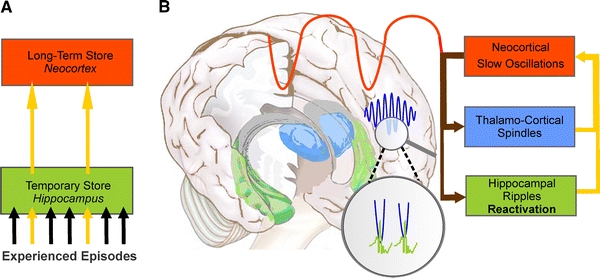
Over the past two decades, research has accumulated compelling evidence that sleep supports the formation of long-term memory. The standard two-stage memory model that has been originally elaborated for declarative memory assumes that new memories are transiently encoded into a temporary store (represented by the hippocampus in the declarative memory system) before they are gradually transferred into a long-term store (mainly represented by the neocortex), or are forgotten. Based on this model, we propose that sleep, as an offline mode of brain processing, serves the 'active system consolidation' of memory, i.e. the process in which newly encoded memory representations become redistributed to other neuron networks serving as long-term store. System consolidation takes place during slow-wave sleep (SWS) rather than rapid eye movement (REM) sleep. The concept of active system consolidation during sleep implicates that (a) memories are reactivated during sleep to be consolidated, (b) the consolidation process during sleep is selective inasmuch as it does not enhance every memory, and (c) memories, when transferred to the long-term store undergo qualitative changes. Experimental evidence for these three central implications is provided: It has been shown that reactivation of memories during SWS plays a causal role for consolidation, that sleep and specifically SWS consolidates preferentially memories with relevance for future plans, and that sleep produces qualitative changes in memory representations such that the extraction of explicit and conscious knowledge from implicitly learned materials is facilitated.
Overview
CoChat Summary
TL;DR
The review proposes that sleep, especially slow-wave sleep (SWS), actively consolidates declarative memory by reactivating newly encoded hippocampal representations and redistributing them to neocortical long-term stores. It argues this process is causal, selective for future-relevant memories, and can qualitatively transform implicit knowledge into explicit insight.
Key findings
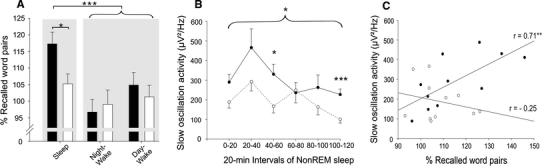
- Active system consolidation occurs mainly during SWS rather than REM sleep; slow oscillations (~0.75 Hz) coordinate hippocampal reactivations, thalamo-cortical spindles (12–15 Hz), and sharp-wave ripples to transfer memories to neocortex.
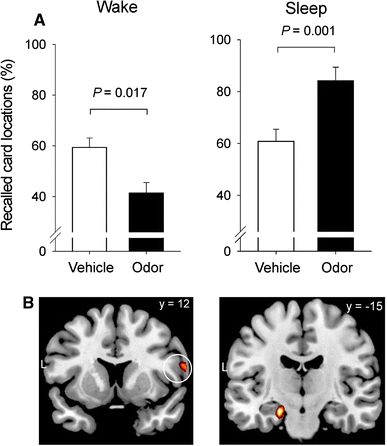
- Reactivation is causal: in Rasch et al. (2007), odour re-exposure during SWS after learning 15 card-pair locations improved memory; the effect occurred only in SWS, not REM or wake, and fMRI showed left hippocampal activation. In Diekelmann et al. (2011), SWS reactivation stabilized memories against interference, whereas wake reactivation destabilized them.
- Consolidation is selective and future-oriented: Wilhelm et al. (2011) found post-learning sleep improved delayed retrieval only when subjects expected retrieval; Fischer & Born (2009) found greater sleep-dependent motor gain for a reward-associated sequence; prospective-memory implementation depended on SWS and was nullified by prior execution.
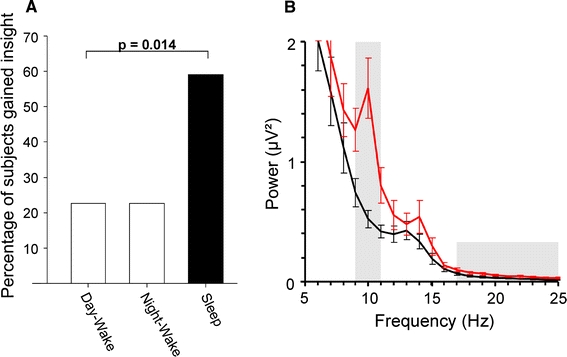
- Sleep changes memory quality: in Wagner et al. (2004), after practice on 90 Number Reduction Task strings, more than twice as many sleep-group subjects gained insight at retest (up to 300 strings) than wake controls; SWS and slow spindles favoured implicit-to-explicit transformation. In Fischer et al. (2006), after a 9-h sleep vs wake interval, sleepers could deliberately generate the trained serial reaction time sequence, while the wake group remained at chance.
Methods
- Narrative review/theoretical synthesis, not a primary empirical study; it integrates animal and human studies to elaborate the active system consolidation model.
- Focuses mainly on declarative memory, with extension to procedural memory; main analysis is conceptual integration of behavioural, EEG/fMRI, and rodent electrophysiology evidence.
- No new sample, data, or statistical analysis is reported.
Limitations
- Stated: factors determining selectivity in offline consolidation are not well understood; mechanisms of selection are obscure; the role of REM sleep in memory consolidation is presently obscure; whether natural reactivations are cue-linked or spontaneous is unsolved.
- Stated: many questions remain about reactivation/redistribution, active unlearning of hippocampal memories, whether prefrontal-hippocampal involvement at encoding is mandatory, and underlying neurophysiological mechanisms.
- Evident: as a narrative review, it does not use a systematic search or quantitative synthesis and cites some submitted/unpublished findings, so conclusions rest on selected evidence.
Model-written summary. Check it against the paper before relying on it.
Integrity signals
Registry
Cites
Statistics
Figures
Verification
Claims the paper makes
18 Valid · 4 Not valid · 47 Not checked · 57 Own results and interpretations
The cited sources support only part of this claim — read each source’s verdict below.
In the paper
“The driving influence of the depolarizing up phase of the slow oscillation on spindle and hippocampal ripple activity enables the ripples and accompanying memory information to become nested into the single oscillatory troughs of spindles (Siapas & Wilson 1998; Sirota & Buzsaki 2005; Wierzynski, Lubenov, Gu, & Siapas 2009; Mölle, Eschenko, Gais, Sara, & Born 2009; Clemens et al. 2011).”
§ System consolidation of memory during sleep > Sleep’s role in active system consolidation
What the sources say
- Not checked — no full text of the sourcecites Siapas & Wilson 1998 matched to “Coordinated interactions between hippocampal Ripples and Cortical Spindles during Slow-Wave Sleep” (1998) source
- Not checked — no full text of the sourcecites Sirota & Buzsaki 2005 matched to “Interaction between neocortical and hippocampal networks via slow oscillations” (2005) source
- Partly supportedcites Wierzynski, Lubenov, Gu, & Siapas 2009 matched to “State-dependent spike-timing relationships between hippocampal and prefrontal circuits during sleep” (2009) sourceExperimental — accuracy not yet measured
The Discussion (page unavailable) says neocortical slow oscillations can bias the timing of hippocampal sharp-wave/ripple events. The Results, under “Biphasic structure of prefrontal responses” (page unavailable), associate stronger hippocampal bursts with increased spindle-band activity after the bursts. Neither passage establishes that the depolarizing up phase drives both activities or that ripples and memory information nest in individual spindle troughs. (LLM, conf=0.86)
plainstates a cause- Asserted: passes — The authors put it forward as true.
- Checkable: passes — It can be checked against evidence.
- Load-bearing: passes — The paper’s conclusions depend on it.
- Based: passes — The paper gives a reason why it holds.
The sources with a verdict support this claim; the rest weren’t checked yet, have no full text we could read, or their verdicts aren’t rated yet.
In the paper
“Sleep-dependent reactivation of activity in brain regions implicated in prior learning was likewise revealed in human neuroimaging studies (Maquet et al. 2000; Peigneux et al. 2004).”
§ System consolidation of memory during sleep > Reactivation as basic mechanism of sleep-dependent memory consolidation
What the sources say
- Not checked — no full text of the sourcecites Maquet et al. 2000 matched to “Experience-dependent changes in cerebral activation during human REM sleep” (2000) source
- Supportedcites Peigneux et al. 2004 matched to “Are spatial memories strengthened in the human hippocampus during slow wave sleep?” (2004) source
The Discussion reports reactivation of the hippocampal formation during slow-wave sleep after training on a spatial memory task. The Introduction describes the PET comparison used to identify regions active both during waking navigation practice and during subsequent sleep. (LLM, conf=0.94)
plainstates an association- Asserted: passes — The authors put it forward as true.
- Checkable: passes — It can be checked against evidence.
- Load-bearing: passes — The paper’s conclusions depend on it.
- Based: passes — The paper gives a reason why it holds.
The cited sources support only part of this claim — read each source’s verdict below.
In the paper
“It is not limited to hippocampal circuitry but occurs also in the thalamus, striatum and neocortex (Pennartz et al. 2004; Euston et al. 2007; Lansink et al. 2008).”
§ System consolidation of memory during sleep > Reactivation as basic mechanism of sleep-dependent memory consolidation
What the sources say
- Supportedcites Pennartz et al. 2004 matched to “The ventral striatum in off-line processing: ensemble reactivation during sleep and modulation by hippocampal ripples” (2004) source
Pennartz et al. is cited here for reactivation in the striatum. The Abstract reports significant reactivation in ventral striatal ensembles during post-behavioral sleep and rest, establishing that reactivation is not limited to hippocampal circuitry. (LLM, conf=0.91)
- Not checked — no full text of the sourcecites Euston et al. 2007 matched to “Fast-Forward Playback of Recent Memory Sequences in Prefrontal Cortex During Sleep” (2007) source
- Partly supportedcites Lansink et al. 2008 matched to “Preferential Reactivation of Motivationally Relevant Information in the Ventral Striatum” (2008) sourceExperimental — accuracy not yet measured
The Abstract reports reactivation in the rat ventral striatum, and the Discussion describes replay across cortical and subcortical structures. The paper mentions thalamo-prefrontal circuits as potential targets of ventral striatal information, but the passages do not establish reactivation in the thalamus. (LLM, conf=0.86)
plain- Asserted: passes — The authors put it forward as true.
- Checkable: passes — It can be checked against evidence.
- Load-bearing: passes — The paper’s conclusions depend on it.
- Based: passes — The paper gives a reason why it holds.
- Supported
The cited sources support only part of this claim — read each source’s verdict below.
In the paper
“In rats, consolidation of hippocampus-dependent memories for a spatial maze was impaired following suppression of sharp-wave ripples typically accompanying memory reactivations during SWS (Girardeau et al. 2009; Ego-Stengel & Wilson 2010).”
§ System consolidation of memory during sleep > Reactivation as basic mechanism of sleep-dependent memory consolidation
What the sources say
- Not checked — no full text of the sourcecites Girardeau et al. 2009 matched to “Selective suppression of hippocampal ripples impairs spatial memory” (2009) source
- Partly supportedcites Ego-Stengel & Wilson 2010 matched to “Disruption of ripple‐associated hippocampal activity during rest impairs spatial learning in the rat” (2010) sourceExperimental — accuracy not yet measured
The Abstract and Introduction report that disrupting ripple-associated hippocampal activity during post-task rest impaired rats’ spatial-maze learning. However, the Discussion says the study did not distinguish effects on ripples during slow-wave sleep from effects on ripples during wakefulness, so it cannot specifically attribute the impairment to suppression during SWS. Page numbers were not provided in our copy. (LLM, conf=0.86)
plainstates a cause- Asserted: passes — The authors put it forward as true.
- Checkable: passes — It can be checked against evidence.
- Load-bearing: passes — The paper’s conclusions depend on it.
- Based: passes — The paper gives a reason why it holds.
The sources with a verdict support this claim; the rest weren’t checked yet, have no full text we could read, or their verdicts aren’t rated yet.
In the paper
“However, reactivations in the hippocampus seem to precede those in neocortex and striatum (Ji & Wilson 2007; Lansink, Goltstein, Lankelma, McNaughton, & Pennartz 2009).”
§ System consolidation of memory during sleep > Reactivation as basic mechanism of sleep-dependent memory consolidation
What the sources say
- Not checked — no full text of the sourcecites Ji & Wilson 2007 matched to “Coordinated memory replay in the visual cortex and hippocampus during sleep” (2007) source
- Supportedcites Lansink, Goltstein, Lankelma, McNaughton, & Pennartz 2009 matched to “Hippocampus leads ventral striatum in replay of place-reward information” (2009) source
The Discussion reports that hippocampus-to-ventral-striatum firing order was overrepresented during postbehavioral reactivation, supporting the part of the sentence attributed to Lansink et al. The paper addresses ventral striatum; the sentence also cites a separate work for neocortex. (LLM, conf=0.91)
hedgedstates an association- Asserted: passes — The authors put it forward as true.
- Checkable: passes — It can be checked against evidence.
- Load-bearing: passes — The paper’s conclusions depend on it.
- Based: passes — The paper gives a reason why it holds.
80 more claims · 8 with their cited sources checked
Create a free account to see all 126 claims and every source verdict.
- It may state two separate claims as one. 20
- Not yet classified. 14
- Probably not a substantial claim. 8
Claims other papers make about this one
Each is checked against this paper’s own text: does it say what the citing paper says it does?
The cited source says what the claim attributes to it.
In the citing paper
“B: system consolidation during SWS relies on a dialogue between neocortex and hippocampus under top-down control by the neocortical slow oscillations (red).”
From About Sleep's Role in Memory (2013) · cites this paper as [125]
The cited source says what the claim attributes to it.
In the citing paper
“A: during SWS, memories newly encoded into a temporary store (i.e., the hippocampus in the declarative memory system) are repeatedly reactivated, which drives their gradual redistribution to the long-term store (i.e., the neocortex).”
From About Sleep's Role in Memory (2013) · cites this paper as [125]
In the citing paper
“SO synchronizes hippocampal sharp wave ripple activity and thus fosters the integration of newly encoded hippocampus-related memories into already existing memory networks located in the neocortex [27,31,46].”
In the citing paper
“This theory, known as active system consolidation (ASC) theory, implies that while an organism is asleep, its memories are reactivated. The concept also suggests that the consolidation process selectively enhances and qualitatively changes memories being transferred to long-term storage (Born and Wilhelm, 2011).”
From Sleep deprivation and memory: A neurobiological perspective (2026) · cites this paper as Born and Wilhelm, 2011
In the citing paper
“While both REM and NREM sleep are widely recognised for their contributions to memory, findings vary across experimental designs, species, and memory domains, highlighting ongoing debates.”
From Sleep deprivation and memory: A neurobiological perspective (2026) · cites this paper as Born and Wilhelm, 2011
1 more claim about this paper
Create a free account to see every claim other papers make about this one.
Citations
Cites
An Integrative Theory of Prefrontal Cortex Function
Miller, E. K., & Cohen, J. D. (2001) · Annual Review of Neuroscience · doi:10.1146/annurev.neuro.24.1.167 · Cited by 12,803 · cited 2×
“Processing of anticipatory aspects of behaviour such as expectancies and plans is particularly linked to executive functions of the prefrontal cortex that regulates activation of memory representations during anticipated retrieval and accommodates specifically the intentional and prospective aspects of a memory repres…”
BackgroundMcClelland, J. L., McNaughton, B. L., & O'Reilly, R. C. (1995) · Psychological Review · doi:10.1037/0033-295x.102.3.419 · Cited by 5,256 · cited 2×
“…consolidation, that sleep and specifically SWS consolidates preferentially memories with relevance for future plans, and that sleep produces qualitative changes in memory representations such that the extraction of explicit and conscious knowledge from implicitly learned materials is facilitated.”
BackgroundDiekelmann, S., & Born, J. (2010) · Nature Reviews Neuroscience · doi:10.1038/nrn2762 · Cited by 3,760
Self-citationReactivation of hippocampal ensemble memories during sleep
Wilson, M. A., & McNaughton, B. L. (1994) · Science · doi:10.1126/science.8036517 · Cited by 3,118
Simple memory: a theory for archicortex
Marr, D. (1971) · Philosophical Transactions of the Royal Society of London. B, Biological Sciences · doi:10.1098/rstb.1971.0078 · Cited by 2,771 · cited 1×
“The standard twostage model of memory offers a widely accepted solution to these issues (Marr 1971; McClelland, McNaughton, & O’Reilly 1995).”
BackgroundThe organization of recent and remote memories
Frankland, P. W., & Bontempi, B. (2005) · Nature Reviews Neuroscience · doi:10.1038/nrn1607 · Cited by 2,138
Huber, R., Felice Ghilardi, M., Massimini, M., & Tononi, G. (2004) · Nature · doi:10.1038/nature02663 · Cited by 1,854 · cited 3×
“the more information is encoded during wakefulness the higher the amplitude of the slow oscillations is over respective cortical areas during succeeding SWS ( Huber, Ghilardi, Massimini, & Tononi 2004 ; M o¨lle, Marshall, Gais, & Born 2004).”
BackgroundInfluentialThe Neurobiology of Consolidations, Or, How Stable is the Engram?
Dudai, Y. (2004) · Annual Review of Psychology · doi:10.1146/annurev.psych.55.090902.142050 · Cited by 1,671 · cited 1×
“System consolidation is commonly dissociated from another type of consolidation termed ‘synaptic consolidation’ which implicates the strengthening of memory representations at the synaptic level and refers to changes of synaptic connections in localized neuronal circuits (Dudai 2004).”
BackgroundCoordinated memory replay in the visual cortex and hippocampus during sleep
Ji, D., & Wilson, M. A. (2007) · Nature Neuroscience · doi:10.1038/nn1825 · Cited by 1,669 · cited 2×
“Consistent with this concept, at the level of neuronal firing, reactivations of newly encoded memory representations in the timeframe of the slow oscillation have been demonstrated both in hippocampal and neocortical circuitry (Ji & Wilson 2007; Euston, Tatsuno, & McNaughton 2007).”
BackgroundSelective suppression of hippocampal ripples impairs spatial memory
Girardeau, G., Benchenane, K., Wiener, S. I., Buzsáki, G., & Zugaro, M. B. (2009) · Nature Neuroscience · doi:10.1038/nn.2384 · Cited by 1,560
Cited by
Items 101–200 of 672
Cohen, S., Kozlovsky, N., Matar, M. A., Kaplan, Z., Zohar, J., & Cohen, H. (2012) · Neuropsychopharmacology · doi:10.1038/npp.2012.94 · Cited by 68
Çalışkan, G., & Stork, O. (2018) · Neurobiology of Learning and Memory · doi:10.1016/j.nlm.2018.02.022 · Cited by 58
Optimizing Transcranial Direct Current Stimulation Protocols to Promote Long-Term Learning
Au, J., Karsten, C. A., Buschkuehl, M., & Jaeggi, S. M. (2017) · Journal of Cognitive Enhancement · doi:10.1007/s41465-017-0007-6 · Cited by 68
Using Oscillating Sounds to Manipulate Sleep Spindles
Antony, J. W., & Paller, K. A. (2017) · Sleep · doi:10.1093/sleep/zsw068 · Cited by 57
Keeping track of ‘alternative facts’: The neural correlates of processing misinformation corrections
Gordon, A., Quadflieg, S., Brooks, J. C. W., Ecker, U. K. H., & Lewandowsky, S. (2019) · NeuroImage · doi:10.1016/j.neuroimage.2019.03.014 · Cited by 57
Shaping memory consolidation via targeted memory reactivation during sleep
Cellini, N., & Capuozzo, A. (2018) · Annals of the New York Academy of Sciences · doi:10.1111/nyas.13855 · Cited by 55
Oral Dexmedetomidine Promotes Non-rapid Eye Movement Stage 2 Sleep in Humans
Chamadia, S., Hobbs, L. E., Marota, S., Ibala, R., Hahm, E. Y., Gitlin, J., Mekonnen, J., Ethridge, B. R., Colon, K. M., Sheppard, K. S., et al. (2020) · Anesthesiology · doi:10.1097/aln.0000000000003567 · Cited by 58
Kucewicz, M. T., Cimbálník, J., García‐Salinas, J. S., Brázdil, M., & Worrell, G. A. (2024) · Brain · doi:10.1093/brain/awae159 · Cited by 67
How to become an expert: a new perspective on the role of sleep in the mastery of procedural skills
Fogel, S. M., Ray, L. B., Binnie, L., & Owen, A. M. (2015) · Neurobiology of Learning and Memory · doi:10.1016/j.nlm.2015.10.004 · Cited by 55
The hippocampus: A central node in a large-scale brain network for memory
Huijgen, J., & Samson, S. (2015) · Revue Neurologique · doi:10.1016/j.neurol.2015.01.557 · Cited by 66
Dyscoordination of non-rapid eye movement sleep oscillations in autism spectrum disorder
Mylonas, D., Machado, S., Larson, O., Patel, R., Cox, R., Vangel, M. G., Maski, K. P., Stickgold, R., & Manoach, D. S. (2022) · SLEEP · doi:10.1093/sleep/zsac010 · Cited by 61
Emotional bias of sleep-dependent processing shifts from negative to positive with aging
Jones, B. J., Schultz, K. S., Adams, S., Baran, B., & Spencer, R. M. C. (2016) · Neurobiology of Aging · doi:10.1016/j.neurobiolaging.2016.05.019 · Cited by 51
Brain Rhythms During Sleep and Memory Consolidation: Neurobiological Insights
Marshall, L., Cross, N., Binder, S., & Dang-Vu, T. T. (2020) · Physiology · doi:10.1152/physiol.00004.2019 · Cited by 52
Increased creative thinking in narcolepsy
Lacaux, C., Izabelle, C., Santantonio, G., De Villèle, L., Frain, J., Lubart, T., Pizza, F., Plazzi, G., Arnulf, I., & Oudiette, D. (2019) · Brain · doi:10.1093/brain/awz137 · Cited by 51
“Theoretical accounts propose that, instead of purely consolidating newly existing memories, a process that takes place during non-REM sleep via neuronal replays (O’Neill et al., 2010; Born and Wilhelm, 2012), REM sleep would allow these mnesic traces to mingle and associate with already-stored memories in novel and ab…”
BackgroundLlewellyn, S., & Hobson, J. A. (2015) · Neurobiology of Learning and Memory · doi:10.1016/j.nlm.2015.04.005 · Cited by 60
Wiegand, J. L., Gray, D. T., Schimanski, L. A., Lipa, P., Barnes, C. A., & Cowen, S. L. (2016) · Journal of Neuroscience · doi:10.1523/jneurosci.3069-15.2016 · Cited by 59
“It is conceivable that the reduced rate of ripple events in aged animals was due to a decrease in sleep quality, as has been documented (for review, see Bliwise, 1993).”
The Limited Capacity of Sleep-Dependent Memory Consolidation
Feld, G. B., Weis, P. P., & Born, J. (2016) · Frontiers in Psychology · doi:10.3389/fpsyg.2016.01368 · Cited by 51
Self-citationAddressing the Social Determinants of Health: A Call to Action for School Nurses
Schroeder, K., Malone, S. K., McCabe, E. M., & Lipman, T. H. (2018) · The Journal of School Nursing · doi:10.1177/1059840517750733 · Cited by 70
Dai, D., Zheng, B., Yu, Z., Lin, S., Tang, Y., Chen, M., Peng, K., Zheng, C., Chen, Y., & Wu, X. (2021) · BMC Anesthesiology · doi:10.1186/s12871-021-01486-4 · Cited by 51
Denis, D., Sanders, K. E. G., Kensinger, E. A., & Payne, J. D. (2022) · Proceedings of the National Academy of Sciences · doi:10.1073/pnas.2202657119 · Cited by 54
Lutsey, P. L., Norby, F. L., Gottesman, R. F., Mosley, T., MacLehose, R. F., Punjabi, N. M., Shahar, E., Jack, C. R., & Alonso, A. (2016) · PLOS ONE · doi:10.1371/journal.pone.0158758 · Cited by 50
Schoch, S. F., Cordi, M. J., & Rasch, B. (2017) · Neurobiology of Learning and Memory · doi:10.1016/j.nlm.2017.10.009 · Cited by 52
Murphy, M., Stickgold, R., Parr, E., Callahan, C. E., & Wamsley, E. J. (2018) · Scientific Reports · doi:10.1038/s41598-018-23590-1 · Cited by 58
Zhang, Y., Quiñones, G. M., & Ferrarelli, F. (2019) · Schizophrenia Research · doi:10.1016/j.schres.2019.11.002 · Cited by 52
Kohtala, S., Alitalo, O., Rosenholm, M., Rozov, S. V., & Rantamäki, T. (2020) · Pharmacology & Therapeutics · doi:10.1016/j.pharmthera.2020.107741 · Cited by 50
Cognitive Neuroscience of Memory
Slotnick, S. D. (2017) · Cambridge University Press eBooks · doi:10.1017/9781316026687 · Cited by 47
Nap sleep preserves associative but not item memory performance
Studte, S., Bridger, E. K., & Mecklinger, A. (2015) · Neurobiology of Learning and Memory · doi:10.1016/j.nlm.2015.02.012 · Cited by 56
Stimulating the sleeping brain: Current approaches to modulating memory-related sleep physiology
Cellini, N., & Mednick, S. C. (2019) · Journal of Neuroscience Methods · doi:10.1016/j.jneumeth.2018.11.011 · Cited by 44
Remembering to Forget: A Dual Role for Sleep Oscillations in Memory Consolidation and Forgetting
Langille, J. J. (2019) · Frontiers in Cellular Neuroscience · doi:10.3389/fncel.2019.00071 · Cited by 54
Monoi, N., Matsuno, A., Nagamori, Y., Kimura, E., Nakamura, Y., Oka, K., Sano, T., Midorikawa, T., Sugafuji, T., Murakoshi, M., et al. (2015) · Journal of Sleep Research · doi:10.1111/jsr.12336 · Cited by 47
Farthouat, J., Gilson, M., & Peigneux, P. (2017) · Sleep Spindles & Cortical Up States · doi:10.1556/2053.1.2016.002 · Cited by 42
Stimulation Augments Spike Sequence Replay and Memory Consolidation during Slow-Wave Sleep
Wei, Y., Krishnan, G. P., Marshall, L., Martinetz, T., & Bazhenov, M. (2019) · Journal of Neuroscience · doi:10.1523/jneurosci.1427-19.2019 · Cited by 43
Liu, Y., & van Hell, J. G. (2020) · Language Learning · doi:10.1111/lang.12403 · Cited by 48
Chatburn, A., Lushington, K., & Kohler, M. J. (2014) · Neuroscience & Biobehavioral Reviews · doi:10.1016/j.neubiorev.2014.10.018 · Cited by 42
Declarative and Non-declarative Memory Consolidation in Children with Sleep Disorder
Csábi, E., Benedek, P. E., Janacsek, K., Zavecz, Z., Katona, G., & Németh, D. (2016) · Frontiers in Human Neuroscience · doi:10.3389/fnhum.2015.00709 · Cited by 43
Slow wave and REM sleep deprivation effects on explicit and implicit memory during sleep.
Casey, S. J., Solomons, L. C., Steier, J. S., Kabra, N., Burnside, A. M., Pengo, M. F., Moxham, J., Goldstein, L. H., & Kopelman, M. D. (2016) · Neuropsychology · doi:10.1037/neu0000314 · Cited by 57
Slow wave sleep in naps supports episodic memories in early childhood
Lokhandwala, S., & Spencer, R. M. C. (2021) · Developmental Science · doi:10.1111/desc.13035 · Cited by 41
“Developmental Science published by John Wiley & Sons Ltd the hippocampus to the cortex, a process termed sleep-dependent memory consolidation (Born & Wilhelm, 2012; Maquet, 2001).”
MethodSleep spindles provide indirect support to the consolidation of emotional encoding contexts
Cairney, S. A., Durrant, S. J., Jackson, R., & Lewis, P. A. (2014) · Neuropsychologia · doi:10.1016/j.neuropsychologia.2014.09.016 · Cited by 39
van der Meij, J., Martínez-González, D., Beckers, G. J. L., & Rattenborg, N. C. (2018) · SLEEP · doi:10.1093/sleep/zsy230 · Cited by 50
Edwards, C. L., Ruby, P. M., Malinowski, J. E., Bennett, P. D., & Blagrove, M. T. (2013) · Frontiers in Psychology · doi:10.3389/fpsyg.2013.00979 · Cited by 41
“The results from the GDI accord with the conclusions of Pesant and Zadra (2004) that exploring dream content and linking that content to the dreamer’s waking life can help in the achievement of insights and self-understanding.”
BackgroundResultNo effect of targeted memory reactivation during slow‐wave sleep on emotional recognition memory
Ashton, J. E., Cairney, S. A., & Gaskell, M. G. (2018) · Journal of Sleep Research · doi:10.1111/jsr.12542 · Cited by 40
Simple statistical regularities presented during sleep are detected but not retained
Batterink, L. J., & Zhang, S. (2021) · Neuropsychologia · doi:10.1016/j.neuropsychologia.2021.108106 · Cited by 40
Cross-modal transfer of statistical information benefits from sleep
Durrant, S. J., Cairney, S. A., & Lewis, P. A. (2016) · Cortex · doi:10.1016/j.cortex.2016.02.011 · Cited by 39
“…the connection has been modified by consolidation processes during SWS such that more SWS has strengthened the connection through reactivation (Born and Wilhelm 2012), while insufficient SWS has failed to counteract the effects of synaptic homeostasis driven by pre-task activation from the…”
Cota, V. R., Drabowski, B. M. B., de Oliveira, J. C., & Moraes, M. F. D. (2016) · Journal of Neuroscience Research · doi:10.1002/jnr.23741 · Cited by 40
Cohen, S., Kaplan, Z., Zohar, J., & Cohen, H. (2016) · Behavioural Brain Research · doi:10.1016/j.bbr.2016.10.039 · Cited by 40
Riggins, T., & Spencer, R. M. C. (2020) · Scientific Reports · doi:10.1038/s41598-020-72231-z · Cited by 49
Mapping sleep's oscillatory events as a biomarker of Alzheimer's disease
Pulver, R. L., Kronberg, E., Medenblik, L. M., Kheyfets, V. O., Ramos, A. R., Holtzman, D. M., Morris, J. C., Toedebusch, C. D., Sillau, S., Bettcher, B. M., et al. (2023) · Alzheimer s & Dementia · doi:10.1002/alz.13420 · Cited by 51
Mystery of the memory engram: History, current knowledge, and unanswered questions
Lopez, M. R., Wasberg, S. M., Gagliardi, C. M., Normandin, M. E., & Muzzio, I. A. (2024) · Neuroscience & Biobehavioral Reviews · doi:10.1016/j.neubiorev.2024.105574 · Cited by 49
Memory corticalization triggered by REM sleep: mechanisms of cellular and systems consolidation
Almeida-Filho, D. G., Queiroz, C. M., & Ribeiro, S. (2018) · Cellular and Molecular Life Sciences · doi:10.1007/s00018-018-2886-9 · Cited by 38
Muehlroth, B. E., Sander, M. C., Fandakova, Y., Grandy, T. H., Rasch, B., Shing, Y. L., & Werkle‐Bergner, M. (2019) · NeuroImage · doi:10.1016/j.neuroimage.2019.116490 · Cited by 45
Jacola, L. M., Conklin, H. M., Scoggins, M. A., Ashford, J. M., Merchant, T. E., Mandrell, B. N., Ogg, R. J., Curtis, E., Wise, M. S., Indelicato, D. J., et al. (2016) · Journal of Pediatric Psychology · doi:10.1093/jpepsy/jsw026 · Cited by 37
Harrington, M. O., Johnson, J. M., Croom, H. E., Pennington, K., & Durrant, S. J. (2018) · Cortex · doi:10.1016/j.cortex.2017.12.004 · Cited by 37
Effects of early morning nap sleep on associative memory for neutral and emotional stimuli
Sopp, M. R., Michael, T., & Mecklinger, A. (2018) · Brain Research · doi:10.1016/j.brainres.2018.06.020 · Cited by 36
CE: The Potential Effects of Sleep Loss on a Nurse's Health
Eanes, L. S. (2015) · AJN American Journal of Nursing · doi:10.1097/01.naj.0000463025.42388.10 · Cited by 53
Studte, S., Bridger, E. K., & Mecklinger, A. (2017) · Brain and Language · doi:10.1016/j.bandl.2016.03.003 · Cited by 45
Sleep reduces the testing effect—But not after corrective feedback and prolonged retention interval.
Abel, M., Haller, V., Köck, H., Pötschke, S., Heib, D., Schabus, M., & Bäuml, K.-H. T. (2019) · Journal of Experimental Psychology: Learning, Memory, and Cognition · doi:10.1037/xlm0000576 · Cited by 33
Britten, R. A., Wellman, L. L., & Sanford, L. D. (2021) · Neuroscience & Biobehavioral Reviews · doi:10.1016/j.neubiorev.2021.01.027 · Cited by 40
Targeting targeted memory reactivation: Characteristics of cued reactivation in sleep
Abdellahi, M. E. A., Koopman, A. C. M., Treder, M. S., & Lewis, P. A. (2022) · NeuroImage · doi:10.1016/j.neuroimage.2022.119820 · Cited by 35
Targeting sleep oscillations to improve memory in schizophrenia
Manoach, D. S., Mylonas, D., & Baxter, B. (2020) · Schizophrenia Research · doi:10.1016/j.schres.2020.01.010 · Cited by 36
Integrative Model of the Relationship Between Sleep Problems and Risk for Youth Substance Use
Edwards, S. M., Reeves, G. M., & Fishbein, D. H. (2015) · Current Addiction Reports · doi:10.1007/s40429-015-0052-0 · Cited by 40
Pathophysiology of sleep-dependent memory consolidation processes in children
Urbain, C. M., Galer, S., Bogaert, P. V., & Peigneux, P. (2013) · International Journal of Psychophysiology · doi:10.1016/j.ijpsycho.2013.06.022 · Cited by 39
Cross, Z. R., Kohler, M. J., Schlesewsky, M., Gaskell, M. G., & Bornkessel‐Schlesewsky, I. (2018) · Frontiers in Human Neuroscience · doi:10.3389/fnhum.2018.00018 · Cited by 38
The effect of dream report collection and dream incorporation on memory consolidation during sleep
Schoch, S. F., Cordi, M. J., Schredl, M., & Rasch, B. (2019) · Journal of Sleep Research · doi:10.1111/jsr.12754 · Cited by 34
Peiffer, A., Brichet, M., De Tiège, X., Peigneux, P., & Urbain, C. (2020) · Scientific Reports · doi:10.1038/s41598-020-66880-3 · Cited by 34
The role of sleep for episodic memory consolidation: stabilizing or rescuing?
Zhang, J., Whitehurst, L. N., & Mednick, S. C. (2022) · Neurobiology of Learning and Memory · doi:10.1016/j.nlm.2022.107621 · Cited by 34
Joyce, A., Hill, C. M., Karmiloff‐Smith, A., & Dimitriou, D. (2015) · Developmental Science · doi:10.1111/desc.12383 · Cited by 39
Sleep Preserves Physiological Arousal in Emotional Memory
Ashton, J. E., Harrington, M. O., Guttesen, A. Á. V., Smith, A. K., & Cairney, S. A. (2019) · Scientific Reports · doi:10.1038/s41598-019-42478-2 · Cited by 33
Epilepsy as a dynamical system, a most needed paradigm shift in epileptology
Moraes, M. F. D., Medeiros, D. D. C., Mourão, F. A. G., Cançado, S. A. V., & Cota, V. R. (2019) · Epilepsy & Behavior · doi:10.1016/j.yebeh.2019.106838 · Cited by 38
Coutanche, M. N., Gianessi, C. A., Chanales, A. J. H., Willison, K. W., & Thompson-Schill, S. L. (2013) · Hippocampus · doi:10.1002/hipo.22157 · Cited by 31
Sleep, cognition and cortisol in addison’s disease: a mechanistic relationship
Henry, M., Thomas, K. G. F., & Ross, I. L. (2021) · Frontiers in Endocrinology · doi:10.3389/fendo.2021.694046 · Cited by 34
The reuniens and rhomboid nuclei are necessary for contextual fear memory persistence in rats
Quet, É., Majchrzak, M. J., Cosquer, B., Morvan, T., Wolff, M., Cassel, J., de Vasconcelos, A. P., & Stéphan, A. (2020) · Brain Structure and Function · doi:10.1007/s00429-020-02048-z · Cited by 34
Zhuang, L., Wang, J., Xiong, B., Bian, C., Lei, H. C., Bayley, P. J., & Qin, S. (2021) · Nature Human Behaviour · doi:10.1038/s41562-021-01188-4 · Cited by 43
Targeted memory reactivation of face-name learning depends on ample and undisturbed slow-wave sleep
Whitmore, N. W., Bassard, A. M., & Paller, K. A. (2022) · npj Science of Learning · doi:10.1038/s41539-021-00119-2 · Cited by 39
EEG connectivity across sleep cycles and age
Bouchard, M., Lina, J., Gaudreault, P., Dubé, J., Gosselin, N., & Carrier, J. (2019) · SLEEP · doi:10.1093/sleep/zsz236 · Cited by 39
Targeted memory reactivation in human REM sleep elicits detectable reactivation
Abdellahi, M. E. A., Koopman, A. C. M., Treder, M. S., & Lewis, P. A. (2023) · eLife · doi:10.7554/elife.84324 · Cited by 34
Test Expectation Enhances Memory Consolidation across Both Sleep and Wake.
Wamsley, E. J., Hamilton, K., Graveline, Y., Manceor, S., & Parr, E. (2016) · PLoS ONE · doi:10.1371/journal.pone.0165141 · Cited by 29
Fernandes, M., Placidi, F., Mercuri, N. B., & Liguori, C. (2021) · Journal of Alzheimer s Disease Reports · doi:10.3233/adr-210004 · Cited by 31
Sounding it out: auditory stimulation and overnight memory processing
Harrington, M. O., & Cairney, S. A. (2021) · Current Sleep Medicine Reports · doi:10.1007/s40675-021-00207-0 · Cited by 28
Nicolas, J., King, B. R., Levesque, D., Lazzouni, L., Coffey, E., Swinnen, S., Doyon, J., Carrier, J., & Albouy, G. (2022) · eLife · doi:10.7554/elife.73930 · Cited by 28
“Such reactivations are thought to support the transfer of memory traces to the neocortex (15).”
InfluentialMalinowski, J. E., & Horton, C. L. (2021) · Consciousness and Cognition · doi:10.1016/j.concog.2020.103071 · Cited by 28
Dumel, G., Bourassa, M., Charlebois‐Plante, C., Desjardins, M., Doyon, J., Saint‐Amour, D., & Beaumont, L. D. (2018) · Frontiers in Aging Neuroscience · doi:10.3389/fnagi.2018.00335 · Cited by 34
Gao, C., Fillmore, P., & Scullin, M. K. (2020) · Neurobiology of Learning and Memory · doi:10.1016/j.nlm.2020.107206 · Cited by 42
Personalized Medicine and Obstructive Sleep Apnea
Duong‐Quy, S., Nguyen-Huu, H., Hoang-Chau-Bao, D., Tran-Duc, S., Nguyen-Thi-Hong, L., Nguyen, D., Tang-Thi-Thao, T., Phan, C., Bui-Diem, K., Vu-Tran-Thien, Q., et al. (2022) · Journal of Personalized Medicine · doi:10.3390/jpm12122034 · Cited by 32
Vermeulen, M. C. M., van der Heijden, K. B., Swaab, H., & Someren, E. J. W. V. (2018) · Journal of Sleep Research · doi:10.1111/jsr.12779 · Cited by 30
Sleep in Patients With Schizophrenia
Ferrarelli, F. (2015) · Current Sleep Medicine Reports · doi:10.1007/s40675-015-0010-3 · Cited by 25
Malinowski, J. E., Scheel, D., & McCloskey, M. (2021) · Consciousness and Cognition · doi:10.1016/j.concog.2021.103214 · Cited by 27
Moroni, F., Nobili, L., Iaria, G., Sartori, I., Marzano, C., Tempesta, D., Proserpio, P., Russo, G. L., Gozzo, F., Cipolli, C., et al. (2014) · Hippocampus · doi:10.1002/hipo.22299 · Cited by 31
Heib, D. P. J., Hoedlmoser, K., Anderer, P., Gruber, G., Zeitlhofer, J., & Schabus, M. (2015) · Journal of Cognitive Neuroscience · doi:10.1162/jocn_a_00804 · Cited by 36
Prior Knowledge Predicts Early Consolidation in Second Language Learning
Ben-Zion, D., Nevat, M., Prior, A., & Bitan, T. (2019) · Frontiers in Psychology · doi:10.3389/fpsyg.2019.02312 · Cited by 38
Alzoubi, K. H., Abdel‐Hafiz, L., Khabour, O. F., El‐Elimat, T., Alzubi, M. A., & Alali, F. Q. (2020) · Drug Design Development and Therapy · doi:10.2147/dddt.s278153 · Cited by 27
No benefit of auditory closed-loop stimulation on memory for semantically-incongruent associations
Harrington, M. O., Ngo, H.-V. V., & Cairney, S. A. (2021) · Neurobiology of Learning and Memory · doi:10.1016/j.nlm.2021.107482 · Cited by 26
Sleep’s contribution to memory formation
Lutz, N. D., Harkotte, M., & Born, J. (2025) · Physiological Reviews · doi:10.1152/physrev.00054.2024 · Cited by 60
Self-citationModafinil ameliorates cognitive deficits induced by maternal separation and sleep deprivation
Garcia, V. A., Hirotsu, C., Matos, G., Alvarenga, T. A., Pires, G. N., Kapczinski, F. P., Schröder, N., Tufik, S. B., & Andersen, M. L. (2013) · Behavioural Brain Research · doi:10.1016/j.bbr.2013.07.029 · Cited by 30
Baena, D., Cantero, J. L., Fuentemilla, L., & Atienza, M. (2020) · Scientific Reports · doi:10.1038/s41598-020-58496-4 · Cited by 30
Azza, Y., Wilhelm, I., & Kleim, B. (2020) · European Psychologist · doi:10.1027/1016-9040/a000401 · Cited by 26
Self-citationThe effect of sleep on motor learning in the aging and stroke population – a systematic review.
Backhaus, W., Kempe, S., & Hummel, F. C. (2015) · Restorative Neurology and Neuroscience · doi:10.3233/rnn-150521 · Cited by 12
Farthouat, J., Atas, A., Wens, V., Tiège, X. D., & Peigneux, P. (2018) · Scientific Reports · doi:10.1038/s41598-018-30105-5 · Cited by 25
The role of sleep in emotional memory processing in middle age
Jones, B. J., Mackay, A., Mantua, J., Schultz, K. S., & Spencer, R. M. C. (2018) · Neurobiology of Learning and Memory · doi:10.1016/j.nlm.2018.08.002 · Cited by 24
The two tales of hippocampal sharp-wave ripple content: The rigid and the plastic
Hall, A. F., & Wang, D. V. (2023) · Progress in Neurobiology · doi:10.1016/j.pneurobio.2022.102396 · Cited by 23
Item-specific neural representations during human sleep support long-term memory
Liu, J., Xia, T., Chen, D., Yao, Z., Zhu, M., Antony, J. W., Lee, T. M. C., & Hu, X. (2023) · PLoS Biology · doi:10.1371/journal.pbio.3002399 · Cited by 25
Metadata
- Authors
- Born, J., & Wilhelm, I.
- Affiliations
- University of Lübeck (DE)
- Venue
- Psychological Research
- Published
- 2011-05-04
- Volume
- 76
- Issue
- 2
- Pages
- 192-203
- ISSN
- 0033-3026 (ISSN-L)
- 0340-0727
- 1430-2772
- PMC
- PMC3278619
- OpenAlex
- W2067944500
- Cited by
- 667
- References
- 90
- Citations by year
- 2026: 42 · 2025: 70 · 2024: 58 · 2023: 40 · 2022: 55 · 2021: 53 · 2020: 55 · 2019: 53 · 2018: 46 · 2017: 52 · 2016: 40 · 2015: 35 · 2014: 27 · 2013: 27 · 2012: 11
- FWCI
- 1.83
- Type
- journal article
- Language
- en
- Open access
- hybrid
- doi.org
- Licence
- cc-by-nc
- Locations
- Psychological Research (publishedVersion, cc-by-nc)
- Europe PMC (PubMed Central) (publishedVersion, cc-by-nc)
- PubMed Central (publishedVersion, cc-by-nc)
- PubMed (publishedVersion)
- Funders
- Deutsche Forschungsgemeinschaft (SFB654)
- Bundesministerium für Bildung und Forschung
- Topics
- Life Sciences › Neuroscience › Cognitive Neuroscience › Sleep and Wakefulness Research
- Life Sciences › Neuroscience › Cognitive Neuroscience › Memory and Neural Mechanisms
- Life Sciences › Neuroscience › Cognitive Neuroscience › Memory Processes and Influences
- Keywords
- sleep-dependent memory consolidation, slow-wave sleep, REM sleep, memory reactivation, hippocampus, neocortex, declarative memory, memory transfer, implicit learning
- MeSH terms
- Brain, Humans, Memory, Neuronal Plasticity, Neurons, Sleep
About these checks
Registry, retraction, Cites and statistics results are computed, not judged, with one exception: a printed reference that no index lists is read once by a model before it counts as a citation error. Claims are extracted by a model and kept only when their quote appears verbatim in the text; each cited source is then checked, with a model’s help, for whether it says what the claim relies on. Those verdicts can be wrong — read the claim’s quote and the cited source before relying on one.
The claim verdicts this report counts are experimental: their accuracy is not yet measured.
A language model drew the claims from the paper on 2026-09-28, under version 3 of the claim definition (model deepseek-v4.1-flash, prompt extract-v3).
A second model labelled each claim on 2026-09-28 (model jev-1.13-20260917, definition revision gold-guideline-v0.2).
Cited sources are checked with a language model’s help (gpt-6-sol).
Statistics and arithmetic are recomputed, not judged.
Confidence bands are shown only for fields calibrated on our annotated test set. None is calibrated yet, so no band is shown.
What counts as a claim ›How we measure confidence ›How we check this ›
Are you an author, or do you see a problem with this page? Request a review
Data sources
Bibliographic data: Semantic Scholar, OpenAlex, Crossref.
Contains information from the Semantic Scholar Academic Graph Datasets, made available under the ODC Attribution License (ODC-BY 1.0).
Semantic Scholar’s data is described in: Kinney, R., et al. (2023). The Semantic Scholar Open Data Platform. arXiv:2301.10140.
