

The DOI matches its Crossref record; 116 of the 116 references it cites were found in a registry or an index.
Extending the technology acceptance model (TAM) to predict university students’ intentions to use metaverse-based learning platforms
Open accessAbstract
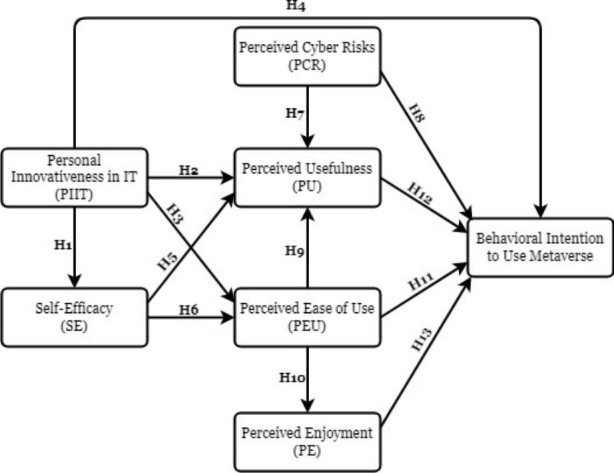
Metaverse, which combines a number of information technologies, is the Internet of the future. A media for immersive learning, metaverse could set future educational trends and lead to significant reform in education. Although the metaverse has the potential to improve the effectiveness of online learning experiences, metaverse-based educational implementations are still in their infancy. Additionally, what factors impact higher education students' adoption of the educational metaverse remains unclear. Consequently, the aim of this study is to explore the main factors that affect higher education students' behavioral intentions to adopt metaverse technology for education. This study has proposed an extended Technology Acceptance Model (TAM) to achieve this aim. The novelty of this study resides in its conceptual model, which incorporates both technological, personal, and inhibiting/enabling factors. The empirical data were collected via online questionnaires from 574 students in both private and public universities in Jordan. Based on the PLS-SEM analysis, the study identifies perceived usefulness, personal innovativeness in IT, and perceived enjoyment as key enablers of students' behavioral intentions to adopt the metaverse. Additionally, perceived cyber risk is found as the main inhibitor of students' metaverse adoption intentions. Surprisingly, the effect of perceived ease of use on metaverse adoption intentions is found to be insignificant. Furthermore, it is found that self-efficacy, personal innovativeness, and perceived cyber risk are the main determinants of perceived usefulness and perceived ease of use. While the findings of this study contribute to the extension of the TAM model, the practical value of these findings is significant since they will help educational authorities understand each factor's role and enable them to plan their future strategies.
Overview
The claims and statistics of this paper haven’t been checked yet.
Run the check — free, no account needed. It reads the open-access text and checks the sources it cites.
Integrity signals
Registry
Cites
Statistics
Figures
Verification
Claims the paper makes
The claims and statistics of this paper haven’t been checked yet.
Run the check — free, no account needed. It reads the open-access text and checks the sources it cites.
Claims other papers make about this one
Each is checked against this paper’s own text: does it say what the citing paper says it does?
The source backs part of the claim, not all of it — or backs it for a different population, condition or comparison.
In the citing paper
“They also aligned with evidence from mobile learning research showing that positive attitudes can strengthen students’ intention to use new technologies [91].”
From Advancing Undergraduate Student Mental Healthcare of Social Anxiety Disorder: Evaluating the Acceptance of AR-Assisted Cognitive Behavioral Therapy Through TAM-Based Constructs. (2026) · cites this paper as [91]
Experimental — accuracy not yet measured
Self-check
Percentages, sums and reported differences re-computed from the paper’s own numbers.
The self-check needs the paper’s full text.
Citations
Cites
Evaluating Structural Equation Models with Unobservable Variables and Measurement Error
Fornell, C., & Larcker, D. F. (1981) · Journal of Marketing Research · doi:10.2307/3151312 · Cited by 109,314
Evaluating structural equation models with unobservable variables and measurement error
Fornell, C., & Larcker, D. F. (1981) · Journal of Marketing Research · doi:10.1177/002224378101800104 · Cited by 109,190 · cited 1×
“As demonstrated in Table 4, this condition is met, concluding that discriminant validity is present (Fornell & Larcker, 1981 ).”
BackgroundThe theory of planned behavior
Ajzen, I. (1991) · Organizational Behavior and Human Decision Processes · doi:10.1016/0749-5978(91)90020-t · Cited by 90,587 · cited 1×
“According to Ajzen (1991), SE designates the confidence that one possesses in one’s capability to engage in a specific behavior.”
MethodPodsakoff, P. M., MacKenzie, S. B., Lee, J.-Y., & Podsakoff, N. P. (2003) · Journal of Applied Psychology · doi:10.1037/0021-9010.88.5.879 · Cited by 82,194 · cited 1×
“The finding showed that the loading of all measurement items in the dataset at once yielded a total variation of 44.678%, which is below the 50% threshold, indicating that CMB is absent (Podsakoff et al., 2003 ).”
BackgroundInfluentialStructural equation modeling in practice: A review and recommended two-step approach
Anderson, J. C., & Gerbing, D. W. (1988) · Psychological Bulletin · doi:10.1037/0033-2909.103.3.411 · Cited by 41,941 · cited 1×
“As instructed, we conducted the data analysis in two steps (Anderson & Gerbing, 1988 ).”
MethodA new criterion for assessing discriminant validity in variance-based structural equation modeling
Henseler, J., Ringle, C. M., & Sarstedt, M. (2015) · Journal of the Academy of Marketing Science · doi:10.1007/s11747-014-0403-8 · Cited by 38,459 · cited 1×
“Moreover, the result of the “Heterotrait–Mono - trait Ratio-HTMT” test indicates that all HTMT values < 0.85 (Henseler et al., 2015), endorsing the findings in terms of Fornell and Larcker’s criterion.”
ResultInfluentialWhen to Use and How to Report the Results of PLS-SEM
Hair, J. F., Risher, J. J., Sarstedt, M., & Ringle, C. M. (2019) · European Business Review · doi:10.1108/ebr-11-2018-0203 · Cited by 27,541 · cited 5×
“The outcomes showed that each construct in the research model acquired an accept - able Cronbech’s Alpha ( > 0.7) (Hair et al., 2019).”
BackgroundMethodResultInfluentialUser Acceptance of Computer Technology: A Comparison of Two Theoretical Models
Davis, F. D., Bagozzi, R. P., & Warshaw, P. R. (1989) · Management Science · doi:10.1287/mnsc.35.8.982 · Cited by 25,709 · cited 3×
“PU describes the extent to which individuals perceive that the usage of a specific technology enhances their performance (Davis et al., 1989).”
BackgroundInfluentialValente, T. W. (2003) · Genetics in Medicine · doi:10.1097/01.gim.0000061743.67794.c4 · Cited by 20,559
Venkatesh, V., Thong, J. Y. L., & Xu, X. (2012) · MIS Quarterly · doi:10.2307/41410412 · Cited by 15,756 · cited 1×
“Intrinsic motivation underpins the enjoyment concept (Abdullah & Ward, 2016), and is considered a hedonic motivation conceptualization (Venkatesh et al., 2012 ).”
BackgroundBack-translation for cross-cultural research.
Brislin, R. W. (1970) · Journal of Cross-Cultural Psychology · doi:10.1177/135910457000100301 · Cited by 14,091 · cited 2×
“We followed the back-translating procedure to ensure that the meanings of the questionnaire items remained consistent after being translated from English to Arabic (Brislin, 1970).”
Method\nThe use of partial least squares path modeling in international marketing
Henseler, J., Ringle, C. M., & Sinkovics, R. R. (2009) · Radboud Repository (Radboud University) · doi:10.1108/s1474-7979(2009)0000020014 · Cited by 12,535
Palinkas, L. A., Horwitz, S. M., Green, C. A., Wisdom, J. P., Duan, N., & Hoagwood, K. (2015) · Administration and Policy in Mental Health and Mental Health Services Research · doi:10.1007/s10488-013-0528-y · Cited by 12,038 · cited 1×
“Purposive sampling entails recruiting participants if they meet particu - lar screening conditions and based on their expertise or familiarity with the issue under investigation (Palinkas et al., 2015 ).”
BackgroundPartial Least Squares Structural Equation Modeling (PLS-SEM) Using R: A Workbook
Hair, J. F., Hult, G. T. M., Ringle, C. M., Sarstedt, M., Danks, N. P., & Ray, S. (2021) · Classroom Companion: Business · doi:10.1007/978-3-030-80519-7 · Cited by 10,343
Social Foundations of Thought and Action
Bandura, A. (2002) · SAGE Publications Ltd eBooks · doi:10.4135/9781446221129.n6 · Cited by 9,948 · cited 3×
“According to Bandura ( 1986), SE represents individuals’ judgments in terms of “their capabilities to organize and execute a course of action required to attain designated types of performances” (p. 391).”
BackgroundMethodInfluentialVenkatesh, V. (2000) · Information Systems Research · doi:10.1287/isre.11.4.342.11872 · Cited by 6,664 · cited 1×
“PE represents the degree to which an individual has fun and pleasure as a result of uti - lizing a particular technology (Shen et al., 2022; Venkatesh, 2000 , p.351) states that PE is the degree to which “the activity of using a specific system is perceived to be enjoyable in its own right, aside…”
BackgroundExtrinsic and Intrinsic Motivation to Use Computers in the Workplace 1
Davis, F. D., Bagozzi, R. P., & Warshaw, P. R. (1992) · Journal of Applied Social Psychology · doi:10.1111/j.1559-1816.1992.tb00945.x · Cited by 6,231 · cited 1×
“PE reflects the level of joy and fun that can be obtained as a result of using a specific system or technology (Davis et al., 1992).”
BackgroundA Model of the Antecedents of Perceived Ease of Use: Development and Test
Venkatesh, V., & Davis, F. D. (1996) · Decision Sciences · doi:10.1111/j.1540-5915.1996.tb00860.x · Cited by 4,068 · cited 1×
“Individuals with more confidence in their abilities to learn how to utilize information technology are inclined to view the technology as easy to use and beneficial, than those with less confidence (Venkatesh & Davis, 1996).”
BackgroundUser Acceptance of Hedonic Information Systems1
van der Heijden, H. (2004) · MIS Quarterly · doi:10.2307/25148660 · Cited by 3,850 · cited 1×
“It is claimed that PE significantly influences users’ intentions to adopt hedonic systems or technologies such as metaverse, as being ones which give users joy or pleasure (Humida et al., 2022; Van der Heijden, 2004 ).”
BackgroundAgarwal, R., & Prasad, J. (1998) · Information Systems Research · doi:10.1287/isre.9.2.204 · Cited by 3,575 · cited 3×
“The link between technology and the level of innovation receptivity affects how ready an individual is to adopt a technology (Agarwal & Prasad, 1998 ).”
BackgroundInfluentialDwivedi, Y. K., Hughes, L., Baabdullah, A. M., Ribeiro-Navarrete, S., Giannakis, M., Al-Debei, M. M., Dennehy, D., Metri, B., Buhalis, D., Cheung, C. M. K., et al. (2022) · International Journal of Information Management · doi:10.1016/j.ijinfomgt.2022.102542 · Cited by 2,753 · cited 7×
“Consequently, they are unable to replicate the experience of tradetional learning (Dwivedi et al., 2022).”
BackgroundInfluentialAkçayır, M., & Akçayır, G. (2017) · Educational Research Review · doi:10.1016/j.edurev.2016.11.002 · Cited by 2,463 · cited 1×
“In developing countries, there is a lack of widespread adoption of immersive technologies in organizations and among individuals due to a scarcity of adequate empirical studies on its use (Khan et al., 2019; Akçayır and Akçayır, 2017).”
BackgroundLee, L., Braud, T., Zhou, P., Wang, L., Xu, D., Lin, Z., Kumar, A., Bermejo, C., & Hui, P. (2024) · Foundations and Trends® in Human–Computer Interaction · doi:10.1561/1100000095 · Cited by 1,686
A Survey on Metaverse: Fundamentals, Security, and Privacy
Wang, Y., Su, Z., Zhang, N., Xing, R., Liu, D., Luan, T. H., & Shen, X. (2022) · IEEE Communications Surveys & Tutorials · doi:10.1109/comst.2022.3202047 · Cited by 1,655 · cited 6×
“Such findings are similar to those of previous related studies in the area of educational technology (Wang et al., 2022a ; Cabero-Almenara et al., 2019 ; Huang, 2019 ; Punnoose, 2012 ).”
BackgroundResultInfluentialDeveloping questionnaires for educational research: AMEE Guide No. 87
Artino, A. R., LaRochelle, J. S., DeZee, K. J., & Gehlbach, H. (2014) · Medical Teacher · doi:10.3109/0142159x.2014.889814 · Cited by 1,644 · cited 2×
“Furthermore, a panel of experts consisting of five academics with a significant experience in educational technology and information systems was recruited to assess the content validity of the questionnaire (Artino et al., 2014).”
BackgroundSample Size for Survey Research: Review and Recommendations
Memon, M. A., Ting, H., Cheah, J., Ramayah, T., Chuah, F., & Cham, T. (2020) · Journal of Applied Structural Equation Modeling · doi:10.47263/jasem.4(2)01 · Cited by 1,484 · cited 1×
“This is a power analysis that takes into account the model structure, the expected effect sizes, and the anticipated level of significance (Memon et al., 2020).”
BackgroundTechnology acceptance model in educational context: A systematic literature review
Granić, A., & Marangunić, N. (2019) · British Journal of Educational Technology · doi:10.1111/bjet.12864 · Cited by 1,204 · cited 1×
“According to Granić and Marangunić (2019 ), it has been widely established that TAM is among the most well-known models for predicting technology adoption and usage behavior.”
BackgroundA review of technology acceptance and adoption models and theories
Taherdoost, H. (2018) · Procedia Manufacturing · doi:10.1016/j.promfg.2018.03.137 · Cited by 1,162
Yi, M. Y., Jackson, J. D., Park, J. S., & Probst, J. C. (2006) · Information & Management · doi:10.1016/j.im.2005.08.006 · Cited by 1,139 · cited 4×
“Several studies have confirmed the significant effect of PIIT on PU, PEU, and BI (Fagan et al., 2012; Yi et al., 2006 ).”
BackgroundInfluentialInvestigating User Resistance to Information Systems Implementation: A Status Quo Bias Perspective1
Kim, H.-W., & Kankanhalli, A. (2009) · MIS Quarterly · doi:10.2307/20650309 · Cited by 1,135 · cited 1×
“However, it has been claimed that it is critical to investigate the factors that lead to resistance behaviors among technology users (Kim & Kankanhalli, 2009 ).”
BackgroundLee, L.-H., Braud, T., Zhou, P., Wang, L., Xu, D., Lin, Z., Kumar, A., Bermejo, C., & Hui, P. (2021) · arXiv · doi:10.48550/arxiv.2110.05352 · Cited by 1,088 · cited 1×
“In virtual worlds such as the metaverse, protecting user privacy and ensuring data security is an extremely important matter (Lee et al., 2021).”
BackgroundAbdullah, F., & Ward, R. (2016) · Computers in Human Behavior · doi:10.1016/j.chb.2015.11.036 · Cited by 986 · cited 3×
“The importance of SE as a key determinant of PU and PEU in the educational field is well-established in the literature of technology adoption (Chahal & Rani, 2022; Abdullah et al., 2016 ).”
BackgroundThe acceptance and use of a virtual learning environment in China
van Raaij, E. M., & Schepers, J. J. L. (2008) · Computers & Education · doi:10.1016/j.compedu.2006.09.001 · Cited by 940 · cited 1×
“…of PIIT on PEU (or effort expectancy as an equivalent construct to PEU) in many contexts, such as personal digital assistants (PAD) (Yi et al., 2006), mobile learning (Joo et al., 2014), virtual learning (Raaij & Schepers, 2008), and healthcare technologies (Fan et al., 2020; Wu et al., 2011).”
BackgroundHwang, G.-J., & Chien, S.-Y. (2022) · Computers and Education: Artificial Intelligence · doi:10.1016/j.caeai.2022.100082 · Cited by 759 · cited 1×
“Metaverse is widely seen that the Internet’s next generation, as it is expected to radically change how people interact and communicate with the world (Hwang and Chien, 2022).”
BackgroundIs Metaverse in education a blessing or a curse: a combined content and bibliometric analysis
Tlili, A., Huang, R., Shehata, B., Liu, D., Zhao, J., Metwally, A. H. S., Wang, H., Denden, M., Bozkurt, A., Lee, L., et al. (2022) · Smart Learning Environments · doi:10.1186/s40561-022-00205-x · Cited by 737 · cited 1×
“Particularly, these technologies have contributed significantly in promoting metaverse in many educational applications (Tlili et al., 2022 ).”
BackgroundAI-enabled adaptive learning systems: A systematic mapping of the literature
Kabudi, T., Pappas, I., & Olsen, D. H. (2021) · Computers and Education: Artificial Intelligence · doi:10.1016/j.caeai.2021.100017 · Cited by 734 · cited 1×
“These technologies has changed how students learn and instructors teach, creat - ing new economic options for education providers and paving the way for AI-based adaptive learning systems (Kabudi et al., 2021).”
BackgroundAbdullah, F., Ward, R., & Ahmed, E. (2016) · Computers in Human Behavior · doi:10.1016/j.chb.2016.05.014 · Cited by 693 · cited 1×
“The importance of SE as a key determinant of PU and PEU in the educational field is well-established in the literature of technology adoption (Chahal & Rani, 2022; Abdullah et al., 2016 ).”
BackgroundZhang, X., Chen, Y., Hu, L., & Wang, Y. (2022) · Frontiers in Psychology · doi:10.3389/fpsyg.2022.1016300 · Cited by 637 · cited 5×
“According to Zhang et al. (2022), Immersive technolo - gies like VR, AR, ER, and MR have increased interest in the metaverse, blurring the line between the virtual and physical worlds.”
BackgroundInfluentialTechnology Acceptance Model in M-learning context: A systematic review
Al-Emran, M., Mezhuyev, V., & Kamaludin, A. (2018) · Comput. Educ. · doi:10.1016/j.compedu.2018.06.008 · Cited by 624 · cited 2×
“In particular, the TAM has witnessed an increased level of use by scholars for the purpose of predicting learners’ acceptance of learning technologies (Shen et al., 2022; Al-Adwan, 2020; Al-Emran et al., 2018).”
BackgroundTam, C., dos Santos, D. S., & Oliveira, T. (2018) · Information Systems Frontiers · doi:10.1007/s10796-018-9864-5 · Cited by 609 · cited 1×
“Several previous researchers suggest that convenient and comfortable systems are more enjoyable (Wang et al., 2022a; Akdim et al., 2022; Tam et al., 2020).”
BackgroundThe Impact of an Augmented Reality Application on Learning Motivation of Students
Khan, T., Johnston, K., & Ophoff, J. (2019) · Advances in Human-Computer Interaction · doi:10.1155/2019/7208494 · Cited by 583 · cited 1×
“In developing countries, there is a lack of widespread adoption of immersive technologies in organizations and among individuals due to a scarcity of adequate empirical studies on its use (Khan et al., 2019; Akçayır and Akçayır, 2017).”
BackgroundJoo, Y.-J., Bong, M., & Choi, H. (2000) · Educational Technology Research and Development · doi:10.1007/bf02313398 · Cited by 556 · cited 2×
“…many researchers have investi - gated self-efficacy in different contexts, domains, and perspectives, such as computer self-efficacy (Nardi & Ranieri, 2019), internet self-efficacy (Joo et al., 2000), tech - nology self-efficacy (Durak, 2018 ), and online learning self-efficacy (Hong et al., 2019).”
BackgroundSocial Engineering Attacks: A Survey
Salahdine, F., & Kaabouch, N. (2019) · Future Internet · doi:10.3390/fi11040089 · Cited by 509 · cited 1×
“Given that social engineering attacks currently make up the bulk of cyber-attacks experienced online (Salahdine & Kaabouch, 2019), it is anticipated that such attacks in the metaverse are expected to become considerably easier and more powerful, and hence more common (Di Pietro et al., 2021).”
BackgroundAkour, I. A., Al-Maroof, R. S., Alfaisal, R., & Salloum, S. A. (2022) · Computers and Education Artificial Intelligence · doi:10.1016/j.caeai.2022.100052 · Cited by 499 · cited 6×
“Previous related research has found that PIIT is a key determining factor with regard to BI, SE, PU and PEU (Akour et al., 2022; Chahal & Rani, 2022; Bubou & Job, 2022; Wang et al., 2021; Fatima et al., 2017).”
BackgroundResultInfluentialCharacteristics of Problem-Based Learning
Kolmos, A. (2003) · VBN Forskningsportal (Aalborg Universitet) · Cited by 488
The adoption of mobile healthcare by hospital's professionals: An integrative perspective
Wu, I., Li, J.-Y., & Fu, C.-Y. (2011) · Decision Support Systems · doi:10.1016/j.dss.2011.03.003 · Cited by 429 · cited 1×
“, 2014), virtual learning (Raaij & Schepers, 2008), and healthcare technologies (Fan et al., 2020; Wu et al., 2011).”
BackgroundMailizar, M., Burg, D., & Maulina, S. (2021) · Education and Information Technologies · doi:10.1007/s10639-021-10557-5 · Cited by 420 · cited 1×
“Previous studies on educational tech - nology adoption indicated that users’ PEU substantially impacted their perception of usefulness (Fussell and Trouong, 2002; Mailizar et al., 2021).”
BackgroundInhibitors and Enablers as Dual Factor Concepts in Technology Usage
Cenfetelli, R. T. (2004) · Journal of the Association for Information Systems · doi:10.17705/1jais.00059 · Cited by 406 · cited 1×
“Moreover, most of the TAM-related studies have ignored users’ negative (inhibiting) perceptions in favor of focusing only on their positive (enabling) ones (Dou et al., 2017; Cenfetelli, 2004).”
BackgroundThe role of utilitarian and hedonic aspects in the continuance intention to use social mobile apps
Akdim, K., Casaló, L. V., & Flavián, C. (2022) · Journal of Retailing and Consumer Services · doi:10.1016/j.jretconser.2021.102888 · Cited by 403 · cited 1×
“Several previous researchers suggest that convenient and comfortable systems are more enjoyable (Wang et al., 2022a; Akdim et al., 2022; Tam et al., 2020).”
BackgroundMetaverse: Perspectives from graphics, interactions and visualization
Zhao, Y., Jiang, J., Chen, Y., Liu, R., Yang, Y., Xue, X., & Chen, S. (2022) · Visual Informatics · doi:10.1016/j.visinf.2022.03.002 · Cited by 398 · cited 4×
“Constant security concerns in online learning settings make it vital to examine how students perceive online learning related risks (Jiang et al., 2022).”
BackgroundInfluentialLee, J., Kim, J., & Choi, J. Y. (2019) · Telematics and Informatics · doi:10.1016/j.tele.2018.12.006 · Cited by 382 · cited 2×
“As a result, TAM allows researchers to integrate extra potential factors that may drive the adoption of a specific technology through the external variable construct (Lee et al., 2019a , b).”
BackgroundWang, S., Wang, J., Li, J., Wang, J., & Liang, L. (2018) · Transportation Research Part A Policy and Practice · doi:10.1016/j.tra.2018.08.014 · Cited by 376 · cited 3×
“The perception of risk is often seen as the major barrier to user adoption of innovative technologies (Wang et al., 2018).”
BackgroundPredictors of customer acceptance of and resistance to smart technologies in the retail sector
Roy, S. K., Balaji, M. S., Quazi, A. M., & Quaddus, M. (2018) · Journal of Retailing and Consumer Services · doi:10.1016/j.jretconser.2018.02.005 · Cited by 370 · cited 1×
“Research - ers might possibly foster effective technology adoption and facilitate the adoption of novel technological innovation by examining the factors driving resistance (Roy et al., 2018).”
BackgroundThe social metaverse: Battle for privacy
Falchuk, B., Loeb, S., & Neff, R. (2018) · IEEE Technology and Society Magazine · doi:10.1109/mts.2018.2826060 · Cited by 354 · cited 2×
“When it comes to user privacy in the metaverse, three major aspects stand out: personal information, behavior, and communications (Falchuk et al., 2018 ).”
BackgroundFan, W., Liu, J., Zhu, S., & Pardalos, P. M. (2020) · Annals of Operations Research · doi:10.1007/s10479-018-2818-y · Cited by 346 · cited 2×
“Personal innovativeness (PI) is the desire to try out new innovations (Fan et al., 2020).”
BackgroundMetaverse: Security and Privacy Issues
Pietro, R. D., & Cresci, S. (2021) · IEEE International Conference on Trust, Privacy and Security in Intelligent Systems and Applications (TPS-ISA) · doi:10.1109/tpsisa52974.2021.00032 · Cited by 320 · cited 2×
“Di Pietro et al. (2021) point out that the metaverse’s current data gathering methods and accompanying analyses are regarded as amateurish.”
BackgroundSuh, W., & Ahn, S. (2022) · Journal of Intelligence · doi:10.3390/jintelligence10010017 · Cited by 317 · cited 1×
“It is claimed that utilizing metaverse-based learning environments may facilitate learner-centered teaching by promoting both collaborative and independent learning (Suh & Ahn, 2022; Akour et al., 2022).”
BackgroundFaqih, K. M. S., & Jaradat, M.-I. R. M. (2021) · Technology in Society · doi:10.1016/j.techsoc.2021.101787 · Cited by 297 · cited 14×
“Thus, this study’s findings deliver useful insights that can be employed to support HEIs in Jordan in their efforts regarding a successful adoption of the metaverse.”
BackgroundResultInfluentialMarks, B., & Thomas, J. (2021) · Education and Information Technologies · doi:10.1007/s10639-021-10653-6 · Cited by 282 · cited 1×
“…reality (VR), augmented reality (AR), extended reality (XR), and mixed reality (MR), do not, on their own, guarantee positive learning results (Marks & Thomas, 2022; Tegoan et al., 2021 ) due to issues related to the multisensory experiences of students in terms of teaching content quality…”
BackgroundShen, S., Xu, K., Sotiriadis, M. D., & Wang, Y. (2022) · Journal of Hospitality Leisure Sport & Tourism Education · doi:10.1016/j.jhlste.2022.100373 · Cited by 268 · cited 3×
“PE represents the degree to which an individual has fun and pleasure as a result of uti - lizing a particular technology (Shen et al., 2022; Venkatesh, 2000 , p.351) states that PE is the degree to which “the activity of using a specific system is perceived to be enjoyable in its own right, aside…”
BackgroundAl‐Adwan, A. S., Albelbisi, N. A., Hujran, O., Al-Rahmi, W. M., & Alkhalifah, A. (2021) · Sustainability · doi:10.3390/su13169453 · Cited by 261 · cited 1×
“Earlier research has revealed that PU positively affects educational technology adoption intentions (Al-Rahmi et al., 2022; Akour et al., 2022 ; Al-Adwan et al., 2018, 2021; Martinho et al., 2018).”
BackgroundDou, K., Yu, P., Deng, N., Liu, F., Guan, Y., Li, Z., Ji, Y., Du, N., Lü, X., & Duan, H. (2017) · JMIR mhealth and uhealth · doi:10.2196/mhealth.7886 · Cited by 232 · cited 1×
“Moreover, most of the TAM-related studies have ignored users’ negative (inhibiting) perceptions in favor of focusing only on their positive (enabling) ones (Dou et al., 2017; Cenfetelli, 2004).”
BackgroundSuzuki, S.-N., Kanematsu, H., Barry, D. M., Ogawa, N., Yajima, K., Nakahira, K. T., Shirai, T., Kawaguchi, M., Kobayashi, T., & Yoshitake, M. (2020) · Procedia Computer Science · doi:10.1016/j.procs.2020.09.249 · Cited by 226 · cited 1×
“It is believed that the existence of the metaverse might well serve as a new educational setting (Prieto et al., 2022 ; Suzuki et al., 2020).”
BackgroundTeng, Z., Cai, Y., Gao, Y., Zhang, X., & Li, X. (2022) · Mobile Information Systems · doi:10.1155/2022/5479215 · Cited by 206 · cited 2×
“Therefore, the utilization of metaverse technology in education has the ability to enhance the online learning experience and make it simpler for educational service providers to establish virtual classrooms that imitate traditional classrooms (Teng et al., 2022 ).”
BackgroundE-learning acceptance based on technology acceptance model (TAM)
Ibrahim, R., Leng, N. S., Yusoff, R. C. M., Samy, G. N., Masrom, S., & Rizman, Z. I. (2018) · Journal of Fundamental and Applied Sciences · doi:10.4314/jfas.v9i4s.50 · Cited by 196 · cited 2×
“Previous empirical findings have indicated that users with a high level of self-efficacy have robust perceptions of PU and PEU (Chahal & Rani, 2022; Thongsri et al., 2020 ; Fatima et al., 2017; Ibrahim et al., 2017; Abdullah & Ward, 2016).”
BackgroundYang, F., Ren, L., & Gu, C. (2022) · Heliyon · doi:10.1016/j.heliyon.2022.e10562 · Cited by 193 · cited 3×
“While these results support those of earlier studies on the adoption of technology in education Wang et al., 2022a; Zhou et al., 2022 ; Faqih et al., 2021 ; Cabero-Almenara et al., 2019 ), they are inconsistent with others (e.g., Yang et al., 2022 ).”
BackgroundResultAdoption of augmented reality technology by university students
Almenara, J. C., Fernández‐Batanero, J. M., & Osuna, J. B. (2019) · Heliyon · doi:10.1016/j.heliyon.2019.e01597 · Cited by 187 · cited 5×
“Supporting this, PE is recognized as a crucial variable in determining the use intention with regard to innovative technologies such as VR technology (Lee et al., 2019a , b ) and AR technology (Cabero-Almenara et al., 2019 ).”
BackgroundResultInfluentialAl-Rahmi, A. M., Al-Rahmi, W. M., Alturki, U., Aldraiweesh, A., Almutairy, S., & Al‐Adwan, A. S. (2022) · Education and Information Technologies · doi:10.1007/s10639-022-10934-8 · Cited by 170 · cited 2×
“Earlier research has revealed that PU positively affects educational technology adoption intentions (Al-Rahmi et al., 2022; Akour et al., 2022; Al-Adwan et al., 2018, 2021; Martinho et al., 2018).”
BackgroundZhou, L., Xue, S., & Li, R. (2022) · SAGE Open · doi:10.1177/21582440221085259 · Cited by 168 · cited 3×
“While these results support those of earlier studies on the adoption of technology in education Wang et al., 2022a; Zhou et al., 2022 ; Faqih et al., 2021 ; Cabero-Almenara et al., 2019 ), they are inconsistent with others (e.g., Yang et al., 2022 ).”
BackgroundResultFagan, M., Kilmon, C., & Pandey, V. (2012) · Campus-Wide Information Systems · doi:10.1108/10650741211212368 · Cited by 158 · cited 2×
“Several studies have confirmed the significant effect of PIIT on PU, PEU, and BI (Fagan et al., 2012; Yi et al., 2006 ).”
BackgroundInvestigating the drivers and barriers to MOOCs adoption: The perspective of TAM
Al‐Adwan, A. S. (2020) · Education and Information Technologies · doi:10.1007/s10639-020-10250-z · Cited by 156 · cited 3×
“In particular, the TAM has witnessed an increased level of use by scholars for the purpose of predicting learners’ acceptance of learning technologies (Shen et al., 2022; Al-Adwan, 2020; Al-Emran et al., 2018).”
BackgroundModifying UTAUT2 for a cross-country comparison of telemedicine adoption
Schmitz, A., Díaz‐Martín, A. M., & Guillén, M. J. Y. (2022) · Computers in Human Behavior · doi:10.1016/j.chb.2022.107183 · Cited by 150 · cited 1×
“Furthermore, the imaginary hypothetical settings for new and unknown innovative tech - nologies such as metaverse technology, are notoriously hard to operate in (Schmitz et al., 2022; Yang et al., 2022).”
BackgroundJoo, Y. J., Lee, H. W., & Ham, Y.-K. (2014) · Journal of Computing in Higher Education · doi:10.1007/s12528-014-9081-2 · Cited by 139 · cited 1×
“…of PIIT on PEU (or effort expectancy as an equivalent construct to PEU) in many contexts, such as personal digital assistants (PAD) (Yi et al., 2006), mobile learning (Joo et al., 2014), virtual learning (Raaij & Schepers, 2008), and healthcare technologies (Fan et al., 2020; Wu et al., 2011).”
BackgroundExploring factors affecting the adoption of MOOC in Generation Z using extended UTAUT2 model
Meet, R. K., Kala, D., & Al‐Adwan, A. S. (2022) · Education and Information Technologies · doi:10.1007/s10639-022-11052-1 · Cited by 137 · cited 1×
“This is probably because the respondants of this study are university students who belong to Generation Z (Z Gen) (born between 1995 and 2010 (Meet et al., 2022 )).”
BackgroundDeterminants of Intention to Use eLearning Based on the Technology Acceptance Model
Punnoose, A. C. (2012) · Journal of Information Technology Education Research · doi:10.28945/1744 · Cited by 133 · cited 1×
“Such findings are similar to those of previous related studies in the area of educational technology (Wang et al., 2022a ; Cabero-Almenara et al., 2019 ; Huang, 2019 ; Punnoose, 2012 ).”
ResultUsing Augmented Reality to Stimulate Students and Diffuse Escape Game Activities to Larger Audiences
Estudante, A., & Dietrich, N. (2020) · Journal of Chemical Education · doi:10.1021/acs.jchemed.9b00933 · Cited by 133 · cited 1×
“Metaverse has higher creativity, greater levels of customization, and lesser risk to promote student interaction, boost engagement and motivation and expand traditional learning activities by offering opportunities for experiences that might not otherwise be possible (Estudante & Dietrich, 2020).”
BackgroundHumida, T., Al Mamun, M. H., & Keikhosrokiani, P. (2022) · Education and Information Technologies · doi:10.1007/s10639-021-10707-9 · Cited by 133 · cited 1×
“It is claimed that PE significantly influences users’ intentions to adopt hedonic systems or technologies such as metaverse, as being ones which give users joy or pleasure (Humida et al., 2022; Van der Heijden, 2004 ).”
BackgroundAn extension of the technology acceptance model for online learning environments
Esteban-Millat, I., Martínez-López, F. J., Pujol-Jover, M., Gázquez‐Abad, J. C., & Cotas, A. A. (2018) · Interactive Learning Environments · doi:10.1080/10494820.2017.1421560 · Cited by 132 · cited 2×
“Students are more likely to have a favorable opinion of a learning system and to have an increased intention to use it if they enjoy using it (Zhou et al., 2022; Esteban-Millat et al., 2018).”
BackgroundEvaluation for Students’ Learning Manner Using Eye Blinking System in Metaverse
Barry, D. M., Ogawa, N., Dharmawansa, A. D., Kanematsu, H., Fukumura, Y., Shirai, T., Yajima, K., & Kobayashi, T. (2015) · Procedia Computer Science · doi:10.1016/j.procs.2015.08.181 · Cited by 121
Predicting Mobile Banking Acceptance and Loyalty in Chinese Bank Customers
Siyal, A. W., Ding, D., Umrani, W. A., Siyal, S., & Bhand, S. (2019) · SAGE Open · doi:10.1177/2158244019844084 · Cited by 115 · cited 2×
“…indicates that perceived risk negatively influences not just behavior intentions with regard to technology, but also perceived use - fulness, since it includes both negative consequences and uncertainty (Sarosa, 2022; Jiang et al., 2022; Trinh et al., 2020; Siyal et al., 2019 ; Wang et al., 2018).”
BackgroundUser innovation and entrepreneurship in the virtual world: A study of Second Life residents
Chandra, Y., & Leenders, M. A. A. M. (2012) · Technovation · doi:10.1016/j.technovation.2012.02.002 · Cited by 113 · cited 1×
“Chandra and Leenders (2012 ) describe the virtual world as a digital multimedia 3D online environment that takes inspiration from reality and allows users to interact using avatars.”
BackgroundThongsri, N., Shen, L., & Bao, Y. (2019) · Innovations in Education and Teaching International · doi:10.1080/14703297.2019.1585904 · Cited by 106 · cited 2×
“Previous empirical findings have indicated that users with a high level of self-efficacy have robust perceptions of PU and PEU (Chahal & Rani, 2022; Thongsri et al., 2020 ; Fatima et al., 2017; Ibrahim et al., 2017; Abdullah & Ward, 2016).”
BackgroundResultChahal, J., & Rani, N. (2022) · Journal of Computing in Higher Education · doi:10.1007/s12528-022-09327-0 · Cited by 101 · cited 6×
“Previous related research has found that PIIT is a key determining factor with regard to BI, SE, PU and PEU (Akour et al., 2022; Chahal & Rani, 2022; Bubou & Job, 2022; Wang et al., 2021; Fatima et al., 2017).”
BackgroundResultInfluentialApproaching metaverses: Mixed reality interfaces in youth media platforms
Prieto, J. D. L. F., Lacasa, P., & Borda, R. M. (2022) · New Techno Humanities · doi:10.1016/j.techum.2022.04.004 · Cited by 98 · cited 1×
“It is believed that the existence of the metaverse might well serve as a new educational setting (Prieto et al., 2022 ; Suzuki et al., 2020).”
BackgroundBubou, G. M., & Job, G. C. (2020) · Journal of Research in Innovative Teaching & Learning · doi:10.1108/jrit-12-2019-0079 · Cited by 95 · cited 3×
“According to Bubou and Job (2022), self-efficacy is intricately connected to self-esteem and self-worth, denoting a person’s level of confidence in a certain circumstance or event.”
BackgroundTrinh, H. N., Tran, H. H., & Quan, V. D. H. (2020) · Asian Journal of Economics and Banking · doi:10.1108/ajeb-06-2020-0018 · Cited by 87 · cited 2×
“…indicates that perceived risk negatively influences not just behavior intentions with regard to technology, but also perceived use - fulness, since it includes both negative consequences and uncertainty (Sarosa, 2022; Jiang et al., 2022; Trinh et al., 2020; Siyal et al., 2019 ; Wang et al., 2018).”
BackgroundDurak, H. Y. (2018) · Journal of Computer Assisted Learning · doi:10.1111/jcal.12302 · Cited by 82
Quintana, M. G. B., & Fernández, S. M. (2015) · Computers in Human Behavior · doi:10.1016/j.chb.2015.03.016 · Cited by 80 · cited 1×
“According to Quintana and Fernandez ( 2015), virtual worlds have distinct features, including a three-dimensional format (making a more immersive experience than is the case with static images), active users’ role through the use of avatars, and a collabora - tive engagement with other users who…”
BackgroundTo Be or Not to Be in Thrall to the March of Smart Products
Schweitzer, F. M., & van den Hende, E. A. (2016) · Psychology and Marketing · doi:10.1002/mar.20920 · Cited by 78 · cited 1×
“…allow them to engage readily with technological prod - ucts, which in turn boosts their favorable attitude towards products, causing them to focus their attention on the benefits of technological items and not be concerned about products performing as intended (Schweitzer & Van den Hende, 2016).”
BackgroundSolving the mystery of mobile learning adoption in higher education
Al‐Adwan, A. S., Al-Adwan, A., & Berger, H. (2017) · International Journal of Mobile Communications · doi:10.1504/ijmc.2018.088271 · Cited by 74
What Impacts the Acceptance of E-learning Through Social Media? An Empirical Study
Salloum, S. A., Al‐Emran, M., Habes, M., Alghizzawi, M., Ghani, M. A., & Shaalan, K. F. (2021) · Studies in systems, decision and control · doi:10.1007/978-3-030-64987-6_24 · Cited by 71 · cited 1×
“Furthermore, Salloum et al. ( 2021) suggest that human behavior in the metaverse settings should be described and investigated in an educational environ - ment in order to identify how it varies from behavior in the actual world.”
BackgroundVirtual laboratory for teaching Calculus: An immersive experience
Tarouco, L. M. R., Ávila, B. G., Corrêa, Y., do Amaral, É. M. H., & Müller, T. J. (2013) · IEEE Global Engineering Education Conference (EDUCON) · doi:10.1109/educon.2013.6530195 · Cited by 68 · cited 1×
“In this way, the metaverse embraces actual learning environments (e.g., universities) by transforming them into a virtual environment in which instructors, students, and learning models may engage in collaborative and hybrid classrooms (Tarouco et al., 2013 ).”
BackgroundLarionova, V. A., Brown, K. W., Bystrova, T., & Sinitsyn, E. (2018) · Research in Comparative and International Education · doi:10.1177/1745499918763420 · Cited by 67 · cited 1×
“Individuals belonging to Gen Z are recognized as digital natives and as being tech-savvy, as they were born in the digital era and relied heavily on new technologies in their lives (Larionova et al., 2018).”
BackgroundBuilding a Smart Education Ecosystem from a Metaverse Perspective
Zhou, B. (2022) · Mobile Information Systems · doi:10.1155/2022/1938329 · Cited by 67 · cited 1×
“With respect to the metaverse in education, computational problems are presented by the real-time collection and processing of interactive data between the virtual and physical worlds (Zhou, 2022 ).”
BackgroundChen, J. (2022) · Computers in Human Behavior Reports · doi:10.1016/j.chbr.2022.100237 · Cited by 66 · cited 1×
“Chen (2022) points out that individuals with high PIIT often seek out novel experiences based on cutting-edge IT products such as the meta-verse.”
BackgroundAl‐Adwan, A. S., & Berger, H. (2015) · International Journal of Healthcare Technology and Management · doi:10.1504/ijhtm.2015.074538 · Cited by 62 · cited 1×
“Accordingly, the original TAM constructs have been modified and extended by a large body of research by adding further variables, most of which may be divided into two main groups: (1) perceived variables, and (2) external variables (Al-Adwan & Berger, 2015).”
BackgroundRethinking Learning Design in IT Education During a Pandemic
Pappas, I. O., & Giannakos, M. N. (2021) · Frontiers in Education · doi:10.3389/feduc.2021.652856 · Cited by 55 · cited 1×
“COVID-19 disrupted education and high-lighted the importance of replicating in-person learning (Kim et al., 2022; Pappas & Giannakos, 2021 ).”
BackgroundSustainable Adoption of E-Learning from the TAM Perspective
Saleh, S. S., Nat, M. C., & Aqel, M. J. (2022) · Sustainability · doi:10.3390/su14063690 · Cited by 53 · cited 1×
“Moreover, such studies have shown that PEU is a major antecedent of educational technology adoption intentions Saleh et al., 2022a, b ; Mensah et al., 2021).”
BackgroundRole of innovativeness and self-efficacy in tourism m-learning
Fatima, J. K., Ghandforoush, P., Khan, M. H., & Masico, R. D. (2017) · Tourism Review · doi:10.1108/tr-02-2017-0019 · Cited by 52 · cited 5×
“Previous related research has found that PIIT is a key determining factor with regard to BI, SE, PU and PEU (Akour et al., 2022; Chahal & Rani, 2022; Bubou & Job, 2022; Wang et al., 2021; Fatima et al., 2017).”
BackgroundResultInfluentialLuo, Y., & Du, H. (2022) · Smart Learning Environments · doi:10.1186/s40561-022-00203-z · Cited by 51 · cited 1×
“PEU4: “My interaction with metaverse educational platform is clear and understandable” Self-efficacy SE1: " I am confident that I can perform effectively on many different tasks” Luo & Du 2022 SE2: " When facing difficult tasks, I am certain that I will accomplish them.”
BackgroundHelp first-year college students to learn their library through an augmented reality game
Tang, Y. (2020) · The Journal of Academic Librarianship · doi:10.1016/j.acalib.2020.102294 · Cited by 48 · cited 2×
“The educational applications of virtual environments and related technologies have been the primary focus of previous research (Tang, 2021; Sebastien et al., 2018).”
BackgroundNardi, A., & Ranieri, M. (2018) · British Journal of Educational Technology · doi:10.1111/bjet.12644 · Cited by 47 · cited 1×
“…1986 ), many researchers have investi - gated self-efficacy in different contexts, domains, and perspectives, such as computer self-efficacy (Nardi & Ranieri, 2019), internet self-efficacy (Joo et al., 2000), tech - nology self-efficacy (Durak, 2018 ), and online learning self-efficacy…”
BackgroundWang, Y.-M., Chiu, W., Lin, H., Wang, Y.-S., Wang, Y.-Y., & Chen, I.-F. (2022) · Innovations in Education and Teaching International · doi:10.1080/14703297.2022.2098512 · Cited by 42 · cited 6×
“Such findings are similar to those of previous related studies in the area of educational technology (Wang et al., 2022a ; Cabero-Almenara et al., 2019 ; Huang, 2019 ; Punnoose, 2012 ).”
BackgroundResultInfluentialA Study on Metaverse Awareness, Cyber Risks, and Steps for Increased Adoption
Sebastian, G. (2022) · International Journal of Security and Privacy in Pervasive Computing · doi:10.4018/ijsppc.308785 · Cited by 42 · cited 1×
“While the effect of PCR on metaverse adoption intentions has not been investigated, it is expected that mitigating PCR would positively influence metaverse adoption intentions (Sebastian, 2022).”
BackgroundOn Students’ Willingness to Use Online Learning: A Privacy Calculus Theory Approach
Jiang, X., Goh, T., & Liu, M. (2022) · Frontiers in Psychology · doi:10.3389/fpsyg.2022.880261 · Cited by 41 · cited 5×
“Constant security concerns in online learning settings make it vital to examine how students perceive online learning related risks (Jiang et al., 2022).”
BackgroundInfluentialHuang, Y. (2018) · Australasian Journal of Educational Technology · doi:10.14742/ajet.3330 · Cited by 39 · cited 1×
“Such findings are similar to those of previous related studies in the area of educational technology (Wang et al., 2022a ; Cabero-Almenara et al., 2019 ; Huang, 2019 ; Punnoose, 2012 ).”
ResultThe effect of perceived risks and perceived cost on using online learning by high school students
Sarosa, S. (2022) · Procedia Computer Science · doi:10.1016/j.procs.2021.12.164 · Cited by 32 · cited 2×
“…indicates that perceived risk negatively influences not just behavior intentions with regard to technology, but also perceived use - fulness, since it includes both negative consequences and uncertainty (Sarosa, 2022; Jiang et al., 2022; Trinh et al., 2020; Siyal et al., 2019 ; Wang et al., 2018).”
BackgroundFactors that Influence the Adoption of Postgraduate Online Courses
Martinho, D., Santos, E., Miguel, I., & Cordeiro, D. S. (2018) · International Journal of Emerging Technologies in Learning (iJET) · doi:10.3991/ijet.v13i12.8864 · Cited by 31 · cited 1×
“Earlier research has revealed that PU positively affects educational technology adoption intentions (Al-Rahmi et al., 2022; Akour et al., 2022 ; Al-Adwan et al., 2018, 2021; Martinho et al., 2018).”
BackgroundApplication of the Extended Reality Technology for Teaching New Languages: A Systematic Review
Tegoan, N., Wibowo, S., & Grandhi, S. (2021) · Applied Sciences · doi:10.3390/app112311360 · Cited by 26 · cited 1×
“…reality (AR), extended reality (XR), and mixed reality (MR), do not, on their own, guarantee positive learning results (Marks & Thomas, 2022; Tegoan et al., 2021 ) due to issues related to the multisensory experiences of students in terms of teaching content quality and the appropriateness…”
BackgroundHong, J., Hwang, M., Tai, K., & Lin, P. (2018) · Educational Technology Research and Development · doi:10.1007/s11423-018-9628-4 · Cited by 25 · cited 1×
“…many researchers have investi - gated self-efficacy in different contexts, domains, and perspectives, such as computer self-efficacy (Nardi & Ranieri, 2019), internet self-efficacy (Joo et al., 2000), tech - nology self-efficacy (Durak, 2018 ), and online learning self-efficacy (Hong et al., 2019).”
BackgroundFrom Visual Culture in the Immersive Metaverse to Visual Cognition in Education
Han, H. (2020) · Advances in educational technologies and instructional design book series · doi:10.4018/978-1-7998-3250-8.ch004 · Cited by 23 · cited 1×
“Learner-centered education and problem-based learning may both benefit from metaverse-based learning platforms (Han, 2020).”
BackgroundAn Integrated Theory for Chatbot Use in Air Travel: Questionnaire Development and Validation
Trapero, H. A., Ilao, J. P., & Lacaza, R. (2020) · IEEE Region 10 Conference (TENCON) · doi:10.1109/tencon50793.2020.9293710 · Cited by 17 · cited 1×
“PIIT is also found as an vital enabler of the e-learning adoption intention (Chahal & Rani, 2022), and Chatbot adoption intentions (Trapero et al., 2020).”
BackgroundHaque, M. Z., Qian, A., Amin, M., & Islam, T. (2020) · Journal of Information & Knowledge Management · doi:10.1142/s0219649220500185 · Cited by 14 · cited 2×
“Moreover, PIIT is found to be a major enabler of PU (or performance expectancy as an equivalent construct to PU) in many contexts such as geotagging technology (Haque et al., 2020), online learning systems (Wang et al.”
BackgroundChristensen, R. W., & Knezek, G. (2015) · Cited by 13
Wang, W., & Lin, Y. (2021) · DOAJ (DOAJ: Directory of Open Access Journals) · Cited by 12
Providing services through online immersive real-time mirror-worlds
Sébastien, D., Sébastien, O., & Conruyt, N. (2018) · doi:10.1145/3234253.3234292 · Cited by 10 · cited 1×
“The educational applications of virtual environments and related technologies have been the primary focus of previous research (Tang, 2021; Sebastien et al., 2018).”
Background
Research works printed but not linked: 5
- Bada, S. O., & Olusegun, S. (2015). Constructivism learning theory: A paradigm for teaching and learning. Journal of Research & Method in Education, 5(6), 66–70. https://doi.org/10.9790/7388-05616670 · DOI
- Kim, J. H., Lee, B. S., & Choi, S. J. (2022). A study on metaverse construction and use cases for non-face-to-face education. The Journal of the Convergence on Culture Technology, 8(1), 483–497. https://doi.org/10.17703/JCCT.2022.8.1.483 · DOI
- Lee, J., Kim, J., & Choi, J. Y. (2019b). The adoption of virtual reality devices: The technology acceptance model integrating enjoyment, social interaction, and strength of the social ties. Telematics and Informatics, 39, 37–48. https://doi.org/10.1016/j.tele.2018.12.006. · DOI · Paper page
- Mikusa, M. E. (2015). The effect of technology self-efficacy and personal engagement on students’ and teachers’ attitudes toward technology use in education (Doctoral dissertation). Appalachian State University.
- Saleh, S. S., Nat, M., & Aqel, M. (2022b). Sustainable adoption of E-Learning from the TAM Perspective. Sustainability, 14(6), 3690. https://doi.org/10.3390/su14063690. · DOI
Cited by
Sorted by citations
Exploring User Adoption of ChatGPT: A Technology Acceptance Model Perspective
Ma, J., Wang, P., Li, B., Wang, T., Pang, X. S., & Wang, D. (2024) · International Journal of Human-Computer Interaction · doi:10.1080/10447318.2024.2314358 · Cited by 308
“While this study did not consider variables such as initial trust, perceived risk, and anthropomorphic traits within the TAM framework (Al-Adwan et al., 2023; Quan et al., 2023), it is critical to acknowledge the importance of these factors in prior research.”
Dahri, N. A., Yahaya, N., Al-Rahmi, W. M., Aldraiweesh, A., Alturki, U., Almutairy, S., Shutaleva, A., & Soomro, R. B. (2024) · Heliyon · doi:10.1016/j.heliyon.2024.e29317 · Cited by 239
“Venkatesh et al. and Davis conducted research that emphasizes the significance of intention as a predictor of technology adoption [91,96].”
BackgroundThe meta-commerce paradox: exploring consumer non-adoption intentions
Al‐Adwan, A. S. (2024) · Online Information Review · doi:10.1108/oir-01-2024-0017 · Cited by 206
The Government Metaverse: Charting the Coordinates of Citizen Acceptance
Al‐Adwan, A. S. (2024) · Telematics and Informatics · doi:10.1016/j.tele.2024.102109 · Cited by 187
Al‐Adwan, A. S., Jafar, R. M. S., & Sitar‐Tăut, D. (2024) · Asia Pacific Management Review · doi:10.1016/j.apmrv.2024.09.004 · Cited by 196
Metadata
- Authors
- Al-Adwan, A. S., Li, N., Al-Adwan, A., Abbasi, G. A., Albelbisi, N. A., & Habibi, A.
- Affiliations
- Xi’an Jiaotong-Liverpool University (CN)
- Al-Ahliyya Amman University (JO)
- King Fahd University of Petroleum and Minerals (SA)
- University of Malaya (MY)
- Universitas Jambi (ID)
- Corresponding author
- Al-Adwan, Amer
- ORCID
- Venue
- Education and Information Technologies
- Published
- 2023-04-28
- Volume
- 28
- Issue
- 11
- Pages
- 15381-15413
- ISSN
- 1360-2357 (ISSN-L)
- 1573-7608
- PMC
- PMC10140721
- OpenAlex
- W4367316498
- Cited by
- 637
- References
- 116
- Citations by year
- 2026: 169 · 2025: 244 · 2024: 191 · 2023: 33
- FWCI
- 732.78
- Type
- book chapter
- Language
- en
- Update notices
- correction (2023-06-02)
- Open access
- hybrid
- doi.org
- Locations
- Education and Information Technologies (publishedVersion, cc-by)
- PubMed Central (publishedVersion, cc-by)
- PubMed (publishedVersion)
- Figshare (submittedVersion, cc-by)
- Funders
- Hamad bin Khalifa University
- Topics
- Social Sciences › Decision Sciences › Information Systems and Management › Technology Adoption and User Behaviour
- Social Sciences › Education › Education and Learning Interventions
- Social Sciences › Education › Online and Blended Learning
- Keywords
- metaverse, technology acceptance model, technology adoption, behavioral intention, university students, perceived usefulness, perceived ease of use, perceived enjoyment, personal innovativeness, self-efficacy, immersive learning, online learning
About these checks
Registry, retraction, Cites and statistics results are computed, not judged, with one exception: a printed reference that no index lists is read once by a model before it counts as a citation error. Claims are extracted by a model and kept only when their quote appears verbatim in the text; each cited source is then checked, with a model’s help, for whether it says what the claim relies on. Those verdicts can be wrong — read the claim’s quote and the cited source before relying on one.
Statistics and arithmetic are recomputed, not judged.
Confidence bands are shown only for fields calibrated on our annotated test set. None is calibrated yet, so no band is shown.
What counts as a claim ›How we measure confidence ›How we check this ›
Are you an author, or do you see a problem with this page? Request a review
