

A Cognitive Load Theory Approach to Defining and Measuring Task Complexity Through Element Interactivity
Open accessThe DOI matches its Crossref record; 52 of the 52 references it cites were found in a registry or an index; 5 of the 30 sources its claims cite were checked for support.
Abstract
Abstract Educational researchers have been confronted with a multitude of definitions of task complexity and a lack of consensus on how to measure it. Using a cognitive load theory-based perspective, we argue that the task complexity that learners experience is based on element interactivity. Element interactivity can be determined by simultaneously considering the structure of the information being processed and the knowledge held in long-term memory of the person processing the information. Although the structure of information in a learning task can easily be quantified by counting the number of interacting information elements, knowledge held in long-term memory can only be estimated using teacher judgment or knowledge tests. In this paper, we describe the different perspectives on task complexity and present some concrete examples from cognitive load research on how to estimate the levels of element interactivity determining intrinsic and extraneous cognitive load. The theoretical and practical implications of the cognitive load perspective of task complexity for instructional design are discussed.
Overview
CoChat Summary
## TL;DR
This review argues that task complexity in education should be defined and measured through element interactivity, which depends on both the structure of the material and the learner’s prior knowledge in long-term memory. It concludes that element interactivity is an imprecise but usable estimate for both intrinsic and extraneous cognitive load, and it is especially important for instructional design.
## Key findings
- The paper distinguishes task complexity from task difficulty: some tasks can be difficult without being complex, and some can be complex because their elements must be processed simultaneously in working memory.
- A review of prior work cited by the paper found 24 distinct definitions of task complexity (Liu and Li, 2012), but only two of those categories reference learners’ prior knowledge.
- For intrinsic cognitive load, the paper gives examples where novice learners may face high element interactivity: solving 3x = 9 is described as requiring 15 symbols/elements to be processed simultaneously, while an algebraic transformation example is described as involving 28 interacting elements.
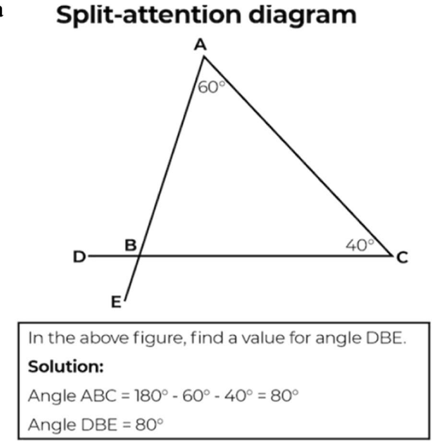
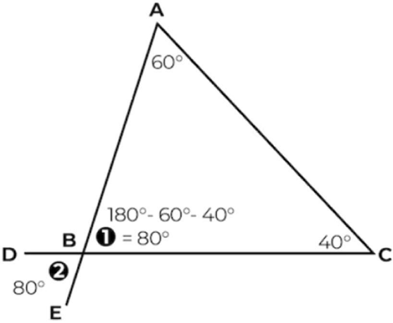
- For extraneous cognitive load, the paper compares instructional formats: one geometry split-attention example is estimated at 8 elements in the split format versus 2 elements in the integrated format.
- The paper argues that expert knowledge can reduce element interactivity, so the same material can be complex for novices but simple for experts; it notes that some effects, such as the worked-example effect, can disappear or reverse with increased expertise.
## Methods
- This is a review article that synthesizes cognitive load theory work on task complexity, element interactivity, intrinsic cognitive load, and extraneous cognitive load.
- It draws on conceptual frameworks of task complexity and on examples from prior cognitive load theory experiments, including mathematics, geometry, algebra, trigonometry, and an expository text example on Kleefstra syndrome.
- The main analysis is theoretical comparison and illustration: the paper contrasts objective vs subjective complexity frameworks and explains how element interactivity can be estimated by counting interacting elements and considering learner expertise.
## Limitations
- The paper states that estimating the number of interacting elements may not always be accurate because learners’ knowledge is difficult to measure precisely.
- The paper states that its examples are drawn primarily from well-structured tasks, such as mathematics, with fewer examples for expository materials.
- Evident from the text: the paper provides a conceptual and illustrative review rather than a new empirical study, so its claims are not based on a single original dataset.
Model-written summary. Check it against the paper before relying on it.
Integrity signals
Registry
Cites
Statistics
Figures
Verification
Claims the paper makes
3 Valid · 14 Not valid · 27 Not checked · 73 Own results and interpretations
At least one cited source doesn’t support this claim or points to a different paper, and none confirmed it — see the verdicts below.
In the paper
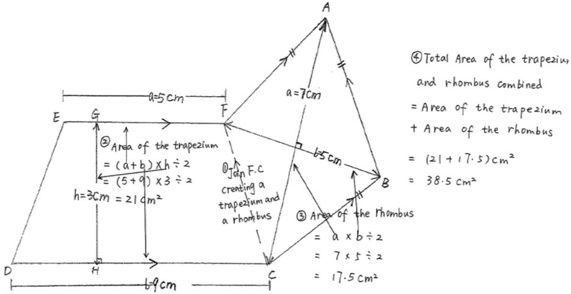
“As an example, to memorise the formula of the area of a parallelogram, the base × the height, included 4 interacting elements for a novice - the area, the base, the multiplication relation, and the height.”
What the sources say
- Disputedcites Chen et al. (2015) matched to “The worked example effect, the generation effect, and element interactivity.” (2015) sourceExperimental — accuracy not yet measured
In §8.1.2 Materials (page unavailable), the paper uses memorising the parallelogram area formula as an example but says its five equation elements do not interact. It estimates the interacting-element count for Grade 4 students as one, not four. (LLM, conf=0.93)
Checked by a reasoning model — may be wrong.
plain- Asserted: passes — The authors put it forward as true.
- Checkable: passes — It can be checked against evidence.
- Load-bearing: unclear — It is unclear whether the paper’s conclusions depend on it.
- Based: passes — The paper gives a reason why it holds.
- Disputed
At least one cited source doesn’t support this claim or points to a different paper, and none confirmed it — see the verdicts below.
In the paper
“Finally, the two separate area values added together involved another 3 elements giving, in total, about 25 interactive elements.”
What the sources say
- Disputedcites Chen et al. (2015) matched to “The worked example effect, the generation effect, and element interactivity.” (2015) sourceExperimental — accuracy not yet measured
In §8.1.2 Materials (page unavailable), the source estimates about 20 interacting elements for Grade 4 students calculating the composite shape, not about 25. It counts adding the two area values as one element, not three. (LLM, conf=0.88)
Checked by a reasoning model — may be wrong.
hedged- Asserted: passes — The authors put it forward as true.
- Checkable: passes — It can be checked against evidence.
- Load-bearing: unclear — It is unclear whether the paper’s conclusions depend on it.
- Based: passes — The paper gives a reason why it holds.
- Disputed
Every source the paper cites for this claim was checked and supports it.
In the paper
“However, when novices need to calculate the area of a composite shape, element interactivity is higher compared to memorising formulae.”
What the sources say
- Supportedcites Chen et al. (2015) matched to “The worked example effect, the generation effect, and element interactivity.” (2015) source
Section 8.1.2 (Materials) compares the tasks for Grade 4 students: memorising a formula has an interacting-element count of one, while calculating the area of a composite shape involves an estimated 20 interacting elements. This supports the claim for the novice learners described in the paper. (LLM, conf=0.94)
plainstates an association- Asserted: passes — The authors put it forward as true.
- Checkable: passes — It can be checked against evidence.
- Load-bearing: passes — The paper’s conclusions depend on it.
- Based: passes — The paper gives a reason why it holds.
- Supported
The cited sources support only part of this claim — read each source’s verdict below.
In the paper
“Most cognitive load theory effects disappear or even reverse when students study low element interactivity information, leading to the expertise reversal effect (Chen etal., 2017).”
What the sources say
- Partly supportedcites Chen et al., 2017 matched to “The Expertise Reversal Effect is a Variant of the More General Element Interactivity Effect” (2017) sourceExperimental — accuracy not yet measured
The indexed repository description (no section or page given) says the expertise reversal effect is linked to changes in relative element interactivity. It distinguishes changes caused by the material from those caused by learners’ expertise. The available passages do not support the broader claim that most cognitive load theory effects disappear or reverse with low-interactivity information, or that studying such information alone leads to expertise reversal. (LLM, conf=0.76)
plainstates a cause- Asserted: passes — The authors put it forward as true.
- Checkable: passes — It can be checked against evidence.
- Load-bearing: passes — The paper’s conclusions depend on it.
- Based: passes — The paper gives a reason why it holds.
- Partly supported
In the paper
“Out of 24 categories, only two reference learners' prior knowledge.”
What the sources say
- Not checked — no full text of the sourcecites Liu and Li (2012) matched to “Task complexity: A review and conceptualization framework” (2012) source
plain- Asserted: passes — The authors put it forward as true.
- Checkable: passes — It can be checked against evidence.
- Load-bearing: passes — The paper’s conclusions depend on it.
- Based: passes — The paper gives a reason why it holds.
38 more claims
Create a free account to see all 117 claims and every source verdict.
- Probably not a substantial claim. 60
- It may state two separate claims as one. 31
- The quote only partly states this claim. 1
Claims other papers make about this one
Each is checked against this paper’s own text: does it say what the citing paper says it does?
The cited source says what the claim attributes to it.
In the citing paper
“Similarly, CLT suggests that instructional design should consider the learner’s prior knowledge, with more guidance needed for novices than for experts (Chen et al., 2023).”
From Does difficulty moderate learning? A comparative analysis of the desirable difficulties framework and cognitive load theory (2025) · cites this paper as Chen et al., 2023
In the citing paper
“According to cognitive load theory, task complexity decreases with increased familiarity when (1) the number of interactive elements (i.e., how much information must be simultaneously processed in working memory) are reduced and (2) individuals can extract related elements crucial for problem-solving and ignore irrelevant details (Chen et al., 2023).”
From The Effect of Playback Speed and Distractions on the Comprehension of Audio and Audio-Visual Materials (2024) · cites this paper as Chen et al., 2023
Citations
Cites
The magical number seven, plus or minus two: Some limits on our capacity for processing information.
Miller, G. A. (1956) · Psychological Review · doi:10.1037/h0043158 · Cited by 17,812 · cited 1×
“Irrespective of how it is acquired, information must be processed by a working memory that has very limited capacity (Cowan, 2001; Miller, 1956) and duration (Peterson & Peterson, 1959).”
BackgroundThe magical number 4 in short-term memory: A reconsideration of mental storage capacity
Cowan, N. (2001) · Behavioral and Brain Sciences · doi:10.1017/s0140525x01003922 · Cited by 6,779 · cited 1×
“Irrespective of how it is acquired, information must be processed by a working memory that has very limited capacity (Cowan, 2001; Miller, 1956) and duration (Peterson & Peterson, 1959).”
BackgroundNewell, A. (1972) · Cited by 6,222
Cognitive Architecture and Instructional Design
Sweller, J., van Merrienboer, J. J. G., & Paas, F. G. W. C. (1998) · Educational Psychology Review · doi:10.1023/a:1022193728205 · Cited by 6,023
Self-citationCognitive load theory, learning difficulty, and instructional design
Sweller, J. (1994) · Learning and Instruction · doi:10.1016/0959-4752(94)90003-5 · Cited by 3,801 · cited 4×
“While Sweller and Chandler (1994) occasionally mentioned that differences in extraneous cognitive load also are due to differences in element interactivity, they made no attempt to provide details.”
BackgroundInfluentialSelf-citationEricsson, K. A., & Kintsch, W. (1995) · Psychological Review · doi:10.1037/0033-295x.102.2.211 · Cited by 3,498
Short-term retention of individual verbal items.
Peterson, L., & Peterson, M. J. (1959) · Journal of Experimental Psychology · doi:10.1037/h0049234 · Cited by 2,939 · cited 1×
“Irrespective of how it is acquired, information must be processed by a working memory that has very limited capacity (Cowan, 2001; Miller, 1956) and duration (Peterson & Peterson, 1959).”
BackgroundGoal setting and task performance: 1969–1980.
Locke, E. A., Shaw, K. N., Saari, L. M., & Latham, G. P. (1981) · Psychological Bulletin · doi:10.1037/0033-2909.90.1.125 · Cited by 2,452
Cognitive Architecture and Instructional Design: 20 Years Later
Sweller, J., van Merriënboer, J. J. G., & Paas, F. (2019) · Educational Psychology Review · doi:10.1007/s10648-019-09465-5 · Cited by 2,337
Self-citationElement Interactivity and Intrinsic, Extraneous, and Germane Cognitive Load
Sweller, J. (2010) · Educational Psychology Review · doi:10.1007/s10648-010-9128-5 · Cited by 2,020 · cited 11×
“Similar explanations are 1 3 Educational Psychology Review (2023) 35:63 Page 7 of 18 63 available for other cognitive load effects (Sweller, 2010).”
BackgroundInfluentialSelf-citationTask Complexity: A Review and Analysis
Campbell, D. J. (1988) · The Academy of Management Review · doi:10.5465/amr.1988.4306775 · Cited by 1,634
Why Some Material Is Difficult to Learn
Sweller, J., & Chandler, P. (1994) · Cognition and Instruction · doi:10.1207/s1532690xci1203_1 · Cited by 1,455 · cited 3×
“The first attempt to measure element interactivity contributing to intrinsic cognitive load was provided by Sweller and Chandler (1994).”
BackgroundSelf-citation(2002) · Routledge eBooks · doi:10.4324/9780203413081 · Cited by 1,445
Task complexity: Definition of the construct
Wood, R. E. (1986) · Organizational Behavior and Human Decision Processes · doi:10.1016/0749-5978(86)90044-0 · Cited by 1,393
The Use of Worked Examples as a Substitute for Problem Solving in Learning Algebra
Sweller, J., & Cooper, G. A. (1985) · Cognition and Instruction · doi:10.1207/s1532690xci0201_3 · Cited by 1,214 · cited 1×
“The effect suggests that asking novices to study examples improves learning more than having them solve the equivalent problems (Sweller & Cooper, 1985).”
BackgroundSelf-citationConcept mapping: A useful tool for science education
Novak, J. D. (1990) · Journal of Research in Science Teaching · doi:10.1002/tea.3660271003 · Cited by 1,032 · cited 1×
“In addition to these, concept mapping, as proposed by Novak (1990), is another tool used to visually represent a learner’s understanding and knowledge structure of a specific topic.”
MethodHalford, G. S., Wilson, W. H., & Phillips, S. (1998) · Behavioral and Brain Sciences · doi:10.1017/s0140525x98001769 · Cited by 912
THE SPLIT‐ATTENTION EFFECT AS A FACTOR IN THE DESIGN OF INSTRUCTION
CHANDLER, P., & SWELLER, J. (1992) · British Journal of Educational Psychology · doi:10.1111/j.2044-8279.1992.tb01017.x · Cited by 767 · cited 1×
“The split-attention effect suggests that physically integrating text with diagrams should enhance learning compared to mentally integrating them (Chandler & Sweller, 1992).”
BackgroundSelf-citationQuantitative studies of student self-assessment in higher education: a critical analysis of findings
Boud, D., & Falchikov, N. (1989) · Higher Education · doi:10.1007/bf00138746 · Cited by 616 · cited 1×
“Furthermore, self-assessment methods, where learners rate their own understanding of a topic, can offer valuable insights, though they may be subject to biases (Boud & Falchikov, 1989).”
BackgroundThe origin of mind: Evolution of brain, cognition, and general intelligence.
Geary, D. C. (2005) · doi:10.1037/10871-000 · Cited by 551 · cited 1×
“Information may be categorised as either biologically primary or secondary (Geary, 2005, 2008, 2012; Geary & Berch, 2016).”
BackgroundAn approach to the formal analysis of user complexity
Kieras, D., & Polson, P. G. (1985) · International Journal of Man-Machine Studies · doi:10.1016/s0020-7373(85)80045-6 · Cited by 504 · cited 1×
“…Psychology Review (2023) 35:63 1 3 63 Page 4 of 18 are resource intensive where resources can be visual (McCracken & Aldrich, 1984), knowledge-based (Gill, 1996; Kieras & Polson, 1985), time-based (Nembhard & Osothsilp, 2002) and require cognitive effort (Bedny et al., 2012; Chu & Spires, 2000).”
Task complexity: A review and conceptualization framework
Liu, P., & Li, Z. (2012) · International Journal of Industrial Ergonomics · doi:10.1016/j.ergon.2012.09.001 · Cited by 438 · cited 1×
“Liu and Li (2012) identified 24 distinct definitions (see Table 1), drawn from a broad array of publications.”
BackgroundComplex problem solving: a case for complex cognition?
Funke, J. (2010) · Cognitive Processing · doi:10.1007/s10339-009-0345-0 · Cited by 329
An Evolutionarily Informed Education Science
GEARY, D. C. (2008) · Educational Psychologist · doi:10.1080/00461520802392133 · Cited by 324 · cited 1×
“Information may be categorised as either biologically primary or secondary (Geary, 2005, 2008, 2012; Geary & Berch, 2016).”
BackgroundAPA Educational Psychology Handbook
Genesee, F. H., & Lindholm-Leary, K. J. (2011) · Cited by 301
Development of expertise in mathematical problem solving.
Sweller, J., Mawer, R. F., & Ward, M. R. (1983) · Journal of Experimental Psychology: General · doi:10.1037/0096-3445.112.4.639 · Cited by 258 · cited 1×
“Novices are likely to use a means-ends strategy that requires them to consider the entire problem including where they are now, where they need to go and how to generate moves that might allow them to accomplish this end (Sweller et al., 1983).”
BackgroundSelf-citationThe use of microworlds to study dynamic decision making
Gonzalez, C., Vanyukov, P., & Martin, M. K. (2005) · Computers in Human Behavior · doi:10.1016/j.chb.2004.02.014 · Cited by 240
The Expertise Reversal Effect is a Variant of the More General Element Interactivity Effect
Chen, O., Kalyuga, S., & Sweller, J. (2017) · Educational Psychology Review · doi:10.1007/s10648-016-9359-1 · Cited by 200
Self-citationMcCracken, J. H., & Aldrich, T. B. (1984) · doi:10.21236/ada232330 · Cited by 185 · cited 1×
“…no w le dg e Ye s O bj ec tiv e Educational Psychology Review (2023) 35:63 1 3 63 Page 4 of 18 are resource intensive where resources can be visual (McCracken & Aldrich, 1984), knowledge-based (Gill, 1996; Kieras & Polson, 1985), time-based (Nembhard & Osothsilp, 2002) and require cognitive effort…”
BackgroundEffects of task difficulty, goal setting, and strategy on performance of a heuristic task.
Huber, V. L. (1985) · Journal of Applied Psychology · doi:10.1037//0021-9010.70.3.492 · Cited by 181 · cited 1×
“The first point to note is that task complexity and task difficulty are different but sometimes are treated as being interchangeable (e.g., Campbell & Ilgen, 1976; Earley, 1985; Huber, 1985; Taylor, 1981).”
BackgroundEarley, P. C. (1985) · Journal of Applied Psychology · doi:10.1037//0021-9010.70.3.481 · Cited by 177 · cited 1×
“The first point to note is that task complexity and task difficulty are different but sometimes are treated as being interchangeable (e.g., Campbell & Ilgen, 1976; Earley, 1985; Huber, 1985; Taylor, 1981).”
BackgroundThe worked example effect, the generation effect, and element interactivity.
Chen, O., Kalyuga, S., & Sweller, J. (2015) · Journal of Educational Psychology · doi:10.1037/edu0000018 · Cited by 167
Self-citationKnowing What You Know and What You Don't: Further Research on Metacognitive Knowledge Monitoring
Tobias, S., & Everson, H. T. (2002) · Cited by 164
Task complexity effects on between-individual learning/forgetting variability
Nembhard, D. A., & Osothsilp, N. (2002) · International Journal of Industrial Ergonomics · doi:10.1016/s0169-8141(01)00070-1 · Cited by 117 · cited 1×
“…Psychology Review (2023) 35:63 1 3 63 Page 4 of 18 are resource intensive where resources can be visual (McCracken & Aldrich, 1984), knowledge-based (Gill, 1996; Kieras & Polson, 1985), time-based (Nembhard & Osothsilp, 2002) and require cognitive effort (Bedny et al., 2012; Chu & Spires, 2000).”
Evolutionary educational psychology.
Geary, D. C. (2011) · American Psychological Association eBooks · doi:10.1037/13273-020 · Cited by 114
Expert Systems Usage: Task Change and Intrinsic Motivation1
Gill, T. G. (1996) · MIS Quarterly · doi:10.2307/249658 · Cited by 108 · cited 1×
“…Psychology Review (2023) 35:63 1 3 63 Page 4 of 18 are resource intensive where resources can be visual (McCracken & Aldrich, 1984), knowledge-based (Gill, 1996; Kieras & Polson, 1985), time-based (Nembhard & Osothsilp, 2002) and require cognitive effort (Bedny et al., 2012; Chu & Spires, 2000).”
Evolution and Children’s Cognitive and Academic Development
Geary, D. C., & Berch, D. B. (2016) · Evolutionary Psychology · doi:10.1007/978-3-319-29986-0_9 · Cited by 101 · cited 1×
“Information may be categorised as either biologically primary or secondary (Geary, 2005, 2008, 2012; Geary & Berch, 2016).”
BackgroundLinking qualitative and quantitative data analysis
Mason, J. (2010) · Taylor & Francis eBooks · doi:10.4324/9780203413081_chapter_5 · Cited by 87
Relations between the worked example and generation effects on immediate and delayed tests
Chen, O., Kalyuga, S., & Sweller, J. (2016) · Learning and Instruction · doi:10.1016/j.learninstruc.2016.06.007 · Cited by 82
Self-citationAdditive effects of task difficulty and goal setting on subsequent task performance.
Campbell, D. J., & Ilgen, D. R. (1976) · Journal of Applied Psychology · doi:10.1037/0021-9010.61.3.319 · Cited by 69 · cited 1×
“The first point to note is that task complexity and task difficulty are different but sometimes are treated as being interchangeable (e.g., Campbell & Ilgen, 1976; Earley, 1985; Huber, 1985; Taylor, 1981).”
BackgroundThe Joint Effects of Effort and Quality on Decision Strategy Choice with Computerized Decision Aids*
Chu, P., & Spires, E. E. (2000) · Decision Sciences · doi:10.1111/j.1540-5915.2000.tb01624.x · Cited by 68 · cited 1×
“…Psychology Review (2023) 35:63 1 3 63 Page 4 of 18 are resource intensive where resources can be visual (McCracken & Aldrich, 1984), knowledge-based (Gill, 1996; Kieras & Polson, 1985), time-based (Nembhard & Osothsilp, 2002) and require cognitive effort (Bedny et al., 2012; Chu & Spires, 2000).”
External support and the development of problem-solving routines.
Cary, M., & Carlson, R. A. (1999) · Journal of Experimental Psychology Learning Memory and Cognition · doi:10.1037/0278-7393.25.4.1053 · Cited by 64 · cited 1×
“Another strategy that can be used to reduce cognitive load is to transfer some of the interacting elements into written form to reduce the number of elements that must be held in working memory (Cary & Carlson, 1999).”
BackgroundCognitive Load Theory, Resource Depletion and the Delayed Testing Effect
Leahy, W., & Sweller, J. (2019) · Educational Psychology Review · doi:10.1007/s10648-019-09476-2 · Cited by 59 · cited 2×
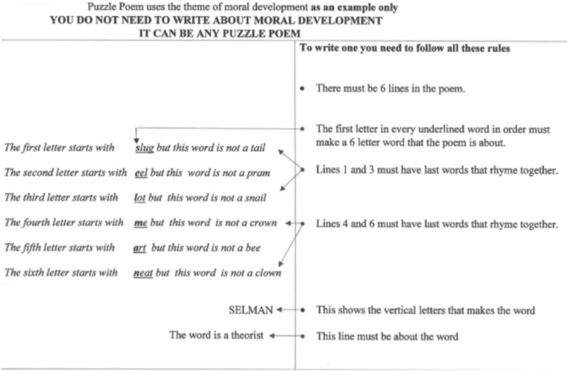
“Leahy and Sweller (2019) attempted to calculate the number of interactive elements for a non-STEM domain, teaching learners how to write puzzle poems following several rules (see Figure 2).”
BackgroundSelf-citationThe motivational effects of task challenge: A laboratory investigation
Taylor, M. S. (1981) · Organizational Behavior and Human Performance · doi:10.1016/0030-5073(81)90049-0 · Cited by 50 · cited 1×
“Leahy and Sweller (2019) attempted to calculate the number of interactive elements for a non-STEM domain, teaching learners how to write puzzle poems following several rules (see Figure 2). The 1st element was to read the sentence “To write one you need to follow all these rules”, the 2nd element was “There must be 6…”
BackgroundSemantic congruence in arithmetic: A new conceptual model for word problem solving
Gros, H., Thibaut, J.-P., & Sander, E. (2020) · Educational Psychologist · doi:10.1080/00461520.2019.1691004 · Cited by 45
Complexity Evaluation of Computer-Based Tasks
Bedny, G. Z., Karwowski, W., & Bedny, I. S. (2012) · International Journal of Human-Computer Interaction · doi:10.1080/10447318.2011.581895 · Cited by 42 · cited 1×
“…Psychology Review (2023) 35:63 1 3 63 Page 4 of 18 are resource intensive where resources can be visual (McCracken & Aldrich, 1984), knowledge-based (Gill, 1996; Kieras & Polson, 1985), time-based (Nembhard & Osothsilp, 2002) and require cognitive effort (Bedny et al., 2012; Chu & Spires, 2000).”
What we count dictates how we count : a tale of two encodings
Gros, H., Thibaut, J., & Sander, E. (2019) · theses.fr (ABES) · doi:10.70675/99cf02edz4faaz49eeza864z4cd24815323f · Cited by 27
What we count dictates how we count: A tale of two encodings
Gros, H., Thibaut, J.-P., & Sander, E. (2021) · Cognition · doi:10.1016/j.cognition.2021.104665 · Cited by 19
Managing Element Interactivity in Equation Solving
Ngu, B. H., Phan, H. P., Yeung, A. S., & Chung, S. F. (2018) · Educational Psychology Review · doi:10.1007/s10648-016-9397-8 · Cited by 16 · cited 1×
“In addition to these, concept mapping, as proposed by Novak (1990), is another tool used to visually represent a learner’s understanding and knowledge structure of a specific topic.”
MethodGoal Setting and Task Performance: 1969-1980
Locke, E. A., Shaw, K. N., Saari, L. M., et al. (1980) · doi:10.21236/ada086584
Erratum to: Managing Element Interactivity in Equation Solving
Ngu, B. H., Phan, H. P., Yeung, A. S., et al. (2018) · Educational Psychology Review · doi:10.1007/s10648-017-9402-x
What we count dictates how we count: A tale of two encodings
Gros, H., Thibaut, J. P., & Sander, E. (2020) · doi:10.31234/osf.io/4jev5
Research works printed but not linked: 1
- Gill, T. G., & Murphy, W. (2011). Task complexity and design science. In 9th International Conference on Education and Information Systems, Technologies and Applications (EISTA 2011) . <!-- image -->
Cited by
Sweller, J. (2023) · Educational Psychology Review · doi:10.1007/s10648-023-09817-2 · Cited by 220
“Over 40 years later, I still seem to be periodically fighting this battle for direct instruction rather than asking students to engage in problem solving (Chen et al., 2023; Zhang et al., 2022).”
InfluentialSelf-citationCognitive load theory and individual differences
Sweller, J. (2024) · Learning and Individual Differences · doi:10.1016/j.lindif.2024.102423 · Cited by 214
Self-citationThe synergy of embodied cognition and cognitive load theory for optimized learning
Zou, L., Zhang, Z., Mavilidi, M., Chen, Y., Herold, F., Ouwehand, K., & Paas, F. (2025) · Nature Human Behaviour · doi:10.1038/s41562-025-02152-2 · Cited by 131
Self-citationResearch Avenues Supporting Embodied Cognition in Learning and Instruction
Castro-Alonso, J. C., Ayres, P., Zhang, S., de Koning, B. B., & PAAS, F. G. W. C. (2024) · Educational Psychology Review · doi:10.1007/s10648-024-09847-4 · Cited by 163
“Note that task complexity depends on the task itself and also on the expertise of the learner attempting the task (see Chen et al., 2023).”
Self-citationEEG-based brain-computer interface enables real-time robotic hand control at individual finger level
Ding, Y., Udompanyawit, C., Zhang, Y., & He, B. (2025) · Nature Communications · doi:10.1038/s41467-025-61064-x · Cited by 142
Metadata
- Authors
- Chen, O., Paas, F., & Sweller, J.
- Affiliations
- Loughborough University (GB)
- University of Wollongong (AU)
- UNSW Sydney (AU)
- Corresponding author
- Chen, Ouhao
- Venue
- Educational Psychology Review
- Published
- 2023-06
- Volume
- 35
- Issue
- 2
- ISSN
- 1040-726X (ISSN-L)
- 1573-336X
- OpenAlex
- W4379233238
- Cited by
- 224
- References
- 48
- Citations by year
- 2026: 88 · 2025: 78 · 2024: 51 · 2023: 7
- FWCI
- 57.73
- Type
- journal article
- Language
- en
- Open access
- hybrid
- doi.org
- Licence
- cc-by
- creativecommons.org/licenses/by/4.0 (tdm)
- creativecommons.org/licenses/by/4.0 (vor, 1 d)
- Locations
- Educational Psychology Review (publishedVersion, cc-by)
- Figshare (submittedVersion, cc-by)
- Research Online (University of Wollongong) (submittedVersion)
- Topics
- Social Sciences › Psychology › Experimental and Cognitive Psychology › Visual and Cognitive Learning Processes
- Social Sciences › Psychology › Developmental and Educational Psychology › Innovative Teaching and Learning Methods
- Social Sciences › Psychology › Developmental and Educational Psychology › Educational and Psychological Assessments
- Keywords
- task complexity, cognitive load theory, element interactivity, intrinsic cognitive load, extraneous cognitive load, long-term memory, information structure, instructional design
About these checks
Registry, retraction, Cites and statistics results are computed, not judged, with one exception: a printed reference that no index lists is read once by a model before it counts as a citation error. Claims are extracted by a model and kept only when their quote appears verbatim in the text; each cited source is then checked, with a model’s help, for whether it says what the claim relies on. Those verdicts can be wrong — read the claim’s quote and the cited source before relying on one.
The claim verdicts this report counts are experimental: their accuracy is not yet measured.
A language model drew the claims from the paper on 2026-10-10, under version 3 of the claim definition (model deepseek-v4.1-flash, prompt extract-v3).
A second model labelled each claim on 2026-10-10 (model jev-1.13-20260917, definition revision gold-guideline-v0.2).
Cited sources are checked with a language model’s help (gpt-6-sol).
Statistics and arithmetic are recomputed, not judged.
Confidence bands are shown only for fields calibrated on our annotated test set. None is calibrated yet, so no band is shown.
What counts as a claim ›How we measure confidence ›How we check this ›
Are you an author, or do you see a problem with this page? Request a review
Data sources
Bibliographic data: Semantic Scholar, OpenAlex, Crossref.
Contains information from the Semantic Scholar Academic Graph Datasets, made available under the ODC Attribution License (ODC-BY 1.0).
Semantic Scholar’s data is described in: Kinney, R., et al. (2023). The Semantic Scholar Open Data Platform. arXiv:2301.10140.
