

Food groups and risk of type 2 diabetes mellitus: a systematic review and meta-analysis of prospective studies.
Open accessThe DOI matches its Crossref record; 56 of the 56 references it cites were found in a registry or an index.
Abstract
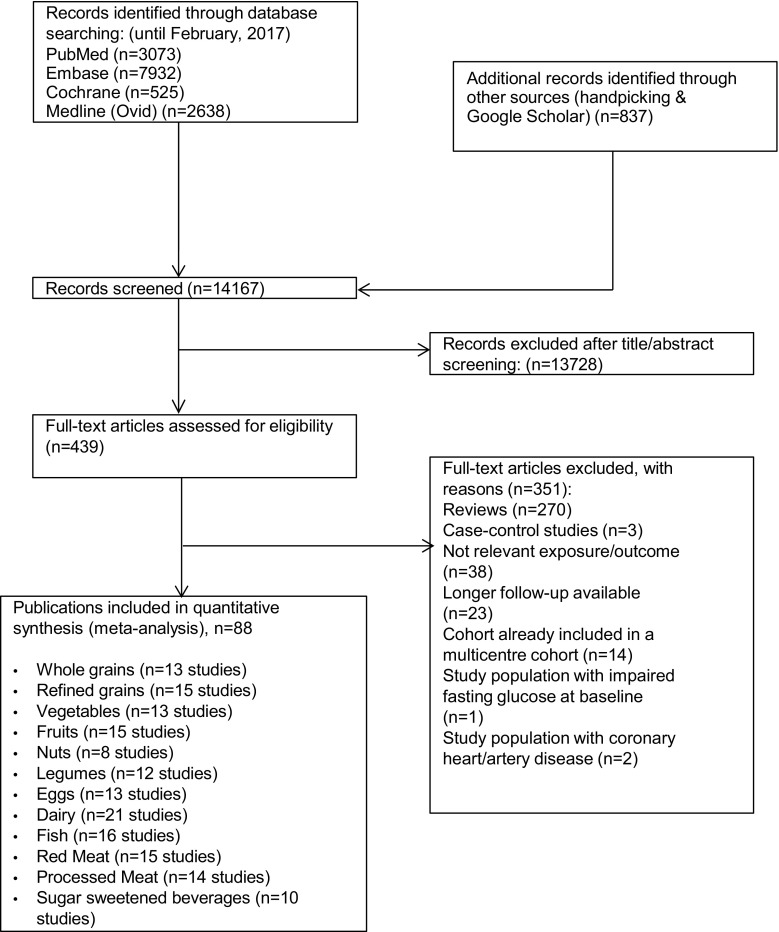
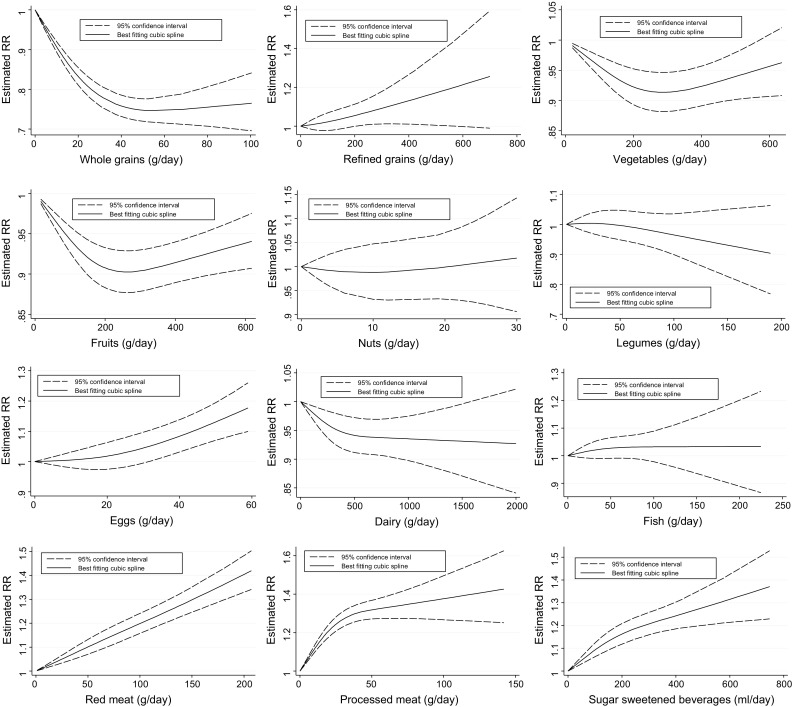
The aim of this systematic review and meta-analysis was to synthesize the knowledge about the relation between intake of 12 major food groups and risk of type 2 diabetes (T2D). We conducted a systematic search in PubMed, Embase, Medline (Ovid), Cochrane Central, and Google Scholar for prospective studies investigating the association between whole grains, refined grains, vegetables, fruits, nuts, legumes, eggs, dairy, fish, red meat, processed meat, and sugar-sweetened beverages (SSB) on risk of T2D. Summary relative risks were estimated using a random effects model by contrasting categories, and for linear and non-linear dose-response relationships. Six out of the 12 food-groups showed a significant relation with risk of T2D, three of them a decrease of risk with increasing consumption (whole grains, fruits, and dairy), and three an increase of risk with increasing consumption (red meat, processed meat, and SSB) in the linear dose-response meta-analysis. There was evidence of a non-linear relationship between fruits, vegetables, processed meat, whole grains, and SSB and T2D risk. Optimal consumption of risk-decreasing foods resulted in a 42% reduction, and consumption of risk-increasing foods was associated with a threefold T2D risk, compared to non-consumption. The meta-evidence was graded "low" for legumes and nuts; "moderate" for refined grains, vegetables, fruit, eggs, dairy, and fish; and "high" for processed meat, red meat, whole grains, and SSB. Among the investigated food groups, selecting specific optimal intakes can lead to a considerable change in risk of T2D.
Overview
The claims and statistics of this paper haven’t been checked yet.
Free: it reads the open-access text and checks the first 5 claims that cite a source we can check. Create a free account to check every claim.
Integrity signals
Registry
Cites
Statistics
Figures
Verification
Claims the paper makes
The claims and statistics of this paper haven’t been checked yet.
Free: it reads the open-access text and checks the first 5 claims that cite a source we can check. Create a free account to check every claim.
Claims other papers make about this one
Each is checked against this paper’s own text: does it say what the citing paper says it does?
In the citing paper
“Many food groups, mostly ultraprocessed (eg, processed meat, and sugary sweetened beverages) are recognized T2D risk factors.3”
From Ultraprocessed Food Consumption and Risk of Type 2 Diabetes Among Participants of the NutriNet-Santé Prospective Cohort (2020) · cites this paper as [3]
In the citing paper
“Of note, energy balance and overweight are both associated with T2D risk.3”
From Ultraprocessed Food Consumption and Risk of Type 2 Diabetes Among Participants of the NutriNet-Santé Prospective Cohort (2020) · cites this paper as [3]
Self-check
Percentages, sums and reported differences re-computed from the paper’s own numbers.
The self-check needs the paper’s full text.
Citations
Cites
1 retracted
RETRACTED: Primary Prevention of Cardiovascular Disease with a Mediterranean Diet
Estruch, R., Ros, E., Salas-Salvadó, J., Covas, M.-I., Corella, D., Arós, F., Gómez-Gracia, E., Ruiz-Gutiérrez, V., Fiol, M., Lapetra, J., et al. (2013) · New England Journal of Medicine · doi:10.1056/nejmoa1200303 · Cited by 4,257
RetractedBias in meta-analysis detected by a simple, graphical test
Egger, M., Smith, G. D., Schneider, M., & Minder, C. (1997) · BMJ · doi:10.1136/bmj.315.7109.629 · Cited by 56,722 · cited 1×
“Potential small-study effects, such as publication bias, were explored using Eggeŕs test and funnel plots [20] when at least 10 studies were available, as recommended by the Cochrane Handbook [21].”
MethodMeta-analysis in clinical trials
DerSimonian, R., & Laird, N. (1986) · Controlled Clinical Trials · doi:10.1016/0197-2456(86)90046-2 · Cited by 39,552 · cited 2×
“To evaluate the weighting of each study, the standard error for the logarithm RR/HR of each study was calculated and regarded as the estimated variance of the logarithm HR/RR, using an inverse variance method [15].”
MethodQuantifying heterogeneity in a meta‐analysis
Higgins, J. P. T., & Thompson, S. G. (2002) · Statistics in Medicine · doi:10.1002/sim.1186 · Cited by 36,763
Dermyshi, E., Wang, Y., Yan, C., Hong, W., Qiu, G., Gong, X., & Zhang, T. (2017) · Neonatology · doi:10.1159/000454668 · Cited by 24,451
Meta-analysis of Observational Studies in Epidemiology<SUBTITLE>A Proposal for Reporting</SUBTITLE>
Stroup, D. F. (2000) · JAMA · doi:10.1001/jama.283.15.2008 · Cited by 20,623
Stang, A. (2010) · European Journal of Epidemiology · doi:10.1007/s10654-010-9491-z · Cited by 17,396 · cited 2×
“However, Stang [14] commented that the Newcastle–Ottawa Scale includes quality items that are not valid (e.g., the ‘‘representativeness of the exposed cohort’’ item), and concluded that this score appeared to be unacceptable for the quality ranking of 364 L. Schwingshackl et al. case–control and cohort studies in meta…”
BackgroundInternational Diabetes Federation 2017
Carracher, A. M., Marathe, P. H., & Close, K. L. (2018) · Journal of Diabetes · doi:10.1111/1753-0407.12644 · Cited by 13,418
Tuomilehto, J., Lindström, J., Eriksson, J. G., Valle, T. T., Hämäläinen, H., Ilanne-Parikka, P., Keinänen-Kiukaanniemi, S., Laakso, M., Louheranta, A., Rastas, M., et al. (2001) · New England Journal of Medicine · doi:10.1056/nejm200105033441801 · Cited by 10,873
Cochrane Handbook for Systematic Reviews of Interventions Version 5.0.1. The Cochrane Collaboration
Higgins, J. P. T., Green, S. R., & Higgins, J. P. T. (2008) · Cited by 7,226
Cited by
Items 201–300 of 866
Oral GLP-1 analogue: perspectives and impact on atherosclerosis in type 2 diabetic patients
Saraiva, J. F. K., & Franco, D. R. (2021) · Cardiovascular Diabetology · doi:10.1186/s12933-021-01417-0 · Cited by 42
Martínez‐González, M. Á., Montero, P., Ruiz‐Canela, M., Toledo, E., Estruch, R., Gómez‐Gracia, E., Li, J., Ros, E., Arós, F., Hernáez, Á., et al. (2023) · Cardiovascular Diabetology · doi:10.1186/s12933-023-01994-2 · Cited by 41
Food groups in dietary prevention of type 2 diabetes
Basiak-Rasała, A., Różańska, D., & Zatońska, K. (2019) · Roczniki Państwowego Zakładu Higieny · doi:10.32394/rpzh.2019.0086 · Cited by 49
Hodge, A. M., Karim, M. N., Hébert, J. R., Shivappa, N., & de Courten, B. V. (2021) · Nutrients · doi:10.3390/nu13114162 · Cited by 38
“[37] reviewed the association between 12 food groups that are the basis of many dietary indices: whole grains/cereals, refined grains/cereals, vegetables, fruits, nuts, legumes, eggs, dairy products, fish, red meat, processed meat, and sugarsweetened beverages.”
BackgroundBodirsky, B. L., Beier, F., Humpenöder, F., Leip, D., Crawford, M., Chen, D. M.-C., von Jeetze, P., Springmann, M., Soergel, B., Nicholls, Z., et al. (2025) · Nature Food · doi:10.1038/s43016-025-01268-y · Cited by 45
Schwingshackl, L., Schwarzer, G., Rücker, G., & Meerpohl, J. J. (2019) · Advances in Nutrition · doi:10.1093/advances/nmz036 · Cited by 37
Self-citationLépine, G., Fouillet, H., Rémond, D., Huneau, J., Mariotti, F., & Polakof, S. (2021) · Advances in Nutrition · doi:10.1093/advances/nmab073 · Cited by 39
Schwingshackl, L., Schlesinger, S., Devleesschauwer, B., HOFFMANN, G. E., Bechthold, A., Schwedhelm, C., Iqbal, K., Knüppel, S., & Boeing, H. (2018) · Proceedings of The Nutrition Society · doi:10.1017/s0029665118000125 · Cited by 38
Self-citationMetabolite of the pesticide DDT and incident type 2 diabetes in urban India
Jaacks, L. M., Yadav, S., Panuwet, P., Kumar, S., Rajacharya, G. H., Johnson, C., Rawal, I., Mohan, D., Mohan, V., Tandon, N., et al. (2019) · Environment International · doi:10.1016/j.envint.2019.105089 · Cited by 39
Zhu, R., Fan, Z., Han, Y., Li, S., Li, G., Wang, L., Ye, T., & Zhao, W. (2019) · Nutrients · doi:10.3390/nu11030634 · Cited by 38
Barouti, A. A., Tynelius, P., Lager, A., & Björklund, A. (2022) · European Journal of Nutrition · doi:10.1007/s00394-022-02871-6 · Cited by 38
“Previous meta-analyses have demonstrated a non-linear dose–response association between fruit and/or vegetable intake and T2D risk [30, 50, 51].”
BackgroundEneroth, H., Wallin, S., Leander, K., Sommar, J. N., & Åkesson, A. (2017) · Nutrients · doi:10.3390/nu9121355 · Cited by 39
“We focused on CVD and liver cancer alone, although nut consumption has been associated with reduced all-cause mortality [1,2,5] and type 2 diabetes [4,32] and improved weight maintenance [33,34], but also with exposure to salmonella [35] and acrylamide [35].”
BackgroundNitrate: “the source makes the poison”
Bowles, E., Burleigh, M. C., Mira, Á., van Breda, S. G., Weitzberg, E., & Rosier, B. T. (2024) · Critical Reviews in Food Science and Nutrition · doi:10.1080/10408398.2024.2395488 · Cited by 40
“Therefore, it is no surprise that regular consumption of fruits and vegetables is inversely associated with coronary heart disease, stroke (Zurbau et al. 2020), type 2 diabetes mellitus (Schwingshackl et al. 2017), total and cause-specific mortality (Yip, Chan, and Fielding 2019; Wang et al. 2021).”
Gao, Q., Dong, J.-Y., Cui, R., Muraki, I., Yamagishi, K., Sawada, N., Iso, H., & Tsugane, S. (2021) · British Journal Of Nutrition · doi:10.1017/s0007114521000404 · Cited by 38
“A number of observational studies have shown that higher fruit intakes are associated with a lower risk of many chronic diseases, including hypertension (4) , diabetes (5) , coronary heart disease, stroke, cancer, and all-cause mortality (6) .”
BackgroundCincione, R. I., Messina, A., Cibelli, G., Messina, G., Polito, R., Losavio, F., Torre, M. E. L., Monda, V., Monda, M., Quiete, S., et al. (2022) · Nutrients · doi:10.3390/nu14204361 · Cited by 37
Zhao, H., Wang, M., Peng, X., Zhong, L. X., Liu, X., Shi, Y., Li, Y., Chen, Y., & Tang, S. (2023) · Annals of Translational Medicine · doi:10.21037/atm-22-6515 · Cited by 42
“Although we also observed a reduced risk of MS, depression, dementia, AD, and hip fracture, and a null association of T2DM and MCI with consumption of fish, respectively, the quality of evidence for these associations was low and further investigation is needed (80,88,94,95,97,102) .”
Sehrish, A., Majeed, I., Zongo, E., Ayub, H., Rasul, H., Rahim, M. A., & Al‐Asmari, F. (2023) · International Journal of Food Properties · doi:10.1080/10942912.2023.2272564 · Cited by 38
“[92] Microgreens were also tested against it and showed positive results. α-amylase α-amylase inhibition and α-glucosidase inhibition mechanism splay vital role against disease prevention.”
BackgroundEnvironmental (Lifestyle) Risk Factors for LADA
Carlsson, S. (2019) · Current Diabetes Reviews · doi:10.2174/1573399814666180716150253 · Cited by 34
Imai, S., Kajiyama, S., Kitta, K., Miyawaki, T., Matsumoto, S., Ozasa, N., Kajiyama, S., Hashimoto, Y., & Fukui, M. (2023) · Nutrients · doi:10.3390/nu15051174 · Cited by 39
“The dietary patterns in individuals who eat fast tended to be Western-style eating patterns high in red meat, processed meat, snacks, sweetened beverages, fried food, and fast-food, and low in vegetables [39].”
BackgroundHa, K., Joung, H., & Song, Y. (2019) · Diabetes Research and Clinical Practice · doi:10.1016/j.diabres.2019.01.024 · Cited by 38
Ahmed, A., Lager, A., Fredlund, P., & Elinder, L. S. (2020) · Journal of Nutritional Science · doi:10.1017/jns.2020.7 · Cited by 39
“In contrast to results found in four meta-analyses (14,15,34,35) , we did not fi nd a reduced T2D risk associated with a higher intake of fruit, neither in men nor women.”
Yang, J., Du, H., Guo, Y., Bian, Z., Yu, C., Chen, Y., Yang, L., Liu, J., Han, X., Chen, J., et al. (2022) · Journal of Nutrition · doi:10.1093/jn/nxac041 · Cited by 34
“In that meta-analysis, however, there was great heterogeneity in the risk estimates across different geographic locations and by methods of dietary assessment (5).”
Rebouillat, P., Vidal, R., Cravedi, J., Taupier‐Letage, B., Debrauwer, L., Gamet‐Payrastre, L., Guillou, H., Touvier, M., Fezeu, L., Herçberg, S., et al. (2022) · Environmental Health · doi:10.1186/s12940-022-00862-y · Cited by 33
“A healthy diet – low in saturated fat, sweet products and rich in fiber – regular physical activity, maintaining a normal weight and avoiding smoking are known strategies to prevent or delay the onset of T2D [4] but environmental exposure, for instance food contaminants such as pesticides, may also play a role [5, 6].”
BackgroundSullivan, V. K., Na, M., Proctor, D. N., Kris‐Etherton, P. M., & Petersen, K. S. (2020) · Journal of the Academy of Nutrition and Dietetics · doi:10.1016/j.jand.2020.08.085 · Cited by 40
Nuts in the Prevention and Management of Type 2 Diabetes
Nishi, S. K., Viguiliouk, E., Kendall, C. W. C., Jenkins, D. J. A., Hu, F. B., Sievenpiper, J. L., Atzeni, A., Misra, A., & Salas‐Salvadó, J. (2023) · Nutrients · doi:10.3390/nu15040878 · Cited by 40
“, peas, seeds, or legumes) and, therefore, the associations cannot be extrapolated specifically to the possible role of nuts per se [55,58,59].”
BackgroundGrant, W. B., van Amerongen, B. M., & Boucher, B. J. (2023) · Nutrients · doi:10.3390/nu15122787 · Cited by 39
“Red meat, processed meat, and sugar-sweetened drinks are risk factors, whereas whole grains, fruits, and dairy foods are risk-reduction factors [22,67,68].”
BackgroundDrewnowski, A., McKeown, N. M., Kissock, K., Beck, E. J., Mejborn, H., Vieux, F., Smith, J. D., Masset, G., & Seal, C. J. (2020) · Advances in Nutrition · doi:10.1093/advances/nmaa172 · Cited by 32
“Meta-analyses of prospective cohort studies have consistently shown a protective association between diets high in whole grains and hypertension (32); type 2 diabetes (33); cardiovascular disease risk (34); colon (35), gastric, and esophageal cancers (36); and all-cause mortality (37).”
BackgroundSlurink, I. A. L., Chen, L., Magliano, D. J., Kupper, N. H. M., Smeets, T., & Soedamah‐Muthu, S. S. (2023) · Journal of Nutrition · doi:10.1016/j.tjnut.2023.03.032 · Cited by 32
Dairy intake and type 2 diabetes risk factors: A narrative review
Mitri, J., Yusof, B. N. M., Maryniuk, M. D., Schrager, C., Hamdy, O., & Salsberg, V. (2019) · Diabetes & Metabolic Syndrome Clinical Research & Reviews · doi:10.1016/j.dsx.2019.07.064 · Cited by 34
Asian Development Outlook 2020 Update: Wellness in Worrying Times
Bank, A. D. (2020) · Asian development outlook update · doi:10.22617/fls200256-3 · Cited by 54
Ballesteros, M. S., Zapata, M. E., Freidin, B., Tamburini, C., & Rovirosa, A. (2022) · Salud Colectiva · doi:10.18294/sc.2022.3835 · Cited by 30
Efficacy of front-of-pack nutrition labels in improving health status
Donini, L. M., Penzavecchia, C., Muzzioli, L., Poggiogalle, E., Giusti, A. M., Lenzi, A., & Pinto, A. (2022) · Nutrition · doi:10.1016/j.nut.2022.111770 · Cited by 32
Diet Quality Is Associated with Glucose Regulation in a Cohort of Young Adults
Costello, E. J., Goodrich, J. A., Patterson, W. B., Rock, S., Li, Y., Baumert, B. O., Gilliland, F. D., Goran, M. I., Chen, Z., Alderete, T. L., et al. (2022) · Nutrients · doi:10.3390/nu14183734 · Cited by 33
“However, most studies evaluating the relationship between diet and T2D risk have been conducted in middle-aged or older adults or only incidentally included young adults [11,19,20].”
BackgroundAge and time trends of dairy intake among children and adolescents of the DONALD study
Hohoff, E., Perrar, I., Jancovic, N., & Alexy, U. (2021) · European Journal of Nutrition · doi:10.1007/s00394-021-02555-7 · Cited by 30
“Dairy consumption has been recommended as part of a healthy diet [48], as meta-analyses showed a significant inverse association of total dairy consumption with diabetes [49], Cancer [50] and Hypertension [51].”
BackgroundMieres‐Castro, D., Theoduloz, C., Sus, N., Burgos-Edwards, A., Schmeda‐Hirschmann, G., Frank, J., & Jiménez‐Aspee, F. (2021) · Food Chemistry · doi:10.1016/j.foodchem.2021.130940 · Cited by 29
Soriano, L. C., Pulido, J., Franch‐Nadal, J., Santos, J. M., Mata‐Cases, M., Díez‐Espino, J., Ruiz‐García, A., Regidor, E., & the PREDAPS Study Group (2021) · Diabetic Medicine · doi:10.1111/dme.14768 · Cited by 30
Meat and meat products – a scoping review for Nordic Nutrition Recommendations 2023
Meinilä, J. M., & Virtanen, J. K. (2024) · Food & Nutrition Research · doi:10.29219/fnr.v68.10538 · Cited by 31
Dow, C., Balkau, B., Bonnet, F., Mancini, F. R., Rajaobelina, K., Shaw, J. E., Magliano, D. J., & Fagherazzi, G. (2019) · Preventive Medicine · doi:10.1016/j.ypmed.2019.03.006 · Cited by 32
Macho‐González, A., Garcimartín, A., López‐Oliva, M. E., Ruiz‐Roso, B., de la Torre, I. M., Bastida, S., Benedí, J., & Sánchez-Muniz, F. J. (2019) · Nutrients · doi:10.3390/nu11020332 · Cited by 29
“However, it has been observed that a high intake of processed meat products or red meat greatly increases type 2 diabetes mellitus (T2DM) risk [2,3].”
Modifying effect of metabotype on diet–diabetes associations
Riedl, A., Wawro, N., Gieger, C., Meisinger, C., Peters, A., Rathmann, W., Köenig, W., Strauch, K., Quante, A. S., Thorand, B., et al. (2019) · European Journal of Nutrition · doi:10.1007/s00394-019-01988-5 · Cited by 36
Sürdürülebilir Beslenme ve Beslenme Örüntüsü: Bitkisel Kaynaklı Beslenme
Pekcan, A. G. (2019) · Journal of Nutrition and Dietetics · doi:10.33076/2019.bdd.1268 · Cited by 49
“Yapılan çalışmada birçok ülke için en önemli diyet risk etmenleri olarak ilk sırada yüksek sodyum alımı (ölüm: 3 [1-5] milyon, DALY: 70[34-118] milyon), düşük tam tahıl (ölüm: 3 [1-5] milyon, DALY: 70 [34118] milyon) ve düşük meyve tüketimi (ölüm: 2 [1-4] milyon, DALY: 65 [41-92] milyon) belirlenmiştir.”
Trade-off between human health and environmental health in global diets
Zhang, J., & Chai, L. (2022) · Resources Conservation and Recycling · doi:10.1016/j.resconrec.2022.106336 · Cited by 31
Qin, P., Huang, C., Jiang, B., Wang, X., Yang, Y., Ma, J., Chen, S., Hu, D., & Bo, Y. (2022) · Clinical Nutrition · doi:10.1016/j.clnu.2022.12.010 · Cited by 29
A Narrative Review of Factors Associated with Skin Carotenoid Levels
Madore, M. P., Hwang, J.-E., Park, J., Ahn, S., Joung, H., & Chun, O. K. (2023) · Nutrients · doi:10.3390/nu15092156 · Cited by 31
Muszalska, A., Wiecanowska, J., Michałowska, J., Pastusiak, K., Polok, I., Łompieś, K., & Bogdański, P. (2025) · Nutrients · doi:10.3390/nu17050862 · Cited by 28
Carew, A. S., Mekary, R. A., Kirkland, S., Theou, O., Siddiqi, F. S., Urquhart, R., George, M. M., Blanchard, C. M., Biggs, M. L., Djoussé, L., et al. (2022) · American Journal of Clinical Nutrition · doi:10.1093/ajcn/nqac087 · Cited by 30
Perraud, E., Wang, J., Salomé, M., Huneau, J., Lapidus, N., & Mariotti, F. (2022) · Frontiers in Nutrition · doi:10.3389/fnut.2022.924526 · Cited by 30
Dietary protein consumption profiles show contrasting impacts on environmental and health indicators
Perraud, E., Wang, J., Salomé, M., Mariotti, F., & Kesse‐Guyot, E. (2022) · The Science of The Total Environment · doi:10.1016/j.scitotenv.2022.159052 · Cited by 29
Arrigoni, A., Marveggio, D., Allievi, F., Dotelli, G., & Scaccabarozzi, G. (2023) · The Science of The Total Environment · doi:10.1016/j.scitotenv.2023.161773 · Cited by 29
Azzola, L. G., Fankhauser, N., & Srinivasan, M. (2023) · Evidence-Based Dentistry · doi:10.1038/s41432-023-00853-z · Cited by 29
Liao, Y.-P., Zheng, Q., Jiang, X., Chen, X.-Q., Gao, X.-X., & Pan, Y. (2023) · Nutrition Journal · doi:10.1186/s12937-023-00855-8 · Cited by 29
“Studies have shown that fruit can reduce diabetes risk [41].”
BackgroundBaranowski, T., Baranowski, J. C., Chen, T.-A., Buday, R., Beltran, A., Dadabhoy, H., Ryan, C., & Lu, A. S. (2019) · Games for Health Journal · doi:10.1089/g4h.2018.0097 · Cited by 27
Janiszewska, J., Ostrowska, J., & Szostak-Węgierek, D. E. (2020) · Nutrients · doi:10.3390/nu12113491 · Cited by 31
“Moreover, a systematic review of studies concerning the relationship between dairy product intake and the risk of cardiovascular disease showed that the consumption of full-fat, semi-skimmed and fermented dairy products was neutrally associated with the risk of T2DM, while the consumption of low-fat dairy was positive…”
BackgroundFruit Intake to Prevent and Control Hypertension and Diabetes
Park, H. A. (2021) · Korean Journal of Family Medicine · doi:10.4082/kjfm.20.0225 · Cited by 31
Smaller meat portions contribute the most to reducing meat consumption in the United Kingdom
Vonderschmidt, A., Jaacks, L. M., Alexander, P., Green, R., Bellows, A. L., & Stewart, C. (2024) · Nature Food · doi:10.1038/s43016-024-01070-2 · Cited by 27
Gürdeniz, G., Uusitupa, M. I. J., Hermansen, K., Savolainen, M. J., Schwab, U., Kolehmainen, M., Brader, L., Cloetens, L., Herzig, K., Hukkanen, J., et al. (2021) · Clinical Nutrition · doi:10.1016/j.clnu.2021.12.031 · Cited by 29
Bej, S., Sarkar, J., Biswas, S., Mitra, P., Chakrabarti, P., & Wolkenhauer, O. (2022) · Nutrition and Diabetes · doi:10.1038/s41387-022-00206-2 · Cited by 29
Developing health and environmental warning messages about red meat: An online experiment
Taillie, L. S., Prestemon, C. E., Hall, M. G., Grummon, A. H., Vesely, A., & Jaacks, L. M. (2022) · PLoS ONE · doi:10.1371/journal.pone.0268121 · Cited by 28
“Type 2 diabetes [37,38] American Diabetes Association [39]: Recommendation: “limiting intake” of red meat for diabetes prevention.”
BackgroundHaslam, D. E., McKeown, N. M., Herman, M. A., Lichtenstein, A. H., & Dashti, H. S. (2018) · Frontiers in Endocrinology · doi:10.3389/fendo.2017.00368 · Cited by 27
den Biggelaar, L. J. C. J., Sep, S. J. S., Mari, A., Ferrannini, E., DONGEN, M. C. J. M. V., Wijckmans, N. E. G., Schram, M. T., Kallen, C., Schaper, N. C., Henry, R. M. A., et al. (2019) · European Journal of Nutrition · doi:10.1007/s00394-019-02026-0 · Cited by 31
Huang, F., Wang, Z., Wang, L., Wang, H., Zhang, J., Du, W., Su, C., Jia, X., Ouyang, Y., Wang, Y., et al. (2019) · Nutrition Journal · doi:10.1186/s12937-019-0498-3 · Cited by 29
Macho‐González, A., Garcimartín, A., López‐Oliva, M. E., Celada, P., Bastida, S., Benedí, J., & Sánchez-Muniz, F. J. (2019) · Journal of Functional Foods · doi:10.1016/j.jff.2019.103600 · Cited by 26
Ramne, S., Drake, I., Ericson, U., Nilsson, J. Å., Orho‐Melander, M., Engström, G., & Sonestedt, E. (2020) · Nutrients · doi:10.3390/nu12103129 · Cited by 27
Lin, L., Chen, P., Zhang, Y., Long, J., Wang, W., Sun, X., & Zhang, X. (2025) · Diabetes Obesity and Metabolism · doi:10.1111/dom.16471 · Cited by 28
Slurink, I. A. L., den Braver, N. R., Rutters, F., Kupper, N. H. M., Smeets, T., Elders, P. J. M., Beulens, J. W. J., & Soedamah‐Muthu, S. S. (2021) · European Journal of Nutrition · doi:10.1007/s00394-021-02626-9 · Cited by 26
“Model 3 additionally adjusted for food groups associated with T2D including intakes of fruit, vegetables, tea, coffee, grains (whole and refined), meat (processed and red) and sugar-sweetened beverages [26, 27].”
BackgroundAi, F., Zhao, J. H., Yang, W., & Wan, X. (2023) · BMC Public Health · doi:10.1186/s12889-023-15529-7 · Cited by 25
Iqbal, K., Schwingshackl, L., Floegel, A., Schwedhelm, C., Stelmach-Mardas, M., Wittenbecher, C., Galbete, C., Knüppel, S., Schulze, M. B., & Boeing, H. (2018) · European Journal of Nutrition · doi:10.1007/s00394-018-1714-1 · Cited by 26
Self-citationConsumption of red meat, genetic susceptibility, and risk of LADA and type 2 diabetes
Löfvenborg, J. E., Ahlqvist, E., Alfredsson, L. S., Andersson, T., Groop, L., Tuomilehto, J., Wolk, A., & Carlsson, S. (2020) · European Journal of Nutrition · doi:10.1007/s00394-020-02285-2 · Cited by 27
Ford, C. N., Weber, M. B., Staimez, L. R., Anjana, R. M., Lakshmi, K., Mohan, V., Narayan, K. M. V., & Harish, R. (2019) · Acta Diabetologica · doi:10.1007/s00592-018-1249-1 · Cited by 24
Odimegwu, C. L., Uwaezuoke, S. N., Chikani, U. N., Mbanefo, N. R., Adiele, K., Nwolisa, C. E., Eneh, C. I., Ndiokwelu, C. O., Okpala, S. C., Ogbuka, F. N., et al. (2024) · Diabetes Metabolic Syndrome and Obesity · doi:10.2147/dmso.s479077 · Cited by 26
Kusnik, A. T., Hunter, N. I., Rasbach, E., Miethke, T., Reißfelder, C., Ebert, M. P. A., & Teufel, A. (2021) · Digestive Diseases · doi:10.1159/000514277 · Cited by 24
Schulze, M. B., Haardt, J., Amini, A. M., Kalotai, N., Lehmann, A. C., Schmidt, A., Buyken, A. E., Egert, S., Ellinger, S., Kroke, A., et al. (2023) · European Journal of Nutrition · doi:10.1007/s00394-023-03234-5 · Cited by 27
“Consumption of processed and unprocessed red meats as well as sugar-sweetened beverages have been observed being related to an increased T2D incidence, while whole grains, dairy products, nuts, green-leafy vegetables and coffee may reduce the risk of T2D [2–5].”
BackgroundSelf-citationEekelen, E. W.-V., Geelen, A., Alssema, M., Lamb, H. J., Roos, A., Rosendaal, F. R., & de Mutsert, R. (2018) · Journal of Nutrition · doi:10.1093/jn/nxy260 · Cited by 28
“Dietary intake of meat and sugar-sweetened beverages has been associated with an increased risk of type 2 diabetes (28, 44) and intake of dairy and fruits with a lower risk of type 2 diabetes (28, 45).”
BackgroundMayra, S. T., Ugarte, N., & Johnston, C. S. (2019) · Nutrients · doi:10.3390/nu11061427 · Cited by 28
Currenti, W., Losavio, F., Quiete, S., Alanazi, A. M., Messina, G., Polito, R., Ciolli, F., Zappalà, R. S., Galvano, F., & Cincione, R. I. (2023) · Nutrients · doi:10.3390/nu16010095 · Cited by 23
“Achieving optimal blood glucose levels is a critical therapeutic goal while concurrently addressing concomitant comorbidities, such as dyslipidemia, hypertension, and albuminuria, which are intricately interrelated with the pathophysiology of hyperglycemia [3–5].”
Onni, A. T., Balakrishna, R., Perillo, M., Amato, M., Arjmand, E. J., Thomassen, L. M., Lorenzini, A., & Fadnes, L. T. (2025) · Advances in Nutrition · doi:10.1016/j.advnut.2025.100393 · Cited by 24
“This is also mirrored in decrease biomarkers such as C-reactive protein and IL-6, lipid levels, glucose and glycated hemoglobin, and enhanced gut health through the gut microbiome [5,78 – 86].”
Banjarnahor, R. L., Arjmand, E. J., Onni, A. T., Thomassen, L. M., Perillo, M., Balakrishna, R., Sletten, I. S. K., Lorenzini, A., Plastina, P., & Fadnes, L. T. (2025) · Journal of Nutrition · doi:10.1016/j.tjnut.2025.03.021 · Cited by 26
“All the articles included cohort studies, but only 1 article also included case-– control studies [65].”
InfluentialThe effect of egg consumption on cardiometabolic health outcomes: an umbrella review
Mah, E., Chen, C. O., & Liska, D. J. (2019) · Public Health Nutrition · doi:10.1017/s1368980019002441 · Cited by 25
“PRISMA: 88% ROBIS: Low Bias AMSTAR2: 31% Schwingshackl et al. 2017(35) Synthesize the knowledge about the relation between intake of twelve major food groups and risk of T2DM Database: PubMed/ MEDLINE (Ovid), Embase, Cochrane Central, Google Scholar Years: Published through Feb. 2017 Terms: grain (whole, refined, etc.…”
BackgroundResultInfluentialAbdollahi, S., Kazemi, A., de Souza, R. J., Clark, C. C. T., & Soltani, S. (2021) · Clinical Nutrition · doi:10.1016/j.clnu.2020.12.038 · Cited by 24
Boonpor, J., Petermann-Rocha, F. E., Parra-Soto, S. L., Pell, J. P., Gray, S. R., Celis-Morales, C. A., & Ho, F. K. W. (2022) · Diabetes Obesity and Metabolism · doi:10.1111/dom.14711 · Cited by 27
“Conversely, diets rich in whole grains, dairy, vegetables, fruits, legumes, fish and poultry are suggested to be protective against the development of type 2 diabetes.(6,7)”
BackgroundCharacteristics Associated with Household Purchases of Sugar‐Sweetened Beverages in US Restaurants
Moran, A. J., Subramanian, S. V., Rimm, E. B., & Bleich, S. N. (2019) · Obesity · doi:10.1002/oby.22380 · Cited by 24
“High SSB consumption in adulthood has been linked to higher risk of developing diabetes, hypertension, and cardiovascular disease (8).”
BackgroundNtzouvani, A., Antonopoulou, S., & Nomikos, T. (2019) · British Journal Of Nutrition · doi:10.1017/s0007114519001338 · Cited by 23
“a low-glycaemic load diet were directly associated with the risk of developing T2D, whereas consumption of yogurt, whole grains, nuts/seeds and dietary fibre intake was inversely associated with T2D risk(43,44).”
BackgroundYun, H. Y., Tinker, L. F., Neuhouser, M. L., Schoeller, D. A., Mossavar‐Rahmani, Y., Snetselaar, L., Horn, L. V., Eaton, C. B., Prentice, R. L., Lampe, J. W., et al. (2020) · Journal of Nutrition · doi:10.1093/jn/nxaa195 · Cited by 24
“CIR-AAs (NEAAs only) were previously evaluated as biomarkers of sugars intake in a cross-sectional study of 68 Alaska Native people, for whom diet was assessed using multiple (4) 24-h recalls (28).”
BackgroundMethodInfluentialO autocuidado de homens e mulheres com Diabetes Mellitus tipo 2
Rubira, L. D. O., Gutmann, V. L. R., da Silva, V. M., Mota, M. S., Francioni, F. F., Piexak, D. R., & Silva, C. D. (2021) · Research Society and Development · doi:10.33448/rsd-v10i1.11675 · Cited by 22
Schryvers, S., Jung, C., Pavicich, M. A., Saeger, S. D., Lachat, C. K., & Jacxsens, L. (2024) · Food Research International · doi:10.1016/j.foodres.2024.115422 · Cited by 22
Tsai, C.-H., Fang, T., Liao, P., Liao, J., Chan, Y.-J., Cheng, Y., & Li, C.-H. (2020) · Nutrients · doi:10.3390/nu12072111 · Cited by 24
“A meta-analysis of the risk of NIDDM and the uptake of different food categories suggested an increased risk with increased consumption of red meat, processed meat, and sugar-sweetened beverages; and a reduced risk with increased consumption of whole grains, fruits, and dairy products [7].”
BackgroundDietary potato intake and risks of type 2 diabetes and gestational diabetes mellitus
Guo, F., Zhang, Q., Jiang, H., He, Y., Li, M., Ran, J., Lin, J., Tian, L., & Ma, L. (2021) · Clinical Nutrition · doi:10.1016/j.clnu.2021.04.039 · Cited by 24
Slurink, I. A. L., Voortman, T., Ochoa‐Rosales, C., Ahmadizar, F., Kavousi, M., Kupper, N. H. M., Smeets, T., & Soedamah‐Muthu, S. S. (2022) · Nutrients · doi:10.3390/nu14030415 · Cited by 22
“Confounders were chosen based on previous research [32,34,35].”
MethodA fibre syrup for the sugar reduction in fruit filling for bakery application
Carcelli, A., Albertini, A., Vittadini, E., & Carini, E. (2022) · International Journal of Gastronomy and Food Science · doi:10.1016/j.ijgfs.2022.100545 · Cited by 22
Sakai, A., Takeda, K., & Takeuchi, M. (2023) · Antioxidants · doi:10.3390/antiox12030748 · Cited by 24
How sweet odors affect healthy food choice: An eye-tracking study
Yang, X., Zandstra, E. H., & Boesveldt, S. (2023) · Food Quality and Preference · doi:10.1016/j.foodqual.2023.104922 · Cited by 23
Cereals and cereal products – a scoping review for Nordic Nutrition Recommendations 2023
Skeie, G., & Fadnes, L. T. (2024) · Food & Nutrition Research · doi:10.29219/fnr.v68.10457 · Cited by 22
Kiesswetter, E., Neuenschwander, M., Stadelmaier, J., Szczerba, E., Hofacker, L., Sedlmaier, K., Kussmann, M., Roeger, C., Hauner, H., Schlesinger, S., et al. (2024) · Current Developments in Nutrition · doi:10.1016/j.cdnut.2024.102159 · Cited by 23
“Regarding T2D [7,8] and stroke [9], inverse associations were shown for each daily serving increase in dairy intake, whereas no association with CAD was found for each daily serving increase in total dairy, whole-fat dairy, low-fat dairy, milk, cheese, and yogurt intake [9,10].”
InfluentialSelf-citationAssociations of carbohydrates and carbohydrate-rich foods with incidence of type 2 diabetes
Olsson, K., Ramne, S., González-Padilla, E., Ericson, U., & Sonestedt, E. (2020) · British Journal Of Nutrition · doi:10.1017/s0007114520005140 · Cited by 24
“However, there is some evidence in the literature of a possible dose–response association with a decreased type 2 diabetes risk with intakes of up to 300 g/d(3).”
InfluentialDietary patterns and cardiometabolic diseases in 0.5 million Chinese adults: a 10-year cohort study
Qin, C., Lv, J., Yu, C., Guo, Y., Bian, Z., Gao, M. Q., Du, H., Yang, L., Chen, Y., Shen, L., et al. (2021) · Nutrition Journal · doi:10.1186/s12937-021-00730-4 · Cited by 24
Mercurio, G., Giacco, A., Scopigno, N., Vigliotti, M., Goglia, F., Cioffi, F., & Silvestri, E. (2025) · Nutrients · doi:10.3390/nu17071214 · Cited by 22
“The positive effects of legume intake on various health parameters have been high-lighted by several meta-analyses [115,121,122].”
Akyil, S., Winkler, S., Meyer, D. M., Kiesswetter, E., Kussmann, M., Schwingshackl, L., & Hauner, H. (2025) · European Journal of Clinical Nutrition · doi:10.1038/s41430-025-01639-5 · Cited by 27
“This is a particularly notable fi nding, as colorectal cancer is the third most common cancer worldwide [128].”
Self-citationThe rapid rise of ultra-processed foods brings up human health concerns
Zhang, L., Jiang, L., Liu, C., Wu, J., Li, Z., & Wang, J. (2025) · Journal of Future Foods · doi:10.1016/j.jfutfo.2025.08.013 · Cited by 24
Fruit consumption and cardiometabolic risk in the PREDIMED-plus study: A cross-sectional analysis
Becerra‐Tomás, N., Paz‐Graniel, I., Tresserra‐Rimbau, A., Martínez‐González, M. Á., Barrubés, L., Corella, D., Muñoz-Martínez, J., Romaguera, D., Vioqué, J., Alonso‐Gómez, Á. M., et al. (2021) · Nutrition Metabolism and Cardiovascular Diseases · doi:10.1016/j.numecd.2021.02.007 · Cited by 23
Healthy eating: a privilege for the better-off?
Alves, R., Lopes, C. M. M., & Perelman, J. (2021) · European Journal of Clinical Nutrition · doi:10.1038/s41430-021-00926-1 · Cited by 22
Metadata
- Authors
- Schwingshackl, L., Hoffmann, G., Lampousi, A.-M., Knüppel, S., Iqbal, K., Schwedhelm, C., Bechthold, A., Schlesinger, S., & Boeing, H.
- Affiliations
- German Institute of Human Nutrition (DE)
- University of Vienna (AT)
- Deutsches Diabetes-Zentrum e.V. (DE)
- Corresponding author
- Schwingshackl, Lukas
- ORCID
- Venue
- European Journal of Epidemiology
- Published
- 2017-04-10
- Volume
- 32
- Issue
- 5
- Pages
- 363-375
- ISSN
- 0393-2990 (ISSN-L)
- 1573-7284
- PMC
- PMC5506108
- OpenAlex
- W2606247503
- Cited by
- 799
- References
- 56
- Citations by year
- 2026: 54 · 2025: 67 · 2024: 108 · 2023: 111 · 2022: 132 · 2021: 100 · 2020: 86 · 2019: 78 · 2018: 48 · 2017: 13
- FWCI
- 9.99
- Type
- journal article
- Language
- en
- Open access
- hybrid
- doi.org
- Locations
- European Journal of Epidemiology (publishedVersion, cc-by)
- PubMed Central (publishedVersion, cc-by)
- PubMed (publishedVersion)
- Informationszentrum Lebenswissenschaften (ZB MED) (submittedVersion, cc-by)
- Topics
- Health Sciences › Medicine › Public Health, Environmental and Occupational Health › Nutritional Studies and Diet
- Health Sciences › Medicine › Endocrinology, Diabetes and Metabolism › Diet, Metabolism, and Disease
- Health Sciences › Nursing › Nutrition and Dietetics › Food composition and properties
- Keywords
- type 2 diabetes, food groups, whole grains, refined grains, vegetables, fruits, nuts, Fabaceae, eggs, dairy products, fish, red meat, processed meat, sugar-sweetened beverages, dose-response relationship, dietary risk factors
- MeSH terms
- Whole Grains, Diabetes Mellitus, Type 2, Diet, Eating, Feeding Behavior, Food, Fruit, Humans, Meat, Nuts, Prospective Studies, Risk Factors, Vegetables, Risk Reduction Behavior
About these checks
Registry, retraction, Cites and statistics results are computed, not judged, with one exception: a printed reference that no index lists is read once by a model before it counts as a citation error. Claims are extracted by a model and kept only when their quote appears verbatim in the text; each cited source is then checked, with a model’s help, for whether it says what the claim relies on. Those verdicts can be wrong — read the claim’s quote and the cited source before relying on one.
Statistics and arithmetic are recomputed, not judged.
Confidence bands are shown only for fields calibrated on our annotated test set. None is calibrated yet, so no band is shown.
What counts as a claim ›How we measure confidence ›How we check this ›
Are you an author, or do you see a problem with this page? Request a review
Data sources
Bibliographic data: Semantic Scholar, OpenAlex, Crossref.
Contains information from the Semantic Scholar Academic Graph Datasets, made available under the ODC Attribution License (ODC-BY 1.0).
Semantic Scholar’s data is described in: Kinney, R., et al. (2023). The Semantic Scholar Open Data Platform. arXiv:2301.10140.
