

Food groups and risk of type 2 diabetes mellitus: a systematic review and meta-analysis of prospective studies.
Open accessThe DOI matches its Crossref record; 56 of the 56 references it cites were found in a registry or an index.
Abstract
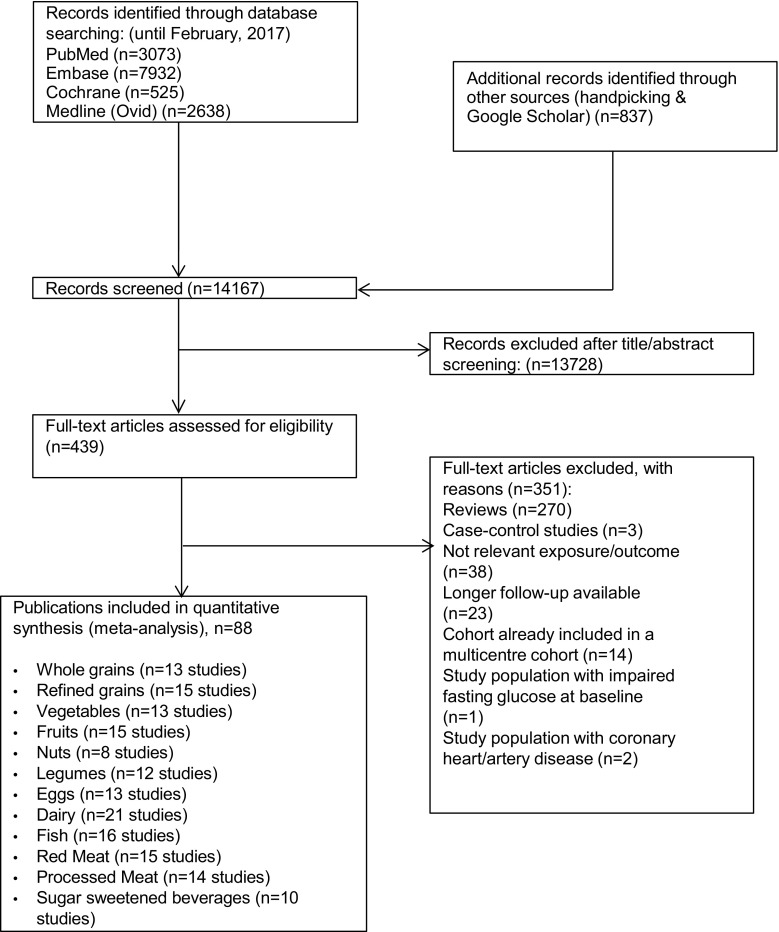
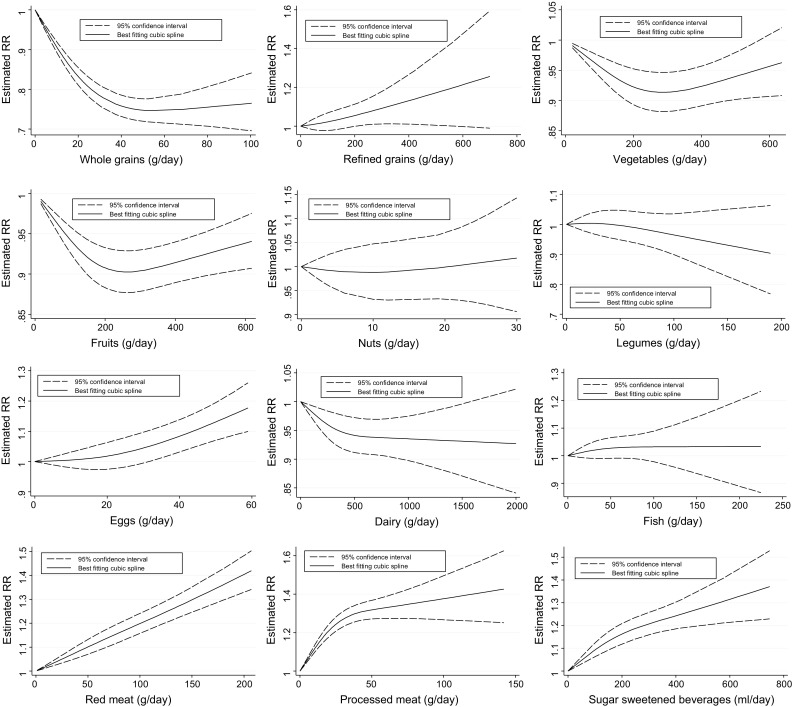
The aim of this systematic review and meta-analysis was to synthesize the knowledge about the relation between intake of 12 major food groups and risk of type 2 diabetes (T2D). We conducted a systematic search in PubMed, Embase, Medline (Ovid), Cochrane Central, and Google Scholar for prospective studies investigating the association between whole grains, refined grains, vegetables, fruits, nuts, legumes, eggs, dairy, fish, red meat, processed meat, and sugar-sweetened beverages (SSB) on risk of T2D. Summary relative risks were estimated using a random effects model by contrasting categories, and for linear and non-linear dose-response relationships. Six out of the 12 food-groups showed a significant relation with risk of T2D, three of them a decrease of risk with increasing consumption (whole grains, fruits, and dairy), and three an increase of risk with increasing consumption (red meat, processed meat, and SSB) in the linear dose-response meta-analysis. There was evidence of a non-linear relationship between fruits, vegetables, processed meat, whole grains, and SSB and T2D risk. Optimal consumption of risk-decreasing foods resulted in a 42% reduction, and consumption of risk-increasing foods was associated with a threefold T2D risk, compared to non-consumption. The meta-evidence was graded "low" for legumes and nuts; "moderate" for refined grains, vegetables, fruit, eggs, dairy, and fish; and "high" for processed meat, red meat, whole grains, and SSB. Among the investigated food groups, selecting specific optimal intakes can lead to a considerable change in risk of T2D.
Overview
The claims and statistics of this paper haven’t been checked yet.
Free: it reads the open-access text and checks the first 5 claims that cite a source we can check. Create a free account to check every claim.
Integrity signals
Registry
Cites
Statistics
Figures
Verification
Claims the paper makes
The claims and statistics of this paper haven’t been checked yet.
Free: it reads the open-access text and checks the first 5 claims that cite a source we can check. Create a free account to check every claim.
Claims other papers make about this one
Each is checked against this paper’s own text: does it say what the citing paper says it does?
In the citing paper
“Many food groups, mostly ultraprocessed (eg, processed meat, and sugary sweetened beverages) are recognized T2D risk factors.3”
From Ultraprocessed Food Consumption and Risk of Type 2 Diabetes Among Participants of the NutriNet-Santé Prospective Cohort (2020) · cites this paper as [3]
In the citing paper
“Of note, energy balance and overweight are both associated with T2D risk.3”
From Ultraprocessed Food Consumption and Risk of Type 2 Diabetes Among Participants of the NutriNet-Santé Prospective Cohort (2020) · cites this paper as [3]
Self-check
Percentages, sums and reported differences re-computed from the paper’s own numbers.
The self-check needs the paper’s full text.
Citations
Cites
1 retracted
RETRACTED: Primary Prevention of Cardiovascular Disease with a Mediterranean Diet
Estruch, R., Ros, E., Salas-Salvadó, J., Covas, M.-I., Corella, D., Arós, F., Gómez-Gracia, E., Ruiz-Gutiérrez, V., Fiol, M., Lapetra, J., et al. (2013) · New England Journal of Medicine · doi:10.1056/nejmoa1200303 · Cited by 4,257
RetractedBias in meta-analysis detected by a simple, graphical test
Egger, M., Smith, G. D., Schneider, M., & Minder, C. (1997) · BMJ · doi:10.1136/bmj.315.7109.629 · Cited by 56,722 · cited 1×
“Potential small-study effects, such as publication bias, were explored using Eggeŕs test and funnel plots [20] when at least 10 studies were available, as recommended by the Cochrane Handbook [21].”
MethodMeta-analysis in clinical trials
DerSimonian, R., & Laird, N. (1986) · Controlled Clinical Trials · doi:10.1016/0197-2456(86)90046-2 · Cited by 39,552 · cited 2×
“To evaluate the weighting of each study, the standard error for the logarithm RR/HR of each study was calculated and regarded as the estimated variance of the logarithm HR/RR, using an inverse variance method [15].”
MethodQuantifying heterogeneity in a meta‐analysis
Higgins, J. P. T., & Thompson, S. G. (2002) · Statistics in Medicine · doi:10.1002/sim.1186 · Cited by 36,763
Dermyshi, E., Wang, Y., Yan, C., Hong, W., Qiu, G., Gong, X., & Zhang, T. (2017) · Neonatology · doi:10.1159/000454668 · Cited by 24,451
Meta-analysis of Observational Studies in Epidemiology<SUBTITLE>A Proposal for Reporting</SUBTITLE>
Stroup, D. F. (2000) · JAMA · doi:10.1001/jama.283.15.2008 · Cited by 20,623
Stang, A. (2010) · European Journal of Epidemiology · doi:10.1007/s10654-010-9491-z · Cited by 17,396 · cited 2×
“However, Stang [14] commented that the Newcastle–Ottawa Scale includes quality items that are not valid (e.g., the ‘‘representativeness of the exposed cohort’’ item), and concluded that this score appeared to be unacceptable for the quality ranking of 364 L. Schwingshackl et al. case–control and cohort studies in meta…”
BackgroundInternational Diabetes Federation 2017
Carracher, A. M., Marathe, P. H., & Close, K. L. (2018) · Journal of Diabetes · doi:10.1111/1753-0407.12644 · Cited by 13,418
Tuomilehto, J., Lindström, J., Eriksson, J. G., Valle, T. T., Hämäläinen, H., Ilanne-Parikka, P., Keinänen-Kiukaanniemi, S., Laakso, M., Louheranta, A., Rastas, M., et al. (2001) · New England Journal of Medicine · doi:10.1056/nejm200105033441801 · Cited by 10,873
Cochrane Handbook for Systematic Reviews of Interventions Version 5.0.1. The Cochrane Collaboration
Higgins, J. P. T., Green, S. R., & Higgins, J. P. T. (2008) · Cited by 7,226
Cited by
Items 301–400 of 866
Kuo, C.-T., Chen, D., Chan, C., Yeh, Y., & Chen, H.-H. (2022) · Public Health Nutrition · doi:10.1017/s1368980022001549 · Cited by 24
“tion was associated with a greater risk of CHD(2), type 2 diabetes(3,37) and overall mortality(38).”
BackgroundEffect of Lycopene Intake on the Fasting Blood Glucose Level: A Systematic Review with Meta-Analysis
Inoue, T., Yoshida, K., Sasaki, E., Aizawa, K., & Kamioka, H. (2022) · Nutrients · doi:10.3390/nu15010122 · Cited by 22
Millán-Laleona, A., Bielsa, F. J., Cañada, E. A., Rincón, C. G., Errea, P., & López, V. (2023) · Biology · doi:10.3390/biology12070891 · Cited by 26
“Both diseases are closely related to sedentarism, obesity and non-healthy dietary habits leading to a disorder known as metabolic syndrome; many studies support the relationship between their prevalence with poor vegetable and fruit consumption [2,3].”
BackgroundTarragón, E., Stein, J., & Meyer, J. (2018) · Behavioral Sciences · doi:10.3390/bs8100094 · Cited by 21
“Regardless, both GI and GL have proved useful when exploring the relationship between obesity and carbohydrates [18,19].”
BackgroundRazavi, R., Kenari, R. E., Farmani, J., & Jahanshahi, M. (2021) · Biomedicine & Pharmacotherapy · doi:10.1016/j.biopha.2021.111464 · Cited by 21
Alves, R., & Perelman, J. (2019) · Public Health Nutrition · doi:10.1017/s136898001800410x · Cited by 21
Kyriakaki, P., Zisis, F., Pappas, A. C., Mavrommatis, A., & Tsiplakou, E. (2022) · Metabolites · doi:10.3390/metabo13010044 · Cited by 20
“The fast pace of everyday life has rapidly shifted nutritional habits to foods with a high content of saturated fatty acids (SFAs) or sugars, thus increasing the risk for cardiovascular diseases [1], diabetes [2], and obesity [3].”
BackgroundWang, Q. J., Schmidt, A. F., LENNON, L. T., Papacosta, O., Whincup, P. H., & Wannamethee, S. G. (2023) · European Journal of Nutrition · doi:10.1007/s00394-023-03193-x · Cited by 20
“Meanwhile, based on meta-analyses of prospective studies focusing on dietary components, higher intakes of vegetables, fruits, and fish were inversely associated with coronary heart disease and stroke [10], while whole grains, fruits, and dairy were associated with reduced risk of type 2 diabetes [11].”
BackgroundLiu, X., Beck, T. L., Dhana, K., Desai, P., Krueger, K. R., Tangney, C., Holland, T. M., Agarwal, P., Evans, D. A., & Rajan, K. B. (2023) · Neurology · doi:10.1212/wnl.0000000000207938 · Cited by 20
“Previous epidemiologic studies demonstrated that whole grain consumption was associated with a lower risk of cardiovascular disease (CVD), 7 type 2 diabetes, 8 and other cardiometabolic diseases.”
BackgroundScrafford, C., Bi, X., Multani, J. K., Murphy, M. M., Schmier, J. K., & Barraj, L. M. (2020) · Nutrients · doi:10.3390/nu12010233 · Cited by 20
“04) per 200 g/day [9] Hip fractures – – Colorectal cancer 0.”
BackgroundInfluentialEnvironmental Messages Promote Plant-Based Food Choices: An Online Restaurant Menu Study
Blondin, S. A., Attwood, S., Vennard, D., & Mayneris, V. (2022) · doi:10.46830/wriwp.20.00137 · Cited by 28
“…red meat consumption is associated with an increased risk of chronic disease, including cardiovascular disease, cancer, type 2 diabetes, and obesity, as well as mortality (Guasch-Ferré et al. 2019; Schlesinger et al. 2019; Schwingshackl et al. 2017; Zeraatkar et al. 2019; Zheng et al. 2019).”
BackgroundMorin, C., Gandy, J., Brazeilles, R., Moreno, L. A., Kavouras, S. A., Martínez, H., Salas‐Salvadó, J., Bottin, J. H., & Guelinckx, I. (2018) · European Journal of Nutrition · doi:10.1007/s00394-018-1725-y · Cited by 22
“Each daily serving increase in SSB has been linked to a 21% increased risk of type 2 diabetes [10], 7% increased risk of hypertension [11] and 7–18% increased risk of stroke, heart failure and coronary heart disease [12].”
BackgroundA New Evidence-Based Diet Score to Capture Associations of Food Consumption and Chronic Disease Risk
Jannasch, F., Nickel, D., Bergmann, M. M., & Schulze, M. B. (2022) · Nutrients · doi:10.3390/nu14112359 · Cited by 20
“Intake up to 300 g/day: Risk reduction by 9% [9].”
BackgroundResultInfluentialNguyen, C. Q., Pham, T. T. P., Fukunaga, A., Hoang, D. V., Phan, T. V., Phan, D. C., Huynh, D. V., Hachiya, M., Le, H. X., Do, T. H., et al. (2022) · Public Health Nutrition · doi:10.1017/s1368980022001422 · Cited by 19
“To test the robustness of the study findings, we also conducted a set of sensitivity analyses in which (1) we examined the associations of redmeat and processed meat consumption separately and (2) participants whowere receiving treatment for DM were excluded.”
BackgroundMethodResultInfluentialLiu, J., Shen, M., Zhuang, G., & Zhang, L. (2024) · Frontiers in Endocrinology · doi:10.3389/fendo.2024.1324318 · Cited by 20
Deng, A., Pattanaik, S., Bhattacharya, A., Yin, J., Ross, L., Liu, C., & Zhang, J. (2018) · Nutrition Metabolism and Cardiovascular Diseases · doi:10.1016/j.numecd.2018.05.011 · Cited by 19
Apple Preload Halved the Postprandial Glycaemic Response of Rice Meal in Healthy Subjects
Lu, J., Zhao, W., Wang, L., Fan, Z., Zhu, R., Wu, Y., & Zhou, Y. (2019) · Nutrients · doi:10.3390/nu11122912 · Cited by 19
“According to epidemiological studies, the consumption of apple is beneficial to diabetes prevention [21,25,26].”
BackgroundYamauchi, T., Kamiya, H., Utsunomiya, K., Watada, H., Kawanami, D., Sato, J., Kitada, M., Koya, D., Harada, N., Shide, K., et al. (2020) · Diabetology International · doi:10.1007/s13340-020-00437-7 · Cited by 23
Zapata, M. E., Rovirosa, A., & Carmuega, E. (2022) · Cadernos de Saúde Pública · doi:10.1590/0102-311xes252021 · Cited by 25
Tham, X. C., Whitton, C., Müller‐Riemenschneider, F., & Petrunoff, N. (2023) · JMIR Formative Research · doi:10.2196/38959 · Cited by 22
“In contrast, the consumption of 3 servings of sugar-sweetened beverages (SSBs) per day is associated with a 3-fold increased risk of developing type 2 diabetes in adults [2].”
Dietary habits and Helicobacter pylori infection: is there an association?
Soares, G. A. S., Moraes, F. A. D. S., Ramos, A. F. P. L., Santiago, S. B., Germano, J. N., Fernandes, G. A., Curado, M. P., & Barbosa, M. S. (2023) · Therapeutic Advances in Gastroenterology · doi:10.1177/17562848231160620 · Cited by 18
Talukdar, J. R., Steen, J. P., Goldenberg, J. Z., Zhang, Q., Vernooij, R. W. M., Ge, L., Zeraatkar, D., Bała, M. M., Ball, G. D. C., Thabane, L., et al. (2023) · Systematic Reviews · doi:10.1186/s13643-023-02312-3 · Cited by 19
“Six SRMAs reported on T2D associated with SFA reduction or replacement, including 4 reviews of observational studies (follow-up ranging from 1 to 32 years) [28, 29, 35, 36] and 2 reviews of RCTs (follow-up ranging from 1 to 6 years) [38, 39].”
BackgroundYin, X., Chen, Y., Lu, W., Jin, T., & Li, L. (2020) · Nutrition and Diabetes · doi:10.1038/s41387-020-0120-y · Cited by 24
Marinangeli, C. P. F., Harding, S., Glenn, A. J., Chiavaroli, L., Zurbau, A., Jenkins, D. J. A., Kendall, C. W. C., Miller, K. B., & Sievenpiper, J. L. (2020) · Nutrients · doi:10.3390/nu12061725 · Cited by 22
“Studies demonstrate that diets containing higher levels of dietary fibre and intact carbohydrate foods, such as whole grains, are associated with lower mortality and risk of chronic disease [12,13].”
BackgroundAssociation between adherence to the French dietary guidelines and the risk of type 2 diabetes
Kesse‐Guyot, E., Chaltiel, D., Fezeu, L., Baudry, J., Druesne‐Pecollo, N., Galan, P., Deschamps, V., Touvier, M., Julia, C., & Herçberg, S. (2020) · Nutrition · doi:10.1016/j.nut.2020.111107 · Cited by 19
Productivity Benefits of Preventing Type 2 Diabetes in Australia: A 10-Year Analysis
Menon, K., de Courten, B. V., Liew, D., Ademi, Z., Owen, A. J., Magliano, D. J., & Zomer, E. (2021) · Diabetes Care · doi:10.2337/dc20-1429 · Cited by 18
Brame, J., Kohl, J., Wurst, R., Fuchs, R., Tinsel, I., Maiwald, P., Fichtner, U. A., Armbruster, C., Bischoff, M., Farin‐Glattacker, E., et al. (2022) · International Journal of Environmental Research and Public Health · doi:10.3390/ijerph19031393 · Cited by 18
Song, P., Zhang, X., Li, Y., Man, Q., Jia, S., Zhang, J., & Ding, G. (2022) · Nutrients · doi:10.3390/nu14245301 · Cited by 19
“Several studies revealed that high consumption of red meat was positively associated with the risk of diabetes [32].”
BackgroundPlant-based diets and risk of type 2 diabetes: systematic review and dose–response meta-analysis
Murciano, A., Malavolti, M., Fairweather‐Tait, S. J., Paduano, S., Vinceti, M., & Filippini, T. (2025) · British Journal Of Nutrition · doi:10.1017/s0007114525104157 · Cited by 22
“Amongst lifestyle factors, diet plays an important role (3 – 5) , and because analyses of single nutrients or foods cannot account for complex interactions, the assessment of dietary patterns has emerged as the most appropriate approach to examine the association between diet and T2D (6) .”
Taba, N., Valge, H.-K., Metspalu, A., Esko, T., Wilson, J. F., Fischer, K., & Pirastu, N. (2021) · Frontiers in Genetics · doi:10.3389/fgene.2021.738265 · Cited by 18
Bekele, T. H., Trijsburg, L. E., Brouwer, I. D., de Vries, J. H. M., Covic, N. M., Kennedy, G., Alemayehu, D., & Feskens, E. J. M. (2023) · Advances in Nutrition · doi:10.1016/j.advnut.2023.05.005 · Cited by 18
“[30,44].”
BackgroundResultInfluentialSlurink, I. A. L., Corpeleijn, E., Bakker, S. J. L., Jongerling, J., Kupper, N. H. M., Smeets, T., & Soedamah‐Muthu, S. S. (2023) · American Journal of Clinical Nutrition · doi:10.1016/j.ajcnut.2023.10.002 · Cited by 17
Jia, M.-J., & Chen, L. (2024) · Frontiers in Nutrition · doi:10.3389/fnut.2024.1439217 · Cited by 17
Higher Animal Protein Intake During the Second Trimester of Pregnancy Is Associated With Risk of GDM
Yong, H. Y., Shariff, Z. M., Yusof, B. N. M., Rejali, Z., Tee, Y. Y. S., BINDELS, J. G., & van der Beek, E. M. (2021) · Frontiers in Nutrition · doi:10.3389/fnut.2021.718792 · Cited by 19
Wang, Y., Xie, W., Tian, T., Zhang, J., Zhu, Q., Pan, D., Xu, D., Lü, Y., Sun, G., & Dai, Y. (2022) · Nutrients · doi:10.3390/nu14194111 · Cited by 21
“However, a meta-analysis of prospective cohort studies found that these two food groups did not appear to be strongly associated with diabetes [10,40].”
BackgroundInfluentialTotal Nut, Tree Nut, and Peanut Consumption and Metabolic Status in Southern Italian Adults
Micek, A., Godos, J., Cernigliaro, A., Cincione, R. I., Buscemi, S., Libra, M., Galvano, F., & Grosso, G. (2021) · International Journal of Environmental Research and Public Health · doi:10.3390/ijerph18041847 · Cited by 16
“Nut consumption has been generally associated with cardiovascular benefits, but results toward metabolic outcomes are not univocal in the scientific literature: in fact, despite acute feeding studies have shown favorable effects on fasting blood glucose [23], no association between nut consumption and the risk of Type…”
ResultAssociation between Unhealthful Plant-Based Diets and Possible Risk of Dyslipidemia
Song, S., Lee, K., Park, S., Shin, N., Kim, H., & Kim, J. (2021) · Nutrients · doi:10.3390/nu13124334 · Cited by 19
Kohl, J., Hohberg, V., Hauff, P., Lang, C., Faude, O., Gollhofer, A., & König, D. (2022) · Frontiers in Nutrition · doi:10.3389/fnut.2022.952223 · Cited by 16
Prevention of type 2 diabetes—success story that is waiting for next steps
Uusitupa, M. I. J., Lindström, J., & Tuomilehto, J. O. (2018) · European Journal of Clinical Nutrition · doi:10.1038/s41430-018-0223-x · Cited by 16
Associations of food groups and cardiometabolic and inflammatory biomarkers: does the meal matter?
Schwedhelm, C., Schwingshackl, L., Agogo, G. O., Sonestedt, E., Boeing, H., & Knüppel, S. (2019) · British Journal Of Nutrition · doi:10.1017/s000711451900151x · Cited by 16
Self-citationDried fruit consumption and cardiometabolic health: a randomised crossover trial
Sullivan, V. K., Petersen, K. S., & Kris‐Etherton, P. M. (2020) · British Journal Of Nutrition · doi:10.1017/s0007114520002007 · Cited by 21
“lower risk of CVD(2,3), type 2 diabetes(4,5) and the metabolic syndrome(6), and increasing fruit and vegetable intake improves risk factors such as blood pressure and lipids/lipoproteins(7,8).”
BackgroundFreund, F., & Springmann, M. (2021) · Nature Food · doi:10.1038/s43016-021-00306-9 · Cited by 20
Zhu, R., Fogelholm, M., Jalo, E., Poppitt, S. D., Silvestre, M. P., Møller, G., Huttunen‐Lenz, M., Stratton, G., Sundvall, J., Macdonald, I. A., et al. (2022) · Clinical Nutrition · doi:10.1016/j.clnu.2022.02.002 · Cited by 17
de Farias, L. M., Brito, A. K. D. S., Oliveira, A. S. D. S. S., Lima, G. D. M., Rodrigues, L. A. R. L., de Carvalho, V. B. L., Cunha, F. V. M., Pereira, C. F. D. C., Rizzo, M. D. S., Nunes, P. H. M., et al. (2022) · South African Journal of Botany · doi:10.1016/j.sajb.2022.05.008 · Cited by 18
Yang, Y., Na, X., Xi, Y., Xi, M., Yang, H., Li, Z., & Zhao, A. (2022) · Frontiers in Nutrition · doi:10.3389/fnut.2022.997636 · Cited by 17
Li, L., Yang, H., Ma, Y., Liang, X., Xu, M., Zhang, J., Huang, Z., Meng, L., Zhou, J., Xian, J., et al. (2022) · European Journal of Nutrition · doi:10.1007/s00394-022-02998-6 · Cited by 18
Consumption of Fish in Chronic Kidney Disease – A Matter of Depth
Mafra, D., Kemp, J. A., Leal, V. D. O., Cardozo, L., Borges, N. A., Alvarenga, L., Teixeira, K. T. R., & Stenvinkel, P. (2023) · Molecular Nutrition & Food Research · doi:10.1002/mnfr.202200859 · Cited by 17
Wu, C., Liu, P., & Yuan, Z. (2020) · International Journal of Food Sciences and Nutrition · doi:10.1080/09637486.2020.1780567 · Cited by 17
“Two meta-analysis studies (Kouvari et al. 2016; Schwingshackl et al. 2017), a large-scale cohort study on the Chinese population (Talaei et al. 2017) and a cross-sectional study from the CHNS (Ke et al. 2018) all indicated that red meat was significantly associated with T2D risk.”
Tan, S., Lu, H., Song, R., Wu, J., Xue, M., Qian, Y., Wang, W., & Wang, X. (2020) · British Journal Of Nutrition · doi:10.1017/s0007114520004808 · Cited by 18
“Increased consumption of a healthy diet reduces the risk of diabetes (6) ; therefore, the association between dietary patterns and diseases is gaining attention.”
BackgroundChaltiel, D., Adjibade, M., Deschamps, V., Touvier, M., Herçberg, S., Julia, C., & Kesse‐Guyot, E. (2020) · British Journal Of Nutrition · doi:10.1017/s0007114520004134 · Cited by 16
“Frequencies were assessed using eight possibilities of response: (1) most of the time; (2) occasionally; (3) never (too expensive); (4) never (product not available); (5) never (I’m not interested in organic products); (6) never (I avoid such products); (7) never (for no specific reason); and (8) I don’t know.”
MethodSpringmann, M., Hansoge, M. P., Schultz, L., Pastorino, S., & Bundy, D. A. P. (2025) · The Lancet Planetary Health · doi:10.1016/j.lanplh.2025.06.002 · Cited by 19
Concerns about the Burden of Proof studies
Glenn, A. J., Gu, X., Hu, F. B., Wang, M., & Willett, W. C. (2023) · Nature Medicine · doi:10.1038/s41591-023-02294-8 · Cited by 15
Dias, L. M., Schmidt, M. I., Vigo, Á., & Drehmer, M. (2023) · Nutrients · doi:10.3390/nu15194258 · Cited by 17
“The consumption of sweetened beverages is related to an unfavorable evolution of glycemic levels during pregnancy and is positively associated with the risk of type 2 diabetes in the adult population [35,36].”
BackgroundAssociation Between Dietary Habits and Type 2 Diabetes Mellitus in Thai Adults: A Case-Control Study
Kalandarova, M., Ahmad, I., Aung, T. N. N., Moolphate, S., Shirayama, Y., Okamoto, M., Aung, M. N., & Yuasa, M. (2024) · Diabetes Metabolic Syndrome and Obesity · doi:10.2147/dmso.s445015 · Cited by 18
“15 Conversely, adopting certain diets such as the Mediterranean diet which is mainly composed of raw vegetables, fish, whole grains, nuts, and beans has been reported to be associated with a protective effect against diabetes and metabolic syndrome.”
Zhao, F., Ren, C., Li, L., Huang, C., Zhao, Q., Zhong, Y., Hu, Q., Liao, W., Xia, H., Yang, L., et al. (2024) · Food & Function · doi:10.1039/d3fo05070j · Cited by 17
The Diet Quality of Athletes as Measured by Diet Quality Indices: A Scoping Review
Dion, S., Walker, G., Lambert, K., Stefoska‐Needham, A., & Craddock, J. C. (2024) · Nutrients · doi:10.3390/nu17010089 · Cited by 17
“Additionally, fruit intake was observed to favourably impact hypertension, gut health and serum LDL cholesterol levels and was associated with lower risks of T2D, CVD, and some cancers [58,62].”
Medically Tailored Meals as a Prescription for Treatment of Food-Insecure Type 2 Diabetics
Rabaut, L. J. (2019) · Journal of patient-centered research and reviews · doi:10.17294/2330-0698.1693 · Cited by 16
Aittola, K., Karhunen, L. J., Männikkö, R., Järvelä‐Reijonen, E., Mikkonen, S. J., Absetz, P., Kolehmainen, M., Schwab, U., Harjumaa, M., Lindström, J., et al. (2021) · Nutrients · doi:10.3390/nu13114030 · Cited by 19
“Moreover, the consumption of fruit and vegetables as well as dietary patterns characterized by a high consumption of vegetables have been associated with a reduced risk of obesity and T2D [4,38,39].”
BackgroundValuation of the health and climate-change benefits of healthy diets
Springmann, M., & Springmann, M. (2020) · FAO eBooks · doi:10.4060/cb1699en · Cited by 35
“…the risk factors to the disease endpoints were adopted from meta-analyses of prospective cohort studies (Afshin et al., 2014; Aune et al., 2016a, 2016b, 2016c; Bechthold et al., 2019; Chan et al., 2011; Schwingshackl et al., 2017; The Global BMI Mortality Collaboration, 2016; Zheng et al., 2012).”
MethodInfluentialMy nutrition index: a method for measuring optimal daily nutrient intake
Busgang, S. A., Malin, A. J., & Gennings, C. (2022) · BMC Nutrition · doi:10.1186/s40795-022-00497-9 · Cited by 15
Vijay, A., Al-Awadi, A. A., Chalmers, J., Balakumaran, L. K., Grove, J. I., Valdes, A. M., Taylor, M. A., Shenoy, K., & Aithal, G. P. (2022) · Nutrients · doi:10.3390/nu14142808 · Cited by 15
“In contrast, high content of fibre, vitamins, minerals, and phytochemicals found in vegetables, fruits, and wholegrains have been suggested to improve insulin sensitivity and glucose metabolism [55,60].”
BackgroundBianchi, F., Aveyard, P. N., Astbury, N. M., Cook, B., Cartwright, E., & Jebb, S. A. (2019) · BMJ Open · doi:10.1136/bmjopen-2018-027016 · Cited by 17
Ramos-López, O., Mejia-Godoy, R., Frías-Delgadillo, K. J., Torres‐Valadez, R., García, A. F., Sánchez‐Enríquez, S., Aguiar-García, P., Martínez‐López, E., & Zepeda-Carrillo, E. A. (2019) · Nutrients · doi:10.3390/nu11122863 · Cited by 15
“Of note, these dietary patterns have been positively associated with T2D susceptibility [4,5].”
BackgroundAbdulai, T., Tu, R., Mao, Z., Oppong, T. B., Amponsem‐Boateng, C., Wang, Y., Liu, X., Zhang, H., & Wang, C. (2020) · Frontiers in Nutrition · doi:10.3389/fnut.2020.537049 · Cited by 16
“Red meat, processed meat, and sweetened beverages have been linked to increased risk of type diabetes (5).”
BackgroundRefined grain intake and cardiovascular disease: Meta-analyses of prospective cohort studies
Gaesser, G. A. (2022) · Trends in Cardiovascular Medicine · doi:10.1016/j.tcm.2022.08.002 · Cited by 15
Nguyen, N. N., Tran, L. T. D., Ho, N. D. K., Huynh, L. B. P., Nguyen, H. S., & Chen, Y. (2023) · Nutrition Reviews · doi:10.1093/nutrit/nuad148 · Cited by 14
Proteomic and Metabolomic Signatures of Diet Quality in Young Adults
Costello, E. J., Goodrich, J. A., Patterson, W. B., Walker, D. I., Chen, J. C., Baumert, B. O., Rock, S., Gilliland, F. D., Goran, M. I., Chen, Z., et al. (2024) · Nutrients · doi:10.3390/nu16030429 · Cited by 14
“These components include likely sources of B vitamins (beans, green vegetables, animal protein) [65], foods that contain antioxidants or anti-inflammatories (fruits, vegetables) [66], and food groups that may reduce the risk of disease (fruit, vegetables, dairy, and whole grains) [67].”
BackgroundKouvari, M., Panagiotakos, D. B., Chrysohoou, C. A., Georgousopoulou, E. N., Yannakoulia, M., Tousoulis, D. M., Pitsavos, C. S., Skoumas, Y., Katinioti, N., Papadimitriou, L., et al. (2020) · Nutrition Metabolism and Cardiovascular Diseases · doi:10.1016/j.numecd.2020.07.037 · Cited by 14
Ibsen, D. B., Overvad, K., Laursen, A. S. D., Halkjær, J., Tjønneland, A. M., Kilpeläinen, T. O., Parner, E. T., & Jakobsen, M. U. (2021) · European Journal of Nutrition · doi:10.1007/s00394-021-02524-0 · Cited by 14
Dietary patterns among Saudis with type 2 diabetes mellitus in Riyadh: A cross-sectional study
Aljahdali, A., & Bawazeer, N. M. (2022) · PLoS ONE · doi:10.1371/journal.pone.0267977 · Cited by 15
“It has previously been shown that there is an association of single food and beverages with the risk of T2DM, such as whole grains [7, 8], coffee, dairy products [8, 9], red meat, processed meat [8, 10], sugary-sweetened beverages [8, 11, 12], vegetables [8], and fruits [8].”
BackgroundGiosuè, A., Calabrese, I., Riccardi, G., Vaccaro, O., & Vitale, M. (2022) · Diabetes Research and Clinical Practice · doi:10.1016/j.diabres.2022.110071 · Cited by 14
Lordan, R. (2024) · Diabetes & Metabolic Syndrome Clinical Research & Reviews · doi:10.1016/j.dsx.2024.103006 · Cited by 14
Meat and dairy consumption in Scottish adults: insights from a national survey
Stewart, C., McNeill, G., Runions, R., Comrie, F., McDonald, A., & Jaacks, L. M. (2024) · Journal of Human Nutrition and Dietetics · doi:10.1111/jhn.13364 · Cited by 14
Štiglic, G., Wang, F., Sheikh, A., & Cilar, L. (2021) · Primary care diabetes · doi:10.1016/j.pcd.2021.04.008 · Cited by 14
Machado, P. P., McNaughton, S. A., Wingrove, K., Stephens, L. D., Baker, P., & Lawrence, M. A. (2024) · Current Nutrition Reports · doi:10.1007/s13668-024-00591-3 · Cited by 13
“6) [65–67, 72– 81 ] Beverages are shown to have even stronger effects because they are less satiating than solid foods due to the compromise of the food matrix, meaning diminished gastric distention with nutrients being absorbed at higher concentrations and more readily [64, 73, 74, 78, 82, 83].”
Akhavan, N. S., Pourafshar, S., Johnson, S. A., Foley, E., George, K. S., Muñoz, J., Siebert, S. C., Clark, E. A., Basiri, R., Hickner, R. C., et al. (2020) · Nutrients · doi:10.3390/nu12072031 · Cited by 15
Exploring diet associations with Covid-19 and other diseases: a Network Analysis–based approach
Toor, R., & Chana, I. (2022) · Medical & Biological Engineering & Computing · doi:10.1007/s11517-022-02505-3 · Cited by 15
Dietary recommendations for persons with type 2 diabetes mellitus
Skurk, T., Bosy‐Westphal, A., Grünerbel, A., Kabisch, S., Keuthage, W., Kleinridders, A., Kronsbein, P., Müssig, K., Nussbaumer, H., Pfeiffer, A. F. H., et al. (2022) · Experimental and Clinical Endocrinology & Diabetes · doi:10.1055/a-1624-5095 · Cited by 13
Hosseinpour‐Niazi, S., Hadaegh, F., Mirmiran, P., DANESHPOUR, M. S., Mahdavi, M., & Azizi, F. (2022) · Diabetology & Metabolic Syndrome · doi:10.1186/s13098-022-00841-w · Cited by 13
Preventive Epigenetic Mechanisms of Functional Foods for Type 2 Diabetes
Abubakar, B., Usman, D., Sanusi, K. O., Azmi, N. H., & Imam, M. U. (2023) · Diabetology · doi:10.3390/diabetology4030023 · Cited by 14
“Studies have also shown that people who consume fermented dairy products are less likely to develop type 2 diabetes than those who consume non-fermented ones [29,30].”
The Impact of Maternal Plant-Based Diet on Obstetric and Neonatal Outcomes—A Cross-Sectional Study
Przybysz, P., Kruszewski, A., Kacperczyk-Bartnik, J., & Romejko-Wolniewicz, E. (2023) · Nutrients · doi:10.3390/nu15224717 · Cited by 10
“There is evidence that a higher intake of red and processed meat is a risk factor for developing GDM [23] and type 2 diabetes mellitus [24,25].”
BackgroundHeidarzadeh‐Esfahani, N., Darbandi, M., Khamoushi, F., Najafi, F., Soleimani, D., Moradi, M., Shakiba, E., & Pasdar, Y. (2024) · Scientific Reports · doi:10.1038/s41598-024-52946-z · Cited by 15
“Meta-analyses also consistently underscored the risk reduction in T2DM among individuals consuming fruits, vegetables, soy products, and whole grains, contrasting with the increased risk linked to higher red meat consumption 43,45 .”
BackgroundFan, M., Li, Y., Wang, C., Mao, Z., Zhang, L., Yang, X., Cui, S., & Li, L. (2020) · Nutrients · doi:10.3390/nu12123827 · Cited by 13
“Moreover, previous meta-analyses on the protective effect of dairy intake on T2DM have provided similar evidence [13,14,57].”
ResultYang, H., Kim, M.-J., Hur, H. J., Jang, D.-J., Lee, B.-K., Kim, M., & Park, S. (2023) · Nutrients · doi:10.3390/nu15071741 · Cited by 13
“Red meats belong to the category of T2DM risk-increasing foods, and in one meta-analysis, their intake increased T2DM risk three-fold [29].”
BackgroundZhang, Z., Liu, F., Yin, X., Wu, B., Li, H., Peng, F., Cheng, M., Li, J., Xiang, J., Yao, P., et al. (2024) · European Journal of Nutrition · doi:10.1007/s00394-023-03321-7 · Cited by 12
“A series of studies have described the relationship between dietary factors and diabetes [5, 6].”
Hosseinpour‐Niazi, S., Malmir, H., Mirmiran, P., Shabani, M., Hasheminia, M., & Azizi, F. (2024) · Nutrition & Metabolism · doi:10.1186/s12986-024-00831-x · Cited by 13
Feel4Diabetes healthy diet score: development and evaluation of clinical validity
Virtanen, E., Kivelä, J., Wikström, K., Lambrinou, C., Miguel‐Etayo, P. D., Huys, N., Vraukó, K., Moreno, L. A., Usheva, N., Chakarova, N. Y., et al. (2020) · BMC Endocrine Disorders · doi:10.1186/s12902-020-0521-x · Cited by 15
Ibsen, D. B., Jakobsen, M. U., Halkjær, J., Tjønneland, A. M., Kilpeläinen, T. O., Parner, E. T., & Overvad, K. (2020) · Journal of Nutrition · doi:10.1093/jn/nxaa448 · Cited by 14
Jia, Y., Guo, D., Sun, L., Shi, M., Zhang, K., Yang, P., Zang, Y., Wang, Y., Liu, F., Chen, G.-C., et al. (2022) · Canadian Journal of Diabetes · doi:10.1016/j.jcjd.2022.06.001 · Cited by 17
The Role of Dietary Fiber in Promoting Health: A Review of Choice and Outcomes
Hayyat, F. S., Allayie, S. A., Malik, J. A., & Dar, S. A. (2023) · Springer eBooks · doi:10.1007/978-981-99-6831-2_25 · Cited by 14
Basu, A., Alman, A. C., & Snell‐Bergeon, J. K. (2021) · Nutrients · doi:10.3390/nu13031035 · Cited by 12
“The study examined this association among 12 food groups but did not address baked desserts or those containing added fats and sugars, except SSB [20].”
BackgroundBayram, Y. E., & Eskan, M. A. (2023) · PLoS ONE · doi:10.1371/journal.pone.0284319 · Cited by 11
“It is wellknown that type of daily food intake and/or outdoor activities play important roles in the blood glucose level [51, 52].”
BackgroundThe system of risk factors for diseases in valeological disciplines
Shevchenko, A. S., Шевченко, В. В., Pomogaybo, K. G., Danylchenko, S. I., Brown, G. W., Shumskyi, O., Білий, Є. Є., Жога, Р., & Yushko, V. I. (2025) · Inter Collegas · doi:10.35339/ic.2025.12.1.ssp · Cited by 12
Cohen, S. S., Bylsma, L. C., Movva, N., & Alexander, D. D. (2022) · BMC Public Health · doi:10.1186/s12889-022-14042-7 · Cited by 11
“Results Our review of the literature yielded six chronic diseases with at least one published meta-analysis demonstrating a significant association with total dairy consumption: breast cancer [32], colorectal cancer [33], CVD [34], stroke [34], hypertension [35], and T2D [36].”
BackgroundDietary Management Tools Improve the Dietary Skills of Patients with T2DM in Communities
Chen, X., Min, H., & Sun, X. (2022) · Nutrients · doi:10.3390/nu14214453 · Cited by 12
“Certain dietary patterns have been proven to be associated with the onset of type 2 diabetes [9,48], and dietary management is of paramount importance in the prevention and remission of type 2 diabetes [6,49].”
BackgroundLiu, Q., Chiavaroli, L., Ayoub‐Charette, S., Ahmed, A., Khan, T. A., Au‐Yeung, F., Lee, D., Cheung, A., Zurbau, A., Choo, V. L., et al. (2023) · PLoS ONE · doi:10.1371/journal.pone.0264802 · Cited by 12
“Most proposed mechanisms from analyses of both observational and clinical trials link SSBs consumed as excess calories directly to other adverse health conditions like type 2 diabetes [165, 166] and weight gain [15], which secondarily raise blood pressure.”
Diabetes Risk Reduction Diet and Colorectal Cancer Risk
Natale, A., Turati, F., Taborelli, M., Giacosa, A., Augustin, L. S. A., Crispo, A., Negri, E., Rossi, M., & Vecchia, C. L. (2024) · Cancer Epidemiology Biomarkers & Prevention · doi:10.1158/1055-9965.epi-23-1400 · Cited by 11
García, E. L., Lesmes, I. B., Díaz‐Perales, A., Moreno-Arribas, M. V., Baquedano, M. D. P. P., Velasco, A. M. R., Salvo, U. F., Tejedor-Romero, L., Porcel, F. B. O., Laín, S. A., et al. (2023) · Food Risk Assess Europe · doi:10.2903/sp.efsa.2023.fr-0005 · Cited by 12
Jin, Y., & Arroo, R. (2020) · Phytochemistry Reviews · doi:10.1007/s11101-020-09710-8 · Cited by 11
Pastorino, S., Bishop, T. R. P., Sharp, S. J., Pearce, M., Akbaraly, T. N., Barbieri, N. B., Bes‐Rastrollo, M., Beulens, J. W. J., Chen, Z., Du, H., et al. (2021) · Nutrients · doi:10.3390/nu13041223 · Cited by 16
Metadata
- Authors
- Schwingshackl, L., Hoffmann, G., Lampousi, A.-M., Knüppel, S., Iqbal, K., Schwedhelm, C., Bechthold, A., Schlesinger, S., & Boeing, H.
- Affiliations
- German Institute of Human Nutrition (DE)
- University of Vienna (AT)
- Deutsches Diabetes-Zentrum e.V. (DE)
- Corresponding author
- Schwingshackl, Lukas
- ORCID
- Venue
- European Journal of Epidemiology
- Published
- 2017-04-10
- Volume
- 32
- Issue
- 5
- Pages
- 363-375
- ISSN
- 0393-2990 (ISSN-L)
- 1573-7284
- PMC
- PMC5506108
- OpenAlex
- W2606247503
- Cited by
- 799
- References
- 56
- Citations by year
- 2026: 54 · 2025: 67 · 2024: 108 · 2023: 111 · 2022: 132 · 2021: 100 · 2020: 86 · 2019: 78 · 2018: 48 · 2017: 13
- FWCI
- 9.99
- Type
- journal article
- Language
- en
- Open access
- hybrid
- doi.org
- Locations
- European Journal of Epidemiology (publishedVersion, cc-by)
- PubMed Central (publishedVersion, cc-by)
- PubMed (publishedVersion)
- Informationszentrum Lebenswissenschaften (ZB MED) (submittedVersion, cc-by)
- Topics
- Health Sciences › Medicine › Public Health, Environmental and Occupational Health › Nutritional Studies and Diet
- Health Sciences › Medicine › Endocrinology, Diabetes and Metabolism › Diet, Metabolism, and Disease
- Health Sciences › Nursing › Nutrition and Dietetics › Food composition and properties
- Keywords
- type 2 diabetes, food groups, whole grains, refined grains, vegetables, fruits, nuts, Fabaceae, eggs, dairy products, fish, red meat, processed meat, sugar-sweetened beverages, dose-response relationship, dietary risk factors
- MeSH terms
- Whole Grains, Diabetes Mellitus, Type 2, Diet, Eating, Feeding Behavior, Food, Fruit, Humans, Meat, Nuts, Prospective Studies, Risk Factors, Vegetables, Risk Reduction Behavior
About these checks
Registry, retraction, Cites and statistics results are computed, not judged, with one exception: a printed reference that no index lists is read once by a model before it counts as a citation error. Claims are extracted by a model and kept only when their quote appears verbatim in the text; each cited source is then checked, with a model’s help, for whether it says what the claim relies on. Those verdicts can be wrong — read the claim’s quote and the cited source before relying on one.
Statistics and arithmetic are recomputed, not judged.
Confidence bands are shown only for fields calibrated on our annotated test set. None is calibrated yet, so no band is shown.
What counts as a claim ›How we measure confidence ›How we check this ›
Are you an author, or do you see a problem with this page? Request a review
Data sources
Bibliographic data: Semantic Scholar, OpenAlex, Crossref.
Contains information from the Semantic Scholar Academic Graph Datasets, made available under the ODC Attribution License (ODC-BY 1.0).
Semantic Scholar’s data is described in: Kinney, R., et al. (2023). The Semantic Scholar Open Data Platform. arXiv:2301.10140.
