

Food groups and risk of type 2 diabetes mellitus: a systematic review and meta-analysis of prospective studies.
Open accessThe DOI matches its Crossref record; 56 of the 56 references it cites were found in a registry or an index.
Abstract
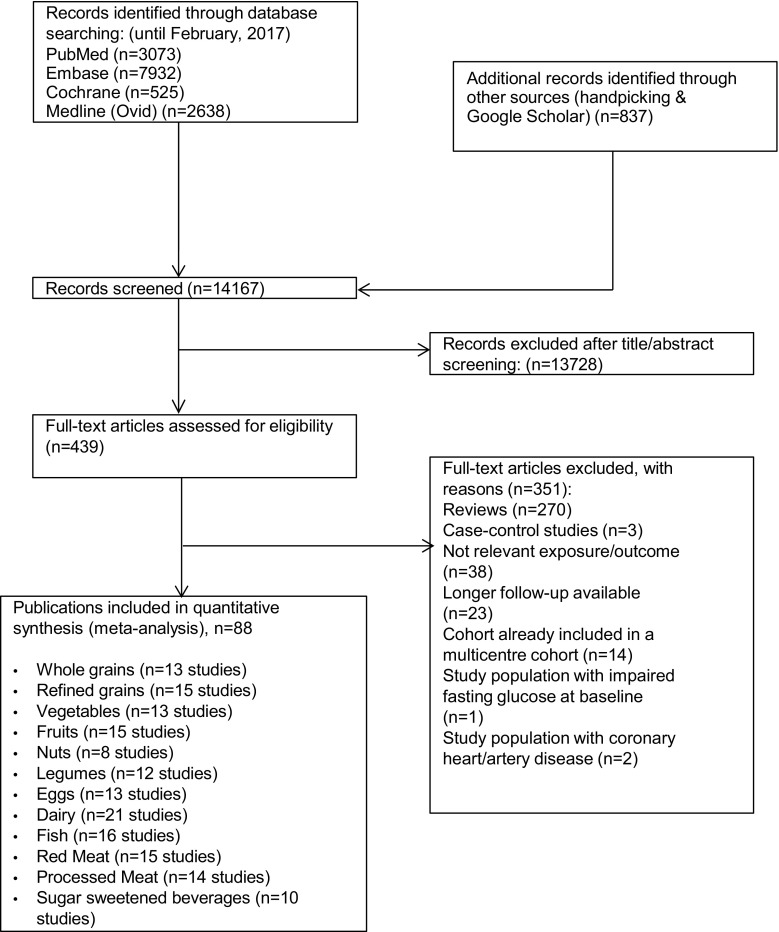
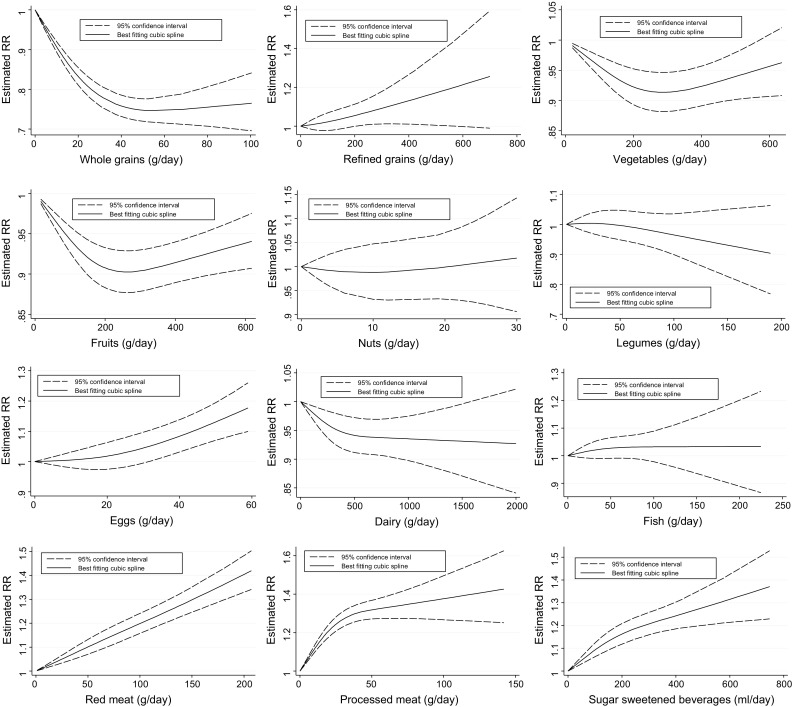
The aim of this systematic review and meta-analysis was to synthesize the knowledge about the relation between intake of 12 major food groups and risk of type 2 diabetes (T2D). We conducted a systematic search in PubMed, Embase, Medline (Ovid), Cochrane Central, and Google Scholar for prospective studies investigating the association between whole grains, refined grains, vegetables, fruits, nuts, legumes, eggs, dairy, fish, red meat, processed meat, and sugar-sweetened beverages (SSB) on risk of T2D. Summary relative risks were estimated using a random effects model by contrasting categories, and for linear and non-linear dose-response relationships. Six out of the 12 food-groups showed a significant relation with risk of T2D, three of them a decrease of risk with increasing consumption (whole grains, fruits, and dairy), and three an increase of risk with increasing consumption (red meat, processed meat, and SSB) in the linear dose-response meta-analysis. There was evidence of a non-linear relationship between fruits, vegetables, processed meat, whole grains, and SSB and T2D risk. Optimal consumption of risk-decreasing foods resulted in a 42% reduction, and consumption of risk-increasing foods was associated with a threefold T2D risk, compared to non-consumption. The meta-evidence was graded "low" for legumes and nuts; "moderate" for refined grains, vegetables, fruit, eggs, dairy, and fish; and "high" for processed meat, red meat, whole grains, and SSB. Among the investigated food groups, selecting specific optimal intakes can lead to a considerable change in risk of T2D.
Overview
The claims and statistics of this paper haven’t been checked yet.
Free: it reads the open-access text and checks the first 5 claims that cite a source we can check. Create a free account to check every claim.
Integrity signals
Registry
Cites
Statistics
Figures
Verification
Claims the paper makes
The claims and statistics of this paper haven’t been checked yet.
Free: it reads the open-access text and checks the first 5 claims that cite a source we can check. Create a free account to check every claim.
Claims other papers make about this one
Each is checked against this paper’s own text: does it say what the citing paper says it does?
In the citing paper
“Many food groups, mostly ultraprocessed (eg, processed meat, and sugary sweetened beverages) are recognized T2D risk factors.3”
From Ultraprocessed Food Consumption and Risk of Type 2 Diabetes Among Participants of the NutriNet-Santé Prospective Cohort (2020) · cites this paper as [3]
In the citing paper
“Of note, energy balance and overweight are both associated with T2D risk.3”
From Ultraprocessed Food Consumption and Risk of Type 2 Diabetes Among Participants of the NutriNet-Santé Prospective Cohort (2020) · cites this paper as [3]
Self-check
Percentages, sums and reported differences re-computed from the paper’s own numbers.
The self-check needs the paper’s full text.
Citations
Cites
1 retracted
RETRACTED: Primary Prevention of Cardiovascular Disease with a Mediterranean Diet
Estruch, R., Ros, E., Salas-Salvadó, J., Covas, M.-I., Corella, D., Arós, F., Gómez-Gracia, E., Ruiz-Gutiérrez, V., Fiol, M., Lapetra, J., et al. (2013) · New England Journal of Medicine · doi:10.1056/nejmoa1200303 · Cited by 4,257
RetractedBias in meta-analysis detected by a simple, graphical test
Egger, M., Smith, G. D., Schneider, M., & Minder, C. (1997) · BMJ · doi:10.1136/bmj.315.7109.629 · Cited by 56,722 · cited 1×
“Potential small-study effects, such as publication bias, were explored using Eggeŕs test and funnel plots [20] when at least 10 studies were available, as recommended by the Cochrane Handbook [21].”
MethodMeta-analysis in clinical trials
DerSimonian, R., & Laird, N. (1986) · Controlled Clinical Trials · doi:10.1016/0197-2456(86)90046-2 · Cited by 39,552 · cited 2×
“To evaluate the weighting of each study, the standard error for the logarithm RR/HR of each study was calculated and regarded as the estimated variance of the logarithm HR/RR, using an inverse variance method [15].”
MethodQuantifying heterogeneity in a meta‐analysis
Higgins, J. P. T., & Thompson, S. G. (2002) · Statistics in Medicine · doi:10.1002/sim.1186 · Cited by 36,763
Dermyshi, E., Wang, Y., Yan, C., Hong, W., Qiu, G., Gong, X., & Zhang, T. (2017) · Neonatology · doi:10.1159/000454668 · Cited by 24,451
Meta-analysis of Observational Studies in Epidemiology<SUBTITLE>A Proposal for Reporting</SUBTITLE>
Stroup, D. F. (2000) · JAMA · doi:10.1001/jama.283.15.2008 · Cited by 20,623
Stang, A. (2010) · European Journal of Epidemiology · doi:10.1007/s10654-010-9491-z · Cited by 17,396 · cited 2×
“However, Stang [14] commented that the Newcastle–Ottawa Scale includes quality items that are not valid (e.g., the ‘‘representativeness of the exposed cohort’’ item), and concluded that this score appeared to be unacceptable for the quality ranking of 364 L. Schwingshackl et al. case–control and cohort studies in meta…”
BackgroundInternational Diabetes Federation 2017
Carracher, A. M., Marathe, P. H., & Close, K. L. (2018) · Journal of Diabetes · doi:10.1111/1753-0407.12644 · Cited by 13,418
Tuomilehto, J., Lindström, J., Eriksson, J. G., Valle, T. T., Hämäläinen, H., Ilanne-Parikka, P., Keinänen-Kiukaanniemi, S., Laakso, M., Louheranta, A., Rastas, M., et al. (2001) · New England Journal of Medicine · doi:10.1056/nejm200105033441801 · Cited by 10,873
Cochrane Handbook for Systematic Reviews of Interventions Version 5.0.1. The Cochrane Collaboration
Higgins, J. P. T., Green, S. R., & Higgins, J. P. T. (2008) · Cited by 7,226
Cited by
Items 101–200 of 866
Aging Fits the Disease Criteria of the International Classification of Diseases
Khaltourina, D. A., Matveyev, Y., Alekseev, A., Cortese, F., & Ioviţă, A. (2020) · Mechanisms of Ageing and Development · doi:10.1016/j.mad.2020.111230 · Cited by 86
Association between diet quality and sleep apnea in the Multi-Ethnic Study of Atherosclerosis
Reid, M., Maras, J. E., Shea, S. A., Wood, A. C., Castro‐Diehl, C., Johnson, D. A., Huang, T., Jacobs, D. R., Crawford, A. S., St‐Onge, M., et al. (2018) · SLEEP · doi:10.1093/sleep/zsy194 · Cited by 81
EFSA Panel on Nutrition, N. F. A. F. A. (., Turck, D., Bohn, T., Castenmiller, J. J. M., Henauw, S. D., Hirsch‐Ernst, K. I., Knutsen, H. K., Maciuk, A., Mangelsdorf, I., McArdle, H. J., et al. (2022) · EFSA Journal · doi:10.2903/j.efsa.2022.7259 · Cited by 89
“…processed meat consumption and the development of chronic metabolic diseases (Aune et al., 2009; Micha et al., 2010; Abete et al., 2014; Wang et al., 2016; Schwingshackl et al., 2017; Tian et al., 2017; Bechthold et al., 2019; Fan et al., 2019; Neuenschwander et al., 2019; Zeraatkar et al., 2019).”
Harshman, S. G., Wons, O. B., Stull, M. R., Izquierdo, A. M., Holmes, T. M., Pulumo, R., Asanza, E., Eddy, K. T., Misra, M., Micali, N., et al. (2019) · Nutrients · doi:10.3390/nu11092013 · Cited by 80
“Greater intake of processed foods is associated with health consequences including obesity, type 2 diabetes, and cardiovascular disease [18,19], supporting the importance of limiting processed foods and promoting diet quality with nutrition education and lifestyle interventions.”
BackgroundFarhangi, M. A., Nikniaz, L., & Khodarahmi, M. (2020) · Journal of Translational Medicine · doi:10.1186/s12967-020-02511-9 · Cited by 75
“Since the previous studies have shown that SSB intake is positively associated with diabetes and other health outcome [55], these data support the benefits of lower intake of SSBs.”
ResultSato, K., Kobayashi, S., Yamaguchi, M., Sakata, R., Sasaki, Y., Murayama, C., & Kondo, N. (2020) · Appetite · doi:10.1016/j.appet.2021.105323 · Cited by 78
“…of dairy and alcohol intake on health outcomes are still controversial, but a negative association between dairy intake and risk of type 2 diabetes (Schwingshackl et al., 2017) and a positive association between alcohol intake and risk of cancer (GBD 2016 Alcohol Collaborators, 2018; Scoccianti et…”
Zeraattalab-Motlagh, S., Jayedi, A., & Shab‐Bidar, S. (2022) · European Journal of Nutrition · doi:10.1007/s00394-021-02761-3 · Cited by 78
“Aggregated data obtained from prospective cohort studies have indicated that higher consumption of plant-based foods including whole grains and vegetables was associated with a lower risk of T2D and, in contrast, higher consumption of red and processed meat and sugar-sweetened beverages was related to an increased T2D…”
BackgroundDicken, S. J., Dahm, C. C., Ibsen, D. B., Olsen, A., Tjønneland, A. M., Hajji-Louati, M., Cadeau, C., Marques, C., Schulze, M. B., Jannasch, F., et al. (2024) · The Lancet Regional Health - Europe · doi:10.1016/j.lanepe.2024.101043 · Cited by 84
“Table 3: The substitution effect of replacing 10% g/day of dietary intake from one Nova group, with another Nova group. and food group intake 43 on type 2 diabetes mellitus risk, that are considered clinically relevant.”
Jiang, Y.-W., Sun, Z., Tong, W.-W., YANG, K. Y., Guo, K., Liu, G., & Pan, A. (2021) · Advances in Nutrition · doi:10.1093/advances/nmab048 · Cited by 78
Nuts and Cardio-Metabolic Disease: A Review of Meta-Analyses
Kim, Y., Keogh, J. B., & Clifton, P. M. (2018) · Nutrients · doi:10.3390/nu10121935 · Cited by 76
“Schwingshackl et al. 2017 [60] examined the association between food groups and incidence of T2DM in prospective studies with 27,016 occurrences of T2DM comparing the highest with the lowest nut consumption (average nut consumption from lowest to highest ntile (quartile or quintile) ranging from 0…”
BackgroundInfluentialSpringmann, M. (2024) · Proceedings of the National Academy of Sciences · doi:10.1073/pnas.2319010121 · Cited by 72
“Consuming red meat (i.e., beef, lamb, and pork) and processed meat (obtained, e.g., through salting and curing) has been associated with increased rates of several noncommunicable diseases, including coronary heart disease, stroke, colorectal cancer, and type 2 diabetes mellitus ( 9 – 11 ).”
Diet and prevention of type 2 diabetes mellitus: beyond weight loss and exercise
Palacios, O. M., Kramer, M. W., & Maki, K. C. (2018) · Expert Review of Endocrinology & Metabolism · doi:10.1080/17446651.2019.1554430 · Cited by 73
Qie, R., Zhang, D., Liu, L., Ren, Y., Zhao, Y., Liu, D., Liu, F., Chen, X., Cheng, C., Guo, C., et al. (2020) · Journal of Diabetes · doi:10.1111/1753-0407.13017 · Cited by 73
Lv, M., Shi, C.-J., Pan, F., Shao, J., Lu, F., Chen, G., Ou, C., Zhang, J., & Fu, W. (2019) · Journal of Cellular Biochemistry · doi:10.1002/jcb.28989 · Cited by 67
“Substantial epidemiological evidence has demonstrated that daily consumption of fruits and vegetables could reduce the risk of cancers, diabetes and cardiovascular diseases.(1-3) From the phytochemistry viewpoint, this may result from the antioxidant polyphenols, especially ellagitannins (ETs), in these foods.”
BackgroundSrour, B., Chazelas, E., Druesne-Pecollo, N., Esseddik, Y., de Edelenyi, F. S., Agaësse, C., De Sa, A., Lutchia, R., Debras, C., Sellem, L., et al. (2023) · PLOS Medicine · doi:10.1371/journal.pmed.1004149 · Cited by 64
“Previously published meta-analyses [40,43] reported high evidence levels for the role of processed meat, an important contributor to intakes of nitrites as food additives, as a risk factor for T2D risk.”
BackgroundZhang, R., Zhang, B., Shen, C., Sahakian, B. J., Li, Z., Zhang, W., Zhao, Y., Li, Y., Feng, J., & Cheng, W. (2024) · Nature Mental Health · doi:10.1038/s44220-024-00226-0 · Cited by 72
Papier, K., Appleby, P. N., Fensom, G. K., Knuppel, A., Perez-Cornago, A., Schmidt, J. A., Tong, T. Y. N., & Key, T. J. (2019) · Nutrition & Diabetes · doi:10.1038/s41387-019-0074-0 · Cited by 58
Bell, K., Shaw, J. E., Maple-Brown, L., Ferris, W., Gray, S., Murfet, G., Flavel, R., Maynard, B., Ryrie, H., Pritchard, B., et al. (2020) · Diabetes Research and Clinical Practice · doi:10.1016/j.diabres.2020.108188 · Cited by 64
“[38] Schwingshackl L, Hoffmann G, Lampousi AM, Knuppel S, Iqbal K, Schwedhelm C, et al.”
BackgroundInfluentialSpringmann, M., Kennard, H., Dalin, C., & Freund, F. (2022) · Nature Food · doi:10.1038/s43016-023-00852-4 · Cited by 72
Würtz, A. M. L., Jakobsen, M. U., Bertoia, M. L., Hou, T., Schmidt, E. B., Willett, W. C., Overvad, K., Sun, Q., Manson, J. E., Hu, F. B., et al. (2020) · American Journal of Clinical Nutrition · doi:10.1093/ajcn/nqaa284 · Cited by 70
“In prospective cohort studies, high habitual red and processed meat consumption has been associated with a higher risk of T2DM even though diet was typically assessed only once (3, 4).”
BackgroundIbsen, D. B., Steur, M., Imamura, F., Overvad, K., Schulze, M. B., Bendinelli, B., Guevara, M., Agudo, A., Amiano, P., Aune, D., et al. (2020) · Diabetes Care · doi:10.2337/dc20-1038 · Cited by 72
“As information on servings was not available for legumes and cereals, we used those in recent meta-analyses (17,18).”
MethodPerspective: Refined Grains and Health: Genuine Risk, or Guilt by Association?
Gaesser, G. A. (2018) · Advances in Nutrition · doi:10.1093/advances/nmy104 · Cited by 66
Metabolically healthy and unhealthy obesity in erectile dysfunction and male infertility
Rastrelli, G., Lotti, F., Reisman, Y., Sforza, A., Maggi, M., & Corona, G. (2019) · Expert Review of Endocrinology & Metabolism · doi:10.1080/17446651.2019.1657827 · Cited by 66
Type 2 Diabetes Prevention Diet and Hepatocellular Carcinoma Risk in US Men and Women
Luo, X., Sui, J., Yang, W., Sun, Q., Ma, Y., Simon, T. G., Liang, G., Meyerhardt, J. A., Chan, A. T., Giovannucci, E. L., et al. (2019) · The American Journal of Gastroenterology · doi:10.14309/ajg.0000000000000450 · Cited by 65
“For example, SSBs were found to be associated with an increased risk of T2D,(42, 43) but they are not considered in the AMED.”
BackgroundInfluentialBarrea, L., Vetrani, C., Verde, L., Frías-Toral, E., Ceriani, F., Cernea, S., Docimo, A., Graziadio, C., Tripathy, D., Savastano, S., et al. (2023) · Antioxidants · doi:10.3390/antiox12040904 · Cited by 61
“It is apparent that adherence to a diet rich in whole grains, nuts, legumes, and vegetables, as compared to one rich in refined carbohydrates (CHO), red and processed meat, and sugar-sweetened beverages, confers benefits in terms of reducing the risk of T2DM [8,10].”
BackgroundDietary behavior of video game players and esports players in Germany: a cross-sectional study
Soffner, M., Bickmann, P., Tholl, C., & Froböse, I. (2023) · Journal of Health Population and Nutrition · doi:10.1186/s41043-023-00373-7 · Cited by 63
“Overall, unhealthy nutrition can be the cause of obesity [17], heart diseases [18], or metabolic disorders [19, 20].”
BackgroundDietary manganese and type 2 diabetes mellitus: two prospective cohort studies in China
Du, S., Wu, X., Han, T., Duan, W., Liu, L., Qi, J., Niu, Y., Na, L., & Sun, C. (2018) · Diabetologia · doi:10.1007/s00125-018-4674-3 · Cited by 64
Associations between multiple heavy metals exposure and glycated hemoglobin in a Chinese population
Cai, J., Li, Y., Liu, S., Liu, Q., Xu, M., Zhang, J., Wei, Y., Mo, X., Lin, Y., Tang, X. A., et al. (2021) · Chemosphere · doi:10.1016/j.chemosphere.2021.132159 · Cited by 58
Chen, G., Koh, W., Yuan, J., Qin, L., & van Dam, R. M. (2018) · British Journal Of Nutrition · doi:10.1017/s0007114518000119 · Cited by 63
“smoker, former smoker, current smoker with 1–12 cigarettes/d or current smoker with ≥13 cigarettes/d), alcohol consumption (0, <5 or ≥5 g/d), soft drink consumption (glasses/week), coffee consumption (cups/d) and other food groups that may confound the association between vegetable consumption and T2D risk, including…”
Lagström, H., Stenholm, S., Akbaraly, T. N., Pentti, J., Vahtera, J., Kivimäki, M., & Head, J. A. (2019) · American Journal of Clinical Nutrition · doi:10.1093/ajcn/nqz329 · Cited by 64
Chocolate and risk of chronic disease: a systematic review and dose-response meta-analysis
Morze, J., Schwedhelm, C., Bencic, A., Hoffmann, G., Boeing, H., Przybylowicz, K., & Schwingshackl, L. (2020) · European Journal of Nutrition · doi:10.1007/s00394-019-01914-9 · Cited by 57
Self-citationHill, E. R., O’Connor, L. E., Wang, Y., Clark, C. M., McGowan, B. S., Forman, M. R., & Campbell, W. W. (2022) · Critical Reviews in Food Science and Nutrition · doi:10.1080/10408398.2022.2123778 · Cited by 59
“…Schwedhelm, et al. 2017; Bechthold et al. 2019; Guasch-Ferré et al. 2019; Papier et al. 2021), six with only T2DM (Aune, Ursin, and Veierød 2009; Schwingshackl, Hoffmann, et al. 2017; Tian et al. 2017; Fan et al. 2019; Yang et al. 2020; O'Connor, Kim, et al. 2021), and eight with both CVD and…”
BackgroundInfluentialPublic health rationale for reducing sugar: Strategies and challenges
Stanner, S. A., & Spiro, A. (2020) · Nutrition Bulletin · doi:10.1111/nbu.12460 · Cited by 64
Ruxton, C. H. S., & Gordon, S. (2024) · animal · doi:10.1016/j.animal.2024.101103 · Cited by 60
Springmann, M., Dinivitzer, E., Freund, F., Jensen, J. D., & Bouyssou, C. G. (2025) · Nature Food · doi:10.1038/s43016-024-01097-5 · Cited by 66
D’Alessandro, A., Lampignano, L., & De Pergola, G. (2019) · Nutrients · doi:10.3390/nu11061296 · Cited by 46
“Twelve dose-response meta-analyses were evaluated for whole grain intake [12–23]; 11 for vegetable intake [17,18,20,21,24–30]; 12 for fruit intake [17,18,20,21,24–31]; 13 for milk intake [20,32–43]; 8 for cheese intake [20,33,35–39,44]; 6 for yogurt intake [33,35–38,41]; 8 for nut intake [17,18,21,41,45–48]; 2 for oli…”
BackgroundInfluentialDeveci, G., Çelik, E., Ağagündüz, D., Bartkienė, E., Rocha, J. M., & Özoğul, F. (2023) · Fermentation · doi:10.3390/fermentation9110923 · Cited by 59
Qin, P., Liu, D., Wu, X., Zeng, Y., Sun, X., Zhang, Y., Li, Y., Wu, Y., Han, M., Qie, R., et al. (2021) · Critical Reviews in Food Science and Nutrition · doi:10.1080/10408398.2021.1906626 · Cited by 60
Shan, A., Zhang, Y., Zhang, L., Chen, X., Li, X., Wu, H., Yan, M., Li, Y., Xian, P., Ma, Z., et al. (2020) · Environmental Research · doi:10.1016/j.envres.2020.109551 · Cited by 57
Type 2 Diabetes-Associated Genetic Polymorphisms as Potential Disease Predictors
Witka, B. Z., Oktaviani, D. J., Marcellino, M., Barliana, M. I., & Abdulah, R. (2019) · Diabetes Metabolic Syndrome and Obesity · doi:10.2147/dmso.s230061 · Cited by 61
Intracellular Toxic AGEs (TAGE) Triggers Numerous Types of Cell Damage
Takeuchi, M., Sakai, A., Takata, T., Takino, J.-I., Koriyama, Y., Kikuchi, C., Furukawa, A., Nagamine, K., Hori, T., & Matsunaga, T. (2021) · Biomolecules · doi:10.3390/biom11030387 · Cited by 57
Serra‐Majem, L. (2025) · Frontiers research topics · doi:10.3389/978-2-8325-7132-3 · Cited by 54
A Scoping Review of Current Guidelines on Dietary Fat and Fat Quality
Schwingshackl, L., Zähringer, J., Beyerbach, J., Werner, S. S., Nagavci, B., Heseker, H., Koletzko, B., Meerpohl, J. J., & on behalf of the International Union of Nutritional Sciences (IUNS) Task force on Dietary Fat Quality (2021) · Annals of Nutrition and Metabolism · doi:10.1159/000515671 · Cited by 53
“SRs of prospective cohort studies has shown mainly no detrimental association between SFA-rich foods such as dairy or chocolate and risk of chronic diseases [56–62].”
BackgroundSelf-citationChen, G., Arthur, R., Qin, L.-Q., Chen, L., Mei, Z., Zheng, Y., Li, Y., Wang, T., Rohan, T. E., & Qi, Q. (2021) · Diabetes Care · doi:10.2337/dc20-2328 · Cited by 58
“Despite a positive association between total fish consumption and risk of T2Dobserved in a fewprevious studies conducted in Western populations (5,6), our findings support retention of the current dietary recommendation on increasing consumption of oily fish.”
BackgroundResultNatalucci, V., Marmondi, F., Biraghi, M., & Bonato, M. (2023) · Nutrients · doi:10.3390/nu15040913 · Cited by 64
Li, Y.-L., Chuang, T., Chang, P.-Y., Lin, L.-Y., Su, C., Chien, L., & Chiou, H. (2021) · Environmental Research · doi:10.1016/j.envres.2020.110624 · Cited by 54
Maternal plant-based diet during gestation and pregnancy outcomes
Kesary, Y., Avital, K., & Hiersch, L. (2020) · Archives of Gynecology and Obstetrics · doi:10.1007/s00404-020-05689-x · Cited by 62
Arnesen, E., Þórisdóttir, B., Bärebring, L., Söderlund, F., Nwaru, B. I., Spielau, U., Dierkes, J., Ramel, A., Lamberg-Allardt, C. J. E., & Åkesson, A. (2023) · Food & Nutrition Research · doi:10.29219/fnr.v67.8961 · Cited by 54
“While one meta-analysis from 2014 did find an inverse association (per 4 servings/week) (142), other, more recent SRs have failed to find an association between nut consumption and T2D (18, 25).”
BackgroundSochol, K. M., Johns, T. S., Buttar, R. S., Randhawa, L. S., Sanchez, E., Gal, M., Lestrade, K., Merzkani, M. A., Abramowitz, M. K., Mossavar‐Rahmani, Y., et al. (2019) · Nutrients · doi:10.3390/nu11092237 · Cited by 53
“Our findings support previous observational studies that have shown an inverse association between diary intake and type 2 DM risk [10,11].”
BackgroundResultShestakova, E. A., Lunina, E. Y., Galstyan, G. R., Shestakova, M. V., & Dedov, I. I. (2020) · Diabetes Mellitus · doi:10.14341/dm12286 · Cited by 53
Zhang, X., Li, X., Liu, L., Hong, F., Zhao, H., Chen, L., Zhang, J., Jiang, Y., Zhang, J., & Luo, P. (2020) · Public Health Nutrition · doi:10.1017/s1368980020003614 · Cited by 55
Takeuchi, M. (2020) · Diabetology & Metabolic Syndrome · doi:10.1186/s13098-020-00614-3 · Cited by 54
Wang, Y., Zhao, R., Wang, B., Zhao, C., Zhu, B., & Xin, T. (2022) · Nutrients · doi:10.3390/nu14040777 · Cited by 57
“Since the consumption of SSB is associated with obesity [31,82], hypertension [83], T2DM [84], CVD [85], stroke [18], and cancer [86], all of which are considered as the leading causes of mortality.”
BackgroundSanders, L., Zhu, Y., Wilcox, M. L., Koecher, K. J., & Maki, K. C. (2021) · Critical Reviews in Food Science and Nutrition · doi:10.1080/10408398.2021.2017838 · Cited by 55
Cow's Milk and Dairy Consumption: Is There Now Consensus for Cardiometabolic Health?
Poppitt, S. D. (2020) · Frontiers in Nutrition · doi:10.3389/fnut.2020.574725 · Cited by 55
Pearce, M., Fanidi, A., Bishop, T. R. P., Sharp, S. J., Imamura, F., Dietrich, S., Akbaraly, T. N., Bes‐Rastrollo, M., Beulens, J. W. J., Byberg, L., et al. (2020) · Journal of Nutrition · doi:10.1093/jn/nxaa447 · Cited by 58
“Our findings suggest that dietary contexts of legume consumption are important and this may be a plausible explanation for the inconsistency of findings in the existing literature (9).”
Zhang, X., Zhang, R., Cheng, L., Wang, Y., Ding, X., Fu, J., Dang, J., Moore, J., & Li, R. (2020) · Sleep Medicine · doi:10.1016/j.sleep.2020.05.014 · Cited by 50
Kiesswetter, E., Stadelmaier, J., Πετροπούλου, Μ., Morze, J., Grummich, K., Roux, I., Lay, R., Himmelsbach, L., Kussmann, M., Roeger, C., et al. (2023) · Advances in Nutrition · doi:10.1016/j.advnut.2023.03.004 · Cited by 51
Self-citationThompson, A. S., Candussi, C. J., Tresserra‐Rimbau, A., Jennings, A., Bondonno, N. P., Hill, C., Sowah, S. A., Cassidy, A., & Kuhn, T. E. (2023) · Diabetes & Metabolism · doi:10.1016/j.diabet.2023.101499 · Cited by 55
Dietary Management of Type 2 Diabetes in the MENA Region: A Review of the Evidence
Hwalla, N. C., Jaafar, Z. A., & Sawaya, S. (2021) · Nutrients · doi:10.3390/nu13041060 · Cited by 58
Changes in Dietary Intake of Animal and Vegetable Protein and Unhealthy Aging
Ortolá, R., Struijk, E. A., García‐Esquinas, E., Rodríguez‐Artalejo, F., & López‐García, E. (2019) · The American Journal of Medicine · doi:10.1016/j.amjmed.2019.06.051 · Cited by 51
Higher Habitual Flavonoid Intakes Are Associated with a Lower Incidence of Diabetes
Bondonno, N. P., Dalgaard, F., Murray, K., Davey, R. J., Bondonno, C. P., Cassidy, A., Lewis, J. R., Kyrø, C., Gislason, G., Scalbert, A., et al. (2021) · Journal of Nutrition · doi:10.1093/jn/nxab269 · Cited by 54
“Higher intakes of fruits and vegetables tend to be associated with a lower incidence of type 2 diabetes mellitus (4), with particular fruits showing stronger associations than others, not attributable to their glycemic index/load (5).”
BackgroundZhang, R., Fu, J., Moore, J. B., Stoner, L. R., & Li, R. (2021) · International Journal of Environmental Research and Public Health · doi:10.3390/ijerph182010788 · Cited by 56
“When studies reported only the total number of cases or total person-years and the exposure was defined in quantiles, the distribution of cases or person-years was calculated dividing the total number by the number of quantiles [29].”
BackgroundLakka, T. A., Aittola, K., Järvelä‐Reijonen, E., Tilles‐Tirkkonen, T., Männikkö, R., Lintu, N., Karhunen, L. J., Kolehmainen, M., Harjumaa, M., Mattila, E., et al. (2022) · The Lancet Regional Health - Europe · doi:10.1016/j.lanepe.2022.100527 · Cited by 56
“23 Finally, it has to be highlighted that the StopDia study was performed as part of routine primary healthcare practices within real-Figure 3.”
BackgroundLongitudinal changes in the retail food environment in Mexico and their association with diabetes
Ferrer, C. P., Auchincloss, A. H., Barrientos‐Gutiérrez, T., Colchero, M. A., Cardoso, L. D. O., de Menezes, M. C., & Bilal, U. (2020) · Health & Place · doi:10.1016/j.healthplace.2020.102461 · Cited by 49
Shahinfar, H., Jayedi, A., & Shab‐Bidar, S. (2022) · European Journal of Nutrition · doi:10.1007/s00394-022-02813-2 · Cited by 50
“Evidence showed beneficial effects of plant-based foods against T2D via their favorable effects on glycemic control and oxidative stress [57, 58].”
BackgroundRed/processed meat consumption and non-cancer-related outcomes in humans: umbrella review
Zhang, X., Liang, S., Chen, X., Yang, J., Zhou, Y., Du, L., & Li, K. (2022) · British Journal Of Nutrition · doi:10.1017/s0007114522003415 · Cited by 47
“100 g/d increase in red meat was associated with a 17 % increased risk of T2DM (95 % CI (1·08, 1·26))(31), a 10 % higher risk of abdominal obesity(28) and a 14 % increased risk of weight gain(28).”
BackgroundLv, J.-L., Wei, Y., Sun, J., Shi, Y., Liu, F.-H., Sun, M.-H., Chang, Q., Wu, Q., & Zhao, Y. (2024) · Frontiers in Nutrition · doi:10.3389/fnut.2024.1306310 · Cited by 52
Higher Global Diet Quality Score Is Inversely Associated with Risk of Type 2 Diabetes in US Women
Fung, T. T., Li, Y., Bhupathiraju, S. N., Bromage, S., Batis, C., Holmes, M. D., Stampfer, M. J., Hu, F. B., Deitchler, M., & Willett, W. C. (2021) · Journal of Nutrition · doi:10.1093/jn/nxab195 · Cited by 50
“However, a meta-analysis only found marginally significant inverse associations for individual food groups such as fruits, vegetables, and nuts (28).”
BackgroundHealthful Plant-Based Diet and Incidence of Type 2 Diabetes in Asian Population
Kim, J., & Giovannucci, E. L. (2022) · Nutrients · doi:10.3390/nu14153078 · Cited by 51
“In a meta-analysis, whole grains, fruits, vegetables, and soy products were associated with a reduced risk of T2D, while refined grains, red meat, processed meat, and sugar sweetened beverages were associated with an increased risk of T2D [35,36].”
BackgroundDu, S., Sullivan, V. K., Fang, M., Appel, L. J., Selvin, E., & Rebholz, C. M. (2024) · Diabetologia · doi:10.1007/s00125-024-06221-5 · Cited by 52
“A meta-analysis graded the evidence as high for the associations between sugar-sweetened beverages, red meat and processed meat and the risk of diabetes [39].”
Galbete, C., Nicolaou, M., Meeks, K. A. C., Klipstein‐Grobusch, K., Aikins, A. D., Addo, J., Amoah, S., Smeeth, L. L., Owusu‐Dabo, E., Spranger, J., et al. (2018) · Nutrition and Diabetes · doi:10.1038/s41387-018-0029-x · Cited by 53
Drouin‐Chartier, J., Schwab, A. L., Chen, S., Li, Y., Sacks, F. M., ROSNER, B. A., Manson, J. E., Willett, W. C., Stampfer, M. J., Hu, F. B., et al. (2020) · American Journal of Clinical Nutrition · doi:10.1093/ajcn/nqaa115 · Cited by 48
Gao, Q. F., Zhong, C., Zhou, X., Chen, R., Xiong, T., Hong, M., Li, Q., Kong, M., Xiong, G., Han, W., et al. (2020) · Clinical Nutrition · doi:10.1016/j.clnu.2020.05.053 · Cited by 49
Becerra‐Tomás, N., Paz‐Graniel, I., Hernández‐Alonso, P., Jenkins, D. J. A., Kendall, C. W. C., Sievenpiper, J. L., & Salas‐Salvadó, J. (2020) · American Journal of Clinical Nutrition · doi:10.1093/ajcn/nqaa358 · Cited by 51
Lindström, J., Aittola, K., Pölönen, A., Hemiö, K., Ahonen, K., Karhunen, L. J., Männikkö, R., Siljamäki-Ojansuu, U., Tilles‐Tirkkonen, T., Virtanen, E., et al. (2021) · International Journal of Environmental Research and Public Health · doi:10.3390/ijerph18052362 · Cited by 52
“[23], observational epidemiological evidence was collated and “optimal” intakes were calculated for the food groups that were deemed either protective against or predisposing to T2D.”
BackgroundInfluentialZhu, R., Fogelholm, M., Poppitt, S. D., Silvestre, M. P., Møller, G., Huttunen‐Lenz, M., Stratton, G., Sundvall, J., Råman, L., Jalo, E., et al. (2021) · Nutrients · doi:10.3390/nu13113916 · Cited by 47
“For grains, several RCTs and observational studies suggested that whole grains showed inverse effects on cardiometabolic risk factors [41–43], whereas refined grains showed positive effects [44,45].”
BackgroundPiray, A., & Foroutanifar, S. (2021) · Biological Trace Element Research · doi:10.1007/s12011-021-02885-x · Cited by 48
“pre-defined, (c) the overall impact of independent variable was significant, and (d) subgroup analysis was performed on meta-analysis data subsets with I2 > 50% and ≥ 10 trials [12, 15, 16].”
MethodGhanbari‐Gohari, F., Mousavi, S. M., & Esmaillzadeh, A. (2022) · Food Science & Nutrition · doi:10.1002/fsn3.2811 · Cited by 50
“They found a 25% reduction in type 2 diabetes incidence by each additional 50- gram intake of WG per day (Schwingshackl et al., 2017).”
BackgroundInfluentialFlores‐Félix, J. D., Velázquez, E., García‐Fraile, P., González‐Andrés, F., Silva, L. R., & Rivas, R. (2018) · Food Research International · doi:10.1016/j.foodres.2018.05.059 · Cited by 45
Red Meat Consumption (Heme Iron Intake) and Risk for Diabetes and Comorbidities?
Misra, R., Balagopal, P., Raj, S., & Patel, T. G. (2018) · Current Diabetes Reports · doi:10.1007/s11892-018-1071-8 · Cited by 54
Mantzioris, E., & Villani, A. M. (2019) · Nutrients · doi:10.3390/nu11102507 · Cited by 45
“Moreover, recent findings from systematic reviews, meta-analyses and working group position statements suggest that a high consumption of red and processed meat is positively associated with the risk of T2DM [74,75], stroke [76,77], metabolic syndrome [78] and colorectal cancer [79,80].”
BackgroundMale and female sexual dysfunction in diabetic subjects: Focus on new antihyperglycemic drugs
Corona, G., Isidori, A. M., Aversa, A., Bonomi, M., Ferlin, A., Foresta, C., Vignera, S. L., Maggi, M., Pivonello, R., Vignozzi, L., et al. (2019) · Reviews in Endocrine and Metabolic Disorders · doi:10.1007/s11154-019-09535-7 · Cited by 48
Liu, M., Liu, C., Zhang, Z., Zhou, C., Li, Q., He, P., Zhang, Y., Li, H., & Qin, X. (2021) · Clinical Nutrition · doi:10.1016/j.clnu.2021.10.003 · Cited by 46
Gut dysbiosis and metabolic diseases
Bandopadhyay, P., & Ganguly, D. (2022) · Progress in molecular biology and translational science · doi:10.1016/bs.pmbts.2022.06.031 · Cited by 46
Culinary strategies to manage glycemic response in people with type 2 diabetes: A narrative review
Murillo, S., Mallol, A., Caballero, A. A., Juárez, F., Coll, A., Gastaldo, I., & Roura, E. (2022) · Frontiers in Nutrition · doi:10.3389/fnut.2022.1025993 · Cited by 48
Kesse‐Guyot, E., Rebouillat, P., Payrastre, L., Allès, B., Fezeu, L., Druesne‐Pecollo, N., Srour, B., Bao, W., Touvier, M., Galan, P., et al. (2020) · International Journal of Behavioral Nutrition and Physical Activity · doi:10.1186/s12966-020-01038-y · Cited by 43
“graded lower certainty, include fruit, vegetables, fish, nuts and dairy products (especially yoghurt) [4].”
BackgroundAssociations Between Fruit Intake and Risk of Diabetes in the AusDiab Cohort
Bondonno, N. P., Davey, R. J., Murray, K., Radavelli‐Bagatini, S., Bondonno, C. P., Blekkenhorst, L. C., Sim, M., Magliano, D. J., Daly, R. M., Shaw, J. E., et al. (2021) · The Journal of Clinical Endocrinology & Metabolism · doi:10.1210/clinem/dgab335 · Cited by 47
Effects of Toxic AGEs (TAGE) on Human Health
Takeuchi, M., Sakai, A., Takata, T., Takino, J.-I., & Koriyama, Y. (2022) · Cells · doi:10.3390/cells11142178 · Cited by 46
Guest, N. S., Raj, S., Landry, M. J., Mangels, A. R., Pawlak, R., Senkus, K. E., Handu, D., & Rozga, M. (2024) · Advances in Nutrition · doi:10.1016/j.advnut.2024.100294 · Cited by 49
Shi, L. S., Brunius, C. F., Johansson, I., Bergdahl, I. A., Lindahl, B., Hanhineva, K., & Landberg, R. (2018) · American Journal of Clinical Nutrition · doi:10.1093/ajcn/nqy145 · Cited by 44
Pacifici, F., Cola, D. D., Pastore, D., Abete, P., Guadagni, F., Donadel, G., Bellia, A., Esposito, E., Salimei, C., Salimei, P. S., et al. (2019) · International Journal of Molecular Sciences · doi:10.3390/ijms20194748 · Cited by 43
“The intake of several food groups, such as red meat and sugar-sweetened beverages, is positively associated with T2DM and impairment in glucose homeostasis [65].”
BackgroundZheng, J., Zhu, T., Yang, G., Zhao, L., Li, F., Park, Y., Tabung, F. K., Steck, S. E., Li, X., & Wang, H. (2022) · Nutrients · doi:10.3390/nu14020272 · Cited by 44
“A systematic search in several databases for prospective studies investigating the associations between 12 major food groups and the risk of CRC and T2D came to the conclusion of a significant inverse association with whole grains and a positive association with red meat and processed meat in a dose-response manner [5…”
ResultPlant-Based Diets and Cancer Risk: What is the Evidence?
DeClercq, V., Nearing, J. T., & Sweeney, E. (2022) · Current Nutrition Reports · doi:10.1007/s13668-022-00409-0 · Cited by 47
Crosby, L., Rembert, E., Levin, S., Green, A., Ali, Z., Jardine, M., Nguyen, M., Elliott, P., Goldstein, D., Freeman, A., et al. (2022) · Journal of the Academy of Nutrition and Dietetics · doi:10.1016/j.jand.2022.04.008 · Cited by 41
Hamamah, S., Iatcu, O. C., & Covașă, M. (2024) · Nutrients · doi:10.3390/nu16020269 · Cited by 43
“This decreased risk was seen with 200 g of skimmed dairy product intake, with an improvement in risk up to 6% with every additional 200 g, up to a daily total of 600 g [272].”
BackgroundInfluentialMediterranean Diet and SARS-COV-2 Infection: Is There Any Association? A Proof-of-Concept Study
Ponzo, V., Pellegrini, M., D’Eusebio, C., Bioletto, F., Goitre, I., Buscemi, S., Frea, S., Ghigo, E., & Bo, S. (2021) · Nutrients · doi:10.3390/nu13051721 · Cited by 42
Papp, R.-E., Hasenegger, V., Ekmekçioğlu, C., & Schwingshackl, L. (2021) · Critical Reviews in Food Science and Nutrition · doi:10.1080/10408398.2021.1975092 · Cited by 43
Self-citationAsadi, M., Shahzeidi, M., Nadjarzadeh, A., yusefabad, H. H., & Mansoori, A. (2019) · Nutrition & Dietetics · doi:10.1111/1747-0080.12514 · Cited by 42
Grummon, A. H., Goodman, D., Jaacks, L. M., Taillie, L. S., Chauvenet, C., Salvia, M. G., & Rimm, E. B. (2021) · Public Health Nutrition · doi:10.1017/s1368980021003098 · Cited by 43
Metadata
- Authors
- Schwingshackl, L., Hoffmann, G., Lampousi, A.-M., Knüppel, S., Iqbal, K., Schwedhelm, C., Bechthold, A., Schlesinger, S., & Boeing, H.
- Affiliations
- German Institute of Human Nutrition (DE)
- University of Vienna (AT)
- Deutsches Diabetes-Zentrum e.V. (DE)
- Corresponding author
- Schwingshackl, Lukas
- ORCID
- Venue
- European Journal of Epidemiology
- Published
- 2017-04-10
- Volume
- 32
- Issue
- 5
- Pages
- 363-375
- ISSN
- 0393-2990 (ISSN-L)
- 1573-7284
- PMC
- PMC5506108
- OpenAlex
- W2606247503
- Cited by
- 799
- References
- 56
- Citations by year
- 2026: 54 · 2025: 67 · 2024: 108 · 2023: 111 · 2022: 132 · 2021: 100 · 2020: 86 · 2019: 78 · 2018: 48 · 2017: 13
- FWCI
- 9.99
- Type
- journal article
- Language
- en
- Open access
- hybrid
- doi.org
- Locations
- European Journal of Epidemiology (publishedVersion, cc-by)
- PubMed Central (publishedVersion, cc-by)
- PubMed (publishedVersion)
- Informationszentrum Lebenswissenschaften (ZB MED) (submittedVersion, cc-by)
- Topics
- Health Sciences › Medicine › Public Health, Environmental and Occupational Health › Nutritional Studies and Diet
- Health Sciences › Medicine › Endocrinology, Diabetes and Metabolism › Diet, Metabolism, and Disease
- Health Sciences › Nursing › Nutrition and Dietetics › Food composition and properties
- Keywords
- type 2 diabetes, food groups, whole grains, refined grains, vegetables, fruits, nuts, Fabaceae, eggs, dairy products, fish, red meat, processed meat, sugar-sweetened beverages, dose-response relationship, dietary risk factors
- MeSH terms
- Whole Grains, Diabetes Mellitus, Type 2, Diet, Eating, Feeding Behavior, Food, Fruit, Humans, Meat, Nuts, Prospective Studies, Risk Factors, Vegetables, Risk Reduction Behavior
About these checks
Registry, retraction, Cites and statistics results are computed, not judged, with one exception: a printed reference that no index lists is read once by a model before it counts as a citation error. Claims are extracted by a model and kept only when their quote appears verbatim in the text; each cited source is then checked, with a model’s help, for whether it says what the claim relies on. Those verdicts can be wrong — read the claim’s quote and the cited source before relying on one.
Statistics and arithmetic are recomputed, not judged.
Confidence bands are shown only for fields calibrated on our annotated test set. None is calibrated yet, so no band is shown.
What counts as a claim ›How we measure confidence ›How we check this ›
Are you an author, or do you see a problem with this page? Request a review
Data sources
Bibliographic data: Semantic Scholar, OpenAlex, Crossref.
Contains information from the Semantic Scholar Academic Graph Datasets, made available under the ODC Attribution License (ODC-BY 1.0).
Semantic Scholar’s data is described in: Kinney, R., et al. (2023). The Semantic Scholar Open Data Platform. arXiv:2301.10140.
