

Food groups and risk of type 2 diabetes mellitus: a systematic review and meta-analysis of prospective studies.
Open accessThe DOI matches its Crossref record; 56 of the 56 references it cites were found in a registry or an index.
Abstract
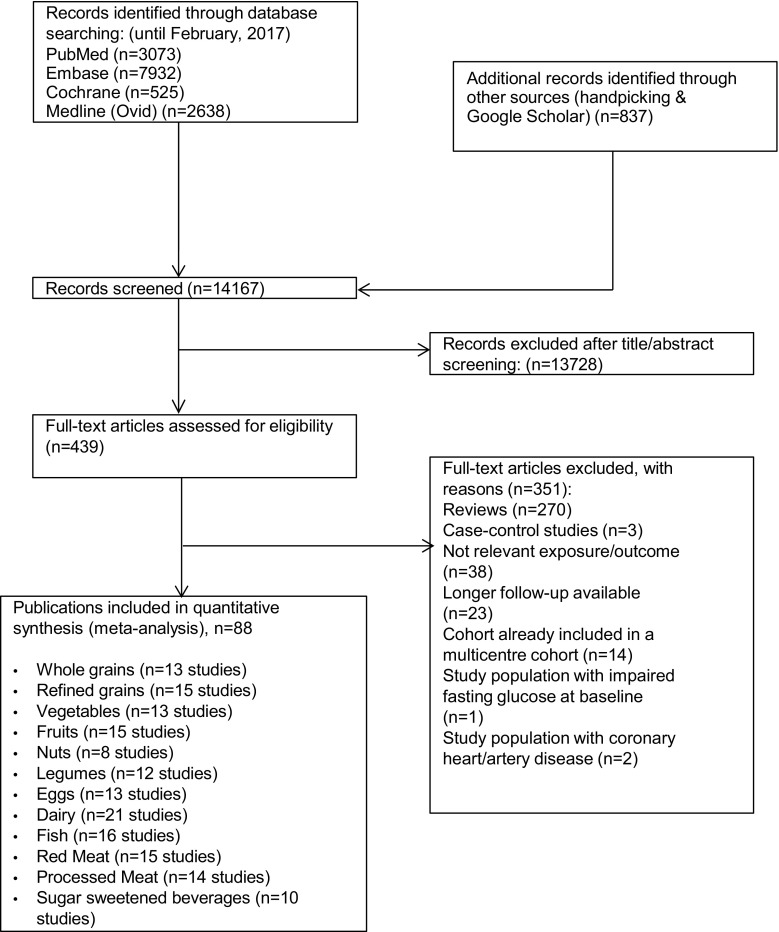
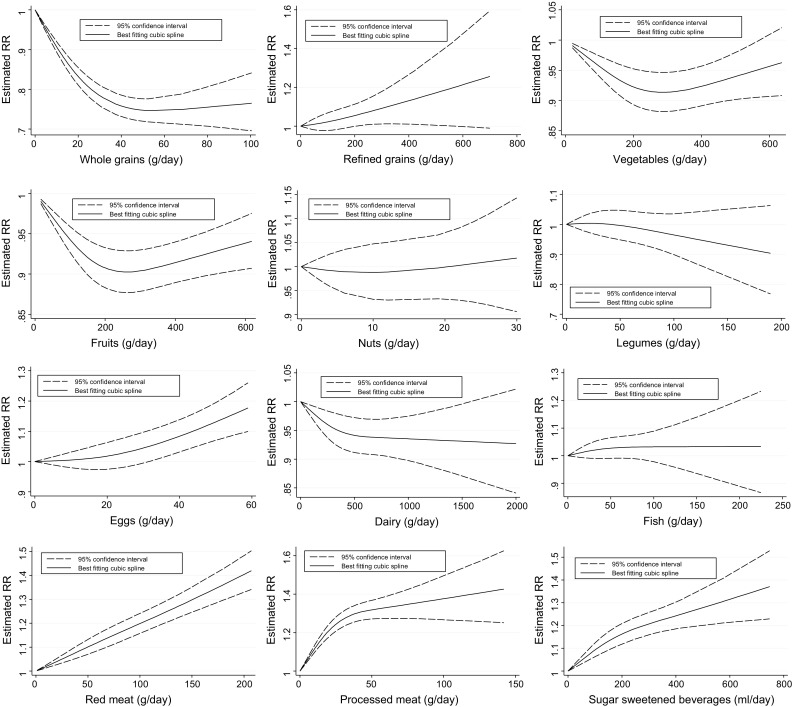
The aim of this systematic review and meta-analysis was to synthesize the knowledge about the relation between intake of 12 major food groups and risk of type 2 diabetes (T2D). We conducted a systematic search in PubMed, Embase, Medline (Ovid), Cochrane Central, and Google Scholar for prospective studies investigating the association between whole grains, refined grains, vegetables, fruits, nuts, legumes, eggs, dairy, fish, red meat, processed meat, and sugar-sweetened beverages (SSB) on risk of T2D. Summary relative risks were estimated using a random effects model by contrasting categories, and for linear and non-linear dose-response relationships. Six out of the 12 food-groups showed a significant relation with risk of T2D, three of them a decrease of risk with increasing consumption (whole grains, fruits, and dairy), and three an increase of risk with increasing consumption (red meat, processed meat, and SSB) in the linear dose-response meta-analysis. There was evidence of a non-linear relationship between fruits, vegetables, processed meat, whole grains, and SSB and T2D risk. Optimal consumption of risk-decreasing foods resulted in a 42% reduction, and consumption of risk-increasing foods was associated with a threefold T2D risk, compared to non-consumption. The meta-evidence was graded "low" for legumes and nuts; "moderate" for refined grains, vegetables, fruit, eggs, dairy, and fish; and "high" for processed meat, red meat, whole grains, and SSB. Among the investigated food groups, selecting specific optimal intakes can lead to a considerable change in risk of T2D.
Overview
The claims and statistics of this paper haven’t been checked yet.
Free: it reads the open-access text and checks the first 5 claims that cite a source we can check. Create a free account to check every claim.
Integrity signals
Registry
Cites
Statistics
Figures
Verification
Claims the paper makes
The claims and statistics of this paper haven’t been checked yet.
Free: it reads the open-access text and checks the first 5 claims that cite a source we can check. Create a free account to check every claim.
Claims other papers make about this one
Each is checked against this paper’s own text: does it say what the citing paper says it does?
In the citing paper
“Many food groups, mostly ultraprocessed (eg, processed meat, and sugary sweetened beverages) are recognized T2D risk factors.3”
From Ultraprocessed Food Consumption and Risk of Type 2 Diabetes Among Participants of the NutriNet-Santé Prospective Cohort (2020) · cites this paper as [3]
In the citing paper
“Of note, energy balance and overweight are both associated with T2D risk.3”
From Ultraprocessed Food Consumption and Risk of Type 2 Diabetes Among Participants of the NutriNet-Santé Prospective Cohort (2020) · cites this paper as [3]
Self-check
Percentages, sums and reported differences re-computed from the paper’s own numbers.
The self-check needs the paper’s full text.
Citations
Cites
1 retracted
RETRACTED: Primary Prevention of Cardiovascular Disease with a Mediterranean Diet
Estruch, R., Ros, E., Salas-Salvadó, J., Covas, M.-I., Corella, D., Arós, F., Gómez-Gracia, E., Ruiz-Gutiérrez, V., Fiol, M., Lapetra, J., et al. (2013) · New England Journal of Medicine · doi:10.1056/nejmoa1200303 · Cited by 4,257
RetractedBias in meta-analysis detected by a simple, graphical test
Egger, M., Smith, G. D., Schneider, M., & Minder, C. (1997) · BMJ · doi:10.1136/bmj.315.7109.629 · Cited by 56,722 · cited 1×
“Potential small-study effects, such as publication bias, were explored using Eggeŕs test and funnel plots [20] when at least 10 studies were available, as recommended by the Cochrane Handbook [21].”
MethodMeta-analysis in clinical trials
DerSimonian, R., & Laird, N. (1986) · Controlled Clinical Trials · doi:10.1016/0197-2456(86)90046-2 · Cited by 39,552 · cited 2×
“To evaluate the weighting of each study, the standard error for the logarithm RR/HR of each study was calculated and regarded as the estimated variance of the logarithm HR/RR, using an inverse variance method [15].”
MethodQuantifying heterogeneity in a meta‐analysis
Higgins, J. P. T., & Thompson, S. G. (2002) · Statistics in Medicine · doi:10.1002/sim.1186 · Cited by 36,763
Dermyshi, E., Wang, Y., Yan, C., Hong, W., Qiu, G., Gong, X., & Zhang, T. (2017) · Neonatology · doi:10.1159/000454668 · Cited by 24,451
Meta-analysis of Observational Studies in Epidemiology<SUBTITLE>A Proposal for Reporting</SUBTITLE>
Stroup, D. F. (2000) · JAMA · doi:10.1001/jama.283.15.2008 · Cited by 20,623
Stang, A. (2010) · European Journal of Epidemiology · doi:10.1007/s10654-010-9491-z · Cited by 17,396 · cited 2×
“However, Stang [14] commented that the Newcastle–Ottawa Scale includes quality items that are not valid (e.g., the ‘‘representativeness of the exposed cohort’’ item), and concluded that this score appeared to be unacceptable for the quality ranking of 364 L. Schwingshackl et al. case–control and cohort studies in meta…”
BackgroundInternational Diabetes Federation 2017
Carracher, A. M., Marathe, P. H., & Close, K. L. (2018) · Journal of Diabetes · doi:10.1111/1753-0407.12644 · Cited by 13,418
Tuomilehto, J., Lindström, J., Eriksson, J. G., Valle, T. T., Hämäläinen, H., Ilanne-Parikka, P., Keinänen-Kiukaanniemi, S., Laakso, M., Louheranta, A., Rastas, M., et al. (2001) · New England Journal of Medicine · doi:10.1056/nejm200105033441801 · Cited by 10,873
Cochrane Handbook for Systematic Reviews of Interventions Version 5.0.1. The Cochrane Collaboration
Higgins, J. P. T., Green, S. R., & Higgins, J. P. T. (2008) · Cited by 7,226
Cited by
Items 601–700 of 866
Li, S. X., Imamura, F., Sharp, S. J., Schulze, M. B., Zheng, J., Amiano, P., Ardanáz, E., Bergmann, M. M., Chirlaque, M.-D., Fagherazzi, G., et al. (2026) · American Journal of Clinical Nutrition · doi:10.1016/j.ajcnut.2026.101198 · Cited by 2
“We assessed the habitual consumption of 15 food groups (foods and beverages; Supplemental Table 1) that were previously investigated for their associations with T2D in published systematic reviews and meta-analyses [3,30,31].”
Angelidi, A. M., Bartell, E., Huang, Y., Zeleznik, O. A., Estanyol-Torres, N., Mi, M. Y., Bhupathiraju, S. N., Kelly, R. S., Wittenbecher, C., Lasky-Su, J. A., et al. (2026) · Nature Communications · doi:10.1038/s41467-026-68353-z · Cited by 2
“External validation with metabolomics data from the Popular Diets Study, a previous crossover feeding trial, con fi rmed that dietary CFR changes consistently altered fasting levels of many metabolite levels, and that these changes were not idiosyncratic to the FS(2).”
InfluentialMózes, N., Fehér, Á., Csípő, T., Fazekas‐Pongor, V., Lipécz, Á., Major, D., Lehoczki, A., Dósa, N., Pártos, K., Csík, B., et al. (2026) · Nutrients · doi:10.3390/nu18071091 · Cited by 2
“Poor dietary quality represents a modifiable risk factor strongly associated with increased cardiometabolic and cerebrovascular risk [12,13].”
Pan, W., Liao, Y., Han, Y., Cao, C., & Hu, H. (2026) · Frontiers in Endocrinology · doi:10.3389/fendo.2026.1713333 · Cited by 2
Tundis, R., Acquaviva, R., Bonesi, M., Malfa, G. A., Tomasello, B., & Loizzo, M. R. (2019) · Springer eBooks · doi:10.1007/978-981-13-1745-3_9-1 · Cited by 6
Unbalanced diet as a cardiometabolic risk factor
Vučević, D. B., Samardžić, J., Radosavljević, M., Radak, U., Jorgačević, B. Z., Đorđević, D., & Kovačević, S. (2022) · Medicinska istrazivanja · doi:10.5937/medi55-38353 · Cited by 2
Empfehlungen zur Ernährung von Personen mit Typ-2-Diabetes mellitus
Skurk, T., Bosy‐Westphal, A., Grünerbel, A., Kabisch, S., Keuthage, W., Kronsbein, P., Müssig, K., Nussbaumer, H., Pfeiffer, A. F. H., Simon, M., et al. (2022) · Diabetologie und Stoffwechsel · doi:10.1055/a-1886-3959 · Cited by 2
Ernährungsempfehlungen für Menschen mit Diabetes (Update 2023)
Klammer, C., Schindler, K., Bugl, R., Plazek, D., Vötter, M., Kirchner, T., Martino, C., Klammer-Martin, J., Brix, J. M., Dämon, S., et al. (2023) · Wiener klinische Wochenschrift · doi:10.1007/s00508-023-02170-y · Cited by 3
“Für den Verzehr von Fisch an sich kann aus Sicht der Datenlage keine signifikante Assoziation hinsichtlich des Risikos für T2DM festgestellt werden [105].”
BackgroundBarboza, B. P., Bricarello, L. P., Alves, M. D. A., Tureck, C., Retondario, A., Longo, G. Z., Souza, A. D. M., & de Vasconcelos, F. D. A. G. (2023) · Nutrition · doi:10.1016/j.nut.2023.112283 · Cited by 2
Dietary Amino Acid Composition and Glycemic Biomarkers in Japanese Adolescents
Okuda, M., & Sasaki, S. (2024) · Nutrients · doi:10.3390/nu16060882 · Cited by 2
“Inconsistent results have been observed for several food groups that provide animal proteins, such as fish, dairy products, and eggs [5,7–9].”
ResultBraun, T., Drobner, T., Kipp, K., Kiehntopf, M., Schlattmann, P., Lorkowski, S., & Dawczynski, C. (2024) · Nutrients · doi:10.3390/nu16091261 · Cited by 2
Hwang, J., Kim, H., & Kwon, O. (2024) · Nutrition · doi:10.1016/j.nut.2024.112491 · Cited by 2
Bratta, D., & Ayala, Y. (2024) · Revista GICOS · doi:10.53766/gicos/2024.01.09.04 · Cited by 2
Guzmán, C., Andrade‐Cuvi, M. J., Bórquez, J. C., Araújo‐Silva, G., & Quintero‐Flórez, A. (2024) · Food Science and Technology · doi:10.5327/fst.00171 · Cited by 2
Insulinemic potential of diet and the risk of type 2 diabetes: a meta-analysis and systematic review
Farhadnejad, H., Abbasi, M., Ahmadirad, H., Omrani, M., Jahromi, M. K., Norouzzadeh, M., Saber, N., Teymoori, F., & Mirmiran, P. (2024) · Diabetology & Metabolic Syndrome · doi:10.1186/s13098-024-01474-x · Cited by 2
“Diet plays a crucial role in T2D development, with approximately 80% of cases potentially preventable through healthy eating habits [25, 26].”
BackgroundKlimaresilienz und Gesundheit – die Vitalparameter des Planeten leuchten rot
i, M. H., & Schulz, C. M. (2025) · Die Innere Medizin · doi:10.1007/s00108-025-01867-8 · Cited by 3
“[16].”
Llorens, P., Leite, M., Freitas, A., Juan, C., Juan‐García, A., Blesa, J., Pereira, A. M. P. T., Moltó, J. C., Pena, A., & Silva, L. J. G. (2025) · Food Additives & Contaminants Part A · doi:10.1080/19440049.2025.2583351 · Cited by 2
“Including more plant proteins in the diet not only reduces the intake of fats but also contributes to weight management through enhancement of digestive health (Schwingshackl et al. 2017; Blachier et al. 2019; Jakše et al. 2019).”
Food Intake Characteristics during Early Pregnancy in Women with Gestational Diabetes Mellitus
Satoh, A., Kishi, C., Lee, S., Saitoh, M., Miura, M., Ohnuma, Y., Yamazaki, C., & Sasaki, H. (2017) · Health · doi:10.4236/health.2017.912125 · Cited by 2
Dairy products and diabetes: Role of protein on glycaemic control
Fernandez, M. A., & Marette, A. (2020) · Elsevier eBooks · doi:10.1016/b978-0-12-815603-2.00007-3 · Cited by 2
Li, Y., Zhao, L., Zhou, H., Han, B., Yu, H., & Wei, J. (2021) · International Journal of Diabetes in Developing Countries · doi:10.1007/s13410-021-00963-3 · Cited by 2
Li, S., Leung, J. C. S., Lu, Z., & Kwok, T. C. Y. (2023) · Nutrients · doi:10.3390/nu15194096 · Cited by 2
“This nonlinear association in our study aligned with the nonlinear associations between vegetable intake amd all-cause and cause-specific mortality [36], and type 2 diabetes [37,38].”
ResultEmpfehlungen zur Ernährung von Personen mit Typ-2-Diabetes mellitus
Skurk, T., Bosy‐Westphal, A., Grünerbel, A., Kabisch, S., Keuthage, W., Kronsbein, P., Müssig, K., Nussbaumer, H., Pfeiffer, A. F. H., Simon, M., et al. (2023) · Diabetologie und Stoffwechsel · doi:10.1055/a-1997-7924 · Cited by 3
Determinan Diabetes Melitus Tipe II di Posbindu PTM Puskesmas Pegandon Kabupaten Kendal Tengah
Sarifah, M., & Siyam, N. (2023) · HIGEIA (Journal of Public Health Research and Development) · doi:10.15294/higeia.v7i3.63923 · Cited by 2
Meat intake and type 2 diabetes among Japanese workers: a prospective study
Nanri, A., Irie, S., Kochi, T., Kabe, I., Konishi, M., & Mizoue, T. (2024) · British Journal Of Nutrition · doi:10.1017/s0007114524001922 · Cited by 2
“Our finding of no association between red meat and processed meat intake and type 2 diabetes risk is inconsistent with the findings of meta-analyses, showing an increased risk of type 2 diabetes associated high intake of red meat and processed meat (9,10,25) .”
Li, M., Yang, X., Sun, L., Xiao, H., Liu, C., Zhang, C., Wang, Z., Blecker, C. S., & Zhang, D. (2024) · Food Science and Human Wellness · doi:10.26599/fshw.2024.9250307 · Cited by 2
Méndez, I. (2021) · El Servicio de Difusión de la Creación Intelectual (National University of La Plata) · doi:10.35537/10915/119372 · Cited by 3
Ahmed, I., Ziab, M., Taheri, S., Chagoury, O. L., Hussain, S. A., Lakshmi, J., Bhat, A. A., Fakhro, K. A., & Akil, A. S. A.-S. (2023) · medRxiv · doi:10.1101/2023.06.23.23291830 · Cited by 2
Kontextfaktoren: Verbraucherpreisindex– Alle Altersgruppen
Koch-Institut, N. D.-S. A. R. (2024) · Publication server of the Robert Koch Institute (Robert Kock Institute) · doi:10.25646/12285 · Cited by 2
Sievenpiper, J. L. (2020) · Nutrition Reviews · doi:10.1093/nutrit/nuaa054 · Cited by 1
El consumo de las leguminosas y su efecto sobre la prevalencia del síndrome metabólico
Quintero-Fernández, M. G., Alanís‐García, E., Ariza‐Ortega, J. A., & Ramírez‐Moreno, E. (2022) · Educación y Salud Boletín Científico Instituto de Ciencias de la Salud Universidad Autónoma del Estado de Hidalgo · doi:10.29057/icsa.v11i21.9664 · Cited by 1
Maoran, Z. H. U., & Zong, J. (2023) · Frontiers of Agricultural Science and Engineering · doi:10.15302/j-fase-2023489 · Cited by 1
Causal benefits of 25 dietary intakes on epigenetic ageing: a Mendelian randomisation study
Ding, K., Jiang, W., Wuke, S., & Lei, M. (2024) · International Journal of Food Sciences and Nutrition · doi:10.1080/09637486.2024.2379817 · Cited by 2
“A certain amount of epidemiologic evidence has demonstrated that dietary intake has protective and deleterious effects on ageing and various age-related diseases (Schwingshackl et al. 2017; Mazza et al. 2021; Wang et al. 2023).”
Cooper, K., Ankrum, A., Clarke, M. A., Boron, J. B., Ponce, J., & Bass, A. E. (2024) · IEEE International Conference on Healthcare Informatics (ICHI) · doi:10.1109/ichi61247.2024.00033 · Cited by 2
“For example, two recent studies have found that diets with limited processed foods and with increased intake of plant-based fiber are associated with favorable health outcomes [25,26] Socioeconomic factors are also factors in health.”
BackgroundJones, J. M. (2025) · Nutrients · doi:10.3390/nu17132188 · Cited by 1
“…WGs are associated with reduced risks of many conditions, including all-cause and cause-specific mortality [21–28]; type 2 diabetes mellitus [26,29], cardiovascular and coronary heart disease, stroke and heart failure [22–28, Recent umbrella reviews determined that the strongest evidence…”
Meat Attachment and Consumption Patterns in Primary Care: A Cross-Sectional Study
Sebo, P., Delaunay, B., Tudrej, B. V., Moussa, M. A., & Maisonneuve, H. (2025) · Cureus · doi:10.7759/cureus.89457 · Cited by 1
“While some systematic reviews indicate correlations between high meat intake and chronic disease risk, others suggest that these associations may be confounded by variables such as overall diet quality and physical activity [4,32,38].”
What Is the Involvement of Gut Microbiome in the Pathophysiology of Diabetes?
Kiełbowski, K., Plewa, P., Zadworny, J., Stodolak, P., Jędrasiak, A., Bakinowska, E., & Pawlik, A. (2025) · Biomolecules · doi:10.3390/biom15101463 · Cited by 1
“Heavy processes foods, red meat, sugary items and refined carbs arise the likelihood and severity of the disease, whereas eating patterns rich in fruits, vegetables, whole grains and lean protein help protect against it [135].”
Parry‐Strong, A., Harper, K. M., Lithander, F. E., Braakhuis, A. J., & Krebs, J. D. (2025) · Proceedings of The Nutrition Society · doi:10.1017/s0029665125101869 · Cited by 1
Karmous, I., Ghouili, H., Othman, R. B., Ceylan, H. İ., Puce, L., Khan, A. S., Khan, N. A., Jamoussi, H. K., Saad, H. B., Bragazzi, N. L., et al. (2026) · Nutrients · doi:10.3390/nu18030432 · Cited by 1
López, P. J. T., Gallegos, A. R., Ramírez‐Manent, J. I., Ríos, A. D. A., Campayo, I. C., Samuelsson, M. G., & López‐González, Á. A. (2026) · Nutrición Hospitalaria · doi:10.20960/nh.06313 · Cited by 1
Pires, S. M., de Melo, J. F., Redondo, H. G., Assunção, R., Boué, G., Biasini, B., Cozzi, E., Jolliet, O., Menozzi, D., & Vieira, A. C. L. (2026) · PLoS ONE · doi:10.1371/journal.pone.0339454 · Cited by 1
“Consumption of red meat is associated with higher risk of colon cancer, colorectal cancer, and type II diabetes [58,59].”
Кононенко, И. В., Pershina-Miliutina, A. P., Sydykova, L. A., Avzaletdinova, D. S., Моругова, Т. В., Vagapova, G. R., Isaeva, U. S., & Shestakova, M. (2026) · Russian Journal of Preventive Medicine · doi:10.17116/profmed20262902163 · Cited by 1
Taqatqa, H., Ahmead, M., & Nabulsi, M. (2026) · BMC Public Health · doi:10.1186/s12889-026-27267-7 · Cited by 1
“Research indicates that nearly 80% of cases of diabetes mellitus (DM) may be preventable through the adoption of healthier dietary habits, such as regularly consuming fruits and vegetables while reducing the intake of saturated fats, sodium, and sugar-sweetened beverages [21, 22].”
Barouaca, H., & Faraj, K. (2026) · Roczniki Państwowego Zakładu Higieny · doi:10.32394/rpzh/224656 · Cited by 1
“…benefits documented by previous studies, including maintaining optimal body weight [5], increased longevity [6], and protective effects against cardiovascular diseases [7, 8], diabetes [9, 10], obesity [11, 12], metabolic syndrome [13], certain cancers, and cognitive impairment [14].”
Rasul, A., & Ameen, B. (2026) · Functional Foods in Health and Disease · doi:10.31989/ffhd.v16i6.2017 · Cited by 1
Global dietary estimates for conducting health, environmental and economic impact assessments
Springmann, M. (2026) · Nature Food · doi:10.1038/s43016-026-01388-z · Cited by 1
Heterogeneity in type 2 diabetes onset across combinations of lifestyle behaviours in the UK Biobank
Swain, A., Pearson, N., Willis, S. A., Leckie, G., Finke, A., Hutchinson, J., & Johnson, W. (2026) · Diabetes Research and Clinical Practice · doi:10.1016/j.diabres.2026.113434 · Cited by 1
Lu, Y., Gu, M., Zhao, Y., Ma, L., Wei, Y., Liu, Z., Wu, Y., Fu, X., Liang, J., Yang, L., et al. (2026) · Frontiers in Nutrition · doi:10.3389/fnut.2026.1829536 · Cited by 1
Savalia, V. B., Sandha, N., Chavda, P., Manavadariya, S., Bera, H., & Tirgar, P. (2026) · Molecular Biology Reports · doi:10.1007/s11033-026-12279-8 · Cited by 1
La gastronomía manabita generadora de una cultura alimentaria y el riesgo de diabetes
Santos, R. O. Z., Alava, A. M. M., Rodríguez, M. S., & Chiriboga, M. A. O. (2020) · Revista Científica Sinapsis · doi:10.37117/s.v1i16.312 · Cited by 1
糖尿病患者の栄養食事指導―エネルギー・炭水化物・タンパク質摂取量と栄養食事指導―
敏正, 山., 英紀, 神., 宇都宮, 一., 裕孝, 綿., 川浪, 大., 淳子, 佐., 北田, 宗., 古家, 大., 範雄, 原., 憲一郎, 幣., et al. (2020) · 糖尿病 · doi:10.11213/tonyobyo.63.91 · Cited by 4
Rice: Prevention and Management of Type 2 Diabetes and Coronary Heart Disease
Bergman, C. J. (2020) · Springer eBooks · doi:10.1007/978-3-030-37510-2_9 · Cited by 1
RBUD: A New Functional Potential Analysis Approach for Whole Microbial Genome Shotgun Sequencing
Xing, Z., Zhang, Y., Li, M., Guo, C., & Mi, S. (2020) · Microorganisms · doi:10.3390/microorganisms8101563 · Cited by 2
“The incidence of obesity and T2D is surging in the world and the intestinal metagenomic data in T2D patients are accumulating fast [50].”
BackgroundMuthee, M. W., Anyango, J. O., & Matofari, J. W. (2021) · Journal of Food and Nutrition Sciences · doi:10.11648/j.jfns.20210903.11 · Cited by 1
“The prevalence of type 2 diabetes in particular is increasing rapidly on a global scale [6], and is becoming a major health concern in Kenya [7].”
BackgroundBruno, J., Carruthers, D., & Alemán, J. O. (2021) · Contemporary cardiology · doi:10.1007/978-3-030-78177-4_8 · Cited by 1
Vegetable Preference and Prediction of Proteinuria: A Retrospective Cohort Study
Ozaki, S., Yamamoto, R., Shinzawa, M., Tomi, R., Yoshimura, R., Nakanishi, K., Nishida, M., Nagatomo, I., Kudo, T., Yamauchi‐Takihara, K., et al. (2021) · Annals of Nutrition and Metabolism · doi:10.1159/000520044 · Cited by 1
Bando, D. H., Garcia, M. R., & Coca, E. L. D. F. (2021) · Revista Eletrônica da Associação dos Geógrafos Brasileiros Seção Três Lagoas · doi:10.55028/agb-tl.v1i34.14959 · Cited by 1
How can vegetarian and vegan diets promote good health?
Fadnes, L. T., Meltzer, H. M., Henriksen, C., Arnesen, E., & Hay, G. (2022) · Tidsskrift for Den norske legeforening · doi:10.4045/tidsskr.21.0846 · Cited by 1
Meat and cancer evidence for and against
Sødring, M. S., Dragsted, L. O., Müller, M. H. B., Paulsen, J. E., Haug, A., & Egelandsdal, B. (2022) · Elsevier eBooks · doi:10.1016/b978-0-323-85879-3.00012-x · Cited by 2
Limbachia, J., Desai, D., Abdalla, N., de Souza, R. J., Teo, K. K., Morrison, K. M., Punthakee, Z., Gupta, M., Lear, S. A., Anand, S. S., et al. (2022) · Canadian Journal of Public Health · doi:10.17269/s41997-022-00681-1 · Cited by 1
Nutritional and health value of plant-based meat alternatives
Craig, W. J., & Berardy, A. (2022) · Elsevier eBooks · doi:10.1016/b978-0-323-85838-0.00004-3 · Cited by 2
An early warning model of type 2 diabetes risk based on POI visit history and food access management
Xie, H., Li, D., Wang, Y., & Kawai, Y. (2023) · PLoS ONE · doi:10.1371/journal.pone.0288231 · Cited by 1
“The literature highlights the importance of regional food categories as explanations of dietary choices [3] and diet-related health outcomes, such as obesity and diabetes [4].”
BackgroundNutrient quality in dietary therapy for diabetes and diabetic kidney disease
Tsuruta, H., Sugahara, S., & Kume, S. (2024) · Journal of Diabetes Investigation · doi:10.1111/jdi.14208 · Cited by 1
“There are even reports suggesting that such beverage intake might increase the risk of developing type 2 diabetes 28 – 31 .”
BackgroundA diet-wide Mendelian randomization analysis: causal effects of dietary habits on type 2 diabetes
Xiao, R., Li, D., Xie, B., & Liu, B. (2024) · Frontiers in Nutrition · doi:10.3389/fnut.2024.1414678 · Cited by 1
Bastaki, N. K., Barhoush, S. A., & Al‐Adsani, A. M. (2024) · Journal of Functional Foods · doi:10.1016/j.jff.2024.106486 · Cited by 1
Zhang, Y., Li, P.-D., Chen, B., & Wan, Q. (2024) · Journal of Functional Foods · doi:10.1016/j.jff.2024.106614 · Cited by 1
Taste genomics and type 2 diabetes mellitus: a systematic qualitative meta-synthesis
Shivam, V., Kannan, S., & Harish, V. (2025) · Exploration of Endocrine and Metabolic Diseases · doi:10.37349/eemd.2025.101439 · Cited by 1
Potthoff, J., & Schienle, A. (2025) · Appetite · doi:10.1016/j.appet.2025.108438 · Cited by 1
Prache, S., Santé-Lhoutellier, V., Adamiec, C., Astruc, T., Baéza, É., Bouillot, P.-É., Clinquart, A., Feidt, C., Fourat, E., Gautron, J., et al. (2020) · HAL · doi:10.14758/z8q2-ey12 · Cited by 10
He, W., Xu, Q., Han, L., Wu, T., Shi, X., Ye, L., Yao, G., & Li, X. (2020) · Research Square · doi:10.21203/rs.3.rs-73511/v1 · Cited by 1
“A metaanalysis has concluded that the intake of red meat and processed meat is positively associated with the risk of T2DM, while the intake of aquatic products has no signi cant correlation with the risk of T2DM [15].”
BackgroundThe contribution of meat in the diet of senior citizens
Rémond, D. (2022) · Elsevier eBooks · doi:10.1016/b978-0-323-85125-1.00070-3 · Cited by 2
Snackification: understanding healthiness and naturalness in snacking products
Klerks, M. M. (2023) · doi:10.18174/629947 · Cited by 4
Torrieri, R. (2025) · El Servicio de Difusión de la Creación Intelectual (National University of La Plata) · doi:10.35537/10915/183074 · Cited by 1
de Gavelle, E. (2019) · theses.fr (ABES) · doi:10.70675/d6d39b06zcce4z4d31zaa98zc85aea185844 · Cited by 1
Dussiot, A. (2022) · theses.fr (ABES) · doi:10.70675/390fd0f8z34f4z4fcbz9945z3d1208d6389b · Cited by 2
Dietary Patterns and Whole Plant Foods in Type 2 Diabetes Prevention and Management
Dreher, M. L. (2018) · Springer eBooks · doi:10.1007/978-3-319-59180-3_9 · Cited by 1
Nutritional epidemiology: new insights for meal analysis
Ramirez, C. S. (2018) · DepositOnce · doi:10.14279/depositonce-7551
“Nevertheless, as with nutritional deficiencies, diet plays a role in the development of chronic, non-communicative diseases (7-10).”
BackgroundDietary Factors, Type 2 Diabetes and Diabetic Retinopathy
Dow, C. (2018) · theses.fr (ABES) · doi:10.70675/9d5e839eze639z4539z9047z9003673ad2ea
Schulze, M. B. (2019) · Der Diabetologe · doi:10.1007/s11428-018-0434-8
“Zuckergesüßte Getränke [13, 14, 17] Risikoerhöhung”
Löfvenborg, J. E. (2019) · Figshare
Padrões alimentares de indivíduos em situação de pobreza
Santos, R. D. O. (2019) · Digital Library of Theses and Dissertations (Universidade de São Paulo) · doi:10.11606/t.6.2019.tde-14052019-130545 · Cited by 1
Starker Fleischkonsum fördert Diabetesentstehung
Müssig, K. (2019) · Info Diabetologie · doi:10.1007/s15034-019-1505-7
Shirinzadeh, M. (2020) · MacSphere (McMaster University) · doi:10.71548/17855 · Cited by 1
Assessing the economic burden of processed red meat consumption in the Russian Federation in 2016
Mukaneeva, D. K., Васильевна, К. А., Karamnova, N. S., Myrzamatova, A. О., Khudyakov, M. B., Balanova, Y. А., Александровна, П. Е., & Drapkina, O. M. (2019) · Russian Journal of Preventive Medicine · doi:10.17116/profmed20192206234
Khan, A. (2020) · Scholarship@Western (Western University)
Wisnuwardani, R. W. (2020) · Ghent University Academic Bibliography (Ghent University)
Perdue, W. L., Reus, V. I., & Yeamans, R. (2020) · medRxiv · doi:10.1101/2020.10.25.20212282
Mooventhan, A., Vijayakumar, V., & Ilavarasu, J. V. (2020) · Acta Medica International · doi:10.4103/ami.ami_124_20
Abating abdominal adiposity: Modifiable lifestyle risk factors for visceral and liver fat deposition
Eekelen, E. W.-V. (2020) · Leiden Repository (Leiden University)
Dias, L. M. (2020) · LA Referencia (Red Federada de Repositorios Institucionales de Publicaciones Científicas) · Cited by 1
Ernährung in der Parodontitistherapie und -prävention
Wölber, J. (2021) · ZWR - Das Deutsche Zahnärzteblatt · doi:10.1055/a-1473-0385
“Wie bereits bei den Fetten thematisiert, haben tierische Proteine durch ihre „Produktion“ in der Massentierhaltung ein proinflammatorisches Fettsäureprofil und sind heutzutage mit Diabetes und kardiovaskulären Erkrankungen assoziiert [26, 29, 30].”
BackgroundChoi, Y. (2021) · University of Minnesota Digital Conservancy (University of Minnesota)
Zhao, H., Wang, M., Zhong, L., Peng, X., Chen, J., Yu, Z., Liu, X., Chen, Y., Shi, Y., Yichong, L., et al. (2021) · World journal of gastroenterology, hepatology and endoscopy · doi:10.47690/wjghe.2021.3602
Nössler, C. (2020) · Cited by 1
Branched-chain amino acids and trimethylamine N-oxide as biomarkers of cardiometabolic outcomes
Flores-Guerrero, J. L. (2021) · University of Groningen research database (University of Groningen / Centre for Information Technology) · doi:10.33612/diss.192215052
'Herz und Schwimmen sind eins': Anmerkungen zum Schwinmmen in Japan als militärische tradition
Niehaus, A. (2005) · Ghent University Academic Bibliography (Ghent University)
Design and performance of a novel position-sensitive electron spectrometer
Miller, R. D. C., Westerlind, M., Keller, N., & Sellin, I. A. (1993) · Bulletin of the American Physical Society
The essentials of diabetes prevention and management during COVID-19 pandemic
Ayenigbara, I. O. (2021) · Clinical Diabetology · doi:10.5603/dk.2021.0052 · Cited by 1
“The key plant-based foods components and regimens that offer these beneficial effects in diabetes prevention are vegetables, nuts, legumes, seeds, whole grains, and fruits, while simultaneously shunning and avoiding all food products from animal sources [32, 33].”
BackgroundMoore, J. M. (2021) · Advances in Nutrition · doi:10.1093/advances/nmab159
Tundis, R., Acquaviva, R., Bonesi, M., Malfa, G. A., Tomasello, B., & Loizzo, M. R. (2021) · Springer eBooks · doi:10.1007/978-981-15-4148-3_9
He, W., Xu, Q., Han, L., Wu, T., Shi, X., Ye, L., Yao, G., & Li, X. (2020) · Research Square · doi:10.21203/rs.3.rs-117466/v1
Metadata
- Authors
- Schwingshackl, L., Hoffmann, G., Lampousi, A.-M., Knüppel, S., Iqbal, K., Schwedhelm, C., Bechthold, A., Schlesinger, S., & Boeing, H.
- Affiliations
- German Institute of Human Nutrition (DE)
- University of Vienna (AT)
- Deutsches Diabetes-Zentrum e.V. (DE)
- Corresponding author
- Schwingshackl, Lukas
- ORCID
- Venue
- European Journal of Epidemiology
- Published
- 2017-04-10
- Volume
- 32
- Issue
- 5
- Pages
- 363-375
- ISSN
- 0393-2990 (ISSN-L)
- 1573-7284
- PMC
- PMC5506108
- OpenAlex
- W2606247503
- Cited by
- 799
- References
- 56
- Citations by year
- 2026: 54 · 2025: 67 · 2024: 108 · 2023: 111 · 2022: 132 · 2021: 100 · 2020: 86 · 2019: 78 · 2018: 48 · 2017: 13
- FWCI
- 9.99
- Type
- journal article
- Language
- en
- Open access
- hybrid
- doi.org
- Locations
- European Journal of Epidemiology (publishedVersion, cc-by)
- PubMed Central (publishedVersion, cc-by)
- PubMed (publishedVersion)
- Informationszentrum Lebenswissenschaften (ZB MED) (submittedVersion, cc-by)
- Topics
- Health Sciences › Medicine › Public Health, Environmental and Occupational Health › Nutritional Studies and Diet
- Health Sciences › Medicine › Endocrinology, Diabetes and Metabolism › Diet, Metabolism, and Disease
- Health Sciences › Nursing › Nutrition and Dietetics › Food composition and properties
- Keywords
- type 2 diabetes, food groups, whole grains, refined grains, vegetables, fruits, nuts, Fabaceae, eggs, dairy products, fish, red meat, processed meat, sugar-sweetened beverages, dose-response relationship, dietary risk factors
- MeSH terms
- Whole Grains, Diabetes Mellitus, Type 2, Diet, Eating, Feeding Behavior, Food, Fruit, Humans, Meat, Nuts, Prospective Studies, Risk Factors, Vegetables, Risk Reduction Behavior
About these checks
Registry, retraction, Cites and statistics results are computed, not judged, with one exception: a printed reference that no index lists is read once by a model before it counts as a citation error. Claims are extracted by a model and kept only when their quote appears verbatim in the text; each cited source is then checked, with a model’s help, for whether it says what the claim relies on. Those verdicts can be wrong — read the claim’s quote and the cited source before relying on one.
Statistics and arithmetic are recomputed, not judged.
Confidence bands are shown only for fields calibrated on our annotated test set. None is calibrated yet, so no band is shown.
What counts as a claim ›How we measure confidence ›How we check this ›
Are you an author, or do you see a problem with this page? Request a review
Data sources
Bibliographic data: Semantic Scholar, OpenAlex, Crossref.
Contains information from the Semantic Scholar Academic Graph Datasets, made available under the ODC Attribution License (ODC-BY 1.0).
Semantic Scholar’s data is described in: Kinney, R., et al. (2023). The Semantic Scholar Open Data Platform. arXiv:2301.10140.
