

Food groups and risk of type 2 diabetes mellitus: a systematic review and meta-analysis of prospective studies.
Open accessThe DOI matches its Crossref record; 56 of the 56 references it cites were found in a registry or an index.
Abstract
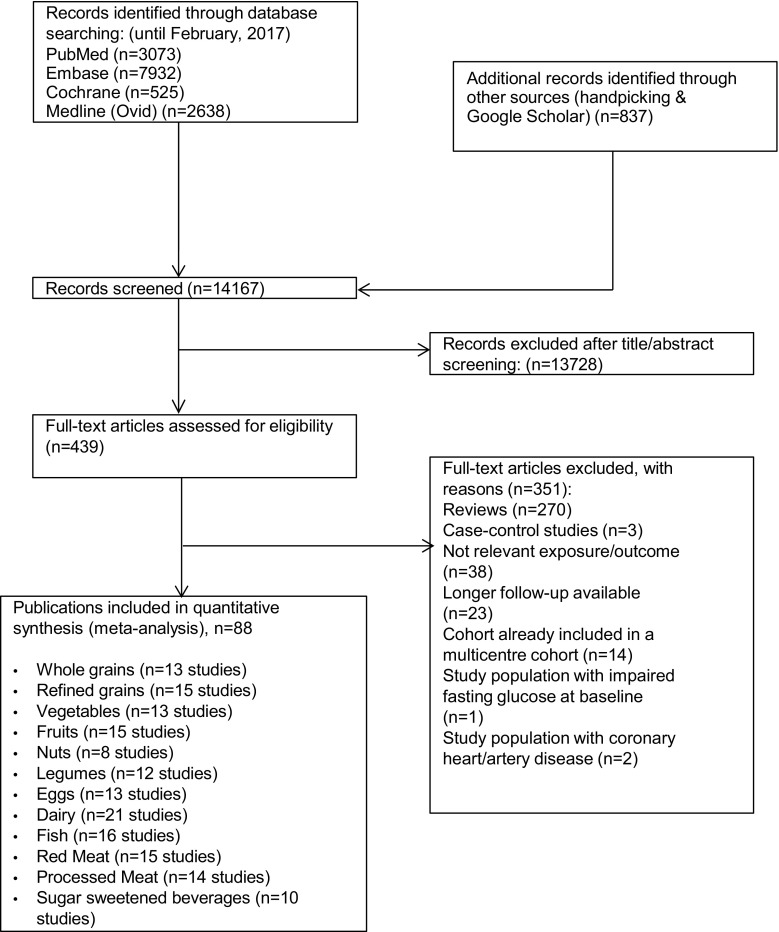
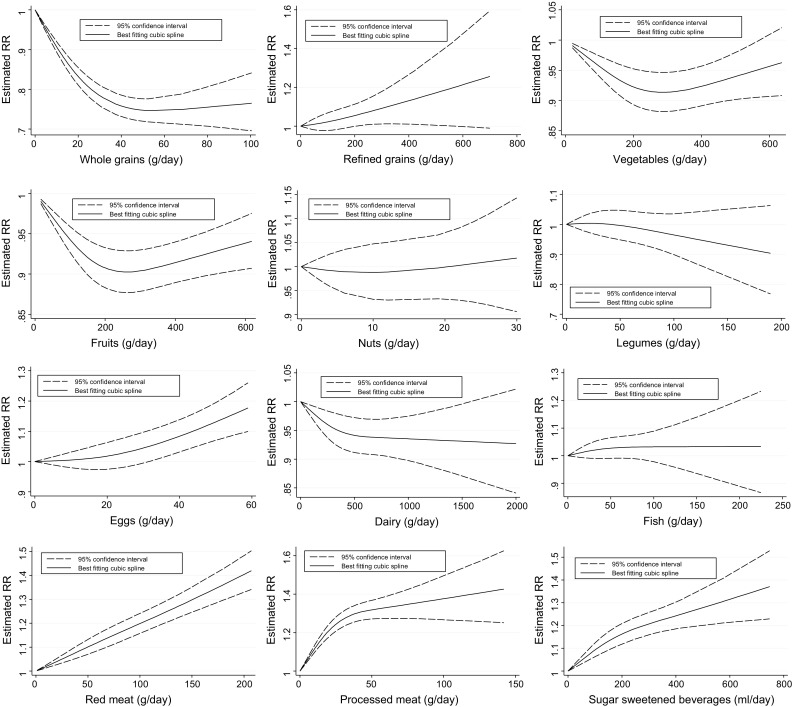
The aim of this systematic review and meta-analysis was to synthesize the knowledge about the relation between intake of 12 major food groups and risk of type 2 diabetes (T2D). We conducted a systematic search in PubMed, Embase, Medline (Ovid), Cochrane Central, and Google Scholar for prospective studies investigating the association between whole grains, refined grains, vegetables, fruits, nuts, legumes, eggs, dairy, fish, red meat, processed meat, and sugar-sweetened beverages (SSB) on risk of T2D. Summary relative risks were estimated using a random effects model by contrasting categories, and for linear and non-linear dose-response relationships. Six out of the 12 food-groups showed a significant relation with risk of T2D, three of them a decrease of risk with increasing consumption (whole grains, fruits, and dairy), and three an increase of risk with increasing consumption (red meat, processed meat, and SSB) in the linear dose-response meta-analysis. There was evidence of a non-linear relationship between fruits, vegetables, processed meat, whole grains, and SSB and T2D risk. Optimal consumption of risk-decreasing foods resulted in a 42% reduction, and consumption of risk-increasing foods was associated with a threefold T2D risk, compared to non-consumption. The meta-evidence was graded "low" for legumes and nuts; "moderate" for refined grains, vegetables, fruit, eggs, dairy, and fish; and "high" for processed meat, red meat, whole grains, and SSB. Among the investigated food groups, selecting specific optimal intakes can lead to a considerable change in risk of T2D.
Overview
The claims and statistics of this paper haven’t been checked yet.
Free: it reads the open-access text and checks the first 5 claims that cite a source we can check. Create a free account to check every claim.
Integrity signals
Registry
Cites
Statistics
Figures
Verification
Claims the paper makes
The claims and statistics of this paper haven’t been checked yet.
Free: it reads the open-access text and checks the first 5 claims that cite a source we can check. Create a free account to check every claim.
Claims other papers make about this one
Each is checked against this paper’s own text: does it say what the citing paper says it does?
In the citing paper
“Many food groups, mostly ultraprocessed (eg, processed meat, and sugary sweetened beverages) are recognized T2D risk factors.3”
From Ultraprocessed Food Consumption and Risk of Type 2 Diabetes Among Participants of the NutriNet-Santé Prospective Cohort (2020) · cites this paper as [3]
In the citing paper
“Of note, energy balance and overweight are both associated with T2D risk.3”
From Ultraprocessed Food Consumption and Risk of Type 2 Diabetes Among Participants of the NutriNet-Santé Prospective Cohort (2020) · cites this paper as [3]
Self-check
Percentages, sums and reported differences re-computed from the paper’s own numbers.
The self-check needs the paper’s full text.
Citations
Cites
1 retracted
RETRACTED: Primary Prevention of Cardiovascular Disease with a Mediterranean Diet
Estruch, R., Ros, E., Salas-Salvadó, J., Covas, M.-I., Corella, D., Arós, F., Gómez-Gracia, E., Ruiz-Gutiérrez, V., Fiol, M., Lapetra, J., et al. (2013) · New England Journal of Medicine · doi:10.1056/nejmoa1200303 · Cited by 4,257
RetractedBias in meta-analysis detected by a simple, graphical test
Egger, M., Smith, G. D., Schneider, M., & Minder, C. (1997) · BMJ · doi:10.1136/bmj.315.7109.629 · Cited by 56,722 · cited 1×
“Potential small-study effects, such as publication bias, were explored using Eggeŕs test and funnel plots [20] when at least 10 studies were available, as recommended by the Cochrane Handbook [21].”
MethodMeta-analysis in clinical trials
DerSimonian, R., & Laird, N. (1986) · Controlled Clinical Trials · doi:10.1016/0197-2456(86)90046-2 · Cited by 39,552 · cited 2×
“To evaluate the weighting of each study, the standard error for the logarithm RR/HR of each study was calculated and regarded as the estimated variance of the logarithm HR/RR, using an inverse variance method [15].”
MethodQuantifying heterogeneity in a meta‐analysis
Higgins, J. P. T., & Thompson, S. G. (2002) · Statistics in Medicine · doi:10.1002/sim.1186 · Cited by 36,763
Dermyshi, E., Wang, Y., Yan, C., Hong, W., Qiu, G., Gong, X., & Zhang, T. (2017) · Neonatology · doi:10.1159/000454668 · Cited by 24,451
Meta-analysis of Observational Studies in Epidemiology<SUBTITLE>A Proposal for Reporting</SUBTITLE>
Stroup, D. F. (2000) · JAMA · doi:10.1001/jama.283.15.2008 · Cited by 20,623
Stang, A. (2010) · European Journal of Epidemiology · doi:10.1007/s10654-010-9491-z · Cited by 17,396 · cited 2×
“However, Stang [14] commented that the Newcastle–Ottawa Scale includes quality items that are not valid (e.g., the ‘‘representativeness of the exposed cohort’’ item), and concluded that this score appeared to be unacceptable for the quality ranking of 364 L. Schwingshackl et al. case–control and cohort studies in meta…”
BackgroundInternational Diabetes Federation 2017
Carracher, A. M., Marathe, P. H., & Close, K. L. (2018) · Journal of Diabetes · doi:10.1111/1753-0407.12644 · Cited by 13,418
Tuomilehto, J., Lindström, J., Eriksson, J. G., Valle, T. T., Hämäläinen, H., Ilanne-Parikka, P., Keinänen-Kiukaanniemi, S., Laakso, M., Louheranta, A., Rastas, M., et al. (2001) · New England Journal of Medicine · doi:10.1056/nejm200105033441801 · Cited by 10,873
Cochrane Handbook for Systematic Reviews of Interventions Version 5.0.1. The Cochrane Collaboration
Higgins, J. P. T., Green, S. R., & Higgins, J. P. T. (2008) · Cited by 7,226
Cited by
Items 501–600 of 866
Seck, D., Shah, S., Correia, E., Marques, C., Varraso, R., Gaye, B., Boutron‐Ruault, M., & Laouali, N. (2024) · Nutrition · doi:10.1016/j.nut.2024.112448 · Cited by 7
Devrions-nous manger plus de céréales complètes ?
Champ, M. M. J. (2018) · Cahiers de Nutrition et de Diététique · doi:10.1016/j.cnd.2017.12.001 · Cited by 7
Nutritional Management of Diabetes—A Critical Review
Chaubey, P., Suvarna, V., Sangave, P. C., & Singh, A. K. (2019) · Elsevier eBooks · doi:10.1016/b978-0-12-813822-9.00019-9 · Cited by 9
Strawberry ripple sauce: A semi-solid fibre syrup to reduce sugar content
Carcelli, A., Albertini, A., Vittadini, E., & Carini, E. (2021) · International Journal of Gastronomy and Food Science · doi:10.1016/j.ijgfs.2021.100411 · Cited by 6
The Influence of My Plate Campaign to Increase Local Fruit And Vegetable Consumption
Khairunnisa, M., Nurcahyani, Y. D., Samsudin, M., & Martiyana, C. (2022) · IOP Conference Series Earth and Environmental Science · doi:10.1088/1755-1315/1024/1/012081 · Cited by 6
Egg consumption and risk of chronic disease: an (un-)resolved issue?
Schwingshackl, L. (2020) · American Journal of Clinical Nutrition · doi:10.1093/ajcn/nqaa035 · Cited by 6
Self-citationChen, J., Diao, H., Zhang, Y., Hu, B., Qian, K., Zhang, K., Zhang, T., & Song, J. (2025) · Frontiers in Nutrition · doi:10.3389/fnut.2025.1564197 · Cited by 5
Arango‐Angarita, A., Unar‐Munguía, M., Zepeda‐Tello, R., Batis, C., & Rivera, J. Á. (2025) · BMC Public Health · doi:10.1186/s12889-025-23988-3 · Cited by 7
Nutritional Determinants of Type 2 Diabetes Mellitus in the European Union: A Systematic Review
Díaz-Benavides, D. A., Muhlis, A. N. A., Chamouni, G., Charles, R., Nigatu, D. T., Khadra, J. B., Israel, F. E. A., Shehab, B., Tarek, G. L., Sharshekeeva, A., et al. (2025) · Nutrients · doi:10.3390/nu17223507 · Cited by 6
“Dietary exposures were categorized according to a meta-analysis by Schwingshackl, L., et al. (2017) [17].”
Antioxidants and Exercise Performance: Focus on Mediterranean Diet
Annunziata, G., Camajani, E., Galasso, M., Verde, L., Caprio, M., Muscogiuri, G., Paoli, A., & Barrea, L. (2025) · Antioxidants · doi:10.3390/antiox15010010 · Cited by 6
Mohan, V., Abirami, K., Manasa, V. S., Amutha, A., Bhavadharini, B., Rajput, R., Lakshmipriya, N., Sruthi, C., Anjana, R. M., Unnikrishnan, R., et al. (2023) · Journal of the Indian Institute of Science · doi:10.1007/s41745-023-00396-3 · Cited by 5
Leak, T. M., Gangrade, N., & Tester, J. M. (2021) · BMC Public Health · doi:10.1186/s12889-021-10915-5 · Cited by 6
“Future researchers should address these barriers when designing whole grain interventions for households with a child at risk for T2D.”
BackgroundInfluentialPopulation-Level Approaches to Preventing Type 2 Diabetes Globally
Siegel, K. R., & Albright, A. L. (2021) · Endocrinology and Metabolism Clinics of North America · doi:10.1016/j.ecl.2021.05.010 · Cited by 6
Elmajnoun, H. K., Faris, M. E., Uday, S., Gorman, S., Greening, J. E., Haris, P. I., & Abu-Median, A.-B. (2021) · Frontiers in Nutrition · doi:10.3389/fnut.2021.756413 · Cited by 6
Sugar Consumption Pattern among Cardiometabolic Risk Individuals: A Scoping Review
Azlan, A., Chiang, W. L., & Yusof, B. N. M. (2022) · Current Diabetes Reviews · doi:10.2174/1573399818666220324095435 · Cited by 5
Eating Habits in Patients with Familial Hypercholesterolemia from North-Eastern Romania
Maștaleru, A., Cojocariu, S. A., Oancea, A., Leon, M. M., Roca, M., Zota, I. M., Abdulan, I. M., Rusu, C., Trandafir, L. M., Costache, A. D., et al. (2022) · Nutrients · doi:10.3390/nu14153124 · Cited by 7
“A metanalysis published in 2017 also showed a positive association between the risk of developing diabetes and an amount of 50 g of processed meat added to the daily meals [24].”
BackgroundWan, W., Jiang, X., Zhao, R., Cai, F., Wu, F., Hu, Y., Zhou, X., Liu, Z., & Shan, Y. (2023) · Molecular Nutrition & Food Research · doi:10.1002/mnfr.202200481 · Cited by 5
Beigrezaei, S., Jambarsang, S., Khayyatzadeh, S. S., Mirzaei, M., Mehrparvar, A. H., & Salehi‐Abargouei, A. (2023) · Scientific Reports · doi:10.1038/s41598-023-27645-w · Cited by 5
Colombet, Z., Leroy, P. L., Soler, L. G., & Méjean, C. (2023) · European Journal of Nutrition · doi:10.1007/s00394-023-03144-6 · Cited by 6
“Another possible explanation is that vegetable and fruit intake indirectly influence T2DM risk by preventing weight gain and adiposity risk [31].”
BackgroundInfluentialYehia, N. A., Isai, L., Semnani‐Azad, Z., Lai, K. Z. H., Retnakaran, R. R., Harris, S. B., Beaudry, J. L., Bazinet, R. P., & Hanley, A. J. (2023) · Lipids · doi:10.1002/lipd.12373 · Cited by 5
Dietary Recommendations for Persons with Type 2 Diabetes Mellitus
Skurk, T., Bosy‐Westphal, A., Grünerbel, A., Kabisch, S., Keuthage, W., Kronsbein, P., Müssig, K., Nussbaumer, H., Pfeiffer, A. F. H., Simon, M., et al. (2024) · Experimental and Clinical Endocrinology & Diabetes · doi:10.1055/a-2166-6772 · Cited by 5
Myrmel, L. S., Øyen, J., Brantsæter, A. L., Fjære, E., Haugvaldstad, K., Birkeland, K. I., Nygard, O. K., Kristiansen, K., Egeland, G. M., & Madsen, L. (2024) · Scientific Reports · doi:10.1038/s41598-024-59491-9 · Cited by 5
“This is in accordance with some cohort studies performed in Asia but not in US and Europe 1–4 .”
ResultDiet Quality Components and Gut Microbiota of Patients on Peritoneal Dialysis
Ramos, C. I., de Andrade, L. S., Teixeira, R. R., Pereira, N. B. F., Lima, F. D. S., Hoffmann, C., & Cuppari, L. (2025) · Journal of Renal Nutrition · doi:10.1053/j.jrn.2025.01.001 · Cited by 6
Yamamoto, J., Ishihara, J., Kotemori, A., Yoshizaki, T., Goto, A., Mizoue, T., Noda, M., Sawada, N., & Tsugane, S. (2019) · Journal of Epidemiology · doi:10.2188/jea.je20180262 · Cited by 7
Stavrovskaya, A. V., Воронков, Д. Н., Shestakova, E. A., Гущина, А. С., Olshansky, A. S., & Yamshikova, N. G. (2019) · Problems of Endocrinology · doi:10.14341/probl12126 · Cited by 5
“Увеличение потребления пищи с высоким содержанием жиров является одним из ключевых факторов, ответственных за рост числа пациентов с СД 2 по всему миру [7].”
Contribution of nuts to the Mediterranean diet
Ros, E. (2020) · Elsevier eBooks · doi:10.1016/b978-0-12-818649-7.00015-1 · Cited by 7
Syauqy, A., Mattarahmawati, S. A., & Pramono, A. (2022) · Jurnal Gizi dan Pangan · doi:10.25182/jgp.2022.17.3.187-194 · Cited by 5
Effects of Western Style Foods on Risk of Noncommunicable Diseases
Isaza, A. (2018) · Elsevier eBooks · doi:10.1016/b978-0-12-813148-0.00011-6 · Cited by 6
Artificial sweeteners and risk of type 2 diabetes in the prospective NutriNet-Santé cohort
Debras, C., Deschasaux, M., Chazelas, E., Sellem, L., Druesne‐Pecollo, N., Esseddik, Y., de Edelenyi, F. S., Agaësse, C., Sa, A. D., Lutchia, R., et al. (2023) · doi:10.2337/figshare.23600688 · Cited by 5
Hohoff, E., Jankovic, N., Perrar, I., Schnermann, M. E., Herder, C., Nöthlings, U., Libuda, L., & Alexy, U. (2024) · Public Health Nutrition · doi:10.1017/s1368980024000624 · Cited by 4
“Our results also did not confirm the findings reported in a systematic review and meta-analysis of prospective studies (50) or in a systematic review and meta-analysis of randomised clinical trials (51) that suggested a beneficial effect of low-fat dairy on HOMA2-IR.”
ResultMa, X., Li, P., Liu, Y., Liu, L., Xu, J., Wang, X., Zhou, S., Ren, X., Wang, Y., & Yuan, L. (2024) · Nutrition Research · doi:10.1016/j.nutres.2024.05.008 · Cited by 4
Mendoza-Herrera, K., Barquera, S., & Tobias, D. K. (2025) · Diabetologia · doi:10.1007/s00125-025-06358-x · Cited by 4
“Although the proposed classification of foods and beverages by their degree and purpose of processing was only recently put forth [14], many foods and beverages designated as UPFs have been investigated for their plausible role in type 2 diabetes for decades [36, 37].”
InfluentialLiu, F., Zhao, B., Wu, W. H., Yang, F., Deng, M. L., & Wang, S. (2025) · Food Science & Nutrition · doi:10.1002/fsn3.70312 · Cited by 4
“…diets could accelerate the progression of DN. Conversely, consuming a diet rich in fruits and vegetables could reduce the risk of developing DN, primarily due to their high content of flavonoids, vitamins, minerals, and dietary fiber (Moradi et al. 2020; Schwingshackl et al. 2017; Toh et al. 2013).”
Piroș, T., Lupușoru, R., Moleriu, L. C., Muntean, C., Moleriu, R. D., Cîmpian, D. M., Cincu, M.-G., Strete, E. G., Timofte, A. G., & Marin, R.-C. (2026) · Nutrients · doi:10.3390/nu18060977 · Cited by 5
“…and ultra-processed dietary exposure to increased diabetes risk and extend this evidence by showing that, even within a narrow age range and a university setting, habitual constellations of food choices and preparation practices translate into measurable differences in HbA1c distribution [14].”
Comparison of fermentable carbohydrate consumption in plant-based vs western-style diet groups
Jadhav, A., Vadiveloo, M. K., Laforge, R. G., & Melanson, K. J. (2022) · Human Nutrition & Metabolism · doi:10.1016/j.hnm.2022.200177 · Cited by 4
Peres, G. B., Nucci, L. B., Andrade, A. L. M., & Enes, C. C. (2023) · Ciência & Saúde Coletiva · doi:10.1590/1413-81232023287.05622022 · Cited by 6
Barriers and facilitators to healthy eating during post‐partum among non‐Hispanic Black mothers
Kay, M. C., Bentley, M. E., & Wasser, H. (2024) · Maternal and Child Nutrition · doi:10.1111/mcn.13741 · Cited by 4
“Diet quality is an important, modifiable factor in the development of obesity (Livingstone & McNaughton, 2016; Schlesinger et al., 2019; Schwingshackl et al., 2017).”
Kesse‐Guyot, E., Baudry, J., Berlivet, J., Perraud, E., Allès, B., Julia, C., Fezeu, L., Herçberg, S., Mariotti, F., Touvier, M., et al. (2025) · European Journal of Epidemiology · doi:10.1007/s10654-024-01196-4 · Cited by 4
“…scores were observed for the risk of T2D, which is well-documented in the scientific lit - erature as being strongly influenced by dietary factors [ 33, 40], with positive associations with excessive consumption of red meat, processed meat, and SSB, and with insufficient consumption of whole…”
The impact of carbohydrate quality on gut health: Insights from the NHANES
Hu, L., Huang, X., Liu, S., Fang, L., Zhang, J., & Tang, X. (2025) · PLoS ONE · doi:10.1371/journal.pone.0315795 · Cited by 4
“Carbohydrate quality on gut health fiber, which are fermented in the colon by the microbiota to produce gas and short-chain fatty acids (SCFAs) [25], such as butyrate.”
Sweet beverages and the risk of colorectal cancer: the Norwegian Women and Cancer Study
Hauan, M., Rylander, C., & Skeie, G. (2025) · BMC Cancer · doi:10.1186/s12885-025-13835-4 · Cited by 4
Yuan, M., Wang, J., Jin, L., Zhang, L., & Fang, Y. (2025) · Nutrients · doi:10.3390/nu17071256 · Cited by 4
“However, there are differences in the appropriate amount thresholds we identified for vegetables (80 kcal/cap/day ≈ 320 g/cap/day), which may be related to differences in calorie density conversion [8,29].”
Darikvand, F., Ghavami, M., & Honarvar, M. (2022) · Journal of Food Measurement & Characterization · doi:10.1007/s11694-022-01766-8 · Cited by 4
Na, G., Zhang, J., Lv, D., Chen, P., Song, X., Cai, F., Zheng, S., Wan, W., & Shan, Y. (2023) · Clinical Nutrition · doi:10.1016/j.clnu.2023.02.001 · Cited by 5
Patel, K., Kudrigikar, V., Bachani, D., & Mehta, S. C. (2023) · Food and Nutrition Sciences · doi:10.4236/fns.2023.143014 · Cited by 6
Meal-Based Intervention on Health Promotion in Middle-Aged Women: A Pilot Study
Shon, J., Seong, Y., Choi, Y., Kim, Y., Cho, M. S., Ha, E., Kwon, O., Kim, Y., Park, Y. J., & Kim, Y. (2023) · Nutrients · doi:10.3390/nu15092108 · Cited by 5
Disaggregation of Dairy in Composite Foods in the United Kingdom
Jaacks, L. M., Amoutzopoulos, B., Runions, R., Vonderschmidt, A., McNeill, G., Comrie, F., McDonald, A., Page, P., & Stewart, C. (2024) · Current Developments in Nutrition · doi:10.1016/j.cdnut.2024.103774 · Cited by 4
“However, prospective cohort studies suggest dairy is moderately protective against type 2 diabetes and colorectal cancer, although the evidence is inconsistent [3 – 5].”
BackgroundHeterogeneity in diet-related non-communicable disease risks in a Chinese population
Chang, Z., Biesbroek, S., Cai, H., Fan, S., Ni, Y., Wen, X., Veer, P. V. ’., & Talsma, E. F. (2024) · European Journal of Nutrition · doi:10.1007/s00394-024-03481-0 · Cited by 4
“…(whole grains, refined grains, fruits, vegetables, legumes, nuts, tubers, aquatic products, dairy, eggs, poultry, red meat, sugar-sweetened beverages (SSBs), plant oils (hereafter referred to as oils)) and one nutrient (sodium) with reliable evidence of RRs were included in our study [25, 27–39].”
Clarke, E. D., Cartwright, J. N., Ashton, L., Burrows, T. L., Hure, A. J., Loxton, D. J., Patterson, A. J., & Collins, C. E. (2024) · Journal of the Academy of Nutrition and Dietetics · doi:10.1016/j.jand.2024.09.009 · Cited by 4
“37,38 Additionally, recent reviews have reported that having higher diet quality and eating a large variety of different-colored fruits and vegetables was associated with better lipid pro fi les, improved in fl ammation pro fi les, and a decreased risk of cardiovascular disease, all-cause mortality,…”
Trius‐Soler, M., Bramming, M., Jensen, M. K., Tolstrup, J. S., & Guasch‐Ferré, M. (2025) · Nutrition Journal · doi:10.1186/s12937-025-01071-2 · Cited by 5
“On the other hand, the limitations associated with this study are 1) the misreporting bias associated with some self-reported data, 2) some missing residual confounding, and 3) the one-time data collection at baseline years before diabetes diagnosis [44].”
Navarro-Cerdán, J. R., Pons-Suñer, P., Arnal, L., Arlandis, J., Llobet, R., Pérez-Cortés, J.-C., Lara-Hernández, F., Moya-Valera, C., Quiroz-Rodríguez, M. E., Rojo‐Martínez, G., et al. (2025) · Medical & Biological Engineering & Computing · doi:10.1007/s11517-025-03355-5 · Cited by 4
Les protéines de la viande, intérêt pour la nutrition des seniors
Rémond, D. (2019) · Médecine des Maladies Métaboliques · doi:10.1016/s1957-2557(19)30070-7 · Cited by 4
Hodge, A. M., & Calvo, M. S. (2019) · Public Health Nutrition · doi:10.1017/s136898001900154x · Cited by 4
“It is perhaps no surprise that the first pattern did not show a strong association with HbA1c given that foods loading on this factor included some that would be considered beneficial, such as positive loadings for fruit and negative loadings for meat and poultry; but other items like confectionery with a positive loa…”
Health Effects of β-Cryptoxanthin and β-Cryptoxanthin-Enriched Satsuma Mandarin Juice
Nakamura, M., & Sugiura, M. (2019) · Elsevier eBooks · doi:10.1016/b978-0-12-816842-4.00011-3 · Cited by 8
Plant based diet and cardio-metabolic disease
Dąbrowska, J., Wójcik, M., Borowik, J., Kuśmierczuk, K., & Piecewicz‐Szczęsna, H. (2020) · Journal of Education Health and Sport · doi:10.12775/jehs.2020.10.05.015 · Cited by 5
“While red meat, processed meat are linked to higher risk of diabetes [50].”
BackgroundDicklin, M. R., Barron, R., Goltz, S. R., Warren, J. M., Boileau, T. W.-M., Pigat, S., & Maki, K. C. (2022) · Journal of Human Nutrition and Dietetics · doi:10.1111/jhn.12995 · Cited by 4
Biscuit consumption and diabetic retinopathy incidence in adults in the United States
Shi, K., Chen, Y., Zhu, X., Wu, J., Chen, J., Hu, J., Sun, X., & Zhang, J. (2022) · Diabetology & Metabolic Syndrome · doi:10.1186/s13098-022-00860-7 · Cited by 5
“In contrast, consumption of red or processed meat, eggs, and sugarsweetened beverages was positively related to the risk of DM [32, 33].”
BackgroundLa actividad física para la salud y la prevención de enfermedades crónicas no transmisibles
Riveros, L. C., Calleja-Núñez, J. J., Millán, E. M. A., Mejía, R. C., Corona, J. A. A., Gómez-Miranda, L. M., Espinoza-Gutiérrez, R., Gutiérrez, C. G., Ortiz-Ortiz, M., Sánchez-Revilla, J., et al. (2022) · Ediciones Comunicación Científica eBooks · doi:10.52501/cc.085 · Cited by 5
Rundblad, A., Christensen, J. J., Hustad, K. S., Bastani, N. E., Ottestad, I. O., Holven, K. B., & Ulven, S. M. (2023) · Genes & Nutrition · doi:10.1186/s12263-023-00721-6 · Cited by 7
“The important risk factors for T2DM include obesity, an unhealthy diet, and a sedentary lifestyle [2].”
ResultInfluentialComplex Association Among Diet Styles, Sleep Patterns, and Obesity in Patients with Diabetes
Zhang, Y., Wang, Y., Zhang, S., Zhang, Y., & Zhang, Q. (2023) · Diabetes Metabolic Syndrome and Obesity · doi:10.2147/dmso.s390101 · Cited by 4
Aini, N., Dwiyanti, H., & Salamah, M. P. (2023) · International Food Research Journal · doi:10.47836/ifrj.30.3.15 · Cited by 4
Katsarova, S., Redman, E., Arsenyadis, F., Brady, E. M., Rowlands, A. V., Edwardson, C. L., Goff, L. M., Khunti, K., Yates, T. E., Hall, A. P., et al. (2023) · Nutrients · doi:10.3390/nu15183868 · Cited by 4
Wu, C., Liu, P., & Yuan, Z. (2023) · International Journal of Food Sciences and Nutrition · doi:10.1080/09637486.2023.2278418 · Cited by 4
“A meta-analysis proposed that the association between vegetable intake and the risk of T2D followed a U-shape (Schwingshackl et al. 2017).”
BackgroundResultFukunaga, A., Jimba, M., Pham, T. T. P., Nguyen, C. Q., Hoang, D. V., Phan, T. V., Yazawa, A., Phan, D. C., Hachiya, M., Le, H. X., et al. (2024) · British Journal Of Nutrition · doi:10.1017/s0007114524000412 · Cited by 4
“In Model 3, the use of additives to beverages (yes or no) was further adjusted, given that sweetened beverages have been studied in relation to diabetes, (27) and the use of additives for tea may be a risk factor for diabetes.”
Shi, L. S. (2017) · Epsilon Open Archive (Sveriges lantbruksuniversitet biblioteket (Swedish University of Agricultural Sciences)) · Cited by 6
Izza, E. L. (2019) · Universitas Airlangga Repository (Universitas Airlangga) · Cited by 7
Fukunaga, A., Jimba, M., Pham, T. T. P., Nguyen, C. Q., Hoang, D. V., Phan, T. V., Yazawa, A., Phan, D. C., Hachiya, M., Le, H. X., et al. (2025) · BMC Public Health · doi:10.1186/s12889-025-22346-7 · Cited by 3
“Given that sweetened beverages are well-established risk factors for diabetes [10], it is critical to evaluate the potential effect of additives, such as sugar and artificial sweeteners, frequently utilized by coffee consumers in Vietnam and comparable cultures, but little has been conducted on…”
Park, C., Han, B. E., & Lee, Y. (2025) · Nutrients · doi:10.3390/nu17172805 · Cited by 4
Metabolomic signatures of dietary carbohydrates and differential association with type 2 diabetes
Wang, X., Xia, P., Wang, F., Wu, Z., Hu, Y., Eliassen, A. H., Zeleznik, O. A., Bhupathiraju, S. N., Mousavi, S. M., Prentice, R. L., et al. (2026) · Nature Health · doi:10.1038/s44360-025-00023-8 · Cited by 3
“There was a suggestion of heterogeneity from these analyses that may be partially related to measurement errors associated with the recall-based dietary assessment tools used in these studies 4,5 .”
InfluentialFree Sugars Consumption and Type 2 Diabetes: What Are the Concerns and How Strong is the Evidence?
Louie, J. C. Y., & Tan, S. (2026) · Current Nutrition Reports · doi:10.1007/s13668-026-00740-w · Cited by 5
“These analyses consistently demonstrate that while total sugar or fructose intake shows no clear associa - tion with T2DM risk, a robust relationship emerges specifi - cally for SSBs [ 30–34 ].”
Impact of diet on the management of cardiovascular risk factors
Pauli, A., & Marques-Vidal, P. M. (2021) · Clinical Nutrition Open Science · doi:10.1016/j.nutos.2021.10.004 · Cited by 3
Noerman, S., Johansson, A., Shi, L. S., Lehtonen, M., Hanhineva, K., Johansson, I., Brunius, C. F., & Landberg, R. (2024) · American Journal of Clinical Nutrition · doi:10.1016/j.ajcnut.2024.02.012 · Cited by 3
Saavedra-Clarke, S., Araneda‐Flores, J., Parra-Soto, S. L., Mauricio‐Alza, S., Morales, G. I., Landaeta‐Díaz, L., Gómez, G., Murillo, A. G., Carpio-Arias, T. V., Núñez‐Martínez, B., et al. (2023) · Revista chilena de nutrición · doi:10.4067/s0717-75182023000600654 · Cited by 3
Clarke, E. D., Gómez‐Martín, M., Stanford, J., Yılmaz, A., Ustun, I., Wood, L. G., Green, B. D., Graham, S. F., & Collins, C. E. (2024) · Nutrients · doi:10.3390/nu16244358 · Cited by 3
Lago-Sampedro, A. M., Oualla‐Bachiri, W., Maldonado‐Araque, C., Valdés, S., González-Molero, I., Doulatram‐Gamgaram, V. K., Delgado, E., Chaves, F. J., Castaño, L. A., Calle‐Pascual, A. L., et al. (2025) · Biomedicines · doi:10.3390/biomedicines13010160 · Cited by 4
Daei, S., Hosseini‐Esfahani, F., Ildarabadi, A., Mirmiran, P., & Azizi, F. (2025) · PLoS ONE · doi:10.1371/journal.pone.0313886 · Cited by 5
“Schwingshackl et al suggest that olive oil intake is associated with the prevention and management of T2D [30], but nuts were not linked to diabetes risk [31, 33].”
Foundations of Pediatric Lifestyle Medicine
Gaínza‐Lein, M. (2025) · Children · doi:10.3390/children12030304 · Cited by 7
“A meta-analysis examined the long-term impact of different food groups on overall mortality [50].”
InfluentialMalmir, H., Hosseinpour‐Niazi, S., Gaeini, Z., Mirmiran, P., & Azizi, F. (2025) · Journal of Diabetes & Metabolic Disorders · doi:10.1007/s40200-025-01695-5 · Cited by 3
“Notably, these important dietary aspects are not incorporated into the Portfolio diet [34].”
Bauer, J., Ayala, F. O., Marcadenti, A., Machado, R. H. V., Bersch-Ferreira, Â. C., Moreira, M. F. S., Beretta, M. V., Feóli, A. M. P., & Busnello, F. M. (2025) · International Journal of Environmental Research and Public Health · doi:10.3390/ijerph22081275 · Cited by 4
“These range from the nutritional composition of UPF, which, being rich in sugars, saturated and trans fats, sodium, and food additives, can directly affect the body’s metabolic response, influencing blood glucose levels and insulin sensitivity [28].”
Lagström, H., Halonen, J. I., Suominen, S., Pentti, J., Stenholm, S., Mika Kivimaki, B., & Vahtera, J. (2020) · Scandinavian Journal of Public Health · doi:10.1177/1403494820971497 · Cited by 3
“[2] schwingshackl L, Hoffmann g, Lampousi A-m, et al.”
BackgroundDİYABETES MELLİTUSTA TIBBİ BESLENME YAKLAŞIMLARI
TAŞCI, B., İPEKCİ, N., & Ulus, C. A. (2022) · Samsun Sağlık Bilimleri Dergisi · doi:10.47115/jshs.1038544 · Cited by 3
Slavin, J. L., Sanders, L., & Stallings, V. A. (2022) · Cereal Chemistry · doi:10.1002/cche.10612 · Cited by 3
Hosseinpour‐Niazi, S., Bakhshi, B., Mirmiran, P., Gaeini, Z., Hadaegh, F., & Azizi, F. (2023) · Nutrition & Metabolism · doi:10.1186/s12986-023-00761-0 · Cited by 4
“This is in line with previous systematic reviews and meta-analyses that reported consumption of refined grains at 200–400 g/day increased the risk of T2DM by 6–14% [42].”
ResultHubungan Antara Asupan Makanan Terhadap Diabetes Mellitus Tipe 2: Sebuah Studi Pustaka
Prameswari, P. A. I., & Zuraida, R. (2023) · Medical Profession Journal of Lampung · doi:10.53089/medula.v13i1.595 · Cited by 7
Fraga, C. G., Cremonini, E., Galleano, M., & Oteiza, P. I. (2024) · Handbook of experimental pharmacology · doi:10.1007/164_2024_707 · Cited by 3
Dietary guidance from GPs – what do patients report?
Skjærstein, S., Åsaune, K. M., Fadnes, L. T., Díaz, E., Bjorvatn, B., Strømme, E. M., & Mildestvedt, T. (2024) · Tidsskrift for Den norske legeforening · doi:10.4045/tidsskr.23.0447 · Cited by 3
Nutrition Knowledge and Food Frequency Among People with Diabetes Mellitus
Putri, S. I., Pratamaningtyas, S., Fajriah, A. S., & Widiyanto, A. (2024) · Journal of Local Therapy · doi:10.31290/jlt.v3i1.4330 · Cited by 5
“As a result, glucose levels will be high in the blood (Schwingshackl et al., 2017).”
BackgroundLotfi, M., Jalali, S. M., Leilami, K., Askarpour, M., Shateri, Z., Rezaianzadeh, A., Johari, M. G., Nouri, M., & Faghih, S. (2024) · BMC Research Notes · doi:10.1186/s13104-024-06976-5 · Cited by 3
“There are several studies that have investigated the relationship between healthy and unhealthy food patterns in patients with type 2 diabetes, metabolic syndrome, and mortality [14–16].”
BackgroundWei, J., Wu, H., Zheng, Y., Wang, N., Benedict, C., Chen, W., & Tan, X. (2024) · Diabetes Research and Clinical Practice · doi:10.1016/j.diabres.2024.111927 · Cited by 3
“Behavioral adjustments including, physical activity and diet are considered fundamental for successful prevention and management of T2D [19,20].”
Elenien, W. I. A., & Mohamed, W. M. Y. (2024) · Nutritional neurosciences · doi:10.1007/978-981-97-6818-9_8 · Cited by 3
Temmann, L. J., Wiedicke, A., Reifegerste, D., & Scherr, S. (2021) · Social Science Open Access Repository (GESIS – Leibniz Institute for the Social Sciences) · doi:10.21241/ssoar.74692 · Cited by 5
Nutrition, Health and Dietary Trends
Sievenpiper, J. L., Riccardi, G., Ricordi, C., & Dembska, K. (2019) · Springer eBooks · doi:10.1007/978-3-030-23969-5_4 · Cited by 5
An Overview of Hypoglycemic Modern Drugs
Chen, H., & Lu, Y. (2021) · Springer eBooks · doi:10.1007/978-981-15-8791-7_2 · Cited by 3
Pinho‐Gomes, A., Kaur, A., Scarborough, P., & Rayner, M. (2021) · The Lancet · doi:10.1016/s0140-6736(21)02614-3 · Cited by 3
Czech-Załubska, K., Didkowska, A., Klich, D., Jackowska-Tracz, A., Zarzynska, J. M., & Anusz, K. (2024) · Nutrients · doi:10.3390/nu16060827 · Cited by 2
Setiono, F., Heller, S. P., & Leak, T. M. (2024) · Public Health Nutrition · doi:10.1017/s1368980024001368 · Cited by 2
“Still , improving the food environment is considered a promising avenue to address poor diet quality, which is known to be a leading risk factor for chronic diseases and mortality (9 – 11) .”
BackgroundThe Use of Different Technologies to Provide a Virtual Grocery Store Tour for Nutrition Education
Woodall, S., Sharratt, J., & Hollis, J. (2025) · Virtual Worlds · doi:10.3390/virtualworlds4020021 · Cited by 2
Richter, J., Buchcik, J., & Adedeji, A. (2025) · Endocrine · doi:10.1007/s12020-025-04353-1 · Cited by 2
“Conversely, diets rich in whole grains, fruits, vege-tables, and low-fat dairy products have been shown to reduce T2D risk signi fi cantly [7, 8].”
Sadeghi, S., Imani, H., Talebi, S., Naeini, F., Moradi, S., Wong, A., & Mohammadi, H. (2025) · British Journal Of Nutrition · doi:10.1017/s0007114525104005 · Cited by 2
“…in accordance with methodologies delineated in previously published meta-analyses that examined the association between various dietary categories and the risk of hypertension (17) , type 2 diabetes (18) , CHD, stroke and heart failure (19) , colorectal cancer (20) and all-cause mortality (21) .”
Medical nutrition therapy in obesity management
Conradie-Smit, M., Fourie, V. R., & May, W. (2025) · South African Medical Journal · doi:10.7196/samj.2025.v115i9b.3706 · Cited by 2
“[40] 5.”
InfluentialAcosta, L., Ojeda, M. L. S., Jara, L., Ayala, C. F., Cuevas, N. C., Duarte, M. P., Duarte, M. T., Riquelme, L. M., Ayala, L. S., Romero, L. C., et al. (2025) · Medicina Clínica y Social · doi:10.52379/mcs.v9.574 · Cited by 2
Metadata
- Authors
- Schwingshackl, L., Hoffmann, G., Lampousi, A.-M., Knüppel, S., Iqbal, K., Schwedhelm, C., Bechthold, A., Schlesinger, S., & Boeing, H.
- Affiliations
- German Institute of Human Nutrition (DE)
- University of Vienna (AT)
- Deutsches Diabetes-Zentrum e.V. (DE)
- Corresponding author
- Schwingshackl, Lukas
- ORCID
- Venue
- European Journal of Epidemiology
- Published
- 2017-04-10
- Volume
- 32
- Issue
- 5
- Pages
- 363-375
- ISSN
- 0393-2990 (ISSN-L)
- 1573-7284
- PMC
- PMC5506108
- OpenAlex
- W2606247503
- Cited by
- 799
- References
- 56
- Citations by year
- 2026: 54 · 2025: 67 · 2024: 108 · 2023: 111 · 2022: 132 · 2021: 100 · 2020: 86 · 2019: 78 · 2018: 48 · 2017: 13
- FWCI
- 9.99
- Type
- journal article
- Language
- en
- Open access
- hybrid
- doi.org
- Locations
- European Journal of Epidemiology (publishedVersion, cc-by)
- PubMed Central (publishedVersion, cc-by)
- PubMed (publishedVersion)
- Informationszentrum Lebenswissenschaften (ZB MED) (submittedVersion, cc-by)
- Topics
- Health Sciences › Medicine › Public Health, Environmental and Occupational Health › Nutritional Studies and Diet
- Health Sciences › Medicine › Endocrinology, Diabetes and Metabolism › Diet, Metabolism, and Disease
- Health Sciences › Nursing › Nutrition and Dietetics › Food composition and properties
- Keywords
- type 2 diabetes, food groups, whole grains, refined grains, vegetables, fruits, nuts, Fabaceae, eggs, dairy products, fish, red meat, processed meat, sugar-sweetened beverages, dose-response relationship, dietary risk factors
- MeSH terms
- Whole Grains, Diabetes Mellitus, Type 2, Diet, Eating, Feeding Behavior, Food, Fruit, Humans, Meat, Nuts, Prospective Studies, Risk Factors, Vegetables, Risk Reduction Behavior
About these checks
Registry, retraction, Cites and statistics results are computed, not judged, with one exception: a printed reference that no index lists is read once by a model before it counts as a citation error. Claims are extracted by a model and kept only when their quote appears verbatim in the text; each cited source is then checked, with a model’s help, for whether it says what the claim relies on. Those verdicts can be wrong — read the claim’s quote and the cited source before relying on one.
Statistics and arithmetic are recomputed, not judged.
Confidence bands are shown only for fields calibrated on our annotated test set. None is calibrated yet, so no band is shown.
What counts as a claim ›How we measure confidence ›How we check this ›
Are you an author, or do you see a problem with this page? Request a review
Data sources
Bibliographic data: Semantic Scholar, OpenAlex, Crossref.
Contains information from the Semantic Scholar Academic Graph Datasets, made available under the ODC Attribution License (ODC-BY 1.0).
Semantic Scholar’s data is described in: Kinney, R., et al. (2023). The Semantic Scholar Open Data Platform. arXiv:2301.10140.
