

“Putting on My Best Normal”: Social Camouflaging in Adults with Autism Spectrum Conditions
Open accessThe DOI matches its Crossref record; 52 of the 53 references it cites were found in a registry or an index.
Abstract
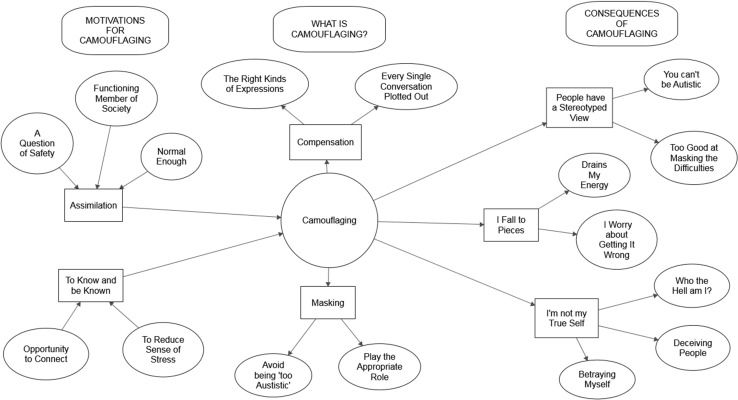
Camouflaging of autistic characteristics in social situations is hypothesised as a common social coping strategy for adults with autism spectrum conditions (ASC). Camouflaging may impact diagnosis, quality of life, and long-term outcomes, but little is known about it. This qualitative study examined camouflaging experiences in 92 adults with ASC, with questions focusing on the nature, motivations, and consequences of camouflaging. Thematic analysis was used to identify key elements of camouflaging, which informed development of a three-stage model of the camouflaging process. First, motivations for camouflaging included fitting in and increasing connections with others. Second, camouflaging itself comprised a combination of masking and compensation techniques. Third, short- and long-term consequences of camouflaging included exhaustion, challenging stereotypes, and threats to self-perception.
Overview
The claims and statistics of this paper haven’t been checked yet.
Free: it reads the open-access text and checks the first 5 claims that cite a source we can check. Create a free account to check every claim.
Integrity signals
Registry
Cites
Statistics
Figures
Verification
Claims the paper makes
The claims and statistics of this paper haven’t been checked yet.
Free: it reads the open-access text and checks the first 5 claims that cite a source we can check. Create a free account to check every claim.
Claims other papers make about this one
Each is checked against this paper’s own text: does it say what the citing paper says it does?
The source backs part of the claim, not all of it — or backs it for a different population, condition or comparison.
In the citing paper
“OSCE-style assessments introduce distinctive equity challenges, particularly for students with autism and communication differences who may find formats relying on rapid interpersonal exchanges and performance under time pressure disproportionately demanding [19,20].”
From Clinical assessment meets laboratory science: adapting OSCE methodology for authentic biosciences evaluation in the age of generative AI (2025) · cites this paper as [20]
Experimental — accuracy not yet measuredThe source backs part of the claim, not all of it — or backs it for a different population, condition or comparison.
In the citing paper
“Yet, we know that camouflaging is linked to a range of negative consequences for autistic adults (e.g. misdiagnosis, identity confusion and mental health difficulties; Beck et al., 2020; Cassidy et al., 2018; Hull et al., 2017).”
From Camouflaging in an everyday social context: An interpersonal recall study (2021) · cites this paper as Hull et al., 2017
Experimental — accuracy not yet measuredThe cited source says what the claim attributes to it.
In the citing paper
“In addition to potential sex1 differences in clinical presentation (Lai et al. 2014; May et al. 2014; Young et al. 2018), it is increasingly recognised that autistic people can hide their ASD symptoms or use compensatory behaviours to mitigate social challenges (Gould and Ashton-Smith 2011; Hull et al. 2017; Livingston et al. 2019; Tierney et al. 2016).”
From Barriers to Autism Spectrum Disorder Diagnosis for Young Women and Girls: a Systematic Review (2021) · cites this paper as Hull et al. 2017
The cited source says what the claim attributes to it.
In the citing paper
“Results of three exploratory studies using predominately qualitative methodologies were not suggestive of sex or gender differences in camouflaging (Cage et al., 2018;Hull et al., 2017;Livingston et al. 2020).”
From Camouflaging in autism: A systematic review (2021) · cites this paper as Hull et al., 2017
The cited source says what the claim attributes to it.
In the citing paper
“Autistic people report attempting to camouflage their ASC in order to try and fit in in social situations, which may delay obtaining a timely ASC diagnosis and negatively affect their mental health [31–33].”
From Risk markers for suicidality in autistic adults (2018) · cites this paper as [32]
6 more claims about this paper
Create a free account to see every claim other papers make about this one.
Self-check
Percentages, sums and reported differences re-computed from the paper’s own numbers.
The self-check needs the paper’s full text.
Citations
Cites
Using thematic analysis in psychology
Braun, V., & Clarke, V. (2006) · Qualitative Research in Psychology · doi:10.1191/1478088706qp063oa · Cited by 194,414
Qualitative research practice: a guide for social science students and researchers
(2003) · Choice Reviews Online · doi:10.5860/choice.41-1319 · Cited by 10,543
Baron-Cohen, S., Wheelwright, S., Skinner, R., Martin, J., & Clubley, E. (2001) · Journal of Autism and Developmental Disorders · doi:10.1023/a:1005653411471 · Cited by 6,450
Self-citationIntroducing Qualitative Research in Psychology
Willig, C. (2001) · Cited by 3,012
Evolving guidelines for publication of qualitative research studies in psychology and related fields
Elliott, R., Fischer, C. T., & Rennie, D. L. (1999) · British Journal of Clinical Psychology · doi:10.1348/014466599162782 · Cited by 2,491
Epidemiology of Pervasive Developmental Disorders
Fombonne, E. (2009) · Pediatric Research · doi:10.1203/pdr.0b013e31819e7203 · Cited by 1,971 · cited 2×
“Amongst clinical samples, male to female gender ratios for ASC diagnosis are generally around 4:1 (Fombonne 2009), but when active case ascertainment is used within the general population, the ratio lowers to around 3:1 (Sun et al.”
BackgroundPrevalence of Autism Spectrum Disorders in a Total Population Sample
Kim, Y. S., Leventhal, B. L., Koh, Y.-J., Fombonne, E., Laska, E., Lim, E.-C., Cheon, K.-A., Kim, S.-J., Kim, Y.-K., Lee, H., et al. (2011) · American Journal of Psychiatry · doi:10.1176/appi.ajp.2011.10101532 · Cited by 1,524
Sex/Gender Differences and Autism: Setting the Scene for Future Research
Lai, M.-C., Lombardo, M. V., Auyeung, B., Chakrabarti, B., & Baron-Cohen, S. (2015) · Journal of the American Academy of Child & Adolescent Psychiatry · doi:10.1016/j.jaac.2014.10.003 · Cited by 1,120
Self-citationPostsecondary education and employment among youth with an autism spectrum disorder
Shattuck, P. T., Narendorf, S. C., Cooper, B., Sterzing, P. R., Wagner, M., & Taylor, J. L. (2012) · PEDIATRICS · doi:10.1542/peds.2011-2864 · Cited by 1,110
Bargiela, S., Steward, R., & Mandy, W. (2016) · Journal of Autism and Developmental Disorders · doi:10.1007/s10803-016-2872-8 · Cited by 1,087 · cited 1×
“Similar themes were also found during qualitative interviews with latediagnosed women with ASC (Bargiela et al. 2016).”
Self-citation
Research works printed but not linked: 3
- American Psychiatric Association (2013). DSM
- Gould, J., & Ashton-Smith, J. (2011). Missed diagnosis or misdiag- nosis? Girls and women on the autism spectrum. Good Autism Practice (GAP), 12(1), 34-41. Retrieved from http://docserver. ingentaconnect.com/deliver/connect/bild/14662973/v12n1/s5.pd
- Holliday Willey, L. (2015). Pretending to be normal: Living with Asperger's Syndrome (Autism Spectrum Disorder) (Expanded Edition). London: Jessica Kingsley.
Cited by
Items 901–1,000 of 1,001
Autistic and clinician perspectives on the influence of camouflaging in adult autism assessments
Tassone, A. U., Andrzejewski, T. M., Breitenfeldt, K. E., Miller, M., & McDonnell, C. G. (2026) · Research in Autism · doi:10.1016/j.reia.2026.202788 · Cited by 2
Whaling, K. M., Veed, G. J., & Loftin, R. L. (2026) · Neurodiversity · doi:10.1177/27546330251408867 · Cited by 2
Wain, D., Williams, G., Charura, D., Hamilton, L., Milton, D. E. M., Wortman, D., & Heasman, B. (2026) · Counselling and Psychotherapy Research · doi:10.1002/capr.70073 · Cited by 2
Hodge, G., Zhao, Y. V., & Aitken, D. (2026) · Current Psychology · doi:10.1007/s12144-025-08737-4 · Cited by 2
“This follows research that suggests that autistic females camouflaging or ‘mask’ more frequently (Hull et al., 2017), partly due to a desire to be liked.”
Escudero, A. M. I. N., Resa, P. L., & Gracia, R. S. (2026) · Revista de Logopedia Foniatría y Audiología · doi:10.1016/j.rlfa.2026.100558 · Cited by 2
Mazouffre, C., Laronze, F., Amestoy, A., & N’Kaoua, B. (2026) · Autism · doi:10.1177/13623613261427571 · Cited by 2
“This involves the use of skills, strategies, and coping techniques aimed at hiding autistic traits in social situations (Hull et al., 2017).”
Presence Without Belonging: A Conceptual Analysis of Loneliness in Autism
Srinivasan, H. (2026) · Autism in Adulthood · doi:10.1177/25739581261448524 · Cited by 2
Herbert, G., Hanley, M., & Riby, D. M. (2026) · Research in Neurodiversity · doi:10.1016/j.rin.2026.100037 · Cited by 2
Autistic Masking, Neurotypical Mindshaping, and Self-understanding
Grodniewicz, J. P., & Urbanek, A. (2026) · Review of Philosophy and Psychology · doi:10.1007/s13164-026-00811-5 · Cited by 2
Comerford, L., Hunt, A., Hanlon, C., Moore, D., & Ashworth, E. (2026) · Advances in Autism · doi:10.1108/aia-02-2026-0016 · Cited by 2
AI and extended authenticity: autism as a case study
Krueger, J. W. (2026) · AI & Society · doi:10.1007/s00146-026-03101-x · Cited by 2
“So, when asked about their motivations, autistic people generally give two nonexclusive reasons: they mask to either hide their autistic traits or as a compensatory strategy for managing social situations (e.g., self-consciously adopting neurotypical scripts or behavior) (Hull et al. 2017).”
Minnell, H., Waddington, H. L., Jordan, P., Noble, B., & Bowden, C. J. (2026) · Autism · doi:10.1177/13623613261451898 · Cited by 2
“These strategies may include hiding autistic traits, using techniques to appear socially “competent” according to neuronormative standards, and actively preventing others from noticing social or communication differences that diverge from these expectations (Hull et al., 2017).”
How Autism and Sex Influence Perspective-Taking in Pragmatic Inferences
Porrini, A. T., Goulston, J., Perovic, A., & Pouscoulous, N. (2026) · Journal of Autism and Developmental Disorders · doi:10.1007/s10803-026-07420-2 · Cited by 2
Autism Spectrum Disorder Incidence by Age and Sex in a US Health Care System, 2016 to 2024
Messias, E., Casanova, E., Huang, R., Battula, S., Loftin, R. L., Walsh, M., & Lin, P. (2026) · JAMA Network Open · doi:10.1001/jamanetworkopen.2026.24561 · Cited by 2
Dorośli ze stanami ze spektrum autyzmu (ASC) – stracone pokolenie, diagnoza i wsparcie
Strzelecki, D. D. (2023) · Niepełnosprawność · doi:10.26881/ndps.2023.51.09 · Cited by 2
Self-Illness Ambiguity in Personality Disorders: Is It Me or My Disorder (that Makes Me Do X)?
Dings, R., de Boer, N. S., de Bruin, L., & Glas, G. G. (2025) · Cambridge University Press eBooks · doi:10.1017/9781009445955.012 · Cited by 2
Djevojčice i žene s poremećajem iz spektra autizma
Edukacijsko-rehabilitacijski fakultet Sveučilišta u Zagrebu, Z., Stošić, J., Begić, M., Edukacijsko-rehabilitacijski fakultet Sveučilišta u Zagrebu, Z., Soldan, M., & Agencija za zapošljavanje Smartflex, Z. (2020) · Klinička psihologija · doi:10.21465/2020-kp-1-2-0007 · Cited by 2
The female phenotype of autism spectrum disorder: The 'camouflage' hypothesis
Allely, S. C. (2019) · Zenodo (CERN European Organization for Nuclear Research) · doi:10.5281/zenodo.3236678 · Cited by 2
Social Behavior and Social Interventions for Adults on the Autism Spectrum
Moody, C. T., & Laugeson, E. A. (2022) · Autism and child psychopathology series · doi:10.1007/978-3-030-98507-3_20 · Cited by 2
Cultural Humility, a Path to Equity
Wright, P. I., & Murphy, J. (2022) · Autism and child psychopathology series · doi:10.1007/978-3-030-98507-3_12 · Cited by 2
Subjectivity as Critique: Methodological Collectivism in Phenomenology and Critical Psychology
Boldsen, S., & Chimirri, N. A. (2023) · Journal für Psychologie · doi:10.30820/0942-2285-2023-1-194 · Cited by 2
Missing Responses in Neurodiverse Interaction: Case Study of an Inclusive Workshop
Руднева, Е. А. (2023) · Autism and Developmental Disorders · doi:10.17759/autdd.2023210304 · Cited by 2
Alhusayni, A., Sheppard, E., & Marsh, L. E. (2025) · Autism in Adulthood · doi:10.1089/aut.2024.0107 · Cited by 2
“48,49 Thus, this small deception was necessary to record their natural behavior and to avoid participants intentionally trying to present themselves in a different way.”
Schuck, R. K., Baiden, K. M. P., Wang, M., Olis, S., Ingram, C., & Fisher, G. (2024) · Review of Research in Education · doi:10.3102/0091732x241281268 · Cited by 2
“…Stop ABA, Support Autistics, 2019) and as such (consciously or unconsciously) promotes “camouflag-ing” or “masking,” terms coined to describe when autistic people learn to engage in certain behaviors and suppress other behaviors in order to fit in or appear neurotypical (see Hull et al., 2017).”
The to be, or not to be, of acting autistic
Dean, M., & Nordahl‐Hansen, A. (2024) · Autism · doi:10.1177/13623613241290270 · Cited by 2
“…of autism reflects a significant body of research examining camouflaging behaviors among autistic people (Cook et al., 2021; Dean et al., 2017; Hull et al., 2017), in which it is widely acknowledged that many autistic individuals use camouflaging behaviors to fit in and to avoid…”
Exploring the experiences of autistic girls within mainstream primary education in England
Jones, O. (2025) · Plymouth Institute of Education Open Journal · doi:10.70156/2634-8594.1008 · Cited by 2
Libster, N., Adams, R. E., Bishop, S. L., Zheng, S., & Taylor, J. L. (2025) · JAACAP Open · doi:10.1016/j.jaacop.2024.11.009 · Cited by 2
Roberts, M. F. (2025) · IGI Global eBooks · doi:10.4018/979-8-3373-4445-4.ch017 · Cited by 2
Social exclusion partially mediates the association of autistic traits and anxiety in young adults
Rho, K., Bains, J. S., Wardell, V., Rights, J. D., Palombo, D. J., & Kerns, C. M. (2025) · Research in Autism · doi:10.1016/j.reia.2025.202681 · Cited by 2
How do autistic adults experience ageing? A qualitative interview study
Aitken, R., Berry, K., Gowen, E., & BROWN, L. J. E. (2026) · Autism · doi:10.1177/13623613261422937 · Cited by 2
“Some participants found masking a useful strategy in understanding and fitting in with others, aligning with other findings in the autistic adult literature (e.g., Hull et al., 2017).”
Protocol: New approaches to managing the social deficits of Turner Syndrome using the PEERS program
Wolstencroft, J., Mandy, W., & Skuse, D. (2018) · F1000Research · doi:10.12688/f1000research.15489.2 · Cited by 2
Self-citationAutismus-Spektrum-Störungen im Kindes- und Jugendalter
Fricke, O., & Lechmann, C. (2019) · Pädiatrie up2date · doi:10.1055/a-0591-2775 · Cited by 2
“Sie versuchen oft, die fehlenden intuitiven sozialen Fähigkeiten zu kompensieren, indem sie andere Mädchen imitieren und/oder in eine Phantasiewelt flüchten („soziale Camouflage“) [11,12].”
BackgroundAprès-propos: Diagnostic du TSA : obstacles et perspectives
Pry, R. (2019) · Enfance · doi:10.3917/enf2.191.0145 · Cited by 2
Bitsika, V., & Sharpley, C. F. (2022) · Journal of Developmental and Physical Disabilities · doi:10.1007/s10882-021-09832-7 · Cited by 2
“Similarly, the social engagement of autistic girls, even via ‘camouflaging’ behaviour (Hull et al., 2017), may suggest that these girls’ CB are influenced in ways that boys’ CB are not, perhaps flowing on to their parents’ GAD and MDD.”
BackgroundStellar Evolution: Career Paths of Autistic Professionals in Corporate Law Firms
Hinder, A. M. (2022) · Emerald Group Publishing Limited eBooks · doi:10.1108/978-1-80262-263-820220004 · Cited by 2
ASDCLAIMS: Twitter Dataset of Claims on Autism Spectrum Disorder
Kim, M. Y., Kim, J., Kim, B. W., Johnson, K., & Kim, J. (2022) · IEEE International Conference on Big Data (BigData) · doi:10.1109/bigdata55660.2022.10020265 · Cited by 2
“The final topic, autism maksing deals with attempts to hide, control, or suppress behaviors associated with autism in social situations [20].”
BackgroundDes jeunes « exceptionnel·le·s » : traduire les protagonistes autistes dans la littérature jeunesse
Coussy, A. (2023) · Revue de l’Université de Moncton · doi:10.7202/1099201ar · Cited by 2
Actually Autistic at Forty: A Source of my Auto/Biographical Troubles
Twinley, R. (2022) · Auto/Biography Review · doi:10.56740/abrev.v3i1.3 · Cited by 2
« Ça reste encore mystérieux pour moi » : récits et expériences du genre chez les personnes autistes
Labrecque‐Lebeau, L., Dauphinais, C., & Ouellet, G. (2023) · Genre sexualité & société · doi:10.4000/gss.8509 · Cited by 2
[Neurodevelopment and cerebral blood flow in children aged 2-6 years with autism spectrum disorder].
Yin, J.-B., Wang, G.-Y., Duan, G.-Q., Nie, W.-H., Zhao, M., & Jin, T.-T. (2024) · PubMed Central · doi:10.7499/j.issn.1008-8830.2401048 · Cited by 2
Reimagining autism : how drama environments can aid the diagnosis and understanding of autism
Newman, H. (2018) · Kent Academic Repository (University of Kent) · Cited by 2
Recognising Autistic women: A minority within a minority
Hefferon, K. A. (2020) · Research Commons (University of Waikato) · Cited by 2
Maddox, E. V. (2019) · White Rose eTheses Online (University of Leeds, The University of Sheffield, University of York) · Cited by 2
Social Motivation in Adults with Autism: A Multi-method Approach
Gürbüz, E. (2020) · Durham e-Theses (Durham University) · Cited by 2
Autistic Dreaming: a phenomenological study of dreaming and well-being
Pindar, S.-A. (2019) · Sheffield Hallam University · doi:10.7190/shu-thesis-00319 · Cited by 2
Atkinson, T. (2021) · Lancaster EPrints (Lancaster University) · doi:10.17635/lancaster/thesis/1253 · Cited by 2
The female side of ADHD and ASD
Kok, F. M. (2021) · University of Groningen research database (University of Groningen / Centre for Information Technology) · doi:10.33612/diss.179073089 · Cited by 2
Sex Differences in Autism Spectrum Disorders: A Multidisciplinary ReviewPreprint
Nayar, K., Hunter, S. J., & Scott, M. (2022) · PsyArXiv (OSF Preprints) · doi:10.31234/osf.io/bv5yw · Cited by 2
Camouflaging Autistic Traits Questionnaire (CAT-Q)
Hull, L., & Mandy, W. (2019) · Springer eBooks · doi:10.1007/978-1-4614-6435-8_102327-1 · Cited by 2
Self-citationAutism Acceptance and Mental Health
Cage, E. (2021) · Springer eBooks · doi:10.1007/978-3-319-91280-6_102427 · Cited by 2
Girls, autism identities, and education
Carrington, S. B., Saggers, B. R., Harper‐Hill, K., Aberdein, R., Wilde, J., Smith, H., & Harper-Hill, B. (2022) · Elsevier eBooks · doi:10.1016/b978-0-12-818630-5.12047-0 · Cited by 2
Parsons, C. H., & Jackson, M. C. (2023) · PsyArXiv (OSF Preprints) · doi:10.31234/osf.io/k4ey5 · Cited by 2
Social Selves and Social Others in Adolescent Development
Walsh, R. J. (2023) · doi:10.5463/thesis.360 · Cited by 2
Perceiving and Producing Prosody: Perspectives and Insights from Autistic AdultsPreprint
O’Brien, A. M., Liu, T., Cardinaux, A. L., Gabrieli, J. D. E., & Zuk, J. (2024) · OSF Preprints (OSF Preprints) · doi:10.31219/osf.io/f7mqn · Cited by 2
Neurodiversity and Learning Engagement in Higher Education
Bailey, J. (2024) · Apollo (University of Cambridge) · doi:10.17863/cam.112905 · Cited by 2
Autism Spectrum Conditions; the Age of, Recency of and Lack of Diagnosis
Dodd, M. (2022) · Kent Academic Repository (University of Kent) · doi:10.22024/unikent/01.02.97372 · Cited by 2
Foster, A. (2022) · Kent Academic Repository (University of Kent) · doi:10.22024/unikent/01.02.95638 · Cited by 2
Rogan, L. (2023) · White Rose eTheses Online (University of Leeds, The University of Sheffield, University of York) · Cited by 2
Everett, S. (2024) · UCL Discovery (University College London) · Cited by 2
Autistic Motherhood: The Experience of Raising a Non-Autistic Adolescent Daughter
Libster, N. (2023) · eScholarship (California Digital Library) · Cited by 2
Atkinson, E. K. (2023) · ePrints Soton (University of Southampton) · Cited by 2
The role of informational support in online groups for people on the autism spectrum
Duffin, S. (2024) · White Rose eTheses Online (University of Leeds, The University of Sheffield, University of York) · Cited by 2
Frigaux, A. (2021) · theses.fr (ABES) · doi:10.70675/c1f05173zf1c3z4430z82d9z1c1e681db730 · Cited by 2
Woman with autism spectrum condition. An outline of the characteristics
Buchholz, A. (2021) · Man – Disability – Society · doi:10.5604/01.3001.0015.0625 · Cited by 1
Barry, E. N. (2019) · Scholars Commons (Wilfrid Laurier University) · Cited by 1
Specific Challenges Faced by Females with Autism Spectrum Disorder
Davis, B. W. (2019) · ScholarsArchive (Brigham Young University) · Cited by 1
Delport, K. (2021) · Counselling Psychology Review · doi:10.53841/bpscpr.2021.36.2.26 · Cited by 1
Do Autistic and Depressed Rats Express the Same Type of Maternal Care?
Zaccarelli‐Magalhães, J., Manes, M., Féba, L. S., Abreu, G. R., Flório, J. C., Ricci, E. L., Felício, L. F., & Spinosa, H. D. S. (2023) · Neuroscience · doi:10.1016/j.neuroscience.2023.11.024 · Cited by 1
Soto, D., Salazar, A., Elosegi, P., Walter, A., Mei, N., Rodríguez-Armendariz, E., Petrolini, V., & Vicente, A. (2024) · Psychonomic Bulletin & Review · doi:10.3758/s13423-023-02443-7 · Cited by 1
Reflections on the current challenges in children’s ADHD assessment services
Collins, C., & Hartley, G. (2023) · Clinical Psychology Forum · doi:10.53841/bpscpf.2023.1.370.9 · Cited by 1
Perception of Iraqi Women about Autism
Yahyaa, B. T., Al-Taha, M. A., & Al-Delaimy, A. K. (2024) · Iraqi Journal of Community Medicine · doi:10.4103/irjcm.irjcm_15_24 · Cited by 1
Camouflage in autism: a bibliometric perspective
Hernández, O., Durán, L. R., Fresno, A., & Chamorro, M. F. (2024) · Advances in Autism · doi:10.1108/aia-01-2024-0007 · Cited by 1
Understanding Employee Work Exhaustion Through the Lens of Neurodiversity
Jia, R., & Jia, H. H. (2023) · ACM SIGCPR Conference on Computer Personnel Research (SIGCPR) · doi:10.1145/3579168.3632734 · Cited by 1
“…people use various strategies and behaviors to cope with the everyday social world and camouflage their autistic differences and difficulties (Hull et Non-autistic people similarly use social behaviour to create desirable social impressions and facilitate positive outcomes in interactions…”
Compensación social e identidad en los adolescentes con trastorno del espectro autista
Ageitos, A. G., Vicente-Alba, J., Pérez, V. Á., Hijano, C. M. G., & Millares, M. V. (2024) · Revista de Psiquiatría Infanto-Juvenil · doi:10.31766/revpsij.v41n4a5 · Cited by 1
Disability and (In)visibility Work
Marois, R. L. (2024) · Routledge eBooks · doi:10.4324/9781003350781-16 · Cited by 1
Knowledge of autism heterogeneity: not all autistic individuals have an intellectual disability
McMahon, C. M., Wells, S., Rice, K., & Murcko, S. (2025) · International Journal of Developmental Disabilities · doi:10.1080/20473869.2025.2473417 · Cited by 1
Autistic burnout - a preliminary research report
Strzelecki, D. D. (2025) · Journal of Modern Science · doi:10.13166/jms/202665 · Cited by 1
Tucker‐Retter, E. K., & Westermeyer, H. D. (2025) · Veterinary Ophthalmology · doi:10.1111/vop.70030 · Cited by 1
“…are perceived by others, masking in ASC requires significant effort and comes at the cost of the individual's sense of identity and self-esteem [19, 46], often exacerbating the already increased rates of depression and anxiety in this population that can arise due to lack of accommodations [23,…”
From pecking orders to forest networks: Reimagining inclusion through biodiversity
Grady, S. (2025) · Support for Learning · doi:10.1111/1467-9604.70010 · Cited by 1
Yamada, S., Nakakoga, S., Kinzuka, Y., Nakagawa, Y., & Minami, T. (2025) · Perception · doi:10.1177/03010066251344509 · Cited by 1
“For instance, culturally tailored interventions, as highlighted by Hull et al. (2017), could leverage familiar social contexts to make training more effective.”
Rebecchi, K. (2025) · Autism and Developmental Disorders · doi:10.17759/autdd.2025230201 · Cited by 1
Transitioning to College: Changes and Challenges for Neurodivergent Students
Rogers‐Shaw, C., Park, T. W., Mohney, K. D., & Sheward, K. L. (2025) · IGI Global eBooks · doi:10.4018/979-8-3373-6350-9.ch001 · Cited by 1
McMahon, C. M. (2025) · Research in Autism · doi:10.1016/j.reia.2025.202690 · Cited by 1
Exploring Autistic Coping through Participatory Design
Pena, B. B., Vines, J., van Driel, M., & Koteyko, N. (2025) · Proceedings of the ACM on Human-Computer Interaction · doi:10.1145/3757593 · Cited by 1
Dissonâncias na sala de aula: vivências de mulheres autistas na educação básica e superior
Treis, M. (2025) · Caderno Espaço Feminino · doi:10.14393/cef-v38n1-2025-19 · Cited by 1
Adapting Design Workshops for Autistic Adults
Frisch, B., & Vertanen, K. D. (2025) · International ACM SIGACCESS Conference on Computers and Accessibility (ASSETS) · doi:10.1145/3663547.3759753 · Cited by 1
“Masking is when autistic people make efforts, such as copying the way others communicate, to “pass” as neurotypical [15, 18].”
Autism Acceptance, Peer Belonging, and Mental Health in U.S. High Schools
Oduro, P., Asamoah, B. K., & Khan, A. (2025) · Open Journal of Social Sciences · doi:10.4236/jss.2025.1310037 · Cited by 1
McFarlane, Z., & Wilson, A. C. (2025) · Autism in Adulthood · doi:10.1177/25739581251388228 · Cited by 1
Streamlining Adult Autism Diagnosis: High-yield DSM-5-TR Predictors and Sex-Based Considerations
Whaling, K. M., Crehan, E. T., & Loftin, R. L. (2025) · Journal of Autism and Developmental Disorders · doi:10.1007/s10803-025-07101-6 · Cited by 1
Su, Y., Li, G., Wang, S., Hao, D., Li, C. S.-P., Ye-Lin, Y., Wang, X., Zhang, R., Yang, L., & Li, C. R. (2025) · Progress in Neuro-Psychopharmacology and Biological Psychiatry · doi:10.1016/j.pnpbp.2025.111560 · Cited by 1
Processes Associated with the Development of Depression in Autistic Individuals: A Narrative Review
Wallenberger, Y. H., Uljarević, M., Chetcuti, L., & Putnam, S. P. (2025) · Healthcare · doi:10.3390/healthcare13233112 · Cited by 1
Nimbley, E., Bradley, S., Pickard, A., Sader, M., Maloney, E., Moore, F. R., Suratwala, T., Sharpe, H., Duffy, F., & Gillespie‐Smith, K. (2025) · European Eating Disorders Review · doi:10.1002/erv.70062 · Cited by 1
“Additionally, social camouflaging (here defined as a behavioural strategy used to hide Autistic traits or adopt neuro-typical traits during social interactions; Hull et al. 2017), has been recently suggested to play an important role (Nimbley, Buchan, et al. 2025).”
Informational and Normative Influence on Conformity in Autism
Kobayashi, A., Makino, T., Mizuno, Y., Kosaka, H., & Izuma, K. (2026) · Autism Research · doi:10.1002/aur.70284 · Cited by 1
“Rather than reflecting a genuine desire to align beliefs with others, conformity in ASD may represent an effort to appear socially competent and mask social difficulties—a phenomenon referred to as “social camouflaging” (Hull et al. 2017).”
Kebadie, W. M., Alemu, W. T., & Alemayehu, S. D. (2025) · Electronic Journal of Business and Management · doi:10.65136/ejbm.v10i4.26 · Cited by 1
Peters, A., Woods, J., Aditijo, C., Lang, N., Nguyen, R., Baird, L., Webb, C., McLean, B., & Hatfield, M. (2025) · Autism in Adulthood · doi:10.1177/25739581251404409 · Cited by 1
Conversation and intonation in autism
Wehrle, S. (2023) · Directory of Open access Books (OAPEN Foundation) · Cited by 1
McCrossin, R. (2025) · Children · doi:10.3390/children12121600 · Cited by 1
“…appears to be a female phenotype not well recognized [22], and a significant contributing feature is female camouflaging, now well described qualitatively [23,24] and with quantitative estimations of about 90% of ASD females obtained through histories [24,25] or by observation of its effect [6].”
Eating Disorders and Autistic Traits Camouflaging: Insights from the EAT Study
Cesco, M., Garzitto, M., Croccia, V., Bier, F., Saetti, L., Balestrieri, M., & Colizzi, M. (2025) · Nutrients · doi:10.3390/nu18010034 · Cited by 1
“…three strategies: masking (efforts to present a non-autistic or less visibly autistic per-sona), compensation (techniques used to manage or overcome social and communication difficulties), and assimilation (behaviours aimed at adapting to or blending into uncom-fortable social situations [31,32].”
Strzelecki, D. D. (2025) · Journal for Perspectives of Economic Political and Social Integration · doi:10.18290/pepsi-2025-0010 · Cited by 1
“While “impres - sion management” is common in the general population, research indicates significant differences in the masking process between autistic and non-autistic individuals (Hull et al., 2017).”
Metadata
- Authors
- Hull, L., Petrides, K. V., Allison, C., Smith, P., Baron-Cohen, S., Lai, M.-C., & Mandy, W.
- Affiliations
- University College London (GB)
- University of Cambridge (GB)
- Centre for Addiction and Mental Health (CA)
- Corresponding author
- Hull, Laura
- Venue
- Journal of Autism and Developmental Disorders
- Published
- 2017-05-19
- Volume
- 47
- Issue
- 8
- Pages
- 2519-2534
- ISSN
- 0162-3257 (ISSN-L)
- 1573-3432
- PMC
- PMC5509825
- OpenAlex
- W2616560149
- Cited by
- 1,365
- References
- 53
- Citations by year
- 2026: 326 · 2025: 212 · 2024: 202 · 2023: 146 · 2022: 124 · 2021: 141 · 2020: 91 · 2019: 73 · 2018: 39 · 2017: 9
- FWCI
- 33.29
- Type
- journal article
- Language
- en
- Open access
- hybrid
- doi.org
- Locations
- Journal of Autism and Developmental Disorders (publishedVersion, cc-by)
- Europe PMC (PubMed Central) (publishedVersion, cc-by)
- PubMed Central (publishedVersion, cc-by)
- PubMed (publishedVersion)
- UCL Discovery (University College London) (submittedVersion)
- Explore Bristol Research (submittedVersion)
- Apollo (University of Cambridge) (submittedVersion, cc-by)
- Apollo (cc-by)
- Funders
- Wellcome Trust (091774/Z/10/Z)
- Centre for Addiction and Mental Health
- National Institute for Health and Care Research (NF-SI-0515-10097)
- Hospital for Sick Children
- Medical Research Council
- Topics
- Life Sciences › Neuroscience › Cognitive Neuroscience › Autism Spectrum Disorder Research
- Social Sciences › Psychology › Clinical Psychology › Family and Disability Support Research
- Health Sciences › Medicine › Psychiatry and Mental health › Child Nutrition and Feeding Issues
- Keywords
- social camouflaging, autism spectrum disorder, autistic adults, masking, compensatory strategies, social coping, social exhaustion, stereotypes, self-perception
- MeSH terms
- Autism Spectrum Disorder, Adaptation, Psychological, Adolescent, Adult, Aged, Female, Humans, Male, Middle Aged, Self Concept, Social Behavior
About these checks
Registry, retraction, Cites and statistics results are computed, not judged, with one exception: a printed reference that no index lists is read once by a model before it counts as a citation error. Claims are extracted by a model and kept only when their quote appears verbatim in the text; each cited source is then checked, with a model’s help, for whether it says what the claim relies on. Those verdicts can be wrong — read the claim’s quote and the cited source before relying on one.
Statistics and arithmetic are recomputed, not judged.
Confidence bands are shown only for fields calibrated on our annotated test set. None is calibrated yet, so no band is shown.
What counts as a claim ›How we measure confidence ›How we check this ›
Are you an author, or do you see a problem with this page? Request a review
Data sources
Bibliographic data: Semantic Scholar, OpenAlex, Crossref.
Contains information from the Semantic Scholar Academic Graph Datasets, made available under the ODC Attribution License (ODC-BY 1.0).
Semantic Scholar’s data is described in: Kinney, R., et al. (2023). The Semantic Scholar Open Data Platform. arXiv:2301.10140.
