

“Putting on My Best Normal”: Social Camouflaging in Adults with Autism Spectrum Conditions
Open accessThe DOI matches its Crossref record; 52 of the 53 references it cites were found in a registry or an index.
Abstract
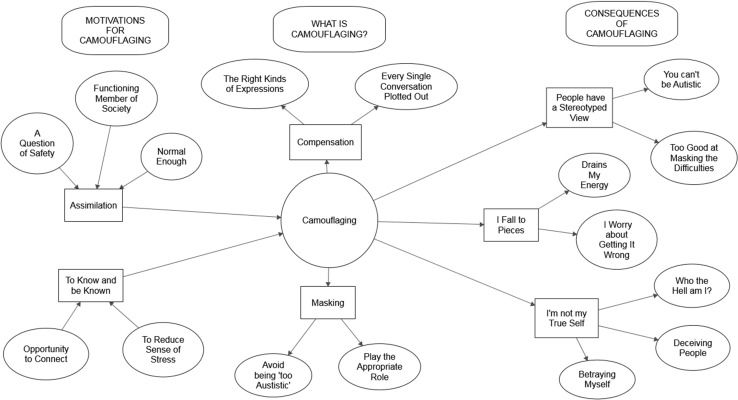
Camouflaging of autistic characteristics in social situations is hypothesised as a common social coping strategy for adults with autism spectrum conditions (ASC). Camouflaging may impact diagnosis, quality of life, and long-term outcomes, but little is known about it. This qualitative study examined camouflaging experiences in 92 adults with ASC, with questions focusing on the nature, motivations, and consequences of camouflaging. Thematic analysis was used to identify key elements of camouflaging, which informed development of a three-stage model of the camouflaging process. First, motivations for camouflaging included fitting in and increasing connections with others. Second, camouflaging itself comprised a combination of masking and compensation techniques. Third, short- and long-term consequences of camouflaging included exhaustion, challenging stereotypes, and threats to self-perception.
Overview
The claims and statistics of this paper haven’t been checked yet.
Free: it reads the open-access text and checks the first 5 claims that cite a source we can check. Create a free account to check every claim.
Integrity signals
Registry
Cites
Statistics
Figures
Verification
Claims the paper makes
The claims and statistics of this paper haven’t been checked yet.
Free: it reads the open-access text and checks the first 5 claims that cite a source we can check. Create a free account to check every claim.
Claims other papers make about this one
Each is checked against this paper’s own text: does it say what the citing paper says it does?
The source backs part of the claim, not all of it — or backs it for a different population, condition or comparison.
In the citing paper
“OSCE-style assessments introduce distinctive equity challenges, particularly for students with autism and communication differences who may find formats relying on rapid interpersonal exchanges and performance under time pressure disproportionately demanding [19,20].”
From Clinical assessment meets laboratory science: adapting OSCE methodology for authentic biosciences evaluation in the age of generative AI (2025) · cites this paper as [20]
Experimental — accuracy not yet measuredThe source backs part of the claim, not all of it — or backs it for a different population, condition or comparison.
In the citing paper
“Yet, we know that camouflaging is linked to a range of negative consequences for autistic adults (e.g. misdiagnosis, identity confusion and mental health difficulties; Beck et al., 2020; Cassidy et al., 2018; Hull et al., 2017).”
From Camouflaging in an everyday social context: An interpersonal recall study (2021) · cites this paper as Hull et al., 2017
Experimental — accuracy not yet measuredThe cited source says what the claim attributes to it.
In the citing paper
“In addition to potential sex1 differences in clinical presentation (Lai et al. 2014; May et al. 2014; Young et al. 2018), it is increasingly recognised that autistic people can hide their ASD symptoms or use compensatory behaviours to mitigate social challenges (Gould and Ashton-Smith 2011; Hull et al. 2017; Livingston et al. 2019; Tierney et al. 2016).”
From Barriers to Autism Spectrum Disorder Diagnosis for Young Women and Girls: a Systematic Review (2021) · cites this paper as Hull et al. 2017
The cited source says what the claim attributes to it.
In the citing paper
“Results of three exploratory studies using predominately qualitative methodologies were not suggestive of sex or gender differences in camouflaging (Cage et al., 2018;Hull et al., 2017;Livingston et al. 2020).”
From Camouflaging in autism: A systematic review (2021) · cites this paper as Hull et al., 2017
The cited source says what the claim attributes to it.
In the citing paper
“Autistic people report attempting to camouflage their ASC in order to try and fit in in social situations, which may delay obtaining a timely ASC diagnosis and negatively affect their mental health [31–33].”
From Risk markers for suicidality in autistic adults (2018) · cites this paper as [32]
6 more claims about this paper
Create a free account to see every claim other papers make about this one.
Self-check
Percentages, sums and reported differences re-computed from the paper’s own numbers.
The self-check needs the paper’s full text.
Citations
Cites
Using thematic analysis in psychology
Braun, V., & Clarke, V. (2006) · Qualitative Research in Psychology · doi:10.1191/1478088706qp063oa · Cited by 194,414
Qualitative research practice: a guide for social science students and researchers
(2003) · Choice Reviews Online · doi:10.5860/choice.41-1319 · Cited by 10,543
Baron-Cohen, S., Wheelwright, S., Skinner, R., Martin, J., & Clubley, E. (2001) · Journal of Autism and Developmental Disorders · doi:10.1023/a:1005653411471 · Cited by 6,450
Self-citationIntroducing Qualitative Research in Psychology
Willig, C. (2001) · Cited by 3,012
Evolving guidelines for publication of qualitative research studies in psychology and related fields
Elliott, R., Fischer, C. T., & Rennie, D. L. (1999) · British Journal of Clinical Psychology · doi:10.1348/014466599162782 · Cited by 2,491
Epidemiology of Pervasive Developmental Disorders
Fombonne, E. (2009) · Pediatric Research · doi:10.1203/pdr.0b013e31819e7203 · Cited by 1,971 · cited 2×
“Amongst clinical samples, male to female gender ratios for ASC diagnosis are generally around 4:1 (Fombonne 2009), but when active case ascertainment is used within the general population, the ratio lowers to around 3:1 (Sun et al.”
BackgroundPrevalence of Autism Spectrum Disorders in a Total Population Sample
Kim, Y. S., Leventhal, B. L., Koh, Y.-J., Fombonne, E., Laska, E., Lim, E.-C., Cheon, K.-A., Kim, S.-J., Kim, Y.-K., Lee, H., et al. (2011) · American Journal of Psychiatry · doi:10.1176/appi.ajp.2011.10101532 · Cited by 1,524
Sex/Gender Differences and Autism: Setting the Scene for Future Research
Lai, M.-C., Lombardo, M. V., Auyeung, B., Chakrabarti, B., & Baron-Cohen, S. (2015) · Journal of the American Academy of Child & Adolescent Psychiatry · doi:10.1016/j.jaac.2014.10.003 · Cited by 1,120
Self-citationPostsecondary education and employment among youth with an autism spectrum disorder
Shattuck, P. T., Narendorf, S. C., Cooper, B., Sterzing, P. R., Wagner, M., & Taylor, J. L. (2012) · PEDIATRICS · doi:10.1542/peds.2011-2864 · Cited by 1,110
Bargiela, S., Steward, R., & Mandy, W. (2016) · Journal of Autism and Developmental Disorders · doi:10.1007/s10803-016-2872-8 · Cited by 1,087 · cited 1×
“Similar themes were also found during qualitative interviews with latediagnosed women with ASC (Bargiela et al. 2016).”
Self-citation
Research works printed but not linked: 3
- American Psychiatric Association (2013). DSM
- Gould, J., & Ashton-Smith, J. (2011). Missed diagnosis or misdiag- nosis? Girls and women on the autism spectrum. Good Autism Practice (GAP), 12(1), 34-41. Retrieved from http://docserver. ingentaconnect.com/deliver/connect/bild/14662973/v12n1/s5.pd
- Holliday Willey, L. (2015). Pretending to be normal: Living with Asperger's Syndrome (Autism Spectrum Disorder) (Expanded Edition). London: Jessica Kingsley.
Cited by
Items 301–400 of 1,001
Are autistic people disadvantaged by the criminal justice system? A case comparison
Slavny‐Cross, R., Allison, C. L., Griffiths, S., & Baron‐Cohen, S. (2022) · Autism · doi:10.1177/13623613221140284 · Cited by 32
“In addition, it is well documented that masking of autistic features is very common among autistic adults (Hull et al., 2017), which can make detecting neurodivergent people difficult for frontline professionals, even with relevant training.”
BackgroundSelf-citation“I Was Like a Bird Without Wings”: Autistic Women’s Retrospective Experiences in General Schools
Zakai-Mashiach, M. (2022) · Journal of Autism and Developmental Disorders · doi:10.1007/s10803-022-05717-6 · Cited by 31
“…needs to be given to the disclosure of diagnosis from the perspective of the autistic individual, particularly that of autistic females, because of their strong tendency to camou-flage behaviors, which has been associated with a higher risk of poor wellbeing and mental health (Hull et al., 2017).”
BackgroundHobson, H., & Lee, A. (2022) · Communication Disorders Quarterly · doi:10.1177/15257401221120937 · Cited by 31
“The term camouflaging refers to conscious or unconscious strategies or behaviors that minimize neurodiverse people’s neurodivergent characteristics, via masking and compensation (Hull et al., 2017).”
BackgroundPascoe, M. I., Forbes, K., de la Roche, L., Derby, B., Psaradellis, E., Anagnostou, E. A., Nicolson, R., Georgiades, S., & Kelley, E. A. (2023) · Autism Research · doi:10.1002/aur.3015 · Cited by 32
“Camouflaging, otherwise known as masking, is when an individual seeks to hide or compensate for the autistic behaviors and social difficulties which stem from their autistic traits (Hull et al., 2017).”
BackgroundInfluentialCompensation in autism is not consistent with social motivation theory
Livingston, L. A., Shah, P., & Happé, F. (2019) · Behavioral and Brain Sciences · doi:10.1017/s0140525x18002388 · Cited by 30
Diagnostic Challenges of High-Functioning Autism Spectrum Disorder in Females
Gupta, M., & Chaudhary, R. (2021) · Cureus · doi:10.7759/cureus.13006 · Cited by 30
“Camouflaging is a broad construct seen more often in females and is described as masking of ASD symptoms with motivation to assimilate [7].”
BackgroundHiding in Plain Sight: Eating Disorders, Autism, and Diagnostic Overshadowing in Women
Brown, C. M., Hedley, D., Hooley, M., Hayward, S. M., Fuller‐Tyszkiewicz, M., Krug, I., & Stokes, M. A. (2024) · Autism in Adulthood · doi:10.1089/aut.2023.0197 · Cited by 30
‘At the End of the Day, It’s Love’: An Exploration of Relationships in Neurodiverse Couples
Smith, R., Netto, J., Gribble, N., & Falkmer, M. (2020) · Journal of Autism and Developmental Disorders · doi:10.1007/s10803-020-04790-z · Cited by 30
Adamou, M., Jones, S. L., & Wetherhill, S. (2021) · BMC Psychiatry · doi:10.1186/s12888-020-03028-7 · Cited by 30
Mosquera, M. L., Mandy, W., Pavlopoulou, G., & Dimitriou, D. (2021) · Research in Developmental Disabilities · doi:10.1016/j.ridd.2021.104057 · Cited by 30
“Prior to the first Covid-19 lockdown, camouflaging was a one way of achieving some of the “norms” driven by the society albeit at high costs such as an increasing stress, anxiety, depression, or even risk of suicide (Cassidy et al., 2018; Hull et al., 2017; Lai et al., 2017; Perry et al., 2020).”
InfluentialSelf-citationXu, L., Zheng, X., Yao, S., Li, J., Fu, M., Li, K., Zhao, W., Li, H., Becker, B., & Kendrick, K. M. (2022) · NeuroImage · doi:10.1016/j.neuroimage.2022.119010 · Cited by 30
van der Putten, W., van Rentergem, J. A. A., Radhoe, T. A., Torenvliet, C., Groenman, A. P., Mol, A. J. J., & Geurts, H. M. (2022) · Research in Autism · doi:10.1016/j.rasd.2022.102072 · Cited by 31
“While each of the above might be the case, the observed lack of measurement invariance does actually fit neatly with the definition of camouflaging behavior as camouflaging has specifically been defined as hiding one’s autistic traits (Hull et al., 2017).”
BackgroundInfluentialFrench Validation of the Camouflaging Autistic Traits Questionnaire (CAT-Q)
Bureau, R., Riebel, M., Weiner, L., Coutelle, R., Dachez, J., & Clément, C. (2023) · Journal of Autism and Developmental Disorders · doi:10.1007/s10803-023-06048-w · Cited by 31
“…develop a romantic relationship (Cage & Troxell-Whitman, 2019 ; Hull et al., 2017 ), one major difference is that they also report employing camouflaging strategies to “fit-in” and avoid ostracism, bullying and discrimination (Cage & Troxell-Whitman, 2019 ; Hull et al., 2017 ; Miller et al., 2021).”
InfluentialMoore, H. L., Cassidy, S., & Rodgers, J. (2023) · Autism Research · doi:10.1002/aur.3073 · Cited by 30
“Camouflaging behaviours might include rules for maintaining eye contact or using social scripts; hiding traits, by suppressing reactions to sensory differences or stimming; or putting on a persona to appear more sociable (Bargiela et al., 2016; Cook, Crane, et al., 2021; Hull et al., 2017).”
Schuck, R. K., & Fung, L. K. (2024) · Frontiers in Psychiatry · doi:10.3389/fpsyt.2023.1250895 · Cited by 30
“Second, teaching autistic individuals to act neurotypical in order to fit in can lead them to “mask” or “camouflage” their true selves (37, 38), which has been found to correlate with multiple negative mental health outcomes in autistic people (39, 40).”
BackgroundAutomating autism assessment: What AI can bring to the diagnostic process
Erden, Y. J., Hummerstone, H., & Rainey, S. (2020) · Journal of Evaluation in Clinical Practice · doi:10.1111/jep.13527 · Cited by 31
“diagnosis later in life may have developed highly expert and refined coping strategies to allow themselves to ‘fit in’ to a neurotypical world, referred to as masking or camouflaging.(23) Masking could”
BackgroundWalsh, M. J. M., Pagni, B. A., Monahan, L., Delaney, S., Smith, C. J., Baxter, L. C., & Braden, B. B. (2022) · Cerebral Cortex · doi:10.1093/cercor/bhac069 · Cited by 30
Autism Support in a Community College Setting: Ideas from Intersectionality
Shmulsky, S., & Gobbo, K. (2018) · Community College Journal of Research and Practice · doi:10.1080/10668926.2018.1522278 · Cited by 29
“Autistics may use camouflage, also called masking, to fit in a social situation by passing as neurotypical, but the longterm consequences are exhaustion and threats to self-perception (Hull et al., 2017).”
BackgroundBrosnan, M., & Gavin, J. (2021) · Journal of Autism and Developmental Disorders · doi:10.1007/s10803-020-04830-8 · Cited by 29
Healy, S., Pacanowski, C., Kennedy, L., & Obrusníková, I. (2021) · Autism · doi:10.1177/13623613211006989 · Cited by 20
“To our knowledge, this is the first study suggesting that some autistic adults view their bodies as a means of “camouflaging” or “blending in” (Hull et al., 2017).”
BackgroundUnderhill, J. C., Clark, J., Hansen, R. S., & Adams, H. (2022) · Journal of Autism and Developmental Disorders · doi:10.1007/s10803-022-05867-7 · Cited by 29
“Similarly, individuals on the spectrum may also mirror (or mimic) their peers’ behaviors to blend into a social context (Hull et al., 2017).”
InfluentialTsirgiotis, J. M., Young, R. L., & Weber, N. (2023) · Autism · doi:10.1177/13623613231190682 · Cited by 30
“…in a female’s ASD presentation according to her environment and lends support to the camouflage hypothesis; that is, females may be more highly motivated or better able to conceal and compensate for ASD-related difficulties in some environments (Hull et al., 2017; Rynkiewicz et al., 2016).”
BackgroundUnderstanding Camouflaging, Stigma, and Mental Health for Autistic People in Japan
Tamura, M., Cage, E., Perry, E., Hongo, M., Takahashi, T., Seto, M., Shimizu, E., & Oshima, F. (2025) · Autism in Adulthood · doi:10.1089/aut.2023.0035 · Cited by 29
“7,35 This finding aligns with that in Perry et al. 8 and previous discussions.”
InfluentialGray, L., Bownas, E., Hicks, L., Hutcheson-Galbraith, E., & Harrison, S. (2021) · Educational Psychology in Practice · doi:10.1080/02667363.2020.1863188 · Cited by 32
Neurodiversity and higher education: double masking by neurodivergent students
Quigley, E., & Gallagher, T. (2026) · European Journal of Special Needs Education · doi:10.1080/08856257.2025.2511369 · Cited by 28
“Hull et al. (2017) identified three stage model of a camouflage process within which masking occurs – stage 1 being motivated by a desire to fit in (hide in plain site) and form connections; stage 2, is to mask as a means to hide neurodivergent traits and to compensate through learned social…”
Liu, C.-H., Chen, Y., Chen, P., Ni, H., & Lai, M. (2023) · Autism · doi:10.1177/13623613231181732 · Cited by 28
“…finding in Taiwanese adolescents that autistic–non-autistic differences exist in assimilation (i.e. motivated to “blend in with the nor-mals” (Hull et al., 2017)) more so than utilizing strategies to compensate for or mask autistic features might imply the potentially unique socio-cultural…”
BackgroundMethodResultInfluentialSelf-citationAccess Points: Understanding Special Interests Through Autistic Narratives
Long, R.-E. M. (2024) · Autism in Adulthood · doi:10.1089/aut.2023.0157 · Cited by 29
Camouflaging Autism in Pursuit of Friendship and Intimate Relationships: A Systematic Review
Ridgway, K., Cooke, K., Demmer, D. H., Hooley, M., Westrupp, E. M., & Stokes, M. A. (2025) · Autism in Adulthood · doi:10.1089/aut.2023.0160 · Cited by 29
“44,59,66,79 The other study results were more interpretive, and the discussions were mostly often repetitious, rather than contextualized within the existing literature.”
InfluentialPyszkowska, A. (2024) · Journal of Autism and Developmental Disorders · doi:10.1007/s10803-024-06416-0 · Cited by 22
“Autistic individuals consider camouflaging as exhausting and effortful, often leading to diminished well-being (Cook et al., 2021) or burnout (Hull et al., 2017; Raymaker et al., 2020), and adaptive for developing satisfying social interactions (Miller et al., 2021; Bradley et al., 2021).”
Intersection of Eating Disorders and the Female Profile of Autism
Brown, C. M., & Stokes, M. A. (2020) · Psychiatric Clinics of North America · doi:10.1016/j.psc.2020.08.009 · Cited by 28
Truman, C., Crane, L., Howlin, P., & Pellicano, E. (2021) · International Journal of Inclusive Education · doi:10.1080/13603116.2021.1916108 · Cited by 31
“Masking (or ‘ putting on my best normal ’ ; Hull et al. 2017, 2591) is common among autistic children (Cook, Ogden, and Winstone 2017) and adults (Hull et al. 2017, 2020).”
BackgroundExploring the Lived Experiences of Autistic Women: A Thematic Synthesis
Gosling, J., Purrington, J., & Hartley, G. (2023) · Review Journal of Autism and Developmental Disorders · doi:10.1007/s40489-023-00367-5 · Cited by 28
“For many, a diagnosis of autism came too late (Baldwin & Costley, 2016; Bargiela et al., 2016; Hull et al., 2017; Leedham et al., 2020; Webster & Garvis, 2017), resulting in a lack of appropriate support, challenges in identity, and years of additional confusion and distress, “I was exhausted…”
InfluentialThe double empathy problem, camouflage, and the value of expertise from experience
Mitchell, P., Cassidy, S., & Sheppard, E. (2019) · Behavioral and Brain Sciences · doi:10.1017/s0140525x18002212 · Cited by 29
Metacognitive Monitoring and Control of Eyewitness Memory Reports in Autism
Maras, K., Norris, J. E., & Brewer, N. (2020) · Autism Research · doi:10.1002/aur.2278 · Cited by 28
“…al., 2012] and is more in line with recent suggestions that autistic people are socially motivated, but that social-cognitive difficulties can limit their ability to read and respond appropriately to social cues [see e.g., Hull et al., 2017; Jaswal & Akhtar, 2018; Livingston, Shah, & Happé, 2018].”
ResultRujeedawa, T., & Zaman, S. H. (2022) · International Journal of Environmental Research and Public Health · doi:10.3390/ijerph19031315 · Cited by 29
“Camouflaging refers to using strategies, whether consciously or unconsciously, to hide autistic characteristics within social settings [61].”
BackgroundNeurodiversity at Work: Challenges and Opportunities for Human Resource Management
Volpone, S. D., & Hennekam, S. (2025) · Human Resource Management · doi:10.1002/hrm.70032 · Cited by 28
Social engagement and loneliness in school-age autistic girls and boys
Dean, M., Chang, Y., Shih, W., Orlich, F., & Kasari, C. L. (2023) · Women s Health · doi:10.1177/17455057231170973 · Cited by 28
Body image and autism: A scoping review
Longhurst, P. (2023) · Research in Autism · doi:10.1016/j.rasd.2023.102170 · Cited by 27
Loo, B. R. Y., Teo, T. J. Y., Liang, M. J., Leong, D.-J., Tan, D. W., Zhuang, S., Hull, L., Livingston, L. A., Mandy, W., Happe, F. G. E., et al. (2023) · Autism · doi:10.1177/13623613231180075 · Cited by 27
“Recent work has suggested that some autistic people learn to cope with challenging social experiences by developing strategies to ‘camouflage’ (otherwise often referred to as ‘masking’ or ‘passing’) their autistic differences or difficulties (Hull et al., 2017).”
BackgroundInfluentialSelf-citationRitzman, M. J., & Subramanian, R. (2023) · Autism · doi:10.1177/13623613231170963 · Cited by 27
Organizational benefits of neurodiversity: Preliminary findings on autism and the bystander effect
Hartman, L. M., Farahani, M., Moore, A. K., Rabbani, A., & Hartman, B. L. (2023) · Autism Research · doi:10.1002/aur.3012 · Cited by 29
“Social camouflaging describes an explicit effort to “ mask ” or compensate for autistic characteristics during social interactions by modifying one ’ s behavior in social situations in order to present a less visi-bly autistic persona (Hull et al., 2017).”
BackgroundCompassion focused therapy for self-stigma and shame in autism: a single case pre-experimental study
Riebel, M., Krasny‐Pacini, A., Manolov, R., Rohmer, O., & Weiner, L. (2024) · Frontiers in Psychiatry · doi:10.3389/fpsyt.2023.1281428 · Cited by 28
Measurement of Subcategories of Repetitive Behaviors in Autistic Adolescents and Adults
McDermott, C. R., Farmer, C., Gotham, K. O., & Bal, V. H. (2020) · Autism in Adulthood · doi:10.1089/aut.2019.0056 · Cited by 27
“of these results must be tempered by awareness of the small size and relatively high cognitive ability of this sample, they are consistent with descriptions of camouflaging, which may reflect adults’ conscious modification or minimization of behaviors in contexts when perceived as inappropriate to a given situation or…”
ResultCrehan, E. T., Rocha, J., Sclar, J., Ward, O. F., & Donaghue, A. (2023) · Disability and health journal · doi:10.1016/j.dhjo.2023.101466 · Cited by 26
Motherhood: Female Perspectives and Experiences of Being a Parent with ASC
Winnard, R., Roy, M. P., & Butler, H. (2021) · Journal of Autism and Developmental Disorders · doi:10.1007/s10803-021-05122-5 · Cited by 26
Mothers’ perspectives of co-occurring fatigue in children with autism spectrum disorders
Keville, S., Meek, C., & Ludlow, A. (2021) · Fatigue Biomedicine Health & Behavior · doi:10.1080/21641846.2021.2008169 · Cited by 27
“Compared to neurotypical peers this may increase stress, anxiety, depression and exhaustion for those with ASD [11].”
Backgroundvan Rensburg, M. J., & Liang, B. (2025) · Autism in Adulthood · doi:10.1089/aut.2022.0079 · Cited by 27
The Associations Between Camouflaging, Autistic Traits, and Mental Health in Nonautistic Adults
Somerville, M., MacPherson, S. E., & Fletcher‐Watson, S. (2024) · Autism in Adulthood · doi:10.1089/aut.2023.0018 · Cited by 28
Kersten, M. L., Coxon, K., Lee, H., & Wilson, N. J. (2020) · Journal of Autism and Developmental Disorders · doi:10.1007/s10803-020-04384-9 · Cited by 27
How well are DSM-5 diagnostic criteria for ASD represented in standardized diagnostic instruments?
Evers, K., Maljaars, J., Carrington, S. J., Carter, A. S., Happe, F. G. E., Steyaert, J. G., Leekam, S., & Noens, I. L. J. (2020) · European Child & Adolescent Psychiatry · doi:10.1007/s00787-020-01481-z · Cited by 29
Billington, J., Loucas, T., & Knott, F. J. (2024) · Neurodiversity · doi:10.1177/27546330241310174 · Cited by 25
“Although research on autistic masking is still in its infancy (Cook et al., 2022), it is understood to involve conscious and unconscious strategies to adapt to non-autistic norms and expectations (Hull et al., 2017; Pearson & Rose, 2021).”
Atkinson, E., Wright, S., & Wood‐Downie, H. (2025) · Journal of Autism and Developmental Disorders · doi:10.1007/s10803-024-06668-w · Cited by 27
“While it could be argued that most people adapt their behaviours to a degree, it has been found that autistic cam-ouflaging requires a level of effort greater than typical “rep - utation management” (Hull et al., 2017, p. 2520; Cage et al., 2022).”
InfluentialMcQuaid, G. A., Sadowski, L. Y., Lee, N., & Wallace, G. L. (2024) · Autism in Adulthood · doi:10.1089/aut.2022.0121 · Cited by 26
Longhurst, P., Aspell, J. E., Todd, J., & Swami, V. (2023) · Body Image · doi:10.1016/j.bodyim.2023.101655 · Cited by 25
Differently different?: A commentary on the emerging social cognitive neuroscience of female autism
Rippon, G. (2024) · Biology of Sex Differences · doi:10.1186/s13293-024-00621-3 · Cited by 25
“Both qualitative and quantitative data indicate that a desire to fit in, to avoid the stigma of autism, is the main driving force behind cam-ouflaging behaviour [94, 107, 124–126].”
Spontaneous helping behavior of autistic and non‐autistic (Pre‐)adolescents: A matter of motivation?
O’Connor, R., Stockmann, L., & Rieffe, C. J. (2019) · Autism Research · doi:10.1002/aur.2182 · Cited by 25
“…potential gender differences in autism, which has revealed that autistic girls are superior to their male peers in masking or camouflaging their social difficulties [Hull et al., 2017; Dean, Harwood, & Kasari, 2017], which often results in missed or misdiagnoses [Gould & Ashton-Smith, 2011].”
BackgroundCamouflaging of repetitive movements in autistic female and transgender adults
Wiskerke, J., Stern, H., & Igelström, K. (2018) · bioRxiv (Cold Spring Harbor Laboratory) · doi:10.1101/412619 · Cited by 20
Self-Compassion, Camouflaging, and Mental Health in Autistic Adults
Galvin, J., Aguolu, P., Amos, A., Bayne, F., Hamza, F., & Alcock, L. (2024) · Autism in Adulthood · doi:10.1089/aut.2023.0110 · Cited by 24
“17 Negative outcomes associated with social camouflaging include increased mental health problems and reduced access to support and diagnosis.”
Rapport in same and mixed neurotype groups of autistic and non-autistic adults
Foster, S. J., Ackerman, R. A., Wilks, C. E. H., Dodd, M., Calderon, R. M., Ropar, D., Fletcher‐Watson, S., Crompton, C. J., & Sasson, N. J. (2025) · Autism · doi:10.1177/13623613251320444 · Cited by 25
“Masking requires significant cognitive resources (Hull et al., 2017) that may have been particularly taxed in group settings given the heightened group demands and potential need to interact with several non-autistic partners at once.”
Denning, E. C., Brannan, D., Murphy, L. A., Losco, J. A., & Payne, D. (2018) · Psi Chi Journal of Psychological Research · doi:10.24839/2325-7342.jn23.2.166 · Cited by 26
Mahony, C., & O’Ryan, C. (2022) · Frontiers in Psychiatry · doi:10.3389/fpsyt.2022.985713 · Cited by 25
Work-Related Self-Efficacy and Illness Identity in Adults with Autism
Lamash, L., & Meyer, S. (2022) · International Journal of Environmental Research and Public Health · doi:10.3390/ijerph20010122 · Cited by 24
“[41] suggested that adults with autism reported increased anxiety and stress episodes because, in the real world, they often feel they are losing their authentic sense of identity, sense of grounding and security in who they were.”
BackgroundUsing Experience Sampling Methodology to Capture Disclosure Opportunities for Autistic Adults
Love, A. M. A., Edwards, C., Cai, R. Y., & Gibbs, V. (2023) · Autism in Adulthood · doi:10.1089/aut.2022.0090 · Cited by 24
“3,5 ,5–7 Disclosure is an individual decision that can vary based on contextual influences.”
Pearson, A., & Hodgetts, S. (2024) · Autism in Adulthood · doi:10.1089/aut.2022.0103 · Cited by 25
Fotheringham, F., Cebula, K. R., Fletcher‐Watson, S., Foley, S., & Crompton, C. J. (2023) · Neurodiversity · doi:10.1177/27546330231205770 · Cited by 25
“For neurodivergent people, maintaining a social “ mask ” to hide traits which are viewed as atypical or undesirable is extremely effortful (Bargiela et al., 2016; Hull et al., 2017).”
BackgroundZhuang, S., Bougoure, M., Leong, D.-J., Dean, L., Reddrop, S., Naragon‐Gainey, K., Maybery, M. T., Tan, D. W., & Magiati, I. (2024) · Autism · doi:10.1177/13623613241262110 · Cited by 25
“Camouflaging involves consciously or unconsciously modifying autistic characteristics to ‘pass as normal’ to fit into non-autistic social environments (Cage & Troxell-Whitman, 2019; Hull et al., 2017).”
Intersection of Eating Disorders and the Female Profile of Autism
Brown, C. M., & Stokes, M. A. (2020) · Child and Adolescent Psychiatric Clinics of North America · doi:10.1016/j.chc.2019.11.002 · Cited by 25
Teacher ratings of academic skills and academic enablers of children on the autism spectrum
Keen, D., Adams, D., & Simpson, K. (2021) · International Journal of Inclusive Education · doi:10.1080/13603116.2021.1881626 · Cited by 25
“Recent research in adolescents and adults with autism suggests that camouflaging autistic characteristics in social situations may be a common strategy and that a consequence of camouflaging can be exhaustion, anxiety, and stress (Hull et al. 2017; Tierney, Burns, and Kilbey 2016).”
BackgroundKong, H., Lowy, R., Choi, Y., & Kim, J. G. (2025) · CHI Conference on Human Factors in Computing Systems · doi:10.1145/3706598.3713344 · Cited by 23
Cancino-Barros, I., Villacura-Herrera, C., & Castillo, R. D. (2025) · Scientific Reports · doi:10.1038/s41598-025-06137-z · Cited by 23
“Additionally, Hull et al. 17 have questioned whether these methods can truly evaluate internal autistic characteristics.”
Supporting the needs of college students with autism spectrum disorder
Chandrasekhar, T. (2019) · Journal of American College Health · doi:10.1080/07448481.2019.1686003 · Cited by 23
Scheerer, N. E., Aime, H., Boucher, T. Q., & Iarocci, G. (2020) · Autism in Adulthood · doi:10.1089/aut.2019.0062 · Cited by 23
“6,10 Autistic individuals may also suppress their ‘‘stims’’ in an attempt to avoid drawing negative attention toward themselves, despite the fact that ‘‘stimming’’ helps autistic individuals to find relief from excessive sensory stimulation and feelings of anxiety.”
Influentialvan der Putten, W., Mol, A. J. J., Radhoe, T. A., Torenvliet, C., van Rentergem, J. A. A., Groenman, A. P., & Geurts, H. M. (2023) · Autism · doi:10.1177/13623613231185402 · Cited by 24
“In addition, autistic adults report that camouflaging is very exhausting as it requires a lot of energy to figure out how one should behave in different situations (Bargiela et al., 2016; Hull et al., 2017; Livingston et al., 2019).”
BackgroundAutistic Perspectives on Employment: A Scoping Review
Southey, S., Morris, R., Nicholas, D. B., & Pilatzke, M. (2024) · Journal of Occupational Rehabilitation · doi:10.1007/s10926-023-10163-x · Cited by 23
“(Masking and camouflaging are understood to be coping strategies in response to neurotypical expectations and repeated experiences of being excluded, judged, and/or bullied for characteristics and behaviors that do not align with these expectations) [62, 63].”
Game Changer: Exploring the Role of Board Games in the Lives of Autistic People
Cross, L., Belshaw, F., Piovesan, A., & Atherton, G. (2024) · Journal of Autism and Developmental Disorders · doi:10.1007/s10803-024-06408-0 · Cited by 23
“To compensate for these, many autistic people become adept at masking or camou-flaging, which means hiding one’s autistic traits in order to fit into a neurotypical world (Hull et al., 2017).”
Scheeren, A. M., Nieuwenhuis, S., Crane, L., Roke, Y., & Begeer, S. (2025) · Autism · doi:10.1177/13623613251353358 · Cited by 24
Online safety experiences of autistic young people: An Interpretative Phenomenological Analysis
Macmillan, K., Berg, T., Just, M., & Stewart, M. E. (2022) · Research in Autism · doi:10.1016/j.rasd.2022.101995 · Cited by 22
Digitally assisted diagnostics of autism spectrum disorder
Koehler, J. C., & Falter, C. M. (2023) · Frontiers in Psychiatry · doi:10.3389/fpsyt.2023.1066284 · Cited by 23
Neurobehavioral sex-related differences in Nf1+/− mice: female show a “camouflaging”-type behavior
Santos, S., Martins, B., Sereno, J., Martins, J., Castelo-Branco, M. S., & Gonçalves, J. (2023) · Biology of Sex Differences · doi:10.1186/s13293-023-00509-8 · Cited by 22
“This ability of females to mask their autistic traits through, for example, diminishing their social hurdles, has been called a “camouflaging”-type behavior, which adds to the difficulty of diagnosis in females [41, 44].”
BackgroundGonzález‐Herrero, B., Happe, F. G. E., Nicholson, T. R., Morgante, F., Pagonabarraga, J., Deeley, Q., & Edwards, M. J. (2024) · Brain and Behavior · doi:10.1002/brb3.70168 · Cited by 22
Morrison, A. (2019) · Biography · doi:10.1353/bio.2019.0066 · Cited by 23
Adults with autism spectrum disorder show atypical patterns of thoughts and feelings during rest
Simpraga, S., Weiland, R. F., Mansvelder, H. D., Polderman, T. J. C., Begeer, S., Smit, D. J. A., & Linkenkaer‐Hansen, K. (2021) · Autism · doi:10.1177/1362361321990928 · Cited by 22
“This corroborates initiatives of using the term autism spectrum conditions instead of ASD (Hull et al., 2017).”
BackgroundMethodBillington, J., Knott, F. J., & Craythorne, S. (2025) · International Journal of Qualitative Methods · doi:10.1177/16094069251346839 · Cited by 21
“…report feeling under considerable pressure to adjust their behaviour to more closely match the conventions and expectations of non-autistic people (Hull et al., 2017; Humphrey & Lewis, 2008; Miller et al., 2021), with negative consequences in terms of mental health and wellbeing (Cassidy et al.,…”
Borsos, Z., Jakab, Z., Stefanik, K., Bogdán, B., & Győri, M. (2022) · Applied Sciences · doi:10.3390/app12157759 · Cited by 21
Jenks, E., Selman, F., Harmens, M., Boon, S., Tran, T., Hobson, H., Eagle, S., & Sedgewick, F. (2023) · Frontiers in Psychiatry · doi:10.3389/fpsyt.2023.1264895 · Cited by 22
“It is often not a deliberate choice made by an autistic person, but a response driven by anxiety (22) which can be exhausting and lead to burnout (23).”
BackgroundCarrington, S. J., Barrett, S., Sivagamasundari, U., Fretwell, C., Noens, I. L. J., Maljaars, J., & Leekam, S. (2019) · Journal of Autism and Developmental Disorders · doi:10.1007/s10803-019-04214-7 · Cited by 21
Can a Person be ‘A Bit Autistic’? A Response to Francesca Happé and Uta Frith
Chown, N., & Leatherland, J. (2020) · Journal of Autism and Developmental Disorders · doi:10.1007/s10803-020-04541-0 · Cited by 21
Anxiety and Depression from Adolescence to Old Age in Autism Spectrum Disorder
Uljarević, M., Hedley, D., Cai, R., Hardan, A., & South, M. (2020) · Encyclopedia of Autism Spectrum Disorders · doi:10.1007/978-1-4614-6435-8_102432-1 · Cited by 1
Auditory environments influence the link between Autistic traits and quality of life
Poulsen, R. E., Tan, D. W., Sowman, P. F., McAlpine, D., & Pellicano, E. (2025) · Scientific Reports · doi:10.1038/s41598-025-94585-y · Cited by 20
Maciver, D., Roy, A. S., Johnston, L., Boilson, M., Curnow, E., Johnstone‐Cooke, V., & Rutherford, M. (2025) · Autism · doi:10.1177/13623613251383343 · Cited by 21
“Masking and camouflaging strategies, commonly employed by neurodivergent females, can also delay diagnosis (Hull et al., 2017; Tubio-Fungueirino et al., 2021).”
Ashworth, M., Heasman, B., Crane, L., & Remington, A. (2023) · Autism · doi:10.1177/13623613231214834 · Cited by 23
“In turn, many camouflage (i.e. hide) autistic characteristics to appear more neurotypical at work (Hull et al., 2017).”
Backgroundde López, K. M. J., & Møller, H. T. (2024) · Neuropsychiatric Disease and Treatment · doi:10.2147/ndt.s466081 · Cited by 20
“26 Furthermore, camouflaging is associated with stress, depression, exhaustion, and identity confusion.”
BackgroundPavlova, M. A. (2017) · Frontiers in Psychology · doi:10.3389/fpsyg.2017.01211 · Cited by 20
“And many of these disorders (for example, autism spectrum disorders, Hull et al., 2017) also display a skewed sex ratio: females and males are affected differently in terms of clinical picture, prevalence, and severity.”
BackgroundKapp, S. K., Goldknopf, E. J., Brooks, P. J., Kofner, B., & Hossain, M. (2019) · Behavioral and Brain Sciences · doi:10.1017/s0140525x18002479 · Cited by 20
Muniandy, M., Richdale, A. L., Arnold, S. R. C., Trollor, J. N., & Lawson, L. P. (2021) · Research in Autism · doi:10.1016/j.rasd.2021.101764 · Cited by 22
Mental Health Experts as Objects of Epistemic Injustice—The Case of Autism Spectrum Condition
Wodziński, M. C., & Moskalewicz, M. (2023) · Diagnostics · doi:10.3390/diagnostics13050927 · Cited by 20
Wright, A. C. (2023) · International Journal of Art Therapy · doi:10.1080/17454832.2023.2172439 · Cited by 20
“…the feelings of others (Baron-Cohen et al., 1985) can lead to less interaction and social issues (Mundy, 1995; Spence, 2003), social camou fl aging (Hull et al., 2017), with increased manifestations of mental health di ffi culties for autistic people with learning disabilities (Davis et al., 2011;…”
BackgroundMunroe, A., & Dunleavy, M. (2023) · Irish Educational Studies · doi:10.1080/03323315.2023.2260371 · Cited by 19
“While this practice is not exclusive to autistic females, it has been reported as more prevalent in females compared to autistic males (Hull et al. 2017).”
BackgroundResultA Passing Problem: Evaluating Harm and Benefit in Autism Research
Ne’eman, A., Richman, K. A., McCarthy, A. M., & Wilkenfeld, D. A. (2023) · Ethics & Human Research · doi:10.1002/eahr.500188 · Cited by 19
Lorenz, S., & Hull, L. (2024) · Trends in Psychology · doi:10.1007/s43076-024-00357-4 · Cited by 20
“Q) The CAT-Q is a self-report questionnaire looking at levels of camouflaging (Hull et al., 2017).”
InfluentialSelf-citation
Metadata
- Authors
- Hull, L., Petrides, K. V., Allison, C., Smith, P., Baron-Cohen, S., Lai, M.-C., & Mandy, W.
- Affiliations
- University College London (GB)
- University of Cambridge (GB)
- Centre for Addiction and Mental Health (CA)
- Corresponding author
- Hull, Laura
- Venue
- Journal of Autism and Developmental Disorders
- Published
- 2017-05-19
- Volume
- 47
- Issue
- 8
- Pages
- 2519-2534
- ISSN
- 0162-3257 (ISSN-L)
- 1573-3432
- PMC
- PMC5509825
- OpenAlex
- W2616560149
- Cited by
- 1,365
- References
- 53
- Citations by year
- 2026: 326 · 2025: 212 · 2024: 202 · 2023: 146 · 2022: 124 · 2021: 141 · 2020: 91 · 2019: 73 · 2018: 39 · 2017: 9
- FWCI
- 33.29
- Type
- journal article
- Language
- en
- Open access
- hybrid
- doi.org
- Locations
- Journal of Autism and Developmental Disorders (publishedVersion, cc-by)
- Europe PMC (PubMed Central) (publishedVersion, cc-by)
- PubMed Central (publishedVersion, cc-by)
- PubMed (publishedVersion)
- UCL Discovery (University College London) (submittedVersion)
- Explore Bristol Research (submittedVersion)
- Apollo (University of Cambridge) (submittedVersion, cc-by)
- Apollo (cc-by)
- Funders
- Wellcome Trust (091774/Z/10/Z)
- Centre for Addiction and Mental Health
- National Institute for Health and Care Research (NF-SI-0515-10097)
- Hospital for Sick Children
- Medical Research Council
- Topics
- Life Sciences › Neuroscience › Cognitive Neuroscience › Autism Spectrum Disorder Research
- Social Sciences › Psychology › Clinical Psychology › Family and Disability Support Research
- Health Sciences › Medicine › Psychiatry and Mental health › Child Nutrition and Feeding Issues
- Keywords
- social camouflaging, autism spectrum disorder, autistic adults, masking, compensatory strategies, social coping, social exhaustion, stereotypes, self-perception
- MeSH terms
- Autism Spectrum Disorder, Adaptation, Psychological, Adolescent, Adult, Aged, Female, Humans, Male, Middle Aged, Self Concept, Social Behavior
About these checks
Registry, retraction, Cites and statistics results are computed, not judged, with one exception: a printed reference that no index lists is read once by a model before it counts as a citation error. Claims are extracted by a model and kept only when their quote appears verbatim in the text; each cited source is then checked, with a model’s help, for whether it says what the claim relies on. Those verdicts can be wrong — read the claim’s quote and the cited source before relying on one.
Statistics and arithmetic are recomputed, not judged.
Confidence bands are shown only for fields calibrated on our annotated test set. None is calibrated yet, so no band is shown.
What counts as a claim ›How we measure confidence ›How we check this ›
Are you an author, or do you see a problem with this page? Request a review
Data sources
Bibliographic data: Semantic Scholar, OpenAlex, Crossref.
Contains information from the Semantic Scholar Academic Graph Datasets, made available under the ODC Attribution License (ODC-BY 1.0).
Semantic Scholar’s data is described in: Kinney, R., et al. (2023). The Semantic Scholar Open Data Platform. arXiv:2301.10140.
