

“Putting on My Best Normal”: Social Camouflaging in Adults with Autism Spectrum Conditions
Open accessThe DOI matches its Crossref record; 52 of the 53 references it cites were found in a registry or an index.
Abstract
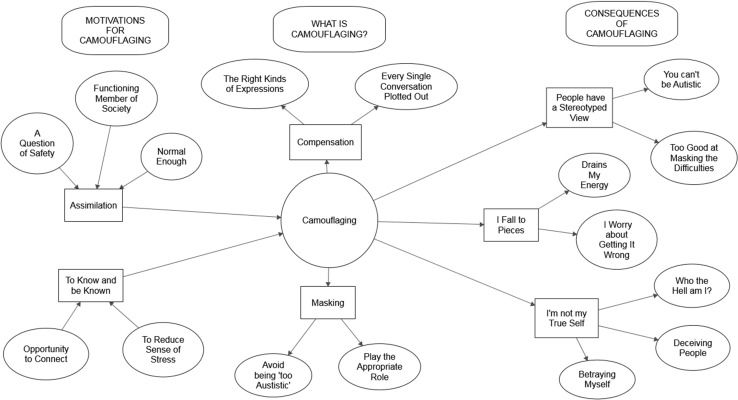
Camouflaging of autistic characteristics in social situations is hypothesised as a common social coping strategy for adults with autism spectrum conditions (ASC). Camouflaging may impact diagnosis, quality of life, and long-term outcomes, but little is known about it. This qualitative study examined camouflaging experiences in 92 adults with ASC, with questions focusing on the nature, motivations, and consequences of camouflaging. Thematic analysis was used to identify key elements of camouflaging, which informed development of a three-stage model of the camouflaging process. First, motivations for camouflaging included fitting in and increasing connections with others. Second, camouflaging itself comprised a combination of masking and compensation techniques. Third, short- and long-term consequences of camouflaging included exhaustion, challenging stereotypes, and threats to self-perception.
Overview
The claims and statistics of this paper haven’t been checked yet.
Free: it reads the open-access text and checks the first 5 claims that cite a source we can check. Create a free account to check every claim.
Integrity signals
Registry
Cites
Statistics
Figures
Verification
Claims the paper makes
The claims and statistics of this paper haven’t been checked yet.
Free: it reads the open-access text and checks the first 5 claims that cite a source we can check. Create a free account to check every claim.
Claims other papers make about this one
Each is checked against this paper’s own text: does it say what the citing paper says it does?
The source backs part of the claim, not all of it — or backs it for a different population, condition or comparison.
In the citing paper
“OSCE-style assessments introduce distinctive equity challenges, particularly for students with autism and communication differences who may find formats relying on rapid interpersonal exchanges and performance under time pressure disproportionately demanding [19,20].”
From Clinical assessment meets laboratory science: adapting OSCE methodology for authentic biosciences evaluation in the age of generative AI (2025) · cites this paper as [20]
Experimental — accuracy not yet measuredThe source backs part of the claim, not all of it — or backs it for a different population, condition or comparison.
In the citing paper
“Yet, we know that camouflaging is linked to a range of negative consequences for autistic adults (e.g. misdiagnosis, identity confusion and mental health difficulties; Beck et al., 2020; Cassidy et al., 2018; Hull et al., 2017).”
From Camouflaging in an everyday social context: An interpersonal recall study (2021) · cites this paper as Hull et al., 2017
Experimental — accuracy not yet measuredThe cited source says what the claim attributes to it.
In the citing paper
“In addition to potential sex1 differences in clinical presentation (Lai et al. 2014; May et al. 2014; Young et al. 2018), it is increasingly recognised that autistic people can hide their ASD symptoms or use compensatory behaviours to mitigate social challenges (Gould and Ashton-Smith 2011; Hull et al. 2017; Livingston et al. 2019; Tierney et al. 2016).”
From Barriers to Autism Spectrum Disorder Diagnosis for Young Women and Girls: a Systematic Review (2021) · cites this paper as Hull et al. 2017
The cited source says what the claim attributes to it.
In the citing paper
“Results of three exploratory studies using predominately qualitative methodologies were not suggestive of sex or gender differences in camouflaging (Cage et al., 2018;Hull et al., 2017;Livingston et al. 2020).”
From Camouflaging in autism: A systematic review (2021) · cites this paper as Hull et al., 2017
The cited source says what the claim attributes to it.
In the citing paper
“Autistic people report attempting to camouflage their ASC in order to try and fit in in social situations, which may delay obtaining a timely ASC diagnosis and negatively affect their mental health [31–33].”
From Risk markers for suicidality in autistic adults (2018) · cites this paper as [32]
6 more claims about this paper
Create a free account to see every claim other papers make about this one.
Self-check
Percentages, sums and reported differences re-computed from the paper’s own numbers.
The self-check needs the paper’s full text.
Citations
Cites
Using thematic analysis in psychology
Braun, V., & Clarke, V. (2006) · Qualitative Research in Psychology · doi:10.1191/1478088706qp063oa · Cited by 194,414
Qualitative research practice: a guide for social science students and researchers
(2003) · Choice Reviews Online · doi:10.5860/choice.41-1319 · Cited by 10,543
Baron-Cohen, S., Wheelwright, S., Skinner, R., Martin, J., & Clubley, E. (2001) · Journal of Autism and Developmental Disorders · doi:10.1023/a:1005653411471 · Cited by 6,450
Self-citationIntroducing Qualitative Research in Psychology
Willig, C. (2001) · Cited by 3,012
Evolving guidelines for publication of qualitative research studies in psychology and related fields
Elliott, R., Fischer, C. T., & Rennie, D. L. (1999) · British Journal of Clinical Psychology · doi:10.1348/014466599162782 · Cited by 2,491
Epidemiology of Pervasive Developmental Disorders
Fombonne, E. (2009) · Pediatric Research · doi:10.1203/pdr.0b013e31819e7203 · Cited by 1,971 · cited 2×
“Amongst clinical samples, male to female gender ratios for ASC diagnosis are generally around 4:1 (Fombonne 2009), but when active case ascertainment is used within the general population, the ratio lowers to around 3:1 (Sun et al.”
BackgroundPrevalence of Autism Spectrum Disorders in a Total Population Sample
Kim, Y. S., Leventhal, B. L., Koh, Y.-J., Fombonne, E., Laska, E., Lim, E.-C., Cheon, K.-A., Kim, S.-J., Kim, Y.-K., Lee, H., et al. (2011) · American Journal of Psychiatry · doi:10.1176/appi.ajp.2011.10101532 · Cited by 1,524
Sex/Gender Differences and Autism: Setting the Scene for Future Research
Lai, M.-C., Lombardo, M. V., Auyeung, B., Chakrabarti, B., & Baron-Cohen, S. (2015) · Journal of the American Academy of Child & Adolescent Psychiatry · doi:10.1016/j.jaac.2014.10.003 · Cited by 1,120
Self-citationPostsecondary education and employment among youth with an autism spectrum disorder
Shattuck, P. T., Narendorf, S. C., Cooper, B., Sterzing, P. R., Wagner, M., & Taylor, J. L. (2012) · PEDIATRICS · doi:10.1542/peds.2011-2864 · Cited by 1,110
Bargiela, S., Steward, R., & Mandy, W. (2016) · Journal of Autism and Developmental Disorders · doi:10.1007/s10803-016-2872-8 · Cited by 1,087 · cited 1×
“Similar themes were also found during qualitative interviews with latediagnosed women with ASC (Bargiela et al. 2016).”
Self-citation
Research works printed but not linked: 3
- American Psychiatric Association (2013). DSM
- Gould, J., & Ashton-Smith, J. (2011). Missed diagnosis or misdiag- nosis? Girls and women on the autism spectrum. Good Autism Practice (GAP), 12(1), 34-41. Retrieved from http://docserver. ingentaconnect.com/deliver/connect/bild/14662973/v12n1/s5.pd
- Holliday Willey, L. (2015). Pretending to be normal: Living with Asperger's Syndrome (Autism Spectrum Disorder) (Expanded Edition). London: Jessica Kingsley.
Cited by
Items 501–600 of 1,001
Beyond Neurodiversity Lite: Improving the Robustness of Neurodiversity Employment Programs
Ezerins, M. E., Vogus, T. J., Follmer, E. H., & Simon, L. (2025) · Journal of Organizational Behavior · doi:10.1002/job.70039 · Cited by 13
Ko, J. A., Schuck, R. K., Jimenez-Muñoz, M., Baiden, K. M. P., & Vernon, T. W. (2021) · Journal of Autism and Developmental Disorders · doi:10.1007/s10803-021-05127-0 · Cited by 13
“Silicon-On-Insulator”-Based Nanosensor for the Revelation of MicroRNA Markers of Autism
Ivanov, Y. D., Malsagova, K. A., Goldaeva, K. V., Pleshakova, T. O., Shumov, I. D., Galiullin, R. A., Kapustina, S. I., Iourov, I. Y., Vorsanova, S. G., Ryabtsev, S. V., et al. (2022) · Genes · doi:10.3390/genes13020199 · Cited by 12
“In this connection, it should be borne in mind that children with ASD can learn to mask the symptoms as they develop intelligence and awareness, thus impairing the diagnosis accuracy [42].”
BackgroundData-Driven Decision Support for Adult Autism Diagnosis Using Machine Learning
Batsakis, S., Adamou, M., Tachmazidis, I., Jones, S. L., Titarenko, S. S., Antoniou, G., & Kehagias, T. (2022) · Digital · doi:10.3390/digital2020014 · Cited by 12
Integrating the Autistic Experience Into Existing Models for Disordered Eating
Longhurst, P., & Clark, L. (2022) · Frontiers in Psychology · doi:10.3389/fpsyg.2022.926415 · Cited by 12
“For example, autistic individuals may engage in masking/social camouflaging (suppressing AP behaviors) in an attempt to appear neurotypical (Lai et al., 2016; Hull et al., 2017).”
BackgroundRecovery without normalisation: It's not necessary to be normal, not even in psychiatry
Chappell, Z., & Jeppsson, S. M. I. (2023) · Clinical Ethics · doi:10.1177/14777509231165880 · Cited by 12
“This is a much-discussed topic in autism studies.(38)”
BackgroundHow much of my true self can i show? social adaptation in autistic women: a qualitative study
砂川, 芽. (2023) · BMC Psychology · doi:10.1186/s40359-023-01192-5 · Cited by 12
“Social camouflaging is defined as strategies that autistic people learn and use consciously or unconsciously effectively during social situations to minimize appearance of autistic characteristics and engage in society, where the majority of the population is non-autistic people [7, 8, 15].”
BackgroundQualitative Analysis of the Experiences and Perspectives of Autistic Speech-Language Pathologists
Oates, M., & Bean, A. (2023) · American Journal of Speech-Language Pathology · doi:10.1044/2023_ajslp-22-00399 · Cited by 12
Kütük, M. Ö., Tufan, A. E., Kılıçaslan, F., Vural, P., Gökçen, C., Güney, S. A., Kütük, B., Özyurt, G., İnal, N., Mutluer, T., et al. (2023) · Heliyon · doi:10.1016/j.heliyon.2023.e20766 · Cited by 12
“Very Misunderstood”: Self-Perceived Social Communication Experiences of Autistic Young Adults
Banks, A. L., Mainess, K. J., Javaherian-Dysinger, H., & Natsuaki, M. N. (2024) · Youth · doi:10.3390/youth4040104 · Cited by 12
Algorithms of emotion: A hybrid NLP analysis of neurodivergent Reddit communities
Tunca, S. (2025) · Acta Psychologica · doi:10.1016/j.actpsy.2025.105519 · Cited by 12
Clinique différentielle du spectre de l’autisme : l’intérêt de penser un « autisme ordinaire »
Frigaux, A., Lighezzolo‐Alnot, J., Maleval, J. C., & Évrard, R. (2020) · L Évolution Psychiatrique · doi:10.1016/j.evopsy.2020.02.005 · Cited by 13
Women’s voices on social media: the advent of feminist epidemiology?
Miani, C., & Namer, Y. (2021) · Emerging Themes in Epidemiology · doi:10.1186/s12982-021-00097-1 · Cited by 12
“On different platforms, autistic women share their experiences of ‘masking’ which refer to minimising soothing behaviours that help them cope with sensory overstimulation in order to be viewed as not or less autistic [4].”
BackgroundFrigaux, A., Vacant, C., & Évrard, R. (2022) · L Évolution Psychiatrique · doi:10.1016/j.evopsy.2022.06.001 · Cited by 14
Mylett, M. L. (n.d.) · Summit (Simon Fraser University) · Cited by 12
Wicherkiewicz, F., & Gambin, M. (2026) · Journal of Autism and Developmental Disorders · doi:10.1007/s10803-024-06410-6 · Cited by 11
“This oversight has left many girls and women with ADHD undiagnosed and untreated, as most research and clinical practices have and conform to societal expectations (Hull et al., 2017, 2019; Mylett, 2022; van der Putten et al., 2024).”
Khudiakova, V., Forestier, J. M. L., & Chasteen, A. L. (2024) · Neurodiversity · doi:10.1177/27546330241255121 · Cited by 12
“Some studies fi nd that concealing is in fact related to better mental health (Botha & Frost, 2020), perhaps because of how it protects from the stigma autistic people would otherwise face in society.”
InfluentialO impacto da camuflagem social no diagnóstico tardio do Transtorno do Espectro Autista
Rocha, P. A., Gomes, A. C. P., Souza, A., Penha, I. E. S., Santos, J. P. D. O. B., Lemes, L. D. A., & Macedo, L. R. (2024) · Revista Eletrônica Acervo Saúde · doi:10.25248/reas.e16579.2024 · Cited by 12
“A criança, adolescente e adultos não-diagnosticado com TEA, e percebendo a sua dificuldade de interação social, vai desenvolver mecanismos próprios de tentar se adaptar ao mundo, ainda que isso incorra no uso constante dessas máscaras (HULL L, et al., 2017).”
BackgroundParents’ Experiences after Their Child’s Autism Diagnosis: A Reflexive Thematic Analysis
Hughes, R., Curley, K., & Kotera, Y. (2024) · Psychiatry International · doi:10.3390/psychiatryint5030026 · Cited by 13
“However, strategies used by autistic individuals, such as camouflaging [48,49], especially by females [50] to mask autistic behaviours, may hinder parental and professional recognition of autistic traits at younger ages [51,52].”
Schuck, R. K., Geng, A., Doss, Y., Lin, F., Crousore, H., Baiden, K. M. P., Dwyer, P. S. R., Williams, Z. J., & Wang, M. (2024) · Neurodiversity · doi:10.1177/27546330241266718 · Cited by 11
“Focusing on normalization can lead to masking (McGill & Robinson, 2021) — the suppression of autistic traits (Hull et al., 2017) — which has been cross-sectionally linked to poor mental health outcomes (Zhuang et al., 2023).”
Camuflagem social e diagnóstico tardio de autismo em mulheres: uma revisão integrativa
Miranda, É. O. P., & Chagas, L. M. M. P. F. (2024) · Revista Neurociências · doi:10.34024/rnc.2024.v32.16553 · Cited by 12
Lei, J., Mason, C., Russell, A., Hollocks, M. J., & Leigh, E. (2024) · Clinical Child and Family Psychology Review · doi:10.1007/s10567-024-00509-z · Cited by 12
Robinson, E., & Crane, L. (2025) · British Journal of Special Education · doi:10.1111/1467-8578.70000 · Cited by 11
Bransgrove, K., & Karakas, G. (2025) · Journal of Autism and Developmental Disorders · doi:10.1007/s10803-025-06865-1 · Cited by 11
Pearson, A., Brennan-Devine, N., Clarke, C., Kakoulidou, M., Kelly, L., Moyse, R., & Pavlopoulou, G. (2025) · School Mental Health · doi:10.1007/s12310-025-09813-7 · Cited by 11
“Many autistic young people engage in masking (Hull et al., 2017) and hide their emotions (see also Chapman et al., 2022) to avoid being misunderstood or to protect others from the intensity of their feelings ( redacted for anonymised review, in press) .”
Ai, W., Wang, Y. A., Cunningham, W. A., & Lai, M. (2025) · Scientific Reports · doi:10.1038/s41598-025-24899-4 · Cited by 11
“The construct of camouflaging, as measured by CAT-Q items derived from autistic people’s lived experiences 8,92,93 , converges with the general population’s intention to engage in IM.”
Self-citationDupla excepcionalidade: transtorno do espectro autista e altas habilidades:
Agostini, G. W. N., Yamaguchi, C. K., & Mayer, A. B. (2025) · Revista Latinoamericana Ambiente & Saúde · Cited by 11
Self-reported Everyday Sources of Happiness and Unhappiness in Autistic Adults
Parenteau, C. I., Lampinen, L. A., Ghods, S. S., Taylor, J. L., Adams, R. E., Bishop, S. L., & Zheng, S. (2023) · Journal of Autism and Developmental Disorders · doi:10.1007/s10803-023-05892-0 · Cited by 11
“…and relationships (Sala et al., 2020 ; Sosnowy et al., 2019), the diagnostic process (Huang et al., 2020a; Mason et al., 2019 ), coping strategies (Ghanouni & Quirke, 2022; Hull et al., 2017), and gender related challenges and experiences (Coleman-Smith et al., 2020; Milner et al., 2019 ).”
Feminist Therapy at The Intersection of Gender Diversity and Neurodiversity
McConnell, E. A., & Minshew, R. (2023) · Women & Therapy · doi:10.1080/02703149.2023.2189776 · Cited by 11
“…TNBGE or autistic identities and traits, who are not able to mask, or who feel mentally exhausted or unduly burdened by compulsive or intensive concealment demands, movement toward interpersonal power might include developing a broader repertoire of options (Hull et al., 2017; Kapp et al., 2019).”
BackgroundInfluentialFriedman, S., Noble, R., Archer, S., Gibson, J. L., & Hughes, C. H. (2023) · Autism · doi:10.1177/13623613231166462 · Cited by 12
“To contend with challenging social interactions predicated on neuro-typical norms, many autistic people use camouflaging techniques, namely, masking certain traits or behaviours to appear more socially normative (Hull et al., 2017).”
The Experiences of Autistic People When Facemask Wearing and Interacting with Masked Individuals
Clegg, A., Wood, J., Hobson, H., & Sedgewick, F. (2024) · Autism in Adulthood · doi:10.1089/aut.2022.0091 · Cited by 11
“36 30–32 Other studies have also indicated that autistic adults have reported the reduced need to camouflage as a positive aspect of the pandemic.”
Malcolm, M. (2022) · Aotearoa New Zealand Social Work · doi:10.11157/anzswj-vol34iss3id948 · Cited by 11
“Autism spectrum disorder (ASD) is a developmental disability which is characterised by repetitive and/or restrictive behaviours and interests, impairments with communication and social interactions, and atypical sensory processing (Hull et al., 2017).”
BackgroundExploring music in the everyday lives of autistic women: An Interpretative Phenomenological Analysis
Shalit, L., Elefant, C., & Roginsky, E. (2024) · Nordic Journal of Music Therapy · doi:10.1080/08098131.2024.2396105 · Cited by 11
“In other studies, autistic women have described masking, which includes mimicry, adaptation, and altering behavior in everyday social situations (Hull et al., 2017; Kelly et al., 2024).”
Ilić, N., & Sarajlija, A. (2025) · Neuroglia · doi:10.3390/neuroglia6010011 · Cited by 11
“However, evidence suggests that subtler symptom presentations or masking behaviors may lead to underdiagnosing in females [3,4].”
From Harm to Healing: Building the Future of ABA with Autistic Voices
Johnson, J. F. (2025) · Societies · doi:10.3390/soc15030072 · Cited by 11
“While masking may help individuals avoid immediate social rejection, research has shown that it frequently leads to long-term psychological consequences, including anxiety, depression, and diminished self-worth [4,10].”
Features and Needs of Autistic Older Adults: A Delphi Study of Clinical Experiences
Heijnen-Kohl, S., Hitzert, B., Schmidt, R., Geurts, H. M., & van Alphen, S. P. J. (2022) · Clinical Gerontologist · doi:10.1080/07317115.2022.2060157 · Cited by 11
“They have learned to adjust and compensate for difficulties they encounter in life (Hull et al., 2017; Zıvralı Yarar, Howlin, Charlton, & Happe, 2021).”
Trundle, G., Jones, K. A., Ropar, D., & Egan, V. (2022) · Advances in Autism · doi:10.1108/aia-02-2022-0006 · Cited by 11
Kinds behaving badly: intentional action and interactive kinds
Allen, S. R. (2018) · Synthese · doi:10.1007/s11229-018-1870-0 · Cited by 10
Crehan, E. T., Althoff, R. R., Riehl, H., Prelock, P., & Hutchins, T. L. (2019) · Journal of Autism and Developmental Disorders · doi:10.1007/s10803-019-04278-5 · Cited by 11
Identifying and managing autism in adults
Weir, E. M., Allison, C. L., & Baron‐Cohen, S. (2020) · Prescriber · doi:10.1002/psb.1822 · Cited by 11
Self-citationGarret‐Gloanec, N., Péré, M., Squillante, M., Roos-Weil, F., Ferrand, L., Pernel, A.-S., & Apter, G. (2020) · Neuropsychiatrie de l Enfance et de l Adolescence · doi:10.1016/j.neurenf.2020.11.005 · Cited by 11
The Impact of COVID-19 on Sleep in Autistic Adults: Longitudinal Comparisons pre and During Lockdown
Halstead, E. J., Sullivan, E. C., & Dimitriou, D. (2021) · Frontiers in Psychiatry · doi:10.3389/fpsyt.2021.708339 · Cited by 11
Sex/Gender Differences in Camouflaging in Children and Adolescents with Autism
(2020) · Children and Young People Now · doi:10.12968/cypn.2020.12.46 · Cited by 11
Autonomic and hedonic response to affective touch in autism spectrum disorder
Capiotto, F., Cappi, G. R., Mirlisenna, I., Mazza, A., Cicinelli, G., Lauritano, C., Keller, R., & Monte, O. D. (2024) · Autism Research · doi:10.1002/aur.3143 · Cited by 10
“…that individuals with ASD frequently employ cognitive and behavioral strategies aimed at enhancing their social competences and overcoming social reticence, to better fit into a naturally social environment (Cook et al., 2021; Hull et al., 2017; Lai et al., 2019; Lawson, 2020; Willey, 2014).”
BackgroundSocial Camouflage in Autism: An Analysis of Decision Making
Giroux, M., Courcy, I., & Nadig, A. (2024) · Autism in Adulthood · doi:10.1089/aut.2023.0077 · Cited by 11
“In addition, Hull et al. 32 reported that one ’ s level of autistic traits is linked to the frequency of cam-ou fl aging these traits.”
InfluentialWalsh, Ó., Linehan, C., & Ryan, C. (2025) · Journal of Autism and Developmental Disorders · doi:10.1007/s10803-025-06869-x · Cited by 10
“Assimilation, adopting behaviours or interests to fit in, is often reported as a motivation for masking among late-diagnosed autistic women (Hull et al., 2017 ).”
“I Am Their Haven”: Mothering Experiences of Spanish Autistic Mothers
Ramos-Serrano, L., & García-Molina, I. (2025) · Neurodiversity · doi:10.1177/27546330251349375 · Cited by 10
“Furthermore, this masking can impede access to necessary support from professionals and their social environment, as it may give a false impression that they do not require help (Hull et al., 2017).”
Harada, N., Pellicano, E., Kumagaya, S., Ayaya, S., Asada, K., & Senju, A. (2025) · Autism · doi:10.1177/13623613251355303 · Cited by 10
“…across contexts and time points, including on relationships between autistic and neurotypical people (Crompton et al., 2020), social cam-ouflaging (Hull et al., 2017), barriers to healthcare (Doherty et al., 2022; Mason et al., 2021) and mental health issues (Crane et al., 2019; Robertson et al.,…”
“Hide and survive:” A conceptual model of stuttering concealment
Gerlach-Houck, H., & Cage, E. (2025) · Journal of Communication Disorders · doi:10.1016/j.jcomdis.2025.106588 · Cited by 10
Zubizarreta, S. C.-P., Isaksson, J., Faresjö, Å., Faresjö, T., Carracedo, Á., Fernández‐Prieto, M., Bölte, S., & Remnélius, K. L. (2025) · Molecular Autism · doi:10.1186/s13229-025-00695-9 · Cited by 10
Wang, Y., Lv, R., Jiang, Z. H. E. N. G. M., Liu, Y., Zhang, J., Zhao, Z., Liu, Y., Zheng, Y., Liu, B., Clauw, D., et al. (2026) · Molecular Psychiatry · doi:10.1038/s41380-026-03542-2 · Cited by 10
Hannon, B., Hull, L., Lai, M., Magiati, I., & Mandy, W. (2026) · Autism in Adulthood · doi:10.1177/25739581261435868 · Cited by 11
Self-citationHalder, S., & Bruyère, S. M. (2021) · International Journal of Developmental Disabilities · doi:10.1080/20473869.2021.1917111 · Cited by 10
Ly, A., Heron, J. E., Rai, D., & Wright, C. (2022) · Psychological Medicine · doi:10.1017/s0033291722000940 · Cited by 10
Friedman, S., Noble, R., Archer, S., Gibson, J. L., & Hughes, C. H. (2024) · Autism in Adulthood · doi:10.1089/aut.2023.0009 · Cited by 11
“27,28 Given the detrimental impact of masking on mental health, there is a need for social (and non-social) environments that are accepting and supportive of autistic people as they are, without the pressure of neurotypical expectations.”
Longitudinal Follow-Up Study of Social Intervention Outcomes for Children on the Autism Spectrum
Lopata, C. J., Thomeer, M. L., Rodgers, J. D., Donnelly, J. P., & Lodi‐Smith, J. (2024) · Journal of Autism and Developmental Disorders · doi:10.1007/s10803-023-06221-1 · Cited by 10
“…potential influence of masking and consider how future studies can assess the degree of masking, its potential impacts, and/or how social interventions may buffer or contribute to its potential negative effects for children on the autism spectrum (Cage & Troxell-Whitman, 2019; Hull et al., 2017 ).”
Feller, C. M., Ilen, L., Eliez, S., & Schneider, M. (2024) · Journal of Neurodevelopmental Disorders · doi:10.1186/s11689-024-09527-y · Cited by 11
Autism and emotion recognition technologies in the workplace
Katirai, A. (2024) · Autism · doi:10.1177/13623613241279704 · Cited by 10
“For autistic individuals, this may lead to a strengthened imperative to mask, camouflage, or compensate for one’s emotions (Hull et al., 2017; Miller et al., 2021).”
Karaminis, T. N., Gabrielatos, C., Maden-Weinberger, U., & Beattie, G. W. (2024) · Autism · doi:10.1177/13623613241303547 · Cited by 10
Munday, K., Papadopoulos, C., Adkin, T., & Gray-Hammond, D. (2025) · Autism in Adulthood · doi:10.1089/aut.2024.0213 · Cited by 10
L’intérêt du test de Rorschach dans l’évaluation diagnostique des troubles du spectre autistique
Frigaux, A., Évrard, R., & Lighezzolo‐Alnot, J. (2019) · L Évolution Psychiatrique · doi:10.1016/j.evopsy.2019.11.002 · Cited by 10
Leveling Up Regulatory Support Through Community Collaboration
Laurent, A. C., & Fede, J. H. (2021) · Perspectives of the ASHA Special Interest Groups · doi:10.1044/2020_persp-20-00197 · Cited by 10
Bemmouna, D., Weibel, S., Kosel, M., Hasler, R., Weiner, L., & Perroud, N. A. (2022) · Psychiatry Research · doi:10.1016/j.psychres.2022.114580 · Cited by 10
Role of Self-Compassion on College Students’ Social Self-Evaluations and Affect Across Two Domains
Saeed, Z., & Sonnentag, T. L. (2018) · Psi Chi Journal of Psychological Research · doi:10.24839/2325-7342.jn23.2.132 · Cited by 10
Werneck‐Rohrer, S., Lindorfer, T. M., Waleew, C., Philipp, J., Prillinger, K., & Konicar, L. (2021) · Wiener klinische Wochenschrift · doi:10.1007/s00508-021-01989-7 · Cited by 10
Mottron, L., & Bzdok, D. (2021) · Molecular Psychiatry · doi:10.1038/s41380-021-01343-3 · Cited by 10
Underwood, J. F. G., Madley‐Dowd, P., Dardani, C., Hull, L., Kwong, A. S. F., Pearson, R. M., Hall, J., & Rai, D. (2026) · Psychological Medicine · doi:10.1017/s0033291726104267 · Cited by 9
“and adaptation, where individuals camouflage or find methods to adapt to social expectations (Hull et al., 2017).”
Self-citationKhudiakova, V., Levy, X., Sowden, S., & Surtees, A. D. R. (2025) · Autism in Adulthood · doi:10.1089/aut.2024.0288 · Cited by 10
Superson, W., Prokopiak, A., & Wodziński, M. C. (2025) · Journal of Clinical Medicine · doi:10.3390/jcm14124315 · Cited by 9
Diagnosis and Diversity: Feminism, Autistic Identity, and the Possibilities for Neurodiversity
Russell, G., Moore, I., Norman, S., & Harrington, J. (2025) · Neurodiversity · doi:10.1177/27546330251348554 · Cited by 9
“Thus, masking took place to pass for ‘ normal ’ , or an acceptable version of the identity – as seen in previous qualitative studies (e.g. Hull et al., 2017).”
Psychometric Evaluation of Two Adult Autism Screening Tools in Brazil
Marques, L. D. N., Murray, C., Ferreira, L. F. D. A., Landeira-Fernández, J., & Anunciação, L. (2025) · Autism Research · doi:10.1002/aur.70089 · Cited by 9
“Based on the unique characteristics and potentially detrimental effects of delaywed diagnosis among women (Hull, Petrides, et al. 2017; Lai and Baron-Cohen 2015), our second aim was to evaluate the psychometric properties of a measure designed specifically to screen for ASD among women.”
InfluentialWurth, P., Fuermaier, A. B. M., Strand, A. H., & Thorell, L. B. (2025) · Frontiers in Psychiatry · doi:10.3389/fpsyt.2025.1668780 · Cited by 9
Pinto, A., Quilter, E. E. V., Vasikaran, J., Koerner, S., Chimonas, T., Nielsen, E. E., Marshall, P., & O'Hara, K. P. (2025) · Australian Conference on Human-Computer Interaction (OzCHI) · doi:10.1145/3764687.3764713 · Cited by 9
Direct and Inverse Correlates of Post-Traumatic Stress Disorder among School-Age Autistic Boys
Bitsika, V., & Sharpley, C. F. (2021) · International Journal of Environmental Research and Public Health · doi:10.3390/ijerph18105285 · Cited by 9
“Because of recent reports that social communication difficulties may produce different responses in autistic males versus females [16], the potential confound arising from sex of participant was constrained by selecting only males as participants in this study2.”
BackgroundBroglia, G., Nisticò, V., Paolo, B. D., Faggioli, R., Bertani, A., Gambini, O., & Demartini, B. (2023) · Autism Research · doi:10.1002/aur.3065 · Cited by 9
“…interpersonal relationships (Lai & Baron-Cohen, 2015); these similarities could be especially remarkable in those ASD conditions where the intellectual and developmental disabilities are less pronounced and could be compensated by the use of socio-behavioral strategies (Hull et al., 2017).”
BackgroundLi, Y., Tan, Z.-N., Li, X., Ma, B., Adu‐Nti, F., Lv, X.-Q., Tian, Z., Yan, R., Man, H., & Ma, X. (2024) · Molecular Psychiatry · doi:10.1038/s41380-024-02515-7 · Cited by 9
“The ability of females to hide their autistic traits by reducing their social hurdles is a “ camou fl aging ” -type behavior [56, 57].”
BackgroundPritchard-Rowe, E., de Lemos, C., Howard, K., & Gibson, J. L. (2024) · Autism · doi:10.1177/13623613241257601 · Cited by 9
Ferguson, A., Martin, D. G., & Pearson, A. (2024) · Autism in Adulthood · doi:10.1089/aut.2024.0282 · Cited by 9
“11,12,18 Autistic mothers have described needing to “ perform neurotypical parenting ” 25 and mask in social situations with other parents, 26 maintaining that this supports not only their own social acceptance but that of their children, in this sense becoming a “ double burden.”
Hennekam, S., & Follmer, K. B. (2026) · Organization · doi:10.1177/13505084241295747 · Cited by 10
“…to be well-aware of the neurotypical hegemony that prevails in most organizations, and individuals with autism engage in camouflaging behaviors to “obtain jobs and qualifications which respond-ents felt were less accessible when they were more visibly autistic” (Hull et al., 2017, p. 2524–2531).”
InfluentialSocial Responsiveness and Psychosocial Functioning in Adults with Prader–Willi Syndrome
Fernández-Lafitte, M., Cobo, J., Coronas, R., Parra, I., Oliva, J. C., Pedrero, A. Á., Esteba‐Castillo, S., Giménez‐Palop, O., Palao, D. J., & Caixàs, A. (2022) · Journal of Clinical Medicine · doi:10.3390/jcm11051433 · Cited by 10
Behavioral gender differences in school-age children with autism
Sanchez, M., Bullen, J. C., Zajic, M. C., McIntyre, N. S., & Mundy, P. C. (2022) · European Child & Adolescent Psychiatry · doi:10.1007/s00787-022-02036-0 · Cited by 9
“As discussed previously in the introduction, girls are more likely to exhibit camouflaging behaviors that may manifest in negative behavioral consequences [4, 20].”
Autistic Traits, Arousal, and Gender Features in a Nonclinical Sample of Italian Adolescents
Iannuzzo, F., Genovese, G., Lombardo, C., Infortuna, C., Stefano, R. D., Mento, C., Muscatello, M. R. A., & Bruno, A. (2022) · International Journal of Environmental Research and Public Health · doi:10.3390/ijerph20010693 · Cited by 9
“Some authors have hypothesized that the difficulty in diagnosing ASD in the female sex might be due to camouflaging in response to social demands [42].”
BackgroundMcCrossin, R. (2023) · Children · doi:10.3390/children10020272 · Cited by 9
Emotional Intelligence in Autistic Adults: A Review with Considerations for Employers
Howes, S. S. (2023) · Sustainability · doi:10.3390/su15097252 · Cited by 9
de la Roche, L., & Kelley, E. A. (2024) · Review Journal of Autism and Developmental Disorders · doi:10.1007/s40489-024-00451-4 · Cited by 9
“Furthermore, the validity of diagnostic materials in accurately and reliably identifying symptoms in autistic females has been questioned, and further identified as a potential barrier for females in receiving both referrals for, and diagnoses of, autism (see Hull et al., 2017 for review).”
Hull, L., & Mandy, W. (2019) · Frontiers for Young Minds · doi:10.3389/frym.2019.00129 · Cited by 9
Self-citation自閉スペクトラム症における過剰適応とカモフラージュの臨床的意義
Chida, W., & 岡田, 智. (2021) · Institutional Repositories DataBase (IRDB) · doi:10.14943/rcccd.15.57 · Cited by 9
Murphy, D., & Allely, C. S. (2019) · Advances in Autism · doi:10.1108/aia-10-2018-0044 · Cited by 9
Putting on a disguise to fit in: A mixed methods study of experiences in autistic camouflaging
Jones, S., Sharpe, B. T., King, R., Waldeck, D., & Tyndall, I. T. (2025) · Research in Neurodiversity · doi:10.1016/j.rin.2025.100004 · Cited by 8
Pagán, A. F., Loveland, K. A., & Acierno, R. (2025) · Autism · doi:10.1177/13623613251380340 · Cited by 8
“Existing research has primarily examined camouflaging and burnout in homogeneous White samples, limiting the generalizability of findings to culturally diverse populations (Hull et al., 2017; Pearson & Rose, 2021).”
InfluentialAutistic Employees: Workplace Barriers and Solutions for Positive Employment Outcomes
Eisner, D. C. (2025) · The Journal of Healthcare Ethics & Administration · doi:10.22461/jhea.9.7171 · Cited by 8
Can chatbot companions alleviate loneliness in autistic users? evaluating digital companions
Hollis, A. S., McKenna-Plumley, P. E., Roman, R. B., & McKeown, G. J. (2026) · AI & Society · doi:10.1007/s00146-026-02877-2 · Cited by 7
“Traditional social skills interventions frequently emphasize instructing autistic individuals on how to emulate neurotypical communication patterns; a form of masking that entails concealing autistic traits or compensating for social differences (Hull et al. 2017).”
Coll-Oltra, J. V., Lambrou-Martínez, Á., Camacho-Ruiz, J. A., Gras, R. M. L., & Galvez-Sánchez, C. M. (2026) · Journal of Clinical Medicine · doi:10.3390/jcm15031254 · Cited by 8
“Prolonged masking has been associated with heightened internalizing distress, emotional exhaustion, and reduced access to supportive responses [60,61].”
Dalmo, M. O. V. (2026) · Disability & Society · doi:10.1080/09687599.2026.2659101 · Cited by 8
“Masking refers to the conscious or unconscious strategies autistic individuals use to suppress or hide their autistic traits to appear neurotypical (Hull et al. 2017; Livingston et al. 2020).”
The relationship between autistic camouflaging and mental health: a scoping review
Hodge, E. K., & Meltzoff, K. (2026) · Frontiers in Psychiatry · doi:10.3389/fpsyt.2026.1701615 · Cited by 8
“Autistic camou fl aging, also referred to as “ masking ” or “ adaptive morphing ” , is a recently studied phenomenon and refers to the conscious and unconscious use of strategies to socially fi t in, mimic neurotypical behavior, or suppress or “ mask ” ASD traits (7, 8).”
InfluentialMoody, C. T., Schiltz, H. K., Ratto, A. B., Gulsrud, A. C., & Laugeson, E. A. (2022) · International review of research in developmental disabilities · doi:10.1016/bs.irrdd.2022.05.007 · Cited by 9
Ji, Y., Ji, Y., Zhu, H., Cheng, S., Zou, X., & Zhu, F.-L. (2023) · Frontiers in Psychiatry · doi:10.3389/fpsyt.2023.1151596 · Cited by 8
The Gut Microbiome and the Imperative of Normalcy
Dryden, J. (2023) · International Journal of Feminist Approaches to Bioethics · doi:10.3138/ijfab-2022-0005 · Cited by 8
“Suppression of autistic traits, through masking or camouflaging, can lead to stress, anxiety, depression, and autistic burnout (Hull et al. 2019; Cage and Troxell-Whitman 2019; Cage et al. 2018; Hull et al. 2017; Raymaker et al. 2020).”
BackgroundWu, R., Leow, K. Q., Yu, N., Rafter, C., Rosenbaum, K., Hamilton, A. F. D. C., & White, S. J. (2024) · Scientific Reports · doi:10.1038/s41598-024-55075-9 · Cited by 8
“…with the extant literature that individuals with more socio-cognitive difficulties 47,82,83 need to allocate more cognitive resources to compensate for their core difficulties, which is likely to compromise their mental health in both autistic and non-autistic populations 23,24,61,63,105 .”
BackgroundInfluentialEvaluating an Autistic Burnout Measurement in Women
Schoondermark, F., Spek, A. A., & Kiep, M. (2024) · Journal of Autism and Developmental Disorders · doi:10.1007/s10803-024-06438-8 · Cited by 8
“Timely identification and diagnosis of autistic burnout are crucial, as prolonged cam - ouflaging practices may lead to exhaustion and have impli - cations for mental health, self-perception, and access to care (Hull et al., 2017 ).”
BackgroundInfluential
Metadata
- Authors
- Hull, L., Petrides, K. V., Allison, C., Smith, P., Baron-Cohen, S., Lai, M.-C., & Mandy, W.
- Affiliations
- University College London (GB)
- University of Cambridge (GB)
- Centre for Addiction and Mental Health (CA)
- Corresponding author
- Hull, Laura
- Venue
- Journal of Autism and Developmental Disorders
- Published
- 2017-05-19
- Volume
- 47
- Issue
- 8
- Pages
- 2519-2534
- ISSN
- 0162-3257 (ISSN-L)
- 1573-3432
- PMC
- PMC5509825
- OpenAlex
- W2616560149
- Cited by
- 1,365
- References
- 53
- Citations by year
- 2026: 326 · 2025: 212 · 2024: 202 · 2023: 146 · 2022: 124 · 2021: 141 · 2020: 91 · 2019: 73 · 2018: 39 · 2017: 9
- FWCI
- 33.29
- Type
- journal article
- Language
- en
- Open access
- hybrid
- doi.org
- Locations
- Journal of Autism and Developmental Disorders (publishedVersion, cc-by)
- Europe PMC (PubMed Central) (publishedVersion, cc-by)
- PubMed Central (publishedVersion, cc-by)
- PubMed (publishedVersion)
- UCL Discovery (University College London) (submittedVersion)
- Explore Bristol Research (submittedVersion)
- Apollo (University of Cambridge) (submittedVersion, cc-by)
- Apollo (cc-by)
- Funders
- Wellcome Trust (091774/Z/10/Z)
- Centre for Addiction and Mental Health
- National Institute for Health and Care Research (NF-SI-0515-10097)
- Hospital for Sick Children
- Medical Research Council
- Topics
- Life Sciences › Neuroscience › Cognitive Neuroscience › Autism Spectrum Disorder Research
- Social Sciences › Psychology › Clinical Psychology › Family and Disability Support Research
- Health Sciences › Medicine › Psychiatry and Mental health › Child Nutrition and Feeding Issues
- Keywords
- social camouflaging, autism spectrum disorder, autistic adults, masking, compensatory strategies, social coping, social exhaustion, stereotypes, self-perception
- MeSH terms
- Autism Spectrum Disorder, Adaptation, Psychological, Adolescent, Adult, Aged, Female, Humans, Male, Middle Aged, Self Concept, Social Behavior
About these checks
Registry, retraction, Cites and statistics results are computed, not judged, with one exception: a printed reference that no index lists is read once by a model before it counts as a citation error. Claims are extracted by a model and kept only when their quote appears verbatim in the text; each cited source is then checked, with a model’s help, for whether it says what the claim relies on. Those verdicts can be wrong — read the claim’s quote and the cited source before relying on one.
Statistics and arithmetic are recomputed, not judged.
Confidence bands are shown only for fields calibrated on our annotated test set. None is calibrated yet, so no band is shown.
What counts as a claim ›How we measure confidence ›How we check this ›
Are you an author, or do you see a problem with this page? Request a review
Data sources
Bibliographic data: Semantic Scholar, OpenAlex, Crossref.
Contains information from the Semantic Scholar Academic Graph Datasets, made available under the ODC Attribution License (ODC-BY 1.0).
Semantic Scholar’s data is described in: Kinney, R., et al. (2023). The Semantic Scholar Open Data Platform. arXiv:2301.10140.
