

“Putting on My Best Normal”: Social Camouflaging in Adults with Autism Spectrum Conditions
Open accessThe DOI matches its Crossref record; 52 of the 53 references it cites were found in a registry or an index.
Abstract
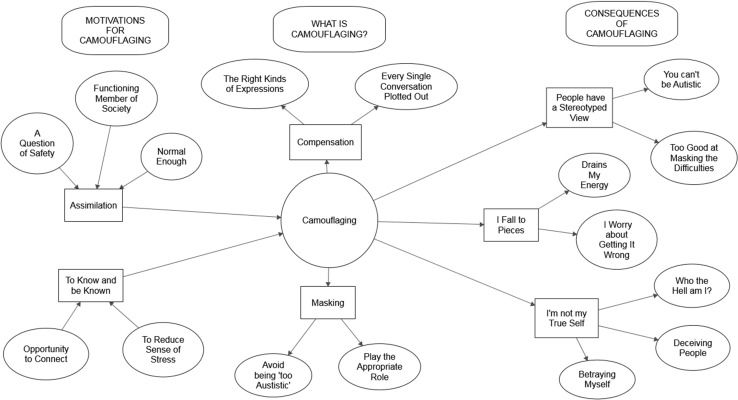
Camouflaging of autistic characteristics in social situations is hypothesised as a common social coping strategy for adults with autism spectrum conditions (ASC). Camouflaging may impact diagnosis, quality of life, and long-term outcomes, but little is known about it. This qualitative study examined camouflaging experiences in 92 adults with ASC, with questions focusing on the nature, motivations, and consequences of camouflaging. Thematic analysis was used to identify key elements of camouflaging, which informed development of a three-stage model of the camouflaging process. First, motivations for camouflaging included fitting in and increasing connections with others. Second, camouflaging itself comprised a combination of masking and compensation techniques. Third, short- and long-term consequences of camouflaging included exhaustion, challenging stereotypes, and threats to self-perception.
Overview
The claims and statistics of this paper haven’t been checked yet.
Free: it reads the open-access text and checks the first 5 claims that cite a source we can check. Create a free account to check every claim.
Integrity signals
Registry
Cites
Statistics
Figures
Verification
Claims the paper makes
The claims and statistics of this paper haven’t been checked yet.
Free: it reads the open-access text and checks the first 5 claims that cite a source we can check. Create a free account to check every claim.
Claims other papers make about this one
Each is checked against this paper’s own text: does it say what the citing paper says it does?
The source backs part of the claim, not all of it — or backs it for a different population, condition or comparison.
In the citing paper
“OSCE-style assessments introduce distinctive equity challenges, particularly for students with autism and communication differences who may find formats relying on rapid interpersonal exchanges and performance under time pressure disproportionately demanding [19,20].”
From Clinical assessment meets laboratory science: adapting OSCE methodology for authentic biosciences evaluation in the age of generative AI (2025) · cites this paper as [20]
Experimental — accuracy not yet measuredThe source backs part of the claim, not all of it — or backs it for a different population, condition or comparison.
In the citing paper
“Yet, we know that camouflaging is linked to a range of negative consequences for autistic adults (e.g. misdiagnosis, identity confusion and mental health difficulties; Beck et al., 2020; Cassidy et al., 2018; Hull et al., 2017).”
From Camouflaging in an everyday social context: An interpersonal recall study (2021) · cites this paper as Hull et al., 2017
Experimental — accuracy not yet measuredThe cited source says what the claim attributes to it.
In the citing paper
“In addition to potential sex1 differences in clinical presentation (Lai et al. 2014; May et al. 2014; Young et al. 2018), it is increasingly recognised that autistic people can hide their ASD symptoms or use compensatory behaviours to mitigate social challenges (Gould and Ashton-Smith 2011; Hull et al. 2017; Livingston et al. 2019; Tierney et al. 2016).”
From Barriers to Autism Spectrum Disorder Diagnosis for Young Women and Girls: a Systematic Review (2021) · cites this paper as Hull et al. 2017
The cited source says what the claim attributes to it.
In the citing paper
“Results of three exploratory studies using predominately qualitative methodologies were not suggestive of sex or gender differences in camouflaging (Cage et al., 2018;Hull et al., 2017;Livingston et al. 2020).”
From Camouflaging in autism: A systematic review (2021) · cites this paper as Hull et al., 2017
The cited source says what the claim attributes to it.
In the citing paper
“Autistic people report attempting to camouflage their ASC in order to try and fit in in social situations, which may delay obtaining a timely ASC diagnosis and negatively affect their mental health [31–33].”
From Risk markers for suicidality in autistic adults (2018) · cites this paper as [32]
6 more claims about this paper
Create a free account to see every claim other papers make about this one.
Self-check
Percentages, sums and reported differences re-computed from the paper’s own numbers.
The self-check needs the paper’s full text.
Citations
Cites
Using thematic analysis in psychology
Braun, V., & Clarke, V. (2006) · Qualitative Research in Psychology · doi:10.1191/1478088706qp063oa · Cited by 194,414
Qualitative research practice: a guide for social science students and researchers
(2003) · Choice Reviews Online · doi:10.5860/choice.41-1319 · Cited by 10,543
Baron-Cohen, S., Wheelwright, S., Skinner, R., Martin, J., & Clubley, E. (2001) · Journal of Autism and Developmental Disorders · doi:10.1023/a:1005653411471 · Cited by 6,450
Self-citationIntroducing Qualitative Research in Psychology
Willig, C. (2001) · Cited by 3,012
Evolving guidelines for publication of qualitative research studies in psychology and related fields
Elliott, R., Fischer, C. T., & Rennie, D. L. (1999) · British Journal of Clinical Psychology · doi:10.1348/014466599162782 · Cited by 2,491
Epidemiology of Pervasive Developmental Disorders
Fombonne, E. (2009) · Pediatric Research · doi:10.1203/pdr.0b013e31819e7203 · Cited by 1,971 · cited 2×
“Amongst clinical samples, male to female gender ratios for ASC diagnosis are generally around 4:1 (Fombonne 2009), but when active case ascertainment is used within the general population, the ratio lowers to around 3:1 (Sun et al.”
BackgroundPrevalence of Autism Spectrum Disorders in a Total Population Sample
Kim, Y. S., Leventhal, B. L., Koh, Y.-J., Fombonne, E., Laska, E., Lim, E.-C., Cheon, K.-A., Kim, S.-J., Kim, Y.-K., Lee, H., et al. (2011) · American Journal of Psychiatry · doi:10.1176/appi.ajp.2011.10101532 · Cited by 1,524
Sex/Gender Differences and Autism: Setting the Scene for Future Research
Lai, M.-C., Lombardo, M. V., Auyeung, B., Chakrabarti, B., & Baron-Cohen, S. (2015) · Journal of the American Academy of Child & Adolescent Psychiatry · doi:10.1016/j.jaac.2014.10.003 · Cited by 1,120
Self-citationPostsecondary education and employment among youth with an autism spectrum disorder
Shattuck, P. T., Narendorf, S. C., Cooper, B., Sterzing, P. R., Wagner, M., & Taylor, J. L. (2012) · PEDIATRICS · doi:10.1542/peds.2011-2864 · Cited by 1,110
Bargiela, S., Steward, R., & Mandy, W. (2016) · Journal of Autism and Developmental Disorders · doi:10.1007/s10803-016-2872-8 · Cited by 1,087 · cited 1×
“Similar themes were also found during qualitative interviews with latediagnosed women with ASC (Bargiela et al. 2016).”
Self-citation
Research works printed but not linked: 3
- American Psychiatric Association (2013). DSM
- Gould, J., & Ashton-Smith, J. (2011). Missed diagnosis or misdiag- nosis? Girls and women on the autism spectrum. Good Autism Practice (GAP), 12(1), 34-41. Retrieved from http://docserver. ingentaconnect.com/deliver/connect/bild/14662973/v12n1/s5.pd
- Holliday Willey, L. (2015). Pretending to be normal: Living with Asperger's Syndrome (Autism Spectrum Disorder) (Expanded Edition). London: Jessica Kingsley.
Cited by
Items 601–700 of 1,001
Funawatari, R., Sumiya, M., Iwabuchi, T., Nishimura, T., Komeda, H., & Senju, A. (2024) · Journal of Autism and Developmental Disorders · doi:10.1007/s10803-024-06481-5 · Cited by 8
“through alternative cognitive and behavioral strategies (Hull et al., 2017 ; Sumiya et al., 2018).”
Spontaneous instrumental approach-avoidance learning in social contexts in autism
Beaurenaut, M., Kovarski, K., Destais, C. A., Mennella, R., & Grèzes, J. (2024) · Molecular Autism · doi:10.1186/s13229-024-00610-8 · Cited by 8
Nijhof, D., Melville, C. A., Rydzewska, E., Pavlopoulou, G., Meehan, L., & Gardani, M. (2024) · Sleep Medicine · doi:10.1016/j.sleep.2024.08.011 · Cited by 8
Neurological Validation of ASD Diagnostic Criteria Using Frontal Alpha and Theta Asymmetry
Bitsika, V., Sharpley, C. F., Evans, I. D., & Vessey, K. A. (2024) · Journal of Clinical Medicine · doi:10.3390/jcm13164876 · Cited by 8
“…differently to males [15], or develop different coping/camouflaging skills to avoid the stigma that may be attached to some of the key diagnostic symptoms for ASD [16], many studies have included autistic male youth as their target population when exploring basic ASD-related neurological phenomena.”
BackgroundKuo, Y.-C., Ni, H., & Liu, C.-H. (2024) · BMC Psychology · doi:10.1186/s40359-024-02019-7 · Cited by 8
“Camouflaging Autistic Traits Questionnaire (CAT-Q) is a questionnaire with a seven-point Likert scale (“strongly disagree” as 1 and “strongly agree” as 7) developed to evaluate autistic adults’ subjective experiences of cam-ouflaging, with good reliability and validity [6, 31].”
BackgroundYifu, L., Ma, Y., Libing, H., Chunling, X., & Tao, D. (2024) · Education and Information Technologies · doi:10.1007/s10639-024-13096-x · Cited by 8
“These strategies include mimick - ing behaviors, dressing similarly, and forcing individuals to make eye contact (Hull et al., 2017 ).”
Are we Missing Character in Strengths-Based Approaches to Coaching and Therapy for Autistic People?
Lei, J., & Nocon, A. S. (2024) · Autism in Adulthood · doi:10.1089/aut.2024.0227 · Cited by 8
“…change can increase pressure for autistic individuals to “ pass ” and “ cover up ” autistic differences in a way that is cognitively effortful 25,26 and perpetuates internalization of stigma by placing demands on the autistic individual to change 25,27 rather than acknowledging social…”
Husmann, J., Feller, C. M., Ilen, L., & Schneider, M. (2024) · Journal of Autism and Developmental Disorders · doi:10.1007/s10803-024-06607-9 · Cited by 11
“This hypothesis relates to the concept of masking that is largely discussed in the context of ASD and that has been more frequently reported in adolescents than children (Hull et al., 2017 ; Lai et al., 2017; Alice Ross, Rachel Grove, & John McAloon, 2023).”
Øverland, E., Andersen, P. N., Orm, S., Øie, M. G., Skogli, E. W., & Hauge, Å. L. (2024) · Autism in Adulthood · doi:10.1089/aut.2024.0156 · Cited by 8
Márquez-García, A. V., Vakorin, V. A., Kozhemiako, N., Iarocci, G., Moreno, S., & Doesburg, S. M. (2024) · Brain Sciences · doi:10.3390/brainsci14111066 · Cited by 8
Glen, Z. (2025) · Journal of Theatre Dance and Performance Training · doi:10.1080/19443927.2024.2428615 · Cited by 8
“Hull et al. note that ‘ Essentially, social imitation may be a form of acting ’ (2017, 2520) and several online sources also make this connection.”
Trajectories of autism symptom severity for boys and girls across childhood
Waizbard‐Bartov, E., Ferrer, E. E., Miller, M. R., Heath, B. E., Andrews, D. S., Rogers, S. J., Nordahl, C. W., Solomon, M., & Amaral, D. G. (2025) · Autism · doi:10.1177/13623613251325317 · Cited by 8
“Alternatively, girls in our cohort may have also developed the ability to camouflage their autism symptoms with age in order to appear less autistic to others (Hull et al., 2017), which we have discussed previously (Waizbard-Bartov et al., 2020, 2022).”
Sutherland, H., Crompton, C. J., Long, J., & Fletcher‐Watson, S. (2025) · Neurodiversity · doi:10.1177/27546330251333919 · Cited by 8
“…et al., 2005); alexithymia (Poquérusse et al., 2018); dif fi culties with the energy, motivation, and capacity for socialising (Calder et al., 2013; McNair et al., 2024; Ryan & Räisänen, 2008); and masking (Bernardin et al., 2021; Cage & Troxell-Whitman, 2019; Cook et al., 2021; Hull et al., 2017).”
Is there an optimal self-report measure to investigate autism-related sex differences?
Waldren, L. H., Livingston, L. A., & Shah, P. (2025) · Research in Autism · doi:10.1016/j.reia.2025.202617 · Cited by 8
“Second, much research has focused on sex differences in specific patterns of autistic traits, both within diagnosed autistic and general population samples (see Hull et al., 2017).”
Potts, B., Skelton, E., Pavlopoulou, G., Karaminis, T. N., & Malamateniou, C. (2025) · Journal of medical imaging and radiation sciences · doi:10.1016/j.jmir.2025.102009 · Cited by 9
Roisenberg, B. B., Boulton, K., Thomas, E. E., & Guastella, A. J. (2025) · Autism Research · doi:10.1002/aur.70103 · Cited by 8
“It is important to note that not all autistic individuals engage in camouflaging behaviors, and some may not always mask their autistic traits in different social contexts or relationships (Cook et al. 2021; Evans et al. 2023; Hull et al. 2017, 2020).”
Marcantonio, W., Simonti, M., Léna, I., & Mantegazza, M. (2025) · Genes Brain & Behavior · doi:10.1111/gbb.70034 · Cited by 8
“SCN2A genetic variants cause a wide spectrum of neurodevelopmental and epileptic disorders, and they are among the variants that show the strongest association with ASD [7–9].”
Leaf, J. B., Creem, A. N., Bukszpan, A. R., Hickey, J., & Hillhouse, B. J. (2023) · Education and Training in Autism and Developmental Disabilities · doi:10.1177/215416472305800304 · Cited by 8
“These reasons are repeated throughout many of the articles included in this review (e.g., Cage et al., 2018; Hull et al., 2017).”
Menezes, M., Pappagianopoulos, J. E., Robinson, M. F., Sadikova, E., Cross, R. D., & Mazurek, M. O. (2022) · The Journal of Special Education · doi:10.1177/00224669221096428 · Cited by 9
“…professionals to perceive that they are not experiencing significant challenges (Dworzynski et al., 2012; Gray et al., 2021; Hiller et al., 2014; Hull et al., 2017, 2020) The results of this investigation highlight the need for additional training for school-based providers regarding the role…”
BackgroundQuantitative Analysis of Narrative Discourse by Autistic Adults of Underrepresented Genders
Coburn, K. L., & Williams, D. L. (2022) · Autism in Adulthood · doi:10.1089/aut.2021.0080 · Cited by 8
Rouphael, M., Sacre, Y., Bitar, T., Andres, C. R., & Hleihel, W. (2024) · Nutrients · doi:10.3390/nu16060847 · Cited by 8
“Moreover, females with ASD often engage in “camouflaging” their autistic symptoms more than males, making it harder to detect their condition [45].”
BackgroundFranklin, M. D., Taylor, E. E., Floríndez, D. C., Guzman, M., Lawson, T. L., Rios, J., & Angell, A. M. (2025) · Autism in Adulthood · doi:10.1089/aut.2023.0070 · Cited by 9
Wilson, K. P., Kaminski-Mainardi, A., Tenbus, J., & Marsack‐Topolewski, C. N. (2021) · Journal of Family Social Work · doi:10.1080/10522158.2021.1887037 · Cited by 9
“For most individuals with ASD, these difficulties persist into adulthood, with social communication challenges suggested to be the most lasting and difficult deficits to address for individuals with ASD (Hull et al., 2017; Leung et al., 2018).”
BackgroundAssociations between sensory processing and depression in autistic girls
Bitsika, V., Sharpley, C. F., & Mills, R. (2021) · Research in Autism · doi:10.1016/j.rasd.2021.101881 · Cited by 8
Williams, G. (2021) · University of Brighton Repository (University of Brighton) · doi:10.13140/rg.2.2.16050.38085 · Cited by 8
Definition, Diagnosis, and Prevalence of Autism Spectrum Disorder
Bertelli, M. O., Bianco, A., Boniotti, V., & Chaplin, E. (2025) · Springer eBooks · doi:10.1007/978-3-031-40858-8_229-1 · Cited by 8
Aethic Reasoning: A Comprehensive Solution to the Quantum Measurement ProblemPreprint
Benander, A. (2024) · PhilSci-Archive (University of Pittsburgh) · doi:10.13140/rg.2.2.24511.42403 · Cited by 15
Naylor, C. (2023) · Nottingham ePrints (University of Nottingham) · Cited by 8
Pyszkowska, A., Nowacki, A., & Stefanek, F. (2025) · Research in Autism · doi:10.1016/j.reia.2025.202597 · Cited by 7
Almuqhim, F., & Saeed, F. (2025) · Neuroinformatics · doi:10.1007/s12021-025-09746-1 · Cited by 7
Junior, A. G. L., da Silveira, F. M., & Guimarães, N. M. (2025) · COGNITIONIS Scientific Journal · doi:10.38087/2595.8801.670 · Cited by 7
Who Am I: The Balance Between Masking and Identity
Burns, T. M., & Botha, M. (2025) · Autism in Adulthood · doi:10.1177/25739581251365476 · Cited by 7
Seçer, İ., Çimen, F., Ulaş, S., Tatlı, E., Saatçı, F., & Pakiş, A. K. (2025) · Scientific Reports · doi:10.1038/s41598-025-20569-7 · Cited by 7
Autistic Traits and Camouflaging: A Meta-Analysis
Greig, L., Coundouris, S. P., & Henry, J. D. (2026) · Autism · doi:10.1177/13623613261437500 · Cited by 8
“Some also suggest that they are motivated to achieve goals, and that camouflaging, and motivations for camouflaging, may change across contexts (Bernardin et al., 2021; Cage & Troxell-Whitman, 2019; Hull et al., 2017).”
Al-khresheh, M. H., & AL-Qadri, A. H. (2021) · World Journal of English Language · doi:10.5430/wjel.v11n2p29 · Cited by 7
“Finally, Hull et al. (2017) stated that several characteristics of autism, like impaired language and social communication abilities, which were widespread in the males, were not as easy to diagnose in females.”
BackgroundAutistic Employees in Canadian Academic Libraries: Barriers, Opportunities, and Ways Forward
Giles‐Smith, L., & Popowich, E. (2023) · Canadian Journal of Academic Librarianship · doi:10.33137/cjal-rcbu.v9.39994 · Cited by 7
Baruah, R. (2024) · Journal of the Intensive Care Society · doi:10.1177/17511437241249847 · Cited by 7
Kuzminski, R., Bölte, S., Lawson, W. B., Falkmer, M., Black, M. H., Girdler, S. J., & Milbourn, B. T. (2024) · Autism in Adulthood · doi:10.1089/aut.2023.0091 · Cited by 7
Kirkovski, M., Papavasiliou, G., Speranza, B., Scarfo, J., Albein-Urios, N., Linardon, J., Phillipou, A., Fuller-Tyszkiewicz, M., & Enticott, P. (2024) · Psychiatry Research · doi:10.1016/j.psychres.2024.116285 · Cited by 6
“Mir-roring what has been observed in autistic samples, emotion recognition impairments have also been found to be skewed towards greater difficulty in recognising negative valanced emotions among AN samples (Blomberg et al., 2021; Tapaj ˜ oz Pereira De Sampaio et al., 2013).”
Developing Therapeutically Attuned Relationships with Autistic Children and Their Caregivers
Bernhard, F. B., Howell, D., & Bray, L. M. P. (2024) · Occupational Therapy In Health Care · doi:10.1080/07380577.2024.2437554 · Cited by 7
“The unmet support/therapy needs, attempting to hide autistic characteristics through social camouflaging (Hull et al., 2017), and minimizing autistic traits have been linked to increased suicidality at over twice the rate of the general population (Cassidy et al., 2018).”
Rachanska, P. E. (2025) · Advances in Neurodevelopmental Disorders · doi:10.1007/s41252-024-00435-9 · Cited by 7
Pedroche, A. S., Aguilar-Mediavilla, E. M., Valera-Pozo, M., Adrover‐Roig, D., & Valverde-Gómez, M. (2025) · Frontiers in Psychology · doi:10.3389/fpsyg.2025.1472646 · Cited by 7
Lee, S., Kim, S. Y., Lee, K., Sim, S., & Park, H.-S. (2025) · Autism · doi:10.1177/13623613251329605 · Cited by 8
“…shared concerns about the potential trade-off between developing adaptive skills and preserving unique autistic talents, one participant uniquely linked this dynamic to camouflaging—the conscious or unconscious masking of autistic traits to align with neurotypical expectations (Hull et al., 2017).”
Camouflaging in autism and borderline personality disorder: Same or different?
Petrolini, V., & Schmidt, P. (2025) · Theory & Psychology · doi:10.1177/09593543251316832 · Cited by 8
“The phenomenon of camouflaging has attracted increased attention in autism research over the past few years (Hull et al., 2017; Livingston et al., 2019).”
InfluentialSelf-reported masking in sexual minority and heterosexual autistic adults
McQuaid, G. A., Lee, N., & Wallace, G. L. (2025) · Autism · doi:10.1177/13623613251335738 · Cited by 7
“Accounts of these experiences have only relatively recently drawn the attention of researchers, spurring qualitative (Bradley et al., 2021; Hull et al., 2017) and quantitative studies (Hull et al., 2019; Lai et al., 2017; Wood-Downie et al., 2020).”
O’Reilly, M. J., Kiyimba, N., Tromans, S. J., & Drewett, A. (2025) · Policing An International Journal · doi:10.1108/pijpsm-03-2025-0047 · Cited by 7
Drapalik, K. N., Magin, D. J., Rinaldi, M. L., & Christodulu, K. V. (2025) · Autism · doi:10.1177/13623613251345855 · Cited by 7
“Camouflaging strategies can be used to hide autistic characteristics, minimize difficulties, and/or alter one’s social presentation (J. Cook et al., 2021; Hull et al., 2017, 2019; Pearson & Rose, 2021).”
A Qualitative Exploration of Self-Harm Among Autistic Women
Rebbettes, J., & Bacon, A. M. (2025) · Journal of Autism and Developmental Disorders · doi:10.1007/s10803-025-06955-0 · Cited by 7
Late diagnosis of autistic women in Spain: A participatory study
Gargallo-Nieto, L., Rodríguez-Zafra, A., Clemente-Sánchez, M., & García-Molina, I. (2025) · Women s Studies International Forum · doi:10.1016/j.wsif.2025.103177 · Cited by 7
Anxiety in female adolescents with autism spectrum disorder: Lessons for healthcare professionals
Jackson, L., Keville, S., & Ludlow, A. (2022) · Qualitative Health Communication · doi:10.7146/qhc.v1i2.128871 · Cited by 7
Navigating challenges and supportive strategies in adult autism
Lupușoru, C. G., Oroian, B. A., Cămănaru, E. M., Cojocaru, T., & Szalontay, A. S. (2024) · Bulletin of Integrative Psychiatry · doi:10.36219/bpi.2024.1.16 · Cited by 7
Blackhurst, T., Warmelink, L., Roestorf, A., & Hartley, C. (2024) · Frontiers in Psychology · doi:10.3389/fpsyg.2024.1388726 · Cited by 7
青年期の女性ASDへの「自己理解」プログラムにおける変化 : 「カモフラージュ」から解放される居場所
木谷, 秀., 岩男, 芙., 豊丹生, 啓., 土橋, 悠., 牛見, 明., & 飯田, 潤. (2020) · 教育実践総合センター研究紀要 · Cited by 7
Vuattoux, D., Castiglia, D., & Chabane, N. (2021) · Frontiers in Psychiatry · doi:10.3389/fpsyt.2021.629761 · Cited by 7
Assistive Technologies for Children and Adolescents With Autism Spectrum Disorders
Goosen, L. (2021) · Advances in medical technologies and clinical practice book series · doi:10.4018/978-1-7998-7430-0.ch001 · Cited by 7
Nah, Y., & Tan, J. W. (2021) · The Educational and Developmental Psychologist · doi:10.1080/20590776.2021.1985378 · Cited by 7
““camouflaging” (Hull et al., 2017), and it has been acknowledged that both sex- and gender-related factors should be considered in autism research and clinical practice (Strang et al.”
BackgroundBeyond the mask: The role of camouflaging in managing an autistic identity for girls and women
Burns, J., & Tierney, S. (2023) · Principles of Gender-Specific Medicine · doi:10.1016/b978-0-323-88534-8.00046-8 · Cited by 8
Lampi, A. J., Brewer, R., Bird, G., & Jaswal, V. K. (2023) · Autism Research · doi:10.1002/aur.2938 · Cited by 7
“Indeed, one camouflaging behavior some autistic people report engaging in involves rehearsing facial expressions to match the expressions of nonautistic people (e.g., Bargiela et al., 2016; Hull et al., 2017).”
BackgroundUnderstanding camouflaging, stigma, and mental health for autistic people in JapanPreprint
Tamura, M., Cage, E., Perry, E., Hongo, M., Takahashi, T., Seto, M., Shimizu, E., & Oshima, F. (2023) · Research Square · doi:10.21203/rs.3.rs-2614748/v2 · Cited by 7
'Against the norm' mothering: A reflexive thematic analysis of autistic motherhood
Sanchez, P. (2023) · Research Open (London South Bank University) · doi:10.18744/lsbu.95443 · Cited by 7
Umagami, K. (2023) · UCL Discovery (University College London) · Cited by 7
Nelson, T. K. (2024) · Open Access at Essex (University of Essex) · Cited by 8
Wischnewsky, L. A. (2023) · Journal of College Academic Support Programs · doi:10.58997/fa3 · Cited by 6
“As a coping mechanism, autistic students of - ten deploy strategies such as camouflaging, mask - ing, and compensating to hide their autistic traits to appear more neurotypical (Hull et al., 2017).”
Autism, gender, and identity in college students
Cooper, J. (2024) · Discover Psychology · doi:10.1007/s44202-024-00116-7 · Cited by 7
“This may align with Hull et al. [15]’s findings that assimilation —camouflaging for survival—is often associated with camouflaging in autistic females.”
Durben, D. L. (2024) · Neurodiversity · doi:10.1177/27546330241266726 · Cited by 6
“These reasons center around fi tting in and passing in a neurotypical world, avoiding rejection and bullying, and successfully forming social connections (Cage & Troxell-Whitman, 2019; Hull et al., 2017, 2019; Perry et al., 2022).”
InfluentialLee, H., & Lee, G. K. (2024) · Autism in Adulthood · doi:10.1089/aut.2023.0144 · Cited by 6
The Hidden Cost of Fitting In: Camouflaging in High-Pressure Healthcare
Nawaz, S., Zahra, M., & Fiaz, M. (2024) · Open Access Public Health and Health Administration Review · doi:10.59644/oaphhar.3(1).110 · Cited by 6
Carpita, B., Nardi, B., Giovannoni, F., Felice, C. D., Tranchese, F., Bonelli, C., Massimetti, G., Cremone, I. M., Pini, S., Muscatello, M. R. A., et al. (2025) · Brain Sciences · doi:10.3390/brainsci15040340 · Cited by 6
Zubizarreta, S. C.-P., Mosquera, M. L., Tubío-Fungueiriño, M., Alemany-Navarro, M., Hull, L., Carracedo, Á., Gándara-Gafo, B., & Fernández‐Prieto, M. (2025) · Autism in Adulthood · doi:10.1089/aut.2024.0003 · Cited by 7
Self-citationNagy, V., Poole, L., Banting, E., & Satherley, R. (2025) · British Journal of Health Psychology · doi:10.1111/bjhp.12804 · Cited by 7
“This may align s with the concept of masking, as described by Hull et al. (2017).”
Rodríguez-Zafra, A., & García-Molina, I. (2025) · Research in Autism · doi:10.1016/j.reia.2025.202643 · Cited by 6
Comparison of distance and reinforcement-learning rules in social-influence models
Grzywacz, N. M. (2025) · Neurocomputing · doi:10.1016/j.neucom.2025.130870 · Cited by 6
Verbal Collaboration in Same- and Mixed-Neurotype Groups of Autistic and Non-Autistic Adults
Foster, S. J., Patel, S. D., Wilks, C. E. H., Dodd, M., Calderon, R. M., Ropar, D., Fletcher‐Watson, S., Ackerman, R. A., Crompton, C. J., & Sasson, N. J. (2025) · Autism in Adulthood · doi:10.1089/aut.2024.0361 · Cited by 6
Social communication development in a contingent world: insights from autism
West, K. L., Piergies, A. M. H., Alviar, C., & Lense, M. (2026) · Philosophical Transactions of the Royal Society B Biological Sciences · doi:10.1098/rstb.2024.0365 · Cited by 6
Rebours, C., Kostrubiec, V., & Kruck, J. (2026) · Autism · doi:10.1177/13623613261433985 · Cited by 7
“These strategies include suppressing traits perceived negatively, imitating neurotypical social behaviors to “pass,” and compensating for perceived social difficulties through learned routines or scripts (Hull et al., 2017, 2019).”
InfluentialHollis, A. S. (2026) · CHI Conference on Human Factors in Computing Systems · doi:10.1145/3772318.3790586 · Cited by 6
“Yet those same systems often provide the very relational qualities that autistic people frequently say are scarce in their offline social worlds, such as pre-dictability, conversational clarity, and freedom from the affective labor of masking [45].”
Association between autistic traits and binge drinking: Findings from Japan
Stickley, A., Shirama, A., Kamio, Y., Takahashi, H., Inagawa, T., Saito, A., & Sumiyoshi, T. (2022) · Social Psychiatry and Psychiatric Epidemiology · doi:10.1007/s00127-022-02299-7 · Cited by 6
“Specifically, previous research has shown that for some women alcohol may be used to facilitate this process [56], and that camouflaging can also be a source of extreme anxiety and stress [57], which might also lead to alcohol use or misuse.”
BackgroundLevin, L. K., & Machado-Gonzalez, Y. (2024) · Elsevier eBooks · doi:10.1016/b978-0-443-27366-7.00001-8 · Cited by 6
A qualitative exploration of the experience of autistic females in Hong Kong
Lam, G. Y. H., Chow, C. K., & Chan, S. W. (2024) · Autism · doi:10.1177/13623613241295318 · Cited by 6
“Camouflaging, to hide one’s autistic features or mimic neurotypical behaviors, is more common in females (Hull et al., 2017; Lai et al., 2011; Tubío-Fungueiriño et al., 2021) and linked to heightened level of stress and anxiety (Beck et al., 2020; Bradley et al., 2021; Hull et al., 2021).”
Tseng, A., Francis, S. M., Rawls, E., Conelea, C. A., Grissom, N. M., Kummerfeld, E., Ma, S., & Jacob, S. (2025) · Psychological Medicine · doi:10.1017/s0033291725000571 · Cited by 6
“Hence, improving our understanding and recognition of sex-based phenotypic profiles in autism is needed to provide targeted support for males and females during critical early developmental stages (Lai and Szat-mari, 2020).”
InfluentialSazzed, S. (2025) · International Journal of Medical Informatics · doi:10.1016/j.ijmedinf.2025.106110 · Cited by 6
Vidal, V., & DeThorne, L. S. (2021) · Perspectives of the ASHA Special Interest Groups · doi:10.1044/2021_persp-20-00223 · Cited by 6
Connecting the Dots: Functional Behavior Evaluation in Fetal Alcohol Spectrum Disorder
Brown, N. N., & Reynolds, C. R. (2021) · Springer eBooks · doi:10.1007/978-3-030-73628-6_8 · Cited by 6
Exploring sex differences in the manifestation of autistic traits in young children
Song, D., Kim, S. Y., Bong, G., Kim, Y. A., Kim, J. H., Kim, J.-M., & Yoo, H. J. (2021) · Research in Autism · doi:10.1016/j.rasd.2021.101848 · Cited by 6
Sex differences in neurological and psychiatric diseases
Arnold, A. P., Abdulai-Saiku, S., Chesselet, M., Dubal, D. B., Gold, S. M., McCullough, L. D., Shaw, C. K., & Werling, D. M. (2022) · Elsevier eBooks · doi:10.1016/b978-0-323-85654-6.00034-4 · Cited by 6
A robot or a dumper truck? Facilitating play-based social learning across neurotypes
Paldam, E., Roepstorff, A., Steensgaard, R., Lundsgård, S. S., Steensig, J., & Gebauer, L. (2022) · Autism & Developmental Language Impairments · doi:10.1177/23969415221086714 · Cited by 6
“…social sciences zoom in on the lived experience of autistic people to understand how autism shapes human worldviews in different ways, and research is guided by questions such as: How is social interaction experienced by autistic people (e.g. De Jaegher, 2020; Hull et al., 2017; Williams, 2020)?”
BackgroundWang, M., Schuck, R. K., & Baiden, K. M. P. (2023) · IntechOpen eBooks · doi:10.5772/intechopen.108124 · Cited by 6
Rethinking engagement with learning for neurodiverse students
Bailey, J., & Baker, S. T. (2022) · Psychology of Education Review · doi:10.53841/bpsper.2022.46.2.32 · Cited by 6
Goscicki, B. L. (2023) · International review of research in developmental disabilities · doi:10.1016/bs.irrdd.2023.09.004 · Cited by 6
Burden, D. G. (2024) · Advances in Autism · doi:10.1108/aia-02-2023-0008 · Cited by 6
Garrett, C. (2022) · Zeitschrift für Psychodrama und Soziometrie · doi:10.1007/s11620-021-00638-5 · Cited by 7
“This could combat the mental health difficulties caused by an autistic diagnosis (Attwood 2016) and discourage the “camouflaging” and lack of self-acceptance that that hinders autistics from “coming out” (Dean et al. 2016; Hull et al. 2017).”
BackgroundUncertainty and Autism: How Changing with the Times is Harder for Some
Sheridan, K., Allen, K., Foggo, R. S. V., Hurem, A., Leif, E., & Freeman, N. C. (2022) · Springer eBooks · doi:10.1007/978-981-19-7757-2_13 · Cited by 6
Autism – 25 years on: A lot has changed!
Skuse, D. (2020) · Clinical Child Psychology and Psychiatry · doi:10.1177/1359104520929729 · Cited by 6
“This drive to disguise autistic behaviours is especially characteristic of girls with the condition and has recently been termed ‘camouflaging behaviour’ (Hull et al., 2017).”
BackgroundNeurodiversity : affirming practice through the lens of lived autistic experience
Dmyterko, J. (2025) · cIRcle (University of British Columbia) · doi:10.14288/1.0448594 · Cited by 6
Da Mata Da Silva Costa, E. (2023) · UEA Digital Repository (University of East Anglia) · Cited by 7
Camouflaging Behaviours Used by Autistic Adults During Everyday Social Interactions
Cook, J., Crane, L., Hull, L., Bourne, L., & Mandy, W. (2020) · doi:10.21203/rs.3.rs-96362/v1 · Cited by 5
Self-citationThe human spectrum: a position paper
Hopkins, G. (2023) · Journal of Applied Research in Higher Education · doi:10.1108/jarhe-05-2023-0176 · Cited by 5
Hill, J. (2024) · English in Education · doi:10.1080/04250494.2024.2330905 · Cited by 5
“Thus, where females fail to meet “male-typical” descriptions of autism, they are likely to miss out on diagnosis (Hull et al. 2017, 2520).”
InfluentialZhou, K., & Kim, J. (2025) · Autism in Adulthood · doi:10.1089/aut.2023.0186 · Cited by 5
“26 Moreover, parents who struggle to accept their child ’ s autism often exhibit a biased perception, resulting in detrimental in fl uences on the child ’ s psychosocial adaptation and the development of the family.”
den Houting, J., Sesterka, A., & Pellicano, E. (2024) · Springer eBooks · doi:10.1007/978-3-031-66127-3_24 · Cited by 5
Metadata
- Authors
- Hull, L., Petrides, K. V., Allison, C., Smith, P., Baron-Cohen, S., Lai, M.-C., & Mandy, W.
- Affiliations
- University College London (GB)
- University of Cambridge (GB)
- Centre for Addiction and Mental Health (CA)
- Corresponding author
- Hull, Laura
- Venue
- Journal of Autism and Developmental Disorders
- Published
- 2017-05-19
- Volume
- 47
- Issue
- 8
- Pages
- 2519-2534
- ISSN
- 0162-3257 (ISSN-L)
- 1573-3432
- PMC
- PMC5509825
- OpenAlex
- W2616560149
- Cited by
- 1,365
- References
- 53
- Citations by year
- 2026: 326 · 2025: 212 · 2024: 202 · 2023: 146 · 2022: 124 · 2021: 141 · 2020: 91 · 2019: 73 · 2018: 39 · 2017: 9
- FWCI
- 33.29
- Type
- journal article
- Language
- en
- Open access
- hybrid
- doi.org
- Locations
- Journal of Autism and Developmental Disorders (publishedVersion, cc-by)
- Europe PMC (PubMed Central) (publishedVersion, cc-by)
- PubMed Central (publishedVersion, cc-by)
- PubMed (publishedVersion)
- UCL Discovery (University College London) (submittedVersion)
- Explore Bristol Research (submittedVersion)
- Apollo (University of Cambridge) (submittedVersion, cc-by)
- Apollo (cc-by)
- Funders
- Wellcome Trust (091774/Z/10/Z)
- Centre for Addiction and Mental Health
- National Institute for Health and Care Research (NF-SI-0515-10097)
- Hospital for Sick Children
- Medical Research Council
- Topics
- Life Sciences › Neuroscience › Cognitive Neuroscience › Autism Spectrum Disorder Research
- Social Sciences › Psychology › Clinical Psychology › Family and Disability Support Research
- Health Sciences › Medicine › Psychiatry and Mental health › Child Nutrition and Feeding Issues
- Keywords
- social camouflaging, autism spectrum disorder, autistic adults, masking, compensatory strategies, social coping, social exhaustion, stereotypes, self-perception
- MeSH terms
- Autism Spectrum Disorder, Adaptation, Psychological, Adolescent, Adult, Aged, Female, Humans, Male, Middle Aged, Self Concept, Social Behavior
About these checks
Registry, retraction, Cites and statistics results are computed, not judged, with one exception: a printed reference that no index lists is read once by a model before it counts as a citation error. Claims are extracted by a model and kept only when their quote appears verbatim in the text; each cited source is then checked, with a model’s help, for whether it says what the claim relies on. Those verdicts can be wrong — read the claim’s quote and the cited source before relying on one.
Statistics and arithmetic are recomputed, not judged.
Confidence bands are shown only for fields calibrated on our annotated test set. None is calibrated yet, so no band is shown.
What counts as a claim ›How we measure confidence ›How we check this ›
Are you an author, or do you see a problem with this page? Request a review
Data sources
Bibliographic data: Semantic Scholar, OpenAlex, Crossref.
Contains information from the Semantic Scholar Academic Graph Datasets, made available under the ODC Attribution License (ODC-BY 1.0).
Semantic Scholar’s data is described in: Kinney, R., et al. (2023). The Semantic Scholar Open Data Platform. arXiv:2301.10140.
