

“Putting on My Best Normal”: Social Camouflaging in Adults with Autism Spectrum Conditions
Open accessThe DOI matches its Crossref record; 52 of the 53 references it cites were found in a registry or an index.
Abstract
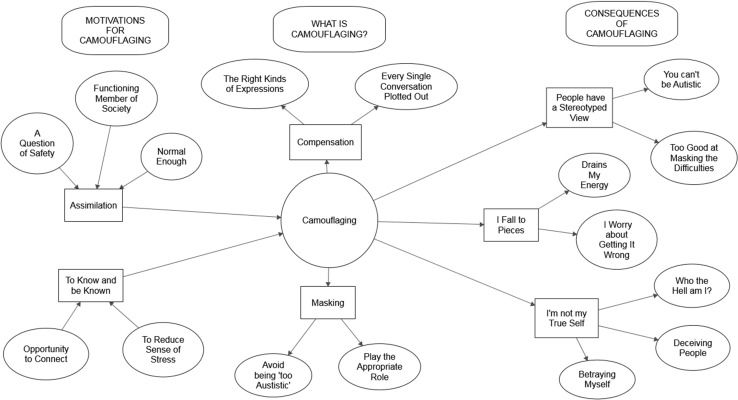
Camouflaging of autistic characteristics in social situations is hypothesised as a common social coping strategy for adults with autism spectrum conditions (ASC). Camouflaging may impact diagnosis, quality of life, and long-term outcomes, but little is known about it. This qualitative study examined camouflaging experiences in 92 adults with ASC, with questions focusing on the nature, motivations, and consequences of camouflaging. Thematic analysis was used to identify key elements of camouflaging, which informed development of a three-stage model of the camouflaging process. First, motivations for camouflaging included fitting in and increasing connections with others. Second, camouflaging itself comprised a combination of masking and compensation techniques. Third, short- and long-term consequences of camouflaging included exhaustion, challenging stereotypes, and threats to self-perception.
Overview
The claims and statistics of this paper haven’t been checked yet.
Free: it reads the open-access text and checks the first 5 claims that cite a source we can check. Create a free account to check every claim.
Integrity signals
Registry
Cites
Statistics
Figures
Verification
Claims the paper makes
The claims and statistics of this paper haven’t been checked yet.
Free: it reads the open-access text and checks the first 5 claims that cite a source we can check. Create a free account to check every claim.
Claims other papers make about this one
Each is checked against this paper’s own text: does it say what the citing paper says it does?
The source backs part of the claim, not all of it — or backs it for a different population, condition or comparison.
In the citing paper
“OSCE-style assessments introduce distinctive equity challenges, particularly for students with autism and communication differences who may find formats relying on rapid interpersonal exchanges and performance under time pressure disproportionately demanding [19,20].”
From Clinical assessment meets laboratory science: adapting OSCE methodology for authentic biosciences evaluation in the age of generative AI (2025) · cites this paper as [20]
Experimental — accuracy not yet measuredThe source backs part of the claim, not all of it — or backs it for a different population, condition or comparison.
In the citing paper
“Yet, we know that camouflaging is linked to a range of negative consequences for autistic adults (e.g. misdiagnosis, identity confusion and mental health difficulties; Beck et al., 2020; Cassidy et al., 2018; Hull et al., 2017).”
From Camouflaging in an everyday social context: An interpersonal recall study (2021) · cites this paper as Hull et al., 2017
Experimental — accuracy not yet measuredThe cited source says what the claim attributes to it.
In the citing paper
“In addition to potential sex1 differences in clinical presentation (Lai et al. 2014; May et al. 2014; Young et al. 2018), it is increasingly recognised that autistic people can hide their ASD symptoms or use compensatory behaviours to mitigate social challenges (Gould and Ashton-Smith 2011; Hull et al. 2017; Livingston et al. 2019; Tierney et al. 2016).”
From Barriers to Autism Spectrum Disorder Diagnosis for Young Women and Girls: a Systematic Review (2021) · cites this paper as Hull et al. 2017
The cited source says what the claim attributes to it.
In the citing paper
“Results of three exploratory studies using predominately qualitative methodologies were not suggestive of sex or gender differences in camouflaging (Cage et al., 2018;Hull et al., 2017;Livingston et al. 2020).”
From Camouflaging in autism: A systematic review (2021) · cites this paper as Hull et al., 2017
The cited source says what the claim attributes to it.
In the citing paper
“Autistic people report attempting to camouflage their ASC in order to try and fit in in social situations, which may delay obtaining a timely ASC diagnosis and negatively affect their mental health [31–33].”
From Risk markers for suicidality in autistic adults (2018) · cites this paper as [32]
6 more claims about this paper
Create a free account to see every claim other papers make about this one.
Self-check
Percentages, sums and reported differences re-computed from the paper’s own numbers.
The self-check needs the paper’s full text.
Citations
Cites
Using thematic analysis in psychology
Braun, V., & Clarke, V. (2006) · Qualitative Research in Psychology · doi:10.1191/1478088706qp063oa · Cited by 194,414
Qualitative research practice: a guide for social science students and researchers
(2003) · Choice Reviews Online · doi:10.5860/choice.41-1319 · Cited by 10,543
Baron-Cohen, S., Wheelwright, S., Skinner, R., Martin, J., & Clubley, E. (2001) · Journal of Autism and Developmental Disorders · doi:10.1023/a:1005653411471 · Cited by 6,450
Self-citationIntroducing Qualitative Research in Psychology
Willig, C. (2001) · Cited by 3,012
Evolving guidelines for publication of qualitative research studies in psychology and related fields
Elliott, R., Fischer, C. T., & Rennie, D. L. (1999) · British Journal of Clinical Psychology · doi:10.1348/014466599162782 · Cited by 2,491
Epidemiology of Pervasive Developmental Disorders
Fombonne, E. (2009) · Pediatric Research · doi:10.1203/pdr.0b013e31819e7203 · Cited by 1,971 · cited 2×
“Amongst clinical samples, male to female gender ratios for ASC diagnosis are generally around 4:1 (Fombonne 2009), but when active case ascertainment is used within the general population, the ratio lowers to around 3:1 (Sun et al.”
BackgroundPrevalence of Autism Spectrum Disorders in a Total Population Sample
Kim, Y. S., Leventhal, B. L., Koh, Y.-J., Fombonne, E., Laska, E., Lim, E.-C., Cheon, K.-A., Kim, S.-J., Kim, Y.-K., Lee, H., et al. (2011) · American Journal of Psychiatry · doi:10.1176/appi.ajp.2011.10101532 · Cited by 1,524
Sex/Gender Differences and Autism: Setting the Scene for Future Research
Lai, M.-C., Lombardo, M. V., Auyeung, B., Chakrabarti, B., & Baron-Cohen, S. (2015) · Journal of the American Academy of Child & Adolescent Psychiatry · doi:10.1016/j.jaac.2014.10.003 · Cited by 1,120
Self-citationPostsecondary education and employment among youth with an autism spectrum disorder
Shattuck, P. T., Narendorf, S. C., Cooper, B., Sterzing, P. R., Wagner, M., & Taylor, J. L. (2012) · PEDIATRICS · doi:10.1542/peds.2011-2864 · Cited by 1,110
Bargiela, S., Steward, R., & Mandy, W. (2016) · Journal of Autism and Developmental Disorders · doi:10.1007/s10803-016-2872-8 · Cited by 1,087 · cited 1×
“Similar themes were also found during qualitative interviews with latediagnosed women with ASC (Bargiela et al. 2016).”
Self-citation
Research works printed but not linked: 3
- American Psychiatric Association (2013). DSM
- Gould, J., & Ashton-Smith, J. (2011). Missed diagnosis or misdiag- nosis? Girls and women on the autism spectrum. Good Autism Practice (GAP), 12(1), 34-41. Retrieved from http://docserver. ingentaconnect.com/deliver/connect/bild/14662973/v12n1/s5.pd
- Holliday Willey, L. (2015). Pretending to be normal: Living with Asperger's Syndrome (Autism Spectrum Disorder) (Expanded Edition). London: Jessica Kingsley.
Cited by
Items 201–300 of 1,001
The devil you know versus the devil you don’t: Disclosure versus masking in the workplace
Kidwell, K. E., Clancy, R. L., & Fisher, G. G. (2023) · Industrial and Organizational Psychology · doi:10.1017/iop.2022.101 · Cited by 58
“For example, making research suggests efforts to fit in and act “normal” pose costs to mental health (Hull et al., 2017) and links masking with negative individual consequences such as depression, anxiety, stress, exhaustion, and decreased self-efficacy (Cook et al.”
BackgroundMeasuring Social Camouflaging in Individuals with High Functioning Autism: A Literature Review
Cremone, I. M., Carpita, B., Nardi, B., Casagrande, D., Stagnari, R., Amatori, G., & Dell’Osso, L. (2023) · Brain Sciences · doi:10.3390/brainsci13030469 · Cited by 59
“Starting with a shared comprehensive model, future research will be able to answer the many questions still pending regarding social camouflaging, such as the individual, gender and age-related differences, its variability during the lifetime, and the long-term outcomes related to global functioning, achievements and…”
BackgroundResultInfluentialForster, S., & Pearson, A. (2020) · Disability & Society · doi:10.1080/09687599.2019.1680347 · Cited by 39
“Camouflaging appears to be a common coping mechanism used to ‘fit in’ socially, and avoid ostracism (Cage and Troxell-Whitman 2019; Hull et al. 2017), often achieved through rehearsal, practicing and observation from the periphery to assimilate actions into an imitation of ‘normal’ behaviour…”
BackgroundResultInfluentialSturrock, A., Marsden, A., Adams, C., & Freed, J. (2019) · Journal of Autism and Developmental Disorders · doi:10.1007/s10803-019-04288-3 · Cited by 54
An Expert Roundtable Discussion on Experiences of Autistic Autism Researchers
Dwyer, P. S. R., Acevedo, S. M., Brown, H. M., Grapel, J., Jones, S. C., Nachman, B. R., Raymaker, D., & Williams, Z. J. (2021) · Autism in Adulthood · doi:10.1089/aut.2021.29019.rtb · Cited by 54
Remnélius, K. L., & Bölte, S. (2023) · Journal of Autism and Developmental Disorders · doi:10.1007/s10803-023-05909-8 · Cited by 56
“…as a measure of camouflaging and not an autism diagnostic instrument or a measurement of autistic traits, and while camouflag - ing experiences are likely common among autistic people, not everyone on the autism spectrum camouflages exten - sively (Cage & Troxell-Whitman, 2019; Hull et al., 2017).”
BackgroundInfluentialKhudiakova, V., Russell, E., Sowden, S., & Surtees, A. D. R. (2024) · Research in Autism · doi:10.1016/j.rasd.2024.102492 · Cited by 56
Wilson, R. B., Thompson, A. R., Rowse, G., & Freeth, M. (2023) · Research in Autism · doi:10.1016/j.rasd.2023.102135 · Cited by 52
“This is consistent with previous research findings that compensatory behaviours can be a barrier to autism diagnosis, for both men and women (Hull et al., 2017) and the use of these behaviours can negatively impact individuals ’ mental health (Bargiela et al., 2016).”
ResultCARE Model of Treatment for stuttering: Theory, assumptions, and preliminary findings
Byrd, C. T., Coalson, G. A., & Conture, E. G. (2024) · Frontiers in Psychology · doi:10.3389/fpsyg.2024.1488328 · Cited by 51
Autistic women’s experiences of self-compassion after receiving their diagnosis in adulthood
Wilson, R. B., Thompson, A. R., Rowse, G., Smith, R. S., Dugdale, A.-S., & Freeth, M. (2022) · Autism · doi:10.1177/13623613221136752 · Cited by 51
“A barrier to diagnosis can be the use of compensatory strategies to ‘mask’ or ‘camouflage’ difficulties (Hull et al., 2017).”
BackgroundSex differences in the temporal dynamics of autistic children’s natural conversations
Cho, S., Cola, M., Knox, A., Pelella, M. R., Russell, A. R. B., Hauptmann, A., Covello, M., Cieri, C., Liberman, M., Schultz, R. T., et al. (2023) · Molecular Autism · doi:10.1186/s13229-023-00545-6 · Cited by 51
““Social camouflage” has been implicated in the literature as a potential reason for missed diagnoses in girls [11], but the objective behavioral mechanisms that underlie sex differences in first impressions are just beginning to be understood.”
BackgroundAccounting for the preference for literal meanings in autism spectrum conditions
Vicente, A., & Falkum, I. L. (2021) · Mind & Language · doi:10.1111/mila.12371 · Cited by 52
Buckley, E., Pellicano, E., & Remington, A. (2021) · Journal of Autism and Developmental Disorders · doi:10.1007/s10803-020-04517-0 · Cited by 49
Lei, J., Leigh, E., Charman, T., Russell, A., & Hollocks, M. J. (2023) · Journal of Child Psychology and Psychiatry · doi:10.1111/jcpp.13884 · Cited by 51
Camouflaging, internalized stigma, and mental health in the general population
Ai, W., Cunningham, W. A., & Lai, M. (2024) · International Journal of Social Psychiatry · doi:10.1177/00207640241260020 · Cited by 50
Self-citationThe Predictive Value of the AQ and the SRS-A in the Diagnosis of ASD in Adults in Clinical Practice
Bezemer, M. L., Blijd-Hoogewys, E. M. A., & Meek-Heekelaar, M. (2020) · Journal of Autism and Developmental Disorders · doi:10.1007/s10803-020-04699-7 · Cited by 49
Bertelli, M. O., Azeem, M. W., Underwood, L., Scattoni, M. L., Persico, A. M., Ricciardello, A., Sappok, T., Bergmann, T. J., Keller, R., Bianco, A., et al. (2022) · Springer eBooks · doi:10.1007/978-3-319-95720-3_16 · Cited by 48
Beck, K. B., MacKenzie, K. T., Kumar, T., Breitenfeldt, K. E., Chang, J. C., Conner, C. M., Mandell, D. L., White, S. W., & Mazefsky, C. A. (2024) · Autism in Adulthood · doi:10.1089/aut.2023.0214 · Cited by 49
Mandy, W., Clarke, K., McKenner, M., Strydom, A., Crabtree, J., Lai, M.-C., Allison, C., Baron-Cohen, S., & Skuse, D. (2018) · Journal of Autism and Developmental Disorders · doi:10.1007/s10803-017-3321-z · Cited by 38
“Even current symptoms can be difficult to assess, as these can be obscure in adults who have developed ways of camouflaging and/or compensating for their autistic characteristics (Hull et al. 2017).”
BackgroundSelf-citationCleaton, M. A. M., Tal‐Saban, M., Hill, E. L., & Kirby, A. (2021) · Research in Developmental Disabilities · doi:10.1016/j.ridd.2021.104010 · Cited by 50
“: The consequent decrease in access to support may risk damaged selfperception, anxiety, and stress (Allely, 2019; Hull et al., 2017).”
BackgroundCamouflaging: psychopathological meanings and clinical relevance in autism spectrum conditions
Dell’Osso, L., Lorenzi, P., & Carpita, B. (2020) · CNS Spectrums · doi:10.1017/s1092852920001467 · Cited by 50
“” These strategies may not necessarily lead to an improvement of the subjective experience, but may risk instead increasing the distress.(4,15-17)”
BackgroundInfluentialPerspectives on UK university employment from autistic researchers and lecturers
Martin, N. C. (2020) · Disability & Society · doi:10.1080/09687599.2020.1802579 · Cited by 47
The Social Validity of Behavioral Interventions: Seeking Input from Autistic Adults
Baiden, K. M. P., Williams, Z. J., Schuck, R. K., Dwyer, P. S. R., & Wang, M. (2024) · Journal of Autism and Developmental Disorders · doi:10.1007/s10803-024-06297-3 · Cited by 47
“…behavioral intervention promotes masking or camouflaging—the suppression of autistic traits to fit into neurotypical society (Bargiela et al., 2016; Hull et al., 2017)—by focusing on changing the autistic person’s behavior, communication style, and mannerisms in such a way that they look less…”
Keating, C. T., Hickman, L., Geelhand, P., Takahashi, T., Leung, J., Monk, R., Schuster, B. A., Rybicki, A. J., Girolamo, T. M., Clin, É., et al. (2024) · PLoS ONE · doi:10.1371/journal.pone.0299824 · Cited by 47
“Camouflaging can be defined as “the use of strategies by autistic people to minimise the visibility of their autism in social situations” [39].”
BackgroundInfluentialHennekam, S., Kulkarni, M., & Beatty, J. E. (2024) · Work Employment and Society · doi:10.1177/09500170241255050 · Cited by 46
“Neurodivergent individuals may conceal aspects of themselves to ‘pass’ as neu-rotypical in everyday social interactions (Hull et al., 2017).”
A systematic review of social camouflaging in autistic adults and youth: Implications and theory
Klein, J. L., Krahn, R., Howe, S. J., Lewis, J., McMorris, C. A., & Macoun, S. J. (2024) · Development and Psychopathology · doi:10.1017/s0954579424001159 · Cited by 48
“The themes placed under “ Consequences of Social Camouflaging ” are outcomes directly attributed to the use of SC behavior through participant reports.”
InfluentialKhudiakova, V., Alexandrovsky, M., Ai, W., & Lai, M. (2024) · Autism Research · doi:10.1002/aur.3299 · Cited by 48
Self-citationThe Neurodiversity Framework in Medicine: On the Spectrum
Ojeda, R. A. M., Wickramasinghe, A., Ntolkeras, G., Castanho, I., & Yassin, W. (2025) · Developmental Neurobiology · doi:10.1002/dneu.22960 · Cited by 47
“Clinical experience suggests that females with ASD are more likely than males to have been previously misdiagnosed with other mental health conditions, such as personality disorders or eating disorders (Hull et al. 2017).”
Autism in Later Life: What Is Known and What Is Needed?
Sonido, M. T., Arnold, S. R. C., Higgins, J. M., & Hwang, Y. I. (2020) · Current Developmental Disorders Reports · doi:10.1007/s40474-020-00192-z · Cited by 48
Quantity and quality of empathic responding by autistic and non-autistic adolescent girls and boys
Rieffe, C. J., O’Connor, R., Bülow, A., Willems, D., Hull, L., Sedgewick, F., Stockmann, L., & Blijd-Hoogewys, E. M. A. (2020) · Autism · doi:10.1177/1362361320956422 · Cited by 47
“Indeed, research has shown that girls are experts in camouflaging their difficulties, in part by ‘compensating’, which involves imitating behaviour they have observed in others (Hull et al., 2017).”
BackgroundSelf-citationMuniandy, M., Richdale, A. L., Arnold, S. R. C., Trollor, J. N., & Lawson, L. P. (2021) · Autism Research · doi:10.1002/aur.2564 · Cited by 46
“While many autistic individuals may attempt to “camouflage” their autistic traits in order to blend in, the constant need to be self-aware and to monitor oneself that camouflaging involves, can be highly strenuous and detrimental to mental health (Bargiela et al., 2016; Cage et al., 2018; Hull et al., 2017).”
BackgroundNarzisi, A., Fabbri‐Destro, M., Crifaci, G., Scatigna, S., Maugeri, F., Berloffa, S., Fantozzi, P., Prato, A., Muccio, R., Valente, E., et al. (2022) · Journal of Clinical Medicine · doi:10.3390/jcm11061668 · Cited by 47
“these strategies, an individual with ASD forces himself to engage in visual contact or other non-verbal communication skills [50,51].”
BackgroundField, S. L., Williams, M. O., Jones, C. R. G., & Fox, J. R. E. (2024) · Autism · doi:10.1177/13623613231223036 · Cited by 45
“Across the reviewed studies, camou-flaging was framed as a ‘defence mechanism’ (Hull et al., 2017) used to adapt to the stressful context.”
BackgroundMethodInfluentialOshima, F., Takahashi, T., Tamura, M., Guan, S., Seto, M., Hull, L., Mandy, W., Tsuchiya, K. J., & Shimizu, E. (2024) · Molecular Autism · doi:10.1186/s13229-023-00579-w · Cited by 47
“Importantly, many autistic people are not diagnosed until adulthood [2, 3].”
BackgroundInfluentialSelf-citationAdams, D., Simpson, K., & Keen, D. (2019) · Autism Research · doi:10.1002/aur.2246 · Cited by 46
“Such efforts should also take into consideration the potential for masking or camouflaging of such symptoms (reported in almost 10% of children in this study in both home and community settings) as these may not only impact upon recognition of anxiety but may be directly or indirectly contributing to levels of anxiety…”
BackgroundGellini, H., & Marczak, M. (2023) · Review Journal of Autism and Developmental Disorders · doi:10.1007/s40489-023-00356-8 · Cited by 46
“…autism-related characteristics and use compensatory strategies (known as masking or camouflaging) to make up for social communication difficulties (Hull et al., 2017; Lai et al., 2017), whilst others may have received another related diagnosis with the underlying autism remaining undetected…”
Neurodiversity in elite sport: a systematic scoping review
Hoare, E., Reyes, J., OLIVE, L. S., Willmott, C., Steer, E., Berk, M., & Hall, K. (2023) · BMJ Open Sport & Exercise Medicine · doi:10.1136/bmjsem-2023-001575 · Cited by 45
“This systematic scoping review was prospectively registered on Open Science Framework on 12 August 2022 ( osf.io/36w7m).”
Woodcock, K. A., Cheung, C., Marx, D. G., & Mandy, W. (2019) · Journal of Autism and Developmental Disorders · doi:10.1007/s10803-019-03975-5 · Cited by 44
Self-citationBundy, R., Mandy, W., Crane, L., Belcher, H., Bourne, L., Brede, J., Hull, L., Brinkert, J., & Cook, J. (2022) · Autism · doi:10.1177/13623613211065543 · Cited by 43
“Camouflaging has been associated with mental health challenges including anxiety, depression, and higher rates of suicidality (Cassidy et al., 2018; Hull et al., 2017; Mandy, 2019).”
BackgroundSelf-citationMcQuaid, G. A., Gendy, J., Lee, N., & Wallace, G. L. (2023) · Autism in Adulthood · doi:10.1089/aut.2021.0088 · Cited by 43
Jasim, S., & Perry, A. (2023) · BMC Psychiatry · doi:10.1186/s12888-023-04766-0 · Cited by 44
Crowson, S., Poole, D., Scargill, K., & Freeth, M. (2023) · Autism · doi:10.1177/13623613231196805 · Cited by 44
“…pressure to mask autistic traits, motivated by a desire to ‘fit in’, has been identified by autistic adults as one of the key causes of autistic fatigue (Hull et al., 2017), and masking has been linked to exacerbated mental health difficulties (Bargiela et al., 2016; Cage & Troxell-Whitman, 2019).”
BackgroundGender Differences in the First Impressions of Autistic Adults
Cage, E., & Burton, H. A. (2019) · Autism Research · doi:10.1002/aur.2191 · Cited by 42
“…in females [Lai et al., 2011; Sasson & Morrison, 2019], whereas others report no gender differences in camouflaging [Cage, Di Monaco, & Newell, 2018; Hull et al., 2017] or that gender differences in camouflaging are driven by societal expectations of autistic women [Cage & TroxellWhitman, 2019].”
InfluentialThompson, C., McDonald, J., Kidd, T., Falkmer, T., Bölte, S., & Girdler, S. J. (2020) · Scandinavian Journal of Occupational Therapy · doi:10.1080/11038128.2020.1738545 · Cited by 42
Wantzen, P., Clochon, P., Doidy, F., Wallois, F., Mahmoudzadeh, M., Desaunay, P., Christian, M., Guilé, J.-M., Guenolé, F., Eustache, F., et al. (2022) · Journal of Neurodevelopmental Disorders · doi:10.1186/s11689-022-09456-8 · Cited by 42
Lowy, R., Gao, L., Hall, K., & Kim, J. G. (2023) · CHI Conference on Human Factors in Computing Systems · doi:10.1145/3544548.3581399 · Cited by 42
“Complicating the experience of unseen challenges in the workplace, ND employees may camoufage their ND characteristics in part to avoid discrimination and ’ft in’, which can lead to negative mental health outcomes for NDs [32, 39].”
BackgroundXiao, N., Bagayi, V., Yang, D., Huang, X., Zhong, L., Kiselev, S. Y., Bolkov, M. A., Тузанкина, И. А., & Черешнев, В. А. (2024) · Frontiers in Veterinary Science · doi:10.3389/fvets.2024.1403527 · Cited by 42
“Such masking behaviors can perpetuate a chronic state of heightened stress, culminating in exhaustion, social withdrawal, depression, or even suicidal tendencies (66, 73).”
BackgroundAn Ecological Approach to Affective Injustice
Krueger, J. W. (2023) · Philosophical Topics · doi:10.5840/philtopics20235115 · Cited by 42
“When asked to describe their experience, autistic people generally say they mask to either hide their autistic traits or as a compensatory strategy for managing social situations, such as intentionally adopting neurotypical scripts to blend in (Cook et al. 2021; Hull et al. 2017).”
Ben‐Itzchak, E., Koller, J., & Zachor, D. A. (2020) · Research on Child and Adolescent Psychopathology · doi:10.1007/s10802-020-00673-0 · Cited by 41
Autism disclosure – The decisions autistic adults make
Farsinejad, A., Russell, A., & Butler, C. (2022) · Research in Autism · doi:10.1016/j.rasd.2022.101936 · Cited by 42
Predicting peer acceptance and peer rejection for autistic children
Feldman, M. S., Hamsho, N. F., Blacher, J., Carter, A. S., & Eisenhower, A. (2022) · Psychology in the Schools · doi:10.1002/pits.22739 · Cited by 41
“…and are affirming of neurodiversity, authenticity, and self ‐ determination (Bottema ‐ Beutel et al., 2018; Cage & Troxell ‐ Whitman, 2019) to avoid reinforcing stigma and ableism, inhibiting authenticity, or enforcing masking, which have negative mental health implications (Hull et al., 2017).”
McQuaid, G. A., Strang, J. F., & Jack, A. (2024) · Autism in Adulthood · doi:10.1089/aut.2023.0034 · Cited by 40
Genova, H. M., Lancaster, K., Lengenfelder, J., Bober, C. P., DeLuca, J., & Chiaravalloti, N. D. (2019) · Journal of Neuropsychology · doi:10.1111/jnp.12185 · Cited by 40
Ferenc, K., Płatos, M., Byrka, K., & Król, M. E. (2022) · Autism · doi:10.1177/13623613221135818 · Cited by 41
“There is also evidence that autistic people camouflage their own symptoms to fit in, which may affect their mental health (Cage & TroxellWhitman, 2019; Dean et al., 2017; Hull et al., 2017).”
BackgroundCharpentier, J., Kovarski, K., Houy-Durand, E., Malvy, J., Saby, A., Bonnet-Brilhault, F., Latinus, M., & Gomot, M. (2018) · Journal of Neurodevelopmental Disorders · doi:10.1186/s11689-018-9246-9 · Cited by 39
‘I just rolled up my sleeves’: Mothers’ perspectives on raising girls on the autism spectrum
Fowler, K., & O’Connor, C. (2020) · Autism · doi:10.1177/1362361320956876 · Cited by 39
“In addition, while some studies have found both males and females engage in compensation strategies (Hull et al., 2017; Livingston et al., 2020), other research finds women and girls engage in more ‘camouflaging’ of their social communication difficulties (Hull et al., 2020; Lai et al., 2017).”
BackgroundResultDell’Osso, L., Cremone, I. M., Chiarantini, I., Arone, A., Massimetti, G., Carmassi, C., & Carpita, B. (2021) · CNS Spectrums · doi:10.1017/s1092852921000808 · Cited by 39
“Camouflaging is considered one of the strategies that subjects with ASD use to mask their symptoms in front of others and to adjust to the social environment.(25,26) It may feature the use of clichés, jokes, or previously learned phrases, as well as the imitation of gestures CNS Spectrums”
BackgroundThe impact of socio-cultural values on autistic women: An interpretative phenomenological analysis
Mo, S., Viljoen, N., & Sharma, S. (2021) · Autism · doi:10.1177/13623613211037896 · Cited by 39
“We see this in the camouflaging behaviours of autistic people who try to assimilate at the cost of their sense of authenticity (Hull et al., 2017).”
BackgroundReliability and validity of the Japanese version of the camouflaging autistic traits questionnaire
Hongo, M., Oshima, F., Guan, S., Takahashi, T., Nitta, Y., Seto, M., Hull, L., Mandy, W., Ohtani, T., Tamura, M., et al. (2024) · Autism Research · doi:10.1002/aur.3137 · Cited by 39
“One factor contributing to this is social camouflaging behavior (Bargiela et al., 2016; Hull et al., 2017).”
BackgroundInfluentialSelf-citationTamilson, B., Eccles, J., & Shaw, S. C. K. (2024) · Autism · doi:10.1177/13623613241276073 · Cited by 38
“Autistic women diagnosed with BPD also often have their autistic status missed (Hull et al., 2017).”
Weiner, L., Costache, M. E., Bemmouna, D., Rabot, J., Weibel, S., Dubreucq, M., Dubreucq, J., & Coutelle, R. (2023) · Women s Health · doi:10.1177/17455057231174763 · Cited by 37
Neurodiversity in the healthcare profession
Johnson, J.-A., & Ahluwalia, S. (2024) · Postgraduate Medical Journal · doi:10.1093/postmj/qgae108 · Cited by 37
McKinney, A., O’Brien, S., Maybin, J. A., Chan, S. W. Y., Richer, S., & Rhodes, S. (2024) · JCPP Advances · doi:10.1002/jcv2.12294 · Cited by 38
Parent perspectives on autistic girls’ friendships and futures
Sedgewick, F., Hill, V., & Pellicano, E. (2018) · Autism & Developmental Language Impairments · doi:10.1177/2396941518794497 · Cited by 37
“Indeed, parents were especially worried about how their daughters were ‘desperate’ to have friends and boyfriends like their peers or siblings, a desire to fit in that is echoed both in camouflaging research (Hull et al., 2017; Lai et al., 2017) and in writings by autistic women (Hearst, 2015; Steward, 2014).”
BackgroundArnold, S. R. C., Huang, Y., Hwang, Y. I., Richdale, A. L., Trollor, J. N., & Lawson, L. P. (2020) · Autism in Adulthood · doi:10.1089/aut.2019.0059 · Cited by 37
A Snapshot of Social Support Networks Among Parental Caregivers of Adults with Autism
Marsack‐Topolewski, C. N. (2019) · Journal of Autism and Developmental Disorders · doi:10.1007/s10803-019-04285-6 · Cited by 38
Ai, W., Cunningham, W. A., & Lai, M. (2023) · Comprehensive Psychiatry · doi:10.1016/j.comppsych.2023.152434 · Cited by 38
Self-citationAnorexia nervosa and autism: a prospective twin cohort study
Dinkler, L., Taylor, M. J., Råstam, M., Hadjikhani, N. K., Bulik, C. M., Lichtenstein, P., Gillberg, C., & Lundström, S. (2020) · Journal of Child Psychology and Psychiatry · doi:10.1111/jcpp.13265 · Cited by 36
“Examples of camouflaging are forcing eye contact, overemphasizing facial expressions or gestures, pre-preparing phrases and jokes, and memorizing social scripts (Hull et al., 2017; Lai et al., 2016).”
BackgroundSchwartz, S., Wang, L., Shinn‐Cunningham, B. G., & Tager-Flusberg, H. B. (2020) · Autism Research · doi:10.1002/aur.2363 · Cited by 39
“Furthermore, certain ASD-V individuals, especially as they age and become more cognizant of social norms, may externally camouflage their sensitivities during neurophysiological testing like the ADOS but still report them as internally present [Hull et al., 2017].”
BackgroundDell’Osso, L., Cremone, I. M., Muti, D., Massimetti, G., Lorenzi, P., Carmassi, C., & Carpita, B. (2022) · Comprehensive Psychiatry · doi:10.1016/j.comppsych.2022.152295 · Cited by 37
Recognising autism in healthcare
Doherty, M., Haydon, C., & Davidson, I. A. (2021) · British Journal of Hospital Medicine · doi:10.12968/hmed.2021.0313 · Cited by 35
Lilley, R., Lawson, W. B., Hall, G., Mahony, J., Clapham, H., Heyworth, M., Arnold, S. R. C., Trollor, J. N., Yudell, M., & Pellicano, E. (2022) · Journal of Autism and Developmental Disorders · doi:10.1007/s10803-022-05667-z · Cited by 35
“…DSM in 2013 (APA, 2013; see Giles, 2014)), ii) their ability to successfully “mask” or “camouflage” their autistic traits (see Cook et al., 2021; Hull et al., 2017; Lai et al., 2017; Lawson, 2020) and iii) their normative life trajectories and achievements such as marriage, raising children,…”
Chen, Y., & Patten, K. K. (2021) · American Journal of Occupational Therapy · doi:10.5014/ajot.2020.040618 · Cited by 35
Demographic and psychological predictors of alcohol use and misuse in autistic adults
Bowri, M., Hull, L., Allison, C. L., Smith, P. L., Baron‐Cohen, S., Lai, M., & Mandy, W. (2021) · Autism · doi:10.1177/1362361321992668 · Cited by 35
“The sample was relatively large and included a high proportion of females who are typically under-represented in autism research (Hull et al., 2017).”
BackgroundSelf-citationRocheleau, J. N., & Chiasson, S. (2022) · ACM Transactions on Computer-Human Interaction · doi:10.1145/3469859 · Cited by 35
Birkett, L., McGrath, L., & Tucker, I. M. (2022) · Emotion, space and society · doi:10.1016/j.emospa.2022.100872 · Cited by 35
Scheerer, N. E., Boucher, T. Q., Sasson, N. J., & Iarocci, G. (2022) · Autism in Adulthood · doi:10.1089/aut.2021.0046 · Cited by 35
“MSCS, Multidimensional Social Competence Scale. with adverse psychological outcomes, 39 alternative approaches that shift the focus to increasing accommodation and acceptance of autistic differences may represent a more effective way for autistic individuals’ social outcomes to be improved.”
Gilmore, D., Longo, A., Krantz, M., Radford, D., & Hand, B. N. (2022) · Current Psychiatry Reports · doi:10.1007/s11920-022-01362-z · Cited by 35
Milner, V. L., Colvert, E., Mandy, W., & Happe, F. G. E. (2022) · Autism Research · doi:10.1002/aur.2873 · Cited by 35
“These findings echo those of Hull et al. (2017), which showed delays and questioning of autism diagnosis due to participants not appearing autistic because of the use of camouflaging strategies.”
InfluentialSelf-citationYau, N., Anderson, S., & Smith, I. (2023) · Research in Autism · doi:10.1016/j.rasd.2022.102101 · Cited by 35
Donovan, J., Chiatti, B. D., McKeever, A. E., Bloch, J. R., Gonzales, M., & Birati, Y. (2023) · Women s Health · doi:10.1177/17455057231175312 · Cited by 35
Positive Disability Identity Predicts Sense of Belonging in Emerging Adults With a Disability
Raver, A., Murchake, H., & Chalk, H. M. (2018) · Psi Chi Journal of Psychological Research · doi:10.24839/2325-7342.jn23.2.157 · Cited by 35
Thompson, G. A., Raine, M., Hayward, S. M., & Kilpatrick, H. (2020) · International Journal of Wellbeing · doi:10.5502/ijw.v10i5.1497 · Cited by 35
“Camouflaging can lead to feelings of shame and internalized stigma (Cage & TroxellWhitman, 2019), and the effort and energy required to hide autistic traits can be detrimental to wellbeing (Hull et al., 2017).”
BackgroundAllely, C. S. (2019) · Advances in Autism · doi:10.1108/aia-09-2018-0030 · Cited by 36
Pehlivanidis, A., Papanikolaou, Κ., Korobili, K., Kalantzi, E., Mantas, V., Pappa, D., & Papageorgiou, C. (2020) · Brain Sciences · doi:10.3390/brainsci11010018 · Cited by 35
“adults of normal intelligence because of the “camouflaging” of ASD-related characteristics in social situations where a patient is motivated by the desire to fit in with others [68].”
BackgroundWijker, C., Kupper, N. H. M., Leontjevas, R., Spek, A. A., & Enders‐Slegers, M. (2021) · General Hospital Psychiatry · doi:10.1016/j.genhosppsych.2021.05.003 · Cited by 34
Sturrock, A., Adams, C., & Freed, J. (2021) · Frontiers in Psychology · doi:10.3389/fpsyg.2021.621742 · Cited by 35
“Two tasks in Sturrock et al. (2019b) provide some early insight: one interpreting meaning from figurative language (MacKay and Shaw, 2004), the other interpreting coherence within text using world knowledge (Jolliffe and Baron-Cohen, 1999).”
BackgroundSocial Knowledge & Performance in Autism: A Critical Review & Recommendations
Gates, J. A., McNair, M. L., Richards, J. K., & Lerner, M. D. (2023) · Clinical Child and Family Psychology Review · doi:10.1007/s10567-023-00449-0 · Cited by 34
‘Most people have no idea what autism is’: Unpacking autism disclosure using social media analysis
Edwards, C., Love, A. M. A., Jones, S. C., Cai, R. Y., Nguyen, B. T. H., & Gibbs, V. (2023) · Autism · doi:10.1177/13623613231192133 · Cited by 34
“health difficulties (Cage & Troxell-Whitman, 2019; Cook et al., 2021; Han et al., 2021; Hull et al., 2017).”
BackgroundGender Differences in Social Inclusion of Youth with Autism and Intellectual Disability
Morán, L., Gómez, L. E., Alcedo, M. Á., & Pedrosa, I. (2019) · Journal of Autism and Developmental Disorders · doi:10.1007/s10803-019-04030-z · Cited by 34
O’Connor, R., Doherty, M., Ryan-Enright, T., & Gaynor, K. (2023) · Autism · doi:10.1177/13623613231215026 · Cited by 34
“However, masking was said to have a largely negative emotional impact, as participants described feeling ‘exhausted’, ‘drained’, ‘embarrassed’, ‘unhappy’ and ‘anxious’ as a result of masking (Bernardin et al., 2021; Hull et al., 2017; Leedham et al., 2020; Tierney et al., 2016).”
BackgroundWijker, C., van der Steen, S., Spek, A. A., Leontjevas, R., & Enders‐Slegers, M. (2020) · International Journal of Environmental Research and Public Health · doi:10.3390/ijerph17165922 · Cited by 33
“Camouflaging in females is positively related to sensitivity and awareness of their social environment [53].”
Autistic sociality on Twitter: Enacted affordances and affiliation strategies
Koteyko, N., van Driel, M., & Vines, J. (2022) · Discourse & Communication · doi:10.1177/17504813211070655 · Cited by 33
“Socially based sociality is associated with mainstream environments such as Twitter platform which are ‘restricted and restrictive by definition’ (Davidson, 2008: 795), and may involve pressure to modify autistic behaviours and copy non-autistic social skills resulting in ‘camouflaging’ (Hull et al., 2017).”
BackgroundFeatherstone, C., Sharpe, R. A., Axford, N., Asthana, S., & Husk, K. (2021) · Health & Social Care in the Community · doi:10.1111/hsc.13635 · Cited by 33
“Furthermore, suppression of autistic traits may be damaging to emotional wellbeing (Cassidy et al., 2015; Hull et al., 2017) and sense of identity (Wilkenfield & McCarthy, 2020; Hull et al., 2017), which highlights the importance of measuring emotional wellbeing concurrently where interventions…”
BackgroundThe Rise of Autism: Risk and Resistance in the Age of Diagnosis
Russell, G. (2020) · Routledge eBooks · doi:10.4324/9780429285912 · Cited by 34
Neurodiversity in Promoting the Well-Being of Children on the Autism Spectrum
Izuno‐Garcia, A. K., McNeel, M. M., & Fein, R. H. (2023) · Child Care in Practice · doi:10.1080/13575279.2022.2126436 · Cited by 33
“In a neurotypical world, social differences are often stigmatized, and many neurodivergent individuals often find it necessary to mask or camouflage their differences to fit in (Hull et al., 2017).”
BackgroundCassidy, S., McLaughlin, E., McGranaghan, R., Pelton, M., O’Connor, R. C., & Rodgers, J. (2023) · Suicide and Life-Threatening Behavior · doi:10.1111/sltb.12965 · Cited by 34
Analysing brain networks in population neuroscience: a case for the Bayesian philosophy
Bzdok, D., Floris, D. L., & Marquand, A. F. (2020) · Philosophical Transactions of the Royal Society B: Biological Sciences · doi:10.1098/rstb.2019.0661 · Cited by 30
“For instance, in women with autism, typically better camouflaging of social deficits [63,87,88] may lead to social impairment predictions that have non-identical confidence in men with autism.”
BackgroundStrategic Deception in Adults with Autism Spectrum Disorder
van Tiel, B., Deliens, G., Geelhand, P., Oosterwijk, A. M., & Kissine, M. (2020) · Journal of Autism and Developmental Disorders · doi:10.1007/s10803-020-04525-0 · Cited by 32
DSM-5 and Challenges to Female Autism Identification
Suckle, E. (2020) · Journal of Autism and Developmental Disorders · doi:10.1007/s10803-020-04574-5 · Cited by 33
Metadata
- Authors
- Hull, L., Petrides, K. V., Allison, C., Smith, P., Baron-Cohen, S., Lai, M.-C., & Mandy, W.
- Affiliations
- University College London (GB)
- University of Cambridge (GB)
- Centre for Addiction and Mental Health (CA)
- Corresponding author
- Hull, Laura
- Venue
- Journal of Autism and Developmental Disorders
- Published
- 2017-05-19
- Volume
- 47
- Issue
- 8
- Pages
- 2519-2534
- ISSN
- 0162-3257 (ISSN-L)
- 1573-3432
- PMC
- PMC5509825
- OpenAlex
- W2616560149
- Cited by
- 1,365
- References
- 53
- Citations by year
- 2026: 326 · 2025: 212 · 2024: 202 · 2023: 146 · 2022: 124 · 2021: 141 · 2020: 91 · 2019: 73 · 2018: 39 · 2017: 9
- FWCI
- 33.29
- Type
- journal article
- Language
- en
- Open access
- hybrid
- doi.org
- Locations
- Journal of Autism and Developmental Disorders (publishedVersion, cc-by)
- Europe PMC (PubMed Central) (publishedVersion, cc-by)
- PubMed Central (publishedVersion, cc-by)
- PubMed (publishedVersion)
- UCL Discovery (University College London) (submittedVersion)
- Explore Bristol Research (submittedVersion)
- Apollo (University of Cambridge) (submittedVersion, cc-by)
- Apollo (cc-by)
- Funders
- Wellcome Trust (091774/Z/10/Z)
- Centre for Addiction and Mental Health
- National Institute for Health and Care Research (NF-SI-0515-10097)
- Hospital for Sick Children
- Medical Research Council
- Topics
- Life Sciences › Neuroscience › Cognitive Neuroscience › Autism Spectrum Disorder Research
- Social Sciences › Psychology › Clinical Psychology › Family and Disability Support Research
- Health Sciences › Medicine › Psychiatry and Mental health › Child Nutrition and Feeding Issues
- Keywords
- social camouflaging, autism spectrum disorder, autistic adults, masking, compensatory strategies, social coping, social exhaustion, stereotypes, self-perception
- MeSH terms
- Autism Spectrum Disorder, Adaptation, Psychological, Adolescent, Adult, Aged, Female, Humans, Male, Middle Aged, Self Concept, Social Behavior
About these checks
Registry, retraction, Cites and statistics results are computed, not judged, with one exception: a printed reference that no index lists is read once by a model before it counts as a citation error. Claims are extracted by a model and kept only when their quote appears verbatim in the text; each cited source is then checked, with a model’s help, for whether it says what the claim relies on. Those verdicts can be wrong — read the claim’s quote and the cited source before relying on one.
Statistics and arithmetic are recomputed, not judged.
Confidence bands are shown only for fields calibrated on our annotated test set. None is calibrated yet, so no band is shown.
What counts as a claim ›How we measure confidence ›How we check this ›
Are you an author, or do you see a problem with this page? Request a review
Data sources
Bibliographic data: Semantic Scholar, OpenAlex, Crossref.
Contains information from the Semantic Scholar Academic Graph Datasets, made available under the ODC Attribution License (ODC-BY 1.0).
Semantic Scholar’s data is described in: Kinney, R., et al. (2023). The Semantic Scholar Open Data Platform. arXiv:2301.10140.
