

“Putting on My Best Normal”: Social Camouflaging in Adults with Autism Spectrum Conditions
Open accessThe DOI matches its Crossref record; 52 of the 53 references it cites were found in a registry or an index.
Abstract
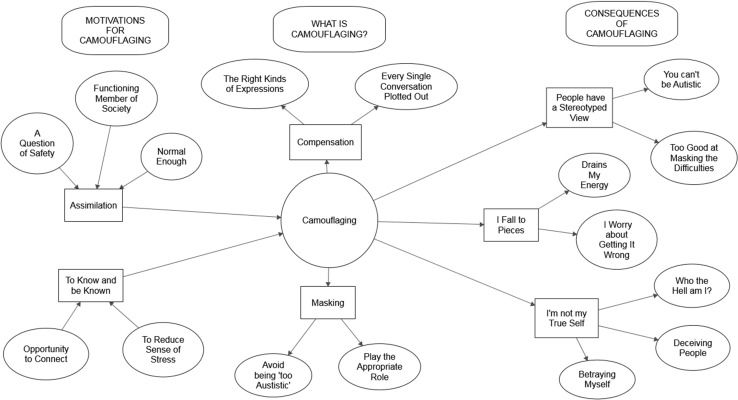
Camouflaging of autistic characteristics in social situations is hypothesised as a common social coping strategy for adults with autism spectrum conditions (ASC). Camouflaging may impact diagnosis, quality of life, and long-term outcomes, but little is known about it. This qualitative study examined camouflaging experiences in 92 adults with ASC, with questions focusing on the nature, motivations, and consequences of camouflaging. Thematic analysis was used to identify key elements of camouflaging, which informed development of a three-stage model of the camouflaging process. First, motivations for camouflaging included fitting in and increasing connections with others. Second, camouflaging itself comprised a combination of masking and compensation techniques. Third, short- and long-term consequences of camouflaging included exhaustion, challenging stereotypes, and threats to self-perception.
Overview
The claims and statistics of this paper haven’t been checked yet.
Free: it reads the open-access text and checks the first 5 claims that cite a source we can check. Create a free account to check every claim.
Integrity signals
Registry
Cites
Statistics
Figures
Verification
Claims the paper makes
The claims and statistics of this paper haven’t been checked yet.
Free: it reads the open-access text and checks the first 5 claims that cite a source we can check. Create a free account to check every claim.
Claims other papers make about this one
Each is checked against this paper’s own text: does it say what the citing paper says it does?
The source backs part of the claim, not all of it — or backs it for a different population, condition or comparison.
In the citing paper
“OSCE-style assessments introduce distinctive equity challenges, particularly for students with autism and communication differences who may find formats relying on rapid interpersonal exchanges and performance under time pressure disproportionately demanding [19,20].”
From Clinical assessment meets laboratory science: adapting OSCE methodology for authentic biosciences evaluation in the age of generative AI (2025) · cites this paper as [20]
Experimental — accuracy not yet measuredThe source backs part of the claim, not all of it — or backs it for a different population, condition or comparison.
In the citing paper
“Yet, we know that camouflaging is linked to a range of negative consequences for autistic adults (e.g. misdiagnosis, identity confusion and mental health difficulties; Beck et al., 2020; Cassidy et al., 2018; Hull et al., 2017).”
From Camouflaging in an everyday social context: An interpersonal recall study (2021) · cites this paper as Hull et al., 2017
Experimental — accuracy not yet measuredThe cited source says what the claim attributes to it.
In the citing paper
“In addition to potential sex1 differences in clinical presentation (Lai et al. 2014; May et al. 2014; Young et al. 2018), it is increasingly recognised that autistic people can hide their ASD symptoms or use compensatory behaviours to mitigate social challenges (Gould and Ashton-Smith 2011; Hull et al. 2017; Livingston et al. 2019; Tierney et al. 2016).”
From Barriers to Autism Spectrum Disorder Diagnosis for Young Women and Girls: a Systematic Review (2021) · cites this paper as Hull et al. 2017
The cited source says what the claim attributes to it.
In the citing paper
“Results of three exploratory studies using predominately qualitative methodologies were not suggestive of sex or gender differences in camouflaging (Cage et al., 2018;Hull et al., 2017;Livingston et al. 2020).”
From Camouflaging in autism: A systematic review (2021) · cites this paper as Hull et al., 2017
The cited source says what the claim attributes to it.
In the citing paper
“Autistic people report attempting to camouflage their ASC in order to try and fit in in social situations, which may delay obtaining a timely ASC diagnosis and negatively affect their mental health [31–33].”
From Risk markers for suicidality in autistic adults (2018) · cites this paper as [32]
6 more claims about this paper
Create a free account to see every claim other papers make about this one.
Self-check
Percentages, sums and reported differences re-computed from the paper’s own numbers.
The self-check needs the paper’s full text.
Citations
Cites
Using thematic analysis in psychology
Braun, V., & Clarke, V. (2006) · Qualitative Research in Psychology · doi:10.1191/1478088706qp063oa · Cited by 194,414
Qualitative research practice: a guide for social science students and researchers
(2003) · Choice Reviews Online · doi:10.5860/choice.41-1319 · Cited by 10,543
Baron-Cohen, S., Wheelwright, S., Skinner, R., Martin, J., & Clubley, E. (2001) · Journal of Autism and Developmental Disorders · doi:10.1023/a:1005653411471 · Cited by 6,450
Self-citationIntroducing Qualitative Research in Psychology
Willig, C. (2001) · Cited by 3,012
Evolving guidelines for publication of qualitative research studies in psychology and related fields
Elliott, R., Fischer, C. T., & Rennie, D. L. (1999) · British Journal of Clinical Psychology · doi:10.1348/014466599162782 · Cited by 2,491
Epidemiology of Pervasive Developmental Disorders
Fombonne, E. (2009) · Pediatric Research · doi:10.1203/pdr.0b013e31819e7203 · Cited by 1,971 · cited 2×
“Amongst clinical samples, male to female gender ratios for ASC diagnosis are generally around 4:1 (Fombonne 2009), but when active case ascertainment is used within the general population, the ratio lowers to around 3:1 (Sun et al.”
BackgroundPrevalence of Autism Spectrum Disorders in a Total Population Sample
Kim, Y. S., Leventhal, B. L., Koh, Y.-J., Fombonne, E., Laska, E., Lim, E.-C., Cheon, K.-A., Kim, S.-J., Kim, Y.-K., Lee, H., et al. (2011) · American Journal of Psychiatry · doi:10.1176/appi.ajp.2011.10101532 · Cited by 1,524
Sex/Gender Differences and Autism: Setting the Scene for Future Research
Lai, M.-C., Lombardo, M. V., Auyeung, B., Chakrabarti, B., & Baron-Cohen, S. (2015) · Journal of the American Academy of Child & Adolescent Psychiatry · doi:10.1016/j.jaac.2014.10.003 · Cited by 1,120
Self-citationPostsecondary education and employment among youth with an autism spectrum disorder
Shattuck, P. T., Narendorf, S. C., Cooper, B., Sterzing, P. R., Wagner, M., & Taylor, J. L. (2012) · PEDIATRICS · doi:10.1542/peds.2011-2864 · Cited by 1,110
Bargiela, S., Steward, R., & Mandy, W. (2016) · Journal of Autism and Developmental Disorders · doi:10.1007/s10803-016-2872-8 · Cited by 1,087 · cited 1×
“Similar themes were also found during qualitative interviews with latediagnosed women with ASC (Bargiela et al. 2016).”
Self-citation
Research works printed but not linked: 3
- American Psychiatric Association (2013). DSM
- Gould, J., & Ashton-Smith, J. (2011). Missed diagnosis or misdiag- nosis? Girls and women on the autism spectrum. Good Autism Practice (GAP), 12(1), 34-41. Retrieved from http://docserver. ingentaconnect.com/deliver/connect/bild/14662973/v12n1/s5.pd
- Holliday Willey, L. (2015). Pretending to be normal: Living with Asperger's Syndrome (Autism Spectrum Disorder) (Expanded Edition). London: Jessica Kingsley.
Cited by
Items 101–200 of 1,001
Cribb, S., Kenny, L., & Pellicano, E. (2019) · Autism · doi:10.1177/1362361319830029 · Cited by 103
“These negative social appraisals can have a detrimental impact on young autistic people’s mental health (Hedley & Young, 2006), but there can also be personal costs to ‘camouflaging’ – or ‘putting on my best normal’ – such as stress, anxiety and negative self-perceptions (Hull et al., 2017).”
BackgroundDiagnosing ASD in Adults Without ID: Accuracy of the ADOS-2 and the ADI-R
Fusar‐Poli, L., Brondino, N., Rocchetti, M., Panisi, C., Provenzani, U., Damiani, S., & Politi, P. (2017) · Journal of Autism and Developmental Disorders · doi:10.1007/s10803-017-3258-2 · Cited by 106
Jorgenson, C. D., Lewis, T., Rose, C. A., & Kanne, S. M. (2020) · Journal of Autism and Developmental Disorders · doi:10.1007/s10803-020-04491-7 · Cited by 105
Hosozawa, M., Sacker, A., Mandy, W., Midouhas, E., Flouri, E., & Cable, N. (2020) · Autism · doi:10.1177/1362361320913671 · Cited by 105
“camouflaging) also leading to later diagnosis (Hull et al., 2017).”
Self-citation‘When my autism broke’: A qualitative study spotlighting autistic voices on menopause
Moseley, R. L., Druce, T., & Turner‐Cobb, J. M. (2020) · Autism · doi:10.1177/1362361319901184 · Cited by 104
“Our participants, proactive seekers of information, may have been familiar with scientific interest in the camouflage skills of autistic adults, especially females (Hull et al., 2017; Lai et al., 2016; Tierney et al., 2016), and with concerns around the cost of masking (Cage & TroxellWhitman, 2019; Cassidy et al.”
BackgroundInvestigating Markers of Rapport in Autistic and Nonautistic Interactions
Rifai, O. M., Fletcher‐Watson, S., Sánchez, L. J., & Crompton, C. J. (2022) · Autism in Adulthood · doi:10.1089/aut.2021.0017 · Cited by 102
Managing Stress: The Needs of Autistic Adults in Video Calling
Zolyomi, A., Begel, A., Waldern, J. F., Tang, J., Barnett, M., Cutrell, E., McDuff, D., Andrist, S., & Morris, M. R. (2019) · Proceedings of the ACM on Human-Computer Interaction · doi:10.1145/3359236 · Cited by 101
“Finally, their need to fit in and fear of being judged for their autism led many to mask themselves to appear as neurotypical as possible [28].”
BackgroundEvans, S. C., Boan, A. D., Bradley, C., & Carpenter, L. A. (2019) · Journal of Clinical Child & Adolescent Psychology · doi:10.1080/15374416.2018.1437734 · Cited by 83
“Girls with ASD may also be better able to compensate for symptoms despite having persistent core deficits associated with ASD (Livingston & Happé, 2017), which might contribute to greater social “camouflage” (Hull et al., 2017).”
BackgroundStrömberg, M., Liman, L., Bang, P., & Igelström, K. (2022) · Autism in Adulthood · doi:10.1089/aut.2020.0074 · Cited by 100
Autistic traits in adults who have attempted suicide
Richards, G., Kenny, R., Griffiths, S., Allison, C., Mosse, D., Holt, R., O’Connor, R. C., Cassidy, S., & Baron-Cohen, S. (2019) · Molecular Autism · doi:10.1186/s13229-019-0274-4 · Cited by 85
Self-citationLi, Z., Yang, L., Chen, H., Fang, Y., Zhang, T., Yin, X., Man, J., Yang, X., & Lu, M. (2022) · Epidemiology and Psychiatric Sciences · doi:10.1017/s2045796022000178 · Cited by 69
“, 2021); however, this behaviour can come at serious personal cost, worsening mental health problems and even increasing risk of suicidality (Hull et al., 2017; Cassidy et al., 2018).”
“Fake it ‘till you make it”: Authenticity and wellbeing in late diagnosed autistic women
Seers, K., & Hogg, R. C. (2022) · Feminism & Psychology · doi:10.1177/09593535221101455 · Cited by 99
“The desire to assimilate and the use of masking and camouflaging behaviours has been documented extensively in ASC literature (Bargiela, 2015; Davidson & Henderson, 2010; Gould, 2017; Hull et al., 2017; Müller et al., 2008; Punshon et al., 2009; Ryan & Räisänen, 2008).”
BackgroundInfluentialAdaptive morphing and coping with social threat in autism: an autistic perspective
Lawson, W. B. (2020) · Journal of Intellectual Disability - Diagnosis and Treatment · doi:10.6000/2292-2598.2020.08.03.29 · Cited by 98
“This terminology is being used to describe the actions of autistic individuals who, in trying to fit in with social situations, such as in families, schools, and workplaces, maybe obscuring their true selves [3].”
MethodBottema‐Beutel, K., Kim, S. Y., & Crowley, S. (2019) · Autism Research · doi:10.1002/aur.2055 · Cited by 79
“Indeed, there have been several recent studies describing “camouflaging”, whereby individuals with ASD mask their social functioning differences as a means to assimilate with nonautistic people [Hull et al., 2017].”
BackgroundPryke-Hobbes, A., Davies, J., Heasman, B., Livesey, A., Walker, A., Pellicano, E., & Remington, A. (2023) · PLoS ONE · doi:10.1371/journal.pone.0290001 · Cited by 95
“Although such identity shifts can enable autistic people to ‘fit in’ [28] and increase social contact [29], masking often has deleterious effects on one’s wellbeing [30,38–40].”
BackgroundResultInfluentialKeating, C. T., Hickman, L., Geelhand, P., Takahashi, T., Leung, J., Schuster, B. A., Rybicki, A. J., Girolamo, T. M., Clin, É., Papastamou, F., et al. (2021) · PLoS ONE · doi:10.1371/journal.pone.0261774 · Cited by 96
“Camouflaging can be defined as “the use of strategies by autistic people to minimise the visibility of their autism in social situations” [38].”
BackgroundInfluentialCharlton, R. A., Entecott, T., Belova, E., & Nwaordu, G. (2021) · Research in Autism Spectrum Disorders · doi:10.1016/j.rasd.2021.101864 · Cited by 94
Trajectories of Autism Symptom Severity Change During Early Childhood
Waizbard-Bartov, E., Ferrer, E., Young, G. S., Heath, B., Rogers, S., Wu Nordahl, C., Solomon, M., & Amaral, D. G. (2021) · Journal of Autism and Developmental Disorders · doi:10.1007/s10803-020-04526-z · Cited by 81
McQuaid, G. A., Pelphrey, K. A., Bookheimer, S. Y., Dapretto, M., Webb, S. J., Bernier, R., McPartland, J. C., Horn, J. D. V., & Wallace, G. L. (2021) · Autism · doi:10.1177/1362361321995620 · Cited by 94
“More specifically, studies should examine the transitions into adolescence and young adulthood, which mark greater social demands that may outstrip camouflaging resources, along with increased difficulties in social functioning for ASDf (Kanfiszer et al., 2017; Trubanova et al., 2014).”
BackgroundConfirming the nature of autistic burnout
Arnold, S. R. C., Higgins, J. M., Weise, J. C., Desai, A., Pellicano, E., & Trollor, J. N. (2023) · Autism · doi:10.1177/13623613221147410 · Cited by 94
“Camouflaging; adaptive morphing; i.e., behaviour to conceal one’s autistic traits within social interactions (Hull et al., 2017; Lawson, 2020)) and the debilitating exhaustion experienced by autistic adults from the stress of living in an unaccommodating neurotypical world has been called ‘Autistic…”
Romualdez, A. M., Walker, Z., & Remington, A. (2021) · Autism & Developmental Language Impairments · doi:10.1177/23969415211022955 · Cited by 92
Frost, K. M., Bailey, K. M., & Ingersoll, B. R. (2019) · Autism in Adulthood · doi:10.1089/aut.2018.0057 · Cited by 71
“12 In the long term, this can lead to what autistic people describe as ‘‘autistic burnout.’’”
InfluentialZhuang, S., Tan, D. W., Reddrop, S., Dean, L., Maybery, M., & Magiati, I. (2023) · Clinical Psychology Review · doi:10.1016/j.cpr.2023.102335 · Cited by 90
Understanding the Relationships Between Autistic Identity, Disclosure, and Camouflaging
Cage, E., & Troxell-Whitman, Z. (2020) · Autism in Adulthood · doi:10.1089/aut.2020.0016 · Cited by 74
“1,2 Many autistic people report high levels of camouflaging 1 and camouflaging in some situations but not in others.”
Quality of life for older autistic people: The impact of mental health difficulties
Mason, D., Mackintosh, J., McConachie, H., Rodgers, J., Finch, T., & Parr, J. R. (2019) · Research in Autism Spectrum Disorders · doi:10.1016/j.rasd.2019.02.007 · Cited by 89
Unrelenting Depression and Suicidality in Women with Autistic Traits
South, M., Beck, J. S., Lundwall, R. A., Christensen, M., Cutrer‐Párraga, E. A., Gabrielsen, T. P., Cox, J. C., & Lundwall, R. A. (2019) · Journal of Autism and Developmental Disorders · doi:10.1007/s10803-019-04324-2 · Cited by 90
Protective Effect or Missed Diagnosis? Females with Autism Spectrum Disorder
Hull, L., & Mandy, W. (2017) · Future Neurology · doi:10.2217/fnl-2017-0006 · Cited by 73
Self-citationRødgaard, E., Jensen, K., Miskowiak, K. W., & Mottron, L. (2021) · Acta Psychiatrica Scandinavica · doi:10.1111/acps.13345 · Cited by 72
Knutsen, J., Crossman, M., Perrin, J., Shui, A., & Kuhlthau, K. (2019) · Autism · doi:10.1177/1362361318786490 · Cited by 78
“However, concealing autism symptoms such as social communication difficulties have been described or reported in primary and secondary school-aged girls and adult women, but not in younger preschool-aged girls (Cook et al., 2017; Dean et al., 2016; Hull et al., 2017).”
BackgroundMason, D., Ingham, B., Birtles, H., Michael, C., Scarlett, C., James, I. A., Brown, T., Woodbury-Smith, M., Wilson, C., Finch, T., et al. (2021) · Autism · doi:10.1177/1362361321993709 · Cited by 67
“For instance, atypical social communication is a characteristic of autism, but many autistic people report working hard to manage their social presentation in order to appear ‘neurotypical’ (Hull et al., 2017).”
BackgroundCrompton, C. J., Hallett, S., Axbey, H., McAuliffe, C., & Cebula, K. R. (2022) · Autism · doi:10.1177/13623613221081189 · Cited by 89
“Developing and maintaining a ‘mask’ of normative social behaviour, as is implicitly encouraged by social skills training, requires a prolonged, exhausting effort for autistic people (Bargiela et al., 2016; Hull et al., 2017), causes anxiety and stress (Cage et al.”
BackgroundA Qualitative Exploration into the Sensory Experiences of Autistic Mothers
Talcer, M. C., Duffy, O. M., & Pedlow, K. (2021) · Journal of Autism and Developmental Disorders · doi:10.1007/s10803-021-05188-1 · Cited by 89
Crompton, C. J., Fotheringham, F., Cebula, K. R., Webber, C., Foley, S., & Fletcher‐Watson, S. (2024) · Neurodiversity · doi:10.1177/27546330241275248 · Cited by 88
“Masking requires a prolonged and exhausting effort for neurodivergent people (Bargiela et al., 2016; Hull et al., 2017; Kosaka et al., 2019; Walker et al., 2021), can generate anxiety about ‘ being found out ’ (Pearson & Rose, 2021), and is associated with a range of negative long term outcomes…”
Sex differences in the first impressions made by girls and boys with autism
Cola, M., Plate, S. N., Yankowitz, L. D., Petrulla, V., Bateman, L., Zampella, C., de Marchena, A. B., Pandey, J., Schultz, R. T., & Parish‐Morris, J. (2020) · Molecular Autism · doi:10.1186/s13229-020-00336-3 · Cited by 88
Seers, K., & Hogg, R. C. (2021) · Autism · doi:10.1177/1362361321993722 · Cited by 87
“Accounts from mothers of girls on the AS and late-diagnosed women on the AS indicate they believe they would have benefitted from earlier diagnosis, and had this occurred, some of their difficult life experiences could have been avoided (Hull et al., 2017).”
BackgroundMilner, V. L., Mandy, W., Happe, F. G. E., & Colvert, E. (2022) · Autism · doi:10.1177/13623613221098240 · Cited by 88
“Similarly, Hull et al. (2017) found motivations for camouflaging reported by late-diagnosed autistic women included assimilation and a desire to build relationships.”
BackgroundResultSelf-citationThe social experiences and sense of belonging in adolescent females with autism in mainstream school
Myles, O., Boyle, C., & Richards, A. (2019) · Educational and Child Psychology · doi:10.53841/bpsecp.2019.36.4.8 · Cited by 87
“Hull et al. (2017) obtained similar findings from their research based on adults with autism, which suggested that motivations for camouflaging included the desire to fit in and to build connections with others.”
ResultCoproduction with Autistic Adults: Reflections from the Authentistic Research Collective
Stark, E. A., Ali, D., Ayre, A., Schneider, N., Parveen, S., Marais, K., Holmes, N., & Pender, R. (2020) · Autism in Adulthood · doi:10.1089/aut.2020.0050 · Cited by 84
“28 We encouraged each member to be their authentic self.”
Friends and Lovers: The Relationships of Autistic and Neurotypical Women
Sedgewick, F., Crane, L., Hill, V., & Pellicano, E. (2019) · Autism in Adulthood · doi:10.1089/aut.2018.0028 · Cited by 63
“Autistic women report that camou-flaging is ‘‘exhausting’’ 22 and can have a negative impact on their mental health.”
The relationship between camouflaging and mental health in autistic children and adolescents
Ross, A., Grove, R., & McAloon, J. (2022) · Autism Research · doi:10.1002/aur.2859 · Cited by 85
“This highlights the importance of considering how these behaviors emerge over time and fits with previous research that states that camouflaging develops in childhood and adolescence (Hull et al., 2017).”
BackgroundResultInfluentialGoddard, H., & Cook, A. (2021) · Journal of Autism and Developmental Disorders · doi:10.1007/s10803-021-05125-2 · Cited by 83
Harmens, M., Sedgewick, F., & Hobson, H. (2022) · Autism in Adulthood · doi:10.1089/aut.2021.0016 · Cited by 82
“Learning to communicate in a neurotypical-neurodivergent relationship has led to a happier household and a greater appreciation for human diversity [Blogger 17] However, feelings of belonging postdiagnosis did not go unthreatened.”
Autistic adults’ experience of restricted repetitive behaviours
Collis, E., Gavin, J., Russell, A., & Brosnan, M. (2021) · Research in Autism · doi:10.1016/j.rasd.2021.101895 · Cited by 82
Ciuk, S., Śliwa, M., & Harzing, A.-W. K. (2022) · Human Resource Management Journal · doi:10.1111/1748-8583.12487 · Cited by 85
Improving Diagnostic Procedures in Autism for Girls and Women: A Narrative Review
Cook, J. M., Hull, L., & Mandy, W. (2024) · Neuropsychiatric Disease and Treatment · doi:10.2147/ndt.s372723 · Cited by 84
“25 Examples of camouflaging (also known as masking, compensation, adaptive morphing and various other names) 26 include learning or practicing neurotypical social communication behaviours, stopping oneself from performing obviously autistic behaviours such as hand flapping, and mimicking the…”
BackgroundSelf-citationUnderstanding the substance use of autistic adolescents and adults: a mixed-methods approach
Weir, E. M., Allison, C. L., & Baron‐Cohen, S. (2021) · The Lancet Psychiatry · doi:10.1016/s2215-0366(21)00160-7 · Cited by 79
Self-citationCamouflaging in an everyday social context: An interpersonal recall study
Cook, J., Crane, L., Bourne, L., Hull, L., & Mandy, W. (2021) · Autism · doi:10.1177/1362361321992641 · Cited by 78
“Yet, we know that camouflaging is linked to a range of negative consequences for autistic adults (e.g. misdiagnosis, identity confusion and mental health difficulties; Beck et al., 2020; Cassidy et al., 2018; Hull et al., 2017).”
BackgroundResultInfluentialSelf-citationVivanti, G., & Messinger, D. S. (2021) · Journal of Autism and Developmental Disorders · doi:10.1007/s10803-021-04887-z · Cited by 78
“This is reflected in interventions that promote consideration of the preferences, motivations, and choices of individuals with autism, and research focused on the impact of socially-constructed representations of “normality” and “successful” outcomes for the wellbeing of individuals on the autism spectrum (e.g., Paris…”
BackgroundCamouflaging in Autistic and Non-autistic Adolescents in the Modern Context of Social Media
Jedrzejewska, A., & Dewey, J. (2021) · Journal of Autism and Developmental Disorders · doi:10.1007/s10803-021-04953-6 · Cited by 77
Social media shaping autism perception and identity
Skafle, I., Gabarrón, E., & Nordahl‐Hansen, A. (2024) · Autism · doi:10.1177/13623613241230454 · Cited by 75
“In recent times, there has been more focus on how autism in women is represented, and that autistic girls and adolescents, and women tend to camou-flage more and thus making it harder to both detect and diagnose (Hull et al., 2017).”
BackgroundOchoa‐Lubinoff, C., Makol, B. A., & Dillon, E. F. (2023) · Neurologic Clinics · doi:10.1016/j.ncl.2022.10.006 · Cited by 75
Promoting Classroom Engagement of Autistic Students Using Focused Interests
Bayoumi, S. C., Kim, G. Y., Dwyer, P. S. R., Srinivasan, H., & Smith, K. H. (2025) · Teaching Exceptional Children · doi:10.1177/00400599251346719 · Cited by 74
Sex-specific impact of prenatal androgens on social brain default mode subsystems
Lombardo, M. V., Auyeung, B., Pramparo, T., Quartier, A., Courraud, J., Holt, R. J., Waldman, J., Ruigrok, A. N. V., Mooney, N., Bethlehem, R. A. I., et al. (2020) · Molecular Psychiatry · doi:10.1038/s41380-018-0198-y · Cited by 67
Self-citationAutism spectrum disorder and personality disorders: Comorbidity and differential diagnosis
Rinaldi, C., Attanasio, M., Valenti, M., Mazza, M., & Keller, R. (2021) · World Journal of Psychiatry · doi:10.5498/wjp.v11.i12.1366 · Cited by 73
Self-reported sex differences in high-functioning adults with autism: a meta-analysis
Moseley, R. L., Hitchiner, R., & Kirkby, J. A. (2018) · Molecular Autism · doi:10.1186/s13229-018-0216-6 · Cited by 56
“ports of advantages for autistic women over autistic men in executive function and processing speed [1, 54, 57], which may partially explain their success in camouflage [34, 35, 58, 59].”
BackgroundInfluentialBelcher, H., Morein‐Zamir, S., Stagg, S. D., & Ford, R. M. (2022) · Journal of Autism and Developmental Disorders · doi:10.1007/s10803-022-05583-2 · Cited by 73
The experiences of autistic medical students: A phenomenological study
Shaw, S. C. K., Doherty, M., & Anderson, J. L. (2023) · Medical Education · doi:10.1111/medu.15119 · Cited by 71
“However, the benefits of masking appear to be mainly due to avoiding negative reactions, rejection and stigma from non-autistic people.(27) Masking is exhausting, and it is associated with negative impacts on mental health including burnout and increased suicidality.”
BackgroundBig five model and trait emotional intelligence in camouflaging behaviours in autism
Robinson, E., Hull, L., & Petrides, K. V. (2020) · Personality and Individual Differences · doi:10.1016/j.paid.2019.109565 · Cited by 70
“Feeling separate to others may lead to use of camouflaging strategies in order to socialise and integrate (Hull et al., 2017).”
BackgroundSelf-citationSocial anxiety in adults with autism: a qualitative study
Spain, D., Zıvralı Yarar, E., & Happé, F. (2020) · International Journal of Qualitative Studies on Health and Well-being · doi:10.1080/17482631.2020.1803669 · Cited by 56
“Data from quantitative (Lai et al., 2017) and qualitative (Hull et al., 2017) studies indicate that adults may camouflage ‘their autism’ for reasons including avoiding bullying, trying to fit in and wanting to increase their social network.”
BackgroundMesa, S., & Hamilton, L. G. (2022) · Advances in Autism · doi:10.1108/aia-12-2020-0071 · Cited by 44
Camouflaging Intent, First Impressions, and Age of ASC Diagnosis in Autistic Men and Women
Belcher, H., Morein‐Zamir, S., Mandy, W., & Ford, R. M. (2021) · Journal of Autism and Developmental Disorders · doi:10.1007/s10803-021-05221-3 · Cited by 70
Self-citationSpaeth, E., & Pearson, A. (2023) · Journal of Perspectives in Applied Academic Practice · doi:10.56433/jpaap.v11i2.517 · Cited by 71
A Systematic Review of Passing as Non-autistic in Autism Spectrum Disorder
Libsack, E. J., Keenan, E. G., Freden, C. E., Mirmina, J., Iskhakov, N., Krishnathasan, D., & Lerner, M. D. (2021) · Clinical Child and Family Psychology Review · doi:10.1007/s10567-021-00365-1 · Cited by 68
Identifying autism symptom severity trajectories across childhood
Waizbard‐Bartov, E., Ferrer, E. E., Heath, B. E., Rogers, S. J., Nordahl, C. W., Solomon, M., & Amaral, D. G. (2022) · Autism Research · doi:10.1002/aur.2674 · Cited by 69
Dell’Osso, L., Cremone, I. M., Nardi, B., Tognini, V., Castellani, L., Perrone, P., Amatori, G., & Carpita, B. (2023) · Brain Sciences · doi:10.3390/brainsci13060862 · Cited by 69
Finch, T. L., Mackintosh, J. E., Petrou, A., McConachie, H., Couteur, A. S. L., Garland, D., & Parr, J. R. (2022) · PLoS ONE · doi:10.1371/journal.pone.0264932 · Cited by 67
Finn, M., Flower, R. L., Leong, H. M., & Hedley, D. (2023) · Autism · doi:10.1177/13623613231153480 · Cited by 69
“The lack of societal awareness and acceptance of autism may contribute to the barriers autistic people face when seeking employment, substantiating previous literature (Cook et al., 2021; Hull et al., 2017).”
BackgroundResultInfluentialRiccio, A., Kapp, S. K., Jordan, A., Dorelien, A. M., & Gillespie-Lynch, K. (2021) · Autism · doi:10.1177/1362361320958214 · Cited by 50
“…research has shown that autistic individuals often internalize a need to hide their autistic traits to appear normal (Cage & Troxell-Whitman, 2019 ; Hull et al., 2017), which mirrors parent sentiments surrounding interventions to ameliorate autism symptoms (Da Paz et al., 2018; Myers et al., 2009).”
BackgroundCumin, J., Peláez, S., & Mottron, L. (2021) · Autism · doi:10.1177/13623613211042719 · Cited by 67
Centering the Inner Experience of Autism: Development of the Self-Assessment of Autistic Traits
Ratto, A. B., Bascom, J., daVanport, S., Strang, J. F., Anthony, L. G., Verbalis, A. D., Pugliese, C. E., Nadwodny, N., Brown, L. X. Z., Cruz, M., et al. (2023) · Autism in Adulthood · doi:10.1089/aut.2021.0099 · Cited by 66
“Camouflaging is an emerging and somewhat controversial concept in autism research, which broadly refers to compensatory behaviors (whether conscious or unconscious) an autistic individual uses to navigate social expectations based on neurotypical standards.(49) The behavioral and cognitive differences associated with…”
Autism Spectrum Disorder Across the Lifespan
Tafolla, M., Singer, H., & Lord, C. (2025) · Annual Review of Clinical Psychology · doi:10.1146/annurev-clinpsy-081423-031110 · Cited by 71
Cage, E., Cranney, R., & Botha, M. (2022) · Autism in Adulthood · doi:10.1089/aut.2021.0096 · Cited by 66
What does it take to be rigid? Reflections on the notion of rigidity in autism
Petrolini, V., Jorba, M., & Vicente, A. (2023) · Frontiers in Psychiatry · doi:10.3389/fpsyt.2023.1072362 · Cited by 67
Dropping the mask: It takes two
Cook, J. M., Crane, L., & Mandy, W. (2023) · Autism · doi:10.1177/13623613231183059 · Cited by 65
“Others report that camou-flaging threatens their self-perception and results in negative self-directed emotions and attitudes related to feeling fake or deceptive (Hull et al., 2017).”
BackgroundInfluentialSelf-citationAutism, Discrimination and Masking: Disrupting a Recipe for Trauma
Cleary, M. L., West, S., Kornhaber, R. A., & Hungerford, C. L. (2023) · Issues in Mental Health Nursing · doi:10.1080/01612840.2023.2239916 · Cited by 65
Cresswell, L., & Cage, E. (2019) · Journal of Autism and Developmental Disorders · doi:10.1007/s10803-019-04016-x · Cited by 48
Nagib, W., & Wilton, R. D. (2019) · Disability and Rehabilitation · doi:10.1080/09638288.2019.1573936 · Cited by 66
Huang, Y., Trollor, J. N., Foley, K., & Arnold, S. R. C. (2023) · Autism in Adulthood · doi:10.1089/aut.2022.0066 · Cited by 62
“28 Stigma becomes internalized when individuals endorse negative societal beliefs about their own group, leading to deteriorated self-esteem and self-efficacy.”
Edwards, H., Wright, S. M., Sargeant, C., Cortese, S., & Wood‐Downie, H. (2023) · Journal of Child Psychology and Psychiatry · doi:10.1111/jcpp.13855 · Cited by 64
Arwert, T. G., & Sizoo, B. B. (2020) · Journal of Autism and Developmental Disorders · doi:10.1007/s10803-020-04372-z · Cited by 65
Monahan, J. L., Freedman, B. H., Pini, K., & Lloyd, R. (2021) · Review Journal of Autism and Developmental Disorders · doi:10.1007/s40489-021-00280-9 · Cited by 61
“Just as importantly, we must consider how to develop interventions for NTs in order to create more inclusive spaces for people who communicate in ways that do not align with NT social norms.”
BackgroundResultInfluentialUnderstanding loneliness and social relationships in autism: The reflections of autistic adults
Elmose, M. (2019) · Nordic Psychology · doi:10.1080/19012276.2019.1625068 · Cited by 60
“…and more accepting social spaces, masking or preparing to perform normalcy or creating a façade of normality, but with the downside that this masking might be beneficial for some while for others it would affect their sense of self, leading to depression (Hull et al., 2017; Milton & Sims, 2016).”
Reconceptualising ‘reasonable adjustments’ for the successful employment of autistic women
North, G. (2023) · Disability & Society · doi:10.1080/09687599.2021.1971065 · Cited by 41
A comparison of methods for measuring camouflaging in autism
Hannon, B., Mandy, W., & Hull, L. (2022) · Autism Research · doi:10.1002/aur.2850 · Cited by 59
“Camouflaging of Autistic Traits Questionnaire (CAT-Q; Hull et al., 2019) The CAT-Q was born out of qualitative research into the nature, motivations, and consequences of camouflaging autistic traits (Hull et al., 2017).”
BackgroundInfluentialSelf-citationChildhood diagnoses in individuals identified as autistics in adulthood
Rødgaard, E., Jensen, K. L., Miskowiak, K. W., & Mottron, L. (2021) · Molecular Autism · doi:10.1186/s13229-021-00478-y · Cited by 58
“Camouflaging early symptoms Some researchers have hypothesized the concept of camouflaging, describing coping strategies used to hide autism symptoms and maintain an appearance of normal social functioning [7].”
BackgroundBourson, L., & Prevost, C. (2022) · European Child & Adolescent Psychiatry · doi:10.1007/s00787-022-01998-5 · Cited by 59
“People with ASD have suggested that improving the general public’s awareness and acceptance of their symptoms would improve their social experiences, their integration and relationships, without having to resort to camouflage to reach these objectives [44].”
Autistic People's Experience of Empathy and the Autistic Empathy Deficit Narrative
Kimber, L., Verrier, D. B., & Connolly, S. (2024) · Autism in Adulthood · doi:10.1089/aut.2023.0001 · Cited by 60
“People talked about the additional labor that needs to be done to make the right kind of empathic inferences and responses (a form of social camouflaging 54 ).”
Harrop, C., Jones, D. R., Sasson, N. J., Zheng, S., Nowell, S. W., & Parish‐Morris, J. (2019) · Autism Research · doi:10.1002/aur.2245 · Cited by 59
“, 2017] but can be difficult to sustain over time [Hull et al., 2017].”
BackgroundAutism and depression are connected: A report of two complimentary network studies
van Heijst, B. F., Deserno, M. K., Rhebergen, D., & Geurts, H. M. (2020) · Autism · doi:10.1177/1362361319872373 · Cited by 57
“In addition, the autism diagnosis was verified for 47% of the participants (Lever & Geurts, 2016) with the Autism Diagnostic Observation Schedule module 4 (ADOS; De Bildt, Sytema, Meffert & Bastiaansen, 2016; Hus & Lord, 2014).”
MethodBlack, M. H., Clarke, P., Deane, E., Smith, D., Wiltshire, G., Yates, E., Lawson, W. B., & Chen, N. T. M. (2022) · Research in Autism · doi:10.1016/j.rasd.2022.102090 · Cited by 57
When Disability Is Defined by Behavior, Outcome Measures Should Not Promote “Passing”
(2021) · AMA Journal of Ethics · doi:10.1001/amajethics.2021.569 · Cited by 56
McAuliffe, C., Walsh, R. J., & Cage, E. (2023) · Autism in Adulthood · doi:10.1089/aut.2021.0074 · Cited by 58
Portrayals of autism in the British press: A corpus-based study
Karaminis, T. N., Gabrielatos, C., Maden-Weinberger, U., & Beattie, G. W. (2022) · Autism · doi:10.1177/13623613221131752 · Cited by 59
“Negative perceptions of autism (Cage et al., 2018) and the need for social camouflaging as a coping response to autism-related stigma (Hull et al., 2017, 2021; Perry et al., 2021) can significantly impact on the mental health of autistic people, who often present social anxiety and depression…”
BackgroundA meta regression analysis of quality of life correlates in adults with ASD
Kim, S. Y., & Bottema‐Beutel, K. (2019) · Research in Autism · doi:10.1016/j.rasd.2018.11.004 · Cited by 56
‘Coming Out’ with Autism: Identity in People with an Asperger’s Diagnosis After DSM-5
Smith, O. A., & Jones, S. C. (2019) · Journal of Autism and Developmental Disorders · doi:10.1007/s10803-019-04294-5 · Cited by 58
“2013) is often associated with negative changes in self-perception as well as poor mental and physical health outcomes (Hull et al. 2017).”
BackgroundNavarro‐Pardo, E., López-Ramón, M. F., Alonso-Esteban, Y., & Marín, F. A. (2021) · Children · doi:10.3390/children8040262 · Cited by 60
“may be due to the so-called camouflage skills, most frequently developed by women [46, 27]; this skill is developed by learning and there is no evidence that it exists in young girls compared to evidence that it is detected in youth and maturity [78, 42].”
BackgroundA pilot study of dialectical behaviour therapy skills training for autistic adults
Ritschel, L. A., Guy, L., & Maddox, B. B. (2022) · Behavioural and Cognitive Psychotherapy · doi:10.1017/s1352465821000370 · Cited by 45
“…engage in ‘camouflaging’ behaviours – such as appearing to make eye contact, reducing the tendency to fidget, or pretending to like the same things other members of a group like – in order to fit into social situations and prevent others from picking up on their differences (Hull et al., 2017).”
BackgroundAutistic camouflaging across the spectrum
Petrolini, V., Rodríguez-Armendariz, E., & Vicente, A. (2022) · New Ideas in Psychology · doi:10.1016/j.newideapsych.2022.100992 · Cited by 55
“…existing literature shows that multiple dimensions of camouflaging are discussed in different studies, including aims (Livingston & Happ ´ e, 2017; Hull et al., 2017), degree of success (Lai et al., 2021), contexts in which camouflaging occurs (Cage & Troxell-Whitman, 2019), strategies being used…”
InfluentialO’Connor, R., van den Bedem, N. P., Blijd-Hoogewys, E. M. A., Stockmann, L., & Rieffe, C. J. (2022) · Autism · doi:10.1177/13623613211073448 · Cited by 55
“…traits, causing them to work hard to behave in a ‘neurotypical’ manner, which we know from self-reports is a stressful process for autistic people (Hull et al., 2017; Sumiya et al., 2018) and can be related to poorer mental health in autistic adolescents and adults (Bernardin et al., 2021; Cage…”
BackgroundIs camouflaging unique for autism? A comparison of camouflaging between adults with autism and ADHD
van der Putten, W. J., Mol, A. J. J., Groenman, A. P., Radhoe, T. A., Torenvliet, C., van Rentergem, J. A. A., & Geurts, H. M. (2024) · Autism Research · doi:10.1002/aur.3099 · Cited by 54
“Camouflaging is often defined as the use of (un)conscious strategies to minimize the visibility of one ’ s autism traits to appear non-autistic (Hull et al., 2017; Libsack et al., 2021).”
Background
Metadata
- Authors
- Hull, L., Petrides, K. V., Allison, C., Smith, P., Baron-Cohen, S., Lai, M.-C., & Mandy, W.
- Affiliations
- University College London (GB)
- University of Cambridge (GB)
- Centre for Addiction and Mental Health (CA)
- Corresponding author
- Hull, Laura
- Venue
- Journal of Autism and Developmental Disorders
- Published
- 2017-05-19
- Volume
- 47
- Issue
- 8
- Pages
- 2519-2534
- ISSN
- 0162-3257 (ISSN-L)
- 1573-3432
- PMC
- PMC5509825
- OpenAlex
- W2616560149
- Cited by
- 1,365
- References
- 53
- Citations by year
- 2026: 326 · 2025: 212 · 2024: 202 · 2023: 146 · 2022: 124 · 2021: 141 · 2020: 91 · 2019: 73 · 2018: 39 · 2017: 9
- FWCI
- 33.29
- Type
- journal article
- Language
- en
- Open access
- hybrid
- doi.org
- Locations
- Journal of Autism and Developmental Disorders (publishedVersion, cc-by)
- Europe PMC (PubMed Central) (publishedVersion, cc-by)
- PubMed Central (publishedVersion, cc-by)
- PubMed (publishedVersion)
- UCL Discovery (University College London) (submittedVersion)
- Explore Bristol Research (submittedVersion)
- Apollo (University of Cambridge) (submittedVersion, cc-by)
- Apollo (cc-by)
- Funders
- Wellcome Trust (091774/Z/10/Z)
- Centre for Addiction and Mental Health
- National Institute for Health and Care Research (NF-SI-0515-10097)
- Hospital for Sick Children
- Medical Research Council
- Topics
- Life Sciences › Neuroscience › Cognitive Neuroscience › Autism Spectrum Disorder Research
- Social Sciences › Psychology › Clinical Psychology › Family and Disability Support Research
- Health Sciences › Medicine › Psychiatry and Mental health › Child Nutrition and Feeding Issues
- Keywords
- social camouflaging, autism spectrum disorder, autistic adults, masking, compensatory strategies, social coping, social exhaustion, stereotypes, self-perception
- MeSH terms
- Autism Spectrum Disorder, Adaptation, Psychological, Adolescent, Adult, Aged, Female, Humans, Male, Middle Aged, Self Concept, Social Behavior
About these checks
Registry, retraction, Cites and statistics results are computed, not judged, with one exception: a printed reference that no index lists is read once by a model before it counts as a citation error. Claims are extracted by a model and kept only when their quote appears verbatim in the text; each cited source is then checked, with a model’s help, for whether it says what the claim relies on. Those verdicts can be wrong — read the claim’s quote and the cited source before relying on one.
Statistics and arithmetic are recomputed, not judged.
Confidence bands are shown only for fields calibrated on our annotated test set. None is calibrated yet, so no band is shown.
What counts as a claim ›How we measure confidence ›How we check this ›
Are you an author, or do you see a problem with this page? Request a review
Data sources
Bibliographic data: Semantic Scholar, OpenAlex, Crossref.
Contains information from the Semantic Scholar Academic Graph Datasets, made available under the ODC Attribution License (ODC-BY 1.0).
Semantic Scholar’s data is described in: Kinney, R., et al. (2023). The Semantic Scholar Open Data Platform. arXiv:2301.10140.
