

“Putting on My Best Normal”: Social Camouflaging in Adults with Autism Spectrum Conditions
Open accessThe DOI matches its Crossref record; 52 of the 53 references it cites were found in a registry or an index.
Abstract
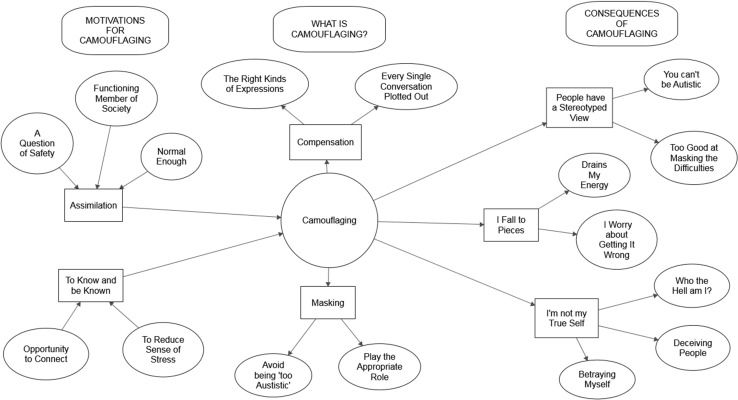
Camouflaging of autistic characteristics in social situations is hypothesised as a common social coping strategy for adults with autism spectrum conditions (ASC). Camouflaging may impact diagnosis, quality of life, and long-term outcomes, but little is known about it. This qualitative study examined camouflaging experiences in 92 adults with ASC, with questions focusing on the nature, motivations, and consequences of camouflaging. Thematic analysis was used to identify key elements of camouflaging, which informed development of a three-stage model of the camouflaging process. First, motivations for camouflaging included fitting in and increasing connections with others. Second, camouflaging itself comprised a combination of masking and compensation techniques. Third, short- and long-term consequences of camouflaging included exhaustion, challenging stereotypes, and threats to self-perception.
Overview
The claims and statistics of this paper haven’t been checked yet.
Free: it reads the open-access text and checks the first 5 claims that cite a source we can check. Create a free account to check every claim.
Integrity signals
Registry
Cites
Statistics
Figures
Verification
Claims the paper makes
The claims and statistics of this paper haven’t been checked yet.
Free: it reads the open-access text and checks the first 5 claims that cite a source we can check. Create a free account to check every claim.
Claims other papers make about this one
Each is checked against this paper’s own text: does it say what the citing paper says it does?
The source backs part of the claim, not all of it — or backs it for a different population, condition or comparison.
In the citing paper
“OSCE-style assessments introduce distinctive equity challenges, particularly for students with autism and communication differences who may find formats relying on rapid interpersonal exchanges and performance under time pressure disproportionately demanding [19,20].”
From Clinical assessment meets laboratory science: adapting OSCE methodology for authentic biosciences evaluation in the age of generative AI (2025) · cites this paper as [20]
Experimental — accuracy not yet measuredThe source backs part of the claim, not all of it — or backs it for a different population, condition or comparison.
In the citing paper
“Yet, we know that camouflaging is linked to a range of negative consequences for autistic adults (e.g. misdiagnosis, identity confusion and mental health difficulties; Beck et al., 2020; Cassidy et al., 2018; Hull et al., 2017).”
From Camouflaging in an everyday social context: An interpersonal recall study (2021) · cites this paper as Hull et al., 2017
Experimental — accuracy not yet measuredThe cited source says what the claim attributes to it.
In the citing paper
“In addition to potential sex1 differences in clinical presentation (Lai et al. 2014; May et al. 2014; Young et al. 2018), it is increasingly recognised that autistic people can hide their ASD symptoms or use compensatory behaviours to mitigate social challenges (Gould and Ashton-Smith 2011; Hull et al. 2017; Livingston et al. 2019; Tierney et al. 2016).”
From Barriers to Autism Spectrum Disorder Diagnosis for Young Women and Girls: a Systematic Review (2021) · cites this paper as Hull et al. 2017
The cited source says what the claim attributes to it.
In the citing paper
“Results of three exploratory studies using predominately qualitative methodologies were not suggestive of sex or gender differences in camouflaging (Cage et al., 2018;Hull et al., 2017;Livingston et al. 2020).”
From Camouflaging in autism: A systematic review (2021) · cites this paper as Hull et al., 2017
The cited source says what the claim attributes to it.
In the citing paper
“Autistic people report attempting to camouflage their ASC in order to try and fit in in social situations, which may delay obtaining a timely ASC diagnosis and negatively affect their mental health [31–33].”
From Risk markers for suicidality in autistic adults (2018) · cites this paper as [32]
6 more claims about this paper
Create a free account to see every claim other papers make about this one.
Self-check
Percentages, sums and reported differences re-computed from the paper’s own numbers.
The self-check needs the paper’s full text.
Citations
Cites
Using thematic analysis in psychology
Braun, V., & Clarke, V. (2006) · Qualitative Research in Psychology · doi:10.1191/1478088706qp063oa · Cited by 194,414
Qualitative research practice: a guide for social science students and researchers
(2003) · Choice Reviews Online · doi:10.5860/choice.41-1319 · Cited by 10,543
Baron-Cohen, S., Wheelwright, S., Skinner, R., Martin, J., & Clubley, E. (2001) · Journal of Autism and Developmental Disorders · doi:10.1023/a:1005653411471 · Cited by 6,450
Self-citationIntroducing Qualitative Research in Psychology
Willig, C. (2001) · Cited by 3,012
Evolving guidelines for publication of qualitative research studies in psychology and related fields
Elliott, R., Fischer, C. T., & Rennie, D. L. (1999) · British Journal of Clinical Psychology · doi:10.1348/014466599162782 · Cited by 2,491
Epidemiology of Pervasive Developmental Disorders
Fombonne, E. (2009) · Pediatric Research · doi:10.1203/pdr.0b013e31819e7203 · Cited by 1,971 · cited 2×
“Amongst clinical samples, male to female gender ratios for ASC diagnosis are generally around 4:1 (Fombonne 2009), but when active case ascertainment is used within the general population, the ratio lowers to around 3:1 (Sun et al.”
BackgroundPrevalence of Autism Spectrum Disorders in a Total Population Sample
Kim, Y. S., Leventhal, B. L., Koh, Y.-J., Fombonne, E., Laska, E., Lim, E.-C., Cheon, K.-A., Kim, S.-J., Kim, Y.-K., Lee, H., et al. (2011) · American Journal of Psychiatry · doi:10.1176/appi.ajp.2011.10101532 · Cited by 1,524
Sex/Gender Differences and Autism: Setting the Scene for Future Research
Lai, M.-C., Lombardo, M. V., Auyeung, B., Chakrabarti, B., & Baron-Cohen, S. (2015) · Journal of the American Academy of Child & Adolescent Psychiatry · doi:10.1016/j.jaac.2014.10.003 · Cited by 1,120
Self-citationPostsecondary education and employment among youth with an autism spectrum disorder
Shattuck, P. T., Narendorf, S. C., Cooper, B., Sterzing, P. R., Wagner, M., & Taylor, J. L. (2012) · PEDIATRICS · doi:10.1542/peds.2011-2864 · Cited by 1,110
Bargiela, S., Steward, R., & Mandy, W. (2016) · Journal of Autism and Developmental Disorders · doi:10.1007/s10803-016-2872-8 · Cited by 1,087 · cited 1×
“Similar themes were also found during qualitative interviews with latediagnosed women with ASC (Bargiela et al. 2016).”
Self-citation
Research works printed but not linked: 3
- American Psychiatric Association (2013). DSM
- Gould, J., & Ashton-Smith, J. (2011). Missed diagnosis or misdiag- nosis? Girls and women on the autism spectrum. Good Autism Practice (GAP), 12(1), 34-41. Retrieved from http://docserver. ingentaconnect.com/deliver/connect/bild/14662973/v12n1/s5.pd
- Holliday Willey, L. (2015). Pretending to be normal: Living with Asperger's Syndrome (Autism Spectrum Disorder) (Expanded Edition). London: Jessica Kingsley.
Cited by
Avoiding Ableist Language: Suggestions for Autism Researchers
Bottema-Beutel, K., Kapp, S. K., Lester, J. N., Sasson, N. J., & Hand, B. N. (2021) · Autism in Adulthood · doi:10.1089/aut.2020.0014 · Cited by 1,251
“, some ‘‘social skills’’ training) at the expense of mental health and well-being.(35,117,118) Prioritizing mental health and well-being, which can include embracing autistic identities”
BackgroundAnnual Research Review: Shifting from ‘normal science’ to neurodiversity in autism science
Pellicano, E., & den Houting, J. (2022) · Journal of Child Psychology and Psychiatry · doi:10.1111/jcpp.13534 · Cited by 744
“…through masking or camouflaging (see Pearson & Rose, 2021, for discussion) can also come at serious personal cost, including stress, anxiety and negative self-perceptions (Hull et al., 2017) and burnout (Higgins, Arnold, Weise, Pellicano, & Trollor, 2021; Raymaker et al., 2020) in autistic adults.”
BackgroundThe Neurodiversity Approach(es): What Are They and What Do They Mean for Researchers?
Dwyer, P. (2022) · Human Development · doi:10.1159/000523723 · Cited by 672
“…“camouflage” or “mask” their autism and appear more neurotypical are associated with exhaustion, burnout, anxiety, depression, stress, reduced well-being, and suicidality (Cage & Troxell-Whitman, 2019; Cassidy et al., 2018; Hull et al., 2017, 2019; Livingston et al., 2019; Raymaker et al., 2020).”
BackgroundUnderstanding the reasons, contexts and costs of camouflaging for autistic adults
Cage, E., & Troxell-Whitman, Z. (2019) · Journal of Autism and Developmental Disorders · doi:10.1007/s10803-018-03878-x · Cited by 661
Risk markers for suicidality in autistic adults
Cassidy, S., Bradley, L., Shaw, R., & Baron-Cohen, S. (2018) · Molecular Autism · doi:10.1186/s13229-018-0226-4 · Cited by 621
Self-citationThe Female Autism Phenotype and Camouflaging: a Narrative Review
Hull, L., Petrides, K. V., & Mandy, W. (2020) · Review Journal of Autism and Developmental Disorders · doi:10.1007/s40489-020-00197-9 · Cited by 614
Self-citationPearson, A., & Rose, K. (2021) · Autism in Adulthood · doi:10.1089/aut.2020.0043 · Cited by 596
“1 Rather, emphasis is simply placed on a different aspect of identity as opposed to concealing it.”
Camouflaging in autism: A systematic review
Cook, J., Hull, L., Crane, L., & Mandy, W. (2021) · Clinical Psychology Review · doi:10.1016/j.cpr.2021.102080 · Cited by 554
Self-citationExperiences of autism acceptance and mental health in autistic adults
Cage, E., Di Monaco, J., & Newell, V. (2018) · Journal of Autism and Developmental Disorders · doi:10.1007/s10803-017-3342-7 · Cited by 538
“Despite this, many autistic individuals frequently report “masking” or “camouflaging”—that is, they may use strategies to camouflage the fact they are on the autism spectrum in order to “fit in” to the non-autistic world (Dean et al. 2016; Hull et al. 2017).”
BackgroundDevelopment and validation of the camouflaging autistic traits questionnaire (CAT-Q)
Hull, L., Mandy, W., Lai, M.-C., Baron-Cohen, S., Allison, C., Smith, P., & Petrides, K. V. (2019) · Journal of Autism and Developmental Disorders · doi:10.1007/s10803-018-3792-6 · Cited by 496
Self-citationRaymaker, D. M., Teo, A. R., Steckler, N. A., Lentz, B., Scharer, M., Delos Santos, A., Kapp, S. K., Hunter, M., Joyce, A., & Nicolaidis, C. (2020) · Autism in Adulthood · doi:10.1089/aut.2019.0079 · Cited by 445
Barriers to Autism Spectrum Disorder Diagnosis for Young Women and Girls: a Systematic Review
Lockwood Estrin, G., Milner, V., Spain, D., Happé, F., & Colvert, E. (2021) · Review Journal of Autism and Developmental Disorders · doi:10.1007/s40489-020-00225-8 · Cited by 444
Camm-Crosbie, L., Bradley, L., Shaw, R., Baron-Cohen, S., & Cassidy, S. (2019) · Autism · doi:10.1177/1362361318816053 · Cited by 415
“, 2010), difficulties with social and communication skills (APA, 2013), and report ‘camouflaging’ their symptoms in order to fit in social situations (Hull et al., 2017; Lai et al., 2017; Rynkiewicz et al., 2016).”
BackgroundSelf-citationLivingston, L. A., & Happé, F. (2017) · Neuroscience & Biobehavioral Reviews · doi:10.1016/j.neubiorev.2017.06.005 · Cited by 414
Understanding Stigma in Autism: A Narrative Review and Theoretical Model
Turnock, A., Langley, K., & Jones, C. R. G. (2022) · Autism in Adulthood · doi:10.1089/aut.2021.0005 · Cited by 407
“54,106 Thus, although the driver of autism-friendly environments is to make spaces more comfortable for autistic people, there may be wider benefits relating to inclusivity and stigma reduction.”
InfluentialTime trends in autism diagnosis over 20 years: a UK population‐based cohort study
Russell, G., Stapley, S., Newlove‐Delgado, T., Salmon, A., White, R., Warren, F., Pearson, A., & Ford, T. (2022) · Journal of Child Psychology and Psychiatry · doi:10.1111/jcpp.13505 · Cited by 399
“Some researchers suggest this is possibly because they are better able to mask autistic difficulties (Hull et al., 2017).”
BackgroundSex differences in autism spectrum disorder: a review
Ferri, S. L., Abel, T., & Brodkin, E. S. (2018) · Current Psychiatry Reports · doi:10.1007/s11920-018-0874-2 · Cited by 392
Leedham, A., Thompson, A. R., Smith, R., & Freeth, M. (2020) · Autism · doi:10.1177/1362361319853442 · Cited by 353
“Consistent with previous theorising, many participants referred to ‘camouflaging’ their characteristics (Bargiela et al., 2016; Hull et al., 2017).”
BackgroundResultInfluentialCrompton, C. J., Hallett, S., Ropar, D., Flynn, E., & Fletcher-Watson, S. (2020) · Autism · doi:10.1177/1362361320908976 · Cited by 351
“This ‘camouflaging’ of autistic traits may be motivated by a desire to make friends (Tierney et al., 2016) and often involves the autistic person effortfully adopting a constructed, neurotypical persona in order to seem socially competent and confident around peers (Hull et al., 2017).”
BackgroundGender differences in self-reported camouflaging in autistic and non-autistic adults
Hull, L., Lai, M.-C., Baron-Cohen, S., Allison, C., Smith, P., Petrides, K., & Mandy, W. (2020) · Autism · doi:10.1177/1362361319864804 · Cited by 337
Self-citationIs social camouflaging associated with anxiety and depression in autistic adults?
Hull, L., Levy, L., Lai, M.-C., Petrides, K. V., Baron-Cohen, S., Allison, C., Smith, P., & Mandy, W. (2021) · Molecular Autism · doi:10.1186/s13229-021-00421-1 · Cited by 337
“Camouflaging is very commonly reported to be exhausting [34, 40] and stressful [39].”
BackgroundInfluentialSelf-citationPredictors of quality of life for autistic adults
Mason, D., McConachie, H., Garland, D., Petrou, A., Rodgers, J., & Parr, J. R. (2018) · Autism Research · doi:10.1002/aur.1965 · Cited by 327
‘Masking is life’: experiences of masking in autistic and nonautistic adults
Miller, D., Rees, J., & Pearson, A. (2021) · Autism in Adulthood · doi:10.1089/aut.2020.0083 · Cited by 321
Cassidy, S. A., Gould, K., Townsend, E., Pelton, M., Robertson, A. E., & Rodgers, J. (2020) · Journal of Autism and Developmental Disorders · doi:10.1007/s10803-019-04323-3 · Cited by 315
“The assimilation component of camouflaging therefore appears to tap into key areas which are more relevant to the construct of thwarted belonging, particularly feelings that social interactions are not natural or genuine, as you need to pretend or put on an act in social situations (Hull et al. 2017).”
BackgroundInfluentialCompensatory strategies below the behavioural surface in autism: a qualitative study
Livingston, L. A., Shah, P., & Happé, F. (2019) · The Lancet Psychiatry · doi:10.1016/s2215-0366(19)30224-x · Cited by 311
Good social skills despite poor theory of mind: exploring compensation in autism spectrum disorder
Livingston, L. A., Colvert, E., the Social Relationships Study Team, Bolton, P., & Happé, F. (2019) · Journal of Child Psychology and Psychiatry · doi:10.1111/jcpp.12886 · Cited by 300
“Indeed, exhaustion associated with ‘appearing normal’ is alluded to in self-reports from autistic individuals (e.g. Hull et al., 2017).”
BackgroundUnderstanding Camouflaging as a Response to Autism-Related Stigma: A Social Identity Theory Approach
Perry, E., Mandy, W., Hull, L., & Cage, E. (2022) · Journal of Autism and Developmental Disorders · doi:10.1007/s10803-021-04987-w · Cited by 274
Self-citationSasson, N. J., & Morrison, K. E. (2019) · Autism · doi:10.1177/1362361317729526 · Cited by 269
“Fearing such negative evaluations, many intellectually able adults with ASD, particularly females, develop effortful “camouflaging” strategies that try to mask their social differences in order to behave in more neurotypical ways (Hull et al., 2017; Lai et al., 2016).”
BackgroundA qualitative exploration of the female experience of autism spectrum disorder (ASD)
Milner, V., McIntosh, H., Colvert, E., & Happé, F. (2019) · Journal of Autism and Developmental Disorders · doi:10.1007/s10803-019-03906-4 · Cited by 262
Crompton, C. J., Sharp, M., Axbey, H., Fletcher-Watson, S., Flynn, E. G., & Ropar, D. (2020) · Frontiers in Psychology · doi:10.3389/fpsyg.2020.586171 · Cited by 257
“, 2020) autistic people may underestimate their rapport due to negative self-perception of their social skills (Hull et al., 2017) or lower self-perceived social competence (Jamison and Schuttler, 2015).”
BackgroundAutism and the double empathy problem: Implications for development and mental health
Mitchell, P., Sheppard, E., & Cassidy, S. (2021) · British Journal of Developmental Psychology · doi:10.1111/bjdp.12350 · Cited by 253
“But surely, we could simply ask the person (the target) what their inner state is and then observe whether another person’s (the perceiver’s) inference tallies with this (Ickes, 2003).”
BackgroundAutistic Adults' Experiences of Camouflaging and Its Perceived Impact on Mental Health
Bradley, L., Shaw, R., Baron-Cohen, S., & Cassidy, S. (2021) · Autism in Adulthood · doi:10.1089/aut.2020.0071 · Cited by 243
“However, qualitative research has shown that autistic adults describe camouflaging as highly stressful, exhausting, and anxiety provoking.(6,7) Camouflaging is also associated with feelings of not being accepted(12) or belonging in society, which, in turn, increases risk of depression,(12) suicidal thoughts and behavi…”
BackgroundSelf-citationSex and gender impacts on the behavioural presentation and recognition of autism
Lai, M.-C., & Szatmari, P. (2020) · Current Opinion in Psychiatry · doi:10.1097/yco.0000000000000575 · Cited by 237
Self-citationMcQuaid, G. A., Lee, N., & Wallace, G. L. (2021) · Autism · doi:10.1177/13623613211042131 · Cited by 239
“Missed, mis-, and late diagnosis in ASD, particularly for autistic females without co-occurring intellectual disability, has been attributed in part to camouflaging (Bargiela et al., 2016; Hull et al., 2017; Wood-Downie et al., 2020).”
BackgroundSex/Gender Differences in Camouflaging in Children and Adolescents with Autism
Wood-Downie, H., Wong, B., Kovshoff, H., Mandy, W., Hull, L., & Hadwin, J. A. (2021) · Journal of Autism and Developmental Disorders · doi:10.1007/s10803-020-04615-z · Cited by 228
Self-citationBeck, J. S., Lundwall, R. A., Gabrielsen, T., Cox, J. C., & South, M. (2020) · Autism · doi:10.1177/1362361320912147 · Cited by 224
“One qualitative study quoted an autistic woman who shared that she feels camouflaging is rewarding for her because she “[shows people] that autistic people can have people skills and be good role models” (Hull et al., 2017).”
BackgroundInfluentialHiggins, J. M., Arnold, S. R., Weise, J., Pellicano, E., & Trollor, J. N. (2021) · Autism · doi:10.1177/13623613211019858 · Cited by 147
“Third, masking and camouflaging, although being described as the ‘most prominent life stressor’ (p. 137, Raymaker et al., 2020), and recent literature highlighting its psychological impact (Cage & Troxell-Whitman, 2019; Hull et al., 2017), does not appear in their brief definition.”
BackgroundInfluentialAutism, epistemic injustice, and epistemic disablement: a relational account of epistemic agency
Catala, A., Faucher, L., & Poirier, P. (2021) · Synthese · doi:10.1007/s11229-021-03192-7 · Cited by 213
Schuck, R. K., Tagavi, D. M., Baiden, K. M. P., Dwyer, P., Williams, Z. J., Osuna, A., Ferguson, E. F., Jimenez Muñoz, M., Poyser, S. K., Johnson, J. F., et al. (2022) · Journal of Autism and Developmental Disorders · doi:10.1007/s10803-021-05316-x · Cited by 208
Camouflage and masking behavior in adult autism
Alaghband‐Rad, J., Hajikarim‐Hamedani, A., & Motamed, M. (2023) · Frontiers in Psychiatry · doi:10.3389/fpsyt.2023.1108110 · Cited by 205
Sedgewick, F., Hill, V., & Pellicano, E. (2019) · Autism · doi:10.1177/1362361318794930 · Cited by 187
Bernardin, C. J., Lewis, T., Bell, D., & Kanne, S. (2021) · Autism · doi:10.1177/1362361321997284 · Cited by 185
“Camouflaging has been related to higher rates of depression, anxiety, and reduced feelings of acceptance in autistic adults, particularly for autistic women (Bargiela et al., 2016; Cage et al., 2018; Hull et al., 2017; Lai et al., 2017).”
BackgroundInfluentialWhat Is Autistic Burnout? A Thematic Analysis of Posts on Two Online Platforms
Mantzalas, J., Richdale, A. L., Adikari, A., Lowe, J., & Dissanayake, C. (2022) · Autism in Adulthood · doi:10.1089/aut.2021.0021 · Cited by 183
“15,17 Masking can contribute to missed and delayed diagnosis, and qualitative studies show that prior awareness of being different without knowing why 18,19 and the lack of appropriate support after late diagnosis can contribute to poor mental health in autistic adults.”
Adults with Autism: Changes in Understanding Since DSM-111
Howlin, P. (2021) · Journal of Autism and Developmental Disorders · doi:10.1007/s10803-020-04847-z · Cited by 102
Chapman, L., Rose, K., Hull, L., & Mandy, W. (2022) · Research in Autism Spectrum Disorders · doi:10.1016/j.rasd.2022.102069 · Cited by 135
Self-citationUnderstanding, attitudes and dehumanisation towards autistic people
Cage, E., Di Monaco, J., & Newell, V. (2019) · Autism · doi:10.1177/1362361318811290 · Cited by 148
“This camouflaging is also reported elsewhere in the literature (Bargiela et al., 2016; Dean et al., 2017; Hull et al., 2017; Lai et al., 2017; Tierney et al., 2016); the necessity to camouflage an autism diagnosis might imply that some autistic individuals feel they would not be accepted or that society would not be s…”
BackgroundBottema‐Beutel, K., Park, H., & Kim, S. Y. (2017) · Journal of Autism and Developmental Disorders · doi:10.1007/s10803-017-3400-1 · Cited by 182
Loneliness in autistic adults: A systematic review
Umagami, K., Remington, A., Lloyd-Evans, B., Davies, J., & Crane, L. (2022) · Autism · doi:10.1177/13623613221077721 · Cited by 179
“(2017) further explained that relationships formed when camouflaging may be perceived as false by some autistic adults, which can leave them with the feelings of loneliness (Hull et al., 2017).”
BackgroundInfluentialEvans, J. A., Krumrei-Mancuso, E. J., & Rouse, S. V. (2024) · Autism in Adulthood · doi:10.1089/aut.2022.0115 · Cited by 181
Is There a Bias Towards Males in the Diagnosis of Autism? A Systematic Review and Meta-Analysis
Cruz, S., Zubizarreta, S. C.-P., Costa, A. D., Araújo, R., Martinho, J., Tubío-Fungueiriño, M., Sampaio, A., Cruz, R., Carracedo, Á., & Fernández‐Prieto, M. (2024) · Neuropsychology Review · doi:10.1007/s11065-023-09630-2 · Cited by 191
“According to Hull et al. (2017), camouflaging consists of three key coping strategies— compensation (i.e. actively performing behaviours aimed at overcoming social difficulties associated with autistic symptoms); masking (i.e. actively hiding autistic symptoms and/or difficulties); and assimilation…”
Green, R. M., Travers, A. M., Howe, Y., & McDougle, C. J. (2019) · Current Psychiatry Reports · doi:10.1007/s11920-019-1006-3 · Cited by 174
Trakoshis, S., Martínez-Cañada, P., Rocchi, F., Canella, C., You, W., Chakrabarti, B., Ruigrok, A. N., Bullmore, E. T., Suckling, J., Markicevic, M., et al. (2020) · eLife · doi:10.7554/elife.55684 · Cited by 174
Self-citationCorbett, B. A., Schwartzman, J. M., Libsack, E. J., Muscatello, R. A., Lerner, M. D., Simmons, G. L., & White, S. W. (2021) · Autism Research · doi:10.1002/aur.2440 · Cited by 113
“Moreover, it involves sameage peers that may promote camouflaging behaviors in youth with ASD in order to appear more neurotypical to present themselves in a more favorable light [Hull et al., 2017].”
BackgroundMethodResultInfluentialSantos, S., Ferreira, H., Martins, J., Gonçalves, J., & Castelo-Branco, M. (2022) · Neuroscience & Biobehavioral Reviews · doi:10.1016/j.neubiorev.2022.104577 · Cited by 142
“10 adding to the difficulty in female diagnosis (Lai et al., 2015; Bargiela et al., 2016; Dean et al., 2017; Hull et al., 2017; Harrop et al., 2019).”
BackgroundSchuck, R. K., Flores, R. E., & Fung, L. K. (2019) · Journal of Autism and Developmental Disorders · doi:10.1007/s10803-019-03998-y · Cited by 172
Social Camouflaging in Females with Autism Spectrum Disorder: A Systematic Review
Tubío-Fungueiriño, M., Cruz, S., Sampaio, A., Carracedo, A., & Fernández-Prieto, M. (2021) · Journal of Autism and Developmental Disorders · doi:10.1007/s10803-020-04695-x · Cited by 168
Autistic experiences of applied behavior analysis
Anderson, L. K. (2023) · Autism · doi:10.1177/13623613221118216 · Cited by 168
“(paragraph 18) Masking and camouflaging have been linked to high incidences of stress, anxiety, and social alienation in autistic people, suggesting that any practice that teaches masking is harmful to autistic people (Cage et al., 2018; Cook et al., 2018; Hull et al., 2017; Lai et al., 2017).”
Background‘Anything but the phone!’: Communication mode preferences in the autism community
Howard, P. L., & Sedgewick, F. (2021) · Autism · doi:10.1177/13623613211014995 · Cited by 168
“, 2019), and is associated with a desire to ‘fit in’ and form connections (Hull et al., 2017).”
BackgroundCresswell, L., Hinch, R., & Cage, E. (2019) · Research in Autism Spectrum Disorders · doi:10.1016/j.rasd.2019.01.003 · Cited by 165
Social camouflaging in autism: Is it time to lose the mask?
Mandy, W. (2019) · Autism · doi:10.1177/1362361319878559 · Cited by 160
“This phenomenon has come to be called ‘social camouflaging’, also referred to as ‘masking’, ‘compensation’ and ‘pretending to be normal’ (Hull et al., 2017; Lai et al., 2017; Livingston, Colvert, et al., 2019).”
BackgroundSelf-citationQuantifying compensatory strategies in adults with and without diagnosed autism
Livingston, L. A., Shah, P., Milner, V., & Happé, F. (2020) · Molecular Autism · doi:10.1186/s13229-019-0308-y · Cited by 159
Krieger, B., Piškur, B., Schulze, C., Jakobs, U., Beurskens, A. J. H. M., & Moser, A. (2018) · PLoS ONE · doi:10.1371/journal.pone.0202071 · Cited by 156
Schneid, I., & Raz, A. E. (2020) · Social Science & Medicine · doi:10.1016/j.socscimed.2020.112826 · Cited by 126
Journey to diagnosis for women with autism
Zener, D. (2019) · Advances in Autism · doi:10.1108/aia-10-2018-0041 · Cited by 149
Recognition of Girls on the Autism Spectrum by Primary School Educators: An Experimental Study
Whitlock, A., Fulton, K., Lai, M., Pellicano, E., & Mandy, W. (2020) · Autism Research · doi:10.1002/aur.2316 · Cited by 109
“Camouflaging involves trying to mask or compensate for autistic characteristics, and can include such strategies as practicing gestures and facial expressions, and forcing oneself to make eye contact [Bargiela et al., 2016; Hull et al., 2017, 2019].”
BackgroundSelf-citationAutism severity and its relationship to disability
Waizbard‐Bartov, E., FEIN, D. A., Lord, C., & Amaral, D. G. (2023) · Autism Research · doi:10.1002/aur.2898 · Cited by 145
“It is important to note, however, that attempting to meet such social demands might also lead autistic females to “camouflage,” that is, mask their autism symptoms in social settings (Hull et al., 2017), which can be experienced as stressful and can lead to detrimental effects for mental health (Hull et al.”
BackgroundBoth sex- and gender-related factors should be considered in autism research and clinical practice
Strang, J. F., van der Miesen, A. I., Caplan, R., Hughes, C., daVanport, S., & Lai, M.-C. (2020) · Autism · doi:10.1177/1362361320913192 · Cited by 121
“Gender stereotypes might also be absorbed by autistic people through the process of ‘camouflaging’ (i.e. internalizing gendered social conventions to mask differences; Hull et al., 2017).”
BackgroundSelf-citationCooper, K., Russell, A., Lei, J., & Smith, L. G. E. (2022) · Autism · doi:10.1177/13623613221118351 · Cited by 143
“…choose not to disclose their diagnosis or attempt to hide their autism characteristics in order to be perceived by others as neurotypical (Hull et al., 2017; Macleod et al., 2013; Pearson & Rose, 2021), and indeed concealment of autism identity has been found to be related to…”
BackgroundReconsidering autistic ‘camouflaging’ as transactional impression management
Ai, W., Cunningham, W. A., & Lai, M.-C. (2022) · Trends in Cognitive Sciences · doi:10.1016/j.tics.2022.05.002 · Cited by 140
Self-citationThe overlap between autistic spectrum conditions and borderline personality disorder
Dudas, R. B., Lovejoy, C. A., Cassidy, S., Allison, C. L., Smith, P. L., & Baron‐Cohen, S. (2017) · PLoS ONE · doi:10.1371/journal.pone.0184447 · Cited by 144
Self-citationHalsall, J., Clarke, C., & Crane, L. (2021) · Autism · doi:10.1177/13623613211012819 · Cited by 96
“These are fuelled by contradictions to the established stereotypes of autism, alongside gendered expectations of behaviour (Bargiela et al., 2016; Hull et al., 2017; Tierney et al., 2016).”
BackgroundResultInfluentialLawson, L. P., Richdale, A. L., Haschek, A., Flower, R. L., Vartuli, J., Arnold, S. R., & Trollor, J. N. (2020) · Autism · doi:10.1177/1362361320908107 · Cited by 138
“There is a burgeoning literature on social camouflaging, suggesting that this occurs more among females (e.g. Hull et al., 2017), and data suggesting Australian autistic females have relatively high social satisfaction (Baldwin & Costley, 2016) which may relate to the higher Social QoL found in…”
BackgroundMcDonald, T. A. M. (2020) · Autism in Adulthood · doi:10.1089/aut.2019.0069 · Cited by 90
Davis, R., & Crompton, C. J. (2021) · Perspectives on Psychological Science · doi:10.1177/1745691620958010 · Cited by 136
“, using explicit techniques to hide behaviors associated with autism and hiding social difficulties) on mental health outcomes (Hull et al., 2017).”
MethodSelf-reported camouflaging behaviours used by autistic adults during everyday social interactions
Cook, J., Crane, L., Hull, L., Bourne, L., & Mandy, W. (2022) · Autism · doi:10.1177/13623613211026754 · Cited by 105
“camouflaging behaviour) may resemble neurotypical social style, hide autistic characteristics or minimise the visibility to social difficulties (Hull et al., 2017).”
BackgroundMethodInfluentialSelf-citationNeural self-representation in autistic women and association with ‘compensatory camouflaging’
Lai, M.-C., Lombardo, M. V., Chakrabarti, B., Ruigrok, A. N., Bullmore, E. T., Suckling, J., Auyeung, B., Happé, F., Szatmari, P., Baron-Cohen, S., et al. (2019) · Autism · doi:10.1177/1362361318807159 · Cited by 134
“displaying facial expressions of emotion or interest), or deriving rules/guidelines and scripting conversation with others accordingly to get through small talk or to make social chats more enjoyable for their social partners (Hull et al., 2017).”
BackgroundResultInfluentialSelf-citationFombonne, E. (2020) · Journal of Child Psychology and Psychiatry · doi:10.1111/jcpp.13296 · Cited by 134
Oakley, B. F., Tillmann, J., Ahmad, J., Crawley, D., San José Cáceres, A., Holt, R., Charman, T., Banaschewski, T., Buitelaar, J., Simonoff, E., et al. (2021) · Autism · doi:10.1177/1362361320959959 · Cited by 133
“In the long term, camouflaging requires high emotional and physical exertion – a previously reported risk factor for depression severity in autistic adults (Hull et al., 2017; Lai et al., 2017).”
Background“You Must Become a Chameleon to Survive”: Adolescent Experiences of Camouflaging
Bernardin, C. J., Mason, E. N., Lewis, T., & Kanne, S. M. (2021) · Journal of Autism and Developmental Disorders · doi:10.1007/s10803-021-04912-1 · Cited by 135
Atherton, G., Edisbury, E., Piovesan, A., & Cross, L. (2021) · Journal of Autism and Developmental Disorders · doi:10.1007/s10803-021-05235-x · Cited by 133
Experiences of Friendships for Individuals on the Autism Spectrum: A Scoping Review
Black, M. H., Kuzminski, R., Wang, J., Ang, J., Lee, C., Hafidzuddin, S., & McGarry, S. (2022) · Review Journal of Autism and Developmental Disorders · doi:10.1007/s40489-022-00332-8 · Cited by 136
“As a result, autistic individuals frequently reported using adaptive morphing (Lawson, 2020) in attempts to ‘fit in’ with their non-autistic peers, by observing and imitating others’ behaviours or ‘pretending’ to be socially competent and popular (Hull et al., 2017).”
Rivera, R. A., & Bennetto, L. (2023) · Frontiers in Psychiatry · doi:10.3389/fpsyt.2023.1243657 · Cited by 132
“Despite potentially achieving this desired outcome (50, 51), autistic people have expressed that camouflaging can be highly stressful and anxiety provoking (11).”
BackgroundInfluentialPelton, M. K., Crawford, H., Robertson, A. E., Rodgers, J., Baron-Cohen, S., & Cassidy, S. (2020) · Journal of Autism and Developmental Disorders · doi:10.1007/s10803-020-04393-8 · Cited by 98
Self-citationMorrison, K. E., DeBrabander, K. M., Faso, D. J., & Sasson, N. J. (2019) · Autism · doi:10.1177/1362361318824104 · Cited by 129
“Many autistic adults are rightfully concerned whether disclosure might increase discrimination in personal and professional contexts (Campbell, 2007) and may engage in effortful and stressful strategies to mask their autistic characteristics (Hull et al., 2017).”
BackgroundDo First Impressions of Autistic Adults Differ Between Autistic and Nonautistic Observers?
DeBrabander, K. M., Morrison, K. E., Jones, D. R., Faso, D. J., Chmielewski, M., & Sasson, N. J. (2019) · Autism in Adulthood · doi:10.1089/aut.2019.0018 · Cited by 99
Visual attention to faces in children with autism spectrum disorder: are there sex differences?
Harrop, C., Jones, D., Zheng, S., Nowell, S., Schultz, R., & Parish-Morris, J. (2019) · Molecular Autism · doi:10.1186/s13229-019-0276-2 · Cited by 107
“Participant age range was selected in light of a meta-analysis suggesting that behavioral differences between females and males with ASD are most often detected after the age of six [39] and compensatory behaviors (reported in particular for ASD females—[23, 24, 26]; Tint et al.”
MethodAllely, C. S. (2019) · Advances in Autism · doi:10.1108/aia-09-2018-0036 · Cited by 123
‘A way to be me’: Autobiographical reflections of autistic adults diagnosed in mid-to-late adulthood
Lilley, R., Lawson, W. B., Hall, G., Mahony, J., Clapham, H., Heyworth, M., Arnold, S. R. C., Trollor, J. N., Yudell, M., & Pellicano, E. (2021) · Autism · doi:10.1177/13623613211050694 · Cited by 127
Karpur, A., Lello, A., Frazier, T., Dixon, P. J., & Shih, A. J. (2019) · Journal of Autism and Developmental Disorders · doi:10.1007/s10803-018-3862-9 · Cited by 121
McCrossin, R. (2022) · Children · doi:10.3390/children9020272 · Cited by 122
“This is consistent with the histories of adult women, where 93% had camouflaged [1].”
BackgroundMethodResultInfluentialUnderstanding camouflaging and identity in autistic children and adolescents using photo-elicitation
Howe, S. J., Hull, L., Sedgewick, F., Hannon, B., & McMorris, C. A. (2023) · Research in Autism · doi:10.1016/j.rasd.2023.102232 · Cited by 121
“The third type of camouflaging, ‘compensation’ includes explicit strategies used by an individual to fill gaps in their social communication skills (Hull et al., 2017, 2019).”
InfluentialSelf-citationThe development of autistic social traits across childhood and adolescence in males and females
Mandy, W., Pellicano, L., St Pourcain, B., Skuse, D., & Heron, J. (2018) · Journal of Child Psychology and Psychiatry · doi:10.1111/jcpp.12913 · Cited by 117
Self-citationLinguistic markers of autism in girls: evidence of a “blended phenotype” during storytelling
Boorse, J., Cola, M., Plate, S., Yankowitz, L., Pandey, J., Schultz, R. T., & Parish-Morris, J. (2019) · Molecular Autism · doi:10.1186/s13229-019-0268-2 · Cited by 98
“Certain behaviors, like mimicking other people’s facial expressions or gestures, making eye contact, and memorizing social scripts may serve as “camouflage” for social impairments [63], and are thought to be utilized more often by autistic girls and women than autistic boys and men [49].”
BackgroundSex Differences in Autism Spectrum Disorder: Focus on High Functioning Children and Adolescents
de Giambattista, C., Ventura, P., Trerotoli, P., Margari, F., & Margari, L. (2021) · Frontiers in Psychiatry · doi:10.3389/fpsyt.2021.539835 · Cited by 116
The Scholarly Neglect of Black Autistic Adults in Autism Research
Malone, K. M., Pearson, J. N., Palazzo, K. N., Manns, L. D., Rivera, A. Q., & Mason Martin, D. L. (2022) · Autism in Adulthood · doi:10.1089/aut.2021.0086 · Cited by 95
Intense connection and love: The experiences of autistic mothers
Dugdale, A.-S., Thompson, A. R., Leedham, A. T., Beail, N., & Freeth, M. (2021) · Autism · doi:10.1177/13623613211005987 · Cited by 108
“…a broad range of life challenges (Bargiela et al., 2016; Leedham et al., 2020) and co-occurring mental health difficulties are prevalent (Buck et al., 2014; Croen et al., 2015; Gillott & Standen, 2007; Hofvander et al., 2009; Joshi et al., 2013; Lever & Geurts, 2016; Maddox & White, 2015).”
BackgroundCognitive Predictors of Self‐Reported Camouflaging in Autistic Adolescents
Hull, L., Petrides, K. V., & Mandy, W. (2021) · Autism Research · doi:10.1002/aur.2407 · Cited by 90
“Autism Research published by International Society for Autism Research and Wiley Periodicals LLC. INSAR Autism Research 000: 1–10, 2020 1 not even aware they were camouflaging until it was pointed out by others [Hull et al., 2017].”
BackgroundMethodInfluentialSelf-citationJones, S. C., Gordon, C. S., Akram, M., Murphy, N., & Sharkie, F. (2021) · Journal of Autism and Developmental Disorders · doi:10.1007/s10803-021-04998-7 · Cited by 105
A conceptual model of risk and protective factors for autistic burnout
Mantzalas, J., Richdale, A. L., & Dissanayake, C. (2022) · Autism Research · doi:10.1002/aur.2722 · Cited by 65
“Using the Broad Autism Phenotype Questionnaire (Hurley et al., 2007), which measures sub-clinical autistic traits and produces both a total and three subscale scores, Stimpson et al. (2021) found that “aloofness” was the only significant predictor of mental wellbeing among adults in a non-clinical sample.”
Method(2022) · American Psychiatric Association Publishing eBooks · doi:10.1176/appi.books.9780890425787.x01_neurodevelopmental_disorders · Cited by 107
Metadata
- Authors
- Hull, L., Petrides, K. V., Allison, C., Smith, P., Baron-Cohen, S., Lai, M.-C., & Mandy, W.
- Affiliations
- University College London (GB)
- University of Cambridge (GB)
- Centre for Addiction and Mental Health (CA)
- Corresponding author
- Hull, Laura
- Venue
- Journal of Autism and Developmental Disorders
- Published
- 2017-05-19
- Volume
- 47
- Issue
- 8
- Pages
- 2519-2534
- ISSN
- 0162-3257 (ISSN-L)
- 1573-3432
- PMC
- PMC5509825
- OpenAlex
- W2616560149
- Cited by
- 1,365
- References
- 53
- Citations by year
- 2026: 326 · 2025: 212 · 2024: 202 · 2023: 146 · 2022: 124 · 2021: 141 · 2020: 91 · 2019: 73 · 2018: 39 · 2017: 9
- FWCI
- 33.29
- Type
- journal article
- Language
- en
- Open access
- hybrid
- doi.org
- Locations
- Journal of Autism and Developmental Disorders (publishedVersion, cc-by)
- Europe PMC (PubMed Central) (publishedVersion, cc-by)
- PubMed Central (publishedVersion, cc-by)
- PubMed (publishedVersion)
- UCL Discovery (University College London) (submittedVersion)
- Explore Bristol Research (submittedVersion)
- Apollo (University of Cambridge) (submittedVersion, cc-by)
- Apollo (cc-by)
- Funders
- Wellcome Trust (091774/Z/10/Z)
- Centre for Addiction and Mental Health
- National Institute for Health and Care Research (NF-SI-0515-10097)
- Hospital for Sick Children
- Medical Research Council
- Topics
- Life Sciences › Neuroscience › Cognitive Neuroscience › Autism Spectrum Disorder Research
- Social Sciences › Psychology › Clinical Psychology › Family and Disability Support Research
- Health Sciences › Medicine › Psychiatry and Mental health › Child Nutrition and Feeding Issues
- Keywords
- social camouflaging, autism spectrum disorder, autistic adults, masking, compensatory strategies, social coping, social exhaustion, stereotypes, self-perception
- MeSH terms
- Autism Spectrum Disorder, Adaptation, Psychological, Adolescent, Adult, Aged, Female, Humans, Male, Middle Aged, Self Concept, Social Behavior
About these checks
Registry, retraction, Cites and statistics results are computed, not judged, with one exception: a printed reference that no index lists is read once by a model before it counts as a citation error. Claims are extracted by a model and kept only when their quote appears verbatim in the text; each cited source is then checked, with a model’s help, for whether it says what the claim relies on. Those verdicts can be wrong — read the claim’s quote and the cited source before relying on one.
Statistics and arithmetic are recomputed, not judged.
Confidence bands are shown only for fields calibrated on our annotated test set. None is calibrated yet, so no band is shown.
What counts as a claim ›How we measure confidence ›How we check this ›
Are you an author, or do you see a problem with this page? Request a review
Data sources
Bibliographic data: Semantic Scholar, OpenAlex, Crossref.
Contains information from the Semantic Scholar Academic Graph Datasets, made available under the ODC Attribution License (ODC-BY 1.0).
Semantic Scholar’s data is described in: Kinney, R., et al. (2023). The Semantic Scholar Open Data Platform. arXiv:2301.10140.
