

“Putting on My Best Normal”: Social Camouflaging in Adults with Autism Spectrum Conditions
Open accessThe DOI matches its Crossref record; 52 of the 53 references it cites were found in a registry or an index.
Abstract
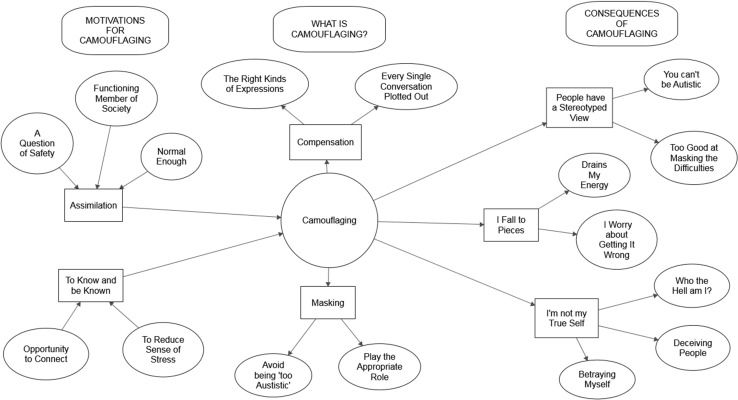
Camouflaging of autistic characteristics in social situations is hypothesised as a common social coping strategy for adults with autism spectrum conditions (ASC). Camouflaging may impact diagnosis, quality of life, and long-term outcomes, but little is known about it. This qualitative study examined camouflaging experiences in 92 adults with ASC, with questions focusing on the nature, motivations, and consequences of camouflaging. Thematic analysis was used to identify key elements of camouflaging, which informed development of a three-stage model of the camouflaging process. First, motivations for camouflaging included fitting in and increasing connections with others. Second, camouflaging itself comprised a combination of masking and compensation techniques. Third, short- and long-term consequences of camouflaging included exhaustion, challenging stereotypes, and threats to self-perception.
Overview
The claims and statistics of this paper haven’t been checked yet.
Free: it reads the open-access text and checks the first 5 claims that cite a source we can check. Create a free account to check every claim.
Integrity signals
Registry
Cites
Statistics
Figures
Verification
Claims the paper makes
The claims and statistics of this paper haven’t been checked yet.
Free: it reads the open-access text and checks the first 5 claims that cite a source we can check. Create a free account to check every claim.
Claims other papers make about this one
Each is checked against this paper’s own text: does it say what the citing paper says it does?
The source backs part of the claim, not all of it — or backs it for a different population, condition or comparison.
In the citing paper
“OSCE-style assessments introduce distinctive equity challenges, particularly for students with autism and communication differences who may find formats relying on rapid interpersonal exchanges and performance under time pressure disproportionately demanding [19,20].”
From Clinical assessment meets laboratory science: adapting OSCE methodology for authentic biosciences evaluation in the age of generative AI (2025) · cites this paper as [20]
Experimental — accuracy not yet measuredThe source backs part of the claim, not all of it — or backs it for a different population, condition or comparison.
In the citing paper
“Yet, we know that camouflaging is linked to a range of negative consequences for autistic adults (e.g. misdiagnosis, identity confusion and mental health difficulties; Beck et al., 2020; Cassidy et al., 2018; Hull et al., 2017).”
From Camouflaging in an everyday social context: An interpersonal recall study (2021) · cites this paper as Hull et al., 2017
Experimental — accuracy not yet measuredThe cited source says what the claim attributes to it.
In the citing paper
“In addition to potential sex1 differences in clinical presentation (Lai et al. 2014; May et al. 2014; Young et al. 2018), it is increasingly recognised that autistic people can hide their ASD symptoms or use compensatory behaviours to mitigate social challenges (Gould and Ashton-Smith 2011; Hull et al. 2017; Livingston et al. 2019; Tierney et al. 2016).”
From Barriers to Autism Spectrum Disorder Diagnosis for Young Women and Girls: a Systematic Review (2021) · cites this paper as Hull et al. 2017
The cited source says what the claim attributes to it.
In the citing paper
“Results of three exploratory studies using predominately qualitative methodologies were not suggestive of sex or gender differences in camouflaging (Cage et al., 2018;Hull et al., 2017;Livingston et al. 2020).”
From Camouflaging in autism: A systematic review (2021) · cites this paper as Hull et al., 2017
The cited source says what the claim attributes to it.
In the citing paper
“Autistic people report attempting to camouflage their ASC in order to try and fit in in social situations, which may delay obtaining a timely ASC diagnosis and negatively affect their mental health [31–33].”
From Risk markers for suicidality in autistic adults (2018) · cites this paper as [32]
6 more claims about this paper
Create a free account to see every claim other papers make about this one.
Self-check
Percentages, sums and reported differences re-computed from the paper’s own numbers.
The self-check needs the paper’s full text.
Citations
Cites
Using thematic analysis in psychology
Braun, V., & Clarke, V. (2006) · Qualitative Research in Psychology · doi:10.1191/1478088706qp063oa · Cited by 194,414
Qualitative research practice: a guide for social science students and researchers
(2003) · Choice Reviews Online · doi:10.5860/choice.41-1319 · Cited by 10,543
Baron-Cohen, S., Wheelwright, S., Skinner, R., Martin, J., & Clubley, E. (2001) · Journal of Autism and Developmental Disorders · doi:10.1023/a:1005653411471 · Cited by 6,450
Self-citationIntroducing Qualitative Research in Psychology
Willig, C. (2001) · Cited by 3,012
Evolving guidelines for publication of qualitative research studies in psychology and related fields
Elliott, R., Fischer, C. T., & Rennie, D. L. (1999) · British Journal of Clinical Psychology · doi:10.1348/014466599162782 · Cited by 2,491
Epidemiology of Pervasive Developmental Disorders
Fombonne, E. (2009) · Pediatric Research · doi:10.1203/pdr.0b013e31819e7203 · Cited by 1,971 · cited 2×
“Amongst clinical samples, male to female gender ratios for ASC diagnosis are generally around 4:1 (Fombonne 2009), but when active case ascertainment is used within the general population, the ratio lowers to around 3:1 (Sun et al.”
BackgroundPrevalence of Autism Spectrum Disorders in a Total Population Sample
Kim, Y. S., Leventhal, B. L., Koh, Y.-J., Fombonne, E., Laska, E., Lim, E.-C., Cheon, K.-A., Kim, S.-J., Kim, Y.-K., Lee, H., et al. (2011) · American Journal of Psychiatry · doi:10.1176/appi.ajp.2011.10101532 · Cited by 1,524
Sex/Gender Differences and Autism: Setting the Scene for Future Research
Lai, M.-C., Lombardo, M. V., Auyeung, B., Chakrabarti, B., & Baron-Cohen, S. (2015) · Journal of the American Academy of Child & Adolescent Psychiatry · doi:10.1016/j.jaac.2014.10.003 · Cited by 1,120
Self-citationPostsecondary education and employment among youth with an autism spectrum disorder
Shattuck, P. T., Narendorf, S. C., Cooper, B., Sterzing, P. R., Wagner, M., & Taylor, J. L. (2012) · PEDIATRICS · doi:10.1542/peds.2011-2864 · Cited by 1,110
Bargiela, S., Steward, R., & Mandy, W. (2016) · Journal of Autism and Developmental Disorders · doi:10.1007/s10803-016-2872-8 · Cited by 1,087 · cited 1×
“Similar themes were also found during qualitative interviews with latediagnosed women with ASC (Bargiela et al. 2016).”
Self-citation
Research works printed but not linked: 3
- American Psychiatric Association (2013). DSM
- Gould, J., & Ashton-Smith, J. (2011). Missed diagnosis or misdiag- nosis? Girls and women on the autism spectrum. Good Autism Practice (GAP), 12(1), 34-41. Retrieved from http://docserver. ingentaconnect.com/deliver/connect/bild/14662973/v12n1/s5.pd
- Holliday Willey, L. (2015). Pretending to be normal: Living with Asperger's Syndrome (Autism Spectrum Disorder) (Expanded Edition). London: Jessica Kingsley.
Cited by
Items 401–500 of 1,001
Social motor synchrony and interactive rapport in autistic, non-autistic, and mixed-neurotype dyads
Efthimiou, T. N., Wilks, C. E. H., Foster, S. J., Dodd, M., Sasson, N. J., Ropar, D., Lages, M., Fletcher‐Watson, S., & Crompton, C. J. (2025) · Autism · doi:10.1177/13623613251319585 · Cited by 19
Jeanneret, N., Courcy, I., Caron, V., Giroux, M., Guerrero, L., Ouimet, M., d’Arc, B. F., & Soulières, I. (2022) · Research in Autism · doi:10.1016/j.rasd.2022.102038 · Cited by 19
"But the Bumpies Hurt!": Autism and the Importance of Identity-first Language
Pineo, E. (2022) · Including Disability · doi:10.51357/id.vi2.194 · Cited by 20
Wellness Efforts for Autistic Women
Tint, A., Hamdani, Y., Sawyer, A., Desarkar, P., Ameis, S. H., Bardikoff, N., & Lai, M. (2018) · Current Developmental Disorders Reports · doi:10.1007/s40474-018-0148-z · Cited by 19
Self-citationNeuro-Normative Epistemic Injustice – Consequences for the UK Education Crisis and School Anxiety
Fisher, E., MacLennan, K., Mullally, S. L., & Rodgers, J. (2025) · Neurodiversity · doi:10.1177/27546330251353565 · Cited by 19
“In school, however, camou fl aging demands signi fi cant effort to conform or risk punishment, judgement, and social isolation (Cage & Troxell-Whitman, 2019; Howe et al., 2023; Hull et al., 2017; Kidwell et al., 2023; Poed & Fox, 2023).”
Consolidating a framework of autistic camouflaging strategies: An integrative systematic review
Nel, J., Spedding, M. F., & Malcolm‐Smith, S. (2025) · Autism · doi:10.1177/13623613251335472 · Cited by 20
Cognitive and Social Cognitive Self-assessment in Autistic Adults
DeBrabander, K. M., Pinkham, A. E., Ackerman, R. A., Jones, D. R., & Sasson, N. J. (2020) · Journal of Autism and Developmental Disorders · doi:10.1007/s10803-020-04722-x · Cited by 19
An Intersectional Examination of Disability and Race Models in Behavior-Analytic Practice
Catrone, R. G., Baires, N. A., Loya, M. R. M., & Brown-Hollie, J. P. (2022) · Behavior and Social Issues · doi:10.1007/s42822-022-00116-z · Cited by 18
“…of overarching concerns mentioned by participants in McGill and Robinson’s (2021) study included pressure to mask (also known as camouflaging; see Hull et al., 2017) their preferences (e.g., stereotypy or preferred topics of discussion) and not being permitted agency to express their desires or…”
BackgroundNwaordu, G., & Charlton, R. A. (2023) · Journal of Autism and Developmental Disorders · doi:10.1007/s10803-023-06133-0 · Cited by 19
“Studies suggest that autistic people frequently supress their preferred stims and these substitute stims may be less effective as cop - ing mechanisms (Hull et al., 2017; Livingston et al., 2018).”
BackgroundDisability barriers autistic girls face in secondary education: A systematic review
Urbaniak, K., & D’Amico, M. (2024) · Autism · doi:10.1177/13623613241294189 · Cited by 19
“Historically autistic voices, particularly female voices, have not been centred in autism research (Hull et al., 2017; Strang et al., 2018).”
Camouflage, Burnout-Exhaustion, and Depression in Autistic Adults
Benatov, J., Mahlev, E. S., & Yehuda, S. B. (2025) · Autism in Adulthood · doi:10.1089/aut.2024.0147 · Cited by 18
Pérez-Arqueros, M., Jamett-Cuevas, V., Pulgar-Vera, V., Santander-Gonzalez, R., Pemau, A., & Álvarez-Cabrera, P. L. (2025) · Research in Autism · doi:10.1016/j.reia.2025.202540 · Cited by 18
Life Is a Stage: Autistic Perspectives on Neurotypicality
Angulo-Jiménez, H., Chan, M., & DeThorne, L. S. (2019) · Autism in Adulthood · doi:10.1089/aut.2019.0024 · Cited by 18
“Given the powerful references to exhaustion, isolation, and burnout across the vlogs and throughout the literature on camouflaging, 21,22,24 it is critical for professionals to be aware of the extent to which pressure to behave neurotypically may contribute to the relatively high rates of depression…”
Riccio, A., Santos, J. D., Kapp, S. K., Jordan, A., DeNigris, D., & Gillespie‐Lynch, K. (2020) · Autism in Adulthood · doi:10.1089/aut.2019.0067 · Cited by 19
The Value of Categorical Polythetic Diagnoses in Psychiatry
Fellowes, S. (2021) · The British Journal for the Philosophy of Science · doi:10.1086/714801 · Cited by 18
“while the service user brings expertise about their own life and the meaning and impact of their relationships and circumstances’ (Johnstone [2018], p.”
BackgroundInfluentialBarriers to Accessing Healthcare: Perspectives from Autistic Adults and Carers
Calleja, S., Kingsley, J., Islam, A. F. M., & McDonald, R. L. (2021) · Qualitative Health Research · doi:10.1177/10497323211050362 · Cited by 18
“Similarly, Hull et al. (2017) and Perry et al. (2020) discussed how camouflaging autistic traits is a common technique used for coping in social situations.”
BackgroundRoberts, R., Stacey, J., Jenner, S., & Maguire, E. (2022) · Review Journal of Autism and Developmental Disorders · doi:10.1007/s40489-022-00320-y · Cited by 18
“Evidence suggests that this hiding of one’s true self can be mentally and physically draining, and requires excessive concentration, self-control and discomfort (Hull et al., 2017; Mandy, 2019).”
BackgroundStrang, J. F., McClellan, L. S., Raaijmakers, D., Caplan, R., Klomp, S. E., Reutter, M., Lai, M., Song, M., Gratton, F. V., Dale, L. K., et al. (2023) · Autism in Adulthood · doi:10.1089/aut.2023.0002 · Cited by 18
“Experiences of autism being missed or doubted have been highlighted in the emerging literature on late/missed autism diagnosis, 41–43 including as related to compensation, masking, 44,45 and/or expressions of autism that differ from common cisgender male autistic expressions.”
Self-citationUnderstanding how autistic pupils experience secondary school: autism criteria, theory and FAMe™
Leatherland, J. (2018) · Sheffield Hallam University · doi:10.7190/shu-thesis-00101 · Cited by 19
Clarke, E., Hull, L., Loomes, R., McCormick, C. E. B., Sheinkopf, S. J., & Mandy, W. (2021) · Research in Autism Spectrum Disorders · doi:10.1016/j.rasd.2021.101844 · Cited by 17
Self-citationWolstencroft, J., Kerry, E., Denyer, H., Watkins, A., Mandy, W., & Skuse, D. (2021) · Autism Research · doi:10.1002/aur.2495 · Cited by 17
“Many females with social communication disorders are capable of social imitation, which enables them to compensate quite effectively for their social differences in early- to mid- childhood (Hull et al., 2017).”
BackgroundSelf-citationFisher, E., MacLennan, K., Mullally, S. L., Rodgers, J., & Tzemou, E. (2025) · Neurodiversity · doi:10.1177/27546330251385325 · Cited by 17
“However, this is exhausting, leading to identity crises, undetected distress and, thus, school anxiety (Crane et al., 2023; Hull et al., 2017).”
Attitudes to Interpersonal Touch in the Workplace in Autistic and non-Autistic Groups
Penton, T., Bowling, N. C., Vafeiadou, A., Hammond, C., Bird, G., & Banissy, M. J. (2022) · Journal of Autism and Developmental Disorders · doi:10.1007/s10803-022-05710-z · Cited by 17
“Masking behav - iours are often associated with increased social exhaustion and mental health difficulties in autistic people (Hull et al., 2017 , 2021 ).”
BackgroundMcGowan, J. J., & Mcgregor, I. P. (2023) · International ACM SIGACCESS Conference on Computers and Accessibility (ASSETS) · doi:10.1145/3597638.3608392 · Cited by 17
Norris, J. E., Nicholson, J., Prosser, R., Farrell, J., Remington, A., Crane, L., Hull, L., & Maras, K. (2024) · Research in Autism · doi:10.1016/j.rasd.2024.102333 · Cited by 17
Self-citationLei, J., Leigh, E., Charman, T., Russell, A., & Hollocks, M. J. (2024) · Autism · doi:10.1177/13623613241238251 · Cited by 17
“For both autistic traits and GAD, we note that camou-flaging was greater when adolescent and caregiver reports both reported higher levels of symptom severity rather than lower levels, suggesting that young people who experience greater autistic traits and anxiety symptoms may be both more likely to camouflage as well…”
BackgroundInfluentialBuckley, E., Sideropoulos, V., Pellicano, E., & Remington, A. (2024) · Neurodiversity · doi:10.1177/27546330241245354 · Cited by 17
“These fears of being judged negatively are held by many autistic people (Davidson, 2010; Davidson & Henderson, 2010; Hull et al., 2017) and those with ADHD (e.g. Lebowitz, 2016), and it is common for those with any type of disability to be judged as less capable than those without (Colella & Varma,…”
Brake, J. (2024) · Disability & Society · doi:10.1080/09687599.2024.2374491 · Cited by 17
“…regarding one’s own identity and self. camouflaging as a tiring and effortful act (Bargiela, Steward, and Mandy 2016; cage and Troxell-Whitman 2019; Hull et al. 2017; Perry et al. 2022) that often lead to feelings of disconnection from and confusion about the self (Bargiela, Steward, and Mandy…”
InfluentialMcKinnon, K., Bougoure, M., Zhuang, S., Tan, D. W., & Magiati, I. (2024) · Autism · doi:10.1177/13623613241287964 · Cited by 17
“Autistic people have reported that camouflaging may be driven by a fear of ostracism and bullying (Cage & Troxell-Whitman, 2019; Hull et al., 2017) and can be a way to avoid being negatively perceived (e.g. Bernardin et al., 2021; Chapman et al., 2022).”
InfluentialSelf-compassion as an antidote to self-stigma and shame in autistic adults
Riebel, M., Bureau, R., Rohmer, O., Clément, C., & Weiner, L. (2025) · Autism · doi:10.1177/13623613251316965 · Cited by 18
“Hence, camouflaging can be considered as a coping response to being ‘othered’ and feeling pressure to conform to non-autistic social rules that involves dissimu-lating some aspects of one’s identity as opposed to embracing them (Hull et al., 2017; Pearson & Rose, 2021; Perry et al., 2022).”
The consequences of social camouflaging in autistic adults: A systematic review
Summerill, J., & Summers, S. J. (. (2025) · Research in Autism · doi:10.1016/j.reia.2025.202556 · Cited by 17
Experiences of Females With Late Diagnosis of Autism: Descriptive Qualitative Study
Garcia-Simon, M. I., Navarro-Jimenez, E. D. M., Martinez‐Ortigosa, A., Ropero‐Padilla, C., Román, P., & Rodríguez-Arrastia, M. J. (2025) · Nursing Research · doi:10.1097/nnr.0000000000000825 · Cited by 18
Recognising, supporting and understanding Autistic adults in general practice settings
Bradshaw, P., Pickett, C., van Driel, M. L., Brooker, K., & Urbanowicz, A. (2021) · Australian Journal of General Practice · doi:10.31128/ajgp-11-20-5722 · Cited by 16
Dolfi, A., & Tudose, C. (2025) · Journal of Medicine and Life · doi:10.25122/jml-2025-0118 · Cited by 17
“…challenges are even greater for women, as they experience emotional exhaustion and burnout after years of sustained effort to hide autistic traits [83], leading to higher costs for mental health services as symptoms worsen due to delayed access to proper interventions caused by misdiagnosis and…”
Mok, T., Tang, A., McCrimmon, A. W., & Oehlberg, L. (2023) · International ACM SIGACCESS Conference on Computers and Accessibility (ASSETS) · doi:10.1145/3597638.3608416 · Cited by 16
“Some of the factors that negatively influence the QoL of autistic adults include not having supportive relationships [38], experiencing isolation and social exclusion [43], masking one’s true self during social interactions [15], and anxiety and depression [28].”
Complementary and Alternative Medicine for Autism – A Systematic Review
Doherty, M., Foley, K., & Schloss, J. M. (2024) · Journal of Autism and Developmental Disorders · doi:10.1007/s10803-024-06449-5 · Cited by 17
“Ratios also change markedly with age, and as females are stated to be able to articulate their inner experience more as they get older, with internalizing behaviours such as depression, anxiety and eating disorders more prevalent in autistic females (Hull et al., 2017).”
Parada, F. J., Grasso‐Cladera, A., Rossi, A., Soto‐Icaza, P., Arenas‐Pérez, M., & Errázuriz, M. C. (2024) · European Journal of Neuroscience · doi:10.1111/ejn.16463 · Cited by 17
“In addition, it can negatively impact self-identity development (Costa-Cordella et al., 2023; Hull et al., 2019, 2017).”
Person-environment fit and social camouflaging in autism
Klein, J., & Macoun, S. J. (2024) · New Ideas in Psychology · doi:10.1016/j.newideapsych.2024.101112 · Cited by 16
Does Camouflaging Cause Reduced Quality of Life? A Co-Twin Control Study
Remnélius, K. L., Neufeld, J., Isaksson, J., & Bölte, S. (2024) · Journal of Autism and Developmental Disorders · doi:10.1007/s10803-024-06583-0 · Cited by 17
“…of data suggesting that camouflaging might be a risk factor for unfavorable out - comes including low QoL, in line with qualitative reports from autistic people (Hull et al., 2017 ), and subsequently also from people without an autism diagnosis (Bernardin et al., 2021b; Livingston et al., 2019 ).”
InfluentialTien, I. S., Pearson, A., Sozeri, S., & Seers, K. (2025) · Autism in Adulthood · doi:10.1089/aut.2024.0178 · Cited by 17
Bhargava, A., & Ashwin, C. (2025) · Research in Autism · doi:10.1016/j.reia.2025.202547 · Cited by 17
Williams, E. G., Smith, M. J., Sherwood, K. L., Lovelace, T. S., & Bishop, L. (2021) · Journal of Autism and Developmental Disorders · doi:10.1007/s10803-021-05242-y · Cited by 16
Establishing the transdiagnostic contextual pathways of emotional outbursts
Chung, J. C. Y., Mevorach, C., & Woodcock, K. A. (2022) · Scientific Reports · doi:10.1038/s41598-022-11474-4 · Cited by 16
Perspectives of autistic adults on the strategies that help or hinder successful conversations
Silver, K., & Parsons, S. (2022) · Autism & Developmental Language Impairments · doi:10.1177/23969415221101113 · Cited by 16
“Indeed, ‘ camou fl aging ’ (hiding behaviours associated with their autism in social situations) and fi nding ways to prevent others from seeing their social dif fi culties is described by autistic adults as being mentally, physically, and emotionally draining (Hull et al., 2017).”
Novack, L. I., Schnell, L. K., Feuerbacher, E. N., & Fernandez, E. J. (2023) · Animals · doi:10.3390/ani13111850 · Cited by 16
Autistic adults’ inclination to lie in everyday situations
Bagnall, R., Russell, A., Brosnan, M., & Maras, K. (2023) · Autism · doi:10.1177/13623613231183911 · Cited by 17
“Indeed, the experience of camouflaging has been described by some autistic adults as akin to deception (Hull et al., 2017), as has the related construct of compensation (Livingston et al., 2019b).”
BackgroundCosta‐Cordella, S., Soto‐Icaza, P., Carmona, K. B., Grasso‐Cladera, A., & Malberg, N. T. (2023) · Frontiers in Psychiatry · doi:10.3389/fpsyt.2023.1259432 · Cited by 16
“Unlike typical social adaptation, camouflage in people with ASD involves a unique and often exhausting compensation and masking mechanism (56).”
BackgroundKersten, M. L., Coxon, K., Lee, H., & Wilson, N. J. (2020) · Journal of Transport & Health · doi:10.1016/j.jth.2020.100922 · Cited by 19
Stockwell, K. M., Bottini, S. B., Jaswal, V. K., & Gillis, J. L. (2020) · Journal of Autism and Developmental Disorders · doi:10.1007/s10803-020-04769-w · Cited by 16
Mental-health before and during the COVID-19 pandemic in adults with neurodevelopmental disorders
Shakeshaft, A., Blakey, R., Kwong, A. S. F., Riglin, L., Smith, G. D., Stergiakouli, E., Tilling, K. M., & Thapar, A. (2023) · Journal of Psychiatric Research · doi:10.1016/j.jpsychires.2023.01.029 · Cited by 17
“Previous evidence indicates that autistic females commonly mask or cam-ouflage behaviors in social situations in order to ‘fit in ’ (Hull et al., 2017, 2019a) and camouflaging has been linked to greater symptoms of depression and anxiety in autistic adults (Hull et al., 2021).”
Leighton, D. C., Legate, N., LePine, S., Anderson, S. F., & Grahe, J. E. (2018) · Psi Chi Journal of Psychological Research · doi:10.24839/2325-7342.jn23.2.98 · Cited by 18
Tsirgiotis, J. M., Young, R. L., & Weber, N. (2022) · Journal of Autism and Developmental Disorders · doi:10.1007/s10803-021-05286-0 · Cited by 15
Neurodivergent Legitimacy in Computing Spaces
Kirdani-Ryan, M., & Ko, A. J. (2024) · ACM Transactions on Computing Education · doi:10.1145/3690651 · Cited by 15
“As existing diagnostic measures are framed in deficit [55], and stereotypes of neurodivergence are largely negative [33, 66, 81], many neurodivergent individuals are concerned with the stigma-tization associated with their diagnosis or their behaviors.”
InfluentialThe Role of Gender and Strong Interests in Self-Reported Camouflaging of Autistic Adults
Putnam, O. C., Swisher, M., McFayden, T. C., Chan, D. V., & Harrop, C. (2025) · Neurodiversity · doi:10.1177/27546330251351732 · Cited by 15
“…(Attwood, 2007; Bargiela et al., 2016; Cridland et al., 2014; Tierney et al., 2016), research suggests autistic people of all genders employ a range of camou fl aging behaviors and strategies, which often come at a great cost (J. Cook et al., 2021; Hull et al., 2017; Livingston et al., 2019).”
InfluentialNelson, T. K., & Lichwa, H. (2025) · Educational Psychology in Practice · doi:10.1080/02667363.2025.2541211 · Cited by 16
“Masking can lead professionals to assume a child is coping, while distress remains unseen (Hull et al., 2017).”
Camouflaging and autism: Conceptualisation and methodological issues
Arnold, W. M., Bitsika, V., & Sharpley, C. F. (2026) · Autism · doi:10.1177/13623613261420085 · Cited by 17
“…social differences by employing structured techniques to navigate social interactions; (b) ‘masking’ by hiding one’s autistic traits and/or presenting a non-autistic persona; and (c) ‘assimilation’ strategies that facilitate blending in with others in social interactions (Hull et al., 2017, 2019).”
Intersecting effects of sex/gender and autism on structural language: A scoping review
Oates, M., & Bean, A. (2023) · Autism · doi:10.1177/13623613221151095 · Cited by 15
“Research has shown that autistic camouflaging involves adjusting one’s language and communication to appear more neurotypical, such as asking questions, using specific phrases, following conversational scripts (Hull et al., 2017), clarifying speech by rephrasing or using careful wording (Cook et al.”
BackgroundThe social acceptance of neurodiverse children in Irish primary schools
Jones, M. H., Symonds, J. E., Downey, S., Sloan, S., Devine, D., & Kinsella, W. (2023) · International Journal of Inclusive Education · doi:10.1080/13603116.2023.2195861 · Cited by 15
“The predominance of boys identified as autistic may relate to the under-identification of girls as autistic due to cultural norms encouraging autistic females to camouflage their autism behaviours (Hull et al. 2017).”
Corbett, B. A., Muscatello, R. A., Cyperski, M. A., Sadikova, E., Edmiston, E. K., McGonigle, T., Calvosa, R., & Vandekar, S. (2024) · Autism Research · doi:10.1002/aur.3141 · Cited by 16
“Relatively recent research in autistic youth, especially females, has highlighted the presence of camouflaging or the need to compensate or mask behaviors to socially blend in (Campkin, 2000; Corbett et al., 2020; Dean et al., 2017; Hull et al., 2017; Lai et al., 2017).”
Validation of the camouflaging autistic traits questionnaire short form (CATQ-SF)
Hull, L., Mandy, W., Belcher, H., & Petrides, K. V. (2024) · Comprehensive Psychiatry · doi:10.1016/j.comppsych.2024.152525 · Cited by 16
“Camouflaging involves the hiding or compensating for autistic characteristics during social interactions, for instance by forcing oneself to make eye contact or hiding repetitive behaviours from others [4].”
Self-citation“There is just too much going on there”: Nonverbal communication experiences of autistic adults
Radford, H., Reidinger, B., Kapp, S. K., & de Marchena, A. B. (2025) · PLoS ONE · doi:10.1371/journal.pone.0325465 · Cited by 15
“Autistic adults have reported that their NVC is often misunderstood by others [20–22], despite studies reporting that autistic adults produce emotional prosody and facial expressions that are easier to identify than those produced by non-autistic people [7,17,19].”
Teaching While Autistic: Constructions of Disability, Performativity, and Identity
Baird, A. (2020) · Ought The Journal of Autistic Culture · doi:10.9707/2833-1508.1040 · Cited by 15
“Research has found that individuals who are better able to conceal behavioral characteristics often aligned with autism report higher levels of confidence in their ability to “make friends, improve their social support, and perform better in job interviews” (Hull et al., 2017, p. 2521).”
BackgroundIs This Autism? A Guide for Clinicians and Everyone Else
Henderson, D., Wayland, S. C., & White, J. (2023) · Routledge eBooks · doi:10.4324/9781003242130 · Cited by 15
Bitsika, V., & Sharpley, C. F. (2019) · Journal of Autism and Developmental Disorders · doi:10.1007/s10803-019-04159-x · Cited by 15
Applying to medical school with undiagnosed dyslexia: a collaborative autoethnography
Cornwell, M., & Shaw, S. C. K. (2023) · Advances in Health Sciences Education · doi:10.1007/s10459-023-10258-3 · Cited by 14
“The terms “masking” or “camouflaging” are widely accepted within the neurodiversity literature, more specifi - cally that relating to autism (Hull et al., 2017; Pearson & Rose, 2012).”
BackgroundEllestad, A. I., Beymer, L. L., & Villegas, S. G. (2023) · Journal of Employment Counseling · doi:10.1002/joec.12212 · Cited by 14
Autistic adults’ experiences of managing wellbeing and implications for social prescribing
Featherstone, C., Sharpe, R. A., Axford, N., Asthana, S., & Husk, K. (2023) · Disability & Society · doi:10.1080/09687599.2023.2263628 · Cited by 15
“These concepts are linked to well-being, impacting mental health, social interactions and daily activities (Bradley et al. 2021; Buckle et al. 2021; Cassidy et al. 2018; Cage and Troxell-Whitman 2019; Hull et al. 2017; Raymaker et al. 2020; Welch et al. 2021).”
BackgroundStroud, J., Rice, C., Orsini, A., Schlosser, M., Lee, J., Mandy, W., & Kamboj, S. K. (2024) · Psychopharmacology · doi:10.1007/s00213-024-06685-8 · Cited by 14
“Interestingly, it has been proposed that some level of camouflaging may be adaptive (Hull et al. 2017), perhaps as a pragmatic response to living in a predominantly non-autistic society, and occurs, to a lesser extent, in the non-autistic population (Hull et al. 2019).”
Self-citationGoscicki, B. L., Scoggins, M. E., Espinosa, G. H., & Hodapp, R. M. (2025) · Journal of Autism and Developmental Disorders · doi:10.1007/s10803-024-06716-5 · Cited by 15
“The adult literature suggests that camouflaging enables individuals to receive an education, maintain a job, and establish relationships with neurotypical people (Hull et al., 2017).”
Suckle, E., Chown, N., Tarbox, J., & Mathur, S. K. (2025) · Disability & Society · doi:10.1080/09687599.2025.2478049 · Cited by 14
“Suckle & Chown (10): Both masking and unmasking are increasingly linked to a considerable mental health impact (Hull et al. 2017; Pearson and Rose 2021; Roberts (2024).”
Experiencing Independence: Perspectives from Autistic Adults
Bhattacharya, P., Matthews, R. J., Field, R., Heath, H., Woodcock, K. A., & Surtees, A. D. R. (2025) · Journal of Autism and Developmental Disorders · doi:10.1007/s10803-025-06812-0 · Cited by 14
“…emotional support, engaging in recreation and leisure, adopting technology to adjust routines (Gha - nouni & Quirke, 2023 ), social camouflaging (Hull et al., 2017; Schneid & Raz, 2020) are some of the strategies that autistic adults have identified using to navigate their way towards…”
Camouflaging in autism: A cause or a consequence of mental health difficulties?
van der Putten, W., Mol, A. J. J., Radhoe, T. A., Torenvliet, C., van Rentergem, J. A. A., Groenman, A. P., & Geurts, H. M. (2025) · Autism · doi:10.1177/13623613251347104 · Cited by 14
“Autistic people camouflage for different reasons, such as getting by at work, maintaining a job, finishing education, or to make friends (Cage & Troxell-Whitman, 2019; Hull et al., 2017; Livingston et al., 2019).”
InfluentialWilson, A. C. (2022) · Autism & Developmental Language Impairments · doi:10.1177/23969415221123286 · Cited by 14
“…a preference to engage in less social communication (called Aloof Behaviour in the BAPQ) as a distinguishable phenomenon from behaviour that may be seen as more overtly “disruptive” to neurotypical interactions (Pragmatic Language Problems in the BAPQ; Hurley et al., 2007; Sasson et al., 2013).”
BackgroundØverland, E., Hauge, Å. L., Orm, S., Pellicano, E., Øie, M. G., Skogli, E. W., & Andersen, P. N. (2022) · Frontiers in Psychiatry · doi:10.3389/fpsyt.2022.1058601 · Cited by 14
Dell’Osso, L., Nardi, B., Bonelli, C., Gravina, D., Benedetti, F., Amatori, G., Battaglini, S., Massimetti, G., Luciano, M., Berardelli, I., et al. (2023) · Frontiers in Psychiatry · doi:10.3389/fpsyt.2023.1124241 · Cited by 14
Est-ce que Vous Compute? Code-Switching, Cultural Identity, and AI
Falbo, A., & LaCroix, T. (2022) · Feminist Philosophy Quarterly · doi:10.5206/fpq/2022.3/4.14264 · Cited by 14
Lei, J., Cooper, K., & Hollocks, M. J. (2025) · Autism in Adulthood · doi:10.1089/aut.2024.0005 · Cited by 14
Bitsika, V., & Sharpley, C. F. (2019) · Journal of Autism and Developmental Disorders · doi:10.1007/s10803-019-04339-9 · Cited by 14
Williams, G. (2020) · Research for All · doi:10.14324/rfa.04.2.13 · Cited by 14
Reflections on my experiences as a non-autistic autism researcher
Thompson‐Hodgetts, S. (2022) · Autism · doi:10.1177/13623613221121432 · Cited by 14
“Many autistic people, including my colleagues, students and friends, report experiences of conforming to others expectations and camouflaging what are perceived as autistic characteristics in an attempt to avoid marginalization and discrimination, which can challenge one’s self-perception and well-being (Finch et al.,…”
BackgroundBeyond ‘bad’ behaviors: A call for occupational scientists to rethink autism
Taylor, E. E. (2022) · Journal of Occupational Science · doi:10.1080/14427591.2022.2136231 · Cited by 14
“(p. 2) Masking may thus facilitate receiving the opportunities, acceptance, and safety denied autistic people who cannot or choose not to mask (the ‘ visibly ’ autistic) (Cage & Troxell-Whitman, 2019; Hull et al., 2017; Pearson & Rose, 2021).”
BackgroundKeates, N., Waldock, K. E., & Dewar, E. F. A. (2022) · Journal of Speech Language and Hearing Research · doi:10.1044/2022_jslhr-22-00331 · Cited by 14
“Fundamentally, Keates (2022) and Beechey (2022) both suggested that autistic sociality and system of interpretation have a growing evidence-base.”
BackgroundKritika, K., Williams, R. M., & Ringland, K. E. (2025) · Proceedings of the 2025 CHI Conference on Human Factors in Computing Systems · doi:10.1145/3706598.3714094 · Cited by 13
“” Masking, therefore, takes a toll on neurodivergent persons [6, 50, 123].”
Russ, V., Kovshoff, H., Brown, T., Abbott, P., & Hadwin, J. A. (2020) · Journal of Autism and Developmental Disorders · doi:10.1007/s10803-018-3693-8 · Cited by 13
Countering essentialism in psychiatric narratives
Broeker, M. D., & Arnaud, S. (2024) · Philosophical Psychology · doi:10.1080/09515089.2024.2407502 · Cited by 14
“…such as phenomenological accounts of psychopathology (Drożdżowicz, 2020; Ritunnano et al., 2021), as well as the integration of first-person perspectives in research, as seen in research testimonies (Hull et al., 2017) or participatory research in psychiatry (Friesen et al., 2021; Ş. Tekin, 2022).”
Newman, K., Snay, S., Endres, M., Parikh, M., & Begel, A. (2025) · International ACM SIGACCESS Conference on Computers and Accessibility (ASSETS) · doi:10.1145/3663547.3746334 · Cited by 12
“I wish I could just be myself”: Experiences of social camouflaging in adults with ADHD
Mylett, M. L., Boucher, T. Q., & Iarocci, G. (2026) · Research in Neurodiversity · doi:10.1016/j.rin.2026.100018 · Cited by 13
Sex Differences in Autism Spectrum Disorders Across the Lifespan
Lawson, L. P. (2019) · Current Developmental Disorders Reports · doi:10.1007/s40474-019-00164-y · Cited by 13
Davids, R. C. D., Groen, Y., Berg, I. J., Tucha, O. M., & van Balkom, I. D. C. (2020) · Research in Autism · doi:10.1016/j.rasd.2020.101655 · Cited by 13
“…most likely that late first-diagnosed autistic individuals (after the age of 20 years) have less severe symptoms than adults with an early ASD-diagnosis (in childhood or adolescence) (Happ ´ e & Charlton, 2012; Hull et al., 2017; Jones, Goddard, Hill, Henry, & Crane, 2014; Lehnhardt et al., 2012).”
BackgroundDellapiazza, F., Michelon, C., Rattaz, C., Picot, M., & Baghdadli, A. (2022) · Frontiers in Psychiatry · doi:10.3389/fpsyt.2022.998195 · Cited by 13
O’Loghlen, J., & Lang, C. P. (2024) · Autism in Adulthood · doi:10.1089/aut.2022.0094 · Cited by 13
Murta, V., Seiffe, A., & Depino, A. M. (2023) · Sexes · doi:10.3390/sexes4030024 · Cited by 13
“Females may be underdiagnosed due to their tendency to camouflage autistic traits [9] and the possibility that ASD manifests differently in females than in males, as proposed by the female autism phenotype theory [10].”
Deliberate and Self-Conscious Adaptation of Eye-Contact by Autistic Adults
Garvey, A., Ryan, C., & Murphy, M. F. (2024) · Journal of Autism and Developmental Disorders · doi:10.1007/s10803-024-06296-4 · Cited by 13
“The tendency for autistic people to modify their social behaviours and autistic traits in order to adapt or cope within a social world has been found in other studies (Cook et al., 2022; Hull et al., 2017 ).”
Oates, M., Bean, A., Kickbusch, R., & Sauer, S. (2024) · American Journal of Speech-Language Pathology · doi:10.1044/2024_ajslp-23-00393 · Cited by 13
Social prescribing for autistic people: A framework for service provision
Charlton, R. A., Crompton, C. J., Roestorf, A., Torry, C., & The Autistica Physical Health and Ageing Study Group (2020) · AMRC Open Research · doi:10.12688/amrcopenres.12901.1 · Cited by 13
Differential diagnosis on the autism spectrum: Theorizing an “Ordinary Autism”
Frigaux, A., Lighezzolo‐Alnot, J., Maleval, J. C., & Évrard, R. (2021) · L Évolution Psychiatrique · doi:10.1016/j.evopsy.2021.01.003 · Cited by 13
Piening, S., van Balkom, I. D. C., Stapert, A. F., Henning, D., Greaves‐Lord, K., Davids, L. R. C. D., Castelein, S., & Groen, Y. (2023) · International Journal of Environmental Research and Public Health · doi:10.3390/ijerph20247183 · Cited by 12
The Role of Everyday Executive Function in Observed Social Symptoms of Autism Spectrum Disorder
Burroughs, C., Muscatello, R. A., & Corbett, B. A. (2024) · Journal of Autism and Developmental Disorders · doi:10.1007/s10803-024-06351-0 · Cited by 12
“…employing broad construct measures (i.e., diagnostic criteria, gold-standard diagnostic instruments) have found no sex differences in social communication and interaction among autistic youth (see meta-analyses Hull et al., 2017a; Mahendiran et al., 2019; Van Wijngaarden-Cremers et al., 2014).”
Methods of studying pathological demand avoidance in children and adolescents: a scoping review
Haire, L., Symonds, J. E., Senior, J., & D’Urso, G. (2024) · Frontiers in Education · doi:10.3389/feduc.2024.1230011 · Cited by 13
Hechler, F. C., Tuomainen, O., Weber, N., Fahr, F., Karlek, B., Maroske, M., Misia, M., & Caruana, N. (2025) · Molecular Autism · doi:10.1186/s13229-025-00643-7 · Cited by 12
“Masking, in contrast, does not always reflect an explicit strategy engaged by autistic people, and may be associated with a cognitive or affective cost— either during or after the masking experience (see e.g., [21, 35, 36]).”
Metadata
- Authors
- Hull, L., Petrides, K. V., Allison, C., Smith, P., Baron-Cohen, S., Lai, M.-C., & Mandy, W.
- Affiliations
- University College London (GB)
- University of Cambridge (GB)
- Centre for Addiction and Mental Health (CA)
- Corresponding author
- Hull, Laura
- Venue
- Journal of Autism and Developmental Disorders
- Published
- 2017-05-19
- Volume
- 47
- Issue
- 8
- Pages
- 2519-2534
- ISSN
- 0162-3257 (ISSN-L)
- 1573-3432
- PMC
- PMC5509825
- OpenAlex
- W2616560149
- Cited by
- 1,365
- References
- 53
- Citations by year
- 2026: 326 · 2025: 212 · 2024: 202 · 2023: 146 · 2022: 124 · 2021: 141 · 2020: 91 · 2019: 73 · 2018: 39 · 2017: 9
- FWCI
- 33.29
- Type
- journal article
- Language
- en
- Open access
- hybrid
- doi.org
- Locations
- Journal of Autism and Developmental Disorders (publishedVersion, cc-by)
- Europe PMC (PubMed Central) (publishedVersion, cc-by)
- PubMed Central (publishedVersion, cc-by)
- PubMed (publishedVersion)
- UCL Discovery (University College London) (submittedVersion)
- Explore Bristol Research (submittedVersion)
- Apollo (University of Cambridge) (submittedVersion, cc-by)
- Apollo (cc-by)
- Funders
- Wellcome Trust (091774/Z/10/Z)
- Centre for Addiction and Mental Health
- National Institute for Health and Care Research (NF-SI-0515-10097)
- Hospital for Sick Children
- Medical Research Council
- Topics
- Life Sciences › Neuroscience › Cognitive Neuroscience › Autism Spectrum Disorder Research
- Social Sciences › Psychology › Clinical Psychology › Family and Disability Support Research
- Health Sciences › Medicine › Psychiatry and Mental health › Child Nutrition and Feeding Issues
- Keywords
- social camouflaging, autism spectrum disorder, autistic adults, masking, compensatory strategies, social coping, social exhaustion, stereotypes, self-perception
- MeSH terms
- Autism Spectrum Disorder, Adaptation, Psychological, Adolescent, Adult, Aged, Female, Humans, Male, Middle Aged, Self Concept, Social Behavior
About these checks
Registry, retraction, Cites and statistics results are computed, not judged, with one exception: a printed reference that no index lists is read once by a model before it counts as a citation error. Claims are extracted by a model and kept only when their quote appears verbatim in the text; each cited source is then checked, with a model’s help, for whether it says what the claim relies on. Those verdicts can be wrong — read the claim’s quote and the cited source before relying on one.
Statistics and arithmetic are recomputed, not judged.
Confidence bands are shown only for fields calibrated on our annotated test set. None is calibrated yet, so no band is shown.
What counts as a claim ›How we measure confidence ›How we check this ›
Are you an author, or do you see a problem with this page? Request a review
Data sources
Bibliographic data: Semantic Scholar, OpenAlex, Crossref.
Contains information from the Semantic Scholar Academic Graph Datasets, made available under the ODC Attribution License (ODC-BY 1.0).
Semantic Scholar’s data is described in: Kinney, R., et al. (2023). The Semantic Scholar Open Data Platform. arXiv:2301.10140.
