

“Putting on My Best Normal”: Social Camouflaging in Adults with Autism Spectrum Conditions
Open accessThe DOI matches its Crossref record; 52 of the 53 references it cites were found in a registry or an index.
Abstract
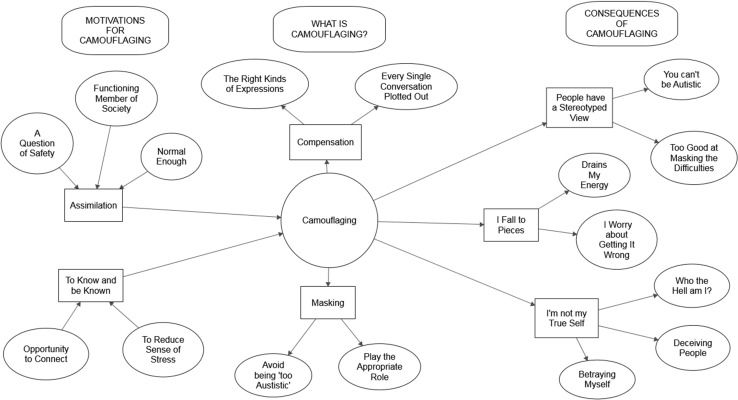
Camouflaging of autistic characteristics in social situations is hypothesised as a common social coping strategy for adults with autism spectrum conditions (ASC). Camouflaging may impact diagnosis, quality of life, and long-term outcomes, but little is known about it. This qualitative study examined camouflaging experiences in 92 adults with ASC, with questions focusing on the nature, motivations, and consequences of camouflaging. Thematic analysis was used to identify key elements of camouflaging, which informed development of a three-stage model of the camouflaging process. First, motivations for camouflaging included fitting in and increasing connections with others. Second, camouflaging itself comprised a combination of masking and compensation techniques. Third, short- and long-term consequences of camouflaging included exhaustion, challenging stereotypes, and threats to self-perception.
Overview
The claims and statistics of this paper haven’t been checked yet.
Free: it reads the open-access text and checks the first 5 claims that cite a source we can check. Create a free account to check every claim.
Integrity signals
Registry
Cites
Statistics
Figures
Verification
Claims the paper makes
The claims and statistics of this paper haven’t been checked yet.
Free: it reads the open-access text and checks the first 5 claims that cite a source we can check. Create a free account to check every claim.
Claims other papers make about this one
Each is checked against this paper’s own text: does it say what the citing paper says it does?
The source backs part of the claim, not all of it — or backs it for a different population, condition or comparison.
In the citing paper
“OSCE-style assessments introduce distinctive equity challenges, particularly for students with autism and communication differences who may find formats relying on rapid interpersonal exchanges and performance under time pressure disproportionately demanding [19,20].”
From Clinical assessment meets laboratory science: adapting OSCE methodology for authentic biosciences evaluation in the age of generative AI (2025) · cites this paper as [20]
Experimental — accuracy not yet measuredThe source backs part of the claim, not all of it — or backs it for a different population, condition or comparison.
In the citing paper
“Yet, we know that camouflaging is linked to a range of negative consequences for autistic adults (e.g. misdiagnosis, identity confusion and mental health difficulties; Beck et al., 2020; Cassidy et al., 2018; Hull et al., 2017).”
From Camouflaging in an everyday social context: An interpersonal recall study (2021) · cites this paper as Hull et al., 2017
Experimental — accuracy not yet measuredThe cited source says what the claim attributes to it.
In the citing paper
“In addition to potential sex1 differences in clinical presentation (Lai et al. 2014; May et al. 2014; Young et al. 2018), it is increasingly recognised that autistic people can hide their ASD symptoms or use compensatory behaviours to mitigate social challenges (Gould and Ashton-Smith 2011; Hull et al. 2017; Livingston et al. 2019; Tierney et al. 2016).”
From Barriers to Autism Spectrum Disorder Diagnosis for Young Women and Girls: a Systematic Review (2021) · cites this paper as Hull et al. 2017
The cited source says what the claim attributes to it.
In the citing paper
“Results of three exploratory studies using predominately qualitative methodologies were not suggestive of sex or gender differences in camouflaging (Cage et al., 2018;Hull et al., 2017;Livingston et al. 2020).”
From Camouflaging in autism: A systematic review (2021) · cites this paper as Hull et al., 2017
The cited source says what the claim attributes to it.
In the citing paper
“Autistic people report attempting to camouflage their ASC in order to try and fit in in social situations, which may delay obtaining a timely ASC diagnosis and negatively affect their mental health [31–33].”
From Risk markers for suicidality in autistic adults (2018) · cites this paper as [32]
6 more claims about this paper
Create a free account to see every claim other papers make about this one.
Self-check
Percentages, sums and reported differences re-computed from the paper’s own numbers.
The self-check needs the paper’s full text.
Citations
Cites
Using thematic analysis in psychology
Braun, V., & Clarke, V. (2006) · Qualitative Research in Psychology · doi:10.1191/1478088706qp063oa · Cited by 194,414
Qualitative research practice: a guide for social science students and researchers
(2003) · Choice Reviews Online · doi:10.5860/choice.41-1319 · Cited by 10,543
Baron-Cohen, S., Wheelwright, S., Skinner, R., Martin, J., & Clubley, E. (2001) · Journal of Autism and Developmental Disorders · doi:10.1023/a:1005653411471 · Cited by 6,450
Self-citationIntroducing Qualitative Research in Psychology
Willig, C. (2001) · Cited by 3,012
Evolving guidelines for publication of qualitative research studies in psychology and related fields
Elliott, R., Fischer, C. T., & Rennie, D. L. (1999) · British Journal of Clinical Psychology · doi:10.1348/014466599162782 · Cited by 2,491
Epidemiology of Pervasive Developmental Disorders
Fombonne, E. (2009) · Pediatric Research · doi:10.1203/pdr.0b013e31819e7203 · Cited by 1,971 · cited 2×
“Amongst clinical samples, male to female gender ratios for ASC diagnosis are generally around 4:1 (Fombonne 2009), but when active case ascertainment is used within the general population, the ratio lowers to around 3:1 (Sun et al.”
BackgroundPrevalence of Autism Spectrum Disorders in a Total Population Sample
Kim, Y. S., Leventhal, B. L., Koh, Y.-J., Fombonne, E., Laska, E., Lim, E.-C., Cheon, K.-A., Kim, S.-J., Kim, Y.-K., Lee, H., et al. (2011) · American Journal of Psychiatry · doi:10.1176/appi.ajp.2011.10101532 · Cited by 1,524
Sex/Gender Differences and Autism: Setting the Scene for Future Research
Lai, M.-C., Lombardo, M. V., Auyeung, B., Chakrabarti, B., & Baron-Cohen, S. (2015) · Journal of the American Academy of Child & Adolescent Psychiatry · doi:10.1016/j.jaac.2014.10.003 · Cited by 1,120
Self-citationPostsecondary education and employment among youth with an autism spectrum disorder
Shattuck, P. T., Narendorf, S. C., Cooper, B., Sterzing, P. R., Wagner, M., & Taylor, J. L. (2012) · PEDIATRICS · doi:10.1542/peds.2011-2864 · Cited by 1,110
Bargiela, S., Steward, R., & Mandy, W. (2016) · Journal of Autism and Developmental Disorders · doi:10.1007/s10803-016-2872-8 · Cited by 1,087 · cited 1×
“Similar themes were also found during qualitative interviews with latediagnosed women with ASC (Bargiela et al. 2016).”
Self-citation
Research works printed but not linked: 3
- American Psychiatric Association (2013). DSM
- Gould, J., & Ashton-Smith, J. (2011). Missed diagnosis or misdiag- nosis? Girls and women on the autism spectrum. Good Autism Practice (GAP), 12(1), 34-41. Retrieved from http://docserver. ingentaconnect.com/deliver/connect/bild/14662973/v12n1/s5.pd
- Holliday Willey, L. (2015). Pretending to be normal: Living with Asperger's Syndrome (Autism Spectrum Disorder) (Expanded Edition). London: Jessica Kingsley.
Cited by
Items 701–800 of 1,001
Exploring lie frequency and emotional experiences of deceptive decision-making in autistic adults
Blackhurst, T., Warmelink, L., Roestorf, A., & Hartley, C. (2025) · Autism · doi:10.1177/13623613251315892 · Cited by 5
“Moreover, self-reported levels of camouflaging are consistently higher in autistic females than males (Hull et al., 2017; Tubío-Fungueiriño et al., 2021), potentially due to differences in stigmatisation between genders (e.g. facing the male-dominated narrative regarding what autism ‘looks like’;…”
Intervention Techniques Targeting Echolalia: A Scoping Review
Dinello, A., & Gladfelter, A. (2025) · American Journal of Speech-Language Pathology · doi:10.1044/2025_ajslp-24-00211 · Cited by 5
Hazlett, A. (2025) · Diversity & Inclusion Research · doi:10.1002/dvr2.70016 · Cited by 5
Hollocks, M. J., McQuaid, G. A., Lee, N., & Wallace, G. L. (2025) · Autism Research · doi:10.1002/aur.70061 · Cited by 5
“The direct effect between social camouflaging and greater mental health challenges has been found across multiple studies (Hull et al. 2017, 2021; McQuaid et al. 2024).”
Guidelines to Assist in Autism Diagnostic Assessments with Females: A Delphi Study
Trundle, G., Chester, V., Alexander, Z., Morris, P. O., & Crump, I. (2025) · Autism in Adulthood · doi:10.1089/aut.2024.0325 · Cited by 5
Carpita, B., Nardi, B., Pini, S., Parri, F., Perrone, P., Pronestì, C., Giovannoni, F., Russomanno, G., Bonelli, C., Massimetti, G., et al. (2025) · Eating and Weight Disorders - Studies on Anorexia Bulimia and Obesity · doi:10.1007/s40519-025-01785-6 · Cited by 5
“In this process, they may dismiss or suppress their emotions and desires, seeing this denial as a way to perform better socially [40, 56, 66, 67].”
InfluentialSasso, I. (2025) · Frontiers in Education · doi:10.3389/feduc.2025.1716619 · Cited by 5
The association between autism, camouflaging and anxiety with suicidal ideation in women
Zubizarreta, S. C.-P., Cruz, S., Pozo-Rodríguez, M., Suárez‐Rama, J. J., Díaz-Hernández, A., Carracedo, Á., Tubío-Fungueiriño, M., & Fernández‐Prieto, M. (2026) · Frontiers in Psychology · doi:10.3389/fpsyg.2025.1685845 · Cited by 5
Beyond Common Reassurances of “It’s OK”—The Reality of Anxiety in Autism
Srinivasan, H. (2025) · Autism in Adulthood · doi:10.1177/25739581251366856 · Cited by 5
Barnicot, K., Thompson, E., Turner, S., Mandy, W., McCabe, R., Stark, E. A., & Parker, J. (2026) · Autism · doi:10.1177/13623613261431309 · Cited by 5
“…and by previous empirical studies as being characteristic of both autistic and BPD-diagnosed people (Carpenter & Trull, 2013; Cazalis et al., 2022; Hull et al., 2017; Kinnaird et al., 2019; Lai & Baron-Cohen, 2015; McQuaid, Strang, & Jack, 2024; New et al., 2012; Porter et al., 2020; Ritzl et…”
Self-citationOsborne, C., Barker, J., Cole, A., & Russell, R. (2026) · Research in Neurodiversity · doi:10.1016/j.rin.2026.100025 · Cited by 5
wheeler, M. (2026) · Frontiers in Education · doi:10.3389/feduc.2026.1830274 · Cited by 5
Unmasking: A Mixed-Methods Study of Autistic College Students’ Efforts to Stop Masking/Camouflaging
Durben, D. L. (2026) · Journal of Autism and Developmental Disorders · doi:10.1007/s10803-026-07409-x · Cited by 5
Nikolova-Fontaine, K., & Egilson, S. Þ. (2023) · Scandinavian Journal of Disability Research · doi:10.16993/sjdr.1003 · Cited by 5
Cusano, J. L., Holmes, L. G., Caplan, R., & Rothman, E. F. (2024) · Journal of Interpersonal Violence · doi:10.1177/08862605241275997 · Cited by 5
“…(Cassidy et al., 2020; Han et al., 2022; Mantzalas, Richdale, Adikari, et al., 2022; Milton & Sims, 2016), even though camou-flaging autistic traits may allow some autistic people to avoid instances of bullying victimization, discrimination, and social rejection (Hull et al., 2017; Radulski, 2022).”
In support of neurodiverse participatory sensemaking
van Dijk, J., & Oral, L. (2025) · Language Sciences · doi:10.1016/j.langsci.2025.101717 · Cited by 5
Sato, W., Omiya, T., Deguchi, N. K., Sankai, T., & Mayers, T. (2025) · Psychiatry International · doi:10.3390/psychiatryint6020061 · Cited by 5
“…have shown that higher-functioning females with ASD are more likely to exhibit subtler social difficulties, higher social motivation, and increased use of compensatory strategies such as camouflaging, which can complicate detection and may result in delayed or even missed diagnoses [24,29,30].”
InfluentialCook-Chennault, K. A. (2025) · Education and human development · doi:10.5772/intechopen.1010267 · Cited by 6
La representación de las mujeres con autismo en Forbrydelsen (2007) y Bron/Broen (2015)
Medina-Vicent, M., & García-Molina, I. (2022) · IC Revista Científica de Información y Comunicación · doi:10.12795/ic.2022.i19.12 · Cited by 5
Kaneko, S., Kato, T. A., Makinodan, M., Komori, T., Ishida, R., Kishimoto, N., Takahashi, M., Yasuda, Y., Hashimoto, R., Iwasaka, H., et al. (2019) · Autism Research · doi:10.1002/aur.2242 · Cited by 5
“…[Baron-Cohen et al., 2001; Kurita et al., 2005], Social Responsiveness Scale 2nd edition (SRS-2; a parent-reported scale) [Constantino & Gruber, 2012], and Pervasive Developmental Disorders Autism Society Japan Rating Scale (PARS; administered via interview by psychologists) [Ito et al., 2012].”
MethodEmbracing neurodiversity-informed dentistry. Part five: Diverse minds in the dental profession
Murphy, J., Andrews, F., & Morgan, M. Z. (2023) · BDJ Team · doi:10.1038/s41407-023-2026-8 · Cited by 5
Luo, Q., Li, H., Lin, Y., Hu, R., Li, H., & Zhao, S. (2024) · Research in Autism · doi:10.1016/j.rasd.2024.102328 · Cited by 5
Completion of Upper Secondary Mainstream School in Autistic Students in Sweden
Stark, I., Rast, J. E., Lundberg, M., Döring, N., Ohlis, A., Nordström, S. I., Rai, D., & Magnusson, C. (2024) · Journal of Autism and Developmental Disorders · doi:10.1007/s10803-024-06470-8 · Cited by 5
“Social camouflaging (the use of strategies to compensate for and mask autistic characteristics in social situations) has been found to be present to a greater degree in autistic females than males, which may lead to underdi-agnosis in females camouflaging (Hull et al., 2017, 2020).”
Wu, R., Lim, J. T., Ahmed, Z., Berger, R., Acem, E., Chowdhury, I., & White, S. J. (2024) · Royal Society Open Science · doi:10.1098/rsos.231889 · Cited by 6
“Presumably, in the latter instance, autistic adults may ‘hack’ the solution through compensatory strategies, such as linguistic abilities or executive functions (e.g. [12,13,25–29]).”
BackgroundSocial Network Structure in Autistic Individuals: A Systematic Review
Lei, J., Qian, X., & Kim, K. M. (2025) · Autism in Adulthood · doi:10.1089/aut.2024.0029 · Cited by 5
Fearon, B., Pearson, A., & Kapp, S. K. (2025) · Autism in Adulthood · doi:10.1089/aut.2024.0298 · Cited by 5
Bitsika, V., Sharpley, C. F., Mandy, W., McMillan, M., & Agnew, L. L. (2020) · Research in Autism · doi:10.1016/j.rasd.2020.101718 · Cited by 5
Self-citationTillett, J. I. S., Shivers, C. M., & Apple, R. (2023) · Contemporary Family Therapy · doi:10.1007/s10591-023-09679-4 · Cited by 5
“Prior research reporting that autistic people become physically and mentally depleted by efforts to socially “mask” or “camouflage” their autistic traits also suggests that teaching clients to suppress their autistic traits is actively harmful (Hull et al., 2017).”
Exposure to Media on Perceptions of Violence as a Function of Trait Aggression and Athletic Status
Gross, C. D., & Mendoza, A. T. O. (2018) · Psi Chi Journal of Psychological Research · doi:10.24839/2325-7342.jn23.2.147 · Cited by 5
Spielmann, V., & Porter, L. M. (2019) · Autism and Developmental Disorders · doi:10.17759/autdd.2019170203 · Cited by 5
The Hypothesised Female ASC Phenotype: Implications for Research and Practice
Wood‐Downie, H., & Wong, B. (2017) · ePrints Soton (University of Southampton) · doi:10.15123/uel.88721 · Cited by 5
“Despite this, camouflaging may make it easier to achieve socially desirable outcomes, for example in job interviews (Hull et al., 2017).”
BackgroundResultFusar‐Poli, L., Bisso, E., Concas, I., Surace, T., Tinacci, S., Vanella, A., Furnari, R., Signorelli, M. S., Nylander, L., & Aguglia, E. (2020) · Research in Autism · doi:10.1016/j.rasd.2020.101668 · Cited by 5
Dudarev, V., Iarocci, G., & Enns, J. T. (2021) · Visual Cognition · doi:10.1080/13506285.2021.1958039 · Cited by 5
“At the same time, there is now growing awareness that persons with ASD are often keenly aware of implicit social demands, but they lack the motivation or skills to deal with them in the same way as neurotypical children (Hull et al., 2017; Livingston et al., 2019).”
BackgroundA New Real-Life Test for Reciprocity in Autistic Adults: The Interactive Drawing Test
van Ommeren, T. B., Vreugdenhil, M., Koot, H. M., Spek, A. A., Scheeren, A. M., Jertberg, R., & Begeer, S. (2022) · Frontiers in Psychiatry · doi:10.3389/fpsyt.2022.842902 · Cited by 5
Dallman, A., Wilson, K. P., & Friesner, E. (2023) · American Journal of Occupational Therapy · doi:10.5014/ajot.2023.050049 · Cited by 6
Introduction to the Special Issue on Open Science Practices: Badges of Honor
Rouse, S. V. (2018) · Psi Chi Journal of Psychological Research · doi:10.24839/2325-7342.jn23.2.94 · Cited by 5
Autism Acceptance and Mental Health
Cage, E. (2019) · Springer eBooks · doi:10.1007/978-1-4614-6435-8_102427-1 · Cited by 5
Pearse, J. (2020) · UWE Research Repository (UWE Bristol) · Cited by 5
Percepção do autista e sua inclusão nas organizações: \"Nada sobre nós, sem nós\"
Rodrigues, C. K. (2023) · Digital Library of Theses and Dissertations (Universidade de São Paulo) · doi:10.11606/d.12.2023.tde-24102023-154930 · Cited by 5
Podesta, L. M., & Bosman, A. M. T. (2025) · Emerging Adulthood · doi:10.1177/21676968251327246 · Cited by 5
“A phenomenon known as “ masking ” or “ camou fl aging ” (Cook et al., 2021; Hull et al., 2017) may also contribute to this pattern.”
Non-autistic college students’ responses to the social behavior of autistic peers
Birnschein, A. M., Ward, O. F., Harmon, R. L., McClain, A. B., Rankin, J. A., & Tomeny, T. S. (2025) · Research in Autism · doi:10.1016/j.reia.2025.202647 · Cited by 4
Fredriksen, K. L., Page, A. G., Lindhardt, C., & Chahboun, S. (2025) · Frontiers in Education · doi:10.3389/feduc.2025.1552943 · Cited by 4
Effects of Neurotype and Neurotype Matching on Conversational Rapport and Masking
Wolford, G. W. (2025) · American Journal of Speech-Language Pathology · doi:10.1044/2025_ajslp-24-00463 · Cited by 4
Potasiewicz, A., Popik, P., & Nikiforuk, A. (2025) · Behavioural Brain Research · doi:10.1016/j.bbr.2025.115876 · Cited by 4
Robinson, J., Allison, C. L., Auyeung, B., Clare, I. C. H., Lombardo, M. V., Nagra, N., & Baron‐Cohen, S. (2025) · PLoS ONE · doi:10.1371/journal.pone.0333875 · Cited by 4
Self-citationGuan, S., Takahashi, F., Wada, M., Takashina, H. N., Ueda, M., Kawashima, M., Kawaguchi, Y., Kato, T., Ogawa, S., Tsuchiya, K. J., et al. (2025) · Autism · doi:10.1177/13623613251389876 · Cited by 4
“Autistic individuals often engage in social camouflage to conceal their characteristics and adapt to surrounding non-autistic groups, enabling them to secure employment and education and avoid harassment or victimisation (Cage & Troxell-Whitman, 2019; Cook et al., 2022; Hull et al., 2017).”
Petreca, V. G., Barros, J. T., & Harding, S. (2025) · Journal of the American Psychiatric Nurses Association · doi:10.1177/10783903251404481 · Cited by 4
“It is described as effortful and psycho-logically taxing, often leading to burnout or dissociation (Hull et al., 2017).”
Uglik‐Marucha, N., Show, S., Vitoratou, S., Happe, F. G. E., & Belcher, H. (2026) · PLoS ONE · doi:10.1371/journal.pone.0337600 · Cited by 4
“…skills could also be explained by masking, that is, the use of conscious or unconscious strategies to change social behaviour so that autistic differences are less apparent [38,39] or compensated for [40], in order to facilitate navigation of predominantly neurotypical social contexts [41].”
Dighton, S., & McAloon, J. (2026) · Advances in Neurodevelopmental Disorders · doi:10.1007/s41252-026-00476-2 · Cited by 4
“The Social Cam-ouflaging Model (Hull et al., 2017) distinguished strategies directed at compensation (compensate for perceived social difficulties), masking (masking autistic characteristics) and assimilation (strategies directed at fitting in with others).”
InfluentialExploring Repetitive Behaviours in Autism and Obsessive-Compulsive Disorder: A Qualitative Analysis
O’Loghlen, J., McKenzie, M. L., Lang, C. P., Malone, S. A., & Paynter, J. M. (2026) · Neurodiversity · doi:10.1177/27546330261417368 · Cited by 4
Understanding hidden educational need: a participation-based framework for inclusive decision-making
wheeler, M. (2026) · Frontiers in Education · doi:10.3389/feduc.2026.1820725 · Cited by 4
Camouflaging in autism as a dual-normative construct: a philosophical critique
Adamou, M., & Koutsoklenis, A. (2026) · Metamedicine · doi:10.1007/s11017-026-09763-4 · Cited by 4
What the Double Empathy Problem Is (and Is Not)
Kilgallon, E., Botha, M., Dwyer, P. S. R., Bottema‐Beutel, K., Milton, D., Sasson, N. J., & Crompton, C. J. (2026) · Autism in Adulthood · doi:10.1177/25739581261456653 · Cited by 4
Unmasking Authenticity: Introducing the Integrative Neuroaffirming Framework for Theory and Practice
Pyland, C. P., & Tackett, A. R. (2026) · The Counseling Psychologist · doi:10.1177/00110000261462571 · Cited by 4
"Camouflaging" in Women with Autistic Traits: Measures, Mechanisms, and Mental Health Implications
Beck, J. S. (2019) · ScholarsArchive (Brigham Young University) · Cited by 4
Porricelli, D., Happe, F. G. E., & Zahn, R. (2024) · Personality and Individual Differences · doi:10.1016/j.paid.2024.112715 · Cited by 4
Shaughnessy, N., Herbert, R., Williams, E., Walduck, J., von Jungenfeld, R., & Newman, H. (2024) · Frontiers in Psychology · doi:10.3389/fpsyg.2024.1324036 · Cited by 4
“There are a range of terminologies associated with masking (the overarching term preferred by the autistic community), including camouflage, compensation, adaptive morphing, passing and assimilation alongside conceptualizations that differentiate between these terms, particularly the tripartite social camouflage measu…”
BackgroundSocial Life Influences on the Academic Success of Neurodiverse University Students
Shoko, R. (2024) · Journal of Education Society & Multiculturalism · doi:10.2478/jesm-2024-0007 · Cited by 4
Phillips, S. (2024) · Autism · doi:10.1177/13623613241264887 · Cited by 4
“A formal diagnosis of autism can be seen as a privilege particularly for women due to gender difference in autism (Lai & Baron-Cohen, 2015) or being able to present as non-Autistic (Hull et al., 2017).”
Inner experiences, mental health, and well‐being in autistic and non‐autistic adults
Mazurek, M. O., Pappagianopoulos, J. E., Brunt, S., Nevill, R. E. A., Menezes, M., Burroughs, C., Sadikova, E., Smith, J. V., & Howard, M. (2024) · Autism Research · doi:10.1002/aur.3273 · Cited by 4
“…modifying their social behavior or camouflaging their autistic characteristics in order to fit in with others (Cage & Troxell-Whitman, 2019; Hull et al., 2017), and others report using compensatory strategies that require intense monitoring of their own social behaviors (Hull et al., 2017).”
da Rosa, N. A. L. (2024) · Revista Contraponto · doi:10.5935/2358-3541.2024143784-pt · Cited by 4
South, M., Park, S. Y., & Berman, M. (2025) · Autism in Adulthood · doi:10.1089/aut.2024.0122 · Cited by 4
“48,49,58,90 A recent survey 95 of autistic adults in the UK who are employed or seeking employment likewise highlighted the notion of “ workplace masking as a perceived necessity ” : participants wished it were not necessary but recognize that at this time in society, “ fi tting in ” is often a…”
Baumbusch, J., Lloyd, J. E. V., & Fong, V. C. (2025) · Autism · doi:10.1177/13623613251345532 · Cited by 4
“For example, girls and women more frequently ‘camouflage’ their behaviours (Hull et al., 2017) in order to ‘fit in’ to social situations, making it more difficult to detect ASD characteristics.”
Healthcare barriers, what about older age? A comment on Malik-Soni et al.
Mason, D. (2021) · Pediatric Research · doi:10.1038/s41390-021-01596-2 · Cited by 4
Figueroa, K., Baczewski, L. M., & Kasari, C. L. (2022) · Autism and child psychopathology series · doi:10.1007/978-3-030-98507-3_22 · Cited by 4
Da anulação no discurso à eliminação em ato: o sofrimento do sujeito e o ato suicida no autismo
Romano, L., & Paravidini, J. (2022) · Physis Revista de Saúde Coletiva · doi:10.1590/s0103-73312022320309 · Cited by 4
Camouflaging in Autism Spectrum Conditions in the Context of Self-Esteem Level
Kossewska, J., & Milczarek, M. (2022) · Psychologia Rozwojowa · doi:10.4467/20843879pr.22.012.17469 · Cited by 4
Brenner, L. S. (2023) · HARM – Journal of Hostility Aggression Repression and Malice · doi:10.46586/harm.2023.11071 · Cited by 4
“This can lead to detrimental effects on their mental health and well-being, resulting in higher rates of anxiety, depression, and other mental health concerns compared to the general population (Hull et al., 2017; Cook et al., 2021).”
BackgroundNieradka, F., & Kossewska, J. (2023) · International Journal of Special Education (IJSE) · doi:10.52291/ijse.2023.38.33 · Cited by 4
Autism Severity and its Relationship to Disability
Waizbard‐Bartov, E., FEIN, D. A., Lord, C., & Amaral, D. G. (2024) · FOCUS The Journal of Lifelong Learning in Psychiatry · doi:10.1176/appi.focus.24022007 · Cited by 4
Because It’s the Right Thing to Do: Autism in the Workplace as an Ethical Imperative
Comer, D. R. (2024) · Palgrave studies in equity, diversity, inclusion, and indigenization in business · doi:10.1007/978-3-031-55072-0_6 · Cited by 4
Winnemuller, A., Heijnen-Kohl, S., & van Alphen, S. P. J. (2024) · International Journal of Geriatric Psychiatry · doi:10.1002/gps.6124 · Cited by 4
“13 The HAP questionnaire appears to be a suitable tool for detecting ASD in the nursing home population.”
Benevides, S. B., de Souza, E. C., Soares, A. G. B., Ferreira, L. F. D. A., Marques, L. D. N., Lopes, E. R., & Anunciação, L. (2024) · Research Society and Development · doi:10.33448/rsd-v13i7.46465 · Cited by 4
Short report: Prison-reported rates of autism in female prisons in England
Payne, K.-L., & Gooding, E. (2024) · Autism · doi:10.1177/13623613241275477 · Cited by 4
Neuro-Affirming Practices for Voice Care
Kapila, R., Gaddy, C., & Pilchman, R. (2024) · Perspectives of the ASHA Special Interest Groups · doi:10.1044/2024_persp-23-00133 · Cited by 4
Kato, S., Hanawa, K., Saito, M., & Nakamura, K. (2024) · PLoS ONE · doi:10.1371/journal.pone.0311209 · Cited by 28
“Second, factors such as masking behavior, compensation strategies [50, 51], and learned camouflaging [52] can conceal critical information about impairment, potentially leading to misdiagnosis.”
Lynch, J., Murphy, A. F., & da Cruz, D. M. C. (2024) · Discover Psychology · doi:10.1007/s44202-024-00234-2 · Cited by 4
“This is suggested as a reason that autistic people also display a greater propensity for camouflaging behaviours [20] which involve employing strategies to hide their autistic traits (masking) or the use of explicit techniques that mimic neuro-normative social competence (compensating) [35].”
Unmasking Bias: Autistic Perspectives in Mental Health Training
Dabbs, C. R., Hutchins, C. H., Baird, R., Scaer, A. J., Kosanovich, S. E., & Spitler-Nigh, B. (2024) · Autism in Adulthood · doi:10.1037/e502802026-001 · Cited by 4
Mok, T., Hartley, T., Tang, A., McCrimmon, A. W., & Oehlberg, L. (2025) · ACM Transactions on Accessible Computing · doi:10.1145/3706575 · Cited by 4
“Some of the factors that negatively influence the QoL of autistic adults include not having supportive relationships [24], experiencing isolation and social exclusion [29], masking one’s true self during social interactions [12], and anxiety and depression [19].”
Glanville, B., Oates, J., Foley, K., Hurem, A., Osmetti, L. A., & Allen, K. R. (2025) · Journal of Autism and Developmental Disorders · doi:10.1007/s10803-025-06768-1 · Cited by 4
Farkas, K., Komoróczy, E., Sörnyei, D., Vass, Á., Vizin, G., Szuromi, B., & Réthelyi, J. (2026) · Neuroscience Applied · doi:10.1016/j.nsa.2025.105985 · Cited by 4
Transforming the Well-Being of Persons with Autism
Gutstein, S. E., & Sheely, R. K. (2023) · Psychoanalytic Inquiry · doi:10.1080/07351690.2023.2185062 · Cited by 4
“Authors point out that experiencing satisfaction with one’s life may not be possible for many persons with Autism who feel they are paying such a high cognitive and emotional cost just to get through the day (Bishop-Fitzpatrick et al., 2017; Griffiths et al., 2019; Hull et al., 2017).”
BackgroundGibson, M. T., Schmidt‐Kassow, M., & Paulmann, S. (2023) · PLoS ONE · doi:10.1371/journal.pone.0293233 · Cited by 4
“This could mean that female autistic speakers develop compensatory vocal strategies during social communication to a greater extent than their male counterparts, a finding observed in other emotional domains (e.g., forcing eye contact or displaying expected emotional facial expressions; [17]).”
Background青年期自閉スペクトラム症の女性にとっての社会的カモフラージュの功罪 : 『ガールの集い』参加者の座談会を通して
岩男, 芙., Kiya, H., Bunyu, K., Tsuchihashi, Y., Ushimi, A., Junko, I. I. D. A., Fujii, H., & Mori, K. (2022) · Institutional Repositories DataBase (IRDB) · Cited by 4
Participant Attentiveness to Consent Forms
Baker, D., & Chartier, C. R. (2018) · Psi Chi Journal of Psychological Research · doi:10.24839/2325-7342.jn23.2.141 · Cited by 4
Holloway, J., Lydon, H., & Walsh, E. (2020) · Elsevier eBooks · doi:10.1016/b978-0-12-817752-5.00016-0 · Cited by 4
Silence, Solitude and Social Cognition in Adolescence: Implications for Research and Education
Bosacki, S. (2020) · Paedagogia Christiana · doi:10.12775/pch.2020.007 · Cited by 4
Tollerfield, I., Chapman, H. M., & Lovell, A. (2021) · Journal of Autism and Developmental Disorders · doi:10.1007/s10803-021-05092-8 · Cited by 4
“Exacerbating the negative internal impact, these differences can be missed until later in life and hidden due to camouflaging (Bargiela et al., 2016; Hull et al., 2017; Rynkiewicz et al., 2016).”
BackgroundCheung, H. Y., & Datu, J. A. D. (2022) · Journal of Happiness and Health · doi:10.47602/johah.v2i1.12 · Cited by 4
Mårland, C., Nilsson, T., Larsson, H., Gillberg, C., Lubke, G. H., & Lundström, S. (2022) · Psychiatry Research · doi:10.1016/j.psychres.2022.114674 · Cited by 4
“the use of coping strategies to fit in) which is reported to be more common in females without intellectual disability and has been proposed to contribute to the under identification of females with ASD (Hull et al., 2020; Hull et al., 2017; Lai et al., 2017).”
BackgroundContext of Digitalized Employment for Older Adults with Autism Spectrum Disorder in the New Normal
Mpofu, E., Tomczak, M. T., Hutson, N. M., Gafford, L., & Zhan, R. (2022) · Springer eBooks · doi:10.1007/978-3-031-09803-1_15 · Cited by 4
Resisting But Embracing Fragility.
Alice, B., & Perin, C. (2023) · AG About Gender - Rivista internazionale di studi di genere · doi:10.15167/2279-5057/ag2023.12.23.2110 · Cited by 4
Disclosure of Diagnosis Increases Positivity of Social Responses to Autistic Individuals
Bolton, M. J., & Ault, L. K. (2018) · Psi Chi Journal of Psychological Research · doi:10.24839/2325-7342.jn23.2.110 · Cited by 6
“…HONOR SOCIETY IN PSYCHOLOGY (SPECIAL ISSUE, VOL. 23, NO. 2/ISSN 2325-7342) social and mental well-being of individuals on the autism spectrum, because they may fear sharing knowledge of their condition with others and in turn feel the need to camouflage their true selves (Hull et al., 2017).”
BackgroundParental Attachment Predicting Emotions and Stress During Positive Life Events
Camden, A. A., & Hughes, J. L. (2018) · Psi Chi Journal of Psychological Research · doi:10.24839/2325-7342.jn23.2.119 · Cited by 4
Garel, N., & Garel, P. (2018) · Adolescent Psychiatry · doi:10.2174/2210676609666181204125951 · Cited by 4
Sedgewick, F. (2018) · UCL Discovery (University College London) · Cited by 4
Influence of technology on social interaction and play in autistic children
Laurie, M. (2020) · ERA · doi:10.7488/era/373 · Cited by 4
Exploring Influences on Autistic Identity Development in Adolescence and Early Adulthood
Riccio, A. (2020) · CUNY Academic Works (City University of New York) · doi:10.13140/rg.2.2.32926.15684 · Cited by 4
Building Bridges: On Effective Weather Communication to, and with, Vulnerable PopulationsPreprint
Bolton, M. J., Mogil, H. M., & Hanes, S. H. (2021) · PsyArXiv (OSF Preprints) · doi:10.31234/osf.io/kx64f · Cited by 4
Metadata
- Authors
- Hull, L., Petrides, K. V., Allison, C., Smith, P., Baron-Cohen, S., Lai, M.-C., & Mandy, W.
- Affiliations
- University College London (GB)
- University of Cambridge (GB)
- Centre for Addiction and Mental Health (CA)
- Corresponding author
- Hull, Laura
- Venue
- Journal of Autism and Developmental Disorders
- Published
- 2017-05-19
- Volume
- 47
- Issue
- 8
- Pages
- 2519-2534
- ISSN
- 0162-3257 (ISSN-L)
- 1573-3432
- PMC
- PMC5509825
- OpenAlex
- W2616560149
- Cited by
- 1,365
- References
- 53
- Citations by year
- 2026: 326 · 2025: 212 · 2024: 202 · 2023: 146 · 2022: 124 · 2021: 141 · 2020: 91 · 2019: 73 · 2018: 39 · 2017: 9
- FWCI
- 33.29
- Type
- journal article
- Language
- en
- Open access
- hybrid
- doi.org
- Locations
- Journal of Autism and Developmental Disorders (publishedVersion, cc-by)
- Europe PMC (PubMed Central) (publishedVersion, cc-by)
- PubMed Central (publishedVersion, cc-by)
- PubMed (publishedVersion)
- UCL Discovery (University College London) (submittedVersion)
- Explore Bristol Research (submittedVersion)
- Apollo (University of Cambridge) (submittedVersion, cc-by)
- Apollo (cc-by)
- Funders
- Wellcome Trust (091774/Z/10/Z)
- Centre for Addiction and Mental Health
- National Institute for Health and Care Research (NF-SI-0515-10097)
- Hospital for Sick Children
- Medical Research Council
- Topics
- Life Sciences › Neuroscience › Cognitive Neuroscience › Autism Spectrum Disorder Research
- Social Sciences › Psychology › Clinical Psychology › Family and Disability Support Research
- Health Sciences › Medicine › Psychiatry and Mental health › Child Nutrition and Feeding Issues
- Keywords
- social camouflaging, autism spectrum disorder, autistic adults, masking, compensatory strategies, social coping, social exhaustion, stereotypes, self-perception
- MeSH terms
- Autism Spectrum Disorder, Adaptation, Psychological, Adolescent, Adult, Aged, Female, Humans, Male, Middle Aged, Self Concept, Social Behavior
About these checks
Registry, retraction, Cites and statistics results are computed, not judged, with one exception: a printed reference that no index lists is read once by a model before it counts as a citation error. Claims are extracted by a model and kept only when their quote appears verbatim in the text; each cited source is then checked, with a model’s help, for whether it says what the claim relies on. Those verdicts can be wrong — read the claim’s quote and the cited source before relying on one.
Statistics and arithmetic are recomputed, not judged.
Confidence bands are shown only for fields calibrated on our annotated test set. None is calibrated yet, so no band is shown.
What counts as a claim ›How we measure confidence ›How we check this ›
Are you an author, or do you see a problem with this page? Request a review
Data sources
Bibliographic data: Semantic Scholar, OpenAlex, Crossref.
Contains information from the Semantic Scholar Academic Graph Datasets, made available under the ODC Attribution License (ODC-BY 1.0).
Semantic Scholar’s data is described in: Kinney, R., et al. (2023). The Semantic Scholar Open Data Platform. arXiv:2301.10140.
