

“Putting on My Best Normal”: Social Camouflaging in Adults with Autism Spectrum Conditions
Open accessThe DOI matches its Crossref record; 52 of the 53 references it cites were found in a registry or an index.
Abstract
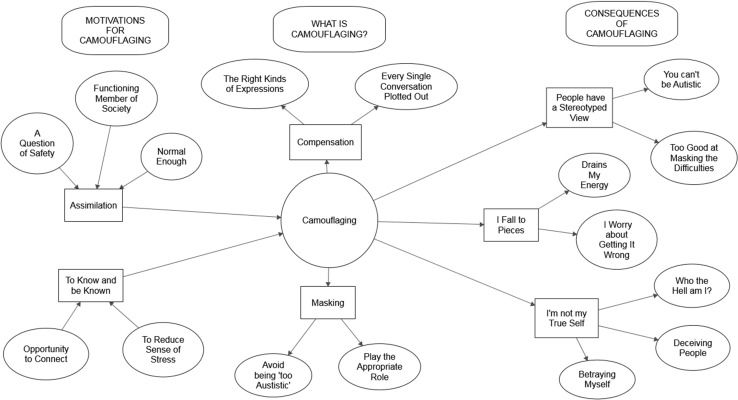
Camouflaging of autistic characteristics in social situations is hypothesised as a common social coping strategy for adults with autism spectrum conditions (ASC). Camouflaging may impact diagnosis, quality of life, and long-term outcomes, but little is known about it. This qualitative study examined camouflaging experiences in 92 adults with ASC, with questions focusing on the nature, motivations, and consequences of camouflaging. Thematic analysis was used to identify key elements of camouflaging, which informed development of a three-stage model of the camouflaging process. First, motivations for camouflaging included fitting in and increasing connections with others. Second, camouflaging itself comprised a combination of masking and compensation techniques. Third, short- and long-term consequences of camouflaging included exhaustion, challenging stereotypes, and threats to self-perception.
Overview
The claims and statistics of this paper haven’t been checked yet.
Free: it reads the open-access text and checks the first 5 claims that cite a source we can check. Create a free account to check every claim.
Integrity signals
Registry
Cites
Statistics
Figures
Verification
Claims the paper makes
The claims and statistics of this paper haven’t been checked yet.
Free: it reads the open-access text and checks the first 5 claims that cite a source we can check. Create a free account to check every claim.
Claims other papers make about this one
Each is checked against this paper’s own text: does it say what the citing paper says it does?
The source backs part of the claim, not all of it — or backs it for a different population, condition or comparison.
In the citing paper
“OSCE-style assessments introduce distinctive equity challenges, particularly for students with autism and communication differences who may find formats relying on rapid interpersonal exchanges and performance under time pressure disproportionately demanding [19,20].”
From Clinical assessment meets laboratory science: adapting OSCE methodology for authentic biosciences evaluation in the age of generative AI (2025) · cites this paper as [20]
Experimental — accuracy not yet measuredThe source backs part of the claim, not all of it — or backs it for a different population, condition or comparison.
In the citing paper
“Yet, we know that camouflaging is linked to a range of negative consequences for autistic adults (e.g. misdiagnosis, identity confusion and mental health difficulties; Beck et al., 2020; Cassidy et al., 2018; Hull et al., 2017).”
From Camouflaging in an everyday social context: An interpersonal recall study (2021) · cites this paper as Hull et al., 2017
Experimental — accuracy not yet measuredThe cited source says what the claim attributes to it.
In the citing paper
“In addition to potential sex1 differences in clinical presentation (Lai et al. 2014; May et al. 2014; Young et al. 2018), it is increasingly recognised that autistic people can hide their ASD symptoms or use compensatory behaviours to mitigate social challenges (Gould and Ashton-Smith 2011; Hull et al. 2017; Livingston et al. 2019; Tierney et al. 2016).”
From Barriers to Autism Spectrum Disorder Diagnosis for Young Women and Girls: a Systematic Review (2021) · cites this paper as Hull et al. 2017
The cited source says what the claim attributes to it.
In the citing paper
“Results of three exploratory studies using predominately qualitative methodologies were not suggestive of sex or gender differences in camouflaging (Cage et al., 2018;Hull et al., 2017;Livingston et al. 2020).”
From Camouflaging in autism: A systematic review (2021) · cites this paper as Hull et al., 2017
The cited source says what the claim attributes to it.
In the citing paper
“Autistic people report attempting to camouflage their ASC in order to try and fit in in social situations, which may delay obtaining a timely ASC diagnosis and negatively affect their mental health [31–33].”
From Risk markers for suicidality in autistic adults (2018) · cites this paper as [32]
6 more claims about this paper
Create a free account to see every claim other papers make about this one.
Self-check
Percentages, sums and reported differences re-computed from the paper’s own numbers.
The self-check needs the paper’s full text.
Citations
Cites
Using thematic analysis in psychology
Braun, V., & Clarke, V. (2006) · Qualitative Research in Psychology · doi:10.1191/1478088706qp063oa · Cited by 194,414
Qualitative research practice: a guide for social science students and researchers
(2003) · Choice Reviews Online · doi:10.5860/choice.41-1319 · Cited by 10,543
Baron-Cohen, S., Wheelwright, S., Skinner, R., Martin, J., & Clubley, E. (2001) · Journal of Autism and Developmental Disorders · doi:10.1023/a:1005653411471 · Cited by 6,450
Self-citationIntroducing Qualitative Research in Psychology
Willig, C. (2001) · Cited by 3,012
Evolving guidelines for publication of qualitative research studies in psychology and related fields
Elliott, R., Fischer, C. T., & Rennie, D. L. (1999) · British Journal of Clinical Psychology · doi:10.1348/014466599162782 · Cited by 2,491
Epidemiology of Pervasive Developmental Disorders
Fombonne, E. (2009) · Pediatric Research · doi:10.1203/pdr.0b013e31819e7203 · Cited by 1,971 · cited 2×
“Amongst clinical samples, male to female gender ratios for ASC diagnosis are generally around 4:1 (Fombonne 2009), but when active case ascertainment is used within the general population, the ratio lowers to around 3:1 (Sun et al.”
BackgroundPrevalence of Autism Spectrum Disorders in a Total Population Sample
Kim, Y. S., Leventhal, B. L., Koh, Y.-J., Fombonne, E., Laska, E., Lim, E.-C., Cheon, K.-A., Kim, S.-J., Kim, Y.-K., Lee, H., et al. (2011) · American Journal of Psychiatry · doi:10.1176/appi.ajp.2011.10101532 · Cited by 1,524
Sex/Gender Differences and Autism: Setting the Scene for Future Research
Lai, M.-C., Lombardo, M. V., Auyeung, B., Chakrabarti, B., & Baron-Cohen, S. (2015) · Journal of the American Academy of Child & Adolescent Psychiatry · doi:10.1016/j.jaac.2014.10.003 · Cited by 1,120
Self-citationPostsecondary education and employment among youth with an autism spectrum disorder
Shattuck, P. T., Narendorf, S. C., Cooper, B., Sterzing, P. R., Wagner, M., & Taylor, J. L. (2012) · PEDIATRICS · doi:10.1542/peds.2011-2864 · Cited by 1,110
Bargiela, S., Steward, R., & Mandy, W. (2016) · Journal of Autism and Developmental Disorders · doi:10.1007/s10803-016-2872-8 · Cited by 1,087 · cited 1×
“Similar themes were also found during qualitative interviews with latediagnosed women with ASC (Bargiela et al. 2016).”
Self-citation
Research works printed but not linked: 3
- American Psychiatric Association (2013). DSM
- Gould, J., & Ashton-Smith, J. (2011). Missed diagnosis or misdiag- nosis? Girls and women on the autism spectrum. Good Autism Practice (GAP), 12(1), 34-41. Retrieved from http://docserver. ingentaconnect.com/deliver/connect/bild/14662973/v12n1/s5.pd
- Holliday Willey, L. (2015). Pretending to be normal: Living with Asperger's Syndrome (Autism Spectrum Disorder) (Expanded Edition). London: Jessica Kingsley.
Cited by
Items 801–900 of 1,001
Reconstructions identitaires chez les femmes autistes diagnostiquées à l’âge adulte
Laflamme, M. (2020) · doi:10.71781/21586 · Cited by 4
Sugrim, G. (2021) · CUNY Academic Works (City University of New York) · Cited by 4
Working with autistic individuals in prison-based interventions to address sexual offending
Vinter, L. (2020) · Nottingham Trent University's Institutional Repository (Nottingham Trent Repository) · Cited by 4
Autistics' Perspectives of Autism Funding in Ontario
van Rensburg, M. J. (2020) · Carleton University's Institutional Repository (MacOdrum Library, Carleton University) · doi:10.22215/etd/2020-14124 · Cited by 4
Hotez, E., & Hudson, S. (2023) · Journal of Autism and Developmental Disorders · doi:10.1007/s10803-023-06001-x · Cited by 4
Waldock, K. E. (2024) · Kent Academic Repository (University of Kent) · doi:10.22024/unikent/01.02.107678 · Cited by 4
Social Prescribing for Autistic Adults
Featherstone, C. (2024) · PEARL (University of Plymouth) · doi:10.24382/5131 · Cited by 4
Fletcher, A. (2025) · Enlighten: Theses (The University of Glasgow) · doi:10.5525/gla.thesis.85238 · Cited by 4
Schuck, R. K. (2023) · eScholarship (California Digital Library) · Cited by 4
Exploring the Self-Diagnosis Experiences of Self-Diagnosed Autistic Women
Routledge, F. (2024) · TSpace (University of Toronto) · Cited by 4
Mann, R., Tosi, S., & Tree, D. (2025) · Emerging Topics in Life Sciences · doi:10.1042/etls20253021 · Cited by 3
“OSCE-style assessments introduce distinctive equity challenges, particularly for students with autism and communication differences who may find formats relying on rapid interpersonal exchanges and performance under time pressure disproportionately demanding [19,20].”
Day, R., Simmons, L., Shade, E., Jennison, J., Allely, C. S., & Mukherjee, R. (2024) · Advances in Autism · doi:10.1108/aia-11-2022-0053 · Cited by 3
Integrating Neurodiversity and Disability Rights into Primary Care Practices
Hotez, E., Rava, J. A., Williams, Z. J., Dwyer, P. S. R., Rosenau, K. A., & Onaiwu, M. G. (2024) · Springer eBooks · doi:10.1007/978-3-031-54281-7_13 · Cited by 3
Sousa, A. C. D. S., da Conceição, A. P. F., Cirino, C. T. S., Ferreira, J. P. D. L., & Montenegro, K. S. (2025) · doi:10.56238/colestudovo7-002 · Cited by 3
Posar, A., & Visconti, P. (2025) · Turkish Archives of Pediatrics · doi:10.5152/turkarchpediatr.2025.25127 · Cited by 3
The Relationship Between Camouflaging and Lifetime Depression Among Adult Autistic Males and Females
Gesi, C., Pisani, R., Tamburini, N., & Dell’Osso, B. M. (2025) · Brain Sciences · doi:10.3390/brainsci15090920 · Cited by 3
“Camouflaging has also been suggested to be among the factors hampering the recognition of autism among females [6–9].”
Wolpe, S., Tien, I. S., Lee, M. N., Sozeri, S., & Humphrey, I. M. (2025) · Research in Autism · doi:10.1016/j.reia.2025.202692 · Cited by 3
Jia, R., Riemenschneider, C. K., & Jia, H. H. (2026) · MIS Quarterly · doi:10.25300/misq/2025/19395 · Cited by 3
Reduced Susceptibility to the Dunning–Kruger Effect in Autistic Employees
Hartman, L. M., Glassman, H., & Hartman, B. L. (2025) · Autism Research · doi:10.1002/aur.70139 · Cited by 3
McGowan, J. J., & Mcgregor, I. P. (2025) · ACM Transactions on Accessible Computing · doi:10.1145/3777370 · Cited by 4
“In dealing with sensory challenges, autistic adults may use masking techniques within social situations, as a means of disguising their condition, which can cause stress and lead to further health issues [61].”
Caruana, N., Goetz, T., Nalepka, P., & Pellicano, E. (2025) · Autism · doi:10.1177/13623613251406114 · Cited by 3
“…echoes broader findings that autistic people often experience stigma and bias in social settings, which in turn encourages camouflaging or masking strategies that can be cognitively demanding and lead to poor mental health and well-being outcomes (Cage & Troxell-Whitman, 2019; Hull et al., 2017).”
Gracia, R. S., Resa, P. L., Timerman, A., & Gómez, S. M. G. (2026) · Clinical Psychology & Psychotherapy · doi:10.1002/cpp.70210 · Cited by 3
“This limited differentiation could reflect the effect of camouflaging (Dean et al. 2017; Hull et al. 2017), which may influence individuals' subjective assessments of their own pragmatic abilities (Livingston et al. 2019).”
Hall, J. M., Stuckey, A. L., & Berman, S. L. (2026) · Behavioral Sciences · doi:10.3390/bs16020213 · Cited by 3
“It is generally characterized by effortful and compensatory behaviors that can minimize a person’s true self (Lei et al., 2019), yet it can also be utilized unknowingly by neurodivergent people as a way to blend in better with a neurotypical world (Hull et al., 2017).”
Foster, S. J., Dunn, D. H., Patel, S. D., Pinkham, A. E., Ackerman, R. A., & Sasson, N. J. (2026) · Autism · doi:10.1177/13623613251415129 · Cited by 3
“Autistic people may also employ different strategies to regulate their affect, including masking or camouflaging, which can alter how their emotions are expressed and interpreted (Hull et al., 2017; Livingston et al., 2019).”
Liu, C.-H., Chen, Y.-L., Ai, W., Ni, H., & Lai, M. (2026) · Child and Adolescent Psychiatry and Mental Health · doi:10.1186/s13034-026-01044-1 · Cited by 4
“Qualitative studies found camouflaging to be exhausting, stressful, and causing anxiety and sense of self-alienation in both autistic adults [7–9] and adolescents [10].”
Self-citationDoes Camouflaging Predict Functioning, Distress, and Quality of Life for Autistic Adults?
Roisenberg, B. B., Boulton, K., Thomas, E. E., & Guastella, A. J. (2026) · Autism Research · doi:10.1002/aur.70199 · Cited by 3
“Motivations for camouflaging often include a desire to avoid stigma, reduce discrimination, and foster social belonging (Hannon et al. 2022; Hull et al. 2017; Pearson and Rose 2021).”
InfluentialTopic Modeling of Social Media Discourse of Autism Support Groups
Deng, Y., Yang, L., & Chen, J. (2026) · Behavioral Sciences · doi:10.3390/bs16020280 · Cited by 3
“Due to factors such as social camouflage, autistic indi‑ viduals may be less visible in these online spaces, leading to a lack of their direct lived‑ experience stories (Hull et al., 2017).”
Bates, J. R., Morris, I. F., Dameh, A., Paulus, C. R., Legrid, K., Chen, C., Zelazo, P. D., & Hall‐Lande, J. (2026) · Autism in Adulthood · doi:10.1177/25739581261424784 · Cited by 3
Masking, Eigenzeit & Ontological Inoperability (Studies in World-Formation, Vol. 8)
Speed, T. (2026) · PhilPapers (PhilPapers Foundation) · doi:10.5281/zenodo.18997946 · Cited by 3
Toward an Emergent Paradigm for Neurodiversity and Health
Hogenkamp, L., Sanghavi, D., & Natri, H. M. (2026) · Autism in Adulthood · doi:10.1177/25739581261433443 · Cited by 3
Underrecognition of Autism and Implications for Adult Psychiatric Practice: A Narrative Review
Guerra, A. D. J. G., Cortes, E. D. R. M., Rocha, G. H. A., Mancias, A. C. M., & Zambrano, S. M. F. (2026) · Cureus · doi:10.7759/cureus.107164 · Cited by 3
“A growing body of research describes camouflaging as a set of strategies used to adapt to social expectations [21,29].”
InfluentialKim, Y. J., & Plunkett, M. (2026) · Human Communication Research · doi:10.1093/hcr/hqag002 · Cited by 3
Dantas, S., Grainger, C., Botha, M., Rafetseder, E., & Jasper, C. (2026) · Autism in Adulthood · doi:10.1177/25739581261456241 · Cited by 3
"I Use ChatGPT to Humanize My Words": Affordances and Risks of ChatGPT to Autistic Users
Ma, R., Zhang, Z., Chen, C., Yang, F., Huang, X., Wu, H., & Li, L. (2026) · ACM Interactive Health Conference · doi:10.1145/3786579.3804943 · Cited by 3
“This not only extends the psychological costs of camouflaging described by Hull et al. [30] into technological settings but also exacts a higher cost by reinforcing the erasure of the neurodivergent self.”
Are There Sex or Gender Differences in Autistic Characteristics? An Umbrella Systematic Review
Gundeslioglu, H., Gray, K. M., Hewitt, O. M., & Langdon, P. E. (2026) · Journal of Autism and Developmental Disorders · doi:10.1007/s10803-026-07484-0 · Cited by 4
Adult Women on the High-Functioning Autism Spectrum
Pearlman-Avnion, S., & Shlain, R. (2019) · Autism and child psychopathology series · doi:10.1007/978-3-030-28833-4_5 · Cited by 3
Oakley, B. F. M., Boatman, C. A., Doswell, S., Dittner, A. J., Clarke, A. D., Ozsivadjian, A., Kent, R., Judd, A., Baldoza, S. M., Hearn, A., et al. (2023) · PLoS ONE · doi:10.1371/journal.pone.0286792 · Cited by 3
The Association Between IQ and Its Components and Anxiety in Autistic Girls
Bitsika, V., & Sharpley, C. F. (2024) · Advances in Neurodevelopmental Disorders · doi:10.1007/s41252-024-00415-z · Cited by 3
“…from the presence of menarche), adolescent girls may learn how to ‘read’ social situations and how to plan to cope with them, even if by way of camouflaging their innate (autistic) responses and anxiety (Hull et al., 2017), thus improving their ability to understand these social challenges.”
Development of performative identities in autism writers’ autobiographies
Norvaišaite, A., & Tateo, L. (2024) · European Journal of Special Needs Education · doi:10.1080/08856257.2024.2407660 · Cited by 3
“She found herself almost entirely unprepared to deal with them (Bernardin et al. 2021; Chapman et al. 2022; Hull et al. 2017).”
InfluentialSavard, L., Prelock, P., Medeiros, S., & Lodestone, A. “. (2024) · Topics in Language Disorders · doi:10.1097/tld.0000000000000351 · Cited by 3
Comer, D. R., Lenaghan, J. A., Pittarello, A., & Motro, D. (2024) · Equality Diversity and Inclusion An International Journal · doi:10.1108/edi-05-2024-0204 · Cited by 3
Stim culture: Outlining anime's appeal to the autistic community
Rose, M. C., Galbraith, P. W., & Thomas-Parr, G. (2024) · International Journal of Cultural Studies · doi:10.1177/13678779241293159 · Cited by 3
“…from neurotypical stigma, anime fandom invites ‘ unmasking ’ (Pearson and Rose, 2021; Miller et al., 2021), which is a colloquial term in the autistic community for undoing attempts to mirror, copy or fi t in with allistic others (Hull et al., 2017; Cage and Troxell-Whitman, 2019; Radulski, 2022).”
Infrastructuring Neurodiversity Publics: The Co-Design of an App for People with Autism
Moyà-Köhler, J., Barat-Auleda, O., Vallès-Peris, N., & Domènech, M. (2024) · Scandinavian Journal of Disability Research · doi:10.16993/sjdr.1138 · Cited by 3
van Dijk, S., Peters-Scheffer, N. C., & Didden, R. (2024) · Journal of Autism and Developmental Disorders · doi:10.1007/s10803-024-06651-5 · Cited by 3
Trunk, P., Choi, B., & Rowe, M. L. (2024) · Autism in Adulthood · doi:10.1089/aut.2024.0138 · Cited by 3
Waite, M., Fouladi, R. T., & Iarocci, G. (2025) · Journal of Autism and Developmental Disorders · doi:10.1007/s10803-024-06707-6 · Cited by 3
“Further, autistic individuals report feeling social pressure to change to better fit in, prevent discrimina - tion, and to gain education or employment (Cage & Troxell-Whitman, 2019 ; Hull et al., 2017).”
Foster, S. D., Bishay, A., & Bock, J. E. (2025) · Current Research in Ecological and Social Psychology · doi:10.1016/j.cresp.2025.100216 · Cited by 3
PSICODIAGNÓSTICO DO TRANSTORNO DO ESPECTRO AUTISTA EM PACIENTE ADULTA
de Oliveira, M. C. F., & de Lima, M. A. S. (2025) · Psicologia e Saúde em Debate · doi:10.22289/2446-922x.v11a1a38 · Cited by 3
Automatic and affective processing of faces as mechanisms of passing as non-autistic in adolescence
Houck, A. P., Richards, J. K., Day, T. C., Goodwill, J. J., Hauschild, K. M., Malik, I., & Lerner, M. D. (2025) · Scientific Reports · doi:10.1038/s41598-025-04801-y · Cited by 4
‘I feel trapped in my safe clothes’: The impact of tactile hyper-sensitivity on autistic adults
Knight, A. F., & Birtles, D. (2025) · Autism · doi:10.1177/13623613251366882 · Cited by 4
“This is especially pertinent to individuals who mask as they are more likely to conceal aspects of their identity, including potentially their appearance, which may lead to mental health difficulties and a decreased sense of authenticity (Evans et al., 2023; Hull et al., 2017).”
InfluentialKong, H., Xie, J., Dou, F., Li, X., Wang, X., & Huang, Y. (2025) · Psychology Health & Medicine · doi:10.1080/13548506.2025.2587969 · Cited by 3
Strang, M., & Sakdalan, J. A. (2025) · Neurodiversity · doi:10.1177/27546330251400335 · Cited by 3
“Masking has been linked to poorer mental health outcomes and increased stress among autistic people (Cage & Troxell-Whitman, 2020; Hull et al., 2017).”
Do Savant Syndrome and Autism Spectrum Disorders Share Sex Differences? A Comprehensive Review
Navarro‐Pardo, E., Alonso-Esteban, Y., Marín, F. A., & Murphy, M. F. (2023) · Journal of korean Academy of Child and Adolescent Psychiatry · doi:10.5765/jkacap.230008 · Cited by 3
Social Impairment in the Autistic Spectrum: Real-Life Versus Online Perceived Social Skills
Poulain, R., Cappe, C., & Batty, M. (2023) · Advances in Neurodevelopmental Disorders · doi:10.1007/s41252-023-00368-9 · Cited by 3
“Such strategies have also been proposed as the origin of the high male prevalence of ASD, with a male-to-female ratio of 3:1 (Hull et al., 2017, 2020; Loomes et al., 2017).”
Carminati, G. G., Zecca, G., & Carminati, F. (2024) · Psychology · doi:10.4236/psych.2024.1510093 · Cited by 3
Fletcher, L., Rabagliati, H., & Culbertson, J. (2024) · Cognitive Science · doi:10.1111/cogs.70007 · Cited by 3
In Defence of Psychiatric Diagnoses
Fellowes, S. (2025) · Springer eBooks · doi:10.1007/978-3-031-74478-5 · Cited by 3
Jeffery, A. J., Rogers, S., Jeffery, K. L. A., Lucherini, M., Hulme, J. A., Griffin, M., Pringle, J. K., Wisniewski, K. D., Derbyshire, E., Hallam, C., et al. (2025) · Discover Education · doi:10.1007/s44217-025-00639-8 · Cited by 3
“…their perceived requirement to avoid disclosure or to ‘mask’, a term used frequently in the autistic community to describe the deliberate suppression of fundamental aspects of self and identity in order to appear more ‘normal’ and avoid negative attention, a form of ‘social camouflage’ [79–81].”
Linnainmaa, M. (2021) · Neuropsy Open: kliinisen neuropsykologian verkkojulkaisu · Cited by 3
Autism Spectrum Disorders — in Search of Mechanistic Biomarkers
Rabbani, N., & Thornalley, P. J. (2019) · Autism and Developmental Disorders · doi:10.17759/autdd.2019170103 · Cited by 3
Understanding Decision Making and Intellectual and Developmental Disabilities
Khemka, I. (2021) · Springer eBooks · doi:10.1007/978-3-030-74675-9_11 · Cited by 3
Exploring the Lack of Research About Autistic Women
Bennett, M., & Goodall, E. (2022) · Emerald Group Publishing Limited eBooks · doi:10.1108/978-1-80382-463-520221005 · Cited by 3
Åkerlund, S., Håkansson, A., & Claesdotter‐Knutsson, E. (2023) · Frontiers in Psychology · doi:10.3389/fpsyg.2022.1068001 · Cited by 3
“Camouflaging strategies, the ability to behave in a seemingly flexible way, are said to blur social difficulties and inadvertently contribute to misconstruing important clinical and eligibility decisions (Hull et al., 2017; Young et al., 2018).”
BackgroundNeuroqueer Intimacies in Online Dating Apps
Trento, F. B. (2023) · Journal of Arts and Humanities · doi:10.18533/jah.v12i4.2361 · Cited by 3
Autism trends in a medium size coastal town of England
Fleet, B. G., Elliott, A., Orwin, M., Spencer, M. A., & Sedda, L. (2023) · PLoS ONE · doi:10.1371/journal.pone.0287808 · Cited by 3
“The lack of diagnosis in females may be due to the difficulty to ascertain their symptoms [6,10,11].”
BackgroundSilver, K. (2019) · ePrints Soton (University of Southampton) · Cited by 3
Camouflaging Autistic Traits Questionnaire (CAT-Q)
Hull, L., & Mandy, W. (2021) · Springer eBooks · doi:10.1007/978-3-319-91280-6_102327 · Cited by 3
Self-citationLow, M. Y., & Bradt, J. (2021) · iDEA - Drexel University Institutional Repository · doi:10.17918/00000882 · Cited by 3
Unveiling Technorelief: Enhancing Neurodiverse Collaboration with Media CapabilitiesPreprint
Saigot, M. (2023) · arXiv (Cornell University) · doi:10.48550/arxiv.2310.00949 · Cited by 3
“…control of what is visible in the frame, as the strain of monitoring everything else is alleviated. m Our data also supports the connection thesis (Hull et al., 2017), as we found that participants leverage media capabilities that enable them to shape their way of presenting to build coworker…”
BackgroundMethodResultInfluentialNeurocomputational Phenotypes in Female and Male Autistic IndividualsPreprint
McCleod, M., Borneman, S., & Malaia, E. (2024) · arXiv (Cornell University) · doi:10.48550/arxiv.2405.04248 · Cited by 3
“Autistic women are also much more likely to engage in camouflaging behaviors to mask their autism symptoms, blend in with those around them, and fulfill behavioral expectations [5 – 7].”
BackgroundHow do we perceive autistic individuals in a non-social context?
Jaffrani, A. A. (2022) · Nottingham ePrints (University of Nottingham) · Cited by 3
Colat-Parros, L. (2023) · UCL Discovery (University College London) · Cited by 3
Exploring Self-Reported Quality of Life in Developmental Language Disorder
Larson, C. (2024) · Perspectives of the ASHA Special Interest Groups · doi:10.1044/2024_persp-24-00122 · Cited by 2
Kamuflaż u osób z zaburzeniami ze spektrum autyzmu. Analiza zjawiska w świetle dotychczasowych badań
Nieradka, F. (2022) · Man – Disability – Society · doi:10.5604/01.3001.0015.8513 · Cited by 2
Wienand, L. (2025) · International Journal of Research Publication and Reviews · doi:10.55248/gengpi.6.0225.0925 · Cited by 2
Sex-typical toy, activity, and playmate preferences in autistic and non-autistic children
To, J. C. S., & Kung, K. T. F. (2025) · Autism · doi:10.1177/13623613251321207 · Cited by 3
Horwitz, S., Gelech, J. M., Wellsch, J., de Barros, A. C., Croteau, T. A., Bergen, J., Forrester, S., Bradford, L., & Jaunzems-Fernuk, J. (2025) · Teaching in Higher Education · doi:10.1080/13562517.2025.2521377 · Cited by 2
“We know that unmasking and sharing experiences of mental illness and neurodiversity can bene fi t long-term wellbeing by reducing fatigue, anxiety, and the risk of burnout (e.g. Bril-Barniv et al. 2017; Chaudoir and Fisher 2010; Hull et al. 2017).”
Autism and Gender Identity: Social, Cognitive, and Behavioral Profiles in a Self-Identified Sample
Voulgarakis, H. M., Lisa, J. S., Carpenter, M., & El‐Meouchy, P. (2025) · Advances in Neurodevelopmental Disorders · doi:10.1007/s41252-025-00453-1 · Cited by 2
Kato, S., & Hanawa, K. (2025) · Frontiers in Human Neuroscience · doi:10.3389/fnhum.2025.1606701 · Cited by 26
“Additionally, masking behaviors, compensation strategies, and learned camouflaging (Gould and Ashton-Smith, 2011; Hull et al., 2017; Lai and Baron-Cohen, 2015) can obscure impairments and contribute to misdiagnosis.”
Gundeslioglu, H., Gray, K. M., Thompson, P. A., & Langdon, P. E. (2025) · Journal of Autism and Developmental Disorders · doi:10.1007/s10803-025-07002-8 · Cited by 2
Autistic people’s perception of social camouflaging: qualitative analysis of a Web forum
Larochelle-Guy, J., Martinez, I. L., & Dufour, M. (2025) · Advances in Autism · doi:10.1108/aia-04-2025-0032 · Cited by 2
Stanojević, I. S., Wheeler, G., Fu, T., Piatt, J. A., & Herbenick, D. (2025) · The Journal of Sex Research · doi:10.1080/00224499.2025.2551734 · Cited by 2
“Additionally, autistic individuals often engage in “camouflaging” – imitating the observed or socially normative behaviors – to adhere to neu-rotypical social norms and expectations and facilitate social connections (Hull et al., 2017; Pliskin, 2022).”
Ward, O. F., Brennan, J., & Tomeny, T. S. (2025) · Research in Autism · doi:10.1016/j.reia.2025.202706 · Cited by 2
FEM-A Questionnaire: Assessment Tool for Level 1 Autism in Women
de Haro, E. O., & Negrillo, E. A. (2025) · Education Sciences · doi:10.3390/educsci15091242 · Cited by 2
Ávila, Á. P., Canales, C. E., Saavedra, C. S. F., Guillén, V., Huenupán, F., & González, O. H. (2025) · International Journal of Developmental Disabilities · doi:10.1080/20473869.2025.2565639 · Cited by 2
Associations of TNF ‐α Expression With Self‐Esteem in Autism Spectrum Disorder
Kayashima, Y., Yamauchi, T., Takeda, T., Okumura, K., Ishida, R., Yamamuro, K., Toritsuka, M., Okada, T., Iwata, N., & Makinodan, M. (2025) · Neuropsychopharmacology Reports · doi:10.1002/npr2.70047 · Cited by 2
A Qualitative Study of the Diagnostic Experiences of Young Autistic Adults in China
Li, C., Chang, Y., Zhang, J., & Liao, Y. (2025) · Journal of Autism and Developmental Disorders · doi:10.1007/s10803-025-07073-7 · Cited by 2
Carpita, B., Nardi, B., Giovannoni, F., Parri, F., Pronestì, C., Bonelli, C., Massimetti, G., Pini, S., Bruno, A., Muscatello, M. R. A., et al. (2025) · Frontiers in Psychiatry · doi:10.3389/fpsyt.2025.1646586 · Cited by 2
Lei, J., Sanders, A., & Camp, J. (2025) · The Cognitive Behaviour Therapist · doi:10.1017/s1754470x25100305 · Cited by 2
“…et al ., 2023), which in turn contributes to high levels of camouflaging or masking where individuals try to hide their autistic traits in order to ‘ fit in ’ to society (Hull et al ., 2017; Pearson et al ., 2023; Pearson and Rose, 2023), much akin to self-invalidation (Bemmouna and Weiner, 2023).”
Forby, L., Porto, G. G., & Kingstone, A. F. (2025) · Acta Psychologica · doi:10.1016/j.actpsy.2025.105746 · Cited by 2
Zhuang, S., Bougoure, M., Reddrop, S., Dean, L., Naragon‐Gainey, K., Maybery, M. T., Tan, D. W., & Magiati, I. (2025) · Autism in Adulthood · doi:10.1177/25739581251386126 · Cited by 2
How the ASCENT model can help optimize exposure therapies for Autistic clients
Brook, A. (2025) · Frontiers in Psychiatry · doi:10.3389/fpsyt.2025.1569882 · Cited by 2
Mosquera, M. L., Zhong, Y., Mandy, W., & Dimitriou, D. (2025) · Research in Neurodiversity · doi:10.1016/j.rin.2025.100008 · Cited by 2
Self-citationMarques, D. S., de Lima, T. C. B., Ferraz, S. B., & Paiva, L. E. B. (2025) · Journal of Services Marketing · doi:10.1108/jsm-03-2025-0189 · Cited by 2
Stereotypically Autistic? Autism Portrayals in Young Adult Fiction
Hesse, E. C. (2025) · Medical humanities · doi:10.14361/9783839428016 · Cited by 2
Challenges, Support, and Progression for Autistic Students in University: A Systematic Review
Smith, M., Armitage, K., Montasem, A., & Ibeachu, C. (2025) · Routledge Open Research · doi:10.12688/routledgeopenres.19371.1 · Cited by 2
Pyszkowska, A., Nowacki, A., & Stefanek, F. (2025) · Research in Autism · doi:10.1016/j.reia.2025.202781 · Cited by 2
Johnson, A., Murray, E., Schenke, K. C., & Stephens-Lewis, D. (2025) · Research in Autism · doi:10.1016/j.reia.2025.202704 · Cited by 3
Family and Clinician Perspectives About How Autism and Extremism Intersect
Wijekoon, S., Robison, J. E., Welch, C., Westphal, A., Loftin, R. L., Jachyra, P., Perry, B., Rombos, V., Picciolini, C., Bosyj, C., et al. (2026) · Autism in Adulthood · doi:10.1177/25739581251412666 · Cited by 2
Self-citation
Metadata
- Authors
- Hull, L., Petrides, K. V., Allison, C., Smith, P., Baron-Cohen, S., Lai, M.-C., & Mandy, W.
- Affiliations
- University College London (GB)
- University of Cambridge (GB)
- Centre for Addiction and Mental Health (CA)
- Corresponding author
- Hull, Laura
- Venue
- Journal of Autism and Developmental Disorders
- Published
- 2017-05-19
- Volume
- 47
- Issue
- 8
- Pages
- 2519-2534
- ISSN
- 0162-3257 (ISSN-L)
- 1573-3432
- PMC
- PMC5509825
- OpenAlex
- W2616560149
- Cited by
- 1,365
- References
- 53
- Citations by year
- 2026: 326 · 2025: 212 · 2024: 202 · 2023: 146 · 2022: 124 · 2021: 141 · 2020: 91 · 2019: 73 · 2018: 39 · 2017: 9
- FWCI
- 33.29
- Type
- journal article
- Language
- en
- Open access
- hybrid
- doi.org
- Locations
- Journal of Autism and Developmental Disorders (publishedVersion, cc-by)
- Europe PMC (PubMed Central) (publishedVersion, cc-by)
- PubMed Central (publishedVersion, cc-by)
- PubMed (publishedVersion)
- UCL Discovery (University College London) (submittedVersion)
- Explore Bristol Research (submittedVersion)
- Apollo (University of Cambridge) (submittedVersion, cc-by)
- Apollo (cc-by)
- Funders
- Wellcome Trust (091774/Z/10/Z)
- Centre for Addiction and Mental Health
- National Institute for Health and Care Research (NF-SI-0515-10097)
- Hospital for Sick Children
- Medical Research Council
- Topics
- Life Sciences › Neuroscience › Cognitive Neuroscience › Autism Spectrum Disorder Research
- Social Sciences › Psychology › Clinical Psychology › Family and Disability Support Research
- Health Sciences › Medicine › Psychiatry and Mental health › Child Nutrition and Feeding Issues
- Keywords
- social camouflaging, autism spectrum disorder, autistic adults, masking, compensatory strategies, social coping, social exhaustion, stereotypes, self-perception
- MeSH terms
- Autism Spectrum Disorder, Adaptation, Psychological, Adolescent, Adult, Aged, Female, Humans, Male, Middle Aged, Self Concept, Social Behavior
About these checks
Registry, retraction, Cites and statistics results are computed, not judged, with one exception: a printed reference that no index lists is read once by a model before it counts as a citation error. Claims are extracted by a model and kept only when their quote appears verbatim in the text; each cited source is then checked, with a model’s help, for whether it says what the claim relies on. Those verdicts can be wrong — read the claim’s quote and the cited source before relying on one.
Statistics and arithmetic are recomputed, not judged.
Confidence bands are shown only for fields calibrated on our annotated test set. None is calibrated yet, so no band is shown.
What counts as a claim ›How we measure confidence ›How we check this ›
Are you an author, or do you see a problem with this page? Request a review
Data sources
Bibliographic data: Semantic Scholar, OpenAlex, Crossref.
Contains information from the Semantic Scholar Academic Graph Datasets, made available under the ODC Attribution License (ODC-BY 1.0).
Semantic Scholar’s data is described in: Kinney, R., et al. (2023). The Semantic Scholar Open Data Platform. arXiv:2301.10140.
