

Algae as nutritional and functional food sources: revisiting our understanding.
Open accessThe DOI matches its Crossref record; 437 of the 442 references it cites were found in a registry or an index; 23 of the 282 sources its claims cite were checked for support.
Abstract
Global demand for macroalgal and microalgal foods is growing, and algae are increasingly being consumed for functional benefits beyond the traditional considerations of nutrition and health. There is substantial evidence for the health benefits of algal-derived food products, but there remain considerable challenges in quantifying these benefits, as well as possible adverse effects. First, there is a limited understanding of nutritional composition across algal species, geographical regions, and seasons, all of which can substantially affect their dietary value. The second issue is quantifying which fractions of algal foods are bioavailable to humans, and which factors influence how food constituents are released, ranging from food preparation through genetic differentiation in the gut microbiome. Third is understanding how algal nutritional and functional constituents interact in human metabolism. Superimposed considerations are the effects of harvesting, storage, and food processing techniques that can dramatically influence the potential nutritive value of algal-derived foods. We highlight this rapidly advancing area of algal science with a particular focus on the key research required to assess better the health benefits of an alga or algal product. There are rich opportunities for phycologists in this emerging field, requiring exciting new experimental and collaborative approaches.
Overview
CoChat Summary
TL;DR
This review assesses algae as nutritional and functional foods, concluding that evidence for health benefits is substantial but quantification remains limited by compositional variability, uncertain bioavailability, and poorly understood metabolic interactions. It surveys proteins, lipids, polysaccharides, vitamins, antioxidants, inorganic elements, phytochemicals, and safety concerns while identifying key research needs.
Key findings
- Global seaweed harvest in 2013 was estimated at US$6.7 billion, with over 95% from mariculture and China and Indonesia as top producers; FAO estimated 38% of the 23.8 million t of seaweeds in the 2012 global harvest was eaten by humans as seaweeds. Japanese per capita macroalgae consumption in 2010–2014 ranged from 9.6 to 11.0 g day−1.
- Protein content can reach up to 70% dry wt in *Arthrospira platensis* (“spirulina”) and *Chlorella*, but the common nitrogen-to-protein conversion factor of 6.25 often overestimates protein; reported factors include 6.35 for walled *Chlorella vulgaris* vs. 5.96 from direct extracts, and averages of 4.59 (red), 5.13 (green), and 5.38 (brown) for tropical marine algae.
- Marine macrophytes typically contain only 2–4.5% dry wt lipids, though EPA can comprise up to 50% of total fatty acids in *Palmaria palmata*; DHA and EPA bioaccessibility from algal oils/extracts is reported at ∼50–100%, and 2 g algal DHA day−1 over 4.5 months altered plasma lipoproteins in humans.
- Edible macroalgae contain dietary fiber from 23.5% dry wt (*Codium reediae*) to 64.0% (*Gracilaria* spp.); soluble fiber is 52–56% of total fiber in green and red macroalgae and 67–85% in brown macroalgae. Safety concerns include hijiki inorganic arsenic at 60 µg g−1 dry wt (0.4–2.8 µg g−1 cooked), with cooking removing 88.7–91.5% of arsenic, and iodine from 15–30 g day−1 kombu exceeding the recommended upper daily intake by more than an order of magnitude.
Methods
- Design: narrative review and assessment of what is known about algal food components—proteins, polysaccharides, lipids, vitamins, minerals, antioxidants, potential toxicants—in relation to efficacy of algal foods.
- Data/sample: synthesis of cited literature and examples across macroalgae and microalgae, including analytical, in vitro, animal, and human studies; no new primary data are reported.
- Main analysis: qualitative synthesis organized by nutrient/functional component and safety category, with calls for improved experimental and collaborative approaches.
Limitations
- The paper states three broad limitations: (1) limited understanding of nutritional and functional composition across algal species, seasons, and coastal environments; (2) difficulty quantifying bioavailability—the fraction of components that actually has effect after digestion; and (3) poor understanding of how algal nutritional and functional constituents interact in human metabolism.
- The paper states that most published evaluations of algal food bioactivity are based on short-term in vitro tests using algal extracts that are frequently of ill-defined composition and purity, and that analytically determined concentrations can differ substantially from bioaccessible fractions.
- Evident from the text: this is a broad narrative review, not a systematic review or meta-analysis; the authors state that the breadth and depth of the literature “frustrates attempts for a fully comprehensive assessment of the field.”
Model-written summary. Check it against the paper before relying on it.
Integrity signals
Registry
Cites
Statistics
Figures
Verification
Claims the paper makes
23 Valid · 0 Not valid · 167 Not checked · 55 Own results and interpretations
Every source the paper cites for this claim was checked and supports it.
In the paper
“Fucoxanthin, a key algal carotenoid, may be better absorbed if other lipids are present (Peng et al. 2011).”
§ Algae as nutritional and functional food sources: revisiting our understanding > Digestion and bioavailability
What the sources say
- Supportedcites Peng et al. 2011 matched to “Fucoxanthin, a Marine Carotenoid Present in Brown Seaweeds and Diatoms: Metabolism and Bioactivities Relevant to Human Health” (2011) source
Section 2.1 states that combining fucoxanthin with edible oil or lipid could increase its absorption rate in KK-Ay mice and obese premenopausal women. The Conclusions repeat that dietary combination with oil or lipid could improve absorption, matching the citing sentence’s hedged claim. (LLM, conf=0.94)
hedgedstates a possible cause- Asserted: passes — The authors put it forward as true.
- Checkable: passes — It can be checked against evidence.
- Load-bearing: unclear — It is unclear whether the paper’s conclusions depend on it.
- Based: passes — The paper gives a reason why it holds.
- Supported
The cited sources support only part of this claim — read each source’s verdict below.
In the paper
“Similarly, a small cohort of Spaniards possesses gut microbiomes with apparently HGT-provided porphyranases and agarases (Hehemann et al. 2012).”
§ Algae as nutritional and functional food sources: revisiting our understanding > Digestion and bioavailability
What the sources say
- Partly supportedcites Hehemann et al. 2012 matched to “Bacteria of the human gut microbiome catabolize red seaweed glycans with carbohydrate-active enzyme updates from extrinsic microbes” (2012) sourceExperimental — accuracy not yet measured
The Abstract reports putative seaweed-degrading enzymes in Spanish gut microbiomes and describes the identified CAZymes as apparently acquired by horizontal gene transfer. It does not specify a small Spanish cohort or establish that the Spanish microbiomes contained both porphyranases and agarases; those enzymes are listed across Japanese, Spanish, and American microbiomes. (LLM, conf=0.78)
hedgedstates a possible cause- Asserted: passes — The authors put it forward as true.
- Checkable: passes — It can be checked against evidence.
- Load-bearing: unclear — It is unclear whether the paper’s conclusions depend on it.
- Based: passes — The paper gives a reason why it holds.
- Partly supported
The cited sources support only part of this claim — read each source’s verdict below.
In the paper
“Algal proteins and carbohydrates that escape complete digestion in the small intestine may benefit humans by stimulating immune response indirectly via promotion of microbial responses (Cian et al. 2015).”
§ Algae as nutritional and functional food sources: revisiting our understanding > Digestion and bioavailability
What the sources say
- Partly supportedcites Cian et al. 2015 matched to “Proteins and Carbohydrates from Red Seaweeds: Evidence for Beneficial Effects on Gut Function and Microbiota” (2015) sourceExperimental — accuracy not yet measured
Section 4.2 reports that red-seaweed proteins are not fully digestible, and section 5.2 says seaweed components can promote beneficial intestinal bacteria. Section 5.1 says microbiota can shape immune responses. Together these support a possible indirect benefit, but the paper does not establish that incompletely digested algal proteins and carbohydrates stimulate human immunity through that microbial pathway; much of the evidence discussed is from nonhuman or laboratory studies. (LLM, conf=0.83)
hedgedstates a possible cause- Asserted: passes — The authors put it forward as true.
- Checkable: passes — It can be checked against evidence.
- Load-bearing: unclear — It is unclear whether the paper’s conclusions depend on it.
- Based: passes — The paper gives a reason why it holds.
- Partly supported
The cited sources support only part of this claim — read each source’s verdict below.
In the paper
“Numerous epidemiological and controlled interventional trials (N.B., the excellent reviews of Conquer and Holub 1996; Holub 2009; Cottin et al. 2011) support the health benefits to humans of DHA and EPA long-chain omega-3 fatty acids from fish oils and algal sources (mainly extracts).”
§ Algae as nutritional and functional food sources: revisiting our understanding > Lipids > Long-chain PUFAs
What the sources say
- Not checked yetcites Conquer and Holub 1996 matched to “Supplementation with an Algae Source of Docosahexaenoic Acid Increases (n-3) Fatty Acid Status and Alters Selected Risk Factors for Heart Disease in Vegetarian Subjects” (1996) source
- Not checked yetcites Holub 2009 matched to “Docosahexaenoic acid (DHA) and cardiovascular disease risk factors” (2009) source
- Partly supportedcites Cottin et al. 2011 matched to “The differential effects of EPA and DHA on cardiovascular risk factors” (2011) sourceExperimental — accuracy not yet measured
The Abstract and Conclusion report human cardiovascular benefits from fish oils containing EPA and DHA, and the Conclusion notes studies of cardioprotective effects from algal DHA. They do not establish comparable human benefits from algal EPA; the Conclusion instead describes non-fish EPA sources as still under development and the effects of EPA as uncertain. The paper also addresses cardiovascular benefits rather than health benefits generally. (LLM, conf=0.85)
boostedstates a cause- Asserted: passes — The authors put it forward as true.
- Checkable: passes — It can be checked against evidence.
- Load-bearing: passes — The paper’s conclusions depend on it.
- Based: passes — The paper gives a reason why it holds.
The cited sources support only part of this claim — read each source’s verdict below.
In the paper
“and at realistic daily consumption levels (e.g., 8 g dry wt., Blouin et al. 2006), even red algae such as Porphyra umbilicalis (laver) and Palmaria palmata (dulse) (Fig. 5) that have a high proportion of their total fatty acids as EPA (Mishra et al. 1993; Graeve et al. 2002; Blouin et al. 2006; Schmid et al. 2014) will not meet dietary recommendations for daily EFA alone (Blouin et al. 2006)”
§ Algae as nutritional and functional food sources: revisiting our understanding > Lipids > Long-chain PUFAs
What the sources say
- Not checked yetcites Blouin et al. 2006 matched to “Sensory and fatty acid analyses of two Atlantic species of Porphyra (Rhodophyta)” (2006) source
- Not checked yetcites Mishra et al. 1993 matched to “Lipids of the Red Alga, Palmaria palmata” (1993) source
- Partly supportedcites Graeve et al. 2002 matched to “Fatty acid composition of Arctic and Antarctic macroalgae: indicator of phylogenetic and trophic relationships” (2002) sourceExperimental — accuracy not yet measured
Table 3 (p. 70) reports that EPA accounts for 67.3% of total fatty acids in Palmaria palmata, supporting the EPA-proportion claim for that species. The paper does not report a result for Porphyra umbilicalis. The consumption level and dietary-recommendation conclusion are attributed to Blouin et al. (2006), not to Graeve et al. (LLM, conf=0.85)
plain- Asserted: passes — The authors put it forward as true.
- Checkable: passes — It can be checked against evidence.
- Load-bearing: passes — The paper’s conclusions depend on it.
- Based: passes — The paper gives a reason why it holds.
130 more claims · 11 with their cited sources checked
Create a free account to see all 245 claims and to verify the 255 references still open.
- It may state two separate claims as one. 79
- Probably not a substantial claim. 42
Claims other papers make about this one
Each is checked against this paper’s own text: does it say what the citing paper says it does?
The source backs part of the claim, not all of it — or backs it for a different population, condition or comparison.
In the citing paper
“The nutritional properties of some seaweeds species make them an exciting feedstock as a source of food and food applications: the relatively high content in protein [generally higher in red and green algae (up to 44% of dry mass) than in brown algae (10-24% dry weight)] and dietary fibers (3362% dry weight) (Holdt and Kraan, 2011; Patarra et al., 2011; Wells et al., 2016), the high-quality”
From Current Status of the Algae Production Industry in Europe: An Emerging Sector of the Blue Bioeconomy (2021) · cites this paper as Wells et al., 2016
Experimental — accuracy not yet measuredThe source backs part of the claim, not all of it — or backs it for a different population, condition or comparison.
In the citing paper
“The major difficulty occurs during the extraction and downstream processing but is easier in comparison with the plant-derived product because of the absence of lignification of the cell wall (Wells et al. 2017).”
From Production of microalgae with high lipid content and their potential as sources of nutraceuticals (2023) · cites this paper as Wells et al. 2017
Experimental — accuracy not yet measuredThe source backs part of the claim, not all of it — or backs it for a different population, condition or comparison.
In the citing paper
“Carbohydrates are mainly present in cell membranes and vacuoles of microalgae and they can also be secreted to the exterior of the cell as exopolysaccharides (Wells et al. 2017).”
From Production of microalgae with high lipid content and their potential as sources of nutraceuticals (2023) · cites this paper as Wells et al. 2017
Experimental — accuracy not yet measuredThe cited source says what the claim attributes to it.
In the citing paper
“Additionally, the role of seasonal, environmental and geographical variation in the nutritional properties of seaweeds needs to be better documented to support nutritional claims (Wells et al., 2016).”
From Current Status of the Algae Production Industry in Europe: An Emerging Sector of the Blue Bioeconomy (2021) · cites this paper as Wells et al., 2016
The cited source says what the claim attributes to it.
In the citing paper
“The quantification of the beneficial claims and digestibility and bioavailability pathways of the use of these products (for macro and microalgae) still needs further evidence support (Wells et al., 2016).”
From Current Status of the Algae Production Industry in Europe: An Emerging Sector of the Blue Bioeconomy (2021) · cites this paper as Wells et al., 2016
3 more claims about this paper
Create a free account to see every claim other papers make about this one.
Self-check
Percentages, sums and reported differences re-computed from the paper’s own numbers.
Each contradiction between two passages listed here was confirmed by an independent check.
Rated minor: it would not touch a result — a value no result rests on, a p-value that stays on the same side of the significance level, or a conflict that is clerical, resolved elsewhere in the paper, or outside its own findings.
In the paper
§ Algae as nutritional and functional food sources: revisiting our understanding > Proteins
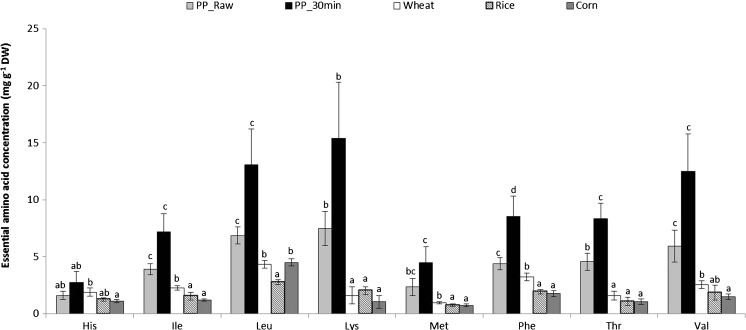
“Figure: Fig. 3 A comparison of essential fatty acids liberated from 1 g dry weight of Palmaria palmata (raw and boiled for 30 min) wheat, rice, and corn flours in simulated gastrointestinal digestion.”
§ Algae as nutritional and functional food sources: revisiting our understanding > Proteins
“Furthermore, Maehre et al. (2016) demonstrated that the apparent amino acid bioaccessibility from both raw and 30 min-boiled dulse was higher than from an equivalent dry weight of wheat, rice, or corn flour in a simulated in vitro gastrointestinal digestion model with analysis at each sequential digestive step (amylase/saliva buffer; pepsin/gastric buffer; pancreatin/duodenal buffer) (Fig. 3).”
Rated minor: it would not touch a result — a value no result rests on, a p-value that stays on the same side of the significance level, or a conflict that is clerical, resolved elsewhere in the paper, or outside its own findings.
In the paper
§ Algae as nutritional and functional food sources: revisiting our understanding > Polysaccharides > Sulfated galactans—carrageenans
“Carrageenan extracts generate proinflammatory agents in mice (Hansra et al. 2000)”
§ Algae as nutritional and functional food sources: revisiting our understanding > References
“Hansra P Moran EL Fornasier VL Bogoch ER Carrageenan-induced arthritis in the rat Inflammation 2000 24 141 155”
Citations
Cites
1 retracted
Items 201–400 of 437
Pseudovitamin B12 Is the Predominant Cobamide of an Algal Health Food, Spirulina Tablets
Watanabe, F., Katsura, H., Takenaka, S., Fujita, T., Abe, K., Tamura, Y., Nakatsuka, T., & Nakano, Y. (1999) · Journal of Agricultural and Food Chemistry · doi:10.1021/jf990541b · Cited by 154 · cited 1×
“Lower levels are found in other sea vegetables such as kelps (including wakame) and hijiki, although reported concentrations vary among studies, possibly reflecting differences among strains, growing conditions, or harvesting periods (Watanabe et al. 1999a; Miyamoto et al. 2009).”
Ninomiya, K. (2002) · Food Reviews International · doi:10.1081/fri-120003415 · Cited by 154 · cited 1×
“For humans, glutamate is the major component of the savory, the fifth basic taste called umami from its characterization in kelp (Ninomiya 2002; Mouritsen 2013).”
Caulerpa consumption, nutritional value and farming in the Indo-Pacific region
de Gaillande, C., Payri, C. E., Remoissenet, G., & Zubia, M. (2016) · Journal of Applied Phycology · doi:10.1007/s10811-016-0912-6 · Cited by 153 · cited 2×
“Many Gracilaria (Rhodophyta) and Caulerpa (Chlorophyta) species are eaten as sea vegetables, especially in the western Pacific (de Gaillande et al. 2016), but illness and some deaths have occurred when a few toxic species of these genera were sold or collected by mistake (Higa and Kuniyoshi 2000; Cheney 2016).”
Bioactive Pectic Polysaccharides
Paulsen, B. S., & Barsett, H. (2005) · Springer eBooks · doi:10.1007/b136817 · Cited by 153 · cited 1×
“Such striking differences emphasize the complex interactions among food customs, dietary history, and gut microbiomes that complicate study of the nutritional and functional benefits of algal foods (Paulsen and Barsett 2005; Costello et al. 2012; Gordon 2012; Nicholson et al. 2012).”
Mass culture of Spirulina outdoors--the earthrise farms experience
Belay, A. (1997) · Cited by 153
Kaeffer, B., Bénard, C., Lahaye, M., Blottière, H. M., & Cherbut, C. (1999) · Planta Medica · doi:10.1055/s-1999-14009 · Cited by 152 · cited 2×
“…ulvan extracts in vitro include antibacterial, anticoagulant, antioxidant, antiviral, anti-tumor, anti-hyperlipidemic, and immunoregulatory effects (Kaeffer et al. 1999; Yu et al. 2003; Mao et al. 2006, 2008; Leiro et al. 2007; Zhang et al. 2008, 2010; Lee et al. 2010; Holdt and Kraan 2011;…”
Croci, D. O., Cumashi, A., Ushakova, N. A., Preobrazhenskaya, M. E., Piccoli, A., Totani, L., Ustyuzhanina, N. E., Bilan, M. I., Usov, A. I., Grachev, A. A., et al. (2011) · PLoS ONE · doi:10.1371/journal.pone.0017283 · Cited by 150 · cited 1×
“The highly sulfated nature and molecular weights of FCPs appear to be responsible for many demonstrated biological activities in vitro (Croci et al. 2011; Ustyuzhanina et al. 2014).”
High Iron Content and Bioavailability in Humans from Four Species of Marine Algae ,
García-Casal, M. N., Pereira, A. C., Leets, I., Ramírez, J., & Quiroga, M. F. (2007) · The Journal of Nutrition · doi:10.1093/jn/137.12.2691 · Cited by 150 · cited 5×
“Garcia-Casal et al. (2007, 2009) measured seasonal differences in the iron content of four seaweed species common to Venezuelan waters ( Ulva spp., Sargassum spp., Porphyra spp., and Gracilariopsis spp.).”
InfluentialKulshreshtha, G., Rathgeber, B., Stratton, G., Thomas, N., Evans, F., Critchley, A., Hafting, J., & Prithiviraj, B. (2014) · Poultry Science · doi:10.3382/ps.2014-04200 · Cited by 150 · cited 3×
“Although seaweeds containing carrageenans act as prebiotics when supplied as supplements in both poultry and rat diets (Kulshreshtha et al. 2014; Liu et al. 2015), the potential for sulfated galactans from algae to benefit human health remains to be established.”
Bernstein, A. M., Ding, E. L., Willett, W. C., & Rimm, E. B. (2012) · The Journal of Nutrition · doi:10.3945/jn.111.148973 · Cited by 148
Jensen, C. L., Voigt, R. G., Llorente, A. M., Peters, S. U., Prager, T. C., Zou, Y., Rozelle, J. C., Turcich, M. R., Fraley, J. K., Anderson, R. E., et al. (2010) · The Journal of Pediatrics · doi:10.1016/j.jpeds.2010.06.006 · Cited by 147 · cited 1×
“There is evidence that enhanced DHA intake may improve infant cognitive performance and enhance visual acuity (Jensen et al. 2005, 2010; Imhoff-Kunsch et al. 2011), although more recent data raises question about this linkage (Delgado-Noguera et al. 2015).”
Raml, R., Goessler, W., Traar, P., Ochi, T., & Francesconi, K. A. (2005) · Chemical Research in Toxicology · doi:10.1021/tx050111h · Cited by 145 · cited 1×
“In vitro trials with human HepG2 cells showed that DMA toxicity occurred only at levels that were 400× the maximum DMA found in the urine of a human volunteer during clearance of arsenosugar (Raml et al. 2005).”
Lane, K., Derbyshire, E., Li, W., & Brennan, C. (2014) · Critical Reviews in Food Science and Nutrition · doi:10.1080/10408398.2011.596292 · Cited by 145 · cited 1×
“A systematic review of plant omega-3 fatty sources by Lane et al. (2014) concluded that further research on algal sources was warranted based on promising preliminary work.”
Evolutionary inheritance of elemental stoichiometry in phytoplankton
Quigg, A., Irwin, A. J., & Finkel, Z. V. (2011) · Proceedings of the Royal Society B: Biological Sciences · doi:10.1098/rspb.2010.1356 · Cited by 144 · cited 1×
“Analyses of the elemental contents of microalgae (Quigg et al. 2011) and macroalgae (Tuzen et al. 2009; Pereira 2011) rarely include Se, even though it is present in both (Fournier et al. 2005).”
STUPPERICH, E., & NEXØ, E. (1991) · European Journal of Biochemistry · doi:10.1111/j.1432-1033.1991.tb16124.x · Cited by 143 · cited 1×
“…B 12 (or pseudocobalamin) differs from cobal-amin in its lower axial ligand (Stupperich and Krautler 1988), and this affects affinity of the mammalian B 12 -binding protein intrinsic factor (IF) for the compound, thereby limiting its absorption in the intestine (Stupperich and Nexo 1991).”
Ben-Amotz, A., & Levy, Y. (1996) · The American Journal of Clinical Nutrition · doi:10.1093/ajcn/63.5.729 · Cited by 142 · cited 3×
“Various strains of the green microalga Dunaliella salina can accumulate about 8 % of their dry weight as β-carotene, which has been marketed as a functional food (Ben-Amotz and Levy 1996; Borowitzka 2013b).”
Bioactive Compounds and Properties of Seaweeds—A Review
Pal, A., Kamthania, M. C., & Kumar, A. (2014) · OALib · doi:10.4236/oalib.1100752 · Cited by 139 · cited 1×
“Algal cell walls differ from those of terrestrial plants as they contain uncommon polyuronides and polysaccharides that may be methylated, acetylated, pyruvylated, or sulfated (Paulsen and Barsett 2005; Pal et al. 2014; Rioux and Turgeon 2015; Stiger-Pouvreau et al. 2016).”
Arsenosugar phospholipids and arsenic hydrocarbons in two species of brown macroalgae
García-Salgado, S., Raber, G., Raml, R., Magnes, C., & Francesconi, K. A. (2012) · Environmental Chemistry · doi:10.1071/en11164 · Cited by 139 · cited 1×
“Algae, and mollusks that eat algae (e.g., oysters, clams), convert most iAs to arsenosugars, and there is some evidence that when phosphate levels are low, iAs may be converted to As-phospholipids that have a role in algal membrane function (Cooney et al. 1978; Garcia-Salgado et al. 2012).”
Present and future needs for algae and algal products
Jensen, A. (1993) · Hydrobiologia · doi:10.1007/bf00048998 · Cited by 139 · cited 1×
“Nutritional generalization about algal mineral contents is difficult because of sometimes large seasonal, geographic, and taxonomic variations in mineral contents of marine algae (e.g., Jensen 1993).”
Heparinoid-active two sulfated polysaccharides isolated from marine green algae Monostroma nitidum
Mao, W.-J., Fang, F., Li, H., Qi, X., Sun, H.-H., Chen, Y., & Guo, S. (2008) · Carbohydrate Polymers · doi:10.1016/j.carbpol.2008.04.041 · Cited by 138
Corona, G., Ji, Y., Anegboonlap, P., Hotchkiss, S., Gill, C., Yaqoob, P., Spencer, J. P. E., & Rowland, I. (2016) · British Journal of Nutrition · doi:10.1017/s0007114516000210 · Cited by 138 · cited 2×
“…conclude consideration of phlorotannins, while in vitro studies on phlorotannins are valuable, more work along the lines of that of Iwai (2008) and Corona et al. (2016) is needed to understand the uptake and systemic properties of phlorotannins, and to determine whether the in vitro effects occur…”
Delgado-Noguera, M. F., Calvache, J. A., Bonfill Cosp, X., Kotanidou, E. P., & Galli-Tsinopoulou, A. (2015) · Cochrane Database of Systematic Reviews · doi:10.1002/14651858.cd007901.pub3 · Cited by 135
Arterburn, L. M., Oken, H. A., Hoffman, J. P., Bailey‐Hall, E., Chung, G., Rom, D., Hamersley, J., & McCarthy, D. (2007) · Lipids · doi:10.1007/s11745-007-3098-5 · Cited by 135 · cited 1×
“Fortified snack bars also delivered equivalent amounts of DHA on a DHA dose basis (Arterburn et al. 2007).”
Tracing seaweeds as mineral sources for farm-animals
Cabrita, A. R. J., Maia, M. R. G., Oliveira, H. M., Sousa-Pinto, I., Almeida, A. A., Pinto, E., & Fonseca, A. J. M. (2016) · Journal of Applied Phycology · doi:10.1007/s10811-016-0839-y · Cited by 135 · cited 3×
“Cabrita et al. (2016) found that Fe (and other metal) contents varied, in some cases substantially, among macroalgal species collected at the same sites and time, presumably linked to differences in metabolic requirements.”
InfluentialDawczynski, C., Schäfer, U., Leiterer, M., & Jahreis, G. (2007) · Journal of Agricultural and Food Chemistry · doi:10.1021/jf0721500 · Cited by 134 · cited 4×
“In this case, the absorbed iodine (20–50 mg) exceeded the recommended upper daily intake of iodine (0.2 mg day by more than an order of magnitude; WHO 1989; Dawczynski et al. 2007; Miyai et al. 2008).”
InfluentialComposition, nutritional aspects and effect on serum parameters of marine algae Ulva rigida
Taboada, C., Millán, R., & Míguez, I. (2010) · Journal of the Science of Food and Agriculture · doi:10.1002/jsfa.3836 · Cited by 133 · cited 2×
“…the ingestion of green macroalgae by humans is rather widespread, the potential health benefits of food supplements of native ulvans or their chemically modified derivatives, let alone the direct consumption of the whole algae, are not well understood (Taboada et al. 2010; Wijesekara et al. 2011).”
Zhao, X., Li, B., Xue, C., & Sun, L. (2011) · Journal of Applied Phycology · doi:10.1007/s10811-011-9679-y · Cited by 132 · cited 2×
“Other algal components that scavenge free radicals are phenolic compounds (Ragan and Globitza 1986) including halophenols (Li et al. 2011) and phlorotannins (Shibata et al. 2007) and, as noted above, alginate (Zhao et al. 2012; Zhou et al. 2012) and sulfated polysaccharides (Barahona et al. 2012).”
Anastyuk, S. D., Шевченко, Н. М., Ermakova, S. P., Malyarenko, O. S., Назаренко, Е. Л., Dmitrenok, P. S., & Николаевна, З. Т. (2011) · Carbohydrate Polymers · doi:10.1016/j.carbpol.2011.07.036 · Cited by 132 · cited 2×
“modified by environmental variables and the developmental status of the seaweed fronds, all of which can affect their bioactivities (Honya et al. 1999; Zvyagintseva et al. 2003; Rioux et al. 2009; Pielesz and Biniaś 2010; Skriptsova et al. 2010; Stengel et al. 2011; Anastyuk et al. 2012; Mak et al. 2013).”
Fleurence, J. (1999) · Journal of Applied Phycology · doi:10.1023/a:1008183704389 · Cited by 131 · cited 2×
“In most analyses of amino acid composition in marine algae, glutamic acid, and aspartic acid represent the highest proportions of amino acids (e.g., Fleurence 1999b; Lourenço et al. 2002; Online Resources 1, 2; Holdt and Kraan 2011).”
Pharmacological, Structural, and Drug Delivery Properties and Applications of 1,3-β-Glucans
Lehtovaara, B. C., & Gu, F. X. (2011) · Journal of Agricultural and Food Chemistry · doi:10.1021/jf200964u · Cited by 131 · cited 2×
“These and other biological effects of βglucans have been reviewed (Novak and Vetvica 2008; Ramberg et al. 2010; Lehtovaara and Gu 2011; Kadam et al. 2015), and certain cautions have been expressed about the functional effects of soluble and particulate forms of these compounds (Young andCastranova 2005; Hofer and Posp…”
Eccles, R., Meier, C., Jawad, M., Weinmüllner, R., Grassauer, A., & Prieschl-Grassauer, E. (2010) · Respiratory Research · doi:10.1186/1465-9921-11-108 · Cited by 130 · cited 1×
“…herpes simplex, herpes zoster, dengue-2, vaccinia, rabies, and vesicular stomatitis virus with patents and some commercial projects resulting (Richards et al. 1978; Baba et al. 1988; Vedros 1993; Bourgougnon 2003; Eccles et al. 2010; Talarico et al. 2011; Levendosky et al. 2015; Luo et al. 2015).”
Occurrence of sulfated galactans in marine angiosperms: evolutionary implications
Aquino, R. S. (2004) · Glycobiology · doi:10.1093/glycob/cwh138 · Cited by 129 · cited 1×
“The predominant algal polysaccharides are the alginates in brown macroalgae, and the sulfate-esterified polysaccharides of macro-and microalgae that are widespread in red, brown, and green sea-weeds (Aquino et al. 2005; Popper et al. 2011).”
Nutraceuticals and functional foods regulations in the United States and around the world
Bagchi, D. (2006) · Toxicology · doi:10.1016/j.tox.2006.01.001 · Cited by 128 · cited 1×
“…foods ^ or B nutraceuticals ^ ; these terms have no legal status in many nations but describe foods that contain bioactive compounds, or phytochemicals, that may benefit health beyond the role of basic nutrition (e.g., anti-inflammatories, disease prevention; Bagchi 2006; Hafting et al. 2012).”
Salivary amylase – The enzyme of unspecialized euryphagous animals
Boehlke, C., Zierau, O., & Hannig, C. (2015) · Archives of Oral Biology · doi:10.1016/j.archoralbio.2015.05.008 · Cited by 125 · cited 2×
“The predominant salivary enzyme is alpha ( α )-amylase, which is specific for α (1 → 4) glucose linkages, and human salivary amylase is more active than that from other primates (Boehlke et al. 2015).”
ADSORPTION AND UPTAKE OF COPPER BY THE GREEN ALGA SCENEDESMUS SUBSPICATUS (CHLOROPHYTA) 1
Knauer, K., Behra, R., & Sigg, L. (1997) · Journal of Phycology · doi:10.1111/j.0022-3646.1997.00596.x · Cited by 125 · cited 1×
“Algal uptake of Cd, Cu, Co, Zn as well as Pb occurs via transporter-mediated processes, as indicated by their uptake kinetics (e.g., Garnham et al. 1992; Knauer et al. 1997; Mehta et al. 2002; Francois et al. 2007; Costa et al. 2011).”
Matanjun, P., Mohamed, S., Muhammad, K., & Mustapha, N. M. (2010) · Journal of Medicinal Food · doi:10.1089/jmf.2008.1212 · Cited by 124
The protein value in human nutrition of edible marine algae in Japan
Fujiwara-Arasaki, T., Mino, N., & Kuroda, M. (1984) · Hydrobiologia · doi:10.1007/bf00027735 · Cited by 124 · cited 1×
“…systems containing digestive enzymes such as pepsin, pronase, and pancreatin, with evidence that this is due especially to inhibitory soluble fibers (e.g., Fujiwara-Arasaki et al. 1984; Fleurence 1999a; Urbano and Goni 2002; Marrion et al. 2003, 2005; Wong and Cheung 2003; De Marco et al. 2014).”
Seaweeds: Edible, Available, and Sustainable
Mouritsen, O. G. (2013) · Medical Entomology and Zoology · Cited by 121
Nutritive and non-nutritive attributes of washed-up seaweeds from the coast of Ceará, Brazil
de Oliveira, M. N., Freitas, A. L. P., Carvalho, A. F. U., Sampaio, T. M. T., Farias, D. F., Teixeira, D. I. A., Gouveia, S. T., Pereira, J. G., & de Sena, M. M. D. C. C. (2008) · Food Chemistry · doi:10.1016/j.foodchem.2008.12.004 · Cited by 121 · cited 1×
“…of the metal content of seaweeds washed up on the Brazilian coast also showed that some toxic metals were at levels considered harmful, although with remediation of nearby industrial contamination sources these macroalgae represent a potential food alternative for humans (de Oliveira et al. 2009).”
Fucoidans: Pro- or antiangiogenic agents?
Ustyuzhanina, N. E., Bilan, M. I., Ушакова, Н. А., Usov, A. I., Kiselevskiy, M. V., & Nifantiev, N. E. (2014) · Glycobiology · doi:10.1093/glycob/cwu063 · Cited by 121 · cited 3×
“The highly sulfated nature and molecular weights of FCPs appear to be responsible for many demonstrated biological activities in vitro (Croci et al. 2011; Ustyuzhanina et al. 2014).”
Neff, L. M., Culiner, J., Cunningham-Rundles, S., Seidman, C., Meehan, D., Maturi, J., Wittkowski, K. M., Levine, B., & Breslow, J. L. (2011) · The Journal of Nutrition · doi:10.3945/jn.110.130021 · Cited by 121 · cited 1×
“Algal DHA extracts can produce other cardiovascular protective effects in humans by altering plasma lipoproteins at reasonably small doses (2 g algal DHA day − 1 over 4.5 months: Neff et al. 2011).”
InfluentialThe protein value in human nutrition of edible marine algae in Japan
Fujiwara, T., Mino, N., & Kuroda, M. (1984) · Springer eBooks · doi:10.1007/978-94-009-6560-7_104 · Cited by 120
Neyrinck, A. M., Mouson, A., & Delzenne, N. M. (2007) · International Immunopharmacology · doi:10.1016/j.intimp.2007.06.011 · Cited by 120 · cited 1×
“For example, brown algal M-series laminaran showed significant hepatoprotective effects when ingested orally by rats (Neyrinck et al. 2007).”
Bhattacharyya, S., Liu, H., Zhang, Z., Jam, M., Dudeja, P. K., Michel, G., Linhardt, R. J., & Tobacman, J. K. (2010) · The Journal of Nutritional Biochemistry · doi:10.1016/j.jnutbio.2009.07.002 · Cited by 120 · cited 2×
“interleukin-8 and B-cell CLL/lymphoma 10 activities in the normal human colonic mucosal epithelial NCM460 cell line (Bhattacharyya et al. 2010).”
A Review on the Relationship Between Food Structure, Processing, and Bioavailability
Sensoy, I. (2014) · Critical Reviews in Food Science and Nutrition · doi:10.1080/10408398.2011.619016 · Cited by 119 · cited 2×
“…and the presence of other substances that may inhibit or facilitate the uptake of metabolites), the harvest season (e.g., altered metabolite and biomass composition, environmental variability of essential precursors, and anthropogenic factors), and the food preparation methods (Sensoy 2014).”
Ling, A. L. M., Yasir, S., Matanjun, P., & Abu Bakar, M. F. (2015) · Journal of Applied Phycology · doi:10.1007/s10811-014-0467-3 · Cited by 117
Nylund, G. M., Weinberger, F., Rempt, M., & Pohnert, G. (2011) · PLoS ONE · doi:10.1371/journal.pone.0029359 · Cited by 117 · cited 2×
“Wounding of G. vermiculophylla increases synthesis of PGE 2 from arachidonic acid within minutes (Noguchi et al. 1994; Nylund et al. 2011).”
Li, C., Gao, Y., Xing, Y., Zhu, H., Shen, J., & Tian, J. (2011) · Food and Chemical Toxicology · doi:10.1016/j.fct.2011.05.022 · Cited by 117 · cited 3×
“Other algal components that scavenge free radicals are phenolic compounds (Ragan and Globitza 1986) including halophenols (Li et al. 2011) and phlorotannins (Shibata et al. 2007) and, as noted above, alginate (Zhao et al. 2012; Zhou et al. 2012) and sulfated polysaccharides (Barahona et al. 2012).”
Kawamura-Konishi, Y., Watanabe, N., Saito, M., Nakajima, N., Sakaki, T., Katayama, T., & Enomoto, T. (2012) · Journal of Agricultural and Food Chemistry · doi:10.1021/jf300165j · Cited by 116 · cited 1×
“Kawamura-Konishi et al. (2012) also found that phlorotannin extracts of four species of Sargassum significantly inhibited the salivary enzyme α -amylase in vitro, and that a novel phlorotannin from Sargassum patens inhibited rat pancreatic α -glucosidase action on amylopectin.”
Mouritsen, O. G., Johansen, M., & Mouritsen, J. D. (2013) · University of Chicago Press eBooks · doi:10.7208/chicago/9780226044538.001.0001 · Cited by 116
Barclay, W., Weaver, C. A., Metz, J. G., & Hansen, J. (2010) · Elsevier eBooks · doi:10.1016/b978-1-893997-73-8.50008-6 · Cited by 115 · cited 1×
“…TAG from Crypthecodinium cohnii (a dinoflagellate, Mendes et al. 2009) and Schizochytrium sp. (a thraustochytrid stramenopile, Li et al. 2009; Barclay et al. 2010), and as a consequence, infant formula, infant foods, and certain other food categories (dairy, bakery, eggs, and non-alcoholic…”
Pomin, V. H. (2009) · Biopolymers · doi:10.1002/bip.21200 · Cited by 115 · cited 1×
“…attracting widespread interest (Shanmugam and Mody 2000; Berteau and Mulloy 2003; Kusaykin et al. 2008; Li et al. 2008; Pomin and Mourão 2008; Courtois 2009; Pomin 2009, 2012; Fitton 2011; Jiao et al. 2011; Kim and Li 2011; Kim and Wijesekara 2011; Wijesinghe et al. 2011; Wijesinghe and Jeon 2012).”
Bhattacharyya, S., O‐Sullivan, I., Katyal, S., Unterman, T. G., & Tobacman, J. K. (2011) · Diabetologia · doi:10.1007/s00125-011-2333-z · Cited by 114 · cited 2×
“Oral introduction of undegraded λ - κ carrageenan in drinking water of 12-week-old mice also caused significantly higher peak glucose levels in the blood, leading to concern that carrageenan-induced insulin resistance might contribute to human diabetes (Bhattacharyya et al. 2012).”
Taylor, V. F., & Jackson, B. P. (2016) · Chemosphere · doi:10.1016/j.chemosphere.2016.08.004 · Cited by 113
Topical Benefits of Two Fucoidan-Rich Extracts from Marine Macroalgae
Fitton, J., Dell'Acqua, G., Gardiner, V.-A., Karpiniec, S., Stringer, D., & Davis, E. (2015) · Cosmetics · doi:10.3390/cosmetics2020066 · Cited by 111 · cited 2×
“benefits in cosmetic applications (Fitton et al. 2015).”
Cooney, R. V., Mumma, R. O., & Benson, A. A. (1978) · Proceedings of the National Academy of Sciences · doi:10.1073/pnas.75.9.4262 · Cited by 110 · cited 2×
“Algae, and mollusks that eat algae (e.g., oysters, clams), convert most iAs to arsenosugars, and there is some evidence that when phosphate levels are low, iAs may be converted to As-phospholipids that have a role in algal membrane function (Cooney et al. 1978; Garcia-Salgado et al. 2012).”
Wijesinghe, W. A. J. P., Athukorala, Y., & Jeon, Y. (2011) · Carbohydrate Polymers · doi:10.1016/j.carbpol.2011.05.047 · Cited by 110 · cited 1×
“…attracting widespread interest (Shanmugam and Mody 2000; Berteau and Mulloy 2003; Kusaykin et al. 2008; Li et al. 2008; Pomin and Mourão 2008; Courtois 2009; Pomin 2009, 2012; Fitton 2011; Jiao et al. 2011; Kim and Li 2011; Kim and Wijesekara 2011; Wijesinghe et al. 2011; Wijesinghe and Jeon 2012).”
Kwak, J. H., Baek, S. H., Woo, Y., Han, J. K., Kim, B. G., Kim, O. Y., & Lee, J. H. (2012) · Nutrition Journal · doi:10.1186/1475-2891-11-53 · Cited by 110 · cited 1×
“Kwak et al. ( 2012) observed an immunostimulatory effect in 30 Korean volunteers fed 5 g day − 1 Chlorella vs. placebo in a double-blinded 8-week trial.”
Vitamin B-12 from algae appears not to be bioavailable
Dagnelie, P. C., van Staveren, W., & van den Berg, H. (1991) · American Journal of Clinical Nutrition · doi:10.1093/ajcn/53.3.695 · Cited by 109 · cited 2×
“Dagnelie et al. (1991) investigated how sea vegetables affected the hematological status of B 12 -deficient children and concluded that the algal-derived vitamin B 12 was not bio-accessible to humans.”
Wildman, R. E. C., & Medeiros, D. M. (2000) · Choice Reviews Online · doi:10.5860/choice.37-3933 · Cited by 108 · cited 5×
“Although taurine is not an EAA for adults, it is a component of bile acids that complex and lower cholesterol in the bloodstream (Medeiros and Wildman 2015).”
InfluentialMcKim, J. M. (2014) · Critical Reviews in Toxicology · doi:10.3109/10408444.2013.861797 · Cited by 108 · cited 1×
“More recent appraisals of carra-geenans as food additives could find no hazards to human health as they are currently used (McKim 2014; Weiner 2014; Barlow et al. 2015; Weiner et al. 2015).”
Melhuus, A., Seip, K. L., Seip, H. M., & Myklestad, S. M. (1978) · Environmental Pollution (1970) · doi:10.1016/0013-9327(78)90099-x · Cited by 108 · cited 1×
“The efficacy of macroalgae as metal collectors is why they are effective sentinel organisms for detecting anthropogenic signatures in coastal waters (Melhuus et al. 1978; Leal et al. 1997; Brown et al. 1998; Mardsen and De Wreede 2000); a feature in conflict with their use as a food source.”
Aquaglyceroporins: ancient channels for metalloids
Bhattacharjee, H., Mukhopadhyay, R., Thiyagarajan, S., & Rosen, B. P. (2008) · Journal of Biology · doi:10.1186/jbiol91 · Cited by 107 · cited 1×
“All seafoods contain arsenic, which enters cells through phosphate transporters and aquaglyceroporins (Bhattacharjee et al. 2008; Cooney et al. 1978; Zhao et al. 2010).”
Vitamin B12-mediated transport of nanoparticles across Caco-2 cells
Russell-Jones, G. J., Arthur, L., & Walker, H. (1999) · International Journal of Pharmaceutics · doi:10.1016/s0378-5173(98)00394-9 · Cited by 106 · cited 1×
“The uptake of cobalamin-based compounds, referred to more broadly as corrinoids, is largely governed by the gastrointestinal absorption system rather than their chemical liberation via digestive chemical processes (Russell-Jones et al. 1999).”
Yuan, H., Song, J., Li, X., Li, N., & Liu, S. (2010) · Journal of Applied Phycology · doi:10.1007/s10811-010-9536-4 · Cited by 106 · cited 1×
“Phosphorylation or further sulfation of these oligomers increased the activity of natural killer cells, the cytotoxic lymphocytes critical to immune system function (Yuan et al. 2011).”
Photochemoprevention of UVB‐induced skin carcinogenesis in SKH‐1 mice by brown algae polyphenols
Hwang, H., Chen, T., Nines, R. G., Shin, H., & Stoner, G. D. (2006) · International Journal of Cancer · doi:10.1002/ijc.22147 · Cited by 106 · cited 1×
“The ingestion (and topical application) of polyphenols of brown algae inhibited UVB radiation-induced skin carcinogenesis in mice (Hwang et al. 2006), and while this bioactivity remains to be determined for humans, it provides evidence that algal foods have significant functional food potential.”
Honya, M., Mori, H., Anzai, M., Araki, Y., & Nisizawa, K. (1999) · Hydrobiologia · doi:10.1023/a:1017007623005 · Cited by 106 · cited 2×
“…and can be modified by environmental variables and the developmental status of the seaweed fronds, all of which can affect their bioactivities (Honya et al. 1999; Zvyagintseva et al. 2003; Rioux et al. 2009; Pielesz and Binia ś 2010; Skriptsova et al. 2010; Stengel et al. 2011; Anastyuk et…”
Dunaliella: Biology, Production, and Markets
Borowitzka, M. A. (2013) · Handbook of Microalgal Culture · doi:10.1002/9781118567166.ch18 · Cited by 105 · cited 4×
“Various strains of the green microalga Dunaliella salina can accumulate about 8 % of their dry weight as β -carotene, which has been marketed as a functional food (Ben-Amotz and Levy 1996; Borowitzka 2013b).”
InfluentialLipids of the Red Alga, Palmaria palmata
Mishra, V. K., Temelli, F., Ooraikul, B., Shacklock, P. F., & Craigie, J. S. (1993) · Botanica Marina · doi:10.1515/botm.1993.36.2.169 · Cited by 105 · cited 2×
“5) that have a high proportion of their total fatty acids as EPA (Mishra et al. 1993; Graeve et al. 2002; Blouin et al. 2006; Schmid et al. 2014) will not meet dietary recommendations for daily EFA alone (Blouin et al.”
Self-citationMarine Colloids and Trace Metals
Wells, M. L. (2002) · Elsevier eBooks · doi:10.1016/b978-012323841-2/50009-9 · Cited by 104 · cited 1×
“As noted, however, colloidal sorption to algal surfaces can be a contributing factor, and there are few data on colloidal metal concentrations in coastal waters (Wells 2002).”
Self-citationUrbano, M. G., & Goñi, I. (2002) · Food Chemistry · doi:10.1016/s0308-8146(01)00273-4 · Cited by 103 · cited 2×
“In general, protein in most algae is digested less completely than reference proteins such as casein (a milk protein) in in vitro model systems containing digestive enzymes such as pepsin, pronase, and pancreatin, with evidence that this is due especially to inhibitory soluble fibers (e.g., Fujiwara-Arasaki et al. 198…”
Maehre, H. K., Edvinsen, G. K., Eilertsen, K.-E., & Elvevoll, E. O. (2016) · Journal of Applied Phycology · doi:10.1007/s10811-015-0587-4 · Cited by 102 · cited 2×
“Importantly, a recent study (Maehre et al. 2016) with excellent biological and technical replication shows the beneficial effect of cooking on amino acid availability from dried dulse (Online Resource 3); however, cooking did not significantly increase the total amino acids measured from Alaria…”
Monthly variation in the chemical composition of Eisenia arborea J.E. Areschoug
Hernández‐Carmona, G., Carrillo‐Domínguez, S., Arvizu‐Higuera, D. L., Rodríguez-Montesinos, Y. E., Murillo-Álvarez, J. I., Muñoz‐Ochoa, M., & Castillo-Domínguez, R. M. (2009) · Journal of Applied Phycology · doi:10.1007/s10811-009-9454-5 · Cited by 102 · cited 4×
“Even so, variability between samples can make direct comparisons among studies difficult (e.g., Chan et al. 1997; McDermid and Stuercke 2003; Hernandez-Carmona et al. 2009).”
InfluentialDocosahexaenoic acid (DHA) and cardiovascular disease risk factors
Holub, B. J. (2009) · Prostaglandins, Leukotrienes and Essential Fatty Acids · doi:10.1016/j.plefa.2009.05.016 · Cited by 100 · cited 2×
“Numerous epidemiological and controlled interventional trials (N.B., the excellent reviews of Conquer and Holub 1996; Holub 2009; Cottin et al. 2011) support the health benefits to humans of DHA and EPA long-chain omega-3 fatty acids from fish oils and algal sources (mainly extracts).”
Jiang, Y., & Chen, F. (2000) · Journal of the American Oil Chemists' Society · doi:10.1007/s11746-000-0099-0 · Cited by 99 · cited 1×
“Phytoplankton contain more PUFA, as expected, when grown at low temperature (e.g., DHA in Crypthecodinium , Jiang and Chen 2000), and higher temperatures good for maximal biomass production can be lowered for as little as 12 h to induce maximal EPA content in the diatom Phaeodactylum (Jiang and Gao…”
Griffithsin and Carrageenan Combination To Target Herpes Simplex Virus 2 and Human Papillomavirus
Levendosky, K., Mizenina, O., Martinelli, E., Jean-Pierre, N., Kizima, L., Rodriguez, A., Kleinbeck, K., Bonnaire, T., Robbiani, M., Zydowsky, T. M., et al. (2015) · Antimicrobial Agents and Chemotherapy · doi:10.1128/aac.01816-15 · Cited by 99 · cited 2×
“Anti-viral activities include those against herpes simplex, herpes zoster, dengue-2, vaccinia, rabies, and vesicular stomatitis virus with patents and some commercial projects resulting (Richards et al. 1978; Baba et al. 1988; Vedros 1993; Bourgougnon 2003; Eccles et al. 2010; Talarico et al. 2011; Levendosky et al. 2…”
Peters, B. A., Hall, M. N., Liu, X., Parvez, F., Sanchez, T. R., van Geen, A., Mey, J. L., Siddique, A. B., Shahriar, H., Uddin, M. N., et al. (2015) · Environmental Health Perspectives · doi:10.1289/ehp.1409396 · Cited by 98
Phaneuf, D., Côté, I., Dumas, P., Ferron, L. A., & LeBlanc, A. (1999) · Environmental Research · doi:10.1006/enrs.1998.3915 · Cited by 97 · cited 3×
“Lawrence River estuary, Canada, all were at very low levels and there were no metalrelated health risks (Phaneuf et al. 1999).”
InfluentialOKADA, Y., ISHIKURA, M., & MAOKA, T. (2009) · Bioscience, Biotechnology, and Biochemistry · doi:10.1271/bbb.90078 · Cited by 94 · cited 1×
“In one study, Okada et al. (2009) examined the bioaccessibility of astaxanthin extracted from the green alga Haematococcus (Fig.”
Algal-Oil Capsules and Cooked Salmon: Nutritionally Equivalent Sources of Docosahexaenoic Acid
Arterburn, L. M., Oken, H. A., Bailey Hall, E., Hamersley, J., Kuratko, C. N., & Hoffman, J. P. (2008) · Journal of the American Dietetic Association · doi:10.1016/j.jada.2008.04.020 · Cited by 93 · cited 2×
“(DHASCO-T and DHASCO-S) supplied in capsules generated equivalent dose-dependent DHA levels in plasma phospholipids and erythrocytes (Arterburn et al. 2008).”
Geppert, J., Kraft, V., Demmelmair, H., & Koletzko, B. (2005) · Lipids · doi:10.1007/s11745-005-1442-9 · Cited by 92 · cited 2×
“Neither EPA nor DHA alone showed any effects on inflammation in double-blind trials with cystic fibrosis patients (Van Blervliet et al. 2008) or insulin sensitivity in human subjects, despite indications for potency in vitro (critically reviewed in Cottin et al. 2011).”
Turner, N. J. (2003) · Canadian Journal of Botany · doi:10.1139/b03-029 · Cited by 92 · cited 2×
“…in Chile (Dillehay et al. 2008) and early written accounts (e.g., in China, 300 A.D.; in Ireland, 600 A.D.; Newton 1951; Tseng 1981; Aaronson 1986; Turner 2003; Gantar and Electronic supplementary material The online version of this article (doi:10.1007/s10811-016-0974-5) contains supplementary…”
InfluentialMarine organisms as a therapeutic source against herpes simplex virus infection
Vo, T., Ngo, D., Ta, Q. V., & Kim, S. (2011) · European Journal of Pharmaceutical Sciences · doi:10.1016/j.ejps.2011.07.005 · Cited by 89 · cited 1×
“…more than 60 years ago, and an impressive number of biological processes are now reported to be influenced by ingestion of whole algae or polysaccharide extracts as food or supplements (Pulz and Gross 2004; Plaza et al. 2009; Chacón-Lee and González-Mariño 2010; Lordan et al. 2011; Vo et al. 2011).”
Nauroth, J. M., Liu, Y. C., Van Elswyk, M., Bell, R., Hall, E. B., Chung, G., & Arterburn, L. M. (2010) · Lipids · doi:10.1007/s11745-010-3406-3 · Cited by 89 · cited 2×
“Fish oils also have demonstrated anti-inflammatory and insulin-sensitizing properties in vitro and in animal studies (Nauroth et al. 2010; Cottin et al. 2011); however, human trials often yield conflicting findings.”
García-Casal, M. N., Ramírez, J., Leets, I., Pereira, A. C., & Quiroga, M. F. (2008) · British Journal of Nutrition · doi:10.1017/s0007114508994757 · Cited by 89 · cited 2×
“Garcia-Casal et al. (2007, 2009) measured seasonal differences in the iron content of four seaweed species common to Venezuelan waters ( Ulva spp., Sargassum spp., Porphyra spp., and Gracilariopsis spp.).”
Liu, J., Kandasamy, S., Zhang, J., Kirby, C. W., Karakach, T., Hafting, J., Critchley, A. T., Evans, F., & Prithiviraj, B. (2015) · BMC Complementary and Alternative Medicine · doi:10.1186/s12906-015-0802-5 · Cited by 88 · cited 3×
“Although seaweeds containing carrageenans act as prebiotics when supplied as supplements in both poultry and rat diets (Kulshreshtha et al. 2014; Liu et al. 2015), the potential for sulfated galactans from algae to benefit human health remains to be established.”
Vonshak, A. (Ed.): Spirulina platensis (Arthrospira). Physiology, Cell Biology and Biotechnology
Lukavský, J. (2000) · Photosynthetica · doi:10.1023/a:1012498515734 · Cited by 87
Michikawa, T., Inoue, M., Shimazu, T., Sawada, N., Iwasaki, M., Sasazuki, S., Yamaji, T., & Tsugane, S. (2012) · European Journal of Cancer Prevention · doi:10.1097/cej.0b013e32834a8042 · Cited by 87 · cited 1×
“Michikawa et al. (2012) reported that consumption of undefined seaweed more than 2 days per week appeared to correlate with increased risk of thyroid cancer in Japanese postmenopausal women, although Wang et al. (2016) did not find this relationship to be significant.”
Radionuclides and trace metals in eastern Mediterranean Sea algae
Al-Masri, M. S., Mamish, S., & Budier, Y. (2003) · Journal of Environmental Radioactivity · doi:10.1016/s0265-931x(02)00177-7 · Cited by 87 · cited 1×
“Metal content tends to differ among phylogenetic groups, with brown algae typically possessing higher levels of most metals in comparison with red or green algal species (Foster 1976; Munda and Hudnik 1991; Stengel and Dring 2000; Al-Masri et al. 2003; Benkdad et al. 2011).”
Watanabe, F., Takenaka, S., Katsura, H., Masumder, S. A. M. Z. H., Abe, K., Tamura, Y., & Nakano, Y. (1999) · Journal of Agricultural and Food Chemistry · doi:10.1021/jf981065c · Cited by 86 · cited 4×
“Pyropia yezoensis (nori) contains up to ∼ 0.06 mg vitamin B 12 (100 g) − 1 algal dry wt, comparable to that found in beef liver (Watanabe et al. 1999b; Takenaka et al. 2001).”
InfluentialInfluence of Fucoidans on Hemostatic System
Ustyuzhanina, N., Ushakova, N., Zyuzina, K., Bilan, M., Elizarova, A., Somonova, O., Madzhuga, A., Krylov, V., Preobrazhenskaya, M., Usov, A., et al. (2013) · Marine Drugs · doi:10.3390/md11072444 · Cited by 86 · cited 1×
“More recently, in vitro studies have provided insight into some structure-function relationships of FCPs (Cumashi et al. 2007; Ushakova et al. 2009; Ustyuzhanina et al. 2013, 2014).”
Hsu, H.-Y., Jeyashoke, N., Yeh, C.-H., Song, Y.-J., Hua, K.-F., & Chao, L. K. (2010) · Journal of Agricultural and Food Chemistry · doi:10.1021/jf902952z · Cited by 85 · cited 1×
“This putative bioactivity includes anticancer properties, cytokine modulation, anti-inflammatory effects, macrophage activation, and inhibition of protein tyrosine phosphatase (Hasegawa et al. 1997; Cheng et al. 2004; Kralovec et al. 2005; Sheng et al. 2007; Hsu et al. 2010).”
Nutritional Composition and Assessment of Gracilaria lemaneiformis Bory
Wen, X., Peng, C., Zhou, H., Lin, Z., Lin, G., Chen, S., & Li, P. (2006) · Journal of Integrative Plant Biology · doi:10.1111/j.1744-7909.2006.00333.x · Cited by 85 · cited 1×
“4), along with arachidonic acid (20:4 n-6), particularly in red algae (Norziah and Ching 2000; Wen et al. 2000; Ortiz Fig.”
Hansen, H. R., Raab, A., Francesconi, K. A., & Feldmann, J. (2003) · Environmental Science & Technology · doi:10.1021/es026074n · Cited by 84 · cited 3×
“in algae may be less reliable than in plants (de la Calle et al. 2012; Diaz et al. 2012; Hansen et al. 2003).”
Evaluation of Bioactive Compounds in Fresh Edible Seaweeds
Ferraces-Casais, P., Lage-Yusty, M. A., de Quirós, A. R. B., & López-Hernández, J. (2011) · Food Analytical Methods · doi:10.1007/s12161-011-9321-2 · Cited by 84 · cited 2×
“…elongata ), and Gracilaria changii — contain levels of vitamin C comparable to common vegetables such as tomatoes and lettuce (Norziah and Ching 2000; Ferraces-Casais et al. 2012), while the vitamin C content described for the brown seaweed Eisenia arborea (34.4 mg (100 g) − 1 dry wt) approaches…”
InfluentialSeaweeds: a sustainable feed source for livestock and aquaculture
Rajauria, G. (2015) · Elsevier eBooks · doi:10.1016/b978-0-12-418697-2.00015-5 · Cited by 84 · cited 2×
“…benefits is wide ranging from invertebrates (nematodes, shrimp, abalone) and finfish (sea bream to salmon) to farm animals including poultry and mammals (both ruminants and monogastric species) (reviews: Craigie 2010; O ’ Sullivan et al. 2010; Rajauria 2015; Heuzé et al. 2016; Makkar et al. 2016).”
Masniyom, P., & Benjama, O. (2012) · DOAJ (DOAJ: Directory of Open Access Journals) · Cited by 84
Effects of Repeated Seafood Consumption on Urinary Excretion of Arsenic Species by Volunteers
Choi, B., Choi, S., Kim, D.-W., Huang, M., Kim, N.-Y., Park, K., Kim, C.-Y., Lee, H., Yum, Y.-N., Han, E., et al. (2009) · Archives of Environmental Contamination and Toxicology · doi:10.1007/s00244-009-9333-8 · Cited by 83 · cited 2×
“Nevertheless, there are at least three issues that bear upon As toxicity to humans: the chemical speciation of As in the food item, the bioacces-sibility after cooking (Devesa et al. 2008; Ichikawa et al. 2006), and the metabolism of As in the individual (Choi et al. 2010; Raml et al. 2009).”
Leal, M. F. C., Vasconcelos, T., Sousa‐Pinto, I., & Cabral, J. P. (1997) · Marine Pollution Bulletin · doi:10.1016/s0025-326x(97)00112-4 · Cited by 83 · cited 1×
“The efficacy of macroalgae as metal collectors is why they are effective sentinel organisms for detecting anthropogenic signatures in coastal waters (Melhuus et al. 1978; Leal et al. 1997; Brown et al. 1998; Mardsen and De Wreede 2000); a feature in conflict with their use as a food source.”
Stupperich, E., & Kr�utler, B. (1988) · Archives of Microbiology · doi:10.1007/bf00422016 · Cited by 83 · cited 1×
“Pseudovitamin B 12 (or pseudocobalamin) differs from cobal-amin in its lower axial ligand (Stupperich and Krautler 1988), and this affects affinity of the mammalian B 12 -binding protein intrinsic factor (IF) for the compound, thereby limiting its absorption in the intestine (Stupperich and Nexo…”
Stengel, D. B., Macken, A., Morrison, L., & Morley, N. (2004) · Marine Pollution Bulletin · doi:10.1016/j.marpolbul.2003.11.014 · Cited by 82 · cited 2×
“Metal accumulation will be influenced by both the geo-chemical conditions and also by metabolic control as a function of ecological growth strategies or seasonally determined productivity (Stengel et al. 2004).”
Suárez, E. R., Kralovec, J. A., & Grindley, T. B. (2010) · Carbohydrate Research · doi:10.1016/j.carres.2010.04.004 · Cited by 81 · cited 1×
“Algal polysaccharide extracts can possess strong immunomodulating effects both in vitro and in vivo (Watanabe and Seto 1989; Pasco and Pugh 2010; Suárez et al. 2010).”
MIYAI, K., TOKUSHIGE, T., KONDO, M., & Iodine Research Group (2008) · Endocrine Journal · doi:10.1507/endocrj.k08e-125 · Cited by 80 · cited 4×
“In contrast, high levels of iodine in other brown macroalgae (e.g., Laminaria ; Saccharina ; Teas et al. 2004b; Miyai et al. 2008) have led to a strong concern that overcon-sumption of these particular sea vegetables can be unhealthy.”
InfluentialGellenbeck, K. W. (2012) · Journal of Applied Phycology · doi:10.1007/s10811-011-9722-z · Cited by 79 · cited 1×
“This emphasizes the importance of developing large-scale, controlled cultivation and daily testing of future supplement crops (e.g., Gellenbeck 2012), similar to those used now by companies that supply large quantities of GRAS-spirulina (e.g., Cyanotech, Earthrise Farms) to the food and supplement…”
Fatty acids profile and temperature in the cultured marine diatom Odontella aurita
Pasquet, V., Ulmann, L., Mimouni, V., Guihéneuf, F., Jacquette, B., Morant-Manceau, A., & Tremblin, G. (2014) · Journal of Applied Phycology · doi:10.1007/s10811-014-0252-3 · Cited by 79 · cited 1×
“This and other factors affecting EFA production in algal assemblages will be an important area of future research (Chrismadha and Borowitzka 1994; Pasquet et al. 2014).”
Michel, C., & Macfarlane, G. T. (1996) · Journal of Applied Bacteriology · doi:10.1111/j.1365-2672.1996.tb03230.x · Cited by 78 · cited 4×
“Much of it can be fermented to short-chain fatty acids (SCFAs) such as acetate, propionate, and butyrate (see Table 1 in Michel and MacFarlane 1996; Cantarel et al. 2012) which both nourish the epithelia of the large intestine and offer other benefits to the host (Terada et al. 1995; Michel and…”
InfluentialAntiviral Activity of Extracts from Marine Algae
Richards, J. T., Kern, E. R., Glasgow, L. A., Overall, J. C., Deign, E. F., & Hatch, M. T. (1978) · Antimicrobial Agents and Chemotherapy · doi:10.1128/aac.14.1.24 · Cited by 78 · cited 2×
“Anti-viral activities include those against herpes simplex, herpes zoster, dengue-2, vaccinia, rabies, and vesicular stomatitis virus with patents and some commercial projects resulting (Richards et al. 1978; Baba et al. 1988; Vedros 1993; Bourgougnon 2003; Eccles et al. 2010; Talarico et al. 2011; Levendosky et al. 2…”
The organoarsenical biocycle and the primordial antibiotic methylarsenite
Li, J., Pawitwar, S. S., & Rosen, B. P. (2016) · Metallomics · doi:10.1039/c6mt00168h · Cited by 78
Anaphylaxis to Spirulina confirmed by skin prick test with ingredients of Spirulina tablets
Le, T., Knulst, A. C., & Röckmann, H. (2014) · Food and Chemical Toxicology · doi:10.1016/j.fct.2014.10.024 · Cited by 77 · cited 2×
“spirulina tablet (Le et al. 2014), but the source of the spirulina in this tablet, or its purity, was not given.”
Talarico, L. B., Noseda, M. D., Ducatti, D. R. B., Duarte, M. E. R., & Damonte, E. B. (2011) · Journal of General Virology · doi:10.1099/vir.0.028522-0 · Cited by 76 · cited 2×
“Anti-viral activities include those against herpes simplex, herpes zoster, dengue-2, vaccinia, rabies, and vesicular stomatitis virus with patents and some commercial projects resulting (Richards et al. 1978; Baba et al. 1988; Vedros 1993; Bourgougnon 2003; Eccles et al. 2010; Talarico et al. 2011; Levendosky et al. 2…”
Widespread decay of vitamin-related pathways: coincidence or consequence?
Helliwell, K. E., Wheeler, G. L., & Smith, A. G. (2013) · Trends in Genetics · doi:10.1016/j.tig.2013.03.003 · Cited by 75 · cited 1×
“Vitamin production and metabolism can vary considerably across diverse algal lineages (Croft et al. 2006; Helliwell et al. 2011, 2013).”
Self-citationEvaluation of protein in vitro digestibility of Palmaria palmata and Gracilaria verrucosa
Marrion, O., Fleurence, J., Schwertz, A., Guéant, J., Mamelouk, L., Ksouri, J., & Villaume, C. (2005) · Journal of Applied Phycology · doi:10.1007/s10811-005-5154-y · Cited by 75
de Pereira, C. M. P., Nunes, C. F. P., Zambotti‐Villela, L., Streit, N. M., Dias, D., Pinto, E., Gomes, C. B., & Colepicolo, P. (2016) · Journal of Applied Phycology · doi:10.1007/s10811-016-0905-5 · Cited by 75 · cited 3×
“…and species-specific factors that alter the abundance and composition of algal sterols, such as in the recent studies in Antarctic seaweeds (Pereira et al. 2016), will be fundamental to understanding their potential effects in human diets. fillers (Cofrades et al. 2008; Gupta and…”
Lee, H. J., Kim, H. C., Vítek, L., & Nam, C. M. (2010) · Journal of Nutritional Science and Vitaminology · doi:10.3177/jnsv.56.13 · Cited by 74 · cited 2×
“The reported bioactivities of ulvan extracts in vitro include antibacterial, anticoagulant, antioxidant, antiviral, anti-tumor, antihyperlipidemic, and immunoregulatory effects (Kaeffer et al. 1999; Yu et al. 2003; Mao et al. 2006, 2008; Leiro et al. 2007; Zhang et al. 2008, 2010; Lee et al. 2010; Holdt and Kraan 2011…”
Overview of Prescription Omega-3 Fatty Acid Products for Hypertriglyceridemia
Weintraub, H. S. (2014) · Postgraduate Medicine · doi:10.3810/pgm.2014.11.2828 · Cited by 73 · cited 2×
“One example is Lovaza, a prescription pharmaceutical containing purified DHA and EPA synthesized from fish oils that reportedly have anti-hyperlipidemic properties (Weintraub 2014), although there are some negative indicators for this product (Spindler et al.”
Honya, M., Mori, H., Anzai, M., Araki, Y., & Nisizawa, K. (1999) · Sixteenth International Seaweed Symposium · doi:10.1007/978-94-011-4449-0_49 · Cited by 72
Hasegawa, T., Kimura, Y., Hiromatsu, K., Kobayashi, N., Yamada, A., Makino, M., Okuda, M., Sano, T., Nomoto, K., & Yoshikai, Y. (1997) · Immunopharmacology · doi:10.1016/s0162-3109(96)00150-6 · Cited by 72 · cited 2×
“Dietary alginates also provide a sense of satiety and so have been explored as a weight control measure, although there remains uncertainty about its efficacy in this role (Yavorska 2012).”
Quantification of iodine loss in edible Irish seaweeds during processing
Nitschke, U., & Stengel, D. B. (2016) · Journal of Applied Phycology · doi:10.1007/s10811-016-0868-6 · Cited by 72 · cited 1×
“These processing steps did not significantly reduce iodine content in three common species ( Alaria esculenta , Palmaria palmata , and Ulva intestinalis ), but rehydration followed by boiling in water lowered iodine content by 14 – 75 % (Nitschke and Stengel 2016).”
Antioxidants and Functional Components in Aquatic Foods
Kristinsson, H. G. (2014) · Wiley eBooks · doi:10.1002/9781118855102 · Cited by 72
vProtein: Identifying Optimal Amino Acid Complements from Plant-Based Foods
WOOLF, P. J., Fu, L. L., & Basu, A. (2011) · PLoS ONE · doi:10.1371/journal.pone.0018836 · Cited by 71 · cited 2×
“Some new sea vegetable products will benefit from complementary food constituents (Woolf et al. 2011; see vProtein software).”
InfluentialTrace metals in marine foodstuff: Bioavailability estimation and effect of major food constituents
Moreda–Piñeiro, J., Moreda‐Piñeiro, A., Romarís–Hortas, V., Domínguez‐González, R., Alonso-Rodríguez, E., López‐Mahía, P., Muniategui‐Lorenzo, S., Prada-Rodríguez, D., & Bermejo‐Barrera, P. (2012) · Food Chemistry · doi:10.1016/j.foodchem.2012.02.165 · Cited by 71 · cited 1×
“Recent advances using bio-digestive reactor approaches (e.g., Moreda-Pineiro et al. 2012) likely provide the way forward, but this remains to be established.”
Methods of Analysis for Functional Foods and Nutraceuticals
(2008) · CRC Press eBooks · doi:10.1201/9781420007152 · Cited by 71
Li, Y.-X., Li, Y., Lee, S., Qian, Z., & Kim, S. (2009) · Journal of Agricultural and Food Chemistry · doi:10.1021/jf902811j · Cited by 69 · cited 2×
“2002), and floridoside and isofloridoside (Li et al. 2010), although glycine betaine (or betaine: trimethylglycine) does not have this property (Smirnoff and Cumber 1989; Shen et al.”
François, L., Fortin, C., & Campbell, P. G. C. (2007) · Aquatic Toxicology · doi:10.1016/j.aquatox.2007.02.019 · Cited by 69 · cited 1×
“Algal uptake of Cd, Cu, Co, Zn as well as Pb occurs via transporter-mediated processes, as indicated by their uptake kinetics (e.g., Garnham et al. 1992; Knauer et al. 1997; Mehta et al. 2002; Francois et al. 2007; Costa et al. 2011).”
Marrion, O., Schwertz, A., Fleurence, J., Guéant, J. L., & Villaume, C. (2003) · Food / Nahrung · doi:10.1002/food.200390078 · Cited by 69 · cited 2×
“Inclusion of pre-analytical steps such as freezing, milling, digestion of crude sample with polysaccharide-digesting enzymes, and/or osmotic rupture of cells to free intracellular compounds is an active area of research (e.g., Harnedy and FitzGerald 2013; Safi et al. 2014; Ursu et al. 2014; and…”
Bioavailability of EPA and DHA delivered by gelled emulsions and soft gel capsules
Haug, I. J., Sagmo, L. B., Zeiss, D., Olsen, I. C., Draget, K. I., & Seternes, T. (2011) · European Journal of Lipid Science and Technology · doi:10.1002/ejlt.201000450 · Cited by 69 · cited 1×
“In contrast to most other algal food constituents, the bioaccessibility of DHA and EPA in algal-derived oils and extracts is well quantified for humans, ranging from ∼ 50 to 100 % depending on the matrix (Haug et al. 2011; Schuchardt et al. 2011).”
Trace Metal Content in Some Seaweeds from the Northern Adriatic
Munda, I. M., & Hudnik, V. (1991) · Botanica Marina · doi:10.1515/botm.1991.34.3.241 · Cited by 69 · cited 1×
“Metal content tends to differ among phylogenetic groups, with brown algae typically possessing higher levels of most metals in comparison with red or green algal species (Foster 1976; Munda and Hudnik 1991; Stengel and Dring 2000; Al-Masri et al. 2003; Benkdad et al. 2011).”
Díaz, O., Tapia, Y., Muñoz, O., Montoro, R., Velez, D., & Almela, C. (2012) · Food and Chemical Toxicology · doi:10.1016/j.fct.2011.11.024 · Cited by 67 · cited 2×
“in algae may be less reliable than in plants (de la Calle et al. 2012; Diaz et al. 2012; Hansen et al. 2003).”
Cysewski, G. R., & Todd Lorenz, R. (2003) · Handbook of Microalgal Culture · doi:10.1002/9780470995280.ch14 · Cited by 66 · cited 1×
“Another main source of carotenoids is the green alga Haematococcus pluvialis , for which cultures have developed industrially in several countries (Cysewski and Lorenz 2004).”
Carrageenan-Induced Arthritis in the Rat
Hansra, P., Moran, E. L., Fornasier, V., & Bogoch, E. R. (2000) · Inflammation · doi:10.1023/a:1007033610430 · Cited by 65 · cited 1×
“Carrageenan extracts generate proinflammatory agents in mice (Hansra et al. 2000), and the resulting public health concerns have led to several actions regarding carrageenans in food products (Watson 2008).”
Pérez, A. A., Farías, S. S., Strobl, A. M., Pérez, L. B., López, C. M., Piñeiro, A., Roses, O., & Fajardo, M. A. (2007) · Science of The Total Environment · doi:10.1016/j.scitotenv.2006.11.013 · Cited by 64 · cited 2×
“Selenium is an essential metal in metazoans and some algae for the production of Se-requiring glutathione peroxidase, used to metabolize hydrogen peroxide and lipid hydroperoxides (Halliwell and Gutteridge 2007; Perez et al. 2007; Gobler et al. 2011).”
Brown, M. T., Hodgkinson, W. M., & Hurd, C. L. (1999) · Marine Environmental Research · doi:10.1016/s0141-1136(98)00113-5 · Cited by 64 · cited 1×
“The efficacy of macroalgae as metal collectors is why they are effective sentinel organisms for detecting anthropogenic signatures in coastal waters (Melhuus et al. 1978; Leal et al. 1997; Brown et al. 1998; Mardsen and De Wreede 2000); a feature in conflict with their use as a food source.”
Human Colonic Bacterial Degradability of Dietary Fibres from Sea-Lettuce (Ulva sp)
Bobin-Dubigeon, C., Lahaye, M., & Barry, J.-L. (1997) · Journal of the Science of Food and Agriculture · doi:10.1002/(sici)1097-0010(199702)73:2<149::aid-jsfa685>3.0.co;2-l · Cited by 64
Sayanova, O., Haslam, R. P., Calerón, M. V., López, N. R., Worthy, C., Rooks, P., Allen, M. J., & Napier, J. A. (2011) · Phytochemistry · doi:10.1016/j.phytochem.2011.01.022 · Cited by 63 · cited 1×
“One recent example is five genes functionally characterized in the haptophyte Emiliania huxleyi that are predicted to underpin omega-3 LC-PUFAs synthesis (Sayanova et al. 2011).”
Takenaka, S., Sugiyama, S., Ebara, S., Miyamoto, E., Abe, K., Tamura, Y., Watanabe, F., Tsuyama, S., & Nakano, Y. (2001) · British Journal of Nutrition · doi:10.1079/bjn2001352 · Cited by 63 · cited 5×
“Takenaka et al. (2001) showed that feeding nori to vitamin B 12 -deficient rats yielded a 1.9-fold increase in hepatic levels of total B 12 compared to those without nori supplementation.”
InfluentialLegeżyńska, J., Kędra, M., & Walkusz, W. (2014) · Marine Biology · doi:10.1007/s00227-013-2380-8 · Cited by 61 · cited 1×
“Microalgae are the primary sources of DHA and EPA for zooplankton, fish, and other multicellular organisms, and these essential fatty acids (EFAs) become increasingly concentrated up the food web (e.g., Legezynska et al. 2014).”
Rauma, A.-L., Törrönen, R., Hänninen, O., & Mykkänen, H. (1995) · The Journal of Nutrition · doi:10.1093/jn/125.10.2511 · Cited by 61 · cited 2×
“…of vitamin concentrations in algae (e.g., Ortiz et al. 2006, 2009; Hernandez-Carmona et al. 2009; Matanjun et al. 2009; Ferraces-Casais et al. 2012) or testing the value of an algal product as a functional food (e.g., Dagnelie et al. 1991; Rauma et al. 1995; Takenaka et al. 2001), but not both.”
Accumulation of Cu and Zn from antifouling paint particles by the marine macroalga, Ulva lactuca
Turner, A., Pollock, H., & Brown, M. T. (2009) · Environmental Pollution · doi:10.1016/j.envpol.2009.03.026 · Cited by 61 · cited 1×
“Moreover, a substantial amount of metal associated with macroalgae can exist as colloidal-sized particles sorbed to algal surfaces (Gadd 2009; Turner et al. 2009), so surface chemistry and algal physical structures can affect metal content in addition to metabolic processes.”
Ben-Amotz, A., Yatziv, S., Sela, M., Greenberg, S., Rachmilevich, B., Shwarzman, M., & Weshler, Z. (1998) · Radiation and Environmental Biophysics · doi:10.1007/s004110050116 · Cited by 60 · cited 2×
“A subset of the carotenoids, the β -carotenes, are pre-cursors for vitamin A (Minguez-Mosquera et al. 2008), and natural β -carotene may act as a lipophilic antioxidant in vivo, providing some protection in children exposed to radiation from the Chernobyl accident (Ben-Amotz et al. 1998).”
Pielesz, A., & Biniaś, W. (2010) · Carbohydrate Research · doi:10.1016/j.carres.2010.09.027 · Cited by 60 · cited 1×
“modified by environmental variables and the developmental status of the seaweed fronds, all of which can affect their bioactivities (Honya et al. 1999; Zvyagintseva et al. 2003; Rioux et al. 2009; Pielesz and Biniaś 2010; Skriptsova et al. 2010; Stengel et al. 2011; Anastyuk et al. 2012; Mak et al. 2013).”
The Protein Quality, Digestibility, and Composition of Algae, Chlorella 71105 a
LUBITZ, J. A. (1963) · Journal of Food Science · doi:10.1111/j.1365-2621.1963.tb00189.x · Cited by 60 · cited 1×
“…crops are added to many foods to increase their protein and other nutritional contents (e.g., salad dressings, beverages, baked goods), and/or sold as protein supplements (e.g., Lubitz 1963; Ciferri 1983; Jassby 1988; Belay 1997; Gantar and Svircev 2008; Szabo et al. 2013; Safi et al. 2014).”
Characterisation of Lignin from CAD and OMT Deficient Bm Mutants of Maize
Provan, G. J., Scobbie, L., & Chesson, A. (1997) · Journal of the Science of Food and Agriculture · doi:10.1002/(sici)1097-0010(199702)73:2<245::aid-jsfa716>3.0.co;2-p · Cited by 60
Raml, R., Raber, G., Rumpler, A., Bauernhofer, T., Goessler, W., & Francesconi, K. A. (2009) · Chemical Research in Toxicology · doi:10.1021/tx900158h · Cited by 60 · cited 3×
“Nevertheless, there are at least three issues that bear upon As toxicity to humans: the chemical speciation of As in the food item, the bioacces-sibility after cooking (Devesa et al. 2008; Ichikawa et al. 2006), and the metabolism of As in the individual (Choi et al. 2010; Raml et al. 2009).”
Decrease of arsenic in edible brown algae Hijikia fusiforme by the cooking process
Ichikawa, S., Kamoshida, M., Hanaoka, K., Hamano, M., Maitani, T., & Kaise, T. (2006) · Applied Organometallic Chemistry · doi:10.1002/aoc.1102 · Cited by 59 · cited 2×
“Nevertheless, there are at least three issues that bear upon As toxicity to humans: the chemical speciation of As in the food item, the bioacces-sibility after cooking (Devesa et al. 2008; Ichikawa et al. 2006), and the metabolism of As in the individual (Choi et al. 2010; Raml et al. 2009).”
InfluentialCellular Antioxidant Effect of Four Bromophenols from the Red Algae, Vertebrata lanosa
Olsen, E., Hansen, E., Isaksson, J., & Andersen, J. (2013) · Marine Drugs · doi:10.3390/md11082769 · Cited by 59 · cited 1×
“Olsen et al. (2013) showed that bromophenols extracted from the red alga Vertebrata lanosa significantly inhibited oxidant effects and lipid peroxidation in cultures of human fetal lung (MTC-5) and human hepatocellular liver carcinoma (HepG2).”
A 90-day dietary study on kappa carrageenan with emphasis on the gastrointestinal tract
Weiner, M. L., Nuber, D., Blakemore, W. R., Harriman, J. F., & Cohen, S. M. (2007) · Food and Chemical Toxicology · doi:10.1016/j.fct.2006.07.033 · Cited by 58 · cited 2×
“…β - glucans have been reviewed (Novak and Vetvica 2008; Ramberg et al. 2010; Lehtovaara and Gu 2011; Kadam et al. 2015), and certain cautions have been expressed about the functional effects of soluble and particulate forms of these compounds (Young and Castranova 2005; Hofer and Pospí š il 2011).”
Trachydiscus minutus, a new biotechnological source of eicosapentaenoic acid
Řezanka, T., Petránková, M., Cepák, V., Přibyl, P., Sigler, K., & Cajthaml, T. (2010) · Folia Microbiologica · doi:10.1007/s12223-010-0039-0 · Cited by 58
Oral DHA supplementation in ΔF508 homozygous cystic fibrosis patients
Van Biervliet, S., Devos, M., Delhaye, T., Van Biervliet, J. P., Robberecht, E., & Christophe, A. (2008) · Prostaglandins, Leukotrienes and Essential Fatty Acids · doi:10.1016/j.plefa.2007.12.005 · Cited by 58
Metcalfe, C. D., Metcalfe, T. L., Ray, S., PATERSON, G. L. J., & Koenig, B. G. (1999) · Marine Environmental Research · doi:10.1016/s0141-1136(98)00107-x · Cited by 58
Cancer Risk to Japanese Population from the Consumption of Inorganic Arsenic in Cooked Hijiki
Nakamura, Y., Narukawa, T., & Yoshinaga, J. (2008) · Journal of Agricultural and Food Chemistry · doi:10.1021/jf0731797 · Cited by 57 · cited 6×
“Nakamura et al. (2008) determined inorganic As (III+V) extracted during a simulated gastric digestion (pepsin) from cooked hijiki donated by 14 families who also provided information on their monthly consumption of hijiki.”
InfluentialWeiner, M. L., Ferguson, H. E., Thorsrud, B. A., Nelson, K., Blakemore, W. R., Zeigler, B. M., Cameron, M. J., Brant, A. F., Cochrane, L., Pellerin, M., et al. (2015) · Food and Chemical Toxicology · doi:10.1016/j.fct.2014.12.022 · Cited by 57 · cited 1×
“More recent appraisals of carra-geenans as food additives could find no hazards to human health as they are currently used (McKim 2014; Weiner 2014; Barlow et al. 2015; Weiner et al. 2015).”
Anticoagulant activity of fucoidans from brown algae
Ushakova, N. A., Morozevich, G. E., Ustyuzhanina, N. E., Bilan, M. I., Usov, A. I., Nifantiev, N. E., & Preobrazhenskaya, M. E. (2009) · Biochemistry (Moscow) Supplement Series B: Biomedical Chemistry · doi:10.1134/s1990750809010119 · Cited by 57 · cited 4×
“The highly sulfated nature and molecular weights of FCPs appear to be responsible for many demonstrated biological activities in vitro (Croci et al. 2011; Ustyuzhanina et al. 2014).”
InfluentialImhoff‐Kunsch, B., Stein, A. D., Villalpando, S., Martorell, R., & Ramakrishnan, U. (2010) · Journal of Nutrition · doi:10.3945/jn.110.126870 · Cited by 57
Characterization of Vitamin B12 Compounds from Korean Purple Laver (Porphyra sp.) Products
Miyamoto, E., Yabuta, Y., Kwak, C. S., Enomoto, T., & Watanabe, F. (2009) · Journal of Agricultural and Food Chemistry · doi:10.1021/jf803755s · Cited by 56 · cited 1×
“Lower levels are found in other sea vegetables such as kelps (including wakame) and hijiki, although reported concentrations vary among studies, possibly reflecting differences among strains, growing conditions, or harvesting periods (Watanabe et al. 1999a; Miyamoto et al. 2009).”
Duffy, L. C., Raiten, D. J., Hubbard, V. S., & Starke-Reed, P. E. (2015) · Journal of Nutrition · doi:10.3945/jn.114.194936 · Cited by 56 · cited 2×
“ic flora and the impact of bacterial fermentation products on human health are rapidly evolving areas of research (Duffy et al. 2015) and are likely to be especially important consid-”
Barahona, T., Encinas, M. V., Mansilla, A., Matsuhiro, B., & Zúñiga, E. A. (2011) · Carbohydrate Research · doi:10.1016/j.carres.2011.11.014 · Cited by 55 · cited 2×
“Other algal components that scavenge free radicals are phenolic compounds (Ragan and Globitza 1986) including halophenols (Li et al. 2011) and phlorotannins (Shibata et al. 2007) and, as noted above, alginate (Zhao et al. 2012; Zhou et al. 2012) and sulfated polysaccharides (Barahona et al. 2012).”
Effect of Dietary Alginate on the Faecal Microbiota and Faecal Metabolic Activity in Humans
Terada, A., Hara, H., & Mitsuoka, T. (1995) · Microbial Ecology in Health and Disease · doi:10.3109/08910609509140105 · Cited by 55
Cases, J., Napolitano, A., Caporiccio, B., Besançon, P., Rouanet, J.-M., Vacchina, V., & Lobinski, R. (2001) · The Journal of Nutrition · doi:10.1093/jn/131.9.2343 · Cited by 53 · cited 4×
“…bioaccumulates in algae (Cases et al. 2001; Fournier et al. 2005), and Se-deficiency in rats can be alleviated by oral supplementation with Se-rich Arthrospira (spiru-lina), as indicated by increased activity of (Se-containing) glutathione peroxidase in the kidneys and liver (Cases et al. 2001).”
InfluentialPell, A., Kokkinis, G., Malea, P., Pergantis, S. A., Rubio, R., & López-Sánchez, J. F. (2013) · Chemosphere · doi:10.1016/j.chemosphere.2013.08.003 · Cited by 53
Safety evaluation of Whole Algalin Protein (WAP) from Chlorella protothecoides
Szabo, N. J., Matulka, R. A., & Chan, T. (2013) · Food and Chemical Toxicology · doi:10.1016/j.fct.2013.05.035 · Cited by 52 · cited 2×
“…crops are added to many foods to increase their protein and other nutritional contents (e.g., salad dressings, beverages, baked goods), and/or sold as protein supplements (e.g., Lubitz 1963; Ciferri 1983; Jassby 1988; Belay 1997; Gantar and Svircev 2008; Szabo et al. 2013; Safi et al. 2014).”
Noguchi, T., Matsui, T., Miyazawa, K., Asakawa, M., Iijima, N., Shida, Y., Fuse, M., Hosaka, Y., Kirigaya, C., Watabe, K., et al. (1994) · Toxicon · doi:10.1016/0041-0101(94)90311-5 · Cited by 52 · cited 1×
“Wounding of G. vermiculophylla increases synthesis of PGE 2 from arachidonic acid within minutes (Noguchi et al. 1994; Nylund et al. 2011).”
TOXINS ASSOCIATED WITH MEDICINAL AND EDIBLE SEAWEEDS
Higa, T., & Kuniyoshi, M. (2000) · Journal of Toxicology: Toxin Reviews · doi:10.1081/txr-100100317 · Cited by 51 · cited 6×
“2016), but illness and some deaths have occurred when a few toxic species of these genera were sold or collected by mistake (Higa and Kuniyoshi 2000; Cheney 2016).”
InfluentialMehta, S. K., Singh, A., & Gaur, J. P. (2002) · Journal of Environmental Science and Health, Part A · doi:10.1081/ese-120002837 · Cited by 51 · cited 1×
“Algal uptake of Cd, Cu, Co, Zn as well as Pb occurs via transporter-mediated processes, as indicated by their uptake kinetics (e.g., Garnham et al. 1992; Knauer et al. 1997; Mehta et al. 2002; Francois et al. 2007; Costa et al. 2011).”
McCauley, J. I., Meyer, B. J., Winberg, P. C., Ranson, M., & Skropeta, D. (2014) · Journal of Applied Phycology · doi:10.1007/s10811-014-0465-5 · Cited by 51 · cited 2×
“…and, despite some species variability, red (Rhodophyta) and brown (Phaeophyceae) macroalgae had a high proportion of total FAs in EPA and arachidonic acid across latitudes, whereas the green (Chlorophyta) algae had low EPA (as % of total FA) but some DHA, and, were enriched in C18 LC PUFA.”
Safety Evaluation of Single Cell Oils and the Regulatory Requirements for Use as Food Ingredients
Ryan, A. S., Zeller, S., & NELSON, E. B. (2010) · Elsevier eBooks · doi:10.1016/b978-1-893997-73-8.50019-0 · Cited by 50 · cited 1×
“Concern over the sustainable supply of fish oils and the commercial dominance of algal-based DHA-only supplements has led to a large industry effort towards developing alternatives to fish oil-derived EPA (Zeller 2005).”
Turner, A., Pedroso, S. S., & Brown, M. T. (2008) · Marine Chemistry · doi:10.1016/j.marchem.2008.04.003 · Cited by 50
Cornish, M. L., Critchley, A. T., & Mouritsen, O. G. (2015) · Phycologia · doi:10.2216/15-77.1 · Cited by 49 · cited 1×
“…2009; Mendes et al. 2009; Cottin et al. 2011; Harnedy and FitzGerald 2011; Holdt and Kraan 2011; Lordan et al. 2011; Pangestuti and Kim 2011; Stengel et al. 2011; Cornish et al. 2015; Hafting et al. 2015) and books (Rhatigan 2009; Mouritsen 2013; Tiwari and Troy 2015; Fleurence and Levine 2016).”
Teas, J., Hébert, J. R., Fitton, J. H., & Zimba, P. V. (2004) · Medical Hypotheses · doi:10.1016/j.mehy.2003.10.005 · Cited by 49 · cited 2×
“…where other foods are deficient, but the iodine content of commercially available sea vegetables varies dramatically among species, the methods of preparation (many iodine compounds are water soluble), and the duration of storage (iodine may vaporize under humid conditions) (Teas et al. 2004a).”
Effect of Dietary Alginate on the Faecal Microbiota and Faecal Metabolic Activity in Humans
Terada, A., Hara, H., & Mitsuoka, T. (1994) · Microbial Ecology in Health & Disease · doi:10.3402/mehd.v8i6.8324 · Cited by 49 · cited 3×
“…be fermented to short-chain fatty acids (SCFAs) such as acetate, propionate, and butyrate (see Table 1 in Michel and MacFarlane 1996; Cantarel et al. 2012) which both nourish the epithelia of the large intestine and offer other benefits to the host (Terada et al. 1995; Michel and MacFarlane 1996).”
Mannitol in cardioplegia as an oxygen free radical scavenger measured by malondialdehyde
Larsen, M., Webb, G., Kennington, S., Kelleher, N., Sheppard, J., Kuo, J., & Unsworth-White, J. (2002) · Perfusion · doi:10.1191/0267659102pf528oa · Cited by 49 · cited 2×
“HO · scavengers include glycerol (Smirnoff and Cumber 1989), mannitol (Smirnoff and Cumber 1989; Shen et al. 1997; Larson et al. 2002), L-proline (Smirnoff and Cumber 1989), dimethylsulfoniopropionate (Sunda et al. 2002), and floridoside and isofloridoside (Li et al. 2010), although glycine betaine…”
Medicinal Benefits of Sulfated Polysaccharides from Sea Vegetables
Kim, S., & Li, Y.-X. (2011) · Advances in food and nutrition research · doi:10.1016/b978-0-12-387669-0.00030-2 · Cited by 48 · cited 1×
“…attracting widespread interest (Shanmugam and Mody 2000; Berteau and Mulloy 2003; Kusaykin et al. 2008; Li et al. 2008; Pomin and Mourão 2008; Courtois 2009; Pomin 2009, 2012; Fitton 2011; Jiao et al. 2011; Kim and Li 2011; Kim and Wijesekara 2011; Wijesinghe et al. 2011; Wijesinghe and Jeon 2012).”
Trace element content in marine algae species from the Black Sea, Turkey
Tuzen, M., Verep, B., Ogretmen, A. O., & Soylak, M. (2009) · Environmental Monitoring and Assessment · doi:10.1007/s10661-008-0277-7 · Cited by 46 · cited 2×
“2011) and macroalgae (Tuzen et al. 2009; Pereira 2011) rarely include Se, even though it is present in both (Fournier et al.”
Homocysteine and cobalamin status in German vegans
Waldmann, A., Koschizke, J. W., Leitzmann, C., & Hahn, A. (2004) · Public Health Nutrition · doi:10.1079/phn2003540 · Cited by 46 · cited 1×
“…is not required or synthesized by higher plants (Croft et al. 2005) so fruits and vegetables are poor sources of vitamin B 12 , which explains why vitamin B 12 -deficiency is common among people following strict vegetarian or vegan diets (Haddad et al. 1999; Waldmann et al. 2004; Allen 2008).”
λ-Carrageenan P32 Is a Potent Inhibitor of Rabies Virus Infection
Luo, Z., Tian, D., Zhou, M., Xiao, W., Zhang, Y., Li, M., Sui, B., Wang, W., Guan, H., Chen, H., et al. (2015) · PLoS ONE · doi:10.1371/journal.pone.0140586 · Cited by 46 · cited 2×
“Anti-viral activities include those against herpes simplex, herpes zoster, dengue-2, vaccinia, rabies, and vesicular stomatitis virus with patents and some commercial projects resulting (Richards et al. 1978; Baba et al. 1988; Vedros 1993; Bourgougnon 2003; Eccles et al. 2010; Talarico et al. 2011; Levendosky et al. 2…”
Cheney, D. P. (2016) · Elsevier eBooks · doi:10.1016/b978-0-12-802772-1.00013-0 · Cited by 46 · cited 2×
“…(Rhodophyta) and Caulerpa (Chlorophyta) species are eaten as sea vegetables, especially in the western Pacific (de Gaillande et al. 2016), but illness and some deaths have occurred when a few toxic species of these genera were sold or collected by mistake (Higa and Kuniyoshi 2000; Cheney 2016).”
Finley, J. W., Finley, J. W., Ellwood, K. C., & Hoadley, J. E. (2014) · Annual Review of Nutrition · doi:10.1146/annurev-nutr-071813-105817 · Cited by 45 · cited 3×
“The recent comprehensive reviews by Finley et al. (2014) and Borowitzka (2013b) help to clarify this pathway.”
Commercial Production of Microalgae via Fermentation
Barclay, W., Apt, K. E., & Dong, X. (2013) · Wiley eBooks · doi:10.1002/9781118567166.ch9 · Cited by 44
Arsenic speciation in Japanese rice drinks and condiments
Signes‐Pastor, A. J., Deacon, C. M., Jenkins, R. O., Haris, P. I., Carbonell-Barrachina, Á. A., & Meharg, A. A. (2009) · Journal of Environmental Monitoring · doi:10.1039/b911615j · Cited by 44
Fournier, E., Adam, C., Massabuau, J.-C., & Garnier-Laplace, J. (2006) · Environmental Toxicology and Chemistry · doi:10.1897/05-386r1.1 · Cited by 43 · cited 3×
“In addition to macroalgae, some microalgae are cultivated for foods and food additives (Switzer 1980; Jassby 1988; Fournier et al. 2005; Gantar and Svircev 2008; Chacón-Lee and González-Mariño 2010; FAO 2016).”
La spiruline comme complément alimentaire dans la malnutrition du nourrisson au Burkina-Faso
Branger, B., Jl, C., Delobel, M., Ouoba, H., Yameogo, P. B., OUEDRAOGO, D. S., Guerin, D., Valea, A., les personnels des, C. R. E. N., Zombre, C., et al. (2003) · Archives de Pédiatrie · doi:10.1016/s0929-693x(03)00091-5 · Cited by 43 · cited 2×
“from the development of microalgal cultivation via fermentation technology (Branger et al. 2003; Barclay et al. 2013).”
Public health and carrageenan regulation: a review and analysis
Watson, D. B. (2007) · Journal of Applied Phycology · doi:10.1007/s10811-007-9252-x · Cited by 43 · cited 6×
“High doses of low molecular mass carrageenan cause ulceration in the guinea pig colon (Watson 2008) and lead to marked increases in the chemokine interleukin-8 and B-cell CLL/lymphoma 10 activities in the normal human colonic mucosal epithelial NCM460 cell line (Bhattacharyya et al. 2010).”
InfluentialDigestibility of silages in relation to their hydroxycinnamic acid content and lignin composition
Taboada, A., Novo‐Uzal, E., Flores, G., Loureda, M., Barceló, A. R., Masa, A., & Pomar, F. (2010) · Journal of the Science of Food and Agriculture · doi:10.1002/jsfa.3933 · Cited by 41 · cited 1×
“…the ingestion of green macroalgae by humans is rather widespread, the potential health benefits of food supplements of native ulvans or their chemically modified derivatives, let alone the direct consumption of the whole algae, are not well understood (Taboada et al. 2010; Wijesekara et al. 2011).”
Total dietary fiber content in Hawaiian marine algae
McDermid, K. J., Stuercke, B., & Haleakala, O. J. (2005) · Botanica Marina · doi:10.1515/bot.2005.057 · Cited by 40 · cited 2×
“Dietary alginates also provide a sense of satiety and so have been explored as a weight control measure, although there remains uncertainty about its efficacy in this role (Yavorska 2012).”
InfluentialNiwa, K., Furuita, H., & Yamamoto, T. (2008) · Journal of Applied Phycology · doi:10.1007/s10811-007-9273-5 · Cited by 40 · cited 2×
“Glutamic acid content may decrease after several successive harvests of Pyropia yezoensis (nori; Niwa et al. 2008).”
InfluentialIs it possible to agree on a value for inorganic arsenic in food? The outcome of IMEP-112
de la Calle, M. B., Baer, I., Robouch, P., Cordeiro, F., Emteborg, H., Baxter, M. J., Brereton, N., Raber, G., Velez, D., Devesa, V., et al. (2012) · Analytical and Bioanalytical Chemistry · doi:10.1007/s00216-012-6398-4 · Cited by 40 · cited 1×
“It is reassuring that fractionation studies show most macroalgae contain very little inorganic As in comparison to arsenosugars, although measurement of iAs in algae may be less reliable than in plants (de la Calle et al. 2012; Diaz et al. 2012; Hansen et al. 2003).”
Costa, S., Crespo, D., Henriques, B., Pereira, E., Duarte, A. C., & Pardal, M. Â. (2010) · Water Air & Soil Pollution · doi:10.1007/s11270-010-0620-9 · Cited by 37 · cited 1×
“Algal uptake of Cd, Cu, Co, Zn as well as Pb occurs via transporter-mediated processes, as indicated by their uptake kinetics (e.g., Garnham et al. 1992; Knauer et al. 1997; Mehta et al. 2002; Francois et al. 2007; Costa et al. 2011).”
Heavy metals dynamics in seaweeds and seagrasses in Bahía Magdalena, B.C.S., México
Riosmena-Rodríguez, R., Talavera-Sáenz, A., Acosta-Vargas, B., & Gardner, S. C. (2010) · Journal of Applied Phycology · doi:10.1007/s10811-009-9457-2 · Cited by 37 · cited 1×
“For example, Riosmena-Rodríguez et al. (2010) found elevated concentrations of Cd in several algal species during April that appeared to be related to local upwelling events.”
Admassu, H., Wei, Z., Yang, R., Gasmalla, M. A. A., & Alsir, E. (2015) · International journal of scientific and technology research · Cited by 37
Kralovec, J. A., Coombs, M. R. P., Liu, F., Maydanski, E., Ewart, H. S., Watson, L. V., Barrow, C. J., & Lin, T. (2004) · International Immunopharmacology · doi:10.1016/j.intimp.2004.11.016 · Cited by 36 · cited 2×
“This putative bioactivity includes anticancer properties, cytokine modulation, anti-inflammatory effects, macrophage activation, and inhibition of protein tyrosine phosphatase (Hasegawa et al. 1997; Cheng et al. 2004; Kralovec et al. 2005; Sheng et al. 2007; Hsu et al. 2010).”
Bioavailability of Dried Asakusanori (Porphyra tenera) as a Source of Cobalamin (Vitamin B12)
Yamada, Yamada, Fukuda, & Yamada (1999) · International Journal for Vitamin and Nutrition Research · doi:10.1024/0300-9831.69.6.412 · Cited by 36 · cited 1×
“For example, Yamada et al. (1999) showed that air-drying Pyropia tenera (asakusa-nori) produced B 12 analogs that are biologically inactive.”
Hammann, M., Rempt, M., Pohnert, G., Wang, G., Boo, S. M., & Weinberger, F. (2016) · Harmful Algae · doi:10.1016/j.hal.2015.11.009 · Cited by 36 · cited 3×
“Hammann et al. (2016) showed that this effect was enhanced in invasive populations, finding that this appears to be a defense against naïve herbivores in the non-native habitat.”
Anticoagulant Effect of Marine Algae
Kim, S.-K., & Wijesekara, I. (2011) · Advances in Food and Nutrition Research · doi:10.1016/b978-0-12-387669-0.00018-1 · Cited by 35 · cited 2×
“…the ingestion of green macroalgae by humans is rather widespread, the potential health benefits of food supplements of native ulvans or their chemically modified derivatives, let alone the direct consumption of the whole algae, are not well understood (Taboada et al. 2010; Wijesekara et al. 2011).”
Bourgougnon, N., & Stiger‐Pouvreau, V. (2011) · Handbook of Marine Macroalgae · doi:10.1002/9781119977087.ch4 · Cited by 35 · cited 1×
“The cellular quantities and compositions of these polysaccharides vary among species and with seasonal and environmental changes (Bourgougnon and Stiger-Pouvreau 2011; Mak et al. 2013).”
Nagayama, J., Noda, K., Uchikawa, T., Maruyama, I., Shimomura, H., & Miyahara, M. (2014) · International Journal of Food Sciences and Nutrition · doi:10.3109/09637486.2014.898257 · Cited by 35 · cited 2×
“Carotenoid supplements, including β -carotene, are effective in improving the carotenoid supply in breast milk at early lactation (Nagayama et al. 2014).”
Garcia-Sartal, C., Taebunpakul, S., Stokes, E., Barciela-Alonso, M. D. C., Bermejo-Barrera, P., & Goenaga-Infante, H. (2012) · Analytical and Bioanalytical Chemistry · doi:10.1007/s00216-011-5483-4 · Cited by 35 · cited 1×
“By estimating As bioaccessibility through the human GI tract using modifications of methods developed by nutrition-ists for estimating Fe uptake, Garcia-Sartal et al. (2012) concluded that only a fraction (7 – 15”
Wang, C., Yatsuya, H., Li, Y., Ota, A., Tamakoshi, K., Fujino, Y., Mikami, H., Iso, H., & Tamakoshi, A. (2016) · European Journal of Cancer Prevention · doi:10.1097/cej.0000000000000168 · Cited by 33 · cited 1×
“The widespread interest in algal foods and/or their functional food potential is evident in numerous recent reviews (Warrand 2006; MacArtain et al. 2007; Kulshreshtha et al. 2008; Bocanegra et al. 2009; Mendes et al. 2009; Cottin et al. 2011; Harnedy and FitzGerald 2011; Holdt and Kraan 2011;…”
A role for algae as human food in antiquity
Aaronson, S. (1986) · Food and Foodways · doi:10.1080/07409710.1986.9961891 · Cited by 33 · cited 1×
“…from 14,000 yBP in Chile (Dillehay et al. 2008) and early written accounts (e.g., in China, 300 A.D.; in Ireland, 600 A.D.; Newton 1951; Tseng 1981; Aaronson 1986; Turner 2003; Gantar and Electronic supplementary material The online version of this article (doi:10.1007/s10811-016-0974-5) contains…”
InfluentialJohnson, R. B., Kim, J. K., Armbruster, L. C., & Yarish, C. (2014) · ALGAE · doi:10.4490/algae.2014.29.3.227 · Cited by 33 · cited 1×
“During periods of nutrient limitation such as during the summer stratification of coastal waters, however, macroalgal protein content decreases, and the relative proportions of amino acids change (Online Resource 2; Galland-Irmouli et al. 1999; Johnson et al. 2014; Schiener et al. 2015).”
Sensory and fatty acid analyses of two Atlantic species of Porphyra (Rhodophyta)
Blouin, N., Calder, B. L., Perkins, B., & Brawley, S. H. (2006) · Journal of Applied Phycology · doi:10.1007/s10811-005-9017-3 · Cited by 33 · cited 5×
“5) that have a high proportion of their total fatty acids as EPA (Mishra et al. 1993; Graeve et al. 2002; Blouin et al. 2006; Schmid et al. 2014) will not meet dietary recommendations for daily EFA alone (Blouin et al.”
InfluentialSelf-citationGubelit, Y. I., Makhutova, O. N., Sushchik, N. N., Kolmakova, A. A., Kalachova, G. S., & Gladyshev, M. I. (2015) · Journal of Applied Phycology · doi:10.1007/s10811-014-0349-8 · Cited by 32 · cited 1×
“…for promising macroalgae in the laboratory to see if further increases are possible; unialgal cultures will be important because recent PUFA studies of green algae in a B green tide ^ in the Gulf of Finland showed that the high EPA content was largely due to epiphytic diatoms (Gubelit et al. 2015).”
Research works printed but not linked: 15
- Bourgougnon N Anti-HIV compounds from red seaweeds. Biomaterials and bioprocessing, Vol. 9. Recent advances in marine biotechnology 2003 Enfield Science Publishers 165 206
- FAO FAO Global Aquaculture Production database updated to 2013—Summary information 2015 Rome FAO
- IARC Arsenic, metals, fibres, and dusts Vol. 100C a review of human carcinogens 2012 Lyon IARC 1 99
- Jassby A Lembi CA Waaland JR Spirulina: a model for microalgae as food Algae and human affairs 1988 Cambridge Cambridge University Press 149 179
- Komiyama K Hirokawa Y Morota T Umezawa T An acidic polysaccharide Chlon A, from Chlorella pyrenoidosa. 2. Anti-tumor activity and immunological responses Chemotherapy (Tokyo) 1986 34 302 307
- Matloub AA El-Sherbini M Borai IH Ezz MK Rizk MZ Aly HF Fouad GI Assessment of anti-hyperlipidemic effect and physico-chemical characterization of water soluble polysaccharides from Ulva fasciata Delile J Appl Sci Res 2013 9 2983 2993
- Newton L Seaweed utilization 1951 London Sampson Low
- NRC Critical aspects of EPA’s IRIS assessment of inorganic arsenic: interim report 2013 Washington National Academy of Sciences
- Pereira L Ponin VH A review of the nutrient composition of selected edible seaweeds Seaweeds: ecology, nutrient composition and medicinal uses 2011 Hauppauge Nova Science Publishers 30
- Switzer L Spirulina: the whole food revolution 1980 2 Berkeley Proteus Corp
- Tseng CK Lobban CS Wynne MJ Commercial cultivation The biology of seaweeds 1981 Oxford Blackwell Science Publications 680 725
- Warrand J Healthy polysaccharides. The next chapter in food products Food Technol Biotechnol 2006 44 355 370
- Watanabe F Vitamin B12 from edible algae—from food science to molecular biology Vitamins (Kyoto) 2007 81 49 55
- Williams DL Lowman DW Ensley HE Young S-H Castranova V Introduction to the chemistry and immunobiology of β-glucans Toxicology of 1→3-beta glucans: glucans as a marker for fungal exposure 2005 Boca Raton CRC Press 65 93
- Yavorska N Sodium alginate—a potential tool for weight management: effect on subjective appetite, food intake, and glycemic and insulin regulation J Undergrad Life Sci 2012 6 66 69
Cited by
A 20-year retrospective review of global aquaculture
Naylor, R. L., Hardy, R. W., Buschmann, A. H., Bush, S. R., Cao, L., Klinger, D. H., Little, D. C., Lubchenco, J., Shumway, S. E., & Troell, M. (2021) · Nature · doi:10.1038/s41586-021-03308-6 · Cited by 2,233
The Future of Aquatic Protein: Implications for Protein Sources in Aquaculture Diets
Hua, K., Cobcroft, J. M., Cole, A., Condon, K., Jerry, D. R., Mangott, A., Praeger, C., Vucko, M. J., Zeng, C., Zenger, K., et al. (2019) · One Earth · doi:10.1016/j.oneear.2019.10.018 · Cited by 851
Buschmann, A. H., Camus, C., Infante, J., Neori, A., Israel, Á., Hernández-González, M. C., Pereda, S. V., Gomez-Pinchetti, J. L., Golberg, A., Tadmor-Shalev, N., et al. (2017) · European Journal of Phycology · doi:10.1080/09670262.2017.1365175 · Cited by 767
“However, several basic questions remain unanswered, including the impacts of seasonal and geographical variation on the composition and nutritional value of algal biomass (Wells et al., 2016).”
BackgroundInfluentialCurrent Status of the Algae Production Industry in Europe: An Emerging Sector of the Blue Bioeconomy
Araújo, R., Vázquez Calderón, F., Sánchez López, J., Azevedo, I. C., Bruhn, A., Fluch, S., Garcia Tasende, M., Ghaderiardakani, F., Ilmjärv, T., Laurans, M., et al. (2021) · Frontiers in Marine Science · doi:10.3389/fmars.2020.626389 · Cited by 653
Trends in Microalgae Incorporation Into Innovative Food Products With Potential Health Benefits
Caporgno, M. P., & Mathys, A. (2018) · Frontiers in Nutrition · doi:10.3389/fnut.2018.00058 · Cited by 639
Metadata
- Authors
- Wells, M. L., Potin, P., Craigie, J. S., Raven, J. A., Merchant, S. S., Helliwell, K. E., Smith, A. G., Camire, M. E., & Brawley, S. H.
- Affiliations
- University of Maine (US)
- Centre National de la Recherche Scientifique (FR)
- National Research Council Canada (CA)
- University of Technology Sydney (AU)
- University of California, Los Angeles (US)
- Marine Biological Association of the United Kingdom (GB)
- University of Cambridge (GB)
- Corresponding author
- Brawley, Susan H.
- ORCID
- Venue
- Journal of Applied Phycology
- Published
- 2016-11-21
- Volume
- 29
- Issue
- 2
- Pages
- 949-982
- ISSN
- 0921-8971 (ISSN-L)
- 1573-5176
- PMC
- PMC5387034
- OpenAlex
- W2557056564
- Semantic Scholar
- 2512f38e6681ae0b63668e9f995c62f0ef91e628
- Cited by
- 1,562
- References
- 442
- Citations by year
- 2026: 113 · 2025: 168 · 2024: 177 · 2023: 203 · 2022: 243 · 2021: 205 · 2020: 188 · 2019: 117 · 2018: 104 · 2017: 42
- FWCI
- 7.54
- Type
- journal article
- Language
- en
- Open access
- hybrid
- doi.org
- Locations
- Journal of Applied Phycology (publishedVersion, cc-by)
- Europe PMC (PubMed Central) (publishedVersion, cc-by)
- PubMed Central (publishedVersion, cc-by)
- PubMed (publishedVersion)
- Marine Biological Association (acceptedVersion)
- UWA Profiles and Research Repository (UWA) (submittedVersion, other-oa)
- NPARC (submittedVersion)
- Discovery Research Portal (University of Dundee) (submittedVersion, cc-by)
- eScholarship (California Digital Library) (submittedVersion)
- eScholarship (California Digital Library) (submittedVersion, cc-by)
- UTS ePRESS (University of Technology Sydney) (submittedVersion)
- Apollo (University of Cambridge) (submittedVersion, cc-by)
- Apollo (cc-by)
- Funders
- National Science Foundation (1355457, 1435021)
- University of Dundee (SC015096)
- Agence Nationale de la Recherche (ANR-10- BTBR-04, ANR‐10‐BTBR‐04‐02, 10‐BTBR‐04, ANR-10, ANR-10-BTBR)
- Ministerio de Economía y Competitividad
- Ministry of Health, Labour and Welfare
- Directorate for Biological Sciences
- National Oceanic and Atmospheric Administration
- Maine Sea Grant, University of Maine
- Biotechnology and Biological Sciences Research Council (BB/1013164/1)
- Office of Experimental Program to Stimulate Competitive Research (#1355457)
- Topics
- Life Sciences › Agricultural and Biological Sciences › Aquatic Science › Seaweed-derived Bioactive Compounds
- Life Sciences › Agricultural and Biological Sciences › Food Science › Food Industry and Aquatic Biology
- Health Sciences › Nursing › Nutrition and Dietetics › Fatty Acid Research and Health
- Keywords
- seaweed, microalgae, functional foods, nutritional composition, bioavailability, gut microbiota, food processing, storage, health benefits, adverse effects, seasonal variation
About these checks
Registry, retraction, Cites and statistics results are computed, not judged, with one exception: a printed reference that no index lists is read once by a model before it counts as a citation error. Claims are extracted by a model and kept only when their quote appears verbatim in the text; each cited source is then checked, with a model’s help, for whether it says what the claim relies on. Those verdicts can be wrong — read the claim’s quote and the cited source before relying on one.
The claim verdicts this report counts are experimental: their accuracy is not yet measured.
A language model drew the claims from the paper on 2026-10-05, under version 3 of the claim definition (model deepseek-v4.1-flash, prompt extract-v3).
A second model labelled each claim on 2026-10-05 (model jev-1.13-20260917, definition revision gold-guideline-v0.2).
Cited sources are checked with a language model’s help (gpt-6-sol).
Statistics and arithmetic are recomputed, not judged.
Confidence bands are shown only for fields calibrated on our annotated test set. None is calibrated yet, so no band is shown.
What counts as a claim ›How we measure confidence ›How we check this ›
Are you an author, or do you see a problem with this page? Request a review
Data sources
Bibliographic data: Semantic Scholar, OpenAlex, Crossref.
Contains information from the Semantic Scholar Academic Graph Datasets, made available under the ODC Attribution License (ODC-BY 1.0).
Semantic Scholar’s data is described in: Kinney, R., et al. (2023). The Semantic Scholar Open Data Platform. arXiv:2301.10140.
