

The Ethics of AI Ethics: An Evaluation of Guidelines
Open accessThe DOI matches its Crossref record; 97 of the 100 references it cites were found in a registry or an index, and 3 are not checked yet; 6 of the 88 sources its claims cite were checked for support.
Abstract
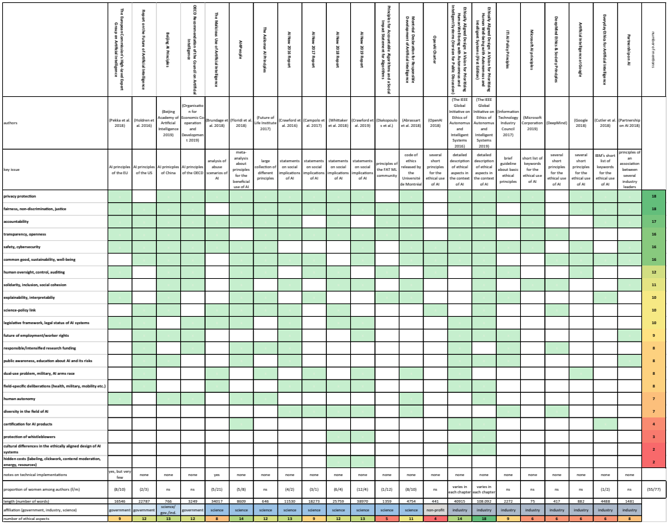
Abstract Current advances in research, development and application of artificial intelligence (AI) systems have yielded a far-reaching discourse on AI ethics. In consequence, a number of ethics guidelines have been released in recent years. These guidelines comprise normative principles and recommendations aimed to harness the “disruptive” potentials of new AI technologies. Designed as a semi-systematic evaluation, this paper analyzes and compares 22 guidelines, highlighting overlaps but also omissions. As a result, I give a detailed overview of the field of AI ethics. Finally, I also examine to what extent the respective ethical principles and values are implemented in the practice of research, development and application of AI systems—and how the effectiveness in the demands of AI ethics can be improved.
Verified 2026-11-25 · 3 references not checked yet
Overview
CoChat Summary
## TL;DR
This paper semi-systematically reviews 22 AI ethics guidelines, finding strong overlap on a few technicalizable topics but many important omissions. It argues that AI ethics is often ineffective in practice and should be supplemented by more concrete technical guidance and a shift toward virtue ethics.
## Key findings
- The paper analyzes and compares 22 AI ethics guidelines and finds that accountability, privacy, and fairness appear in about 80% of them, making them the closest thing to a common minimum standard.
- The author reports that guidelines from industrial contexts name on average 9.1 distinct ethical aspects, while science-based ethics codes average 10.8.
- Only two guidelines contain genuinely technical explanations, and these are described as very sparse; the most extensive technical commentary is in “The Malicious Use of AI”.
- The paper says a controlled study found the effectiveness of ethics guidelines or codes to be “almost zero”: among 63 software engineering students and 105 professional software developers, there was no statistically significant difference in responses between those who did and did not see the ACM code of ethics.
- The paper highlights major omissions across guidelines, including political abuse of AI, hidden social and ecological costs, lack of diversity, robot ethics, trolley problems, and public-private partnerships/industry-funded research.
## Methods
- Semi-systematic literature analysis of AI ethics guidelines, with a deliberate focus on comprehensive guideline documents rather than all AI-ethics-related writings.
- The final sample consisted of 22 major ethical guidelines, identified through searches in Google, Google Scholar, Web of Science, ACM Digital Library, arXiv, and SSRN, plus manual reference screening and the Algorithm Watch AI Ethics Guidelines Global Inventory.
- The paper compares which ethical issues are present or absent in the guidelines, and then relates those principles to practice using cited empirical studies and examples from AI development and deployment.
## Limitations
- The author states the sample is biased toward western/northern documents and excludes guidelines not written in English.
- The selection deliberately excludes guidelines focused on robot ethics, big data, algorithms, or robotics, so omissions in those areas are partly a result of the sampling method.
- The paper notes that its list of omissions is non-exhaustive.
- Evident from the text: the paper is primarily a theoretical/semi-systematic overview, not a direct empirical test of all AI ethics guideline implementations.
Model-written summary. Check it against the paper before relying on it.
Integrity signals
Registry
Cites
Statistics
Figures
Verification
Claims the paper makes
5 Valid · 3 Not valid · 62 Not checked · 64 Own results and interpretations
The cited sources support only part of this claim — read each source’s verdict below.
In the paper
“So far, some papers have been published on the subject of teaching ethics to data scientists (Garzcarek and Steuer 2019; Burton etal. 2017; Goldsmith and Burton 2017; Johnson 2017) but by and large very little to nothing has been written about the tangible implementation of ethical goals and values.”
What the sources say
- Supportedcites Garzcarek and Steuer 2019 matched to “Approaching Ethical Guidelines for Data Scientists” (2019) source
The citation is attached to the statement that papers have discussed teaching ethics to data scientists, not to the citing authors’ subsequent assessment of writing on tangible implementation. Section 5.2 (p. 14) explicitly argues that ethics should be part of the data-science curriculum. (LLM, conf=0.90)
- Not matchedcites Burton etal. 2017
An author–year citation the paper’s reference list doesn’t settle. We don’t search these by name.
- Supportedcites Goldsmith and Burton 2017 matched to “Why Teaching Ethics to AI Practitioners Is Important” (2017) source
The citation appears in a list of papers about teaching ethics to data scientists, not as support for the sentence’s later claim about how little has been written on implementation. The Introduction (p. 1) presents the paper as an argument for ethical training for AI students and practitioners, and the Conclusions (p. 4) advocate teaching ethics in AI classes. (LLM, conf=0.91)
plain- Asserted: passes — The authors put it forward as true.
- Checkable: passes — It can be checked against evidence.
- Load-bearing: passes — The paper’s conclusions depend on it.
- Based: passes — The paper gives a reason why it holds.
- Supported
The cited sources support only part of this claim — read each source’s verdict below.
In the paper
“Leading, of course, is the military use of AI in cyber warfare or regarding weaponized unmanned vehicles or drones (Ernest and Carroll 2016; Anderson and Waxman 2013).”
What the sources say
- Partly supportedcites Ernest and Carroll 2016 matched to “Genetic Fuzzy based Artificial Intelligence for Unmanned Combat Aerial Vehicle Control in Simulated Air Combat Missions” (2016) sourceExperimental — accuracy not yet measured
Our copy does support the drone half of the claim as an identification citation: the paper is squarely about applying AI to a weaponized unmanned vehicle (Introduction: UCAV research, 'this white paper will primarily focus on the increase in capabilities of real-time decision making'; Problem Statement: ALPHA controlling aircraft motion and firing in AFSIM). But it does not support the claim's core assertion that military AI is a leading area of unwanted side effects and malevolent use — the nearest passage (Introduction, 'There are a number of obstacles to a system being an effective AI within this context') frames the issues as engineering and verification difficulties (adversaries trying to 'fool and exploit the system', V&V, safety specifications, crashes/sensor failures), and the Results and Conclusions treat autonomy as 'a revolutionary leap in capability of airpower' and a way of 'reducing risk to our pilots'. Cyber appears only once, as an unrelated civilian/defence application domain of the GFT method ('Examples include robotic surgery, design automation, and cyber security'), not as cyber warfare, so that element of the claim is not from this source. (LLM, conf=0.72)
- Not checked — no full text of the sourcecites Anderson and Waxman 2013 matched to “Law and Ethics for Autonomous Weapon Systems: Why a Ban Won't Work and How the Laws of War Can” (2013) source
boostedstates an association- Asserted: passes — The authors put it forward as true.
- Checkable: passes — It can be checked against evidence.
- Load-bearing: unclear — It is unclear whether the paper’s conclusions depend on it.
- Based: passes — The paper gives a reason why it holds.
- Partly supported
The cited sources support only part of this claim — read each source’s verdict below.
In the paper
“In the light of these two approaches, the traditional type of AI ethics can be assigned to the deontological concept (Mittelstadt 2019).”
What the sources say
- Partly supportedcites Mittelstadt 2019 matched to “Principles alone cannot guarantee ethical AI” (2019) sourceExperimental — accuracy not yet measured
The paper describes a prominent, principle-based approach to AI ethics and says AI ethics initiatives have converged around principles resembling those of medical ethics (opening section; page unavailable). It does not classify that approach as deontological, so the claimed assignment to the deontological concept is not supported by our copy. (LLM, conf=0.78)
plainstates an association- Asserted: passes — The authors put it forward as true.
- Checkable: passes — It can be checked against evidence.
- Load-bearing: passes — The paper’s conclusions depend on it.
- Based: passes — The paper gives a reason why it holds.
- Partly supported
A result the paper reports from its own data — it cites no other source for it, so there is none to check. The quote shows it is in the paper.
In the paper
“My analysis of the distribution of female and male authors of the guidelines, as far as authors were indicated in the documents, showed that the proportion of women was 41.7%.”
plain- Asserted: passes — The authors put it forward as true.
- Checkable: passes — It can be checked against evidence.
- Load-bearing: passes — The paper’s conclusions depend on it.
- Based: passes — The paper gives a reason why it holds.
A result the paper reports from its own data — it cites no other source for it, so there is none to check. The quote shows it is in the paper.
In the paper
“Finally, yet importantly, it is noteworthy that almost all guidelines suggest that technical solutions exist for many of the problems described.”
hedged- Asserted: passes — The authors put it forward as true.
- Checkable: passes — It can be checked against evidence.
- Load-bearing: unclear — It is unclear whether the paper’s conclusions depend on it.
- Based: passes — The paper gives a reason why it holds.
54 more claims
Create a free account to see all 134 claims and to verify the 1 reference still open.
- Probably not a substantial claim. 59
- It may state two separate claims as one. 29
Claims other papers make about this one
Each is checked against this paper’s own text: does it say what the citing paper says it does?
The source backs part of the claim, not all of it — or backs it for a different population, condition or comparison.
In the citing paper
“Ethical concerns arising from the design and deployment of AI technology have motivated a number of initiatives [47]—such as the Ethical Guidelines for Trustworthy AI by the European Commission expert group on AI, and Microsoft’s FATE: Fairness, Accountability, Transparency, and Ethics in AI—addressing issues including mitigating bias and discrimination in AI systems and fairness in the use of AI”
From Future directions for chatbot research: An interdisciplinary research agenda (2021) · cites this paper as [47]
Experimental — accuracy not yet measuredThe source backs part of the claim, not all of it — or backs it for a different population, condition or comparison.
In the citing paper
“Additional recommendations on AI ethics teaching content include “explainability,” “liability,” and “accountability,” which are also considered important by available guidelines [30,40].”
From Proposing a Principle-Based Approach for Teaching AI Ethics in Medical Education (2024) · cites this paper as [30]
Experimental — accuracy not yet measuredThe source backs part of the claim, not all of it — or backs it for a different population, condition or comparison.
In the citing paper
“This emphasis is also echoed by existing guidelines and frameworks regarding AI ethics [30].”
From Proposing a Principle-Based Approach for Teaching AI Ethics in Medical Education (2024) · cites this paper as [30]
Experimental — accuracy not yet measuredThe source backs part of the claim, not all of it — or backs it for a different population, condition or comparison.
In the citing paper
“En dépit de nombreuses chartes, discussions et nombreux documents sur les bonnes pratiques éthiques, l’espoir est faible que l’IA puisse éventuellement se montrer généralement conforme (Hagendorff, 2020) :”
From Gouvernance algorithmique, intelligence artificielle, enjeux, éthique : esquisse d’une analyse critique (2021) · cites this paper as Hagendorff, 2020
Experimental — accuracy not yet measuredThe source backs part of the claim, not all of it — or backs it for a different population, condition or comparison.
In the citing paper
“The experience of mixed emotional responses and ethnical navigation was supported by literature (Hagendorff, 2020;Mamo et al., 2024;Mittelstadt, 2019).”
From Into the Unknown: AI Adoption and Job Satisfaction of Christian Faculty (2026) · cites this paper as Hagendorff, 2020
Experimental — accuracy not yet measured
13 more claims about this paper
Create a free account to see every claim other papers make about this one.
Citations
Cites
The spread of true and false news online
Vosoughi, S., Roy, D., & Aral, S. (2018) · Science · doi:10.1126/science.aap9559 · Cited by 8,847
The future of employment: How susceptible are jobs to computerisation?
Frey, C. B., & Osborne, M. A. (2017) · Technological Forecasting and Social Change · doi:10.1016/j.techfore.2016.08.019 · Cited by 8,727
The global landscape of AI ethics guidelines
Jobin, A., Ienca, M., & Vayena, E. (2019) · Nature Machine Intelligence · doi:10.1038/s42256-019-0088-2 · Cited by 6,220
Floridi, L., Cowls, J., Beltrametti, M., Chatila, R., Chazerand, P., Dignum, V., Luetge, C., Madelin, R., Pagallo, U., Rossi, F., et al. (2018) · Minds and Machines · doi:10.1007/s11023-018-9482-5 · Cited by 4,774 · cited 2×
“They include the adoption of legal framework conditions, the establishment of mechanisms for an independent auditing of technologies, the establishment of institutions for complaints, which also compensate for harms caused by AI systems, and the expansion of university curricula in particular through content from ethi…”
Background(2011) · Cited by 4,430
Lazer, D. M. J., Baum, M. A., Benkler, Y., Berinsky, A. J., Greenhill, K. M., Menczer, F., Metzger, M. J., Nyhan, B., Pennycook, G., Rothschild, D., et al. (2018) · Science · doi:10.1126/science.aao2998 · Cited by 4,160
The Black Box Society: The Secret Algorithms That Control Money and Information
Pasquale, F. (2015) · doi:10.4159/harvard.9780674736061 · Cited by 3,796
Experimental evidence of massive-scale emotional contagion through social networks
Kramer, A. D. I., Guillory, J. E., & Hancock, J. T. (2014) · Proceedings of the National Academy of Sciences · doi:10.1073/pnas.1320040111 · Cited by 3,687
(2018) · Cited by 3,510
Private traits and attributes are predictable from digital records of human behavior
Kosinski, M., Stillwell, D., & Graepel, T. (2013) · Proceedings of the National Academy of Sciences · doi:10.1073/pnas.1218772110 · Cited by 2,829
Research works printed but not linked: 24
- Abrassart, C., Bengio, Y., Chicoisne, G., de Marcellis-Warin, N., Dilhac, M.-A., Gambs, S., Gautrais, V., etal. (2018). Montréal declaration for responsible development of artificial intelligence (pp. 1-21).
- Asimov, I. (2004). I, Robot . New York: Random House LLC.
- Bakewell, J. D., Clement-Jones, T. F., Giddens, A., Grender, R. M., Hollick, C. R., Holmes, C., Levene, P. K. etal. (2018). AI in the UK: Ready, willing and able?. Select committee on artificial intelligence (pp. 1-183).
- Baron, B., Musolesi, M. (2017). Interpretable machine learning for privacy-preserving pervasive systems. arXiv (pp. 1-10).
- Bourdieu, P. (1984). Distinction: A social critique of the judgement of taste . Cambridge: Harvard University Press.
- Brahnam, S. (2006). Gendered bots and bot abuse. In Antonella de Angeli, Sheryl Brahnam, Peter Wallis, & Peter Dix (Eds.), Misuse and abuse of interactive technologies (pp. 1-4). Montreal: ACM.
- Derrida, J. (1997). Of grammatology . Baltimore: Johns Hopkins Univ. Press.
- Gebru, T., Morgenstern, J., Vecchione, B., Vaughan, J. W., Wallach, H., Daumeé, III, H., Crawford, K. (2018). Datasheets for datasets. arXiv (pp. 1-17).
- Google. (2019). Perspectives on issues in AI governance (pp. 1-34). Retrieved February 11, 2019. https :// ai.googl e/stati c/docum ents/persp ectiv es-on-issue s-in-ai-gover nance .pdf.
- Helbing, D. (Ed.). (2019). Towards digital enlightment: Essays on the darf and light sides of the digital revolution. Cham: Springer.
- Johnson, D. G. (2017). Can engineering ethics be taught? The Bridge, 47 (1), 59-64.
- Luhmann, N. (1988). Die Wirtschaft der Gesellschaft . Frankfurt A.M: Suhrkamp.
- Morley, J., Floridi, L., Kinsey, L., Elhalal, A. (2019). From what to how. An overview of AI ethics tools, methods and research to translate principles into practices. arXiv (pp. 1-21).
- Organisation for Economic Co-operation and Development. (2019). Recommendation of the Council on Artificial Intelligence (pp. 1-12). Retrieved June 18, 2019. https ://legal instr ument s.oecd.org/en/ instr ument s/OECD-LEGAL -0449.
- Pekka, A.-P., Bauer, W., Bergmann, U., Bieliková, M., Bonefeld-Dahl, C., Bonnet, Y., Bouarfa, L. etal. (2018). The European Commission's high-level expert group on artificial intelligence: Ethics guidelines for trustworthy ai . Working Document for stakeholders' consultation. Brussels (pp. 1-37).
- Pistono, F., Yampolskiy, R. (2016). Unethical research: How to create a malevolent artificial intelligence. arXiv (pp. 1-6).
- Podgaiska, I., Shklovski, I. Nordic engineers’ stand on artificial intelligence and ethics: Policy recommendations and guidelines (pp. 1–40).
- Rawls, J. (1975). Eine Theorie Der Gerechtigkeit . Frankfurt am Main: Suhrkamp.
- Shoham, Y., Perrault, R., Brynjolfsson, E., Clark, J., Manyika, J., Niebles, J. C., Lyons, T., Etchemendy, J., Grosz, B., Bauer, Z. (2018). The AI index 2018 annual report. Stanford, Kalifornien (pp. 1-94). <!-- image --> 1 3
- Sitawarin, C., Bhagoji, A. N., Mosenia, A., Chiang, M., Mittal, P. (2018). DARTS: Deceiving autonomous cars with toxic signs. arXiv (pp. 1-27).
- Tegmark, A. (2017). Life 3.0: Being human in the age of artificial intelligence . New York: Alfred A. Knopf.
- The IEEE Global Initiative on Ethics of Autonomous and Intelligent Systems. (2016). Ethically aligned design: A vision for prioritizing human well-being with artificial intelligence and autonomous systems (pp. 1-138).
- Whittaker, M., Crawford, K., Dobbe, R., Fried, G., Kaziunas, E., Mathur, V., West, S. M., Richardson, R., Schultz, J., Schwartz, O. (2018). AI now report 2018 (pp. 1-62).
- Zeng, Y., Lu, E., Huangfu, C. (2018). Linking artificial intelligence principles. arXiv (pp. 1-4). Publisher's Note Springer Nature remains neutral with regard to jurisdictional claims in published maps and institutional affiliations. <!-- image --> 1 3
Cited by
Items 501–600 of 1,821
Bubinger, H., & Dinneen, J. D. (2024) · The Journal of Academic Librarianship · doi:10.1016/j.acalib.2024.102943 · Cited by 29
Artificial Intelligence (AI) and Global Justice
Sahebi, S., & Formosa, P. (2024) · Minds and Machines · doi:10.1007/s11023-024-09708-7 · Cited by 28
“…Artificial Intelligence (AI) proliferates throughout society, there has been a greater emphasis on the ethical implications of the technology (e.g. Hagendorff, 2020 ; Borenstein & Howard, 2020; Lauer, 2020 ; Morley et al., 2021 ), including as it pertains to low-to middle-income countries (e.g.…”
Hammerschmidt, T., Hafner, A., Stolz, K., Passlack, N., Posegga, O., & Gerholz, K.-H. (2025) · Information Systems Frontiers · doi:10.1007/s10796-025-10596-0 · Cited by 32
Wang, H., & Blok, V. (2025) · Big Data & Society · doi:10.1177/20539517251340620 · Cited by 39
“While these aspects are essential for ethical AI development, they are also the ones that “ are most easily operationalized mathematically and thus tend to be implemented in terms of technical solutions ” (Hagendorff, 2020: 103).”
Tan, X. J., Cheng, G., & Ling, M. H. (2025) · Computers and Education Artificial Intelligence · doi:10.1016/j.caeai.2025.100521 · Cited by 60
Higher Education Institutions with Artificial Intelligence: Roles, Promises, and Requirements
Al-haimi, B., Hujainah, F., Nasir, D., & Alhroob, E. (2021) · Studies in computational intelligence · doi:10.1007/978-3-030-72080-3_13 · Cited by 22
Ponte, E. B., & Bednárová, M. (2022) · Lecture notes in information systems and organisation · doi:10.1007/978-3-030-94617-3_27 · Cited by 25
Lupo, G. (2022) · Oñati Socio-legal Series · doi:10.35295/osls.iisl/0000-0000-0000-1273 · Cited by 28
Explainable Personality Prediction Using Answers to Open-Ended Interview Questions
Dai, Y., Jayaratne, M., & Jayatilleke, B. (2022) · Frontiers in Psychology · doi:10.3389/fpsyg.2022.865841 · Cited by 24
“Explainability is one of the key attributes of ethical use of algorithms together with aspects such as accountability and fairness (Hagendorff, 2020).”
BackgroundExecutive-centered AI? Designing predictive systems for the public sector
Henriksen, A., & Blond, L. (2023) · Social Studies of Science · doi:10.1177/03063127231163756 · Cited by 29
“In this way, we critically question the implementation of so-called ethical human-centered AI, substantiating some earlier suggestions (e.g., Hagendorff, 2020; Mittelstadt, 2019; Rességuier & Rodrigues, 2020).”
ResultElectrodeNet—A Deep-Learning-Based Sound Coding Strategy for Cochlear Implants
Huang, E. H.-H., Chao, R., Tsao, Y., & Wu, C. (2023) · IEEE Transactions on Cognitive and Developmental Systems · doi:10.1109/tcds.2023.3275587 · Cited by 21
“Present guidelines related to research ethics and IRB approvals may need to be renovated to reinforce moral values, considerations, and regulations for researchers and institutes in the development of deep-learning-based neural prosthetic devices [85], [86].”
BackgroundMy Future with My Chatbot: A Scenario-Driven, User-Centric Approach to Anticipating AI Impacts
Kieslich, K., Helberger, N., & Diakopoulos, N. A. (2024) · ACM Conference on Fairness, Accountability, and Transparency (FAccT) · doi:10.1145/3630106.3659026 · Cited by 35
“But the EU is not alone: numerous other organizations developed ethical guidelines (that are partially based on values) on how to tackle the ramifications of AI [37, 45].”
BackgroundAI and Smart Manufacturing: Building Industry 4.0
Motia, K., Kumar, R., & Akhai, S. (2024) · Advances in business strategy and competitive advantage book series · doi:10.4018/979-8-3693-6720-9.ch001 · Cited by 21
Getting into the engine room: a blueprint to investigate the shadowy steps of AI ethics
Rochel, J., & Évéquoz, F. (2020) · AI & Society · doi:10.1007/s00146-020-01069-w · Cited by 23
“As he writes, we need an AI ethics which “deals less with AI as such, than with ways of deviation or distancing oneself from problematic routines of action, with uncovering blind spots in knowledge, and of gaining individual self-responsibility” (Hagendorff 2020: 114).”
BackgroundBlanchard, A., Thomas, C., & Taddeo, M. (2023) · Social Science Research Network · doi:10.2139/ssrn.4517701 · Cited by 25
Empathy: an ethical consideration of AI & others in the workplace
Kleinrichert, D. (2024) · AI & Society · doi:10.1007/s00146-023-01831-w · Cited by 24
“Further, the norm in business has been the sense that “ethics can also simply serve the purpose of calming critical voices,” as examined by Hagendorff (2020, p. 100).”
The rise of checkbox AI ethics: a review
Kijewski, S., Ronchi, E., & Vayena, E. (2024) · AI and Ethics · doi:10.1007/s43681-024-00563-x · Cited by 32
“Ethical, principle-based guidance is commonly described as vague, too general and high-level [2, 6, 7], and as largely lacking mechanisms to facilitate enforcement or translation into practice [1, 8].”
Yang, A. (2024) · Journalism & Mass Communication Educator · doi:10.1177/10776958241277682 · Cited by 27
“Building upon insights from recent research on AI ethics and value alignment (Gabriel, 2020; Gabriel & Ghazavi, 2021; Hagendorff, 2020), dialogic communication (Kent & Taylor, 2002; Sommerfeldt & Yang, 2018), and PR ethics (Pearson, 2017), I articulate three foundational principles for AI education…”
Brüggen, E. C., Gianni, R., de Haan, F., Hogreve, J., Meacham, D., Post, T., & van der Werf, M. M. B. (2025) · Journal of Public Policy & Marketing · doi:10.1177/07439156241302279 · Cited by 34
“…comprehensive assessment of ethical dilemmas in AI-based fi nancial advice, using ethical guidelines and principles identi fi ed in the current literature (Hagendorff 2020; Jobin, Ienca, and Vayena 2019; Mittelstadt 2019) as well as semistructured interviews with experts in the fi eld of fi nancial…”
InfluentialHealthcare ethics and artificial intelligence: a UK doctor survey
Warrington, D. J., & Holm, S. (2024) · BMJ Open · doi:10.1136/bmjopen-2024-089090 · Cited by 28
Inclusive Technology Co-design for Participatory AI
Ahrweiler, P., Späth, E., García, J. M. S., Capellas, B. L., & Wurster, D. (2025) · Artificial intelligence, simulation and society · doi:10.1007/978-3-031-71678-2_2 · Cited by 38
Chan, A., Rahimi‐Ardabili, H., Rogers, W., & Coiera, E. W. (2025) · Journal of the American Medical Informatics Association · doi:10.1093/jamia/ocaf167 · Cited by 28
Global AI Ethics Documents: What They Reveal About Motivations, Practices, and Policies
Schiff, D. S., Laas, K., Biddle, J. B., & Borenstein, J. (2022) · The International library of ethics, law and technology · doi:10.1007/978-3-030-86201-5_7 · Cited by 25
A Legal Principles-Based Framework for AI Liability Regulation
Durante, M., & Floridi, L. (2022) · Digital ethics lab yearbook · doi:10.1007/978-3-031-09846-8_7 · Cited by 27
Anything new under the sun? Insights from a history of institutionalized AI ethics
Casiraghi, S. (2023) · Ethics and Information Technology · doi:10.1007/s10676-023-09702-0 · Cited by 21
“As an example, in the AI HLEG guidelines, stakeholder participation is part of the requirement as ‘non-technical methods’ to ensure trustwor - thy AI (High-Level Expert Group on Artificial Intelligence, 2019a, p. 23).”
MethodInfluentialBasic values in artificial intelligence: comparative factor analysis in Estonia, Germany, and Sweden
Masso, A., Kaun, A., & van Noordt, C. (2023) · AI & Society · doi:10.1007/s00146-023-01750-w · Cited by 30
“…but highest standard deviations could be interpreted here by the fact that these values are less often included in the AI ethics guidelines (Hagendorff 2020) and are also less discussed in public and in common agreement, but also that there is a lack of understanding regarding these values.”
InfluentialCain, C. C., Buskey, C. D., & Washington, G. J. (2023) · Journal of Information Communication and Ethics in Society · doi:10.1108/jices-02-2023-0019 · Cited by 28
Do current regulations prevent unethical AI practices?
Méndez-Suárez, M., Simón Moya, V., & Muñoz de Prat, J. (2023) · Journal of Competitiveness · doi:10.7441/joc.2023.03.11 · Cited by 26
Halme, E., Jantunen, M., Vakkuri, V., Kemell, K., & Abrahamsson, P. (2023) · Information and Software Technology · doi:10.1016/j.infsof.2023.107379 · Cited by 39
Exploring the landscape of trustworthy artificial intelligence: Status and challenges
Mentzas, G. N., Fikardos, M., Lepenioti, K., & Apostolou, D. (2024) · Intelligent Decision Technologies · doi:10.3233/idt-240366 · Cited by 25
“One study analysed 84 documents on ethical principles for AI [77], while another examined and compared 22 guidelines, highlighting overlaps but also omissions [61].”
Hollanek, T. (2024) · AI and Ethics · doi:10.1007/s43681-024-00545-z · Cited by 26
“…that results in the toolkits’ failure to prompt the questioning of business strategies behind particular technical decisions [4, 12], as well as to draw attention to–and provide guidance on mitigating–the undesirable, indirect social and environmental costs of technology development [13, 20, 30].”
BackgroundInfluentialSurvey of EU ethical guidelines for commercial AI: case studies in financial services
Huang, J. Y., Gupta, A., & Youn, M. (2021) · AI and Ethics · doi:10.1007/s43681-021-00048-1 · Cited by 26
The Missing Ingredient in the Case for Regulating Big Tech
Chomanski, B. (2021) · Minds and Machines · doi:10.1007/s11023-021-09562-x · Cited by 25
“Thinkers like Nemitz (2018) and Hagendorff (2020) make no attempt to justify behavioral asymmetry.”
BackgroundRhea, A. K., Markey, K., D’Arinzo, L., Schellmann, H., Sloane, M., Squires, P., & Stoyanovich, J. (2022) · Proceedings of the AAAI/ACM Conference on AI Ethics and Society · doi:10.1145/3514094.3534189 · Cited by 26
“Several impactful lines of work do not consider reliability [23, 30, 34, 49, 62, 65, 66].”
BackgroundGender Fairness in Social Robotics: Exploring a Future Care of Peripartum Depression
Tanqueray, L., Paulsson, T., Zhong, M., Larsson, S., & Castellano, G. (2022) · ACM/IEEE International Conference on Human-Robot Interaction (HRI) · doi:10.1109/hri53351.2022.9889468 · Cited by 32
“These guidelines are part of a wider trend on defining principles and guidelines [44], [45] linked to the development and implementation of AI and machine learning in various fields, including social robotics, and health [46].”
BackgroundTaddeo, M., Blanchard, A., & Thomas, C. (2023) · SSRN Electronic Journal · doi:10.2139/ssrn.4520945 · Cited by 17
Ethics of AI and Health Care: Towards a Substantive Human Rights Framework
Liao, S. M. (2023) · Topoi · doi:10.1007/s11245-023-09911-8 · Cited by 17
“Democratizing AI” and the Concern of Algorithmic Injustice
Lin, T.-A. (2024) · Philosophy & Technology · doi:10.1007/s13347-024-00792-2 · Cited by 27
“Notably, concerns have been raised regarding the quality of these principles, revealing that they tend to be abstract, lack theoretical ground, and fail to provide concrete guidance for practice (Floridi, 2019; Hagendorff, 2020).”
Cao, J., & Meng, T. (2025) · Chinese Journal of Sociology · doi:10.1177/2057150x241313085 · Cited by 23
“…the abovementioned endeavors, many secondary literature studies have extensively reviewed and analyzed the array of statements and declarations made by a spectrum of multiple-stakeholder entities (Floridi and Cowls, 2019; Greene et al., 2019; Hagendorff, 2020; Jobin et al., 2019; Lo Piano, 2020).”
Braga, C. M., Serrano, M., & Fernández‐Medina, E. (2025) · Expert Systems with Applications · doi:10.1016/j.eswa.2025.128034 · Cited by 26
Kallina, E., Bohné, T., & Singh, J. (2025) · ACM Conference on Fairness, Accountability, and Transparency (FAccT) · doi:10.1145/3715275.3732069 · Cited by 38
“A common concern is that rAI guidance is too abstract to be actionable in practice [45, 77, 106, 111, 113] and it has been shown that awareness of rAI principles alone fails to influence practitioner actions [75].”
Generative artificial intelligence augmenting SME financial management
Metzger, M., O’Reilly, S., & Bhaird, C. M. A. (2025) · Technovation · doi:10.1016/j.technovation.2025.103313 · Cited by 41
AI washing: A conceptual exploration
Elhajjar, S., & Itani, O. S. (2025) · AMS Review · doi:10.1007/s13162-025-00323-y · Cited by 31
Twelve tips for developing and implementing AI curriculum for undergraduate medical education
Kim, D.-H., Kang, Y. J., & Lee, Y. (2025) · Medical Education Online · doi:10.1080/10872981.2025.2585637 · Cited by 32
Aithal, P. S., & Prabhu, V. V. (2025) · Poornaprajna International Journal of Teaching & Research Case Studies (PIJTRCS) · doi:10.64818/pijtrcs.3107.8494.0018 · Cited by 17
Angelucci, A., Li, Z., Stoimenova, N., & Canali, S. (2022) · AI & Society · doi:10.1007/s00146-022-01562-4 · Cited by 25
“This has led to a polarization towards specific aspects of fairness depending on the background of the scholars studying the issue and to poor adoption of guidelines and ethical codes by computer scientists and engineers in their practical activities (Hagendorff 2020).”
BackgroundA quick review of ethics, design thinking, gender, and AI development
Kronqvist, A., & Rousi, R. A. (2022) · International Journal of Design Creativity and Innovation · doi:10.1080/21650349.2022.2136762 · Cited by 21
“From the AI ethics perspective, the greatest emphasis was placed on the transition of ethics from principles to practice (Hagendorff, 2020; Halme et al., 2021; Jobin et al., 2019; McLaren, 2003).”
BackgroundBiases associated with database structure for COVID-19 detection in X-ray images
Arias-Garzón, D., Tabares-Soto, R., Bernal-Salcedo, J., & Ruz, G. A. (2023) · Scientific Reports · doi:10.1038/s41598-023-30174-1 · Cited by 21
Anthropocentrism and Environmental Wellbeing in AI Ethics Standards: A Scoping Review and Discussion
Rigley, E., Chapman, A. P., Evers, C., & McNeill, W. (2023) · AI · doi:10.3390/ai4040043 · Cited by 33
Biden’s Executive Order on AI and the E.U.’s AI Act: A Comparative Computer-Ethical Analysis
Wörsdörfer, M. (2024) · Philosophy & Technology · doi:10.1007/s13347-024-00765-5 · Cited by 21
“…Administration’s ‘Blueprint for an AI Bill of Rights,’ and the Executive Order (EO) on the ‘Safe, Secure, and Trustworthy Development and Use of AI’ 74 Page 2 of 27 (AlgorithmWatch, 2024; Attard-Frost et al., 2022; Fjeld et al., 2020; Hagendorff, 2020; Jobin et al., 2019; Leslie et al., 2021).”
Wyk, V. (2024) · Cybrarians Journal · doi:10.70000/cj.2024.73.601 · Cited by 27
AI-C2C (conscious to conscience): a governance framework for ethical AI integration
Anthuvan, T., & Maheshwari, K. (2025) · AI and Ethics · doi:10.1007/s43681-025-00736-2 · Cited by 15
The social dilemma in artificial intelligence development and why we have to solve it
Strümke, I., Slavkovik, M., & Madai, V. I. (2021) · AI and Ethics · doi:10.1007/s43681-021-00120-w · Cited by 33
“There has been what can be characterised as an inflation of such documents over the past years [37, 44, 64].”
BackgroundA global scale comparison of risk aggregation in AI assessment frameworks
Schmitz, A., Möck, M., Görge, R., Cremers, A. B., & Poretschkin, M. (2024) · AI and Ethics · doi:10.1007/s43681-024-00479-6 · Cited by 30
“Recognized as a fundamental obligation, the trustworthiness of AI is globally emphasized by governmental and non-governmental organizations, companies, and leading AI experts [29, 44].”
Asamoah, M. K., & Amarteifio, J. (2025) · Discover Education · doi:10.1007/s44217-025-00593-5 · Cited by 28
“Customizing learning pathways based on individual performance and preferences further encourages the development of original ideas and solutions across diverse fields such as science, technology, and business (Hagendorff, 66; Stewart et al. 67).”
Emedo, C., Wada, O. Z., David-Olawade, A. C., Ling, J., Esan, D. T., Ijiwade, J. O., & Olawade, D. B. (2025) · Digital engineering. · doi:10.1016/j.dte.2025.100068 · Cited by 20
“One of the primary ethical concerns with AI in property valuation is the potential for bias [52].”
Interdisciplinary Confusion and Resolution in the Context of Moral Machines
Stenseke, J. (2022) · Science and Engineering Ethics · doi:10.1007/s11948-022-00378-1 · Cited by 24
“For instance, while many initiatives in AI ethics have more or less converged on a set of guidelines and principles (Floridi & Cowls, 2019), their ability to have any major impact on the ethical development of AI has been heavily criticized (Hagendorff, 2020; Mittelstadt, 2019).”
BackgroundChang, T. (2023) · Journal of Enterprise Information Management · doi:10.1108/jeim-02-2022-0056 · Cited by 19
AI research ethics is in its infancy: the EU’s AI Act can make it a grown-up
Rességuier, A., & Ufert, F. (2023) · Research Ethics · doi:10.1177/17470161231220946 · Cited by 29
Ethical AI in Social Sciences Research: Are We Gatekeepers or Revolutionaries?
Runcan, R., Hațegan, V.-P., Toderici, O. F., Croitoru, G., Gavrilă-Ardelean, M., Cuc, L. D., Rad, D., Costin, A., & Dughi, T. S. (2025) · Societies · doi:10.3390/soc15030062 · Cited by 30
Amini, M., Lee, K.-F., Yi-qiu, W., & Ravindran, L. (2025) · Interactive Learning Environments · doi:10.1080/10494820.2025.2523382 · Cited by 48
“Hagendorff (2020) provided valuable insights through a semi-systematic review of AI ethics guidelines, identifying common ethical concerns such as accountability, explainability, privacy, and fairness.”
Schmitz, A., Akila, M., Hecker, D., Poretschkin, M., & Wrobel, S. (2022) · at - Automatisierungstechnik · doi:10.1515/auto-2022-0012 · Cited by 27
How to Evaluate Explainability? - A Case for Three Criteria
Speith, T. (2022) · IEEE International Requirements Engineering Conference Workshops (REW) · doi:10.1109/rew56159.2022.00024 · Cited by 21
Belloso, M. L. (2022) · Information technology and law series/Information technology & law series · doi:10.1007/978-94-6265-523-2_5 · Cited by 18
Li, O. (2021) · Ethics and Information Technology · doi:10.1007/s10676-021-09595-x · Cited by 25
“…for example, Thilo Hagendorff in an evaluation of the current status of AI ethics: “I argue that the prevalent approach of deontological AI ethics should be augmented with an approach oriented towards virtue ethics aiming at values and character dispositions” (Hagendorff, 2020, 112 my emphasis).”
BackgroundAntecedents of Constructive Human-AI Collaboration: An Exploration of Human Actors’ Key Competencies
Süße, T., Kobert, M., & Kries, C. (2021) · IFIP advances in information and communication technology · doi:10.1007/978-3-030-85969-5_10 · Cited by 27
Risk as a driver for AI framework development on manufacturing
Vyhmeister, E., Castañé, G. G., & Östbergy, P.-O. (2022) · AI and Ethics · doi:10.1007/s43681-022-00159-3 · Cited by 23
“Even though organisations show different interests in what principles should focus on, the most relevant concepts seen by organisations and companies includes privacy, fairness, accountability, transparency, explainability, and safety [23, 25].”
BackgroundInfluentialPeace and Prosperity for the Digital Age? The Colonial Political Economy of European AI Governance
Carmel, E., & Paul, R. (2022) · IEEE Technology and Society Magazine · doi:10.1109/mts.2022.3173340 · Cited by 25
AI and Disaster Risk: A Practitioner Perspective
Moitra, A., Wagenaar, D., Kalirai, M., Ahmed, S. I., & Soden, R. (2022) · Proceedings of the ACM on Human-Computer Interaction · doi:10.1145/3555163 · Cited by 23
“In recent years, private companies, public sector organizations, governments, academics, and civil society representatives alike have issued principles and guidelines for ethical AI across various domains and industries [20].”
BackgroundEndris, A., Tlili, A., Huang, R., Xu, L., Chang, T., & Mishra, S. (2024) · Leadership and Policy in Schools · doi:10.1080/15700763.2024.2312999 · Cited by 18
“In this context, several policymakers (Berendt et al., 2020; Hagendorff, 2020; Nigam et al., 2021) highlighted the need to focus on the ethical guidelines of AI that align with societal values.”
Exploring the Association between Moral Foundations and Judgements of AI Behaviour
Brailsford, J., Vetere, F., & Velloso, E. (2024) · CHI Conference on Human Factors in Computing Systems · doi:10.1145/3613904.3642712 · Cited by 27
“However, translating positive observations into normative framing of values presents challenges of over-generalisation, which has been the target of criticism for AI ethics guidelines [1, 30, 51].”
BackgroundDe Silva, D., Jayatilleke, S., El-Ayoubi, M., Issadeen, Z., Moraliyage, H., & Mills, N. (2024) · Machine Learning and Knowledge Extraction · doi:10.3390/make6020051 · Cited by 14
“…in AI regulation, the European Union AI Act [51], AI Ethics guidelines such as the IEEE Ethically Aligned Design, EU trustworthy AI, and others [52], this construct examines the purpose, role, and use of AI within socio-technical environments, focusing on the ethical dimensions of human…”
BackgroundLópez, C., Davidoff, A., Luco, F., Humeres, M., & Correa, T. (2024) · International Journal of Human-Computer Interaction · doi:10.1080/10447318.2024.2356910 · Cited by 21
“Despite the growing prevalence, most research focuses on evaluating the productivity and efficiency of such systems (Hagendorff, 2020).”
Overcoming AI ethics, towards AI realism
Murgia, M. (2024) · AI and Ethics · doi:10.1007/s43681-024-00552-0 · Cited by 18
“Reformist ethics take the ethical principles professed by corporatist ethics and hold them up to scrutiny (see [10, 11, 12].”
Ayanwale, M. A., Ntshangase, S. D., Adelana, O. P., Afolabi, O. W., Adam, U. A., & Olatunbosun, S. O. (2024) · Computers and Education Artificial Intelligence · doi:10.1016/j.caeai.2024.100330 · Cited by 38
“Ethical issues in AI have been extensively discussed, with considerable attention given to their importance in the (Hagendorff, 2020; Smakman et al., 2021).”
Female perspectives on algorithmic bias: implications for AI researchers and practitioners
Fraile-Rojas, B., De‐Pablos‐Heredero, C., & Méndez-Suárez, M. (2025) · Management Decision · doi:10.1108/md-04-2024-0884 · Cited by 31
Ética empresarial y responsabilidad social en la inteligencia artificial
Concha-Ramírez, J. A., & Ortiz, J. D. C. N. (2023) · Revista Científica Ciencia y Método · doi:10.55813/gaea/rcym/v1/n3/18 · Cited by 22
On the Contribution of Neuroethics to the Ethics and Regulation of Artificial Intelligence
Farisco, M., Evers, K., & Salles, A. L. F. (2022) · Neuroethics · doi:10.1007/s12152-022-09484-0 · Cited by 24
“A common objection found in the literature is that current AI guidelines risk being ineffective because of their level of abstraction and the difficulty in translating them into action-oriented recommendations [7, 50, 51].”
BackgroundTowards a Reference Software Architecture for Human-AI Teaming in Smart Manufacturing
Haindl, P., Buchgeher, G., Khan, M., & Moser, B. (2022) · IEEE/ACM International Conference on Software Engineering: New Ideas and Emerging Results (ICSE-NIER) · doi:10.1145/3510455.3512788 · Cited by 28
“Formalizing ethical and standards in an operational manner and validating their fulfillment by an AI system at runtime remains a key challenge [6, 9, 29, 30] in this context.”
BackgroundArtificial intelligence technologies in nuclear medicine
Tamam, M. Ö., & Tamam, M. C. (2022) · World Journal of Radiology · doi:10.4329/wjr.v14.i6.151 · Cited by 15
Moon, D., & Ahn, S. (2025) · IEEE Access · doi:10.1109/access.2025.3556082 · Cited by 25
“Additionally, biases may emerge from outcome-driven evaluation practices, where models are assessed based on their final outputs rather than the fairness of their decision-making process [13].”
Calderón, R., & Herrera, F. (2025) · Humanities and Social Sciences Communications · doi:10.1057/s41599-025-04650-0 · Cited by 24
Hosseini, H., Atazadeh, B., & Rajabifard, A. (2025) · Land Use Policy · doi:10.1016/j.landusepol.2025.107652 · Cited by 34
Human-centric AI governance: what the EU public values, what it really, really values
Wittmann, V., & Meynhardt, T. (2025) · Government Information Quarterly · doi:10.1016/j.giq.2025.102084 · Cited by 21
Personalized medicine and health equity: overcoming cost barriers and ethical challenges
Francisco, K. K. Y., Apuhin, A. E. C., Maravilla, N. M. A. T., Byers, M. C., Karim, H. B. A., Tan, M. J. T., & AlDahoul, N. (2025) · International Journal for Equity in Health · doi:10.1186/s12939-025-02710-0 · Cited by 33
“…sensitivity, recognizing and respecting diverse cultural beliefs, values, and norms related to health, illness, and the use of genetic information [126]; policy alignment, aligning ethical frameworks with existing legal and regulatory frameworks, as well as healthcare policies [127]; and…”
Eiselt, A.-K., Kirkendall, S., Xiong, E., Langner, D., & Goldfarb, M. B. (2026) · Frontiers in Digital Health · doi:10.3389/fdgth.2025.1713334 · Cited by 21
Stix, C. (2021) · AI and Ethics · doi:10.1007/s43681-021-00093-w · Cited by 31
“this phenomenon in AI Ethics Principles [26, 35, 41]).”
Toward Accountable and Explainable Artificial Intelligence Part One: Theory and Examples
Khan, M. M., & Vice, J. (2022) · IEEE Access · doi:10.1109/access.2022.3207812 · Cited by 17
“Recently, government and business entities have also started to emphasize the need to account for the ethical implications of using AI systems (Hagendor ff , 2020; Hickok, 2021).”
BackgroundDas, K., Pattanaik, M., Basantia, S., Mishra, R., Das, D. M., Sahoo, K., & Paital, B. (2023) · Telematics and Informatics Reports · doi:10.1016/j.teler.2023.100065 · Cited by 24
Lehoux, P., de Oliveira, R. R., Rivard, L., da Silva, H. P., Alami, H., Mörch, C., & Malas, K. (2023) · Journal of Medical Internet Research · doi:10.2196/48496 · Cited by 17
AI as Philosophical Ideology: A Critical look back at John McCarthy’s Program
Anderson, M. M. (2024) · Philosophy & Technology · doi:10.1007/s13347-024-00731-1 · Cited by 24
“…and formali-zations of context, has marked the way for a mass of general AI ethics frameworks, codes, and guidelines, to spring up, (Hagendorff, 2020), (Jobin et al., 2019), and consequently the attempt to convert these from the top down into quantitative tech fixes for such…”
Don, A. K. K., & Khalil, I. (2025) · ACM Transactions on Quantum Computing · doi:10.1145/3660647 · Cited by 23
“The challenge of obtaining a sufficient amount of labeled data for deep learning tasks is expected to intensify due to increasingly challenging data privacy regulations and ethical guidelines [ 21 ].”
Artificial Intelligence’s Revolutionary Role in Search Engine Optimization
Ziakis, C., & Vlachopoulou, M. (2024) · Springer proceedings in business and economics · doi:10.1007/978-3-031-51038-0_43 · Cited by 19
Schreiber, R., Koppel, R., & Kaplan, B. (2024) · Applied Clinical Informatics · doi:10.1055/a-2373-3291 · Cited by 21
Khoury, N., Hadid, D., & El‐Outa, A. (2025) · Cureus · doi:10.7759/cureus.82667 · Cited by 23
Mühlhoff, R. (2020) · Deutsche Zeitschrift für Philosophie · doi:10.1515/dzph-2020-0059 · Cited by 31
An Ontology for Standardising Trustworthy AI
Lewis, D., Filip, D., & J. Pandit, H. (2021) · Factoring Ethics in Technology, Policy Making, Regulation and AI · doi:10.5772/intechopen.97478 · Cited by 13
Gender Bias in Machine Translation Systems
Ullmann, S. (2022) · Social and cultural studies of robots and AI · doi:10.1007/978-3-030-88615-8_7 · Cited by 17
Artificial Intelligence Ethics from the Perspective of Educational Technology Companies and Schools
Kousa, P., & Niemi, H. (2022) · Springer eBooks · doi:10.1007/978-3-031-09687-7_17 · Cited by 24
Simbeck, K. (2022) · 2022 ACM Conference on Fairness Accountability and Transparency · doi:10.1145/3531146.3533076 · Cited by 12
“The most commonly discussed issues around the use of AI technology are privacy, fairness, accountability, and transparency [33].”
Background
Metadata
- Authors
- Hagendorff, T.
- Affiliations
- University of Tübingen (DE)
- Corresponding author
- Hagendorff, Thilo
- ORCID
- Hagendorff, Thilo
- Venue
- Minds and Machines
- Published
- 2020-02-01
- Volume
- 30
- Issue
- 1
- Pages
- 99-120
- ISSN
- 0924-6495 (ISSN-L)
- 1572-8641
- OpenAlex
- W3003385079
- Semantic Scholar
- 11159bdb213aaa243916f42f576396d483ba474b
- Cited by
- 1,911
- References
- 86
- Citations by year
- 2026: 370 · 2025: 446 · 2024: 361 · 2023: 290 · 2022: 239 · 2021: 160 · 2020: 41
- FWCI
- 248.38
- Type
- journal article
- Language
- en
- Update notices
- correction (2020-07-28)
- Open access
- hybrid
- doi.org
- Licence
- cc-by
- creativecommons.org/licenses/by/4.0 (tdm)
- creativecommons.org/licenses/by/4.0 (vor)
- Locations
- Minds and Machines (publishedVersion, cc-by)
- arXiv (Cornell University) (submittedVersion)
- arXiv (Cornell University)
- Funders
- Deutsche Forschungsgemeinschaft (390727645)
- Topics
- Physical Sciences › Computer Science › Artificial Intelligence › Ethics and Social Impacts of AI
- Social Sciences › Law › Digitalization, Law, and Regulation
- Social Sciences › Business, Management and Accounting › Organizational Behavior and Human Resource Management › Ethics in Business and Education
- Keywords
- AI ethics, ethics guidelines, normative principles, moral values
About these checks
Registry, retraction, Cites and statistics results are computed, not judged, with one exception: a printed reference that no index lists is read once by a model before it counts as a citation error. Claims are extracted by a model and kept only when their quote appears verbatim in the text; each cited source is then checked, with a model’s help, for whether it says what the claim relies on. Those verdicts can be wrong — read the claim’s quote and the cited source before relying on one.
The claim verdicts this report counts are experimental: their accuracy is not yet measured.
A language model drew the claims from the paper on 2026-10-12, under version 3 of the claim definition (model deepseek-v4.1-flash, prompt extract-v3).
A second model labelled each claim on 2026-10-12 (model jev-1.13-20260917, definition revision gold-guideline-v0.2).
Cited sources are checked with a language model’s help (gpt-6-sol and qwen3.8-omni-flash).
Statistics and arithmetic are recomputed, not judged.
Confidence bands are shown only for fields calibrated on our annotated test set. None is calibrated yet, so no band is shown.
What counts as a claim ›How we measure confidence ›How we check this ›
Are you an author, or do you see a problem with this page? Request a review
Data sources
Bibliographic data: Semantic Scholar, OpenAlex, Crossref.
Contains information from the Semantic Scholar Academic Graph Datasets, made available under the ODC Attribution License (ODC-BY 1.0).
Semantic Scholar’s data is described in: Kinney, R., et al. (2023). The Semantic Scholar Open Data Platform. arXiv:2301.10140.
