

The Ethics of AI Ethics: An Evaluation of Guidelines
Open accessThe DOI matches its Crossref record; 97 of the 100 references it cites were found in a registry or an index, and 3 are not checked yet; 6 of the 88 sources its claims cite were checked for support.
Abstract
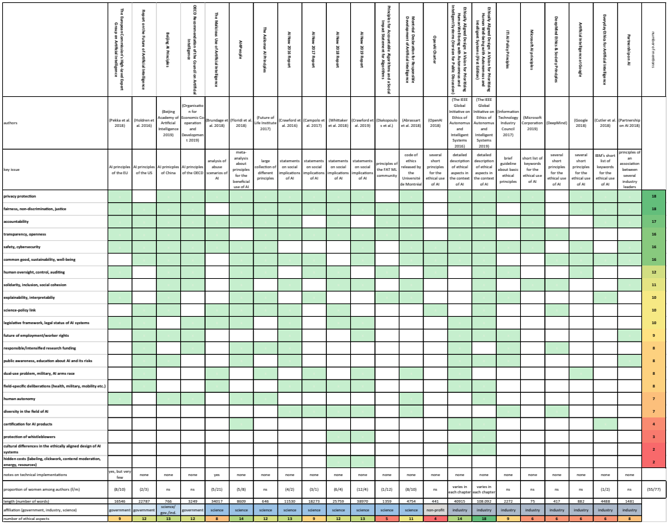
Abstract Current advances in research, development and application of artificial intelligence (AI) systems have yielded a far-reaching discourse on AI ethics. In consequence, a number of ethics guidelines have been released in recent years. These guidelines comprise normative principles and recommendations aimed to harness the “disruptive” potentials of new AI technologies. Designed as a semi-systematic evaluation, this paper analyzes and compares 22 guidelines, highlighting overlaps but also omissions. As a result, I give a detailed overview of the field of AI ethics. Finally, I also examine to what extent the respective ethical principles and values are implemented in the practice of research, development and application of AI systems—and how the effectiveness in the demands of AI ethics can be improved.
Verified 2026-11-25 · 3 references not checked yet
Overview
CoChat Summary
## TL;DR
This paper semi-systematically reviews 22 AI ethics guidelines, finding strong overlap on a few technicalizable topics but many important omissions. It argues that AI ethics is often ineffective in practice and should be supplemented by more concrete technical guidance and a shift toward virtue ethics.
## Key findings
- The paper analyzes and compares 22 AI ethics guidelines and finds that accountability, privacy, and fairness appear in about 80% of them, making them the closest thing to a common minimum standard.
- The author reports that guidelines from industrial contexts name on average 9.1 distinct ethical aspects, while science-based ethics codes average 10.8.
- Only two guidelines contain genuinely technical explanations, and these are described as very sparse; the most extensive technical commentary is in “The Malicious Use of AI”.
- The paper says a controlled study found the effectiveness of ethics guidelines or codes to be “almost zero”: among 63 software engineering students and 105 professional software developers, there was no statistically significant difference in responses between those who did and did not see the ACM code of ethics.
- The paper highlights major omissions across guidelines, including political abuse of AI, hidden social and ecological costs, lack of diversity, robot ethics, trolley problems, and public-private partnerships/industry-funded research.
## Methods
- Semi-systematic literature analysis of AI ethics guidelines, with a deliberate focus on comprehensive guideline documents rather than all AI-ethics-related writings.
- The final sample consisted of 22 major ethical guidelines, identified through searches in Google, Google Scholar, Web of Science, ACM Digital Library, arXiv, and SSRN, plus manual reference screening and the Algorithm Watch AI Ethics Guidelines Global Inventory.
- The paper compares which ethical issues are present or absent in the guidelines, and then relates those principles to practice using cited empirical studies and examples from AI development and deployment.
## Limitations
- The author states the sample is biased toward western/northern documents and excludes guidelines not written in English.
- The selection deliberately excludes guidelines focused on robot ethics, big data, algorithms, or robotics, so omissions in those areas are partly a result of the sampling method.
- The paper notes that its list of omissions is non-exhaustive.
- Evident from the text: the paper is primarily a theoretical/semi-systematic overview, not a direct empirical test of all AI ethics guideline implementations.
Model-written summary. Check it against the paper before relying on it.
Integrity signals
Registry
Cites
Statistics
Figures
Verification
Claims the paper makes
5 Valid · 3 Not valid · 62 Not checked · 64 Own results and interpretations
The cited sources support only part of this claim — read each source’s verdict below.
In the paper
“So far, some papers have been published on the subject of teaching ethics to data scientists (Garzcarek and Steuer 2019; Burton etal. 2017; Goldsmith and Burton 2017; Johnson 2017) but by and large very little to nothing has been written about the tangible implementation of ethical goals and values.”
What the sources say
- Supportedcites Garzcarek and Steuer 2019 matched to “Approaching Ethical Guidelines for Data Scientists” (2019) source
The citation is attached to the statement that papers have discussed teaching ethics to data scientists, not to the citing authors’ subsequent assessment of writing on tangible implementation. Section 5.2 (p. 14) explicitly argues that ethics should be part of the data-science curriculum. (LLM, conf=0.90)
- Not matchedcites Burton etal. 2017
An author–year citation the paper’s reference list doesn’t settle. We don’t search these by name.
- Supportedcites Goldsmith and Burton 2017 matched to “Why Teaching Ethics to AI Practitioners Is Important” (2017) source
The citation appears in a list of papers about teaching ethics to data scientists, not as support for the sentence’s later claim about how little has been written on implementation. The Introduction (p. 1) presents the paper as an argument for ethical training for AI students and practitioners, and the Conclusions (p. 4) advocate teaching ethics in AI classes. (LLM, conf=0.91)
plain- Asserted: passes — The authors put it forward as true.
- Checkable: passes — It can be checked against evidence.
- Load-bearing: passes — The paper’s conclusions depend on it.
- Based: passes — The paper gives a reason why it holds.
- Supported
The cited sources support only part of this claim — read each source’s verdict below.
In the paper
“Leading, of course, is the military use of AI in cyber warfare or regarding weaponized unmanned vehicles or drones (Ernest and Carroll 2016; Anderson and Waxman 2013).”
What the sources say
- Partly supportedcites Ernest and Carroll 2016 matched to “Genetic Fuzzy based Artificial Intelligence for Unmanned Combat Aerial Vehicle Control in Simulated Air Combat Missions” (2016) sourceExperimental — accuracy not yet measured
Our copy does support the drone half of the claim as an identification citation: the paper is squarely about applying AI to a weaponized unmanned vehicle (Introduction: UCAV research, 'this white paper will primarily focus on the increase in capabilities of real-time decision making'; Problem Statement: ALPHA controlling aircraft motion and firing in AFSIM). But it does not support the claim's core assertion that military AI is a leading area of unwanted side effects and malevolent use — the nearest passage (Introduction, 'There are a number of obstacles to a system being an effective AI within this context') frames the issues as engineering and verification difficulties (adversaries trying to 'fool and exploit the system', V&V, safety specifications, crashes/sensor failures), and the Results and Conclusions treat autonomy as 'a revolutionary leap in capability of airpower' and a way of 'reducing risk to our pilots'. Cyber appears only once, as an unrelated civilian/defence application domain of the GFT method ('Examples include robotic surgery, design automation, and cyber security'), not as cyber warfare, so that element of the claim is not from this source. (LLM, conf=0.72)
- Not checked — no full text of the sourcecites Anderson and Waxman 2013 matched to “Law and Ethics for Autonomous Weapon Systems: Why a Ban Won't Work and How the Laws of War Can” (2013) source
boostedstates an association- Asserted: passes — The authors put it forward as true.
- Checkable: passes — It can be checked against evidence.
- Load-bearing: unclear — It is unclear whether the paper’s conclusions depend on it.
- Based: passes — The paper gives a reason why it holds.
- Partly supported
The cited sources support only part of this claim — read each source’s verdict below.
In the paper
“In the light of these two approaches, the traditional type of AI ethics can be assigned to the deontological concept (Mittelstadt 2019).”
What the sources say
- Partly supportedcites Mittelstadt 2019 matched to “Principles alone cannot guarantee ethical AI” (2019) sourceExperimental — accuracy not yet measured
The paper describes a prominent, principle-based approach to AI ethics and says AI ethics initiatives have converged around principles resembling those of medical ethics (opening section; page unavailable). It does not classify that approach as deontological, so the claimed assignment to the deontological concept is not supported by our copy. (LLM, conf=0.78)
plainstates an association- Asserted: passes — The authors put it forward as true.
- Checkable: passes — It can be checked against evidence.
- Load-bearing: passes — The paper’s conclusions depend on it.
- Based: passes — The paper gives a reason why it holds.
- Partly supported
A result the paper reports from its own data — it cites no other source for it, so there is none to check. The quote shows it is in the paper.
In the paper
“My analysis of the distribution of female and male authors of the guidelines, as far as authors were indicated in the documents, showed that the proportion of women was 41.7%.”
plain- Asserted: passes — The authors put it forward as true.
- Checkable: passes — It can be checked against evidence.
- Load-bearing: passes — The paper’s conclusions depend on it.
- Based: passes — The paper gives a reason why it holds.
A result the paper reports from its own data — it cites no other source for it, so there is none to check. The quote shows it is in the paper.
In the paper
“Finally, yet importantly, it is noteworthy that almost all guidelines suggest that technical solutions exist for many of the problems described.”
hedged- Asserted: passes — The authors put it forward as true.
- Checkable: passes — It can be checked against evidence.
- Load-bearing: unclear — It is unclear whether the paper’s conclusions depend on it.
- Based: passes — The paper gives a reason why it holds.
54 more claims
Create a free account to see all 134 claims and to verify the 1 reference still open.
- Probably not a substantial claim. 59
- It may state two separate claims as one. 29
Claims other papers make about this one
Each is checked against this paper’s own text: does it say what the citing paper says it does?
The source backs part of the claim, not all of it — or backs it for a different population, condition or comparison.
In the citing paper
“Ethical concerns arising from the design and deployment of AI technology have motivated a number of initiatives [47]—such as the Ethical Guidelines for Trustworthy AI by the European Commission expert group on AI, and Microsoft’s FATE: Fairness, Accountability, Transparency, and Ethics in AI—addressing issues including mitigating bias and discrimination in AI systems and fairness in the use of AI”
From Future directions for chatbot research: An interdisciplinary research agenda (2021) · cites this paper as [47]
Experimental — accuracy not yet measuredThe source backs part of the claim, not all of it — or backs it for a different population, condition or comparison.
In the citing paper
“Additional recommendations on AI ethics teaching content include “explainability,” “liability,” and “accountability,” which are also considered important by available guidelines [30,40].”
From Proposing a Principle-Based Approach for Teaching AI Ethics in Medical Education (2024) · cites this paper as [30]
Experimental — accuracy not yet measuredThe source backs part of the claim, not all of it — or backs it for a different population, condition or comparison.
In the citing paper
“This emphasis is also echoed by existing guidelines and frameworks regarding AI ethics [30].”
From Proposing a Principle-Based Approach for Teaching AI Ethics in Medical Education (2024) · cites this paper as [30]
Experimental — accuracy not yet measuredThe source backs part of the claim, not all of it — or backs it for a different population, condition or comparison.
In the citing paper
“En dépit de nombreuses chartes, discussions et nombreux documents sur les bonnes pratiques éthiques, l’espoir est faible que l’IA puisse éventuellement se montrer généralement conforme (Hagendorff, 2020) :”
From Gouvernance algorithmique, intelligence artificielle, enjeux, éthique : esquisse d’une analyse critique (2021) · cites this paper as Hagendorff, 2020
Experimental — accuracy not yet measuredThe source backs part of the claim, not all of it — or backs it for a different population, condition or comparison.
In the citing paper
“The experience of mixed emotional responses and ethnical navigation was supported by literature (Hagendorff, 2020;Mamo et al., 2024;Mittelstadt, 2019).”
From Into the Unknown: AI Adoption and Job Satisfaction of Christian Faculty (2026) · cites this paper as Hagendorff, 2020
Experimental — accuracy not yet measured
13 more claims about this paper
Create a free account to see every claim other papers make about this one.
Citations
Cites
The spread of true and false news online
Vosoughi, S., Roy, D., & Aral, S. (2018) · Science · doi:10.1126/science.aap9559 · Cited by 8,847
The future of employment: How susceptible are jobs to computerisation?
Frey, C. B., & Osborne, M. A. (2017) · Technological Forecasting and Social Change · doi:10.1016/j.techfore.2016.08.019 · Cited by 8,727
The global landscape of AI ethics guidelines
Jobin, A., Ienca, M., & Vayena, E. (2019) · Nature Machine Intelligence · doi:10.1038/s42256-019-0088-2 · Cited by 6,220
Floridi, L., Cowls, J., Beltrametti, M., Chatila, R., Chazerand, P., Dignum, V., Luetge, C., Madelin, R., Pagallo, U., Rossi, F., et al. (2018) · Minds and Machines · doi:10.1007/s11023-018-9482-5 · Cited by 4,774 · cited 2×
“They include the adoption of legal framework conditions, the establishment of mechanisms for an independent auditing of technologies, the establishment of institutions for complaints, which also compensate for harms caused by AI systems, and the expansion of university curricula in particular through content from ethi…”
Background(2011) · Cited by 4,430
Lazer, D. M. J., Baum, M. A., Benkler, Y., Berinsky, A. J., Greenhill, K. M., Menczer, F., Metzger, M. J., Nyhan, B., Pennycook, G., Rothschild, D., et al. (2018) · Science · doi:10.1126/science.aao2998 · Cited by 4,160
The Black Box Society: The Secret Algorithms That Control Money and Information
Pasquale, F. (2015) · doi:10.4159/harvard.9780674736061 · Cited by 3,796
Experimental evidence of massive-scale emotional contagion through social networks
Kramer, A. D. I., Guillory, J. E., & Hancock, J. T. (2014) · Proceedings of the National Academy of Sciences · doi:10.1073/pnas.1320040111 · Cited by 3,687
(2018) · Cited by 3,510
Private traits and attributes are predictable from digital records of human behavior
Kosinski, M., Stillwell, D., & Graepel, T. (2013) · Proceedings of the National Academy of Sciences · doi:10.1073/pnas.1218772110 · Cited by 2,829
Research works printed but not linked: 24
- Abrassart, C., Bengio, Y., Chicoisne, G., de Marcellis-Warin, N., Dilhac, M.-A., Gambs, S., Gautrais, V., etal. (2018). Montréal declaration for responsible development of artificial intelligence (pp. 1-21).
- Asimov, I. (2004). I, Robot . New York: Random House LLC.
- Bakewell, J. D., Clement-Jones, T. F., Giddens, A., Grender, R. M., Hollick, C. R., Holmes, C., Levene, P. K. etal. (2018). AI in the UK: Ready, willing and able?. Select committee on artificial intelligence (pp. 1-183).
- Baron, B., Musolesi, M. (2017). Interpretable machine learning for privacy-preserving pervasive systems. arXiv (pp. 1-10).
- Bourdieu, P. (1984). Distinction: A social critique of the judgement of taste . Cambridge: Harvard University Press.
- Brahnam, S. (2006). Gendered bots and bot abuse. In Antonella de Angeli, Sheryl Brahnam, Peter Wallis, & Peter Dix (Eds.), Misuse and abuse of interactive technologies (pp. 1-4). Montreal: ACM.
- Derrida, J. (1997). Of grammatology . Baltimore: Johns Hopkins Univ. Press.
- Gebru, T., Morgenstern, J., Vecchione, B., Vaughan, J. W., Wallach, H., Daumeé, III, H., Crawford, K. (2018). Datasheets for datasets. arXiv (pp. 1-17).
- Google. (2019). Perspectives on issues in AI governance (pp. 1-34). Retrieved February 11, 2019. https :// ai.googl e/stati c/docum ents/persp ectiv es-on-issue s-in-ai-gover nance .pdf.
- Helbing, D. (Ed.). (2019). Towards digital enlightment: Essays on the darf and light sides of the digital revolution. Cham: Springer.
- Johnson, D. G. (2017). Can engineering ethics be taught? The Bridge, 47 (1), 59-64.
- Luhmann, N. (1988). Die Wirtschaft der Gesellschaft . Frankfurt A.M: Suhrkamp.
- Morley, J., Floridi, L., Kinsey, L., Elhalal, A. (2019). From what to how. An overview of AI ethics tools, methods and research to translate principles into practices. arXiv (pp. 1-21).
- Organisation for Economic Co-operation and Development. (2019). Recommendation of the Council on Artificial Intelligence (pp. 1-12). Retrieved June 18, 2019. https ://legal instr ument s.oecd.org/en/ instr ument s/OECD-LEGAL -0449.
- Pekka, A.-P., Bauer, W., Bergmann, U., Bieliková, M., Bonefeld-Dahl, C., Bonnet, Y., Bouarfa, L. etal. (2018). The European Commission's high-level expert group on artificial intelligence: Ethics guidelines for trustworthy ai . Working Document for stakeholders' consultation. Brussels (pp. 1-37).
- Pistono, F., Yampolskiy, R. (2016). Unethical research: How to create a malevolent artificial intelligence. arXiv (pp. 1-6).
- Podgaiska, I., Shklovski, I. Nordic engineers’ stand on artificial intelligence and ethics: Policy recommendations and guidelines (pp. 1–40).
- Rawls, J. (1975). Eine Theorie Der Gerechtigkeit . Frankfurt am Main: Suhrkamp.
- Shoham, Y., Perrault, R., Brynjolfsson, E., Clark, J., Manyika, J., Niebles, J. C., Lyons, T., Etchemendy, J., Grosz, B., Bauer, Z. (2018). The AI index 2018 annual report. Stanford, Kalifornien (pp. 1-94). <!-- image --> 1 3
- Sitawarin, C., Bhagoji, A. N., Mosenia, A., Chiang, M., Mittal, P. (2018). DARTS: Deceiving autonomous cars with toxic signs. arXiv (pp. 1-27).
- Tegmark, A. (2017). Life 3.0: Being human in the age of artificial intelligence . New York: Alfred A. Knopf.
- The IEEE Global Initiative on Ethics of Autonomous and Intelligent Systems. (2016). Ethically aligned design: A vision for prioritizing human well-being with artificial intelligence and autonomous systems (pp. 1-138).
- Whittaker, M., Crawford, K., Dobbe, R., Fried, G., Kaziunas, E., Mathur, V., West, S. M., Richardson, R., Schultz, J., Schwartz, O. (2018). AI now report 2018 (pp. 1-62).
- Zeng, Y., Lu, E., Huangfu, C. (2018). Linking artificial intelligence principles. arXiv (pp. 1-4). Publisher's Note Springer Nature remains neutral with regard to jurisdictional claims in published maps and institutional affiliations. <!-- image --> 1 3
Cited by
Items 801–900 of 1,821
A mesterséges intelligencia jogi szabályozásának aktuális kérdései az Európai Unióban
Mezei, K. (2023) · In Medias Res · doi:10.59851/imr.12.1.4 · Cited by 19
Lukkien, D., Nap, H. H., ter Stal, M., Boon, W., Peine, A., Minkman, M. M. N., & Moors, E. H. M. (2024) · Journal of Responsible Technology · doi:10.1016/j.jrt.2024.100091 · Cited by 12
The Digital Siren’s Call: Accepting Unethical AI Advice
Xu, C., Xu, H., Sun, Y., & Xiong, W. (2024) · International Journal of Human-Computer Interaction · doi:10.1080/10447318.2024.2400396 · Cited by 8
“These frameworks should be flexible and adaptable to accommodate the rapid advancements in AI technology, while maintaining a balance between innovation and ethical considerations (Calo, 2017; Hagendorff, 2020).”
Ethical reasoning in artificial intelligence: A cybersecurity perspective
Matei, S. A., Jackson, D., & Bertino, E. (2024) · The Information Society · doi:10.1080/01972243.2024.2429060 · Cited by 11
“One meta-analysis documented that 80% of these ethical guidelines recommend accountability, privacy, or fairness as minimal requirements (Hagendorff 2020).”
Adding human values on the deepfake: co-designing fact-checking solutions to combat misinformation
Maia, H. C., Ariel, P., & Nunes, S. (2024) · AI and Ethics · doi:10.1007/s43681-024-00619-y · Cited by 10
Advancing Digital Competencies in Public Administration Empowering Civil Servants in the Digital Age
Cardoso, T. J., & Gomes, P. P. (2025) · Advances in public policy and administration (APPA) book series · doi:10.4018/979-8-3693-6547-2.ch002 · Cited by 12
Diaz, C. L. (2025) · Human-computer interaction series · doi:10.1007/978-3-031-61375-3_5 · Cited by 6
"Why do we do this?": Moral Stress and the Affective Experience of Ethics in Practice
Rattay, S., Vakkuri, V., Rozendaal, M. C., & Shklovski, I. (2025) · CHI Conference on Human Factors in Computing Systems · doi:10.1145/3706598.3713264 · Cited by 15
Talanov, M. O., KARABULATOVA, I. S., Erokhin, V. V., & Vallverdú, J. (2025) · Vestnik Volgogradskogo gosudarstvennogo universiteta Serija 2 Jazykoznanije · doi:10.15688/jvolsu2.2025.1.11 · Cited by 7
AI_TAF: A Human-Centric Trustworthiness Risk Assessment Framework for AI Systems
Seralidou, E., Kioskli, K., Fotis, T. G., & Polemi, N. (2025) · Computers · doi:10.3390/computers14070243 · Cited by 12
Advancements in Artificial Intelligence: Breakthroughs, Challenges and the Road Ahead
Tibrewala, A. (2025) · IEEE Conference on Artificial Intelligence (CAI) · doi:10.1109/cai64502.2025.00241 · Cited by 6
“Also, ethical consideration around implementation of AI surrounding transparency, accountability and bias are some areas that need careful attention and planning[12].”
Langlois, L., & Régis, C. (2021) · Lecture notes in computer science · doi:10.1007/978-3-030-69128-8_10 · Cited by 8
Bruneault, F., & Laflamme, A. S. (2021) · Tic & société · doi:10.4000/ticetsociete.5999 · Cited by 14
Häußler, H. (2021) · Libri · doi:10.1515/libri-2021-0095 · Cited by 10
“A multitude of codes, guidelines, and frameworks has been published and studied quantitatively (Hagendorff 2020; Jobin, Ienca, and Vayena 2019; Schiff et al. 2020; Whittlestone et al. 2019b).”
BackgroundMethodResultDoppelgänger Saliency: Towards More Ethical Person Re-Identification
RichardWebster, B., Hu, B., Fieldhouse, K., & Hoogs, A. J. (2022) · IEEE/CVF Conference on Computer Vision and Pattern Recognition Workshops (CVPRW) · doi:10.1109/cvprw56347.2022.00322 · Cited by 9
“Ethical AI studies ethical considerations in the design and use of AI systems [15,19,47,51].”
BackgroundMantelero, A. (2022) · Information technology and law series/Information technology & law series · doi:10.1007/978-94-6265-531-7_1 · Cited by 6
The Self-Synchronisation of AI Ethical Principles
Light, R., & Panai, E. (2022) · Digital Society · doi:10.1007/s44206-022-00023-1 · Cited by 8
“The provision of ethical assessment for autonomous and artificial intelligence systems is fundamentally empirical in nature and requires the extensive use of various probabilistic practices, tools, and techniques (Hagendorff, 2020).”
BackgroundNg, D. T. K., Leung, J. K. L., Su, M. J., Yim, I. H. Y., Qiao, M. S., & Chu, S. K. W. (2022) · Springer eBooks · doi:10.1007/978-3-031-18880-0_4 · Cited by 9
Trustworthy tech companies: talking the talk or walking the walk?
Keymolen, E. (2023) · AI and Ethics · doi:10.1007/s43681-022-00254-5 · Cited by 10
“For instance, of more than 160 AI ethics guidelines that were collected, only ten had proper enforcement mechanisms set in place [18].”
AI Governance and Ethics in Public Procurement: Bridging the Gap Between Theory and Practice
Behr, T. V., & Abrahamsson, P. (2022) · IEEE International Conference on Engineering, Technology and Innovation (ICE/ITMC) · doi:10.1109/ice/itmc-iamot55089.2022.10033173 · Cited by 15
“However, as current research has pointed out, there is, in reality, only a quantum of control on the practical use of the new technology in terms of ethics [3], [4].”
BackgroundTechnology ethics assessment: Politicising the ‘Socratic approach’
Sparrow, R. (2023) · Business Ethics the Environment & Responsibility · doi:10.1111/beer.12518 · Cited by 7
“Finally, asking and answering questions will not suffice to ensure that anyone will act on the answers in order to make a technology more ethical (Hagendorff, 2020).”
BackgroundTaibi, D., Börsting, J., Hoppe, U., Ognibene, D., Hernández‐Leo, D., Eimler, S. C., & Kruschwitz, U. (2023) · Communications in computer and information science · doi:10.1007/978-3-031-29800-4_25 · Cited by 10
Ethics and Development of Advanced Technology Systems in Public Administration
Alexandre, A. D. C., & Pereira, L. M. (2023) · Lecture notes in computer science · doi:10.1007/978-3-031-33177-0_14 · Cited by 8
Welfarist Moral Grounding for Transparent AI
Narayanan, D. (2023) · ACM Conference on Fairness, Accountability, and Transparency (FAccT) · doi:10.1145/3593013.3593977 · Cited by 8
“governance efforts around ‘ethical AI’, transparency was found to be among the few principles that were endorsed universally by corporations, policymakers, and academics alike [29, 38, 44].”
BackgroundEthics and Safety of Human-Machine Teaming
Assaad, Z., & Burken, C. B.-V. (2023) · International Symposium on Trustworthy Autonomous Systems (TAS) · doi:10.1145/3597512.3600205 · Cited by 11
The latent space of data ethics
Panai, E. (2023) · AI & Society · doi:10.1007/s00146-023-01757-3 · Cited by 8
“Debate continues about the best strategies for choosing the right data ethical framework for companies (Hagendorff 2020); however, although differences of opinion still exist, there appears to be some agreement that there is no such a thing as the ethics framework which suits all circumstances and…”
Military Emerging Disruptive Technologies: Compliance with International Law and Ethical Standards
Marsili, M. (2023) · BRILL eBooks · doi:10.1163/9789004547261_004 · Cited by 10
Mental Health in Messages: Unravelling Emotional Patterns Through Advanced Text Analysis
Dwivedi, D. N., & Mahanty, G. (2024) · Advances in psychology, mental health, and behavioral studies (APMHBS) book series · doi:10.4018/979-8-3693-1910-9.ch009 · Cited by 6
Unmasking the Shadows: Exploring Unethical AI Implementation
Dwivedi, D. N., & Mahanty, G. (2024) · Advances in human resources management and organizational development book series · doi:10.4018/979-8-3693-0724-3.ch012 · Cited by 7
Cyber Security Challenges and Dark Side of AI: Review and Current Status
Ojha, N. K., Pandita, A., & Ramkumar, J. (2024) · Advances in human resources management and organizational development book series · doi:10.4018/979-8-3693-0724-3.ch007 · Cited by 13
A hyper-knowledge graph system for research on AI ethics cases
Chen, C., Feng, Y., Wei, M., Liu, Z., Luo, P., Wang, S., & Meng, L. (2024) · Heliyon · doi:10.1016/j.heliyon.2024.e29048 · Cited by 8
Ethics in the Driver's Seat: Unravelling the Ethical Dilemmas of AI in Autonomous Driving
Wani, A., Kumari, D., & Singh, J. (2024) · SAE technical papers on CD-ROM/SAE technical paper series · doi:10.4271/2024-01-2023 · Cited by 12
Singh, G., Mishra, A., Pattanayak, C., Priyadarshini, A., & Das, R. (2023) · Journal of Integrative Medicine and Research · doi:10.4103/jimr.jimr_30_23 · Cited by 10
Investigating Labeler Bias in Face Annotation for Machine Learning
Haliburton, L., Ghebremedhin, S., Welsch, R., Schmidt, A., & Mayer, S. (2024) · Frontiers in artificial intelligence and applications · doi:10.3233/faia240191 · Cited by 15
An emerging AI mainstream: deepening our comparisons of AI frameworks through rhetorical analysis
Torres, E., & Penman, W. (2020) · AI & Society · doi:10.1007/s00146-020-01073-0 · Cited by 7
“Thus, in a compelling move, Hagendorff (2020) points to virtue ethics, which, he suggests, will help people to internalize a more ethically conscientious self-understanding and actually create an ethical path that liberates rather than constricts.”
BackgroundMethodInfluentialIvaschenko, A. V., Радмировна, Д. А., & Nikiforova, T. V. (2021) · Organizacija · doi:10.2478/orga-2021-0011 · Cited by 7
“The related ethical problems are overviewed in (Hagendorff, 2020).”
BackgroundMethodAI, IoT, and Blockchain: Business Models, Ethical Issues, and Legal Perspectives
Nehme, E., Salloum, H., Abdo, J. B., & Taylor, R. (2021) · Springer eBooks · doi:10.1007/978-3-030-74150-1_4 · Cited by 8
Factoring ethics in management algorithms for municipal information-analytical systems
Sergei, K., Kriebitz, A., Polina, E., & Aleksandrov, N. (2021) · AI and Ethics · doi:10.1007/s43681-021-00098-5 · Cited by 8
Fate of AI for Smart City Services in India: A Qualitative Study
Kuberkar, S., Singhal, T. K., & Singh, S. (2022) · International Journal of Electronic Government Research · doi:10.4018/ijegr.298216 · Cited by 7
The Future of Hiring Through Artificial Intelligence by Human Resource Managers in India
Arora, A., Aggarwal, V., & Doifode, A. (2022) · Lecture notes in networks and systems · doi:10.1007/978-981-19-2500-9_40 · Cited by 8
Whistleblower protection in the digital age - why “anonymous” is not enough.
Berendt, B., & Schiffner, S. (2022) · The International Review of Information Ethics · doi:10.29173/irie479 · Cited by 6
Rethinking use-restricted open-source licenses for regulating abuse of generative models
Cui, J., & Araujo, D. A. (2024) · Big Data & Society · doi:10.1177/20539517241229699 · Cited by 12
“Legal experts and ethicists play a pivotal role in identifying axiomatic principles that dictate the purpose or objective of technical solutions, ensuring that they not only function effectively but also align with societal values and norms (Hagendorff, 2020).”
Language-based game theory in the age of artificial intelligencePreprint
Capraro, V., Paolo, R. D., Perc, M., & Pizziol, V. (2024) · PsyArXiv (OSF Preprints) · doi:10.31234/osf.io/cuf8z · Cited by 6
The Rise of Tech Ethics: Approaches, Critique, and Future Pathways
Frahm, N., & Schiølin, K. (2024) · Science and Engineering Ethics · doi:10.1007/s11948-024-00510-3 · Cited by 8
“These interrelated crises – of technological innovation and its pursuit, and of the ethics of ‘Tech Ethics’ (Hagendorff, 2020) – play out in various ways across the studies gathered in this collection.”
BackgroundSelvaratnam, R., & Venaruzzo, L. (2024) · Journal of Ethics in Higher Education · doi:10.26034/fr.jehe.2024.6864 · Cited by 21
Organisational tensions in introducing socially sustainable AI
Lanne, M., Nieminen, M., & Leikas, J. (2025) · AI & Society · doi:10.1007/s00146-025-02293-y · Cited by 12
“As Mittelstadt (2019) has pointed out, the gap between high-levelled principles and their practical application has led to rather poor implementation of the guidelines by organisations (Hagendorff 2020).”
Navigating the Nexus of ethical standards and moral values
Hammerschmidt, T. (2025) · Ethics and Information Technology · doi:10.1007/s10676-025-09826-5 · Cited by 11
“The alignment of ethical standards and individual moral values are increasingly seen as essential for mitigating moral dilemmas in AI use (e.g., Bankins & Formosa, 2023; Buhmann & Fieseler, 2023 ; Hagendorff, 2020 ; Rodgers et al., 2023).”
He, J., & Yang, C. (2025) · AI & Society · doi:10.1007/s00146-025-02366-y · Cited by 9
“Several guidelines for AI systems have been suggested by different institutions and scholars for different proposals on AI regulation (Hagendorff 2020), such as just, human-centeredness, informativeness, safety, transparency, interpretability, factuality, robustness and so on.”
Trust requirements in sociotechnical systems: A systematic literature review
Roque, G. D. S. L., Nascimento, J., de Souza, R. R., Alves, C. F., & Araújo, J. (2025) · Information and Software Technology · doi:10.1016/j.infsof.2025.107796 · Cited by 7
Nunes, J. R., Rita, P., Pinto, D. C., González‐Jiménez, H., Akdim, K., & Wagner, R. L. (2025) · International Journal of Information Management · doi:10.1016/j.ijinfomgt.2025.102940 · Cited by 9
Harmonizing creativity and ethics in AI systems
Baeyaert, J. (2025) · AI and Ethics · doi:10.1007/s43681-025-00766-w · Cited by 8
“The rise of diffusion engines, pro - grammable watermarking, and ultra-efficient sparse trans - formers introduces novel ethical risks—such as deepfake music, training-data leakage, or unverifiable generative outputs—that the original framework may not anticipate [29, 47].”
A unified ontological and explainable framework for decoding AI risks from news data
Chen, C., Luo, P., Zhao, H., Wei, M., Zhang, P., Liu, Z., & Meng, L. (2025) · Scientific Reports · doi:10.1038/s41598-025-10675-x · Cited by 6
“Hagendorff synthesized key principles and benefits from different ethical guidelines and introduced a new perspective, emphasizing the need for actionable programs when dealing with AI risks 19 .”
Decoding AI ethics: What do ethical tools tell us about ethics?
Portegies, T. C., Hajri, O., Willemsen, L. M., & Harbers, M. (2025) · Ethics and Information Technology · doi:10.1007/s10676-025-09860-3 · Cited by 9
“Understanding the role of self-assessment versus alternative evaluation strategies is key to addressing potential ethical blind spots (Hagendorff, 2020).”
InfluentialBrintrup, A. M., Baryannis, G., Tiwari, A., Ratchev, S. M., Martínez-Arellano, G., & Singh, J. (2025) · Data-Centric Engineering · doi:10.1017/dce.2025.10032 · Cited by 49
“Hagendorff (2020) provides a critical assessment of over 20 ethical AI guidelines, identifying key omissions and inconsistencies in how algorithmic harms are conceptualized.”
Ten Core Concepts for Ensuring Data Equity in Public Health
wang, Y., Boyd, A. E., Rountree, L., Ren, Y., Nyhan, K., Nagar, R., Higginbottom, J., Ranney, M. L., Parikh, H., & Mukherjee, B. (2026) · JAMA Health Forum · doi:10.1001/jamahealthforum.2025.6031 · Cited by 12
Formal and computational foundations for implementing Affective Sovereignty in emotion AI systems
Kim, R. S. (2026) · Discover Artificial Intelligence · doi:10.1007/s44163-026-01000-0 · Cited by 8
Akinwalere, S. N., & Chang, K. (2026) · Journal of Knowledge Management · doi:10.1108/jkm-03-2025-0362 · Cited by 12
Jin, L.-Y., Ren, Q.-Y., Mitchell, V., & May, A. (2023) · Ergonomics · doi:10.1080/00140139.2023.2223784 · Cited by 7
“Additionally, further development of any of these opportunities requires full and robust consideration of the ethics of using AI in this work context as the consequences for the operators could be either positive or negative (Hagendorff 2020).”
BackgroundPathni, R. K. (2023) · Journal of Healthcare Management Standards · doi:10.4018/jhms.329234 · Cited by 10
“However, with the increasing penetration of AI systems in healthcare, we need to go beyond the conventional ethical frameworks to address the novel complex challenges posed by them (Hagendorff, 2020).”
The Roadmap of Creating and Implementing CBS Through Artificial Intelligence
Jose, R. L. S. (2024) · International Conference on Advance Computing and Innovative Technologies in Engineering (ICACITE) · doi:10.1109/icacite60783.2024.10616692 · Cited by 9
“In addition, the ethical issue on algorithmic bias, transparency, and accountability is increasingly brought up in relation to AI systems that exert a growing influence over crucial decision processes (Jobin et al., 2019).”
BackgroundLanguage Agents and Malevolent Design
Yum, I. (2024) · Philosophy & Technology · doi:10.1007/s13347-024-00794-0 · Cited by 8
“While the risks of maliciously designed AI systems are acknowledged, they have received relatively little research attention compared to other AI safety issues like the alignment problem (Hagendorff, 2020: 107).”
Paci, B. (2024) · Thesis Eleven · doi:10.1177/07255136241292366 · Cited by 8
“…within the debate about the necessity to consider different ethical issues implied in AI development based on the same, shared set of principles, clearly even beyond such a distinction, although there is no consensus, instead, about what principles should actually be assumed (Hagendorff, 2020).”
Farber, S. (2025) · Security Journal · doi:10.1057/s41284-025-00471-7 · Cited by 18
What can educational leaders learn from corporate AI ethics?
Orfanidis, C. (2025) · Management in Education · doi:10.1177/08920206251344738 · Cited by 6
“A socio-ethical approach to the administrative incorporation of AI involves an uninterrupted linkage between tangible technical implementations and the re fl ection on more abstract values, which, however, has a direct impact on the current and future social lives of humans (Hagendorff, 2020).”
Towards a Human Right in Recordkeeping and Archives
Carbone, K. M., Gilliland, A. J., Lewis, A. Y., et al. (2021) · Lecture notes in computer science · doi:10.1007/978-3-030-71305-8_23 · Cited by 5
The Aspect of Ethics Determined by Technological Impact
Paska, M. (2021) · Hradec Economic Days ... · doi:10.36689/uhk/hed/2021-01-062 · Cited by 8
Kera, D. (2021) · EAI/Springer Innovations in Communication and Computing · doi:10.1007/978-3-030-75107-4_3 · Cited by 7
The ethics of algorithms from the perspective of the cultural history of consciousness: first look
Martínez, C. A. S., & Montoya, O. L. Q. (2022) · AI & Society · doi:10.1007/s00146-022-01475-2 · Cited by 14
“Thus, the practice of developing, implementing, and using AI applications has very little to do with the values and principles postulated by ethics " (Hagendorff 2020).”
BackgroundMethodInfluentialAttitudinal Tensions in the Joint Pursuit of Explainable and Trusted AI
Narayanan, D., & Tan, Z. M. (2023) · Minds and Machines · doi:10.1007/s11023-023-09628-y · Cited by 11
“The calls for explainability and trust are two especially prominent examples of such proposals (Floridi et al., 2018; Hagendorff, 2020).”
BackgroundThumfart, J. (2023) · AI and Ethics · doi:10.1007/s43681-023-00288-3 · Cited by 11
“Rudschies et al. [15] critically discuss the aforementioned and similar attempts to synthesise AI ethics and to find “common ground”, “overarching themes”, or “minimum requirements” [28, 30, 31, 53].”
A Unified Framework of Ethical Principles for AI
Floridi, L. (2023) · Oxford University Press eBooks · doi:10.1093/oso/9780198883098.003.0004 · Cited by 11
Conducting Ethically Mindful Earth Observation Research: The Case of Slum Mapping
Kochupillai, M., & Taubenböck, H. (2023) · IEEE International Geoscience and Remote Sensing Symposium · doi:10.1109/igarss52108.2023.10281725 · Cited by 5
“However, recent academic research [4] suggests that these guidelines are not practically useful for scientists and researchers.”
BackgroundShukla, S. (2023) · doi:10.1109/bats59463.2023.10303116 · Cited by 5
“The use of cloud-based AI services in e-health raises several ethical and legal implications [14].”
BackgroundZhu, Q., Kim, D., Eldardiry, H., & Ausman, M. (2023) · IEEE Frontiers in Education Conference (FIE) · doi:10.1109/fie58773.2023.10343253 · Cited by 6
“Nevertheless, some scholars have questioned the efficacy of these ethics documents in influencing professional practice and policy-making in AI-related fields [6] [7].”
BackgroundФіліпенко, Н., Lukashevych, S., Андрєєва, О., & Ivanović, A. (2024) · Theory and Practice of Forensic Science and Criminalistics · doi:10.32353/khrife.1.2024.02 · Cited by 9
Artificial Intelligence-Enabled Medical Device Standards: A Multidisciplinary Literature Review
Lynch, N. S. J., Loughran, R., McHugh, M., & McCaffery, F. (2024) · Communications in computer and information science · doi:10.1007/978-3-031-71139-8_8 · Cited by 7
Principles and Virtues in AI Ethics
Scherz, P. (2024) · Journal of Military Ethics · doi:10.1080/15027570.2024.2440195 · Cited by 5
Measuring Technical Debt in AI-Based Competition Platforms
Sklavenitis, D., & Kalles, D. (2024) · Hellenic Conference on Artificial Intelligence · doi:10.1145/3688671.3688783 · Cited by 9
“Additionally, insufficiently training for participants to adhere to legal standards [36], which complement ethical guidelines, when For organizers, understanding and prioritizing these types of technical debt is crucial in maintaining a fair and competitive atmosphere essential for the success of…”
Charting the Landscape of Artificial Intelligence Ethics: A Bibliometric Analysis
Qiu, J., Cheng, L., & Huang, J. H. (2025) · International Journal of Digital Law and Governance · doi:10.1515/ijdlg-2025-0007 · Cited by 9
Outline of a Novel Approach for Identifying Ethical Issues in Early Stages of AI4EO Research
Kochupillai, M. (2021) · IEEE International Geoscience and Remote Sensing Symposium (IGARSS) · doi:10.1109/igarss47720.2021.9553727 · Cited by 5
A Deployment Model to Extend Ethically Aligned AI Implementation Method ECCOLA
Antikainen, J., Agbese, M., Alanen, H.-K., Halme, E., Isomäki, H., Jantunen, M., Kemell, K., Rousi, R. A., Vainio-Pekka, H., & Vakkuri, V. (2021) · IEEE International Requirements Engineering Conference Workshops (REW) · doi:10.1109/rew53955.2021.00043 · Cited by 8
Bartl, G. (2023) · Sozialwissenschaften und Berufspraxis · doi:10.1007/978-3-658-38268-1_3 · Cited by 9
Hulstijn, J. (2023) · International Conference on Artificial Intelligence and Law · doi:10.1145/3594536.3595122 · Cited by 9
Gyulai, A., & Ujlaki, A. (2021) · Információs Társadalom · doi:10.22503/inftars.xxi.2021.2.3 · Cited by 8
Trustworthy Artificial Intelligence: Enhancing Trustworthiness Through Explainable AI (XAI)Preprint
Paramesha, M., Rane, N. L., & Rane, J. (2024) · SSRN Electronic Journal · doi:10.2139/ssrn.4880090 · Cited by 7
Prospective Algorithmic Accountability and the Role of the News MediaPreprint
Diakopoulos, N. (2024) · Social Science Research Network · doi:10.2139/ssrn.5022167 · Cited by 8
Human Intelligence, Creativity, and Wisdom in the Age of Generative Artificial Intelligence
Preiss, D. D., & Sternberg, R. J. (2025) · Creativity. Theories – Research - Applications · doi:10.2478/ctra-2025-0012 · Cited by 5
“…is still a developing field, and guidelines are still a work in progress, particularly those related to the political abuse of this technology, its hidden ecological costs, or how to decide when algorithmic decision-making might be superior or inferior to human decision-making (Hagendorff, 2020).”
Navigating the Impact of AI Integration in Higher Education: Ethical Frontiers
Ghandour, D. A. M. (2024) · Advances in educational technologies and instructional design book series · doi:10.4018/979-8-3693-2145-4.ch009 · Cited by 7
AI, Consciousness, and the Evolutionary Frontier: A Buddhist Reflection on Science and Human Futures
Hershock, P. D. (2025) · Religions · doi:10.3390/rel16050562 · Cited by 8
A Conceptual Framework for AI Literacy with a Focus on Competency
Yu, W. (2025) · International Journal of Artificial Intelligence in Education · doi:10.1007/s40593-025-00488-4 · Cited by 13
Shelley-Egan, C. (2025) · NanoEthics · doi:10.1007/s11569-025-00471-2 · Cited by 6
“For instance, scholars working in the area of ethics for Artificial Intelligence (AI) have observed a particular ethical ‘frame’ that prioritises technical solutions [15, 16].”
Hollanek, T., Pi, Y., Fiorini, C., Vignali, V., Peters, D., & Drage, E. (2025) · ACM Conference on Fairness, Accountability, and Transparency (FAccT) · doi:10.1145/3715275.3732078 · Cited by 7
“…the experience from industry that informs our project also highlights that the checklist format – which many AI ethics tools/guidelines adopt [14] – is often difficult to interpret, designed by compliance experts in a technical language not interpretable by other business units, and still…”
Operationalising digital ethics: establishment of an ethics evaluation tool for data analytics
Charton, J. E., Lucas, S., Vogd, W., Halter, W., & Becker, S. J. (2025) · AI & Society · doi:10.1007/s00146-025-02621-2 · Cited by 7
“…and workflows (Mittelstadt and Floridi 2016; Rochel and Evéquoz 2021; Floridi et al. 2018; Jobin et al. 2019; Adams 2024; Amugongo et al. 2023; Kri-jger et al. 2023; Fjeld et al. 2020; Hagendorff 2020; Schiff et al. 2021; Floridi 2019; Morley et al. 2020; Hickok 2020; Giovanola and Tiribelli 2023).”
The AI Policy Module: Developing Computer Science Student Competency in AI Ethics and Policy
Weichert, J., Dunlap, D., Farghally, M. F., & Eldardiry, H. (2025) · IEEE Frontiers in Education Conference (FIE) · doi:10.1109/fie63693.2025.11328642 · Cited by 7
“More to the point, we view policy as the avenue through which the transition from ‘principles to practices’ of responsible AI can be achieved [27], [31]–[33].”
Dangerous liaisons: social AI and the problem with the relational turn to moral status
de Ruiter, A. (2025) · AI & Society · doi:10.1007/s00146-025-02638-7 · Cited by 10
Survey on AI Ethics: A Socio‐Technical Perspective
Mbiazi, D., Bhange, M., Babaei, M., Sheth, I., Kenfack, P. J., & Kahou, S. E. (2025) · Computational Intelligence · doi:10.1111/coin.70149 · Cited by 48
“Among these ethical considerations, there are common principles that should be promoted in the development of AI systems (Lewis et al. 1997, Floridi et al. 2021, Hagendorff 2020).”
The Future of AI in the GCC Post‐ NPM Landscape: A Comparative Analysis of Kuwait and the UAE
Albous, M. R., Alboloushi, B., & Lacheret, A. (2025) · Politics & Policy · doi:10.1111/polp.70084 · Cited by 10
“Coeckelbergh (2024) and Hagendorff (2020) draw attention to concerns that go beyond algorithmic bias and ethics-washing.”
Ibrahimi, M., Masso, A., & Bellone, M. (2025) · PLoS ONE · doi:10.1371/journal.pone.0335672 · Cited by 6
Development of AI ethics guidelines model based on AI life cycle
Lee, N. (2025) · AI and Ethics · doi:10.1007/s43681-025-00851-0 · Cited by 7
Effects of knowledge and importance on responsibility in human-AI decision making
Tsumura, T., & Yamada, S. (2025) · Scientific Reports · doi:10.1038/s41598-025-32513-w · Cited by 8
“Hagendorff 34 reviewed 22 AI ethics guidelines and identified overlapping themes as well as notable gaps.”
Metadata
- Authors
- Hagendorff, T.
- Affiliations
- University of Tübingen (DE)
- Corresponding author
- Hagendorff, Thilo
- ORCID
- Hagendorff, Thilo
- Venue
- Minds and Machines
- Published
- 2020-02-01
- Volume
- 30
- Issue
- 1
- Pages
- 99-120
- ISSN
- 0924-6495 (ISSN-L)
- 1572-8641
- OpenAlex
- W3003385079
- Semantic Scholar
- 11159bdb213aaa243916f42f576396d483ba474b
- Cited by
- 1,911
- References
- 86
- Citations by year
- 2026: 370 · 2025: 446 · 2024: 361 · 2023: 290 · 2022: 239 · 2021: 160 · 2020: 41
- FWCI
- 248.38
- Type
- journal article
- Language
- en
- Update notices
- correction (2020-07-28)
- Open access
- hybrid
- doi.org
- Licence
- cc-by
- creativecommons.org/licenses/by/4.0 (tdm)
- creativecommons.org/licenses/by/4.0 (vor)
- Locations
- Minds and Machines (publishedVersion, cc-by)
- arXiv (Cornell University) (submittedVersion)
- arXiv (Cornell University)
- Funders
- Deutsche Forschungsgemeinschaft (390727645)
- Topics
- Physical Sciences › Computer Science › Artificial Intelligence › Ethics and Social Impacts of AI
- Social Sciences › Law › Digitalization, Law, and Regulation
- Social Sciences › Business, Management and Accounting › Organizational Behavior and Human Resource Management › Ethics in Business and Education
- Keywords
- AI ethics, ethics guidelines, normative principles, moral values
About these checks
Registry, retraction, Cites and statistics results are computed, not judged, with one exception: a printed reference that no index lists is read once by a model before it counts as a citation error. Claims are extracted by a model and kept only when their quote appears verbatim in the text; each cited source is then checked, with a model’s help, for whether it says what the claim relies on. Those verdicts can be wrong — read the claim’s quote and the cited source before relying on one.
The claim verdicts this report counts are experimental: their accuracy is not yet measured.
A language model drew the claims from the paper on 2026-10-12, under version 3 of the claim definition (model deepseek-v4.1-flash, prompt extract-v3).
A second model labelled each claim on 2026-10-12 (model jev-1.13-20260917, definition revision gold-guideline-v0.2).
Cited sources are checked with a language model’s help (gpt-6-sol and qwen3.8-omni-flash).
Statistics and arithmetic are recomputed, not judged.
Confidence bands are shown only for fields calibrated on our annotated test set. None is calibrated yet, so no band is shown.
What counts as a claim ›How we measure confidence ›How we check this ›
Are you an author, or do you see a problem with this page? Request a review
Data sources
Bibliographic data: Semantic Scholar, OpenAlex, Crossref.
Contains information from the Semantic Scholar Academic Graph Datasets, made available under the ODC Attribution License (ODC-BY 1.0).
Semantic Scholar’s data is described in: Kinney, R., et al. (2023). The Semantic Scholar Open Data Platform. arXiv:2301.10140.
