

The Ethics of AI Ethics: An Evaluation of Guidelines
Open accessThe DOI matches its Crossref record; 97 of the 100 references it cites were found in a registry or an index, and 3 are not checked yet; 6 of the 88 sources its claims cite were checked for support.
Abstract
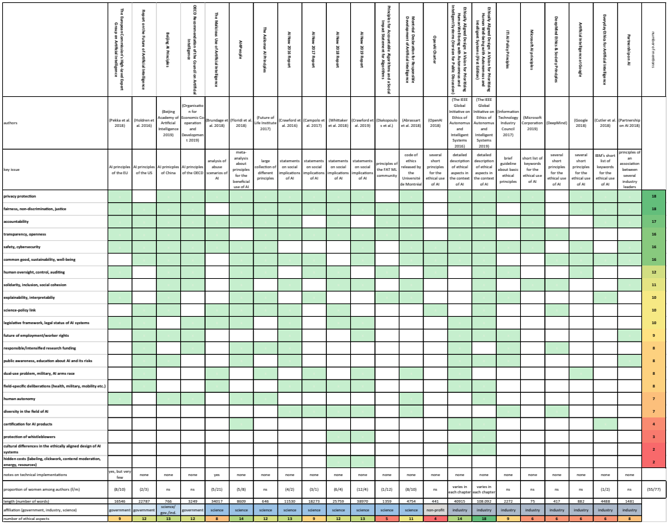
Abstract Current advances in research, development and application of artificial intelligence (AI) systems have yielded a far-reaching discourse on AI ethics. In consequence, a number of ethics guidelines have been released in recent years. These guidelines comprise normative principles and recommendations aimed to harness the “disruptive” potentials of new AI technologies. Designed as a semi-systematic evaluation, this paper analyzes and compares 22 guidelines, highlighting overlaps but also omissions. As a result, I give a detailed overview of the field of AI ethics. Finally, I also examine to what extent the respective ethical principles and values are implemented in the practice of research, development and application of AI systems—and how the effectiveness in the demands of AI ethics can be improved.
Verified 2026-11-25 · 3 references not checked yet
Overview
CoChat Summary
## TL;DR
This paper semi-systematically reviews 22 AI ethics guidelines, finding strong overlap on a few technicalizable topics but many important omissions. It argues that AI ethics is often ineffective in practice and should be supplemented by more concrete technical guidance and a shift toward virtue ethics.
## Key findings
- The paper analyzes and compares 22 AI ethics guidelines and finds that accountability, privacy, and fairness appear in about 80% of them, making them the closest thing to a common minimum standard.
- The author reports that guidelines from industrial contexts name on average 9.1 distinct ethical aspects, while science-based ethics codes average 10.8.
- Only two guidelines contain genuinely technical explanations, and these are described as very sparse; the most extensive technical commentary is in “The Malicious Use of AI”.
- The paper says a controlled study found the effectiveness of ethics guidelines or codes to be “almost zero”: among 63 software engineering students and 105 professional software developers, there was no statistically significant difference in responses between those who did and did not see the ACM code of ethics.
- The paper highlights major omissions across guidelines, including political abuse of AI, hidden social and ecological costs, lack of diversity, robot ethics, trolley problems, and public-private partnerships/industry-funded research.
## Methods
- Semi-systematic literature analysis of AI ethics guidelines, with a deliberate focus on comprehensive guideline documents rather than all AI-ethics-related writings.
- The final sample consisted of 22 major ethical guidelines, identified through searches in Google, Google Scholar, Web of Science, ACM Digital Library, arXiv, and SSRN, plus manual reference screening and the Algorithm Watch AI Ethics Guidelines Global Inventory.
- The paper compares which ethical issues are present or absent in the guidelines, and then relates those principles to practice using cited empirical studies and examples from AI development and deployment.
## Limitations
- The author states the sample is biased toward western/northern documents and excludes guidelines not written in English.
- The selection deliberately excludes guidelines focused on robot ethics, big data, algorithms, or robotics, so omissions in those areas are partly a result of the sampling method.
- The paper notes that its list of omissions is non-exhaustive.
- Evident from the text: the paper is primarily a theoretical/semi-systematic overview, not a direct empirical test of all AI ethics guideline implementations.
Model-written summary. Check it against the paper before relying on it.
Integrity signals
Registry
Cites
Statistics
Figures
Verification
Claims the paper makes
5 Valid · 3 Not valid · 62 Not checked · 64 Own results and interpretations
The cited sources support only part of this claim — read each source’s verdict below.
In the paper
“So far, some papers have been published on the subject of teaching ethics to data scientists (Garzcarek and Steuer 2019; Burton etal. 2017; Goldsmith and Burton 2017; Johnson 2017) but by and large very little to nothing has been written about the tangible implementation of ethical goals and values.”
What the sources say
- Supportedcites Garzcarek and Steuer 2019 matched to “Approaching Ethical Guidelines for Data Scientists” (2019) source
The citation is attached to the statement that papers have discussed teaching ethics to data scientists, not to the citing authors’ subsequent assessment of writing on tangible implementation. Section 5.2 (p. 14) explicitly argues that ethics should be part of the data-science curriculum. (LLM, conf=0.90)
- Not matchedcites Burton etal. 2017
An author–year citation the paper’s reference list doesn’t settle. We don’t search these by name.
- Supportedcites Goldsmith and Burton 2017 matched to “Why Teaching Ethics to AI Practitioners Is Important” (2017) source
The citation appears in a list of papers about teaching ethics to data scientists, not as support for the sentence’s later claim about how little has been written on implementation. The Introduction (p. 1) presents the paper as an argument for ethical training for AI students and practitioners, and the Conclusions (p. 4) advocate teaching ethics in AI classes. (LLM, conf=0.91)
plain- Asserted: passes — The authors put it forward as true.
- Checkable: passes — It can be checked against evidence.
- Load-bearing: passes — The paper’s conclusions depend on it.
- Based: passes — The paper gives a reason why it holds.
- Supported
The cited sources support only part of this claim — read each source’s verdict below.
In the paper
“Leading, of course, is the military use of AI in cyber warfare or regarding weaponized unmanned vehicles or drones (Ernest and Carroll 2016; Anderson and Waxman 2013).”
What the sources say
- Partly supportedcites Ernest and Carroll 2016 matched to “Genetic Fuzzy based Artificial Intelligence for Unmanned Combat Aerial Vehicle Control in Simulated Air Combat Missions” (2016) sourceExperimental — accuracy not yet measured
Our copy does support the drone half of the claim as an identification citation: the paper is squarely about applying AI to a weaponized unmanned vehicle (Introduction: UCAV research, 'this white paper will primarily focus on the increase in capabilities of real-time decision making'; Problem Statement: ALPHA controlling aircraft motion and firing in AFSIM). But it does not support the claim's core assertion that military AI is a leading area of unwanted side effects and malevolent use — the nearest passage (Introduction, 'There are a number of obstacles to a system being an effective AI within this context') frames the issues as engineering and verification difficulties (adversaries trying to 'fool and exploit the system', V&V, safety specifications, crashes/sensor failures), and the Results and Conclusions treat autonomy as 'a revolutionary leap in capability of airpower' and a way of 'reducing risk to our pilots'. Cyber appears only once, as an unrelated civilian/defence application domain of the GFT method ('Examples include robotic surgery, design automation, and cyber security'), not as cyber warfare, so that element of the claim is not from this source. (LLM, conf=0.72)
- Not checked — no full text of the sourcecites Anderson and Waxman 2013 matched to “Law and Ethics for Autonomous Weapon Systems: Why a Ban Won't Work and How the Laws of War Can” (2013) source
boostedstates an association- Asserted: passes — The authors put it forward as true.
- Checkable: passes — It can be checked against evidence.
- Load-bearing: unclear — It is unclear whether the paper’s conclusions depend on it.
- Based: passes — The paper gives a reason why it holds.
- Partly supported
The cited sources support only part of this claim — read each source’s verdict below.
In the paper
“In the light of these two approaches, the traditional type of AI ethics can be assigned to the deontological concept (Mittelstadt 2019).”
What the sources say
- Partly supportedcites Mittelstadt 2019 matched to “Principles alone cannot guarantee ethical AI” (2019) sourceExperimental — accuracy not yet measured
The paper describes a prominent, principle-based approach to AI ethics and says AI ethics initiatives have converged around principles resembling those of medical ethics (opening section; page unavailable). It does not classify that approach as deontological, so the claimed assignment to the deontological concept is not supported by our copy. (LLM, conf=0.78)
plainstates an association- Asserted: passes — The authors put it forward as true.
- Checkable: passes — It can be checked against evidence.
- Load-bearing: passes — The paper’s conclusions depend on it.
- Based: passes — The paper gives a reason why it holds.
- Partly supported
A result the paper reports from its own data — it cites no other source for it, so there is none to check. The quote shows it is in the paper.
In the paper
“My analysis of the distribution of female and male authors of the guidelines, as far as authors were indicated in the documents, showed that the proportion of women was 41.7%.”
plain- Asserted: passes — The authors put it forward as true.
- Checkable: passes — It can be checked against evidence.
- Load-bearing: passes — The paper’s conclusions depend on it.
- Based: passes — The paper gives a reason why it holds.
A result the paper reports from its own data — it cites no other source for it, so there is none to check. The quote shows it is in the paper.
In the paper
“Finally, yet importantly, it is noteworthy that almost all guidelines suggest that technical solutions exist for many of the problems described.”
hedged- Asserted: passes — The authors put it forward as true.
- Checkable: passes — It can be checked against evidence.
- Load-bearing: unclear — It is unclear whether the paper’s conclusions depend on it.
- Based: passes — The paper gives a reason why it holds.
54 more claims
Create a free account to see all 134 claims and to verify the 1 reference still open.
- Probably not a substantial claim. 59
- It may state two separate claims as one. 29
Claims other papers make about this one
Each is checked against this paper’s own text: does it say what the citing paper says it does?
The source backs part of the claim, not all of it — or backs it for a different population, condition or comparison.
In the citing paper
“Ethical concerns arising from the design and deployment of AI technology have motivated a number of initiatives [47]—such as the Ethical Guidelines for Trustworthy AI by the European Commission expert group on AI, and Microsoft’s FATE: Fairness, Accountability, Transparency, and Ethics in AI—addressing issues including mitigating bias and discrimination in AI systems and fairness in the use of AI”
From Future directions for chatbot research: An interdisciplinary research agenda (2021) · cites this paper as [47]
Experimental — accuracy not yet measuredThe source backs part of the claim, not all of it — or backs it for a different population, condition or comparison.
In the citing paper
“Additional recommendations on AI ethics teaching content include “explainability,” “liability,” and “accountability,” which are also considered important by available guidelines [30,40].”
From Proposing a Principle-Based Approach for Teaching AI Ethics in Medical Education (2024) · cites this paper as [30]
Experimental — accuracy not yet measuredThe source backs part of the claim, not all of it — or backs it for a different population, condition or comparison.
In the citing paper
“This emphasis is also echoed by existing guidelines and frameworks regarding AI ethics [30].”
From Proposing a Principle-Based Approach for Teaching AI Ethics in Medical Education (2024) · cites this paper as [30]
Experimental — accuracy not yet measuredThe source backs part of the claim, not all of it — or backs it for a different population, condition or comparison.
In the citing paper
“En dépit de nombreuses chartes, discussions et nombreux documents sur les bonnes pratiques éthiques, l’espoir est faible que l’IA puisse éventuellement se montrer généralement conforme (Hagendorff, 2020) :”
From Gouvernance algorithmique, intelligence artificielle, enjeux, éthique : esquisse d’une analyse critique (2021) · cites this paper as Hagendorff, 2020
Experimental — accuracy not yet measuredThe source backs part of the claim, not all of it — or backs it for a different population, condition or comparison.
In the citing paper
“The experience of mixed emotional responses and ethnical navigation was supported by literature (Hagendorff, 2020;Mamo et al., 2024;Mittelstadt, 2019).”
From Into the Unknown: AI Adoption and Job Satisfaction of Christian Faculty (2026) · cites this paper as Hagendorff, 2020
Experimental — accuracy not yet measured
13 more claims about this paper
Create a free account to see every claim other papers make about this one.
Citations
Cites
The spread of true and false news online
Vosoughi, S., Roy, D., & Aral, S. (2018) · Science · doi:10.1126/science.aap9559 · Cited by 8,847
The future of employment: How susceptible are jobs to computerisation?
Frey, C. B., & Osborne, M. A. (2017) · Technological Forecasting and Social Change · doi:10.1016/j.techfore.2016.08.019 · Cited by 8,727
The global landscape of AI ethics guidelines
Jobin, A., Ienca, M., & Vayena, E. (2019) · Nature Machine Intelligence · doi:10.1038/s42256-019-0088-2 · Cited by 6,220
Floridi, L., Cowls, J., Beltrametti, M., Chatila, R., Chazerand, P., Dignum, V., Luetge, C., Madelin, R., Pagallo, U., Rossi, F., et al. (2018) · Minds and Machines · doi:10.1007/s11023-018-9482-5 · Cited by 4,774 · cited 2×
“They include the adoption of legal framework conditions, the establishment of mechanisms for an independent auditing of technologies, the establishment of institutions for complaints, which also compensate for harms caused by AI systems, and the expansion of university curricula in particular through content from ethi…”
Background(2011) · Cited by 4,430
Lazer, D. M. J., Baum, M. A., Benkler, Y., Berinsky, A. J., Greenhill, K. M., Menczer, F., Metzger, M. J., Nyhan, B., Pennycook, G., Rothschild, D., et al. (2018) · Science · doi:10.1126/science.aao2998 · Cited by 4,160
The Black Box Society: The Secret Algorithms That Control Money and Information
Pasquale, F. (2015) · doi:10.4159/harvard.9780674736061 · Cited by 3,796
Experimental evidence of massive-scale emotional contagion through social networks
Kramer, A. D. I., Guillory, J. E., & Hancock, J. T. (2014) · Proceedings of the National Academy of Sciences · doi:10.1073/pnas.1320040111 · Cited by 3,687
(2018) · Cited by 3,510
Private traits and attributes are predictable from digital records of human behavior
Kosinski, M., Stillwell, D., & Graepel, T. (2013) · Proceedings of the National Academy of Sciences · doi:10.1073/pnas.1218772110 · Cited by 2,829
Research works printed but not linked: 24
- Abrassart, C., Bengio, Y., Chicoisne, G., de Marcellis-Warin, N., Dilhac, M.-A., Gambs, S., Gautrais, V., etal. (2018). Montréal declaration for responsible development of artificial intelligence (pp. 1-21).
- Asimov, I. (2004). I, Robot . New York: Random House LLC.
- Bakewell, J. D., Clement-Jones, T. F., Giddens, A., Grender, R. M., Hollick, C. R., Holmes, C., Levene, P. K. etal. (2018). AI in the UK: Ready, willing and able?. Select committee on artificial intelligence (pp. 1-183).
- Baron, B., Musolesi, M. (2017). Interpretable machine learning for privacy-preserving pervasive systems. arXiv (pp. 1-10).
- Bourdieu, P. (1984). Distinction: A social critique of the judgement of taste . Cambridge: Harvard University Press.
- Brahnam, S. (2006). Gendered bots and bot abuse. In Antonella de Angeli, Sheryl Brahnam, Peter Wallis, & Peter Dix (Eds.), Misuse and abuse of interactive technologies (pp. 1-4). Montreal: ACM.
- Derrida, J. (1997). Of grammatology . Baltimore: Johns Hopkins Univ. Press.
- Gebru, T., Morgenstern, J., Vecchione, B., Vaughan, J. W., Wallach, H., Daumeé, III, H., Crawford, K. (2018). Datasheets for datasets. arXiv (pp. 1-17).
- Google. (2019). Perspectives on issues in AI governance (pp. 1-34). Retrieved February 11, 2019. https :// ai.googl e/stati c/docum ents/persp ectiv es-on-issue s-in-ai-gover nance .pdf.
- Helbing, D. (Ed.). (2019). Towards digital enlightment: Essays on the darf and light sides of the digital revolution. Cham: Springer.
- Johnson, D. G. (2017). Can engineering ethics be taught? The Bridge, 47 (1), 59-64.
- Luhmann, N. (1988). Die Wirtschaft der Gesellschaft . Frankfurt A.M: Suhrkamp.
- Morley, J., Floridi, L., Kinsey, L., Elhalal, A. (2019). From what to how. An overview of AI ethics tools, methods and research to translate principles into practices. arXiv (pp. 1-21).
- Organisation for Economic Co-operation and Development. (2019). Recommendation of the Council on Artificial Intelligence (pp. 1-12). Retrieved June 18, 2019. https ://legal instr ument s.oecd.org/en/ instr ument s/OECD-LEGAL -0449.
- Pekka, A.-P., Bauer, W., Bergmann, U., Bieliková, M., Bonefeld-Dahl, C., Bonnet, Y., Bouarfa, L. etal. (2018). The European Commission's high-level expert group on artificial intelligence: Ethics guidelines for trustworthy ai . Working Document for stakeholders' consultation. Brussels (pp. 1-37).
- Pistono, F., Yampolskiy, R. (2016). Unethical research: How to create a malevolent artificial intelligence. arXiv (pp. 1-6).
- Podgaiska, I., Shklovski, I. Nordic engineers’ stand on artificial intelligence and ethics: Policy recommendations and guidelines (pp. 1–40).
- Rawls, J. (1975). Eine Theorie Der Gerechtigkeit . Frankfurt am Main: Suhrkamp.
- Shoham, Y., Perrault, R., Brynjolfsson, E., Clark, J., Manyika, J., Niebles, J. C., Lyons, T., Etchemendy, J., Grosz, B., Bauer, Z. (2018). The AI index 2018 annual report. Stanford, Kalifornien (pp. 1-94). <!-- image --> 1 3
- Sitawarin, C., Bhagoji, A. N., Mosenia, A., Chiang, M., Mittal, P. (2018). DARTS: Deceiving autonomous cars with toxic signs. arXiv (pp. 1-27).
- Tegmark, A. (2017). Life 3.0: Being human in the age of artificial intelligence . New York: Alfred A. Knopf.
- The IEEE Global Initiative on Ethics of Autonomous and Intelligent Systems. (2016). Ethically aligned design: A vision for prioritizing human well-being with artificial intelligence and autonomous systems (pp. 1-138).
- Whittaker, M., Crawford, K., Dobbe, R., Fried, G., Kaziunas, E., Mathur, V., West, S. M., Richardson, R., Schultz, J., Schwartz, O. (2018). AI now report 2018 (pp. 1-62).
- Zeng, Y., Lu, E., Huangfu, C. (2018). Linking artificial intelligence principles. arXiv (pp. 1-4). Publisher's Note Springer Nature remains neutral with regard to jurisdictional claims in published maps and institutional affiliations. <!-- image --> 1 3
Cited by
Conceptualizing AI literacy: An exploratory review
Ng, D. T. K., Leung, J. K. L., Chu, S. K. W., & Qiao, M. S. (2021) · Computers and Education: Artificial Intelligence · doi:10.1016/j.caeai.2021.100041 · Cited by 2,205
Principles alone cannot guarantee ethical AI
Mittelstadt, B. (2019) · Nature Machine Intelligence · doi:10.1038/s42256-019-0114-4 · Cited by 1,886
A Unified Framework of Five Principles for AI in Society
Floridi, L., & Cowls, J. (2019) · Harvard Data Science Review · doi:10.1162/99608f92.8cd550d1 · Cited by 1,631
Ethical principles for artificial intelligence in education
Nguyen, A., Ngo, H. N., Hong, Y., Dang, B., & Nguyen, B.-P. T. (2023) · Education and Information Technologies · doi:10.1007/s10639-022-11316-w · Cited by 1,228
“…and open communica - tions with beneficiaries: educators, students, parents, AI developers, and policymak - ers (Berendt et al., 2020 ; Nigam et al., 2021 ; Hagendorff, 2020 ) stated that more emphasis is necessary to enforce ethical guidelines for AI systems to better align with societal values.”
BackgroundTrust in AI and Its Role in the Acceptance of AI Technologies
Choung, H., David, P., & Ross, A. (2023) · International Journal of Human–Computer Interaction · doi:10.1080/10447318.2022.2050543 · Cited by 963
“Their guidelines commonly recommend that trustworthy AI should be built into the system by design (Hagendorff, 2020; Jobin et al., 2019).”
BackgroundAI technologies for education: Recent research & future directions
Zhang, K., & Aslan, A. B. (2021) · Computers and Education: Artificial Intelligence · doi:10.1016/j.caeai.2021.100025 · Cited by 923
ChatGPT: Jack of all trades, master of none
Kocoń, J., Cichecki, I., Kaszyca, O., Kochanek, M., Szydło, D., Baran, J., Bielaniewicz, J., Gruza, M., Janz, A., Kanclerz, K., et al. (2023) · Information Fusion · doi:10.1016/j.inffus.2023.101861 · Cited by 758
Trustworthy Artificial Intelligence: A Review
Kaur, D., Uslu, S., Rittichier, K. J., & Durresi, A. (2023) · ACM Computing Surveys · doi:10.1145/3491209 · Cited by 709
Chen, Y., Jensen, S., Albert, L. J., Gupta, S., & Lee, T. (2023) · Information Systems Frontiers · doi:10.1007/s10796-022-10291-4 · Cited by 685
“…(AI) has provided promising opportunities for addressing important problems in education and society (Cowls et al., 2021; Tomašev et al., 2020) while also provoking considerations about the unintended consequences and risks of AI usage (Hagendorff, 2020; Peters et al., 2020; Atkins et al., 2021).”
BackgroundOutlook on human-centric manufacturing towards Industry 5.0
Lu, Y., Zheng, H., Chand, S., Xia, W., Liu, Z., Xu, X., Wang, L., Qin, Z., & Bao, J. (2022) · Journal of Manufacturing Systems · doi:10.1016/j.jmsy.2022.02.001 · Cited by 671
Emerging challenges in AI and the need for AI ethics education
Borenstein, J., & Howard, A. (2021) · AI and Ethics · doi:10.1007/s43681-020-00002-7 · Cited by 626
Trustworthy artificial intelligence
Thiebes, S., Lins, S., & Sunyaev, A. (2021) · Electronic Markets · doi:10.1007/s12525-020-00441-4 · Cited by 595
“…and AI ethics, which focus on discussing foundational ethical themes (e.g., general ethics frameworks) (Floridi 2019; Floridi and Cowls 2019; Floridi et al. 2018; Hagendorff 2020) and how to embed values that promote wellbeing into AI at the design and development stages (de Swarte et al. 2019).”
BackgroundTrustworthy AI: From Principles to Practices
Li, B., Qi, P., Liu, B., Di, S., Liu, J., Pei, J., Yi, J., & Zhou, B. (2023) · ACM Computing Surveys · doi:10.1145/3555803 · Cited by 612
“Comprehensive statistics relating to and comparisons between these principles have been provided in References [145, 178].”
BackgroundInfluentialResponsible Artificial Intelligence Governance: A Review and Research Framework
Papagiannidis, E., Mikalef, P., & Conboy, K. (2025) · The Journal of Strategic Information Systems · doi:10.1016/j.jsis.2024.101885 · Cited by 565
ChatGPT makes medicine easy to swallow: an exploratory case study on simplified radiology reports
Jeblick, K., Schachtner, B., Dexl, J., Mittermeier, A., Stüber, A. T., Topalis, J., Weber, T., Wesp, P., Sabel, B. O., Ricke, J., et al. (2023) · European Radiology · doi:10.1007/s00330-023-10213-1 · Cited by 549
“Given that non-maleficence is a major principle of medical ethics, also in the context of AI applications [18, 19], we do see a need for further adaption of ChatGPT and similar LLMs to the medical field, in order to mitigate the risk for harmful errors.”
BackgroundAI Literacy: Definition, Teaching, Evaluation and Ethical Issues
Ng, D. T. K., Leung, J. K. L., Chu, K. W. S., & Qiao, M. S. (2021) · Proceedings of the Association for Information Science and Technology · doi:10.1002/pra2.487 · Cited by 537
de Hond, A. A. H., Leeuwenberg, A. M., Hooft, L., Kant, I. M. J., Nijman, S. W. J., van Os, H. J. A., Aardoom, J. J., Debray, T. P. A., Schuit, E., van Smeden, M., et al. (2022) · npj Digital Medicine · doi:10.1038/s41746-021-00549-7 · Cited by 499
“This sets our review apart from other work that was previously undertaken (e.g., 32,123,124 ).”
ResultThe Ethics of Artificial Intelligence: Principles, Challenges, and Opportunities
Floridi, L. (2023) · doi:10.1093/oso/9780198883098.001.0001 · Cited by 507
Trust in AI: progress, challenges, and future directions
Afroogh, S., Akbari, A., Malone, E., Kargar, M., & Alambeigi, H. (2024) · Humanities and Social Sciences Communications · doi:10.1057/s41599-024-04044-8 · Cited by 507
“For a comprehensive review of AI ethics guidelines, the practical implementation of AI and ethics, and advancements in AI ethics, interested readers are referred to (Hagendorff, 2020).”
Schiff, D. (2022) · International Journal of Artificial Intelligence in Education · doi:10.1007/s40593-021-00270-2 · Cited by 489
“What Can ChatGPT Do?” Analyzing Early Reactions to the Innovative AI Chatbot on Twitter
Taecharungroj, V. (2023) · Big Data and Cognitive Computing · doi:10.3390/bdcc7010035 · Cited by 489
Drawbacks of artificial intelligence and their potential solutions in the healthcare sector.
khan, B., Fatima, H., Qureshi, A., Kumar, S., Hanan, A., Hussain, J., & Abdullah, S. (2023) · Biomedical Materials & Devices · doi:10.1007/s44174-023-00063-2 · Cited by 461
The Ethical Implications of Artificial Intelligence (AI) For Meaningful Work
Bankins, S., & Formosa, P. (2023) · Journal of Business Ethics · doi:10.1007/s10551-023-05339-7 · Cited by 448
Ethics of AI-enabled recruiting and selection: a review and research agenda
Hunkenschroer, A. L., & Luetge, C. (2022) · Journal of Business Ethics · doi:10.1007/s10551-022-05049-6 · Cited by 447
“…Trustworthy AI of the High-Level Expert Group on AI set up by the European Commission (High-Level Expert Group on Artificial Intelligence, 2019), and the AI4People’s principles for AI ethics (Floridi et al., 2018; see Fjeld et al., 2020; Hagendorff, 2020; or Jobin et al., 2019 for a meta-analysis).”
BackgroundResultInfluentialLeveraging Artificial Intelligence in Marketing for Social Good—An Ethical Perspective
Hermann, E. (2022) · Journal of Business Ethics · doi:10.1007/s10551-021-04843-y · Cited by 403
“To date, the AI ethics landscape is rather fragmented and entails recurring principles (Jobin et al., 2019) that are of high-order, deontological nature (Hagendorff, 2020).”
BackgroundInfluentialHaltaufderheide, J., & Ranisch, R. (2024) · npj Digital Medicine · doi:10.1038/s41746-024-01157-x · Cited by 396
Artificial Intelligence Regulation: A framework for governance
de Almeida, P. G. R., dos Santos, C. D., & Farias, J. S. (2021) · Ethics and Information Technology · doi:10.1007/s10676-021-09593-z · Cited by 395
A Systematic Literature Review of User Trust in AI-Enabled Systems: An HCI Perspective
Bach, T. A., Khan, A., Hallock, H., Beltrão, G., & Sousa, S. (2024) · International Journal of Human–Computer Interaction · doi:10.1080/10447318.2022.2138826 · Cited by 377
“In this case, a collective, multidisciplinary effort to close this gap is urgently needed (Hagendorff, 2020; Shneiderman, 2020c).”
BackgroundXu, W., Dainoff, M. J., Ge, L., & Gao, Z. (2023) · International Journal of Human–Computer Interaction · doi:10.1080/10447318.2022.2041900 · Cited by 363
“…a lot of attentions in research and application, and multiple sets of ethical guidelines from various organizations around the world are currently available, large high-tech companies have published internal ethical guidelines for development of AI systems (e.g., Hagendorff, 2020; IEEE, 2019).”
BackgroundMunn, L. (2023) · AI and Ethics · doi:10.1007/s43681-022-00209-w · Cited by 355
“After surveying 22 sets of guidelines, Hagendorff [28] concludes that AI ethics is failing on many levels; they lack any enforcement mechanisms and their values are easily over-written by economic incentives, often becoming little more than marketing devices.”
BackgroundMethodInfluentialFan, Z., Yan, Z., & Wen, S. (2023) · Sustainability · doi:10.3390/su151813493 · Cited by 346
“However, it is important to note that these techniques are not a panacea; ongoing research and vigilance are needed to ensure that AI and DL technologies are used ethically and responsibly [105].”
BackgroundWorldwide AI ethics: A review of 200 guidelines and recommendations for AI governance
Corrêa, N. K., Galvão, C., Santos, J. W., Del Pino, C., Pinto, E. P., Barbosa, C., Massmann, D., Mambrini, R., Galvão, L., Terem, E., et al. (2023) · Patterns · doi:10.1016/j.patter.2023.100857 · Cited by 358
“…at the following results: the top five principles advocated in the documents of our sample are similar to the re-sults shown by Jobin et al. 3 and Hagendorff, 19 with the addition of reliability/safety/security/trustworthiness (78%), which also was top five in Fjeld et al.’s 20 meta-analysis (80”
BackgroundMethodResultInfluentialYigitcanlar, T., & Cugurullo, F. (2020) · Sustainability · doi:10.3390/su12208548 · Cited by 337
“Ethics should ensure the design of AI technologies for human flourishing around the world [192,193], but this is a very complex matter given that, as the work of Awad et al. [194,195] clearly demonstrates, universally valid and accepted ethical principles do not exist.”
BackgroundWang, X., Li, L., Tan, S. C., Yang, L., & Lei, J. (2023) · Computers in Human Behavior · doi:10.1016/j.chb.2023.107798 · Cited by 336
Popescu, S. M., Mansoor, S., Wani, O. A., Kumar, S. S., Sharma, V., Sharma, A., Arya, V. M., Kirkham, M. B., Hou, D., Bolan, N., et al. (2024) · Frontiers in Environmental Science · doi:10.3389/fenvs.2024.1336088 · Cited by 334
Yigitcanlar, T., Mehmood, R., & Corchado, J. M. (2021) · Sustainability · doi:10.3390/su13168952 · Cited by 319
Stahl, B. C. (2021) · SpringerBriefs in Research and Innovation Governance · doi:10.1007/978-3-030-69978-9 · Cited by 317
AI governance: themes, knowledge gaps and future agendas
Birkstedt, T., Minkkinen, M., Tandon, A., & Mäntymäki, M. (2023) · Internet Research · doi:10.1108/intr-01-2022-0042 · Cited by 309
Responsible AI—two frameworks for ethical design practice
Peters, D., Vold, K., Robinson, D., & Calvo, R. A. (2020) · IEEE Transactions on Technology and Society · doi:10.1109/tts.2020.2974991 · Cited by 293
“Yet, moving effectively from ethical theory and principles into context specific, actionable practice is proving a signifi-cant barrier for the widespread uptake of systematic ethical impact analysis in software engineering [13], [14].”
BackgroundCorporate digital responsibility in service firms and their ecosystems
Wirtz, J., Kunz, W. H., Hartley, N., & Tarbit, J. (2023) · Journal of Service Research · doi:10.1177/10946705221130467 · Cited by 291
“Following good CDR practices often does not allow service fi rms to maximize sales and pro fi ts from their core business (Bleier, Goldfarb, and Tucker 2020; Hagendorff 2020) and limits the harvesting of additional revenue streams and business opportunities (Zuboff 2015).”
BackgroundAhmad, K., Maabreh, M., Ghaly, M., Khan, K., Qadir, J., & Al-Fuqaha, A. (2022) · Computer Science Review · doi:10.1016/j.cosrev.2021.100452 · Cited by 291
Belenguer, L. (2022) · AI and Ethics · doi:10.1007/s43681-022-00138-8 · Cited by 289
“It tends to lead to nothing, as Hagen-dorff [42, p. 108] asserts: “In their AI Now 2017 Report, Kate Crawford and her team state that ethics and forms of soft governance “face real challenges” [26, p. 5].”
BackgroundSchiavo, G., Businaro, S., & Zancanaro, M. (2024) · Technology in Society · doi:10.1016/j.techsoc.2024.102537 · Cited by 284
Ethical principles for artificial intelligence in K-12 education
Adams, C., Pente, P., Lemermeyer, G., & Rockwell, G. (2023) · Computers and Education: Artificial Intelligence · doi:10.1016/j.caeai.2023.100131 · Cited by 279
“As part of developing their ethics policy recommendations, both UNICEF and IEAIED created opportunities for children to express their opinions through focus groups.”
InfluentialA framework for AI-powered service innovation capability: Review and agenda for future research
Akter, S., Hossain, M. A., Sajib, S., Sultana, S., Rahman, M., Vrontis, D., & McCarthy, G. (2023) · Technovation · doi:10.1016/j.technovation.2023.102768 · Cited by 274
Leveraging Data Science to Combat COVID-19: A Comprehensive Review
Latif, S., Usman, M., Manzoor, S., Iqbal, W., Qadir, J., Tyson, G., Castro, I., Razi, A., Boulos, M. N. K., Weller, A., et al. (2020) · IEEE Transactions on Artificial Intelligence · doi:10.1109/tai.2020.3020521 · Cited by 270
Ethics as a Service: A Pragmatic Operationalisation of AI Ethics
Morley, J., Elhalal, A., Garcia, F., Kinsey, L., Mökander, J., & Floridi, L. (2021) · Minds and Machines · doi:10.1007/s11023-021-09563-w · Cited by 266
“In doing so we can hope to create a bridge between abstract principles and technical implementations (Hagendorff, 2020).”
BackgroundUsing digital story writing as a pedagogy to develop AI literacy among primary students
Ng, D. T. K., Luo, W., Chan, H. M. Y., & Chu, S. K. W. (2022) · Computers and Education Artificial Intelligence · doi:10.1016/j.caeai.2022.100054 · Cited by 266
Casal, J. E., & Kessler, M. (2023) · Research Methods in Applied Linguistics · doi:10.1016/j.rmal.2023.100068 · Cited by 261
The Ethics of Artificial Intelligence in Education: Practices, Challenges, and Debates
Holmes, W., & Porayska-Pomsta, K. (2022) · doi:10.4324/9780429329067 · Cited by 258
Putting AI ethics to work: are the tools fit for purpose?
Ayling, J., & Chapman, A. (2022) · AI and Ethics · doi:10.1007/s43681-021-00084-x · Cited by 253
“Other collections of AI ethics documents were also used both as sources of relevant documents, and for validation [4, 5, 18, 82].”
MethodBest humans still outperform artificial intelligence in a creative divergent thinking task
Koivisto, M., & Grassini, S. (2023) · Scientific Reports · doi:10.1038/s41598-023-40858-3 · Cited by 247
Future directions for chatbot research: An interdisciplinary research agenda
Følstad, A., Araujo, T., Law, E. L.-C., Brandtzaeg, P. B., Papadopoulos, S., Reis, L., Baez, M., Laban, G., McAllister, P., Ischen, C., et al. (2021) · Computing · doi:10.1007/s00607-021-01016-7 · Cited by 247
Framing governance for a contested emerging technology:insights from AI policy
Ulnicane, I., Knight, W., Leach, T., Stahl, B. C., & Wanjiku, W.-G. (2021) · Policy and Society · doi:10.1080/14494035.2020.1855800 · Cited by 242
“…and controversies have received some criticism which has not only highlighted vagueness of and difficulties to implement ethical principles but also led to suggestions that it might serve vested interests which prefer to avoid or delay binding regulation (Hagendorff, 2020; Mittelstadt, 2019).”
BackgroundFrom ethical AI frameworks to tools: a review of approaches
Prem, E. (2023) · AI and Ethics · doi:10.1007/s43681-023-00258-9 · Cited by 242
“Hagendorff analyzed 21 documents with an average of nine ethical principles [119].”
BackgroundInfluentialExamining artificial intelligence literacy among pre-service teachers for future classrooms
Ayanwale, M. A., Adelana, O. P., Molefi, R. R., Adeeko, O., & Ishola, A. M. (2024) · Computers and Education Open · doi:10.1016/j.caeo.2024.100179 · Cited by 238
Li, F., Ruijs, N., & Lu, Y. (2022) · AI · doi:10.3390/ai4010003 · Cited by 239
Interpretable Machine Learning
Boehmke, B., & Greenwell, B. (2019) · Hands-On Machine Learning with R · doi:10.1201/9780367816377-16 · Cited by 230
AI ethics should not remain toothless! A call to bring back the teeth of ethics
Rességuier, A., & Rodrigues, R. (2020) · Big Data & Society · doi:10.1177/2053951720942541 · Cited by 224
“2 We can then observe a turn to ethics to ensure that AI is deployed in a manner that respects dearly held societal values and norms, and puts them at the heart of responsible technology development and deployment (Hagendorff, 2020; Jobin et al., 2019).”
BackgroundGood proctor or “big brother”? Ethics of online exam supervision technologies
Coghlan, S., Miller, T., & Paterson, J. (2021) · Philosophy & Technology · doi:10.1007/s13347-021-00476-1 · Cited by 219
“However, the complexity and opacity of OP technologies, especially their automated AI functions (Hagendorff, 2020), can be confusing.”
BackgroundSpeeding up to keep up: exploring the use of AI in the research process
Chubb, J., Cowling, P., & Reed, D. (2022) · AI & SOCIETY · doi:10.1007/s00146-021-01259-0 · Cited by 218
“In addition, there is increased focus on the ethical pitfalls of AI across the world and in establishing design principles and guidelines (Bryson 2016; Hagendorff 2020; Jobin et al.”
BackgroundHermann, E. (2022) · New Media & Society · doi:10.1177/14614448211022702 · Cited by 214
“To date, the AI ethics landscape is rather fragmented and entails recurring principles (Jobin et al., 2019) that are of high-order, deontological nature (Hagendorff, 2020).”
BackgroundInfluentialEthics-Based Auditing of Automated Decision-Making Systems: Nature, Scope, and Limitations
Mökander, J., Morley, J., Taddeo, M., & Floridi, L. (2021) · Science and Engineering Ethics · doi:10.1007/s11948-021-00319-4 · Cited by 207
“EBA can, for example, take place within one of the ethical frameworks already mentioned, especially the Ethics Guidelines for Trustworthy AI (AI HLEG 2019) for countries belonging to the European Union and the Recommendation of the Council on Artificial Intelligence (OECD 2019) for countries that officially adopted th…”
BackgroundInfluentialKieslich, K., Keller, B., & Starke, C. (2022) · Big Data & Society · doi:10.1177/20539517221092956 · Cited by 203
Artificial intelligence for human flourishing – Beyond principles for machine learning
Stahl, B. C., Andreou, A., Brey, P., Hatzakis, T., Kirichenko, A., Macnish, K., Laulhé Shaelou, S., Patel, A., Ryan, M., & Wright, D. (2021) · Journal of Business Research · doi:10.1016/j.jbusres.2020.11.030 · Cited by 203
Embedded ethics: a proposal for integrating ethics into the development of medical AI
McLennan, S., Fiske, A., Tigard, D., Müller, R., Haddadin, S., & Buyx, A. (2022) · BMC Medical Ethics · doi:10.1186/s12910-022-00746-3 · Cited by 195
Artificial Intelligence and Sustainable Decisions
Zhao, J., & Gómez Fariñas, B. (2023) · European Business Organization Law Review · doi:10.1007/s40804-022-00262-2 · Cited by 197
“168 Hagendorff (2019), pp 99-100.”
The ethical use of artificial intelligence in human resource management: a decision-making framework
Bankins, S. (2021) · Ethics and Information Technology · doi:10.1007/s10676-021-09619-6 · Cited by 181
“Recent reviews (e.g., Floridi & Cowls, 2019; Hagendorff, 2020; Jobin et al., 2019) suggest a significant overlap exists across these approaches that supports an emerging global consensus on such ethical principles.”
BackgroundEthical and legal challenges of AI in marketing: an exploration of solutions
Kumar, D., & Suthar, N. (2024) · Journal of Information, Communication and Ethics in Society · doi:10.1108/jices-05-2023-0068 · Cited by 180
Ethics and diversity in artificial intelligence policies, strategies and initiatives
Roche, C., Wall, P. J., & Lewis, D. (2023) · AI and Ethics · doi:10.1007/s43681-022-00218-9 · Cited by 179
“As noted by Hagendorff, given that AI “ lacks mechanisms to reinforce its own normative claims ” [26, p. 99], broad agreement on the ethical principles of AI can have little meaning in practice whereby deviations from the code of ethics have few consequences.”
BackgroundRasool, R. U., Ahmad, H. F., Rafique, W., Qayyum, A., & Qadir, J. (2022) · Journal of Network and Computer Applications · doi:10.1016/j.jnca.2022.103332 · Cited by 177
Ethical Management of Artificial Intelligence
Brendel, A. B., Mirbabaie, M., Lembcke, T.-B., & Hofeditz, L. (2021) · Sustainability · doi:10.3390/su13041974 · Cited by 174
Lukyanenko, R., Maass, W., & Storey, V. C. (2022) · Electronic Markets · doi:10.1007/s12525-022-00605-4 · Cited by 171
“Academics, policy makers, and thought leaders widely recognize the need to develop more effective approaches to trust in AI systems, which would be actionable and acceptable to both the AI industry and the public at large (Financial Times, 2021; Hagendorff, 2020; Vardi, 2022).”
Shi, Y., Gao, T., Jiao, X., & Cao, N. (2023) · Proceedings of the ACM on Human-Computer Interaction · doi:10.1145/3610217 · Cited by 170
Lessons learned from AI ethics principles for future actions
Hickok, M. (2021) · AI and Ethics · doi:10.1007/s43681-020-00008-1 · Cited by 168
Ethics by design for artificial intelligence
Brey, P., & Dainow, B. (2024) · AI and Ethics · doi:10.1007/s43681-023-00330-4 · Cited by 169
Operationalising ethics in artificial intelligence for healthcare: a framework for AI developers
Solanki, P., Grundy, J., & Hussain, W. (2023) · AI and Ethics · doi:10.1007/s43681-022-00195-z · Cited by 157
“…policy to address these issues at the legal level [11] and governance frameworks to address these issues at the organisational level [12] are slowly emerging, but there remain few practical recommendations that developers and users of AI for healthcare can utilise throughout the AI lifecycle [13].”
BackgroundEthical issues in focus by the autonomous vehicles industry
Martinho, A., Herber, N., Kroesen, M., & Chorus, C. (2021) · Transport Reviews · doi:10.1080/01441647.2020.1862355 · Cited by 160
“He argues that these sorts of guidelines, traditionally based on a deontological approach to ethics which relies on fixing a set of principles and maxims, should be augmented with a virtue ethics oriented approach aiming at addressing values, attitudes, and behavioural dispositions that would ultimately help professio…”
BackgroundMethodInfluentialSaka, A. B., Oyedele, L. O., Akanbi, L. A., Ganiyu, S. A., Chan, D. W. M., & Bello, S. A. (2023) · Advanced Engineering Informatics · doi:10.1016/j.aei.2022.101869 · Cited by 161
On the Governance of Artificial Intelligence through Ethics Guidelines
LARSSON, S. (2020) · Asian Journal of Law and Society · doi:10.1017/als.2020.19 · Cited by 156
“See Jobin, Ienca, & Vayena (2019); Hagendorff (2020); Mittelstadt (2019).”
BackgroundChan, A. (2023) · AI and Ethics · doi:10.1007/s43681-022-00148-6 · Cited by 155
“…is also beneficial when considering that the key responsible agent is not a machine, but a human faced with abstract ethical guidelines, economic incentives, job dissatisfaction, or an egoistic work environment, all of which can work to the detriment of ethical practices (Hagendorff [28], p. 109).”
BackgroundInfluentialMökander, J., Axente, M., Casolari, F., & Floridi, L. (2022) · Minds and Machines · doi:10.1007/s11023-021-09577-4 · Cited by 153
Walter, Y. (2024) · Discover Artificial Intelligence · doi:10.1007/s44163-024-00109-4 · Cited by 261
“Some companies have also gone further and established AI ethics boards or committees to oversee their AI practices and provide guidance to employees [61].”
AI Ethics in the Public, Private, and NGO Sectors: A Review of a Global Document Collection
Schiff, D., Borenstein, J., Biddle, J., & Laas, K. (2021) · IEEE Transactions on Technology and Society · doi:10.1109/tts.2021.3052127 · Cited by 149
“Some have used qualitative methods to identify themes across documents [3]–[7] or to support comparative analyses [8]–[10]; others have employed quantitative content analysis for similar reasons [11].”
BackgroundMethodFenwick, A., Molnár, G., & Frangos, P. (2024) · Discover Artificial Intelligence · doi:10.1007/s44163-024-00125-4 · Cited by 294
“This disparity can be amplified by the absence of stringent AI regulations in various jurisdictions, leading to ethical declarations that serve more as corporate virtue signaling than substantive ethical engagement [121].”
Formosa, P. (2021) · Minds and Machines · doi:10.1007/s11023-021-09579-2 · Cited by 144
Kim, J. H., Kim, J., Kim, C., & Kim, S. (. (2023) · Journal of Travel & Tourism Marketing · doi:10.1080/10548408.2023.2293006 · Cited by 144
“Furthermore, ethical issues, such as the possibility of including erroneous information, privacy concerns, and problems with generalizations, untrustworthy information, and biased answers can negatively affect travelers’ opinions of chatbots’ recommendations (Hagendorff, 2020; Kim et al., 2023b).”
BackgroundLarsen, A. G., & Følstad, A. (2024) · Government Information Quarterly · doi:10.1016/j.giq.2024.101927 · Cited by 142
Critical appraisal of artificial intelligence-based prediction models for cardiovascular disease
van Smeden, M., Heinze, G., Van Calster, B., Asselbergs, F. W., Vardas, P. E., Bruining, N., de Jaegere, P., Moore, J. H., Denaxas, S., Boulesteix, A. L., et al. (2022) · European Heart Journal · doi:10.1093/eurheartj/ehac238 · Cited by 139
“For an overview of ethical guidelines related to AI, see Hagendorff.(79)”
Diversity, Equity, and Inclusion in Artificial Intelligence: An Evaluation of Guidelines
Cachat-Rosset, G., & Klarsfeld, A. (2023) · Applied Artificial Intelligence · doi:10.1080/08839514.2023.2176618 · Cited by 138
“First, we relied on the most comprehensive literature reviews available on ethics guidelines in AI including those regarding DEI (see Hagendorff 2020; Jobin, Ienca, and Vayena 2019).”
BackgroundMethodInfluentialAI ageism: a critical roadmap for studying age discrimination and exclusion in digitalized societies
Stypinska, J. (2023) · AI & SOCIETY · doi:10.1007/s00146-022-01553-5 · Cited by 133
“The landscape of currently drafted regulations, recommendations and guidelines for ethical AI is voluminous and diverse (Hagendorff 2020).”
BackgroundAn embedded ethics approach for AI development
McLennan, S., Fiske, A., Celi, L. A., Müller, R., Harder, J., Ritt, K., Haddadin, S., & Buyx, A. (2020) · Nature Machine Intelligence · doi:10.1038/s42256-020-0214-1 · Cited by 163
Langer, M., & König, C. J. (2021) · Human Resource Management Review · doi:10.1016/j.hrmr.2021.100881 · Cited by 196
“Regarding regulation and guidelines as strategies to reduce intentional opacity, there has been a recent boom in ethical guidelines and legislation addressing the use of algorithms in practice (for an overview see Hagendorff, 2020; or Jobin et al., 2019).”
The ethics of AI business practices: a review of 47 AI ethics guidelines
Attard-Frost, B., Ríos, A. D. L., & Walters, D. R. (2022) · AI and Ethics · doi:10.1007/s43681-022-00156-6 · Cited by 203
Buhmann, A., & Fieseler, C. (2023) · Business Ethics Quarterly · doi:10.1017/beq.2021.42 · Cited by 131
“In its current version, moreover, the framework appears to replicate a central omission in AI ethics guidelines concerning the role of governance: as shown by a recent study of twenty-two guidelines (Hagendorff, 2020), questions of governance are rarely addressed in codes and principles for ethical AI.”
BackgroundA healthy debate: Exploring the views of medical doctors on the ethics of artificial intelligence
Martinho, A., Kroesen, M., & Chorus, C. (2021) · Artificial Intelligence in Medicine · doi:10.1016/j.artmed.2021.102190 · Cited by 124
Teaching AI Ethics in Medical Education: A Scoping Review of Current Literature and Practices
Weidener, L., & Fischer, M. (2023) · Perspectives on Medical Education · doi:10.5334/pme.954 · Cited by 133
“While the lack of concretization might not only be attributable to the divergent focus on the general integration of AI within the scientific community, but rather due to the missing content on AI ethics in general [35, 52].”
BackgroundResultGuenduez, A. A., & Mettler, T. (2023) · Government Information Quarterly · doi:10.1016/j.giq.2022.101719 · Cited by 124
Laine, J., Minkkinen, M., & Mäntymäki, M. (2024) · Information & Management · doi:10.1016/j.im.2024.103969 · Cited by 228
“More indirectly, discussions on AI ethics principles [48,59] also feed into the ethics-based AI auditing discussion.”
InfluentialActionable Principles for Artificial Intelligence Policy: Three Pathways
Stix, C. (2021) · Science and Engineering Ethics · doi:10.1007/s11948-020-00277-3 · Cited by 121
“Recent years have seen a veritable surge of Ethics Principles for artificial intelligence (AI) 2 3 (Fjeld et al., 2020; Hagendorff, 2020; Ryan & Stahl, 2020; Jobin et al., 2019; Zeng et al., 2018; Morley et al., 2019).”
Background
Metadata
- Authors
- Hagendorff, T.
- Affiliations
- University of Tübingen (DE)
- Corresponding author
- Hagendorff, Thilo
- ORCID
- Hagendorff, Thilo
- Venue
- Minds and Machines
- Published
- 2020-02-01
- Volume
- 30
- Issue
- 1
- Pages
- 99-120
- ISSN
- 0924-6495 (ISSN-L)
- 1572-8641
- OpenAlex
- W3003385079
- Semantic Scholar
- 11159bdb213aaa243916f42f576396d483ba474b
- Cited by
- 1,911
- References
- 86
- Citations by year
- 2026: 370 · 2025: 446 · 2024: 361 · 2023: 290 · 2022: 239 · 2021: 160 · 2020: 41
- FWCI
- 248.38
- Type
- journal article
- Language
- en
- Update notices
- correction (2020-07-28)
- Open access
- hybrid
- doi.org
- Licence
- cc-by
- creativecommons.org/licenses/by/4.0 (tdm)
- creativecommons.org/licenses/by/4.0 (vor)
- Locations
- Minds and Machines (publishedVersion, cc-by)
- arXiv (Cornell University) (submittedVersion)
- arXiv (Cornell University)
- Funders
- Deutsche Forschungsgemeinschaft (390727645)
- Topics
- Physical Sciences › Computer Science › Artificial Intelligence › Ethics and Social Impacts of AI
- Social Sciences › Law › Digitalization, Law, and Regulation
- Social Sciences › Business, Management and Accounting › Organizational Behavior and Human Resource Management › Ethics in Business and Education
- Keywords
- AI ethics, ethics guidelines, normative principles, moral values
About these checks
Registry, retraction, Cites and statistics results are computed, not judged, with one exception: a printed reference that no index lists is read once by a model before it counts as a citation error. Claims are extracted by a model and kept only when their quote appears verbatim in the text; each cited source is then checked, with a model’s help, for whether it says what the claim relies on. Those verdicts can be wrong — read the claim’s quote and the cited source before relying on one.
The claim verdicts this report counts are experimental: their accuracy is not yet measured.
A language model drew the claims from the paper on 2026-10-12, under version 3 of the claim definition (model deepseek-v4.1-flash, prompt extract-v3).
A second model labelled each claim on 2026-10-12 (model jev-1.13-20260917, definition revision gold-guideline-v0.2).
Cited sources are checked with a language model’s help (gpt-6-sol and qwen3.8-omni-flash).
Statistics and arithmetic are recomputed, not judged.
Confidence bands are shown only for fields calibrated on our annotated test set. None is calibrated yet, so no band is shown.
What counts as a claim ›How we measure confidence ›How we check this ›
Are you an author, or do you see a problem with this page? Request a review
Data sources
Bibliographic data: Semantic Scholar, OpenAlex, Crossref.
Contains information from the Semantic Scholar Academic Graph Datasets, made available under the ODC Attribution License (ODC-BY 1.0).
Semantic Scholar’s data is described in: Kinney, R., et al. (2023). The Semantic Scholar Open Data Platform. arXiv:2301.10140.
