

The Ethics of AI Ethics: An Evaluation of Guidelines
Open accessThe DOI matches its Crossref record; 97 of the 100 references it cites were found in a registry or an index, and 3 are not checked yet; 6 of the 88 sources its claims cite were checked for support.
Abstract
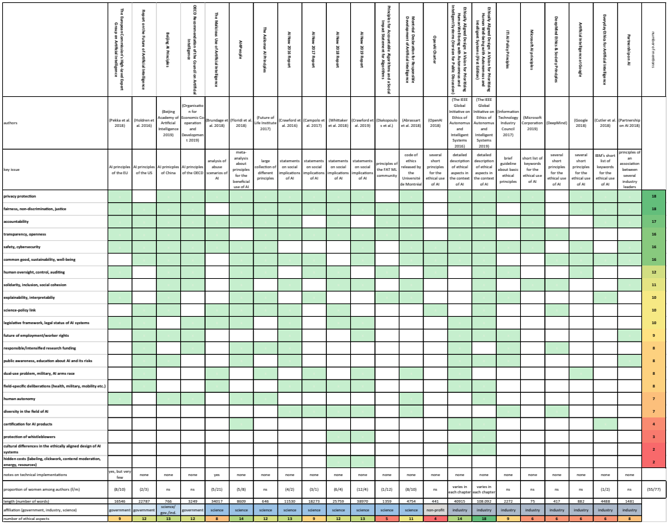
Abstract Current advances in research, development and application of artificial intelligence (AI) systems have yielded a far-reaching discourse on AI ethics. In consequence, a number of ethics guidelines have been released in recent years. These guidelines comprise normative principles and recommendations aimed to harness the “disruptive” potentials of new AI technologies. Designed as a semi-systematic evaluation, this paper analyzes and compares 22 guidelines, highlighting overlaps but also omissions. As a result, I give a detailed overview of the field of AI ethics. Finally, I also examine to what extent the respective ethical principles and values are implemented in the practice of research, development and application of AI systems—and how the effectiveness in the demands of AI ethics can be improved.
Verified 2026-11-25 · 3 references not checked yet
Overview
CoChat Summary
## TL;DR
This paper semi-systematically reviews 22 AI ethics guidelines, finding strong overlap on a few technicalizable topics but many important omissions. It argues that AI ethics is often ineffective in practice and should be supplemented by more concrete technical guidance and a shift toward virtue ethics.
## Key findings
- The paper analyzes and compares 22 AI ethics guidelines and finds that accountability, privacy, and fairness appear in about 80% of them, making them the closest thing to a common minimum standard.
- The author reports that guidelines from industrial contexts name on average 9.1 distinct ethical aspects, while science-based ethics codes average 10.8.
- Only two guidelines contain genuinely technical explanations, and these are described as very sparse; the most extensive technical commentary is in “The Malicious Use of AI”.
- The paper says a controlled study found the effectiveness of ethics guidelines or codes to be “almost zero”: among 63 software engineering students and 105 professional software developers, there was no statistically significant difference in responses between those who did and did not see the ACM code of ethics.
- The paper highlights major omissions across guidelines, including political abuse of AI, hidden social and ecological costs, lack of diversity, robot ethics, trolley problems, and public-private partnerships/industry-funded research.
## Methods
- Semi-systematic literature analysis of AI ethics guidelines, with a deliberate focus on comprehensive guideline documents rather than all AI-ethics-related writings.
- The final sample consisted of 22 major ethical guidelines, identified through searches in Google, Google Scholar, Web of Science, ACM Digital Library, arXiv, and SSRN, plus manual reference screening and the Algorithm Watch AI Ethics Guidelines Global Inventory.
- The paper compares which ethical issues are present or absent in the guidelines, and then relates those principles to practice using cited empirical studies and examples from AI development and deployment.
## Limitations
- The author states the sample is biased toward western/northern documents and excludes guidelines not written in English.
- The selection deliberately excludes guidelines focused on robot ethics, big data, algorithms, or robotics, so omissions in those areas are partly a result of the sampling method.
- The paper notes that its list of omissions is non-exhaustive.
- Evident from the text: the paper is primarily a theoretical/semi-systematic overview, not a direct empirical test of all AI ethics guideline implementations.
Model-written summary. Check it against the paper before relying on it.
Integrity signals
Registry
Cites
Statistics
Figures
Verification
Claims the paper makes
5 Valid · 3 Not valid · 62 Not checked · 64 Own results and interpretations
The cited sources support only part of this claim — read each source’s verdict below.
In the paper
“So far, some papers have been published on the subject of teaching ethics to data scientists (Garzcarek and Steuer 2019; Burton etal. 2017; Goldsmith and Burton 2017; Johnson 2017) but by and large very little to nothing has been written about the tangible implementation of ethical goals and values.”
What the sources say
- Supportedcites Garzcarek and Steuer 2019 matched to “Approaching Ethical Guidelines for Data Scientists” (2019) source
The citation is attached to the statement that papers have discussed teaching ethics to data scientists, not to the citing authors’ subsequent assessment of writing on tangible implementation. Section 5.2 (p. 14) explicitly argues that ethics should be part of the data-science curriculum. (LLM, conf=0.90)
- Not matchedcites Burton etal. 2017
An author–year citation the paper’s reference list doesn’t settle. We don’t search these by name.
- Supportedcites Goldsmith and Burton 2017 matched to “Why Teaching Ethics to AI Practitioners Is Important” (2017) source
The citation appears in a list of papers about teaching ethics to data scientists, not as support for the sentence’s later claim about how little has been written on implementation. The Introduction (p. 1) presents the paper as an argument for ethical training for AI students and practitioners, and the Conclusions (p. 4) advocate teaching ethics in AI classes. (LLM, conf=0.91)
plain- Asserted: passes — The authors put it forward as true.
- Checkable: passes — It can be checked against evidence.
- Load-bearing: passes — The paper’s conclusions depend on it.
- Based: passes — The paper gives a reason why it holds.
- Supported
The cited sources support only part of this claim — read each source’s verdict below.
In the paper
“Leading, of course, is the military use of AI in cyber warfare or regarding weaponized unmanned vehicles or drones (Ernest and Carroll 2016; Anderson and Waxman 2013).”
What the sources say
- Partly supportedcites Ernest and Carroll 2016 matched to “Genetic Fuzzy based Artificial Intelligence for Unmanned Combat Aerial Vehicle Control in Simulated Air Combat Missions” (2016) sourceExperimental — accuracy not yet measured
Our copy does support the drone half of the claim as an identification citation: the paper is squarely about applying AI to a weaponized unmanned vehicle (Introduction: UCAV research, 'this white paper will primarily focus on the increase in capabilities of real-time decision making'; Problem Statement: ALPHA controlling aircraft motion and firing in AFSIM). But it does not support the claim's core assertion that military AI is a leading area of unwanted side effects and malevolent use — the nearest passage (Introduction, 'There are a number of obstacles to a system being an effective AI within this context') frames the issues as engineering and verification difficulties (adversaries trying to 'fool and exploit the system', V&V, safety specifications, crashes/sensor failures), and the Results and Conclusions treat autonomy as 'a revolutionary leap in capability of airpower' and a way of 'reducing risk to our pilots'. Cyber appears only once, as an unrelated civilian/defence application domain of the GFT method ('Examples include robotic surgery, design automation, and cyber security'), not as cyber warfare, so that element of the claim is not from this source. (LLM, conf=0.72)
- Not checked — no full text of the sourcecites Anderson and Waxman 2013 matched to “Law and Ethics for Autonomous Weapon Systems: Why a Ban Won't Work and How the Laws of War Can” (2013) source
boostedstates an association- Asserted: passes — The authors put it forward as true.
- Checkable: passes — It can be checked against evidence.
- Load-bearing: unclear — It is unclear whether the paper’s conclusions depend on it.
- Based: passes — The paper gives a reason why it holds.
- Partly supported
The cited sources support only part of this claim — read each source’s verdict below.
In the paper
“In the light of these two approaches, the traditional type of AI ethics can be assigned to the deontological concept (Mittelstadt 2019).”
What the sources say
- Partly supportedcites Mittelstadt 2019 matched to “Principles alone cannot guarantee ethical AI” (2019) sourceExperimental — accuracy not yet measured
The paper describes a prominent, principle-based approach to AI ethics and says AI ethics initiatives have converged around principles resembling those of medical ethics (opening section; page unavailable). It does not classify that approach as deontological, so the claimed assignment to the deontological concept is not supported by our copy. (LLM, conf=0.78)
plainstates an association- Asserted: passes — The authors put it forward as true.
- Checkable: passes — It can be checked against evidence.
- Load-bearing: passes — The paper’s conclusions depend on it.
- Based: passes — The paper gives a reason why it holds.
- Partly supported
A result the paper reports from its own data — it cites no other source for it, so there is none to check. The quote shows it is in the paper.
In the paper
“My analysis of the distribution of female and male authors of the guidelines, as far as authors were indicated in the documents, showed that the proportion of women was 41.7%.”
plain- Asserted: passes — The authors put it forward as true.
- Checkable: passes — It can be checked against evidence.
- Load-bearing: passes — The paper’s conclusions depend on it.
- Based: passes — The paper gives a reason why it holds.
A result the paper reports from its own data — it cites no other source for it, so there is none to check. The quote shows it is in the paper.
In the paper
“Finally, yet importantly, it is noteworthy that almost all guidelines suggest that technical solutions exist for many of the problems described.”
hedged- Asserted: passes — The authors put it forward as true.
- Checkable: passes — It can be checked against evidence.
- Load-bearing: unclear — It is unclear whether the paper’s conclusions depend on it.
- Based: passes — The paper gives a reason why it holds.
54 more claims
Create a free account to see all 134 claims and to verify the 1 reference still open.
- Probably not a substantial claim. 59
- It may state two separate claims as one. 29
Claims other papers make about this one
Each is checked against this paper’s own text: does it say what the citing paper says it does?
The source backs part of the claim, not all of it — or backs it for a different population, condition or comparison.
In the citing paper
“Ethical concerns arising from the design and deployment of AI technology have motivated a number of initiatives [47]—such as the Ethical Guidelines for Trustworthy AI by the European Commission expert group on AI, and Microsoft’s FATE: Fairness, Accountability, Transparency, and Ethics in AI—addressing issues including mitigating bias and discrimination in AI systems and fairness in the use of AI”
From Future directions for chatbot research: An interdisciplinary research agenda (2021) · cites this paper as [47]
Experimental — accuracy not yet measuredThe source backs part of the claim, not all of it — or backs it for a different population, condition or comparison.
In the citing paper
“Additional recommendations on AI ethics teaching content include “explainability,” “liability,” and “accountability,” which are also considered important by available guidelines [30,40].”
From Proposing a Principle-Based Approach for Teaching AI Ethics in Medical Education (2024) · cites this paper as [30]
Experimental — accuracy not yet measuredThe source backs part of the claim, not all of it — or backs it for a different population, condition or comparison.
In the citing paper
“This emphasis is also echoed by existing guidelines and frameworks regarding AI ethics [30].”
From Proposing a Principle-Based Approach for Teaching AI Ethics in Medical Education (2024) · cites this paper as [30]
Experimental — accuracy not yet measuredThe source backs part of the claim, not all of it — or backs it for a different population, condition or comparison.
In the citing paper
“En dépit de nombreuses chartes, discussions et nombreux documents sur les bonnes pratiques éthiques, l’espoir est faible que l’IA puisse éventuellement se montrer généralement conforme (Hagendorff, 2020) :”
From Gouvernance algorithmique, intelligence artificielle, enjeux, éthique : esquisse d’une analyse critique (2021) · cites this paper as Hagendorff, 2020
Experimental — accuracy not yet measuredThe source backs part of the claim, not all of it — or backs it for a different population, condition or comparison.
In the citing paper
“The experience of mixed emotional responses and ethnical navigation was supported by literature (Hagendorff, 2020;Mamo et al., 2024;Mittelstadt, 2019).”
From Into the Unknown: AI Adoption and Job Satisfaction of Christian Faculty (2026) · cites this paper as Hagendorff, 2020
Experimental — accuracy not yet measured
13 more claims about this paper
Create a free account to see every claim other papers make about this one.
Citations
Cites
The spread of true and false news online
Vosoughi, S., Roy, D., & Aral, S. (2018) · Science · doi:10.1126/science.aap9559 · Cited by 8,847
The future of employment: How susceptible are jobs to computerisation?
Frey, C. B., & Osborne, M. A. (2017) · Technological Forecasting and Social Change · doi:10.1016/j.techfore.2016.08.019 · Cited by 8,727
The global landscape of AI ethics guidelines
Jobin, A., Ienca, M., & Vayena, E. (2019) · Nature Machine Intelligence · doi:10.1038/s42256-019-0088-2 · Cited by 6,220
Floridi, L., Cowls, J., Beltrametti, M., Chatila, R., Chazerand, P., Dignum, V., Luetge, C., Madelin, R., Pagallo, U., Rossi, F., et al. (2018) · Minds and Machines · doi:10.1007/s11023-018-9482-5 · Cited by 4,774 · cited 2×
“They include the adoption of legal framework conditions, the establishment of mechanisms for an independent auditing of technologies, the establishment of institutions for complaints, which also compensate for harms caused by AI systems, and the expansion of university curricula in particular through content from ethi…”
Background(2011) · Cited by 4,430
Lazer, D. M. J., Baum, M. A., Benkler, Y., Berinsky, A. J., Greenhill, K. M., Menczer, F., Metzger, M. J., Nyhan, B., Pennycook, G., Rothschild, D., et al. (2018) · Science · doi:10.1126/science.aao2998 · Cited by 4,160
The Black Box Society: The Secret Algorithms That Control Money and Information
Pasquale, F. (2015) · doi:10.4159/harvard.9780674736061 · Cited by 3,796
Experimental evidence of massive-scale emotional contagion through social networks
Kramer, A. D. I., Guillory, J. E., & Hancock, J. T. (2014) · Proceedings of the National Academy of Sciences · doi:10.1073/pnas.1320040111 · Cited by 3,687
(2018) · Cited by 3,510
Private traits and attributes are predictable from digital records of human behavior
Kosinski, M., Stillwell, D., & Graepel, T. (2013) · Proceedings of the National Academy of Sciences · doi:10.1073/pnas.1218772110 · Cited by 2,829
Research works printed but not linked: 24
- Abrassart, C., Bengio, Y., Chicoisne, G., de Marcellis-Warin, N., Dilhac, M.-A., Gambs, S., Gautrais, V., etal. (2018). Montréal declaration for responsible development of artificial intelligence (pp. 1-21).
- Asimov, I. (2004). I, Robot . New York: Random House LLC.
- Bakewell, J. D., Clement-Jones, T. F., Giddens, A., Grender, R. M., Hollick, C. R., Holmes, C., Levene, P. K. etal. (2018). AI in the UK: Ready, willing and able?. Select committee on artificial intelligence (pp. 1-183).
- Baron, B., Musolesi, M. (2017). Interpretable machine learning for privacy-preserving pervasive systems. arXiv (pp. 1-10).
- Bourdieu, P. (1984). Distinction: A social critique of the judgement of taste . Cambridge: Harvard University Press.
- Brahnam, S. (2006). Gendered bots and bot abuse. In Antonella de Angeli, Sheryl Brahnam, Peter Wallis, & Peter Dix (Eds.), Misuse and abuse of interactive technologies (pp. 1-4). Montreal: ACM.
- Derrida, J. (1997). Of grammatology . Baltimore: Johns Hopkins Univ. Press.
- Gebru, T., Morgenstern, J., Vecchione, B., Vaughan, J. W., Wallach, H., Daumeé, III, H., Crawford, K. (2018). Datasheets for datasets. arXiv (pp. 1-17).
- Google. (2019). Perspectives on issues in AI governance (pp. 1-34). Retrieved February 11, 2019. https :// ai.googl e/stati c/docum ents/persp ectiv es-on-issue s-in-ai-gover nance .pdf.
- Helbing, D. (Ed.). (2019). Towards digital enlightment: Essays on the darf and light sides of the digital revolution. Cham: Springer.
- Johnson, D. G. (2017). Can engineering ethics be taught? The Bridge, 47 (1), 59-64.
- Luhmann, N. (1988). Die Wirtschaft der Gesellschaft . Frankfurt A.M: Suhrkamp.
- Morley, J., Floridi, L., Kinsey, L., Elhalal, A. (2019). From what to how. An overview of AI ethics tools, methods and research to translate principles into practices. arXiv (pp. 1-21).
- Organisation for Economic Co-operation and Development. (2019). Recommendation of the Council on Artificial Intelligence (pp. 1-12). Retrieved June 18, 2019. https ://legal instr ument s.oecd.org/en/ instr ument s/OECD-LEGAL -0449.
- Pekka, A.-P., Bauer, W., Bergmann, U., Bieliková, M., Bonefeld-Dahl, C., Bonnet, Y., Bouarfa, L. etal. (2018). The European Commission's high-level expert group on artificial intelligence: Ethics guidelines for trustworthy ai . Working Document for stakeholders' consultation. Brussels (pp. 1-37).
- Pistono, F., Yampolskiy, R. (2016). Unethical research: How to create a malevolent artificial intelligence. arXiv (pp. 1-6).
- Podgaiska, I., Shklovski, I. Nordic engineers’ stand on artificial intelligence and ethics: Policy recommendations and guidelines (pp. 1–40).
- Rawls, J. (1975). Eine Theorie Der Gerechtigkeit . Frankfurt am Main: Suhrkamp.
- Shoham, Y., Perrault, R., Brynjolfsson, E., Clark, J., Manyika, J., Niebles, J. C., Lyons, T., Etchemendy, J., Grosz, B., Bauer, Z. (2018). The AI index 2018 annual report. Stanford, Kalifornien (pp. 1-94). <!-- image --> 1 3
- Sitawarin, C., Bhagoji, A. N., Mosenia, A., Chiang, M., Mittal, P. (2018). DARTS: Deceiving autonomous cars with toxic signs. arXiv (pp. 1-27).
- Tegmark, A. (2017). Life 3.0: Being human in the age of artificial intelligence . New York: Alfred A. Knopf.
- The IEEE Global Initiative on Ethics of Autonomous and Intelligent Systems. (2016). Ethically aligned design: A vision for prioritizing human well-being with artificial intelligence and autonomous systems (pp. 1-138).
- Whittaker, M., Crawford, K., Dobbe, R., Fried, G., Kaziunas, E., Mathur, V., West, S. M., Richardson, R., Schultz, J., Schwartz, O. (2018). AI now report 2018 (pp. 1-62).
- Zeng, Y., Lu, E., Huangfu, C. (2018). Linking artificial intelligence principles. arXiv (pp. 1-4). Publisher's Note Springer Nature remains neutral with regard to jurisdictional claims in published maps and institutional affiliations. <!-- image --> 1 3
Cited by
Items 101–200 of 1,821
AI Ethics, Ethics Washing, and the Need to Politicize Data Ethics
van Maanen, G. (2022) · Digital Society · doi:10.1007/s44206-022-00013-3 · Cited by 121
“Popularity-wise, the most dominant AI ethics approach in academia appears to be ‘deontology,’ wherein answers to the ethical question are put in the form of lists of principles, values, and maxims (Hagendorff, 2020, p. 112).”
BackgroundEmployee Perceptions of the Effective Adoption of AI Principles
Kelley, S. (2022) · Journal of Business Ethics · doi:10.1007/s10551-022-05051-y · Cited by 118
“…intelligence principles (AIPs) are defined herein as a formal document developed (Kaptein & Schwartz, 2008) or selected by an organization that states normative declarations (Fjeld et al., 2020; Hagendorff, 2020) about how artificial intelligence ought to be used by its managers and employees.”
BackgroundMökander, J., Axente, M., Casolari, F., & Floridi, L. (2022) · PhilPapers (PhilPapers Foundation) · Cited by 115
Ethics for the majority world: AI and the question of violence at scale
Ricaurte, P. (2022) · Media, Culture & Society · doi:10.1177/01634437221099612 · Cited by 116
“However, ethical frameworks primarily developed in Western societies (Hagendorff, 2020; Jobin et al., 2019) obscure the unequal impacts of AI on the rest of the world.”
BackgroundDankwa-Mullan, I., Scheufele, E. L., Matheny, M. E., Quintana, Y., Chapman, W. W., Jackson, G., & South, B. R. (2021) · Journal of Health Care for the Poor and Underserved · doi:10.1353/hpu.2021.0065 · Cited by 108
Galetsi, P., Katsaliaki, K., & Kumar, S. (2022) · Technovation · doi:10.1016/j.technovation.2022.102598 · Cited by 150
Is AI recruiting (un) ethical? A human rights perspective on the use of AI for hiring
Hunkenschroer, A. L., & Kriebitz, A. (2023) · AI and Ethics · doi:10.1007/s43681-022-00166-4 · Cited by 111
“, 70, 71] and in various frameworks [14, 17], its exact meaning remains disputed.”
BackgroundWhat about investors? ESG analyses as tools for ethics-based AI auditing
Minkkinen, M., Niukkanen, A., & Mäntymäki, M. (2024) · AI & SOCIETY · doi:10.1007/s00146-022-01415-0 · Cited by 109
“At the time of writing, there are at least 173 AI ethics guidelines, 1 as well as several published meta-level overviews of ethical AI principles (Clarke 2019; Jobin et al. 2019; Schiff et al. 2020; Hagendorff 2020).”
Koshiyama, A., Kazim, E., Treleaven, P., Rai, P., Szpruch, L., Pavey, G., Ahamat, G., Leutner, F., Goebel, R., Knight, A., et al. (2024) · Royal Society Open Science · doi:10.1098/rsos.230859 · Cited by 110
Responsibility beyond design: Physicians’ requirements for ethical medical AI
Sand, M., Durán, J. M., & Jongsma, K. R. (2021) · Bioethics · doi:10.1111/bioe.12887 · Cited by 133
Ethics of AI in Radiology: A Review of Ethical and Societal Implications
Goisauf, M., & Cano Abadía, M. (2022) · Frontiers in Big Data · doi:10.3389/fdata.2022.850383 · Cited by 108
“What is often lacking is a consideration of the wider contexts and the comprehensive relationship networks in which technical systems are embedded” (Hagendorff, 2020, 103).”
BackgroundThe Global Governance of Artificial Intelligence: Next Steps for Empirical and Normative Research
Tallberg, J., Erman, E., Furendal, M., Geith, J., Klamberg, M., & Lundgren, M. (2023) · International Studies Review · doi:10.1093/isr/viad040 · Cited by 208
Perils and opportunities in using large language models in psychological research
Abdurahman, S., Atari, M., Karimi-Malekabadi, F., Xue, M. J., Trager, J., Park, P. S., Golazizian, P., Omrani, A., & Dehghani, M. (2024) · PNAS Nexus · doi:10.1093/pnasnexus/pgae245 · Cited by 111
Qadhi, S. M., Alduais, A., Chaaban, Y., & Khraisheh, M. (2024) · Information · doi:10.3390/info15060325 · Cited by 106
Inteligência Artificial e Aprendizado de Máquina: estado atual e tendências
Ludermir, T. B. (2021) · Estudos Avançados · doi:10.1590/s0103-4014.2021.35101.007 · Cited by 348
“O Institute of Electrical and Electronic Engineers (IEEE), a Association for Computing Machinery (ACM), a Comunidade Comum Europeia, entre outros, já têm diretrizes para um uso responsável da IA (Hagendorff, 2020).”
BackgroundChoung, H., David, P., & Ross, A. A. (2022) · AI & Society · doi:10.1007/s00146-022-01473-4 · Cited by 164
“To develop trustworthy AI systems, various organizations and even governments have proposed ethics guidelines for AI (Jobin et al. 2019; Hagendorff 2020).”
BackgroundMethodInfluentialA principlist framework for cybersecurity ethics
Formosa, P., Wilson, M., & Richards, D. (2021) · Computers & Security · doi:10.1016/j.cose.2021.102382 · Cited by 105
“…2020] ); avoiding bias (e.g. ensuring cybersecurity technology, such as facial recognition in security cameras, is not biased against minorities [Hagendorff, 2020] ); providing accessibility and usability (e.g. people need to be able to access and use information and systems, and some…”
BackgroundResponsible AI Systems: Who are the Stakeholders?
Deshpande, A., & Sharp, H. (2022) · Proceedings of the 2022 AAAI/ACM Conference on AI, Ethics, and Society · doi:10.1145/3514094.3534187 · Cited by 103
“AI system builders have traditionally not been educated in ethical issues and may also lack the right opportunities to raise ethical concerns due to organisational structures [32].”
BackgroundInfluentialThe Ten Commandments of Ethical Medical AI
Muller, H., Mayrhofer, M. T., Van Veen, E.-B., & Holzinger, A. (2021) · Computer · doi:10.1109/mc.2021.3074263 · Cited by 102
Kim, K., Kwon, K., Ottenbreit-Leftwich, A. T., Bae, H., & Glazewski, K. D. (2023) · Education and Information Technologies · doi:10.1007/s10639-023-11600-3 · Cited by 140
“Since AI ethics are being emphasized recently in educational contexts, most of them are not familiar with ethical considerations like bias, privacy, transparency, and fairness (Borenstein & How-ard, 2021; Hagendorff, 2020) while creating or using AI technologies.”
BackgroundYu, L., & Yu, Z. (2023) · Frontiers in Psychology · doi:10.3389/fpsyg.2023.1061778 · Cited by 101
“, non-discrimination (Hagendorff, 2020) and accountability (Ntoutsi et al.”
Wang, P. Q. (2024) · Current Issues in Tourism · doi:10.1080/13683500.2023.2300030 · Cited by 155
“Jobin et al. (2019) and Hagendorff (2020) analysed and challenged the current AI ethics guidelines from various perspectives, including transparency, justice, non-maleficence and responsibility.”
Challenges and Strategies in Cross-Cultural NLP
Hershcovich, D., Frank, S., Lent, H., de Lhoneux, M., Abdou, M., Brandl, S., Bugliarello, E., Cabello Piqueras, L., Chalkidis, I., Cui, R., et al. (2022) · Proceedings of the 60th Annual Meeting of the Association for Computational Linguistics (Volume 1: Long Papers) · doi:10.18653/v1/2022.acl-long.482 · Cited by 99
Deploying artificial intelligence in services to AID vulnerable consumers
Hermann, E., Williams, G. Y., & Puntoni, S. (2023) · Journal of the Academy of Marketing Science · doi:10.1007/s11747-023-00986-8 · Cited by 137
“…Madan et al., 2023; Mende & Scott, 2021) and AI for social good and sustainable development (e.g., Cowls et al., 2021; Du & Sen, 2023; Floridi et al., 2018, 2020; Vinuesa et al., 2020), the current paper aims to explore the role of AI in enhancing services (and outcomes) for vulnerable consumers.”
InfluentialRoberts, J., Baker, M., & Andrew, J. (2024) · Critical Perspectives on Accounting · doi:10.1016/j.cpa.2024.102722 · Cited by 132
Harnessing the power of AI in qualitative research: Exploring, using and redesigning ChatGPT
Zhang, H., Wu, C., Xie, J., Lyu, Y., Cai, J., & Carroll, J. M. (2025) · Computers in Human Behavior Artificial Humans · doi:10.1016/j.chbah.2025.100144 · Cited by 410
Bleher, H., & Braun, M. (2023) · Science and Engineering Ethics · doi:10.1007/s11948-023-00443-3 · Cited by 139
“Several studies, in particular those by Jobin et al. (2019) and Hagendorff (2020), show that in different reports and governance approaches as well as in different ethical papers, the principles considered to be central vary greatly.”
ResultAchieving a ‘Good AI Society’: Comparing the Aims and Progress of the EU and the US
Roberts, H., Cowls, J., Hine, E., Mazzi, F., Tsamados, A., Taddeo, M., & Floridi, L. (2021) · Science and Engineering Ethics · doi:10.1007/s11948-021-00340-7 · Cited by 103
“Without government regulatory oversight, there is a significant risk of harm through ethics washing or shopping, with the effectiveness of private sector principles questionable (Hagendorff, 2020).”
BackgroundEthical Questions Raised by AI-Supported Mentoring in Higher Education
Köbis, L., & Mehner, C. (2021) · Frontiers in Artificial Intelligence · doi:10.3389/frai.2021.624050 · Cited by 91
“The current boom of AI is accompanied by new institutes, initiatives, university courses, books, and papers which deal with the topics of tech ethics and AI ethics (Hagendorff, 2020).”
BackgroundExplaining the Principles to Practices Gap in AI
Schiff, D., Rakova, B., Ayesh, A., Fanti, A., & Lennon, M. (2021) · IEEE Technology and Society Magazine · doi:10.1109/mts.2021.3056286 · Cited by 91
“For example, Hagendorff [14] argues that when companies are driven by an economic logic, “engineers and developers are neither systematically educated about ethical issues, nor are they empowered, for example by organizational structures, to raise ethical concerns.””
BackgroundThe role of empathy for artificial intelligence accountability
Srinivasan, R., & San Miguel González, B. (2022) · Journal of Responsible Technology · doi:10.1016/j.jrt.2021.100021 · Cited by 87
Jedličková, A. (2024) · AI & Society · doi:10.1007/s00146-024-02040-9 · Cited by 159
“Hagendorff (2020) conducted a comprehensive analysis of 22 major AI ethics guidelines, highlighting both commonalities and gaps.”
The Ethics of AI Ethics. A Constructive Critique
Heilinger, J. (2022) · Philosophy & Technology · doi:10.1007/s13347-022-00557-9 · Cited by 145
Ethical considerations in emotion recognition technologies: a review of the literature
Katirai, A. (2023) · AI and Ethics · doi:10.1007/s43681-023-00307-3 · Cited by 126
Proposing a Principle-Based Approach for Teaching AI Ethics in Medical Education
Weidener, L., & Fischer, M. (2024) · JMIR Medical Education · doi:10.2196/55368 · Cited by 90
“…are considered fundamental to medical ethics, while most guidelines and frameworks on AI ethics do not specifically focus on ethical considerations regarding the development, implementation, or use of AI in medicine; the emphasis on these principles further reinforces their importance [30,35].”
BackgroundMethodInfluentialLanguage-based game theory in the age of artificial intelligence
Capraro, V., Paolo, R. D., Perc, M., & Pizziol, V. (2024) · Journal of the Royal Society Interface · doi:10.1098/rsif.2023.0720 · Cited by 90
Possible harms of Artificial Intelligence and the EU AI Act: fundamental rights and risk
Kusche, I. (2024) · Journal of Risk Research · doi:10.1080/13669877.2024.2350720 · Cited by 87
Human-centricity in AI governance: A systemic approach
Sigfrids, A., Leikas, J., Salo-Pöntinen, H., & Koskimies, E. (2023) · Frontiers in Artificial Intelligence · doi:10.3389/frai.2023.976887 · Cited by 155
“This is however a more general concern for ethical and responsible AI governance since, despite guidelines and recommendations, the ethical and responsibility principles that could contribute to a socially sustainable, human-centric AI, have not been successfully implemented in practice (Dignum, 2019; Hagendorff, 2020…”
BackgroundArtificial intelligence ethics has a black box problem
Bélisle-Pipon, J.-C., Monteferrante, E., Roy, M.-C., & Couture, V. (2023) · AI & SOCIETY · doi:10.1007/s00146-021-01380-0 · Cited by 85
“As such, Jobin et al. (2019), the Berkman Klein Center for Internet and Society (BKC) (Fjeld et al. 2020), Ryan and Stahl (2020), Zeng et al. (2018), and Hagendorff (2020) have paved the way for the mapping of the main axiological land‑ marks at the heart of these normative declarations.”
BackgroundMethodInfluentialIbáñez, J. C., & Olmeda, M. V. (2021) · AI & Society · doi:10.1007/s00146-021-01267-0 · Cited by 125
“Without legal enforceability, ethical guidelines per se do not tend to change professional behaviour in technical communities (Hagendorff 2020; Mittelstadt 2019).”
BackgroundInfluentialBerman, A., Licht, K. D. F., & Carlsson, V. (2024) · Technology in Society · doi:10.1016/j.techsoc.2024.102471 · Cited by 172
Applying AI to digital archives: trust, collaboration and shared professional ethics
Jaillant, L., & Rees, A. (2023) · Digital Scholarship in the Humanities · doi:10.1093/llc/fqac073 · Cited by 83
Deepfakes, Phrenology, Surveillance, and More! A Taxonomy of AI Privacy Risks
Lee, H.-P. (., Yang, Y.-J., Von Davier, T. S., Forlizzi, J., & Das, S. (2024) · Proceedings of the CHI Conference on Human Factors in Computing Systems · doi:10.1145/3613904.3642116 · Cited by 82
“In recent years, Human-computer Interaction (HCI) researchers and AI practitioners have created a body of work to provide guidelines for HAI (see Hagendorff [46] for an extensive evaluation).”
AI Ethics – Too Principled to Fail?
Mittelstadt, B. (2019) · SSRN Electronic Journal · doi:10.2139/ssrn.3391293 · Cited by 82
“5 AI developers do not commit to ‘public service’, which in other professions requires practitioners to uphold public interests in the face of competing business or managerial interests.”
Responsible AI in Africa: Challenges and Opportunities
(2023) · Social and Cultural Studies of Robots and AI · doi:10.1007/978-3-031-08215-3 · Cited by 82
Cultivating trustworthy artificial intelligence in digital government
Harrison, T. M., & Luna-Reyes, L. F. (2022) · Social Science Computer Review · doi:10.1177/0894439320980122 · Cited by 81
Governance of Responsible AI: From Ethical Guidelines to Cooperative Policies
Gianni, R., Lehtinen, S., & Nieminen, M. (2022) · Frontiers in Computer Science · doi:10.3389/fcomp.2022.873437 · Cited by 133
Ethics in the Age of AI: An Analysis of AI Practitioners’ Awareness and Challenges
Pant, A., Hoda, R., Spiegler, S. V., Tantithamthavorn, C. K., & Turhan, B. (2024) · ACM Transactions on Software Engineering and Methodology · doi:10.1145/3635715 · Cited by 146
“AI technology is becoming increasingly pervasive across industries and contexts, making AI ethics more important than ever [13, 29].”
BackgroundKleizen, B., Van Dooren, W., Verhoest, K., & Tan, E. (2023) · Government Information Quarterly · doi:10.1016/j.giq.2023.101834 · Cited by 80
Telkamp, J. B., & Anderson, M. H. (2022) · Journal of Business Ethics · doi:10.1007/s10551-022-05057-6 · Cited by 101
“Applying the principles approach to AI ethics, as currently conceptualized, is problematic due to a lack of both detail and context-specific guidelines, making it less likely organizations will follow these guidelines (Hagendorff, 2020).”
MethodLin, J.-S., & Wu, L. (2022) · Computers in Human Behavior · doi:10.1016/j.chb.2022.107488 · Cited by 100
Liu, W., Zhao, F., Shankar, A., Maple, C. R., Peter, J. D., Kim, B., Słowik, A., Parameshachari, B. D., & Lv, J. (2023) · IEEE Journal of Biomedical and Health Informatics · doi:10.1109/jbhi.2023.3336721 · Cited by 93
“All walks of life have explored AI ethical principles, frameworks, and governance mechanisms [2].”
Investing in AI for social good: an analysis of European national strategies
Foffano, F., Scantamburlo, T., & Cortés, A. (2023) · AI & SOCIETY · doi:10.1007/s00146-022-01445-8 · Cited by 77
“Examples include studies mapping keywords of different guidelines (Zeng et al. 2018) and broad scope reviews (Bradley et al. 2020; Jobin et al. 2019; Hagendorff 2020).”
BackgroundChallenges of responsible AI in practice: scoping review and recommended actions
Sadek, M., Kallina, E., Bohné, T., Mougenot, C., Calvo, R. A., & Cave, S. (2025) · AI & SOCIETY · doi:10.1007/s00146-024-01880-9 · Cited by 79
“It is also challenging to evaluate the overall impact of using RAI guidelines (Hagendorff 2020); One of the most common approaches of transforming requirements into checklists has been deemed as insufficient for deciding between public good and commercial interest (Zicari et al. 2021).”
Wang, Z., Chai, C.-S., Li, J., & Lee, V. W. Y. (2025) · International Journal of Educational Technology in Higher Education · doi:10.1186/s41239-025-00519-z · Cited by 78
“…of AI ethical reflection, underscoring AI ethical awareness as the ability to discern ethical issues in AI applications and understand how various stakeholders, including individuals, corporations, and governments, should responsibly manage AI (e.g., Hagendorff, 2020; Jobin et al., 2019).”
AI ethics: the case for including animals
Singer, P., & Tse, Y.-F. (2022) · AI and Ethics · doi:10.1007/s43681-022-00187-z · Cited by 71
Conceptualising fairness: three pillars for medical algorithms and health equity
Sikstrom, L., Maslej, M. M., Hui, K., Findlay, Z., Buchman, D. Z., & Hill, S. L. (2022) · BMJ Health & Care Informatics · doi:10.1136/bmjhci-2021-100459 · Cited by 76
“15 However, it remains unclear how exactly current approaches to fairness map onto established ethical frameworks.”
Connecting ethics and epistemology of AI
Russo, F., Schliesser, E., & Wagemans, J. (2024) · AI & SOCIETY · doi:10.1007/s00146-022-01617-6 · Cited by 77
“Hagendorff (2020), for instance, persuasively argues that, more often than not, ethical guidelines do not have a real impact.”
Porlezza, C. (2023) · Communications · doi:10.1515/commun-2022-0091 · Cited by 132
Molefi, R. R., Ayanwale, M. A., Kurata, L., & Chere-Masopha, J. (2024) · Computers and Education Open · doi:10.1016/j.caeo.2024.100191 · Cited by 76
Ortega-Bolaños, R., Bernal-Salcedo, J., Germán Ortiz, M., Galeano Sarmiento, J., Ruz, G. A., & Tabares-Soto, R. (2024) · Artificial Intelligence Review · doi:10.1007/s10462-024-10740-3 · Cited by 76
“Various technical resources have recently been developed to audit biases in models and datasets (Hagendorff 2020; Lee and Singh 2021; Mehrabi et al. 2021).”
InfluentialOctagon Measurement: Public Attitudes toward AI Ethics
Ikkatai, Y., Hartwig, T., Takanashi, N., & Yokoyama, H. M. (2022) · International Journal of Human–Computer Interaction · doi:10.1080/10447318.2021.2009669 · Cited by 75
“Hagendorff (2020) analyzed 22 of these guidelines and reported that three themes (“accountability,” “privacy protection,” and “fairness, non-discrimination, justice”) were mentioned in over 80% of the guidelines.”
BackgroundThe European AI Act and How It Matters for Research into AI in Media and Journalism
Helberger, N., & Diakopoulos, N. A. (2022) · Digital Journalism · doi:10.1080/21670811.2022.2082505 · Cited by 123
“Seeing the increasingly confusing number of all kinds of ethical guidelines and standards (Hagendorff 2020), the act could contribute to a welcome process of standard setting.”
Lukkien, D., Nap, H. H., Buimer, H. P., Peine, A., Boon, W., Ket, J. C. F., Minkman, M. M. N., & Moors, E. H. M. (2021) · The Gerontologist · doi:10.1093/geront/gnab180 · Cited by 107
“This could be problematic because high-level principles leave much room for interpretation as to how they can be practically applied in specific contexts of use such as LTC (Floridi, 2019; Hagendorff, 2020; Jobin et al., 2019).”
BackgroundInfluentialUse of Artificial Intelligence in Terms of Open Innovation Process and Management
Kuzior, A., Sira, M., & Brożek, P. (2023) · Sustainability · doi:10.3390/su15097205 · Cited by 125
Huynh, M.-T., Nippa, M., & Aichner, T. (2023) · Technological Forecasting and Social Change · doi:10.1016/j.techfore.2023.122884 · Cited by 124
Ethical Challenges Associated with the Use of Artificial Intelligence in University Education
Marín, Y. R., Caro, O. C., Rituay, A. M. C., Llanos, K. A. G., Perez, D. T., Bardales, E. S., Tuesta, J. N. A., & Santos, R. C. (2025) · Journal of Academic Ethics · doi:10.1007/s10805-025-09660-w · Cited by 186
“Hagendorff (2020) reinforces this criticism by pointing out that many ethical frameworks are excessively abstract and lack effective mechanisms for their practical application, particularly in environments with limited regulatory capacities or hierarchical institutional cultures.”
Ulnicane, I., Eke, D. O., Knight, W., Ogoh, G., & Stahl, B. C. (2021) · Interdisciplinary Science Reviews · doi:10.1080/03080188.2020.1840220 · Cited by 70
“For example, Thilo Hagendor ff (2020) points out that the focus of companies on ethics, which lacks mechanisms to enforce its normative claims, discourages e ff orts to create a binding legal framework.”
BackgroundThe poverty of ethical AI: impact sourcing and AI supply chains
Muldoon, J., Cant, C., Graham, M., & Ustek Spilda, F. (2025) · AI & SOCIETY · doi:10.1007/s00146-023-01824-9 · Cited by 88
“Although much research has focussed on ethical issues related to the outcomes of AI systems (Floridi 2019; Hagendorff 2020; Jobin et al. 2019), another key consideration is the ethics of how AI systems are produced.”
AI Applications and Regulation: Mapping the Regulatory Strata
Viljanen, M., & Parviainen, H. (2022) · Frontiers in Computer Science · doi:10.3389/fcomp.2021.779957 · Cited by 83
Proceduralizing control and discretion: Human oversight in artificial intelligence policy
Koulu, R. (2020) · Maastricht Journal of European and Comparative Law · doi:10.1177/1023263x20978649 · Cited by 72
AI ethics and systemic risks in finance
Svetlova, E. (2022) · AI and Ethics · doi:10.1007/s43681-021-00129-1 · Cited by 119
“As the recent reviews of the relevant academic literature [2] and surveys of ethical guidelines developed in various industries [1, 36, 37] demonstrate, AI ethics has been concerned with ethical principles that are primarily of a technical nature and relate to the activities of individual algorithms and users.”
BackgroundSchultz, M. D., & Seele, P. (2022) · AI and Ethics · doi:10.1007/s43681-022-00150-y · Cited by 98
“However, frequent scandals shed light on ethical issues, where AI and data are used for political surveillance, disinforma-tion, or manipulation [58, 67, 131].”
BackgroundArtificial intelligence and hybrid imaging: the best match for personalized medicine in oncology
Sollini, M., Bartoli, F., Marciano, A., Zanca, R., Slart, R. H. J. A., & Erba, P. A. (2020) · European Journal of Hybrid Imaging · doi:10.1186/s41824-020-00094-8 · Cited by 88
“Ethical issues, data protection, regulation, and privacy The majority of the ethical concerns related to healthcare applications of AI, are summarized into the “ fairness, accountability, and transparency (FAT) paradigm of AI ethics ” (Hagendorff 2020).”
BackgroundUnderstanding responsibility in Responsible AI. Dianoetic virtues and the hard problem of context
Constantinescu, M., Voinea, C., Uszkai, R., & Vică, C. (2021) · Ethics and Information Technology · doi:10.1007/s10676-021-09616-9 · Cited by 93
“…in AI ethics focused on providing ethical guidelines is mere “eth-ics washing” (Bietti, 2019; Voinea & Uszkai, 2020), nothing more than a PR move meant to discourage the creation of “a truly binding legal framework” (Hagendorff, 2020, p. 100), or an exercise in moral diplomacy (Vică et al., 2021).”
BackgroundMethodInfluentialAmugongo, L. M., Kriebitz, A., Boch, A., & Lütge, C. (2025) · AI and Ethics · doi:10.1007/s43681-023-00331-3 · Cited by 68
“However, there remain a few practical recommendations that developers can use throughout the development lifecycle [8].”
COVID-19, artificial intelligence, ethical challenges and policy implications
Anshari, M., Hamdan, M., Ahmad, N., Ali, E., & Haidi, H. (2023) · AI & SOCIETY · doi:10.1007/s00146-022-01471-6 · Cited by 67
“Given the eagerness of companies to monetize AI and the tension between research, industry and business interest and ethical principles alongside wider social interest (Hagendorff 2020), there are a few ethical challenges that need to be addressed.”
BackgroundSadek, M., Calvo, R. A., & Mougenot, C. (2023) · AI and Ethics · doi:10.1007/s43681-023-00373-7 · Cited by 95
Integrating ethics in AI development: a qualitative study
Arbelaez Ossa, L., Lorenzini, G., Milford, S. R., Shaw, D., Elger, B. S., & Rost, M. (2024) · BMC Medical Ethics · doi:10.1186/s12910-023-01000-0 · Cited by 67
“To set the right process and ethical goals, governmental and private institutions have developed many recommendations to guide the development of AI [2, 3].”
BackgroundInfluentialStakeholder Perspectives on the Ethics of AI in Distance-Based Higher Education
Holmes, W., Iniesto, F., Anastopoulou, S., & Boticario, J. G. (2023) · The International Review of Research in Open and Distributed Learning · doi:10.19173/irrodl.v24i2.6089 · Cited by 67
“The ethics of AI in general have resulted in multiple sets of ethics guidelines, as summarised by Jobin et al. (2019) and Hagendorff (2020), as well as international recommendations (e.g., United Nations Educational, Scientific and Cultural Organization [UNESCO], 2021), almost all of which broadly…”
Enhancing human agency through redress in Artificial Intelligence Systems
Fanni, R., Steinkogler, V. E., Zampedri, G., & Pierson, J. (2023) · AI & SOCIETY · doi:10.1007/s00146-022-01454-7 · Cited by 66
Ethical Dilemmas, Mental Health, Artificial Intelligence, and LLM-Based Chatbots
Cabrera-Medina, J., Loyola, M. S., Magaña, I., & Rojas, R. (2023) · Lecture notes in computer science · doi:10.1007/978-3-031-34960-7_22 · Cited by 123
Designing Human-Agent Collaborations: Commitment, responsiveness, and support
Cila, N. (2022) · CHI Conference on Human Factors in Computing Systems · doi:10.1145/3491102.3517500 · Cited by 65
“…is to arrive at validated “design patterns” [16] and best practices for human-agent collaboration, which would add to the recent stream of work on AI-related design guidelines (e.g., Amershi et al.’s [5] design guidelines for human-AI interaction and Hagendorff’s [64] guidelines for AI ethics).”
BackgroundWhat Is the Role of Explainability in Medical Artificial Intelligence? A Case-Based Approach
Hildt, E. (2025) · Bioengineering · doi:10.3390/bioengineering12040375 · Cited by 84
Varieties of AI Explanations Under the Law. From the GDPR to the AIA, and Beyond
Hacker, P., & Passoth, J.-H. (2022) · Lecture Notes in Computer Science · doi:10.1007/978-3-031-04083-2_17 · Cited by 76
Strategic leadership for responsible artificial intelligence adoption in higher education
Tarisayi, K. S. (2024) · CTE Workshop Proceedings · doi:10.55056/cte.616 · Cited by 111
Satornino, C. B., Du, S., & Grewal, D. (2023) · Industrial Marketing Management · doi:10.1016/j.indmarman.2023.11.011 · Cited by 81
“In Table 2, we denote the overlap of general principles across select entities developed after 2020 (for frameworks developed prior to 2020, see Hagendorff, 2020).”
Responsible AI literacy: A stakeholder-first approach
Domínguez Figaredo, D., & Stoyanovich, J. (2023) · Big Data & Society · doi:10.1177/20539517231219958 · Cited by 64
Lin, X., Wang, Z., Zhou, W., Luo, G., Hwang, G., Zhou, Y., Wang, J., Hu, Q., Li, W., & Liang, Z. (2023) · Computers & Education · doi:10.1016/j.compedu.2023.104813 · Cited by 94
Polyportis, A., & Pahos, N. (2024) · Humanities and Social Sciences Communications · doi:10.1057/s41599-023-02464-6 · Cited by 64
Ethical AI in practice: Balancing technological advancements with human values
Ayinla, B. S., Amoo, O. O., Atadoga, A., Abrahams, T. O., Osasona, F., & Farayola, O. A. (2024) · International Journal of Science and Research Archive · doi:10.30574/ijsra.2024.11.1.0218 · Cited by 37
“Hagendorff's work provides a comprehensive overview of the field of AI ethics and examines the extent to which ethical principles and values are implemented in the research, development, and application of AI systems (Hagendorff, 2020).”
Mökander, J., & Axente, M. (2023) · AI & SOCIETY · doi:10.1007/s00146-021-01286-x · Cited by 62
“Individual character traits like idealism and job satisfaction also play important roles (Hagendorff 2020).”
BackgroundAI Adoption in Universities in Emerging Economies: Prospects, Challenges and Recommendations
Sharma, H., Soetan, T., Farinloye, T., Mogaji, E., & Noite, M. D. F. (2022) · Re-imagining Educational Futures in Developing Countries · doi:10.1007/978-3-030-88234-1_9 · Cited by 56
Delecraz, S., Eltarr, L., Becuwe, M., Bouxin, H., Boutin, N., & Oullier, O. (2022) · Journal of Responsible Technology · doi:10.1016/j.jrt.2022.100041 · Cited by 123
Sustainable AI and the third wave of AI ethics: a structural turn
Bolte, L., & van Wynsberghe, A. (2024) · AI and Ethics · doi:10.1007/s43681-024-00522-6 · Cited by 83
“Second wave approaches are criticised for being isolationist, i.e. considering AI models isolated entities to be optimised by technical professionals [29].”
Ethical artificial intelligence (AI): principles and practices
Law, R., Ye, H., & Lei, S. I. (2024) · International Journal of Contemporary Hospitality Management · doi:10.1108/ijchm-04-2024-0482 · Cited by 90
Ethics in the Software Development Process: from Codes of Conduct to Ethical Deliberation
Gogoll, J., Zuber, N., Kacianka, S., Greger, T., Pretschner, A., & Nida‐Rümelin, J. (2021) · Philosophy & Technology · doi:10.1007/s13347-021-00451-w · Cited by 136
“Hagendorff (2020) comes to similar results stating that “especially the aspects 1 3 of accountability, privacy, or fairness appear all together in about 80% of all guidelines and seem to provide the minimum requirements for building and using an ‘ethically sound’ AI system” (ibid.).”
BackgroundDutta, D., & Mishra, S. K. (2023) · Personnel Review · doi:10.1108/pr-11-2022-0832 · Cited by 89
Artificial intelligence in career development: a scoping review
Pandya, S. S., & Wang, J. (2024) · Human Resource Development International · doi:10.1080/13678868.2024.2336881 · Cited by 93
“Transparency in data collection and processing practices is not only essential for building trust with users but also for upholding ethical standards in the AI-driven landscape (Gaudet 2022; Hagendorff 2020).”
BackgroundSystematizing Audit in Algorithmic Recruitment
Kazim, E., Koshiyama, A. S., Hilliard, A., & Polle, R. (2021) · Journal of Intelligence · doi:10.3390/jintelligence9030046 · Cited by 60
“This algorithm auditing work draws from other areas, such as ethics, law, software security and certification (Hagendorff 2020; Jobin et al. 2019; Kazim et al. 2021; Pasquale 2019; Robertson et al. 2018; Rushby 1988; Ryan 1982; Shneiderman 2016; Voas and Miller 2006).”
BackgroundMethod
Metadata
- Authors
- Hagendorff, T.
- Affiliations
- University of Tübingen (DE)
- Corresponding author
- Hagendorff, Thilo
- ORCID
- Hagendorff, Thilo
- Venue
- Minds and Machines
- Published
- 2020-02-01
- Volume
- 30
- Issue
- 1
- Pages
- 99-120
- ISSN
- 0924-6495 (ISSN-L)
- 1572-8641
- OpenAlex
- W3003385079
- Semantic Scholar
- 11159bdb213aaa243916f42f576396d483ba474b
- Cited by
- 1,911
- References
- 86
- Citations by year
- 2026: 370 · 2025: 446 · 2024: 361 · 2023: 290 · 2022: 239 · 2021: 160 · 2020: 41
- FWCI
- 248.38
- Type
- journal article
- Language
- en
- Update notices
- correction (2020-07-28)
- Open access
- hybrid
- doi.org
- Licence
- cc-by
- creativecommons.org/licenses/by/4.0 (tdm)
- creativecommons.org/licenses/by/4.0 (vor)
- Locations
- Minds and Machines (publishedVersion, cc-by)
- arXiv (Cornell University) (submittedVersion)
- arXiv (Cornell University)
- Funders
- Deutsche Forschungsgemeinschaft (390727645)
- Topics
- Physical Sciences › Computer Science › Artificial Intelligence › Ethics and Social Impacts of AI
- Social Sciences › Law › Digitalization, Law, and Regulation
- Social Sciences › Business, Management and Accounting › Organizational Behavior and Human Resource Management › Ethics in Business and Education
- Keywords
- AI ethics, ethics guidelines, normative principles, moral values
About these checks
Registry, retraction, Cites and statistics results are computed, not judged, with one exception: a printed reference that no index lists is read once by a model before it counts as a citation error. Claims are extracted by a model and kept only when their quote appears verbatim in the text; each cited source is then checked, with a model’s help, for whether it says what the claim relies on. Those verdicts can be wrong — read the claim’s quote and the cited source before relying on one.
The claim verdicts this report counts are experimental: their accuracy is not yet measured.
A language model drew the claims from the paper on 2026-10-12, under version 3 of the claim definition (model deepseek-v4.1-flash, prompt extract-v3).
A second model labelled each claim on 2026-10-12 (model jev-1.13-20260917, definition revision gold-guideline-v0.2).
Cited sources are checked with a language model’s help (gpt-6-sol and qwen3.8-omni-flash).
Statistics and arithmetic are recomputed, not judged.
Confidence bands are shown only for fields calibrated on our annotated test set. None is calibrated yet, so no band is shown.
What counts as a claim ›How we measure confidence ›How we check this ›
Are you an author, or do you see a problem with this page? Request a review
Data sources
Bibliographic data: Semantic Scholar, OpenAlex, Crossref.
Contains information from the Semantic Scholar Academic Graph Datasets, made available under the ODC Attribution License (ODC-BY 1.0).
Semantic Scholar’s data is described in: Kinney, R., et al. (2023). The Semantic Scholar Open Data Platform. arXiv:2301.10140.
