

The Ethics of AI Ethics: An Evaluation of Guidelines
Open accessThe DOI matches its Crossref record; 97 of the 100 references it cites were found in a registry or an index, and 3 are not checked yet; 6 of the 88 sources its claims cite were checked for support.
Abstract
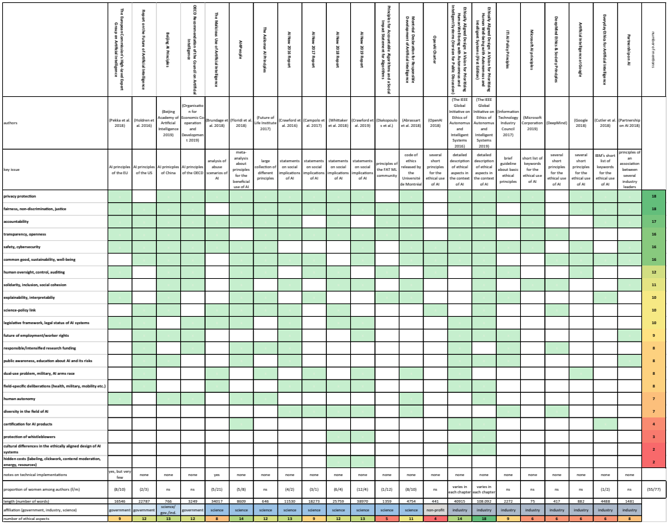
Abstract Current advances in research, development and application of artificial intelligence (AI) systems have yielded a far-reaching discourse on AI ethics. In consequence, a number of ethics guidelines have been released in recent years. These guidelines comprise normative principles and recommendations aimed to harness the “disruptive” potentials of new AI technologies. Designed as a semi-systematic evaluation, this paper analyzes and compares 22 guidelines, highlighting overlaps but also omissions. As a result, I give a detailed overview of the field of AI ethics. Finally, I also examine to what extent the respective ethical principles and values are implemented in the practice of research, development and application of AI systems—and how the effectiveness in the demands of AI ethics can be improved.
Verified 2026-11-25 · 3 references not checked yet
Overview
CoChat Summary
## TL;DR
This paper semi-systematically reviews 22 AI ethics guidelines, finding strong overlap on a few technicalizable topics but many important omissions. It argues that AI ethics is often ineffective in practice and should be supplemented by more concrete technical guidance and a shift toward virtue ethics.
## Key findings
- The paper analyzes and compares 22 AI ethics guidelines and finds that accountability, privacy, and fairness appear in about 80% of them, making them the closest thing to a common minimum standard.
- The author reports that guidelines from industrial contexts name on average 9.1 distinct ethical aspects, while science-based ethics codes average 10.8.
- Only two guidelines contain genuinely technical explanations, and these are described as very sparse; the most extensive technical commentary is in “The Malicious Use of AI”.
- The paper says a controlled study found the effectiveness of ethics guidelines or codes to be “almost zero”: among 63 software engineering students and 105 professional software developers, there was no statistically significant difference in responses between those who did and did not see the ACM code of ethics.
- The paper highlights major omissions across guidelines, including political abuse of AI, hidden social and ecological costs, lack of diversity, robot ethics, trolley problems, and public-private partnerships/industry-funded research.
## Methods
- Semi-systematic literature analysis of AI ethics guidelines, with a deliberate focus on comprehensive guideline documents rather than all AI-ethics-related writings.
- The final sample consisted of 22 major ethical guidelines, identified through searches in Google, Google Scholar, Web of Science, ACM Digital Library, arXiv, and SSRN, plus manual reference screening and the Algorithm Watch AI Ethics Guidelines Global Inventory.
- The paper compares which ethical issues are present or absent in the guidelines, and then relates those principles to practice using cited empirical studies and examples from AI development and deployment.
## Limitations
- The author states the sample is biased toward western/northern documents and excludes guidelines not written in English.
- The selection deliberately excludes guidelines focused on robot ethics, big data, algorithms, or robotics, so omissions in those areas are partly a result of the sampling method.
- The paper notes that its list of omissions is non-exhaustive.
- Evident from the text: the paper is primarily a theoretical/semi-systematic overview, not a direct empirical test of all AI ethics guideline implementations.
Model-written summary. Check it against the paper before relying on it.
Integrity signals
Registry
Cites
Statistics
Figures
Verification
Claims the paper makes
5 Valid · 3 Not valid · 62 Not checked · 64 Own results and interpretations
The cited sources support only part of this claim — read each source’s verdict below.
In the paper
“So far, some papers have been published on the subject of teaching ethics to data scientists (Garzcarek and Steuer 2019; Burton etal. 2017; Goldsmith and Burton 2017; Johnson 2017) but by and large very little to nothing has been written about the tangible implementation of ethical goals and values.”
What the sources say
- Supportedcites Garzcarek and Steuer 2019 matched to “Approaching Ethical Guidelines for Data Scientists” (2019) source
The citation is attached to the statement that papers have discussed teaching ethics to data scientists, not to the citing authors’ subsequent assessment of writing on tangible implementation. Section 5.2 (p. 14) explicitly argues that ethics should be part of the data-science curriculum. (LLM, conf=0.90)
- Not matchedcites Burton etal. 2017
An author–year citation the paper’s reference list doesn’t settle. We don’t search these by name.
- Supportedcites Goldsmith and Burton 2017 matched to “Why Teaching Ethics to AI Practitioners Is Important” (2017) source
The citation appears in a list of papers about teaching ethics to data scientists, not as support for the sentence’s later claim about how little has been written on implementation. The Introduction (p. 1) presents the paper as an argument for ethical training for AI students and practitioners, and the Conclusions (p. 4) advocate teaching ethics in AI classes. (LLM, conf=0.91)
plain- Asserted: passes — The authors put it forward as true.
- Checkable: passes — It can be checked against evidence.
- Load-bearing: passes — The paper’s conclusions depend on it.
- Based: passes — The paper gives a reason why it holds.
- Supported
The cited sources support only part of this claim — read each source’s verdict below.
In the paper
“Leading, of course, is the military use of AI in cyber warfare or regarding weaponized unmanned vehicles or drones (Ernest and Carroll 2016; Anderson and Waxman 2013).”
What the sources say
- Partly supportedcites Ernest and Carroll 2016 matched to “Genetic Fuzzy based Artificial Intelligence for Unmanned Combat Aerial Vehicle Control in Simulated Air Combat Missions” (2016) sourceExperimental — accuracy not yet measured
Our copy does support the drone half of the claim as an identification citation: the paper is squarely about applying AI to a weaponized unmanned vehicle (Introduction: UCAV research, 'this white paper will primarily focus on the increase in capabilities of real-time decision making'; Problem Statement: ALPHA controlling aircraft motion and firing in AFSIM). But it does not support the claim's core assertion that military AI is a leading area of unwanted side effects and malevolent use — the nearest passage (Introduction, 'There are a number of obstacles to a system being an effective AI within this context') frames the issues as engineering and verification difficulties (adversaries trying to 'fool and exploit the system', V&V, safety specifications, crashes/sensor failures), and the Results and Conclusions treat autonomy as 'a revolutionary leap in capability of airpower' and a way of 'reducing risk to our pilots'. Cyber appears only once, as an unrelated civilian/defence application domain of the GFT method ('Examples include robotic surgery, design automation, and cyber security'), not as cyber warfare, so that element of the claim is not from this source. (LLM, conf=0.72)
- Not checked — no full text of the sourcecites Anderson and Waxman 2013 matched to “Law and Ethics for Autonomous Weapon Systems: Why a Ban Won't Work and How the Laws of War Can” (2013) source
boostedstates an association- Asserted: passes — The authors put it forward as true.
- Checkable: passes — It can be checked against evidence.
- Load-bearing: unclear — It is unclear whether the paper’s conclusions depend on it.
- Based: passes — The paper gives a reason why it holds.
- Partly supported
The cited sources support only part of this claim — read each source’s verdict below.
In the paper
“In the light of these two approaches, the traditional type of AI ethics can be assigned to the deontological concept (Mittelstadt 2019).”
What the sources say
- Partly supportedcites Mittelstadt 2019 matched to “Principles alone cannot guarantee ethical AI” (2019) sourceExperimental — accuracy not yet measured
The paper describes a prominent, principle-based approach to AI ethics and says AI ethics initiatives have converged around principles resembling those of medical ethics (opening section; page unavailable). It does not classify that approach as deontological, so the claimed assignment to the deontological concept is not supported by our copy. (LLM, conf=0.78)
plainstates an association- Asserted: passes — The authors put it forward as true.
- Checkable: passes — It can be checked against evidence.
- Load-bearing: passes — The paper’s conclusions depend on it.
- Based: passes — The paper gives a reason why it holds.
- Partly supported
A result the paper reports from its own data — it cites no other source for it, so there is none to check. The quote shows it is in the paper.
In the paper
“My analysis of the distribution of female and male authors of the guidelines, as far as authors were indicated in the documents, showed that the proportion of women was 41.7%.”
plain- Asserted: passes — The authors put it forward as true.
- Checkable: passes — It can be checked against evidence.
- Load-bearing: passes — The paper’s conclusions depend on it.
- Based: passes — The paper gives a reason why it holds.
A result the paper reports from its own data — it cites no other source for it, so there is none to check. The quote shows it is in the paper.
In the paper
“Finally, yet importantly, it is noteworthy that almost all guidelines suggest that technical solutions exist for many of the problems described.”
hedged- Asserted: passes — The authors put it forward as true.
- Checkable: passes — It can be checked against evidence.
- Load-bearing: unclear — It is unclear whether the paper’s conclusions depend on it.
- Based: passes — The paper gives a reason why it holds.
54 more claims
Create a free account to see all 134 claims and to verify the 1 reference still open.
- Probably not a substantial claim. 59
- It may state two separate claims as one. 29
Claims other papers make about this one
Each is checked against this paper’s own text: does it say what the citing paper says it does?
The source backs part of the claim, not all of it — or backs it for a different population, condition or comparison.
In the citing paper
“Ethical concerns arising from the design and deployment of AI technology have motivated a number of initiatives [47]—such as the Ethical Guidelines for Trustworthy AI by the European Commission expert group on AI, and Microsoft’s FATE: Fairness, Accountability, Transparency, and Ethics in AI—addressing issues including mitigating bias and discrimination in AI systems and fairness in the use of AI”
From Future directions for chatbot research: An interdisciplinary research agenda (2021) · cites this paper as [47]
Experimental — accuracy not yet measuredThe source backs part of the claim, not all of it — or backs it for a different population, condition or comparison.
In the citing paper
“Additional recommendations on AI ethics teaching content include “explainability,” “liability,” and “accountability,” which are also considered important by available guidelines [30,40].”
From Proposing a Principle-Based Approach for Teaching AI Ethics in Medical Education (2024) · cites this paper as [30]
Experimental — accuracy not yet measuredThe source backs part of the claim, not all of it — or backs it for a different population, condition or comparison.
In the citing paper
“This emphasis is also echoed by existing guidelines and frameworks regarding AI ethics [30].”
From Proposing a Principle-Based Approach for Teaching AI Ethics in Medical Education (2024) · cites this paper as [30]
Experimental — accuracy not yet measuredThe source backs part of the claim, not all of it — or backs it for a different population, condition or comparison.
In the citing paper
“En dépit de nombreuses chartes, discussions et nombreux documents sur les bonnes pratiques éthiques, l’espoir est faible que l’IA puisse éventuellement se montrer généralement conforme (Hagendorff, 2020) :”
From Gouvernance algorithmique, intelligence artificielle, enjeux, éthique : esquisse d’une analyse critique (2021) · cites this paper as Hagendorff, 2020
Experimental — accuracy not yet measuredThe source backs part of the claim, not all of it — or backs it for a different population, condition or comparison.
In the citing paper
“The experience of mixed emotional responses and ethnical navigation was supported by literature (Hagendorff, 2020;Mamo et al., 2024;Mittelstadt, 2019).”
From Into the Unknown: AI Adoption and Job Satisfaction of Christian Faculty (2026) · cites this paper as Hagendorff, 2020
Experimental — accuracy not yet measured
13 more claims about this paper
Create a free account to see every claim other papers make about this one.
Citations
Cites
The spread of true and false news online
Vosoughi, S., Roy, D., & Aral, S. (2018) · Science · doi:10.1126/science.aap9559 · Cited by 8,847
The future of employment: How susceptible are jobs to computerisation?
Frey, C. B., & Osborne, M. A. (2017) · Technological Forecasting and Social Change · doi:10.1016/j.techfore.2016.08.019 · Cited by 8,727
The global landscape of AI ethics guidelines
Jobin, A., Ienca, M., & Vayena, E. (2019) · Nature Machine Intelligence · doi:10.1038/s42256-019-0088-2 · Cited by 6,220
Floridi, L., Cowls, J., Beltrametti, M., Chatila, R., Chazerand, P., Dignum, V., Luetge, C., Madelin, R., Pagallo, U., Rossi, F., et al. (2018) · Minds and Machines · doi:10.1007/s11023-018-9482-5 · Cited by 4,774 · cited 2×
“They include the adoption of legal framework conditions, the establishment of mechanisms for an independent auditing of technologies, the establishment of institutions for complaints, which also compensate for harms caused by AI systems, and the expansion of university curricula in particular through content from ethi…”
Background(2011) · Cited by 4,430
Lazer, D. M. J., Baum, M. A., Benkler, Y., Berinsky, A. J., Greenhill, K. M., Menczer, F., Metzger, M. J., Nyhan, B., Pennycook, G., Rothschild, D., et al. (2018) · Science · doi:10.1126/science.aao2998 · Cited by 4,160
The Black Box Society: The Secret Algorithms That Control Money and Information
Pasquale, F. (2015) · doi:10.4159/harvard.9780674736061 · Cited by 3,796
Experimental evidence of massive-scale emotional contagion through social networks
Kramer, A. D. I., Guillory, J. E., & Hancock, J. T. (2014) · Proceedings of the National Academy of Sciences · doi:10.1073/pnas.1320040111 · Cited by 3,687
(2018) · Cited by 3,510
Private traits and attributes are predictable from digital records of human behavior
Kosinski, M., Stillwell, D., & Graepel, T. (2013) · Proceedings of the National Academy of Sciences · doi:10.1073/pnas.1218772110 · Cited by 2,829
Research works printed but not linked: 24
- Abrassart, C., Bengio, Y., Chicoisne, G., de Marcellis-Warin, N., Dilhac, M.-A., Gambs, S., Gautrais, V., etal. (2018). Montréal declaration for responsible development of artificial intelligence (pp. 1-21).
- Asimov, I. (2004). I, Robot . New York: Random House LLC.
- Bakewell, J. D., Clement-Jones, T. F., Giddens, A., Grender, R. M., Hollick, C. R., Holmes, C., Levene, P. K. etal. (2018). AI in the UK: Ready, willing and able?. Select committee on artificial intelligence (pp. 1-183).
- Baron, B., Musolesi, M. (2017). Interpretable machine learning for privacy-preserving pervasive systems. arXiv (pp. 1-10).
- Bourdieu, P. (1984). Distinction: A social critique of the judgement of taste . Cambridge: Harvard University Press.
- Brahnam, S. (2006). Gendered bots and bot abuse. In Antonella de Angeli, Sheryl Brahnam, Peter Wallis, & Peter Dix (Eds.), Misuse and abuse of interactive technologies (pp. 1-4). Montreal: ACM.
- Derrida, J. (1997). Of grammatology . Baltimore: Johns Hopkins Univ. Press.
- Gebru, T., Morgenstern, J., Vecchione, B., Vaughan, J. W., Wallach, H., Daumeé, III, H., Crawford, K. (2018). Datasheets for datasets. arXiv (pp. 1-17).
- Google. (2019). Perspectives on issues in AI governance (pp. 1-34). Retrieved February 11, 2019. https :// ai.googl e/stati c/docum ents/persp ectiv es-on-issue s-in-ai-gover nance .pdf.
- Helbing, D. (Ed.). (2019). Towards digital enlightment: Essays on the darf and light sides of the digital revolution. Cham: Springer.
- Johnson, D. G. (2017). Can engineering ethics be taught? The Bridge, 47 (1), 59-64.
- Luhmann, N. (1988). Die Wirtschaft der Gesellschaft . Frankfurt A.M: Suhrkamp.
- Morley, J., Floridi, L., Kinsey, L., Elhalal, A. (2019). From what to how. An overview of AI ethics tools, methods and research to translate principles into practices. arXiv (pp. 1-21).
- Organisation for Economic Co-operation and Development. (2019). Recommendation of the Council on Artificial Intelligence (pp. 1-12). Retrieved June 18, 2019. https ://legal instr ument s.oecd.org/en/ instr ument s/OECD-LEGAL -0449.
- Pekka, A.-P., Bauer, W., Bergmann, U., Bieliková, M., Bonefeld-Dahl, C., Bonnet, Y., Bouarfa, L. etal. (2018). The European Commission's high-level expert group on artificial intelligence: Ethics guidelines for trustworthy ai . Working Document for stakeholders' consultation. Brussels (pp. 1-37).
- Pistono, F., Yampolskiy, R. (2016). Unethical research: How to create a malevolent artificial intelligence. arXiv (pp. 1-6).
- Podgaiska, I., Shklovski, I. Nordic engineers’ stand on artificial intelligence and ethics: Policy recommendations and guidelines (pp. 1–40).
- Rawls, J. (1975). Eine Theorie Der Gerechtigkeit . Frankfurt am Main: Suhrkamp.
- Shoham, Y., Perrault, R., Brynjolfsson, E., Clark, J., Manyika, J., Niebles, J. C., Lyons, T., Etchemendy, J., Grosz, B., Bauer, Z. (2018). The AI index 2018 annual report. Stanford, Kalifornien (pp. 1-94). <!-- image --> 1 3
- Sitawarin, C., Bhagoji, A. N., Mosenia, A., Chiang, M., Mittal, P. (2018). DARTS: Deceiving autonomous cars with toxic signs. arXiv (pp. 1-27).
- Tegmark, A. (2017). Life 3.0: Being human in the age of artificial intelligence . New York: Alfred A. Knopf.
- The IEEE Global Initiative on Ethics of Autonomous and Intelligent Systems. (2016). Ethically aligned design: A vision for prioritizing human well-being with artificial intelligence and autonomous systems (pp. 1-138).
- Whittaker, M., Crawford, K., Dobbe, R., Fried, G., Kaziunas, E., Mathur, V., West, S. M., Richardson, R., Schultz, J., Schwartz, O. (2018). AI now report 2018 (pp. 1-62).
- Zeng, Y., Lu, E., Huangfu, C. (2018). Linking artificial intelligence principles. arXiv (pp. 1-4). Publisher's Note Springer Nature remains neutral with regard to jurisdictional claims in published maps and institutional affiliations. <!-- image --> 1 3
Cited by
Items 401–500 of 1,821
Dwivedi, D. N., Mahanty, G., & Vemareddy, A. (2022) · International Journal of Information Retrieval Research · doi:10.4018/ijirr.298646 · Cited by 30
“Hagendorff (2020) analyzed and compared 22 ethical guidelines, highlighting overlaps but also omissions.”
BackgroundKing, T. C., Roberts, H., Mökander, J., Tsamados, A., Taddeo, M., & Floridi, L. (2024) · AI & Society · doi:10.1007/s00146-024-01950-y · Cited by 53
“…the extension of ethical duties across the supply chain, our argument in this article is framed within the prevailing principles-based approach to AI ethics focused on harm-mitigation, which underpins the majority of AI assurance practices (Hagendorff 2020; Morley et al. 2020; Ryan and Stahl 2020).”
Human-AI Collaboration in Smart Manufacturing: Key Concepts and Framework for Design
Hartikainen, M., Spurava, G., & Väänänen, K. (2024) · Frontiers in artificial intelligence and applications · doi:10.3233/faia240192 · Cited by 37
Silva, D. D., Kaynak, O., El-Ayoubi, M., Mills, N., Alahakoon, D., & Manic, M. (2024) · IEEE Industrial Electronics Magazine · doi:10.1109/mie.2024.3382962 · Cited by 43
“Responsible AI draws from a rich body of work in AI ethics, which saw the development of close to 100 ethics guidelines for AI, with more than 80% being published since 2016 [66], [67].”
Making Pathologists Ready for the New Artificial Intelligence Era: Changes in Required Competencies
Vos, S., Hebeda, K. M., Milota, M., Sand, M., Drogt, J., Grünberg, K., & Jongsma, K. R. (2024) · Modern Pathology · doi:10.1016/j.modpat.2024.100657 · Cited by 33
Preventing Racial Bias in Federal AI
Livingston, M. (2020) · Journal of Science Policy & Governance · doi:10.38126/jspg160205 · Cited by 38
“However, these standards vary by company and, without enforcement, there is no guarantee of adherence (Hagendorff 2020). iii.”
BackgroundExplainability Auditing for Intelligent Systems: A Rationale for Multi-Disciplinary Perspectives
Langer, M., Baum, K. L., Hartmann, K., Hessel, S., Speith, T., & Wahl, J. (2021) · IEEE International Requirements Engineering Conference Workshops (REW) · doi:10.1109/rew53955.2021.00030 · Cited by 46
“In fact, explainability seems to be the most commonly featured concept in regulatory guidelines on AI around the globe [3], [4].”
Ethics and AI Issues: Old Container with New Wine?
Niederman, F., & Baker, E. W. (2022) · Information Systems Frontiers · doi:10.1007/s10796-022-10305-1 · Cited by 35
“Taking Action Hagendorff (2020) detailed that AI ethics and ethics more broadly do not have robust enforcement mechanisms even when maxims and guidelines are readily available.”
BackgroundThe Promise and Limits of Lawfulness: Inequality, Law, and the Techlash
Viljoen, S. (2020) · Journal of Social Computing · doi:10.23919/jsc.2021.0025 · Cited by 37
Kieslich, K., Lünich, M., & Došenović, P. (2023) · International Journal of Human-Computer Interaction · doi:10.1080/10447318.2023.2178612 · Cited by 32
“Hagendorff (2020) analyzed 22 ethical guidelines from companies as well as research institutes and political institutions and attested the current state of AI ethics a bad condition: “ Currently, AI ethics is failing in many cases.”
BackgroundInfluentialUrsin, F., Lindner, F., Ropinski, T., Salloch, S., & Timmermann, C. (2023) · Ethik in der Medizin · doi:10.1007/s00481-023-00761-x · Cited by 34
“First, we selected reviews of guidelines for ethical AI (Fjeld et al. 2020; Hagendorff 2020; Floridi and Cowls 2019; Jobin et al. 2019).”
Multidisciplinary considerations of fairness in medical AI: A scoping review
Wang, Y., Song, Y., Ma, Z., & Han, X. (2023) · International Journal of Medical Informatics · doi:10.1016/j.ijmedinf.2023.105175 · Cited by 34
Towards AI ethics-led sustainability frameworks and toolkits: Review and research agenda
Cumming, D. J., Saurabh, K., Rani, N., & Upadhyay, P. (2024) · Journal of Sustainable Finance and Accounting · doi:10.1016/j.josfa.2024.100003 · Cited by 49
dos Reis, J. C. G., Santo, P. E., & Melão, N. F. (2020) · Sustainability · doi:10.3390/su12176708 · Cited by 37
Ageism in AI: new forms of age discrimination in the era of algorithms and artificial intelligence
Stypinska, J. (2021) · Proceedings of the 1st International Conference on AI for People: Towards Sustainable AI, CAIP 2021, 20-24 November 2021, Bologna, Italy · doi:10.4108/eai.20-11-2021.2314200 · Cited by 25
“The landscape of currently drafted regulations, recommendations and guidelines for ethical AI is voluminous and diverse [49], but is still largely missing the representation of the interests of ageing population.”
BackgroundA theoretical framework to guide AI ethical decision making
Ferrell, O. C., Harrison, D. E., Ferrell, L. K., Ajjan, H., & Hochstein, B. W. (2024) · AMS Review · doi:10.1007/s13162-024-00275-9 · Cited by 24
“For example, robustness and safety are eas - ily operationalized mathematically and tend to be technical solutions to ethical problems (Hagendorff, 2020 ).”
Principle-based recommendations for big data and machine learning in food safety: the P-SAFETY model
Sapienza, S., & Vedder, A. (2021) · AI & Society · doi:10.1007/s00146-021-01282-1 · Cited by 32
Measuring responsible artificial intelligence (RAI) in banking: a valid and reliable instrument
Ratzan, J., & Rahman, N. (2023) · AI and Ethics · doi:10.1007/s43681-023-00321-5 · Cited by 46
Towards explainability for AI-based edge wireless signal automatic modulation classification
Xu, B., Bhatti, U. A., Tang, H., Yan, J., Wu, S., Sarhan, N. M., Awwad, E. M., Syam, M. S., & Ghadi, Y. Y. (2024) · Journal of Cloud Computing Advances Systems and Applications · doi:10.1186/s13677-024-00590-3 · Cited by 33
“The untransparent decision systems impacts not only information on ethics but also on accountability [4], on safety [5], and on industrial liability [6].”
BackgroundA Psychological Need-Fulfillment Perspective for Designing Social Robots that Support Well-Being
Janssen, S., & Schadenberg, B. R. (2024) · International Journal of Social Robotics · doi:10.1007/s12369-024-01102-8 · Cited by 31
“The balance between human autonomy and machine autonomy has also been the subject of several ethical discussions [23, 56, 62, 78].”
Chan, K. J. D., Papyshev, G., & Yarime, M. (2024) · Technology in Society · doi:10.1016/j.techsoc.2024.102747 · Cited by 46
Bai, J., Wong, I. A., Huan, T.-C. T. C., Okumuş, F., & Leong, A. M. W. (2025) · Tourism Management · doi:10.1016/j.tourman.2025.105242 · Cited by 28
Wiese, W., & Friston, K. J. (2021) · Behavioural Brain Research · doi:10.1016/j.bbr.2021.113704 · Cited by 27
Lünich, M., & Kieslich, K. (2022) · AI & Society · doi:10.1007/s00146-022-01412-3 · Cited by 31
“Regarding the real-world effects of ethical guidelines, Hagendorff (2020) argued that self-commitment to ethical criteria can function as strategic communication activity and does not necessarily imply factual adherence to those guidelines.”
A framework for assessing AI ethics with applications to cybersecurity
Bruschi, D., & Diomede, N. (2022) · AI and Ethics · doi:10.1007/s43681-022-00162-8 · Cited by 37
“Among them: [8, 19] have underlined the mere marketing aspect of many of them, [9, 14] the lack of enforcement mechanisms reaching beyond a voluntary and non-binding cooperation between ethicists and individuals, the same authors also questioned whether the principled approach, adopted in most of…”
BackgroundResultBoldt, J., & Orrù, E. (2022) · Sustainable Futures · doi:10.1016/j.sftr.2022.100086 · Cited by 25
“…a substance used to treat malaria, and devising synthetic bacterial DNA compartments to sense disease within the human body [31 – 33]. iv Other existing overviews of ethical guidelines for AI include: [56], who also provide an overview of existing meta-studies on AI ethics reports, [21,57,58].”
The Adoption of Artificial Intelligence in Newsrooms in Kenya: a Multi-case Study
Kioko, P. M., Booker, N. A., Chege, N., & Kimweli, P. (2022) · European Scientific Journal ESJ · doi:10.19044/esj.2022.v18n22p278 · Cited by 34
“(Hagendorff, 2020, p.57) within perpetually changing developing world contexts and embrace the integration of AI in news production systems albeit with varying degrees of success and challenges.”
BackgroundImplementing Ai Principles: Frameworks, Processes, and ToolsPreprint
Boza, P., & Evgeniou, T. (2021) · SSRN Electronic Journal · doi:10.2139/ssrn.3783124 · Cited by 36
A design perspective on how to tackle gender biases when developing AI-driven systems
González, A. S., & Rampino, L. (2024) · AI and Ethics · doi:10.1007/s43681-023-00386-2 · Cited by 33
“As [55] pointed out, the discourse of AI ethics is primarily shaped by men, which explains the limited consideration of gender bias as a specific issue in guidelines, as confirmed by our analysis.”
InfluentialWilczek, B., Thäsler-Kordonouri, S., & Eder, M. (2024) · AI & Society · doi:10.1007/s00146-024-02138-0 · Cited by 53
“As the need for AI that makes transparent decisions based on human moral standards becomes pressing (Boddington 2017; Greene et al. 2019; Hagendorff 2020), scholars have explored the possibility of implementing ethical standards into the design of AI systems (Müller 2020).”
Responsible AI for Cities: A Case Study of GeoAI in African Informal Settlements
Tonnarelli, F., & Mora, L. (2025) · Journal of Urban Technology · doi:10.1080/10630732.2025.2450755 · Cited by 29
“The surge in research, development, and deployment of AI systems has sparked significant ethical discussions in academic, governmental, and industrial contexts (Hagendorff, 2020).”
The Future of Digital Twin Research and Development
Bossuyt, D. L. V., Allaire, D., Bickford, J. F., Bozada, T. A., Chen, W., Cutitta, R. P., Cuzner, R. M., Fletcher, K. M., Giachetti, R. E., Hale, B., et al. (2025) · Journal of Computing and Information Science in Engineering · doi:10.1115/1.4068082 · Cited by 35
Good governance of public sector AI: a combined value framework for good order and a good society
Mišić, J., van Est, R., & Kool, L. (2025) · AI and Ethics · doi:10.1007/s43681-025-00751-3 · Cited by 61
Digital ethics: Global trends and divergent paths
Guenduez, A. A., Walker, N., & Demircioğlu, M. A. (2025) · Government Information Quarterly · doi:10.1016/j.giq.2025.102050 · Cited by 43
Investigating novice translation students’ AI literacy in translation education
Zhang, J., & Doherty, S. (2025) · The Interpreter and Translator Trainer · doi:10.1080/1750399x.2025.2541478 · Cited by 64
“They also fall within the definition of AI ethics, i.e. the moral principles and guidelines that should be observed when designing, developing and applying AI (Hagendorff 2020).”
AI in the EU: Ethical Guidelines as a Governance Tool
Larsson, S. (2021) · Springer eBooks · doi:10.1007/978-3-030-63672-2_4 · Cited by 40
Hermann, E., Hermann, G., & Tremblay, J. C. (2021) · Science and Engineering Ethics · doi:10.1007/s11948-021-00325-6 · Cited by 43
“That is, recurring and prominent principles such as transparency, beneficence, and non-maleficence (Jobin et al., 2019) are normative, deontological, and high-order in nature (Hagendorff, 2020; Mittelstadt, 2019).”
BackgroundHermann, E., & Hermann, G. (2021) · AI and Ethics · doi:10.1007/s43681-021-00114-8 · Cited by 29
“Generally, the increasing pervasiveness and impact AI on the individual, economic, and societal level have sparked the debate of ethical principles guiding AI development and use [8, 13, 14, 17, 21, 29, 31].”
BackgroundResponsible Computing: A Longitudinal Study of a Peer-led Ethics Learning Framework
McDonald, N., Akinsiku, A., Hunter-Cevera, J., Sanchez, M., Kephart, K. L., Berczynski, M., & Mentis, H. M. (2022) · ACM Transactions on Computing Education · doi:10.1145/3469130 · Cited by 31
“To the extent that ethics are tackled in the CS context, some have argued that the perspectives largely reflect those of privileged “white men,” with scant attention paid to contemporary virtue ethics or ethics of care [20].”
BackgroundInfluentialDwivedi, Y. K., Hughes, L., Bhadeshia, H. K. D. H., Ananiadou, S., Cohn, A. G., Cole, J. M., Conduit, G. J., Desarkar, M. S., & Wang, X. (2023) · International Journal of Information Management · doi:10.1016/j.ijinfomgt.2023.102725 · Cited by 29
TAII Framework for Trustworthy AI systems
Baker-Brunnbauer, J. (2021) · ROBONOMICS: The Journal of the Automated Economy · doi:10.67723/rj.v2i.17 · Cited by 23
Personality and demographic correlates of support for regulating artificial intelligence
Bartneck, C., Yogeeswaran, K., & Sibley, C. G. (2023) · AI and Ethics · doi:10.1007/s43681-023-00279-4 · Cited by 32
“Hagendorff [2] pointed out that the ethical frameworks developed to protect our society from privacy breaches, discrimination, and safety risks have no practical consequences.”
The Value of Creativity: Human Produced Art vs. AI-Generated Art
Hall, J., & Schofield, D. (2025) · Art and Design Review · doi:10.4236/adr.2025.131005 · Cited by 44
Attard-Frost, B., & Widder, D. G. (2025) · Big Data & Society · doi:10.1177/20539517251340603 · Cited by 63
“More recent research fi nds that principles and practices of ethical AI often fail to prevent societal and environmental harms (Attard-Frost et al., 2023; Greene et al., 2019; Hagendorff, 2020; Lauer, 2021; Morley et al., 2023; Rességuier and Rodrigues, 2020).”
Balancing sustainability and security: A review of 5G and IoT in smart cities
Aldehim, G., Khan, S., Shahzad, T., Khan, M. A., Ghadi, Y. Y., Jiang, W., Mazhar, T., & Hamam, H. (2025) · Digital Communications and Networks · doi:10.1016/j.dcan.2025.06.007 · Cited by 38
Stix, C. (2022) · Discover Artificial Intelligence · doi:10.1007/s44163-022-00041-5 · Cited by 39
“Because all actors arrived at similar conclusions and were inconspicuously inspired by similar texts, almost all Ethics Guidelines ended up developing a similar subset of areas [43, 47].”
BackgroundBingley, W., Haslam, S. A., Steffens, N. K., Gillespie, N. A., Worthy, P., Curtis, C., Lockey, S., Bialkowski, A., Ko, R. K. L., & Wiles, J. (2023) · New Ideas in Psychology · doi:10.1016/j.newideapsych.2023.101025 · Cited by 35
Sadek, M., Calvo, R. A., & Mougenot, C. (2023) · ACM Conference on Conversational User Interfaces (CUI) · doi:10.1145/3571884.3597143 · Cited by 37
“They are also found to be difcult to measure in order to evaluate their success or efec-tiveness [26].”
BackgroundLee, J., Hong, M., & Cho, J. (2024) · International Journal on Advanced Science Engineering and Information Technology · doi:10.18517/ijaseit.14.1.19558 · Cited by 38
Applying generative AI ethically in HRD practice
Yorks, L., & Jester, M. Y. (2024) · Human Resource Development International · doi:10.1080/13678868.2024.2337963 · Cited by 36
“AI ethicist Thilo Hagendorff conducted a study of ‘the extent ethical objectives are actually implemented and embedded in the development and application of AI, or whether merely good intentions are deployed’ (2020, 100).”
BackgroundEnhancing Inclusivity: Exploring AI Applications for Diverse Learners
Hadinezhad, S., Garg, S., & Lindgren, R. (2024) · Postdigital science and education · doi:10.1007/978-3-031-64487-0_8 · Cited by 37
Should Violence Against Robots be Banned?
Mamak, K. (2022) · International Journal of Social Robotics · doi:10.1007/s12369-021-00852-z · Cited by 38
“Various guidelines have already been proposed on artificial intelligence (AI) ethics issues [6, 7, 8].”
BackgroundAssessing Smart Nation Singapore as an International Model for AI Responsibility
Frana, P. L. (2024) · International Journal on Responsibility · doi:10.62365/2576-0955.1109 · Cited by 33
Frontier AI developers need an internal audit function
Schuett, J. (2025) · Risk Analysis · doi:10.1111/risa.17665 · Cited by 23
“To contextualize the article within the literature, let us now review previous work on internal audit in general, internal audits of information technologies (IT), internal audits of AI, and frontier AI governance more broadly.”
Mota, B., Faria, P., Ramos, C. A., & Vale, Z. (2025) · Journal of Industrial Information Integration · doi:10.1016/j.jii.2025.100910 · Cited by 31
Addressing Ethical Issues in AI
Stahl, B. C. (2021) · SpringerBriefs in research and innovation governance · doi:10.1007/978-3-030-69978-9_5 · Cited by 31
Ethical and legal implications of using AI-powered recommendation systems in streaming services
Sorbán, K. (2021) · Információs Társadalom · doi:10.22503/inftars.xxi.2021.2.5 · Cited by 27
Acknowledging Sustainability in the Framework of Ethical Certification for AI
Genovesi, S., & Mönig, J. M. (2022) · Sustainability · doi:10.3390/su14074157 · Cited by 29
A responsible AI framework: pipeline contextualisation
Vyhmeister, E., Castañé, G. G., Östberg, P.-O., & Thevenin, S. (2022) · AI and Ethics · doi:10.1007/s43681-022-00154-8 · Cited by 35
Reimagining the sustainable social development of AI for the service sector: the role of startups
Rojas, A., & Tuomi, A. (2022) · Journal of Ethics in Entrepreneurship and Technology · doi:10.1108/jeet-03-2022-0005 · Cited by 14
Ethical Issues in Near-Future Socially Supportive Smart Assistants for Older Adults
London, A. J., Razin, Y. S., Borenstein, J., Eslami, M., Perkins, R., & Robinette, P. (2023) · IEEE Transactions on Technology and Society · doi:10.1109/tts.2023.3237124 · Cited by 31
“There is also a growing literature that surveys the broad range of ethical issues that have emerged in relation to AI, including reports by IEEE [12] and various governmental and non-governmental entities [12], [13], [14], [15], [16].”
BackgroundHälterlein, J. (2024) · AI & Society · doi:10.1007/s00146-024-01940-0 · Cited by 34
Farazouli, A. (2024) · Postdigital science and education · doi:10.1007/978-3-031-58622-4_12 · Cited by 25
Arzberger, A., Lupetti, M. L., & Giaccardi, E. (2024) · ACM Transactions on Computer-Human Interaction · doi:10.1145/3689042 · Cited by 33
Governance of artificial intelligence in Southeast Asia
Keith, A. J. (2024) · Global Policy · doi:10.1111/1758-5899.13458 · Cited by 53
Shin, H. W., & Jang, H.-W. (2025) · International Journal of Contemporary Hospitality Management · doi:10.1108/ijchm-11-2024-1670 · Cited by 27
Health Equity in Artificial Intelligence and Primary Care Research: Protocol for a Scoping Review
Wang, J. X., Somani, S. S., Chen, J. H., Murray, S. G., & Sarkar, U. (2021) · JMIR Research Protocols · doi:10.2196/27799 · Cited by 27
“The European Commission's guidelines were chosen because of the comprehensible key requirements, orientation toward conceptual, higher-level evaluation (rather than technical specificities), and wide adoption across the AI community [31-33].”
BackgroundEthical and legal considerations for nutrition virtual coaches
Calvaresi, D., Carli, R., Piguet, J.-G., Contreras, V. H., Luzzani, G., Najjar, A., Calbimonte, J.-P., & Schumacher, M. (2022) · AI and Ethics · doi:10.1007/s43681-022-00237-6 · Cited by 25
“Hagendorff [10] analyzed 22 major AI ethics guidelines from academy institutions and industry leaders and identified in accountability, privacy and fairness the ethical aspects present in 80% of the reviewed guidelines [10].”
BackgroundEpistemic Just and Dynamic AI Ethics in Africa
Ruttkamp, E. (2023) · Social and cultural studies of robots and AI · doi:10.1007/978-3-031-08215-3_2 · Cited by 36
Framework for Evaluating Ethics in AI
Sharma, V., Mishra, N., Kukreja, V., Alkhayyat, A. H., & Elngar, A. A. (2023) · International Conference on Innovative Data Communication Technologies and Application (ICIDCA) · doi:10.1109/icidca56705.2023.10099747 · Cited by 24
“In the field of explaining the ethics of AI [9] contributed by evaluating the different guidelines already present and providing the various rules that should be followed in the process but the scope of that was also limited to the theoretical concepts.”
BackgroundCo-producing AIED Ethics Under Lockdown: an Empirical Study of Deliberative Democracy in Action
Swist, T., Shum, S. B., & Gulson, K. Ν. (2024) · International Journal of Artificial Intelligence in Education · doi:10.1007/s40593-023-00380-z · Cited by 36
“…industry, (Whittaker et al., 2018) (Sec.2.3) concluded that the evidence of their impact on the behaviour of computing companies was scarce, reinforced subsequently by others emphasising that ethics principles alone do not enforce regulation (Hagendorff, 2020; Rességuier & Rodrigues, 2020).”
InfluentialAirport security: the impact of AI on safety, efficiency, and the passenger experience
Pik, E. (2024) · Journal of Transportation Security · doi:10.1007/s12198-024-00276-6 · Cited by 16
“Hagendorff (2020) describes that AI ethics is facing challenges due to lack of enforcement mechanisms and being used as a marketing strategy.”
Specification overfitting in artificial intelligence
Roth, B., de Araujo, P. H. L., Xia, Y., Kaltenbrunner, S., & Korab, C. (2024) · Artificial Intelligence Review · doi:10.1007/s10462-024-11040-6 · Cited by 26
“States, companies, and non-profit organizations have formulated ethical principles and high-level guidelines for AI (Fjeld et al, 2020; Hagendorff, 2020; Jobin et al, 2019).”
Ethical Implications of Generative AI in Education: Privacy, Bias, and Integrity
Kayyali, M. (2025) · Advances in computational intelligence and robotics book series · doi:10.4018/979-8-3693-8744-3.ch008 · Cited by 23
A Comparative Assessment and Synthesis of Twenty Ethics Codes on AI and Big Data
Loi, M., Heitz, C., & Christen, M. (2020) · IEEE Swiss Conference on Data Science (SDS) · doi:10.1109/sds49233.2020.00015 · Cited by 28
“Like other scholars who have been working on subsets of the Jobin et al sample (e.g. [10]), our focus is on theoretical elaboration.”
BackgroundRichet, J.-L. (2025) · Journal of Innovation & Knowledge · doi:10.1016/j.jik.2025.100835 · Cited by 20
Pretrained AI Models: Performativity, Mobility, and Change
Varshney, L. R., Keskar, N. S., & Socher, R. (2019) · arXiv · doi:10.48550/arxiv.1909.03290 · Cited by 20
Crossing the principle–practice gap in AI ethics with ethical problem-solving
Corrêa, N. K., Santos, J. W., Galvão, C., Pasetti, M., Schiavon, D. E. B., Naqvi, F., Hossain, R., & Oliveira, N. F. D. (2024) · AI and Ethics · doi:10.1007/s43681-024-00469-8 · Cited by 37
“The scarcity of practical tools to address ethical matters within AI is a significant and concerning gap in AI ethics [3, 32, 111, 112].”
Mersinas, K., Bada, M., & Furnell, S. (2024) · Computers & Security · doi:10.1016/j.cose.2024.104025 · Cited by 30
The Value-Sensitive Conversational Agent Co-Design Framework
Sadek, M., Calvo, R. A., & Mougenot, C. (2024) · International Journal of Human-Computer Interaction · doi:10.1080/10447318.2024.2426737 · Cited by 33
“…abstract nature leaving interpretation up to practitioners (Whittlestone et al., 2019; Deng et al., 2023), the difficulty of measuring their impact (Hagendorff, 2020) and the possibility that they may have no impact at all (McNamara et al., 2018), their tendency to promote passive compliance over…”
Nurturing Digital Citizenship in Society 5.0 Through AI and Computational Intelligence Education
Tariq, M. U., & Sergio, R. P. (2024) · Advances in computational intelligence and robotics book series · doi:10.4018/979-8-3693-4326-5.ch003 · Cited by 19
Ethics and Algorithms to Navigate AI’s Emerging Role in Organ Transplantation
Salybekov, A. A., Yerkos, A., Sedlmayr, M., & Wolfien, M. (2025) · Journal of Clinical Medicine · doi:10.3390/jcm14082775 · Cited by 20
“Ensuring that AI systems in transplantation are both transparent and explainable is not merely a technical challenge but an ethical imperative [63].”
Štrukelj, Т., & Dankova, P. (2025) · Administrative Sciences · doi:10.3390/admsci15070274 · Cited by 43
Ethical concerns of generative AI and mitigation strategies: A systematic mapping study
Huang, Y., Arora, C., Huong, W. C., Kanij, T., Madugalla, A. K., & Grundy, J. (2026) · Applied Soft Computing · doi:10.1016/j.asoc.2026.114789 · Cited by 50
Ethics of Corporeal, Co-present Robots as Agents of Influence: a Review
Moon, A., Rismani, S., & der Loos, H. F. M. V. (2021) · Current Robotics Reports · doi:10.1007/s43154-021-00053-6 · Cited by 24
Roboethics principles and policies in Europe and North America
Langman, S., Capicotto, N., Maddahi, Y., & Zareinia, K. (2021) · SN Applied Sciences · doi:10.1007/s42452-021-04853-5 · Cited by 30
“marketing strategy and not a binding agreement [67].”
BackgroundPopartan, L. A., Cortés, À., Garrido‐Baserba, M., Verdaguer, M., Poch, M., & Gibert, K. (2022) · Applied Sciences · doi:10.3390/app12052511 · Cited by 25
A Hippocratic Oath for Mathematicians? Mapping the Landscape of Ethics in Mathematics
Müller, D., Chiodo, M., & Franklin, J. (2022) · Science and Engineering Ethics · doi:10.1007/s11948-022-00389-y · Cited by 30
“Responsible disclosure has also been suggested for artificial intelligence (Hagendorff 2020).”
BackgroundNew Frontiers in Language and Technology
Jenks, C. J. (2023) · Cambridge University Press eBooks · doi:10.1017/9781009184403 · Cited by 25
Exploring Approaches to Artificial Intelligence Governance: From Ethics to Policy
Kim, D., Zhu, Q., & Eldardiry, H. (2023) · IEEE International Symposium on Ethics in Engineering, Science, and Technology (ETHICS) · doi:10.1109/ethics57328.2023.10155067 · Cited by 25
AI ethics and ordoliberalism 2.0: towards a ‘Digital Bill of Rights’
Wörsdörfer, M. (2023) · AI and Ethics · doi:10.1007/s43681-023-00367-5 · Cited by 22
Ensuring Ethical Standards in the Development of Autonomous and Intelligent Systems
Jedličková, A. (2024) · IEEE Transactions on Artificial Intelligence · doi:10.1109/tai.2024.3387403 · Cited by 29
“The study found that ethical guidelines do not appear to have a signi fi cant impact on human decision-making in the fi eld of AI and machine learning and that ethical guidelines or ethical codes have almost zero effectiveness in changing the behavior of software engineers from the tech community [9].”
InfluentialMacro Ethics Principles for Responsible AI Systems: Taxonomy and Directions
Woodgate, J., & Ajmeri, N. (2024) · ACM Computing Surveys · doi:10.1145/3672394 · Cited by 34
“Ethical principles principles broadly divide into deontological principles (those which entail conforming to rules, norms and laws, Hagendorf [62]), virtue ethics (denotes moral character central to ethical action, Wallach and Vallor [135]), and consequentialist principles (those which derive…”
Samuel-Okon, A. D., Olateju, O. O., Okon, S. U., Olaniyi, O. O., & Igwenagu, U. T. I. (2024) · Archives of Current Research International · doi:10.9734/acri/2024/v24i5735 · Cited by 31
Artificial intelligence ethics in services: are we paying attention to that?!
Tlili, A., Denden, M., Abed, M., & Huang, R. (2024) · Service Industries Journal · doi:10.1080/02642069.2024.2369322 · Cited by 28
“The third purple cluster (Hagendorff, 2020; Jobin et al., 2019; Vinuesa et al., 2020) further discusses and elaborates on how to develop guidelines, standards and prin-cipales related to AI ethics to achieve sustainable development goals.”
InfluentialEthical Guidelines and Principles in the Context of Artificial Intelligence
de Cerqueira, J. A. S., Tives, H. A., & Canedo, E. D. (2021) · Anais do Simpósio Brasileiro de Sistemas de Informação (SBSI) · doi:10.1145/3466933.3466969 · Cited by 29
“De acordo com Hagendorff [22] "a ética também pode simplesmente servir ao propósito de acalmar as vozes do público, enquanto simultaneamente as práticas criticadas são mantidas dentro da organização”.”
BackgroundInfluentialUnderstanding Researchers’ AI Readiness in a Higher Education Context: Q Methodology Research
Chaaban, Y., Qadhi, S., Chen, J., & Du, X. (2024) · Education Sciences · doi:10.3390/educsci14070709 · Cited by 19
Bankins, S., & Formosa, P. (2021) · Redefining the Psychological Contract in the Digital Era · doi:10.1007/978-3-030-63864-1_4 · Cited by 19
Tanksley, T., Smith, A. D. R., Sharma, S., & Huff, E. W. (2025) · Proceedings of the 2025 CHI Conference on Human Factors in Computing Systems · doi:10.1145/3706598.3713510 · Cited by 19
Hunkenschroer, A. (2021) · AI Ethics Journal · doi:10.47289/aiej20210716-3 · Cited by 18
“On the other hand, we address the call for research on the ethical and fair implementation of AI in a domain-specific context (Hagendorff, 2020; High-Level Expert Group on Artificial Intelligence, 2019; Tolmeijer, Kneer, Sarasua, Christen, & Bernstein, 2020).”
Background
Metadata
- Authors
- Hagendorff, T.
- Affiliations
- University of Tübingen (DE)
- Corresponding author
- Hagendorff, Thilo
- ORCID
- Hagendorff, Thilo
- Venue
- Minds and Machines
- Published
- 2020-02-01
- Volume
- 30
- Issue
- 1
- Pages
- 99-120
- ISSN
- 0924-6495 (ISSN-L)
- 1572-8641
- OpenAlex
- W3003385079
- Semantic Scholar
- 11159bdb213aaa243916f42f576396d483ba474b
- Cited by
- 1,911
- References
- 86
- Citations by year
- 2026: 370 · 2025: 446 · 2024: 361 · 2023: 290 · 2022: 239 · 2021: 160 · 2020: 41
- FWCI
- 248.38
- Type
- journal article
- Language
- en
- Update notices
- correction (2020-07-28)
- Open access
- hybrid
- doi.org
- Licence
- cc-by
- creativecommons.org/licenses/by/4.0 (tdm)
- creativecommons.org/licenses/by/4.0 (vor)
- Locations
- Minds and Machines (publishedVersion, cc-by)
- arXiv (Cornell University) (submittedVersion)
- arXiv (Cornell University)
- Funders
- Deutsche Forschungsgemeinschaft (390727645)
- Topics
- Physical Sciences › Computer Science › Artificial Intelligence › Ethics and Social Impacts of AI
- Social Sciences › Law › Digitalization, Law, and Regulation
- Social Sciences › Business, Management and Accounting › Organizational Behavior and Human Resource Management › Ethics in Business and Education
- Keywords
- AI ethics, ethics guidelines, normative principles, moral values
About these checks
Registry, retraction, Cites and statistics results are computed, not judged, with one exception: a printed reference that no index lists is read once by a model before it counts as a citation error. Claims are extracted by a model and kept only when their quote appears verbatim in the text; each cited source is then checked, with a model’s help, for whether it says what the claim relies on. Those verdicts can be wrong — read the claim’s quote and the cited source before relying on one.
The claim verdicts this report counts are experimental: their accuracy is not yet measured.
A language model drew the claims from the paper on 2026-10-12, under version 3 of the claim definition (model deepseek-v4.1-flash, prompt extract-v3).
A second model labelled each claim on 2026-10-12 (model jev-1.13-20260917, definition revision gold-guideline-v0.2).
Cited sources are checked with a language model’s help (gpt-6-sol and qwen3.8-omni-flash).
Statistics and arithmetic are recomputed, not judged.
Confidence bands are shown only for fields calibrated on our annotated test set. None is calibrated yet, so no band is shown.
What counts as a claim ›How we measure confidence ›How we check this ›
Are you an author, or do you see a problem with this page? Request a review
Data sources
Bibliographic data: Semantic Scholar, OpenAlex, Crossref.
Contains information from the Semantic Scholar Academic Graph Datasets, made available under the ODC Attribution License (ODC-BY 1.0).
Semantic Scholar’s data is described in: Kinney, R., et al. (2023). The Semantic Scholar Open Data Platform. arXiv:2301.10140.
