

Gait speed at usual pace as a predictor of adverse outcomes in community-dwelling older people an International Academy on Nutrition and Aging (IANA) Task Force
Open accessThe DOI matches its Crossref record; 56 of the 56 references it cites were found in a registry or an index; 10 of the 62 sources its claims cite were checked for support.
Abstract
INTRODUCTION: The use of a simple, safe, and easy to perform assessment tool, like gait speed, to evaluate vulnerability to adverse outcomes in community-dwelling older people is appealing, but its predictive capacity is still questioned. The present manuscript summarises the conclusions of an expert panel in the domain of physical performance measures and frailty in older people, who reviewed and discussed the existing literature in a 2-day meeting held in Toulouse, France on March 12-13, 2009. The aim of the IANA Task Force was to state if, in the light of actual scientific evidence, gait speed assessed at usual pace had the capacity to identify community-dwelling older people at risk of adverse outcomes, and if gait speed could be used as a single-item tool instead of more comprehensive but more time-consuming assessment instruments. METHODS: A systematic review of literature was performed prior to the meeting (Medline search and additional pearling of reference lists and key-articles supplied by Task Force members). Manuscripts were retained for the present revision only when a high level of evidence was present following 4 pre-selected criteria: a) gait speed, at usual pace, had to be specifically assessed as a single-item tool, b) gait speed should be measured over a short distance, c) at baseline, participants had to be autonomous, community-dwelling older people, and d) the evaluation of onset of adverse outcomes (i.e. disability, cognitive impairment, institutionalisation, falls, and/or mortality) had to be assessed longitudinally over time. Based on the prior criteria, a final selection of 27 articles was used for the present manuscript. RESULTS: Gait speed at usual pace was found to be a consistent risk factor for disability, cognitive impairment, institutionalisation, falls, and/or mortality. In predicting these adverse outcomes over time, gait speed was at least as sensible as composite tools. CONCLUSIONS: Although more specific surveys needs to be performed, there is sufficient evidence to state that gait speed identifies autonomous community-dwelling older people at risk of adverse outcomes and can be used as a single-item assessment tool. The assessment at usual pace over 4 meters was the most often used method in literature and might represent a quick, safe, inexpensive and highly reliable instrument to be implemented.
Overview
CoChat Summary
TL;DR
This IANA Task Force systematic review and expert-panel report concludes that usual-pace gait speed is a consistent predictor of adverse outcomes in autonomous community-dwelling older people and performs at least as well as composite tools. The panel recommends gait speed as a single-item assessment, with an “easy-to-remember” cutpoint of 0.8 m/s using a 4-meter course.
Key findings
- Gait speed at usual pace was a consistent risk factor for disability, cognitive impairment, institutionalisation, falls, and/or mortality across the 27 selected articles.
- In Health ABC, slow gait speed (<1.0 m/s) predicted persistent lower extremity limitation with RR 2.20 (95% CI 1.76–2.74) over 4.9 years and mortality with RR 1.64 (95% CI 1.14–2.37).
- In H-EPESE, the lowest versus highest gait-speed quartile predicted mortality with OR 3.64 (95% CI 1.93–6.85), and inability to perform the task raised mortality risk to OR 7.47 (95% CI 3.83–14.55).
- Gait speed alone was nearly as good as the SPPB for predicting ADL disability at 4 years: AUC 0.67 for gait speed versus 0.69 for SPPB, p=0.18; the panel proposed 0.8 m/s (5 seconds for 4 meters) as the clinical cutpoint for adverse outcomes.
Methods
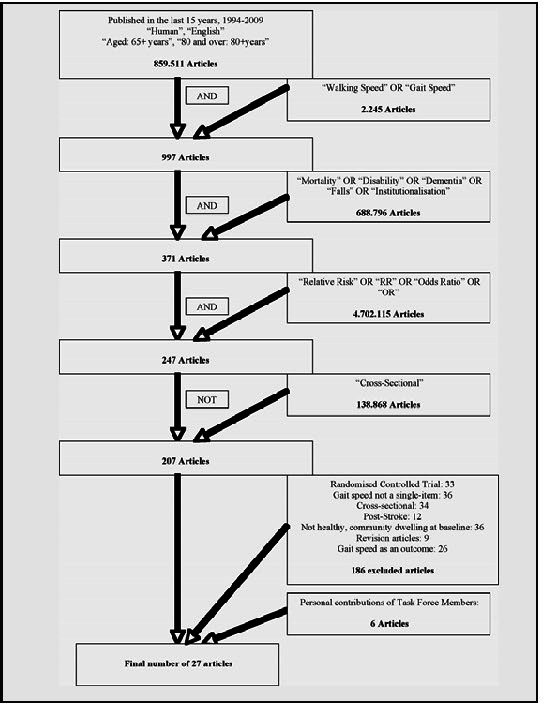
- Systematic literature review using Medline from January 1994 to March 2009, with MeSH terms including “Walking Speed” and “Gait Speed,” yielding 207 articles before final selection of 27 articles.
- Inclusion required usual-pace gait speed assessed as a single-item tool over a short distance, autonomous community-dwelling older participants at baseline, and longitudinal assessment of adverse outcomes (disability, cognitive impairment, institutionalisation, falls, and/or mortality).
- Abstracts were independently evaluated by two reviewers using the STROBE checklist; findings were discussed and revised by an international expert panel at a 2-day meeting in Toulouse, France on March 12–13, 2009.
Limitations
- The paper states that more specific surveys are needed, and that most cohort studies assessed community-dwelling well-functioning older people, so identified cutpoints may differ from frail older people seen in clinical practice.
- The paper notes that many cutpoints are based on tertiles or quartiles used for statistical analyses and may not be easy to remember for clinical practice; the Health ABC cohort’s well-functioning inclusion also limits generalisation of its cutpoints.
- Evident from the text: this is a narrative expert-panel review of 27 selected articles rather than a meta-analysis, and some recommendations, such as using gait speed as an inclusion/exclusion criterion in trials, were explicitly described as not soundly based on existing literature.
Model-written summary. Check it against the paper before relying on it.
Integrity signals
Registry
Cites
Statistics
Figures
Verification
Claims the paper makes
9 Valid · 1 Not valid · 37 Not checked · 21 Own results and interpretations
Every source the paper cites for this claim was checked and supports it.
In the paper
“participants in the lowest quartile (<1.05 ms-1) were more likely to decline in DSST with an Odds Ratio, OR of 1.74 (95% CI 1.21-2.51)”
§ Gait speed at usual pace as a predictor of adverse outcomes in community-dwelling older people an International Academy on Nutrition and Aging (IANA) Task Force > Results: Gait speed as a predictor of adverse outcomes > Gait speed as a predictor of cognitive decline (Table 2)
What the sources say
- Supportedcites [30] Inzitari M. Newman A.B. Yaffe K. Gait speed predicts decline in attention and psychomotor speed in older adults: The Health Aging and Body Composition Study Neuroepidemiology 29 2007 156 162 10.1159/000111577 PubMed PMID: 18042999 18042999 PMC2824580 source
The Results report that, compared with the highest gait-speed quartile, participants in the lowest quartile (<1.05 m/s) had greater odds of DSST decline over five years (OR 1.74, 95% CI 1.21–2.51). This matches the attributed claim. (LLM, conf=0.95)
plainstates an associationn = 2,776- Asserted: passes — The authors put it forward as true.
- Checkable: passes — It can be checked against evidence.
- Load-bearing: passes — The paper’s conclusions depend on it.
- Based: passes — The paper gives a reason why it holds.
- Supported
The cited sources support only part of this claim — read each source’s verdict below.
In the paper
“Gait speed was an independent predictor of falls with a RR of 5.4 (2-14.3)”
§ Gait speed at usual pace as a predictor of adverse outcomes in community-dwelling older people an International Academy on Nutrition and Aging (IANA) Task Force > Results: Gait speed as a predictor of adverse outcomes > Gait speed as a predictor of falls (Table 4)
What the sources say
- Partly supportedcites [43] Montero-Odasso M. Schapira M. Soriano E.R. Gait velocity as a single predictor of adverse events in healthy senior aged 75 years and older J Gerontol Med Sci 60 10 2005 1304 1309 16282564 sourceExperimental — accuracy not yet measured
The Results (p. 3) report an RR of 5.4 (95% CI, 2.0–14.3) for low gait velocity and new falls, but that estimate is from the univariate analysis. The association remained significant after multivariate adjustment, where the reported measure was an OR of 10.9 (95% CI, 2.0–57.9). Thus, the claim combines the unadjusted RR with the independent-predictor finding. (LLM, conf=0.91)
plainstates an associationn = 102- Asserted: passes — The authors put it forward as true.
- Checkable: passes — It can be checked against evidence.
- Load-bearing: unclear — It is unclear whether the paper’s conclusions depend on it.
- Based: passes — The paper gives a reason why it holds.
- Partly supported
Every source the paper cites for this claim was checked and supports it.
In the paper
“Compared to the fastest quartile, the participants who were unable to perform the task raised their risk of death to an OR of 7.47 (95% CI 3.83-14.55).”
§ Gait speed at usual pace as a predictor of adverse outcomes in community-dwelling older people an International Academy on Nutrition and Aging (IANA) Task Force > Results: Gait speed as a predictor of adverse outcomes > Gait speed as a predictor of cognitive decline (Table 2)
What the sources say
- Supportedcites [39] Markides K.S. Black S.A. Ostir G.V. Lower body function and mortality in Mexican American elderly people J Gerontol Biol Sci Med Sci 56 2001 243 247 11283198 source
The Measures section identifies the task as a timed 8-foot walk and scores the fastest quartile as 4 and those unable to complete it as 0. Results, Table 3, reports a mortality odds ratio of 7.47 (95% CI 3.83–14.55) for short-walk score 0 versus score 4 in Model 4. (LLM, conf=0.95)
plainstates an association- Asserted: passes — The authors put it forward as true.
- Checkable: passes — It can be checked against evidence.
- Load-bearing: unclear — It is unclear whether the paper’s conclusions depend on it.
- Based: passes — The paper gives a reason why it holds.
- Supported
The cited sources support only part of this claim — read each source’s verdict below.
In the paper
“Gait speed over 1 ms-1 presented a Hazard Ratio, HR of 0.88 (95% CI 0.81-0.97) in predicting incident disability”
§ Gait speed at usual pace as a predictor of adverse outcomes in community-dwelling older people an International Academy on Nutrition and Aging (IANA) Task Force > Results: Gait speed as a predictor of adverse outcomes > Gait speed as a predictor of mobility disability (Table 1)
What the sources say
- Partly supportedcites [21] Rosano C. Newman A.B. Katz R. Association between lower digit symbol substitution test score and slower gait and greater risk of mortality and of developing incident disability in well-functioning older adults J Am Geriatr Soc 56 2008 1618 1625 10.1111/j.1532-5415.2008.01856.x PubMed PMID: 18691275 18691275 PMC2631090 sourceExperimental — accuracy not yet measured
The Methods (Gait Speed; page unavailable) use 1.0 m/s as a gait-speed threshold, and the Discussion (page unavailable) reports that gait speed was associated with incident disability in the Cardiovascular Health Study participants analyzed. The retrieved Results and other passages do not report the claimed hazard ratio of 0.88 or its 95% confidence interval of 0.81–0.97, so the numerical claim is not supported by our copy. (LLM, conf=0.84)
plainstates an association- Asserted: passes — The authors put it forward as true.
- Checkable: passes — It can be checked against evidence.
- Load-bearing: passes — The paper’s conclusions depend on it.
- Based: passes — The paper gives a reason why it holds.
- Partly supported
The sources with a verdict support this claim; the rest weren’t checked yet, have no full text we could read, or their verdicts aren’t rated yet.
In the paper
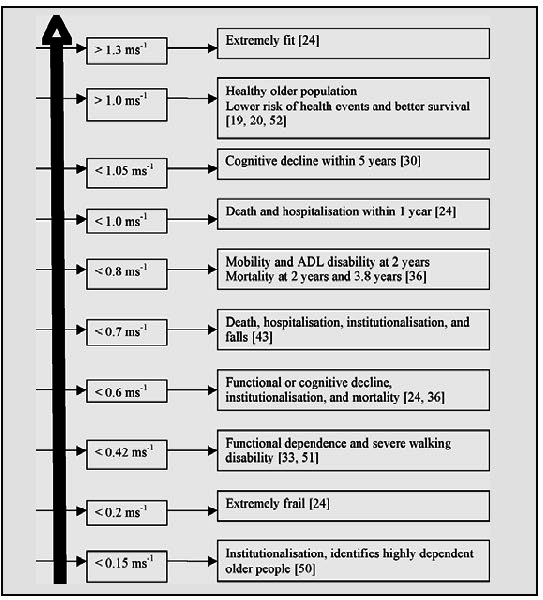
“The 1.0 ms-1 cutpoint was used to predict mortality (19, 20)”
§ Gait speed at usual pace as a predictor of adverse outcomes in community-dwelling older people an International Academy on Nutrition and Aging (IANA) Task Force > Results: Gait speed as a single-item tool > Distance and cut-points reported in literature for a single-item tool (Figure 2)
What the sources say
- Not checked yetcites [19] Cesari M. Kritchevsky S.B. Penninx B.W.H.J. Pronostic value of usual gait speed in well-functioning older people. Results from the Health, Aging and Body Composition Study J Am Geriatr Soc 53 2005 1675 1680 10.1111/j.1532-5415.2005.53501.x PubMed PMID: 16181165 16181165 source
- Supportedcites [20] Cesari M. Kritchevsky S.B. Newman A.B. Added value of physical performance measures in predicting adverse health-related events: results from the Health, Aging and Body Composition Study J Am Geriatr Soc 57 2009 251 259 10.1111/j.1532-5415.2008.02126.x PubMed PMID: 19207142 19207142 PMC2695653 source
The Methods section says the study used the 1 m/sec gait-speed cutpoint to classify participants into high- and low-risk groups. The Results section reports that the resulting high-risk gait-speed group was more likely to experience death, so the cutpoint was used to predict mortality. (LLM, conf=0.93)
plainstates an association- Asserted: passes — The authors put it forward as true.
- Checkable: passes — It can be checked against evidence.
- Load-bearing: unclear — It is unclear whether the paper’s conclusions depend on it.
- Based: passes — The paper gives a reason why it holds.
32 more claims · 1 with their cited sources checked
Create a free account to see all 68 claims and to verify the 52 references still open.
- The quote only partly states this claim. 2
- It may state two separate claims as one. 18
- Probably not a substantial claim. 14
Claims other papers make about this one
Each is checked against this paper’s own text: does it say what the citing paper says it does?
In the citing paper
“Slowing gait may reflect both damaged systems and a high-energy cost of walking.13,39–54”
From Gait speed and survival in older adults. (2011) · cites this paper as [13]
In the citing paper
“Others propose one cutoff around 0.8 m/s.13”
From Gait speed and survival in older adults. (2011) · cites this paper as [13]
In the citing paper
“Gait speed has been widely used as a single measure of frailty and is supported by a robust body of literature demonstrating its prognostic importance across a wide range of patient populations and performance levels.85”
In the citing paper
“Gait speed has also been demonstrated to be a consistent risk factor for disability, cognitive impairment, institutionalization, falls, and postoperative outcomes.85”
In the citing paper
“Accumulating evidence indicates slow walking speed (<1 m/sec indicating a high risk and < 0.8 m/sec indicating a very high risk), as well as reductions in walking speed, strongly predict functional decline, major health outcomes, and mortality in older adults.”
From Successful aging: Advancing the science of physical independence in older adults (2015) · cites this paper as Abellan Van, Rolland, Andrieu, Bauer, Beauchet, Bonnefoy, Cesari, Donini, Gillette, Inzitari, Nourhashemi, Onder, Ritz, Salva, Visser, and Vellas 2009
1 more claim about this paper
Create a free account to see every claim other papers make about this one.
Self-check
Percentages, sums and reported differences re-computed from the paper’s own numbers.
Each contradiction between two passages listed here was confirmed by an independent check.
Rated minor: it would not touch a result — a value no result rests on, a p-value that stays on the same side of the significance level, or a conflict that is clerical, resolved elsewhere in the paper, or outside its own findings.
In the paper
“After 5 years, of the assessed 2776 baseline participants, 389 (17.1%) declined in DSST.”
§ Gait speed at usual pace as a predictor of adverse outcomes in community-dwelling older people an International Academy on Nutrition and Aging (IANA) Task Force > Results: Gait speed as a predictor of adverse outcomes > Gait speed as a predictor of cognitive decline (Table 2)
Reported 17.1 · recomputed 14.012968
Rated minor: it would not touch a result — a value no result rests on, a p-value that stays on the same side of the significance level, or a conflict that is clerical, resolved elsewhere in the paper, or outside its own findings.
In the paper
§ Gait speed at usual pace as a predictor of adverse outcomes in community-dwelling older people an International Academy on Nutrition and Aging (IANA) Task Force > Results: Gait speed as a predictor of adverse outcomes > Gait speed as a predictor of cognitive decline (Table 2)
“| | Follow-up 6 years | | |”
§ Gait speed at usual pace as a predictor of adverse outcomes in community-dwelling older people an International Academy on Nutrition and Aging (IANA) Task Force > Results: Gait speed as a predictor of adverse outcomes > Gait speed as a predictor of cognitive decline (Table 2)
“In a prospective cohort study of 2288 persons, 65 years and older without dementia with a mean follow-up of 9 years, 319 participants developed dementia.”
Rated minor: it would not touch a result — a value no result rests on, a p-value that stays on the same side of the significance level, or a conflict that is clerical, resolved elsewhere in the paper, or outside its own findings.
In the paper
§ Gait speed at usual pace as a predictor of adverse outcomes in community-dwelling older people an International Academy on Nutrition and Aging (IANA) Task Force > Results: Gait speed as a single-item tool > Distance and cut-points reported in literature for a single-item tool (Figure 2)
“The walking distance used in the selected articles was found to be between 2.44 meters (8 feet) and 6 meters”
§ Gait speed at usual pace as a predictor of adverse outcomes in community-dwelling older people an International Academy on Nutrition and Aging (IANA) Task Force > Results: Gait speed as a predictor of adverse outcomes > Gait speed as a predictor of falls (Table 4)
“| Estudio de Evaluación | N= 102 | 10 meter walk | Gait speed was an independent predictor of falls with a RR of 5.4 (2-14.3) |”
Rated minor: it would not touch a result — a value no result rests on, a p-value that stays on the same side of the significance level, or a conflict that is clerical, resolved elsewhere in the paper, or outside its own findings.
In the paper
§ Gait speed at usual pace as a predictor of adverse outcomes in community-dwelling older people an International Academy on Nutrition and Aging (IANA) Task Force > Results: Gait speed as a predictor of adverse outcomes > Gait speed as a predictor of mobility disability (Table 1)
“| | Free from disability, cognitively intact | 15-foot walk | Incident ADL disability HR 0.88 (0.80-0.96) |”
§ Gait speed at usual pace as a predictor of adverse outcomes in community-dwelling older people an International Academy on Nutrition and Aging (IANA) Task Force > Results: Gait speed as a predictor of adverse outcomes > Gait speed as a predictor of mobility disability (Table 1)
“Gait speed over 1 ms-1 presented a Hazard Ratio, HR of 0.88 (95% CI 0.81-0.97) in predicting incident disability”
Rated minor: it would not touch a result — a value no result rests on, a p-value that stays on the same side of the significance level, or a conflict that is clerical, resolved elsewhere in the paper, or outside its own findings.
In the paper
§ Gait speed at usual pace as a predictor of adverse outcomes in community-dwelling older people an International Academy on Nutrition and Aging (IANA) Task Force > Methods
“The assessment of gait speed had to be performed over a short distance (long distance assessment instruments were excluded from the present review)”
§ Gait speed at usual pace as a predictor of adverse outcomes in community-dwelling older people an International Academy on Nutrition and Aging (IANA) Task Force > Results: Gait speed as a predictor of adverse outcomes > Gait speed as a predictor of mobility disability (Table 1)
“| Health ABC study (25) | N=3056 | LDCW 400 meter walk | New mobility limitations |”
2 more findings
Create a free account to see every finding of this check.
Citations
Cites
von Elm, E., Altman, D. G., Egger, M., Pocock, S. J., Gøtzsche, P. C., Vandenbroucke, J. P., & Initiative, F. T. S. (2007) · PLoS Medicine · doi:10.1371/journal.pmed.0040296 · Cited by 23,020
von Elm, E., Altman, D. G., Egger, M., Pocock, S. J., Gøtzsche, P. C., & Vandenbroucke, J. P. (2008) · Journal of Clinical Epidemiology · doi:10.1016/j.jclinepi.2007.11.008 · Cited by 17,893
von Elm, E., Altman, D. G., Egger, M., Pocock, S. J., Gøtzsche, P. C., Vandenbroucke, J. P., & Initiative, F. T. S. (2007) · Annals of Internal Medicine · doi:10.7326/0003-4819-147-8-200710160-00010 · Cited by 17,796
Lower-extremity function in persons over the age of 70 years as a predictor of subsequent disability
Guralnik, J. M., Ferrucci, L., Simonsick, E. M., Salive, M. E., & Wallace, R. B. (1995) · New England Journal of Medicine · doi:10.1056/nejm199503023320902 · Cited by 4,083
Guralnik, J. M., Ferrucci, L., Pieper, C. F., Leveille, S. G., Markides, K. S., Ostir, G. V., Studenski, S., Berkman, L. F., & Wallace, R. B. (2000) · The Journals of Gerontology Series A: Biological Sciences and Medical Sciences · doi:10.1093/gerona/55.4.m221 · Cited by 2,898 · cited 5×
“18) in between the curves when predicting ADL disability at 4 years of follow-up (3).”
Influentialvon Elm, E., Altman, D. G., Egger, M., Pocock, S. J., Gøtzsche, P. C., & Vandenbroucke, J. P. (2007) · Preventive Medicine · doi:10.1016/j.ypmed.2007.08.012 · Cited by 2,698
Comfortable and maximum walking speed of adults aged 20—79 years: reference values and determinants
BOHANNON, R. W. (1997) · Age and Ageing · doi:10.1093/ageing/26.1.15 · Cited by 2,341
Physical performance measures in the clinical setting
Studenski, S., Perera, S., Wallace, D., Chandler, J. M., Duncan, P. W., Rooney, E., Fox, M., & Guralnik, J. M. (2003) · Journal of the American Geriatrics Society · doi:10.1046/j.1532-5415.2003.51104.x · Cited by 1,218 · cited 7×
“2 ms-1 organisation, HMO, and > 65 years Fast walkers >1 ms-1 increase Veterans Affairs, VA (24) Cognitively intact No mobility disability 1-year follow-up Hong Kong Chinese cohort N=2032 16-feet walk Institutionalisation”
InfluentialCesari, M., Kritchevsky, S. B., Penninx, B. W. H. J., Nicklas, B. J., Simonsick, E. M., Newman, A. B., Tylavsky, F. A., Brach, J. S., Satterfield, S., Bauer, D. C., et al. (2005) · Journal of the American Geriatrics Society · doi:10.1111/j.1532-5415.2005.53501.x · Cited by 1,192
Self-citationThe I.A.N.A. task force on frailty assessment of older people in clinical practice
Van Kan, G. A., Rolland, Y., Bergman, H., Morley, J. E., Kritchevsky, S. B., & Vellas, B. (2008) · The Journal of nutrition, health and aging · doi:10.1007/bf02982161 · Cited by 1,099
Self-citation
Cited by
Items 401–500 of 1,005
Abellan van Kan, G., Houles, M., & Vellas, B. (2012) · Current Opinion in Clinical Nutrition and Metabolic Care · doi:10.1097/mco.0b013e328356bbf4 · Cited by 49
“Usual gait speed is a highly reliable, consistent, valid, quick, and inexpensive screening tool able to predict major adverse health-related outcomes [18].”
BackgroundSelf-citationSerrao, M., Pierelli, F., Sinibaldi, E., Chini, G., Castiglia, S. F., Priori, M., Gimma, D., Sellitto, G., Ranavolo, A., Conte, C., et al. (2019) · Frontiers in Neurology · doi:10.3389/fneur.2019.00902 · Cited by 55
“The significance of treating gait disturbances is reinforced by prior work showing that gait outcomes are related to longevity (17), cognitive decline (18), and adverse events (19).”
BackgroundGait Speed and Dismobility in Older Adults
Ostir, G. V., Berges, I. M., Ottenbacher, K. J., Fisher, S. R., Barr, E. A., Hebel, J. R., & Guralnik, J. M. (2015) · Archives of Physical Medicine and Rehabilitation · doi:10.1016/j.apmr.2015.05.017 · Cited by 55
Comorbid anxiety disorders in late-life depression: results of a cohort study
van der Veen, D. C., van Zelst, W. H., Schoevers, R. A., Comijs, H. C., & Voshaar, R. C. O. (2014) · International Psychogeriatrics · doi:10.1017/s1041610214002312 · Cited by 56
Li, C., Li, T., Lin, W., Liu, C.-S., Hsu, C., Hsiung, C. A., Chen, C., Huang, K., Wu, C., Wang, C., et al. (2015) · BMC Geriatrics · doi:10.1186/s12877-015-0011-6 · Cited by 55
Age and muscle strength mediate the age-related biomechanical plasticity of gait
Hortobágyi, T., Rider, P. M., Gruber, A. H., & DeVita, P. (2016) · European Journal of Applied Physiology · doi:10.1007/s00421-015-3312-8 · Cited by 55
Physical Activity in Adults with Diabetes Following Prosthetic Rehabilitation
Desveaux, L., Goldstein, R. S., Mathur, S., Hassan, A., Devlin, M., Pauley, T., & Brooks, D. (2016) · Canadian Journal of Diabetes · doi:10.1016/j.jcjd.2016.02.003 · Cited by 55
Home-Based Gait Speed Assessment: Normative Data and Racial/Ethnic Correlates Among Older Adults
Boulifard, D. A., Ayers, E. I., & Verghese, J. (2019) · Journal of the American Medical Directors Association · doi:10.1016/j.jamda.2019.06.002 · Cited by 56
“Socioeconomic status was indexed by education years (0-17) and a composite wealth score (1-10) derived by averaging decile rankings from two HRS summary measures, household income and household assets (including secondary residence).”
MethodHoogendijk, E. O., Rijnhart, J. J. M., Skoog, J., Robitaille, A., van den Hout, A., Ferrucci, L., Huisman, M. A., Skoog, I. G., Piccinin, A. M., Hofer, S. M., et al. (2019) · Experimental Gerontology · doi:10.1016/j.exger.2019.110783 · Cited by 55
“An additional advantage of screening for slow gait speed is that it predicts various other adverse health outcomes as well, which could be intervened on (Abellan van Kan et al., 2009).”
BackgroundMoore, C. C., McCullough, A. K., Aguiar, E. J., Ducharme, S. W., & Tudor-Locke, C. E. (2020) · Journal of Physical Activity and Health · doi:10.1123/jpah.2019-0205 · Cited by 55
Blackwood, J., Shubert, T. E., Forgarty, K., & Chase, C. A. (2015) · Journal of Geriatric Physical Therapy · doi:10.1519/jpt.0000000000000056 · Cited by 55
Peters, D. M., Middleton, A., Donley, J. W., Blanck, E. L., & Fritz, S. L. (2013) · Physiotherapy Theory and Practice · doi:10.3109/09593985.2013.845805 · Cited by 55
“…Blau, 2005); functional dependence (Shinkai et al, 2000); presence of subclinical cardiovascular disease (Hamer et al, 2010); future adverse events such as falls or hospitalization (Abellan van Kan et al, 2009; Montero-Odasso et al, 2005); and mortality (Hardy et al, 2007; Studenski et al, 2011).”
BackgroundAccelerometer Cut Points for Physical Activity Assessment of Older Adults with Parkinson’s Disease
Nero, H., Wallén, M. B., Franzén, E., Ståhle, A., & Hagströmer, M. (2015) · PLoS ONE · doi:10.1371/journal.pone.0135899 · Cited by 54
Viability of gait speed test in hospitalized elderly patients
Martinez, B. P., Batista, A. K. M. S., Ramos, Í. R., Dantas, J. C. N., Gomes, I. B., Forgiarini, L. A., Camelier, F. W. R., & Camelier, A. A. (2016) · Jornal Brasileiro de Pneumologia · doi:10.1590/s1806-37562015000000058 · Cited by 56
“(1) The six-meter gait speed test (6GST) is one such assessment tool and is considered a rapid, inexpensive measure that is highly reproducible in the noninstitutionalized elderly.(5)”
BackgroundMethodInfluentialSchülein, S., Barth, J., Rampp, A., Rupprecht, R., Eskofier, B. M., Winkler, J., Gaßmann, K., & Klucken, J. (2017) · Journal of NeuroEngineering and Rehabilitation · doi:10.1186/s12984-017-0228-z · Cited by 54
“The five spatio-temporal risk of falling associated gait parameters: (1) velocity (cm/s) [9, 12, 49, 50], (2) swing time (s) [12], (3) stride length (cm) [9, 12], (4) stride time variability (% CV) [8, 51, 52], and (5) double support time variability (% CV) [9, 12] were recorded by an instrumented walkway (GAITRite® w…”
MethodPhase Angle as a Sarcopenia Marker in Hospitalized Elderly Patients
Santana, N. D. M., Pinho, C. P. S., da Silva, C. P., dos Santos, N. F., & Mendes, R. M. L. (2018) · Nutrition in Clinical Practice · doi:10.1002/ncp.10016 · Cited by 54
Measuring physical performance in highly active older adults: associations with age and gender?
Tangen, G. G., & Robinson, H. S. (2019) · Aging Clinical and Experimental Research · doi:10.1007/s40520-019-01190-x · Cited by 55
Gait Speed and Mood, Cognition, and Quality of Life in Older Adults With Atrial Fibrillation
Marino, F., Lessard, D., Saczynski, J. S., McManus, D. D., Silverman-Lloyd, L. G., Benson, C. M., Blaha, M. J., & Waring, M. E. (2019) · Journal of the American Heart Association · doi:10.1161/jaha.119.013212 · Cited by 55
Liu, C. K., Lyass, A., Massaro, J. M., D’Agostino, R. B., Fox, C. S., & Murabito, J. M. (2013) · The Journals of Gerontology Series A · doi:10.1093/gerona/glt096 · Cited by 56
“Our secondary goal was to assess if CKD cys was associated longitudinally with a reduction in gait speed, as gait speed has been associated with mobility disability (15).”
BackgroundHunter, S. W., Clark, J., McLean, S. K., Pedlow, S., Hemmen, A. V., Montero‐Odasso, M., & Overend, T. J. (2014) · Physiotherapy Canada · doi:10.3138/ptc.2013-16 · Cited by 54
Annweiler, C., Beauchet, O., Celle, S., Roche, F., Annweiler, T., Allali, G., Bartha, R., & Montero‐Odasso, M. (2012) · American Journal of Alzheimer s Disease & Other Dementias® · doi:10.1177/1533317512454710 · Cited by 54
“Reports considered n=486 Title and abstract screening Excluded, n=447 Duplication (128) Position paper or literature review or editorial (21) Gait not outcome (25) Brain imaging not outcome (34) No association studied (1) Other types of cognitive disorders - parkinsonism (40) - neurosurgical or post-surgery (34) - nor…”
BackgroundSelf-citationOlder people's individual resources and reality in home care
Turjamaa, R. (2014) · UEF eRepo (University of Eastern Finland) · Cited by 57
Standing balance and strength measurements in older adults living in residential care communities
Alqahtani, B. A., Ferchak, M. A., Huppert, T. J., Sejdić, E., Perera, S., Greenspan, S. L., & Sparto, P. J. (2016) · Aging Clinical and Experimental Research · doi:10.1007/s40520-016-0693-4 · Cited by 53
“It represents a quick, inexpensive and highly reliable tool to use with older adults [25].”
Functional capacity and fear of falling in cancer patients undergoing chemotherapy
Niederer, D., Schmidt, K., Vogt, L., Egen, J., Klingler, J., Hübscher, M., Thiel, C., Bernhörster, M., & Banzer, W. B. (2013) · Gait & Posture · doi:10.1016/j.gaitpost.2013.11.014 · Cited by 53
Ruggero, C. R., Bilton, T., Teixeira, L. F., Ramos, J. D. L. A., Alouche, S. R., Dias, R. C., & Perracini, M. R. (2013) · BMC Public Health · doi:10.1186/1471-2458-13-182 · Cited by 53
Physical Function and Physical Activity in Peritoneal Dialysis Patients
Painter, P., Agarwal, A., & Drummond, M. J. (2017) · Peritoneal Dialysis International · doi:10.3747/pdi.2016.00256 · Cited by 55
“4 m/sec) (24), this categorization is for “older” (> 70 years) community-dwelling individuals in the general population.”
BackgroundDiscrepancies in the Prevalence of Known Frailty Scales: Korean Frailty and Aging Cohort Study
Kim, K. J., Shin, J., Choi, J., & Won, C. W. (2018) · Annals of Geriatric Medicine and Research · doi:10.4235/agmr.2018.22.3.137 · Cited by 53
Adding meaning to physical fitness test results in individuals with intellectual disabilities
Oppewal, A., & Hilgenkamp, T. I. M. (2019) · Disability and Rehabilitation · doi:10.1080/09638288.2018.1527399 · Cited by 54
Development of Pharmacotherapies for the Treatment of Sarcopenia
Rooks, D., & Roubenoff, R. (2019) · The Journal of Frailty & Aging · doi:10.14283/jfa.2019.11 · Cited by 46
“Gait speed or usual walking speed is easy to evaluate in both clinical and research environments, is commonly included in comprehensive geriatric care in many countries and has been called the “5th vital sign” (73, 74, 87, 88).”
Upatising, B., Hanson, Kim, Cha, Yih, Y., & Takahashi, P. Y. (2013) · International Journal of General Medicine · doi:10.2147/ijgm.s40576 · Cited by 53
Sirola, J., Pitkälä, K. H., Tilvis, R. S., Miettinen, T. A., & Strandberg, T. E. (2011) · The journal of nutrition health & aging · doi:10.1007/s12603-011-0131-4 · Cited by 53
Bytyçi, I., & Henein, M. Y. (2021) · Journal of Clinical Medicine · doi:10.3390/jcm10122670 · Cited by 52
“In addition, other quantitative parameters of gait, such as swing phase, stride length and gait variability, demonstrated better predictive value of disability compared to speed alone [31,34].”
BackgroundMarzetti, E., Landi, F., Marini, F., Cesari, M., Buford, T. W., Manini, T. M., Onder, G., Pahor, M., Bernabei, R., Leeuwenburgh, C., et al. (2014) · Frontiers in Medicine · doi:10.3389/fmed.2014.00027 · Cited by 52
Self-citationO'Neill, B. R., Batterham, A. M., Hollingsworth, A., Durrand, J. W., & Danjoux, G. R. (2016) · Anaesthesia · doi:10.1111/anae.13404 · Cited by 53
“walk or timed-up-and-go [14] tests may also improve discriminatory ability, however, this requires further”
BackgroundWu, C., Smit, E., Peralta, C. A., Sarathy, H., & Odden, M. C. (2017) · Journal of the American Geriatrics Society · doi:10.1111/jgs.14816 · Cited by 52
Interactions Between Different Age-Related Factors Affecting Balance Control in Walking
Reimann, H., Ramadan, R., Fettrow, T., Hafer, J. F., Geyer, H., & Jeka, J. J. (2020) · Frontiers in Sports and Active Living · doi:10.3389/fspor.2020.00094 · Cited by 54
“Reduced walking speed has also been tied to incidence of falls (Abellan Van Kan et al., 2009; Verghese et al., 2009; Middleton et al., 2016; Geerse et al., 2019) and fear of falling (Callisaya and Verghese, 2018; Geerse et al., 2019; van Schooten et al., 2019) in older adults.”
BackgroundAsscher, V. E. R., Waars, S. N., Jong, A. E. V. D. M., Stuyt, R. J. L., Baven-Pronk, A. M. C., van der Marel, S., Jacobs, R. J., Haans, J. J. L., Meijer, L. J., Slagboom, J., et al. (2021) · Clinical Gastroenterology and Hepatology · doi:10.1016/j.cgh.2021.06.015 · Cited by 52
Viana, J. U., da Silva, S. L. A., Torres, J. L., Dias, J. M. D., Pereira, L. S. M., & Dias, R. C. (2013) · Brazilian Journal of Physical Therapy · doi:10.1590/s1413-35552013005000102 · Cited by 53
Iolascon, G., Alessandro de, S. I. R. E., Calafiore, D., Moretti, A., Gimigliano, R., & Gimigliano, F. (2015) · Aging Clinical and Experimental Research · doi:10.1007/s40520-015-0405-5 · Cited by 54
“We chose this parameter with this specific cutoff to better define the lower limb muscle impairment, predicting an increased overall disability [40], as recommended by the Foundation for the National Institutes of Health Biomarkers Consortium Sarcopenia Project (FNIH) [21].”
MethodWalshe, E. A., Patterson, M., Commins, S., & Roche, R. A. P. (2015) · Frontiers in Human Neuroscience · doi:10.3389/fnhum.2015.00200 · Cited by 51
“Frontiers in Human Neuroscience | www.frontiersin.org 6 April 2015 | Volume 9 | Article 200”
BackgroundMethodInfluentialBlood Pressure, Gait Speed, and Mortality in Very Old Individuals: A Population-Based Cohort Study
Weidung, B., Boström, G., Toots, A., Nordström, P., Carlberg, B., Gustafson, Y., & Littbrand, H. (2014) · Journal of the American Medical Directors Association · doi:10.1016/j.jamda.2014.09.004 · Cited by 51
Dijkhuizen, A., Hilgenkamp, T. I. M., Krijnen, W. P., van der Schans, C. P., & Waninge, A. (2015) · Research in Developmental Disabilities · doi:10.1016/j.ridd.2015.10.001 · Cited by 51
Sarcopenia in post-acute care and rehabilitation of older adults: A review
Sánchez‐Rodríguez, D., Calle, A., Contra, A., Ronquillo-Moreno, N., Rodríguez-Marcos, A., Vázquez‐Ibar, O., Colominas, M., & Inzitari, M. (2016) · European Geriatric Medicine · doi:10.1016/j.eurger.2015.11.001 · Cited by 51
Self-citationHilgenkamp, T. I. M., van Wijck, R., & Evenhuis, H. M. (2013) · Intellectual and developmental disabilities · doi:10.1352/1934-9556-51.01.033 · Cited by 51
Siejka, T. P., Srikanth, V. K., Hubbard, R. E., Moran, C., Beare, R. J., WOOD, A. G., Phan, T. G., & Callisaya, M. L. (2017) · The Journals of Gerontology Series A · doi:10.1093/gerona/glx145 · Cited by 51
Reduced Walking Speed in Subjective and Mild Cognitive Impairment: A Cross-Sectional Study
Knapstad, M. K., Steihaug, O. M., Aaslund, M. K., Nakling, A. E., Naterstad, I. F., Fladby, T., Aarsland, D., & Giil, L. M. (2018) · Journal of Geriatric Physical Therapy · doi:10.1519/jpt.0000000000000157 · Cited by 53
Vetrano, D. L., Rizzuto, D., Calderón‐Larrañaga, A., Onder, G., Welmer, A., Qiu, C., Bernabei, R., Marengoni, A., & Fratiglioni, L. (2019) · The American Journal of Medicine · doi:10.1016/j.amjmed.2019.05.005 · Cited by 52
“speed a comprehensive vital parameter.(14,27,28,44) In such cases, there is a certain overlap between disease and physical functioning, which may be interpreted as an indicator of severity.”
BackgroundSelf-citationMaitland, S., & Baker, S. N. (2021) · Frontiers in Aging Neuroscience · doi:10.3389/fnagi.2021.612352 · Cited by 52
“Clinical features of sarcopenia include reduced gait speed (Abellan Van Kan et al., 2009; Peel et al., 2013), balance (Mathias et al., 1986), and difficulty rising from a chair (Jones et al., 1999; Cesari et al., 2009).”
BackgroundNace, D. A., Lin, C. J., Ross, T. M., Saracco, S., Churilla, R. M., & Zimmerman, R. K. (2014) · The Journal of Infectious Diseases · doi:10.1093/infdis/jiu622 · Cited by 51
“8 m/second indicate significant frailty and increased mortality risk [21, 22].”
BackgroundTract-specific white matter microstructure and gait in humans
Verlinden, V. J. A., de Groot, M., Cremers, L. G. M., van der Geest, J. N., Hofman, A., Niessen, W. J., van der Lugt, A., Vernooij, M. W., & Ikram, M. A. (2016) · Neurobiology of Aging · doi:10.1016/j.neurobiolaging.2016.04.005 · Cited by 51
Long-Term Exercise in Older Adults: 4-Year Outcomes of Music-Based Multitask Training
Hars, M., Herrmann, F. R., Fielding, R. A., Reid, K. F., Rizzoli, R., & Trombetti, A. (2014) · Calcified Tissue International · doi:10.1007/s00223-014-9907-y · Cited by 40
“, time required to complete basic tasks of daily living) above 12 s in control participants at 4-year follow-up, putting these subjects at a high risk of adverse health outcomes including fractures, hospitalization and decreased survival [30, 32, 35].”
Sanders, J. B., Bremmer, M. A., Comijs, H. C., Deeg, D. J. H., & Beekman, A. T. F. (2016) · Journal of the American Medical Directors Association · doi:10.1016/j.jamda.2015.11.016 · Cited by 50
¿Mides la velocidad de la marcha en tu práctica diaria? Una revisión
Inzitari, M., Calle, A., Esteve, A., Casas, Á., Torrents, N., & Martínez, N. (2016) · Revista Española de Geriatría y Gerontología · doi:10.1016/j.regg.2015.12.010 · Cited by 51
Self-citationGait Speed and Processing Speed as Clinical Markers for Geriatric Health Outcomes
Sanders, J. B., Bremmer, M. A., Comijs, H. C., van de Ven, P. M., Deeg, D. J. H., & Beekman, A. T. F. (2016) · American Journal of Geriatric Psychiatry · doi:10.1016/j.jagp.2016.12.003 · Cited by 51
Longitudinal Association Between Brain Amyloid-Beta and Gait in the Mayo Clinic Study of Aging
Wennberg, A. M. V., Lesnick, T. G., Schwarz, C. G., Savica, R., Hagen, C. E., Roberts, R. O., Knopman, D. S., Hollman, J. H., Vemuri, P., Jack, C. R., et al. (2017) · The Journals of Gerontology Series A · doi:10.1093/gerona/glx240 · Cited by 50
“Gait disturbances in elderly adults are associated with an increased risk of cognitive decline and dementia (1,2).”
Abe, T., Kitamura, A., Taniguchi, Y., Amano, H., Seino, S., Yokoyama, Y., Nishi, M., Narita, M., Ikeuchi, T., Fujiwara, Y., et al. (2019) · Maturitas · doi:10.1016/j.maturitas.2019.02.002 · Cited by 50
Real-world gait speed estimation, frailty and handgrip strength: a cohort-based study
Soltani, A., Abolhassani, N., Marques-Vidal, P. M., Aminian, K., Vollenweider, P., & Paraschiv-Ionescu, A. (2021) · Scientific Reports · doi:10.1038/s41598-021-98359-0 · Cited by 50
Keserwani, P. K., Das, S. R., & Sarkar, N. (2024) · Multimedia Tools and Applications · doi:10.1007/s11042-024-18186-z · Cited by 49
Vitamin D and white matter abnormalities in older adults: a cross‐sectional neuroimaging study
Annweiler, C., Annweiler, T., Bartha, R., Herrmann, F. R., Camicioli, R. M., & Beauchet, O. (2014) · European Journal of Neurology · doi:10.1111/ene.12511 · Cited by 49
“Impaired mobility was defined by gait velocity slower than 100 cm/s at usual pace [29] using an electronic portable walkway with pressure sensor pads connected to a computer (GAITRite Gold walkway, 972 cm long, active electronic surface area 792 9 610 cm, with a total of 29 952 pressure sensors, scanning frequency 60…”
MethodSelf-citationBalance Confidence and Falls in Nondemented Essential Tremor Patients: The Role of Cognition
Rao, A. K., Gilman, A., & Louis, E. D. (2014) · Archives of Physical Medicine and Rehabilitation · doi:10.1016/j.apmr.2014.04.001 · Cited by 50
Schwesig, R., Fischer, D. A. V., Lauenroth, A., Becker, S. T., & Leuchte, S. (2012) · Clinical Rehabilitation · doi:10.1177/0269215512452880 · Cited by 49
Keogh, J., Senior, H., Beller, E., & Henwood, T. R. (2015) · Archives of Physical Medicine and Rehabilitation · doi:10.1016/j.apmr.2015.06.021 · Cited by 50
History of falls, balance performance, and quality of life in older cancer survivors
Huang, M. H., Lytle, T., Miller, K., Smith, K., & Fredrickson, K. (2014) · Gait & Posture · doi:10.1016/j.gaitpost.2014.05.015 · Cited by 48
Sales, M., Levinger, P., & Polman, R. C. J. (2017) · European Review of Aging and Physical Activity · doi:10.1186/s11556-017-0185-3 · Cited by 49
“For example, reduced gait speed is an independent factors for falls [29] and is associated with disability, cognitive impairment, institutionalisation, and mortality among older adults [30].”
McGough, E. L., Lin, S., Belza, B. L., Becofsky, K. M., Jones, D. L., Liu, M., Wilcox, S., & Logsdon, R. G. (2017) · Journal of Geriatric Physical Therapy · doi:10.1519/jpt.0000000000000159 · Cited by 48
Chang, M. C., Lee, B. J., Joo, N.-Y., & Park, D. (2021) · BMC Neurology · doi:10.1186/s12883-021-02072-4 · Cited by 48
“Since the outcome of gait speed is related to mortality, poor quality of life, and physical and cognitive functional decline, clinicians and researchers can obtain information regarding the patient’s status and predict the functional prognosis by measuring gait speed [23, 24].”
BackgroundYi, D., & Yim, J. (2021) · Medical Science Monitor · doi:10.12659/msm.935496 · Cited by 49
“Low walking speed has been shown to be a strong predictor of numerous adverse health outcomes, including falls, cognitive impairment, functional decline, and mortality in the elderly [52].”
BackgroundPreliminary Comparison of Clinical and Free-Living Measures of Stepping Cadence in Older Adults
Tudor-Locke, C. E., Barreira, T. V., Brouillette, R., Foil, H. C., & Keller, J. N. (2013) · Journal of Physical Activity and Health · doi:10.1123/jpah.10.8.1175 · Cited by 48
Hornyak, V., VanSwearingen, J. M., & Brach, J. S. (2012) · Topics in Geriatric Rehabilitation · doi:10.1097/tgr.0b013e318233e75b · Cited by 50
Perceived discrimination: Associations with physical and cognitive function in older adults.
Shankar, A., & Hinds, P. (2017) · Health Psychology · doi:10.1037/hea0000522 · Cited by 48
Cardiovascular Risk Burden and Future Risk of Walking Speed Limitation in Older Adults
Heiland, E. G., Qiu, C., Wang, R., Santoni, G., Liang, Y., Fratiglioni, L., & Welmer, A. (2017) · Journal of the American Geriatrics Society · doi:10.1111/jgs.15158 · Cited by 47
“Several reports have shown that walking speed has a strong ability to predict chronic morbidity, hospitalization, and mortality.(2,3) Questions remain, however, about the underlying biological mechanisms and clinical pathways that can explain the decreases in physical function in the absence of serious chronic conditi…”
BackgroundLabata-Lezaun, N., Llurda-Almuzara, L., López-de-Celis, C., Rodríguez-Sanz, J., González-Rueda, V., Hidalgo-García, C., Muniz-Pardos, B., & Pérez-Bellmunt, A. (2020) · Nutrients · doi:10.3390/nu12092607 · Cited by 42
Mehdipour, A., Malouka, S., Beauchamp, M., Richardson, J. A., & Kuspinar, A. (2024) · Age and Ageing · doi:10.1093/ageing/afae055 · Cited by 47
The effects of head movement and walking speed on gait parameters in patients with chronic neck pain
Uthaikhup, S., Sunkarat, S., Khamsaen, K., Meeyan, K., & Treleaven, J. M. (2013) · Manual Therapy · doi:10.1016/j.math.2013.09.004 · Cited by 47
“, 2005; Abellan van Kan et al., 2009). Specifically, walking speed has been recommended as a potentially clinical indicator of overall gait performance (Studenski et al., 2011). Cesari et al. (2005) suggested that usual gait speed of less than 1 m/s is related to high risk of a major health related event.”
BackgroundHeiland, E. G., Welmer, A., Wang, R., Santoni, G., Fratiglioni, L., & Qiu, C. (2018) · Journal of the American Medical Directors Association · doi:10.1016/j.jamda.2018.05.013 · Cited by 48
A Calorie-Restricted DASH Diet Reduces Body Fat and Maintains Muscle Strength in Obese Older Adults
Perry, C. A., Guilder, G. P. V., Kauffman, A., & Hossain, M. (2019) · Nutrients · doi:10.3390/nu12010102 · Cited by 48
Sganga, F., Vetrano, D. L., Volpato, S., Cherubini, A., Ruggiero, C., Corsonello, A., Fabbietti, P., Lattanzio, F., Bernabei, R., & Onder, G. (2014) · The journal of nutrition health & aging · doi:10.1007/s12603-014-0029-z · Cited by 47
Self-citationAging and physical mobility in group-housed Old World monkeys
Shively, C. A., Willard, S. L., Register, T. C., Bennett, A. J., Pierre, P. J., Laudenslager, M. L., Kitzman, D. W., Childers, M. K., Grange, R. W., & Kritchevsky, S. B. (2011) · AGE · doi:10.1007/s11357-011-9350-1 · Cited by 46
Beijersbergen, C. M. I., Granacher, U., Gäbler, M., DeVita, P., & Hortobágyi, T. (2016) · Gait & Posture · doi:10.1016/j.gaitpost.2016.12.024 · Cited by 46
Cooper, L. B., Hammill, B. G., Allen, L. A., Lindenfeld, J. M., Mentz, R. J., Rogers, J. G., Milano, C. A., Patel, C. B., Alexander, K. P., & Hernandez, A. F. (2017) · ASAIO Journal · doi:10.1097/mat.0000000000000600 · Cited by 46
Walking Speed, Risk Factors, and Cardiovascular Events in Older Adults—Systematic Review
Alves, D. J. F., Neto, J. B., Júnior, E. R., Zarricueta, B. S. R., Nóbrega, O. D. T., & Córdova, C. (2017) · The Journal of Strength and Conditioning Research · doi:10.1519/jsc.0000000000002182 · Cited by 46
Ambagtsheer, R. C., Archibald, M. M., Lawless, M., Kitson, A. A., & Beilby, J. (2020) · BMC Geriatrics · doi:10.1186/s12877-020-01551-6 · Cited by 46
Functional decline among older cancer survivors in the Baltimore longitudinal study of aging
Siddique, S., Simonsick, E. M., & Gallicchio, L. M. (2021) · Journal of the American Geriatrics Society · doi:10.1111/jgs.17369 · Cited by 46
“8 m/s.(21,22) The Health, Aging, and Body Composition physical performance battery (HABC PPB) metric measures performance in four mobility-related tasks: (1) usual gait speed, (2) time taken to stand up and sit back down five times on an armless chair without assistance, (3) ability to hold three balancerelated positi…”
MethodCalibration-Free Gait Assessment by Foot-Worn Inertial Sensors
Laidig, D., Jocham, A. J., Guggenberger, B., Adamer, K., Fischer, M. J., & Seel, T. (2021) · Frontiers in Digital Health · doi:10.3389/fdgth.2021.736418 · Cited by 46
Is the mini nutritional assessment an appropriate tool to assess frailty in older adults?
van Kan, G. A., & Vellas, B. J. (2011) · The journal of nutrition health & aging · doi:10.1007/s12603-011-0031-7 · Cited by 46
“Exhaustion, Low physical activity, low hand grip strength, and slow gait speed are the major components of frailty along with chronic undernutrition assess by weight loss (27, 28, 23, 29 , 30, 26).”
Self-citationHigh-sensitivity C-reactive protein and mobility disability in older adults
Verghese, J., Holtzer, R., Lipton, R. B., & Wang, C. (2012) · Age and Ageing · doi:10.1093/ageing/afs038 · Cited by 39
Wu, C., Geldhof, G. J., Xue, Q.-L., Kim, D. H., Newman, A. B., & Odden, M. C. (2018) · American Journal of Epidemiology · doi:10.1093/aje/kwy041 · Cited by 45
Dodds, R. M., & Sayer, A. A. (2014) · Arquivos Brasileiros de Endocrinologia & Metabologia · doi:10.1590/0004-273000000 · Cited by 45
Lund, C. M., Vistisen, K. K., Dehlendorff, C., Rønholt, F., Johansen, J. S., & Nielsen, D. L. (2017) · BMC Cancer · doi:10.1186/s12885-017-3445-8 · Cited by 47
“Usual gait speed, which is commonly used, is associated with OS [68], and a gait speed over 4 m (at a threshold of 1 m/s) can predict adverse outcomes in community-dwelling older people [69].”
BackgroundKoyanagi, A., Stubbs, B., Smith, L., Gardner, B., & Vancampfort, D. (2017) · PLoS ONE · doi:10.1371/journal.pone.0186992 · Cited by 45
Morey, M. C., Lee, C. C., Castle, S. C., Valencia, W. M., Katzel, L. I., Giffuni, J., Kopp, T., Cammarata, H., McDonald, M., Oursler, K. A., et al. (2018) · Journal of the American Geriatrics Society · doi:10.1111/jgs.15276 · Cited by 45
“05 m/s) of program participants was very close to what is considered the cut point between healthy and impaired mobility.(15) Other assessed parameters, 30-second chair stands, 8-foot up and go, and 6-minute walk time, were between the 10th and 25 percentiles of age-based norms, indicating substantial functional impai…”
BackgroundWu, I., Chang, H., Hsu, C., Chiu, Y., Yu, S., Tsai, Y., Shen, S.-C., Kuo, K. N., Chen, C., Liu, K., et al. (2013) · PLoS ONE · doi:10.1371/journal.pone.0080209 · Cited by 46
“Adults with these poor physical performances are known to be at high risk of disability[2,7,10,43-47].”
BackgroundAdabağ, S., Vo, T., Langsetmo, L., Schousboe, J. T., Cawthon, P. M., Stone, K. L., Shikany, J. M., Taylor, B. C., & Ensrud, K. E. (2018) · Journal of the American Heart Association · doi:10.1161/jaha.118.008974 · Cited by 45
“In contrast to these multi-item frailty scales, 5-m gait speed has been advocated as a single component of frailty that has been associated with poor outcomes after CVD interventions.(32,45,46) Recently, sarcopenia, assessed by psoas muscle area or pectoralis muscle volume, has been associated with poor outcomes after…”
Correlates of Gait Speed in Advanced Knee Osteoarthritis
Marcum, Z. A., Zhan, H. L., Perera, S., Moore, C. G., Fitzgerald, G. K., & Weiner, D. K. (2014) · Pain Medicine · doi:10.1111/pme.12478 · Cited by 45
Bongers, K. T. J., Schoon, Y., Graauwmans, M. J., Schers, H., Melis, R. J. F., & Rikkert, M. G. M. O. (2014) · Age and Ageing · doi:10.1093/ageing/afu151 · Cited by 44
Cock, A. D., Fransén, E., Perkisas, S., Verhoeven, V., Beauchet, O., Remmen, R., & Vandewoude, M. F. J. (2017) · PLoS ONE · doi:10.1371/journal.pone.0178566 · Cited by 46
Self-citationSong, M., & Kim, J. (2017) · IEEE Transactions on Biomedical Engineering · doi:10.1109/tbme.2017.2724543 · Cited by 44
Diverse Exercises Similarly Reduce Older Adults’ Mobility Limitations
Tollár, J., Nagy, F., Moizs, M., TÓTH, B. E., Sanders, L. M. J., & Hortobágyi, T. (2019) · Medicine & Science in Sports & Exercise · doi:10.1249/mss.0000000000002001 · Cited by 44
Assessment of frailty in Saudi community-dwelling older adults: validation of measurements
Alqahtani, B. A., & Nasser, T. A. (2019) · Annals of Saudi Medicine · doi:10.5144/0256-4947.2019.197 · Cited by 46
Frailty Clinical Phenotype: A Physical and Cognitive Point of View
Aubertin‐Leheudre, M., Woods, A. J., Anton, S. D., Cohen, R. A., & Pahor, M. (2015) · Nestlé Nutrition Institute Workshop series · doi:10.1159/000382061 · Cited by 45
Metadata
- Authors
- Abellan Van Kan, G., Rolland, Y., Andrieu, S., Bauer, J., Beauchet, O., Bonnefoy, M., Cesari, M., Donini, L. M., Gillette-Guyonnet, S., Inzitari, M., Nourhashemi, F., Onder, G., Ritz, P., Salva, A., Visser, M., & Vellas, B.
- Affiliations
- Université Toulouse III - Paul Sabatier (FR)
- Friedrich-Alexander-Universität Erlangen-Nürnberg (DE)
- Centre Hospitalier Universitaire d'Angers (FR)
- Hôpital Lyon Sud (FR)
- University of Florida (US)
- Sapienza University of Rome (IT)
- Universitat Autònoma de Barcelona (ES)
- Università Cattolica del Sacro Cuore (IT)
- Centre Hospitalier Universitaire de Toulouse (FR)
- Amsterdam Public Health (NL)
- ORCID
- Venue
- The Journal of nutrition, health and aging
- Publisher
- Elsevier BV
- Published
- 2009-12
- Volume
- 13
- Issue
- 10
- Pages
- 881-889
- ISSN
- 1279-7707 (ISSN-L)
- PMC
- PMC12878092
- OpenAlex
- W2104750100
- Semantic Scholar
- 10553b18ba60c073f881cfe6be4b7f453a2f15b0
- Cited by
- 2,003
- References
- 56
- Citations by year
- 2026: 96 · 2025: 117 · 2024: 113 · 2023: 137 · 2022: 141 · 2021: 172 · 2020: 153 · 2019: 156 · 2018: 122 · 2017: 155 · 2016: 154 · 2015: 135 · 2014: 117 · 2013: 75 · 2012: 94
- FWCI
- 5.47
- Type
- journal article
- Language
- en
- Open access
- hybrid
- doi.org
- Licence
- cc-by-nc-nd
- www.elsevier.com/tdm/userlicense/1.0/ (tdm)
- www.elsevier.com/legal/tdmrep-license (tdm)
- creativecommons.org/licenses/by-nc-nd/4.0/ (vor, 5125 d)
- Locations
- The journal of nutrition health & aging (publishedVersion, cc-by-nc-nd)
- Europe PMC (PubMed Central) (publishedVersion, cc-by-nc-nd)
- PubMed (publishedVersion)
- PubMed Central (publishedVersion, cc-by-nc-nd)
- VU Research Portal (publishedVersion)
- IRIS Research product catalog (Sapienza University of Rome) (submittedVersion)
- Data Archiving and Networked Services (DANS) (submittedVersion)
- Topics
- Health Sciences › Medicine › Geriatrics and Gerontology › Frailty in Older Adults
- Health Sciences › Health Professions › Physical Therapy, Sports Therapy and Rehabilitation › Balance, Gait, and Falls Prevention
- Health Sciences › Medicine › Physiology (medical) › Nutrition and Health in Aging
- Keywords
- walking speed, community-dwelling older adults, frailty, physical performance, adverse outcomes, disability, cognitive impairment, institutionalization, falls, mortality, risk prediction
- MeSH terms
- Activities of Daily Living, Aged, Aged, 80 and over, Aging, Cognition Disorders, Disability Evaluation, Female, Gait, Humans, Kinetics, Male, Predictive Value of Tests, Geriatric Assessment, Frail Elderly, Mobility Limitation
About these checks
Registry, retraction, Cites and statistics results are computed, not judged, with one exception: a printed reference that no index lists is read once by a model before it counts as a citation error. Claims are extracted by a model and kept only when their quote appears verbatim in the text; each cited source is then checked, with a model’s help, for whether it says what the claim relies on. Those verdicts can be wrong — read the claim’s quote and the cited source before relying on one.
The claim verdicts this report counts are experimental: their accuracy is not yet measured.
A language model drew the claims from the paper on 2026-10-05, under version 3 of the claim definition (model deepseek-v4.1-flash, prompt extract-v3).
A second model labelled each claim on 2026-10-05 (model jev-1.13-20260917, definition revision gold-guideline-v0.2).
Cited sources are checked with a language model’s help (gpt-6-sol).
Statistics and arithmetic are recomputed, not judged.
Confidence bands are shown only for fields calibrated on our annotated test set. None is calibrated yet, so no band is shown.
What counts as a claim ›How we measure confidence ›How we check this ›
Are you an author, or do you see a problem with this page? Request a review
Data sources
Bibliographic data: Semantic Scholar, OpenAlex, Crossref.
Contains information from the Semantic Scholar Academic Graph Datasets, made available under the ODC Attribution License (ODC-BY 1.0).
Semantic Scholar’s data is described in: Kinney, R., et al. (2023). The Semantic Scholar Open Data Platform. arXiv:2301.10140.
