

Gait speed at usual pace as a predictor of adverse outcomes in community-dwelling older people an International Academy on Nutrition and Aging (IANA) Task Force
Open accessThe DOI matches its Crossref record; 56 of the 56 references it cites were found in a registry or an index; 10 of the 62 sources its claims cite were checked for support.
Abstract
INTRODUCTION: The use of a simple, safe, and easy to perform assessment tool, like gait speed, to evaluate vulnerability to adverse outcomes in community-dwelling older people is appealing, but its predictive capacity is still questioned. The present manuscript summarises the conclusions of an expert panel in the domain of physical performance measures and frailty in older people, who reviewed and discussed the existing literature in a 2-day meeting held in Toulouse, France on March 12-13, 2009. The aim of the IANA Task Force was to state if, in the light of actual scientific evidence, gait speed assessed at usual pace had the capacity to identify community-dwelling older people at risk of adverse outcomes, and if gait speed could be used as a single-item tool instead of more comprehensive but more time-consuming assessment instruments. METHODS: A systematic review of literature was performed prior to the meeting (Medline search and additional pearling of reference lists and key-articles supplied by Task Force members). Manuscripts were retained for the present revision only when a high level of evidence was present following 4 pre-selected criteria: a) gait speed, at usual pace, had to be specifically assessed as a single-item tool, b) gait speed should be measured over a short distance, c) at baseline, participants had to be autonomous, community-dwelling older people, and d) the evaluation of onset of adverse outcomes (i.e. disability, cognitive impairment, institutionalisation, falls, and/or mortality) had to be assessed longitudinally over time. Based on the prior criteria, a final selection of 27 articles was used for the present manuscript. RESULTS: Gait speed at usual pace was found to be a consistent risk factor for disability, cognitive impairment, institutionalisation, falls, and/or mortality. In predicting these adverse outcomes over time, gait speed was at least as sensible as composite tools. CONCLUSIONS: Although more specific surveys needs to be performed, there is sufficient evidence to state that gait speed identifies autonomous community-dwelling older people at risk of adverse outcomes and can be used as a single-item assessment tool. The assessment at usual pace over 4 meters was the most often used method in literature and might represent a quick, safe, inexpensive and highly reliable instrument to be implemented.
Overview
CoChat Summary
TL;DR
This IANA Task Force systematic review and expert-panel report concludes that usual-pace gait speed is a consistent predictor of adverse outcomes in autonomous community-dwelling older people and performs at least as well as composite tools. The panel recommends gait speed as a single-item assessment, with an “easy-to-remember” cutpoint of 0.8 m/s using a 4-meter course.
Key findings
- Gait speed at usual pace was a consistent risk factor for disability, cognitive impairment, institutionalisation, falls, and/or mortality across the 27 selected articles.
- In Health ABC, slow gait speed (<1.0 m/s) predicted persistent lower extremity limitation with RR 2.20 (95% CI 1.76–2.74) over 4.9 years and mortality with RR 1.64 (95% CI 1.14–2.37).
- In H-EPESE, the lowest versus highest gait-speed quartile predicted mortality with OR 3.64 (95% CI 1.93–6.85), and inability to perform the task raised mortality risk to OR 7.47 (95% CI 3.83–14.55).
- Gait speed alone was nearly as good as the SPPB for predicting ADL disability at 4 years: AUC 0.67 for gait speed versus 0.69 for SPPB, p=0.18; the panel proposed 0.8 m/s (5 seconds for 4 meters) as the clinical cutpoint for adverse outcomes.
Methods
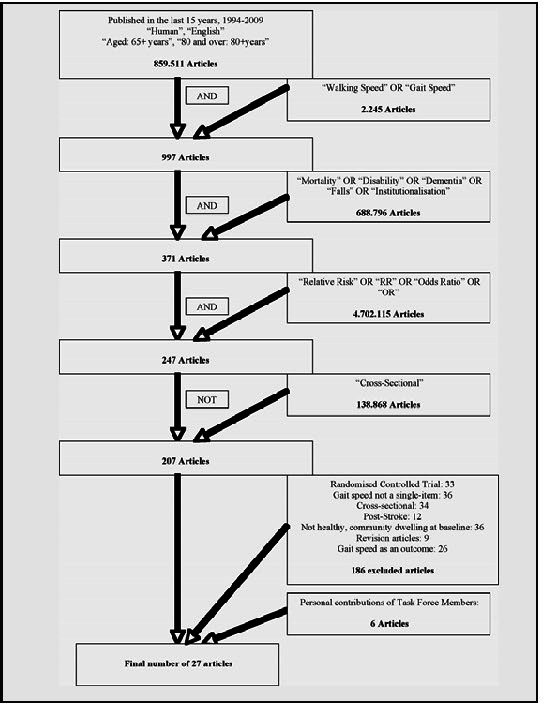
- Systematic literature review using Medline from January 1994 to March 2009, with MeSH terms including “Walking Speed” and “Gait Speed,” yielding 207 articles before final selection of 27 articles.
- Inclusion required usual-pace gait speed assessed as a single-item tool over a short distance, autonomous community-dwelling older participants at baseline, and longitudinal assessment of adverse outcomes (disability, cognitive impairment, institutionalisation, falls, and/or mortality).
- Abstracts were independently evaluated by two reviewers using the STROBE checklist; findings were discussed and revised by an international expert panel at a 2-day meeting in Toulouse, France on March 12–13, 2009.
Limitations
- The paper states that more specific surveys are needed, and that most cohort studies assessed community-dwelling well-functioning older people, so identified cutpoints may differ from frail older people seen in clinical practice.
- The paper notes that many cutpoints are based on tertiles or quartiles used for statistical analyses and may not be easy to remember for clinical practice; the Health ABC cohort’s well-functioning inclusion also limits generalisation of its cutpoints.
- Evident from the text: this is a narrative expert-panel review of 27 selected articles rather than a meta-analysis, and some recommendations, such as using gait speed as an inclusion/exclusion criterion in trials, were explicitly described as not soundly based on existing literature.
Model-written summary. Check it against the paper before relying on it.
Integrity signals
Registry
Cites
Statistics
Figures
Verification
Claims the paper makes
9 Valid · 1 Not valid · 37 Not checked · 21 Own results and interpretations
Every source the paper cites for this claim was checked and supports it.
In the paper
“participants in the lowest quartile (<1.05 ms-1) were more likely to decline in DSST with an Odds Ratio, OR of 1.74 (95% CI 1.21-2.51)”
§ Gait speed at usual pace as a predictor of adverse outcomes in community-dwelling older people an International Academy on Nutrition and Aging (IANA) Task Force > Results: Gait speed as a predictor of adverse outcomes > Gait speed as a predictor of cognitive decline (Table 2)
What the sources say
- Supportedcites [30] Inzitari M. Newman A.B. Yaffe K. Gait speed predicts decline in attention and psychomotor speed in older adults: The Health Aging and Body Composition Study Neuroepidemiology 29 2007 156 162 10.1159/000111577 PubMed PMID: 18042999 18042999 PMC2824580 source
The Results report that, compared with the highest gait-speed quartile, participants in the lowest quartile (<1.05 m/s) had greater odds of DSST decline over five years (OR 1.74, 95% CI 1.21–2.51). This matches the attributed claim. (LLM, conf=0.95)
plainstates an associationn = 2,776- Asserted: passes — The authors put it forward as true.
- Checkable: passes — It can be checked against evidence.
- Load-bearing: passes — The paper’s conclusions depend on it.
- Based: passes — The paper gives a reason why it holds.
- Supported
The cited sources support only part of this claim — read each source’s verdict below.
In the paper
“Gait speed was an independent predictor of falls with a RR of 5.4 (2-14.3)”
§ Gait speed at usual pace as a predictor of adverse outcomes in community-dwelling older people an International Academy on Nutrition and Aging (IANA) Task Force > Results: Gait speed as a predictor of adverse outcomes > Gait speed as a predictor of falls (Table 4)
What the sources say
- Partly supportedcites [43] Montero-Odasso M. Schapira M. Soriano E.R. Gait velocity as a single predictor of adverse events in healthy senior aged 75 years and older J Gerontol Med Sci 60 10 2005 1304 1309 16282564 sourceExperimental — accuracy not yet measured
The Results (p. 3) report an RR of 5.4 (95% CI, 2.0–14.3) for low gait velocity and new falls, but that estimate is from the univariate analysis. The association remained significant after multivariate adjustment, where the reported measure was an OR of 10.9 (95% CI, 2.0–57.9). Thus, the claim combines the unadjusted RR with the independent-predictor finding. (LLM, conf=0.91)
plainstates an associationn = 102- Asserted: passes — The authors put it forward as true.
- Checkable: passes — It can be checked against evidence.
- Load-bearing: unclear — It is unclear whether the paper’s conclusions depend on it.
- Based: passes — The paper gives a reason why it holds.
- Partly supported
Every source the paper cites for this claim was checked and supports it.
In the paper
“Compared to the fastest quartile, the participants who were unable to perform the task raised their risk of death to an OR of 7.47 (95% CI 3.83-14.55).”
§ Gait speed at usual pace as a predictor of adverse outcomes in community-dwelling older people an International Academy on Nutrition and Aging (IANA) Task Force > Results: Gait speed as a predictor of adverse outcomes > Gait speed as a predictor of cognitive decline (Table 2)
What the sources say
- Supportedcites [39] Markides K.S. Black S.A. Ostir G.V. Lower body function and mortality in Mexican American elderly people J Gerontol Biol Sci Med Sci 56 2001 243 247 11283198 source
The Measures section identifies the task as a timed 8-foot walk and scores the fastest quartile as 4 and those unable to complete it as 0. Results, Table 3, reports a mortality odds ratio of 7.47 (95% CI 3.83–14.55) for short-walk score 0 versus score 4 in Model 4. (LLM, conf=0.95)
plainstates an association- Asserted: passes — The authors put it forward as true.
- Checkable: passes — It can be checked against evidence.
- Load-bearing: unclear — It is unclear whether the paper’s conclusions depend on it.
- Based: passes — The paper gives a reason why it holds.
- Supported
The cited sources support only part of this claim — read each source’s verdict below.
In the paper
“Gait speed over 1 ms-1 presented a Hazard Ratio, HR of 0.88 (95% CI 0.81-0.97) in predicting incident disability”
§ Gait speed at usual pace as a predictor of adverse outcomes in community-dwelling older people an International Academy on Nutrition and Aging (IANA) Task Force > Results: Gait speed as a predictor of adverse outcomes > Gait speed as a predictor of mobility disability (Table 1)
What the sources say
- Partly supportedcites [21] Rosano C. Newman A.B. Katz R. Association between lower digit symbol substitution test score and slower gait and greater risk of mortality and of developing incident disability in well-functioning older adults J Am Geriatr Soc 56 2008 1618 1625 10.1111/j.1532-5415.2008.01856.x PubMed PMID: 18691275 18691275 PMC2631090 sourceExperimental — accuracy not yet measured
The Methods (Gait Speed; page unavailable) use 1.0 m/s as a gait-speed threshold, and the Discussion (page unavailable) reports that gait speed was associated with incident disability in the Cardiovascular Health Study participants analyzed. The retrieved Results and other passages do not report the claimed hazard ratio of 0.88 or its 95% confidence interval of 0.81–0.97, so the numerical claim is not supported by our copy. (LLM, conf=0.84)
plainstates an association- Asserted: passes — The authors put it forward as true.
- Checkable: passes — It can be checked against evidence.
- Load-bearing: passes — The paper’s conclusions depend on it.
- Based: passes — The paper gives a reason why it holds.
- Partly supported
The sources with a verdict support this claim; the rest weren’t checked yet, have no full text we could read, or their verdicts aren’t rated yet.
In the paper
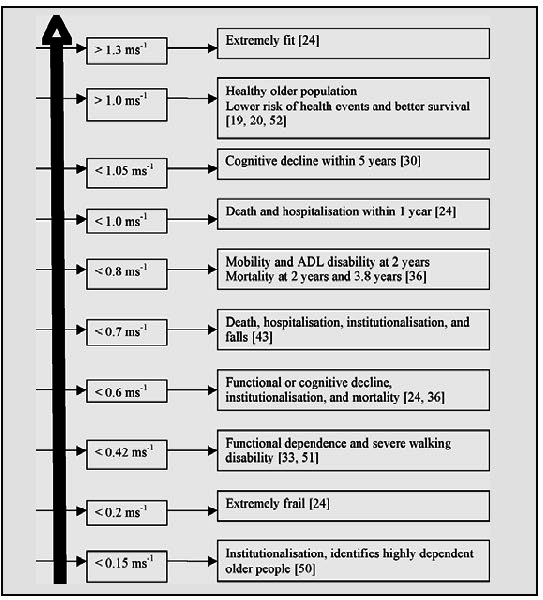
“The 1.0 ms-1 cutpoint was used to predict mortality (19, 20)”
§ Gait speed at usual pace as a predictor of adverse outcomes in community-dwelling older people an International Academy on Nutrition and Aging (IANA) Task Force > Results: Gait speed as a single-item tool > Distance and cut-points reported in literature for a single-item tool (Figure 2)
What the sources say
- Not checked yetcites [19] Cesari M. Kritchevsky S.B. Penninx B.W.H.J. Pronostic value of usual gait speed in well-functioning older people. Results from the Health, Aging and Body Composition Study J Am Geriatr Soc 53 2005 1675 1680 10.1111/j.1532-5415.2005.53501.x PubMed PMID: 16181165 16181165 source
- Supportedcites [20] Cesari M. Kritchevsky S.B. Newman A.B. Added value of physical performance measures in predicting adverse health-related events: results from the Health, Aging and Body Composition Study J Am Geriatr Soc 57 2009 251 259 10.1111/j.1532-5415.2008.02126.x PubMed PMID: 19207142 19207142 PMC2695653 source
The Methods section says the study used the 1 m/sec gait-speed cutpoint to classify participants into high- and low-risk groups. The Results section reports that the resulting high-risk gait-speed group was more likely to experience death, so the cutpoint was used to predict mortality. (LLM, conf=0.93)
plainstates an association- Asserted: passes — The authors put it forward as true.
- Checkable: passes — It can be checked against evidence.
- Load-bearing: unclear — It is unclear whether the paper’s conclusions depend on it.
- Based: passes — The paper gives a reason why it holds.
32 more claims · 1 with their cited sources checked
Create a free account to see all 68 claims and to verify the 52 references still open.
- The quote only partly states this claim. 2
- It may state two separate claims as one. 18
- Probably not a substantial claim. 14
Claims other papers make about this one
Each is checked against this paper’s own text: does it say what the citing paper says it does?
In the citing paper
“Slowing gait may reflect both damaged systems and a high-energy cost of walking.13,39–54”
From Gait speed and survival in older adults. (2011) · cites this paper as [13]
In the citing paper
“Others propose one cutoff around 0.8 m/s.13”
From Gait speed and survival in older adults. (2011) · cites this paper as [13]
In the citing paper
“Gait speed has been widely used as a single measure of frailty and is supported by a robust body of literature demonstrating its prognostic importance across a wide range of patient populations and performance levels.85”
In the citing paper
“Gait speed has also been demonstrated to be a consistent risk factor for disability, cognitive impairment, institutionalization, falls, and postoperative outcomes.85”
In the citing paper
“Accumulating evidence indicates slow walking speed (<1 m/sec indicating a high risk and < 0.8 m/sec indicating a very high risk), as well as reductions in walking speed, strongly predict functional decline, major health outcomes, and mortality in older adults.”
From Successful aging: Advancing the science of physical independence in older adults (2015) · cites this paper as Abellan Van, Rolland, Andrieu, Bauer, Beauchet, Bonnefoy, Cesari, Donini, Gillette, Inzitari, Nourhashemi, Onder, Ritz, Salva, Visser, and Vellas 2009
1 more claim about this paper
Create a free account to see every claim other papers make about this one.
Self-check
Percentages, sums and reported differences re-computed from the paper’s own numbers.
Each contradiction between two passages listed here was confirmed by an independent check.
Rated minor: it would not touch a result — a value no result rests on, a p-value that stays on the same side of the significance level, or a conflict that is clerical, resolved elsewhere in the paper, or outside its own findings.
In the paper
“After 5 years, of the assessed 2776 baseline participants, 389 (17.1%) declined in DSST.”
§ Gait speed at usual pace as a predictor of adverse outcomes in community-dwelling older people an International Academy on Nutrition and Aging (IANA) Task Force > Results: Gait speed as a predictor of adverse outcomes > Gait speed as a predictor of cognitive decline (Table 2)
Reported 17.1 · recomputed 14.012968
Rated minor: it would not touch a result — a value no result rests on, a p-value that stays on the same side of the significance level, or a conflict that is clerical, resolved elsewhere in the paper, or outside its own findings.
In the paper
§ Gait speed at usual pace as a predictor of adverse outcomes in community-dwelling older people an International Academy on Nutrition and Aging (IANA) Task Force > Results: Gait speed as a predictor of adverse outcomes > Gait speed as a predictor of cognitive decline (Table 2)
“| | Follow-up 6 years | | |”
§ Gait speed at usual pace as a predictor of adverse outcomes in community-dwelling older people an International Academy on Nutrition and Aging (IANA) Task Force > Results: Gait speed as a predictor of adverse outcomes > Gait speed as a predictor of cognitive decline (Table 2)
“In a prospective cohort study of 2288 persons, 65 years and older without dementia with a mean follow-up of 9 years, 319 participants developed dementia.”
Rated minor: it would not touch a result — a value no result rests on, a p-value that stays on the same side of the significance level, or a conflict that is clerical, resolved elsewhere in the paper, or outside its own findings.
In the paper
§ Gait speed at usual pace as a predictor of adverse outcomes in community-dwelling older people an International Academy on Nutrition and Aging (IANA) Task Force > Results: Gait speed as a single-item tool > Distance and cut-points reported in literature for a single-item tool (Figure 2)
“The walking distance used in the selected articles was found to be between 2.44 meters (8 feet) and 6 meters”
§ Gait speed at usual pace as a predictor of adverse outcomes in community-dwelling older people an International Academy on Nutrition and Aging (IANA) Task Force > Results: Gait speed as a predictor of adverse outcomes > Gait speed as a predictor of falls (Table 4)
“| Estudio de Evaluación | N= 102 | 10 meter walk | Gait speed was an independent predictor of falls with a RR of 5.4 (2-14.3) |”
Rated minor: it would not touch a result — a value no result rests on, a p-value that stays on the same side of the significance level, or a conflict that is clerical, resolved elsewhere in the paper, or outside its own findings.
In the paper
§ Gait speed at usual pace as a predictor of adverse outcomes in community-dwelling older people an International Academy on Nutrition and Aging (IANA) Task Force > Results: Gait speed as a predictor of adverse outcomes > Gait speed as a predictor of mobility disability (Table 1)
“| | Free from disability, cognitively intact | 15-foot walk | Incident ADL disability HR 0.88 (0.80-0.96) |”
§ Gait speed at usual pace as a predictor of adverse outcomes in community-dwelling older people an International Academy on Nutrition and Aging (IANA) Task Force > Results: Gait speed as a predictor of adverse outcomes > Gait speed as a predictor of mobility disability (Table 1)
“Gait speed over 1 ms-1 presented a Hazard Ratio, HR of 0.88 (95% CI 0.81-0.97) in predicting incident disability”
Rated minor: it would not touch a result — a value no result rests on, a p-value that stays on the same side of the significance level, or a conflict that is clerical, resolved elsewhere in the paper, or outside its own findings.
In the paper
§ Gait speed at usual pace as a predictor of adverse outcomes in community-dwelling older people an International Academy on Nutrition and Aging (IANA) Task Force > Methods
“The assessment of gait speed had to be performed over a short distance (long distance assessment instruments were excluded from the present review)”
§ Gait speed at usual pace as a predictor of adverse outcomes in community-dwelling older people an International Academy on Nutrition and Aging (IANA) Task Force > Results: Gait speed as a predictor of adverse outcomes > Gait speed as a predictor of mobility disability (Table 1)
“| Health ABC study (25) | N=3056 | LDCW 400 meter walk | New mobility limitations |”
2 more findings
Create a free account to see every finding of this check.
Citations
Cites
von Elm, E., Altman, D. G., Egger, M., Pocock, S. J., Gøtzsche, P. C., Vandenbroucke, J. P., & Initiative, F. T. S. (2007) · PLoS Medicine · doi:10.1371/journal.pmed.0040296 · Cited by 23,020
von Elm, E., Altman, D. G., Egger, M., Pocock, S. J., Gøtzsche, P. C., & Vandenbroucke, J. P. (2008) · Journal of Clinical Epidemiology · doi:10.1016/j.jclinepi.2007.11.008 · Cited by 17,893
von Elm, E., Altman, D. G., Egger, M., Pocock, S. J., Gøtzsche, P. C., Vandenbroucke, J. P., & Initiative, F. T. S. (2007) · Annals of Internal Medicine · doi:10.7326/0003-4819-147-8-200710160-00010 · Cited by 17,796
Lower-extremity function in persons over the age of 70 years as a predictor of subsequent disability
Guralnik, J. M., Ferrucci, L., Simonsick, E. M., Salive, M. E., & Wallace, R. B. (1995) · New England Journal of Medicine · doi:10.1056/nejm199503023320902 · Cited by 4,083
Guralnik, J. M., Ferrucci, L., Pieper, C. F., Leveille, S. G., Markides, K. S., Ostir, G. V., Studenski, S., Berkman, L. F., & Wallace, R. B. (2000) · The Journals of Gerontology Series A: Biological Sciences and Medical Sciences · doi:10.1093/gerona/55.4.m221 · Cited by 2,898 · cited 5×
“18) in between the curves when predicting ADL disability at 4 years of follow-up (3).”
Influentialvon Elm, E., Altman, D. G., Egger, M., Pocock, S. J., Gøtzsche, P. C., & Vandenbroucke, J. P. (2007) · Preventive Medicine · doi:10.1016/j.ypmed.2007.08.012 · Cited by 2,698
Comfortable and maximum walking speed of adults aged 20—79 years: reference values and determinants
BOHANNON, R. W. (1997) · Age and Ageing · doi:10.1093/ageing/26.1.15 · Cited by 2,341
Physical performance measures in the clinical setting
Studenski, S., Perera, S., Wallace, D., Chandler, J. M., Duncan, P. W., Rooney, E., Fox, M., & Guralnik, J. M. (2003) · Journal of the American Geriatrics Society · doi:10.1046/j.1532-5415.2003.51104.x · Cited by 1,218 · cited 7×
“2 ms-1 organisation, HMO, and > 65 years Fast walkers >1 ms-1 increase Veterans Affairs, VA (24) Cognitively intact No mobility disability 1-year follow-up Hong Kong Chinese cohort N=2032 16-feet walk Institutionalisation”
InfluentialCesari, M., Kritchevsky, S. B., Penninx, B. W. H. J., Nicklas, B. J., Simonsick, E. M., Newman, A. B., Tylavsky, F. A., Brach, J. S., Satterfield, S., Bauer, D. C., et al. (2005) · Journal of the American Geriatrics Society · doi:10.1111/j.1532-5415.2005.53501.x · Cited by 1,192
Self-citationThe I.A.N.A. task force on frailty assessment of older people in clinical practice
Van Kan, G. A., Rolland, Y., Bergman, H., Morley, J. E., Kritchevsky, S. B., & Vellas, B. (2008) · The Journal of nutrition, health and aging · doi:10.1007/bf02982161 · Cited by 1,099
Self-citation
Cited by
Items 301–400 of 1,005
Association between Various Brain Pathologies and Gait Disturbance
Wennberg, A. M. V., Savica, R., & Mielke, M. M. (2017) · Dementia and Geriatric Cognitive Disorders · doi:10.1159/000456541 · Cited by 73
Nutrition and frailty: Current knowledge
Féart, C. (2019) · Progress in Neuro-Psychopharmacology and Biological Psychiatry · doi:10.1016/j.pnpbp.2019.109703 · Cited by 73
Kemmler, W., Teschler, M., Weißenfels, A., Sieber, C., Freiberger, E., & von Stengel, S. (2017) · Osteoporosis International · doi:10.1007/s00198-017-3964-9 · Cited by 71
Wallengren, O., Bosaeus, I. G., Frändin, K., Lissner, L., Falk, H., Wetterberg, H., Sterner, T. R., Rydén, L., Rothenberg, E. M., & Skoog, I. G. (2021) · BMC Geriatrics · doi:10.1186/s12877-021-02533-y · Cited by 72
“4 to 6 m) and usually with a standing start [43, 46].”
BackgroundFrancis, C. A., Franz, J. R., O’Connor, S. M., & Thelen, D. G. (2015) · Gait & Posture · doi:10.1016/j.gaitpost.2015.07.006 · Cited by 71
“0 m/s, nearly 20% slower than the old adults in this study [30].”
BackgroundO’Connell, M. D. L., Savva, G. M., Fan, C. W., & Kenny, R. A. (2015) · Archives of Gerontology and Geriatrics · doi:10.1016/j.archger.2015.01.008 · Cited by 71
“Alternatively, gait speed and muscle strength are considered good indicators of overall frailty as they reflect integrative functions across multiple physiological systems (Abellan Van Kan et al., 2009; Cooper, Kuh, Hardy, & Group, 2010; Syddall, Cooper, Martin, Briggs, & Aihie Sayer, 2003).”
BackgroundPrevalence of frailty and its associated factors in older hospitalised patients in Vietnam
Vu, H. T. T., Nguyen, T. X., Nguyen, T. N., Nguyen, A. T., Cumming, R. G., Hilmer, S. N., & Pham, T. (2017) · BMC Geriatrics · doi:10.1186/s12877-017-0609-y · Cited by 73
“(4)Slowness: We used the cut point of 5 s after walking 4 m to identify participants with slow walking speed [17, 18].”
MethodStorer, T. W., Miciek, R., & Travison, T. G. (2012) · Asian Journal of Andrology · doi:10.1038/aja.2011.104 · Cited by 70
Wang, Y., Wang, J., Liu, X., & Zhu, T. (2021) · Frontiers in Psychiatry · doi:10.3389/fpsyt.2021.661213 · Cited by 71
Searching for a relevant definition of sarcopenia: results from the cross‐sectional EPIDOS study
Dupuy, C., Lauwers‐Cances, V., Guyonnet, S., Gentil, C., Abellan Van Kan, G., Beauchet, O., Schott, A., Vellas, B., & Rolland, Y. (2015) · Journal of Cachexia, Sarcopenia and Muscle · doi:10.1002/jcsm.12021 · Cited by 65
Self-citationIdentifying frailty in primary care: A systematic review
Lee, L. S., Patel, T., Hillier, L. M., Maulkhan, N., Slonim, K., & Costa, A. P. (2017) · Geriatrics and gerontology international/Geriatrics & gerontology international · doi:10.1111/ggi.12955 · Cited by 71
Effect of sarcopenic obesity on deterioration of physical function in the elderly
Kong, H. H., Won, C. W., & Kim, W. (2020) · Archives of Gerontology and Geriatrics · doi:10.1016/j.archger.2020.104065 · Cited by 63
Cabanas‐Valdés, R., Boix-Sala, L., Pellicer, M. G., Guzmán-Bernal, J. A., Caballero-Gómez, F. M., & Urrútia, G. (2021) · International Journal of Environmental Research and Public Health · doi:10.3390/ijerph18126615 · Cited by 70
Effect of Yoga on Frailty in Older Adults: A Systematic Review
Loewenthal, J., Innes, K. E., Mitzner, M. G., Mita, C., & Orkaby, A. R. (2023) · Annals of Internal Medicine · doi:10.7326/m22-2553 · Cited by 69
“Validated frailty markers include gait speed (24); Timed Up and Go test, correlated with the 6-minute walk test (6MWT) (25); handgrip strength (HGS) (26); serum albumin (27); balance (28, 29); and lower-extremity (LE) strength and endurance (30).”
MethodAlbert, S. M., Bear‐Lehman, J., & Anderson, S. (2014) · The Journals of Gerontology Series A · doi:10.1093/gerona/glu088 · Cited by 69
Eden, M. M., Tompkins, J., & Verheijde, J. L. (2017) · Physiotherapy Theory and Practice · doi:10.1080/09593985.2017.1390803 · Cited by 70
“Gait speed has been inversely associated with hospital length of stay, medical costs, rehabilitation needs, and mortality (Braden et al., 2012; Goldie et al., 1996; Hardy et al., 2007) and may also be used as a predictor of falls (Abellan Van Kan et al., 2009).”
BackgroundHengeveld, L. M., Wijnhoven, H. A. H., Olthof, M. R., Brouwer, I. A., Simonsick, E. M., Kritchevsky, S. B., Houston, D. K., Newman, A. B., & Visser, M. (2019) · Journal of the American Geriatrics Society · doi:10.1111/jgs.16011 · Cited by 70
“0 m/s or less.(20,21) Physical inactivity was determined by the total amount of kcal/wk spent on three commonly performed physical activities: (exercise or other) walking, climbing stairs, and doing major chores, as measured using a modified leisure-time physical activity questionnaire.”
MethodSelf-citationSarcopenia and Frailty: Challenges in Mainstream Nephrology Practice
Wong, L., Duque, G., & McMahon, L. P. (2021) · Kidney International Reports · doi:10.1016/j.ekir.2021.05.039 · Cited by 70
“Other, simpler tools to detect frailty in clinical settings include the Short Physical Performance Battery (SPPB), which consists of 3 components (balance, gait speed and chair standing), or gait speed alone, both of which have been independently validated to predict adverse outcomes.(30,31)”
MethodSchniepp, R., Huppert, A., Decker, J., Schenkel, F., Schlick, C., Rasoul, A., Dieterich, M., Brandt, T., Jahn, K., & Wuehr, M. (2021) · Journal of Neurology · doi:10.1007/s00415-021-10504-x · Cited by 70
Alqahtani, B. A., Alenazi, A. M., Alshehri, M. M., Osailan, A., Alsubaie, S. F., & Alqahtani, M. A. (2021) · BMC Geriatrics · doi:10.1186/s12877-021-02142-9 · Cited by 69
“Frailty is a clinical geriatric syndrome characterized by an excess vulnerability to adverse health outcomes [9, 10].”
BackgroundPathogenesis, Intervention, and Current Status of Drug Development for Sarcopenia: A Review
Jang, J. Y., Kim, D.-H., & Kim, N. D. (2023) · Biomedicines · doi:10.3390/biomedicines11061635 · Cited by 68
Fear Avoidance Beliefs Predict Disability in Older Adults With Chronic Low Back Pain
Camacho‐Soto, A., Sowa, G., Perera, S., & Weiner, D. K. (2012) · PM&R · doi:10.1016/j.pmrj.2012.01.017 · Cited by 70
“Gait speed, however, is a powerful predictor of functional decline and dependent living status, that is, disability [17,18,28].”
BackgroundLiébana, L. R., Orfila, F., Segura, J. M., Ramirez, A., Möller, M., Fabra, M. L., Lancho, S. L., Bastús, N. B., Foz, G., Fabregat, M. A., et al. (2014) · BMC Geriatrics · doi:10.1186/1471-2318-14-125 · Cited by 67
Cruz-Jentoft, A. J., Triana, F. M. C., Gómez‐Cabrera, M. C., López‐Soto, A., Masanés, F., Matía‐Martín, P., Rexach, J. A. S., Ruiz, D., Salvà, A., Viña, J., et al. (2011) · Revista Española de Geriatría y Gerontología · doi:10.1016/j.regg.2010.11.004 · Cited by 76
Instruments to Assess Mobility Limitation in Community-Dwelling Older Adults: A Systematic Review
Chung, J., Demiris, G., & Thompson, H. J. (2014) · Journal of Aging and Physical Activity · doi:10.1123/japa.2013-0181 · Cited by 71
“…only on one type of measurement, such as the one-leg standing test (Michikawa, Nishiwaki, Takebayashi, & Toyama, 2009) or gait speed (Abellan van Kan et al., 2009), or else included older adult subjects across diverse settings (e.g., community, long-term care, and acute care) (Scott, Votova,…”
BackgroundInfluentialCerebral Amyloid Deposition Is Associated with Gait Parameters in the Mayo Clinic Study of Aging
Wennberg, A. M. V., Savica, R., Hagen, C. E., Roberts, R. O., Knopman, D. S., Hollman, J. H., Vemuri, P., Jack, C. R., Petersen, R. C., & Mielke, M. M. (2016) · Journal of the American Geriatrics Society · doi:10.1111/jgs.14670 · Cited by 67
“Over one-third of adults aged 70 and older have clinically significant gait abnormalities,(1) which predict disability, dementia, and death.(2) Neurodegenerative disorders are often associated with disrupted mobility, suggesting a robust connection between the central nervous system (CNS) and gait.”
Donoghue, O. A., Savva, G. M., Borsch-Supan, A. H., & Kenny, R. A. (2019) · BMJ Open · doi:10.1136/bmjopen-2019-030475 · Cited by 66
Lee, S., Kim, J., Lim, B., Lee, H.-J., & Kim, Y. (2023) · Scientific Reports · doi:10.1038/s41598-023-32335-8 · Cited by 66
Thingstad, P., Taraldsen, K., Saltvedt, I. T., Sletvold, O., Vereijken, B., Lamb, S. E., & Helbostad, J. L. (2015) · Osteoporosis International · doi:10.1007/s00198-015-3313-9 · Cited by 69
Scott, D. S., Stuart, A. L., Kay, D., Ebeling, P. R., Nicholson, G. C., & Sanders, K. M. (2013) · Archives of Gerontology and Geriatrics · doi:10.1016/j.archger.2013.11.004 · Cited by 66
“This has led to recommendations for the assessment of gait speed in the clinical setting to identify older patients at risk of functional decline (Abellan Van Kan et al., 2009) and those with sarcopenia.”
The Frequency of Frailty in Ambulatory Patients With Chronic Lung Diseases
Mittal, N., Raj, R., Islam, E. A., & NUGENT, K. M. (2015) · Journal of Primary Care & Community Health · doi:10.1177/2150131915603202 · Cited by 66
“Group All 120 patients Age (years), mean ± SD (range) 64 ± 13 (23-91) Body mass index (kg/m(2)), mean ± SD (range) 31 ± 9 (15-63)”
A Novel Exercise Initiative for Seniors to Improve Balance and Physical Function
Sales, M., Polman, R. C. J., Hill, K., & Levinger, P. (2016) · Journal of Aging and Health · doi:10.1177/0898264316662359 · Cited by 66
“These factors may also be responsible for affecting daily functioning in older adults by promoting further reductions in muscle strength, balance, and gait speed (Van Kan et al., 2009).”
BackgroundIs it time to include older adults in inflammatory bowel disease trials? A call for action
Vieujean, S., Caron, B., Jairath, V., Bénétos, A., Danese, S., Louis, E. J., & Peyrin‐Biroulet, L. (2022) · The Lancet Healthy Longevity · doi:10.1016/s2666-7568(22)00060-5 · Cited by 65
The impact of testing protocol on recorded gait speed
Sustakoski, A., Perera, S., VanSwearingen, J. M., Studenski, S. A., & Brach, J. S. (2014) · Gait & Posture · doi:10.1016/j.gaitpost.2014.10.020 · Cited by 65
Bonnefoy, M., Boutitie, F., Mercier, C., Gueyffier, F., Carre, C., Guetemme, G., Ravis, B., Laville, M., & Cornu, C. (2012) · The Journal of nutrition, health and aging · doi:10.1007/s12603-011-0352-6 · Cited by 51
“8 m/s according to the iana task force (26) and/or a Pase score of less than 64 for men and 52 for women (27).”
Self-citationStep length determines minimum toe clearance in older adults and people with Parkinson’s disease
Alcock, L., Galna, B., Perkins, R., Lord, S., & Rochester, L. (2017) · Journal of Biomechanics · doi:10.1016/j.jbiomech.2017.12.002 · Cited by 66
Tessier, A., Wing, S. S., Rahme, E., Morais, J. A., & Chevalier, S. (2019) · Journal of Cachexia Sarcopenia and Muscle · doi:10.1002/jcsm.12462 · Cited by 65
“Studies have found gait speed to be strongly associated with adverse outcomes including disability, falls, and mortality.(24,25) Subjects were asked to walk a 4 m distance at their regular pace.”
BackgroundDarraz, S. B., González‐Roldán, A. M., Arrebola, J. D. M., & Montoro, C. I. (2021) · Revista Española de Geriatría y Gerontología · doi:10.1016/j.regg.2021.01.006 · Cited by 67
Sánchez-Sánchez, J. L., Rolland, Y., Cesari, M., & de Souto Barreto, P. (2022) · Journal of the American Medical Directors Association · doi:10.1016/j.jamda.2021.08.035 · Cited by 59
Self-citationInfluence of dual task and frailty on gait parameters of older community-dwelling individuals
Guedes, R. C., Dias, R. C., Pereira, L. S. M., da Silva, S. L. A., Lustosa, L. P., & Dias, J. M. D. (2014) · Brazilian Journal of Physical Therapy · doi:10.1590/bjpt-rbf.2014.0034 · Cited by 66
Assessment of Gait, Balance, and Mobility in Older Adults: Considerations for Clinicians
Middleton, A., & Fritz, S. L. (2013) · Current Translational Geriatrics and Experimental Gerontology Reports · doi:10.1007/s13670-013-0057-2 · Cited by 65
“mortality [25, 26], and fall risk [27, 28]; as well as to determine potential for rehabilitation [29].”
BackgroundThe independent effects of speed and propulsive force on joint power generation in walking
Browne, M. G., & Franz, J. R. (2017) · Journal of Biomechanics · doi:10.1016/j.jbiomech.2017.02.011 · Cited by 64
“Cross-sectional studies suggest that preferred walking speed decreases on average by 16% per decade after age 60 (Abellan van Kan et al., 2009; Bohannon and Williams Andrews, 2011; Himann et al., 1988).”
BackgroundLauzé, M., Martel, D., & Aubertin‐Leheudre, M. (2017) · Journal of the American Medical Directors Association · doi:10.1016/j.jamda.2017.06.030 · Cited by 64
Liang, Y., Vetrano, D. L., & Qiu, C. (2017) · BMC Geriatrics · doi:10.1186/s12877-017-0685-z · Cited by 64
“8 m/s were defined as having mobility limitation [13].”
BackgroundDvoretskiy, S., Lieblein‐Boff, J. C., Jonnalagadda, S. S., Atherton, P. J., Phillips, B. E., & Pereira, S. L. (2020) · Nutrients · doi:10.3390/nu12030715 · Cited by 64
Baltasar‐Fernandez, I., Alcázar, J., Mañas, A., Alegre, L. M., Alfaro‐Acha, A., Rodríguez‐Mañas, L., Ara, I., García‐García, F. J., & Losa‐Reyna, J. (2021) · Scientific Reports · doi:10.1038/s41598-021-98871-3 · Cited by 64
Kimble, R., McLellan, G., LENNON, L. T., Papacosta, O., Weyant, R. J., Kapila, Y. L., Mathers, J. C., Wannamethee, S. G., Whincup, P. H., & Ramsay, S. E. (2022) · The Lancet Healthy Longevity · doi:10.1016/s2666-7568(22)00222-7 · Cited by 64
Gait characteristics in individuals with intellectual disabilities: A literature review
Almuhtaseb, S., Oppewal, A., & Hilgenkamp, T. I. M. (2014) · Research in Developmental Disabilities · doi:10.1016/j.ridd.2014.07.017 · Cited by 66
“…and to morbidity in the general older adult population, where poorer gait not only increased the risk of multiple falls (Callisaya et al., Gait characteristics 5 2011), but also predicted future disability, cognitive impairment, institutionalization and/or mortality (Abellan van Kan et al., 2009).”
BackgroundThe Efficacy of Interdisciplinary Rehabilitation for Improving Function in People with Chronic Pain
Kurklinsky, S., Perez, R. B., Lacayo, E. R., & Sletten, C. D. (2016) · Pain Research and Treatment · doi:10.1155/2016/7217684 · Cited by 52
Rolland, Y., Dupuy, C., van Kan, G. A., Cesari, M., Vellas, B. J., Faruch, M., Dray, C., & Barreto, P. D. S. (2017) · Journal of the American Medical Directors Association · doi:10.1016/j.jamda.2017.05.010 · Cited by 64
Self-citationHarris-Love, M. O., Avila, N. A., Adams, B., Zhou, J., Seamon, B., Ismail, C., Zaidi, S. H., Kassner, C. A., Liu, F., & Blackman, M. R. (2018) · Journal of Clinical Medicine · doi:10.3390/jcm7100340 · Cited by 53
“In terms of physical performance and mobility, our sample performed relatively well with both grip strength and gait speed falling within normal limits for healthy older adults [52,53].”
BackgroundCardiovascular care of older adults
O’Neill, D. E., & Forman, D. E. (2021) · BMJ · doi:10.1136/bmj.n1593 · Cited by 63
Associations between transitions of intrinsic capacity and frailty status, and 3-year disability
Jia, S., Zhao, W., Ge, M., Xia, X., Hu, F., Hao, Q., Zhang, Y., Yang, M., Yue, J., & Dong, B. (2023) · BMC Geriatrics · doi:10.1186/s12877-023-03795-4 · Cited by 63
Comparison of height‐ and weight‐adjusted sarcopenia in a Taiwanese metropolitan older population
Meng, N., Li, C., Liu, C., Lin, C., Lin, W., Chang, C., Li, T., & Lin, C. (2015) · Geriatrics & Gerontology International · doi:10.1111/ggi.12227 · Cited by 58
Brown, J. C., Harhay, M. O., & Harhay, M. N. (2016) · Journal of Geriatric Oncology · doi:10.1016/j.jgo.2016.01.009 · Cited by 60
“Gait speed is considered a gold-standard measure of physical function (30), and is associated with overall health, survival, cognitive impairment, cardiopulmonary disease, hospitalization, and nursing home placement among older adults (16).”
BackgroundHow steady is the STEADI? Inferential analysis of the CDC fall risk toolkit
Nithman, R. W., & Vincenzo, J. L. (2019) · Archives of Gerontology and Geriatrics · doi:10.1016/j.archger.2019.02.018 · Cited by 64
Linking Persistent Pain and Frailty in Older Adults
Guerriero, F., & Reid, M. C. (2020) · Pain Medicine · doi:10.1093/pm/pnz174 · Cited by 52
“ometer [45], or measuring speed gait, or performing Timed Up and Go [46]) or multidomain questionnaires Incorporating Persistent Pain into the Frailty Contruct: A New Paradigm 63”
MethodEpidemiology of Perceived Physical Fatigability in Older Adults: The Long Life Family Study
LaSorda, K. R., Gmelin, T. A., Kuipers, A. L., Boudreau, R. M., Santanasto, A. J., Christensen, K., Renner, S. W., Wojczynski, M. K., Andersen, S. L., Cosentino, S., et al. (2019) · The Journals of Gerontology Series A · doi:10.1093/gerona/glz288 · Cited by 62
“Psychomotor speed, measured by the DSST, captures the relationship between physical movement and conscious cognitive processing, and has previously been associated with two established correlates of physical fatigability: gait speed and physical activity (46,47).”
The Interaction between Mobility Status and Exercise Specificity in Older Adults
Brahms, C. M., Hortobágyi, T., Kressig, R. W., & Granacher, U. (2021) · Exercise and Sport Sciences Reviews · doi:10.1249/jes.0000000000000237 · Cited by 54
Normative Data for Gait Speed and Height Norm Speed in ≥ 60-Year-Old Men and Women
Kasović, M., Štefan, L., & Štefan, A. (2021) · Clinical Interventions in Aging · doi:10.2147/cia.s290071 · Cited by 62
“80 m/s at the usual pace, pointing out that such a threshold is “easy-to-remember” and should be used in clinical trials as exclusion/inclusion criteria or as an outcome.(22) In that way, measuring gait speed should be used in health-related settings for obtaining an extra predictor of overall health in older individu…”
BackgroundMethodTeh, R., Barnett, D., Edlin, R. P., Kerse, N. M., Waters, D. L., Hale, L. A., Tay, E., Leilua, E., & Pillai, A. (2022) · The Lancet Healthy Longevity · doi:10.1016/s2666-7568(22)00124-6 · Cited by 62
Tango-therapy vs physical exercise in older people with dementia; a randomized controlled trial
Bracco, L., Pinto‐Carral, A., Hillaert, L., & Mourey, F. (2023) · BMC Geriatrics · doi:10.1186/s12877-023-04342-x · Cited by 61
“…that gait speed is an indicator of various underlying pathophysiological processes [28], such as cognitive impairment [29], capable of predicting health status, risk of future functional decline, and future adverse events, including hospitalisation, level of care required, and mortality [28, 30].”
BackgroundFragoso, C. A. V., Beavers, D. P., Hankinson, J., Flynn, G. M., Berra, K. A., Kritchevsky, S. B., Liu, C., McDermott, M. M., Manini, T. M., Rejeski, W. J., et al. (2014) · Journal of the American Geriatrics Society · doi:10.1111/jgs.12738 · Cited by 61
Interpreting the Need for Initial Support to Perform Tandem Stance Tests of Balance
Hile, E. S., Brach, J. S., Perera, S., Wert, D. M., VanSwearingen, J. M., & Studenski, S. A. (2012) · Physical Therapy · doi:10.2522/ptj.20110283 · Cited by 61
A Behavioral Mechanism of How Increases in Leg Strength Improve Old Adults’ Gait Speed
Uematsu, A., Tsuchiya, K., Kadono, N., Kobayashi, H., Kaetsu, T., Hortobágyi, T., & Suzuki, S. (2014) · PLoS ONE · doi:10.1371/journal.pone.0110350 · Cited by 63
Fien, S., Henwood, T., Climstein, M., & Keogh, J. W. L. (2016) · PeerJ · doi:10.7717/peerj.2018 · Cited by 55
“…performance in older adults is gait speed, which is also considered a primary precursor to age-related adverse events including disability, cognitive impairment, falls, mortality, institutionalisation and hospitalisation (Abellan van Kan et al. 2009; CruzJentoft et al. 2010; Peel et al. 2013).”
BackgroundVitamin D and walking speed in older adults: Systematic review and meta-analysis
Annweiler, C., Henni, S., Walrand, S., Montero‐Odasso, M., Duque, G., & Duval, G. T. (2017) · Maturitas · doi:10.1016/j.maturitas.2017.07.012 · Cited by 62
Bogen, B. E., Moe‐Nilssen, R., Ranhoff, A. H., & Aaslund, M. K. (2018) · Gait & Posture · doi:10.1016/j.gaitpost.2018.02.019 · Cited by 63
Frailty Phenotype and Healthcare Costs and Utilization in Older Men
Ensrud, K. E., Kats, A. M., Schousboe, J. T., Taylor, B. C., Vo, T., Cawthon, P. M., Hoffman, A. R., Langsetmo, L., & (MrOS), F. T. O. F. I. M. S. (2020) · Journal of the American Geriatrics Society · doi:10.1111/jgs.16522 · Cited by 61
Operationalizing frailty among older residents of assisted living facilities
Freiheit, E., Hogan, D. B., Strain, L. A., Schmaltz, H. N., Patten, S. B., Eliasziw, M., & Maxwell, C. J. (2011) · BMC Geriatrics · doi:10.1186/1471-2318-11-23 · Cited by 60
Tarantini, S., Yabluchanksiy, A., Fülöp, G. Á., Hertelendy, P., Valcarcel‐Ares, M. N., Kiss, T., Bagwell, J. M., O’Connor, D., Farkas, E., Sorond, F. A., et al. (2017) · GeroScience · doi:10.1007/s11357-017-0003-x · Cited by 60
Prediction of Responsiveness of Gait Variables to Rehabilitation Training in Parkinson's Disease
Serrao, M., Chini, G., Caramanico, G., Bartolo, M., Castiglia, S. F., Ranavolo, A., Conte, C., Venditto, T., Coppola, G., Lorenzo, C. D., et al. (2019) · Frontiers in Neurology · doi:10.3389/fneur.2019.00826 · Cited by 60
Dual task-related gait changes in patients with mild cognitive impairment
Nascimbeni, A. (2015) · Functional Neurology · doi:10.11138/fneur/2015.30.1.059 · Cited by 60
“WS is a measure of gait stability and the risk of falls (Abellan van Kan et al., 2009) and has previously been used as a functional measure to assess the presence of MCI (Eggermont et al., 2010; Pettersson et al., 2007).”
MethodCerebral Hypoperfusion Is Exaggerated With an Upright Posture in Heart Failure
Fraser, K. S., Heckman, G. A., McKelvie, R. S., Harkness, K. I., Middleton, L. E., & Hughson, R. L. (2014) · JACC Heart Failure · doi:10.1016/j.jchf.2014.07.017 · Cited by 60
“Compared with the control subjects, HF patients in this study had slower gait speeds, a main predictor of frailty (30), and lower MoCA scores, indicating some form of cognitive impairment.”
Bodilsen, A. C., Klausen, H. H., Petersen, J., Beyer, N., Andersen, O., Jørgensen, L. M., Juul‐Larsen, H. G., & Bandholm, T. (2016) · PLoS ONE · doi:10.1371/journal.pone.0154350 · Cited by 61
“Accordingly, the choice of using a low cutoff recommended for frail older populations seems reasonable [10,11,26,27,59].”
BackgroundMethodInfluentialOskouei, S. T., Malliaras, P., Jansons, P., Hill, K., Soh, S., Jaberzadeh, S., & Perraton, L. G. (2021) · Physical Therapy · doi:10.1093/ptj/pzab018 · Cited by 59
Witham, M. D., McDonald, C., Wilson, N., Rennie, K., Bardgett, M., Bradley, P., Clegg, A. P., Connolly, S., Hancock, H. C., Hiu, S. K. W., et al. (2025) · The Lancet Healthy Longevity · doi:10.1016/j.lanhl.2025.100695 · Cited by 61
Takeuchi, K., Izumi, M., Furuta, M., Takeshita, T., Shibata, Y., Kageyama, S., Ganaha, S., & Yamashita, Y. (2015) · PLoS ONE · doi:10.1371/journal.pone.0141737 · Cited by 59
Prevalência de fragilidade em uma população de longevos na região Sul do Brasil
Liberalesso, T. E. M., Dallazen, F., Bandeira, V. A. C., & Berlezi, E. M. (2017) · Saúde em Debate · doi:10.1590/0103-1104201711316 · Cited by 60
Buchman, A. S., Dawe, R. J., Leurgans, S. E., Curran, T. A., Truty, T., Yu, L., Barnes, L. L., Hausdorff, J. M., & Bennett, D. A. (2019) · The Journals of Gerontology Series A · doi:10.1093/gerona/glz160 · Cited by 59
“This may account for the observation that gait speed is a robust, nonspecific predictor of diverse adverse health outcomes (2).”
BackgroundMethodResultGranet, J., Peyrusqué, E., Ruiz, F., Buckinx, F., Abdelkader, L. B., Dang-Vu, T. T., Sirois, M.-J., Gouin, J.-P., Pageaux, B., & Aubertin-Leheudre, M. (2023) · The Journals of Gerontology Series A · doi:10.1093/gerona/glac127 · Cited by 58
“In addition, giving older adults control over the pace of the intervention may also contribute to motivation (46).”
BackgroundPrognostic Impact of Hospital-Acquired Disability in Elderly Patients with Heart Failure
Saitoh, M., Takahashi, Y., Okamura, D., Akiho, M., Suzuki, H., Noguchi, N., Yamaguchi, Y., Hori, K., Adachi, Y., & Takahashi, T. (2021) · ESC Heart Failure · doi:10.1002/ehf2.13356 · Cited by 58
“001 MAGGIC risk score, point 27 (23–31) 28 (24-32) 27 (23-31) <0.”
Assar, M. E., Rodríguez-Sánchez, I., Álvarez‐Bustos, A., & Rodríguez‐Mañas, L. (2024) · Molecular Aspects of Medicine · doi:10.1016/j.mam.2024.101271 · Cited by 60
Swenor, B. K., Muñoz, B., & West, S. K. (2013) · American Journal of Epidemiology · doi:10.1093/aje/kwt257 · Cited by 57
“As a result, walking speeds have been used as an indicator of health and functioning in elderly populations (4).”
MethodLi, L., Harris, R. E., Tsodikov, A., Struble, L. M., & Murphy, S. L. (2017) · Arthritis Care & Research · doi:10.1002/acr.23262 · Cited by 58
Kikkert, L. H. J., de Groot, M. H., van Campen, J. P., Beijnen, J. H., Hortobágyi, T., Vuillerme, N., & Lamoth, C. J. C. (2017) · PLoS ONE · doi:10.1371/journal.pone.0178615 · Cited by 58
“Gait speed is widely recognized as an important variable associated with many clinical conditions later in life [4].”
BackgroundInfluentialSerrao, M., Chini, G., Bergantino, M., Sarnari, D., Casali, C., Conte, C., Ranavolo, A., Marcotulli, C., Rinaldi, M., Coppola, G., et al. (2017) · Human Movement Science · doi:10.1016/j.humov.2017.09.005 · Cited by 59
McKay, H. A., Nettlefold, L., Bauman, A. E., Hoy, C. L., Gray, S. M., Lau, E. Y., & Sims‐Gould, J. (2018) · BMC Public Health · doi:10.1186/s12889-018-6210-2 · Cited by 59
Prevalence of sarcopenic obesity in adults with end-stage knee osteoarthritis
Godziuk, K., Prado, C. M. M., Woodhouse, L. J., & Forhan, M. A. (2019) · Osteoarthritis and Cartilage · doi:10.1016/j.joca.2019.05.026 · Cited by 58
From a gait and falls clinic visit towards self-management of falls in frail elderly
Schoon, Y. (2013) · Radboud Repository (Radboud University) · Cited by 64
Muehlbauer, T., Granacher, U., Borde, R., & Hortobágyi, T. (2017) · Gerontology · doi:10.1159/000480150 · Cited by 57
Influences of Resistance Training on Physical Function in Older, Obese Men and Women With Sarcopenia
Stoever, K., Heber, A., Eichberg, S., & Brixius, K. (2018) · Journal of Geriatric Physical Therapy · doi:10.1519/jpt.0000000000000105 · Cited by 42
Moreira, B. D. S., Sampaio, R. F., Diz, J. B. M., Bastone, A. D. C., Ferriolli, E., Neri, A. L., Lourenço, R. A., Dias, R. C., & Kirkwood, R. N. (2017) · Experimental Gerontology · doi:10.1016/j.exger.2017.01.004 · Cited by 56
Martel, D., Lauzé, M., Agnoux, A., de Laclos, L. F., Daoust, R., Émond, M., Sirois, M., & Aubertin‐Leheudre, M. (2018) · Experimental Gerontology · doi:10.1016/j.exger.2018.03.016 · Cited by 57
Blumen, H. M., Brown, L. L., Habeck, C. G., Allali, G., Ayers, E. I., Beauchet, O., Callisaya, M. L., Lipton, R. B., Mathuranath, P. S., Phan, T. G., et al. (2018) · Brain Imaging and Behavior · doi:10.1007/s11682-018-9871-7 · Cited by 57
“Gait speed reliably predicts both adverse physical (Abellan van Kan et al. 2009) and cognitive outcomes (Buracchio et al. 2010; Mielke et al. 2013; Verghese et al. 2007).”
BackgroundSelf-citationNguyen, A. T., Nguyen, L. H., Nguyen, T. X., Nguyen, T. T. H., Nguyen, H. T. T., Nguyen, T. N., Pham, H. Q., Tran, B. X., Latkin, C. A., Ho, C. S. H., et al. (2019) · International Journal of Environmental Research and Public Health · doi:10.3390/ijerph16203869 · Cited by 56
Association between Timed Up and Go Test and Subsequent Functional Dependency
Lee, J. E., Chun, H., Kim, Y., Jung, H., Jang, I., Cha, H.-M., Son, K. Y., Cho, B., Kwon, I. S., & Yoon, J. L. (2020) · Journal of Korean Medical Science · doi:10.3346/jkms.2020.35.e25 · Cited by 56
Barber, S. J., Hamel, K. A., Ketcham, C., Lui, K., & Taylor-Ketcham, N. R. (2020) · Psychology and Aging · doi:10.1037/pag0000440 · Cited by 56
“Because of this, gait speed is a powerful predictor of many health outcomes in older adults (e.g., Cesari et al., 2005; Van Kan et al., 2009).”
BackgroundMethodDynapenia, abdominal obesity or both: which accelerates the gait speed decline most?
Máximo, R. D. O., de Oliveira, D. C., Ramírez, P. C., Luiz, M. M., de Souza, A. F., Delinocente, M. L. B., Steptoe, A., de Oliveira, C. M., & Alexandre, T. D. S. (2021) · Age and Ageing · doi:10.1093/ageing/afab093 · Cited by 58
Baptista, G., Dupuy, A., Jaussent, A., Durant, R., Ventura, E., Sauguet, P., Picot, M., Jeandel, C., & Cristol, J. (2012) · Free Radical Research · doi:10.3109/10715762.2012.692784 · Cited by 56
Metadata
- Authors
- Abellan Van Kan, G., Rolland, Y., Andrieu, S., Bauer, J., Beauchet, O., Bonnefoy, M., Cesari, M., Donini, L. M., Gillette-Guyonnet, S., Inzitari, M., Nourhashemi, F., Onder, G., Ritz, P., Salva, A., Visser, M., & Vellas, B.
- Affiliations
- Université Toulouse III - Paul Sabatier (FR)
- Friedrich-Alexander-Universität Erlangen-Nürnberg (DE)
- Centre Hospitalier Universitaire d'Angers (FR)
- Hôpital Lyon Sud (FR)
- University of Florida (US)
- Sapienza University of Rome (IT)
- Universitat Autònoma de Barcelona (ES)
- Università Cattolica del Sacro Cuore (IT)
- Centre Hospitalier Universitaire de Toulouse (FR)
- Amsterdam Public Health (NL)
- ORCID
- Venue
- The Journal of nutrition, health and aging
- Publisher
- Elsevier BV
- Published
- 2009-12
- Volume
- 13
- Issue
- 10
- Pages
- 881-889
- ISSN
- 1279-7707 (ISSN-L)
- PMC
- PMC12878092
- OpenAlex
- W2104750100
- Semantic Scholar
- 10553b18ba60c073f881cfe6be4b7f453a2f15b0
- Cited by
- 2,003
- References
- 56
- Citations by year
- 2026: 96 · 2025: 117 · 2024: 113 · 2023: 137 · 2022: 141 · 2021: 172 · 2020: 153 · 2019: 156 · 2018: 122 · 2017: 155 · 2016: 154 · 2015: 135 · 2014: 117 · 2013: 75 · 2012: 94
- FWCI
- 5.47
- Type
- journal article
- Language
- en
- Open access
- hybrid
- doi.org
- Licence
- cc-by-nc-nd
- www.elsevier.com/tdm/userlicense/1.0/ (tdm)
- www.elsevier.com/legal/tdmrep-license (tdm)
- creativecommons.org/licenses/by-nc-nd/4.0/ (vor, 5125 d)
- Locations
- The journal of nutrition health & aging (publishedVersion, cc-by-nc-nd)
- Europe PMC (PubMed Central) (publishedVersion, cc-by-nc-nd)
- PubMed (publishedVersion)
- PubMed Central (publishedVersion, cc-by-nc-nd)
- VU Research Portal (publishedVersion)
- IRIS Research product catalog (Sapienza University of Rome) (submittedVersion)
- Data Archiving and Networked Services (DANS) (submittedVersion)
- Topics
- Health Sciences › Medicine › Geriatrics and Gerontology › Frailty in Older Adults
- Health Sciences › Health Professions › Physical Therapy, Sports Therapy and Rehabilitation › Balance, Gait, and Falls Prevention
- Health Sciences › Medicine › Physiology (medical) › Nutrition and Health in Aging
- Keywords
- walking speed, community-dwelling older adults, frailty, physical performance, adverse outcomes, disability, cognitive impairment, institutionalization, falls, mortality, risk prediction
- MeSH terms
- Activities of Daily Living, Aged, Aged, 80 and over, Aging, Cognition Disorders, Disability Evaluation, Female, Gait, Humans, Kinetics, Male, Predictive Value of Tests, Geriatric Assessment, Frail Elderly, Mobility Limitation
About these checks
Registry, retraction, Cites and statistics results are computed, not judged, with one exception: a printed reference that no index lists is read once by a model before it counts as a citation error. Claims are extracted by a model and kept only when their quote appears verbatim in the text; each cited source is then checked, with a model’s help, for whether it says what the claim relies on. Those verdicts can be wrong — read the claim’s quote and the cited source before relying on one.
The claim verdicts this report counts are experimental: their accuracy is not yet measured.
A language model drew the claims from the paper on 2026-10-05, under version 3 of the claim definition (model deepseek-v4.1-flash, prompt extract-v3).
A second model labelled each claim on 2026-10-05 (model jev-1.13-20260917, definition revision gold-guideline-v0.2).
Cited sources are checked with a language model’s help (gpt-6-sol).
Statistics and arithmetic are recomputed, not judged.
Confidence bands are shown only for fields calibrated on our annotated test set. None is calibrated yet, so no band is shown.
What counts as a claim ›How we measure confidence ›How we check this ›
Are you an author, or do you see a problem with this page? Request a review
Data sources
Bibliographic data: Semantic Scholar, OpenAlex, Crossref.
Contains information from the Semantic Scholar Academic Graph Datasets, made available under the ODC Attribution License (ODC-BY 1.0).
Semantic Scholar’s data is described in: Kinney, R., et al. (2023). The Semantic Scholar Open Data Platform. arXiv:2301.10140.
