

Caffeine and Sports Performance: The Conflict between Caffeine Intake to Enhance Performance and Avoiding Caffeine to Ensure Sleep Quality
Open accessThe DOI matches its Crossref record; 197 of the 197 references it cites were found in a registry or an index.
Abstract
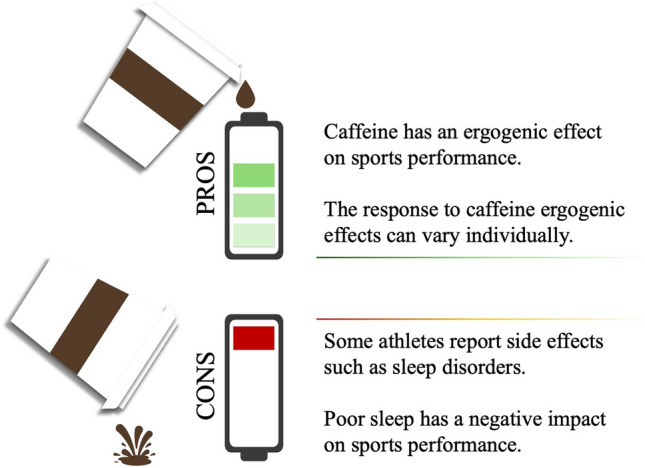
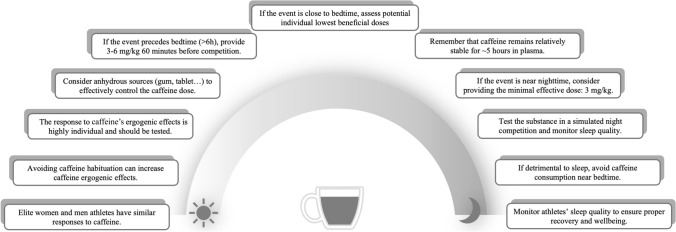
The ergogenic effects of caffeine have been reported in scientific literature over a wide spectrum of sporting activities. The current recommendation for caffeine supplementation is ingesting ~ 3–6 mg/kg about 1 h before the onset of exercise. However, some studies reporting caffeine-induced ergogenic effects during exercise have also reported increased activation and reduced sleep quality in the hours after caffeine ingestion. While most of the research on caffeine supplementation for sporting activities recommends the consumption of this stimulant to enhance performance, research focusing on athletes’ sleep quality advises against this decision, especially before competition in the evening or later. Considering that some athletes often compete in the evening or later, the general recommendation of caffeine supplementation may be modified for these athletes as acute caffeine intake in these conditions may produce undesirable side effects such as insomnia and, potentially, reduced performance in subsequent days. In this review, we examine literature on this topic to help athletes and sports practitioners solve the dilemma between the convenience of using caffeine to enhance sports performance or avoiding caffeine to ensure sleep quality. This review identifies potential solutions for this decision, keeping the focus on athletes’ well-being. Overall, the performance response to caffeine and the effect of this substance on sleep quality can vary interindividually and depend on the conditions of the exercise session (time of onset, duration, etc.). For this reason, nutritional practitioners should assess their athletes individually to resolve the conflict between caffeine ingestion and ensuring sleep quality on an individual basis, using simulated competitions with dual measurement of performance during exercise and unwanted effects in the following hours. In addition, the dose, timing, and source of caffeine supplementation can be individually adjusted to obtain performance benefits while reducing side effects for athletes ingesting caffeine before evening sporting events.
Overview
The claims and statistics of this paper haven’t been checked yet.
Free: it reads the open-access text and checks the first 5 claims that cite a source we can check. Create a free account to check every claim.
Integrity signals
Registry
Cites
Statistics
Figures
Verification
Claims the paper makes
The claims and statistics of this paper haven’t been checked yet.
Free: it reads the open-access text and checks the first 5 claims that cite a source we can check. Create a free account to check every claim.
Claims other papers make about this one
Each is checked against this paper’s own text: does it say what the citing paper says it does?
The source backs part of the claim, not all of it — or backs it for a different population, condition or comparison.
In the citing paper
“This finding suggests that the 3 mg/kg dose commonly recommended in sports nutrition guidelines may already approach a plateau for fat-oxidation benefits [78].”
From Pre-Exercise Caffeine as a Modulator of Exercise-Induced Acute Cardiometabolic Responses: A Narrative Review (2026) · cites this paper as [78]
Experimental — accuracy not yet measuredThe cited source says what the claim attributes to it.
In the citing paper
“Previous studies [4,5,78] suggest that 3–6 mg·kg−1 is the most commonly used dose range for improving aerobic, high-intensity, and sport-specific performance, yet doses of approximately 2–3 mg·kg−1 may already produce observable ergogenic effects.”
From Pre-Exercise Caffeine as a Modulator of Exercise-Induced Acute Cardiometabolic Responses: A Narrative Review (2026) · cites this paper as [78]
The cited source says what the claim attributes to it.
In the citing paper
“Previous studies [4,5,78] suggest that 3–6 mg·kg−1 is the most commonly used dose range for improving aerobic, high-intensity, and sport-specific performance, yet doses of approximately 2–3 mg·kg−1 may already produce observable ergogenic effects.”
From Pre-Exercise Caffeine as a Modulator of Exercise-Induced Acute Cardiometabolic Responses: A Narrative Review (2026) · cites this paper as [78]
Experimental — accuracy not yet measured
Self-check
Percentages, sums and reported differences re-computed from the paper’s own numbers.
The self-check needs the paper’s full text.
Citations
Cites
Diekelmann, S., & Born, J. (2010) · Nature Reviews Neuroscience · doi:10.1038/nrn2762 · Cited by 3,760 · cited 2×
“It is well established that sleep is fundamental to human health [49–57].”
Fredholm, B. B., Bättig, K., Holmén, J., Nehlig, A., & Zvartau, E. E. (1999) · Pharmacological Reviews · doi:10.1016/s0031-6997(24)01396-6 · Cited by 2,624 · cited 2×
“Caf-feine’s physical performance benefits have been widely investigated and appear to be mostly driven via caffeine’s (1,3,7-trimethylxanthine) blockade of adenosine receptors [7–10] that leads to the inhibition of the negative neuro-modulation effects of adenosine.”
Adenosine: A Mediator of the Sleep-Inducing Effects of Prolonged Wakefulness
Porkka-Heiskanen, T., Strecker, R. E., Thakkar, M., Bjørkum, A. A., Greene, R. W., & McCarley, R. W. (1997) · Science · doi:10.1126/science.276.5316.1265 · Cited by 1,252
The sleep-deprived human brain
Krause, A. J., Simon, E. B., Mander, B. A., Greer, S. M., Saletin, J. M., Goldstein-Piekarski, A. N., & Walker, M. P. (2017) · Nature Reviews Neuroscience · doi:10.1038/nrn.2017.55 · Cited by 1,200
Zeitzer, J. M., Dijk, D., Kronauer, R. E., Brown, E. N., & Czeisler, C. A. (2000) · The Journal of Physiology · doi:10.1111/j.1469-7793.2000.00695.x · Cited by 1,175 · cited 1×
“Increasingly, by competing at night, athletes are exposed to bright light [168] that impacts the human circadian rhythm and the concentration of melatonin in plasma [169].”
Overnight therapy? The role of sleep in emotional brain processing
Walker, M. P., & van der Helm, E. (2009) · Psychological Bulletin · doi:10.1037/a0016570 · Cited by 1,087 · cited 1×
“Sleep has several functions, playing an important role in emotional regulation, homeostatic restoration, immune control, memory processing, mood regulation, thermoregulation, and tissue repair [49, 51–53, 55, 140].”
The Role of Sleep in Cognition and Emotion
Walker, M. P. (2009) · Annals of the New York Academy of Sciences · doi:10.1111/j.1749-6632.2009.04416.x · Cited by 993
Adenosine–dopamine receptor–receptor interactions as an integrative mechanism in the basal ganglia
Ferré, S., Fuxe, K., B. Fredholm, B., Morelli, M., & Popoli, P. (1997) · Trends in Neurosciences · doi:10.1016/s0166-2236(97)01096-5 · Cited by 824 · cited 1×
“…exerts some “fatiguing” effects during exercise through the inhibition of the release of excitatory neurotransmitters, the blockage of its receptors after caffeine intake produces just the contrary effect—a higher release of excitatory neurotransmitters such as dopamine and noradrenaline [69].”
Caffeine and Exercise: Metabolism, Endurance and Performance
Graham, T. E. (2001) · Sports Medicine · doi:10.2165/00007256-200131110-00002 · Cited by 819
Effects of caffeine on human behavior
Smith, A. (2002) · Food and Chemical Toxicology · doi:10.1016/s0278-6915(02)00096-0 · Cited by 741 · cited 3×
“The half-life of caffeine appears to vary widely in humans, with studies reporting intervals from 4 to 6 h [2], 2.5 to 10 h [40], and 2 to 12 h [179].”
InfluentialSleep and exercise: A reciprocal issue?
Chennaoui, M., Arnal, P. J., Sauvet, F., & Léger, D. (2015) · Sleep Medicine Reviews · doi:10.1016/j.smrv.2014.06.008 · Cited by 711 · cited 1×
“Although exercise assists in avoiding sleep disorders [142], such as relieving insomnia [143], athletes generally have less quality sleep than they need [60, 144–147] and less than non-athletes [148].”
International society of sports nutrition position stand: caffeine and performance
Goldstein, E. R., Ziegenfuss, T., Kalman, D., Kreider, R., Campbell, B., Wilborn, C., Taylor, L., Willoughby, D., Stout, J., Graves, B. S., et al. (2010) · Journal of the International Society of Sports Nutrition · doi:10.1186/1550-2783-7-5 · Cited by 686
International Society of Sports Nutrition Position Stand: Caffeine and Exercise Performance
Guest, N. S., VanDusseldorp, T. A., Nelson, M. T., Grgic, J., Schoenfeld, B. J., Jenkins, N. D. M., Arent, S. M., Antonio, J., Stout, J. R., Trexler, E. T., et al. (2021) · Journal of the International Society of Sports Nutrition · doi:10.1186/s12970-020-00383-4 · Cited by 665 · cited 1×
“Interestingly, the recommendations of the International Society of Sports Nutrition remained the same (ingestion of 3–6 mg/kg of caffeine ≤ 60 min prior to the activity) in two publications 13 years apart [37, 91].”
The coffee genome provides insight into the convergent evolution of caffeine biosynthesis
Denoeud, F., Carretero-Paulet, L., Dereeper, A., Droc, G., Guyot, R., Pietrella, M., Zheng, C., Alberti, A., Anthony, F., Aprea, G., et al. (2014) · Science · doi:10.1126/science.1255274 · Cited by 652 · cited 1×
“Coffee is one of the most highly consumed beverages around the world, with an estimated 2.25 billion cups of coffee consumed globally per day [1].”
InfluentialEffects of Acute Physical Exercise Characteristics on Cognitive Performance
Brisswalter, J., Collardeau, M., & Ren??, A. (2002) · Sports Medicine · doi:10.2165/00007256-200232090-00002 · Cited by 637 · cited 1×
“The increase in arousal levels, due to high-intensity activities [165], can delay sleep initiation and disrupt sleep, caused by an overactivation of the sensory processing systems [166, 167].”
Interindividual Differences in Caffeine Metabolism and Factors Driving Caffeine Consumption
Nehlig, A. (2018) · Pharmacological Reviews · doi:10.1124/pr.117.014407 · Cited by 632 · cited 1×
“…( CYP1A2 C-allele carriers) and “fast” ( CYP1A2 AA genotype) caffeine metabolizers and into “low” ( ADORA2A TT genotype) or “fast” metabolizers ( ADORA2A C-allele carriers) and as having “high” sensitivity to caffeine ( ADORA2A TT genotype) or “low” sensitivity ( ADORA2A C-allele carriers) [119].”
Caffeine: Cognitive and Physical Performance Enhancer or Psychoactive Drug?
Cappelletti, S., Daria, P., Sani, G., & Aromatario, M. (2015) · Current Neuropharmacology · doi:10.2174/1570159x13666141210215655 · Cited by 631 · cited 1×
“The half-life of caffeine appears to vary widely in humans, with studies reporting intervals from 4 to 6 h [2], 2.5 to 10 h [40], and 2 to 12 h [179].”
InfluentialAdenosine, Adenosine Receptors and the Actions of Caffeine
Fredholm, B. B. (1995) · Pharmacology & Toxicology · doi:10.1111/j.1600-0773.1995.tb00111.x · Cited by 597 · cited 2×
“Caf-feine’s physical performance benefits have been widely investigated and appear to be mostly driven via caffeine’s (1,3,7-trimethylxanthine) blockade of adenosine receptors [7–10] that leads to the inhibition of the negative neuro-modulation effects of adenosine.”
Central nervous system effects of caffeine and adenosine on fatigue
Davis, J. M., Zhao, Z., Stock, H. S., Mehl, K. A., Buggy, J., & Hand, G. A. (2003) · American Journal of Physiology-Regulatory, Integrative and Comparative Physiology · doi:10.1152/ajpregu.00386.2002 · Cited by 588 · cited 1×
“Without this blocking action, extracellular concentrations of adenosine can increase with intense exercise, promoting fatigue [66–68].”
Ribeiro, J. A., & Sebastião, A. M. (2010) · Journal of Alzheimer's Disease · doi:10.3233/jad-2010-1379 · Cited by 577
Sleep and the athlete: narrative review and 2021 expert consensus recommendations
Walsh, N. P., Halson, S. L., Sargent, C., Roach, G. D., Nédélec, M., Gupta, L., Leeder, J., Fullagar, H. H., Coutts, A. J., Edwards, B. J., et al. (2021) · British Journal of Sports Medicine · doi:10.1136/bjsports-2020-102025 · Cited by 571 · cited 9×
“In addition, adequate sleep improves players’ recovery and performance [48, 60, 61].”
InfluentialCaffeine as a psychomotor stimulant: mechanism of action
Fisone, G., Borgkvist, A., & Usiello, A. (2004) · Cellular and Molecular Life Sciences (CMLS) · doi:10.1007/s00018-003-3269-3 · Cited by 538
The nature of arousal in sleep
Halász, P., Terzano, M., Parrino, L., & Bódizs, R. (2004) · Journal of Sleep Research · doi:10.1111/j.1365-2869.2004.00388.x · Cited by 529 · cited 1×
“The increase in arousal levels, due to high-intensity activities [165], can delay sleep initiation and disrupt sleep, caused by an overactivation of the sensory processing systems [166, 167].”
Clark, I., & Landolt, H. P. (2017) · Sleep Medicine Reviews · doi:10.1016/j.smrv.2016.01.006 · Cited by 499 · cited 1×
“Given caf-feine’s wide use, which is, in part, driven by its ability to increase alertness and reduce drowsiness, a common recommendation to improve sleep quality is to avoid caffeine consumption, especially near bedtime [32, 44, 45, 62–64].”
Effects of caffeine ingestion on metabolism and exercise performance.
COSTILL, D. L., Dalsky, G. P., & Fink, W. J. (1978) · PubMed · Cited by 498
Kamimori, G. H., Karyekar, C. S., Otterstetter, R., Cox, D. S., Balkin, T. J., Belenky, G. L., & Eddington, N. D. (2002) · International Journal of Pharmaceutics · doi:10.1016/s0378-5173(01)00958-9 · Cited by 449 · cited 1×
“For example, providing caffeine supplementation in a gum format increases the rate of absorption when compared with a capsule format [92].”
Volkow, N. D., Wang, G.-J., Fowler, J. S., Logan, J., Gatley, S. J., Wong, C., Hitzemann, R., & Pappas, N. R. (1999) · The Journal of Pharmacology and Experimental Therapeutics · doi:10.1016/s0022-3565(24)35115-8 · Cited by 422
Caffeine: Sleep and daytime sleepiness
Roehrs, T., & Roth, T. (2008) · Sleep Medicine Reviews · doi:10.1016/j.smrv.2007.07.004 · Cited by 413
Does Elite Sport Degrade Sleep Quality? A Systematic Review
Gupta, L., Morgan, K., & Gilchrist, S. (2017) · Sports Medicine · doi:10.1007/s40279-016-0650-6 · Cited by 410 · cited 1×
“Although exercise assists in avoiding sleep disorders [142], such as relieving insomnia [143], athletes generally have less quality sleep than they need [60, 144–147] and less than non-athletes [148].”
Caffeine Effects on Sleep Taken 0, 3, or 6 Hours before Going to Bed
Drake, C., Roehrs, T., Shambroom, J., & Roth, T. (2013) · Journal of Clinical Sleep Medicine · doi:10.5664/jcsm.3170 · Cited by 366 · cited 3×
“The first step toward a solution is acknowledging that consuming caffeine, even if 5–6 h before bedtime, will likely disrupt sleep [44, 172].”
Understanding sleep disturbance in athletes prior to important competitions
Juliff, L. E., Halson, S. L., & Peiffer, J. J. (2015) · Journal of Science and Medicine in Sport · doi:10.1016/j.jsams.2014.02.007 · Cited by 364 · cited 1×
“Similarly, an athlete can report poor sleep due to nervousness prior to the competition [182], and ingestion of caffeine can exacerbate his or her anxiety [2].”
Effects of caffeine intake on muscle strength and power: a systematic review and meta-analysis
Grgic, J., Trexler, E. T., Lazinica, B., & Pedisic, Z. (2018) · Journal of the International Society of Sports Nutrition · doi:10.1186/s12970-018-0216-0 · Cited by 362 · cited 1×
“In addition, caffeine supplementation also improves muscle strength and power [17], improves time trial performances during cycling [18] and running activities [19], and shows ergogenic effects in combat [20] and team sport athletes [21].”
The effect of caffeine on subsequent sleep: A systematic review and meta-analysis
Gardiner, C., Weakley, J., Burke, L. M., Roach, G. D., Sargent, C., Maniar, N., Townshend, A., & Halson, S. L. (2023) · Sleep Medicine Reviews · doi:10.1016/j.smrv.2023.101764 · Cited by 357 · cited 4×
“Therefore, while increasing the amount of caffeine can mitigate the attenuation of caffeine’s ergogenic effects [93], one should keep in mind the different individual responses to caffeine and a potential increase in the side effects (such as sleep deprivation) with higher doses [39, 45, 93, 139].”
InfluentialExercise and Sport Performance with Low Doses of Caffeine
Spriet, L. L. (2014) · Sports Medicine · doi:10.1007/s40279-014-0257-8 · Cited by 347 · cited 1×
“Individuals can respond to a low [180] (or even no (placebo)) [181] amount of caffeine.”
Caffeine Use in Sports, Pharmacokinetics in Man, and Cellular Mechanisms of Action
Magkos, F., & Kavouras, S. A. (2005) · Critical Reviews in Food Science and Nutrition · doi:10.1080/1040-830491379245 · Cited by 344 · cited 5×
“While caffeine typically peaks within saliva and plasma around 60 min post-ingestion [40, 41], it tends to be consumed close to competition [37, 38, 42].”
InfluentialSleep disturbance is associated with cardiovascular and metabolic disorders
GRANDNER, M. A., JACKSON, N. J., PAK, V. M., & GEHRMAN, P. R. (2012) · Journal of Sleep Research · doi:10.1111/j.1365-2869.2011.00990.x · Cited by 337
Influence of caffeine and carbohydrate feedings on endurance performance.
Ivy, J. L., COSTILL, D. L., Fink, W. J., & Löwer, R. (1979) · PubMed · Cited by 334
Sleep/wake behaviours of elite athletes from individual and team sports
Lastella, M., Roach, G. D., Halson, S. L., & Sargent, C. (2015) · European Journal of Sport Science · doi:10.1080/17461391.2014.932016 · Cited by 327 · cited 1×
“For example, athletes can suffer more sleep constraints owing to early morning practices or multiple sessions during the day [145, 154, 155].”
Muscle Glycogen Synthesis Before and After Exercise
Ivy, J. L. (1991) · Sports Medicine · doi:10.2165/00007256-199111010-00002 · Cited by 313
Determinants of anxiety in elite athletes: a systematic review and meta-analysis
Rice, S. M., Gwyther, K., Santesteban-Echarri, O., Baron, D., Gorczynski, P., Gouttebarge, V., Reardon, C. L., Hitchcock, M. E., Hainline, B., & Purcell, R. (2019) · British Journal of Sports Medicine · doi:10.1136/bjsports-2019-100620 · Cited by 310 · cited 1×
“This is of particular concern, as some athletes are prone to anxiety due to injuries, career dissatisfaction, performances, and adverse life events [175].”
Sleep deprivation and its association with diseases- a review
Liew, S. C., & Aung, T. (2021) · Sleep Medicine · doi:10.1016/j.sleep.2020.07.048 · Cited by 309 · cited 1×
“Therefore, it is not surprising that sleep deprivation negatively affects overall health, including raising proinflammatory markers, which contribute to the development of illness [141].”
WESENSTEN, N. J., KILLGORE, W. D. S., & BALKIN, T. J. (2005) · Journal of Sleep Research · doi:10.1111/j.1365-2869.2005.00468.x · Cited by 306 · cited 1×
“In addition, research demonstrates that many individuals utilize coffee to mitigate the drawbacks of sleep deprivation [4].”
Cognitive consequences of sleep and sleep loss
Walker, M. P. (2008) · Sleep Medicine · doi:10.1016/s1389-9457(08)70014-5 · Cited by 297 · cited 1×
“Sleep has several functions, playing an important role in emotional regulation, homeostatic restoration, immune control, memory processing, mood regulation, thermoregulation, and tissue repair [49, 51–53, 55, 140].”
Caffeine Content of Specialty Coffees
McCusker, R. R., Goldberger, B. A., & Cone, E. J. (2003) · Journal of Analytical Toxicology · doi:10.1093/jat/27.7.520 · Cited by 295 · cited 1×
“Previous research has highlighted the wide range of caffeine content within decaffeinated coffee (ranging from 0 to 13.9 mg), espressos (58.1–185 mg), and specialty coffees (143.4–259.3 mg) [33, 34].”
InfluentialOptimizing sleep to maximize performance: implications and recommendations for elite athletes
Simpson, N. S., Gibbs, E. L., & Matheson, G. O. (2017) · Scandinavian Journal of Medicine & Science in Sports · doi:10.1111/sms.12703 · Cited by 265 · cited 5×
“In addition, adequate sleep improves players’ recovery and performance [48, 60, 61].”
InfluentialGhotbi, R., Christensen, M., Roh, H.-K., Ingelman-Sundberg, M., Aklillu, E., & Bertilsson, L. (2007) · European Journal of Clinical Pharmacology · doi:10.1007/s00228-007-0288-2 · Cited by 264 · cited 1×
“Specifically, individuals who are homozygous for the AA genotype at this genetic variant exhibit faster capacity to metabolize caffeine into paraxanthine and other dimethylxanthines compared with those with the CA or CC genotypes [106].”
Sleep Hygiene for Optimizing Recovery in Athletes: Review and Recommendations
Vitale, K. C., Owens, R., Hopkins, S. R., & Malhotra, A. (2019) · International Journal of Sports Medicine · doi:10.1055/a-0905-3103 · Cited by 264 · cited 5×
“…bedtime [140, 192]; preparing a cool, dark, and quiet room [48, 60, 168, 192]; avoiding the use of electronic devices before bedtime [168, 192]; having a regular a bedtime routine/schedule [61, 168, 192]; and avoiding the consumption of caffeine after lunch or near bedtime [60, 61, 140, 192].”
InfluentialDel Coso, J., Muñoz, G., & Muñoz-Guerra, J. (2011) · Applied Physiology, Nutrition, and Metabolism · doi:10.1139/h11-052 · Cited by 258 · cited 1×
“Caffeine’s performance-enhancing effects are so potent that its use was previously banned in competition from 1984 to 2004 [23], before being removed from the substance doping list in 2004 by the World Anti-Doping Agency (WADA) [23].”
Sleep, Recovery, and Performance: The New Frontier in High-Performance Athletics
Samuels, C. (2008) · Neurologic Clinics · doi:10.1016/j.ncl.2007.11.012 · Cited by 257 · cited 1×
“…issue in the sporting setting; if competition is in the evening or later, pre-competition caffeine ingestion may be ergogenic but may also disrupt sleep [43–45], ultimately having a negative impact on crucial aspects for athletes such as recovery, well-being, and subsequent performance [46–48].”
Southward, K., Rutherfurd-Markwick, K. J., & Ali, A. (2018) · Sports Medicine · doi:10.1007/s40279-018-0939-8 · Cited by 254 · cited 1×
“While the suggested ergogenic dose of caffeine ranges from 3 to 6 mg/ kg [36–38], higher doses may increase the risk of side effects without producing a further performance benefit than the traditional 3–6 mg/kg range [39].”
Porkka-Heiskanen, T., Alanko, L., Kalinchuk, A., & Stenberg, D. (2002) · Sleep Medicine Reviews · doi:10.1053/smrv.2001.0201 · Cited by 236
Bonnar, D., Bartel, K., Kakoschke, N., & Lang, C. (2018) · Sports Medicine · doi:10.1007/s40279-017-0832-x · Cited by 235 · cited 4×
“…implementing short naps [48, 60, 61, 168, 193]; avoiding excessive fluid intake before bedtime [140, 192]; preparing a cool, dark, and quiet room [48, 60, 168, 192]; avoiding the use of electronic devices before bedtime [168, 192]; having a regular a bedtime routine/schedule [61, 168, 192]; and…”
InfluentialEffects of caffeine on sleep quality and daytime functioning
O'Callaghan, F., Muurlink, O., & Reid, N. (2018) · Risk Management and Healthcare Policy · doi:10.2147/rmhp.s156404 · Cited by 235 · cited 2×
“Secondly, the caffeine–sleep relationship can also be seen inversely, i.e., caffeine consumption can be a strategy to compensate for poor sleep [176, 177].”
Caffeine, Mental Health, and Psychiatric Disorders
Lara, D. R. (2010) · Journal of Alzheimer's Disease · doi:10.3233/jad-2010-1378 · Cited by 233
Effects of caffeine on performance and mood: withdrawal reversal is the most plausible explanation
James, J. E., & Rogers, P. J. (2005) · Psychopharmacology · doi:10.1007/s00213-005-0084-6 · Cited by 231 · cited 1×
“In addition, performance benefits can be absent [135, 136] or, if registered, attributed to a reversal of the adverse effects [137, 138].”
Roberts, S. S. H., Teo, W.-P., & Warmington, S. A. (2019) · British Journal of Sports Medicine · doi:10.1136/bjsports-2018-099322 · Cited by 229 · cited 2×
“Although training load can impact sleep quality [152–154], schedules and routines have a major role in sleep.”
Dose-related sleep disturbances induced by coffee and caffeine
Karacan, I., Thornby, J. I., Anch, A. M., Booth, G. H., Williams, R. L., & Salis, P. J. (1976) · Clinical Pharmacology & Therapeutics · doi:10.1002/cpt1976206682 · Cited by 226 · cited 2×
“As little as one cup of coffee can have a negative effect on sleep [43, 45], even when consumed well before an individual’s normal bedtime.”
Multiple Effects of Caffeine on Simulated High-Intensity Team-Sport Performance
STUART, G. R., HOPKINS, W. G., COOK, C., & CAIRNS, S. P. (2005) · Medicine & Science in Sports & Exercise · doi:10.1249/01.mss.0000177216.21847.8a · Cited by 219 · cited 1×
“…(increased time to fatigue during a treadmill test) of soccer players [77, 78]; improved sprint, power, and accuracy tasks of rugby players [79]; improved ball-throwing velocity, jump, and sprint performances of female handball players [80]; improved jump performance in volleyball players…”
Sleep and sleep disturbances: biological basis and clinical implications
Zisapel, N. (2007) · Cellular and Molecular Life Sciences · doi:10.1007/s00018-007-6529-9 · Cited by 214 · cited 1×
“Sleep has several functions, playing an important role in emotional regulation, homeostatic restoration, immune control, memory processing, mood regulation, thermoregulation, and tissue repair [49, 51–53, 55, 140].”
Placebo Effects of Caffeine on Cycling Performance
BEEDIE, C. J., STUART, E. M., COLEMAN, D. A., & FOAD, A. J. (2006) · Medicine & Science in Sports & Exercise · doi:10.1249/01.mss.0000233805.56315.a9 · Cited by 209
Pickering, C., & Kiely, J. (2018) · Sports Medicine · doi:10.1007/s40279-017-0776-1 · Cited by 209 · cited 5×
“Therefore, while increasing the amount of caffeine can mitigate the attenuation of caffeine’s ergogenic effects [93], one should keep in mind the different individual responses to caffeine and a potential increase in the side effects (such as sleep deprivation) with higher doses [39, 45, 93, 139].”
InfluentialSelf-citationXie, Y., Liu, S., Chen, X.-J., Yu, H.-H., Yang, Y., & Wang, W. (2021) · Frontiers in Psychiatry · doi:10.3389/fpsyt.2021.664499 · Cited by 208 · cited 1×
“Although exercise assists in avoiding sleep disorders [142], such as relieving insomnia [143], athletes generally have less quality sleep than they need [60, 144–147] and less than non-athletes [148].”
Goldstein, A., Kaizer, S., & Whitby, O. (1969) · Clinical Pharmacology & Therapeutics · doi:10.1002/cpt1969104489 · Cited by 199 · cited 1×
“As the performance benefit of caffeine is well established [11, 12], it is unsurprising that both coffee consumption and caffeine supplementation are of interest within the sports community.”
Caffeine enhances cognitive function and skill performance during simulated soccer activity
Foskett, A., Ali, A., & Gant, N. (2009) · International Journal of Sport Nutrition and Exercise Metabolism · doi:10.1123/ijsnem.19.4.410 · Cited by 196 · cited 1×
“…athletes [76]; improved passing accuracy, jump performance, aerobic endurance (increased time to fatigue during a treadmill test) of soccer players [77, 78]; improved sprint, power, and accuracy tasks of rugby players [79]; improved ball-throwing velocity, jump, and sprint performances of female…”
Caffeine and the dopaminergic system
Cauli, O., & Morelli, M. (2005) · Behavioural Pharmacology · doi:10.1097/00008877-200503000-00001 · Cited by 195 · cited 1×
“By increasing dopamine levels [70], a substance known for its stimulant effects [71–74], free fatty acid mobilization may occur, potentially enhancing fuel delivery to muscles [65].”
Plasma and salivary pharmacokinetics of caffeine in man
Newton, R., Broughton, L. J., Lind, M. J., Morrison, P. J., Rogers, H. J., & Bradbrook, I. D. (1981) · European Journal of Clinical Pharmacology · doi:10.1007/bf00609587 · Cited by 193 · cited 1×
“While caffeine typically peaks within saliva and plasma around 60 min post-ingestion [40, 41], it tends to be consumed close to competition [37, 38, 42].”
Adenosine and ATP Receptors in the Brain
Burnstock, G., B. Fredholm, B., & Verkhratsky, A. (2011) · Current Topics in Medicinal Chemistry · doi:10.2174/156802611795347627 · Cited by 190 · cited 1×
“By increasing dopamine levels [70], a substance known for its stimulant effects [71–74], free fatty acid mobilization may occur, potentially enhancing fuel delivery to muscles [65].”
Caffeine intake and its sources: A review of national representative studies
Verster, J. C., & Koenig, J. (2018) · Critical Reviews in Food Science and Nutrition · doi:10.1080/10408398.2016.1247252 · Cited by 188 · cited 1×
“Besides coffee, caffeine can also be ingested through energy drinks or soft drinks, tea, tablets, chewing gums, gels, and even nasal and mouth aerosol sprays [5, 6].”
Adenosine actions and adenosine receptors after 1 week treatment with caffeine
FREDHOLM, B. B. (1982) · Acta Physiologica Scandinavica · doi:10.1111/j.1748-1716.1982.tb07078.x · Cited by 183
Adenosine, caffeine, and sleep–wake regulation: state of the science and perspectives
Reichert, C. F., Deboer, T., & Landolt, H. (2022) · Journal of Sleep Research · doi:10.1111/jsr.13597 · Cited by 183 · cited 1×
“Some studies suggest that regular caffeine users may develop a tolerance to caffeine-induced sleep-disrupting effects [132, 133] while others indicate that habitual consumption does not eliminate these disturbances.”
Sleep Hygiene and Recovery Strategies in Elite Soccer Players
Nédélec, M., Halson, S. L., Delecroix, B., Abaïdia, A., Ahmaidi, S., & Dupont, G. (2015) · Sports Medicine · doi:10.1007/s40279-015-0377-9 · Cited by 182 · cited 6×
“…be implemented to improve athlete’s sleep quality: exposure to natural light in the morning [60, 61, 168, 192]; implementing short naps [48, 60, 61, 168, 193]; avoiding excessive fluid intake before bedtime [140, 192]; preparing a cool, dark, and quiet room [48, 60, 168, 192]; avoiding the use of…”
InfluentialRecommendations to maintain immune health in athletes
Walsh, N. P. (2018) · European Journal of Sport Science · doi:10.1080/17461391.2018.1449895 · Cited by 176 · cited 1×
“Although exercise assists in avoiding sleep disorders [142], such as relieving insomnia [143], athletes generally have less quality sleep than they need [60, 144–147] and less than non-athletes [148].”
Salinero, J. J., Lara, B., & Del Coso, J. (2019) · Research in Sports Medicine · doi:10.1080/15438627.2018.1552146 · Cited by 176 · cited 2×
“Never-theless, one meta-analysis [21] identified caffeine benefits in team sport performances with players covering greater running and sprint distances (mean difference with 95% confidence intervals [95% CI] of 0.41 [0.20, 0.62] and 0.36 [0.12, 0.59], respectively) and number of sprints (0.44…”
InfluentialThe effects of coffee consumption on sleep and melatonin secretion
Shilo, L., Sabbah, H., Hadari, R., Kovatz, S., Weinberg, U., Dolev, S., Dagan, Y., & Shenkman, L. (2002) · Sleep Medicine · doi:10.1016/s1389-9457(02)00015-1 · Cited by 173 · cited 2×
“Although no longer banned, caffeine consumption may elicit side effects, including nervousness, irritability, diuresis, gastrointestinal problems, and insomnia [26–32].”
Impaired sleep and recovery after night matches in elite football players
Fullagar, H. H. K., Skorski, S., Duffield, R., Julian, R., Bartlett, J., & Meyer, T. (2016) · Journal of Sports Sciences · doi:10.1080/02640414.2015.1135249 · Cited by 166
Halson, S. L. (2008) · European Journal of Sport Science · doi:10.1080/17461390801954794 · Cited by 165 · cited 3×
“…to natural light in the morning [60, 61, 168, 192]; implementing short naps [48, 60, 61, 168, 193]; avoiding excessive fluid intake before bedtime [140, 192]; preparing a cool, dark, and quiet room [48, 60, 168, 192]; avoiding the use of electronic devices before bedtime [168, 192]; having a…”
Bender, A. M., Lawson, D., Werthner, P., & Samuels, C. H. (2018) · Sports Medicine - Open · doi:10.1186/s40798-018-0140-5 · Cited by 165 · cited 1×
“As an alternative to technological devices, validated questionnaires are simple to use and inexpensive, delegating the monitoring task to practitioners [60, 151, 191].”
Caffeine-containing energy drink improves physical performance in female soccer players
Lara, B., Gonzalez-Millán, C., Salinero, J. J., Abian-Vicen, J., Areces, F., Barbero-Alvarez, J. C., Muñoz, V., Portillo, L. J., Gonzalez-Rave, J. M., & Del Coso, J. (2014) · Amino Acids · doi:10.1007/s00726-014-1709-z · Cited by 161
The influence of pre-sleep cognitive arousal on sleep onset processes
Wuyts, J., Valck, E. D., Vandekerckhove, M. M. P., Pattyn, N., Bulckaert, A., Berckmans, D., Haex, B., Verbraecken, J. A., & Cluydts, R. (2011) · International Journal of Psychophysiology · doi:10.1016/j.ijpsycho.2011.09.016 · Cited by 154 · cited 1×
“The increase in arousal levels, due to high-intensity activities [165], can delay sleep initiation and disrupt sleep, caused by an overactivation of the sensory processing systems [166, 167].”
Administration of Caffeine in Alternate Forms
Wickham, K. A., & Spriet, L. L. (2018) · Sports Medicine · doi:10.1007/s40279-017-0848-2 · Cited by 154 · cited 3×
“Exceptions could exist regarding the effectiveness of caffeine supplementation in aerosols and mouth rinses formats, owing to the scarcity of research on these formats [6, 94].”
Chronic caffeine consumption increases the number of brain adenosine receptors
Boulenger, J., Patel, J. B., Post, R. M., Parma, A. M., & Marangos, P. J. (1983) · Life Sciences · doi:10.1016/0024-3205(83)90119-4 · Cited by 150 · cited 1×
“Tolerance to caffeine was initially explored in animals, with an increase in adenosine receptors as an adaptation to chronic caffeine consumption [122–125] .”
Effect of caffeine on skeletal muscle function before and after fatigue
Lopes, J. M., Aubier, M., Jardim, J., Aranda, J. V., & Macklem, P. T. (1983) · Journal of Applied Physiology · doi:10.1152/jappl.1983.54.5.1303 · Cited by 148 · cited 1×
“When exploring the ergogenic effects of caffeine, previous research highlighted that caffeine supplementation enhances the volume of work carried out [13, 14], reduces glycogen utilization [15] during prolonged exercise, and increases muscle tension with or without fatigue [16].”
Effects of a Caffeine-Containing Energy Drink on Simulated Soccer Performance
Del Coso, J., Muñoz-Fernández, V. E., Muñoz, G., Fernández-Elías, V. E., Ortega, J. F., Hamouti, N., Barbero, J. C., & Muñoz-Guerra, J. (2012) · PLoS ONE · doi:10.1371/journal.pone.0031380 · Cited by 148
Urine Caffeine Concentration in Doping Control Samples from 2004 to 2015
Aguilar-Navarro, M., Muñoz, G., Salinero, J. J., Muñoz-Guerra, J., Fernández-Álvarez, M., Plata, M. D. M., & Del Coso, J. (2019) · Nutrients · doi:10.3390/nu11020286 · Cited by 147 · cited 1×
“This indicates that the prior ban on caffeine was not effective in limiting its use in sports and that caffeine is a substance widely ingested in sports (around 75% of athletes present caffeine in their urine samples collected after exercise) [24].”
Sleep Monitoring in Athletes: Motivation, Methods, Miscalculations and Why It Matters
Halson, S. L. (2019) · Sports Medicine · doi:10.1007/s40279-019-01119-4 · Cited by 145 · cited 2×
“Consequently, practitioners usually select sleep questionnaires such as the Pittsburgh Sleep Quality Index and the Athlete Sleep Behavior Questionnaire [150, 151].”
Time course of tolerance to the performance benefits of caffeine
Lara, B., Ruiz-Moreno, C., Salinero, J. J., & Del Coso, J. (2019) · PLOS ONE · doi:10.1371/journal.pone.0210275 · Cited by 142 · cited 4×
“In addition, athletes reported lower ratings of perceived exertion (RPE) during submaximal aerobic [85] and anaerobic (Wingate test) [86] activities while increasing the ventilatory threshold [87] and oxygen uptake [88] and reducing the heart rate [89] during submaximal activities.”
InfluentialEffects of chronic caffeine on brain adenosine receptors: Regional and ontogenetic studies
Marangos, P. J., Boulenger, J., & Patel, J. B. (1984) · Life Sciences · doi:10.1016/0024-3205(84)90207-8 · Cited by 140
Raising Awareness of Sleep as a Healthy Behavior
Perry, G. S., Patil, S. P., & Presley-Cantrell, L. R. (2013) · Preventing Chronic Disease · doi:10.5888/pcd10.130081 · Cited by 138
Risk or benefit? Side effects of caffeine supplementation in sport: a systematic review
de Souza, J. G., Coso, J. D., Fonseca, F. D. S., da Silva, B. V. C., de Souza, D. B., Gianoni, R. L. D. S., Filip-Stachnik, A., Serrão, J. C., & Claudino, J. G. (2022) · European Journal of Nutrition · doi:10.1007/s00394-022-02874-3 · Cited by 134
Salinero, J. J., Lara, B., Abian-Vicen, J., Gonzalez-Millán, C., Areces, F., Gallo-Salazar, C., Ruiz-Vicente, D., & Del Coso, J. (2014) · British Journal of Nutrition · doi:10.1017/s0007114514002189 · Cited by 131 · cited 1×
“Similar findings have been reported in other athlete cohorts [172, 173].”
The effects of different doses of caffeine on endurance cycling time trial performance
Desbrow, B., Biddulph, C., Devlin, B., Grant, G. D., Anoopkumar-Dukie, S., & Leveritt, M. D. (2012) · Journal of Sports Sciences · doi:10.1080/02640414.2011.632431 · Cited by 130 · cited 1×
“…[79]; improved ball-throwing velocity, jump, and sprint performances of female handball players [80]; improved jump performance in volleyball players [81]; increased offensive actions during combat sports [82]; and improved performance during cycling [83] and running [84] endurance activities.”
Beaumont, R., Cordery, P., Funnell, M., Mears, S., James, L., & Watson, P. (2017) · Journal of Sports Sciences · doi:10.1080/02640414.2016.1241421 · Cited by 130 · cited 3×
“…crossover studies involving participants who underwent controlled habituation to caffeine through daily intake for up to 28 days have shown that caffeine’s ergogenic effects are strongest on the first day of consumption, with a diminished response observed as habituation progressed [87, 88, 121].”
Claudino, J. G., Gabbett, T. J., Souza, H. D. S., Simim, M. A. D. M., Fowler, P., Borba, D. D. A., de Melo, M. A. C., Bottino, A., Loturco, I., D’Almeida, V., et al. (2019) · BMJ Open Sport & Exercise Medicine · doi:10.1136/bmjsem-2018-000475 · Cited by 129 · cited 4×
“As an alternative to technological devices, validated questionnaires are simple to use and inexpensive, delegating the monitoring task to practitioners [60, 151, 191].”
InfluentialTired and Apprehensive: Anxiety Amplifies the Impact of Sleep Loss on Aversive Brain Anticipation
Goldstein, A. N., Greer, S. M., Saletin, J. M., Harvey, A. G., Nitschke, J. B., & Walker, M. P. (2013) · Journal of Neuroscience · doi:10.1523/jneurosci.5578-12.2013 · Cited by 127 · cited 1×
“It is well established that sleep is fundamental to human health [49–57].”
What Should We Do about Habitual Caffeine Use in Athletes?
Pickering, C., & Kiely, J. (2019) · Sports Medicine · doi:10.1007/s40279-018-0980-7 · Cited by 127 · cited 5×
“Therefore, while increasing the amount of caffeine can mitigate the attenuation of caffeine’s ergogenic effects [93], one should keep in mind the different individual responses to caffeine and a potential increase in the side effects (such as sleep deprivation) with higher doses [39, 45, 93, 139].”
InfluentialSelf-citationCharest (2022) · doi:10.1016/j.jsmc.2022.03.006 · Cited by 127 · cited 1×
“This poor sleep quality places athletes at high injury risk [58, 59, 146] and decreases performance [146, 149].”
Adenosine, Caffeine, and Performance: From Cognitive Neuroscience of Sleep to Sleep Pharmacogenetics
Urry, E., & Landolt, H. (2014) · Current topics in behavioral neurosciences · doi:10.1007/7854_2014_274 · Cited by 125
How Much Sleep Does an Elite Athlete Need?
Sargent, C., Lastella, M., Halson, S. L., & Roach, G. D. (2021) · International Journal of Sports Physiology and Performance · doi:10.1123/ijspp.2020-0896 · Cited by 124
Faraut, B., Nakib, S., Drogou, C., Elbaz, M., Sauvet, F., De Bandt, J.-P., & Léger, D. (2015) · The Journal of Clinical Endocrinology & Metabolism · doi:10.1210/jc.2014-2566 · Cited by 117 · cited 1×
“…to improve athlete’s sleep quality: exposure to natural light in the morning [60, 61, 168, 192]; implementing short naps [48, 60, 61, 168, 193]; avoiding excessive fluid intake before bedtime [140, 192]; preparing a cool, dark, and quiet room [48, 60, 168, 192]; avoiding the use of…”
Varani, K., Portaluppi, F., Gessi, S., Merighi, S., Ongini, E., Belardinelli, L., & Borea, P. A. (2000) · Circulation · doi:10.1161/01.cir.102.3.285 · Cited by 116 · cited 1×
“More recently, physiological and exercise performance responses compatible with tolerance to caffeine have also been reported in humans [126–128].”
Caffeine Alters A2AAdenosine Receptors and Their Function in Human Platelets
Varani, K., Portaluppi, F., Merighi, S., Ongini, E., Belardinelli, L., & Borea, P. A. (1999) · Circulation · doi:10.1161/01.cir.99.19.2499 · Cited by 116 · cited 1×
“More recently, physiological and exercise performance responses compatible with tolerance to caffeine have also been reported in humans [126–128].”
Coso, J. D., Portillo, J., Muñoz, G., Abián‐Vicén, J., Gonzalez-Millán, C., & Muñoz‐Guerra, J. (2013) · Amino Acids · doi:10.1007/s00726-013-1473-5 · Cited by 116
Sleep of professional athletes: Underexploited potential to improve health and performance
Tuomilehto, H., Vuorinen, V.-P., Penttilä, E., Kivimäki, M., Vuorenmaa, M., Venojärvi, M., Airaksinen, O., & Pihlajamäki, J. (2017) · Journal of Sports Sciences · doi:10.1080/02640414.2016.1184300 · Cited by 114 · cited 1×
“Unfortunately, to cope with sleep disturbances, some athletes resort to pharmaceuticals with some risk of undesirable effects, and even addiction [183, 184].”
Induction of CYP1A2 by heavy coffee consumption is associated with the CYP1A2 −163C>A polymorphism
Djordjević, N., Ghotbi, R., Јаnkovic, S., & Aklillu, E. (2010) · European Journal of Clinical Pharmacology · doi:10.1007/s00228-010-0823-4 · Cited by 111 · cited 1×
“According to this notion, AA homozygotes may metabolize caffeine into paraxanthine more rapidly than CA and CC individuals, leading to a faster clearance of caffeine from the bloodstream [107].”
SHIRLOW, M. J., & MATHERS, C. D. (1985) · International Journal of Epidemiology · doi:10.1093/ije/14.2.239 · Cited by 111 · cited 1×
“Although no longer banned, caffeine consumption may elicit side effects, including nervousness, irritability, diuresis, gastrointestinal problems, and insomnia [26–32].”
The effects of caffeine on graded exercise performance in caffeine naive versus habituated subjects
Dodd, S. L., Brooks, E., Powers, S. K., & Tulley, R. (1991) · European Journal of Applied Physiology and Occupational Physiology · doi:10.1007/bf00626615 · Cited by 105 · cited 1×
“For instance, several cross-sectional studies comparing the effects of acute caffeine intake in naïve and habitual caffeine consumers have found that both groups experience similar performance benefits from acute doses of 3–6 mg/kg [130, 131].”
Investigation of the Effects of Coffee on Alertness and Performance during the Day and Night
Smith, A. P., Brockman, P., Flynn, R., Maben, A., & Thomas, M. (2008) · Neuropsychobiology · doi:10.1159/000118984 · Cited by 104 · cited 1×
“As the performance benefit of caffeine is well established [11, 12], it is unsurprising that both coffee consumption and caffeine supplementation are of interest within the sports community.”
Cook, C. J., Crewther, B. T., Kilduff, L. P., Drawer, S., & Gaviglio, C. M. (2011) · Journal of the International Society of Sports Nutrition · doi:10.1186/1550-2783-8-2 · Cited by 104 · cited 1×
“Secondly, the caffeine–sleep relationship can also be seen inversely, i.e., caffeine consumption can be a strategy to compensate for poor sleep [176, 177].”
Ágoston, C., Urbán, R., Király, O., Griffiths, M. D., Rogers, P. J., & Demetrovics, Z. (2017) · International Journal of Mental Health and Addiction · doi:10.1007/s11469-017-9822-3 · Cited by 98 · cited 1×
“The reasons for this high consumption of coffee are many and varied but include coffee’s use as a social drink, habitual intake, taste, or for enhanced alertness and performance [2, 3].”
Caffeine tolerance: Behavioral, electrophysiological and neurochemical evidence
Chou, D. T., Khan, S. G., Forde, J., & Hirsh, K. R. (1985) · Life Sciences · doi:10.1016/0024-3205(85)90325-x · Cited by 97 · cited 1×
“Tolerance to caffeine was initially explored in animals, with an increase in adenosine receptors as an adaptation to chronic caffeine consumption [122–125] .”
Caffeine withdrawal and high-intensity endurance cycling performance
Irwin, C., Desbrow, B., Ellis, A., O'Keeffe, B., Grant, G., & Leveritt, M. (2011) · Journal of Sports Sciences · doi:10.1080/02640414.2010.541480 · Cited by 96 · cited 1×
“In addition, performance benefits can be absent [135, 136] or, if registered, attributed to a reversal of the adverse effects [137, 138].”
Byrne, E. M., Johnson, J., McRae, A. F., Nyholt, D. R., Medland, S. E., Gehrman, P. R., Heath, A. C., Madden, P. A. F., Montgomery, G. W., Chenevix-Trench, G., et al. (2012) · Sleep · doi:10.5665/sleep.1962 · Cited by 95 · cited 2×
“…evidence suggests that this genetic polymorphism may have little impact on caffeine-induced ergogenic effects [110, 111] and sleep disturbances [112, 113], suggesting that differences in caffeine metabolism speed may not be a primary factor in modulating the acute response to caffeine intake.”
Caffeine consumption, insomnia, and sleep duration: Results from a nationally representative sample
Chaudhary, N. S., Grandner, M. A., Jackson, N. J., & Chakravorty, S. (2016) · Nutrition · doi:10.1016/j.nut.2016.04.005 · Cited by 95 · cited 1×
“Increasingly, the presence of anxiety symptoms appears to increase caffeine consumption [174], increasing the detrimental effect of caffeine on sleep.”
Sleep duration is reduced in elite athletes following night-time competition
Sargent, C., & Roach, G. D. (2016) · Chronobiology International · doi:10.3109/07420528.2016.1167715 · Cited by 93
Psychiatric medication preferences of sports psychiatrists
Reardon, C. L., & Creado, S. (2016) · The Physician and Sportsmedicine · doi:10.1080/00913847.2016.1216719 · Cited by 92 · cited 1×
“To avoid addiction and negative impact on performance, sports psychiatrists often recommend the use of melatonin to help athletes with insomnia [185].”
A novel sleep optimisation programme to improve athletes’ well‐being and performance
Van Ryswyk, E., Weeks, R., Bandick, L., O'Keefe, M., Vakulin, A., Catcheside, P., Barger, L., Potter, A., Poulos, N., Wallace, J., et al. (2017) · European Journal of Sport Science · doi:10.1080/17461391.2016.1221470 · Cited by 90
Caffeine Improves Basketball Performance in Experienced Basketball Players
Puente, C., Abián-Vicén, J., Salinero, J., Lara, B., Areces, F., & Del Coso, J. (2017) · Nutrients · doi:10.3390/nu9091033 · Cited by 90
Caffeine Content of Decaffeinated Coffee
McCusker, R. R., Fuehrlein, B., Goldberger, B. A., Gold, M. S., & Cone, E. J. (2006) · Journal of Analytical Toxicology · doi:10.1093/jat/30.8.611 · Cited by 89 · cited 1×
“Previous research has highlighted the wide range of caffeine content within decaffeinated coffee (ranging from 0 to 13.9 mg), espressos (58.1–185 mg), and specialty coffees (143.4–259.3 mg) [33, 34].”
InfluentialJodra, P., Lago-Rodríguez, Á., Sánchez-Oliver, A. J., López‐Samanes, Á., Pérez‐López, A., Veiga-Herreros, P., Juan, A. F. S., & Domínguez, R. (2020) · Journal of the International Society of Sports Nutrition · doi:10.1186/s12970-019-0332-5 · Cited by 87 · cited 2×
“In addition, athletes reported lower ratings of perceived exertion (RPE) during submaximal aerobic [85] and anaerobic (Wingate test) [86] activities while increasing the ventilatory threshold [87] and oxygen uptake [88] and reducing the heart rate [89] during submaximal activities.”
InfluentialCaffeine and Cognitive Functions in Sports: A Systematic Review and Meta-Analysis
Lorenzo Calvo, J., Fei, X., Domínguez, R., & Pareja-Galeano, H. (2021) · Nutrients · doi:10.3390/nu13030868 · Cited by 86 · cited 1×
“Finally, performance benefits are also expanded to cognitive functions, improving attention, mood, reaction time, and memory [90].”
Abi‐Dargham, A., Kegeles, L. S., Martínez, D., Innis, R. B., & Laruelle, M. A. (2003) · European Neuropsychopharmacology · doi:10.1016/j.euroneuro.2003.08.007 · Cited by 85 · cited 1×
“By increasing dopamine levels [70], a substance known for its stimulant effects [71–74], free fatty acid mobilization may occur, potentially enhancing fuel delivery to muscles [65].”
Salinero, J., Lara, B., Ruiz-Vicente, D., Areces, F., Puente-Torres, C., Gallo-Salazar, C., Pascual, T., & Del Coso, J. (2017) · Nutrients · doi:10.3390/nu9030269 · Cited by 82 · cited 1×
“However, in the context of exercise, various studies have reported similar ergogenic effects of caffeine, despite interindividual differences in these genotypes [111, 120].”
Can Sleep Be Used as an Indicator of Overreaching and Overtraining in Athletes?
Lastella, M., Vincent, G. E., Duffield, R., Roach, G. D., Halson, S. L., Heales, L. J., & Sargent, C. (2018) · Frontiers in Physiology · doi:10.3389/fphys.2018.00436 · Cited by 82 · cited 2×
“As an example, disturbances of sleep are suggestive of overreaching/overtraining [58] and appear to increase the risk of injury [59].”
Acute caffeine supplementation in combat sports: a systematic review
López-González, L. M., Sánchez-Oliver, A. J., Mata, F., Jodra, P., Antonio, J., & Domínguez, R. (2018) · Journal of the International Society of Sports Nutrition · doi:10.1186/s12970-018-0267-2 · Cited by 82 · cited 1×
“In addition, caffeine supplementation also improves muscle strength and power [17], improves time trial performances during cycling [18] and running activities [19], and shows ergogenic effects in combat [20] and team sport athletes [21].”
Barreto, G., Grecco, B. H., Merola, P., Reis, C. E. G., Gualano, B., & Saunders, B. (2021) · European Journal of Applied Physiology · doi:10.1007/s00421-020-04571-7 · Cited by 78 · cited 1×
“However, an alternative hypothesis has been proposed, suggesting that AA genotype athletes may be more sensitive to caffeine, as some studies have reported a greater ergogenic response in AA individuals compared with C-allele carriers [109].”
Shen, J. G., Brooks, M. B., Cincotta, J., & Manjourides, J. D. (2019) · Journal of Science and Medicine in Sport · doi:10.1016/j.jsams.2018.07.022 · Cited by 75 · cited 1×
“In addition, caffeine supplementation also improves muscle strength and power [17], improves time trial performances during cycling [18] and running activities [19], and shows ergogenic effects in combat [20] and team sport athletes [21].”
Carvalho, A., Marticorena, F. M., Grecco, B. H., Barreto, G., & Saunders, B. (2022) · Sports Medicine · doi:10.1007/s40279-022-01685-0 · Cited by 72 · cited 3×
“Moreover, increasing caffeine consumption above 6 mg/kg appears to be ineffective in providing additional benefits [129].”
InfluentialWang, Z., Qiu, B., Gao, J., & Del Coso, J. (2022) · Nutrients · doi:10.3390/nu15010148 · Cited by 72 · cited 1×
“…[79]; improved ball-throwing velocity, jump, and sprint performances of female handball players [80]; improved jump performance in volleyball players [81]; increased offensive actions during combat sports [82]; and improved performance during cycling [83] and running [84] endurance activities.”
Del Coso, J., Ramírez, J. A., Muñoz, G., Portillo, J., Gonzalez-Millán, C., Muñoz, V., Barbero-Álvarez, J. C., & Muñoz-Guerra, J. (2013) · Applied Physiology, Nutrition, and Metabolism · doi:10.1139/apnm-2012-0339 · Cited by 70 · cited 1×
“This analysis was based on six studies, with most protocols providing 3 mg/kg of caffeine 60 min before the task [100–104], while one experimental group consumed 6 mg/kg [95].”
Caffeine use in a Super Rugby game and its relationship to post‐game sleep
Dunican, I. C., Higgins, C. C., Jones, M. J., Clarke, M. W., Murray, K., Dawson, B., Caldwell, J. A., Halson, S. L., & Eastwood, P. R. (2018) · European Journal of Sport Science · doi:10.1080/17461391.2018.1433238 · Cited by 68 · cited 1×
“For example, Duni-can and colleagues [171] investigated the influence of caffeine ingestion on subsequent sleep following an evening Super Rugby game, reporting that changes in salivary caffeine concentrations were moderately related to increases in sleep latency and decreases in sleep efficiency.”
Miles, K. H., Clark, B., Fowler, P., Miller, J., & Pumpa, K. L. (2019) · Journal of science and medicine in sport · doi:10.1016/j.jsams.2019.01.008 · Cited by 66 · cited 1×
“Although practitioners understand the importance of sleep hygiene [186], implementing good practices is fundamental to obtaining the desired outcome [187].”
Felippe, L. C., Ferreira, G. A., Learsi, S. K., Boari, D., Bertuzzi, R., & Lima-Silva, A. E. (2018) · Journal of Applied Physiology · doi:10.1152/japplphysiol.00930.2017 · Cited by 64 · cited 1×
“In addition, caffeine supplementation also improves muscle strength and power [17], improves time trial performances during cycling [18] and running activities [19], and shows ergogenic effects in combat [20] and team sport athletes [21].”
Vitale, J. A., Banfi, G., Galbiati, A., Ferini‐Strambi, L., & Torre, A. L. (2018) · International Journal of Sports Physiology and Performance · doi:10.1123/ijspp.2018-0194 · Cited by 64 · cited 1×
“In addition, athletes must sometimes compete during the night, which delays the bedtime owing to the late time of the event, subsequent post-competition arousal, post-competition socializing, and media interactions [156–164].”
Sleep, recovery, and performance: the new frontier in high-performance athletics
Samuels, C. (2009) · Physical Medicine and Rehabilitation Clinics of North America · doi:10.1016/j.pmr.2008.10.009 · Cited by 62
Influence of Night Soccer Matches on Sleep in Elite Players
Nédélec, M., DAWSON, B. T., & Dupont, G. (2018) · The Journal of Strength and Conditioning Research · doi:10.1519/jsc.0000000000002906 · Cited by 62
Sleep in elite multi-sport athletes: Implications for athlete health and wellbeing
Biggins, M., Purtill, H., Fowler, P., Bender, A., Sullivan, K. O., Samuels, C., & Cahalan, R. (2019) · Physical Therapy in Sport · doi:10.1016/j.ptsp.2019.07.006 · Cited by 62 · cited 1×
“Although exercise assists in avoiding sleep disorders [142], such as relieving insomnia [143], athletes generally have less quality sleep than they need [60, 144–147] and less than non-athletes [148].”
Carswell, A. T., Howland, K., Martinez-Gonzalez, B., Baron, P., & Davison, G. (2020) · European Journal of Applied Physiology · doi:10.1007/s00421-020-04384-8 · Cited by 61 · cited 1×
“Specifically, the ADORA2A gene has been used to categorize individuals as “high” (TT genotype) or “low” (CC/CT genotype or C-allele carriers) responders to caffeine [116].”
Ruiz-Moreno, C., Lara, B., Salinero, J. J., Brito de Souza, D., Ordovás, J. M., & Del Coso, J. (2020) · European Journal of Nutrition · doi:10.1007/s00394-019-02167-2 · Cited by 60
Effects of Caffeine Supplementation on Performance in Ball Games
Chia, J. S., Barrett, L. A., Chow, J. Y., & Burns, S. F. (2017) · Sports Medicine · doi:10.1007/s40279-017-0763-6 · Cited by 59 · cited 1×
“Still, the need for further research on this topic was highlighted in two recent reviews [38, 105].”
Evans, M., Tierney, P., Gray, N., Hawe, G., Macken, M., & Egan, B. (2018) · International Journal of Sport Nutrition and Exercise Metabolism · doi:10.1123/ijsnem.2017-0217 · Cited by 59 · cited 2×
“In trials, the amount of caffeine ingested varied from 2.1 mg/kg to 6 mg/kg and was typically ingested ≤ 60 min (ranging from 5 to 60 min) prior to physical tests or activities [76–81, 85, 86].”
InfluentialInternational society of sports nutrition position stand: coffee and sports performance
Lowery, L. M., Anderson, D. E., Scanlon, K. F., Stack, A., Escalante, G., Campbell, S. C., Kerksick, C. M., Nelson, M. T., Ziegenfuss, T. N., VanDusseldorp, T. A., et al. (2023) · Journal of the International Society of Sports Nutrition · doi:10.1080/15502783.2023.2237952 · Cited by 58 · cited 2×
“Interestingly, the recommendations of the International Society of Sports Nutrition remained the same (ingestion of 3–6 mg/kg of caffeine ≤ 60 min prior to the activity) in two publications 13 years apart [37, 91].”
The CYP1A2 -163C>A polymorphism does not alter the effects of caffeine on basketball performance
Puente, C., Abián-Vicén, J., Del Coso, J., Lara, B., & Salinero, J. J. (2018) · PLOS ONE · doi:10.1371/journal.pone.0195943 · Cited by 56 · cited 1×
“This faster clearance could diminish the ergogenic impact of a given dose compared with athletes with the AC or CC genotypes [108].”
Erblang, M., Drogou, C., Gomez-Mérino, D., Metlaine, A., Boland, A., Deleuze, J., Thomas, C., Sauvet, F., & Chennaoui, M. (2019) · Genes · doi:10.3390/genes10121021 · Cited by 56 · cited 1×
“However, it seems that, in this case, the ADORA2A polymorphism may affect the effect of caffeine on sleep, as C-allele individuals are more prone to sleep disturbances after caffeine intake than T-allele carriers [112, 118].”
Muñoz, A., López-Samanes, Á., Aguilar-Navarro, M., Varillas-Delgado, D., Rivilla-García, J., Moreno-Pérez, V., & Del Coso, J. (2020) · Genes · doi:10.3390/genes11080933 · Cited by 54 · cited 3×
“However, in the context of exercise, various studies have reported similar ergogenic effects of caffeine, despite interindividual differences in these genotypes [111, 120].”
Miller, B., O'Connor, H. T., Orr, R., Ruell, P. A., Cheng, H. L., & Chow, C. M. (2014) · European Journal of Applied Physiology · doi:10.1007/s00421-014-2973-z · Cited by 52 · cited 2×
“Similar findings have been reported in other athlete cohorts [172, 173].”
Effects of Caffeine on Countermovement-Jump Performance Variables in Elite Male Volleyball Players
Zbinden‐Foncea, H., Rada, I., Gómez, J. S., Kokaly, M., Stellingwerff, T., Deldicque, L., & Peñailillo, L. (2017) · International Journal of Sports Physiology and Performance · doi:10.1123/ijspp.2016-0705 · Cited by 51 · cited 2×
“In trials, the amount of caffeine ingested varied from 2.1 mg/kg to 6 mg/kg and was typically ingested ≤ 60 min (ranging from 5 to 60 min) prior to physical tests or activities [76–81, 85, 86].”
InfluentialPettersen, S. A., Krustrup, P., Bendiksen, M., Randers, M. B., Brito, J., Bangsbo, J., Jin, Y., & Mohr, M. (2014) · Journal of Sports Sciences · doi:10.1080/02640414.2014.965189 · Cited by 50 · cited 2×
“For instance, previous research has not reported reliably clear performance benefits during soccer, rugby, ice hockey, and basketball matches or simulated matches [95–98], while the opposite was found during futsal simulated matches [99].”
Effects of caffeine on session ratings of perceived exertion
Killen, L. G., Green, J., O'Neal, E. K., McIntosh, J. R., Hornsby, J., & Coates, T. (2012) · European Journal of Applied Physiology · doi:10.1007/s00421-012-2480-z · Cited by 49 · cited 2×
“In addition, athletes reported lower ratings of perceived exertion (RPE) during submaximal aerobic [85] and anaerobic (Wingate test) [86] activities while increasing the ventilatory threshold [87] and oxygen uptake [88] and reducing the heart rate [89] during submaximal activities.”
InfluentialVitale, J. A., Torre, A. L., Banfi, G., & Bonato, M. (2019) · Journal of Sports Sciences · doi:10.1080/02640414.2019.1661938 · Cited by 47 · cited 1×
“Although practitioners understand the importance of sleep hygiene [186], implementing good practices is fundamental to obtaining the desired outcome [187].”
ADORA2A C Allele Carriers Exhibit Ergogenic Responses to Caffeine Supplementation
Grgic, J., Pickering, C., Bishop, D. J., Del Coso, J., Schoenfeld, B. J., Tinsley, G. M., & Pedisic, Z. (2020) · Nutrients · doi:10.3390/nu12030741 · Cited by 47 · cited 1×
“Similar to the previous genetic variant, current evidence indicates that individuals with different ADORA2A genotypes exhibit comparable responses to caffeine in terms of enhanced exercise performance [110, 111, 117].”
Self-citationMuñoz, A., López-Samanes, Á., Pérez-López, A., Aguilar-Navarro, M., Moreno-Heredero, B., Rivilla-García, J., González-Frutos, P., Pino-Ortega, J., Morencos, E., & Del Coso, J. (2020) · International Journal of Sports Physiology and Performance · doi:10.1123/ijspp.2019-0847 · Cited by 47 · cited 1×
“…sprint, power, and accuracy tasks of rugby players [79]; improved ball-throwing velocity, jump, and sprint performances of female handball players [80]; improved jump performance in volleyball players [81]; increased offensive actions during combat sports [82]; and improved performance during…”
Similar ergogenic effect of caffeine on anaerobic performance in men and women athletes
Lara, B., Salinero, J. J., Giráldez‐Costas, V., & Coso, J. D. (2021) · European Journal of Nutrition · doi:10.1007/s00394-021-02510-6 · Cited by 47 · cited 1×
“[22].”
Systematic review on the effectiveness of caffeine abstinence on the quality of sleep
Sin, C. W., Ho, J. S., & Chung, J. W. Y. (2008) · Journal of Clinical Nursing · doi:10.1111/j.1365-2702.2008.02375.x · Cited by 46 · cited 1×
“Given caf-feine’s wide use, which is, in part, driven by its ability to increase alertness and reduce drowsiness, a common recommendation to improve sleep quality is to avoid caffeine consumption, especially near bedtime [32, 44, 45, 62–64].”
Biggins, M., Purtill, H., Fowler, P., Bender, A. M., Sullivan, K. O., Samuels, C. H., & Cahalan, R. (2020) · The Physician and Sportsmedicine · doi:10.1080/00913847.2020.1850149 · Cited by 46
Genetic Polymorphisms in ADORA2A and CYP1A2 Influence Caffeine’s Effect on Postprandial Glycaemia
Banks, N. F., Tomko, P. M., Colquhoun, R. J., Muddle, T. W. D., Emerson, S. R., & Jenkins, N. D. M. (2019) · Scientific Reports · doi:10.1038/s41598-019-46931-0 · Cited by 45 · cited 1×
“The ADORA2A gene codifies the A 2A receptor, which plays a major role in the binding process between caffeine and adenosine receptors, as explained previously [115].”
Knufinke, M., Nieuwenhuys, A., Maase, K., Moen, M. H., Geurts, S. A. E., Coenen, A. M. L., & Kompier, M. A. J. (2018) · Europe PMC (PubMed Central) · Cited by 43
Caffeine: Implications for Alertness in Athletes
Rogers, N. L., & Dinges, D. F. (2005) · Clinics in Sports Medicine · doi:10.1016/j.csm.2004.12.012 · Cited by 42 · cited 1×
“The first strategy has been widely contested owing to reported adverse effects, including headache, irri-tability, increased fatigue, decreased alertness, difficulty concentrating, nervousness, depressed mood, muscle pain, and decreased energy [39, 134].”
Caffeinated Energy Drinks Improve High-Speed Running in Elite Field Hockey Players
Del Coso, J., Portillo, J., Salinero, J. J., Lara, B., Abian-Vicen, J., & Areces, F. (2016) · International Journal of Sport Nutrition and Exercise Metabolism · doi:10.1123/ijsnem.2015-0128 · Cited by 41 · cited 1×
“This analysis was based on six studies, with most protocols providing 3 mg/kg of caffeine 60 min before the task [100–104], while one experimental group consumed 6 mg/kg [95].”
Caffeine-dependent changes of sleep-wake regulation: Evidence for adaptation after repeated intake
Weibel, J., Lin, Y.-S., Landolt, H., Garbazza, C., Kolodyazhniy, V., Kistler, J., Rehm, S., Rentsch, K., Borgwardt, S., Cajochen, C., et al. (2019) · Progress in Neuro-Psychopharmacology and Biological Psychiatry · doi:10.1016/j.pnpbp.2019.109851 · Cited by 41
“No Thanks, It Keeps Me Awake”: The Genetics of Coffee-Attributed Sleep Disturbance
Luciano, M., Zhu, G., Kirk, K. M., Gordon, S. D., Heath, A. C., Montgomery, G. W., & Martin, N. G. (2007) · Sleep · doi:10.1093/sleep/30.10.1378 · Cited by 39 · cited 1×
“…evidence suggests that this genetic polymorphism may have little impact on caffeine-induced ergogenic effects [110, 111] and sleep disturbances [112, 113], suggesting that differences in caffeine metabolism speed may not be a primary factor in modulating the acute response to caffeine intake.”
Case Study: Sleep and Injury in Elite Soccer—A Mixed Method Approach
Nédélec, M., Leduc, C., DAWSON, B. T., Guilhem, G., & Dupont, G. (2017) · The Journal of Strength and Conditioning Research · doi:10.1519/jsc.0000000000002251 · Cited by 39 · cited 2×
“As an example, disturbances of sleep are suggestive of overreaching/overtraining [58] and appear to increase the risk of injury [59].”
Pickering, C., & Kiely, J. (2019) · Nutrition · doi:10.1016/j.nut.2019.06.016 · Cited by 39 · cited 1×
“Therefore, while increasing the amount of caffeine can mitigate the attenuation of caffeine’s ergogenic effects [93], one should keep in mind the different individual responses to caffeine and a potential increase in the side effects (such as sleep deprivation) with higher doses [39, 45, 93, 139].”
Self-citationAcute Effects of Caffeine Intake on Psychological Responses and High-Intensity Exercise Performance
Domínguez, R., Veiga-Herreros, P., Sánchez-Oliver, A. J., Montoya, J. J., Ramos-Álvarez, J. J., Miguel‐Tobal, F., Lago-Rodríguez, Á., & Jiménez, P. J. (2021) · International Journal of Environmental Research and Public Health · doi:10.3390/ijerph18020584 · Cited by 39 · cited 1×
“In sports, the stimulant effect of caffeine on the central nervous system affects athletes’ vitality (increasing) and perceived exertion (decreasing) after consuming caffeine [75].”
Caffeine intake induces an alteration in human neutrophil A2A adenosine receptors
Varani, K., Portaluppi, F., Gessi, S., Merighi, S., Vincenzi, F., Cattabriga, E., Dalpiaz, A., Bortolotti, F., Belardinelli, L., & Borea, P. A. (2005) · Cellular and Molecular Life Sciences · doi:10.1007/s00018-005-5312-z · Cited by 38
Portillo, J., Del Coso, J., & Abián-Vicén, J. (2017) · Journal of Strength and Conditioning Research · doi:10.1519/jsc.0000000000001763 · Cited by 36
Lastella, M., Roach, G. D., Vincent, G. E., Scanlan, A. T., Halson, S. L., & Sargent, C. (2020) · International Journal of Sports Physiology and Performance · doi:10.1123/ijspp.2019-0157 · Cited by 36
Caffeine Supplementation: Ergogenic in Both High and Low Caffeine Responders
Apostolidis, A., Mougios, V., Smilios, I., Rodosthenous, J., & Hadjicharalambous, M. (2018) · International Journal of Sports Physiology and Performance · doi:10.1123/ijspp.2018-0238 · Cited by 35 · cited 1×
“…[76]; improved passing accuracy, jump performance, aerobic endurance (increased time to fatigue during a treadmill test) of soccer players [77, 78]; improved sprint, power, and accuracy tasks of rugby players [79]; improved ball-throwing velocity, jump, and sprint performances of female…”
Effects of acute caffeine ingestion on futsal performance in sub-elite players
López‐Samanes, Á., Moreno-Pérez, V., Travassos, B. F. R., & Coso, J. D. (2021) · European Journal of Nutrition · doi:10.1007/s00394-021-02617-w · Cited by 35 · cited 1×
“For instance, previous research has not reported reliably clear performance benefits during soccer, rugby, ice hockey, and basketball matches or simulated matches [95–98], while the opposite was found during futsal simulated matches [99].”
Effects of acute caffeine intake on combat sports performance: A systematic review and meta-analysis
Díaz‐Lara, J., Grgić, J., Detanico, D., Botella, J., Sáiz, S. L. J., & Coso, J. D. (2022) · Critical Reviews in Food Science and Nutrition · doi:10.1080/10408398.2022.2068499 · Cited by 34 · cited 1×
“…[79]; improved ball-throwing velocity, jump, and sprint performances of female handball players [80]; improved jump performance in volleyball players [81]; increased offensive actions during combat sports [82]; and improved performance during cycling [83] and running [84] endurance activities.”
Raya-González, J., Scanlan, A. T., Soto-Célix, M., Rodríguez-Fernández, A., & Castillo, D. (2021) · International Journal of Sports Physiology and Performance · doi:10.1123/ijspp.2020-0144 · Cited by 33 · cited 1×
“For instance, previous research has not reported reliably clear performance benefits during soccer, rugby, ice hockey, and basketball matches or simulated matches [95–98], while the opposite was found during futsal simulated matches [99].”
Post-match sleeping behavior based on match scheduling over a season in elite football players
Carriço, S., Skorski, S., Duffield, R., Mendes, B. D. A. C., Calvete, F., & Meyer, T. (2017) · Science and Medicine in Football · doi:10.1080/24733938.2017.1403036 · Cited by 32
The good, the bad, and the ugly of consumer sleep technologies use among athletes: A call for action
Trabelsi, K., BaHammam, A. S., Chtourou, H., Jahrami, H., & Vitiello, M. V. (2023) · Journal of sport and health science/Journal of Sport and Health Science · doi:10.1016/j.jshs.2023.02.005 · Cited by 32
Lin, I.-H., Chen, Y.-C., Duong, T. V., Nien, S.-W., Tseng, I.-H., Wu, Y., Wang, H.-H., Chiang, Y., Chiang, C.-Y., Chiu, C.-H., et al. (2023) · Nutrients · doi:10.3390/nu16010148 · Cited by 30
Caffeine content of pre-workout supplements commonly used by Australian consumers
Desbrow, B., Hall, S., O'Connor, H., Slater, G., Barnes, K., & Grant, G. (2019) · Drug Testing and Analysis · doi:10.1002/dta.2501 · Cited by 28 · cited 1×
“Similar research highlighted the variation present in pre-workout supplements when compared with the advertised dose [35].”
Lalor, B. J., Halson, S. L., Tran, J., Kemp, J. G., & Cormack, S. J. (2020) · International Journal of Sports Physiology and Performance · doi:10.1123/ijspp.2019-0061 · Cited by 28 · cited 1×
“Although training load can impact sleep quality [152–154], schedules and routines have a major role in sleep.”
Romdhani, M., Souissi, N., Moussa-Chamari, I., Chaabouni, Y., Mahdouani, K., Sahnoun, Z., Driss, T., Chamari, K., & Hammouda, O. (2021) · International Journal of Sports Physiology and Performance · doi:10.1123/ijspp.2019-0792 · Cited by 28 · cited 1×
“For example, one study [178] compared the effects of a 20-min nap, 5 mg/kg ingestion of caffeine, and combining both strategies as counterstrategies to partial sleep deprivation, with the combined strategy presenting higher performance benefits.”
Glaister, M., Williams, B. H., Muniz-Pumares, D., Balsalobre-Fernández, C., & Foley, P. (2016) · PLOS ONE · doi:10.1371/journal.pone.0161375 · Cited by 26
Arguedas-Soley, A., Townsend, I., Hengist, A., & Betts, J. A. (2022) · Journal of Sports Sciences · doi:10.1080/02640414.2021.2003559 · Cited by 25 · cited 3×
“While the suggested ergogenic dose of caffeine ranges from 3 to 6 mg/ kg [36–38], higher doses may increase the risk of side effects without producing a further performance benefit than the traditional 3–6 mg/kg range [39].”
Souissi, M., Chikh, N., Affes, H., & Sahnoun, Z. (2018) · Biological Rhythm Research · doi:10.1080/09291016.2017.1413765 · Cited by 24 · cited 1×
“Caffeine is often used to increase alertness, and, in particular, during periods of acute or chronic fatigue associated with sleep inadequacy [170].”
Effects of Caffeine on Exertion, Skill Performance, and Physicality in Ice Hockey
Madden, R. F., Erdman, K. A., Shearer, J., Spriet, L. L., Ferber, R., Kolstad, A. T., Bigg, J. L., Gamble, A. S. D., & Benson, L. C. (2019) · International Journal of Sports Physiology and Performance · doi:10.1123/ijspp.2019-0130 · Cited by 22
Caffeine Supplementation for Powerlifting Competitions: an Evidence-Based Approach
Grgic, J., Sabol, F., Venier, S., Tallis, J., Schoenfeld, B. J., Coso, J. D., & Mikulic, P. (2019) · Journal of Human Kinetics · doi:10.2478/hukin-2019-0054 · Cited by 22 · cited 1×
“While caffeine typically peaks within saliva and plasma around 60 min post-ingestion [40, 41], it tends to be consumed close to competition [37, 38, 42].”
Jahrami, H., Trabelsi, K., Vitiello, M. V., & BaHammam, A. S. (2023) · Nature and Science of Sleep · doi:10.2147/nss.s402694 · Cited by 21 · cited 1×
“Importantly, because technological developments can facilitate sleep assessment, athletes can increase the risk of developing “orthosomnia”—the obsessive pursuit of perfect sleep [188–190].”
Sleep Patterns and Alertness in an Elite Super Rugby Team During a Game Week
Dunican, I. C., Higgin, C. C., Murray, K., Jones, M. J., DAWSON, B. T., Caldwell, J. A., Halson, S. L., & Eastwood, P. R. (2019) · Journal of Human Kinetics · doi:10.2478/hukin-2018-0088 · Cited by 20
Ruíz‐Moreno, C., Lara, B., Gutiérrez‐Hellín, J., González‐García, J., & Coso, J. D. (2020) · Life · doi:10.3390/life10120343 · Cited by 19 · cited 2×
“In addition, athletes reported lower ratings of perceived exertion (RPE) during submaximal aerobic [85] and anaerobic (Wingate test) [86] activities while increasing the ventilatory threshold [87] and oxygen uptake [88] and reducing the heart rate [89] during submaximal activities.”
Non-targeted Metabolomics Profiling of Plasma Samples From Patients With Major Depressive Disorder
Wu, Z., Yu, H., Tian, Y., Wang, Y., He, Y., Lan, T., Yan, L., Bai, M., Chen, X., Chen, Z., et al. (2022) · Frontiers in Psychiatry · doi:10.3389/fpsyt.2021.810302 · Cited by 19
Pinto, M. P., Spineli, H., dos Santos, B. P., Lima‐Silva, A. E., Gitaí, D. L. G., Bishop, D. J., & de Araújo, G. G. (2022) · European Journal of Nutrition · doi:10.1007/s00394-022-03045-0 · Cited by 18 · cited 2×
“…rate of caffeine metabolism, current evidence suggests that this genetic polymorphism may have little impact on caffeine-induced ergogenic effects [110, 111] and sleep disturbances [112, 113], suggesting that differences in caffeine metabolism speed may not be a primary factor in modulating the…”
Effects of acute caffeine withdrawal on habituated male runners
Hetzler, R. K., Warhaftig, N., Thompson, D. L., Dowling, E., & WELTMAN, A. L. (1994) · Journal of Applied Physiology · doi:10.1152/jappl.1994.76.3.1043 · Cited by 16 · cited 1×
“In addition, performance benefits can be absent [135, 136] or, if registered, attributed to a reversal of the adverse effects [137, 138].”
Sargent, C., Rogalski, B., Montero, A., & Roach, G. D. (2022) · International Journal of Sports Physiology and Performance · doi:10.1123/ijspp.2021-0417 · Cited by 16 · cited 1×
“In addition, athletes must sometimes compete during the night, which delays the bedtime owing to the late time of the event, subsequent post-competition arousal, post-competition socializing, and media interactions [156–164].”
Sport Supplements and the Athlete’s Gut: A Review
Wilson, P. B. (2021) · International Journal of Sports Medicine · doi:10.1055/a-1704-3086 · Cited by 15
LLORET‐LINARES, C., LAFUENTE‐LAFUENTE, C., CHASSANY, O., GREEN, A., DELCEY, V., MOULY, S., & BERGMANN, J. F. (2012) · Nutrition & Dietetics · doi:10.1111/j.1747-0080.2012.01601.x · Cited by 14
James, J. E. (2005) · Australian Journal of Psychology · doi:10.1080/00049530500125090 · Cited by 14 · cited 1×
“In addition, performance benefits can be absent [135, 136] or, if registered, attributed to a reversal of the adverse effects [137, 138].”
Yoo, C., Xing, D., Gonzalez, D. E., Jenkins, V. M., Nottingham, K., Dickerson, B. L., Leonard, M., Ko, J., Lewis, M. H., Faries, M. B., et al. (2024) · Journal of the International Society of Sports Nutrition · doi:10.1080/15502783.2024.2352779 · Cited by 11 · cited 1×
“This could be because caffeine’s primary metabolite, parax-anthine, also has stimulant effects, potentially contributing to exercise performance and sleep disruption regardless of metabolism rate [114].”
Caffeine and Sprint Performance in Habitual and Caffeine Naive Participants
Jordan, B., Farley, R. S., & Caputo, J. L. (2012) · International journal of exercise science · doi:10.70252/hdxr8780 · Cited by 10 · cited 1×
“For instance, several cross-sectional studies comparing the effects of acute caffeine intake in naïve and habitual caffeine consumers have found that both groups experience similar performance benefits from acute doses of 3–6 mg/kg [130, 131].”
Sleep prior to and following competition in professional rugby league athletes
Driller, M. W., & Cupples, B. (2018) · Science and Medicine in Football · doi:10.1080/24733938.2018.1479534 · Cited by 10
Zandonai, T., Peiró, A. M., Fusina, F., Lugoboni, F., & Zamboni, L. (2022) · Frontiers in Psychiatry · doi:10.3389/fpsyt.2022.1066330 · Cited by 10 · cited 1×
“Unfortunately, to cope with sleep disturbances, some athletes resort to pharmaceuticals with some risk of undesirable effects, and even addiction [183, 184].”
Nabuco, L. L., Mendes, G. F., Barreto, G., Saunders, B., & Reis, C. E. G. (2023) · Strength and conditioning journal · doi:10.1519/ssc.0000000000000777 · Cited by 10 · cited 1×
“Exceptions could exist regarding the effectiveness of caffeine supplementation in aerosols and mouth rinses formats, owing to the scarcity of research on these formats [6, 94].”
Cook, J. D., Gratton, M., Bender, A. M., Werthner, P., Lawson, D., Pedlar, C. R., Kipps, C., Bastien, C., Samuels, C. H., & Charest, J. (2023) · Brain Sciences · doi:10.3390/brainsci13091346 · Cited by 6 · cited 1×
“Importantly, because technological developments can facilitate sleep assessment, athletes can increase the risk of developing “orthosomnia”—the obsessive pursuit of perfect sleep [188–190].”
Research works printed but not linked: 1
- Leg D, Cycling E. Effects of caffeine ingestion on utilization of muscle glycogen and lipid. Hum Perform. 1980;1:86–90.
Cited by
Wang, Y., Su, W., Zhang, S., Zhao, L. R., Lv, Y., Gu, B., & Yu, L. (2025) · Nutrients · doi:10.3390/nu17213475 · Cited by 16
“Early studies demonstrated that caffeine enhances aerobic endurance primarily by promoting fat oxidation and conserving muscle glycogen stores [8,9].”
Kocak, A., Georgousopoulou, E. N., Knight-Agarwal, C. R., Matthews, R. W., & Minehan, M. (2025) · Sports · doi:10.3390/sports13090317 · Cited by 7
“Existing athlete-focused reviews have been largely narrative, noting trends toward sleep impairment but lacking the statistical synthesis necessary to determine consistent patterns across studies [19].”
Negaresh, R., Al-Riyami, S. A. A., Ghahfarrokhi, M. M., Coso, J. D., Karimi, Z., Yaghoobi, M., & Bagheri, R. (2026) · Sports Medicine · doi:10.1007/s40279-026-02441-4 · Cited by 6
“Recent reviews, such as those by de Souza et al. (2022) [48] and Silva et al. (2025) [49], provide valuable insights by pooling data and offering broader analyses of caffeine’s side effects in athletes.”
Cao, M., Liu, W., & Du, J. (2026) · Food Science and Biotechnology · doi:10.1007/s10068-026-02181-1 · Cited by 4
“Caffeine is commonly supplemented by athletes before or during competitive events, owing to its increasing mobilization of intracellular calcium, enhancing in free fatty acid oxidation, and serving as an adenosine receptor antagonist in the central nervous system (Silva et al., 2025).”
Geng, H., Zhou, Z., Meng, L., Zhuang, M., & Zhao, Y. (2026) · Metabolites · doi:10.3390/metabo16070478 · Cited by 2
“Previous studies [4,5,78] suggest that 3–6 mg · kg − 1 is the most commonly used dose range for improving aerobic, high-intensity, and sport-specific performance, yet doses of approximately 2–3 mg · kg − 1 may already produce observable ergogenic effects.”
Metadata
- Authors
- Silva, H., Del Coso, J., & Pickering, C.
- Corresponding author
- Silva, Hugo
- Venue
- Sports Medicine
- Published
- 2025-06-27
- Volume
- 55
- Issue
- 7
- Pages
- 1579-1592
- ISSN
- 0112-1642 (ISSN-L)
- 1179-2035
- PMC
- PMC12296924
- OpenAlex
- W4411718163
- Cited by
- 21
- References
- 197
- Citations by year
- 2026: 16 · 2025: 5
- FWCI
- 2.83
- Type
- journal article
- Language
- en
- Open access
- hybrid
- doi.org
- Licence
- cc-by
- creativecommons.org/licenses/by/4.0 (tdm)
- creativecommons.org/licenses/by/4.0 (vor)
- Locations
- Sports Medicine (publishedVersion, cc-by)
- PubMed Central (publishedVersion, cc-by)
- PubMed (publishedVersion)
- Funders
- Instituto Universitário da Maia
- Topics
- Health Sciences › Medicine › Pharmacology (medical) › Coffee research and impacts
- Health Sciences › Medicine › Orthopedics and Sports Medicine › Sports Performance and Training
- Social Sciences › Psychology › Experimental and Cognitive Psychology › Sleep and Work-Related Fatigue
- Keywords
- caffeine, ergogenic aids, athletic performance, sleep quality, insomnia, caffeine side effects
- MeSH terms
- Sleep Quality, Central Nervous System Stimulants, Caffeine, Humans, Sleep, Dietary Supplements, Athletic Performance, Performance-Enhancing Substances
About these checks
Registry, retraction, Cites and statistics results are computed, not judged, with one exception: a printed reference that no index lists is read once by a model before it counts as a citation error. Claims are extracted by a model and kept only when their quote appears verbatim in the text; each cited source is then checked, with a model’s help, for whether it says what the claim relies on. Those verdicts can be wrong — read the claim’s quote and the cited source before relying on one.
Statistics and arithmetic are recomputed, not judged.
Confidence bands are shown only for fields calibrated on our annotated test set. None is calibrated yet, so no band is shown.
What counts as a claim ›How we measure confidence ›How we check this ›
Are you an author, or do you see a problem with this page? Request a review
Data sources
Bibliographic data: Semantic Scholar, OpenAlex, Crossref.
Contains information from the Semantic Scholar Academic Graph Datasets, made available under the ODC Attribution License (ODC-BY 1.0).
Semantic Scholar’s data is described in: Kinney, R., et al. (2023). The Semantic Scholar Open Data Platform. arXiv:2301.10140.
