

Online University Teaching During and After the Covid-19 Crisis: Refocusing Teacher Presence and Learning Activity
Open accessThe DOI matches its Crossref record; 71 of the 75 references it cites were found in a registry or an index; 6 of the 42 sources its claims cite were checked for support.
Abstract
The Covid-19 pandemic has raised significant challenges for the higher education community worldwide. A particular challenge has been the urgent and unexpected request for previously face-to-face university courses to be taught online. Online teaching and learning imply a certain pedagogical content knowledge (PCK), mainly related to designing and organising for better learning experiences and creating distinctive learning environments, with the help of digital technologies.
Overview
CoChat Summary
TL;DR
This article is an expert-interview piece offering pedagogical guidance for university teachers suddenly moving online during Covid-19. Its central message is that effective online teaching depends less on tools or materials alone and more on careful learning design, multiple forms of teacher presence, and continuous assessment.
Key findings
- The four experts argue that online learning should be built around carefully designed learning activities, with a mix of synchronous, asynchronous, online, and offline tasks that are clear, appropriately difficult, authentic, and accessible to students.
- They propose a tripartite teaching presence for online courses: cognitive presence, social presence, and facilitatory presence.
- Successful online learning requires students not to feel alone, and it benefits from timely feedback, peer collaboration, and student co-design/co-configuration of activities.
- The paper states that continuous assessment is needed in online learning, and suggests self-reflections, portfolios, self-paced asynchronous activities, and use of learning analytics as part of evaluation.
Methods
- Exploratory qualitative study using expert interviews administered by e-mail.
- Sample: 4 online pedagogy experts/co-authors, selected for research expertise, more than a decade of online teaching experience, and experience across different national education systems; they worked in Switzerland, Australia, Spain, and Canada.
- Main analysis: the first author organized the responses into a panel-like article, then the authors jointly revised and synthesized the material; the discussion summarizes themes under learning design, teacher presence, and assessment.
Limitations
- The paper states that all four experts came from “rich parts of the world” (Switzerland, Canada, Australia, and North of Spain), which limits the lens to a “monofocal” view of educational reality.
- The paper itself says the study used a heuristic method based on expert viewpoints and “by no means can replace rigorous, systematic research” following the scientific method.
- Evident from the text: the sample is very small (4 experts) and highly selected, so the findings are expert-opinion guidance rather than generalizable empirical results.
Model-written summary. Check it against the paper before relying on it.
Integrity signals
Registry
Cites
Statistics
Figures
Verification
Claims the paper makes
5 Valid · 0 Not valid · 32 Not checked · 24 Own results and interpretations
The sources with a verdict support this claim; the rest weren’t checked yet, have no full text we could read, or their verdicts aren’t rated yet.
In the paper
“On top of that, a significant challenge for university teachers has been their lack of the pedagogical content knowledge (PCK) (Shulman 1987) needed for teaching online (Angeli and Valanides 2005; Kali, Goodyear and Markauskaite 2011; Ching, Hsu and Baldwin 2018).”
§ Springer Nature Switzerland AG 2020 Published online: 7 July 2020 > Introduction
What the sources say
- Supportedcites Shulman 1987 matched to “Knowledge and teaching: Foundations of the new reform” (1987) source
The parenthetical (Shulman 1987) is attached to the term 'pedagogical content knowledge (PCK)' — an identification citation — while the online-teaching studies are credited to Angeli & Valanides, Kali et al. and Ching et al. Our copy (the Portuguese edition of Shulman's 1987 Harvard Educational Review article) establishes exactly that concept: the 'Categorias da base de conhecimento' section lists 'conhecimento pedagógico do conteúdo' as one of the categories of the knowledge base for teaching, 'esse amálgama especial de conteúdo e pedagogia que é o terreno exclusivo dos professores', and the 'Novas compreensões' section calls it 'a categoria que melhor distingue a compreensão de um especialista em conteúdo daquela de um pedagogo'. The paper itself says nothing about online teaching or about university teachers lacking PCK, but that part of the sentence is not attributed to this source. (LLM, conf=0.85)
- Not checked — no full text of the sourcecites Angeli and Valanides 2005 matched to “Preservice elementary teachers as information and communication technology designers: an instructional systems design model based on an expanded view of pedagogical content knowledge” (2005) source
- Could not verifycites Ching, Hsu and Baldwin 2018 matched to “Online Course Design and Development among College and University Instructors: An Analysis using Grounded Theory” (2018) sourceExperimental — accuracy not yet measured
Our copy of Baldwin, Ching & Friesen (2018) never mentions pedagogical content knowledge, PCK, Shulman, or TPACK; searches for 'pedagogical content knowledge PCK online teaching', 'TPACK technological pedagogical content knowledge', 'Shulman pedagogical content knowledge Angeli Valanides' and 'challenge lack of knowledge training online instructors pedagogy' returned only the References list and design-process passages. The paper's content is a grounded-theory account of how 14 four-year-institution instructors design online courses (Abstract; Results themes; Discussion mapping to ADDIE), and its nearest statements — that instructors 'must develop new curriculum with instructional strategies effective for online learning' (Discussion) and 'rarely use formal instructional design models' (Results) — concern design practice, not a PCK deficiency framed as a significant challenge. Nothing in our copy either states or contradicts the attributed claim. (LLM, conf=0.72)
plain- Asserted: passes — The authors put it forward as true.
- Checkable: passes — It can be checked against evidence.
- Load-bearing: passes — The paper’s conclusions depend on it.
- Based: passes — The paper gives a reason why it holds.
- Supported
The cited sources support only part of this claim — read each source’s verdict below.
In the paper
“Assessment can possibly be considered the most challenging part of the transition to distance learning for an institution used to face-to-face oral or written exam, as the control shift towards the students makes it hardly possible to ensure that students are not cheating (Munoz and Mackay 2019).”
§ Springer Nature Switzerland AG 2020 Published online: 7 July 2020 > Assessment
What the sources say
- Partly supportedcites Munoz and Mackay 2019 matched to “An online testing design choice typology towards cheating threat minimisation” (2019) sourceExperimental — accuracy not yet measured
Split into 2 atoms — 0 confirmed, 2 partially supported, 0 disputed, 0 misattributed, 0 unverifiable. Expand the claim to see per-atom verdicts.
hedgedstates a possible cause- Asserted: passes — The authors put it forward as true.
- Checkable: passes — It can be checked against evidence.
- Load-bearing: unclear — It is unclear whether the paper’s conclusions depend on it.
- Based: passes — The paper gives a reason why it holds.
- Partly supported
A result the paper reports from its own data — it cites no other source for it, so there is none to check. The quote shows it is in the paper.
In the paper
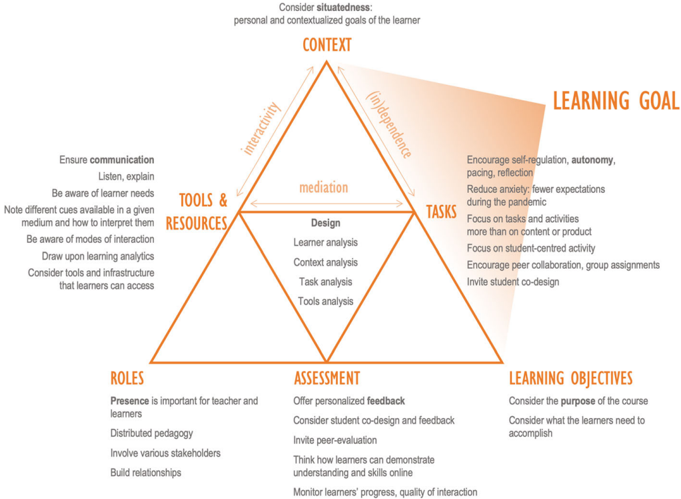
“Our findings point at the design of learning activities with certain characteristics, the combination of three types of presence (social, cognitive and facilitatory) and the need for adapting assessment to the new learning requirements.”
§ Springer Nature Switzerland AG 2020 Published online: 7 July 2020 > Abstract
plainstates an association- Asserted: passes — The authors put it forward as true.
- Checkable: passes — It can be checked against evidence.
- Load-bearing: passes — The paper’s conclusions depend on it.
- Based: passes — The paper gives a reason why it holds.
None of the sources cited for this claim have been checked yet.
In the paper
“What all four experts focus on as a prime ' piece ' of pedagogical knowledge (Kali et al. 2011) is the careful design of activities.”
§ Springer Nature Switzerland AG 2020 Published online: 7 July 2020 > Learning Design
plain- Asserted: passes — The authors put it forward as true.
- Checkable: passes — It can be checked against evidence.
- Load-bearing: unclear — It is unclear whether the paper’s conclusions depend on it.
- Based: passes — The paper gives a reason why it holds.
A result the paper reports from its own data — it cites no other source for it, so there is none to check. The quote shows it is in the paper.
In the paper
“Inspired by Anderson et al. ' s (2001) understanding of teaching presence and how it can be re-conceived in the current Covid-19 situation in which educators are the designers, the tutors and the evaluators of the learning experience, a tripartite framework emerges from the interviews, with three main sub-presences of the teaching presence, namely:”
§ Springer Nature Switzerland AG 2020 Published online: 7 July 2020 > Teacher Presence
plain- Asserted: passes — The authors put it forward as true.
- Checkable: passes — It can be checked against evidence.
- Load-bearing: passes — The paper’s conclusions depend on it.
- Based: passes — The paper gives a reason why it holds.
5 more claims
Create a free account to see all 61 claims and to verify the 9 references still open.
- Probably not a substantial claim. 50
- It may state two separate claims as one. 18
Claims other papers make about this one
Each is checked against this paper’s own text: does it say what the citing paper says it does?
The source backs part of the claim, not all of it — or backs it for a different population, condition or comparison.
In the citing paper
“while it is known that for learning success, input formats usually depend on both attention and interest from the students (Rapanta et al., 2020).”
From Impact of Synchronous and Asynchronous Settings of Online Teaching and Learning in Higher Education on Students' Learning Experience During COVID-19 (2021) · cites this paper as Rapanta et al., 2020
Experimental — accuracy not yet measuredIn the citing paper
“Evaluating AI applications could be beneficial for enhancing their motivation and interest in teaching with AI [40].”
From Developing AI Literacy for Primary and Middle School Teachers in China: Based on a Structural Equation Modeling Analysis (2022) · cites this paper as [40]
Citations
Cites
The Reflective Practitioner: How Professionals Think in Action
Checkoway, B., & Schon, D. A. (1985) · Journal of Policy Analysis and Management · doi:10.2307/3324262 · Cited by 21,268
The reflective practitioner: How professionals think in action
Stewart, C. J. (1984) · Patient Education and Counseling · doi:10.1016/0738-3991(84)90022-3 · Cited by 19,752
Knowledge and teaching: Foundations of the new reform
Shulman, L. (1987) · Harvard Educational Review · doi:10.17763/haer.57.1.j463w79r56455411 · Cited by 16,787
Phenomenological research methods
Moustakas, C. (1994) · doi:10.4135/9781412995658 · Cited by 13,919 · cited 1×
“’ This study ’ s participants, i.e. the four online pedagogy experts, also functioned as co-researchers, following Moustakas ’ (1994) idea (l).”
BackgroundDetermining Validity in Qualitative Inquiry
Creswell, J. W., & Miller, D. L. (2000) · Theory Into Practice · doi:10.1207/s15430421tip3903_2 · Cited by 9,184
Speech Genres and Other Late Essays
Bakhtin, M. M. (1986) · University of Texas Press eBooks · doi:10.7560/720466 · Cited by 8,470
The Difference between Emergency Remote Teaching and Online Learning
Hodges, C. B., Moore, S., Lockee, B. B., Trust, T., & Bond, M. A. (2024) · Handbook of Research in Online Learning · doi:10.1163/9789004702813_021 · Cited by 6,253
Blended learning: Uncovering its transformative potential in higher education
Garrison, D. R., & Kanuka, H. (2004) · The Internet and Higher Education · doi:10.1016/j.iheduc.2004.02.001 · Cited by 4,849
Speech Genres and Other Late Essays
Melaver, M., Bakhtin, M. M., McGee, V. W., Emerson, C., & Holquist, M. (1987) · Poetics Today · doi:10.2307/1772598 · Cited by 3,185
ASSESSING TEACHING PRESENCE IN A COMPUTER CONFERENCING CONTEXT
Anderson, T., Rourke, L., Garrison, R., & Archer, W. (2001) · Online Learning · doi:10.24059/olj.v5i2.1875 · Cited by 1,885
Research works printed but not linked: 2
- Bates, A. W. (2019). Teaching in a digital age. 2nd Edition. Vancouver: Tony Bates Associates. https://pressbooks.bccampus.ca/teachinginadigitalagev2/. Accessed 15 June 2020.
- Shor, I., & Freire, P. (1987). A pedagogy for deliberation: dialogues on transforming education . Westport: Bergin & Garvey Publishers.
Cited by
Items 101–200 of 2,106
Scherer, R., Siddiq, F., Howard, S. K., & Tondeur, J. (2022) · Computers in Human Behavior · doi:10.1016/j.chb.2022.107530 · Cited by 114
Colclasure, B. C., Marlier, A., Durham, M. F., Brooks, T. D., & Kerr, M. (2021) · Education Sciences · doi:10.3390/educsci11090556 · Cited by 80
“(2020) suggested that faculty needed to be aware of the time and efforts that students will require in ERT to regulate themselves [20].”
BackgroundInfluentialSegbenya, M., Bervell, B., Minadzi, V. M., & Somuah, B. A. (2022) · Smart Learning Environments · doi:10.1186/s40561-022-00193-y · Cited by 63
“…learning in developing economies is confronted with infrastruc-ture-related challenges such as the availability and functionality of online tools, irregular electricity and internet facilities, and requisite skills to participate in online learning platforms (Yilmaz, 2016; Rapanta et al., 2020).”
BackgroundAbuhassna, H., & Alnawajha, S. (2023) · European Journal of Investigation in Health Psychology and Education · doi:10.3390/ejihpe13040054 · Cited by 143
“Now more than ever, universities should invest in faculty professional development to update them on successful teaching approaches with or without online tools [31].”
BackgroundInfluentialÁlvarez-Risco, A., Estrada‐Merino, A., Anderson-Seminario, M. D. L. M., Mlodzianowska, S., Ibarra, V. J. G., Villagómez-Buele, C., & Carvache‐Franco, M. (2020) · Interactive Technology and Smart Education · doi:10.1108/itse-08-2020-0160 · Cited by 72
Resnik, P., Dewaele, J., & Knechtelsdorfer, E. (2022) · TESOL Quarterly · doi:10.1002/tesq.3177 · Cited by 102
Postdigital Research: Genealogies, Challenges, and Future Perspectives
Jandrić, P., MacKenzie, A., & Knox, J. (2022) · Postdigital Science and Education · doi:10.1007/s42438-022-00306-3 · Cited by 102
“The journal also has a high citation count, and the journal’s most cited article, ‘Online university teaching during and after the Covid-19 crisis: Refocusing teacher presence and learning activity’ (Rapanta et al. 2020), has amassed almost 200 000 downloads and 1000 citations in less than two years.”
Using Interactive Online Pedagogical Approaches to Promote Student Engagement
Muir, T., Wang, I., Trimble, A., Mainsbridge, C. P., & Douglas, T. (2022) · Education Sciences · doi:10.3390/educsci12060415 · Cited by 133
“This has been particularly important during the COVID-19 pandemic, where teacher presence has been found to have a positive impact on student engagement and learning (e.g., Rapanta 2020) [21].”
IDEAS for Transforming Higher Education: An Overview of Ongoing Trends and Challenges
Ortiz, L. G., Clougher, D., Anderson, T. D., & Maina, M. F. (2021) · The International Review of Research in Open and Distributed Learning · doi:10.19173/irrodl.v22i2.5206 · Cited by 110
“The COVID-19 pandemic highlights that disruptive pedagogical practices are implemented to respond immediately (Rapanta et al., 2020), but reports from early studies provide a mixed review of the effectiveness of emergency remote education (Bozkurt et al.”
BackgroundSelf-citationCOVID-19 Accelerating Academic Teachers’ Digital Competence in Distance Teaching
Myyry, L., Kallunki, V., Katajavuori, N., Repo, S., Tuononen, T., Anttila, H., Kinnunen, P., Haarala-Muhonen, A., & Pyörälä, E. (2022) · Frontiers in Education · doi:10.3389/feduc.2022.770094 · Cited by 83
“Teachers should be supported in such disruptive events to ensure that students continue their studies (Ayebi-Arthur, 2017; Kebritchi et al., 2017; Rapanta et al., 2020).”
BackgroundAlsubaie, M. A. (2022) · Heliyon · doi:10.1016/j.heliyon.2022.e09811 · Cited by 89
“…studies on online learning concentrate on how the teacher interacts with the student while delivering academic content and negate the child-to-child and child-to-parent socialization that is critical for the whole academic development of a student (Bozkurt and Sharma, 2020; Rapanta et al., 2020).”
Leirós‐Rodríguez, R., Rodríguez‐Nogueira, Ó., Pinto‐Carral, A., Álvarez, M. J. Á., Galán-Martín, M. Á., Montero-Cuadrado, F., & Benítez‐Andrades, J. A. (2020) · Journal of Clinical Medicine · doi:10.3390/jcm9124053 · Cited by 63
Dietrich, J., Greiner, F., Weber-Liel, D., Berweger, B., Kämpfe, N., & Kracke, B. (2021) · Computers in Human Behavior · doi:10.1016/j.chb.2021.106819 · Cited by 77
Kwon, S., Kim, W., Bae, C., Cho, M., Lee, S.-H., & Dreamson, N. (2021) · International Journal of Educational Technology in Higher Education · doi:10.1186/s41239-021-00304-8 · Cited by 98
“…to have the ability of using it for course design, interaction and collaboration, assessment, and learner support, and thereby, learners are given opportunities to implement their creative and collaborative learning engagement strategies (Khlaif & Farid, 2018; Rapanta et al., 2020; Temdee, 2020).”
BackgroundInfluentialE-learning During Covid-19: A Review of Literature
Sharin, A. N. (2021) · Jurnal Pengajian Media Malaysia · doi:10.22452/jpmm.vol23no1.2 · Cited by 80
“learners to read more autonomously (Rapanta et al., 2020).”
BackgroundInfluentialAttitudes and awareness of regional Pacific Island students towards e-learning
Johnson, J. B., Reddy, P., Chand, R., & Naiker, M. (2021) · International Journal of Educational Technology in Higher Education · doi:10.1186/s41239-021-00248-z · Cited by 89
Ruiz, L. M. S., Moll-López, S., Moraño, J.-A., & Llobregat-Gómez, N. (2021) · Sustainability · doi:10.3390/su13063532 · Cited by 83
Moreira, M. Á., Aguilar, A. B., Gómez, S. M., & Santos, M. B. S. N. (2021) · Revista de Educación a Distancia (RED) · doi:10.6018/red.450461 · Cited by 86
Goodyear, P. (2021) · Postdigital Science and Education · doi:10.1007/s42438-021-00253-5 · Cited by 96
Self-citationNácher, M. J., Badenes-Ribera, L., Torrijos, C., Ballesteros, M. A., & Cebadera, E. (2021) · Studies in Educational Evaluation · doi:10.1016/j.stueduc.2021.101026 · Cited by 55
Zamecnik, A., Kovanović, V., Joksimovíc, S., & Liu, L. (2022) · Computers and Education Artificial Intelligence · doi:10.1016/j.caeai.2022.100051 · Cited by 90
Kabilan, M. K., & Annamalai, N. (2022) · Studies In Educational Evaluation · doi:10.1016/j.stueduc.2022.101182 · Cited by 76
“…educators with M.K. Kabilan and N. Annamalai relevant pedagogical and technological knowledge and skills, as well as appropriate technologies and tools so that the educators would be able to undertake “ educational change toward more flexible models and practices ” (Rapanta et al., 2020, p 942).”
BackgroundInfluentialMacKenzie, A., Bacalja, A., Devisakti, A., Panaretou, A., Girme, P., Cutajar, M., Abegglen, S., Evens, M., Neuhaus, F., Wilson, K., et al. (2021) · Postdigital Science and Education · doi:10.1007/s42438-021-00259-z · Cited by 74
Self-citationMushtaque, I., Waqas, H., & Awais-E-Yazdan, M. (2021) · International Journal of Educational Management · doi:10.1108/ijem-07-2021-0291 · Cited by 54
Ma, M., Wang, C., & Teng, M. F. (2021) · The Asia-Pacific Education Researcher · doi:10.1007/s40299-021-00600-x · Cited by 61
“…policy) requires creating a social presence, ‘‘the social communication channels that teachers must open to maintain and possibly enhance the lost spontaneous student–student and student–teacher interactions’’ (Rapanta et al., 2020, p. 938) to build student–student and student– teacher relations.”
BackgroundStudent engagement in K12 online education during the pandemic: The case of Turkey
Kurt, G., Atay, D., & Öztürk, H. A. (2021) · Journal of Research on Technology in Education · doi:10.1080/15391523.2021.1920518 · Cited by 72
“…traditional roles of teachers can be transferred to the online environment (Zhang & Lin, 2019), the affordances and limitations of the new learning setting require teachers to adapt to new roles for creating effective and meaningful learning experiences (Martin et al., 2019; Rapanta et al., 2020).”
BackgroundBatac, K. I. T., Baquiran, J. A., & Agaton, C. B. (2021) · International Journal of Learning Teaching and Educational Research · doi:10.26803/ijlter.20.6.12 · Cited by 72
“This new environment allows flexible and self-paced learning and reflection, which gives the students ample time to review the learning materials and improve the lesson activities, and at the same time, allow the teachers to monitor the students’ progress along the process (Rapanta et al., 2020).”
BackgroundArias‐Calderón, M., Castro, J., & Gayol, S. (2022) · Frontiers in Psychology · doi:10.3389/fpsyg.2022.889975 · Cited by 81
“Moreover, intentional strategies were later adopted, where a pedagogical team not only delivers contents but also develops strategies centered on learning (Cruea, 2020; Rapanta et al., 2020; UNESCO, 2020).”
BackgroundHu, X., Zhang, J., He, S., Zhu, R., Shen, S., & Liu, B. (2022) · Journal of Affective Disorders · doi:10.1016/j.jad.2022.04.121 · Cited by 63
“However, the current form of e-learning is not perfect and numerous scholars have questioned the readiness (Rapanta et al., 2020; Scherer et al., 2021) and fitness (Bao, 2020; Szopi ´ nski and Bachnik, 2022) for the future massive adoption of e-learning in higher education.”
Baker, S., Anderson, J., Burke, R., Fazio, T. D., Due, C., Hartley, L. K., Molla, T., Morison, C., Mude, W., Naidoo, L., et al. (2022) · Educational Review · doi:10.1080/00131911.2021.2015293 · Cited by 63
“The moving of enforced teaching and supports online has thus caused critical challenges (Hodges et al., 2020), not just for CALDMR (and other equity) students but also university staff (Rapanta et al., 2020).”
BackgroundHadie, S. N. H., Tan, V. P. S., Omar, N., Alwi, N. A. N. M., Lim, H. L., & Ishak, K. M. K. (2021) · Frontiers in Medicine · doi:10.3389/fmed.2021.739238 · Cited by 58
“Nevertheless, this abrupt transition to online lectures has presented significant challenges for faculty members as they have had to rapidly develop their digital competency skills for adoption in their teaching (18).”
BackgroundOguguo, B. C. E., Ezechukwu, R. I., Nannim, F. A., & Offor, K. (2023) · Innoeduca International Journal of Technology and Educational Innovation · doi:10.24310/innoeduca.2023.v9i1.15419 · Cited by 65
Vikas, S., & Mathur, A. K. (2021) · Education and Information Technologies · doi:10.1007/s10639-021-10793-9 · Cited by 68
“Rapanta et al (2020) conducted a study on the university teaching during and post Covid-19 crisis by transferring the focus on the educator’s online presence as well as learning activities in the classroom.”
BackgroundRosyada, A., & Sundari, H. (2021) · Studies in English Language and Education · doi:10.24815/siele.v8i2.18374 · Cited by 73
“…or the learning activities, including the context, the tools, and the resources, and the tasks; the teacher presence incorporating the motivator, communicator, and the facilitator; and assessment comprising the time and effort of the learners in achieving the learning goals (Rapanta et al., 2020).”
BackgroundJumareng, H., Setiawan, E., Patah, I. A., Aryani, M., Asmuddin, A., & Gani, R. A. (2021) · International journal of human movement and sports sciences · doi:10.13189/saj.2021.090102 · Cited by 68
“Online learning uses the internet network, so that lecturers and students can interact in cyberspace [11].”
BackgroundMethodFaculty experiences on emergency remote teaching during COVID-19: a multicentre qualitative analysis
Valsaraj, B. P., More, B., Biju, S., Payini, V., & Pallath, V. (2021) · Interactive Technology and Smart Education · doi:10.1108/itse-09-2020-0198 · Cited by 62
Yurinova, E. A., Геннадьевна, Б. О., & Dolzhenko, S. G. (2021) · Education and Information Technologies · doi:10.1007/s10639-021-10687-w · Cited by 85
“The studies that formed the basis for the methodological TPC cluster covered the design of learning activities with certain characteristics (Rapanta et al., 2020) and the need for adapting assessment to the new learning requirements (García-Peñalvo et al., 2020).”
BackgroundAlhammadi, S. (2021) · Education Sciences · doi:10.3390/educsci11090462 · Cited by 69
“Online teaching and learning contain different resources, tools, roles, pedagogical approaches, structures, virtual meetings, and types of interaction [12,13].”
BackgroundThe role of contemporary digital tools and technologies in COVID‐19 crisis: An exploratory analysis
Subramanian, M., Kogilavani, S. V., Hatamleh, W. A., Alnuaim, A. A., Abdelhady, M., & Easwaramoorthy, S. V. (2021) · Expert Systems · doi:10.1111/exsy.12834 · Cited by 58
“We found a few efforts (Niranjan, 2020; Rapanta et al., 2020) that encourage the use of online teaching during this crisis.”
BackgroundA Case Study Investigating Mental Wellbeing of University Academics during the COVID-19 Pandemic
Dinu, L. M., Dommett, E. J., Baykoca, J., Mehta, K. J., Everett, S., Foster, J., & Byrom, N. (2021) · Education Sciences · doi:10.3390/educsci11110702 · Cited by 57
“Online teaching demands specific pedagogical knowledge and involves redesigning and reorganizing the teaching content to make it suitable for a different environment [13].”
BackgroundRoss, P. M., Scanes, E., Poronnik, P., Coates, H. B., & Locke, W. (2022) · International Journal of STEM Education · doi:10.1186/s40594-022-00327-1 · Cited by 75
“In the last 2 years, the COVID-19 pandemic has intensified this stress with the rapid change to online learning, closures of international borders, academic redundancies and other job losses which have increased stress and caused a decline in academic staff health and well-being (Crawford et al., 2020; McGaughey et al…”
BackgroundMeletiou-Mavrotheris, Μ., Eteokleous, N., & Stylianou-Georgiou, A. (2022) · Education Sciences · doi:10.3390/educsci12070477 · Cited by 63
“The face-to-face courses needed to be re-designed to match an online learning environment [7,8].”
BackgroundWill we ever teach mathematics again in the way we used to before the pandemic?
Engelbrecht, J., Borba, M. C., & Kaiser, G. (2023) · ZDM · doi:10.1007/s11858-022-01460-5 · Cited by 73
Abdelfattah, F., Alawi, A. M. A., Dahleez, K. A., & El‐Saleh, A. A. (2023) · Online Information Review · doi:10.1108/oir-02-2022-0085 · Cited by 63
Sahni, S., Verma, S. R., & Kaurav, R. P. S. (2024) · Benchmarking An International Journal · doi:10.1108/bij-04-2022-0245 · Cited by 111
Pei, B., Lu, J., & Jing, X. (2025) · Computers and Education Artificial Intelligence · doi:10.1016/j.caeai.2025.100406 · Cited by 94
COVİD-19 PANDEMİSİ SÜRECİNİN ÖĞRETMEN ADAYLARININ MESLEKİ YETERLİKLERİ AÇISINDAN İNCELENMESİ
Eti, İ., & Karaduman, B. (2020) · Milli Eğitim Dergisi · doi:10.37669/milliegitim.787238 · Cited by 66
Ou, A. W., Gu, M. M., & Lee, J. C. (2022) · Journal of Multilingual and Multicultural Development · doi:10.1080/01434632.2021.2021210 · Cited by 58
“…teachers in their e ff orts to facilitate e ff ective classroom communication and learning (Alawamleh, Al-Twait, and Al-Saht 2020; Ali 2020; Kanno 2020; Rapanta et al. 2020; Ye et al. 2020), and developing knowledge about educational technologies and integrating ICT in higher education (Ali and…”
Smart Learning based on Moodle E-learning Platform and Digital Skills for University Students
ALRikabi, H. T. S., Jasim, N. A., Majeed, B. H., et al. (2022) · International Journal of Recent Contributions from Engineering Science & IT (iJES) · doi:10.3991/ijes.v10i01.28995 · Cited by 45
“their skills, and managing communication between students to encourage online education [8].”
BackgroundAnnamalai, N., Uthayakumaran, A., & Zyoud, S. H. (2022) · Education and Information Technologies · doi:10.1007/s10639-022-11275-2 · Cited by 70
“…wake-up call for HEI to equip their educators with relevant pedagogical and technological knowledge and skills, as well as appropriate technologies and tools so that the educators would be able to undertake “educational change toward more flexible models and practices” (Rapanta et al, 2020, p 942).”
BackgroundStudents’ perceptions of mobile learning technology acceptance during Covid-19: WhatsApp in focus
Habes, M., Elareshi, M., Salloum, S. A., Ali, S., Alfaisal, R., Ziani, A., & Alsridi, H. (2022) · Educational Media International · doi:10.1080/09523987.2022.2153990 · Cited by 57
“…to improve their knowledge, particularly by facilitating both students and educators in communicating interactively online (Alghizzawi et al., 2019; Rapanta et al., 2020), However, during these unpredictable times the use of ML (especially via WhatsApp) by students and educators remains largely…”
BackgroundKaqinari, T., Makarova, E., Audran, J., Döring, A. K., Göbel, K., & Kern, D. (2021) · Journal of University Teaching and Learning Practice · doi:10.53761/1.18.5.10 · Cited by 64
“As a result of pandemic-disrupted change, it will be possible to shape the post-pandemic university regarding online and blended teaching and learning (Hodges et al., 2020; Littlejohn, 2020; Rapanta et al., 2020).”
BackgroundWong, J. T., & Hughes, B. S. (2022) · Journal of Computing in Higher Education · doi:10.1007/s12528-022-09342-1 · Cited by 122
“Additionally, Rapanta et al. (2020) argue that instructors not only face the technical struggles of delivering online instruction, but also lack the instructional and pedagogical training necessary to “design and administer meaningful online learning experiences.””
BackgroundMüller, F. A., & Wulf, T. (2021) · The International Journal of Management Education · doi:10.1016/j.ijme.2021.100530 · Cited by 62
Butnaru, G. I., Haller, A. P., Dragolea, L.-L., Anichiti, A., & Hârșan, G.-D. T. (2021) · International Journal of Environmental Research and Public Health · doi:10.3390/ijerph18189665 · Cited by 64
Coping with COVID-19-related online English teaching challenges: teacher educators’ suggestions
Latif, M. M. M. A. (2021) · ELT Journal · doi:10.1093/elt/ccab074 · Cited by 60
Adoption, use and enhancement of virtual learning during COVID-19
Zhou, M., Dzingirai, C., Hove, K., Chitata, T., & Mugandani, R. (2022) · Education and Information Technologies · doi:10.1007/s10639-022-10985-x · Cited by 63
“However, there is still vigorous debate on the level of preparedness of higher education students on the use of digital learning (Rapanta et al., 2020; Reyes-Chua et al., 2020).”
BackgroundGarcia, M. B., & Yousef, A. M. F. (2022) · Research and Practice in Technology Enhanced Learning · doi:10.58459/rptel.2023.18020 · Cited by 66
Ensmann, S. Y., Whiteside, A. L., Gomez-Vasquez, L., & Sturgill, R. (2021) · Online Learning · doi:10.24059/olj.v25i3.2868 · Cited by 72
“To sustain retention levels and engagement as well as help better prepare students for remote and online learning, Rapanta et al. (2020) suggested that the pandemic shift requires reconsideration of Anderson et al.’s (2001) tri-fold focus on cognitive, social, and teaching presence, taking into…”
BackgroundThe webcam and student engagement in synchronous online learning: visually or verbally?
Händel, M., Bedenlier, S., Kopp, B., Gläser‐Zikuda, M., Kammerl, R., & Ziegler, A. (2022) · Education and Information Technologies · doi:10.1007/s10639-022-11050-3 · Cited by 67
“However, direct audiovisual interaction – “prepared live interaction” (Rapanta et al., 2020, p. 935) – amongst learners, their peers, and instructors predominantly occurs in online learning settings via synchronously organized meetings, conducted through video conferencing applications.”
BackgroundInfluentialΝικολοπούλου, Κ., & Kousloglou, M. (2022) · Education Sciences · doi:10.3390/educsci12030216 · Cited by 64
Fan, S., Trimble, A., Kember, D., Muir, T., Douglas, T., Wang, Y., Masters, J., & Mainsbridge, C. P. (2023) · The Australian Educational Researcher · doi:10.1007/s13384-022-00605-5 · Cited by 65
“Since early 2020, the coronavirus (COVID-19) outbreak has seen greater use of online and blended course offerings even amongst the more traditional universities (e.g. Rapanta et al., 2020).”
BackgroundSingh, J., Matthees, B., & Odetunde, A. (2021) · Quality Assurance in Education · doi:10.1108/qae-12-2020-0147 · Cited by 42
Changes in classroom assessment practices during emergency remote teaching due to COVID-19
Panadero, E., Fraile, J., Pinedo, L., Rodríguez-Hernández, C. F., & Díez, F. (2022) · Assessment in Education Principles Policy and Practice · doi:10.1080/0969594x.2022.2067123 · Cited by 59
“28223 – Pozuelo de Alarcón, de Alarcón Supplemental data for this article can be accessed here © 2022 Informa UK Limited, trading as Taylor & Francis Group (Bozkurt et al., 2020; Rapanta et al., 2020; Tejedor et al., 2021).”
BackgroundJandrić, P. (2021) · Postdigital Science and Education · doi:10.1007/s42438-021-00220-0 · Cited by 48
Fan, S., Chen, L., Nair, M., Garg, S., Yeom, S., Kregor, G., Yang, Y., & Wang, Y. (2021) · Education Sciences · doi:10.3390/educsci11100608 · Cited by 41
“They contribute to filling the knowledge gaps indicated by previous research, both qualitative studies on student engagement [20,21], and explorations on learning analytics adoptions to measure student engagement [22–24].”
BackgroundCornide-Reyes, H., Riquelme, F., Monsalves, D., Noel, R., Cechinel, C., Villarroel, R., Ponce, F., & Munoz, R. (2020) · Sensors · doi:10.3390/s20216337 · Cited by 40
“The remote academic activities have generated new challenges in the monitoring of the teaching-learning processes [19].”
BackgroundASLAN, S. A., TURGUT, Y. E., & Aslan, A. (2021) · Education and Information Technologies · doi:10.1007/s10639-021-10587-z · Cited by 52
Azizan, S. N., Lee, A., Crosling, G., Atherton, G., Arulanandam, B. V., Lee, C. E., & Rahim, R. B. A. (2022) · International Journal of Emerging Technologies in Learning (iJET) · doi:10.3991/ijet.v17i03.24871 · Cited by 46
Winfield, J. D., & Paris, J. H. (2022) · Journal of Education Human Resources · doi:10.3138/jehr-2021-0048 · Cited by 67
Chao, H.-W., Wu, C.-C., & Tsai, C. (2021) · Computers & Education · doi:10.1016/j.compedu.2021.104150 · Cited by 56
Teachers’ Encounter of Online Learning: Challenges and Support System
Bhuana, G. P., & Apriliyanti, D. L. (2021) · Journal of English Education and Teaching · doi:10.33369/jeet.5.1.110-122 · Cited by 74
“In line with Kebritchi (2017), several studies (e.g: Lestiyanawati & Widyantoro, 2020; Rapanta et al., 2020; Tamrin et al., 2017) revealed that Indonesian teachers faced problems in accessing technology, school facilities in supporting e-learning, the difficulties in explaining the material,…”
BackgroundSeetal, I., Gunness, S., & Teeroovengadum, V. (2021) · International Review of Education · doi:10.1007/s11159-021-09902-0 · Cited by 49
Randazzo, M., Priefer, R., & Khamis-Dakwar, R. (2021) · Frontiers in Education · doi:10.3389/feduc.2021.662850 · Cited by 59
Teachers’ Well-Being, Emotions, and Motivation During Emergency Remote Teaching Due to COVID-19
Panadero, E., Fraile, J., Pinedo, L., Rodríguez-Hernández, C. F., Eizmendi, E. B., & Díez, F. (2022) · Frontiers in Psychology · doi:10.3389/fpsyg.2022.826828 · Cited by 59
“In particular, the teachers reported the need to acquire the pedagogical content knowledge to design and carry out meaningful experiences in a remote setting (Rapanta et al., 2020).”
BackgroundCOVID Academic Pandemic: Techno Stress Faced by Teaching Staff for Online Academic Activities
Zheng, M., Asif, M., Tufail, M. S., Naseer, S., Khokhar, S. G., Chen, X., & Naveed, R. T. (2022) · Frontiers in Psychology · doi:10.3389/fpsyg.2022.895371 · Cited by 60
The Factors Affecting Acceptance of E-Learning: A Machine Learning Algorithm Approach
Lu, D.-N., Le, H.-Q., & Vu, T.-H. (2020) · Education Sciences · doi:10.3390/educsci10100270 · Cited by 52
“Favorable features for educational activities include online interactive activities, and data storage and assessment, which can be conducted on an internet platform so that students and faculty members can complete their tasks without being face to face [3,5].”
BackgroundUnderlying the triple burden effects on women educationists due to COVID-19
Dogra, P., & Kaushal, A. (2021) · Education and Information Technologies · doi:10.1007/s10639-021-10645-6 · Cited by 58
“The sudden shift to the “online portal” due to pandemic situation impose more stress and workloads on the teachers and staff members who try to maintain a work-life balance in addition to teaching, research, and service obligations (Rapanta et al., 2020; Houlden and Veletsianos, 2020).”
BackgroundThe impact of COVID-19 on children’s learning: a rapid review
Spiteri, J., Deguara, J., Muscat, T., Bonello, C., Farrugia, R. C., Milton, J., Gatt, S., & Said, L. (2022) · The Educational and Developmental Psychologist · doi:10.1080/20590776.2021.2024759 · Cited by 52
“Teachers needed to be adequately trained and supported in using online modes and pedagogies of learning, and how to teach and support their students via online platforms and other modes of communication for their students to record progress (García & Weiss, 2020; Rapanta et al., 2020).”
BackgroundChang, B. (2020) · Postdigital Science and Education · doi:10.1007/s42438-020-00183-8 · Cited by 42
“…distancing measures have catalysed disparate groups to see themselves in a different light, bringing attention to shared inequities and dysfunctions in areas like schooling, healthcare, labour, social services, and environmental protections (Khan et al. 2020; McLaren 2020; Rapanta et al. 2020).”
BackgroundAroles, J., & Kuepers, W. M. (2021) · Management Learning · doi:10.1177/13505076211053871 · Cited by 57
“…technologies for increased lecture capture (allowing out-of-class access to recorded presentations), which in turn not only questions the status of lectures and teacher presence (Rapanta et al., 2020), but also textbooks, thus speech and writing (Friesen, 2017) and even co-creation of curricula.”
BackgroundBelda-Medina, J. R. (2021) · Education Sciences · doi:10.3390/educsci11110723 · Cited by 75
Nurdin, N., & Pettalongi, S. S. (2022) · Coopetition Jurnal Ilmiah Manajemen · doi:10.32670/coopetition.v13i2.1518 · Cited by 113
Muñoz, K. E., Wang, M.-J. S., & Tham, A. (2021) · Journal of Teaching in Travel & Tourism · doi:10.1080/15313220.2021.1908871 · Cited by 50
“This fast and evolutionary higher education landscape therefore provides an incredibly unique set of circumstances to investigate the manifestation of SP within online learning environments (Rapanta et al., 2020).”
BackgroundMocanu, G. D., Murariu, G., Iordan, D. A., Sandu, I., & Antonovici, M. O. (2021) · Applied Sciences · doi:10.3390/app11125558 · Cited by 45
“Creating attractive learning experiences and generating distinct learning environments through digital technologies is a priority of the higher education system, which would facilitate the rapid adaptation to the current challenges of teachers and students with limited experience in e-learning [1].”
BackgroundShorey, S., Pereira, T. L., Teo, W. Z., Ang, E. N. K., Lau, T. C., & Samarasekera, D. D. (2022) · Nurse Education in Practice · doi:10.1016/j.nepr.2022.103483 · Cited by 46
Law, M. Y. (2021) · Creative Education · doi:10.4236/ce.2021.123035 · Cited by 55
“Online learning certainly involves certain pedagogical expertise with the use of digital technology, mainly related to designing better learning experiences and creating distinctive learning environments for the students (Rapanta et al., 2020).”
BackgroundDolenc, K., Šorgo, A., & Virtič, M. P. (2021) · Education and Information Technologies · doi:10.1007/s10639-021-10558-4 · Cited by 52
“, 2020; Dilmaç, 2020; Flores & Gago, 2020; Sepulveda-Escobar & Morrison, 2020), a few on educators (e.g., Almanthari et al., 2020; Rapanta et al., 2020), and we could only identify one qualitative study (Hebebci, et al.”
BackgroundKovacs, H., Pulfrey, C., & Monnier, E.-C. (2021) · Education and Information Technologies · doi:10.1007/s10639-021-10616-x · Cited by 51
Moving Teaching Online: Cultural Barriers Experienced by University Teachers During Covid-19
Littlejohn, A. H., Gourlay, L. J., Kennedy, E., Logan, K., Neumann, T., Oliver, M., Potter, J., & Rode, J. A. (2021) · Journal of Interactive Media in Education · doi:10.5334/jime.631 · Cited by 41
Kartimi, K., Gloria, R., & Anugrah, I. (2021) · Jurnal Pendidikan IPA Indonesia · doi:10.15294/jpii.v10i2.28468 · Cited by 49
“One of the main policies is dismissing face-to-face learning and changing it with online distance learning (Rapanta et al., 2020).”
BackgroundAhied, M., Muharrami, L. K., Fikriyah, A., & Rosidi, I. (2020) · Jurnal Pendidikan IPA Indonesia · doi:10.15294/jpii.v9i4.26123 · Cited by 88
Benis, A., Nelke, S. A., & Winokur, M. (2021) · Sensors · doi:10.3390/s21092905 · Cited by 58
“One of the main results shows that for efficiently delivering online and distance learning content, the staff must show a higher interaction with students and adapt how to run assessments [29].”
BackgroundPedagogical transitions experienced by higher education faculty members – “Pre-Covid to Covid”
Pandya, B., Patterson, L., & Cho, B. (2021) · Journal of Applied Research in Higher Education · doi:10.1108/jarhe-01-2021-0028 · Cited by 40
Virtualization of Higher Education during COVID-19: A Successful Case Study in Palestine
Affouneh, S. J., Khlaif, Z. N., Burgos, D., & Salha, S. H. (2021) · Sustainability · doi:10.3390/su13126583 · Cited by 38
“[20] expressed that the design of learning activities with certain characteristics, the combination of three types of presence (social, cognitive, and facilitatory) and the need for adapting assessment to the new learning requirements.”
BackgroundChierichetti, M., & Backer, P. R. (2021) · Education Sciences · doi:10.3390/educsci11080419 · Cited by 45
The decay of traditional education: A case study under covid-19
Abunamous, M. O., Boudouaia, A., Jebril, M., Diafi, S., & Zreık, M. (2022) · Cogent Education · doi:10.1080/2331186x.2022.2082116 · Cited by 38
“As a matter of fact, excellent online learning experiences need educational grounding and a thorough comprehension of the topics (Rapanta et al., 2020).”
BackgroundCovid-19 distance and online learning: a systematic literature review in pharmacy education
Muhaimin, M., Habibi, A., Riady, Y., Alqahtani, T. M., Chaerunisaa, A. Y., Wijaya, T. T., Milanda, T., Yusop, F. D., & Albelbisi, N. A. (2023) · BMC Medical Education · doi:10.1186/s12909-023-04346-6 · Cited by 70
“Another piece of advice is to reassess and rethink educational practices and formulate guidance to steer the shifts to online and distance learning and make necessary infrastructural improvements [56, 57].”
BackgroundPetchamé, J., Iriondo, I., Korres, O., & Paños-Castro, J. (2023) · Heliyon · doi:10.1016/j.heliyon.2023.e16675 · Cited by 68
“To preserve and guarantee the academic activity, diverse institutions promoted a switch from physical face-to-face classes on the campus facilities, to online teaching and learning activities [7 – 12], a format leveraged by technology, that has been growing worldwide [13].”
BackgroundTeaching Novice Teachers to Enhance Learning in the Hybrid University
Pischetola, M. (2021) · Postdigital Science and Education · doi:10.1007/s42438-021-00257-1 · Cited by 48
Metadata
- Authors
- Rapanta, C., Botturi, L., Goodyear, P., Guàrdia, L., & Koole, M.
- Affiliations
- Universidade Nova de Lisboa (PT)
- University of Applied Sciences and Arts of Southern Switzerland (CH)
- The University of Sydney (AU)
- University of Saskatchewan (CA)
- Corresponding author
- Rapanta, Chrysi
- ORCID
- Rapanta, Chrysi
- Venue
- Postdigital Science and Education
- Published
- 2020-07-07
- Volume
- 2
- Issue
- 3
- Pages
- 923-945
- ISSN
- 2524-485X (ISSN-L)
- 2524-4868
- PMC
- PMC7339092
- OpenAlex
- W3042009104
- Semantic Scholar
- fed495af71b417de8d60cf16b6da44926faf24a0
- Cited by
- 2,130
- References
- 75
- Citations by year
- 2026: 134 · 2025: 158 · 2024: 261 · 2023: 426 · 2022: 556 · 2021: 509 · 2020: 73
- FWCI
- 454.18
- Type
- journal article
- Language
- en
- Open access
- hybrid
- doi.org
- Licence
- other-oa
- www.springer.com/tdm (tdm)
- www.springer.com/tdm (vor)
- Locations
- Postdigital Science and Education (publishedVersion, other-oa)
- PubMed (publishedVersion)
- PubMed Central (submittedVersion)
- The Sydney eScholarship Repository (The University of Sydney) (submittedVersion)
- Funders
- Fundação para a Ciência e a Tecnologia (DL 57/2016/CP1453/CT0066)
- Australian Research Council (DP150104163)
- Topics
- Social Sciences › Education › Digital Education and Society
- Social Sciences › Education › Higher Education Practises and Engagement
- Social Sciences › Education › Educational Innovations and Technology
- Keywords
- online learning, COVID-19 pandemic, higher education, teacher presence, pedagogical content knowledge, learning activities, social presence, cognitive presence
About these checks
Registry, retraction, Cites and statistics results are computed, not judged, with one exception: a printed reference that no index lists is read once by a model before it counts as a citation error. Claims are extracted by a model and kept only when their quote appears verbatim in the text; each cited source is then checked, with a model’s help, for whether it says what the claim relies on. Those verdicts can be wrong — read the claim’s quote and the cited source before relying on one.
The claim verdicts this report counts are experimental: their accuracy is not yet measured.
A language model drew the claims from the paper on 2026-10-10, under version 3 of the claim definition (model deepseek-v4.1-flash, prompt extract-v3).
A second model labelled each claim on 2026-10-10 (model jev-1.13-20260917, definition revision gold-guideline-v0.2).
Cited sources are checked with a language model’s help (qwen3.8-omni-flash).
Statistics and arithmetic are recomputed, not judged.
Confidence bands are shown only for fields calibrated on our annotated test set. None is calibrated yet, so no band is shown.
What counts as a claim ›How we measure confidence ›How we check this ›
Are you an author, or do you see a problem with this page? Request a review
Data sources
Bibliographic data: Semantic Scholar, OpenAlex, Crossref.
Contains information from the Semantic Scholar Academic Graph Datasets, made available under the ODC Attribution License (ODC-BY 1.0).
Semantic Scholar’s data is described in: Kinney, R., et al. (2023). The Semantic Scholar Open Data Platform. arXiv:2301.10140.
