

Online University Teaching During and After the Covid-19 Crisis: Refocusing Teacher Presence and Learning Activity
Open accessThe DOI matches its Crossref record; 71 of the 75 references it cites were found in a registry or an index; 6 of the 42 sources its claims cite were checked for support.
Abstract
The Covid-19 pandemic has raised significant challenges for the higher education community worldwide. A particular challenge has been the urgent and unexpected request for previously face-to-face university courses to be taught online. Online teaching and learning imply a certain pedagogical content knowledge (PCK), mainly related to designing and organising for better learning experiences and creating distinctive learning environments, with the help of digital technologies.
Overview
CoChat Summary
TL;DR
This article is an expert-interview piece offering pedagogical guidance for university teachers suddenly moving online during Covid-19. Its central message is that effective online teaching depends less on tools or materials alone and more on careful learning design, multiple forms of teacher presence, and continuous assessment.
Key findings
- The four experts argue that online learning should be built around carefully designed learning activities, with a mix of synchronous, asynchronous, online, and offline tasks that are clear, appropriately difficult, authentic, and accessible to students.
- They propose a tripartite teaching presence for online courses: cognitive presence, social presence, and facilitatory presence.
- Successful online learning requires students not to feel alone, and it benefits from timely feedback, peer collaboration, and student co-design/co-configuration of activities.
- The paper states that continuous assessment is needed in online learning, and suggests self-reflections, portfolios, self-paced asynchronous activities, and use of learning analytics as part of evaluation.
Methods
- Exploratory qualitative study using expert interviews administered by e-mail.
- Sample: 4 online pedagogy experts/co-authors, selected for research expertise, more than a decade of online teaching experience, and experience across different national education systems; they worked in Switzerland, Australia, Spain, and Canada.
- Main analysis: the first author organized the responses into a panel-like article, then the authors jointly revised and synthesized the material; the discussion summarizes themes under learning design, teacher presence, and assessment.
Limitations
- The paper states that all four experts came from “rich parts of the world” (Switzerland, Canada, Australia, and North of Spain), which limits the lens to a “monofocal” view of educational reality.
- The paper itself says the study used a heuristic method based on expert viewpoints and “by no means can replace rigorous, systematic research” following the scientific method.
- Evident from the text: the sample is very small (4 experts) and highly selected, so the findings are expert-opinion guidance rather than generalizable empirical results.
Model-written summary. Check it against the paper before relying on it.
Integrity signals
Registry
Cites
Statistics
Figures
Verification
Claims the paper makes
5 Valid · 0 Not valid · 32 Not checked · 24 Own results and interpretations
The sources with a verdict support this claim; the rest weren’t checked yet, have no full text we could read, or their verdicts aren’t rated yet.
In the paper
“On top of that, a significant challenge for university teachers has been their lack of the pedagogical content knowledge (PCK) (Shulman 1987) needed for teaching online (Angeli and Valanides 2005; Kali, Goodyear and Markauskaite 2011; Ching, Hsu and Baldwin 2018).”
§ Springer Nature Switzerland AG 2020 Published online: 7 July 2020 > Introduction
What the sources say
- Supportedcites Shulman 1987 matched to “Knowledge and teaching: Foundations of the new reform” (1987) source
The parenthetical (Shulman 1987) is attached to the term 'pedagogical content knowledge (PCK)' — an identification citation — while the online-teaching studies are credited to Angeli & Valanides, Kali et al. and Ching et al. Our copy (the Portuguese edition of Shulman's 1987 Harvard Educational Review article) establishes exactly that concept: the 'Categorias da base de conhecimento' section lists 'conhecimento pedagógico do conteúdo' as one of the categories of the knowledge base for teaching, 'esse amálgama especial de conteúdo e pedagogia que é o terreno exclusivo dos professores', and the 'Novas compreensões' section calls it 'a categoria que melhor distingue a compreensão de um especialista em conteúdo daquela de um pedagogo'. The paper itself says nothing about online teaching or about university teachers lacking PCK, but that part of the sentence is not attributed to this source. (LLM, conf=0.85)
- Not checked — no full text of the sourcecites Angeli and Valanides 2005 matched to “Preservice elementary teachers as information and communication technology designers: an instructional systems design model based on an expanded view of pedagogical content knowledge” (2005) source
- Could not verifycites Ching, Hsu and Baldwin 2018 matched to “Online Course Design and Development among College and University Instructors: An Analysis using Grounded Theory” (2018) sourceExperimental — accuracy not yet measured
Our copy of Baldwin, Ching & Friesen (2018) never mentions pedagogical content knowledge, PCK, Shulman, or TPACK; searches for 'pedagogical content knowledge PCK online teaching', 'TPACK technological pedagogical content knowledge', 'Shulman pedagogical content knowledge Angeli Valanides' and 'challenge lack of knowledge training online instructors pedagogy' returned only the References list and design-process passages. The paper's content is a grounded-theory account of how 14 four-year-institution instructors design online courses (Abstract; Results themes; Discussion mapping to ADDIE), and its nearest statements — that instructors 'must develop new curriculum with instructional strategies effective for online learning' (Discussion) and 'rarely use formal instructional design models' (Results) — concern design practice, not a PCK deficiency framed as a significant challenge. Nothing in our copy either states or contradicts the attributed claim. (LLM, conf=0.72)
plain- Asserted: passes — The authors put it forward as true.
- Checkable: passes — It can be checked against evidence.
- Load-bearing: passes — The paper’s conclusions depend on it.
- Based: passes — The paper gives a reason why it holds.
- Supported
The cited sources support only part of this claim — read each source’s verdict below.
In the paper
“Assessment can possibly be considered the most challenging part of the transition to distance learning for an institution used to face-to-face oral or written exam, as the control shift towards the students makes it hardly possible to ensure that students are not cheating (Munoz and Mackay 2019).”
§ Springer Nature Switzerland AG 2020 Published online: 7 July 2020 > Assessment
What the sources say
- Partly supportedcites Munoz and Mackay 2019 matched to “An online testing design choice typology towards cheating threat minimisation” (2019) sourceExperimental — accuracy not yet measured
Split into 2 atoms — 0 confirmed, 2 partially supported, 0 disputed, 0 misattributed, 0 unverifiable. Expand the claim to see per-atom verdicts.
hedgedstates a possible cause- Asserted: passes — The authors put it forward as true.
- Checkable: passes — It can be checked against evidence.
- Load-bearing: unclear — It is unclear whether the paper’s conclusions depend on it.
- Based: passes — The paper gives a reason why it holds.
- Partly supported
A result the paper reports from its own data — it cites no other source for it, so there is none to check. The quote shows it is in the paper.
In the paper
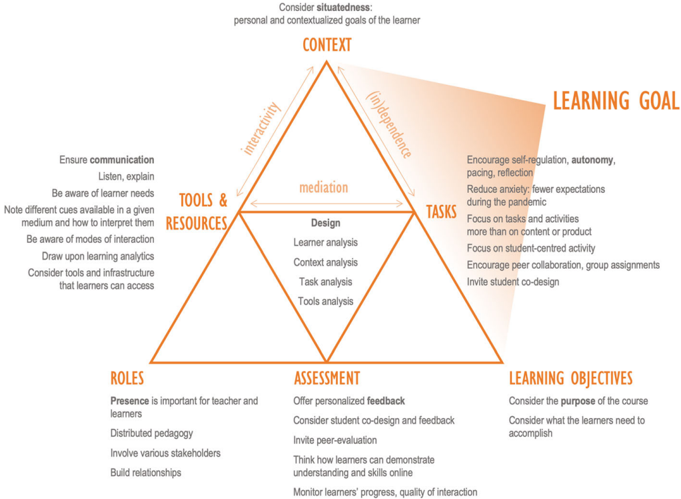
“Our findings point at the design of learning activities with certain characteristics, the combination of three types of presence (social, cognitive and facilitatory) and the need for adapting assessment to the new learning requirements.”
§ Springer Nature Switzerland AG 2020 Published online: 7 July 2020 > Abstract
plainstates an association- Asserted: passes — The authors put it forward as true.
- Checkable: passes — It can be checked against evidence.
- Load-bearing: passes — The paper’s conclusions depend on it.
- Based: passes — The paper gives a reason why it holds.
None of the sources cited for this claim have been checked yet.
In the paper
“What all four experts focus on as a prime ' piece ' of pedagogical knowledge (Kali et al. 2011) is the careful design of activities.”
§ Springer Nature Switzerland AG 2020 Published online: 7 July 2020 > Learning Design
plain- Asserted: passes — The authors put it forward as true.
- Checkable: passes — It can be checked against evidence.
- Load-bearing: unclear — It is unclear whether the paper’s conclusions depend on it.
- Based: passes — The paper gives a reason why it holds.
A result the paper reports from its own data — it cites no other source for it, so there is none to check. The quote shows it is in the paper.
In the paper
“Inspired by Anderson et al. ' s (2001) understanding of teaching presence and how it can be re-conceived in the current Covid-19 situation in which educators are the designers, the tutors and the evaluators of the learning experience, a tripartite framework emerges from the interviews, with three main sub-presences of the teaching presence, namely:”
§ Springer Nature Switzerland AG 2020 Published online: 7 July 2020 > Teacher Presence
plain- Asserted: passes — The authors put it forward as true.
- Checkable: passes — It can be checked against evidence.
- Load-bearing: passes — The paper’s conclusions depend on it.
- Based: passes — The paper gives a reason why it holds.
5 more claims
Create a free account to see all 61 claims and to verify the 9 references still open.
- Probably not a substantial claim. 50
- It may state two separate claims as one. 18
Claims other papers make about this one
Each is checked against this paper’s own text: does it say what the citing paper says it does?
The source backs part of the claim, not all of it — or backs it for a different population, condition or comparison.
In the citing paper
“while it is known that for learning success, input formats usually depend on both attention and interest from the students (Rapanta et al., 2020).”
From Impact of Synchronous and Asynchronous Settings of Online Teaching and Learning in Higher Education on Students' Learning Experience During COVID-19 (2021) · cites this paper as Rapanta et al., 2020
Experimental — accuracy not yet measuredIn the citing paper
“Evaluating AI applications could be beneficial for enhancing their motivation and interest in teaching with AI [40].”
From Developing AI Literacy for Primary and Middle School Teachers in China: Based on a Structural Equation Modeling Analysis (2022) · cites this paper as [40]
Citations
Cites
The Reflective Practitioner: How Professionals Think in Action
Checkoway, B., & Schon, D. A. (1985) · Journal of Policy Analysis and Management · doi:10.2307/3324262 · Cited by 21,268
The reflective practitioner: How professionals think in action
Stewart, C. J. (1984) · Patient Education and Counseling · doi:10.1016/0738-3991(84)90022-3 · Cited by 19,752
Knowledge and teaching: Foundations of the new reform
Shulman, L. (1987) · Harvard Educational Review · doi:10.17763/haer.57.1.j463w79r56455411 · Cited by 16,787
Phenomenological research methods
Moustakas, C. (1994) · doi:10.4135/9781412995658 · Cited by 13,919 · cited 1×
“’ This study ’ s participants, i.e. the four online pedagogy experts, also functioned as co-researchers, following Moustakas ’ (1994) idea (l).”
BackgroundDetermining Validity in Qualitative Inquiry
Creswell, J. W., & Miller, D. L. (2000) · Theory Into Practice · doi:10.1207/s15430421tip3903_2 · Cited by 9,184
Speech Genres and Other Late Essays
Bakhtin, M. M. (1986) · University of Texas Press eBooks · doi:10.7560/720466 · Cited by 8,470
The Difference between Emergency Remote Teaching and Online Learning
Hodges, C. B., Moore, S., Lockee, B. B., Trust, T., & Bond, M. A. (2024) · Handbook of Research in Online Learning · doi:10.1163/9789004702813_021 · Cited by 6,253
Blended learning: Uncovering its transformative potential in higher education
Garrison, D. R., & Kanuka, H. (2004) · The Internet and Higher Education · doi:10.1016/j.iheduc.2004.02.001 · Cited by 4,849
Speech Genres and Other Late Essays
Melaver, M., Bakhtin, M. M., McGee, V. W., Emerson, C., & Holquist, M. (1987) · Poetics Today · doi:10.2307/1772598 · Cited by 3,185
ASSESSING TEACHING PRESENCE IN A COMPUTER CONFERENCING CONTEXT
Anderson, T., Rourke, L., Garrison, R., & Archer, W. (2001) · Online Learning · doi:10.24059/olj.v5i2.1875 · Cited by 1,885
Research works printed but not linked: 2
- Bates, A. W. (2019). Teaching in a digital age. 2nd Edition. Vancouver: Tony Bates Associates. https://pressbooks.bccampus.ca/teachinginadigitalagev2/. Accessed 15 June 2020.
- Shor, I., & Freire, P. (1987). A pedagogy for deliberation: dialogues on transforming education . Westport: Bergin & Garvey Publishers.
Cited by
Singh, J., Steele, K., & Singh, L. (2021) · Journal of Educational Technology Systems · doi:10.1177/00472395211047865 · Cited by 739
“More speci fi cally, lack of awareness of basic principles needed to design and facilitate meaningful learning experiences in online format created additional challenges for faculty (Rapanta et al., 2020).”
BackgroundIglesias-Pradas, S., Hernández-García, Á., Chaparro-Peláez, J., & Prieto, J. L. (2021) · Computers in Human Behavior · doi:10.1016/j.chb.2021.106713 · Cited by 693
Profiling teachers' readiness for online teaching and learning in higher education: Who's ready?
Scherer, R., Howard, S. K., Tondeur, J., & Siddiq, F. (2021) · Computers in Human Behavior · doi:10.1016/j.chb.2020.106675 · Cited by 543
Emergency remote teaching in higher education: mapping the first global online semester
Bond, M., Bedenlier, S., Marín, V. I., & Händel, M. (2021) · International Journal of Educational Technology in Higher Education · doi:10.1186/s41239-021-00282-x · Cited by 527
Balancing Technology, Pedagogy and the New Normal: Post-pandemic Challenges for Higher Education
Rapanta, C., Botturi, L., Goodyear, P., Guàrdia, L., & Koole, M. (2021) · Postdigital Science and Education · doi:10.1007/s42438-021-00249-1 · Cited by 525
Self-citationZalat, M. M., Hamed, M. S., & Bolbol, S. A. (2021) · PLOS ONE · doi:10.1371/journal.pone.0248758 · Cited by 461
“A particular urgent challenge was for faceto-face university courses to be delivered online [16].”
BackgroundFabriz, S., Mendzheritskaya, J., & Stehle, S. (2021) · Frontiers in Psychology · doi:10.3389/fpsyg.2021.733554 · Cited by 453
Higher Education Future in the Era of Digital Transformation
Akour, M., & Alenezi, M. (2022) · Education Sciences · doi:10.3390/educsci12110784 · Cited by 378
“However, digital learning functions differently and is tremendously helpful for solving traditional learning issues, as evidenced, among other things, by our daily encounters with the growth of digital transformation [55].”
BackgroundThe mental health of university students during the COVID-19 pandemic: an online survey in the UK
Chen, T., & Lucock, M. (2022) · PLOS ONE · doi:10.1371/journal.pone.0262562 · Cited by 369
“higher education students, the pandemic presented a number of specific challenges, such as the transfer of more learning and support services online, which many students found difficult to engage effectively [4], leading to increased anxiety and concerns about their academic performances and long-term employment [5, 6…”
BackgroundYin, S., & Yu, Y. (2022) · Journal of Cleaner Production · doi:10.1016/j.jclepro.2022.132608 · Cited by 370
An Entangled Pedagogy: Looking Beyond the Pedagogy—Technology Dichotomy
Fawns, T. (2022) · Postdigital Science and Education · doi:10.1007/s42438-022-00302-7 · Cited by 350
“Meanwhile, traditional practices and methods (e.g. lectures or tutorials) are perpetuated by community take-up of other technologies (Oliver 2011), such as Zoom or other vide-oconferencing software during the COVID-19 pandemic (Fox et al. 2021; Rapanta et al. 2020).”
MethodBashir, A., Bashir, S., Rana, K., Lambert, P., & Vernallis, A. (2021) · Frontiers in Education · doi:10.3389/feduc.2021.711619 · Cited by 318
Challenges and Opportunities for Russian Higher Education amid COVID-19: Teachers’ Perspective
Almazova, N., Krylova, E., Rubtsova, A., & Odinokaya, M. (2020) · Education Sciences · doi:10.3390/educsci10120368 · Cited by 317
Ali, O., Murray, P. A., Momin, M., Dwivedi, Y. K., & Malik, T. (2024) · Technological Forecasting and Social Change · doi:10.1016/j.techfore.2023.123076 · Cited by 317
Daumiller, M., Rinas, R., Hein, J., Janke, S., Dickhäuser, O., & Dresel, M. (2021) · Computers in Human Behavior · doi:10.1016/j.chb.2020.106677 · Cited by 277
Teachers’ Satisfaction, Role, and Digital Literacy during the COVID-19 Pandemic
Li, M., & Yu, Z. (2022) · Sustainability · doi:10.3390/su14031121 · Cited by 266
“The better teachers’ digital literacy development, the more competent teachers are in education [55].”
BackgroundTeachers’ agency and online education in times of crisis
Damşa, C., Langford, M., Uehara, D., & Scherer, R. (2021) · Computers in Human Behavior · doi:10.1016/j.chb.2021.106793 · Cited by 249
Panisoara, I. O., Lazar, I., Panisoara, G., Chirca, R., & Ursu, A. S. (2020) · International Journal of Environmental Research and Public Health · doi:10.3390/ijerph17218002 · Cited by 246
“With regard to the educational field, these rapid and probably unexpected changes might have generated a series of difficulties in ensuring the effectiveness of both teachers and students [2].”
BackgroundZhao, L., Wu, X., & Luo, H. (2022) · Sustainability · doi:10.3390/su142114549 · Cited by 239
Pregowska, A., Masztalerz, K., Garlińska, M., & Osial, M. (2021) · Education Sciences · doi:10.3390/educsci11030118 · Cited by 224
“Despite the implementation of well-planned courses filled with high-quality instructions, these courses were limited by several factors, primarily dependent on the target audience and the media used to provide the course [167].”
BackgroundZhang, L., Carter, R. A., Qian, X., Yang, S., Rujimora, J., & Wen, S. (2022) · British Journal of Educational Technology · doi:10.1111/bjet.13191 · Cited by 221
Bailey, D., Almusharraf, N., & Hatcher, R. (2021) · Education and Information Technologies · doi:10.1007/s10639-020-10369-z · Cited by 192
“The video-synchronous speaking practice provided technology-enhanced communication options to schools when COVID-19 forced offline classes to be canceled (Rapanta et al. 2020).”
BackgroundOnline Education and the COVID-19 Outbreak: A Case Study of Online Teaching during Lockdown
Peimani, N., & Kamalipour, H. (2021) · Education Sciences · doi:10.3390/educsci11020072 · Cited by 185
“The importance of such a contact for a successful online learning has been previously outlined, which is mainly due to the fact that learning is a social act [36].”
BackgroundPsychological Effects of COVID-19 Pandemic on Society and Its Reflections on Education
AKAT, M., & KARATAŞ, K. (2020) · Journal of Turkish Studies · doi:10.7827/turkishstudies.44336 · Cited by 173
Exploring the Impact of COVID‐19 on Employees’ Boundary Management and Work–Life Balance
Adisa, T. A., Antonacopoulou, E., Beauregard, T. A., Dickmann, M., & Adekoya, O. D. (2022) · British Journal of Management · doi:10.1111/1467-8551.12643 · Cited by 169
“Few academics were familiar with virtual meeting technology or online teaching design and delivery before the lockdown, and the learning curve for teaching remotely was steep (Hodges et al., 2020; Rapanta et al., 2020).”
BackgroundZheng, F., Khan, N. A., & Hussain, S. (2020) · Children and Youth Services Review · doi:10.1016/j.childyouth.2020.105694 · Cited by 212
Platform-independent and curriculum-oriented intelligent assistant for higher education
Sajja, R., Sermet, Y., Cwiertny, D., & Demir, I. (2023) · International Journal of Educational Technology in Higher Education · doi:10.1186/s41239-023-00412-7 · Cited by 153
Rahiem, M. D. H. (2020) · Universal Journal of Educational Research · doi:10.13189/ujer.2020.082248 · Cited by 251
“Rahiem [21] further explained the thirteen platforms used during ERL listed by the students were: e-book/e-journals, pdf documents, YouTube videos, online meetings (Zoom, Google Meet or Microsoft Teams), WhatsApp, social media (Facebook or Instagram), Google Classroom, e-mail, Google Search Engine, Podcasts, education…”
BackgroundMethodInfluentialRzymski, P., Borkowski, L., Drąg, M., Flisiak, R., Jemielity, J., Krajewski, J., Mastalerz–Migas, A., Matyja, A., Pyrć, K., Simon, K. A., et al. (2021) · Vaccines · doi:10.3390/vaccines9020109 · Cited by 172
Muthmainnah, Ibna Seraj, P. M., & Oteir, I. (2022) · Education Research International · doi:10.1155/2022/6468995 · Cited by 153
“[26]; and Breines and Gallagher [27] said mobile technology design relies heavily on a collaborative effort.”
BackgroundLearning with technology during emergencies: A systematic review of K‐12 education
Crompton, H., Burke, D., Jordan, K., & Wilson, S. W. G. (2021) · British Journal of Educational Technology · doi:10.1111/bjet.13114 · Cited by 232
“With the absence of the physical learning environment, teachers turned to remote instruction with technology as part of a crisis response protocol to remotely continue education (Bozkurt & Sharma, 2020; Rapanta et al., 2020; Thompson & Copeland, 2020).”
BackgroundMethodBong, W. K., & Chen, W. (2024) · International Journal of Inclusive Education · doi:10.1080/13603116.2021.1937344 · Cited by 149
“Because of lockdowns, many works have to be switched to digital formats (Richter 2020), and many teaching activities have to be conducted online (Bao 2020; Rapanta et al. 2020).”
BackgroundAlmenara, J. C., Guillén‐Gámez, F. D., Ruiz‐Palmero, J., & Palacios‐Rodríguez, A. (2021) · British Journal of Educational Technology · doi:10.1111/bjet.13151 · Cited by 209
Online exam proctoring technologies: Educational innovation or deterioration?
Lee, K., & Fanguy, M. (2022) · British Journal of Educational Technology · doi:10.1111/bjet.13182 · Cited by 144
Teaching and Learning in Times of COVID-19: Uses of Digital Technologies During School Lockdowns
Pozo, J.-I., Pérez Echeverría, M.-P., Cabellos, B., & Sánchez, D. L. (2021) · Frontiers in Psychology · doi:10.3389/fpsyg.2021.656776 · Cited by 143
“Second, studies have aimed at proposing principles that should guide the use of ICT in the classroom (Ferdig et al., 2020; Rapanta et al., 2020; Sangrà et al., 2020).”
BackgroundSingh, J., Evans, E. M., Reed, A., Karch, L., Qualey, K., Singh, L., & Wiersma, H. (2021) · Journal of Educational Technology Systems · doi:10.1177/00472395211063754 · Cited by 206
“This co-researcher and authorship approach left original participants ’ thoughts intact and has been utilized by several researchers in their projects (Matusov et al., 2019; Rapanta et al., 2020; Shor & Freire, 1987).”
BackgroundMethodInfluentialChaleta, E., Saraiva, M., Leal, F., Fialho, I., & Borralho, A. (2021) · Sustainability · doi:10.3390/su13041828 · Cited by 213
“Although research in the field of technology has already produced tools aimed at new ways of learning and teaching [30], the training of university teachers in this field has remained incipient.”
BackgroundAl‐Adwan, A. S., Yaseen, H., Alsoud, A. R., Abousweilem, F., & Al-Rahmi, W. M. (2021) · Education and Information Technologies · doi:10.1007/s10639-021-10758-y · Cited by 174
Lei, S. I., & So, A. S. I. (2021) · Journal of Hospitality & Tourism Education · doi:10.1080/10963758.2021.1907196 · Cited by 176
“They are even putting more efforts on increasing support for students (Johnson et al., 2020), becoming better teachers and developing their teaching skills (Rapanta et al., 2020).”
BackgroundNetworked Learning in 2021: A Community Definition
(NLEC), N. L. E. C., Gourlay, L. J., Illera, J. L. R., Barberà, E., Bali, M., Gachago, D., Pallitt, N., Jones, C., Bayne, S., Hansen, S. B., et al. (2021) · Postdigital Science and Education · doi:10.1007/s42438-021-00222-y · Cited by 193
Self-citationThe application of WhatsApp to support online learning during the COVID-19 pandemic in Indonesia
Mulyono, H., Suryoputro, G., & Jamil, S. R. (2021) · Heliyon · doi:10.1016/j.heliyon.2021.e07853 · Cited by 181
“Moreover, with support from social media, both teachers' and students' social activity and peer collaboration can be enhanced and accordingly, online learning success can be achieved (Rapanta et al., 2020).”
BackgroundThe Perception and Attitudes toward COVID-19 Vaccines: A Cross-Sectional Study in Poland
Rzymski, P., Zeyland, J., Poniedziałek, B., Małecka, I., & Wysocki, J. (2021) · Vaccines · doi:10.3390/vaccines9040382 · Cited by 143
Stojan, J., Haas, M. R., Thammasitboon, S., Lander, L. I., Evans, S. J., Pawlik, C., Pawilkowska, T., Lew, M., Khamees, D., Peterson, W., et al. (2021) · Medical Teacher · doi:10.1080/0142159x.2021.1992373 · Cited by 157
“…on the affordances of technology to pivot a course), and/or a materials-based approach (using the same materials to teach the course regardless of the format), rather than a pedagogy-centered approach that considers educational purpose, desired learning outcomes and context (Rapanta et al. 2020).”
BackgroundFauzi, M. A. (2022) · Heliyon · doi:10.1016/j.heliyon.2022.e09433 · Cited by 176
“Faculty members have to deliver classes from home and prepare all the teaching materials without technical support (Rapanta et al., 2020; Hodges et al., 2020).”
Lee, K., Fanguy, M., Bligh, B., & Lu, X. S. (2021) · Educational Review · doi:10.1080/00131911.2021.1978401 · Cited by 177
“In this sense, suggestions narrowly oriented towards individual academics’ instructional and pedagogical strategies (see Bao, 2020; Rapanta et al., 2020) can be limiting and even dangerous.”
BackgroundInfluentialHong, X., Zhang, M., & Liu, Q. (2021) · Frontiers in Psychology · doi:10.3389/fpsyg.2021.691492 · Cited by 201
“Later, the studies for the TAM increased over time and some of them extended the TAM by additional external factors (e.g., job relevance, computer self-efficacy, and perception of external control) as determinants of TAM constructs (Schepers and Wetzels, 2007; Son et al., 2012; Ros et al., 2015).”
BackgroundResultSimamora, R. M., Fretes, D. D., Purba, E. D., & Pasaribu, D. (2020) · Studies in Learning and Teaching · doi:10.46627/silet.v1i3.45 · Cited by 185
Alberti, M. G., Suárez, F., Chiyón, I., & Feijóo, J. C. M. (2021) · Education Sciences · doi:10.3390/educsci11020059 · Cited by 152
“There has been an increasing number of experiences shared around the world studying how this situation has affected teachers and students, especially focused on primary and secondary levels of education [1–4] but not so much at the higher education level [5,6].”
BackgroundCASACCHIA, M., Cifone, M. G., Giusti, L., Fabiani, L., Gatto, R., Lancia, L., Cinque, B., Petrucci, C., Giannoni, M., Ippoliti, R., et al. (2021) · BMC Medical Education · doi:10.1186/s12909-021-02780-y · Cited by 168
Medical students as the volunteer workforce during the COVID-19 pandemic: Polish experience
Bazan, D., Nowicki, M. M., & Rzymski, P. (2021) · International Journal of Disaster Risk Reduction · doi:10.1016/j.ijdrr.2021.102109 · Cited by 128
“In many instances this has been a challenge for both students and lecturers, particularly in the earliest phase of COVID-19 spread in various countries [9,10].”
Tejedor, S., Cervi, L., Pérez-Escoda, A., Tusa, F., & Parola, A. (2021) · Journal of Open Innovation Technology Market and Complexity · doi:10.3390/joitmc7010043 · Cited by 144
“The risk of new outbreaks and the perennial threat of new viruses or pandemics constitute a serious invitation to continue researching and monitoring the capacity of universities to face and adapt to these new challenges [28,29].”
BackgroundOkoye, K., Arrona-Palacios, A., Camacho-Zuñiga, C., Achem, J. A. G., Escamilla, J., & Hosseini, S. (2022) · Education and Information Technologies · doi:10.1007/s10639-021-10751-5 · Cited by 112
Heo, H., Bonk, C. J., & Doo, M. Y. (2021) · Journal of Computer Assisted Learning · doi:10.1111/jcal.12603 · Cited by 111
Hagedorn, R. L., Wattick, R. A., & Olfert, M. D. (2021) · Applied Research in Quality of Life · doi:10.1007/s11482-021-09948-0 · Cited by 147
“As online learning requires different pedagogical approaches than face-to-face delivery, many professors were not prepared for this shift and course content was not developed with an online format in mind (Rapanta et al. 2020).”
BackgroundAlghamdi, A. A. (2021) · PLoS ONE · doi:10.1371/journal.pone.0250026 · Cited by 133
Pandita, A., & Kiran, R. (2023) · Sustainability · doi:10.3390/su15107923 · Cited by 240
Impact of the COVID-19 pandemic on online learning in higher education: a bibliometric analysis
Aristovnik, A., Karampelas, K., Umek, L., & Ravšelj, D. (2023) · Frontiers in Education · doi:10.3389/feduc.2023.1225834 · Cited by 200
“At the same time, challenges for online assessment and post-pandemic pedagogy are also highlighted (García Peñalvo et al., 2020; Iyer et al., 2020; Murphy, 2020; Rapanta et al., 2020).”
BackgroundUsing Mixed Methods to Understand Teaching and Learning in COVID 19 Times
Popa, D., Repanovici, A., Lupu, D., Norel, M., & Coman, C. (2020) · Sustainability · doi:10.3390/su12208726 · Cited by 149
“The teacher’s central role is to support them in becoming the titleholder of his/her acquisition development and to sustain the transformative learning process [59].”
BackgroundXhelili, P., Ibrahimi, E., Rruci, E., & Sheme, K. (2020) · International Journal on Studies in Education · doi:10.46328/ijonse.49 · Cited by 104
“As claimed in previous studies (Rapanta et al., 2020), it is difficult to make a sharp difference between face-toface learning in the classroom environment and online education, as they are considered both "heterogeneous".”
ResultElareshi, M., Habes, M., Youssef, E., Salloum, S. A., Alfaisal, R., & Ziani, A. (2022) · Heliyon · doi:10.1016/j.heliyon.2022.e09236 · Cited by 125
Academic Procrastination and Online Learning During the COVID-19 Pandemic
Melgaard, J., Monir, R., Lasrado, L. A., & Fagerstrøm, A. (2022) · Procedia Computer Science · doi:10.1016/j.procs.2021.11.080 · Cited by 134
Grinin, L. E., Леонидович, Г. А., & Korotayev, A. (2021) · Technological Forecasting and Social Change · doi:10.1016/j.techfore.2021.121348 · Cited by 134
Bedenlier, S., Wunder, I., Gläser-Zikuda, M., Kammerl, R., Kopp, B., Ziegler, A., & Händel, M. (2021) · International Journal of Educational Research Open · doi:10.1016/j.ijedro.2021.100068 · Cited by 93
Yunus, M. M., Ang, W. S., & Hashim, H. B. (2021) · Sustainability · doi:10.3390/su13063524 · Cited by 133
“Professional development of the lecturer could affect the students’ social influence on using online learning, hence the universities should focus on the professional development and improve on the pedagogical approaches on online teaching [47,48].”
Background(2021) · İlköğretim Online · doi:10.17051/ilkonline.2021.01.148 · Cited by 122
“And Rapanta et al (2020) point at the design of learning activities with certain characteristics, the combination of three types of presence (social, cognitive and facilitatory) and the need for adapting assessment to the new learning requirements.”
Opportunities and Limitations of Mobile Neuroimaging Technologies in Educational Neuroscience
Janssen, T. W. P., Grammer, J. K., Bleichner, M. G., Bulgarelli, C., Davidesco, I., Dikker, S., Jasińska, K. K., Šiugždaitė, R., Vassena, E., Vatakis, A., et al. (2021) · Mind Brain and Education · doi:10.1111/mbe.12302 · Cited by 118
“…in respect to the push toward more blended learning, and more recently the reliance on online learning due to the COVID-19 pandemic (Dhawan, 2020; Rapanta, Botturi, Goodyear, Guàrdia, & Koole, 2020), we think that the application-focused studies should receive a healthy dose of skepticism and…”
RETRACTED: The Difference Between Emergency Remote Teaching and e-Learning
Fuchs, K. (2022) · Frontiers in Education · doi:10.3389/feduc.2022.921332 · Cited by 90
“Similarly, there are elemental misalignments between online education and emergency remote teaching as relatedly firmed by Rapanta et al. (2020).”
BackgroundRetractedThe Role of Online Teaching Tools on the Perception of the Students during the Lockdown of Covid-19
Mohammed, K. S., Rashid, C. A., Salih, H. A., & Budur, T. (2020) · International Journal of Social Sciences and Educational Studies · doi:10.23918/ijsses.v7i3p178 · Cited by 128
Chou, C.-M., Shen, T.-C., Shen, T.-C., & Shen, C.-H. (2022) · Education and Information Technologies · doi:10.1007/s10639-021-10866-9 · Cited by 140
Warfvinge, P. G., Lofgreen, J. E., Andersson, K., Roxå, T., & Åkerman, C. (2021) · European Journal of Engineering Education · doi:10.1080/03043797.2021.1942794 · Cited by 105
“From the teacher’s perspective, many publications offer theoretical advice on how to handle the situation (e.g. Bao 2020; Kahn and Jawaid 2020; Rapanta et al. 2020; Verawardina et al. 2020).”
BackgroundAgyeiwaah, E., Badu‐Baiden, F., Gamor, E., & Hsu, F. (2021) · Journal of Hospitality Leisure Sport & Tourism Education · doi:10.1016/j.jhlste.2021.100364 · Cited by 115
Alenezi, M. A. K., Mohamed, A. M., & Shaaban, T. S. (2023) · Innoeduca. International Journal of Technology and Educational Innovation · doi:10.24310/innoeduca.2023.v9i2.16774 · Cited by 87
Stewart, W. H. (2021) · Open Praxis · doi:10.5944/openpraxis.13.1.1177 · Cited by 110
“It comes as no surprise that the switch to ERT was often met with a state of shock by institutions, educators, and students (Rapanta et al., 2020).”
BackgroundBlake, H., Knight, H., Jia, R., Corner, J. L., Morling, J. R., Denning, C. N., Ball, J. K., Bolton, K. J., Figueredo, G. P., Morris, D. E., et al. (2021) · International Journal of Environmental Research and Public Health · doi:10.3390/ijerph18084182 · Cited by 95
“This rapid transition to online teaching and learning might precipitate enhanced teaching and learning opportunities in the future [32], by increasing opportunities for flexible learning approaches [31].”
BackgroundPerspectives of Online Education in Pakistan: Post-covid Scenario
Farrukh, M., Soomro, T. R., Ghazal, T. M., Alzoubi, H. M., & Alshurideh, M. T. (2023) · Studies in computational intelligence · doi:10.1007/978-3-031-12382-5_28 · Cited by 88
Adams, D., Chuah, K.-M., Sumintono, B., & Mohamed, A. (2021) · Asian Education and Development Studies · doi:10.1108/aeds-05-2020-0100 · Cited by 106
“Various mitigation efforts such as adopting flexible online learning and e-assessment strategies were also implemented to reduce the impact of the pandemic on teaching and learning delivery (Rapanta et al. , 2020).”
BackgroundAktan, O., & Toraman, Ç. (2022) · Education and Information Technologies · doi:10.1007/s10639-022-11027-2 · Cited by 137
“…(Brady and Wilson, 2021), teachers’ exposure to intense use of technology in distance education (Pandey and Pal, 2020; Panisoara et al., 2020; Penado Abilleira et al., 2021; Rapanta et al., 2020), and private school teachers’ deprivation of job security (Khanal et al., 2021; Simon and Hasan, 2021).”
BackgroundThe knowledge and innovation challenges of ChatGPT: A scoping review
Ali, O., Murray, P., Momin, M., & Al–Anzi, F. S. (2023) · Technology in Society · doi:10.1016/j.techsoc.2023.102402 · Cited by 92
English language teaching and learning during Covid-19: A global perspective on the first year
Erarslan, A. (2021) · Journal of Educational Technology and Online Learning · doi:10.31681/jetol.907757 · Cited by 124
“…(Talidong & Toquero, 2020), instructors’ teaching practices, strategies and activities (König et al., 2020; Mahmood, 2020; Noor et al., 2020; Rapanta et al., 2020), the students (Coman et al., 2020; Shahzad et al., 2020; Son et al., 2020), key challenges or opportunities (Adedoyin &…”
BackgroundIlić, M. P., Păun, D., Popović Šević, N., Hadžić, A., & Jianu, A. (2021) · Education Sciences · doi:10.3390/educsci11100568 · Cited by 79
“Universities should invest in faculty professional development to keep them updated on effective teaching methods and whether they use online technologies [8].”
BackgroundFialho, P. M. M., Spatafora, F., Kühne, L., Busse, H., Helmer, S. M., Zeeb, H., Stock, C., Wendt, C., & Pischke, C. R. (2021) · Frontiers in Public Health · doi:10.3389/fpubh.2021.674665 · Cited by 89
“Training for faculty preparing them for shifts to online teaching is necessary in this process as well (34).”
BackgroundKüsel, J., Martin, F., & Markic, S. (2020) · Education Sciences · doi:10.3390/educsci10110313 · Cited by 97
Study of the Prevalence of Burnout in University Professors in the Period 2005–2020
Suárez, I. F., García-González, M., Torrano, F., & González, G. G. (2021) · Education Research International · doi:10.1155/2021/7810659 · Cited by 123
“In addition to these demands, nowadays e-teaching has become a priority as a result of the COVID-19 pandemic, which has added new psychosocial stress factors such as isolation, feelings of technological inefficiency, lack of training, or the difficulty of reconciling personal and professional life [29].”
BackgroundStress adaptation and resilience of academics in higher education
Ross, P. M., Scanes, E., & Locke, W. (2023) · Asia Pacific Education Review · doi:10.1007/s12564-023-09829-1 · Cited by 176
“…the COVID-19 pandemic have significantly impacted university finances, resulting in academic redundancies and job losses (Craw-ford et al., 2020; Cohrssen et al., 2022; De los Reyes et al., 2021, 2022; Mahat et al., 2022a, 2022b; Mercado, 2020; Mok et al., 2020; OCED, 2021; Rapanta et al., 2020 ).”
InfluentialLorenza, L. M., & Carter, D. (2021) · International Journal of Educational Research Open · doi:10.1016/j.ijedro.2021.100057 · Cited by 106
Slade, C., Lawrie, G. A., Taptamat, N., Browne, E., Sheppard, K., & Matthews, K. (2021) · Assessment & Evaluation in Higher Education · doi:10.1080/02602938.2021.1933379 · Cited by 92
“…issue and provided ways non-expert university teachers could draw on expert pedagogical content knowledge for online teaching and assessment (rapanta et al. 2020). research into blended and online environment assessment generated multiple design frameworks that align assessment with…”
BackgroundAbid, T., Zahid, G., Shahid, N., & Bukhari, M. (2021) · Fudan Journal of the Humanities and Social Sciences · doi:10.1007/s40647-021-00325-7 · Cited by 111
Yeh, C.-Y., & Tsai, C. (2022) · Frontiers in Psychology · doi:10.3389/fpsyg.2022.928717 · Cited by 136
“The teaching materials (readings, videos, exercises, etc.) become an influential factor as students are spending more time reading and reviewing the lesson materials on their own at home (Rapanta et al., 2020).”
BackgroundHe, S., Jiang, S., Zhu, R., & Hu, X. (2023) · Education and Information Technologies · doi:10.1007/s10639-023-11648-1 · Cited by 97
Kim, S., Jeong, S. H., Kim, H. S., & Jeong, Y. J. (2021) · Journal of Professional Nursing · doi:10.1016/j.profnurs.2021.10.005 · Cited by 82
Transforming Pedagogy: The Digital Revolution in Higher Education
Bitar, N., & Davidovich, N. (2024) · Education Sciences · doi:10.3390/educsci14080811 · Cited by 157
Vollbrecht, P. J., Porter‐Stransky, K. A., & Lackey‐Cornelison, W. (2020) · AJP Advances in Physiology Education · doi:10.1152/advan.00140.2020 · Cited by 74
“Although none of the faculty involved would argue that the ERL experience was equal to an in-person experience, in the time frame provided both students and faculty felt that the course was adequate given the circumstances.”
BackgroundInfluentialOnline Learning Challenges during Pandemic COVID-19 in Malaysian Higher Learning Institution
Ismail, N. S., Bakar, N. M. A., & Wafa, S. W. (2020) · Universal Journal of Educational Research · doi:10.13189/ujer.2020.081282 · Cited by 74
“The dynamic and innovative online learning environments enable students to have a meaningful learning experience [24, 25] and become the future of education [24].”
BackgroundErlam, G. D., Garrett, N., Gasteiger, N., Lau, K. E. M., Hoare, K., Agarwal, S., & Haxell, A. (2021) · Frontiers in Education · doi:10.3389/feduc.2021.639842 · Cited by 90
Jiang, P., Namaziandost, E., Azizi, Z., & Razmi, M. H. (2022) · Current Psychology · doi:10.1007/s12144-022-04013-x · Cited by 98
Srivastava, S., Jacob, J., Charles, A. S., Daniel, P., Mathew, J. K. K., Shanthi, P., Devamani, K., Gowri, M. S., & Rabi, S. (2021) · Medical Journal Armed Forces India · doi:10.1016/j.mjafi.2020.12.012 · Cited by 65
“Peer and faculty support are recommended to reduce stress levels in preclinical medical students.(28) Teachers should continue to keep in touch with students during ERL, given that non-verbal communication which forms an important aspect of teacher-student interaction in face-to-face classes,(29) is diminished in the…”
BackgroundDigitalization of learning in Saudi Arabia during the COVID-19 outbreak: A survey
Alsmadi, M. K., Almarashdeh, I., Alzaqebah, M., Jaradat, G. M., AlGhamdi, F., Mohammad, R. M. A., Alshabanah, M., Alrajhi, D., Alkhaldi, H., Aldhafferi, N., et al. (2021) · Informatics in Medicine Unlocked · doi:10.1016/j.imu.2021.100632 · Cited by 80
“At the same time, access to digital information sources does not assure the occurrence of learning, and this makes the credibility of online pedagogy debatable [29].”
Emergency remote teaching evaluation of the higher education in Indonesia
Cahyadi, A., Hendryadi, H., Widyastuti, S. H., Mufidah, V. N., & Achmadi, A. (2021) · Heliyon · doi:10.1016/j.heliyon.2021.e07788 · Cited by 96
Suoranta, J., Teräs, M., Teräs, H., Jandrić, P., Ledger, S., Macgilchrist, F., & Prinsloo, P. (2021) · Postdigital Science and Education · doi:10.1007/s42438-021-00260-6 · Cited by 93
“One popular strand is the expert advice aimed at helping teachers and learners to cope with pandemic conditions (see Rapanta et al. 2020, 2021).”
BackgroundEl-Soussi, A. (2022) · International Journal of Educational Research Open · doi:10.1016/j.ijedro.2022.100139 · Cited by 103
Metadata
- Authors
- Rapanta, C., Botturi, L., Goodyear, P., Guàrdia, L., & Koole, M.
- Affiliations
- Universidade Nova de Lisboa (PT)
- University of Applied Sciences and Arts of Southern Switzerland (CH)
- The University of Sydney (AU)
- University of Saskatchewan (CA)
- Corresponding author
- Rapanta, Chrysi
- ORCID
- Rapanta, Chrysi
- Venue
- Postdigital Science and Education
- Published
- 2020-07-07
- Volume
- 2
- Issue
- 3
- Pages
- 923-945
- ISSN
- 2524-485X (ISSN-L)
- 2524-4868
- PMC
- PMC7339092
- OpenAlex
- W3042009104
- Semantic Scholar
- fed495af71b417de8d60cf16b6da44926faf24a0
- Cited by
- 2,130
- References
- 75
- Citations by year
- 2026: 134 · 2025: 158 · 2024: 261 · 2023: 426 · 2022: 556 · 2021: 509 · 2020: 73
- FWCI
- 454.18
- Type
- journal article
- Language
- en
- Open access
- hybrid
- doi.org
- Licence
- other-oa
- www.springer.com/tdm (tdm)
- www.springer.com/tdm (vor)
- Locations
- Postdigital Science and Education (publishedVersion, other-oa)
- PubMed (publishedVersion)
- PubMed Central (submittedVersion)
- The Sydney eScholarship Repository (The University of Sydney) (submittedVersion)
- Funders
- Fundação para a Ciência e a Tecnologia (DL 57/2016/CP1453/CT0066)
- Australian Research Council (DP150104163)
- Topics
- Social Sciences › Education › Digital Education and Society
- Social Sciences › Education › Higher Education Practises and Engagement
- Social Sciences › Education › Educational Innovations and Technology
- Keywords
- online learning, COVID-19 pandemic, higher education, teacher presence, pedagogical content knowledge, learning activities, social presence, cognitive presence
About these checks
Registry, retraction, Cites and statistics results are computed, not judged, with one exception: a printed reference that no index lists is read once by a model before it counts as a citation error. Claims are extracted by a model and kept only when their quote appears verbatim in the text; each cited source is then checked, with a model’s help, for whether it says what the claim relies on. Those verdicts can be wrong — read the claim’s quote and the cited source before relying on one.
The claim verdicts this report counts are experimental: their accuracy is not yet measured.
A language model drew the claims from the paper on 2026-10-10, under version 3 of the claim definition (model deepseek-v4.1-flash, prompt extract-v3).
A second model labelled each claim on 2026-10-10 (model jev-1.13-20260917, definition revision gold-guideline-v0.2).
Cited sources are checked with a language model’s help (qwen3.8-omni-flash).
Statistics and arithmetic are recomputed, not judged.
Confidence bands are shown only for fields calibrated on our annotated test set. None is calibrated yet, so no band is shown.
What counts as a claim ›How we measure confidence ›How we check this ›
Are you an author, or do you see a problem with this page? Request a review
Data sources
Bibliographic data: Semantic Scholar, OpenAlex, Crossref.
Contains information from the Semantic Scholar Academic Graph Datasets, made available under the ODC Attribution License (ODC-BY 1.0).
Semantic Scholar’s data is described in: Kinney, R., et al. (2023). The Semantic Scholar Open Data Platform. arXiv:2301.10140.
